Gold Line
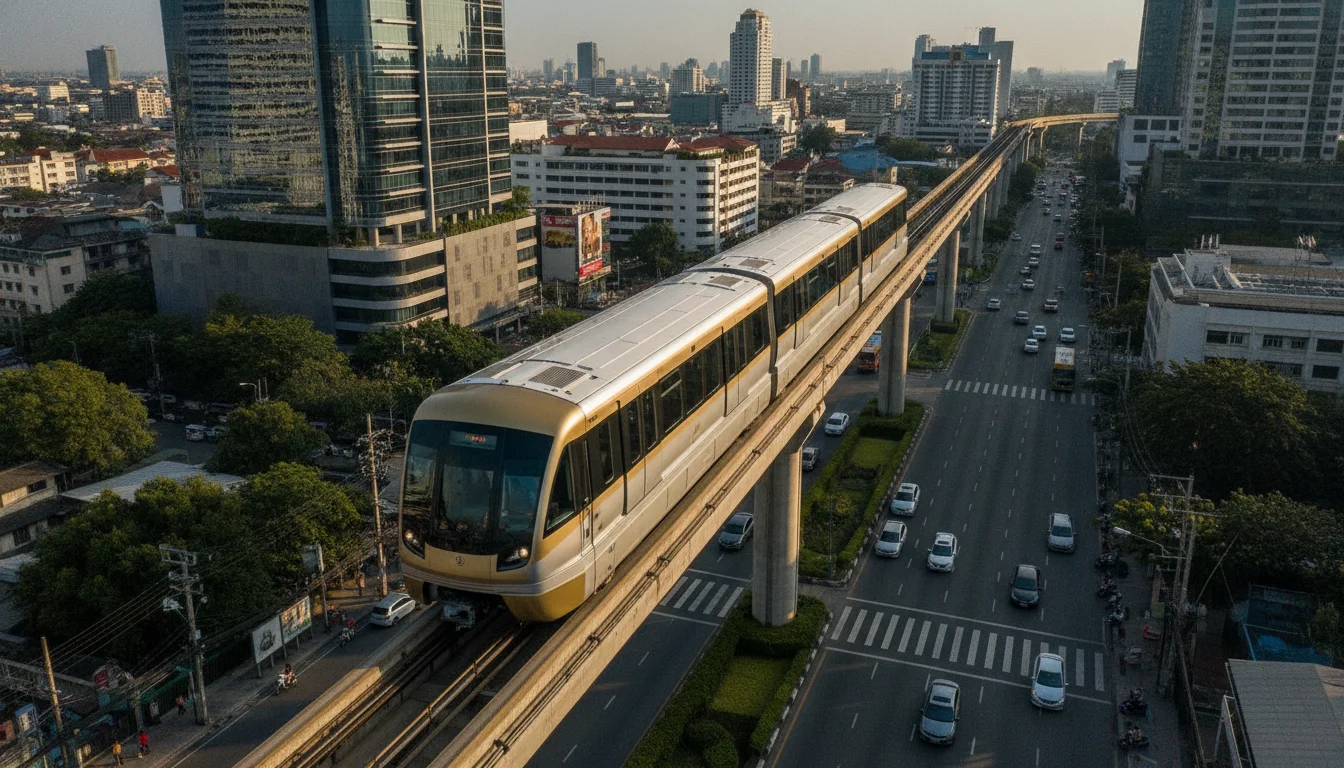
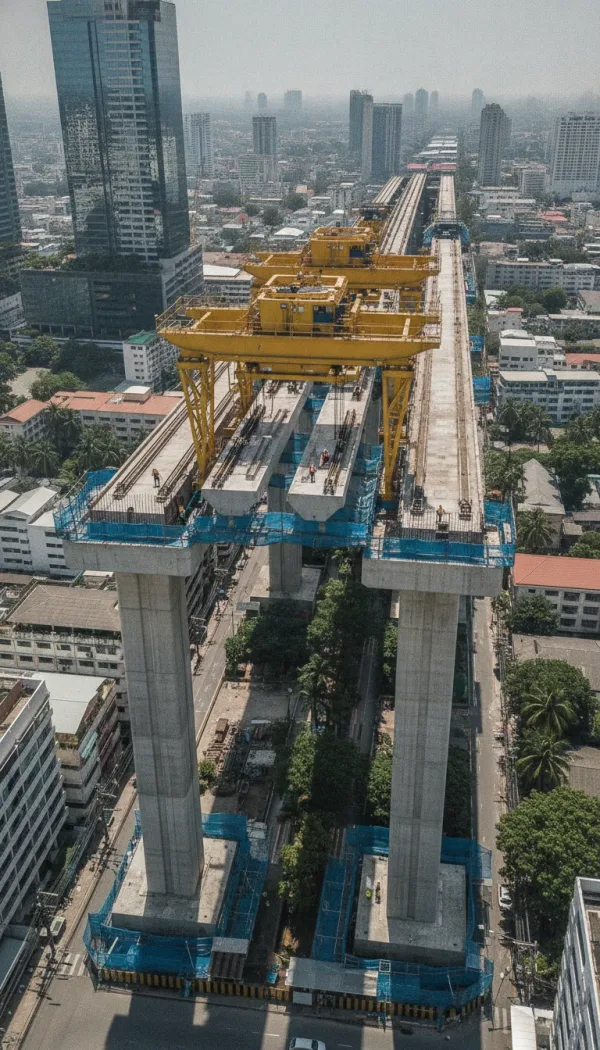
Bangkok's Gold Line is a fully automated, elevated people mover system on the Thonburi side of the Chao Phraya River. Opened in December 2020, the line operates as a dedicated feeder route connecting Krung Thon Buri station on the BTS Silom Line with the riverside commercial and residential district of Khlong San, including the ICONSIAM development.
The driverless line is operated by Bangkok Mass Transit System Public Company Limited (BTSC), the same operator responsible for the BTS Skytrain network. Covering a distance of 1.8 kilometres across three stations—Krung Thon Buri, Charoen Nakhon, and Khlong San—the rubber-tyred electric system provides an alternative to road transport along Charoen Nakhon Road. It provides straightforward transit for daily commuters and international visitors navigating Bangkok's western waterfront.
The Gold Line is a dedicated elevated feeder line in Bangkok, built to improve public transport access across the Khlong San district on the Thonburi bank of the Chao Phraya River. Rather than a conventional heavy rail or monorail service, the route operates as a fully automated, driverless Automated People Mover (APM) system. Its lightweight rubber-tyred carriages run along a guideway, providing a quiet journey and elevated views across the surrounding urban neighbourhood.
The line's primary role is linking the Chao Phraya riverside developments—most notably the ICONSIAM retail complex—with the wider Bangkok transit network. Passengers can transfer between the Gold Line and the BTS Silom Line at Krung Thon Buri station, giving travellers staying in central Bangkok straightforward rail access to the riverside without relying on road taxis or river shuttle boats. Running across an initial three-station, 1.8-kilometre elevated corridor, the Gold Line provides a short, efficient local connection for shoppers, hotel guests, and local residents travelling through this riverside district.

Route and Stations
The Gold Line covers a compact 1.8-kilometre elevated route situated entirely on the Thonburi side of Bangkok, running along the west bank of the Chao Phraya River rather than crossing it. Departing Krung Thon Buri Road, the track turns north along Charoen Nakhon Road before curving onto Somdet Chao Phraya Road. The complete end-to-end journey takes approximately five to six minutes.
The route consists of three operational stations:-
Krung Thon Buri is the southern terminus and interchange, linking directly to the elevated BTS Silom Line platform via a dedicated pedestrian walkway. Passengers arriving from central Bangkok change here to access the line.
Charoen Nakhon sits midway along the alignment on Charoen Nakhon Road. A covered overhead skybridge connects the concourse directly to the ICONSIAM retail complex and the adjacent ICS lifestyle development, accommodating steady retail visitor traffic.
Khlong San forms the current northern terminus, located along Somdet Chao Phraya Road. It sits opposite Taksin Hospital and the Khlong San District Office, giving riders access to the surrounding residential communities, public healthcare facilities, and local piers along the western riverbank.
Operational Details and Technology
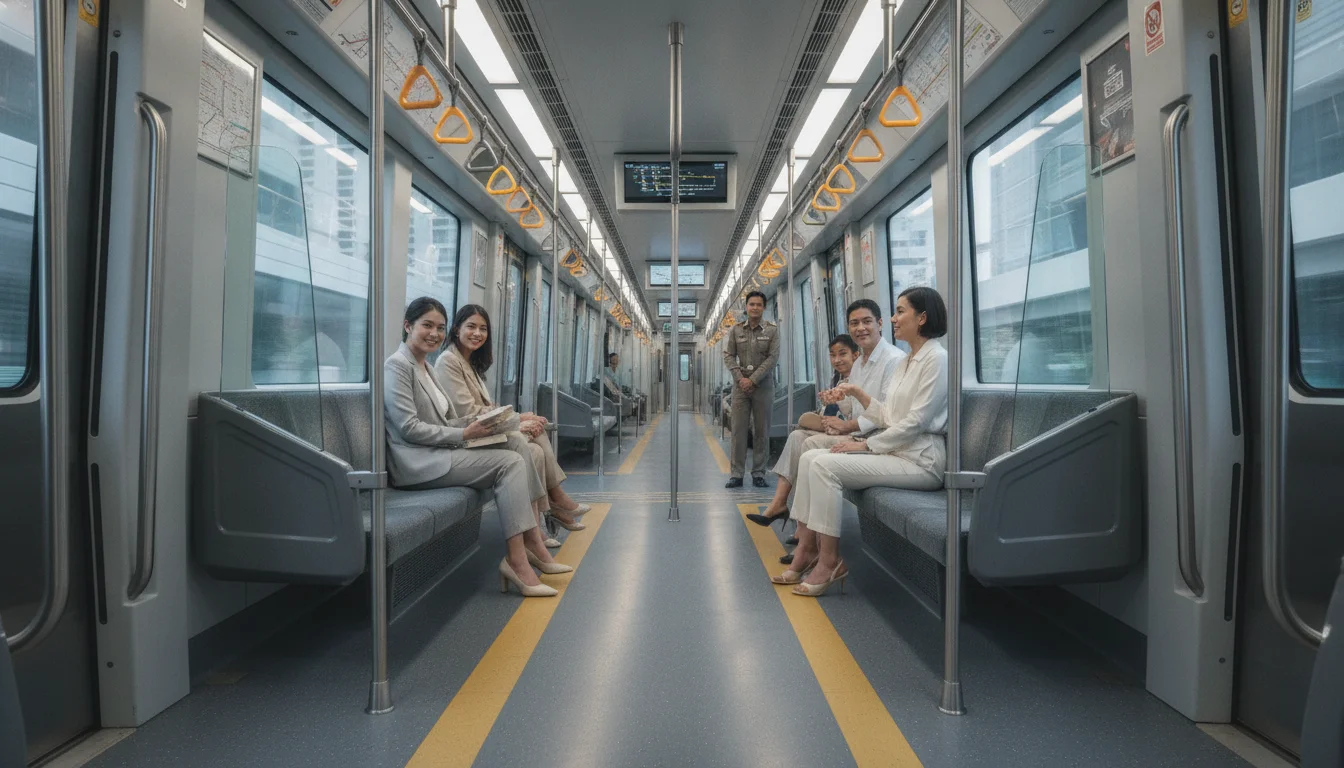
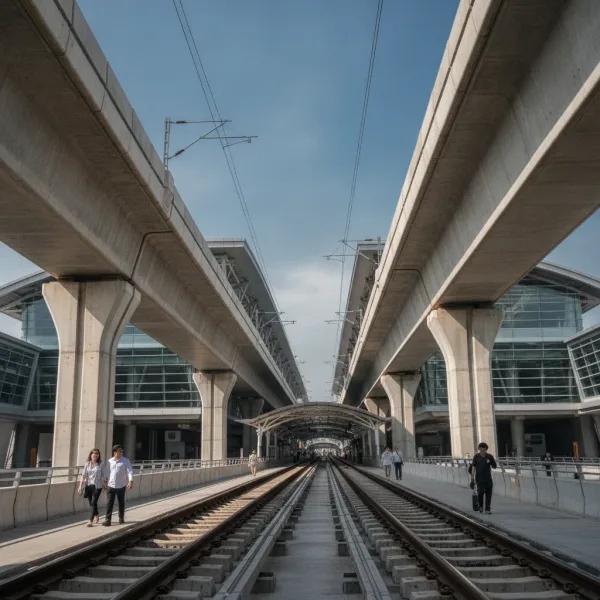
The Gold Line operates as a fully automated, rubber-tyred Automated People Mover (APM) system running on an elevated concrete guideway. The line uses Bombardier Innovia APM 300 electric trainsets, powered by a 750-volt direct-current third rail. Because the rubber tyres generate less noise and vibration than conventional steel-wheel rail, the trains run quietly through dense residential and commercial areas along Charoen Nakhon Road.
The system relies on Bombardier CITYFLO 650 communications-based train control, enabling driverless operation coordinated from a central control centre. Each two-car trainset accommodates up to 276 passengers, with two trainsets handling regular daily service while a third serves as a backup. Trains can reach speeds of up to 80 kilometres per hour, maintaining headways between 6 minutes at peak periods and 8 to 12 minutes during quieter hours.
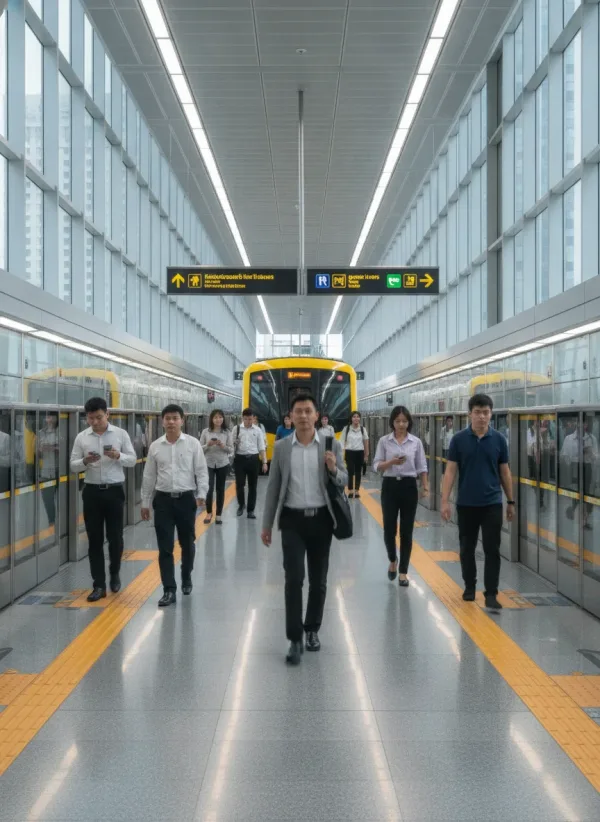
Without a physical driver's cab, the front and rear ends of the carriages offer unobstructed forward and backward views through large panoramic windows. Inside, carriages feature bilingual Thai and English audiovisual passenger information displays announcing upcoming stops.
Discover Bangkok's 1.5-metre altitude delta terrain, winding khlongs, and alluvial plains. Master the city's flat geography for your urban adventure.
Ticketing and Fares
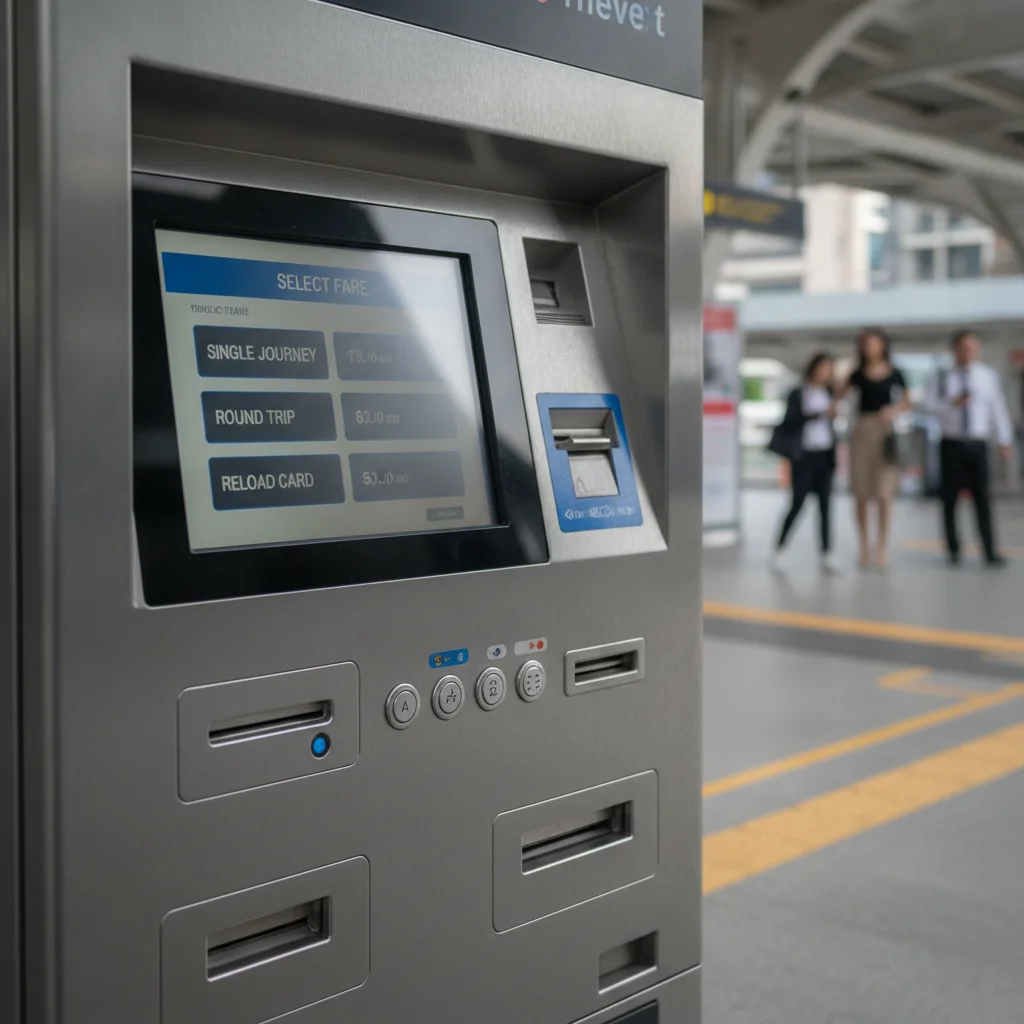
Fares on the Gold Line operate independently from the main BTS Skytrain system rather than sharing a unified, distance-based pricing scheme. At the time of research, the service charges a flat fare of 16 THB per single journey across its three stations, regardless of how many stops you travel.
Because the feeder line uses a separate fare structure, journeys are not calculated as one continuous trip when transferring from the BTS Silom Line. At Krung Thon Buri station, passengers must tap out of the main BTS gates and tap into the dedicated Gold Line gates, incurring the separate 16 THB charge for the people mover leg.
Passengers can purchase single-journey tickets or QR-code passes from automated vending machines and ticket counters at each station. Alternatively, travellers can use a standard Rabbit Card, Bangkok's widely accepted stored-value transit smartcard. Tapping a Rabbit Card at the fare gates deducts the flat fare directly from your card balance, providing quick entry without queuing for paper tickets. The same smartcard remains valid across the broader BTS Skytrain network, select bus routes, and participating retail outlets throughout Bangkok.
Accessibility and Passenger Experience
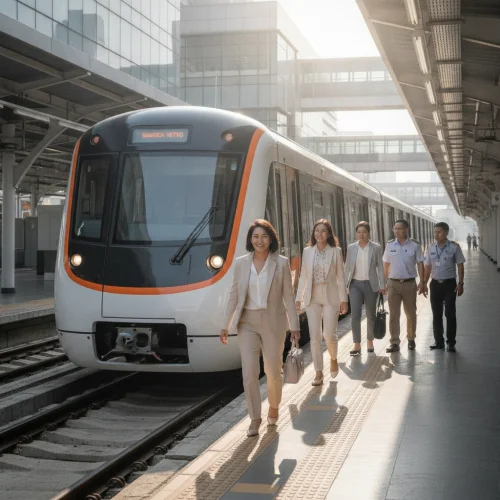
The Gold Line is fully accessible, making it straightforward for passengers using wheelchairs, pushing prams, or carrying heavy luggage. All three elevated stations feature street-to-concourse and concourse-to-platform lifts alongside escalators and wide ticket gates. Station platforms are fitted with tactile paving and half-height platform screen doors that open in synchronisation with train doors, ensuring step-free, level boarding with a minimal gap between platform and train.
Inside the air-conditioned carriages, passengers find dedicated wheelchair bays with safety handrails alongside clearly marked priority seating. Because the automated people mover runs on rubber tyres along an elevated concrete guideway rather than conventional steel rails, journeys are noticeably quieter and smoother than standard metro lines. Dynamic digital passenger information displays and bilingual automated audio announcements provide clear, real-time arrival and transfer updates in both Thai and English across every station and train.
Future Expansion Plans
Bangkok's Gold Line was conceived as a multi-phase project, with future expansion designed to integrate the feeder line deeper into the capital's rapid transit grid. Under official development master plans, Phase 2 proposes extending the route roughly one kilometre westward from its current Khlong San terminus along Somdet Chao Phraya Road.
This proposed extension would add Prajadhipok station near Wat Anongkaram, bringing the complete line to four stations across approximately 2.7 kilometres. The primary strategic objective of Phase 2 is creating a direct interchange with the southern extension of the MRT Purple Line, which runs between Tao Poon and Rat Burana. Once constructed, this link will connect Thonburi's Chao Phraya riverfront directly to the northern and southern suburbs without requiring passengers to route through central interchange hubs.
Implementation remains subject to final municipal approvals and budget allocations by the Bangkok Metropolitan Administration (BMA), aligned with progress on the connecting Purple Line works.
Location and Getting There
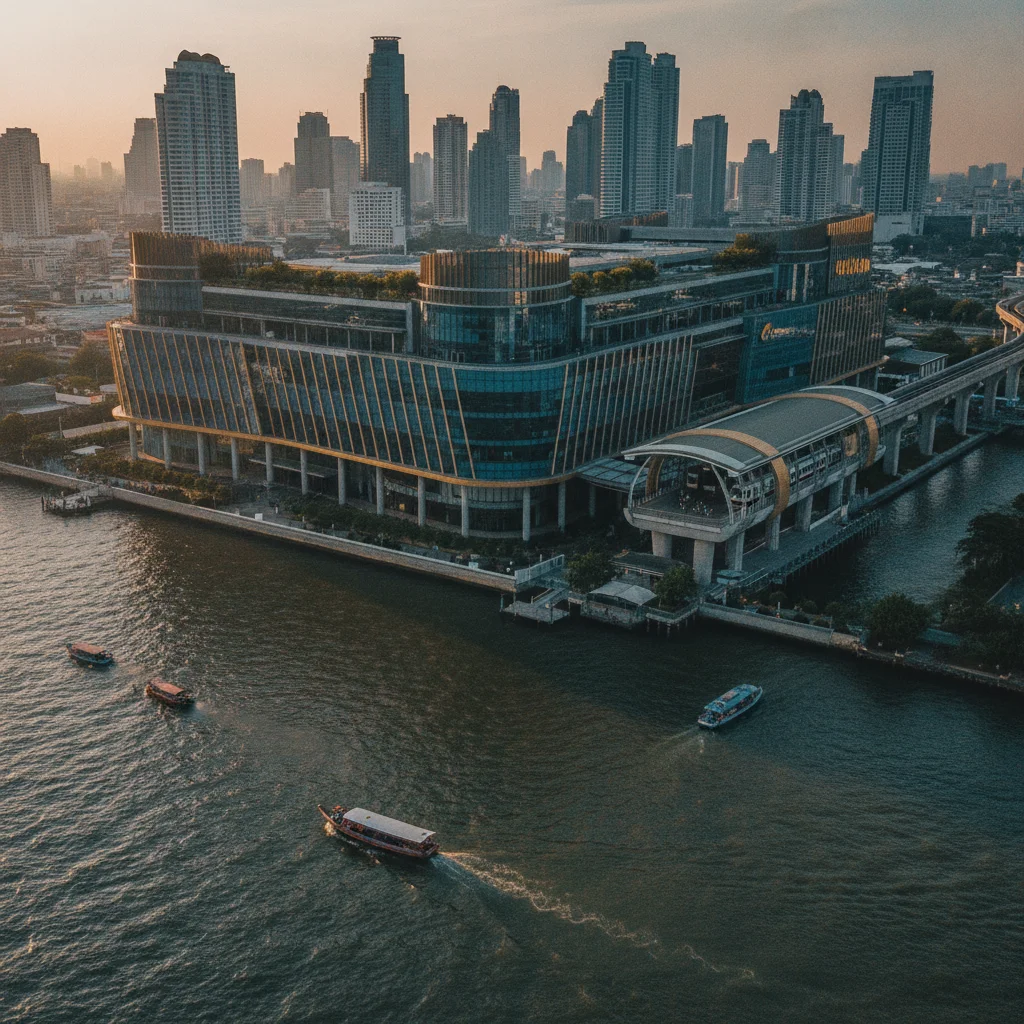
The Gold Line operates in the Khlong San district on the western Thonburi bank of the Chao Phraya River in Bangkok. Built as an automated feeder route, the elevated line links the wider mass transit network to the riverside commercial corridor. Its starting terminus and primary interchange is Krung Thon Buri station, which connects directly to the elevated BTS Silom Line. Rather than crossing the river itself, the Gold Line runs entirely along the western bank, following Krung Thon Buri Road, Charoen Nakhon Road, and Somdet Chao Phraya Road. Its intermediate stop, Charoen Nakhon station, connects via a direct pedestrian skywalk to the ICONSIAM shopping complex, while the northern terminus at Khlong San serves the surrounding neighbourhood and Taksin Hospital.
For travellers arriving at Suvarnabhumi Airport (BKK), public rail transit provides a reliable route that avoids Bangkok's road traffic. Passengers can take the Airport Rail Link from the airport basement to its terminus at Phaya Thai station (approximately 30 minutes; 45 THB). From Phaya Thai, transfer to the BTS Sukhumvit Line to Siam interchange, then switch across the concourse to the BTS Silom Line heading towards Bang Wa. After crossing the river on the BTS, alight at Krung Thon Buri to board the Gold Line. The full rail journey from the airport typically takes between 60 and 75 minutes, with combined fares across the Airport Rail Link, BTS Skytrain, and Gold Line totalling roughly 105 to 110 THB (around £2.30 to £2.50).
Costs and Ticketing
Riding the Gold Line requires no advance booking. Passengers travel using pay-as-you-go ticketing or a contactless smart card, paying per journey at the station before passing through the automated fare gates.
Unlike Bangkok's primary BTS Skytrain routes, which calculate fares by distance, the Gold Line operates on a flat fare model. A single one-way trip across any part of the three-station route costs a fixed 16 THB (approximately £0.35). Children under 90 centimetres in height travel free of charge, whilst qualifying senior citizens pay a concession fare of 8 THB.
Ticketing on the Gold Line is separate from the BTS Green Line network. Single-journey tickets bought on the Sukhumvit or Silom lines do not cover the Gold Line; passengers interchanging at Krung Thon Buri must exit the BTS gates and pay the feeder line fare independently. BTS One-Day Passes also exclude the Gold Line.
A Rabbit Card provides the smoothest payment method across both networks. An adult card costs 200 THB (around £4.40), comprising 100 THB stored credit and a 100 THB non-refundable card issuance fee, with the 16 THB fare automatically deducted at the gate. Alternatively, single-journey tickets can be bought at concourse machines using cash.
| Option | Cost (THB per trip) | Cost (GBP approx per trip) | Notes |
|---|---|---|---|
| Single Journey Ticket | 16 | 0.35 | Flat fare across all stations on the line. |
| Rabbit Card (Standard Purchase) | 200 | 4.40 | Includes 100 THB credit and 100 THB issuance fee. |
| BTS Interchange Transfer | 16 | 0.35 | Charged separately from BTS Skytrain fares at Krung Thon Buri. |
Who It Suits Best
The Gold Line suits travellers heading specifically to the Chao Phraya riverside in Thonburi, particularly visitors planning a trip to ICONSIAM or the surrounding Klong San neighbourhood. By connecting directly with the BTS Silom Line at Krung Thon Buri, it provides a dependable route that avoids the heavy road traffic often found along Charoen Nakhon Road.
It also serves passengers travelling to local community hubs, riverside dining venues, and medical facilities like Taksin Hospital near the Klong San terminus. For visitors moving across Bangkok's main transit network, the line provides a predictable hop across the riverfront without relying on road taxis or scheduled boat services.
Conversely, the line has little utility for travellers exploring wider Bangkok neighbourhoods beyond this short 1.8-kilometre corridor. Those who prefer scenic travel along the water may find standard Chao Phraya express boats or cross-river ferries a more atmospheric choice for reaching riverside landmarks.
What to Know Before You Book
The Gold Line is a dedicated elevated feeder line rather than a long-distance rail network, so preparation centres on how the service operates alongside wider Bangkok transit.
Passengers do not make advance bookings or seat reservations. Instead, journeys operate on a turn-up-and-ride basis across three elevated stations in Thonburi: Krung Thon Buri, Charoen Nakhon, and Khlong San. Although the line physically interchanges with the BTS Silom Line at Krung Thon Buri, it maintains a separate fare structure. Standard BTS single-journey tokens and Green Line day passes do not cover the Gold Line leg, so travellers must tap a Rabbit card or purchase an individual ticket at station machines.
The system uses fully automated, driverless people movers running along an elevated 1.8-kilometre guideway. Because the alignment was built specifically to link the Skytrain with the riverside ICONSIAM complex and the surrounding Khlong San neighbourhood, it functions as a short shuttle rather than an expansive cross-city line. Those travelling from central Bangkok should account for the transfer at Krung Thon Buri to reach the riverside district without relying on road traffic or river crossings.
Practical Tips
Navigating the Gold Line is straightforward, but keeping a few practical transit details in mind ensures a smooth journey across Thonburi.
A stored-value Rabbit Card is the most practical way to pay. Tapping at the automated barriers lets you bypass queues at single-journey ticket machines, which can grow lengthy during weekend afternoons and evening shopping peaks around ICONSIAM.
Although the Gold Line connects directly to the BTS Silom Line at Krung Thon Buri, it operates as an independent feeder service with its own flat fare rather than the distance-based pricing applied across the main Skytrain network. Passengers transferring between the two lines must tap out of one system and into the other. BTS One-Day Passes do not cover the Gold Line, so pass holders still require a separate ticket or Rabbit Card balance.
Interchanging at Krung Thon Buri involves walking through a dedicated covered connecting concourse. Allow five to ten minutes to complete the transfer during busy periods, particularly if you need to top up your travel card at a service counter.
Every station along the line offers step-free access, with lifts linking the street level, concourse, and platforms. Wide ticket gates and tactile ground indicators accommodate travellers with heavy luggage, pushchairs, or mobility aids.
Quick Reference Table
| Item | Detail | Notes |
|---|---|---|
| System Type | Automated People Mover (APM) | Driverless, rubber-tyred elevated electric feeder system |
| Operator | Bangkok Mass Transit System Public Company Limited (BTSC) | Runs along the western Thonburi bank of the Chao Phraya River |
| Opening Date | December 2020 | Initial phase linking mass transit to riverside developments |
| Route Length | 1.8 km | Elevated alignment along Charoen Nakhon and Somdet Chao Phraya roads |
| Stations | Krung Thon Buri, Charoen Nakhon, Khlong San | Charoen Nakhon connects directly to ICONSIAM via skywalk |
| Journey Time | Approx. 5–6 minutes | Complete end-to-end journey |
| Key Interchange | Krung Thon Buri (BTS Silom Line) | Direct covered link; requires separate tap-in through fare gates |
| Rolling Stock & Capacity | Bombardier Innovia APM 300 (276 passengers per 2-car train) | 750V DC third-rail powered; speeds up to 80 km/h |
| Service Frequency | 6 mins (peak) / 8–12 mins (off-peak) | Two trainsets in active service with one spare |
| Standard Fare | 16 THB (~£0.35) | Flat fare for any journey across the three stations |
| Concessions | 8 THB (seniors) / Free (children under 90 cm) | Concession rates apply at station counters |
| Accepted Payment | Rabbit Card, single-journey tickets, QR-code passes | BTS One-Day Passes and standard BTS tokens are not valid |
| Accessibility | Step-free throughout | Lifts street-to-platform, wide gates, tactile paving, wheelchair bays |
| Website | https://www.bts.co.th | Official BTS network and feeder line portal |
FAQ: Gold Line
What is the purpose of Bangkok's Gold Line?
Who operates the Gold Line in Bangkok?
How long is the Gold Line in Bangkok and how many stations does it have?
Which Gold Line station connects to ICONSIAM?
How much does a single journey on the Gold Line cost?
Does a BTS Skytrain ticket cover the Gold Line fare?
Can I use a Rabbit Card on the Gold Line?
Is the Gold Line accessible for passengers with mobility needs?
How can I get to the Gold Line from Suvarnabhumi Airport by public transport?
What is the most practical way to pay for the Gold Line?
Reviewed by the Thailand Guide Editorial Team • Last reviewed: 22 September 2026
This page provides general information only and is not financial, legal, or immigration advice. Always verify current rules with official Thai government sources or a qualified professional before making decisions.