Sangkhla Buri - Kanchanaburi
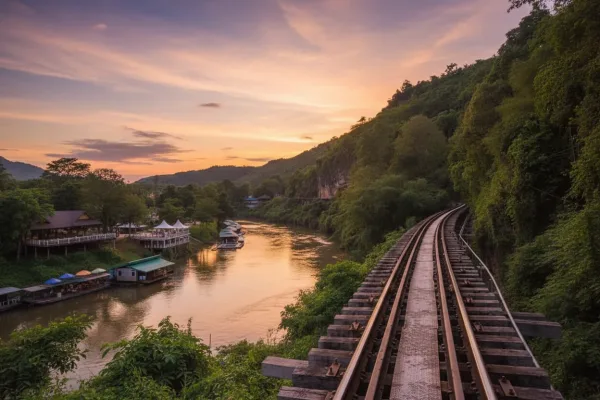
Sangkhla Buri is a small lakeside town in the mountainous north-west of Kanchanaburi Province. Its best-known landmark is the Mon Bridge, a long wooden footbridge linking the town centre with Ban Wang Ka, a Mon community across the water. Boats also travel over the reservoir to the remains of the former settlement flooded after construction of the Khao Laem Dam.
The town sits beside the meeting point of the Song Kalia, Bikhli and Ranti waterways, often called Sam Prasop. Thai, Mon and Karen histories are all part of the district, and Wat Wang Wiwekaram remains an important religious centre. Sangkhla Buri is reached by a long, winding road from Kanchanaburi, so it works best as an overnight destination rather than a rushed day trip.
The Mon Bridge and Lakeside Landscape

Uttamanusorn Bridge, usually called the Mon Bridge or Saphan Mon, crosses the water between Sangkhla Buri town and Ban Wang Ka. It was initiated by Luang Pho Uttama, the influential Mon abbot associated with Wat Wang Wiwekaram, and built with community labour in the 1980s. Official and published sources give different measurements for its length, but it is widely recognised as one of Thailand's longest wooden bridges.
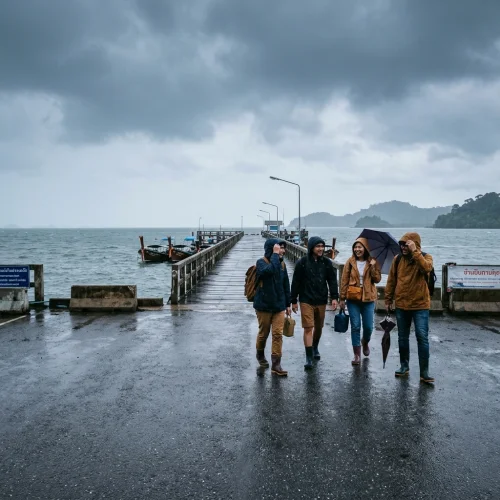
The bridge is a pedestrian route as well as a landmark. Early morning brings residents travelling between the two sides, visitors watching mist over the water and monks returning from alms rounds. The deck is exposed, with little shade, so sunrise and late afternoon are more comfortable than the middle of the day. There is no normal admission charge to walk across, although temporary restrictions may be introduced for repairs, weather or local events.
Ban Wang Ka begins beyond the bridge. Its lanes lead towards Wat Wang Wiwekaram and the Buddhagaya-style chedi, while viewpoints on both banks look across the reservoir and the meeting of the rivers. Wear shoes suitable for uneven timber and take particular care when the boards are wet.
Wat Wang Wiwekaram and the Old Town
The present Wat Wang Wiwekaram stands in Ban Wang Ka. Luang Pho Uttama established the earlier temple near Sam Prasop with local Mon and Karen residents in the 1950s. When the dam project changed the landscape, the community and temple moved to higher ground. The modern complex remains an active place of worship rather than simply a visitor attraction.
Nearby, the golden Buddhagaya Chedi was modelled on the Mahabodhi temple at Bodh Gaya in India. Visitors should cover shoulders and knees, remove shoes where requested and avoid interrupting ceremonies. Entry to the temple complex is generally free, but donations are welcome.
Boat trips from the waterfront visit the remains of the old settlement, commonly marketed as the Sunken Temple or Underwater City. The principal sites include the old Wat Wang Wiwekaram and other former religious buildings around the flooded area. What can be seen depends heavily on reservoir levels. Walls and structures may be accessible on foot when water is unusually low; at other times, only upper sections may appear above the surface or the sites may be viewed from the boat.
Routes, duration and boat prices vary with water level and the number of stops. Agree the full itinerary, price for the whole boat or per person, waiting time and life-jacket provision before leaving. Do not assume the ruins will be walkable in a particular month, as reservoir management and rainfall both affect conditions.
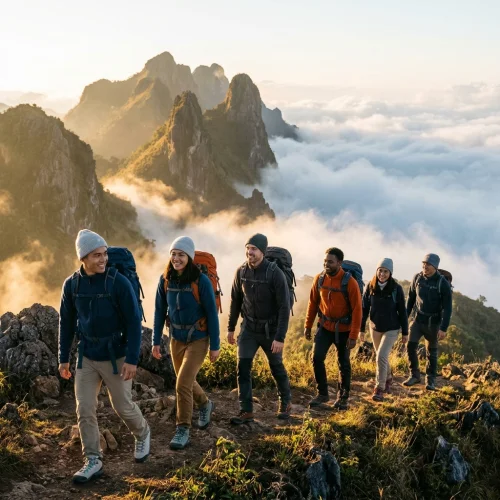
Explore the rugged Tenasserim Hills and deep river valleys of western Thailand. A practical look at the 1,249m peaks and terrain that shape the region.
Morning Alms-giving and Local Food

Morning alms-giving is most visible around Ban Wang Ka and the approach to the Mon Bridge. Monks walk through the community early in the day while residents offer food. Visitors may observe quietly or participate respectfully, but the ceremony is a religious practice rather than a staged performance. Follow local guidance, keep a considerate distance from worshippers and ask before photographing people at close range.
Prepared offerings are sold locally, although contents and prices vary. Food offered to monks should be handled in the way explained by the vendor or host. Modest clothing is appropriate: cover shoulders and knees and avoid blocking the monks' route for photographs.
The morning market and small restaurants provide a better introduction to everyday food than a checklist of supposedly unique dishes. Expect Thai dishes alongside Mon and Myanmar influences, including curries, rice dishes, noodles, grilled meats, fermented ingredients and sweet tea. Availability changes by stall and season. The weekend walking-street market, when operating, adds snacks and locally made goods, but travellers should confirm its current days and hours after arrival.
Accommodation by the Water
Accommodation is spread across the town side, the slopes overlooking Sam Prasop and the Ban Wang Ka side of the bridge. Staying near the town centre is convenient for the bus station, market and restaurants. Properties nearer the bridge suit early-morning walks, while hillside and waterfront resorts may offer wider views but involve steep approaches or greater dependence on local transport.
Current booking listings show simple guesthouses commonly starting at about 850 THB (approximately £19) per night, while established resorts near the bridge are often around 1,300 to 2,500 THB (approximately £29 to £56) for a standard room. Samprasob Resort advertises renovated private pool villas from 5,000 THB (approximately £112) per night. Rates depend on dates, room type, occupancy, breakfast, taxes and cancellation terms, and can rise sharply on Thai public-holiday weekends. Confirm the current total before paying.
| Accommodation Type | Indicative Price per Night | Practical Consideration |
|---|---|---|
| Simple guesthouse | From about 850 THB (approximately £19) | Check whether the room has air-conditioning, a private bathroom and breakfast |
| Standard resort room | About 1,300–2,500 THB (approximately £29–£56) | Views and proximity to the bridge vary by room category |
| Private pool villa | From about 5,000 THB (approximately £112) | Published starting price at Samprasob Resort; confirm occupancy and inclusions |
| Holiday-weekend stay | Variable and often higher | Reserve early and check amendment and cancellation terms |
Waterways and Three Pagodas Pass

The reservoir and river system support boat trips, kayaking and seasonal rafting, but activities depend on local conditions and the operator. Bamboo-raft trips may be arranged through accommodation providers or local guides. Before booking, establish the route, duration, group size, swimming expectations, transfers and safety equipment. Water levels and strong rain can alter or cancel a planned trip.
Khao Laem National Park covers a much wider area around the reservoir and forested hills. Its viewpoints, campsites and waterfalls are separate excursions rather than attractions within central Sangkhla Buri. Park entry fees, opening conditions and access to individual sites should be checked with the Department of National Parks before setting out.
Three Pagodas Pass lies about 20 km by road north-west of Sangkhla Buri at the Myanmar frontier. The three small white chedis mark a historically important route through the Tenasserim Hills. Visitors can see the monument and Thai-side market area, but permission to cross the border can change at short notice with the political and security situation. Do not travel there expecting an international crossing or Myanmar day trip; check the position locally and carry the identification required for travel in a border district.
Getting There and Getting Around

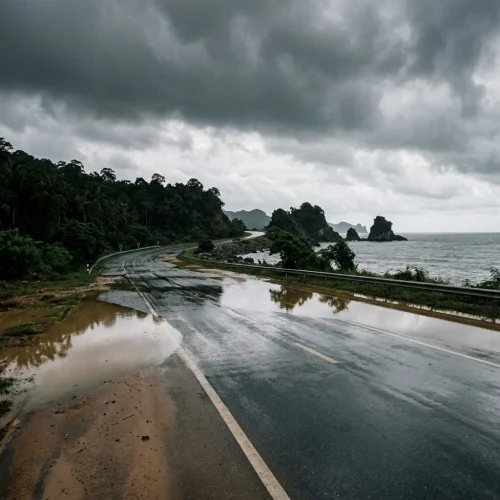
Route 323 is the only practical road approach from Kanchanaburi town through Sai Yok and Thong Pha Phum. The road distance is about 220 km and the final sections are mountainous and winding. Public transport normally takes around four to five hours from Kanchanaburi, although traffic, stops and weather can extend the journey.
Current booking listings show passenger vans from Kanchanaburi Bus Terminal at around 219 THB (approximately £4.90) one way, with departures during the day. Local buses may cost less but take longer and published schedules are inconsistent. Direct bookable services from Bangkok also appear on some dates, while travelling via Kanchanaburi gives more options. Check the departure point carefully: Bangkok services can use different terminals, and the final service of the day should never be assumed without confirmation.
There is no railway or commercial airport in Sangkhla Buri. Travellers arriving by train in Kanchanaburi still need to continue by road. Driving from Bangkok is a full-day journey once breaks are included; avoid tackling the mountain section tired or after dark in poor weather.
The central town, bridge and parts of Ban Wang Ka can be explored on foot, but slopes and heat make distances feel longer. Motorcycle taxis and local songthaews handle short trips, while a car is useful for Three Pagodas Pass and outlying sites. Scooter rental is available locally, but only experienced, correctly licensed riders should consider it. Check brakes, tyres, lights, helmet and insurance cover before accepting a vehicle.
Costs and Budgeting
Room rates and the journey to Sangkhla Buri are the main predictable costs. Meals at markets and simple local restaurants are generally inexpensive, while a private boat, guided activity or car for outlying sites can change the total substantially. Cash remains useful for small vendors, local transport and boat operators, although larger accommodation providers may accept cards or bank transfers.
| Current Cost | Thai Baht | Approximate GBP | Basis |
|---|---|---|---|
| Kanchanaburi–Sangkhla Buri passenger van | Around 219 THB one way | Approximately £4.90 | Current bookable listing; schedule and fare vary |
| Simple guesthouse | From about 850 THB per night | Approximately £19 | Current accommodation listings |
| Standard resort room | About 1,300–2,500 THB per night | Approximately £29–£56 | Typical current range, date and room dependent |
| Samprasob private pool villa | From 5,000 THB per night | Approximately £112 | Resort's published direct-booking starting price |
Allow a separate amount for local transfers and water-based activities because these are commonly quoted after the route and group size are agreed. ATMs are available in town, but carrying enough cash for the day avoids dependence on a particular machine or payment network.
Who It Suits
Sangkhla Buri rewards travellers interested in local history, living religious traditions, waterside landscapes and a slower itinerary. Two nights allow time for the bridge and Ban Wang Ka, a boat trip and either Three Pagodas Pass or another outlying site without spending most of the visit in transit.
The town has modest visitor infrastructure, steep streets and a lengthy road approach. It is less convenient for anyone who needs step-free access, frequent onward connections or a wide choice of late-night venues. Families can visit comfortably with suitable transport, but open bridge edges, boats and steep waterfront approaches require close supervision of children.
What to Know Before You Go

Sangkhla Buri is culturally diverse, and Mon identity is especially visible around Ban Wang Ka, its temples, clothing, food and language. Thanaka, the pale paste traditionally worn on the face in Myanmar and among some Mon communities, may also be seen. Treat residents as people going about daily life: ask before taking portraits and avoid turning alms-giving, traditional dress or religious practice into props for photographs.
The coolest and generally driest period is usually from November to February, when mornings can feel noticeably cooler than Kanchanaburi town. March and April are hotter, while the rainy season brings greener hills, heavier showers and a greater chance of disrupted outdoor plans. Bring a light layer for early starts, sun protection and rain protection appropriate to the season.
Mobile coverage and card acceptance vary by property and location. Download essential booking details and maps before travelling. In the border area, follow signs and official instructions, do not enter restricted tracks and check current UK travel advice as well as local conditions before visiting Three Pagodas Pass.
Practical Tips

Start early at the bridge
Visit around sunrise for cooler conditions and everyday morning activity, while keeping the pedestrian route clear for residents.
Agree boat details first
Confirm the total price, stops, duration, maximum group size and life jackets before boarding. Low water does not guarantee that every ruin is accessible on foot.
Dress for active temples
Cover shoulders and knees at Wat Wang Wiwekaram and remove shoes wherever signs or local practice require it.
Keep the final journey flexible
Reconfirm public transport shortly before travel and arrive early at the station. Services may finish earlier than expected.
Prepare for the bends
The long section of Route 323 beyond Thong Pha Phum has repeated curves. Sit towards the front if motion sickness is a concern and allow time for breaks when driving.
Book holiday weekends early
Sangkhla Buri is popular with domestic visitors. Thai public holidays can bring limited room availability and higher rates even when ordinary weekdays remain quiet.
Protect electronics on the water
Use a dry bag or waterproof pouch on boats and rafts, particularly during the rainy season.
Ask before photographing people
Obtain permission for close portraits, especially during alms-giving, at markets and in Ban Wang Ka.
Quick Reference Table
| Item | Detail | Notes |
|---|---|---|
| Location Name | Sangkhla Buri | Town and visitor area in Nong Lu, Sangkhla Buri District |
| Province | Kanchanaburi Province | Mountainous north-west of the province |
| Region | Western Thailand | Close to the Myanmar frontier |
| Nearest Provincial City | Kanchanaburi town | About 220 km by road |
| Nearest Major Airports | Bangkok airports | Continue overland; there is no local airport |
| Distance from Bangkok | About 340 km by road | Journey time varies considerably with traffic and stops |
| Typical Visit Duration | 2–3 days | Allows for the bridge, temples, boat trip and one excursion |
| Most Comfortable Season | November–February | Generally cooler and drier; conditions are not guaranteed |
| Typical Room Price | From about 850 THB (approximately £19) | Higher at resorts and on holiday weekends |
| Main Local Transport | Walking, motorcycle taxi, songthaew, boat and private vehicle | Central sights are split across two sides of the water |
| Main Landmarks | Mon Bridge, Wat Wang Wiwekaram, Buddhagaya Chedi and old flooded settlement | Visibility of submerged ruins changes with water level |
FAQ: Sangkhla Buri - Kanchanaburi
Is Sangkhla Buri suitable for a day trip?
What is the best time to visit the Mon Bridge?
What kind of shoes should I wear when walking on the Mon Bridge?
What should I confirm before taking a boat trip to the Sunken Temple in Sangkhla Buri?
What is the appropriate dress code for temples in Sangkhla Buri?
How should visitors behave during the morning alms-giving ceremony in Sangkhla Buri?
Can visitors cross the border into Myanmar at Three Pagodas Pass?
What should drivers or passengers know about the road to Sangkhla Buri?
Is cash necessary in Sangkhla Buri?
What is the best time of year to visit Sangkhla Buri?
Reviewed by the Thailand Guide Editorial Team • Last reviewed: 20 August 2026
This page is provided for general information only. While we aim for accuracy, details can change — please verify anything important independently before relying on it.