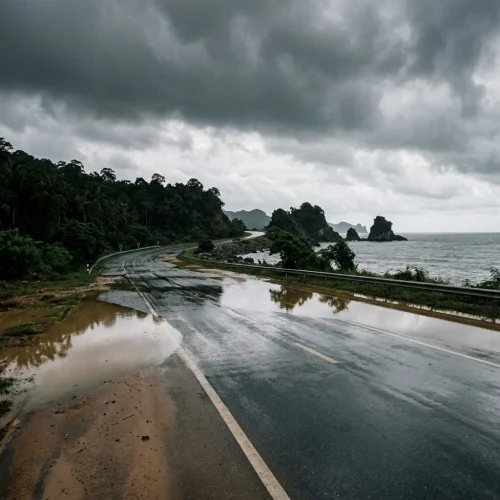
Landing on this island means trading the flat plains of central Thailand for a landscape where every road seems to have a hairpin turn and a steep incline.
Unlike the walkable grids of Bangkok, moving here requires a specific strategy because the distances between beaches are far greater than they look on a map, often costing 800 THB (£17.60) just to cross between major bays. While most guides pretend you can walk everywhere, the reality is that your holiday will be defined by how well you master the local ride-hailing apps to avoid the steep roadside negotiations.
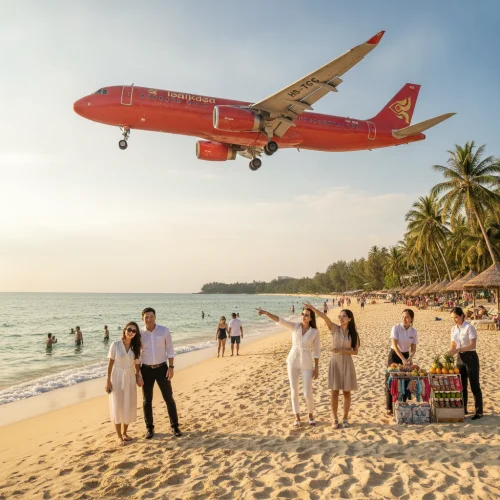
From the UK, your most direct route is the Thai Airways flight from London Heathrow, which takes roughly 12 hours and 30 minutes and typically costs between 36,000 THB (£795) and 52,000 THB (£1,150) for a return ticket. If you are already in Bangkok, you have a flight leaving almost every 30 minutes from either Suvarnabhumi or Don Mueang airports. Carriers like Thai VietJet and AirAsia offer one-way hops for as little as 1,100 THB (£24) if you book at least two weeks in advance, taking about 80 minutes to reach the tarmac. One thing to watch for is the baggage weight limit on these low-cost carriers, as they will charge you roughly 500 THB (£11) per extra kilo at the check-in desk. For those with more time, the overnight bus from Bangkok Southern Bus Terminal takes 13 hours and costs 700 THB (£15.50), though the winding roads into the province can make sleep a bit of a challenge for the sensitive traveller.
The transport landscape here is unique, dominated by blue and green apps rather than the sea of metered cabs you find in the capital. Download Bolt and InDrive immediately upon arrival; a 20-minute trip from Patong to Karon that costs 500 THB (£11) in a roadside tuk-tuk will often drop to 280 THB (£6.20) on these apps. If you are watching your pennies, the Phuket Smart Bus runs hourly from the airport down the west coast to Rawai for a flat fare of 100 THB (£2.20), though you should allow two hours for the full journey due to the coastal traffic. For the brave, scooter rentals are available everywhere for 250 THB (£5.50) per 24 hours, but only consider this if you have a valid international driving permit and experience with aggressive overtaking. A common pitfall is the local tuk-tuk price cartel; they have fixed minimums of 200 THB (£4.40) even for a three-minute drive, so always agree on the price before your bottom hits the seat. If a driver offers a suspiciously cheap 50 THB (£1.10) tour, politely decline as it involves three stops at jewellery factories you never asked to see.
GETTING OUT
When the island starts to feel small, the ferry to Koh Phi Phi is the standard exit, departing from Rassada Pier four times daily. The journey takes two hours and costs 600 THB (£13.25) for a standard class ticket, providing a refreshing breeze that beats any air-conditioned bus. For a quieter change of pace, a private taxi to Khao Lak takes about 90 minutes and will set you back 1,800 THB (£40), taking you across the Sarasin Bridge into the mainland. Speedboat tours to the Similan Islands are a long day out, usually departing at 8:30 AM for 2,700 THB (£60), including the national park entry fees.
Phuket International Airport (HKT) is divided into Terminal 1 for international flights and Terminal 2 for domestic hops. If you are flying back to London via Bangkok, you will likely use Terminal 2, where a coffee will cost you a steep 180 THB (£4). A useful tip is to use the luggage storage service in the arrivals hall at 100 THB (£2.20) per bag if you have a late flight and want one last beach swim without your suitcases.
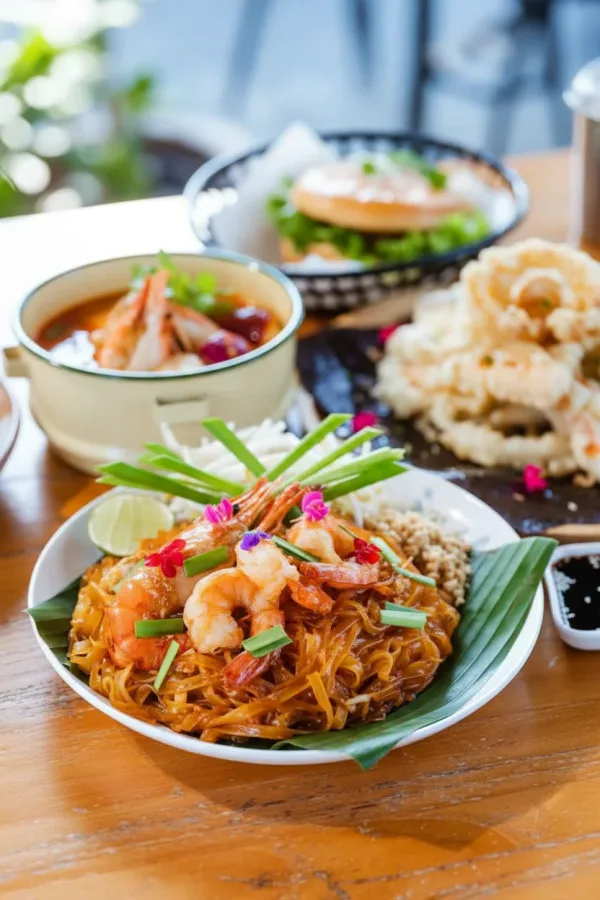
A budget traveller can survive on 1,600 THB (£35) a day by eating at night markets where a pad thai costs 80 THB (£1.75). Mid-range visitors should plan for 4,000 THB (£88) to cover air-conditioned dining and a few cocktails, while luxury stays easily exceed 12,000 THB (£265) once private pool villas are involved. ATMs are everywhere but charge a flat 220 THB (£4.85) fee per withdrawal regardless of the amount. To save on these fees, bring a high-limit card and withdraw the maximum 20,000 THB (£440) in one go. Always carry some cash, as smaller beach shacks rarely accept plastic for orders under 500 THB (£11).
CONNECTIVITY
Pick up an AIS or TrueMove H SIM card at the arrivals hall for 699 THB (£15.45), which gives you 30 days of unlimited data at speeds fast enough for video calls. While hotel wifi is generally reliable at 50 Mbps, the thick concrete walls in older resorts can turn your room into a dead zone, so having that 5G backup is vital. One local quirk is that heavy monsoon rain can occasionally knock out local masts for 15-minute intervals during peak storm season.
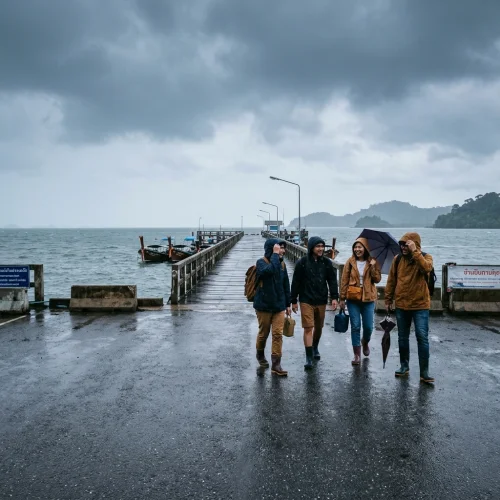
UK passport holders receive a 30-day visa exemption on arrival at mainland airports (60 days for entries made before 15 September 2026, under the previous exemption scheme). Tipping is not mandatory but leaving the 20 THB (£0.45) change from a bill or giving 100 THB (£2.20) to a tour guide is standard practice for good service. The electricity is 220V using two-pin flat or round plugs, so bring a universal adapter. For emergencies, dial 1155 for the Tourist Police. A tip many miss: buy a 60 THB (£1.35) reusable poncho from 7-Eleven immediately; the tropical downpours are brief but will soak you to the bone in seconds.