Phuket does not play by the same rules as Bangkok or Chiang Mai because the Andaman Sea acts as a giant thermal regulator that keeps the air thick enough to chew.
While the rest of Thailand might experience a crisp dry season, here you will contend with a permanent salt-tinged humidity that stays between 70% and 90% year-round. This moisture means the island stays lush and green even in the height of summer, though it also means your laundry will never truly dry if left on a balcony rack.
The cool season runs from November to February and represents the peak of island life, though calling it cool is a bit of a local joke for the benefit of tourists. During these months, daytime temperatures hover around 30°C to 32°C, while the evenings offer a genuine reprieve as the mercury dips to a comfortable 24°C. This is the period of endless blue skies and flat seas, making it the most expensive time to visit with a decent beachfront dinner for two easily reaching 2,500 THB or roughly £57.50. As March arrives, the hot season takes hold and the humidity spikes alongside the temperature. By April, the thermometer regularly hits 36°C with a heat index that feels closer to 42°C due to the lack of wind. The heat becomes a physical presence that dictates your entire movement, turning a simple ten-minute walk into a mission. Despite the intensity, the sea remains a refreshing 29°C, offering the perfect escape from the midday sun. The rainy season begins in earnest by late May and lasts until October. This is when the island breathes again, with temperatures cooling slightly to a range of 28°C to 31°C. While the rain is frequent, the landscape turns an electric shade of green that makes the occasional downpour feel like a necessary part of the tropical experience.
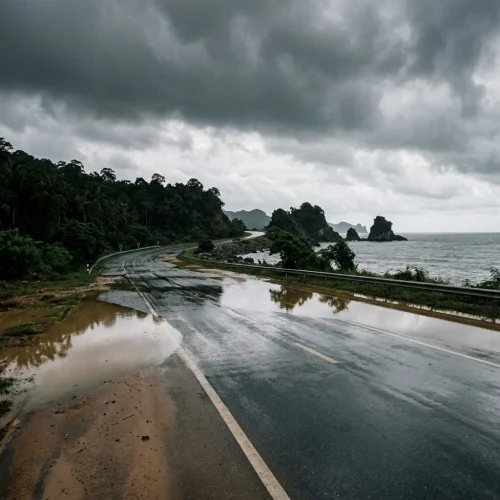
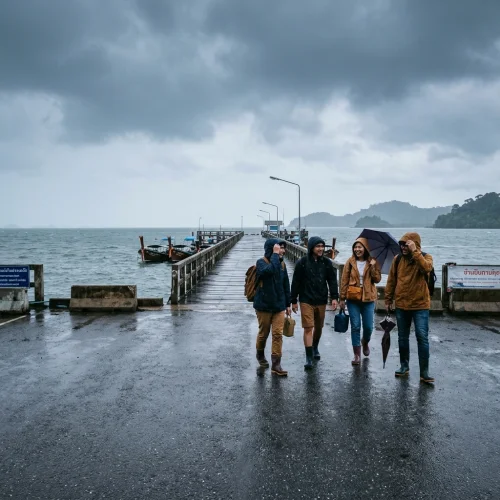
Rain in Phuket is rarely a lingering UK-style drizzle; instead, it arrives as a dramatic, high-pressure power wash that lasts for forty-five minutes before the sun breaks through again. September and October are the wettest months, seeing a 70% probability of daily rainfall and significant sea swells that can reach three meters, often leading to ferry cancellations to the Phi Phi islands. While coastal roads in Patong or Kamala might see temporary flash flooding for an hour, the water clears remarkably fast. You can navigate these bursts easily by ducking into a cafe for a 90 THB or £2.07 iced latte while the sky clears. To stay dry, skip the flimsy 50 THB or £1.15 plastic ponchos from the convenience store which turn into personal saunas in the heat. Instead, invest in a sturdy 450 THB or £10.35 vented umbrella from a local department store which provides both rain protection and essential shade when the sun returns with a vengeance.
AIR QUALITY & THE BURNING SEASON
Phuket is shielded from the heavy agricultural smoke that plagues Northern Thailand, making it a literal breath of fresh air for those escaping the haze. The air quality index generally stays in the healthy green zone between 20 and 50 units throughout the year. However, between March and May, southerly winds can occasionally bring a faint haze from regional forest fires, pushing levels into the moderate 80 to 110 range. If you have sensitive lungs, a high-quality N95 mask costs about 85 THB or £1.95 at any pharmacy and is a handy backup. Your best escape strategy during these rare hazy days is to head to the south of the island, where the direct sea breezes from the Andaman keep the air crisp and the views of the Big Buddha perfectly clear.
The humidity in Phuket makes traditional denim feel like wearing a suit of armor made of wet cardboard. Linen and high-tech moisture-wicking fabrics are your best friends here because they allow the air to circulate across your skin. You will want to pack light, breathable layers that can handle a 33°C afternoon. Sun protection is non-negotiable as the UV index frequently hits 11 or higher. Buying a 500ml bottle of reputable high-SPF sunscreen in Phuket will cost you around 650 THB or £14.95, which is significantly more than UK prices, so stocking up at home is a smart move. When visiting temples like Wat Chalong in the heat, the workaround for the modest dress code is a lightweight sarong. You can pick one up at a local market for 200 THB or £4.60 to wrap over your shorts, allowing you to stay respectful without melting into the pavement.
The combination of 34°C heat and high humidity means you will lose fluids much faster than you realise. Locals maintain their energy by front-loading their activity in the early morning before 10 AM or after the sun begins its descent at 5 PM. If you start feeling the dreaded midday slump, grab a Royal-D electrolyte sachet from a 7-Eleven for 10 THB or £0.23 and mix it with chilled water for an instant revival. Mosquitoes are most active at dusk, particularly in the lush hilly areas of the island. A bottle of locally produced citronella spray costs 80 THB or £1.84 and is far more effective against Phuket mosquitoes than the heavy chemical sprays brought from overseas. Staying hydrated and pacing yourself ensures you enjoy the island at the same relaxed speed as the people who live here.
BEST TIME TO VISIT
The Goldilocks window is January to February when the sea is like glass and the humidity stays manageable. However, the secret local favorite is May. The prices for luxury villas drop by 40%, a premium cocktail costs around 320 THB or £7.36, and the first rains of the season bring a cooling breeze and dramatic sunsets. You get the best of both worlds with plenty of sunshine and the island at its most peaceful.