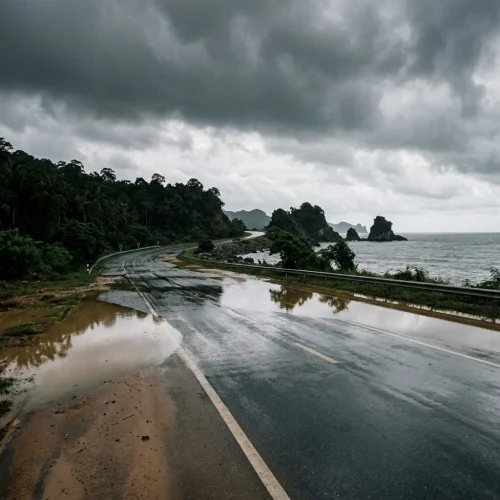
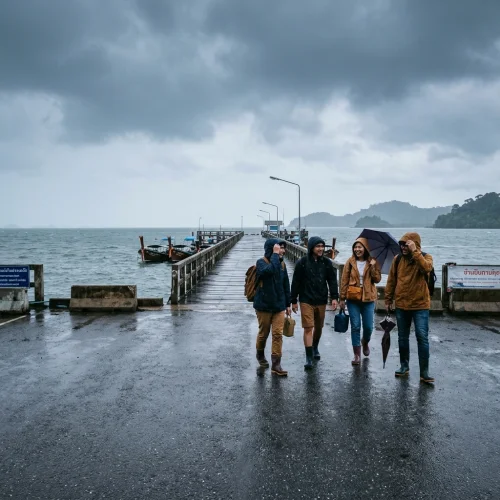
Navigating this stretch of the Andaman coast requires a mental shift, as towering limestone karsts physically block roads and turn short coastal distances into mandatory boat rides.
You will spend just as much time wading into knee-deep water to board wooden longtails as you will sitting in air-conditioned taxis. It makes daily movement a brilliant adventure rather than a chore, provided you invest 100 THB (2.30 GBP) in a waterproof dry bag before stepping off the pier.
Flying direct from the UK to this part of the south is impossible, so you will need to transit through Bangkok or Singapore. Thai Airways and Eva Air offer solid routes from Heathrow to Suvarnabhumi Airport, taking roughly fourteen hours and costing around 35,000 THB (800 GBP) return if you secure your flights early. From Bangkok, domestic carriers like AirAsia and Thai Vietjet run the ninety-minute hop south for as little as 1,350 THB (30 GBP) each way. Keep a close eye on your luggage allowance. These budget airlines weigh cabin bags ruthlessly and will charge you 1,800 THB (40 GBP) at the gate for going over seven kilos. Alternatively, you can take a twelve-hour VIP night bus from Bangkok Southern Bus Terminal for roughly 1,100 THB (25 GBP). It saves a night of accommodation, though the air conditioning is famously arctic, so bring a thick jumper.
Your main artery for cheap transport here is the shared songthaew, a modified pickup truck acting as a local bus. The white route runs constantly between the town centre and Ao Nang beach, taking forty-five minutes and costing exactly 50 THB (1.15 GBP) per person. Just wave it down and press the buzzer on the roof when you want to stop. For direct trips, Grab and InDrive work reasonably well, particularly for runs from Ao Nang to Klong Muang, which usually price out around 300 THB (6.80 GBP) for a twenty-minute drive. You should absolutely avoid the stationary red tuk-tuks parked along the Ao Nang beachfront. They operate a strict local monopoly and will demand 200 THB (4.50 GBP) for a five-minute drive down the road, refusing to negotiate. When heading to beaches cut off by cliffs like Railay or Tonsai, you have to take a shared longtail boat. Buy your ticket from the official cooperative booths at Ao Nang or Mao Pier for 100 THB (2.30 GBP) each way. You will have to wait until eight people fill the boat before it leaves, which teaches you the local pace of life rather quickly.
GETTING OUT
Moving onward to the islands requires heading to Klong Jilad Pier or Nopparat Thara Pier. The two-hour ferry to Koh Lanta runs multiple times a day during high season and costs around 450 THB (10 GBP). If you are heading to Koh Phi Phi, the speedboat takes just under an hour and sets you back roughly 900 THB (20 GBP), while the slower, larger ferry takes two hours for 500 THB (11.50 GBP). Book these tickets online a few days ahead or through your accommodation, as they include a shared minivan pickup that saves you a separate taxi fare.
Krabi International Airport handles both domestic flights via AirAsia and Nok Air, alongside regional international routes via Scoot. The airport is small and rarely overwhelming. Skip the private taxi touts in the arrivals hall and walk straight outside to the official airport bus booth. This air-conditioned coach drops you directly at your hotel door in under an hour for a fixed rate of 150 THB (3.40 GBP).
A strict backpacker budget here runs around 35 GBP a day, while a comfortable mid-range trip with boutique hotels and seafood dinners lands near 90 GBP. Luxury travel, complete with private boat charters and five-star cliffside resorts, easily pushes past 250 GBP daily. Cash is king on the coast. You will need physical baht for every longtail boat and street food stall. ATMs are everywhere in the main tourist hubs, charging a standard 220 THB (5 GBP) withdrawal fee. To beat this, pull out the maximum 30,000 THB (680 GBP) in one go at a yellow Krungsri machine.
CONNECTIVITY
AIS offers the most reliable coverage along this coastline, with a thirty-day unlimited 5G tourist SIM costing 999 THB (22 GBP) at the airport or official shops. Accommodation wifi averages a highly capable 100 Mbps, though it drops off sharply on the islands. When you take a boat around the limestone headland to Railay or Tonsai, expect complete cellular dead zones on the beaches, which offers a brilliant excuse to actually put your phone away.
UK passport holders currently receive a thirty-day visa exemption upon landing. Tipping is not mandatory but leaving 50 THB (1.15 GBP) for a good massage or rounding up a restaurant bill by 20 THB (0.45 GBP) goes a long way. Thailand uses two-pin Type A and C plugs, delivering 220 volts. Dial 1155 for the Tourist Police if you encounter serious trouble. One crucial local tip involves your footwear. The sand on these beaches destroys leather and suede instantly, so buy a cheap pair of rubber flip-flops for 100 THB (2.30 GBP) at the nearest market.