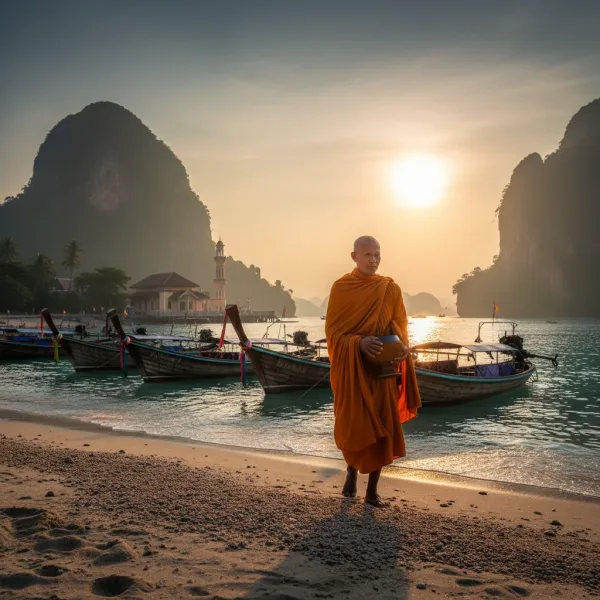
Krabi’s towering limestone karsts don't just look dramatic; they actively trap the coastal humidity, creating a heavy, salt-laced air that wraps around you the moment you step off the plane.
While the Gulf islands get a steady cross-breeze, Krabi’s dramatic topography means the air here often sits perfectly still, pushing the "feels like" temperature up by at least four degrees. It’s a thick, enveloping warmth that takes exactly forty-eight hours to get used to, but soon feels like a second skin.
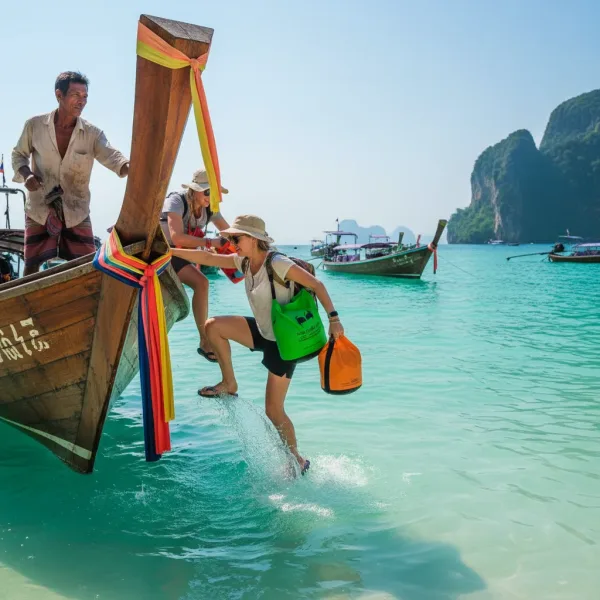
The "Cool" season from December to February is Krabi’s golden era, though the name is a spectacular lie. Daytime temperatures hover comfortably between 28°C and 32°C, dropping to a manageable 24°C at night. The humidity retreats to around 60%, leaving the skies a sharp, cloudless blue that practically demands a longtail boat trip to Railay.
Then comes the Hot season from March through May, where the mercury regularly hits 35°C but feels closer to 40°C. The April heat isn't just hot; it's a physical weight that presses down on your shoulders the moment you leave the air-conditioning. You will sweat simply standing still in the shade. However, this is exactly when the Andaman Sea is at its absolute calmest, resembling a giant pane of turquoise glass that is utterly perfect for morning kayaking.
The Rainy season rolls in from June to November, peaking in September and October. Daytime temperatures drop slightly to 29°C, but the humidity surges past 85%. It is wonderfully atmospheric. The jungle explodes into an impossible shade of green, and the waterfalls at Khao Phanom Bencha finally roar back to life.
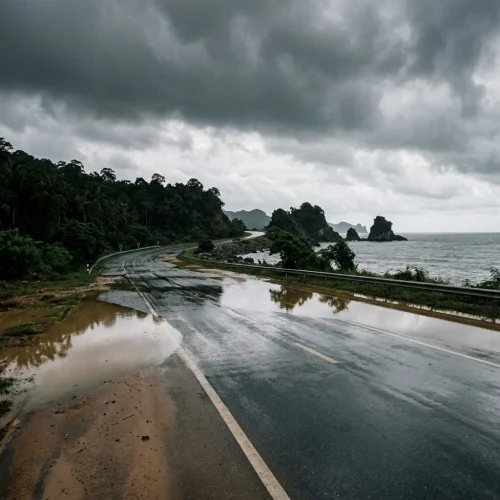
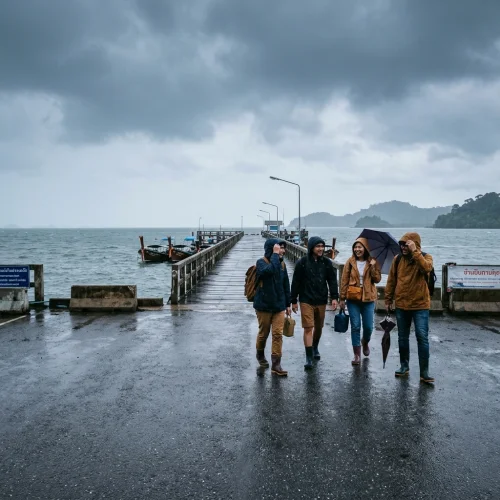
Forget the gentle English drizzle. When it rains in Krabi, the sky simply unzips. From June to August, this usually means a predictably ferocious downpour at 4 PM that floods the street gutters for an hour before leaving behind a glorious, cool evening. September and October are a different beast. These months carry an 80% chance of daily rain and occasionally deliver three-day stretches of persistent grey skies.
The real monsoon disruption isn't the water from above, but the water below. High Andaman sea swells frequently halt the ferries and speedboats to Koh Lanta and the Phi Phi islands during these peak wet months. You will need a wet-weather plan. Do not bother packing a flimsy umbrella from home; the coastal squalls will snap it in seconds. Instead, buy a heavy-duty yellow poncho from any 7-Eleven for 50 THB (GBP 1.15). It looks entirely ridiculous, but it keeps your day moving and doubles nicely as a dry-mat for a damp boat bench.
AIR QUALITY & THE BURNING SEASON
Unlike northern Thailand, Krabi largely dodges the worst of the annual "Burning Season." However, from late February through April, prevailing winds can drag agricultural smoke down the coast or across the water from Sumatra. The AQI occasionally creeps into the 100-150 range, replacing the sharp blue horizon with a milky white haze. It rarely stings the throat, but it does ruin a sunset photo. If a bad patch hits, buy an N95 mask from a local pharmacy for 80 THB (GBP 1.85) for the scooter ride, and escape to the islands. The sea breeze typically keeps offshore air significantly cleaner.
Packing for 80% humidity requires a tactical approach. Leave the heavy denim jeans and polyester shirts in the UK; they will weld to your skin within minutes and refuse to dry in the damp coastal air. Instead, bring loose linen, high-quality merino wool, or lightweight bamboo fabrics that actually breathe.
The UV index here regularly hits a blistering 11 by midday. Bring your preferred facial sunscreen from home, as buying a quality, non-whitening brand locally like Banana Boat will set you back a steep 550 THB (GBP 12.65) in Ao Nang pharmacies. For the strict "shoulders and knees covered" dress code at the Tiger Cave Temple, do not suffer in thick trousers. Buy a ridiculously patterned pair of elephant pants at the night market for 150 THB (GBP 3.45) to throw over your shorts at the entrance. They are incredibly airy and solve the modesty problem instantly.
Krabi’s equatorial heat saps your energy with frightening speed. To avoid heatstroke, mimic the locals: do your heavy exploring before 11 AM, retreat to the shade for a long lunch, and emerge again after 4 PM. You sweat out minerals faster than water can replace them. Pick up Royal-D electrolyte sachets from 7-Eleven for 10 THB (GBP 0.23) each and drink one daily. The dense mangrove forests and jungle-clad karsts mean mosquitoes are a year-round reality, particularly at dawn and dusk. Buy a pink bottle of local Soffell repellent (45 THB / GBP 1.05); it works far better than imported sprays.
BEST TIME TO VISIT
The perfect balance of 29°C days, calm seas, and manageable crowds lands squarely in late January to mid-February. You get the flawless skies without the Christmas price hikes. However, the true insider secret is late November. The monsoon has usually broken, the waterfalls are still thunderously full, and the peak-season crowds have not yet descended on the beaches.