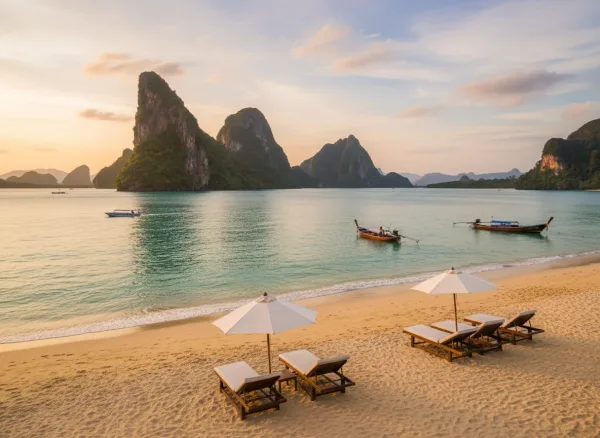
The defining cultural characteristic of this southern province is its seamless, centuries-old integration of Thai Buddhist and Thai Muslim communities living side by side under towering limestone karsts.
Most guidebooks paint it purely as a backpacker beach enclave, entirely missing the maritime heritage of the Chao Ley whose seafaring animism shapes daily life. You cannot walk through a morning market here without hearing the call to prayer mingling with the chanting of monks on alms rounds.
Faith here is deeply practical and heavily influenced by the sea. While the rest of the country looks to formal temples, local devotion often centres around spirit houses guarding longtail boat fleets. Wat Tham Suea, the Tiger Cave Temple, remains the spiritual centrepiece. Entry is free, though a 50 THB (£1.10) donation is expected. Climbing the 1,260 steps is less about enlightenment and more a communal test of endurance where monks haul building materials alongside sweating tourists. Down on the coast, a surprising custom catches visitors off guard. The local Muslim population forms a significant majority in many villages, meaning Friday prayers dictate the rhythm of life just as much as Buddhist holy days. You will often see Buddhist fishermen making small offerings to Islamic saints of the sea before a long voyage, a beautiful display of syncretism defining the Andaman coast.
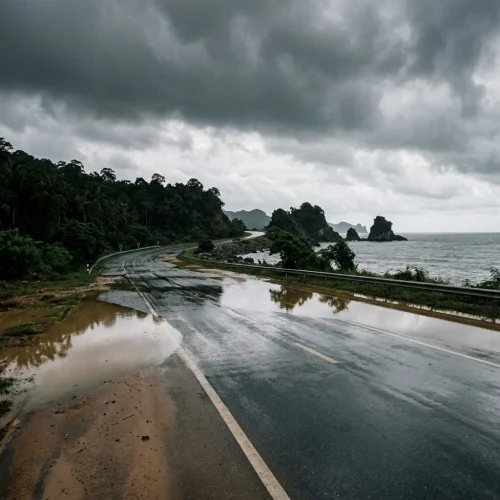
The Laanta Lanta Festival in March is the most revealing celebration of the region's diverse heritage. Ostensibly a celebration of Koh Lanta's Old Town, it is actually a rare public gathering of the Urak Lawoi sea gypsies. Most write-ups focus on the street food, but the real draw is watching Muslim, Buddhist, and Chao Ley communities competing in fiercely contested long-tail boat races. Expect ferry schedules to become entirely theoretical during this week. November brings Loy Krathong, but the local twist involves floating banana-trunk boats out to sea rather than on rivers, requiring waders to push them past the breaking surf. The sheer volume of people heading to the beaches causes gridlock on coastal roads. April's Songkran water festival is celebrated with typical enthusiasm, though predominantly Muslim fishing villages treat it with polite, dry restraint. If you want chaos, stick to the main tourist beaches.
TRADITIONS & CUSTOMS
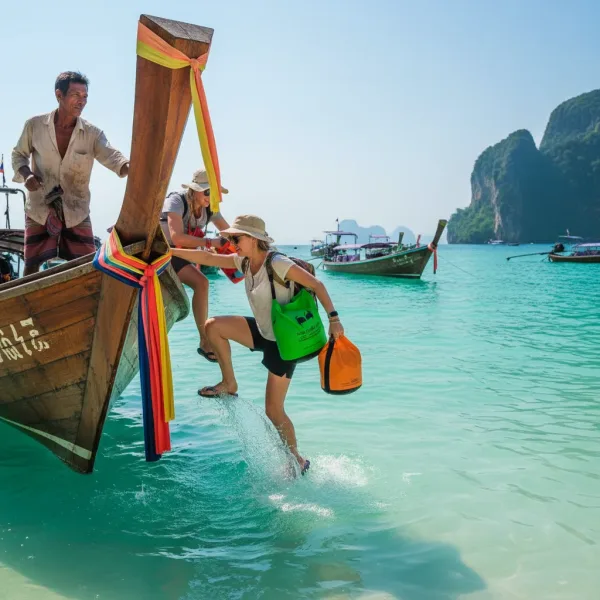
Social harmony dictates everything. The standard Thai greeting, the wai, is common, but in Muslim communities, you will often see a gentle touch of the right hand to the chest instead. When dining, taking the last piece of food from a central plate without offering it around first is considered remarkably greedy. The most specific local custom involves the sea. You must never step over the prow of a longtail boat. This is where the spirit of the vessel resides. Most Westerners blunder straight onto the wooden bow for a photograph, oblivious to the sharp intakes of breath from the crew. Simply enter where the captain indicates to keep everyone happy. Dress codes here are stricter than on the Gulf coast. Wandering through a fishing village in swimwear is a profound insult. Pulling on a sarong takes seconds and earns immediate respect.
The true artistic heritage of the province lies in intricate batik fabrics. Introduced centuries ago through maritime trade with Malaysia, genuine local batik is drawn entirely by hand using a copper canting tool. You can watch artisans work in small workshops around Krabi Town, where a hand-drawn sarong costs around 800 THB (£18). Be highly suspicious of the flawlessly uniform printed sarongs sold along beach promenades for 200 THB (£4.50). These are mass-produced factory prints from elsewhere, devoid of the wax-resist imperfections that mark authentic southern craftsmanship.
Food here tells the story of the spice route. Roti mataba, a pan-fried flatbread stuffed with spiced minced meat, is not just a snack but a morning ritual. Men gather at dawn in open-air teahouses to eat roti, drink aggressively sweet pulled tea, and debate local politics. Eating alone is viewed with genuine pity. Meals are inherently communal, anchored by a central bowl of gaeng som, a blisteringly sour yellow curry that defines the southern palate. Sweat together over the chilli heat, and you are no longer a passing tourist but a temporary local.
LANGUAGE & COMMUNICATION
The southern dialect is notoriously rapid and clipped, dropping the ends of words entirely. A standard greeting of sawasdee is fine, but asking kin khao laew mai? (have you eaten rice yet?) functions as the true local icebreaker. Using this phrase instantly shifts you from tourist to welcome guest. A two-hour conversational Thai lesson at a local language school costs roughly 500 THB (£11.50) and pays immediate dividends.
Navigating the dual cultural landscape requires situational awareness. Always check if a restaurant is halal before bringing in outside drinks, as consuming alcohol in a Muslim-owned establishment is deeply offensive. Never point your feet at anyone, particularly when sitting on the floor of a boat. When visiting sea gypsy shrines on the smaller islands, do not touch the carved wooden figures. They are active sites of worship rather than curious relics. Finally, keep your temper. Raising your voice over a delayed ferry causes a complete loss of face for everyone. A smile solves problems far faster than anger.