Khao Kho - Phetchabun
Khao Kho is a mountainous district in Phetchabun Province, known for broad valley views, cool-season mornings and mist that can settle between the ridges. The attractions are spread across a large area rather than concentrated in one walkable town, so a visit works best as a road trip with a car or a pre-arranged driver.
The district’s best-known sights include Wat Phra That Pha Sorn Kaew, the Khao Kho Sacrificial Monument, Sri Dit Waterfall and a series of viewpoints along the highland roads. Khaem Son, on Highway 12, is a useful base for the temple and the eastern side of the district, while accommodation around the central Khao Kho viewpoint area gives easier access to the memorial, post office viewpoint and Sri Dit Waterfall.

Highland Landscapes and the Sea of Mist

Khao Kho lies among the ranges of the lower north, with steep roads, cultivated slopes, forest and high viewpoints overlooking lower valleys. The district is cooler than Thailand’s central plains, particularly around dawn during the cool season, but daytime conditions can still be warm and the weather changes with altitude, cloud and rain.
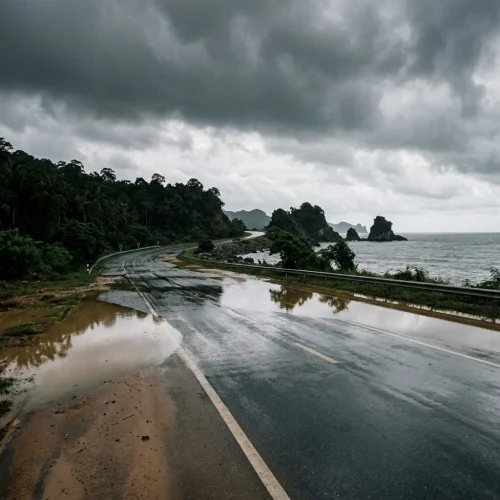
Morning mist is one of Khao Kho’s main attractions, although it is a weather event rather than a daily performance. It can appear at different times of year when moisture and temperature conditions are suitable. The rainy season often produces dense cloud and green scenery, while November to February usually brings the most comfortable daytime weather and the coolest early mornings. A clear valley view is never guaranteed, so allow more than one morning if the mist is important to your visit.
Khao Kho viewpoint and Khao Takhian Ngo viewpoint are among the established places to watch the changing light over the hills. Arrive before sunrise if you want the full dawn sequence, but check the forecast and avoid stopping on road bends or verges when designated parking is full. Temperatures can feel surprisingly cold on exposed ridges, so carry a light jacket or layers rather than relying on lowland conditions.
The Five Buddhas of Wat Phra That Pha Sorn Kaew

Wat Phra That Pha Sorn Kaew stands at Khaem Son, close to Highway 12. Its most recognisable feature is the white ordination hall formed around five seated Buddha images of descending size. Across the complex, the chedi, walls, columns and terraces are decorated with colourful tiles, beads, jewellery and Benjarong porcelain, creating intricate mosaic surfaces against the surrounding mountains.
The temple is an active religious site as well as a major visitor attraction. Dress respectfully with shoulders and knees covered, speak quietly and remove footwear where signs or temple practice require it. The terraces involve steps and exposed tiled surfaces, which can become hot in strong sun or slippery after rain.
There is no general admission charge, although donations may be made. Opening arrangements can change for religious observances, maintenance and busy holiday periods, so check before travelling. Traffic and parking are often busiest at weekends and on Thai public holidays. Allow about one to two hours for the principal buildings and viewpoints without turning the visit into a rushed photo stop.
Complete guide to hiking and trekking in Thailand for UK travellers, covering northern hill-tribe routes, Doi Inthanon, Khao Yai, guide rules, costs, and seasons.
Highland Produce and Places to Eat

Phetchabun is particularly associated with sweet tamarind, a less acidic variety usually eaten as fruit rather than used as the souring ingredient in Thai cooking. Fresh pods and packaged products are widely sold in the province when the crop is available. Vegetable growing is also prominent across the highlands, and roadside stalls may carry cabbage, strawberries and other seasonal produce.
Khao Kho has developed a strong viewpoint café culture. Many cafés occupy ridges or slopes chosen as much for the outlook as for their drinks, and prices tend to be higher than at ordinary local coffee shops. A coffee at a prominent viewpoint café commonly costs about 100–160 THB (approximately £2.25–£3.60), while a straightforward Thai meal at a local restaurant is often around 70–150 THB (approximately £1.60–£3.35). Larger restaurants and resort dining rooms can cost considerably more. Confirm current menu prices before ordering.
For a wider selection of everyday food, markets and noodle shops, Lom Sak and Phetchabun city are more practical than isolated ridge accommodation. Resorts away from the main roads may have limited evening choices, so check whether breakfast or dinner is available before arrival. Carry some cash for small stalls and local restaurants, although card and QR payments are increasingly common at larger establishments.
Khao Kho Sacrificial Monument and Military History

The Khao Kho Sacrificial Monument commemorates civilians, soldiers and police who died during the conflict between the Thai state and communist insurgents in the surrounding mountains. The high ground was strategically important during fighting that continued in the area through the 1960s and 1970s into the early 1980s.
The marble monument stands on a ridge with views across the district. Names of those commemorated are recorded at the site, making it a place of remembrance rather than simply another scenic stop. Keep voices low and treat the memorial respectfully.
Nearby military displays and the Itthi artillery support base area provide further context through weapons, vehicles, bunkers and positions associated with the conflict. Displays and access arrangements can change, and English interpretation may be limited. Check locally before making a special journey for a particular museum exhibit. Together, these sites explain an important part of Khao Kho’s modern history and why roads, settlements and tourism developed across terrain that was once difficult to control.
Where to Stay in Khao Kho

Accommodation ranges from simple guesthouses and campsites to glamping tents, villas and polished mountain resorts. Location matters because the district is extensive and evening driving on steep, unfamiliar roads is best minimised.
Khaem Son and the Highway 12 corridor suit travellers prioritising Wat Phra That Pha Sorn Kaew, restaurants and onward travel towards Lom Sak or Phitsanulok. The central Khao Kho area is better placed for the main viewpoint, memorial and Sri Dit Waterfall. A room advertised with a mountain view may face a ridge rather than the valley where mist gathers, so inspect the map and recent room photographs before paying.
Current listings show basic rooms from roughly 900–1,500 THB (approximately £20–£34) on quieter dates, with many mid-range resorts around 1,800–3,000 THB (approximately £40–£67). View-led resorts, larger villas and glamping stays often begin around 3,000 THB (approximately £67) and can rise well beyond 5,000 THB (approximately £112). These are useful planning ranges rather than fixed tariffs; weekends, public holidays and the cool season can be substantially more expensive.
Check whether the quoted rate includes tax, breakfast, heating or hot water, and whether the room is reached by steep steps. Also confirm parking and late check-in arrangements. Book early for December, New Year and Thai holiday weekends, when popular properties and particular room types can fill quickly.
Waterfalls and Thung Salaeng Luang National Park

Sri Dit Waterfall is a broad, single-level cascade within Khao Kho district. Its appearance varies with recent rainfall, and wet rocks near the water can be slippery. The site also has a large wooden waterwheel associated with the area’s insurgency history. Check local access and water conditions before setting out, particularly during heavy rain.
Thung Salaeng Luang National Park extends across parts of Phetchabun and Phitsanulok provinces. Its best-known open grassland landscape is reached through the Nong Mae Na side of the park, which is separate from Khao Kho’s central attractions and requires additional driving. Pine-dotted savannah, forest roads and camping are the main reasons to include it, but visitors should not assume that every named park attraction is accessible from the same entrance.
The Tourism Authority of Thailand’s current listing for the Nong Mae Na area gives admission for foreign visitors as 500 THB (approximately £11.20) per adult and 300 THB (approximately £6.70) per child, plus camping at 30 THB (approximately £0.70) per person per night. Park charges, road access, campsite availability and seasonal restrictions can change, so confirm them directly with the park before travel. Some areas require visitors to carry their own supplies or use authorised local transport.
Getting There and Getting Around

Khao Kho is about 390 kilometres by road from Bangkok, depending on your start point and destination within the district. Driving commonly takes around five to six hours without long stops, but Bangkok traffic, roadworks, weather and holiday congestion can add considerably to the journey.
Current booking systems list direct Route 913 coaches from Bangkok’s Mo Chit 2 terminal to the Khao Kho stop at Thung Samo Market. A displayed one-way fare is 427 THB (approximately £9.55), with daytime and overnight departures taking about eight hours. Schedules and stopping points change, so confirm the service for your exact date and arrange the onward journey to your accommodation in advance.
Phitsanulok Airport is the nearest airport with regular domestic connections, followed by a drive of roughly two hours to the Khao Kho area. Flying is not necessarily faster door to door once airport time and the road transfer are included, but it can fit an itinerary that also covers Phitsanulok or Sukhothai.
A car is the most practical way to explore because the temple, viewpoints, memorial, waterfall, cafés and accommodation zones are far apart. Public transport between sights is very limited. If you do not want to drive, book a driver through your accommodation and agree the route, waiting time and total price beforehand. Motorcycles offer flexibility but the steep gradients, sharp bends, rain, fog and uneven road edges demand experience; avoid hiring one merely because it is the cheapest option.
Costs and Budgeting
Accommodation and transport will usually form the largest share of a Khao Kho budget. Prices vary sharply between a quiet weekday and a cool-season holiday weekend, so use current room and transport quotes rather than relying on a single daily figure.
| Item | Typical Planning Range | Notes |
|---|---|---|
| Basic accommodation | 900–1,500 THB (approximately £20–£34) | Per room on quieter dates; check taxes and breakfast |
| Mid-range resort | 1,800–3,000 THB (approximately £40–£67) | Per room; view and weekend premiums are common |
| Local Thai meal | 70–150 THB (approximately £1.60–£3.35) | Per person, excluding drinks |
| Viewpoint café drink | 100–160 THB (approximately £2.25–£3.60) | Premium locations may charge more |
| Bangkok–Khao Kho coach | 427 THB (approximately £9.55) | Current displayed one-way fare; confirm before booking |
| Thung Salaeng Luang admission | 500 THB adult / 300 THB child (approximately £11.20 / £6.70) | Current foreign visitor rate shown for Nong Mae Na |
Confirm current prices before travel or payment. A couple sharing a mid-range room and car can easily spend 3,000–6,000 THB (approximately £67–£134) a day before long-distance travel, while a private driver, higher-end resort and regular café stops can take the total above that range.
Planning Your Visit
Khao Kho is most straightforward for travellers with their own vehicle who enjoy scenic drives, temples, viewpoints and modern Thai domestic tourism. It also fits a wider road journey through Phetchabun, Phitsanulok or Loei. The dispersed layout makes it less convenient for anyone expecting to walk between attractions or rely on frequent local buses.
Two nights allow two opportunities for a misty sunrise and enough time for the temple, central viewpoints, the memorial and Sri Dit Waterfall without excessive backtracking. Add another night if you plan to explore Thung Salaeng Luang National Park or continue towards Phu Thap Boek, which is a separate mountain area north of Khao Kho.
What to Know Before You Go

Road conditions and visibility deserve more attention than the temperature. Rain and low cloud can reduce sightlines, while busy weekends bring queues around Wat Phra That Pha Sorn Kaew and popular viewpoints. Avoid ambitious driving plans after dark and leave extra time between stops.
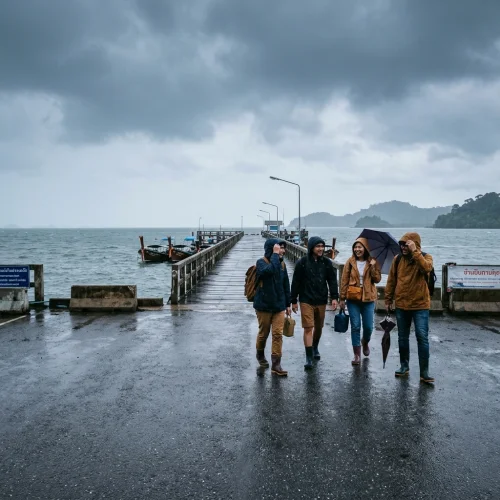
Bring layers for early mornings, sun protection for exposed viewpoints and a light waterproof during the rainy season. Smaller properties may not provide heating, but heavy winter clothing is unnecessary for most daytime visits. Comfortable footwear is useful for temple steps, viewpoints and damp ground.
Mobile coverage is generally available around settled areas and main roads but can weaken in valleys and remote park sections. Download offline maps before leaving and keep your accommodation name and location saved in Thai. Carry cash for small stalls, parking and minor local charges, while checking whether your hotel requires a deposit or cash payment.
Practical Tips

Choose your accommodation area after plotting your priority sights. A cheap room on the wrong side of the district can add hours of driving over two days.
Treat the sea of mist as a possibility, not a promise. Check cloud, rain and visibility forecasts, then keep a second morning free if conditions matter to you.
Visit Wat Phra That Pha Sorn Kaew early on a weekday when possible. Dress for a working Buddhist temple and avoid obstructing worshippers while taking photographs.
Buy seasonal produce from stalls where prices are displayed, and ask before entering fields or picking fruit. A farm shown on an old map or social post may no longer accept visitors.
Do not combine central Khao Kho, Phu Thap Boek and the Nong Mae Na grasslands into one hurried day. They involve separate mountain roads and much longer transfers than a map overview suggests.
If hiring a driver, provide your intended stops before agreeing the price. Confirm whether fuel, parking, waiting time and the return to your accommodation are included.
Before entering a national park, check the correct gate, current fee, vehicle rules, campsite status and whether food or drinking water is available at the area you intend to visit.
Quick Reference Table
| Item | Detail | Notes |
|---|---|---|
| Location Name | Khao Kho | Mountainous district and tourism area in Phetchabun Province |
| Region | Lower Northern Thailand | Attractions are dispersed across the district |
| Main Access Roads | Highways 12, 21 and local mountain roads | Route depends on accommodation area |
| Nearest Airport | Phitsanulok Airport (PHS) | Roughly two hours by road in normal conditions |
| Distance from Bangkok | About 390 km by road | Commonly five to six hours by car without long stops |
| Typical Visit Duration | 2–3 nights | Longer if adding national park areas or Phu Thap Boek |
| Coolest Period | November to February | Mist and clear views remain weather-dependent |
| Currency | Thai Baht (THB) | Carry cash for small local payments |
| Language | Thai | English is more common at larger resorts and attractions |
| Primary Local Transport | Car or pre-arranged driver | Limited public transport between sights |
| Major Landmark | Wat Phra That Pha Sorn Kaew | Five seated Buddhas and mosaic-covered structures |
FAQ: Khao Kho - Phetchabun
How should visitors get around Khao Kho?
What is the best time to see the sea of mist in Khao Kho?
What should visitors wear when visiting Wat Phra That Pha Sorn Kaew?
What are the typical costs for food and drinks in Khao Kho?
What should I consider when booking accommodation in Khao Kho?
How long should I plan to stay in Khao Kho?
What should I pack for a trip to Khao Kho?
What is a common mistake when planning a day trip to Khao Kho's attractions?
What should I do if I want to hire a driver in Khao Kho?
What should I know about mobile coverage and payments in Khao Kho?
Reviewed by the Thailand Guide Editorial Team • Last reviewed: 21 August 2026
This page is provided for general information only. While we aim for accuracy, details can change — please verify anything important independently before relying on it.