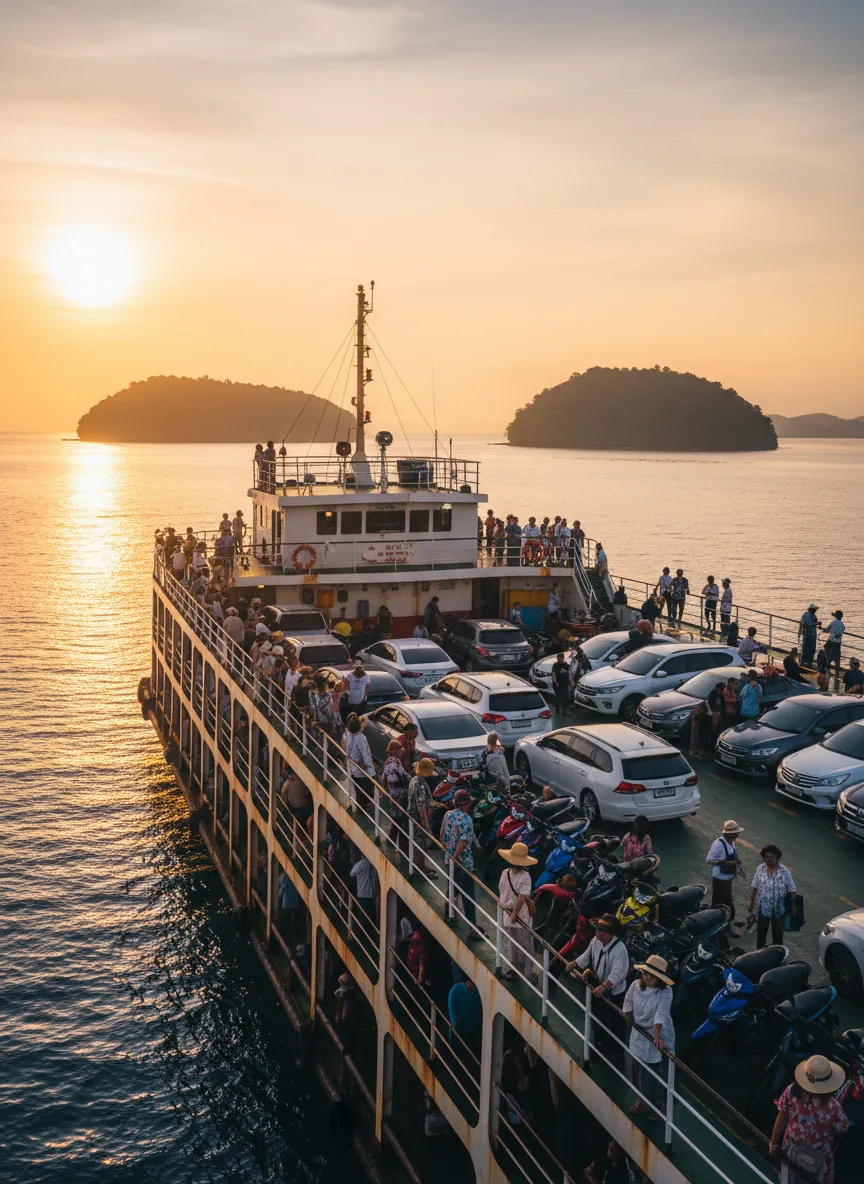
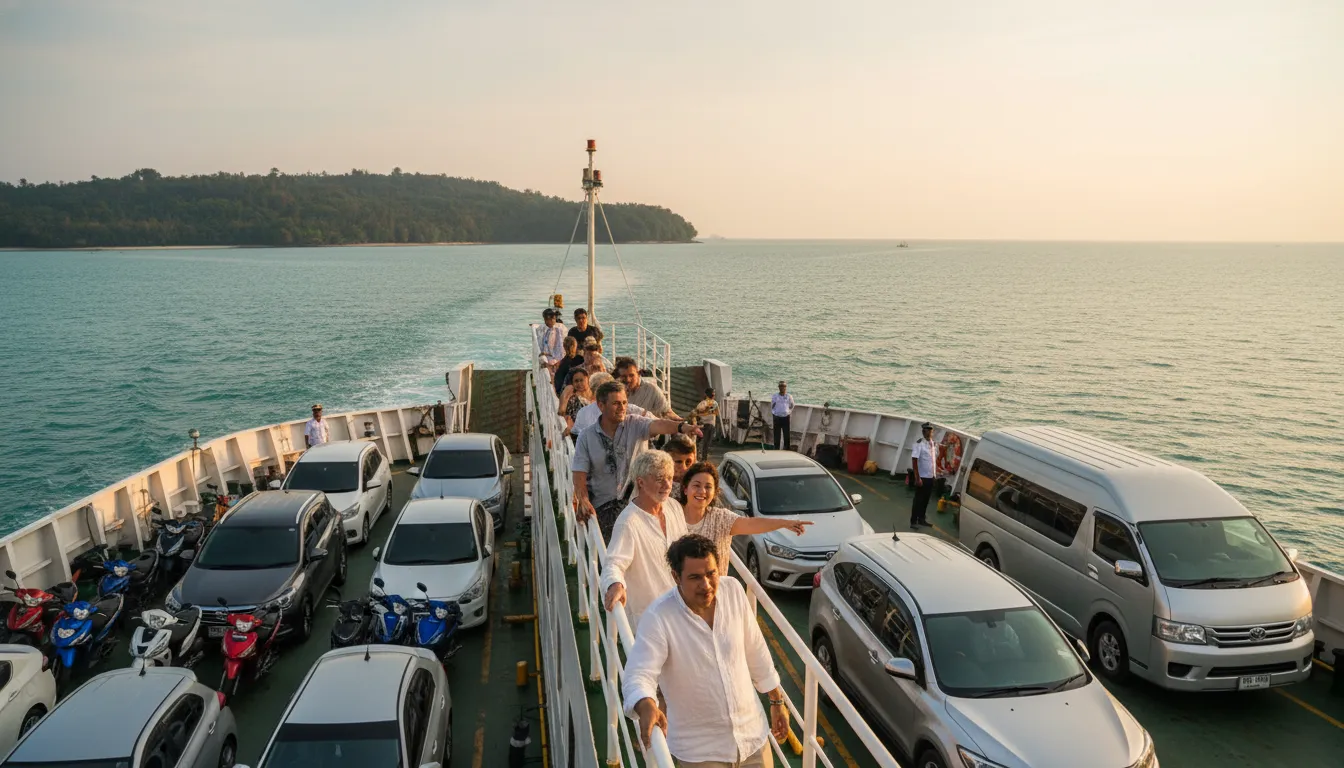
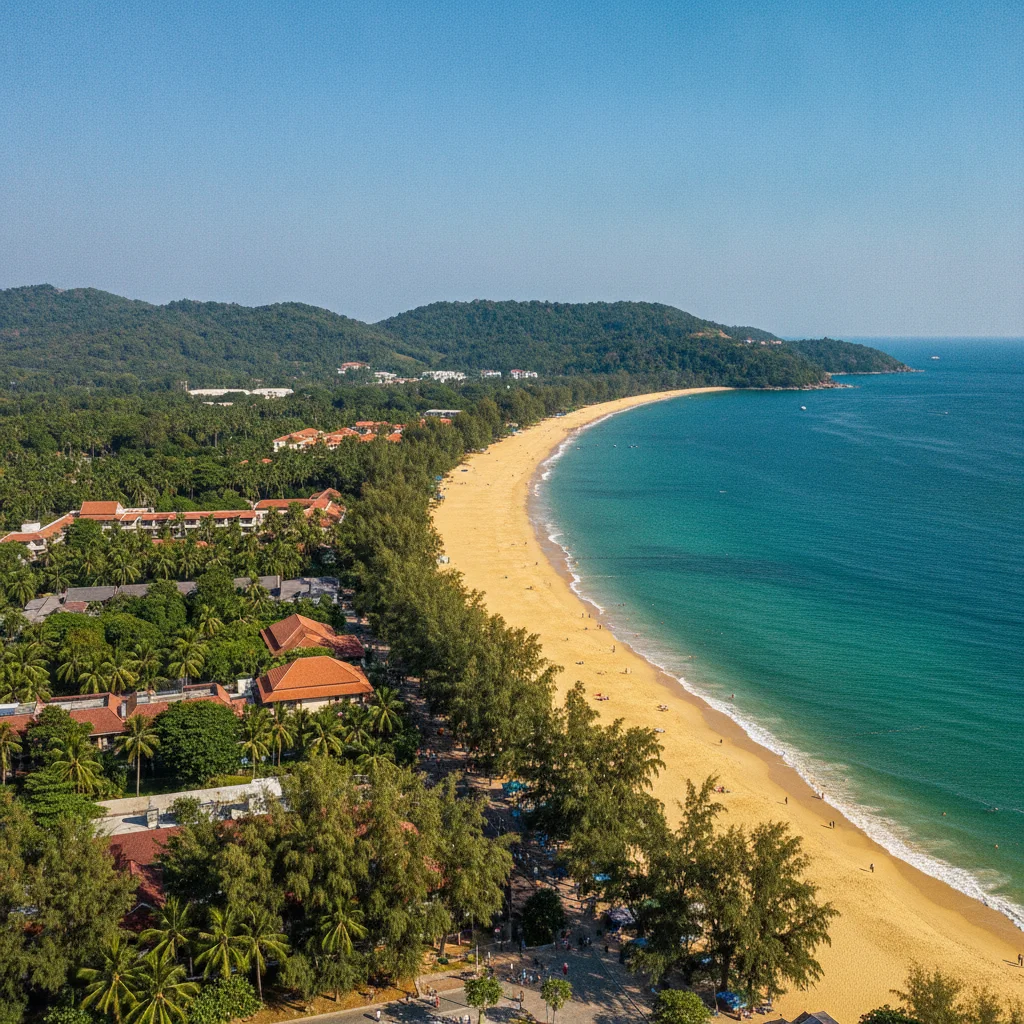
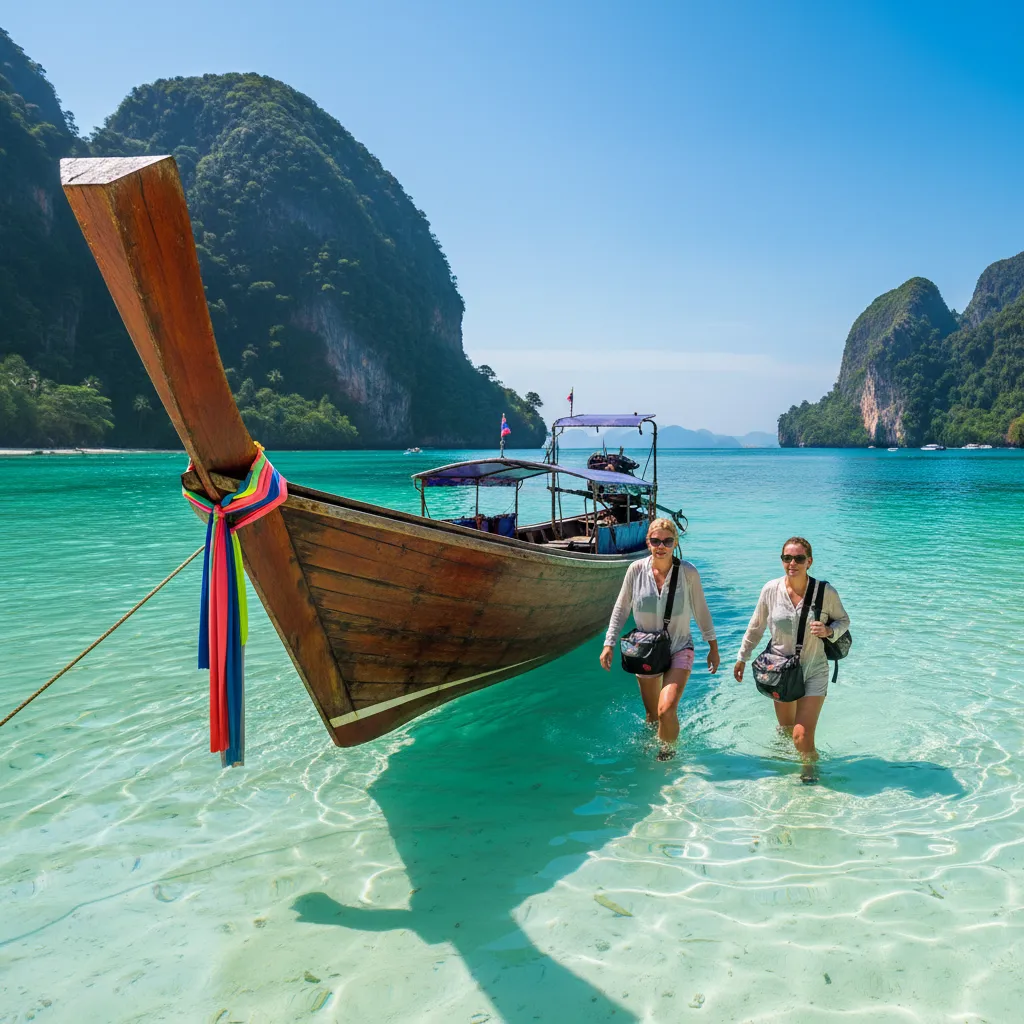
Reaching this particular Andaman island requires a multi-stage amphibious assault, trading direct flights for a rather lovely car ferry crossing from the mainland.
Unlike its heavily developed neighbours, the geography here forces you to slow down the moment you leave the airport terminal.
Flying from London Heathrow to Bangkok Suvarnabhumi takes around twelve hours, usually costing £600 to £900 (26,000 to 39,000 THB) depending on the season. From Bangkok, you will need a domestic flight down to Krabi International Airport, taking ninety minutes and setting you back about £35 (1,500 THB) with carriers like Thai AirAsia or VietJet. Once you land, the real journey begins. Shared minivans depart directly from the arrivals hall, costing roughly £10 (450 THB) per person for a two to three-hour drive that includes a short, breezy car ferry crossing over the water. If you prefer your own space after a long haul, booking a private taxi transfer runs to about £55 (2,400 THB). Keep a close eye on the clock when booking your inbound flights. The mainland car ferry stops running at 10:00 PM, so if your flight lands in Krabi after 8:00 PM, you will be spending the night on the mainland before crossing over in the morning.
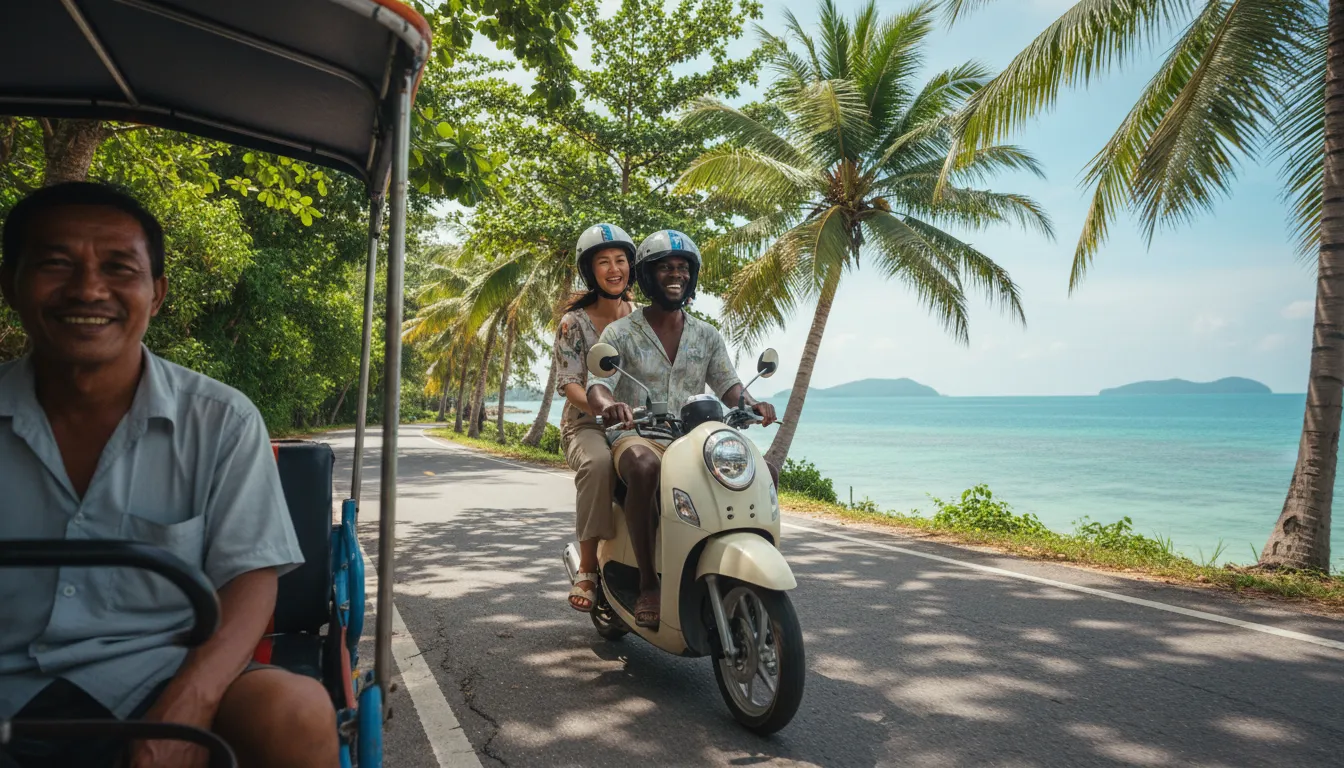
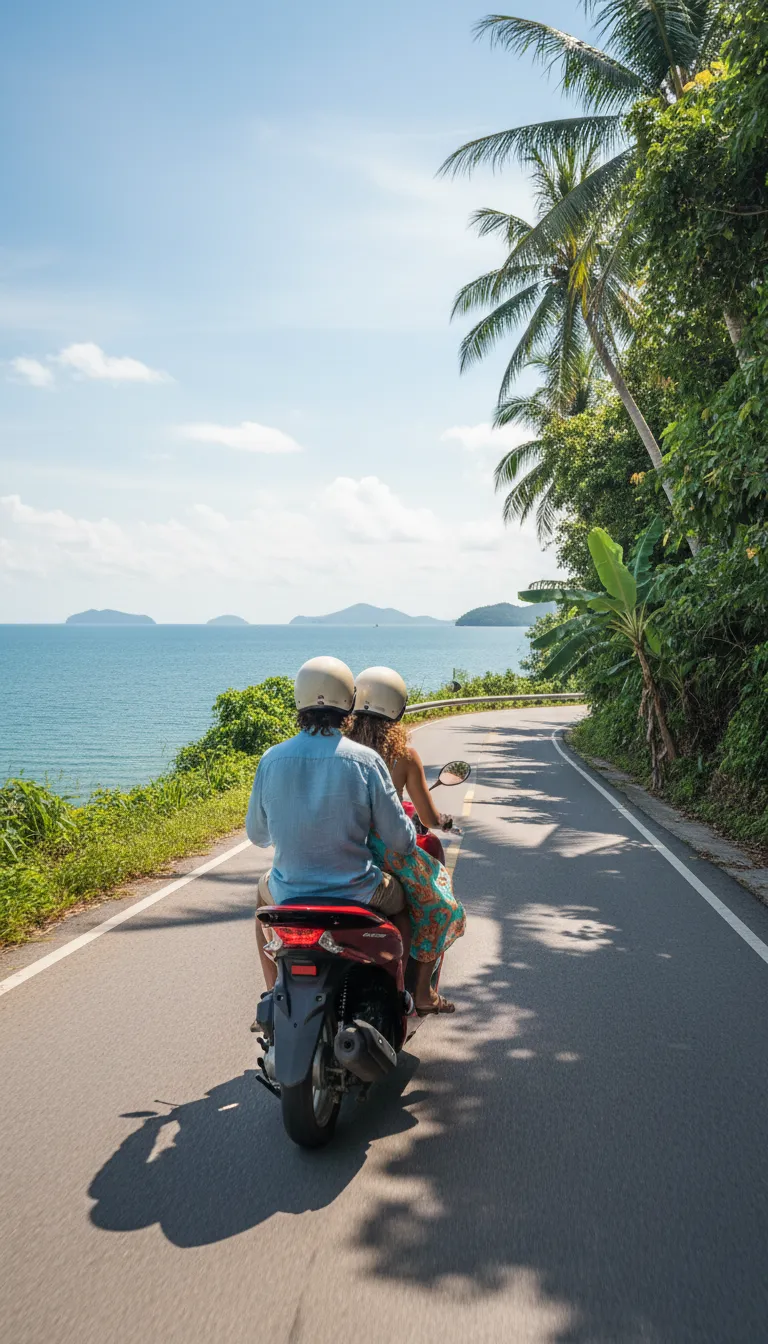
Forget about firing up Grab, Bolt, or InDrive here, as ride-hailing apps have zero presence on the island. Your primary mode of transport will be the local tuk-tuk, which in this part of the country is essentially a motorbike with a metal sidecar welded to it. A short trip from Saladan Pier to Khlong Dao beach takes ten minutes and should cost about £2.50 (100 THB), while heading further south to Kantiang Bay will cost closer to £9 (400 THB). You must agree on the fare before sitting down, as drivers routinely try to double the price for fresh arrivals who mistakenly assume the vehicle operates on a meter. Renting a scooter is by far the most liberating way to explore the winding coastal roads, costing around £4.50 to £6 (200 to 250 THB) per day. The main road down the west coast is mostly flat and well-paved, making it an excellent place for moderately experienced riders. Alternatively, songthaews—converted pickup trucks acting as shared buses—run up and down the main road. They are exceptionally cheap at just £1.15 (50 THB) per ride, but you might wait forty minutes for one to pass.
GETTING OUT
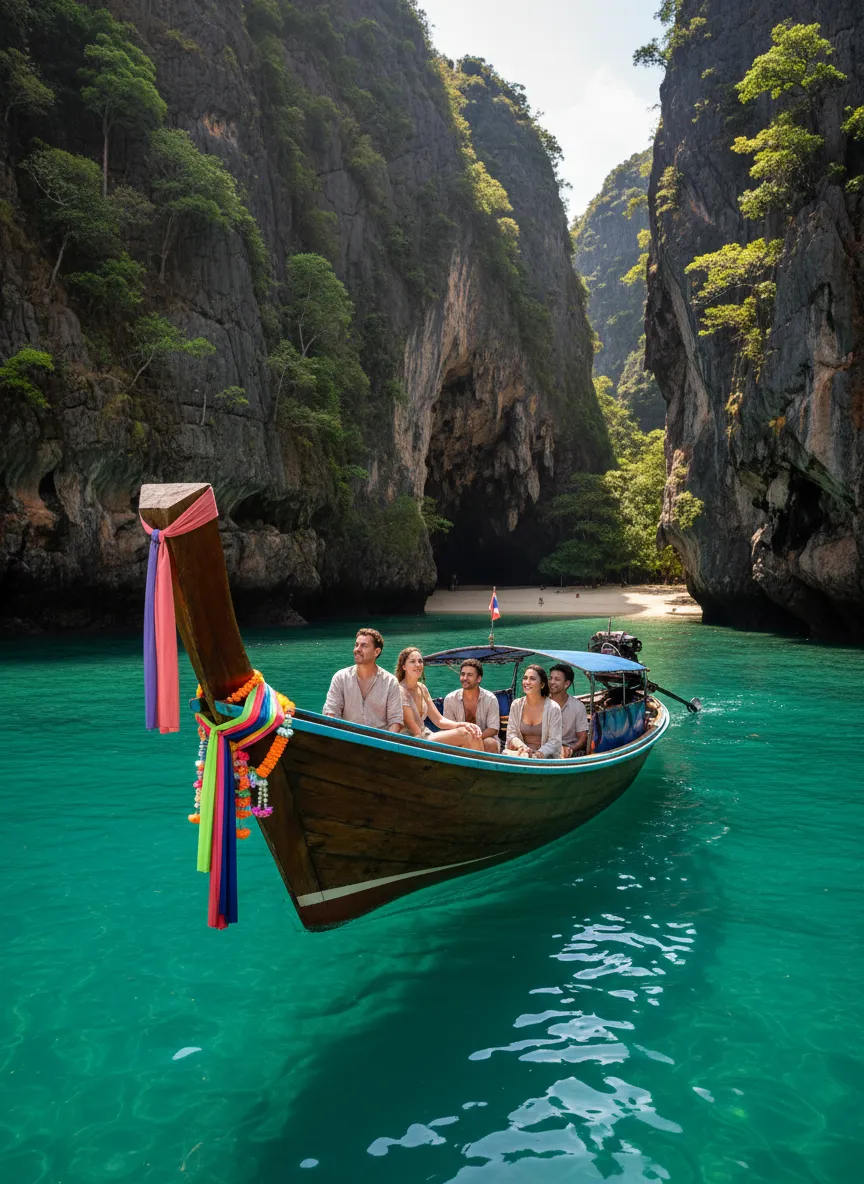
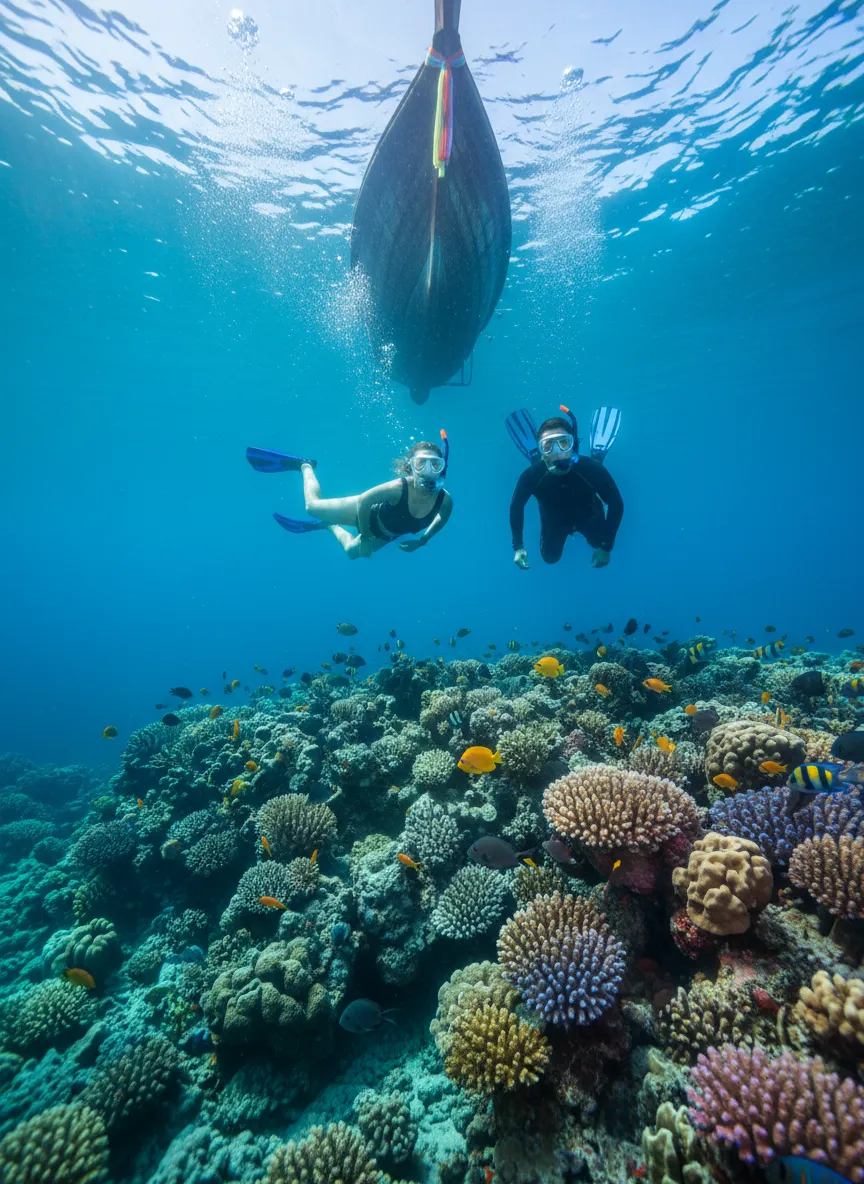
When island fever sets in, a speedboat day trip to Koh Rok takes forty-five minutes and delivers some of the clearest snorkelling water in the Andaman Sea, costing roughly £35 (1,500 THB) including lunch and national park fees. If you are moving on rather than returning, passenger ferries to Koh Phi Phi depart daily from Saladan Pier, taking exactly one hour and costing £11 (500 THB). For a longer onward journey down the coast to Koh Lipe, the high-speed ferry takes three gruelling hours but gets the job done for about £45 (1,950 THB).
Krabi International Airport is your primary gateway, served heavily by Thai AirAsia and VietJet from Bangkok. It is a tiny, rather dated facility. Saladan Pier on the northern tip of the island handles all passenger ferries and speedboats. Grab your cash at the airport ATMs before hopping in your minivan, as the pier area gets incredibly congested with departing tourists and manoeuvring luggage around the crowded cash machines is a massive headache.
Prepare to spend around £35 a day on a tight backpacker budget, £80 for a mid-range sweet spot with air conditioning and seafood dinners, and £150 upwards for luxury beachfront resorts. ATMs are plentiful outside 7-Eleven stores along the main west coast road, charging the standard £5 (220 THB) withdrawal fee. Card acceptance is growing at larger hotels, but this remains a heavily cash-based local economy. Your best strategy is bringing a fee-free travel card from the UK, withdrawing the maximum £680 (30,000 THB) in one go, and breaking large notes at supermarkets because small beach bars rarely have change.
CONNECTIVITY
Picking up a tourist SIM card at Krabi Airport is the smartest move, with an unlimited 30-day data package from AIS costing £22 (999 THB). AIS provides the most reliable 5G coverage along the rugged western beaches, whereas TrueMove tends to drop out completely once you drive south of Klong Nin. Accommodation wifi is generally strong enough for video calls, though it notoriously cuts out during the brief, heavy afternoon thunderstorms that roll in off the ocean.
British passport holders receive a 30-day visa exemption upon arrival in Thailand, which you can extend locally at an immigration office. Tipping is not mandatory but leaving £1.15 (50 THB) on a restaurant table or £0.45 (20 THB) for hotel housekeeping is highly appreciated by local staff. Sockets take flat or round two-pin plugs, meaning you will need a universal adapter. Dial 1155 for the Tourist Police if you encounter real trouble. Keep in mind that this is a predominantly Muslim island, meaning pork is absent from many local menus and walking through inland villages in just your swimwear will cause genuine, easily avoidable offence.