The air here smells constantly of salt and charcoal, a giveaway that this stretch of the Gulf operates as a working fishing hub long before it considers itself a resort town.
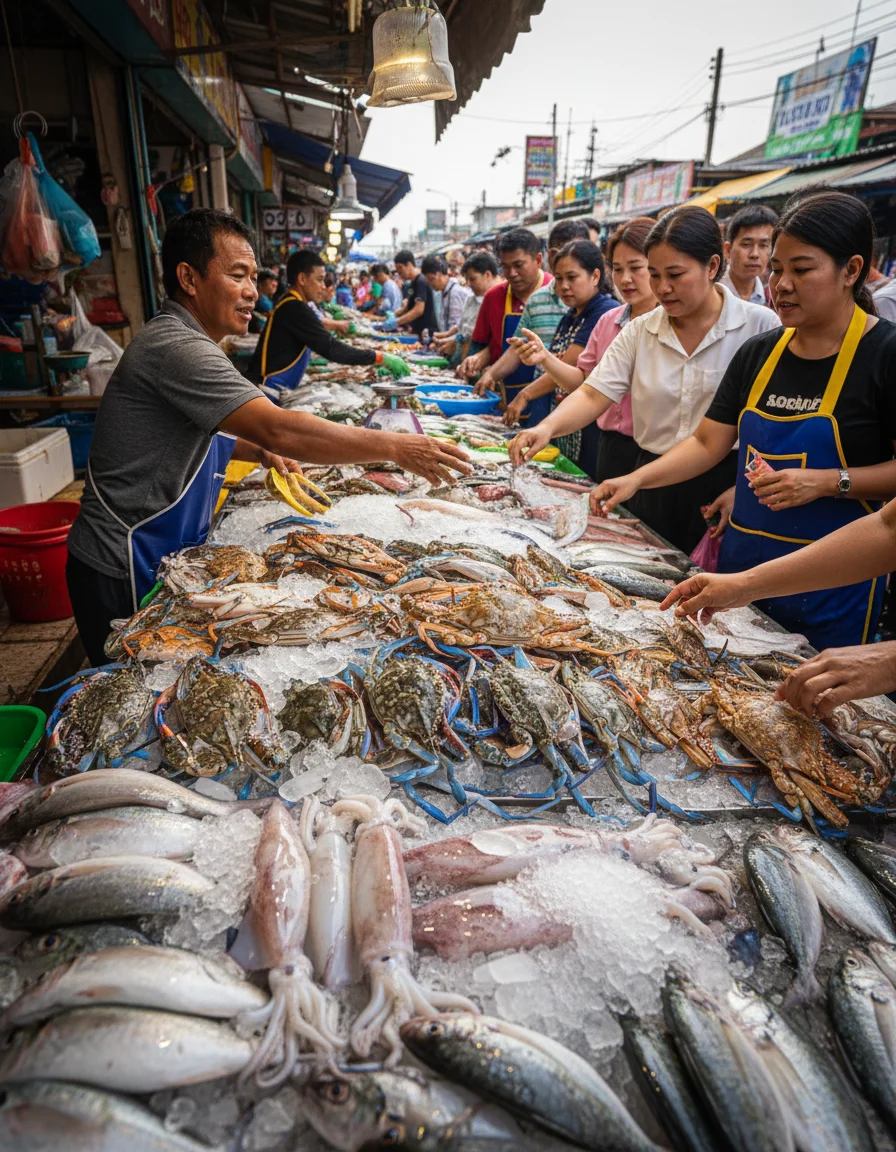
You come here for the absolute chaos of the weekend seafood markets, where Bangkok families haggle over catches pulled from the water barely an hour prior. It offers a raw, unpolished coastal dining culture that makes neighbouring towns feel overly sanitised by comparison.
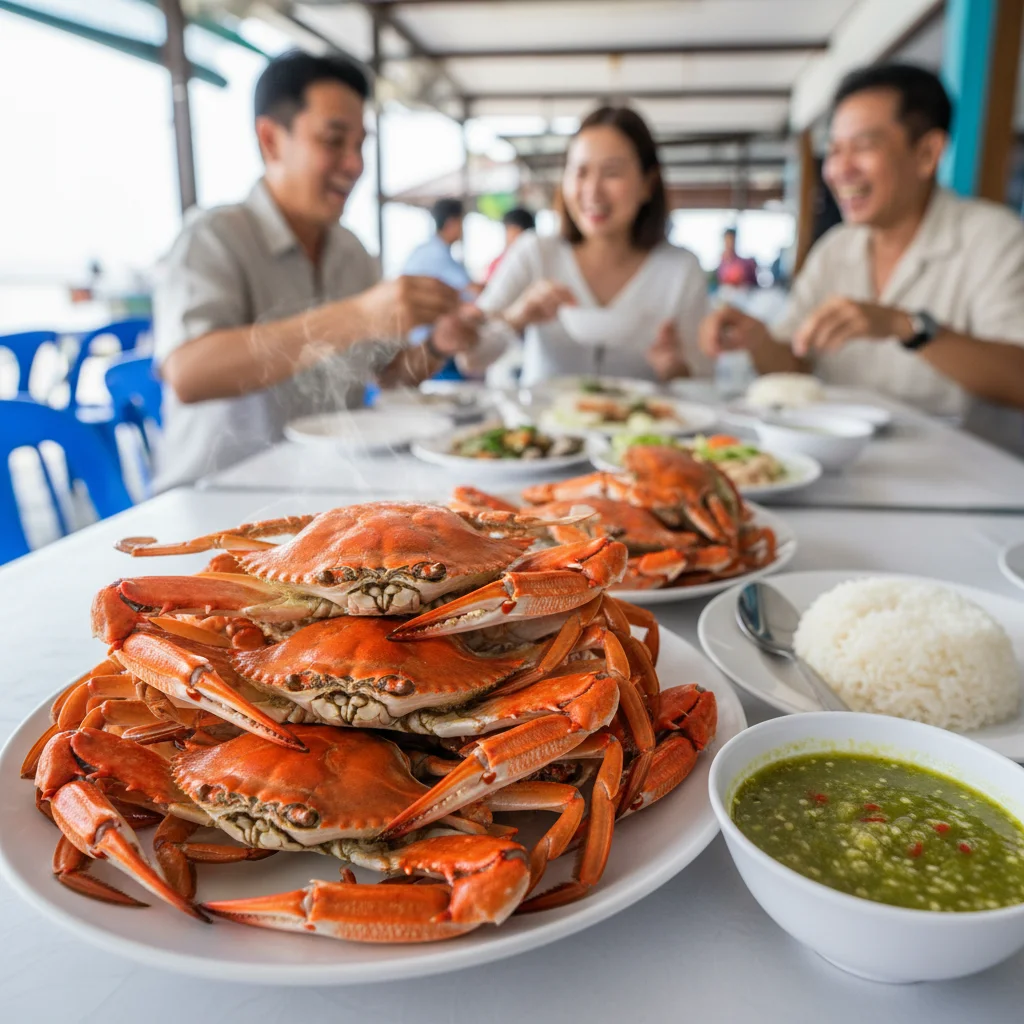
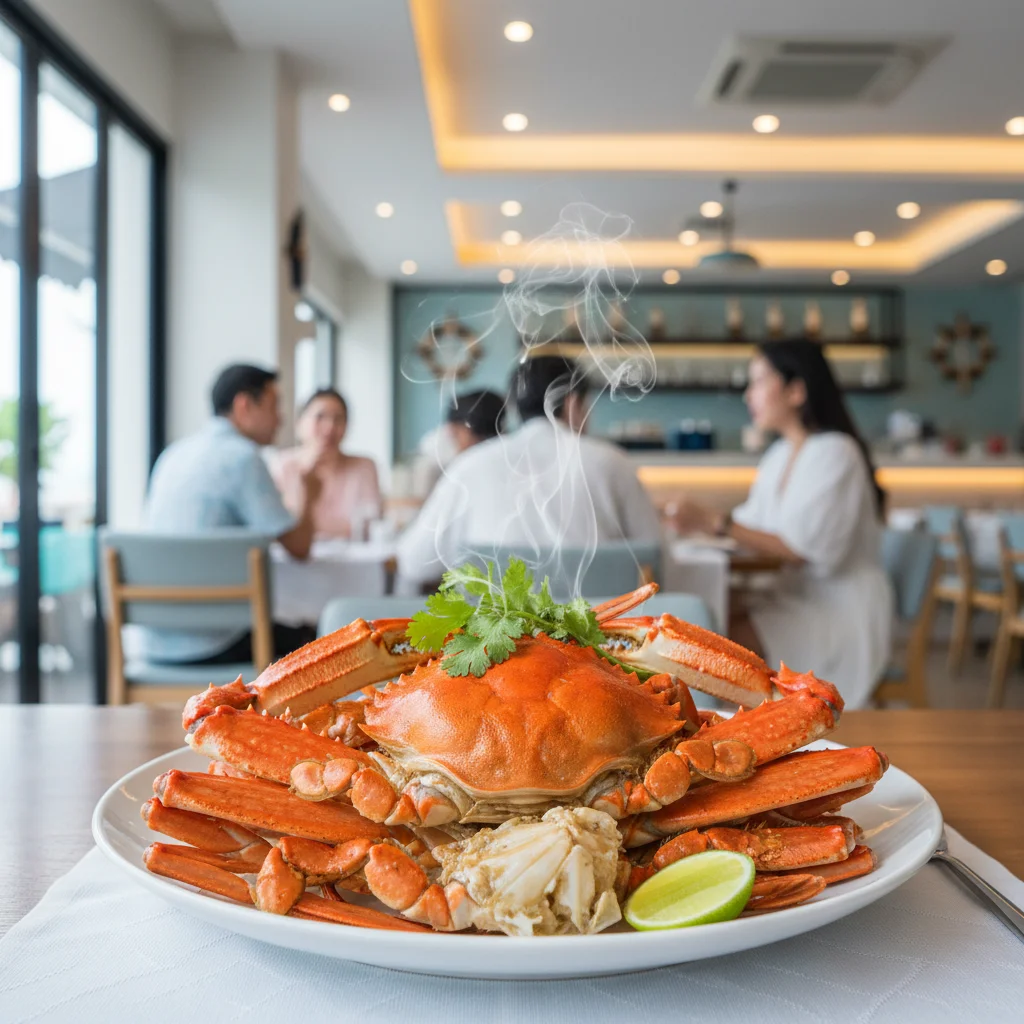
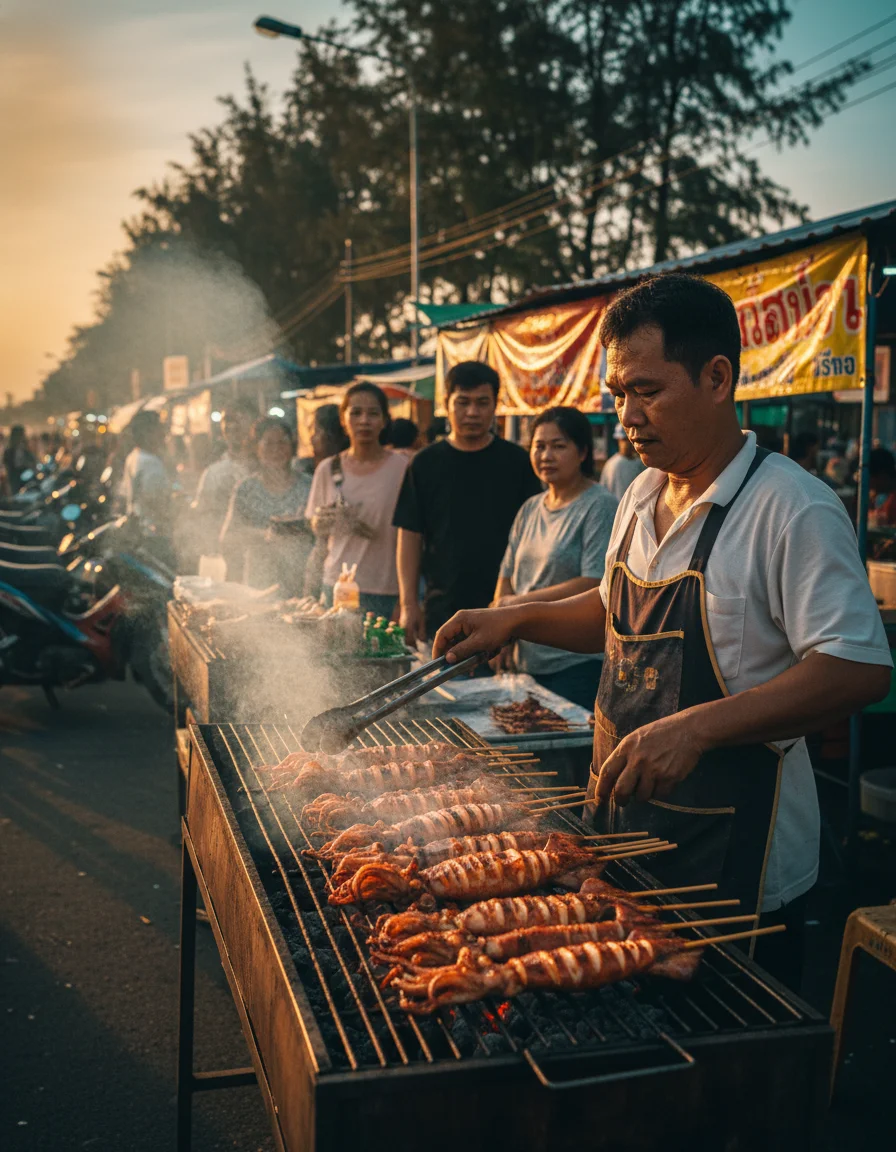
The undisputed king of the local catch is poo ma neung, or steamed blue swimming crab. It tastes sweet and remarkably clean, requiring absolutely nothing but a quick dunk in the aggressively tart green seafood sauce provided by the vendors at Saphan Hin. Expect to pay around 400 THB (£9) for a hefty kilo. You will also smell pla muek yang long before you see it. Whole squid is scored, grilled over charcoal until the edges catch and turn slightly bitter, and served on wooden skewers along the main beach road for 60 THB (£1.30).
For something more complex, seek out hor mok talay near the fishing pier. This is a red curry fish custard steamed in banana leaves, offering a firm, bouncy texture and a slow-building heat that lingers at the back of the throat, costing a mere 40 THB (£0.90) a parcel. Fresh local oysters, hoy nang rom sod, are smaller than their European cousins but pack a concentrated, metallic brine. You eat them raw with fried shallots and chilli paste at the Wednesday night market for about 150 THB (£3.30) a plate. Finally, order a bowl of tom yum nam sai. Unlike the creamy versions found elsewhere, this clear, broth-like iteration delivers a sharply acidic, lime-heavy punch that cuts straight through the richness of a heavy seafood feast. A massive communal bowl at the northern end of Ruamchit Road will set you back roughly 250 THB (£5.50).
Ruamchit Road forms the spine of the local dining scene, running parallel to the sand. The southern end leans towards sit-down seafood joints with plastic chairs and bilingual menus, where a sprawling family-style feast runs about 800 THB (£17.50) a head. For tighter budgets, the Wednesday Night Market near the railway station is essential. You can graze heavily across multiple wok stations and grill carts here for under 200 THB (£4.40).
If you want to eat exactly where the locals do, head to the cluster of unnamed tin-roofed stalls at the northernmost point of the fishing pier. Tourists rarely venture this far up the beach. You pick your fish straight from the ice boxes, point to a cooking method, and sit on a plastic stool watching the boats come in. A whole fried sea bass here costs around 300 THB (£6.60), easily feeding two.
STREET FOOD GUIDE
Hit the beachside stalls between late afternoon and dusk when the charcoal fires are freshly lit. Look for vendors with queues of Thai families; bypass any cart with pre-cooked seafood sitting under fluorescent lights, as the coastal heat is unforgiving. A solid rule of thumb is to check the ice. If the fish is buried under mountains of fresh, sharp ice, you are in good hands. When ordering whole fish or crab by weight, always confirm the price per kilo before they start cooking to avoid any awkwardness when the bill arrives.
Singha and Leo dominate the beer coolers, served ice-cold in large bottles for roughly 80 THB (£1.75). The standard local move is pouring them over ice in small glasses to combat the humidity. For a non-alcoholic sharpener, seek out nam manao, a freshly squeezed lime soda spiked with a heavy pinch of salt. It costs about 40 THB (£0.90) from the beachside beverage carts and genuinely saves you on a sweltering afternoon.
Skip the European-style pubs clustering around the central beach intersections. They charge steep premiums for imported pints and serve overwhelmingly average pub grub. If you crave a break from seafood, walk two streets inland towards the municipal market instead. Here you will find exceptional pork noodle soups and roasted duck on rice for a fraction of the cost, usually around 50 THB (£1.10) a bowl.