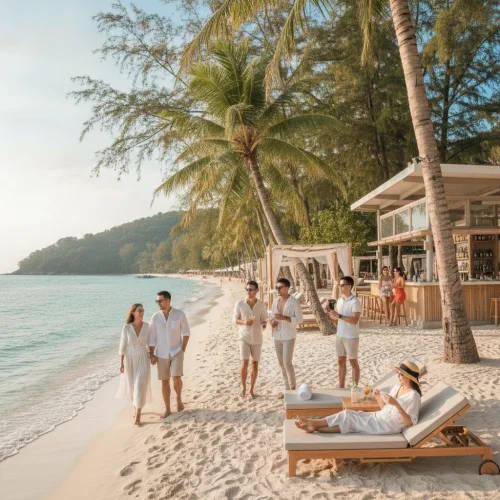
Krabi Province
Krabi Province contains over 150 offshore islands and sheer limestone cliffs rising up to 300 metres straight out of the Andaman Sea. It is home to Wat Tham Suea, where a grueling 1,260-step climb rewards you with panoramic summit views.
Situated 800 kilometres south of Bangkok on the southwest coast of Thailand, Krabi Province serves as a primary marine transit hub and holiday destination. The territory spans 4,709 square kilometres, characterised by dense mangrove forests, rugged coastal cliffs, and a collection of world-renowned archipelagos including Phi Phi and Lanta. It attracts outdoor enthusiasts. Rock climbers and beach tourists flock here to experience the dramatic natural landscape combined with accessible coastal infrastructure. The province transitions from quiet administrative zones in Krabi Town to active tourist corridors along Ao Nang Beach.

The Character and Setting of Krabi Province
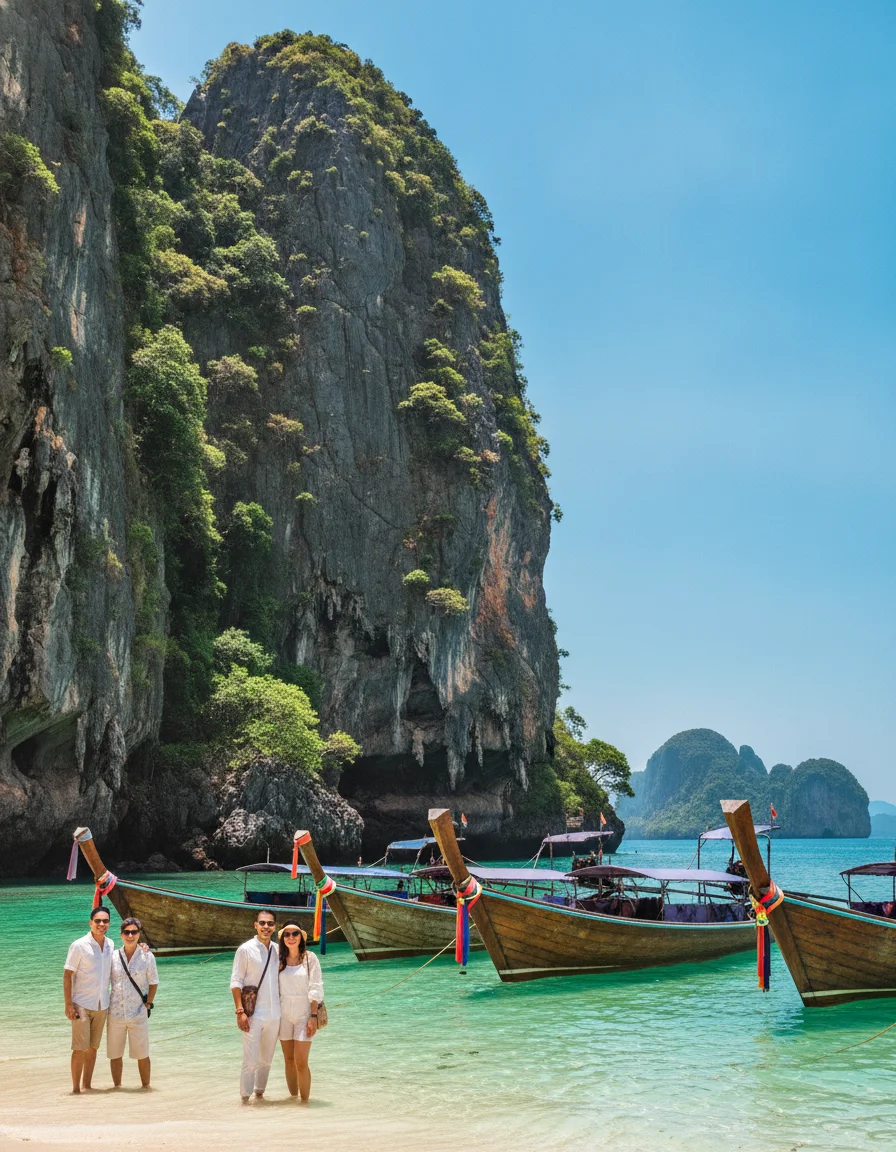
The geographic identity of Krabi Province is defined by its dramatic karst topography and vast marine territory. This southern province borders Phang Nga to the north, Trang to the south, and Nakhon Si Thammarat to the east, while its western coastline meets the Andaman Sea. The local environment features dramatic vertical limestone formations. These were created millions of years ago through the erosion of ancient coral reefs. These karsts rise directly from the flat agricultural plains of the mainland and tower over the offshore waters, creating natural barriers that divide the coast into isolated bays. Krabi Town serves as the low-key provincial capital. It sits along the banks of the Krabi River just before it empties into Phang Nga Bay. In contrast, the coastal strip of Ao Nang and the adjacent Railay Peninsula are characterised by sheer rock walls and white sand beaches. The local economy relies heavily on rubber and palm oil plantations in the interior districts, alongside a highly developed marine tourism industry. Route 4, the major southern highway, passes directly through the province, linking the agricultural interior to the coastal access roads. Travelling through the province reveals a stark contrast. You will see sleepy rural farming communities transition suddenly into busy coastal tourism hubs. The regional geography dictates that most coastal transit relies on marine transport, making the province a highly active maritime corridor. Understanding this layout helps you navigate the distinct transitions between the quiet interior plains and the dramatic, sea-facing cliffs.
Discover Koh Jum, Krabi's undeveloped island. Read our expert guide on beaches, eco-resorts, transport, and why this sleepy spot has no ATMs.
Key Landmarks and Must-See Attractions
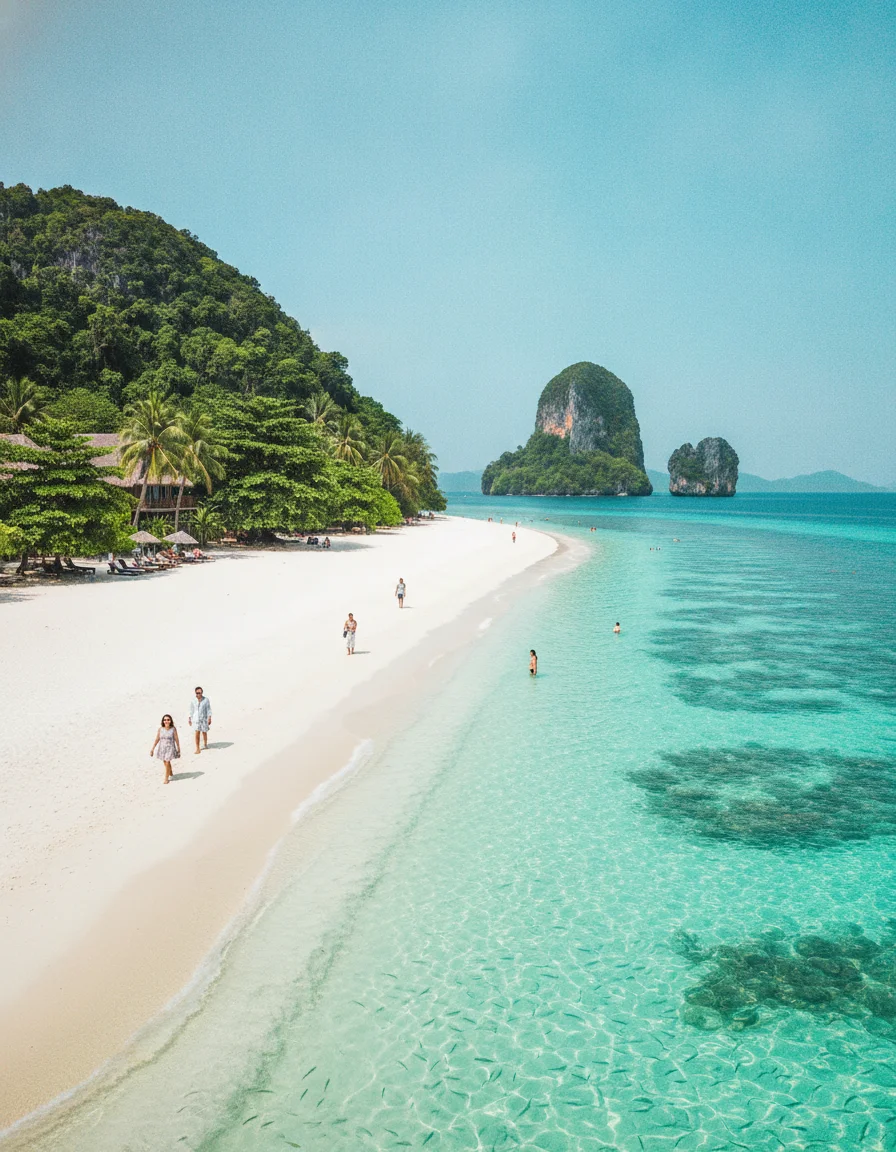
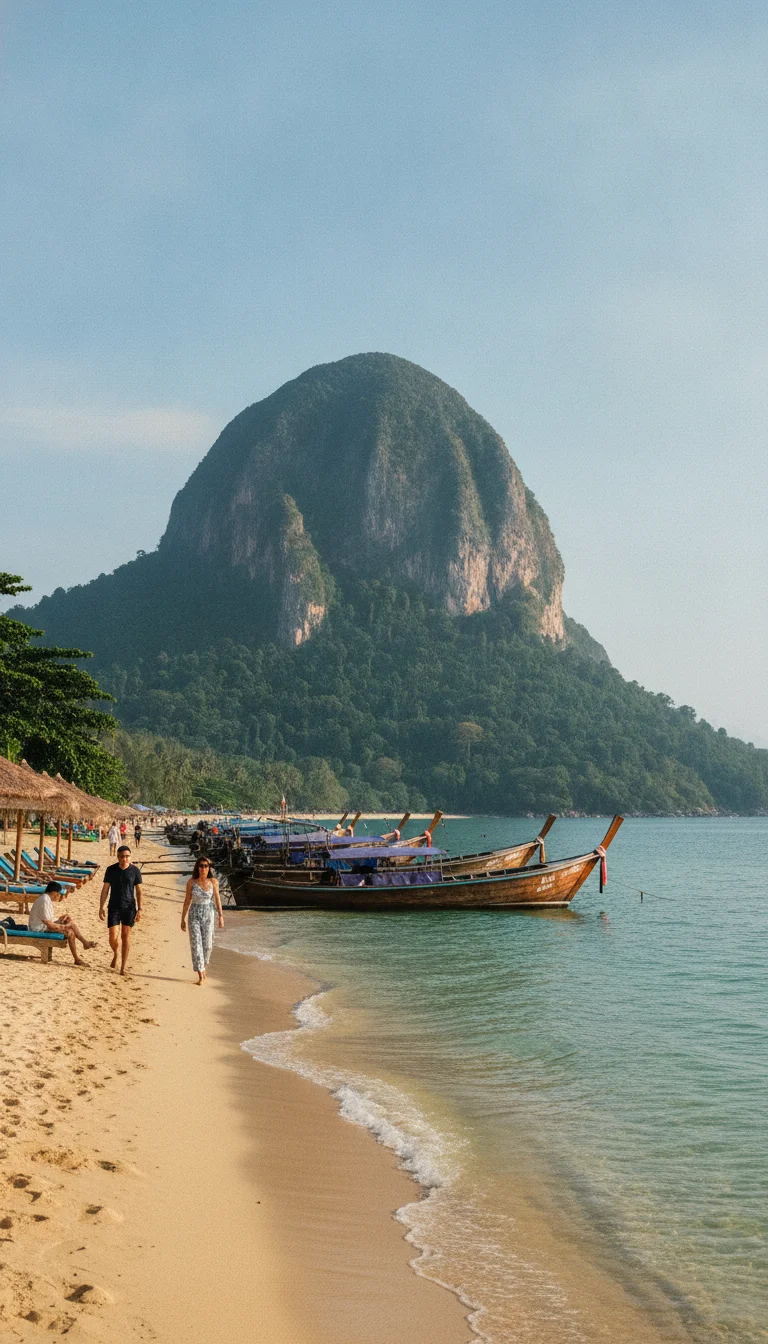
Krabi Province contains a mixture of dramatic coastal headlands, ancient religious sites, and offshore natural reserves. The most famous coastal landmark is the Railay Peninsula. It is accessible only by boat due to the high limestone cliffs that cut it off from the mainland. On Railay East, the dramatic rock faces attract climbers from around the globe, while Railay West provides a broad stretch of soft sand flanked by sheer cliffs. Further inland, Wat Tham Suea, or the Tiger Cave Temple, sits nine kilometres northeast of Krabi Town. To reach the golden pagoda at the summit, you must ascend 1,260 steep concrete steps. This is a major physical challenge. However, it rewards you with views across the rolling landscape of the Khiriwong Valley. Another critical landmark is the Susan Hoi, or Shell Cemetery, located 17 kilometres southwest of Krabi Town. This coastal shelf consists of fossilised freshwater shells dating back 75 million years, forming large, flat slabs that resemble broken concrete blocks on the shoreline. Finally, the Khao Khanab Nam hills, two 100-metre-tall limestone formations rising directly from the river, stand as the visual symbol of Krabi Town. Visitors can hire a longtail boat from Chao Fah Pier in Krabi Town for 500 THB (£11.25) to explore the small caves inside these river hills. Visiting these diverse landmarks provides an understanding of both the deep spiritual heritage and the geological wonders of the province.
The Southern Thai Culinary Scene
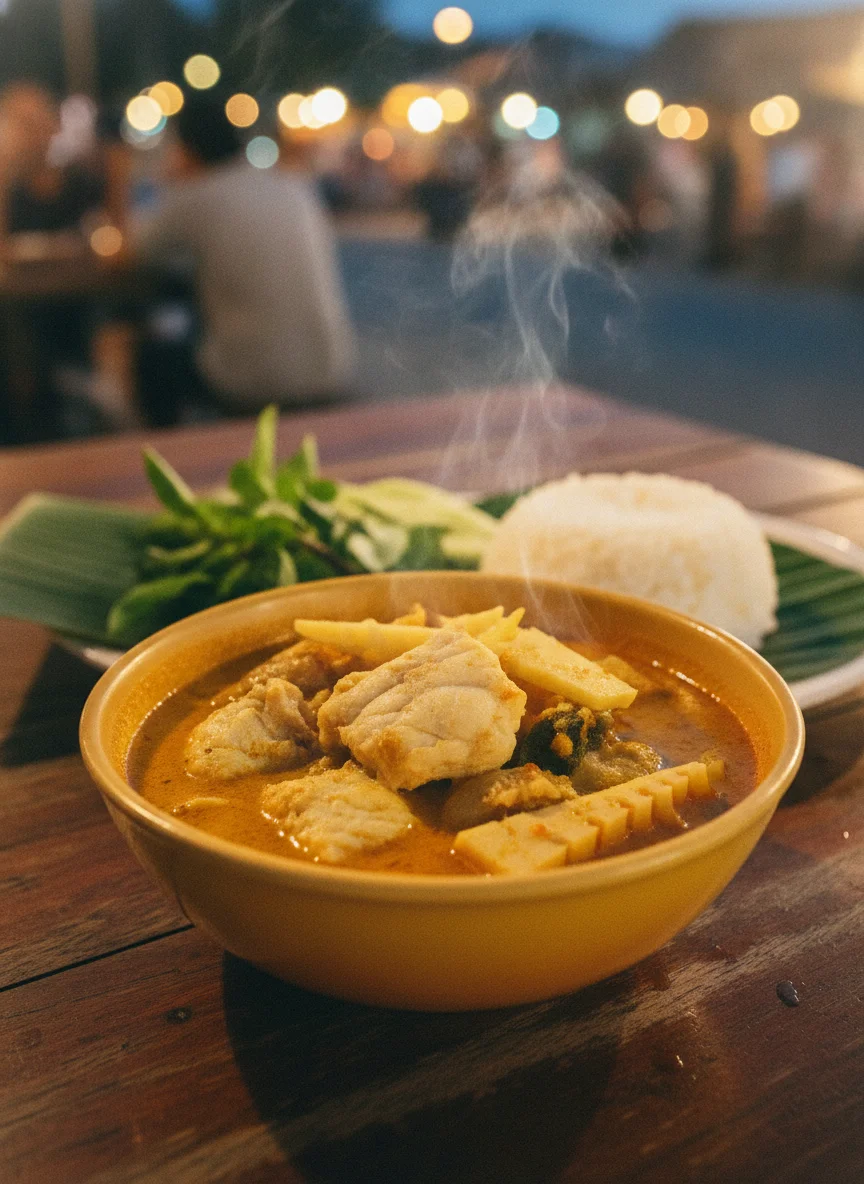
The local food culture in Krabi combines fiery southern Thai spices with an abundance of freshly caught seafood. Southern Thai cuisine is famous for its intense heat and sour profiles. Gaeng som, a turmeric-infused sour fish curry, serves as the regional staple. You can sample this dish for 120 THB (£2.70) at the Krabi Town Walking Street. This market operates Friday to Sunday evenings near the Vogue Department Store. For fresh seafood, head to the northern end of Noppharat Thara Beach. Here, Krua Thara restaurant serves stir-fried mud crab in yellow curry powder for 350 THB (£7.90). Grilled garlic tiger prawns are also available, priced by weight at around 400 THB (£9.00) per portion. Roti stalls are common along the roadsides. This is due to the large local Thai-Muslim population, particularly in Ao Nang. Vendors stretch dough on hot iron plates, serving sweet banana rotis for 40 THB (£0.90) and savoury versions accompanied by mild chicken massaman curry for 80 THB (£1.80). For breakfast, local coffee shops serve traditional strong kopeh coffee alongside dim sum baskets for 30 THB (£0.68) each. On the Maharaj Road morning market, locals buy fresh mangosteens and yellow sweet mangoes starting from 50 THB (£1.10) per kilogram. These local culinary traditions provide a distinct contrast to the more international dining options found in the tourist beach strips. Sampling these regional specialities allows you to experience the authentic flavours of the southern peninsula away from the westernised resort menus.
Accommodation Options Across the Province
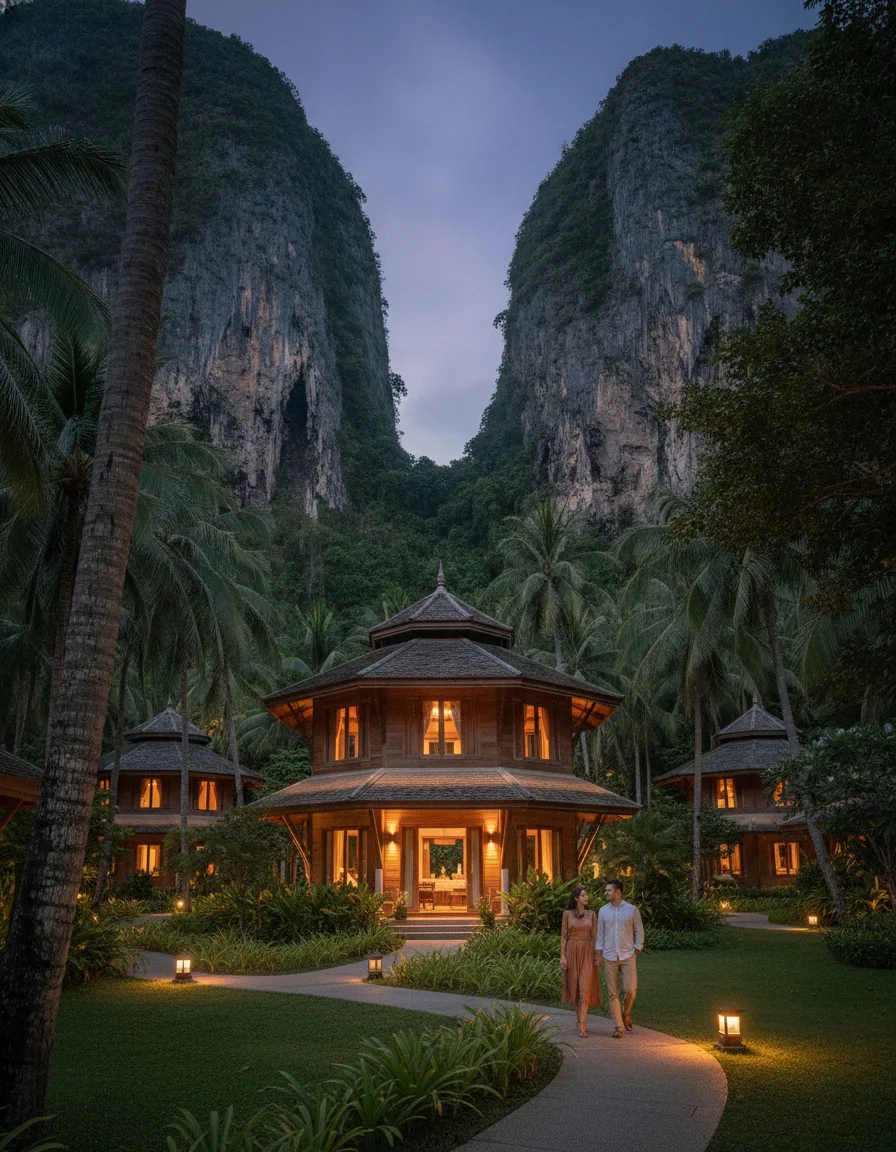
Lodging in Krabi covers a wide spectrum from simple town hostels to secluded five-star luxury reserves. Your choice of base dramatically shapes your experience. Krabi Town caters well to budget travellers. Guesthouses along Maharaj Road offer basic double rooms from 450 THB (£10.15) per night, while modern hostels start at 250 THB (£5.60) for a dorm bed. Ao Nang hosts the largest concentration of mid-range family resorts. An example is the Centara Anda Dhevi Resort, where family suites with pool access cost around 3,200 THB (£72.00) per night during the peak winter season. For those seeking complete isolation, the Railay Peninsula offers high-end options. Properties like the Rayavadee Resort, where luxurious pavilions sit between three white-sand beaches, start at 22,000 THB (£495.00) per night. This property is accessed only by boat, ensuring a sense of seclusion. Alternatively, Klong Muang Beach offers quieter luxury resorts, such as the Dusit Thani Krabi Beach Resort, providing private beach fronts away from the crowds of Ao Nang. Tubkaek Beach, located further north, features intimate boutique resorts like the Tubkaek Sunset Beach Resort, where beachfront rooms cost 5,500 THB (£123.75) per night. These properties provide immediate access to the quiet walking trails of the Tubkaek Hang Nak Hill Nature Trail, which climbs 3.7 kilometres to a scenic viewpoint. Selecting the right area ensures your accommodation aligns with your budget and your desired level of peace.
Island Hopping and Marine Adventures
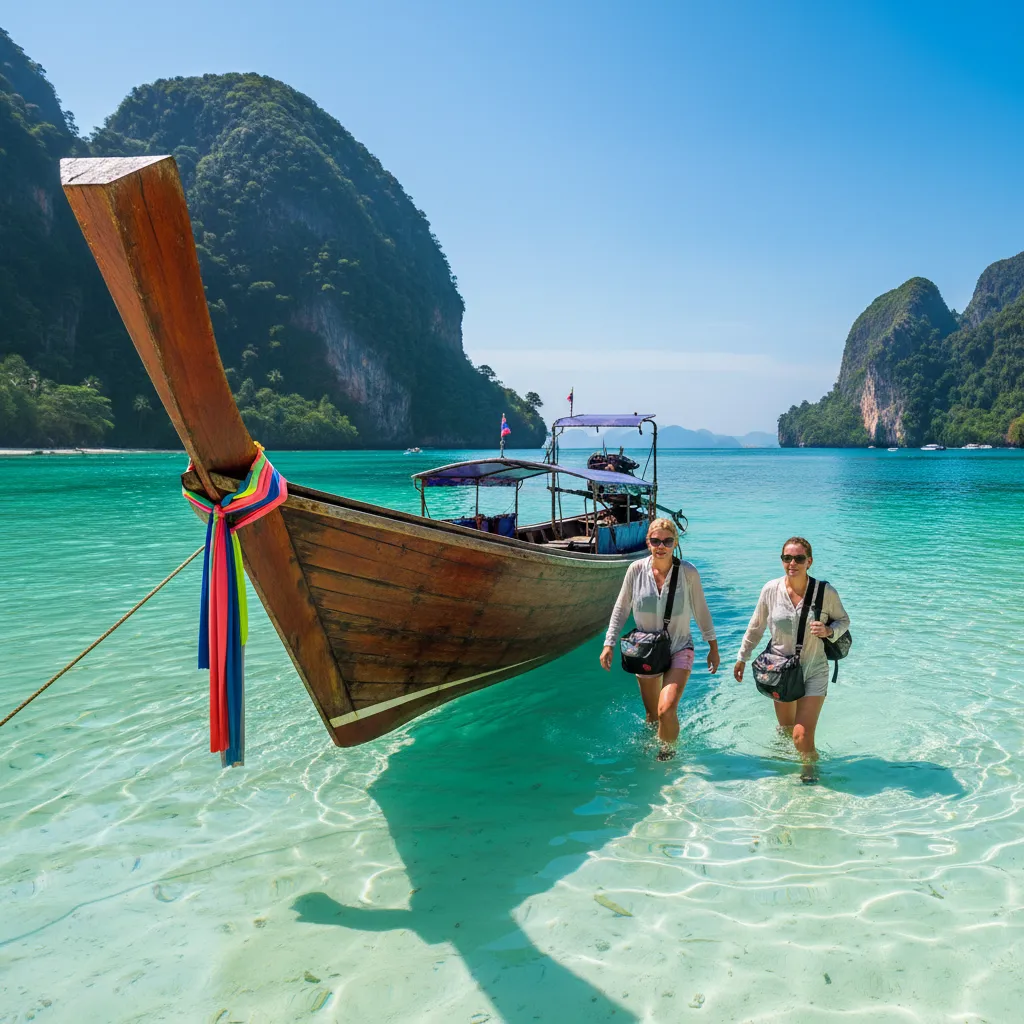
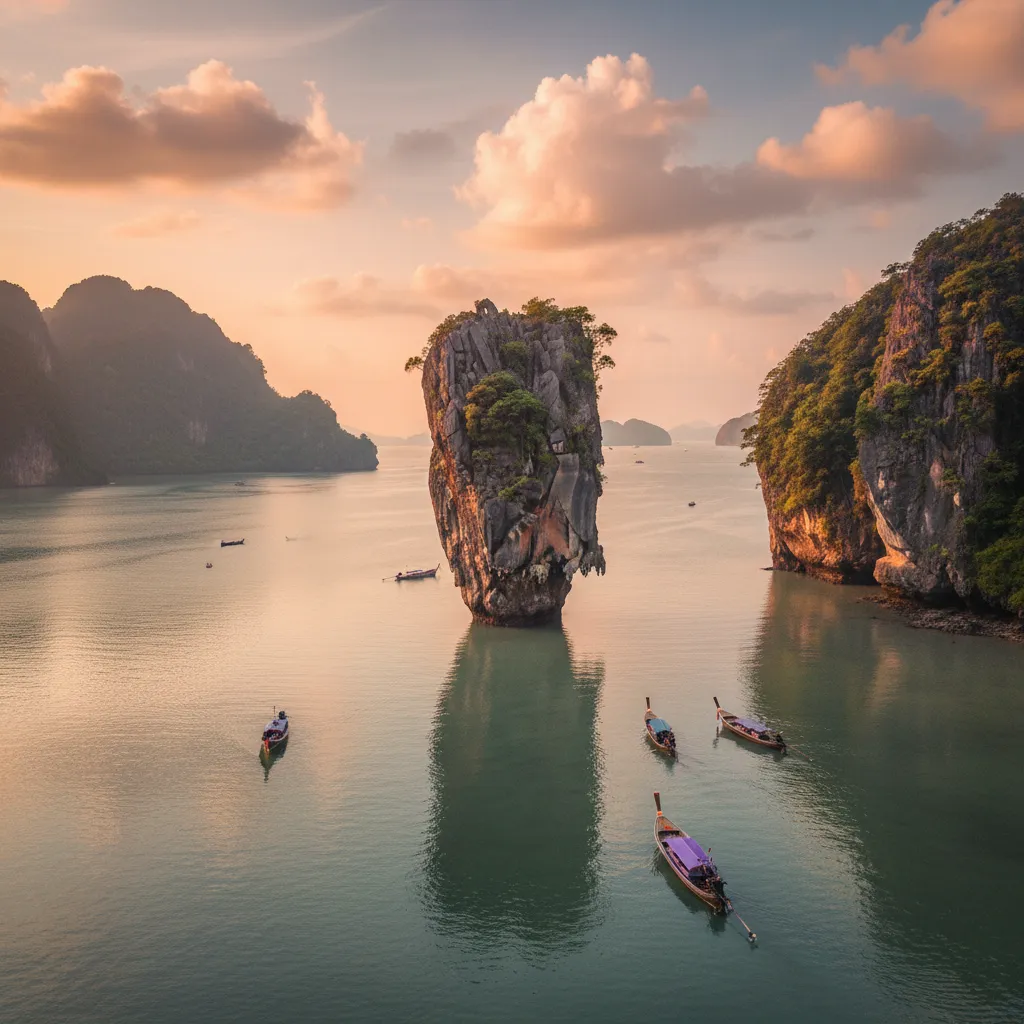
The offshore waters of Krabi host several major marine parks containing coral reefs and limestone archipelagos. The classic four-island tour remains the most popular day trip. This operates via longtail boat from Ao Nang beach for approximately 800 THB (£18.00) per person. It includes stops at Phra Nang Cave Beach, Tup Island, Mor Island, and Chicken Island. At low tide, a natural sandbar emerges to connect these landmasses. For a more secluded experience, visit the Hong Islands. Located inside the Than Bok Khorani National Park, this archipelago features a spectacular interior lagoon accessed through a narrow cliff passage. Entry to this national park costs 300 THB (£6.75) for international visitors. Private longtail charters from Noppharat Thara pier cost about 2,800 THB (£63.00) for a full day. Further south lie the Phi Phi Islands. These are famous for the sheer cliffs of Maya Bay and the excellent snorkelling reefs at Bamboo Island. Speedboats from Ao Nang reach Phi Phi in 45 minutes for 1,500 THB (£33.80) per person. However, the local passenger ferry from Klong Jilad Pier in Krabi Town offers a slower, scenic journey for 450 THB (£10.15) each way. You can book tickets at local agencies or directly at the pier. These boat transfers remain highly dependent on calm weather conditions, making seasonal planning crucial for anyone wanting to explore the offshore national parks. Exploring these offshore archipelagos by boat is essential to experiencing the marine diversity that defines the province.
Inland Rainforests and Thermal Pools
The forested interior of Krabi Province contains geothermal springs and freshwater pools surrounded by primary lowland rainforest. Sa Morakot is the top natural inland attraction. Also known as the Emerald Pool, it lies in the Khao Phra Bang Khram Nature Reserve, roughly 60 kilometres southeast of Krabi Town. This natural freshwater basin is fed by thermal streams flowing down from the hills. The mineral-rich water has an intense green hue. Admission to the reserve costs 200 THB (£4.50) for adults. A 1.4-kilometre wooden boardwalk leads you through the dense canopy to the pool. Just a short walk further into the forest lies the Blue Pool. This is the source of the thermal water. It shines with an iridescent blue colour due to high calcium carbonate concentrations. Swimming is forbidden in the Blue Pool due to the extreme heat and quicksand hazards. Nearby, the Namtok Ron Hot Springs offer natural volcanic stone bathtubs filled with running thermal water heated to temperatures between 40 and 42 degrees Celsius. Entry here is 150 THB (£3.40), allowing you to soak in the warm waters under a canopy of shade trees. These hot springs drain directly into the quiet Khlong Thom river, where you can cool off after bathing in the hot mineral pools. Venturing into the eastern rainforests provides a refreshing contrast to the coastal heat and salt water.
Getting There and Getting Around
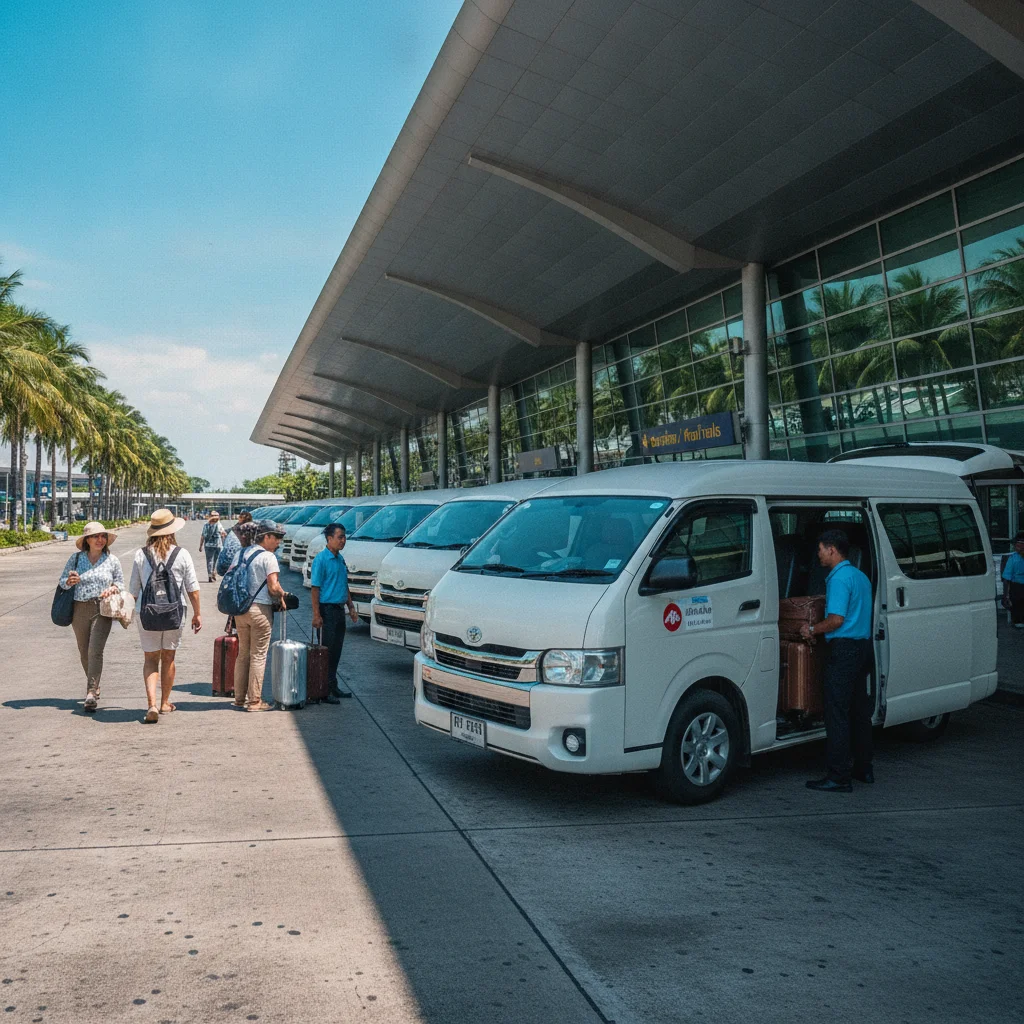
Reaching Krabi Province from Bangkok is most efficient via a domestic flight to Krabi International Airport (KBV), which lies 12 kilometres east of Krabi Town. Carriers such as Thai VietJet and AirAsia operate daily flights from Suvarnabhumi and Don Mueang airports, with tickets starting around 1,200 THB (£27.00) for a one-way journey of 80 minutes. Upon arrival, a shared minivan to Krabi Town costs 150 THB (£3.40), while transfers to Ao Nang beach cost 150 THB (£3.40) to 200 THB (£4.50). Locally, public songthaews (converted pickup trucks with bench seating) run regular routes between Krabi Town and Ao Nang every 10 minutes during the day for 60 THB (£1.35) per person. To reach the Railay Peninsula, you must take a longtail boat from Ao Nang Beach or Ao Nam Mao pier, with standard tickets costing 100 THB (£2.25) per person each way. Scooters can be rented in Ao Nang for 250 THB (£5.60) per day, though local traffic demands caution.
Costs and Budgeting
Travelling in Krabi Province caters well to different financial plans, with prices generally sitting below those of neighbouring Phuket. Budget travellers can easily manage on 1,200 THB (£27.00) per day by sleeping in hostels, eating at night markets, and using public songthaews. A mid-range budget of 3,500 THB (£79.00) per day allows for comfortable air-conditioned resort rooms, daily restaurant meals with fresh seafood, and occasional private longtail boat excursions. Those seeking high-end luxury can expect to spend upwards of 12,000 THB (£270.00) per day, covering exclusive villa accommodation, private speedboat charters, and fine dining at resort properties. National park entry fees are a fixed cost to keep in mind, usually ranging from 200 THB (£4.50) to 400 THB (£9.00) per person. Value is exceptional in the low season from May to October, when accommodation rates often drop by 50 percent.
| Item | Budget (THB) | Mid-Range (THB) | Notes |
|---|---|---|---|
| Guesthouse / Hotel | 400 THB | 2,500 THB | Hostels vs 3-star resort |
| Daily Meals | 250 THB | 900 THB | Street food vs sit-down seafood dinner |
| Local Transport | 120 THB | 600 THB | Public songthaew vs private longtail or taxi |
| Activities | 150 THB | 1,200 THB | Hot springs vs organized island tour |
Who It Suits
Krabi Province is highly suited to adventure travellers, rock climbers, and beach lovers who enjoy dramatic natural topography. It is particularly excellent for active couples and families seeking structured day tours and water sports. However, those looking for extensive historical ruins or a highly developed, modern urban environment will find Krabi lacking. It does not suit travellers seeking the high-octane, mega-club nightlife of Phuket, as the evening scene here is much more relaxed and focused around beachfront bars.
What to Know Before You Go
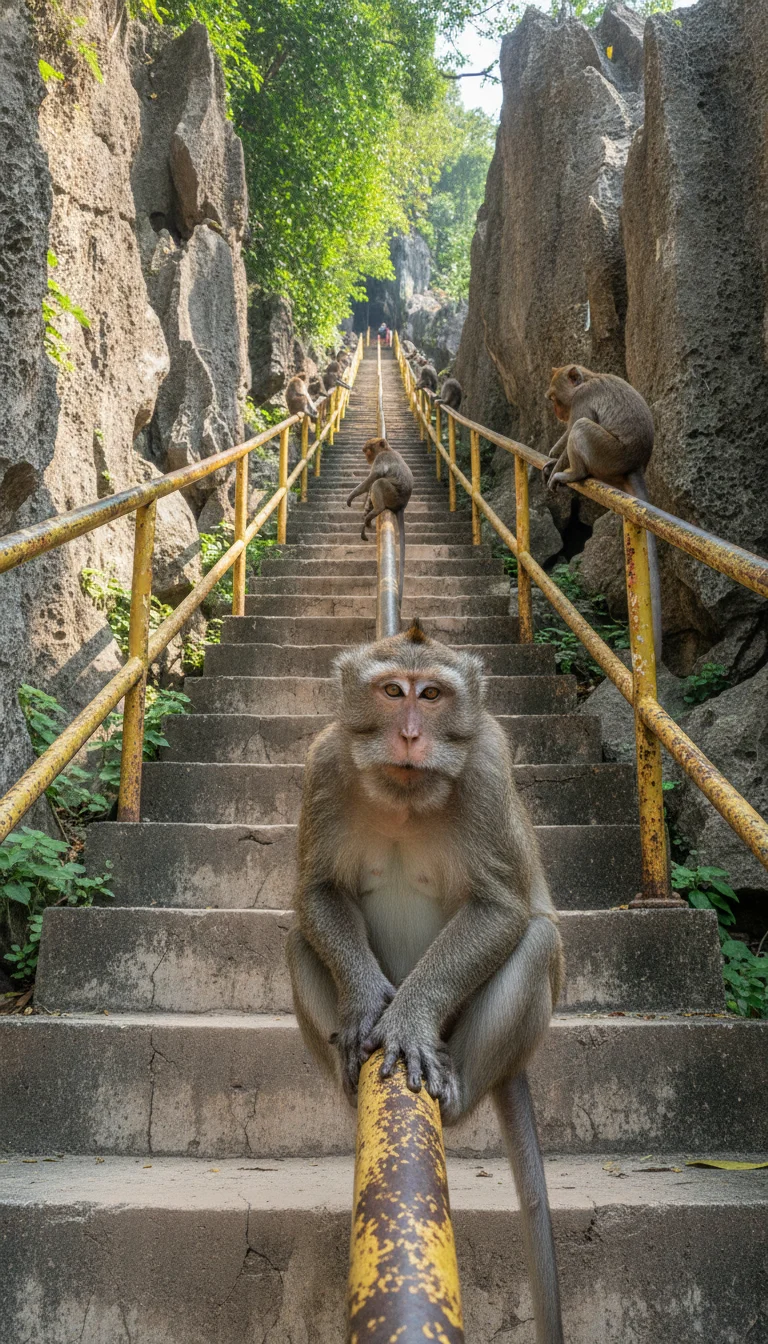
You must respect the local wildlife at sites like Wat Tham Suea and Noppharat Thara beach. The resident macaque monkeys are highly habituated to humans and will aggressively snatch bags, food, or loose items. Be mindful of the marine tides when planning beach trips to Railay and the local sandbars. Many channels become extremely shallow at low tide, which can strand longtail boats or prevent swimming entirely. Understand that a significant portion of the Krabi population is Muslim, especially in towns like Ao Nang and Klong Muang. You should dress modestly when walking away from the immediate beach areas and avoid bringing alcohol into local halal establishments. Finally, carry cash when travelling to the offshore islands or remote inland pools. Most small boat operators, national park ticket booths, and rural food stalls do not accept credit cards.
Practical Tips
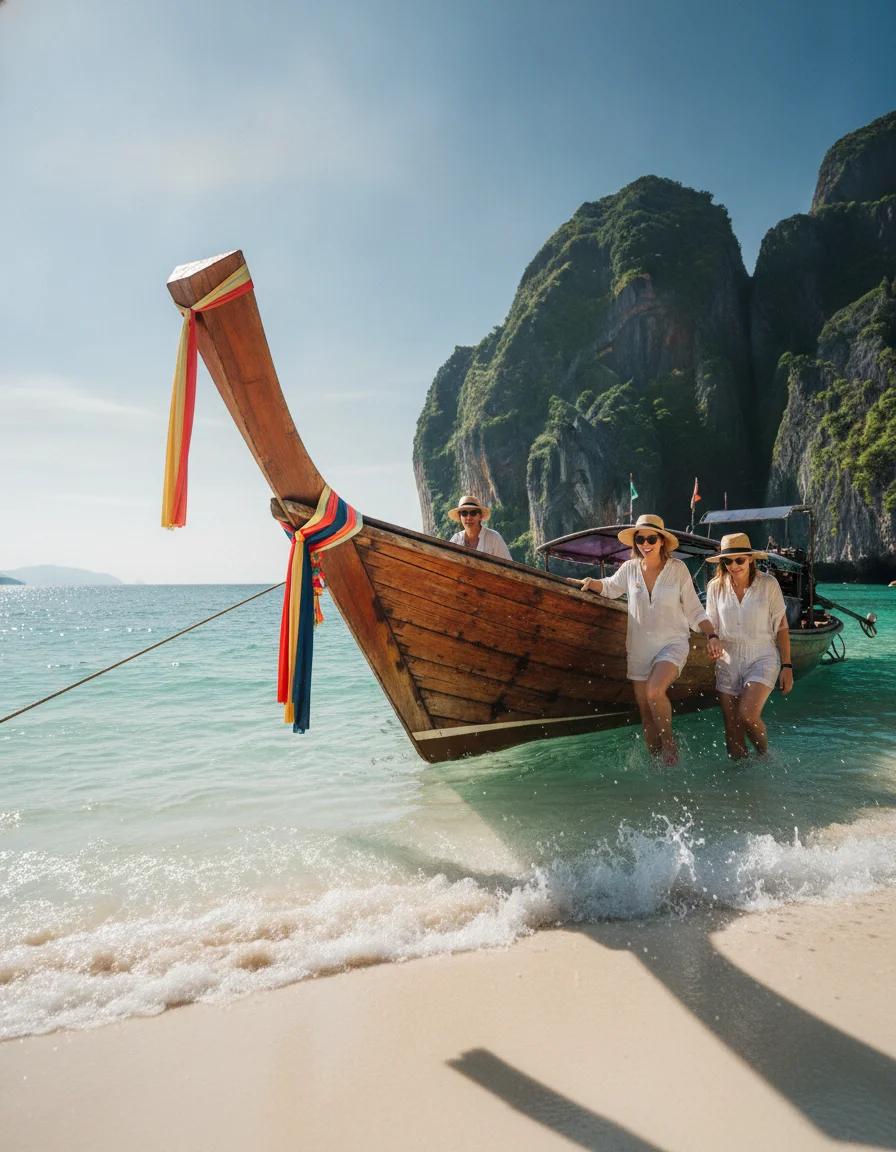
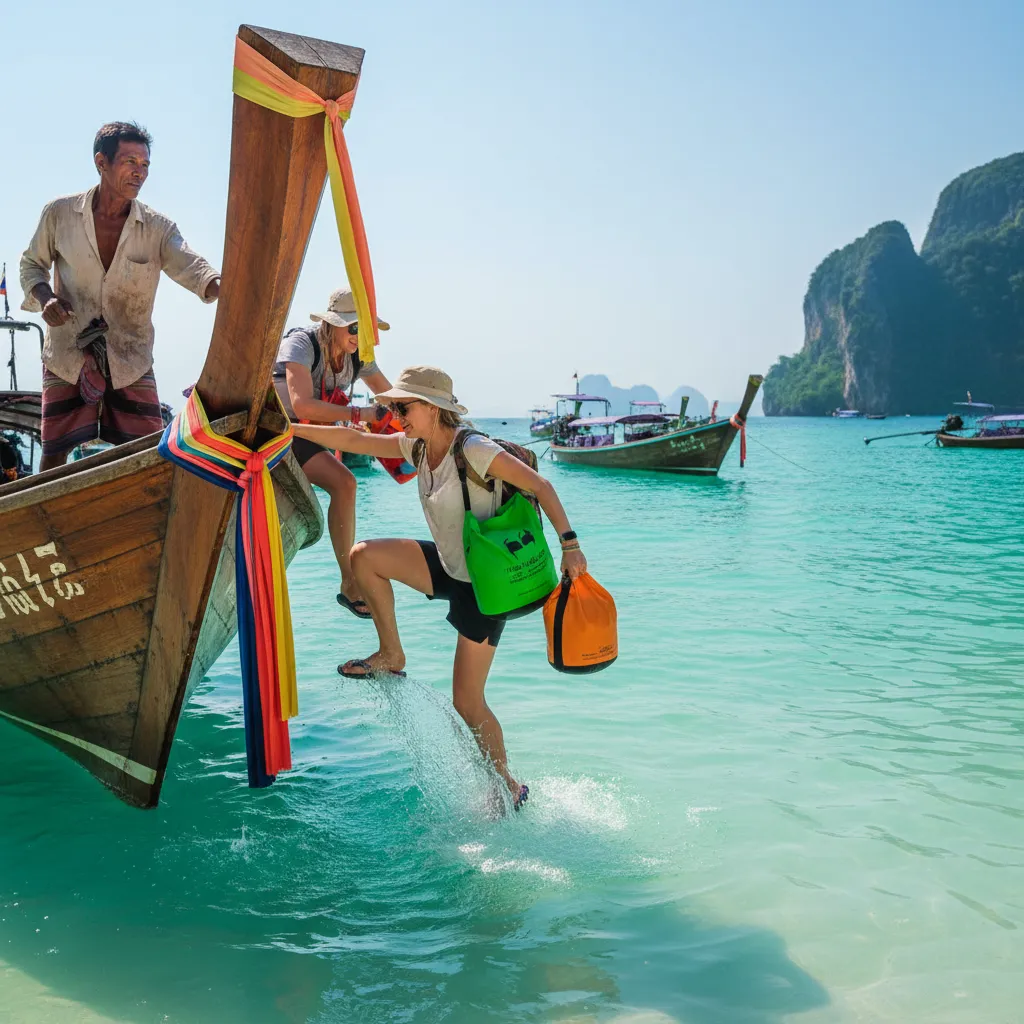
Hire private longtail boats directly from the official Ao Nang Longtail Boat Service Club booths located at both ends of the main beachfront. This ensures you pay the regulated rate of 100 THB (£2.25) per person instead of falling victim to independent beach touts charging inflated prices.
Climb the steep staircase at Wat Tham Suea early in the morning, ideally beginning your ascent before 07:00. The midday heat on the exposed concrete steps is physically punishing, and climbing earlier means you will avoid the large tour groups that arrive by mid-morning.
Wear robust reef shoes when walking around the shallow sandbars of Tup Island or exploring Phra Nang Cave. The local sea floor is covered in razor-sharp limestone fragments and hidden sea urchins that can easily cause severe lacerations.
Visit the popular Emerald Pool during the middle of the week to experience the natural spring in relative peace. Local families and school groups flock to the reserve on Saturdays and Sundays, which frequently leads to overcrowded swimming pools and noisy trails.
Purchase a high-quality dry bag from one of the local markets in Ao Nang before you board any marine transport. Spray from the Andaman Sea routinely drenches the open bows of longtail boats, and a dry bag is essential for protecting your camera gear and passports.
Monitor the official ferry and speedboat schedules closely if you are visiting Krabi during the monsoon season between May and October. Boat crossings to Phi Phi and Koh Lanta are frequently delayed or cancelled due to high swells, which can disrupt your travel itinerary.
Download the Grab ride-hailing application onto your smartphone before leaving your hotel to explore the local towns. This service provides transparent, upfront pricing that serves as an excellent benchmark when negotiating with independent tuk-tuk and songthaew drivers.
Carry a small supply of low-denomination Thai Baht coins and notes when visiting national parks and remote viewpoints in the province. Most rural toilets and national park refreshment stalls charge a small fee of 5 to 10 THB and cannot accept large 1,000 THB notes.
Quick Reference Table
| Item | Detail | Notes |
|---|---|---|
| Location Name | Krabi Province | Southern territory on the Andaman Sea coast |
| Province | Krabi | Administered from Krabi Town |
| Region | Southern Thailand | Known for marine national parks |
| Nearest Major City | Krabi Town | 15 kilometres northeast of Ao Nang |
| Nearest Airport | Krabi International Airport (KBV) | Located 12 kilometres east of Krabi Town |
| Distance from Bangkok | 800 kilometres | Approximately 12 hours by road or 80 minutes by air |
| Typical Visit Duration | 4 to 7 days | Allows time for both coastal and inland sights |
| Best Time to Visit | November to April | High dry season with calm seas |
| Average Daily Budget | 2,500 THB (£56.00) | Mid-range estimate including accommodation and food |
| Currency Accepted | Thai Baht (THB) | Cash is highly preferred for local transport and small shops |
| Language | Thai | English is widely spoken in tourist centres |
| Primary Transport | Longtail boats and songthaews | Essential for coastal and island transit |
| Notable Landmarks | Railay Beach, Tiger Cave Temple, Emerald Pool | Major physical and cultural attractions |