Kayaking in Thailand
Paddling through a narrow sea cave along Thailand’s Andaman coast reveals limestone ceilings hanging inches above the water before the tunnel opens into an enclosed, sunlit lagoon. Thailand spans more than 3,200 kilometres of coastline alongside extensive inland freshwater reservoirs and river networks. Navigating these waterways successfully requires understanding local tidal shifts, regional monsoons, and the practical differences between independent beach hire and organised expeditions.
This guide provides a practical overview of kayaking across Thailand, covering tidal sea caves, mangrove estuaries, open-water island crossings, and freshwater reservoirs. You will find out how seasonal conditions differ between the Andaman Sea and the Gulf of Thailand, where independent paddlers may launch, and where national marine park regulations require guided support for navigating tidal caves. We also outline typical costs in Thai Baht with British Pound conversions, helping you select the appropriate paddling route for your travel plans.

Sea Kayaking and Tidal Hongs: Phang Nga Bay
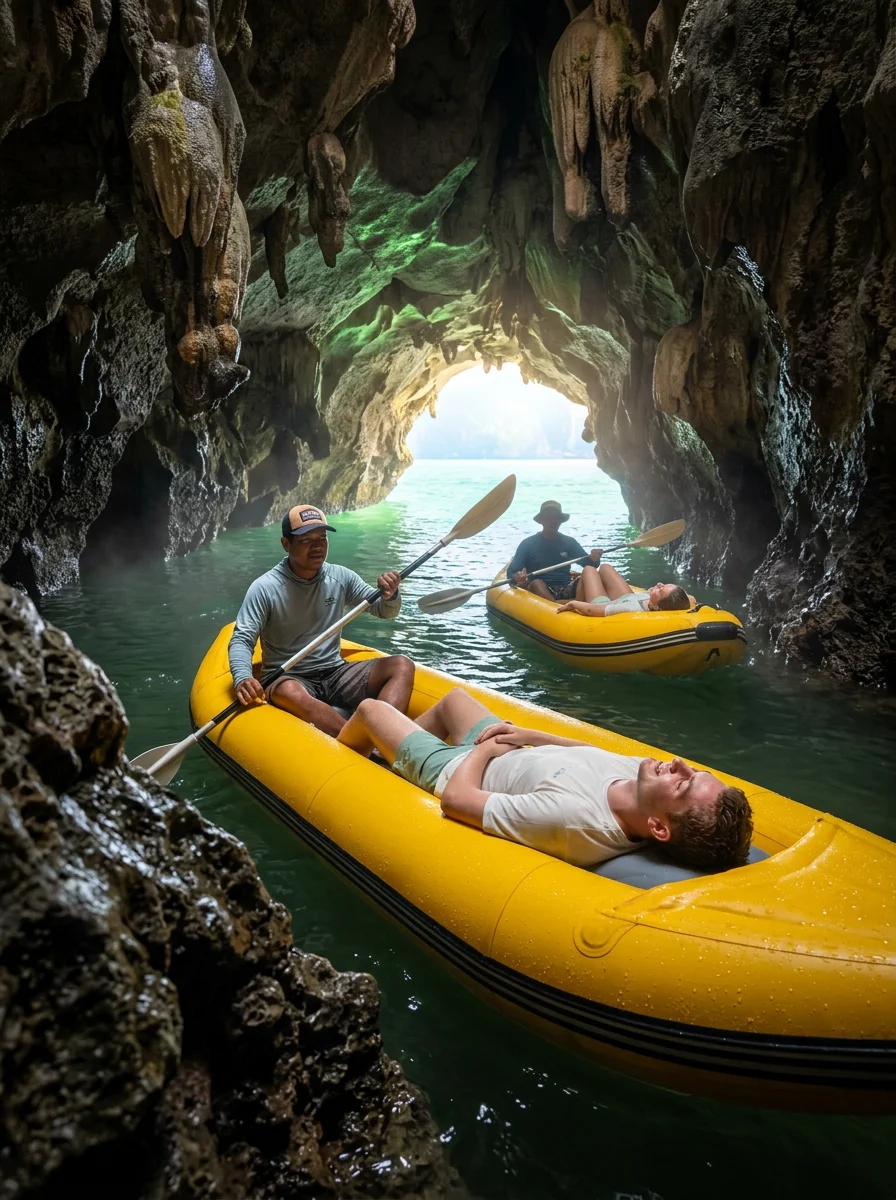
Phang Nga Bay contains some of Southeast Asia's most dramatic marine karst geography, where millions of years of water erosion have hollowed out towering limestone islands into enclosed sea chambers known locally as hongs. Hidden within islands such as Koh Panak and Koh Hong, these open-air chambers are accessible through low, sea-level tunnels carved through solid rock. Entering them requires specialised inflatable kayaks rather than rigid plastic craft. Inflatable hulls flex against submerged limestone shelves and low overhangs, whereas rigid boats risk jamming if water movement lifts the craft towards sharp stalactites. During mid-tide passages, guides frequently instruct visitors to lie completely flat against the kayak floor so the craft can squeeze beneath rock hanging inches above the water.
Navigating these passages requires precise timing and local experience. Most commercial operators provide trained local guides who paddle the inflatables while passengers sit back. These guides track tidal cycles closely to ensure kayaks enter and exit before rising water seals the tunnel roof. At extreme spring tides, high water completely floods the lowest passages, whilst low water exposes shallow mudflats that block access. Scheduling a trip around moderate neap tides provides wider, more dependable transit windows through the tightest openings.
Premium guided itineraries, such as the established Hong by Starlight programme run by John Gray's Sea Canoe, currently cost 3,950 THB (approx £90) per adult. These excursions typically depart around midday from Ao Po Pier in north-eastern Phuket. Timing the departure for early afternoon ensures boats reach the main caves after morning day-trip crowds have departed. Once inside a hong, vertical limestone cliffs rising up to 100 metres block out boat engines and wind, creating a sheltered microclimate home to crab-eating macaques, mudskippers, and roosting flying foxes.
While the inner waters of Phang Nga Bay remain generally protected from Andaman Sea swells by surrounding landmasses, open-water crossings can become choppy under brisk afternoon winds. Ao Phang Nga National Park charges an entry fee of 300 THB (approx £7) per foreign adult; reputable full-day operators incorporate this fee into the headline price, but budget speedboat and longtail transfers often require payment in cash at the departure pier. You can review our regional Water Sports guide for wider context on Andaman marine conditions before scheduling open-water paddling.
| Tour Type | Operator Style | Typical Price (THB) | Typical Price (GBP) | Target Paddler |
|---|---|---|---|---|
| Signature Tidal Hong Tour | Small-group escort boat with local paddle guide | 3,800–4,200 THB | £86–£95 | Beginners and wildlife enthusiasts |
| Speedboat Day Excursion | Large group, rapid transfer, short paddle session | 1,800–2,400 THB | £41–£55 | Time-pressed general tourists |
| Multi-Day Camping Expedition | Self-paddle sea expedition with tender boat support | 15,000–25,000 THB | £340–£568 | Experienced paddlers seeking remote karsts |
| Private Longtail Charter | Custom departure, basic sit-on-top kayak rental | 3,500–5,500 THB | £80–£125 | Independent couples and small families |
Mangrove Canyons and Coastal Estuaries: Ao Thalane and Krabi
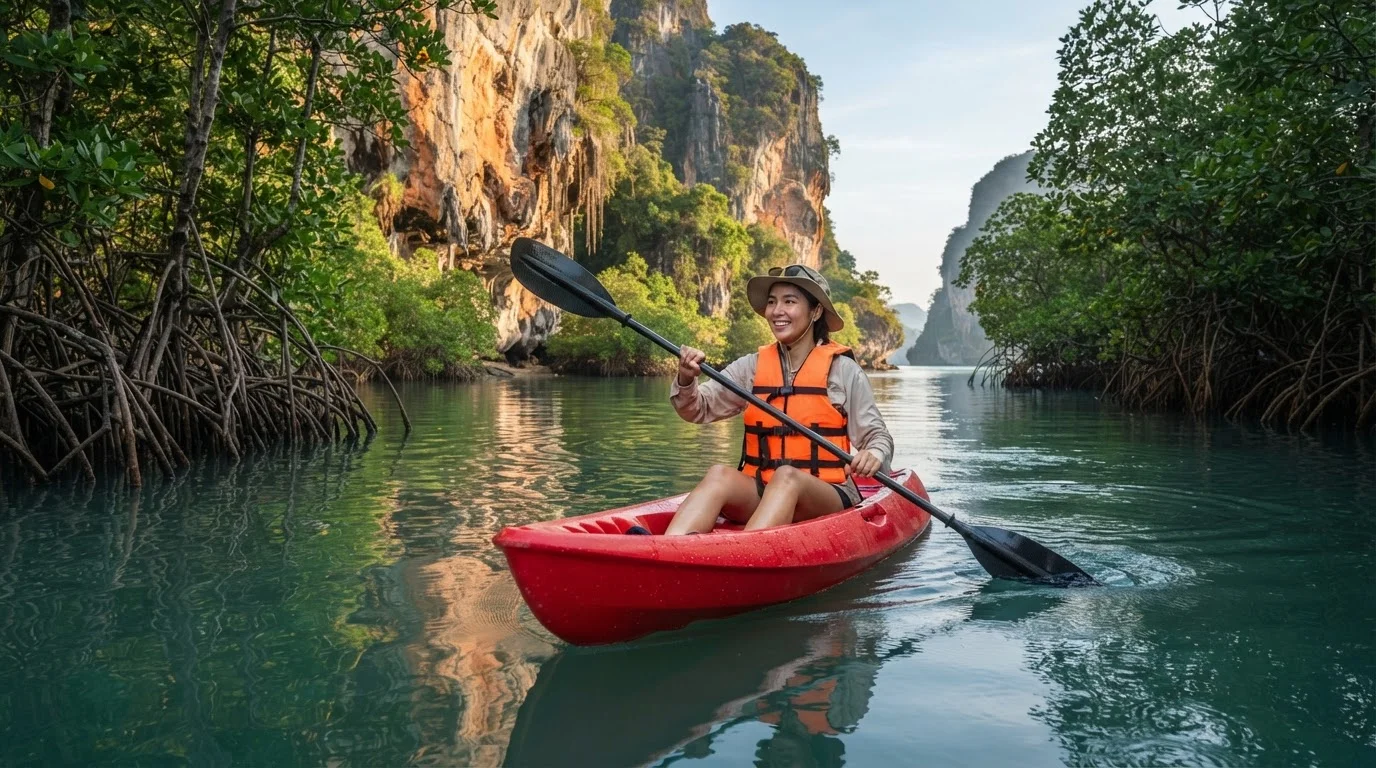
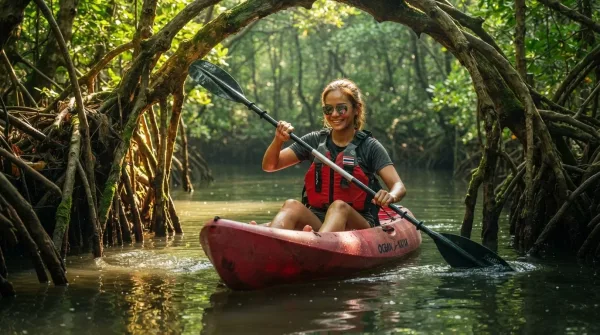
Inland coastal estuaries provide natural shelter from ocean swells, making Krabi's mangrove network a prime setting for calm, wildlife-rich paddling. Ao Thalane, situated roughly 27 kilometres north of Ao Nang, centres on saltwater channels winding through mangrove forests flanked by vertical limestone karst cliffs. Because the towering rock walls block coastal wind, the water typically remains glassy, allowing paddlers of all fitness levels to explore without contending with ocean chop or strong currents.
Most visitors explore the estuary on organised half-day excursions. Guided tours departing from Ao Nang or Krabi Town generally cost between 800 THB and 1,200 THB (approx £18 to £27), including hotel transfers, sit-on-top kayaks, buoyancy aids, and dry bags. Paddlers with their own transport can also hire kayaks directly at the Ao Thalane pier for roughly 300 THB to 500 THB (approx £7 to £11) for two to three hours.
Wildlife along these shaded corridors is especially active during the morning. Paddlers frequently encounter long-tailed crab-eating macaques foraging in low branches, blue-eared kingfishers darting across the water, and water monitor lizards resting on muddy banks. Keep dry bags sealed and avoid carrying open snacks; the local monkeys are accustomed to tourist traffic and will readily climb onto a kayak bow to investigate unattended food.
Tidal timing directly affects the paddling route. At extreme low tide, the shallowest inlets drain into exposed mudflats, forcing paddlers to drag boats through thick sediment. At high spring tide, water fills hidden karst lagoons and caves, but completely submerges the intricate root systems that give the forest its character. Launching on a rising mid-tide provides sufficient depth through the inner canyons while keeping the mangrove architecture visible. If you wish to combine estuary kayaking with coastal paddling, our Railay Beach guide covers rental hubs along neighbouring headlands.
Plan a journey along Thailand’s Andaman coast, with practical guidance on island gateways, marine parks, diving, ferries and monsoon travel.
Open-Water Island Hopping: Koh Chang and Mu Koh Ang Thong
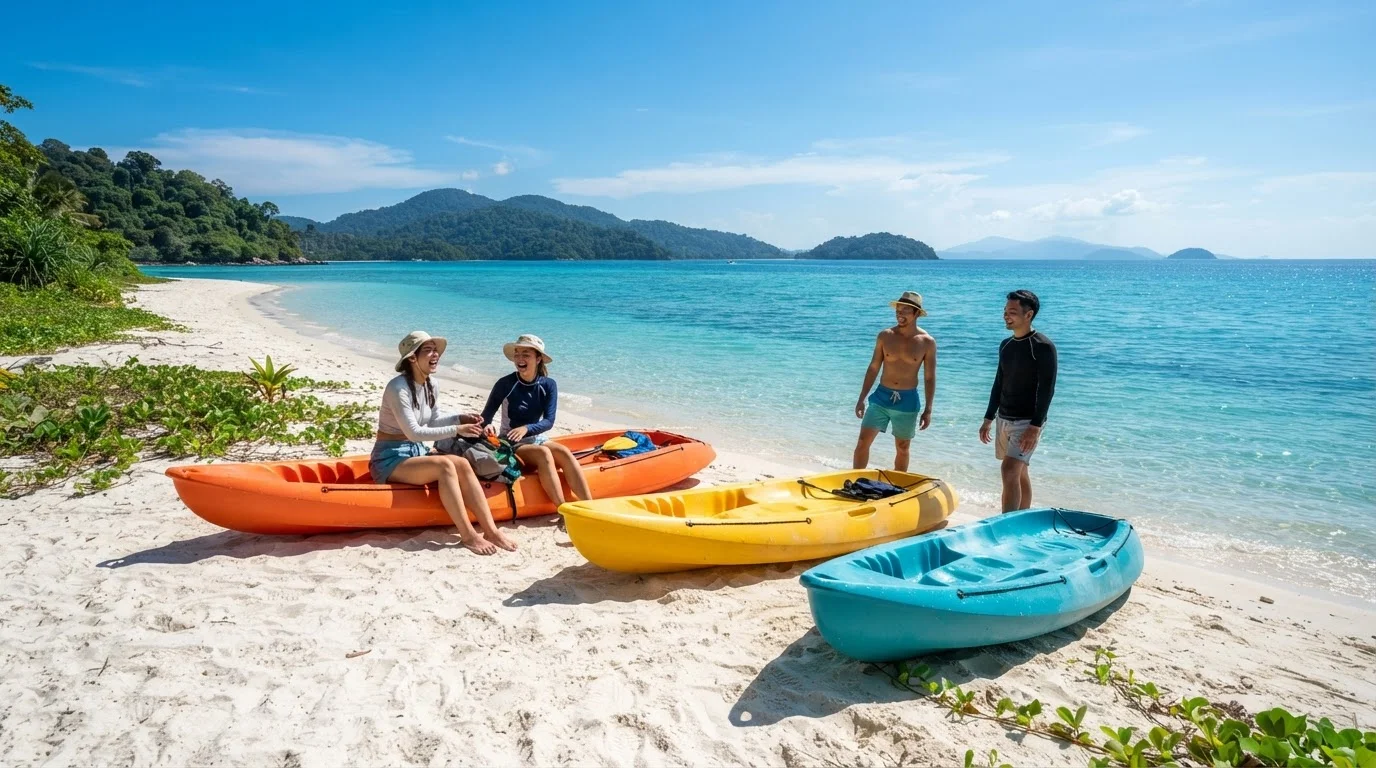
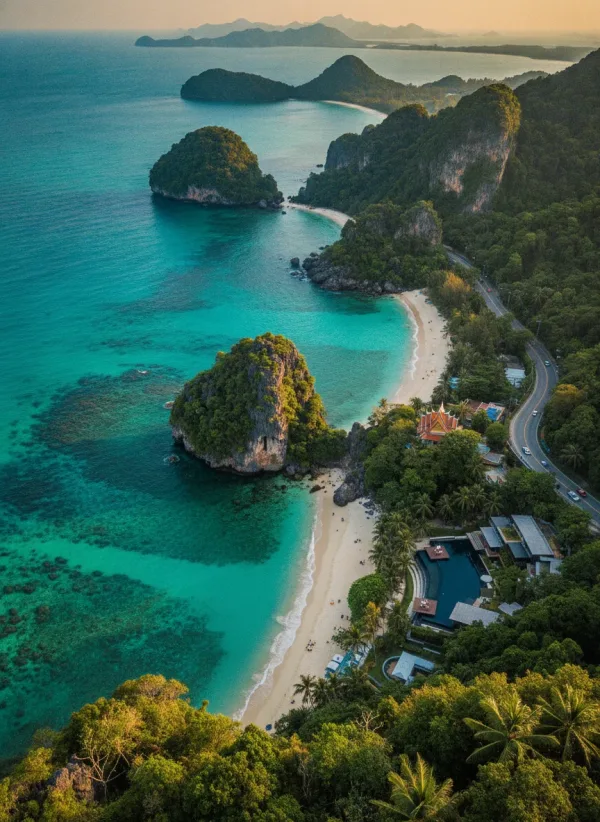
Open-water coastal touring across Thailand's Gulf archipelagos combines island exploration with physical exertion against tidal currents, breezes, and tropical heat. Along the west coast of Koh Chang in the eastern Gulf of Thailand, independent paddlers can hire rotomoulded sit-on-top kayaks from beachfront resorts along Kai Bae Beach. Rates typically run at 100 THB (approx £2.30) per hour, with half-day and full-day rentals generally costing between 300 THB and 500 THB (approx £7 to £11.50).
From Kai Bae Beach, four uninhabited islets lie within paddling distance: Koh Man Nai, Koh Man Nok, Koh Pli, and Koh Yuak. Koh Man Nai sits roughly 600 metres offshore and takes 20 to 30 minutes to reach across sheltered inshore water, landing on a sandy beach on its eastern flank. Continuing out to Koh Yuak requires an open 2.5-kilometre crossing to its coral reefs; crosswinds in the channel frequently whip up whitecaps, demanding steady pacing and confident boat handling.
Further south in the Gulf, the 42 limestone islands of Mu Koh Ang Thong National Marine Park provide striking cliff-line sea kayaking. Most visitors join day tours departing from Koh Samui or Koh Phangan, with packages that include guided kayak excursions typically priced between 1,500 THB and 2,100 THB (approx £34 to £48). Standard guided paddle routes thread beneath sheer karst overhangs around Koh Mae Ko—home to an interior saltwater lagoon—and past a distinctive natural stone arch at Koh Sam Sao.
Open-water paddling requires constant awareness of motorised maritime traffic. High-speed tour boats and longtails produce steep, abrupt wakes that can easily destabilise a sit-on-top craft. Checking local marine forecasts for afternoon wind changes and securing valuables in sealed dry bags are sensible precautions before setting out.
Inland Freshwater Reservoirs: Cheow Lan Lake and Mae Ngat Dam
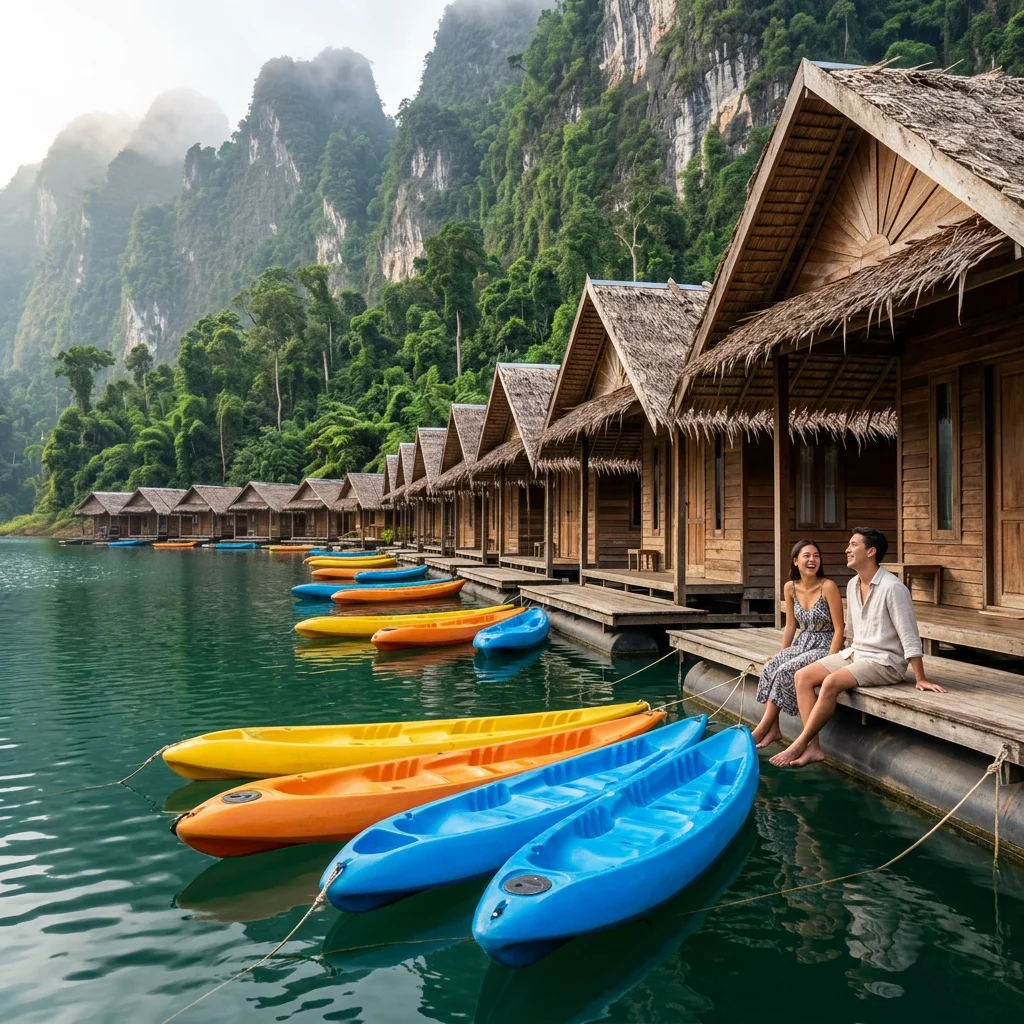
Freshwater paddling on Thailand's artificial reservoirs removes ocean tides and coastal chop entirely, substituting them with vast, mirror-calm waterways framed by ancient rainforest. Cheow Lan Lake, spanning 165 square kilometres inside Khao Sok National Park in Surat Thani, stands out as the country's most spectacular inland expanse. Precipitous limestone karst formations rise vertically from emerald water reaching depths of more than 80 metres, opening into secluded side arms and drowned valleys where motorised traffic rarely enters. Visitors arriving at Ratchaprapha Pier pay the standard foreign adult national park entrance fee of 300 THB (approx £7) in cash before boarding longtail boats to reach remote floating raft-houses. Most floating resorts provide complimentary sit-on-top plastic kayaks directly from their private decks, allowing unhurried dawn paddles when morning mist clings to the rock faces and wild gibbon calls carry across the water.
In Northern Thailand, Mae Ngat Dam within Sri Lanna National Park provides an accessible inland paddling setting situated roughly one hour north of Chiang Mai in Mae Taeng district. Surrounded by dense jungle hillsides and tree-covered mountain ridges, the reservoir functions as a serene retreat featuring clusters of moored houseboats. Guided day packages departing from Chiang Mai typically cost around 1,750 THB (approx £40) per person, combining round-trip transfers and reservoir paddling with a relaxed lunch on the floating pontoons. Independent paddlers entering the park pay the foreign adult conservation charge of 100 THB (approx £2.30) at the dam pier before organising local kayak hire or longtail boat connections to the houseboats.
While lake kayaking provides tranquil, low-strain paddling, the immense scale of these reservoirs demands respect. Mountain winds funnelling down steep valleys often generate stubborn afternoon headwinds, transforming what began as an easy outbound drift into a strenuous return journey across open reaches. Motorised longtail boats also move rapidly along central navigation lines, producing sudden wash that can swamp careless paddlers. Keeping within twenty to thirty metres of the forested shoreline offers natural windbreaks, provides closer views of shoreline birdlife, and keeps you well clear of active boat lanes.
| Location | Waterway | Kayak Access | Park Entry Fee | Landscape & Features |
|---|---|---|---|---|
| Khao Sok, Surat Thani | Cheow Lan Lake | Included at floating raft-houses | 300 THB (approx £7) | Submerged karst valleys and rainforest |
| Sri Lanna, Chiang Mai | Mae Ngat Reservoir | Day tour rentals at boat base | 100 THB (approx £2.30) | Forested mountain slopes and houseboats |
| Vajiralongkorn, Kanchanaburi | Khao Laem Reservoir | Guesthouse rentals in Sangkhlaburi | 200 THB (approx £4.50) | Submerged temple ruins and Mon culture |
| Kaeng Krachan, Phetchaburi | Kaeng Krachan Lake | Campsite and resort operators | 300 THB (approx £7) | Bird-rich forested islands and inlets |
River Kayaking: The River Kwai and Northern Jungle Currents
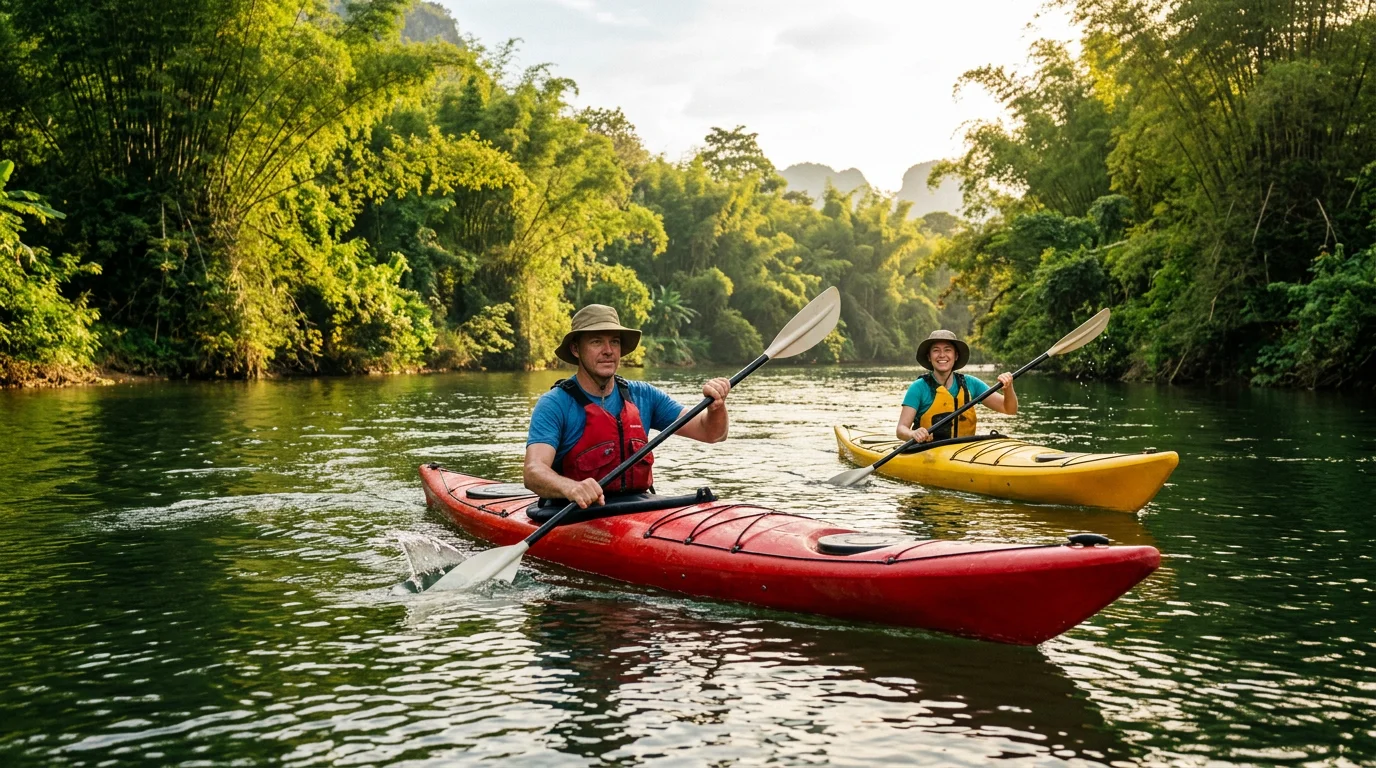
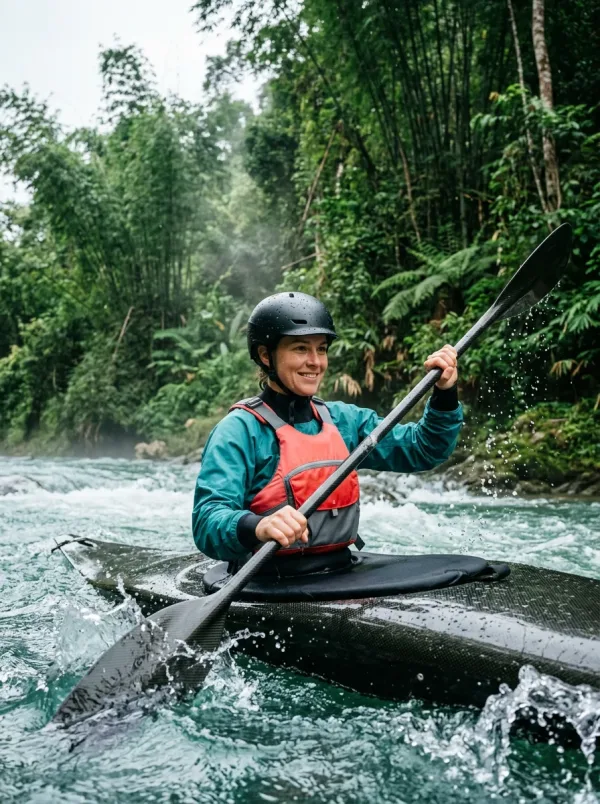
Paddling on moving water introduces dynamic steering requirements. River kayakers must read surface flow, negotiate tight bends, and steer clear of fallen riverside timber. In central Thailand, the Kwai Yai and Kwai Noi rivers in Kanchanaburi provide accessible river paddling, winding past historic railway bridges and dense bamboo forest. Local specialists such as Paddle More Thailand run structured guided river excursions from 700 THB (approx £16) per person, alongside unguided rentals from 500 THB (approx £11), using stable kayaks suited to gentle currents. Water movement provides constant propulsion, but upstream hydroelectric dams regularly alter discharge volumes. Water levels can shift noticeably over a few hours, creating swirling eddies around bridge pylons and exposing submerged gravel banks. Check daily dam release schedules with your operator before getting on the water to avoid sudden surges or shallow groundings.
In northern Thailand, downriver routes along the upper Mae Ping River and through the Mae Taeng valley provide a different rhythm. Established outfitters like Chiang Mai Mountain Biking & Kayaks take paddlers through gentle grade-one riffles, shallow gravel shoals, and rural reaches where water buffalo graze the banks. Full-day guided river runs in this region typically cost between 2,400 THB and 2,600 THB (approx £55 to £59) per person on established booking platforms, covering river equipment, guides, and hotel transfers.
River kayaking requires continuous paddle control. Resting your blade causes the boat to lose directional steerage quickly and swing broadside into the flow. Maintaining light, forward paddle strokes keeps the bow pointing downstream and lets you trim your line cleanly past sandbars and overhanging foliage.
Guided Expeditions Versus Independent Rentals
Deciding between hiring a guide or paddling independently dictates your safety, physical effort, and logistical complexity on Thai waters. Independent rentals suit defined, sheltered environments with clear line-of-sight navigation, including calm resort bays on Koh Chang, flat inland waterways, and the tranquil waters directly outside floating lake bungalows. For 300 THB to 500 THB (approx £7 to £11.50) per day—or roughly 100 THB (approx £2.30) per hour—paddlers gain complete freedom of pace to explore close inshore reefs or empty beaches. However, independent paddlers bear sole responsibility for reading weather shifts, monitoring offshore winds, and arranging emergency communication. Beach rental operators provide basic sit-on-top craft and flotation vests, but they do not maintain dedicated safety cover or rescue boats.
Guided day tours become necessary for intricate coastal systems and moving waterways. Traversing tidal caves requires precise timing so rising water does not trap paddlers inside low-ceiling limestone chambers, while dense mangrove networks present confusing dead-ends where tide changes can strand boats in deep mud. Guided excursions supply experienced route leaders, transfers, safety briefings, Marine Department-compliant life jackets, and local natural history knowledge. Day tours generally range between 1,200 THB and 2,500 THB (approx £27 to £57) per person.
For remote archipelagos along the Andaman coast, structured multi-day sea kayaking expeditions provide dedicated support vessels that transport luggage, freshwater supplies, and camping gear between isolated islands. These commercial expeditions cost between 6,000 THB and 10,000 THB (approx £136 to £227) per day, or roughly 18,000 THB to 30,000 THB (approx £409 to £682) for standard three-day routes, bundling national park permits, expedition-grade seaworthy kayaks, and satellite tracking.
Choose independent hire only for visible, enclosed bays, reserving guided operations for tidal cave networks, moving rivers, and offshore marine parks.
| Feature | Independent Beach Rental | Day-Tour Guided Excursion | Multi-Day Guided Expedition |
|---|---|---|---|
| Typical Cost | 300–500 THB (approx £7–£11.50) / day | 1,200–2,500 THB (approx £27–£57) | 6,000–10,000 THB (approx £136–£227) / day |
| Equipment Standard | Plastic sit-on-top, basic buoyancy vest | Fitted sit-on-top or inflatable, certified PFD | Closed-cockpit touring kayak, spray deck, VHF radio |
| Navigation Demands | Visual line-of-sight self-navigation | Guide-led route management | Marine chart and GPS navigation |
| Support & Safety | Self-rescue required; no escort boat | Escort vessel or guide with tow line | Dedicated support boat, satellite comms, camp crew |
Where to Kayak in Thailand
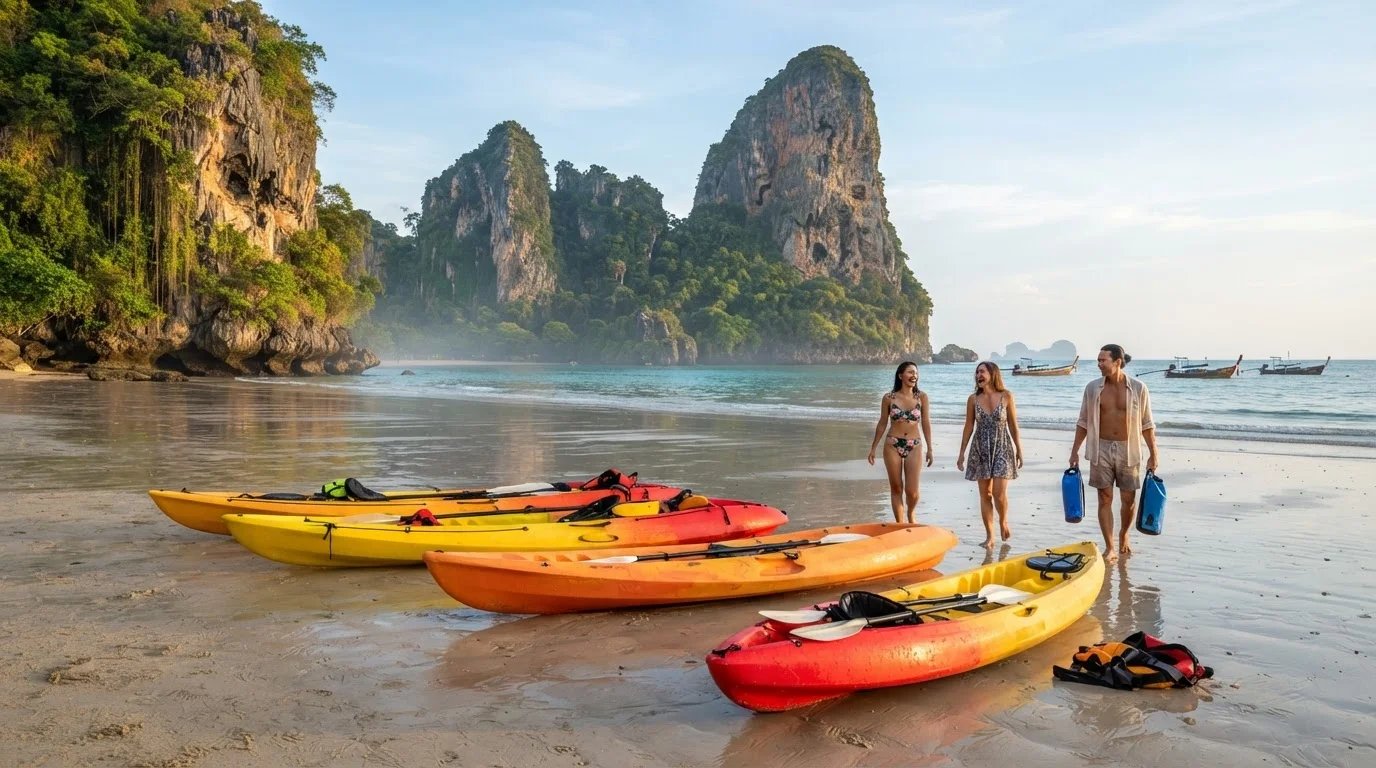
Thailand's paddling destinations span distinct geographical regions, matching different skill levels, environments, and seasonal weather patterns. Beginners seeking calm conditions usually head to Ao Thalane in Krabi. This sheltered coastal estuary features flat brackish water, limestone karst corridors, and dense mangrove channels that protect paddlers from open-sea swell. Half-day guided morning excursions here allow novices to practise basic paddle strokes before midday heat and coastal winds develop.
In western Thailand, Kanchanaburi provides accessible freshwater river touring. River Kwai Kayaking by PMT operates certified excursions along a 5.5-kilometre stretch of the Kwai Yai River, guiding paddlers past quiet bamboo-lined banks and directly beneath the historic Bridge on the River Kwai. For highland river descents, Chiang Mai Mountain Biking & Kayaks runs guided downriver routes along the Ping River as it flows through the Mae Ngat Valley and Chiang Dao, navigating gentle currents flanked by rural farmland and jungle foothills.
Paddlers drawn to dramatic wilderness environments can head inland to Cheow Lan Lake inside Khao Sok National Park. Longtail boats depart Ratchaprapha Pier to transfer visitors to remote floating raft-houses, where guests launch sit-on-top kayaks directly into flooded limestone valleys at dawn. On the eastern Gulf seaboard, Kai Bae Beach on Koh Chang provides a convenient base for independent coastal paddling. Renting a sit-on-top kayak from the beach allows manageable open-water crossings to uninhabited offshore islets, including Koh Man Nai roughly 600 metres from shore and Koh Yuak around 2.5 kilometres out. Further north in the upper Gulf, Koh Talu provides sheltered, shallow bays well suited to relaxed coastal exploration over fringing coral reefs.
Costs and Budgeting
Independent beach rentals provide the most economical entry point across Thailand's coastlines and islands. Standard plastic sit-on-top craft generally cost roughly 100 THB to 150 THB (approx £2.30 to £3.40) for a single hour at beachside concessions, or 400 THB to 600 THB (approx £9 to £14) for a full day. While many beachfront resorts supply kayaks complimentary to staying guests, beach vendors typically require cash payment on the spot.
Organised mid-range day excursions vary by waterway and logistics. Half-day guided mangrove trips in Krabi typically cost 800 THB to 1,200 THB (approx £18 to £27), whereas full-day reservoir paddles in Chiang Mai or Khao Sok run between 1,700 THB and 2,500 THB (approx £39 to £57), including longtail transport and lunch. Expect an optional surcharge of around 300 THB (approx £7) per boat if hiring a local boatman to paddle for you in mangrove channels.
Premium marine safaris sit at the upper end of the day-trip range. The signature Hong by Starlight afternoon-to-evening tidal cave tour in Phang Nga Bay, operated by John Gray's Sea Canoe, costs from 3,950 THB (approx £90) per adult, including guides, inflatable kayaks, lunch, and a seafood dinner. Multi-day ocean expeditions with support boats start from roughly 18,000 THB (approx £409) for a three-day itinerary. Foreign adult entry to protected marine reserves, including Ao Phang Nga and Khao Sok, costs 200 THB to 300 THB (approx £4.50 to £7), payable in cash at ranger stations.
| Option | Cost (THB) | Cost (GBP approx) | Notes |
|---|---|---|---|
| Hourly Resort Kayak Hire | 100–150 THB | £2.30–£3.40 | Basic sit-on-top; paid cash at beach concessions |
| Full-Day Beach Kayak Rental | 400–600 THB | £9–£14 | Covers self-guided coastal island hopping |
| Half-Day Guided Mangrove Tour | 800–1,200 THB | £18–£27 | Includes transfers, guide, dry bag, and water |
| Full-Day Reservoir Adventure | 1,700–2,500 THB | £39–£57 | Covers longtail boat, lunch, and lake kayaks |
| Signature Sea Cave Starlight Tour | From 3,950 THB | From £90 | Premium small-boat tour with dinner and guides |
| National Marine Park Fee | 200–300 THB | £4.50–£7 | Foreign adult entry fee paid in cash at ranger post |
What to Know Before You Go
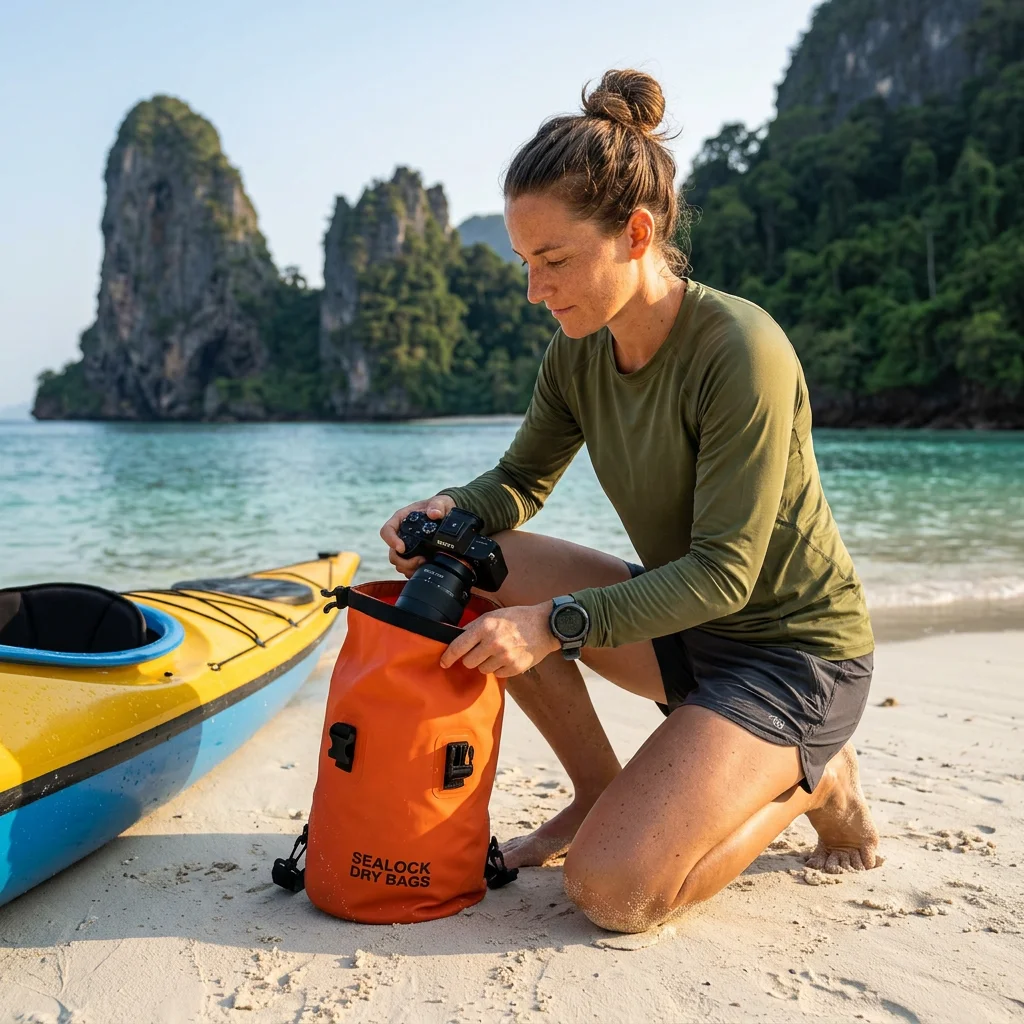
Paddling conditions in Thailand hinge on contrasting monsoon cycles and dramatic tidal swings. The Andaman Sea endures rough surf and heavy squalls during the southwest monsoon from May to October, while the Gulf of Thailand encounters choppy water and monsoon rains from late October through December. Planning around these opposite cycles ensures calmer paddling. Along the southern coasts, particularly around Krabi and Phang Nga Bay, tidal ranges can exceed two and a half metres. Receding water drains shallow bays and mangrove channels rapidly, threatening to leave paddlers stranded across vast mudflats, so check local tide tables each morning before setting out.
Most popular marine routes cross protected conservation zones administered by the Department of National Parks. Entry fees for foreign adults typically range from 200 to 400 THB (approx £4.50 to £9), including 300 THB (approx £7) at Ao Phang Nga and Ang Thong Marine Park. Remote floating ranger stations and island checkpoints do not possess card readers, so carry sufficient cash in small banknotes. Under Thailand's National Park Act, chemical sunscreens containing oxybenzone, octinoxate, 4-methylbenzylidene camphor, or butylparaben are prohibited in marine parks, carrying statutory fines up to 100,000 THB (approx £2,250). Use mineral sunscreen without these four ingredients, and cover your legs against intense water reflection.
Practical Tips
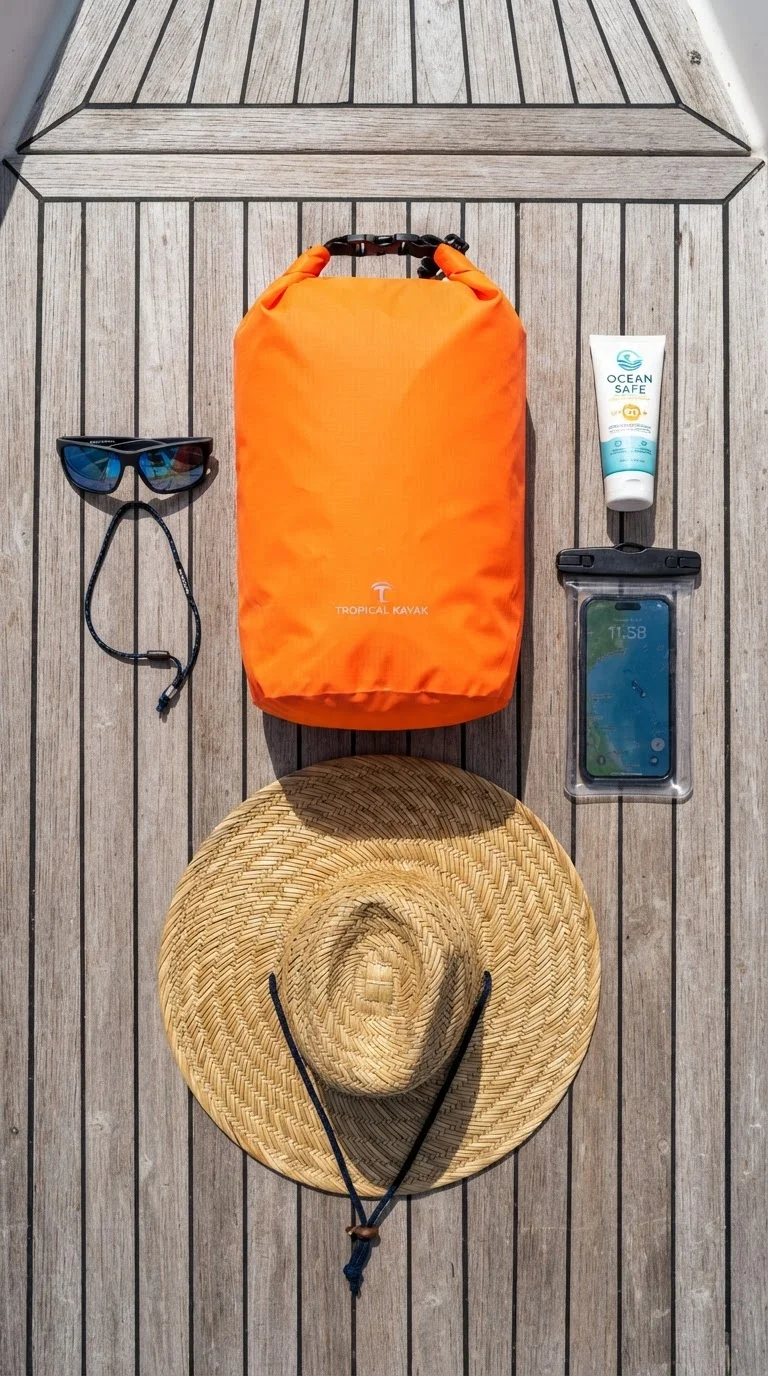
Pack a 10-to-20-litre roll-top dry bag for any paddling excursion. Tropical downpours and salt spray quickly penetrate standard daypacks, putting phones, cameras, and spare clothing at risk. Storing high-value electronics inside an additional zip-seal pouch within the dry bag provides extra protection against water ingress.
Choose a long-sleeved rash vest and quick-drying board shorts or lightweight leggings rather than ordinary swimsuits. Continuous paddle strokes cause friction and rub sun cream off exposed shoulders and forearms, leaving skin vulnerable to intense tropical UV exposure across several hours on open water.
Wear securely strapped water sandals or neoprene reef shoes instead of flip-flops. Loose footwear easily pulls off in tidal mud, and beach landings frequently involve submerged limestone rocks, sharp barnacles, or oyster beds that can cut unprotected feet.
Carry at least two litres of drinking water per person on independent day trips. High humidity and tropical temperatures of 30°C to 35°C accelerate fluid loss through perspiration, causing fatigue and sluggish reaction speeds if hydration is neglected.
When landing on beaches or small islands to explore on foot, haul the kayak well above the high-tide watermark and tie the painter line to a sturdy tree or rock anchor. Coastal tidal ranges across Thailand frequently reach two metres, and incoming tides can float an unmoored craft away within minutes.
Before launching from any rental provider, inspect the buoyancy aid thoroughly. Check that all webbing straps, buckles, and front zips fasten tightly without slipping. A damaged buckle will not hold the vest secure in rough chop, allowing the flotation foam to ride up over your chin or slip off entirely in the water. Tether a waterproof phone pouch directly to the vest so emergency communication stays on your person if the kayak capsizes.
Quick Reference Table
| Item | Detail | Notes |
|---|---|---|
| Hourly Beach Kayak Hire | 100–150 THB (approx £2.30–£3.40) | Basic sit-on-top plastic craft at beach concessions; cash required |
| Full-Day Beach Kayak Rental | 300–600 THB (approx £7–£14) | Ideal for self-guided island hopping off Kai Bae Beach, Koh Chang |
| Half-Day Guided Mangrove Tour | 800–1,200 THB (approx £18–£27) | Ao Thalane, Krabi; includes transfers, sit-on-top kayak, and dry bag |
| Full-Day Reservoir Excursion | 1,700–2,500 THB (approx £39–£57) | Mae Ngat Dam or Cheow Lan Lake; covers boat transport, lunch, and paddling |
| Signature Tidal Hong Tour | 3,800–4,200 THB (approx £86–£95) | Phang Nga Bay inflatable sea cave tours (e.g. Hong by Starlight from 3,950 THB) |
| Multi-Day Ocean Expedition | 15,000–30,000 THB (approx £340–£682) | 3-day guided sea touring with tender support vessel and camping gear |
| River Kwai Kayaking | From 500 THB (hire) / 700 THB (guided) | Kanchanaburi routes past the historic railway bridge on Kwai Yai River |
| Northern River Kayaking | 2,400–2,600 THB (approx £55–£59) | Full-day guided descents along the Ping River and Chiang Dao valley |
| National Marine Park Fees | 200–300 THB (approx £4.50–£7) | Foreign adult entry fee payable in cash at ranger stations (Ao Phang Nga, Khao Sok) |
| Andaman Monsoon Season | May to October | Southwest monsoon brings rough surf and squalls; plan open-water paddling with care |
| Gulf of Thailand Monsoon | Late October to December | Choppy waters and monsoon rains impact Koh Chang and Mu Koh Ang Thong |
| Marine Sunscreen Law | Ban on 4 chemical UV filters | Statutory fines up to 100,000 THB (approx £2,250); use certified mineral sunscreen |
| Essential Gear | 10–20L roll-top dry bag & reef shoes | Avoid flip-flops in tidal mud; wear long-sleeved rash vests against sun and chafe |
| Hydration Requirement | Minimum 2 litres water per person | Critical for independent trips in tropical temperatures of 30°C to 35°C |
| Official source | Department of National Parks (DNP) | https://protectedarea.dnp.go.th |
| Book direct | John Gray's Sea Canoe | https://johngray-seacanoe.com |
| Book direct | River Kwai Kayaking by PMT | https://riverkwaikayaking.com |
| Book direct | Chiang Mai Mountain Biking & Kayaks | https://mountainbikethailand.com |
FAQ: Kayaking in Thailand
What type of kayak is best for navigating tidal caves in Phang Nga Bay?
Why are guides essential for kayaking in Phang Nga Bay's tidal caves?
What are the best tidal conditions for kayaking in Phang Nga Bay's tidal caves?
How should kayakers handle food and belongings when paddling in Krabi's mangrove estuaries?
What safety precautions should be taken for open-water kayaking in Thailand?
What are important safety tips for kayaking on Thailand's freshwater reservoirs?
When should a kayaker choose a guided tour over independent rental in Thailand?
When is the best time to kayak in the Andaman Sea versus the Gulf of Thailand?
Are there restrictions on sunscreen use in Thailand's marine parks?
What essential gear should kayakers bring to protect electronics and clothing?
Reviewed by the Thailand Guide Editorial Team • Last reviewed: 17 November 2026
This page is provided for general information only. While we aim for accuracy, details can change — please verify anything important independently before relying on it.