Mangrove Wildlife
When the tide retreats across Thailand's coastal mudflats, amphibious mudskippers lever themselves across exposed silt on muscular pectoral fins, while brightly coloured fiddler crabs wave vivid claws beside their burrows. Above the waterline, Asian water monitors measuring up to two metres bask along tangled stilt roots, crab-eating macaques forage along the shoreline, and specialist kingfishers plunge into tidal creeks for small fish and crustaceans.
This guide covers planning and booking wildlife excursions across Thailand's primary mangrove ecosystems, focusing on Ao Thalane in Krabi, Phang Nga Bay, Hat Chao Mai in Trang, and Pranburi Forest Park. You will find typical tour costs, site-by-site transport logistics, productive tidal windows, and practical identification notes for native reptiles, primates, waterbirds, and intertidal crustaceans. We examine silent sit-on-top sea kayaks alongside motorised traditional longtail boats and elevated timber boardwalks, helping you select the most suitable viewing method for your mobility, photography requirements, and budget.

Native Wildlife of Thailand's Mangroves
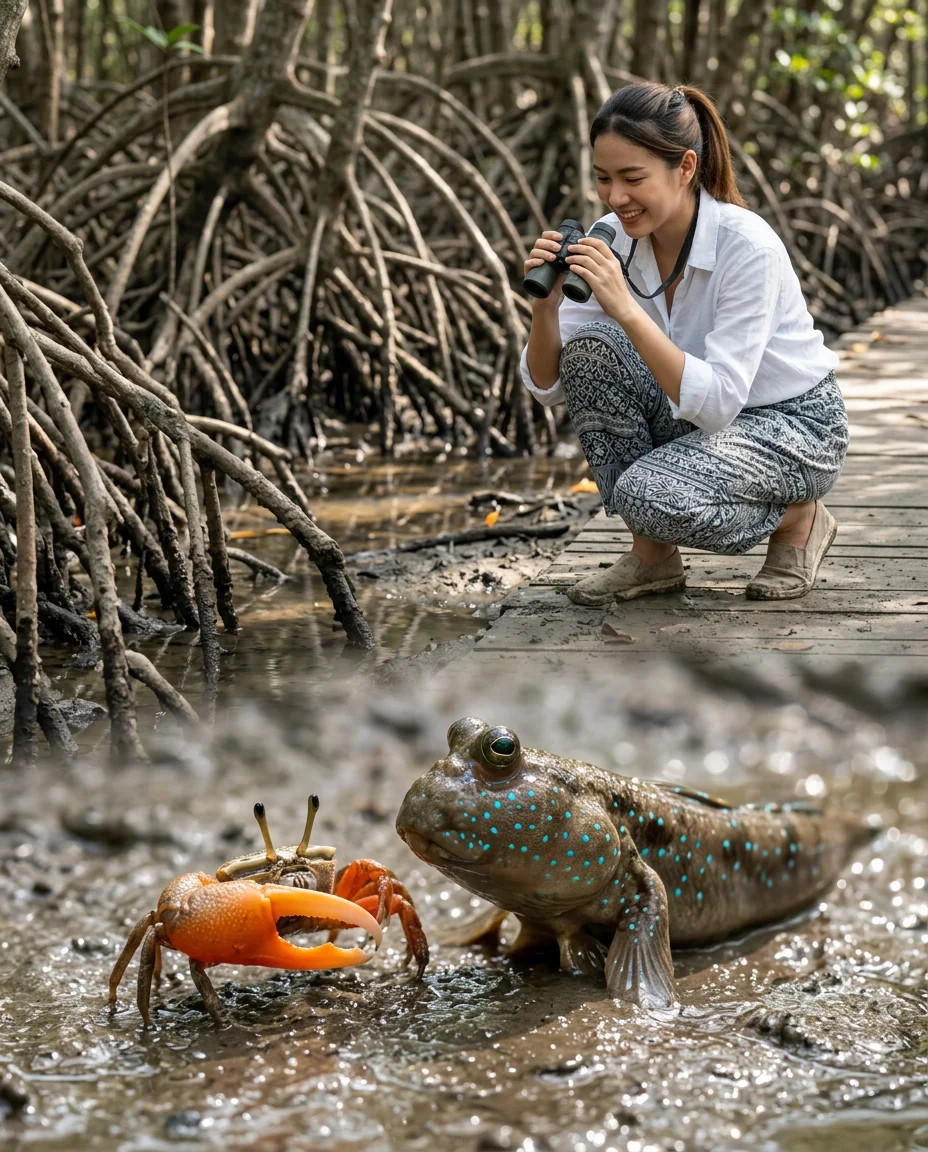
Thailand's coastal mangrove forests support a specialised wildlife community adapted to survive shifting water levels and extreme salinity. Mudskippers dominate the exposed mudflats at low tide, using muscular, modified pectoral fins to skip across the silt. They breathe out of water through vascularised skin and by holding water reserves inside enlarged gill chambers. Alongside them, thousands of fiddler crabs emerge from subterranean burrows to sift organic detritus from the sediment. Male fiddler crabs brandish a single, brightly coloured claw that can weigh nearly half their body weight, waving it rhythmically to establish territory and court mates.
Larger predators patrol these muddy margins and root networks. Asian water monitors (Varanus salvator) navigate the tidal channels using powerful lateral tail strokes before hauling out onto overhanging stilt roots to regulate their body temperature. In the mid-canopy, crab-eating macaques—also known as long-tailed macaques (Macaca fascicularis)—move in family troops. As the tide falls, they descend to the mudbanks to forage for molluscs, clams, and crabs, with coastal populations in parts of southern Thailand known to use rocks to break open hard shells.
Avian life thrives where the tree canopy meets the tidal channels. Collared kingfishers with bright turquoise-blue plumage perch on low branches, while black-capped kingfishers, little egrets, and solitary striated herons (Butorides striata) spear juvenile fish stranded in drying pools. Overhead, Brahminy kites and white-bellied sea eagles ride the thermal currents above river mouths, scanning the surface for shoaling fish.
To spot the greatest diversity of species, concentrate your viewing on the exposed waterline rather than the upper canopy. The vast majority of intertidal foraging happens along the mud banks within two hours either side of low tide, when the exposed mudflats turn into active feeding grounds.
Key Coastal Wetlands: Krabi, Phang Nga, Trang, and Pranburi
Thailand's mangrove forests occupy roughly 2,800 square kilometres of coastline, concentrated primarily along the Andaman Sea and sheltered river mouths of the Gulf of Thailand. Four distinct wetland regions provide the country's primary habitats for observing intertidal wildlife. Each site combines specific geological formations, forest structures, and transit arrangements that dictate how you explore and what wildlife you encounter.
On the Andaman coast, Ao Thalane in Krabi contains an extensive system of tidal channels winding between vertical limestone karsts. These sheltered waters provide nursery grounds for juvenile marine fish and crustaceans, while the dense root canopy shelters troops of crab-eating macaques, mudskippers, and collared kingfishers. Further north, Ao Phang Nga National Park encompasses roughly 400 square kilometres of protected estuarine forest and marine waters. Here, towering limestone sea mounts conceal dark marine caves that open into enclosed tidal lagoons, where water monitors patrol the water's edge and Brahminy kites circle overhead.
South of Krabi in Trang Province, the coastal river estuaries of Hat Chao Mai National Park and the offshore seagrass beds surrounding Koh Libong protect important marine habitats. This region forms Thailand's key sanctuary for endangered dugongs, while the surrounding mangrove creeks and exposed mudflats shelter smooth-coated otters, fiddler crabs, and migratory wading birds. In contrast to these western sea landscapes, Pranburi Forest Park in Prachuap Khiri Khan sits on the Gulf coast. Preserving roughly 3.2 square kilometres of recovered mangrove forest at the mouth of the Pran Buri River, the park represents decades of environmental rehabilitation following historical clearance for commercial shrimp farms.
| Wetland Location | Primary Habitat Type | Key Wildlife Species | Accessibility & Transport |
|---|---|---|---|
| Ao Thalane, Krabi | Limestone karst canyons and tidal river channels | Crab-eating macaques, mudskippers, collared kingfishers | 30-minute minivan transfer from Ao Nang or Krabi Town |
| Ao Phang Nga National Park | Expansive estuarine forest and interior sea caves and lagoons | Water monitors, Brahminy kites, fiddler crabs, mud crabs | Longtail boat from Surakul Pier or speedboat from Phuket |
| Hat Chao Mai & Koh Libong, Trang | Coastal river estuaries, mudflats, and seagrass beds | Dugongs, smooth-coated otters, migratory waders, mudskippers | 45-minute drive from Trang Town to Pak Meng or Hat Yao Pier |
| Pranburi Forest Park, Prachuap Khiri Khan | Regenerated river mouth estuary and mixed coastal forest | Mudskippers, fiddler crabs, black-capped kingfishers, egrets | 30-minute taxi or car drive south from Hua Hin |
Travel logistics vary across these four destinations. The Andaman sites depend on waterborne transport, requiring kayaks or chartered longtail boats to negotiate tidal channels and limestone formations. Pranburi on the Gulf coast provides elevated boardwalks that allow self-guided, foot-based exploration above the mud at any tide level.
Plan a Central Thailand trip through Ayutthaya, Kanchanaburi, Lopburi and Amphawa, with current costs, transport advice and seasonal guidance.
Navigating the Channels: Kayak Tours Versus Longtail Excursions
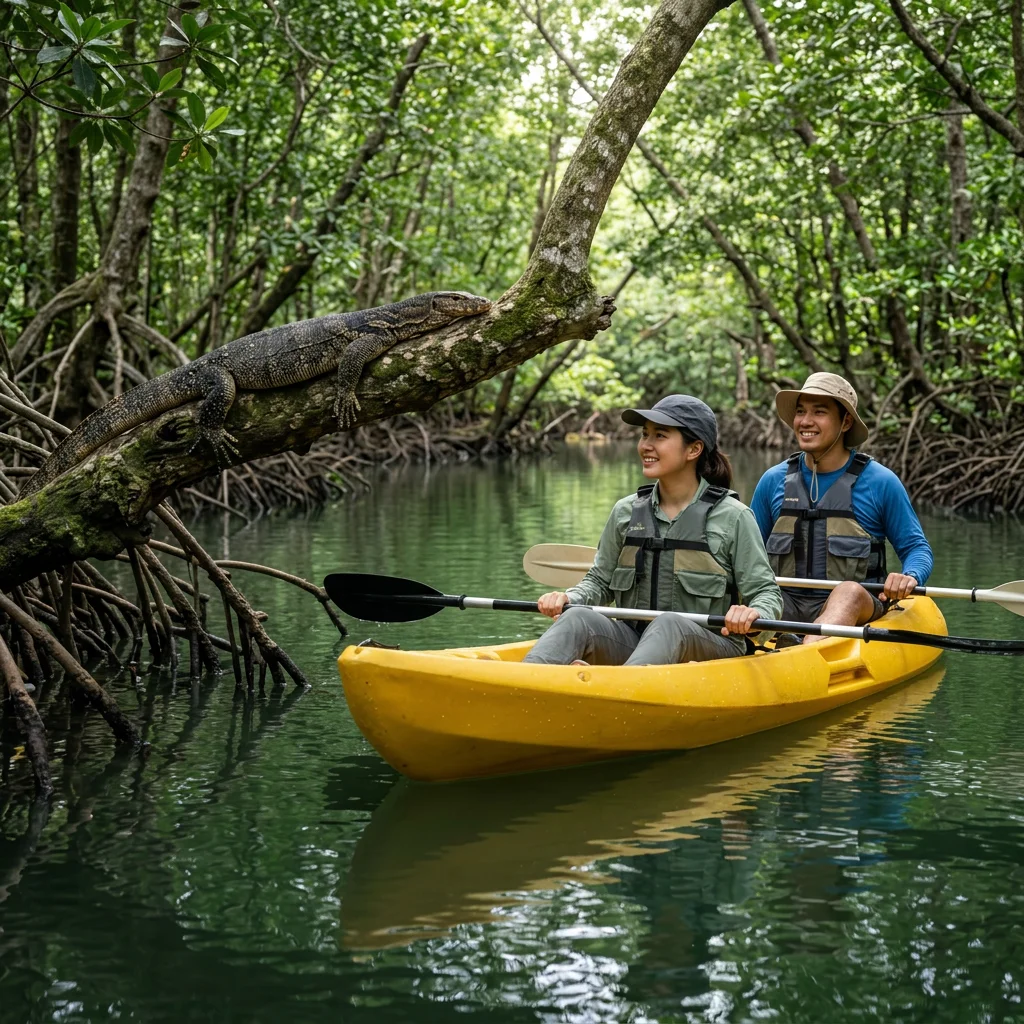
The vessel you choose largely determines how closely you can observe mangrove wildlife without causing distress. Kayaking is the quietest and least intrusive way to explore shallow inland waterways. Drawing only a few inches of water, a paddle craft can slip through narrow tidal channels and glide beneath the arching stilt roots of native mangroves (Rhizophora apiculata and Rhizophora mucronata), reaching tight creeks that motorised craft cannot enter. Because kayaks move silently, wildlife is far more tolerant of their presence. Water monitor lizards frequently remain basking on low-hanging boughs, crabs continue feeding along exposed mud banks, and kingfishers often hold their perches as you drift past.
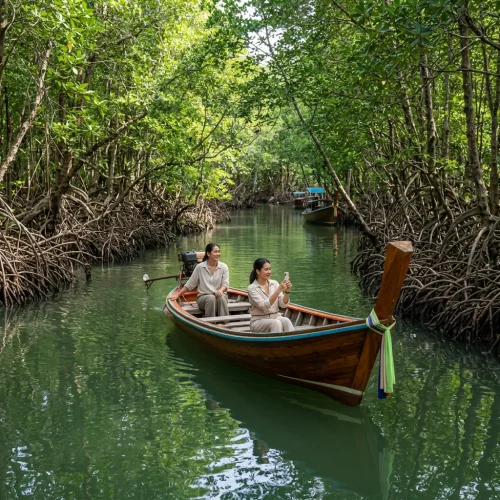
Traditional longtail boats offer a very different experience. Powered by unshielded automobile engines mounted on long swivel shafts, these craft excel at covering large distances quickly across broad estuaries and open coastal waters. They are practical for crossing wide expanses such as Phang Nga Bay or navigating the open river channels of Trang. However, the loud drone of an unshielded engine alerts animals hundreds of metres away. Wading herons and egrets take flight, and macaques retreat into the upper canopy long before a boat draws within clear viewing range.
To combine the range of a motorboat with the stealth of a paddle craft, several tour operators run hybrid excursions. These trips use a motorised support vessel or longtail boat to transport sit-on-top kayaks across open water, launching paddlers once inside sheltered lagoons, limestone canyons, or narrow backwaters. For travellers focused on wildlife watching and photography, kayaks remain the most effective option, with motorboats reserved primarily for open-water transit.
Elevated Boardwalks and Forest Walking Trails
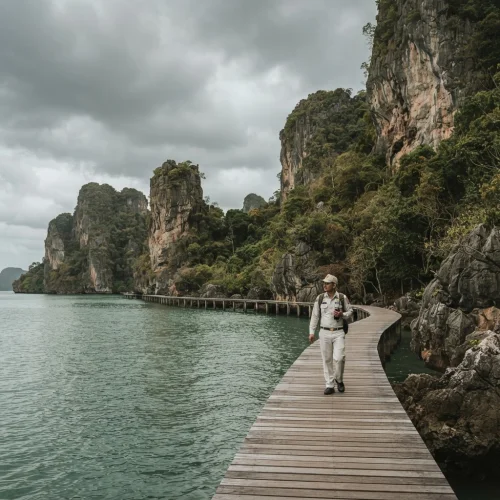
Elevated timber and concrete walkways provide a stable, dry vantage point directly above the intertidal floor. At Pranburi Forest Park, an elevated wooden boardwalk loops for approximately one kilometre through mature mangrove stands to the banks of the Pran Buri River. The route includes raised observation towers looking out across the canopy. Walking above the silt enables you to inspect intertidal wildlife that boat excursions pass by. From the handrails, you can watch colourful fiddler crabs excavating burrows and observe rival male mudskippers defending their territorial mud mounds at low tide.
Further south, boardwalk networks inside protected coastal reserves, such as Hat Chao Mai National Park in Trang and the Ao Phang Nga National Park headquarters, give pedestrian access deep into dense estuarine forest. Raised trails remove the physical exertion of paddling, keep heavy camera bags clear of salt spray, and provide a steady base for tripods. Photographers and birdwatchers can wait quietly for shy target species, including the mangrove pitta, brown-winged kingfisher, and ruddy kingfisher, which forage in the lower root tangle.
Because these forest trails sit beneath a thick leaf canopy, walking paths remain significantly cooler than open waterways exposed to direct sun. Strolling the boards allows visitors to set their own pace, pause without drifting, and spend unhurried hours observing micro-habitats across different stages of the tide.
Seasonal Viewing Cycles and Tidal Conditions
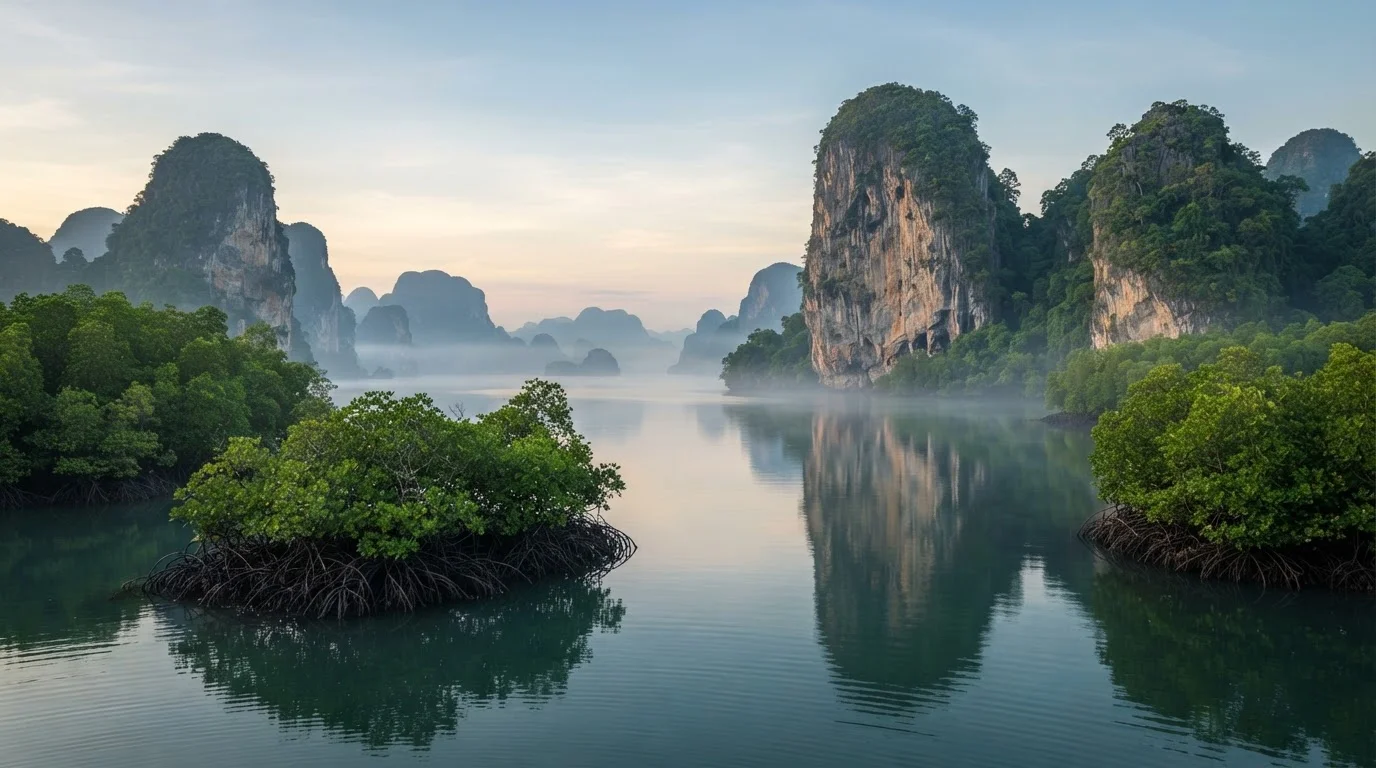
Tidal cycles govern mangrove wildlife encounters far more directly than the calendar month. Along Thailand's Andaman coast—including Krabi, Phang Nga, and Trang—semi-diurnal tides shift water levels by two to three metres twice a day. At high tide, sea water inundates the forest floor, submerging dense stilt-root networks and prompting terrestrial animals, such as macaques and monitor lizards, to move into higher branches. These flooded corridors offer sufficient depth for kayaks to navigate deep into inner creek networks, yet the high water temporarily conceals intertidal specialists, submerging mudskippers and crab burrows and dispersing shorebirds.
As the tide falls, the habitat shifts into an active foraging arena. Receding waters expose vast mudflats, triggering thousands of fiddler crabs and sesarmid crabs to emerge from their subterranean burrows to feed on deposited detritus. Mudskippers graze on algae and skip across exposed banks, while resident herons, egrets, and kingfishers gather along the retreating waterline to strike at trapped fish in shallow drainage channels. Visiting on an ebbing tide offers the prime window for observing this intertidal feeding surge.
Seasonal weather patterns dictate boating conditions and migratory bird numbers. Between November and April, the dry northeast monsoon brings settled, sunny weather and flat seas to the Andaman coast, providing reliable paddling and clear visibility. This dry season also coincides with the arrival of migratory waders, plovers, and kingfishers overwintering from northern Asia. From May to October, the southwest monsoon brings frequent rain squalls and rougher coastal water to the Andaman Sea, though early mornings often provide calm windows between showers. On the Gulf of Thailand, estuaries such as Pranburi receive lower annual rainfall than the western coast, and their elevated boardwalks remain walkable across the year, with peak rains concentrated between September and November.
Ecosystem Value and Responsible Wildlife Viewing
Mangrove forests form natural coastal barriers that protect Thailand's shorelines from storm erosion, filter agricultural runoff before it reaches coral reefs, and store up to four times more carbon per hectare than terrestrial tropical rainforests. Between 1970 and the late 1990s, Thailand lost more than half of its original mangrove cover, largely driven by commercial shrimp aquaculture, charcoal production, and coastal development. Today, restoration initiatives led by the Department of Marine and Coastal Resources alongside community forestry groups in provinces such as Trang and Krabi have reclaimed and replanted thousands of hectares of abandoned ponds and degraded mudflats.
Responsible visitors play a direct part in keeping these restored habitats undisturbed. Do not feed long-tailed macaques. Handouts disrupt natural foraging habits, alter troop social structures, and create aggressive begging behaviours that lead to bites. Feeding wildlife in national parks is prohibited by law, carrying fines of up to 1,000 THB (approx £23). When kayaking through narrow mangrove creeks, keep noise to a minimum, avoid prodding mudskipper burrows with paddle blades, and do not tie boats to vulnerable stilt root tips, which snap under strain. Pack out every piece of rubbish, as discarded plastics and synthetic lines present lethal entanglement hazards to foraging reptiles, crabs, and coastal birds.
Where to Observe Mangrove Wildlife in Thailand
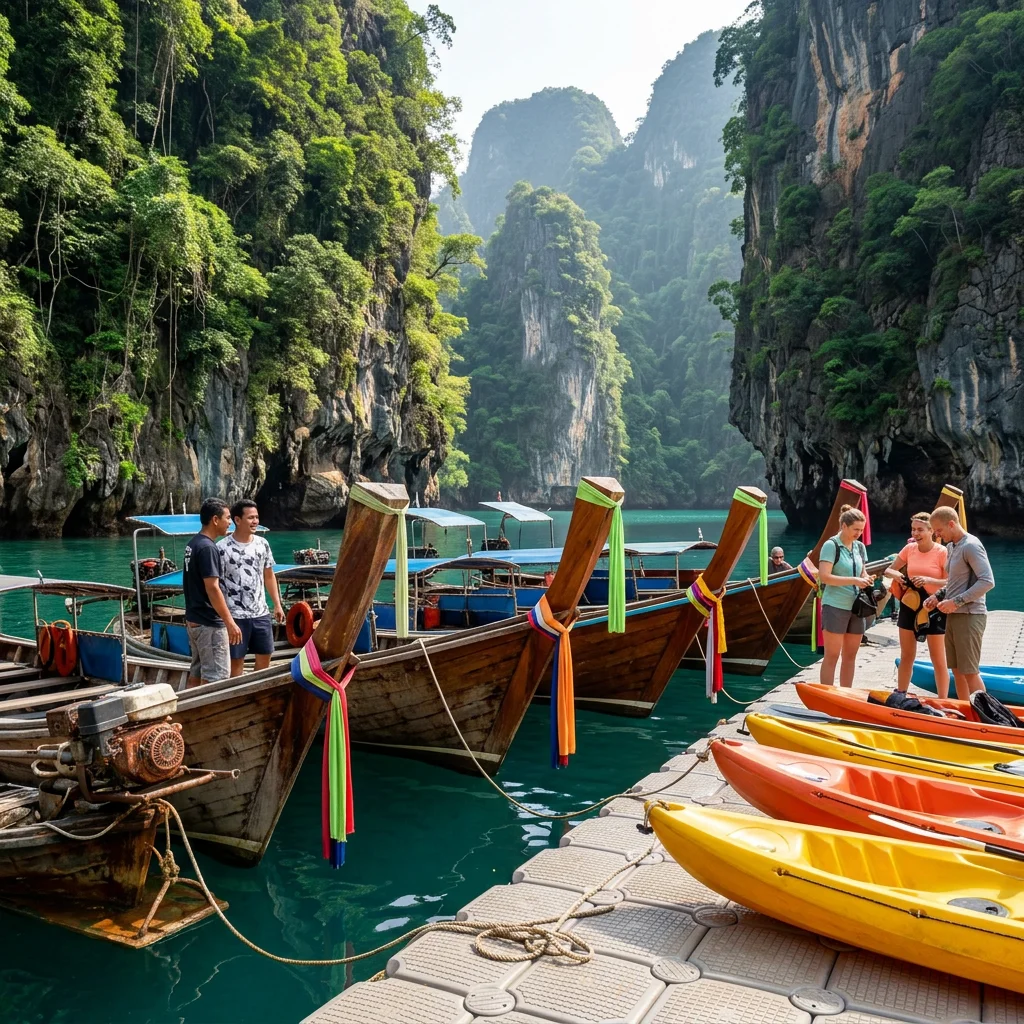
Thailand's southern and Gulf coastlines contain several distinct wetland hubs, each presenting different terrain and wildlife-watching vantage points.
For paddling encounters among sheltered limestone scenery, Ao Thalane sits roughly 25 to 30 kilometres northwest of Krabi Town and Ao Nang. This coastal mangrove estuary snakes through deep karst canyons where long-tailed macaques forage along exposed stilt roots at falling tide and resident collared kingfishers dart between branches. Guided half-day kayak excursions allow quiet approaches along winding channels that motorised craft cannot navigate.
Further north, Ao Phang Nga National Park preserves vast mangrove stands set against dramatic limestone karsts. Most visitors access the bay via mainland departure points such as Surakul Pier in Takua Thung district or on day tours from Phuket. Inflatable sea kayaks guided through tidal sea caves lead into interior hongs—collapsed karst chambers sheltering saltwater lagoons where water monitor lizards bask and mudskippers crawl across tidal ledges.
In Trang province, Hat Chao Mai National Park provides a far less crowded alternative along the lower Andaman coast. Traditional longtail boats leaving from Pak Meng Pier or Hat Yao Pier travel along broad river mouths and mangrove channels where smooth-coated otters fish and Brahminy kites circle overhead, before reaching the outer seagrass beds off Koh Libong.
On the Gulf of Thailand, Pranburi Forest Park sits around 25 kilometres south of Hua Hin, protecting restored coastal mangroves at the mouth of the Pran Buri River. An elevated wooden boardwalk of around one kilometre loops through the trees, giving walkers a clear view of fiddler crabs, climbing mudskippers, and visiting herons without wading into mud. Halfway along the trail, a small landing provides access to local longtail boats for extended trips along the river.
Costs and Budgeting
Exploring Thailand's mangrove ecosystems fits varied travel budgets, whether walking self-guided boardwalks, joining a group paddle, or chartering a private vessel. Independent boardwalk visits require only modest reserve admission and local songthaew or taxi fares, whereas waterborne guided tours reflect organised group transport and specialist equipment.
Government conservation fees apply across national parks and forest reserves. At Pranburi Forest Park, entry costs 100 THB (approx £2.20) for foreign adults and 50 THB (approx £1.10) for children aged 3 to 14. Marine national parks set slightly higher tariffs: Ao Phang Nga National Park charges 300 THB (approx £6.70) per foreign adult and 150 THB (approx £3.30) per child, while Hat Chao Mai National Park in Trang charges 200 THB (approx £4.40) per foreign adult. Carry cash in Thai Baht, as remote ranger kiosks rarely take cards.
Guided water excursions include equipment, transfers, and local navigation. In Krabi, group half-day sea kayak tours through Ao Thalane's mangrove channels run between 800 THB and 1,200 THB (£18 to £27) per adult, covering hotel transfers, paddles, buoyancy aids, dry bags, and guide services. In Phang Nga Bay, full-day boat excursions combining mangrove cruising with sea kayaking into limestone caves range from 2,300 THB to 3,500 THB (£51 to £78) per person, usually incorporating lunch and park fees. Private longtail charters offer flexible timing for photographers: hiring a boat on the Pranburi River costs 400 THB to 500 THB (£9 to £11) for up to eight passengers on a 40-minute ride, while half-day private charters along Trang's coastal estuaries run roughly 1,500 THB to 2,500 THB (£33 to £56).
| Option | Cost (THB) | Cost (GBP approx) | Notes |
|---|---|---|---|
| Pranburi Forest Park Boardwalk Admission | 100 THB | £2.20 | Foreign adult entry fee; 50 THB (£1.10) for children aged 3–14 |
| Pranburi River Longtail Boat (Private Hire) | 400–500 THB | £9–£11 | 40-minute chartered ride along estuary; seats up to 8 people |
| Ao Thalane Half-Day Kayak Tour (Krabi) | 800–1,200 THB | £18–£27 | Includes return hotel transfers, paddles, dry bag, and guide |
| Ao Phang Nga National Park Entry Fee | 300 THB | £6.70 | Government park conservation charge for foreign adult visitors |
| Phang Nga Bay Sea Canoe Day Trip | 2,300–3,500 THB | £51–£78 | Full-day tour from Phuket or Phang Nga including lunch and caves |
| Hat Chao Mai Longtail Charter (Trang) | 1,500–2,500 THB | £33–£56 | Private half-day hire for river estuaries and coastal island fringes |
What To Know Before You Go
Timing an excursion around the tides dictates both where you can paddle and what you will see. Outings need to align with local tide tables: a very low tide leaves narrow mangrove channels impassable or stranded in thick mud, whereas a full high tide completely covers the exposed mudflats where mudskippers, fiddler crabs, and foraging herons feed. Most experienced guides schedule departures around mid-tide to balance channel navigation with wildlife viewing.
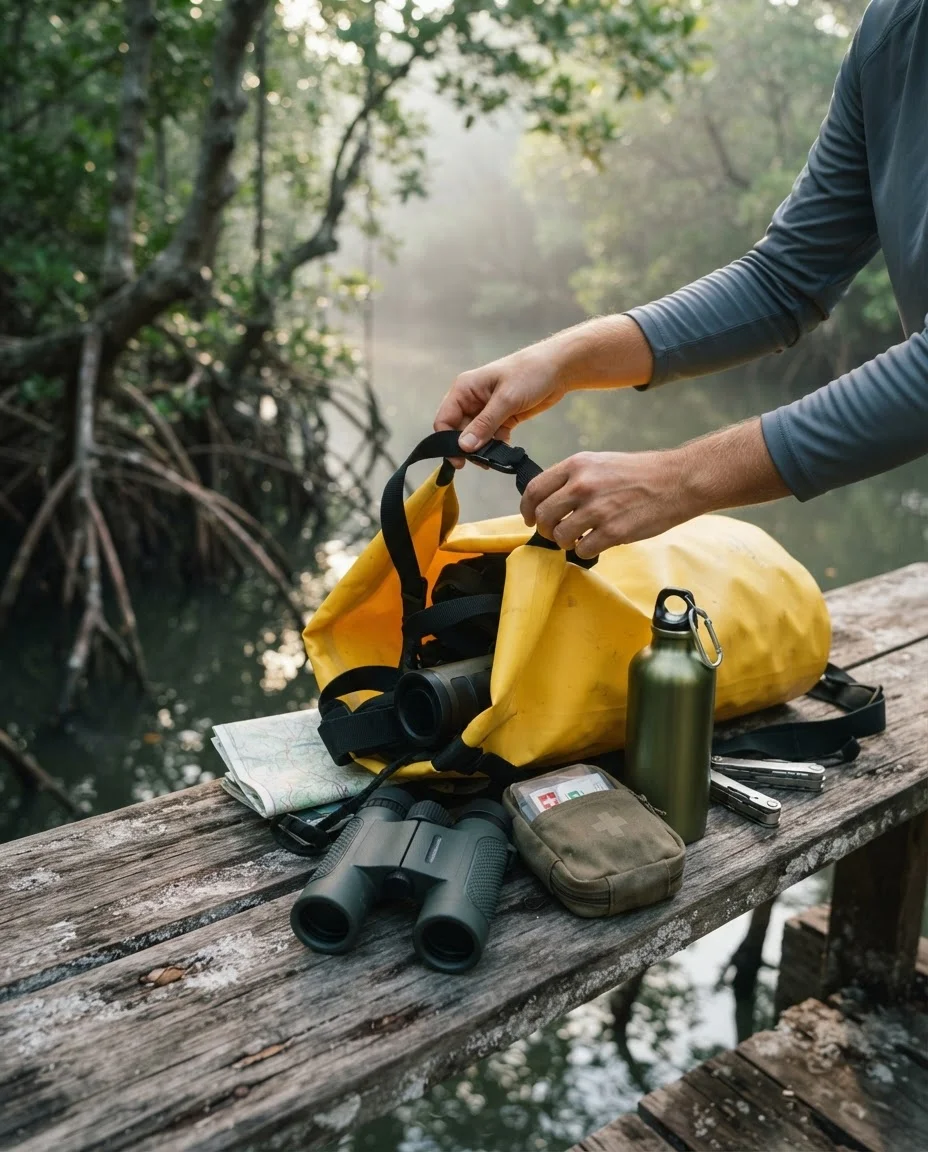
Pack cameras and phones inside a durable roll-top dry bag. Even on calm coastal estuaries, paddle drips, sudden tropical downpours, and accidental capsizes are common hazards. Salt and fine mangrove silt quickly ruin unsealed electronics if they take on water.
Keep a respectful distance from crab-eating macaques. Habitual troops along popular paddling routes such as Krabi's Ao Thalane frequently approach kayaks or raid cockpits for unsecured bottles, snacks, and sunglasses. Stow all food out of sight, zip bags shut, and resist feeding them. Macaques can become aggressive when food is visible; the UK Foreign, Commonwealth & Development Office warns that monkey bites and scratches in Thailand carry a risk of rabies, requiring immediate wound washing with soap and urgent medical evaluation.
Shaded, humid channels also harbour biting midges and mangrove mosquitoes. Wear lightweight, long-sleeved quick-drying layers rather than heavy cotton, and apply a DEET- or picaridin-based insect repellent before pushing out into the trees.
Practical Tips
Strapped sports sandals or quick-drying neoprene water shoes with robust rubber soles are far better suited to mangrove terrain than slip-on flip-flops. Intertidal mudflats consist of waterlogged silt that generates substantial suction with every step. Flimsy footwear easily tears or pulls straight off your feet when stepping out of a kayak onto a shallow creek bed or clearing. Sturdy footwear also shields your soles from buried mangrove peg roots and broken oyster shells.
When steering a kayak through narrow channel corridors, resist the temptation to grab passing stilt roots to pull or steady the boat. Aerial roots of red mangroves are frequently encrusted with sharp barnacles and bivalves that cause painful cuts if touched. Overhanging foliage can also harbour tree-dwelling crabs and stinging caterpillars. Using short, controlled paddle strokes prevents your hands from brushing against hazardous surfaces.
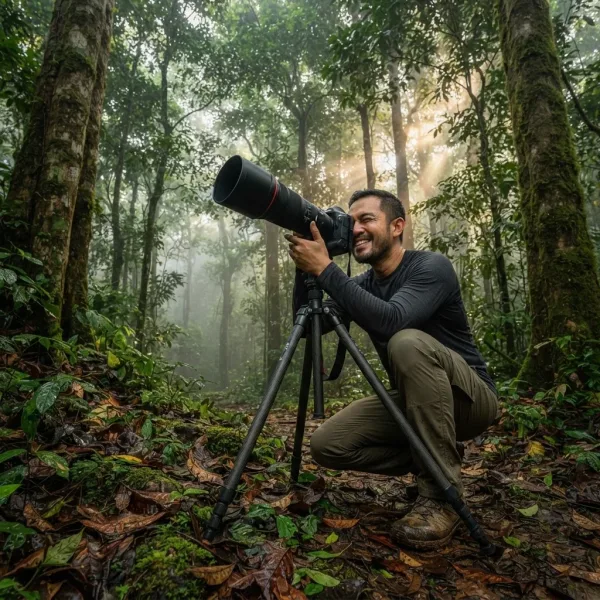
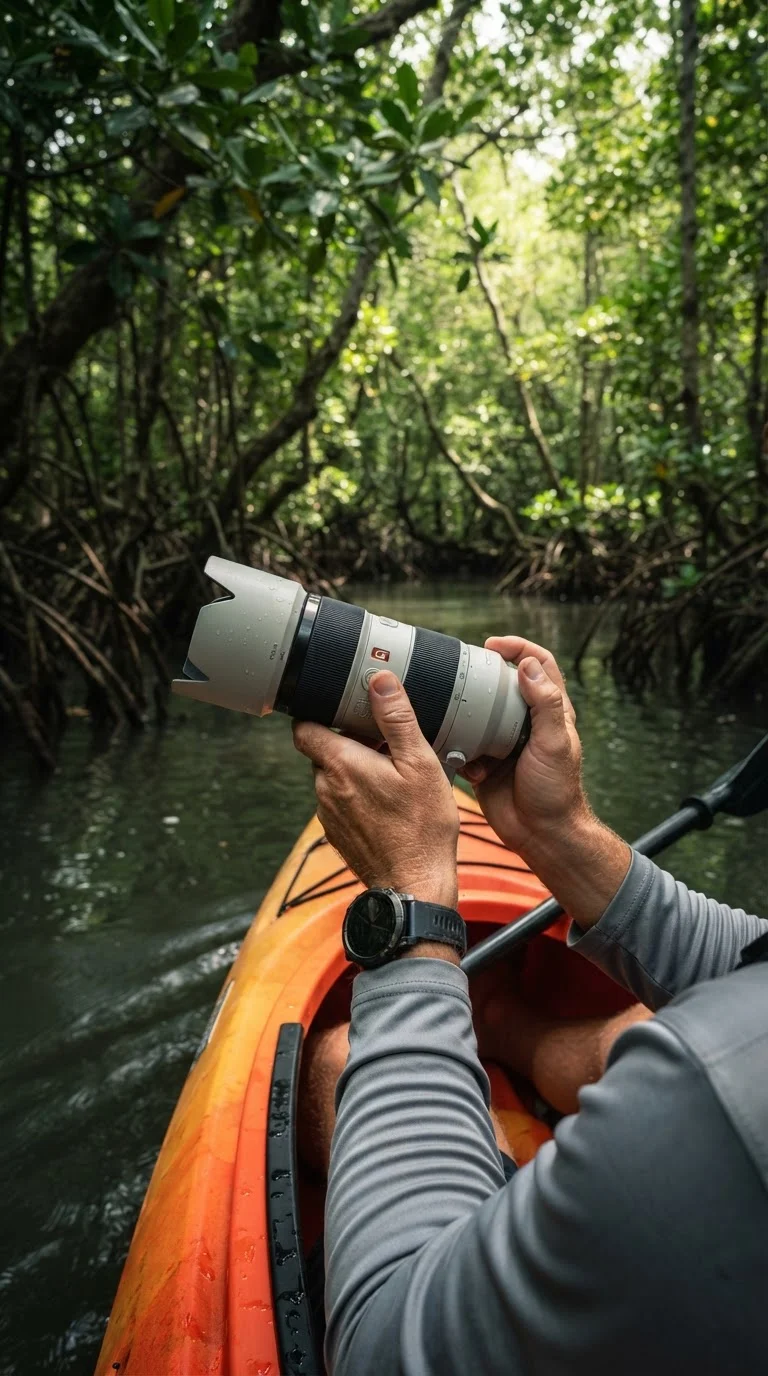
For wildlife photography, pack a telephoto zoom lens reaching at least 200mm to 300mm. Mangrove inhabitants such as kingfishers, herons, and monitor lizards typically forage deep within tangled root networks where smartphone cameras fail to capture detail. Pack a microfibre cloth and lens wipes, as humidity inside enclosed forest canopies quickly fogs optical glass when stepping out of air-conditioned transport.
Aim for early morning departures, ideally launching before 08:30. In the cooler morning hours, water monitors and primates remain active before midday heat drives them into deep shade, and you avoid motorised boat wakes that scatter wading birds. When booking, check that the operator supplies a dedicated nature guide rather than just a boat driver. Experienced local guides spot camouflaged tree snakes, kingfishers, and resting lizards that untrained visitors miss.
Carry drinking water and electrolyte tablets in a refillable flask. Paddling through humid coastal estuaries accelerates fluid loss, making heat exhaustion a real risk beneath strong tropical sun. Finally, fit floating lanyards to sunglasses and action cameras. Turbid mangrove waters offer zero underwater visibility, so an unattached item dropped overboard sinks into the soft mud and is effectively impossible to recover.
Quick Reference Table
| Item | Detail | Notes |
|---|---|---|
| Primary viewing locations | Ao Thalane (Krabi), Ao Phang Nga, Hat Chao Mai (Trang), Pranburi Forest Park | Andaman sites require waterborne kayak or boat access; Pranburi features an elevated 1 km boardwalk |
| Native wildlife species | Mudskippers, fiddler crabs, Asian water monitors, crab-eating macaques, kingfishers | Trang estuaries also shelter smooth-coated otters and offshore dugongs; raptors include Brahminy kites |
| Optimal viewing window | Ebbing tide, within 2 hours either side of low tide | Exposes intertidal mudflats for active foraging; mid-tide departures balance channel navigation |
| Best time of day | Early morning (departures before 08:30) | Cooler temperatures keep monitors and primates active before midday heat; avoids disruptive boat wakes |
| Seasonal viewing cycles | November to April (Andaman coast); year-round (Pranburi) | Dry northeast monsoon provides calm seas and migratory waders; southwest monsoon (May–Oct) brings rain squalls |
| Reserve entry fees | 100–300 THB (£2.20–£6.70) foreign adults; 50–150 THB (£1.10–£3.30) children | Pranburi: 100 THB adult / 50 THB child; Hat Chao Mai: 200 THB adult; Ao Phang Nga: 300 THB adult / 150 THB child |
| Guided kayak & canoe tours | 800–1,200 THB (£18–£27) half-day; 2,300–3,500 THB (£51–£78) full-day | Krabi half-day trips include gear and transfers; Phang Nga full-day tours include cave canoeing and lunch |
| Private longtail boat hire | 400–500 THB (£9–£11) Pranburi; 1,500–2,500 THB (£33–£56) Trang | Pranburi charter covers a 40-minute estuary ride (up to 8 seats); Trang covers a half-day coastal charter |
| Recommended footwear & gear | Roll-top dry bag, strapped water shoes or sports sandals, DEET repellent | Mud suction pulls off flip-flops; pack a 200–300mm telephoto lens and fit floating lanyards to valuables |
| Wildlife safety & etiquette | Do not feed macaques; avoid grabbing aerial stilt roots | Feeding attracts fines up to 1,000 THB (£23) and risks rabies bites; roots are encrusted with sharp barnacles |
FAQ: Mangrove Wildlife
When is the best time to see mangrove wildlife in Thailand?
How can visitors explore Thailand's mangrove forests?
Which type of boat is better for wildlife viewing in Thailand's mangroves, kayaks or longtail boats?
What is the best season to visit Thailand's mangroves for wildlife viewing?
Should visitors feed macaques in Thailand's mangrove national parks?
What are some responsible viewing practices for kayaking in Thailand's mangroves?
How much does a half-day kayak tour cost in Krabi's Ao Thalane mangroves?
What is the entry fee for Pranburi Forest Park in Thailand?
What tide conditions are best for mangrove excursions in Thailand?
What should visitors do to protect electronics during a mangrove tour?
Reviewed by the Thailand Guide Editorial Team • Last reviewed: 15 November 2026
This page is provided for general information only. While we aim for accuracy, details can change — please verify anything important independently before relying on it.