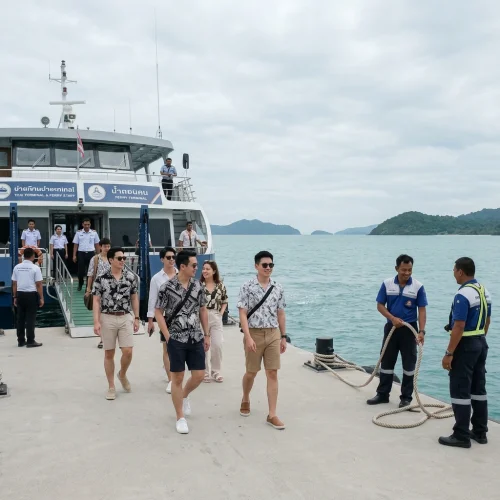
Boating in Thailand
Dropping anchor beneath the limestone karst towers of Phang Nga Bay reveals a marine landscape unreachable by road, where sheer rock faces draped in jungle plunge into sheltered emerald water. Cruising these coastal waters under sail or power opens up an expansive island-dotted realm shaped by alternating monsoons, secluded coves, and full-service international marinas. Recreational boating stands strictly apart from Thailand's commercial passenger transport: rather than following the fixed timetables and crowded routes of public ferries, long-tail water taxis, or tour speedboats, private cruising gives skippers and charterers complete autonomy over their passage, pace, and anchorages.
This guide provides a comprehensive national overview of leisure sailing, motor cruising, and yacht charter across Thai waters, written specifically for British travellers, expatriates, and visiting boat owners. It covers the full spectrum of experiences, from skippered day excursions and bareboat catamaran charters to long-distance voyages aboard privately owned yachts. Inside, you will find practical breakdowns of the country's primary cruising basins in the Andaman Sea and the Gulf of Thailand, regional monsoon calendars, tidal navigation realities, and harbour facilities. It also outlines realistic costs, skipper qualification standards, and marine conservation rules to help you plan an independent voyage.

Thailand's Main Cruising Regions and Island Basins
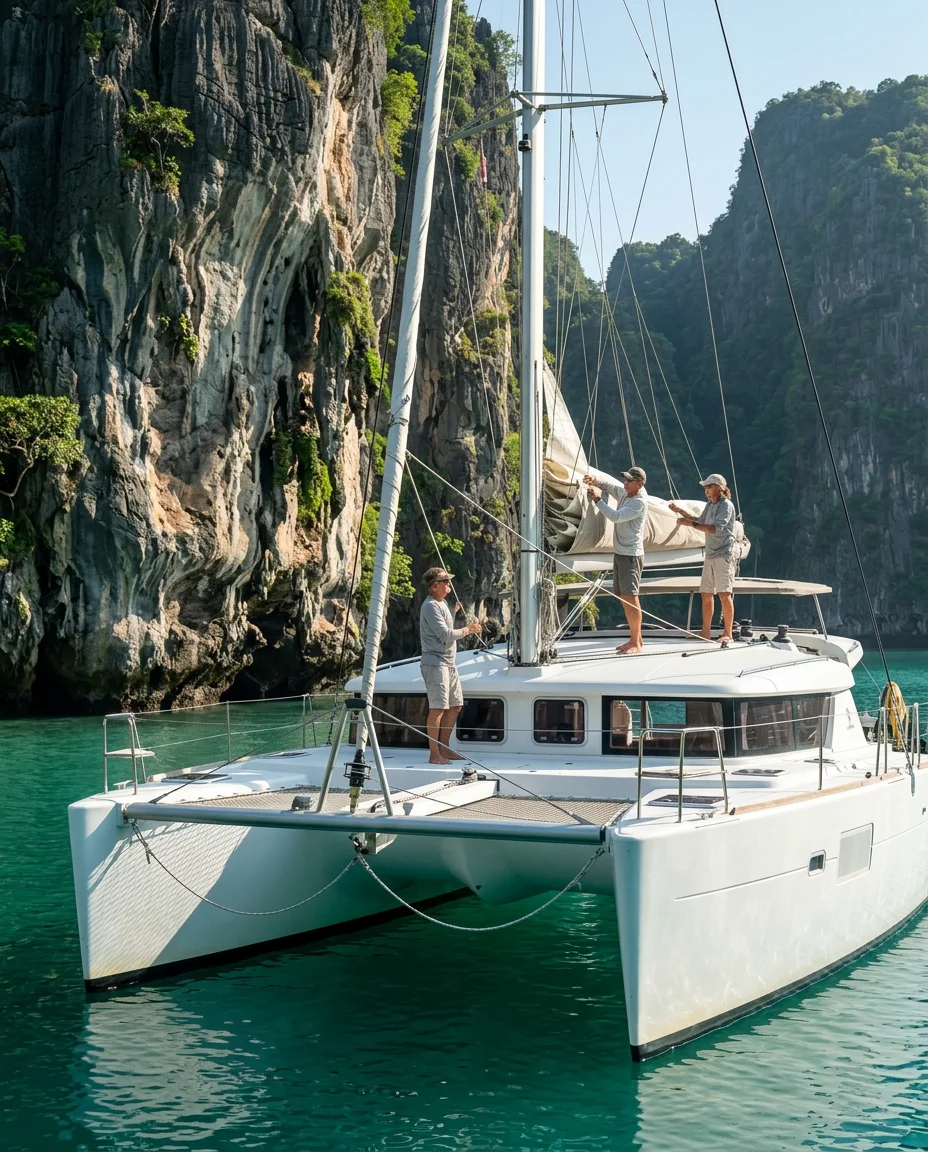
Thailand offers two distinct marine environments divided by the Kra Isthmus: the deep, tidal Andaman Sea to the west and the expansive, shallower Gulf of Thailand to the east. The Andaman coast features semidiurnal tides, oceanic swells, and towering limestone karst formations. The Gulf presents continental-shelf waters, diurnal tidal flows, and broader distances between island groups. Navigating Thai waters requires matching vessel draft, crew experience, and passage plans to each specific basin.
Phuket serves as the primary yachting hub of the Andaman Sea, supported by established marina infrastructure on its eastern coast, including Phuket Yacht Haven, Ao Po Grand Marina, Royal Phuket Marina, and Phuket Boat Lagoon. Immediately to the east, Phang Nga Bay provides sheltered waters lined with limestone pinnacles and mangrove channels, offering protected cruising year-round for novice crews and day charters. Across the bay, Krabi features dramatic karst headlands, with pontoon berthing at Port Takola on the Isara Estuary and Krabi Boat Lagoon. Southward passages lead to the sheer cliffs and deep waters of Koh Phi Phi, followed by the long western beaches of Koh Lanta. Beyond Koh Lanta, the southern Andaman becomes remote cruising territory: uninhabited coral atolls at Koh Rok give way to Koh Tarutao and Koh Lipe near Satun, where self-sufficient yachts transit onward to Langkawi across the Malaysian maritime border.
In the Northern Gulf, Ocean Marina Jomtien south of Pattaya anchors the region with 450 wet berths, giving cruising access to Koh Lan, Koh Phai, and the protected anchorages of Koh Khram. Across the Gulf to the west, Hua Hin and the Pran Buri River mouth provide a mainland stopover, where Racer Marina accommodates cruisers transiting south. In the Lower Western Gulf, Koh Samui, Koh Phangan, and Koh Tao form a compact cruising circuit alongside the 42 limestone outcrops of Mu Koh Ang Thong National Marine Park. With no full-service marinas in this area, visiting yachts rely on open anchorages, mooring buoys, and public piers. Towards the Cambodian border, the Koh Chang archipelago spans more than 50 heavily forested islands, including Koh Mak and Koh Kood. These eastern waters feature quiet bays and shallow fringing reefs, well suited to shallow-draft catamarans and self-contained cruising crews.
| Cruising Region | Marine Basin | Key Nautical Geography | Main Marinas & Anchorage Hubs | Vessel Suitability & Experience |
|---|---|---|---|---|
| Phuket & Phang Nga Bay | Andaman Sea | Sheltered karst channels, mangrove rivers, deep outer islands | Royal Phuket Marina, Ao Po Grand, Phuket Yacht Haven | All vessels, year-round day and coastal cruising |
| Krabi, Koh Phi Phi & Koh Lanta | Andaman Sea | Limestone pinnacles, coral coves, open coastal passages | Port Takola, Krabi Boat Lagoon, Chalong Pier | Multihulls, monohulls, day charters, intermediate crews |
| Southern Andaman & Tarutao | South Andaman Sea | Remote oceanic islands, fringing reefs, deep passages | Pak Bara, Telaga and Kuah (Langkawi border) | Self-sufficient blue-water cruisers, expedition yachts |
| Pattaya & Eastern Gulf | Northern Gulf | Broad open bays, military-protected islands, sandy shores | Ocean Marina Jomtien | Cruising keelboats, motor yachts, racing fleets |
| Koh Samui & Ang Thong | Lower Western Gulf | Continental islands, rocky coves, secluded marine parks | Nathon Pier, Bangrak, Mae Nam anchorages | Monohulls, motor catamarans, island-hopping yachts |
| Koh Chang Archipelago | Eastern Gulf | Heavily forested islands, coral shallows, quiet bays | Siam Royal View Marina, Bang Bao Bay | Shallow-draft catamarans, adventurous private cruisers |
Plan passage itineraries around regional infrastructure rather than assuming every island provides fuel, fresh water, or engineering support. While Phuket and Pattaya provide comprehensive marina services, the southern archipelagos and Gulf island groups require self-reliance, careful tidal calculations, and thorough provisioning.
Sailing Seasons, Monsoon Cycles, and Sea Conditions
Recreational boating in Thailand is governed by two opposing seasonal wind systems: the northeast and southwest monsoons. Rather than experiencing a uniform tropical climate, the Andaman Sea and the Gulf of Thailand follow offset weather patterns that dictate viable anchorages, open-water passages, and maritime park access throughout the year.
The northeast monsoon runs from November through April, providing the primary cruising window for the Andaman Sea. Stable high-pressure systems deliver dry air, clear skies, and steady breezes of 10 to 20 knots from the northeast. Sea conditions remain flat along Phuket’s western coastline, opening sheltered anchorages at Kata, Nai Harn, and Bang Tao, alongside clear passages offshore to the Similan and Surin archipelagos. In contrast, the southwest monsoon prevails from May to October, bringing humid oceanic squalls and rolling Indian Ocean swells from the west. During these months, western anchorages become exposed and untenable, shifting recreational sailing to the protected karst channels of Phang Nga Bay or over to the Gulf of Thailand. Official Department of National Parks regulations close offshore Andaman reserves, including the Similan and Surin marine parks, between mid-May and mid-October.
The Gulf of Thailand provides settled cruising when the Andaman is exposed, with calm seas from February through August around Koh Samui, Koh Phangan, and Koh Tao. However, the Lower Gulf catches the brunt of the wet northeast monsoon from late October through mid-December, generating heavy rainfall and steep chop. Consequently, Mu Koh Ang Thong National Marine Park closes to all recreational vessels and tours from 1 November to 15 December.
Tidal behaviour also diverges between basins. The Andaman Sea features semidiurnal tides with spring ranges reaching up to three metres, creating powerful tidal streams through narrow channels. The Gulf exhibits diurnal or mixed tides with ranges rarely exceeding 1.5 metres. Skippers should monitor daily marine bulletins from the Thai Meteorological Department, watching particularly for rapid afternoon squall lines.
Plan a Central Thailand trip through Ayutthaya, Kanchanaburi, Lopburi and Amphawa, with current costs, transport advice and seasonal guidance.
Charters, Vessel Formats, and Boating Styles
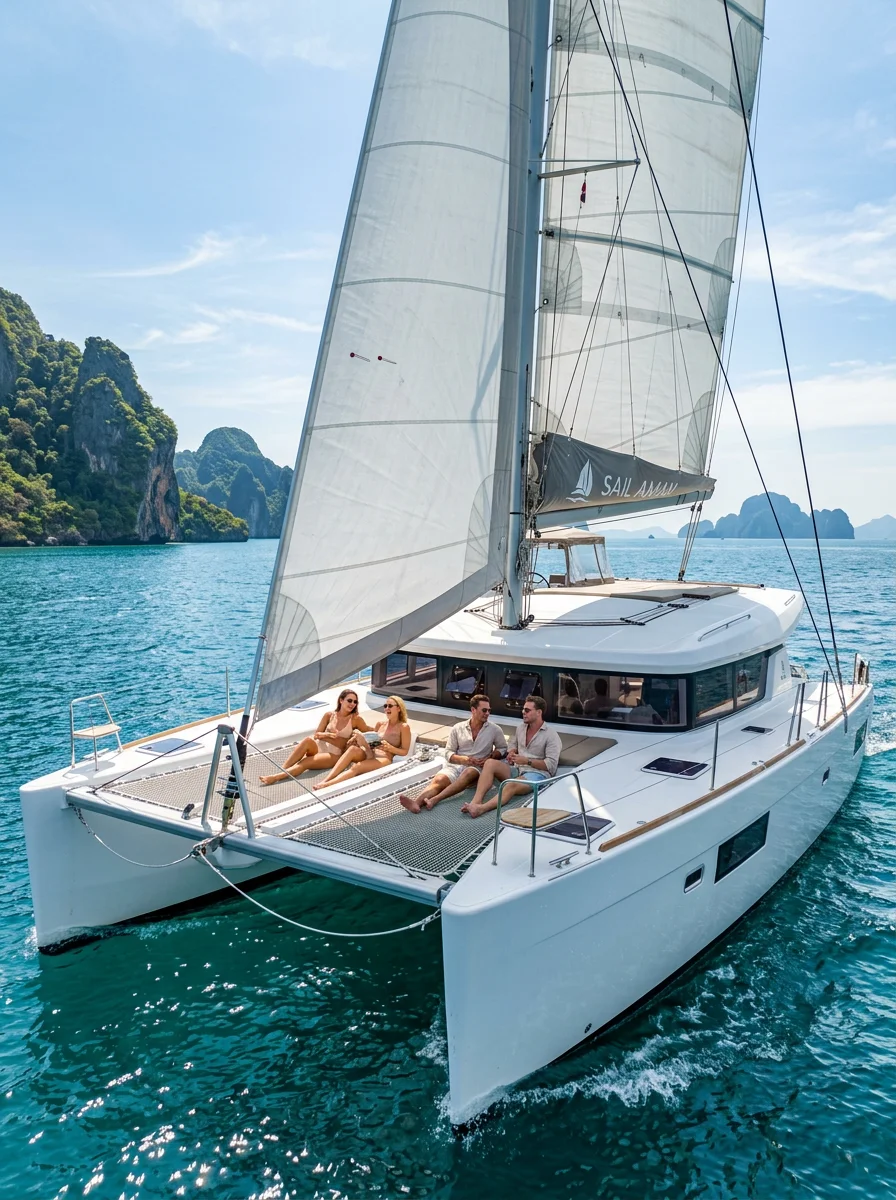
Private boating across Thai waters encompasses everything from brief half-day coastal hops to multi-week offshore cruises. Sailing catamarans represent the prevailing platform for leisure cruising along both the Andaman coast and the Gulf of Thailand. Their wide beam delivers expansive living quarters, level decks under sail, and a steady posture at anchor. Shallow draughts—typically between 1.1 and 1.4 metres—allow multihulls to cross coastal sandbars and anchor close to beaches in coves inaccessible to deep-keeled yachts drawing 2 metres or more. Monohull sailing yachts maintain a loyal following among traditionalists, providing greater responsiveness on the helm, sharper windward performance, and lower berthing charges in local marinas.
Chartering formats cater to differing levels of maritime experience. Bareboat charters give competent sailors complete independence over passage planning, watch-keeping, and navigation. While Thai maritime authorities do not set a domestic qualification exam for leisure charterers, commercial charter companies require evidence of competence before releasing a vessel. British skippers typically need an RYA Day Skipper practical certificate or an International Certificate of Competence (ICC), accompanied by a VHF radio operator licence and a verifiable sailing resume. For those without formal certifications, or crews seeking a restful holiday without vessel maintenance responsibilities, skippered charters provide a qualified local captain. A professional skipper manages pilotage, anchoring, and tidal timing while navigating local language requirements and secluded anchorages.
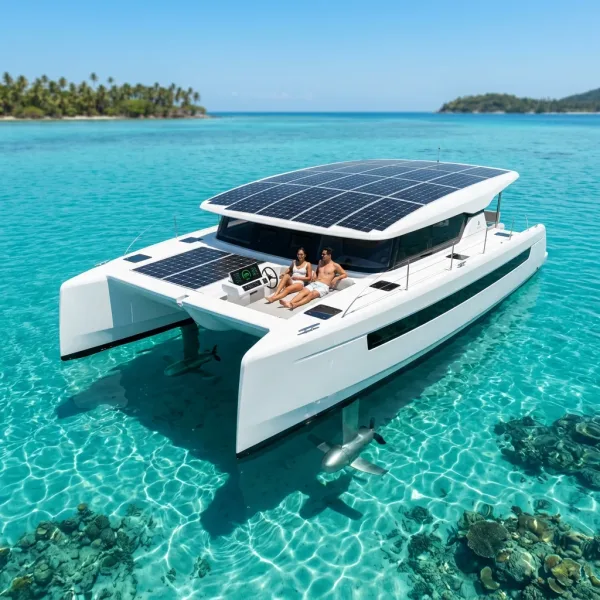
Fully crewed luxury charters introduce professional chefs and deckhands aboard large catamarans and motor yachts, operating primarily out of major bases such as Ao Po Grand Marina and Royal Phuket Marina. Motor cruisers and power catamarans suit visitors aiming to cover considerable distances between island groups within compressed schedules, eliminating dependence on prevailing breezes. For shorter itineraries, private speedboats and day-sailing yachts provide access to snorkelling reefs, sea caves, and limestone lagoons without requiring overnight stays aboard.
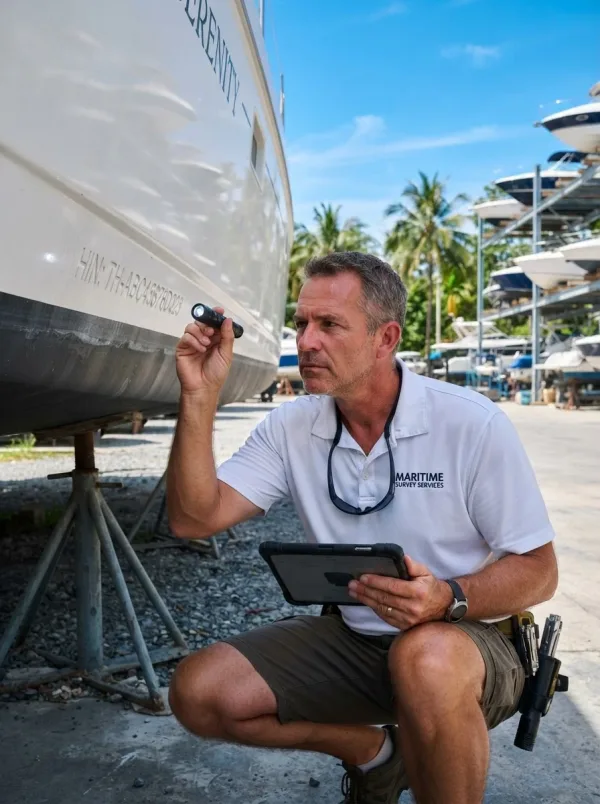
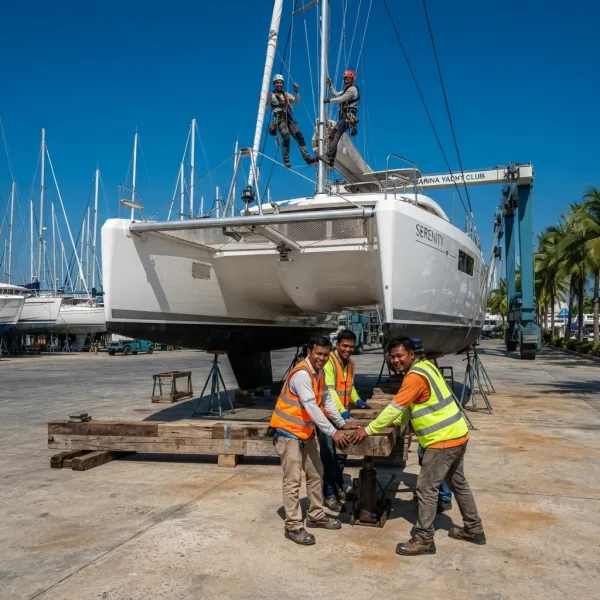
Recreational boating also includes long-term cruising aboard privately owned vessels. Expatriate boat owners frequently keep yachts berthed in Thai marinas, supported by established haul-out boatyards, marine engineering workshops, and skilled local shipwrights. Choosing between multihull and monohull platforms, or between independent bareboat and crewed travel, ultimately depends on your party's sailing background, cabin requirements, and preferred cruising pace.
Navigation, Maritime Safety, and Passage Planning
Navigating Thai waters demands disciplined seamanship, careful hydrographic study, and constant visual vigilance. Unmarked artisanal fishing gear represents the most common hazard to recreational craft along both the Andaman and Gulf coasts. Coastal fishers deploy unlit bamboo traps, drifting gill nets, and submerged longlines buoyed by plastic containers or fabric flags, which can quickly foul propellers, rudders, and sail drives. Prudent skippers navigate using updated Admiralty or Royal Thai Navy Hydrographic Department charts, supported by electronic chartplotters running Navionics or C-MAP data. Electronic charts can contain local inaccuracies in shallow bays, making it prudent to verify soundings against physical depth readings.
Tidal dynamics vary markedly between basins. In the Andaman Sea, semi-diurnal tides produce ranges of up to three metres during springs, generating currents of three to six knots through narrow channels such as the Pak Phra Strait north of Phuket. Fringing coral reefs and granite outcrops surround many anchorages. Navigating these areas requires visual pilotage with overhead sunlight—ideally between mid-morning and early afternoon—so that coral heads and subtle water depth variations remain clearly visible. In commercial shipping approaches around Laem Chabang in the Gulf and across the Malacca Strait traffic corridors, skippers should maintain active radar and AIS watchkeeping.
Under Thai Marine Department regulations, vessels operating in Thai waters must carry approved lifejackets for every person on board, working distress flares, and serviced fire extinguishers. Skippers should maintain a continuous listening watch on international distress VHF Channel 16, switching to designated working channels—such as Channel 68 for local marina communications—when coordinating berths. Passages should be planned to secure anchorages well before dusk, as unlit obstructions make night pilotage hazardous for leisure craft. Filing a passage plan with your departure base or charter operator provides a dependable safety link before setting sail along the coast.
Marine Parks, Mooring Rules, and Environmental Duties
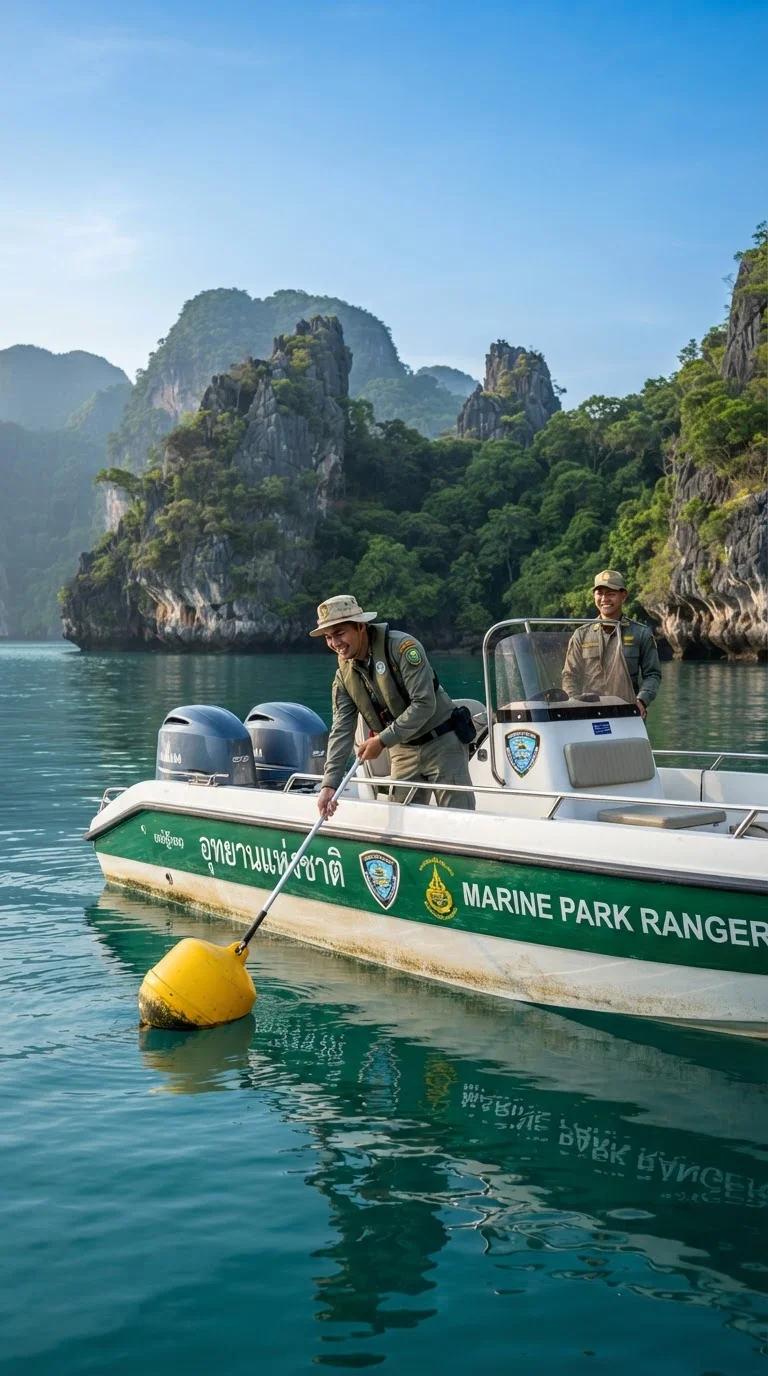
Thailand safeguards its premier coastal environments within marine national parks administered by the Department of National Parks, Wildlife and Plant Conservation (DNP). Visiting these protected waters by boat requires strict adherence to environmental regulations and payment of daily park tariffs. Foreign adults currently pay 400 THB (approx £8.90) at Hat Noppharat Thara–Koh Phi Phi National Park, 300 THB (approx £6.70) at Ao Phang Nga and Koh Ang Thong, and 500 THB (approx £11.10) at Koh Similan. Park rangers also levy modest daily vessel entry fees, generally between 100 THB and 400 THB (approx £2.20 to £8.90) depending on boat length. While Koh Similan mandates advance digital e-tickets via the official park booking system, rangers at most other marine parks collect admission fees in cash Thai Baht from patrol craft alongside your vessel or at island checkpoints.
Dropping an anchor onto living coral or seagrass beds is strictly prohibited under Thai conservation law, carrying fines of up to 100,000 THB (approx £2,220) and criminal liability. Skippers must secure craft to park-maintained mooring buoys wherever installed, checking lines for chafe before taking up tension. If a buoy is unavailable, vessels must anchor strictly in deep sand well clear of reef fringes.
Discharging untreated blackwater into enclosed bays is prohibited, and single-use plastic bags and foam containers are banned throughout all national parks. All refuse must remain stowed on board for onshore disposal. In the water, chemical sunscreens containing oxybenzone, octinoxate, 4-methylbenzylidene camphor, or butylparaben are illegal across all marine national parks. Around dive and snorkel sites like Hin Daeng or Richelieu Rock, skippers must maintain a clearance of at least fifty metres from surfacing whale sharks, manta rays, and turtles, disengaging propellers immediately if megafauna approaches. Exposed offshore reserves, including the Similan and Surin archipelagos, close entirely from mid-May to mid-October for seasonal monsoon rest and ecological regeneration.
Where to Charter, Moor, and Cruise
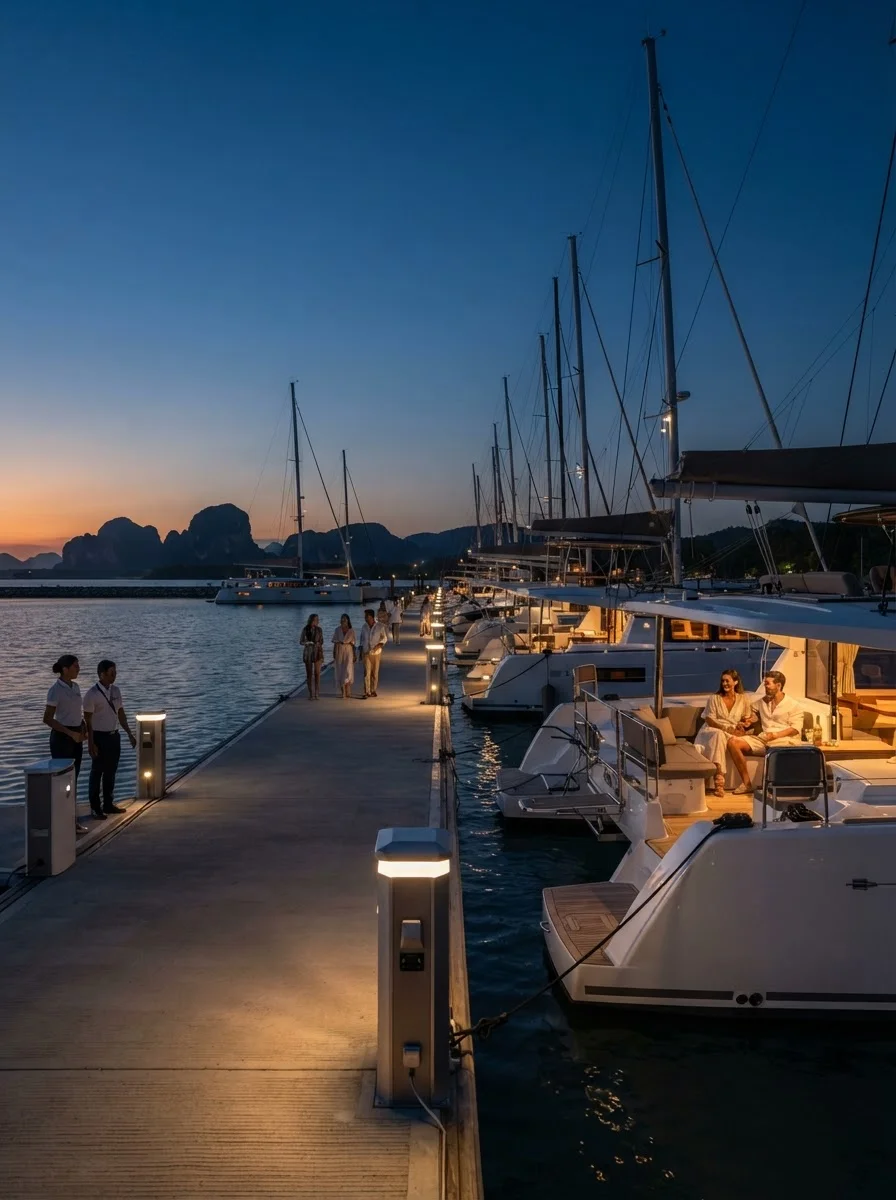
Phuket forms the centre of Thailand's recreational boating infrastructure, operating four international-standard marinas along its sheltered eastern and northern coasts. Choosing between them depends primarily on vessel draft and tidal requirements. On the north-east shore, Ao Po Grand Marina provides 230 serviced pontoon berths with zero tidal restrictions and 24-hour deep-water access, accommodating cruising catamarans alongside superyachts up to 100 metres. Because vessels clear the harbour breakwater straight into the sheltered waters of Phang Nga Bay, it forms the primary base for international bareboat and crewed charter fleets. Just to the north, Phuket Yacht Haven operates 332 berths in a protected inlet near the Sarasin Bridge, accommodating deep-draft craft over 100 metres with direct deep-water access to the bay.
In contrast, central Phuket's inland basins—Phuket Boat Lagoon and the neighbouring Royal Phuket Marina—rely on a dredged tidal channel through the mangroves. Skippers must time their arrival and departure within roughly two hours of high water. Once inside, Boat Lagoon provides 180 wet berths and marine refit yards with travel lifts up to 120 tonnes, while Royal Phuket Marina features approximately 100 wet berths, hardstands, and covered dry-stack storage.
Cruising vessels exploring beyond Phuket encounter a more dispersed network of purpose-built harbours. Across the bay in Krabi, Port Takola Yacht Marina sits on an estuary estate near Sai Thai. Its inner basin maintains a minimum water depth of three metres at all tides, providing pontoon berths, swing moorings, and a 38-tonne boat lift for yachts exploring Railay, Koh Hong, and Koh Lanta. Skippers must account for a shallower approach channel that deep-draft vessels must negotiate around higher water levels.
Along the eastern Gulf, Ocean Marina Jomtien in Chonburi provides over 450 fully serviced floating berths protected by an expansive breakwater, supported by hardstands, travel lifts, and on-site engineering trades. On the western Gulf, Racer Marina occupies a sheltered reach of the Pran Buri River around thirty minutes south of Hua Hin, featuring 80 floating pontoon berths, a working boatyard, and unrestricted mast height out to sea.
Costs and Budgeting
Chartering and keeping a vessel in Thailand offers competitive value compared to Mediterranean or Caribbean yachting destinations, though seasonal pricing swings are pronounced. High season runs from November to April along the Andaman coast, elevating bareboat charter rates by twenty to forty per cent compared to low-season tariffs. A 40-foot bareboat sailing catamaran typically costs between 25,000 THB and 45,000 THB (approx £556 to £1,000) per day depending on vessel age, specification, and booking dates. Hiring a professional skipper adds roughly 6,000 THB to 8,500 THB (approx £133 to £189) per day, with the charterer responsible for supplying on-board meals and assigning a dedicated private cabin.
Berthing costs vary substantially between marine basins. Marina wet berths for a 40-foot monohull average 18,000 THB to 35,000 THB (approx £400 to £778) per month, with Gulf facilities such as Ocean Marina Jomtien typically priced twenty to thirty per cent lower than premier Phuket harbours. Catamarans incur a standard multihull beam surcharge of 20 to 50 per cent. Marinas bill metered shore utilities separately, with electricity running roughly 8 THB to 12 THB (approx £0.18 to £0.27) per kilowatt-hour and fresh dockside water averaging 40 THB to 60 THB (approx £0.89 to £1.33) per cubic metre.
Incidental cruising expenses require dedicated cash budgeting. Dropping anchor in natural bays outside marine reserves is free, but national marine parks collect cash admission fees of 200 THB to 500 THB (approx £4.40 to £11.10) per foreign adult, alongside a flat vessel entry tariff of 100 THB (approx £2.20). Pre-stocked provisioning through local supermarkets near Phuket and Pattaya keeps self-catering budgets manageable, while crewed day charters typically warrant a discretionary crew gratuity of 1,000 THB to 3,000 THB (approx £22 to £67).
| Option | Cost (THB) | Cost (GBP approx) | Notes |
|---|---|---|---|
| Bareboat Sailing Catamaran (40ft, per day) | 25,000–45,000 THB | £556–£1,000 | Excludes refundable security deposit of £2,500–£4,000 |
| Day Charter Speedboat (private, full day) | 13,000–20,000 THB | £289–£444 | Includes crew and fuel for standard coastal itinerary |
| Luxury Crewed Motor Yacht (full day) | 140,000–250,000 THB | £3,111–£5,556 | 60–85ft yacht, captain, engineer, steward, food, fuel |
| Professional Skipper Fee (per day) | 6,000–8,500 THB | £133–£189 | Client supplies on-board meals and dedicated cabin |
| Monthly Marina Wet Berth (40ft monohull) | 18,000–35,000 THB | £400–£778 | Gulf marinas roughly 20–30% cheaper than Phuket |
| National Park Marine Fee (foreign adult) | 200–500 THB | £4.40–£11.10 | Payable in cash per person upon park entry |
| Marine Diesel Fuel (per litre) | 33–40 THB | £0.73–£0.89 | Available on marina fuel docks and harbour barges |
What to Know Before You Go
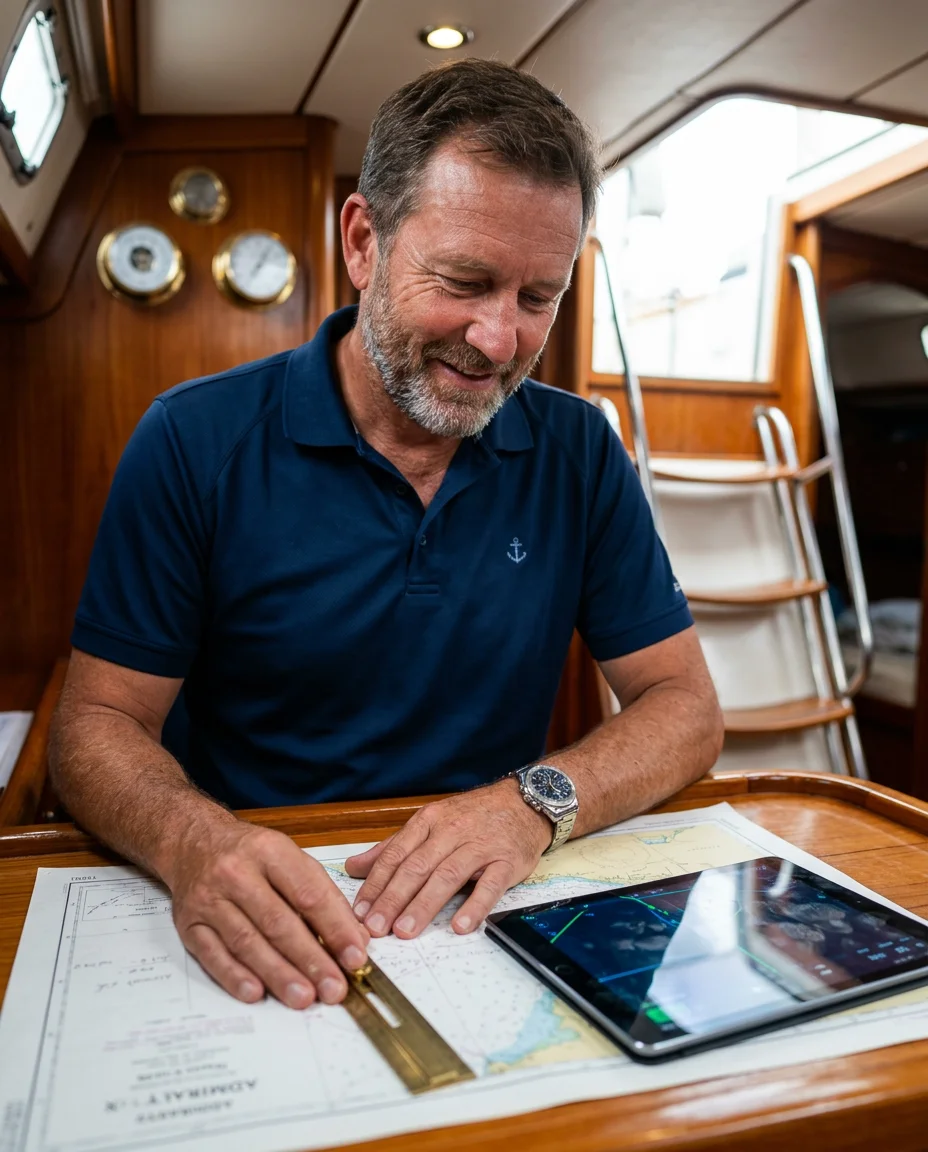
Bareboat charter companies in Thailand operate under strict insurer requirements. While Thai law does not mandate a government sailing licence for leisure craft, charter operators require verifiable proof of seamanship before releasing a vessel. Skippers must typically produce an RYA Day Skipper Practical certificate, an International Certificate of Competence (ICC), or a recognised national equivalent, supported by a sailing logbook or résumé detailing prior experience on vessels of comparable size. Charter agreements also strictly forbid night sailing, requiring boats to be securely anchored or moored before sunset.
Foreign-flagged yachts arriving in Thai territorial waters must proceed directly to an official port of entry, flying the yellow quarantine flag until clearance is complete. Skippers must report to Immigration, Customs, and the Marine Department within 24 hours of dropping anchor. At primary hubs such as Phuket's Chalong Pier, completing formalities outside standard weekday office hours or on public holidays incurs mandatory overtime surcharges of roughly 800 to 1,600 THB (approx £18 to £36).
Tidal awareness is critical when entering inland harbours. East-coast marinas along Phuket's mangrove creeks, particularly Phuket Boat Lagoon, require deep-keeled vessels to time passage within two hours of high water to cross the shallow entrance channel safely.
Seasonal weather also dictates operational boundaries. During the southwest monsoon from May to October, marine insurers and charter operators enforce strict cruising limits that bar entry to exposed western anchorages and offshore marine parks like the Similan Islands, restricting navigation to sheltered waters in Phang Nga Bay.
Practical Boating Tips
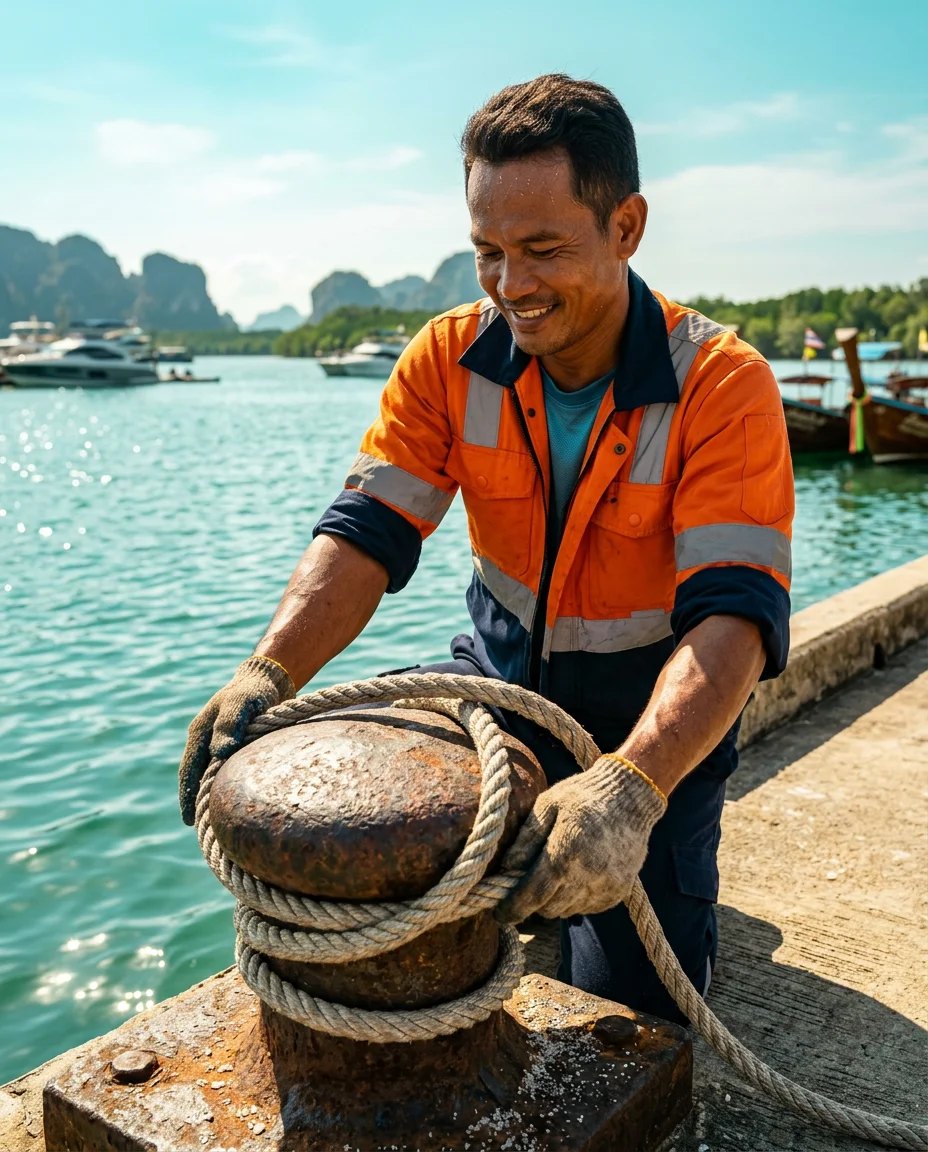
Pack soft-sided duffel bags rather than rigid suitcases for life aboard. Monohulls and catamarans have limited locker storage, and hard-shell luggage cannot be folded flat, leaving it to clutter cabin floor space. Keep a supply of cash in small Thai Baht denominations sealed in a waterproof dry bag. While resort marinas accept major payment cards, national park rangers collecting conservation fees at anchorages operate from small patrol craft and cannot process card payments.
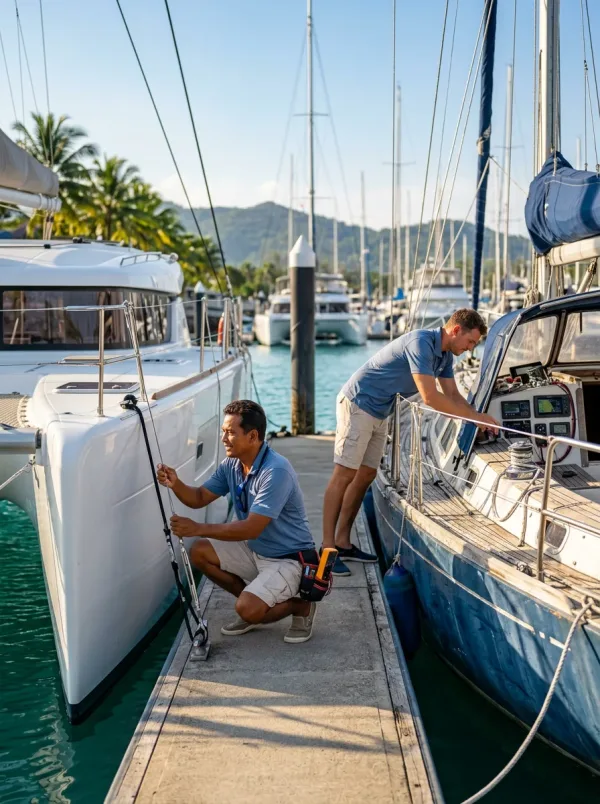
Download offline digital charts to a primary plotter and a backup tablet before casting off lines. Mobile data coverage remains dependable near major hubs such as Phuket and Pattaya, but outer cruising grounds around the Tarutao archipelago and the Similan Islands have little or no cellular reception. During the charter handover, systematically test the anchor windlass, examine every chain link for corrosion, and test-run the dinghy outboard motor under load. Resolving mechanical faults at the dock avoids wasting days waiting for replacement parts in remote bays.
Keep a high-powered spotlight readily accessible at the helm if entering an anchorage near twilight. Thai coastal waters contain substantial artisanal fishing apparatus, from unlit styrofoam floats and bamboo flag poles to long floating nets that can foul running gear and propeller shafts. Maintain a continuous listening watch on VHF Channel 16 while underway. When approaching a marina, switch to its published working frequency: Phuket Yacht Haven monitors Channel 68, Ao Po Grand Marina and Port Takola use Channel 69, and Ocean Marina Jomtien operates on Channel 12.
Thailand's Department of National Parks prohibits sunscreens containing oxybenzone, octinoxate, 4-methylbenzylidene camphor, or butylparaben to protect delicate reef systems, with statutory penalties reaching 100,000 THB (approx £2,250) for non-compliance. Pack mineral sunscreens based on non-nano zinc oxide or titanium dioxide alongside long-sleeved rash vests. Confirm your travel policy explicitly covers offshore sailing, charter skipper liability, and emergency medical repatriation by sea before heading out on the water.
Quick Reference Table
| Item | Detail | Notes |
|---|---|---|
| Andaman Cruising Season | November to April (Northeast monsoon) | Dry skies, steady 10–20 knot breezes, calm seas; offshore parks open |
| Gulf Cruising Season | February to August | Settled conditions; Lower Gulf experiences heavy rain and rough seas late October to mid-December |
| Marine Park Closures | Mid-May to mid-October (Andaman offshore); 1 November to 15 December (Ang Thong) | Similan and Surin parks shut for monsoon; Koh Ang Thong closes to all tours |
| Bareboat Charter Qualifications | RYA Day Skipper practical, ICC, or national equivalent | Must be accompanied by a VHF operator licence and verifiable sailing logbook |
| Bareboat Catamaran Rates (40ft) | 25,000–45,000 THB (approx £556–£1,000) per day | Excludes refundable security deposit of £2,500–£4,000; high season adds 20–40% |
| Professional Skipper Fee | 6,000–8,500 THB (approx £133–£189) per day | Client must also provide on-board meals and a private cabin |
| Monthly Marina Berth (40ft monohull) | 18,000–35,000 THB (approx £400–£778) per month | Multihulls incur 20–50% beam surcharge; Gulf marinas 20–30% cheaper than Phuket |
| National Marine Park Fees | 200–500 THB (approx £4.40–£11.10) per foreign adult | Cash Baht required; vessel entry fees range from 100–400 THB (approx £2.20–£8.90) |
| Cruising & Mooring Regulations | Mandatory use of park mooring buoys; anchor only in sand | Dropping anchor on coral or seagrass carries fines up to 100,000 THB |
| Prohibited Items | Chemical sunscreens with reef-toxic filters; single-use plastics | Sunscreens with oxybenzone or octinoxate banned; fines up to 100,000 THB |
| Maritime Communications | VHF Channel 16 continuous watch | Marina working channels: Ch 68 (Yacht Haven), Ch 69 (Ao Po, Port Takola), Ch 12 (Ocean Marina) |
| Foreign Yacht Clearance | Report within 24 hours to Immigration, Customs, and Marine Department | Fly yellow Q flag upon arrival; overtime surcharges 800–1,600 THB outside weekday hours |
| Luggage & Provisioning | Soft-sided duffel bags, offline digital charts, cash in waterproof dry bag | Hard-shell suitcases do not fit cabin lockers; park rangers cannot take cards |
| Marina website | aopograndmarina.com | Ao Po Grand Marina berth bookings and deep-water tidal information |
| Marina website | pyhmarina.com | Phuket Yacht Haven berths and channel pilotage details |
| Marina website | porttakola.com | Port Takola Yacht Marina (Krabi) pontoon berthing and boatyard enquiries |
| Marina website | oceanmarinajomtien.com | Ocean Marina Jomtien (Pattaya) berths, hardstand, and facility bookings |
| Marina website | racermarina.com | Racer Marina (Pran Buri/Hua Hin) berthing and boatyard information |
| Official source | tmd.go.th | Thai Meteorological Department daily marine forecasts and weather warnings |
| Official source | dnp.go.th | Department of National Parks, Wildlife and Plant Conservation e-tickets and rules |
FAQ: Boating in Thailand
Who is the Thailand boating guide written for?
What are the main marine environments for boating in Thailand?
What qualifications are required for bareboat charters in Thailand?
When are the Similan and Surin marine parks closed to visitors?
What are the rules for anchoring in Thai marine parks?
Are there restrictions on sunscreen use in Thai marine parks?
What type of luggage should boaters pack for a trip in Thailand?
Why should boaters carry cash when cruising in Thailand?
What should be checked during a charter handover in Thailand?
What are common hazards for recreational boats in Thai waters?
Reviewed by the Thailand Guide Editorial Team • Last reviewed: 8 November 2026
This page is provided for general information only. While we aim for accuracy, details can change — please verify anything important independently before relying on it.