Commissioning a Boat in Thailand
Along Thailand's eastern seaboard in Rayong and Chonburi, boatyards build ocean-going catamarans, commercial passenger vessels, and custom yachts using advanced vacuum-assisted resin infusion and marine-grade aluminium fabrication. Direct shipyard commissioning in the kingdom gives international and British buyers access to high-specification naval builds at competitive labour rates. However, turning a naval architect's general arrangement into a seaworthy vessel requires strict project governance. The difference between a smooth delivery and a financially disastrous build depends on how thoroughly you structure your contractual terms, technical schedules, and payment gateways.
This guide sets out the practical procurement process for commissioning a new vessel in Thailand. It examines how to evaluate established shipyards, define an enforceable technical brief, negotiate surveyor-certified milestone payments, and protect title to work in progress. You will also learn how independent marine surveyors monitor structural hold points—from resin infusion to hull welding—and navigate the statutory steps for international delivery, whether that involves ocean freight forwarding, UK Part 1 registration under the Red Ensign, or compliance with the UK Recreational Craft Regulations (RCR).

Developing the Brief: Production Designs, Semi-Custom, and Bespoke Builds

Commissioning a vessel begins with a quantified technical design brief that defines operational parameters long before any aluminium is cut or composite resin is infused. Buyers must document the vessel's primary operating profile: intended cruising speeds, fuel burn targets, operating range, passenger or payload capacity, and machinery redundancy. Physical constraints across Southeast Asian waters and international cruising routes dictate critical dimensions, including shallow draught limits for tidal coastal anchorages or air draught restrictions for bridges. Electrical demands require rigorous calculation, balancing marine air-conditioning, induction appliances, lithium iron phosphate (LiFePO4) domestic battery banks, and solar generation arrays against daily engine and generator operating cycles.
Engaging an independent naval architect or marine designer during this concept phase provides an objective technical advocate. An independent designer refines the initial brief into preliminary general arrangement drawings, displacement estimates, weight distributions, and stability calculations. They verify that the proposed dimensions support the required payload without compromising hull trim or seakeeping. Crucially, an independent brief establishes a standardised specification package, enabling shipyards in Thailand to tender against an identical engineering baseline rather than interpreting generalised buyer preferences.
Buyers choose between three distinct manufacturing pathways: series production, semi-custom adaptations, and fully bespoke construction.
Production models rely on existing hull moulds and standardised tooling. By using established hydrodynamics and pre-engineered composite schedules or metal cutting files, series builds reduce shipyard schedules to between six and twelve months. Machinery layouts and structural bulkheads remain fixed, keeping production predictable and avoiding developmental engineering costs.
Semi-custom builds use an established hull platform while allowing buyers to reconfigure non-structural bulkheads, cabin layouts, joinery finishes, and deck outfitting. This pathway delivers tailored interior arrangements and personalised systems integration while retaining proven performance and stability data. Construction timelines typically span ten to fourteen months, with moderate engineering fees for structural reviews of modified layouts.
Fully bespoke commissions require clean-sheet naval architecture. Fabricating a one-off hull involves custom computer-numerical-control (CNC) milled plugs and female moulds for composites, or custom frame lofting and plate cutting for marine-grade aluminium. Bespoke builds require comprehensive structural engineering calculations, weight tracking, and independent classification reviews. Timelines regularly extend to eighteen to twenty-four months or longer, and design fees add substantially to initial budgets. In return, the buyer receives a hull configured precisely to their intended commercial survey standard or private offshore cruising ambitions.
A meticulously quantified design brief prevents expensive structural modifications once fabrication commences and establishes an enforceable baseline for contractor quotations. When scheduling initial consultations with naval architects and shipyard managers across the Eastern Seaboard boatbuilding corridors of Chonburi and Rayong, booking dedicated private transport allows you to inspect workshop facilities, assess mould maintenance, and review build specifications directly on site.
Contracts, Specifications, and Milestone Payments
A well-structured construction contract and an explicit technical specification form your principal legal and financial safeguards throughout a boat build in Thailand. The agreement must identify the shipyard's registered Thai corporate entity, verified against Department of Business Development records, alongside any Board of Investment promotion privileges that affect machinery import duties. The technical specification should be appended as an integral contractual schedule, detailing hull laminate schedules or alloy grades, engine models, electrical looms, and deck hardware by manufacturer and part number. Contracts must clearly distinguish fixed-price commitments from provisional sums, preventing shipyards from issuing retrospective surcharges when global equipment prices shift.
Staged payments must align strictly with verified physical construction milestones rather than calendar intervals. A standard framework begins with an initial deposit—typically 10% to 15%—to secure the yard's build slot and fund structural raw materials. Subsequent disbursements should be released only after an appointed independent marine surveyor conducts an on-site inspection and formally signs off on defined stages: completion of the hull infusion or plating, structural bulkhead bonding, deck joinery, engine alignment, electrical rough-in, and final fairing. Where formal bank refund guarantees or commercial letters of credit prove impractical, holding back funds until physical milestones are certified provides your primary financial leverage. Retain a final sum of 5% to 10% until open-water sea trials conclude and all items on the defect snagging list are rectified.
Plan a journey along Thailand’s Andaman coast, with practical guidance on island gateways, marine parks, diving, ferries and monsoon travel.
The Construction Process: Composites, Aluminium, and Survey Milestones
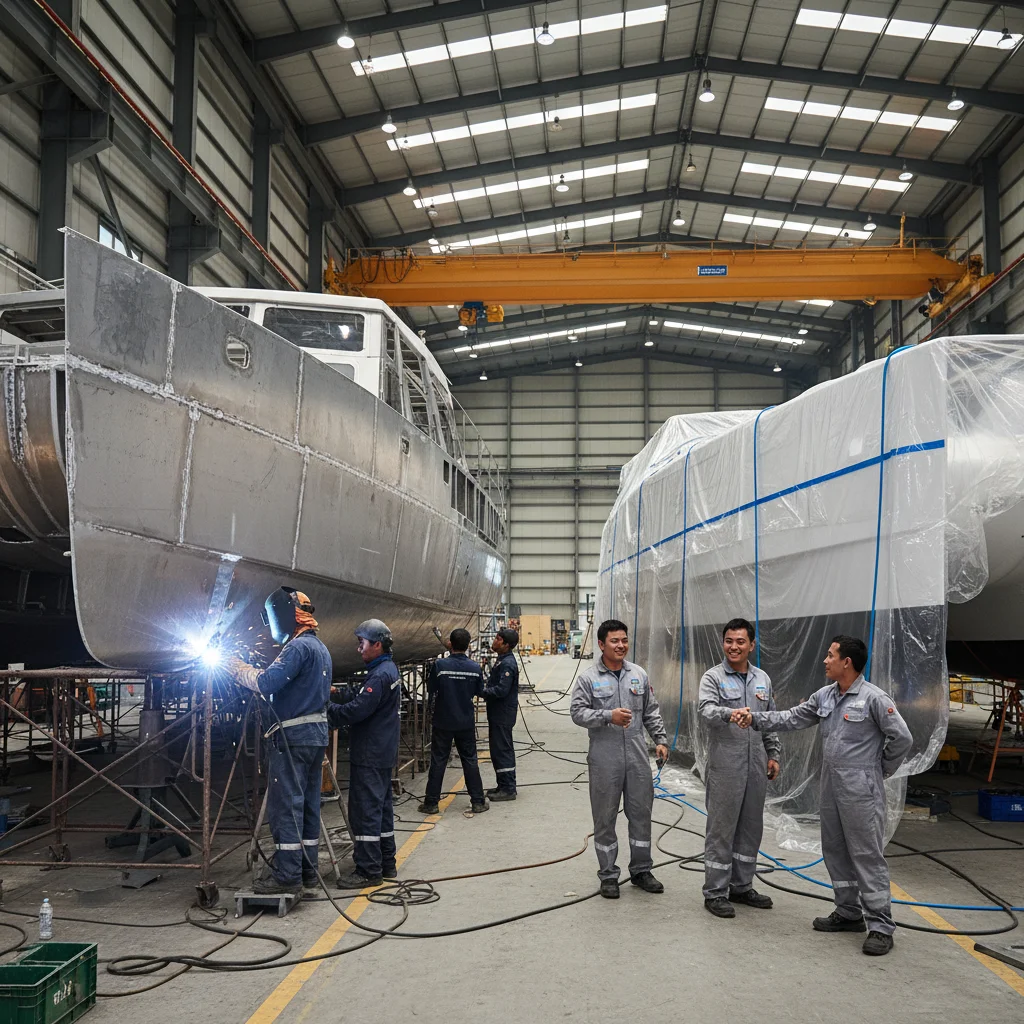
Vessel construction in Thailand divides between vacuum-infused composite laminates and welded marine-grade aluminium, each requiring specific manufacturing controls. In composite facilities, work takes place inside enclosed, climate-controlled halls. Managing ambient heat and humidity is critical in tropical conditions: excessive moisture disrupts chemical curing, while high temperatures accelerate resin exotherm and reduce working time. Most export-focused Thai builders use vacuum-assisted resin transfer moulding (VARTM), setting multiaxial glass or carbon fabrics over structural foam cores, such as closed-cell PVC or SAN, before drawing a sealed vacuum and infusing vinyl-ester or epoxy resin. This closed-mould technique achieves a balanced resin-to-glass ratio of roughly 50:50 by weight, eliminating air voids and keeping hulls light without sacrificing structural strength.
Aluminium yards follow a separate fabrication path centred on certified marine-grade plate—predominantly 5083-H116 for hull plating and bulkheads, alongside 6061-T6 structural extrusions for above-water framing. Shipwrights cut plate kits using computer-controlled CNC plasma or waterjet routers driven by 3D naval architecture files. Coded welders mount the components onto precision jigs, applying continuous pulse-MIG and TIG welding under controlled shielding gas to prevent porosity. The resulting metal hulls offer high impact resistance and structural rigidity, making them common choices for passenger ferries, dive catamarans, and long-range expedition craft.
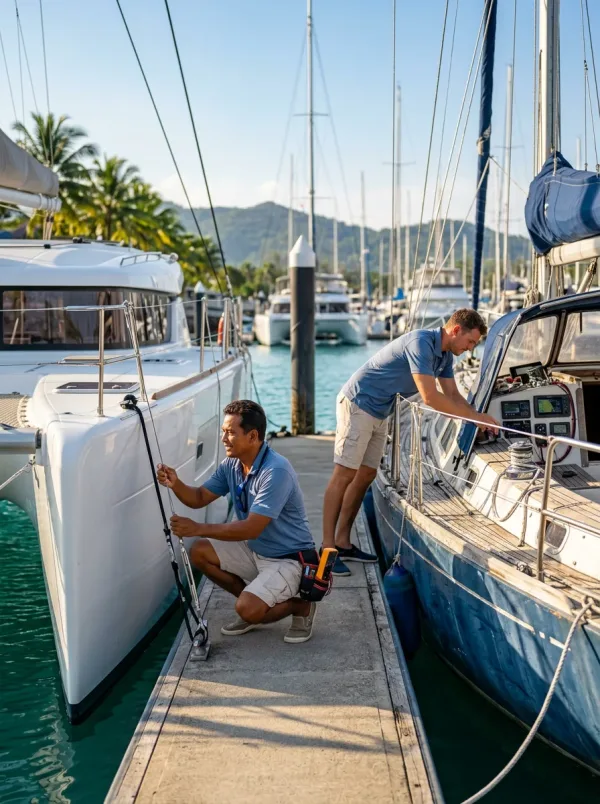
Once the primary structure is complete, mechanical, electrical, and plumbing installations proceed before the hull and deck are permanently joined. Technicians align engines and running gear onto reinforced beds, route marine-grade tinned copper wiring through dedicated conduits, run fuel lines, and fit plumbing manifolds and acoustic insulation. Interior cabinetry—built from cored composite panels or marine-grade plywood—is tabbed or bonded directly to structural bulkheads before deck modules are mechanically fastened and laminated to the hull flange.
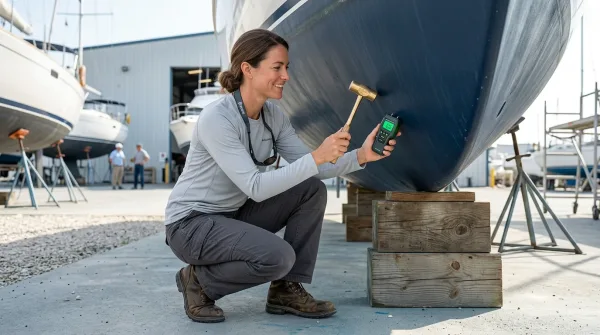
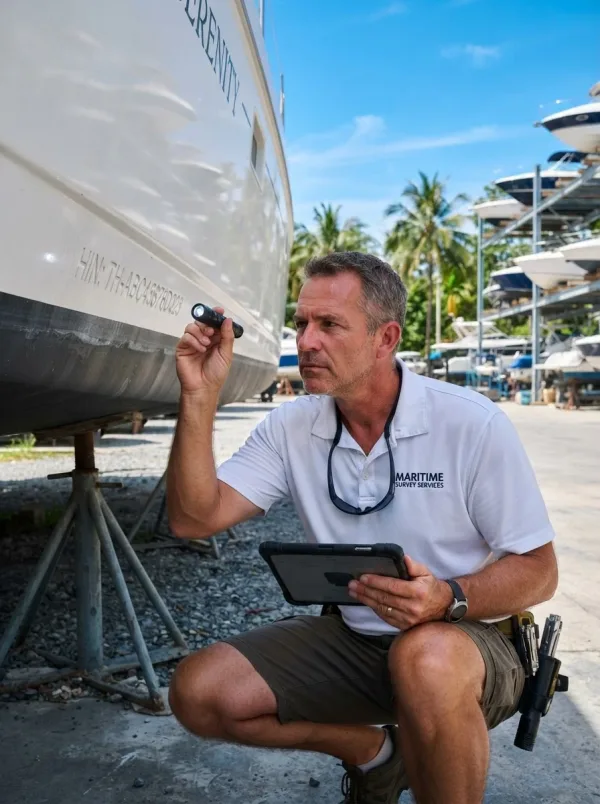
Independent quality control requires a qualified marine surveyor acting exclusively for the buyer to inspect work at agreed contractual hold points. A shipyard’s internal quality-assurance team tracks daily production, but an external surveyor must verify critical milestones before work is hidden from view. Key inspection stages include auditing raw laminates, witnessing non-destructive testing—such as ultrasonic checks on composite consolidation or dye-penetrant inspections of aluminium weld roots—and surveying mechanical alignments before interior joinery or deckheads are sealed.
Sea Trials, Technical Handover, and Defect Resolution
Launching a completed vessel marks the transition from static construction to dynamic technical evaluation in open coastal waters. Sea trials in Thailand must follow an agreed contractual testing protocol rather than an informal cruise across the Gulf of Thailand or Andaman Sea. Testing begins dockside before departure: technicians fill freshwater and fuel tanks to verify trim and assess hull fittings, hydro-test all through-hull sea valves under head pressure, and connect electrical load banks to prove generator output and automatic inverter transfer under sustained demand.
Once underway, trials follow staged power increments to bring propulsion machinery up to normal operating temperatures. Your independent surveyor will monitor engine-room temperatures, cooling water flow, exhaust back-pressure, shaft alignment, and hull vibration levels at both cruising revolutions and wide-open throttle. Speed evaluations require timed runs over reciprocal courses—recording GPS velocities in opposing directions to cancel out local tidal stream and wind—to verify whether the vessel achieves its contractually specified cruising and maximum speeds. The surveyor must also audit turning-circle diameters, emergency crash stops, windlass retrieval under anchor weight, and autopilot tracking against the agreed technical specification.
All shortcomings identified during trials are logged on a formal snagging register signed by you, your marine surveyor, and the shipyard project manager. Contractual practice divides these findings into major defects and minor snags. Major defects—such as propulsion overheating, structural hull flexing, drive misalignment, or speed shortfalls—block acceptance entirely. The yard must rectify these issues at its own expense and demonstrate compliance during a documented re-trial before you sign the protocol of delivery and acceptance or release the final build milestone payment.
Technical handover also requires the shipyard to provide the complete legal and operational documentation package. This includes as-built electrical schematics, plumbing layouts, equipment operating manuals, manufacturer warranty registrations, and the builder’s certificate required for international flag registration. For minor cosmetic snags, agree a clear completion schedule backed by a dedicated contractual retention fund, ensuring the yard remains commercially incentivised to close every open item promptly.
International Certification, UK Import Regulations, and Delivery
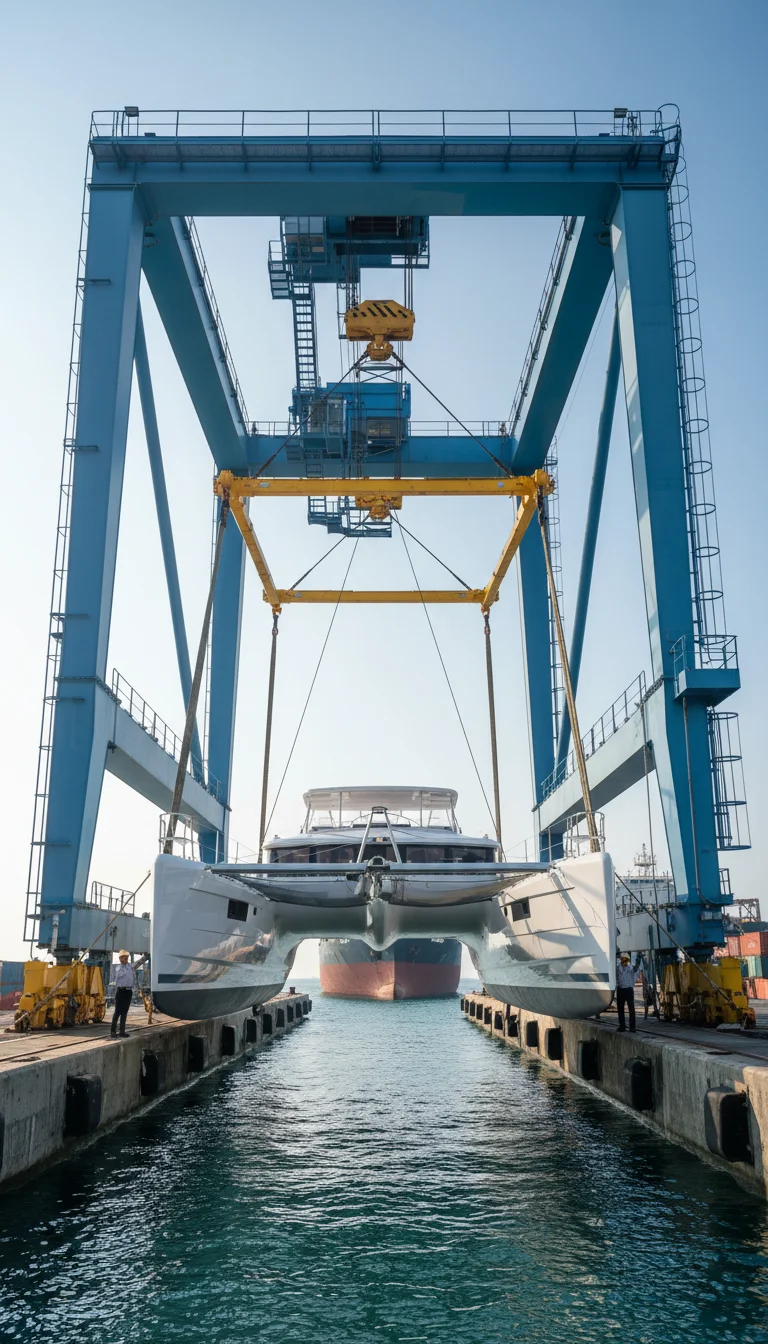
Transporting a newly built vessel from a Thai shipyard to the United Kingdom requires strict compliance with maritime conformity standards, flag registration rules, and British import taxation.
For leisure craft between 2.5 and 24 metres entering Great Britain, statutory compliance falls under the Recreational Craft Regulations 2017. Thai shipyards building for the international export market routinely design composite and aluminium hulls to European CE Design Category A (Ocean) standards. Placing the vessel into service in Great Britain requires UKCA marking supported by a formal Declaration of Conformity. Vessels destined for Northern Ireland or the European Union must instead comply with EU Directive 2013/53/EU for CE marking. Where a Thai builder does not provide full manufacturer-led UKCA documentation, the owner or importer must commission an appointed Approved Body to carry out an independent Post-Construction Assessment (PCA) before the craft can be legally operated or sold. Vessels intended for commercial charter or passenger operations must satisfy Maritime and Coastguard Agency (MCA) Small Commercial Vessel codes, such as the Workboat Code or Marine Guidance Note 280. Commercial coding demands MCA-recognised surveyors to approve construction plans and conduct staged hull inspections during the physical build rather than attempting retrospective approval after delivery.
Registering the vessel under Part 1 of the UK Ship Register establishes formal British flag status, internationally recognised nationality, and registered title, which marine mortgage lenders mandate. The Registry of Shipping and Seamen in Cardiff requires the original shipyard Builder's Certificate (form MSF 4743), a verified Bill of Sale (form MSF 4705), and an official Certificate of Survey for Tonnage and Measurement completed by an MCA-authorised certifying authority, such as the Yacht Brokers, Designers and Surveyors Association or the International Institute of Marine Surveying.
Customs clearance into Great Britain involves HM Revenue & Customs valuation rules. Under the UK Global Tariff, recreational yachts and sports craft classified under commodity heading 8903 enter at a baseline customs duty rate of 0%. However, standard 20% UK Import VAT remains payable. HMRC assesses this tax on the total landed customs value, which comprises the shipyard purchase price, overseas freight or delivery passage expenses, and marine cargo insurance.
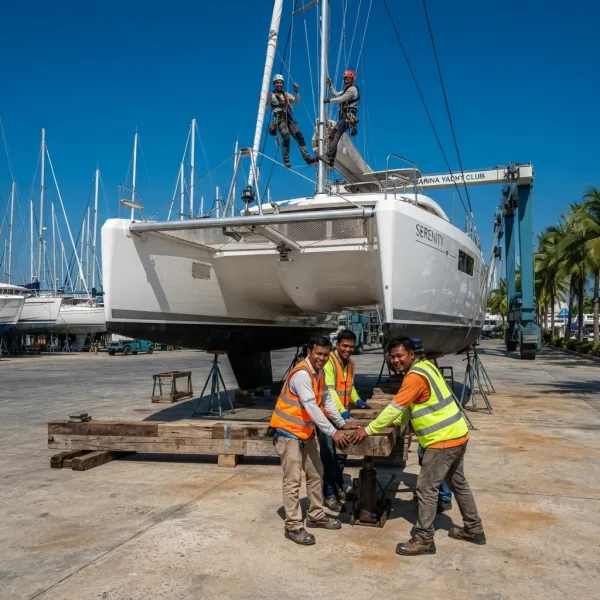
International delivery from Thailand operates via two main routes: booking deck space on a dedicated yacht carrier from commercial deep-water ports like Laem Chabang or hiring a professional delivery crew for a blue-water passage on the vessel's own keel. Ocean delivery voyages require careful route planning around monsoon seasons and passage risks, alongside specialised blue-water crew insurance. Cargo shipping requires fitted steel cradles and lifting slings certified to the vessel's displacement. Both methods require comprehensive all-risks marine transit cover, complete export documentation from the Thai Customs Department, and departure clearance from the Marine Department of Thailand.
Thailand's Leading Shipyards and Boatbuilders
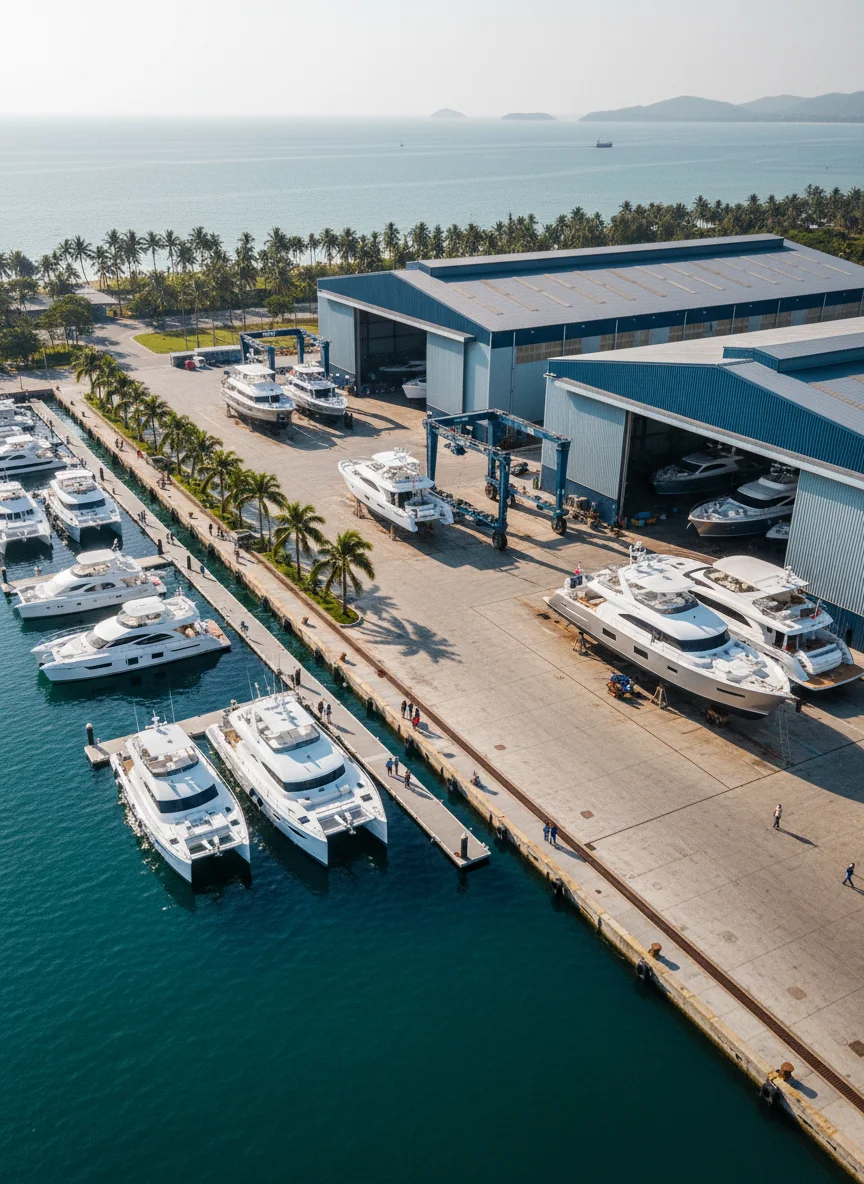
Thailand's primary marine manufacturing capabilities concentrate along the Eastern Seaboard in Chonburi and Rayong, alongside specialist custom facilities operating in Phuket.
The Eastern Seaboard industrial corridor benefits from integrated engineering supply chains, Board of Investment tax privileges, and direct deep-water launching access to the Gulf of Thailand. Shipyards with Board of Investment status import specialised foreign engines, electronics, and carbon fabrics duty-free, passing structural cost efficiencies to international buyers. Construction spans composite blue-water sailing multihulls, custom liveaboards, and commercial passenger catamarans up to 60 metres.
In Chonburi, boatbuilders divide between deep-water coastal marinas and inland fabrication yards. Waterfront facilities at Ocean Marina Jomtien accommodate heavy-lift mobile travel hoists, deep-water service berths, and structural refit halls. Yards here build high-speed aluminium ferries and luxury composite multihulls with immediate sea access. Inland in Huai Yai, builders operate sheltered composite infusion bays, precision metalwork workshops, and naval architectural design offices. These inland yards execute composite sandwich construction and electric powertrain conversions, transporting finished hulls overland to Jomtien for mast stepping and dock trials. On South Pattaya Road, high-volume fibreglass moulding compounds integrate boat assembly with national marine engine distribution.
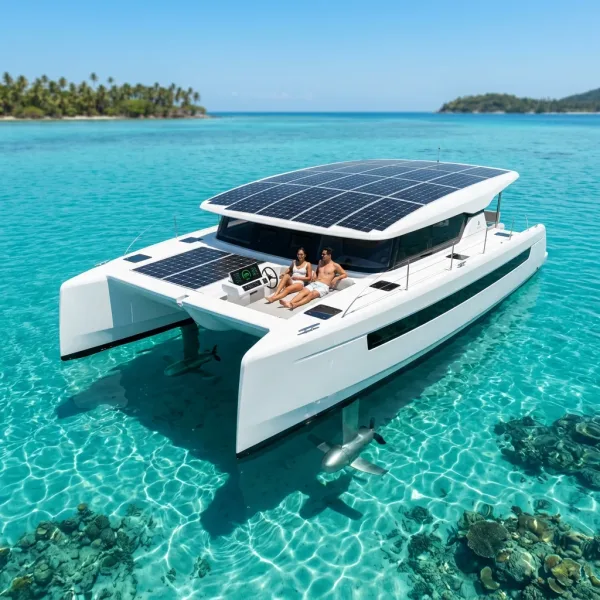
Further east in Rayong, industrial facilities in Huay Pong provide multi-bay closed-mould infusion halls producing series cruising catamarans and commercial passenger craft. On Suchada Beach, waterfront yards operate across sites exceeding 20,000 square metres, complete with dedicated lamination halls, in-house testing basins, and wide-beam boat hoists engineered for solar-electric catamarans up to 120 feet.
Selecting an appropriate builder requires matching your operational requirements with the shipyard's primary fabrication medium, whether certified marine-grade aluminium plate or vacuum-infused vinyl-ester composites. Consult Thailand Guide's dedicated individual yard profiles and our comprehensive national overview of Boatbuilders in Thailand to examine detailed facility specifications.
| Boatbuilder Profile | Location | Construction Focus | Primary Vessel Categories | Classification / Standards |
|---|---|---|---|---|
| Island Spirit Catamarans | Rayong (Yard) / Jomtien (Base) | Closed-mould vacuum-infused composite sandwich | Blue-water cruising catamarans (e.g. IS 410) and solar-assisted multihulls | European CE Category A (Ocean) |
| Austhai Marine | Rayong | Series composite vacuum infusion | Commercial power catamarans, resort ferries, and custom dive platforms | Commercial passenger and resort charter survey |
| SeaCat Ships | Ocean Marina Jomtien, Chonburi | Marine-grade 5083-H116 aluminium plate fabrication | High-speed passenger ferries, dive liveaboards, workboats up to 60m | Australian NSCV and Lloyd's Register Special Service Craft rules |
| Pantawee Marine | Huai Yai, Chonburi | Artisanal custom vacuum-consolidated composite | Custom ocean-going cruising catamarans and power multihulls to 65ft | ABYC (USA) and European CE standards |
| PMG Shipyard | Suchada Beach, Rayong | Vacuum resin infusion and solar-electric integration | Luxury solar-assisted and solar-electric catamarans up to 120ft | CE Category A, Lloyd's Register, and AMSA compliance |
| Serenity Shipyard | Ocean Marina Jomtien, Chonburi | Custom composite moulding and structural refits | Commercial day-charter catamarans and custom cruising multihulls | Commercial passenger charter standards |
| Pi Marine & Engineering | Navalian Dock Yard, Huai Yai, Chonburi | Marine aluminium framing and composite moulding | Custom passenger catamarans, patrol craft, and electric vessel conversions | Custom commercial and naval architectural survey |
| Seat Boat | South Pattaya Road, Chonburi | GRP fibreglass moulding and mechanical engineering | Fibreglass speedboats, commercial workboats, Mercury/MerCruiser outfitting | Thai Marine Department and export leisure standards |
Schedule physical site inspections across several active boatyards in Chonburi and Rayong before shortlisting manufacturers, allowing direct evaluation of lamination bays, climate controls, and ongoing metal fabrication.
Costs and Budgeting
Financial planning for commissioning a vessel in Thailand requires balancing competitive domestic composite and aluminium fabrication against internationally priced imported marine equipment. Thai shipyards offer labour efficiencies for hull moulding, resin infusion, and interior joinery. High-specification components—such as Yanmar or Volvo Penta marine diesels, Raymarine or Garmin navigation suites, and Lewmar or Harken deck hardware—are imported and subject to global pricing. Unless the builder holds Board of Investment (BOI) privileges, imported machinery and electronics may also carry domestic duties before installation.
Baseline costs vary across hull categories and build complexity. An entry-level commercial utility catamaran, such as the Austhai AT800, starts at approximately 3,500,000 THB (£79,000) for a standard twin-outboard workboat. A series-production bluewater cruising catamaran, such as the CE Category A-certified Island Spirit 410, commands base factory-direct pricing from 15,700,000 THB (£355,000). Commercial passenger catamarans, such as the 18-metre Austhai AT1800 ferry, start upwards of 24,500,000 THB (£550,000). Custom luxury catamarans spanning 50 to 65 feet—particularly solar-electric platforms built with resin infusion and large lithium battery banks—typically range from 45,000,000 THB to over 80,000,000 THB (£1,020,000 to £1,800,000).
Beyond base shipyard quotations, commissioning budgets must incorporate professional oversight, freight, and statutory taxes. Engaging an independent marine surveyor for milestone inspections—including laminate testing, machinery alignment, and sea trial sign-offs—typically costs between 350,000 THB and 800,000 THB (£7,950 to £18,200). Shipping a finished yacht to the UK aboard a heavy-lift cargo vessel from deep-water ports like Laem Chabang to Southampton or Tilbury generally runs from 1,200,000 THB to 2,800,000 THB (£27,200 to £63,600), including cradle manufacture. Upon arrival, HMRC levies UK import VAT at 20% on the landed CIF (Cost, Insurance, and Freight) value, while customs duty under the UK Global Tariff for pleasure craft (heading 8903) is currently 0%.
| Vessel Class & Project Element | Typical Cost (THB) | Typical Cost (GBP approx) | Budgetary & Engineering Notes |
|---|---|---|---|
| Utility Workboat (e.g. Austhai AT800) | 3,500,000 THB | £79,000 | Baseline commercial power catamaran; excludes commercial electronics package |
| Production Cruising Catamaran (e.g. IS 410) | 15,700,000 THB | £355,000 | Base factory specification; sailing rig and standard auxiliary engines included |
| Commercial Passenger Ferry (e.g. AT1800) | 24,500,000 THB | £550,000 | Heavy-duty passenger catamaran; multi-engine commercial layout |
| Custom Luxury Solar Catamaran (50–65ft) | 45,000,000–90,000,000 THB | £1,020,000–£2,045,000 | Advanced resin infusion, extensive solar array, high-capacity LiFePO4 bank |
| Independent Marine Surveyor & Project Audits | 350,000–800,000 THB | £7,950–£18,200 | Staged milestone inspections, ultrasound laminate audits, sea trials sign-off |
| Ocean Freight Shipping (Thailand to UK) | 1,200,000–2,800,000 THB | £27,200–£63,600 | Cradle manufacture, loading at Laem Chabang, heavy-lift ship transit |
| UK Import Customs Duty & Landed VAT | Calculated on CIF Value | 20% VAT (Duty typically 0%) | Statutory tax levied by HMRC on total purchase price, shipping, and transit cover |
What to Know Before You Start
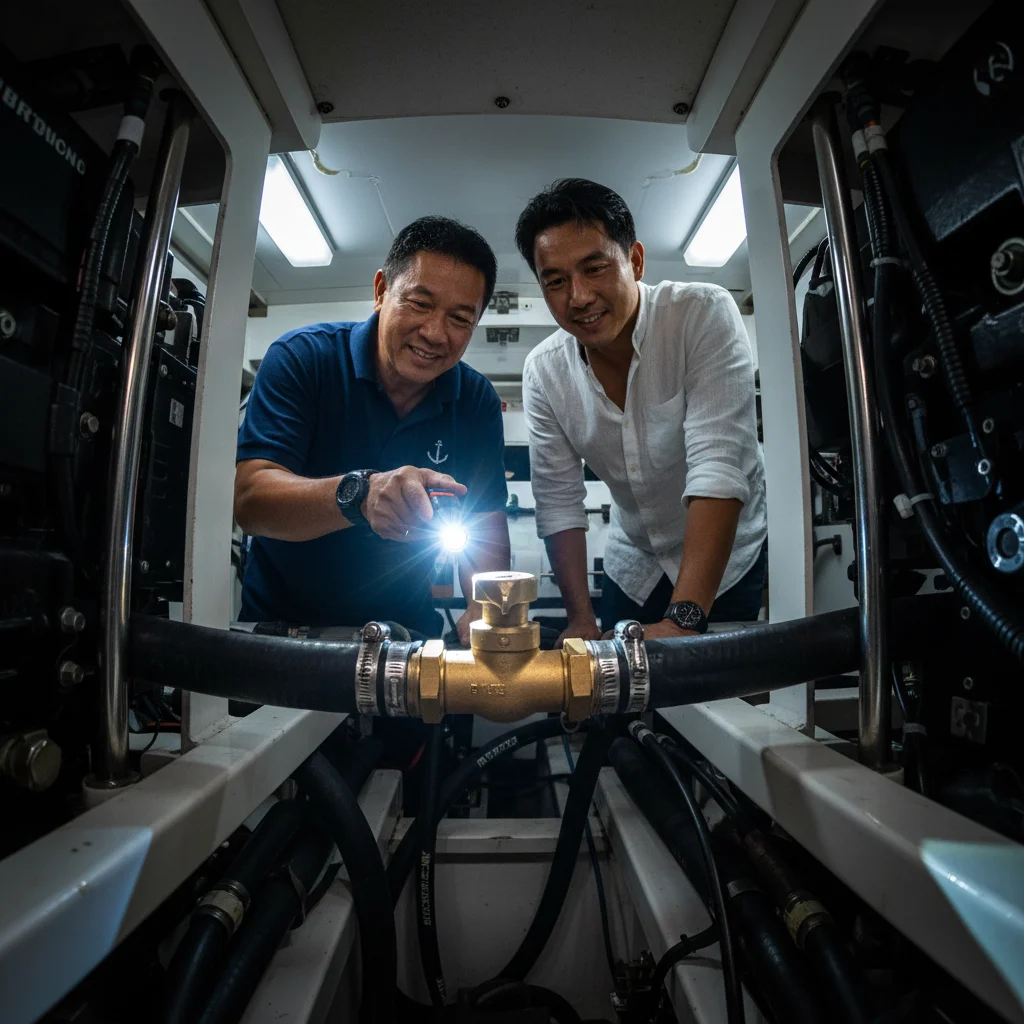
Before committing a deposit or signing a construction agreement with a Thai shipyard, four crucial practical factors require independent verification to protect your investment and avoid severe cost overruns.
Confirm whether the boatbuilder holds official promotional status from the Thailand Board of Investment (BOI). BOI-accredited shipyards benefit from statutory customs exemptions on imported machinery, propulsion units, specialist marine electronics, and rigging hardware. Non-promoted yards must pay standard Thai customs tariffs—often ranging from 10% to 30% plus local value-added tax—on imported foreign components, costs that are frequently passed straight on to the buyer.
Appoint an independent, professionally accredited marine surveyor before entering contractual negotiations rather than relying on the yard's in-house quality control. Yard managers and internal supervisors ultimately answer to the shipyard's commercial schedule. An external surveyor working exclusively for you provides independent oversight, with the contract drafted so stage payments require surveyor sign-off before funds are released from escrow or transferred to the builder.
Establish formal compliance and classification standards prior to structural engineering. If you plan to use or sell the vessel in Britain, the build must satisfy the UK Recreational Craft Regulations (RCR) or relevant Maritime and Coastguard Agency (MCA) commercial coding rules. Attempting a Post Construction Assessment (PCA) or retrofitting watertight bulkheads, fuel-shutoff valves, and fire-suppression systems after launch is vastly more expensive than incorporating them into the original naval architectural drawings.
Verify that all major mechanical and electrical components carry international manufacturer warranties. Propulsion engines, auxiliary generators, and navigation suites procured through Southeast Asian distributors sometimes carry regional warranties restricted to domestic waters. Ensure the shipyard supplies proof of global warranty registration from manufacturers such as Yanmar or Volvo Penta, guaranteeing authorised parts and labour support once the vessel operates in UK or international waters.
Practical Tips
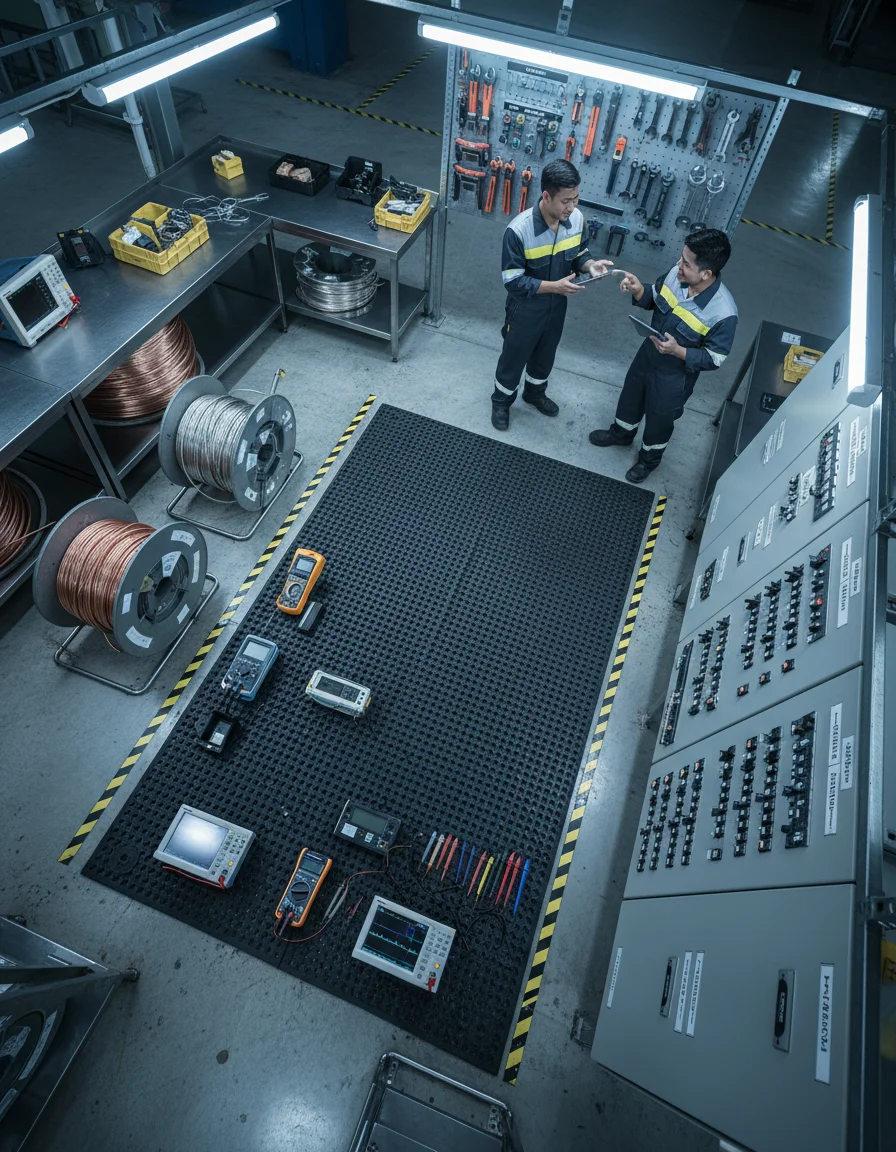
Formalise every design adjustment, equipment upgrade, and layout alteration through written Engineering Change Orders before fabrication begins. Casual verbal agreements made on the boatyard floor frequently produce disputed billing, component mismatches, and delayed handover. Each change order must record the precise equipment model, additional labour hours, price adjustment in Thai baht, and revised completion date.
Specify internationally recognised marine equipment with established UK service networks for all propulsion, power generation, and navigation systems. Sourcing mainstream manufacturers such as Yanmar, Volvo Penta, Cummins, Victron Energy, and Raymarine ensures replacement parts, diagnostic software, and warranty service remain accessible in British waters without waiting weeks for specialist overseas air freight.
Contract for vessel handover on Free on Board (FOB) or Free Carrier (FCA) terms rather than Ex Works (EXW). Under EXW terms, the buyer inherits legal responsibility for navigating Thai export procedures. FOB or FCA terms place the burden on the builder to clear customs through the Thai Customs Department electronic export system and secure port clearance from the Marine Department, preventing administrative impounds at commercial shipping berths.
Structure the final milestone with a retention payment of at least 5% to 10% of the total vessel contract price. Withholding this balance until open-water sea trials and defect rectification are complete provides the commercial leverage required to enforce snagging repairs. Releasing full funds prematurely leaves buyers with little recourse over weeping raw-water strainers, misaligned shafts, or electrical niggles.
Verify that the shipyard maintains climate-controlled storage for resins, structural adhesives, and core foams. In Thailand's tropical heat and high humidity, unconditioned warehouse storage degrades polyester and vinyl ester resins, compromises epoxy hardeners, and risks core bonding failure. Experienced composite builders store these materials in dedicated air-conditioned facilities maintained below specified temperature limits to preserve structural integrity during vacuum infusion.
Compile an independent photographic record of all stringers, structural bulkheads, skin fittings, and wiring looms before deck headliners and internal joinery conceal them. Once cabinetry is installed, inspecting structural tabbing and electrical routing requires destructive deconstruction. Comprehensive photographic logs provide crucial evidence for classification surveyors, commercial coding compliance, insurance underwriters, and subsequent maintenance.
Engage independent maritime legal and survey specialists before signing contracts or transferring stage deposits to safeguard your capital throughout the construction process.
Quick Reference Table
| Key Consideration | Essential Specification / Requirement | Critical Buyer Action |
|---|---|---|
| Hull Material Choice | Advanced GRP sandwich (vacuum-infused) vs 5083-H116 aluminium | Select based on operational profile: composite for cruising efficiency, aluminium for commercial impact resistance |
| Technical Contract | Written specification schedule detailing all equipment by model number | Obtain independent legal review; ensure title to work in progress vests in your name |
| Payment Staging | Milestone-based payment schedule linked to physical fabrication hold points | Condition milestone release on formal sign-off by your independent surveyor |
| Quality Control | Periodic on-site hold-point audits by an accredited marine surveyor | Survey resin infusion, structural tabbing, weld root integrity, and systems alignment |
| Trial Protocols | Multi-hour open-water testing under full continuous displacement load | Execute contractual speed, stability, electrical load, and emergency stop trials |
| UK Conformity | Compliance under UK Recreational Craft Regulations 2017 (RCR) | Verify design category A or B conformity and approved body assessment routes before build |
| UK Registration | UK Ship Register (Part 1) under Maritime and Coastguard Agency rules | Secure original builder's certificate, bill of sale, radio licence, and approved tonnage measurement survey |
| Importation Taxes | Standard UK import VAT (20%) on customs value; 0% customs duty on recreational craft | Budget for 20% VAT on total CIF value (vessel, freight, insurance) under UK Trade Tariff heading 8903 |
| Delivery Method | Heavy-lift deck transport ship or professional delivery crew passage | Secure comprehensive marine cargo transit insurance and export clearance from Thai authorities |
FAQ: Commissioning a Boat in Thailand
Why is it important to check a Thai boatbuilder's Board of Investment (BOI) status?
Should I hire an independent marine surveyor when commissioning a boat in Thailand?
What compliance standards should I consider when commissioning a boat in Thailand for use in the UK?
How can I ensure international warranty support for my boat's components built in Thailand?
How should I handle design adjustments or equipment upgrades during a boat build in Thailand?
What type of marine equipment should I specify for a boat built in Thailand?
What are the recommended export terms for a boat built in Thailand?
Why is a retention payment important at the final stage of a boat build?
What are the main cost components when commissioning a boat in Thailand?
How should payments be structured for a boat construction contract in Thailand?
Reviewed by the Thailand Guide Editorial Team • Last reviewed: 7 November 2026
This page is provided for general information only. While we aim for accuracy, details can change — please verify anything important independently before relying on it.