Marine Surveys in Thailand
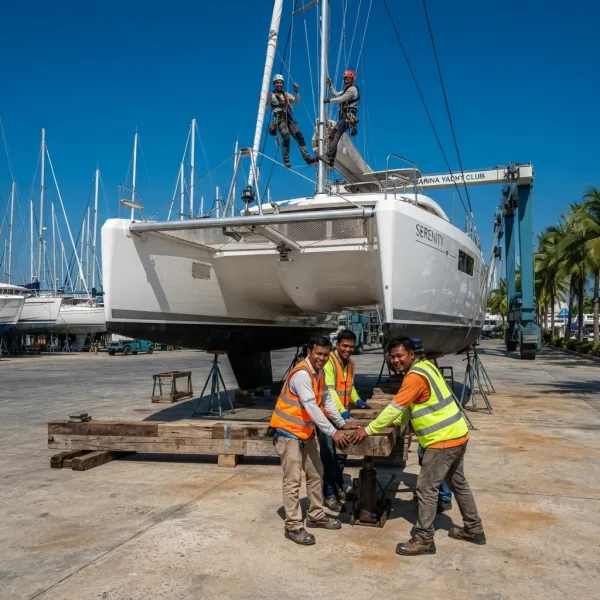
A 46-foot production catamaran hauled out on the hardstand at Phuket Boat Lagoon may gleam under fresh white gelcoat, yet acoustic sounding with a phenolic hammer along the starboard bridge-deck join can quickly reveal hidden delamination or moisture-softened balsa core. What appears pristine in tropical sunshine often conceals osmotic blistering, heat-degraded vinyl ester resin, or galvanic corrosion accelerated by the high ambient temperatures and year-round water salinity of the Andaman Sea and the Gulf of Thailand. In Southeast Asia's punishing maritime environment, commissioning an independent marine surveyor provides the objective assessment needed to separate superficial presentation from genuine structural integrity and mechanical reliability.
This guide explains how to commission an independent marine survey in Thailand when purchasing a pre-owned yacht, arranging marine insurance, managing structural refits, or overseeing custom construction at local boatyards. You will learn how private condition surveys differ from statutory Thai Marine Department certification and routine yard work, what diagnostic testing reveals across composite and metal hulls, and how to interpret surveyor reports. The following sections also detail regional haul-out infrastructure across Phuket, Pattaya, and Krabi, standard survey fee structures, and the exact steps required to leverage technical survey findings during contract negotiations or shipyard milestone sign-offs.

Marine Survey Categories and Statutory Certification in Thailand
Commissioning the correct category of marine survey prevents costly misjudgements. An insurance renewal report or an annual yard checklist cannot provide the legal protection, technical depth, or contractual leverage required when acquiring a yacht. An independent marine surveyor acts as your private technical advocate, inspecting structural soundness, propulsion machinery, and onboard systems without commercial ties to yacht brokers, boatyards, or vendors.
Boat buyers and owners must distinguish an independent condition survey from routine boatyard work and statutory government certification. When a Thai shipyard carries out an annual haul-out, yard technicians focus on operational maintenance: high-pressure hull washing, fresh antifouling application, sacrificial anode replacement, and cosmetic polishing. They do not evaluate composite lamination schedules, bulkhead tab bonding, or structural fatigue.
Statutory inspections conducted by the Thai Marine Department serve an entirely different purpose. Under the Thai Vessel Act, Marine Department officials inspect Thai-flagged commercial vessels, passenger ferries, and licensed charter boats to verify minimum statutory safety compliance. Their inspectors check mandatory carriage items such as lifejackets, flares, fire extinguishers, navigation lights, and passenger capacity limits. However, a Marine Department inspection certificate does not assess whether a hull core is saturated with water, whether a saildrive diaphragm requires replacement, or whether standing rigging has suffered metallurgical fatigue. Private leisure yachts registered under the Thai Sports and Recreation category or cruising under foreign flags do not receive detailed structural scrutiny from government inspectors.
Core condition and transaction surveys
For leisure vessels operating in Thai waters, independent survey assignments divide into clear professional categories:
Pre-purchase condition surveys represent the most comprehensive inspection available. The surveyor examines the vessel both ashore and afloat, auditing underwater running gear, composite or metal hull condition, deck fittings, rigging, domestic plumbing, fuel systems, electrical installations, and onboard safety equipment. A formal sea trial under load forms an integral part of this scope, alongside a valuation assessment.
Insurance surveys evaluate risk exposure for maritime underwriters rather than advising a buyer on purchase value. Underwriters routinely require these reports when a yacht reaches 10, 15, or 20 years of age, or when an owner switches insurers. The scope prioritises watertight integrity, structural soundness, through-hull fittings, fuel line safety, and fire prevention, confirming whether the vessel presents an acceptable underwriting risk.
Valuation surveys establish fair market value and estimated replacement costs. Commissioned for marine mortgages, probate, customs duty assessments, or agreed-value insurance policies, these reports benchmark the yacht against regional and international transaction data rather than testing every auxiliary system.
Plan a Northern Thailand trip covering Chiang Mai, Chiang Rai, Sukhothai, mountain routes, Lanna food, transport, seasons and air quality.
Construction, damage, and specialist scopes
New-build and construction-stage surveys provide quality assurance at Thai shipyards across Chonburi, Rayong, and Phuket. The surveyor conducts milestone audits during lamination, structural framing, machinery installation, and final fit-out, verifying compliance with contract specifications before milestone payments are released.
Pre-delivery inspections assess factory-built production yachts arriving in Thailand from overseas shipyards. The surveyor checks for transit damage sustained on cargo ships, verifies that optional inventory items were supplied, and identifies commissioning defects before the buyer signs formal delivery acceptance.
Damage assessments follow collisions, groundings, lightning strikes, or heavy-weather incidents. The surveyor investigates the root cause, maps the structural boundary of the destruction, and reviews contractor quotes for insurance adjusters.
Specialist machinery inspections and structural surveys offer targeted diagnostics when a full condition survey identifies specific concerns. Marine engineers carry out oil spectrography, compression checks, and cooling system pressure tests on main engines and generators. Commercial vessel surveys evaluate charter yachts and dive liveaboards against commercial safety codes, bridging the gap between private ownership standards and statutory charter licensing.
Every marine survey operates within defined contractual boundaries. Independent surveyors carry out non-destructive visual examinations and standard operational tests; they cannot dismantle engines, remove glued cabin linings, or bore through bulkheads without explicit written permission from the owner. Agreeing the exact inspection scope in writing ensures the final report satisfies your underwriter, lender, or purchase contract.
Pre-Purchase Inspections: Hull Scrutiny, Systems and Sea Trials
A comprehensive pre-purchase yacht survey in Thailand requires systematic evaluation across three distinct phases: an out-of-water hardstand inspection, an in-water domestic systems audit, and an operational sea trial. Before picking up a sounding hammer, the surveyor begins with a review of the vessel's documentation. In Thai waters, confirming legal title and regulatory compliance is critical. The surveyor examines the builder's certificate, bills of sale, registration books from the Thai Marine Department (or foreign flag registry), current radio licences, and import customs clearance records. Engine serial numbers stamped on the blocks are checked against the title paperwork. Unregistered engine replacements or irregular customs entries can leave an incoming buyer exposed to unexpected tax assessments and clearance disputes.
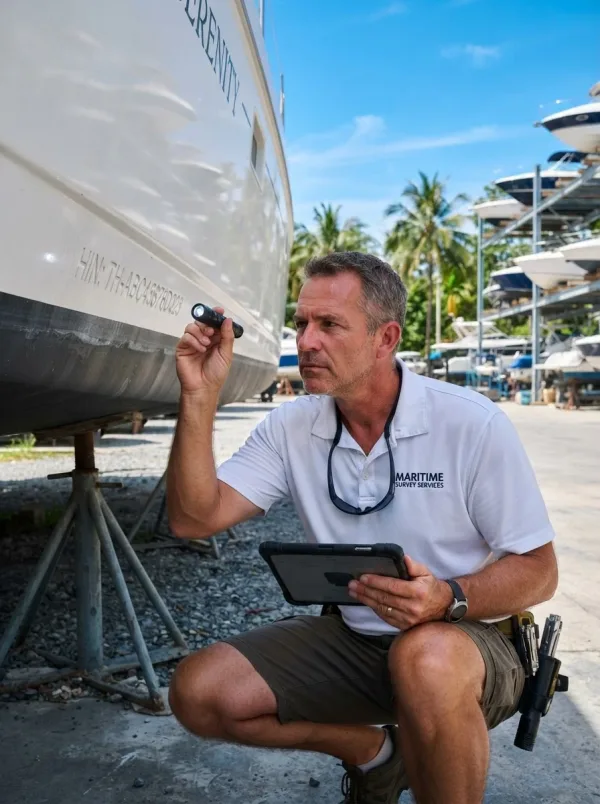
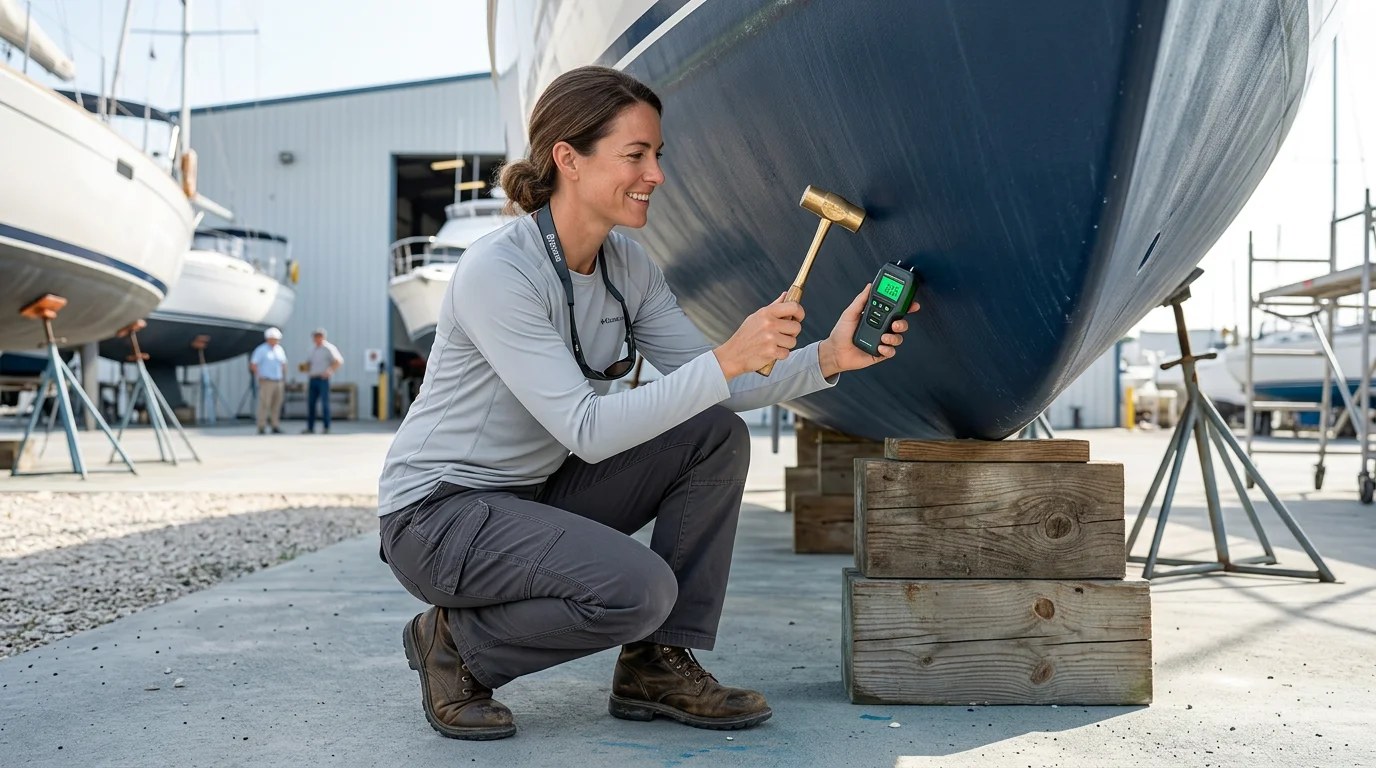
Once the yacht is lifted ashore and pressure-washed at a boatyard, the underwater inspection begins. The surveyor systematically sounds the hull laminate using a phenolic hammer, listening for dull tones that indicate voids, delamination, or core separation. Keel-to-hull joints, internal matrix framing, rudders, cutless bearings, and propulsion shafts receive thorough checks. Seacocks and through-hull fittings demand rigorous scrutiny. In warm tropical seawater, through-hull fittings made from standard plumbing brass degrade through dezincification, a process where zinc leaches out of the alloy and leaves a brittle, porous copper structure vulnerable to sudden failure. Surveyors verify that below-water valves are cast bronze, dezincification-resistant (DZR) brass, or certified marine composite fittings.
Inside the vessel, the surveyor inspects structural bulkheads, chainplates, stringers, and hull-to-deck joints. In the bilges, they look for structural fractures from past groundings, secondary bonding detachment, and chronic water ingress. The machinery audit covers main propulsion engines, generators, exhaust mixing elbows, and engine mounts. In Thailand's high-temperature seawater, heat exchangers and raw-water circuits foul rapidly with calcium scale and marine growth, causing hidden chronic overheating that standard low-speed idling fails to reveal.
On sailing yachts, the surveyor assesses the mast step, spreaders, gooseneck fittings, and standing rigging. Stainless-steel wire rigging exposed to tropical heat, humidity, and constant salt spray has a prudent working life of roughly 7 to 10 years. Surveyors use magnifying optics to look for hairline stress corrosion cracking around swage terminals and turnbuckles. Deck gear, anchor windlasses, primary electrical distribution panels, battery banks, and navigation instruments also undergo functional checks.
The operational sea trial follows, typically lasting one to two hours underway. The surveyor assesses cold-start exhaust smoke, brings the main engines up to wide-open throttle (WOT) to evaluate cooling efficiency and oil pressure under sustained load, monitors for excessive drivetrain vibration, tests the steering and autopilot, and verifies alternator charging rates. Buyers must establish the inspection scope clearly beforehand. Marine surveyors carry out non-destructive examinations; they do not dismantle machinery or open sealed fuel tanks and integral crash compartments. Any inaccessible spaces must be recorded as formal exclusions in the written report.
Material Diagnostics: Composite Osmosis and Metal Corrosion
Accurate hull diagnosis demands specialised instruments and seasoned technical interpretation, because tropical environmental conditions distort non-destructive testing readings. In Thailand's high ambient humidity and year-round 28°C to 31°C sea temperatures, moisture meters such as the Tramex Skipper or Sovereign Marine meter register elevated surface moisture readings if a hull has only just been hauled from the water. A competent surveyor never diagnoses osmotic delamination on an isolated meter reading alone.
On glass-reinforced plastic (GRP) and composite vessels, electronic moisture meters indicate relative conductive dampness within the laminate or core rather than absolute water percentages. High readings frequently stem from benign exterior factors, including surface condensation, bilge dampness, carbon reinforcements, or copper-laden antifouling paints. Experienced surveyors therefore map readings across a structured grid against dry reference points on the upper topsides. They cross-reference elevated readings with acoustic percussion sounding using a phenolic hammer, where dull thuds signal delamination or resin voids. Where suspected osmotic blisters occur below the waterline, piercing a blister yields vital diagnostic clues: an acrid, vinegary scent indicates acetic acid, a slippery feel denotes glycol, and narrow-range pH test strips reading between pH 3 and pH 6 confirm active resin hydrolysis. In sandwich-cored decks and superstructures, unsealed fittings expose balsa or PVC foam cores to tropical rainwater ingress, leading to core shear failure and internal rot that surveyors detect through percussion sounding, moisture meters, or thermal imaging cameras. Bulkhead tabbing receives equal scrutiny, checking for secondary bonding fractures caused by wave pounding in open seas.
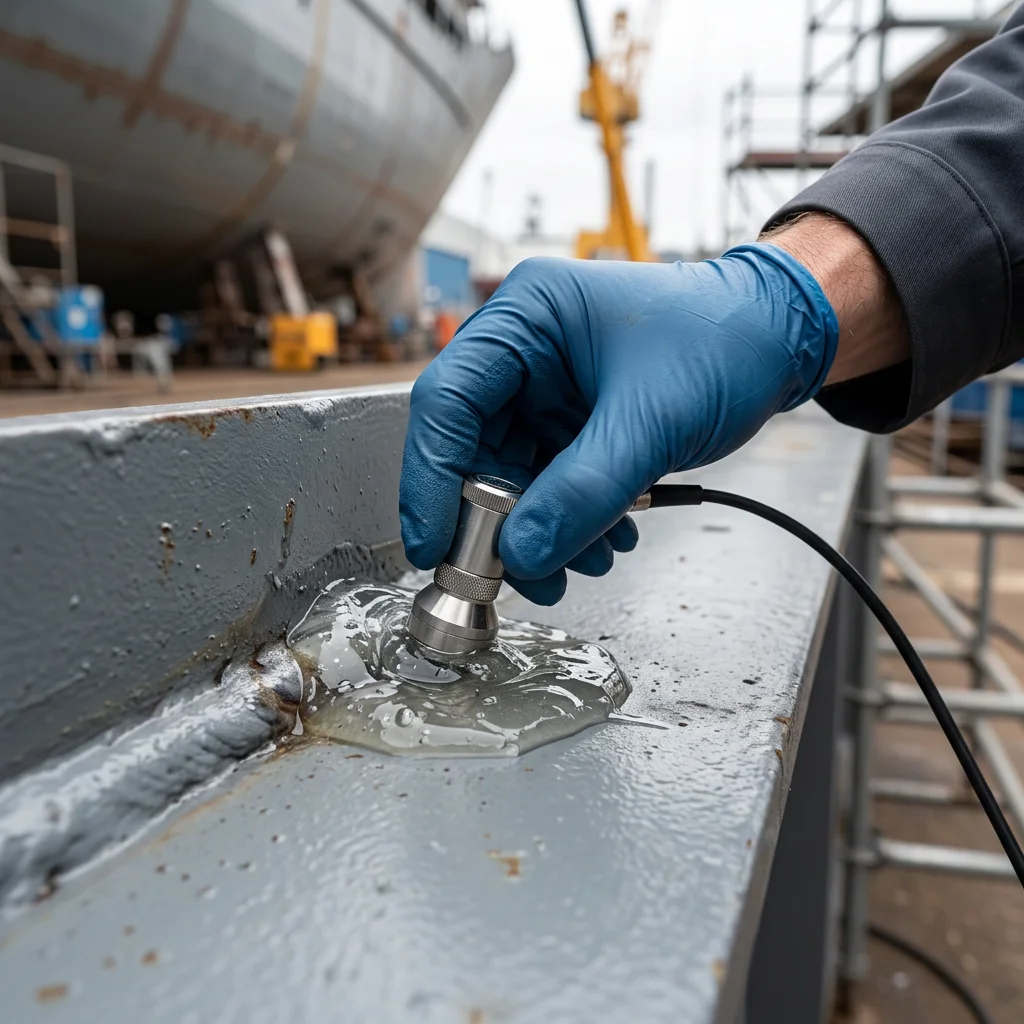
Metal vessels demand entirely different diagnostic protocols. Visual inspection reveals exterior coating blistering, weeping weld seams, and plate distortion, but ultrasonic thickness testing provides the definitive structural assessment. Calibrated multiple-echo gauges, such as Cygnus instruments, send sound pulses through intact protective epoxy coatings to measure sound metal thickness, identifying unseen plate diminution caused by stagnant bilge water or unventilated interior dampness without stripping paint.
Galvanic and stray-current corrosion represent severe threats across Southeast Asian marinas, where unisolated shore power earth connections and faulty direct-current wiring can rapidly destroy underwater fittings. A surveyor assesses the wastage, surface area, and electrical continuity of sacrificial zinc or aluminium anodes, inspects bonding conductors, and measures hull potential in millivolts using a silver/silver-chloride reference electrode lowered into the water. For aluminium craft, weld margins, crevice corrosion beneath wet interior timber soles, and direct contact with noble metals such as uninsulated stainless steel fasteners are systematically recorded.
| Material | Primary Vulnerabilities | Diagnostic Methods | Tropical Factors |
|---|---|---|---|
| GRP / Solid Glass | Osmotic blistering, gelcoat hydrolysis, tabbing failure | Electronic moisture metering, acoustic hammer sounding | Accelerated chemical breakdown in warm sea temperatures |
| Cored Composite | Core shear failure, waterlogged balsa, delamination | Thermal imaging, acoustic sounding, targeted pin meters | Tropical rain ingress through UV-cracked deck sealant |
| Marine Steel | Plate thinning, deep pitting beneath engine bilges | Ultrasonic thickness gauging (UTT), pit depth gauges | High humidity accelerating oxidation in unventilated bilges |
| Marine Aluminium | Stray-current corrosion, weld pitting, galvanic attack | Potential measurement (half-cell), eddy current, UTT | Poor marina shore power grounding, dissimilar metal contact |
Instrument readings provide comparative data rather than an automatic verdict. Interpreting those measurements in concert with acoustic hammer feedback, visual corroboration, and an understanding of tropical wear ensures that buyers distinguish manageable cosmetic defects from serious structural degradation.
Catamaran and Multihull Surveys: Structural and Mechanical Inspections
Cruising and commercial multihulls represent a large proportion of the sailing fleet in Thailand, requiring specialised survey protocols due to multi-axis torsional loading. Catamarans do not heel to spill wind pressure in the manner of monohull keelboats; instead, they convert aerodynamic and hydrodynamic forces directly into structural loads across their crossbeams, bulkheads, and bridgedeck structures. An experienced multihull surveyor focuses intensely on the structural bridge connecting the two hulls.
The forward crossbeam, dolphin striker, and compression post endure severe upward and downward rig tension. Surveyors examine the mechanical fastenings, welded aluminium tangs, and composite tabbing holding the forward beam to the hull bows for stress fatigue, micro-cracking, and movement. On production cruising catamarans, such as Lagoon, Fountaine Pajot, and Leopard, the main transverse bulkhead directly beneath the mast step demands forensic scrutiny. Several production models have suffered bulkhead deformation or tabbing separation under heavy passage-making. The surveyor inspects whether factory-approved reinforcement brackets or structural splints have been retrofitted, checking surrounding interior joinery, door frames, and headliner panels for distortion or stress crazing.
Hull-to-deck joints along inner tunnel surfaces require meticulous acoustic sounding. In the steep, short chop common to shallow waters around Phang Nga Bay and the Gulf of Thailand, wave slamming beneath the bridgedeck produces violent upward deflection. The surveyor examines the bridgedeck chamfer panels, internal furniture tabbing, and emergency escape hatches for signs of impact damage or debonding. Inboard escape hatches demand particular caution: surveyors verify frame integrity, dog-clip fasteners, and the adhesive bond between the acrylic lens and frame. Early-generation Goiot escape hatches, fitted across multiple French multihull brands prior to September 2018, faced manufacturer safety recalls because detached acrylic panels create an immediate downflooding risk.
Machinery and running gear introduce duplicated maintenance liabilities. Catamarans standardly use twin saildrives rather than conventional shaft installations. The surveyor examines the flexible synthetic rubber hull-sealing diaphragms; manufacturers including Volvo Penta and Yanmar mandate replacing these seals every five to seven years, an expensive yard job that owners frequently postpone. Dual steering systems require testing for backlash across independent rudder stocks, tie-rods, and hydraulic balance valves.
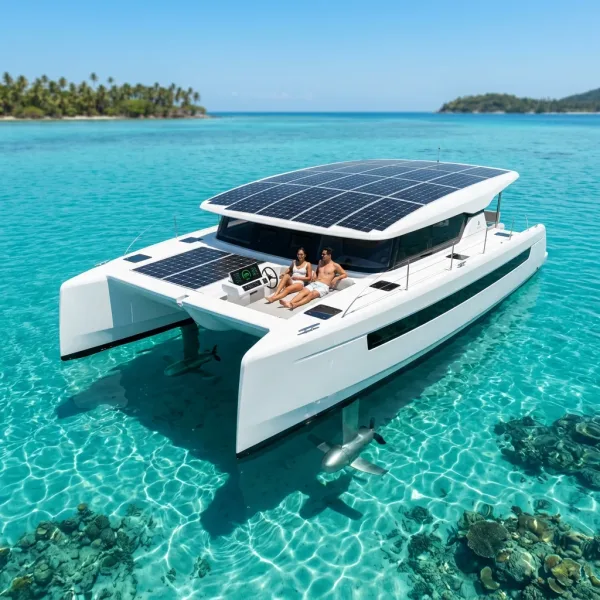
Power catamarans eliminate mast down-thrust and rigging tension but introduce severe dynamic stress aft. High-output diesel engines driving at planing or semi-displacement speeds generate heavy localised torque and vibration. Surveyors inspect the aft engine bearer matrix, tunnel transoms, and hull-stiffening stringers for laminate cracking caused by engine thrust and hydrodynamic slamming.
New-Build Oversight and Thai Shipyard Quality Control
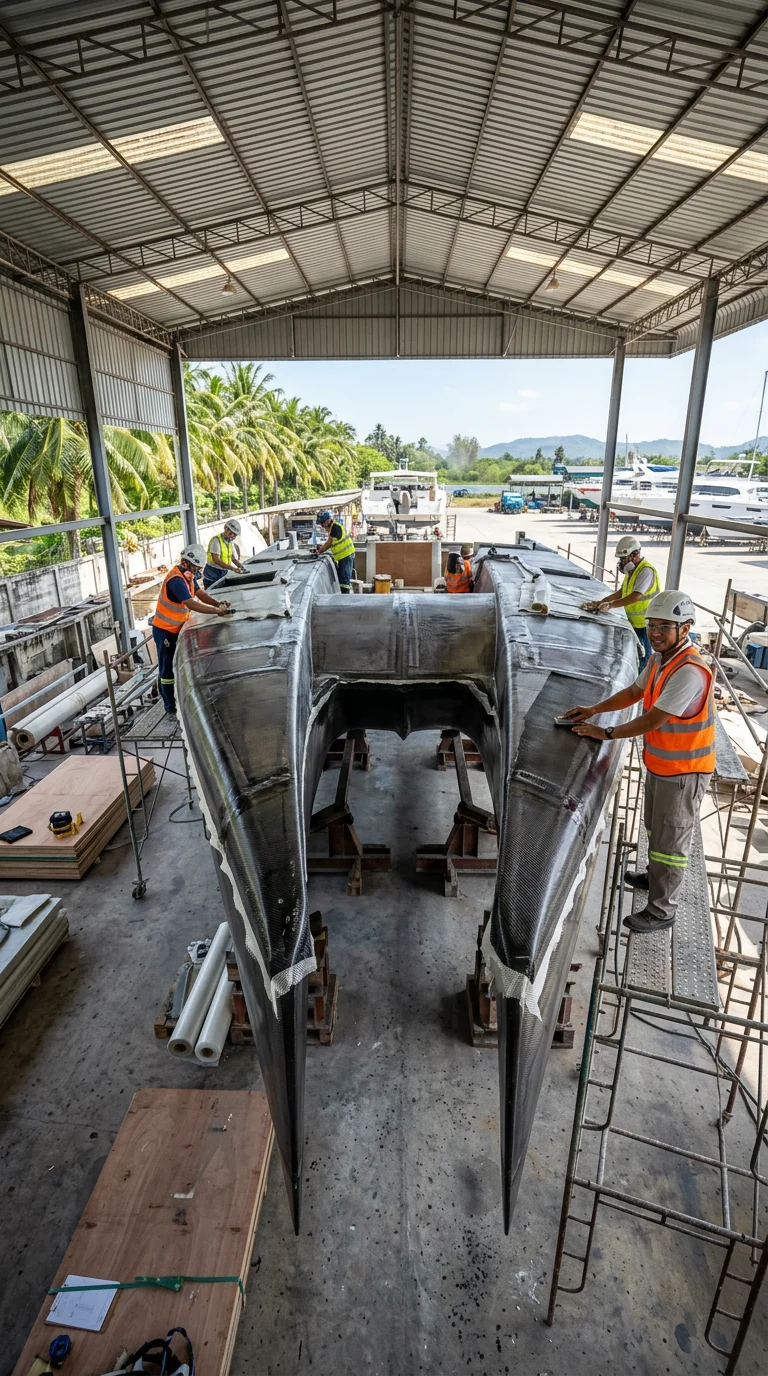
Commissioning a custom or semi-production vessel from a Thai boatbuilder allows buyers to tailor layout, materials, and machinery to their exact requirements. Thailand hosts established composite fabricators, performance multihull yards, and aluminium commercial builders across Chonburi, Rayong, and Phuket. Managing quality assurance across an extended construction schedule requires technical vigilance that an overseas client cannot maintain through periodic visits alone. An independent marine surveyor acts solely on your behalf, inspecting workmanship and materials at critical junctures before flaws are concealed by joinery or fairing compounds.
Securing formal inspection rights within the construction contract before transferring an initial deposit is critical. Build contracts should tie staged progress payments directly to written sign-off from an accredited independent surveyor rather than calendar dates or unverified yard declarations. Independent oversight confirms that construction adheres to agreed specifications, international ISO Small Craft standards, or classification society rules, preventing unapproved material substitutions, improper resin-to-glass ratios, and hidden voiding during vacuum infusion. Readers planning a custom build can consult Thailand Guide's guides to Commissioning a Boat in Thailand and Boatbuilders in Thailand for detailed background on shipyard selection and contract structures.
A comprehensive new-build survey programme monitors progress across nine standard construction milestones:
Initial construction and material preparation: Auditing workshop environmental controls, including ambient temperature and humidity logging required for resin curing, alongside plug fairing, mould alignment, and raw material batch certifications.
Hull and structural assembly: Inspecting vacuum-bagging pressure, core material bonding, dry-fibre placement, resin infusion lines, laminate schedules, and post-cure heat cycles.
Machinery installation: Verifying engine bed alignment, shaft clearances, exhaust run geometry, sound insulation, and fuel tank pressure tests before hull compartments are closed.
Electrical and plumbing installation: Auditing marine-grade tinned copper cabling, breaker panel capacities, galvanic isolation, hull bonding, and fresh- and black-water plumbing runs.
Interior fitting out: Checking structural tabbing on bulkheads, marine plywood compliance, bilge drainage paths, and maintenance access to hidden valves and pumps.
Final construction and finishing: Measuring dry-film paint and gelcoat thickness, checking deck hardware backing plates, and verifying rigging chainplate alignment.
Launching: Monitoring the initial float-off, inspecting all through-hull penetrations and seacocks under static head pressure, and confirming afloat trim.
Sea trials: Measuring propulsion performance under sustained load, monitoring engine operating temperatures, checking steering deflection, and verifying electronics calibration on open water.
Final acceptance: Compiling a snagging list of cosmetic, structural, and mechanical defects, and withholding final acceptance payments until every contractual item is rectified.
Milestone inspections protect both buyer and builder by identifying structural voids, mechanical misalignments, or plumbing defects early, when rectification is practical and far less costly to resolve. Once joinery is tabbed and liners are sealed, correcting structural omissions or unapproved modifications requires invasive dismantling, leading to substantial project delays and disputed repair costs. Independent survey certificates provide verifiable provenance that protects the yacht's long-term resale value, international registration, and insurance approval from the moment of delivery.
Surveyor Credentials, Independence and Purchase Negotiations
Marine surveying in Thailand operates without domestic statutory licensing, which means anyone can commercially offer vessel condition inspections regardless of technical qualification. Prospective buyers should therefore verify professional credentials and individual accreditation through recognised international maritime institutions. Leading organisations include the International Institute of Marine Surveying (IIMS) and the Yacht Designers and Surveyors Association (YDSA) in the United Kingdom, alongside the Society of Accredited Marine Surveyors (SAMS) and the National Association of Marine Surveyors (NAMS Global) in North America. Accredited members must adhere to published codes of conduct, complete mandatory continuing professional development, and hold valid professional indemnity insurance, giving buyers recourse if a surveyor acts negligently.
Professional membership confirms baseline technical assessment, but buyers must also establish that a surveyor holds practical familiarity with their specific hull material and vessel configuration. A surveyor who primarily inspects commercial tugs, passenger barges, or steel workboats in Bangkok will lack practical insight into vacuum-infused epoxy foam cores, carbon-reinforced multihull crossbeams, or performance sailing rigs. Professional independence is equally vital. Engaging a surveyor recommended by the listing yacht broker or vendor creates an inherent commercial conflict, particularly where the surveyor relies on regular referrals from local brokerage firms. Commissioning an independent specialist directly ensures that the assessment remains rigorous and uncompromised.
Accredited surveyors structure written reports around formal defect gradings, commonly following the three-tier system defined by the IIMS. Category A items represent critical defects affecting vessel strength, seaworthiness, or safety at sea, such as fractured chainplates, active structural delamination, severely corroded through-hull fittings, or compromised fuel hoses. Marine underwriters routinely decline insurance cover until Category A issues receive certified repairs. Category B items encompass significant operational defects that do not pose an imminent navigational hazard but require remedial attention within a defined timeframe, such as weeping engine heat exchangers, worn propeller shaft bearings, or standing rigging approaching the end of its service life. Category C items cover minor advisory and cosmetic observations, including gelcoat crazing or interior joinery wear, which carry no structural implications.
Standard brokerage contracts, such as the Mediterranean Yacht Brokers Association (MYBA) Memorandum of Agreement or Yacht Brokers Association of America (YBAA) agreements, give legal weight to these survey categories. When a condition survey reveals previously undisclosed material defects, the contract provides specific remedies within a defined notice period, typically five to seven days after survey completion. The buyer can serve notice requiring the seller to rectify the faults before completion to the surveyor's satisfaction, agree a formal price reduction reflecting the cost of repairs, or reject the vessel entirely. Exercising a contractual rejection on the grounds of survey defects entitles the buyer to a full refund of their purchase deposit, which is conventionally held in a dedicated stakeholder escrow account at 10% of the agreed purchase price, less any agreed sea trial expenses. To maintain credibility during price negotiations, buyers should ensure that repair deductions reflect formal written quotes from reputable local boatyards rather than unverified verbal estimates.
Where to Arrange Marine Surveys in Thailand
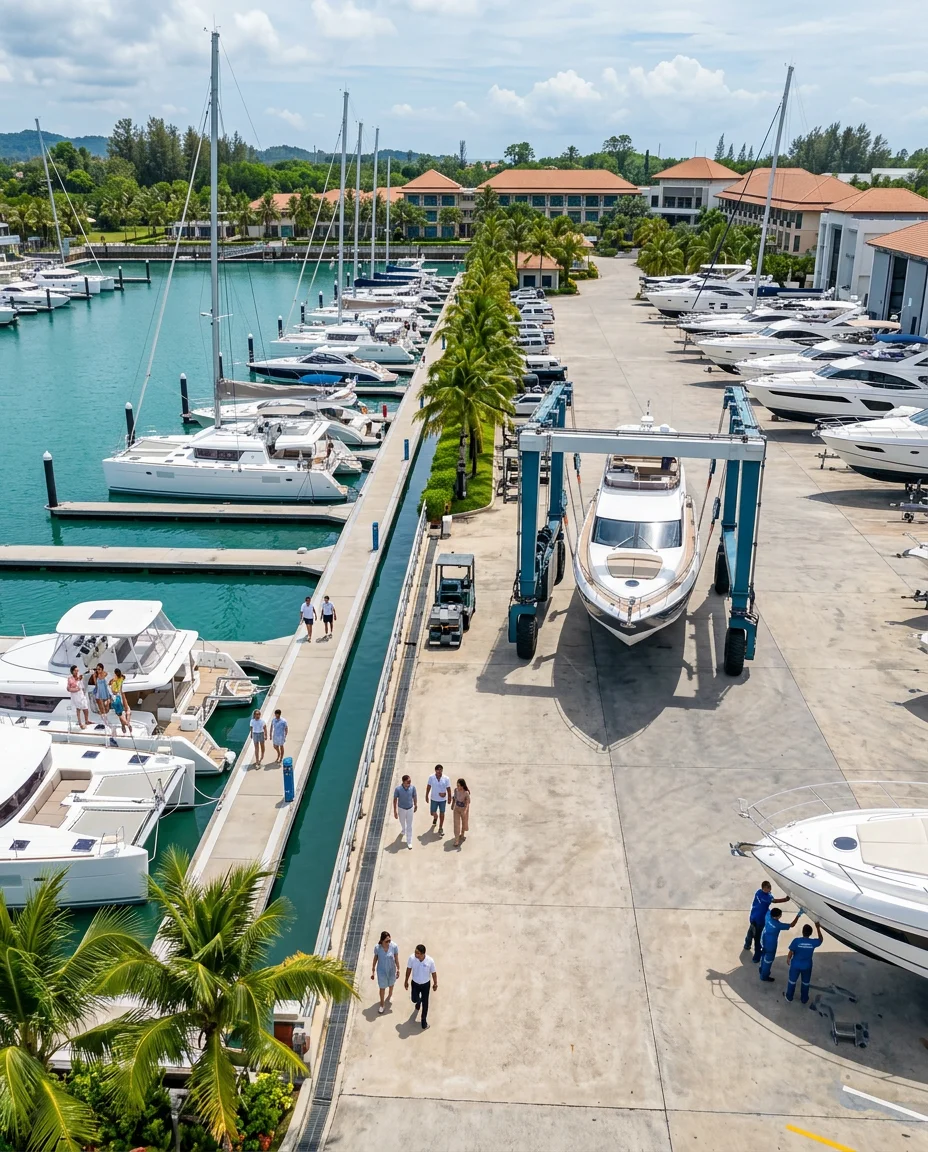
Arranging a thorough marine survey requires a harbour with reliable lifting infrastructure, secure hardstand capacity, and access to qualified marine contractors. Because out-of-water hull inspections, ultrasonic testing, and running gear checks depend on hauling the vessel clear of the water, choosing an appropriate boatyard directly shapes what a surveyor can inspect. Thailand's surveying infrastructure centres on two primary maritime regions: the Andaman Sea coast around Phuket and Krabi, and the eastern Gulf of Thailand.
Phuket functions as the main centre for yacht inspections in Southeast Asia. In Koh Kaew, Phuket Boat Lagoon operates three marine travel lifts handling up to 120 tonnes alongside hardstand berths for up to 160 vessels. The yard houses specialised workshops for composite lamination, marine carpentry, and mechanical repairs, though navigating the Klong Tha Rua approach creek requires timing around high water for vessels drawing more than two metres. Royal Phuket Marina, located in the same basin, lifts craft up to 35 metres using a 50-tonne travel hoist. For deep-draft yachts and multihulls seeking round-the-clock entry without tidal delays, Ao Po Grand Marina provides all-tide deep-water berths and hauls out vessels up to 80 tonnes using hydraulic trailer lifts. In the north, Phuket Yacht Haven provides deep-water pontoon berths, with adjacent haul-out facilities at Phuket Premier Boatyard using a 60-tonne submersible trailer. For heavy commercial craft, steel displacement vessels, or large motor yachts, Ratanachai Slipway and Asia Marina in Phuket Town handle railway slipways and travel lifts up to 210 and 500 tonnes.
Across Phang Nga Bay in Krabi, Port Takola Yacht Marina provides an all-tide alternative with a minimum basin depth of three metres. Its 38-tonne submersible trailer and 12-metre-wide ramp accommodate wide-beam catamarans without the beam restrictions of conventional travel-lift wells. Further south, Krabi Boat Lagoon maintains an enclosed basin with an 80-berth marina, a mobile travel lift, and hardstand space for 100 hulls.
On the Gulf of Thailand, Ocean Marina Jomtien in Chonburi represents the principal base for surveys. The harbour features 455 wet berths, 25-tonne and 75-tonne travel lifts, wide haul-out slips suited to multihulls, and on-site engineering, rigging, and fabrication shops. Further east, Siam Royal View Marina in Koh Chang provides sheltered mooring, while Rayong hosts commercial yards and composite builders. Selecting an inspection location with certified lift equipment matching the vessel's beam, draft, and displacement ensures the surveyor can complete both out-of-water structural assessments and operational sea trials effectively.
Costs and Budgeting
Marine survey pricing in Thailand is generally structured around vessel length, hull material, system complexity, and shipyard location. Professional marine surveyors quote either a per-foot rate, a day rate, or a fixed lump sum for standard production cruising boats. Custom motor yachts, superyachts, and commercial passenger craft require bespoke quotes based on the expected days on site and system complexity.
Surveyor fees cover professional on-site inspection time, operational testing, and written report preparation with photographic documentation. You must budget separately for third-party shipyard charges. Travel lift operations, short-haul survey lifts holding the yacht in slings, high-pressure hull washes, and daily hardstand fees are invoiced directly by the marina or boatyard rather than the surveyor. Marinas in Thailand also charge outside contractor access fees, typically 500 THB to 800 THB (approx £11 to £18) per day, if the appointed surveyor is not an in-house resident partner.
Independent surveyors based in primary hubs such as Phuket or Pattaya normally include local marina travel within their base quotes. Assignments requiring travel to Krabi, Koh Samui, Koh Chang, or regional shipyards along the Gulf of Thailand incur additional travel expenses. These logistical disbursements cover domestic airfares, vehicle hire, fuel, and overnight lodging. If engines or generators require spectrographic oil analysis, certified testing laboratories in Bangkok charge an additional processing fee per sample bottle.
Specialist assessments, such as sending a qualified rigger aloft to inspect mast fittings and swage terminals, or running electronic diagnostic software on late-model diesel engines, sit outside a standard pre-purchase scope and carry their own call-out rates.
| Service or Expense | Cost (THB) | Cost (GBP) | Scope & Inclusions |
|---|---|---|---|
| Pre-Purchase Survey (Monohull, 35–45ft) | THB 35,000 – 55,000 | £800 – £1,250 | Hull sounding, interior systems, rig check from deck, written report |
| Pre-Purchase Survey (Catamaran, 40–50ft) | THB 48,000 – 75,000 | £1,100 – £1,700 | Twin hulls, dual engines, bridge-deck structure, full condition report |
| Insurance / Valuation Survey | THB 22,000 – 38,000 | £500 – £870 | Seaworthiness appraisal, safety compliance, fair market valuation |
| New-Build Milestone Inspection | THB 18,000 – 30,000 | £410 – £690 | Single shipyard stage visit with formal photographic defect report |
| Travel Lift & Yard Survey Haul-Out | THB 15,000 – 35,000 | £340 – £800 | Third-party yard fee for short lift, pressure wash, and sling hold |
| Rigging Aloft Specialist Inspection | THB 12,000 – 22,000 | £275 – £500 | Mast ascent checking standing wire, spreaders, and swage terminals |
| Engine Spectrographic Oil Analysis | THB 2,500 – 4,500 | £60 – £100 | Per engine or gearbox sample sent to accredited Bangkok laboratory |
| Inter-Province Surveyor Travel Allowance | THB 5,000 – 18,000 | £115 – £410 | Domestic travel, car hire, and hotel for surveys outside base hub |
What To Know Before You Go
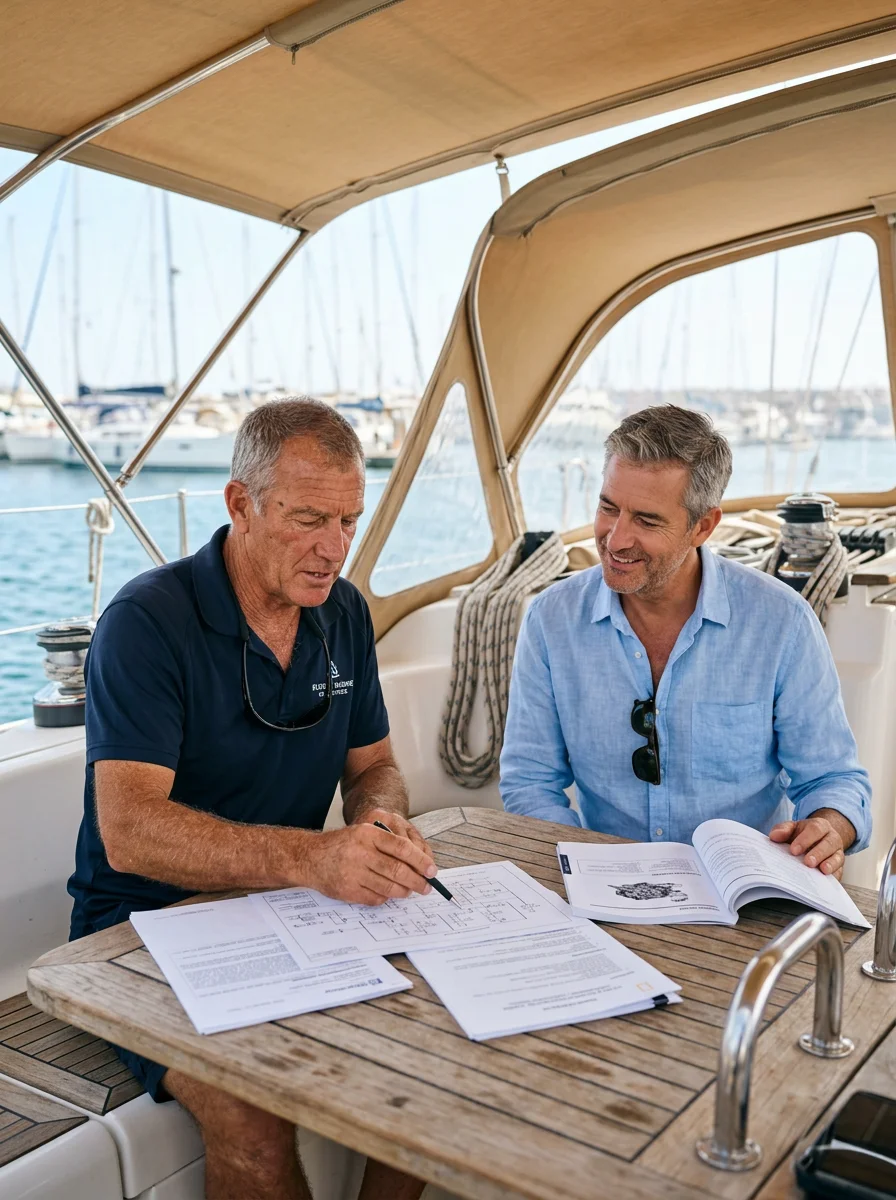
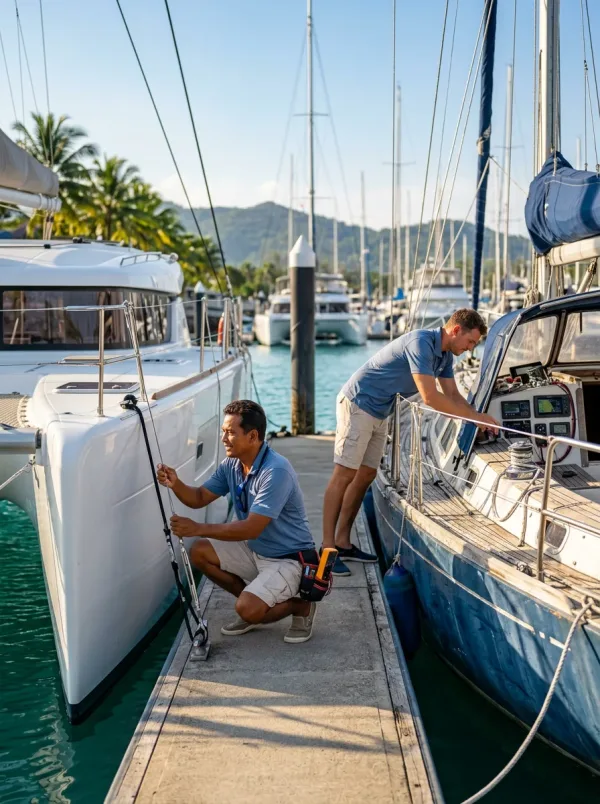
Commissioning a marine survey in Thailand requires clear commercial and logistical preparation before confirming dates with a shipyard. Under standard international yacht brokerage conventions, such as Yacht Brokers, Designers and Surveyors Association (YBDSA) and Mediterranean Yacht Brokers Association (MYBA) contract terms, the prospective buyer pays all costs directly related to their inspection. This includes the surveyor's professional fees, the marina travel-lift haul-out, hull pressure-washing, and any hardstand lay fees. The seller remains responsible for operating the vessel and supplying fuel during the sea trial, unless your sale and purchase agreement explicitly stipulates otherwise.
Logistical timing also hinges on local marina geography. While deep-water facilities such as Phuket Yacht Haven offer all-tide access, inland boatyards including Phuket Boat Lagoon and Royal Phuket Marina sit behind shallow mangrove channels. Navigation along these dredged creeks is strictly tidal; vessels drawing over two metres must coordinate haul-out slots within the top two hours of a spring flood tide. Booking travel-lift time without verifying tide tables risks missing your lifting window and incurring shipyard standby penalties.
Select and instruct your surveyor independently. Do not accept a surveyor nominated solely by the selling broker or vendor. A local surveyor who relies on regular sales referrals from regional brokerage houses faces an inherent commercial conflict of interest that can compromise the objectivity of their report. Confirm your insurer's and marine lender's underwriting criteria before signing an instruction letter. Most British and European marine underwriters insist on condition reports produced by accredited members of recognised international bodies—such as the International Institute of Marine Surveying (IIMS), the YDSA, or the Society of Accredited Marine Surveyors (SAMS)—who carry active professional indemnity cover.
Practical Tips for Survey Day
Attend the survey inspection in person whenever travel arrangements permit. Walking through the vessel alongside an independent surveyor provides an unvarnished view of defects as they are uncovered, making it far simpler to differentiate between superficial cosmetic wear and urgent structural repairs.
Commission laboratory spectrographic fluid testing for the main propulsion engines and onboard generator. Drawing lubricating oil samples identifies microscopic suspended wear metals—including iron from cylinder liners, copper from bearings or oil coolers, and chromium from piston rings—alongside traces of glycol or fuel dilution that flag failing head gaskets or leaking injectors before contracts are finalised.
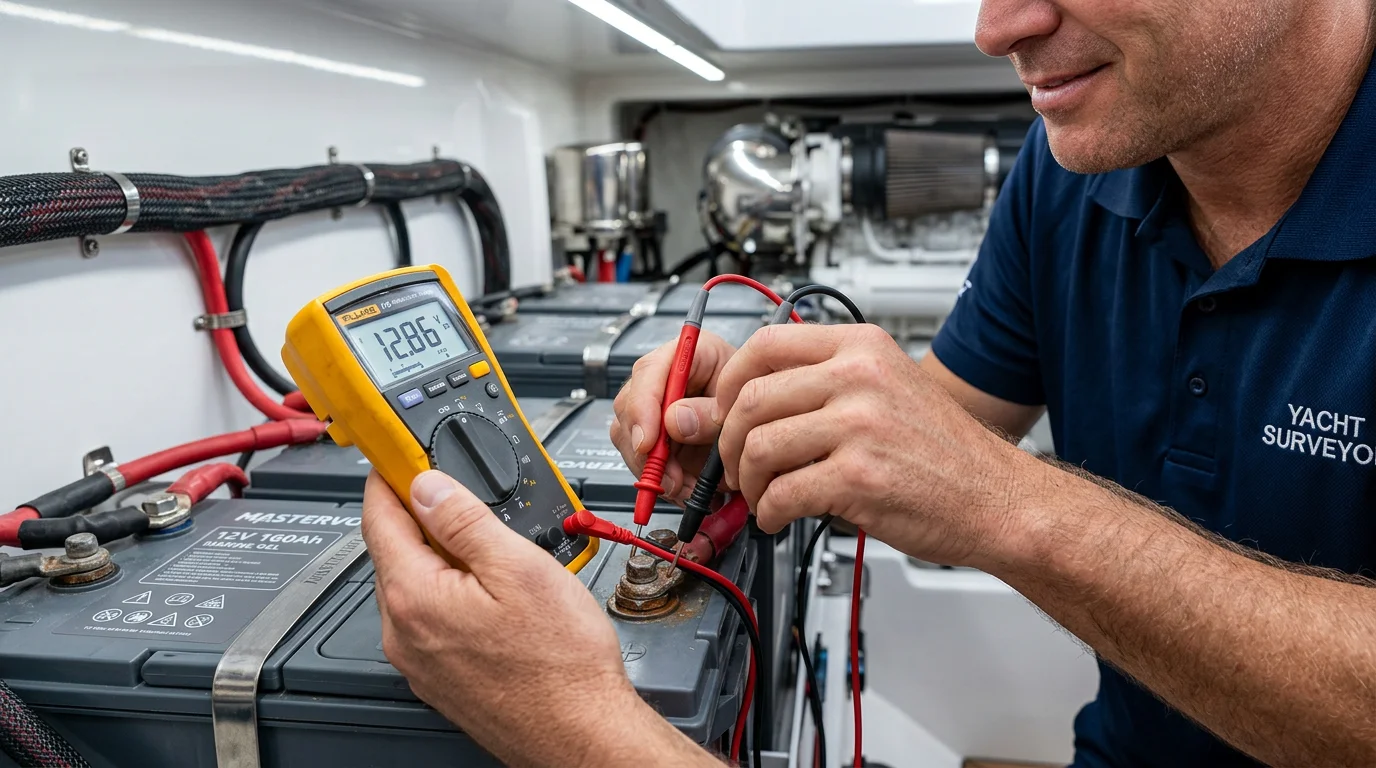
Confirm that the yacht's battery banks are fully charged and domestic circuits powered up 24 hours prior to the inspection. If domestic systems, bilge pumps, refrigeration compressors, and navigation displays have sat disconnected from shore power, a surveyor loses valuable yard time troubleshooting flat starter batteries rather than evaluating active electrical and charging systems under real operational load.
Arrange the out-of-water lift before the operational sea trial. Hauling the hull first gives the surveyor clear access to sound underwater laminates, inspect through-hull skin fittings, and check for play in shaft cutless bearings, rudder stocks, and propeller brackets. Confirming that underwater running gear is structurally sound avoids running compromised mechanical components under high load during trial runs in open water.
Obtain explicit written permission from the vendor or listing broker before your surveyor undertakes any intrusive testing. Scraping gelcoat to check blister depth, opening sealed joinery panels, or scraping antifouling paint can spark immediate friction with the yard or owner if agreed testing protocols are not established beforehand.
Review the vessel's original Thai Customs clearance papers and Harbour Department records. Visiting foreign-flagged yachts enter Thailand under temporary import regimes documented by official inward reports (such as Form 372) and Simplified Customs Declaration forms. If an existing owner has let temporary import validity lapse or sold the vessel locally without settling import duties and taxes, Thai Customs can pursue the boat for back taxes, import duties, and substantial administrative fines.
Check the surveyor's terms of engagement and liability limitations thoroughly before signing. Clear contracts set out precise exclusions—such as sealed tanks, inaccessible hull voids, and uninspected standing rigging aloft—while verifying that the inspector holds valid professional indemnity insurance.
Quick Reference Table
| Item | Detail | Notes |
|---|---|---|
| Primary Survey Hubs | Phuket, Krabi, and Chonburi (Pattaya) | Main boatyards include Phuket Boat Lagoon, Royal Phuket Marina, Ao Po Grand Marina, Port Takola, and Ocean Marina Jomtien |
| Pre-Purchase Survey (Monohull, 35–45ft) | THB 35,000 – 55,000 (£800 – £1,250) | Covers hull sounding, domestic systems, deck rig audit, and written condition report |
| Pre-Purchase Survey (Catamaran, 40–50ft) | THB 48,000 – 75,000 (£1,100 – £1,700) | Covers twin hulls, dual saildrives, bridge-deck structure, and systems |
| Insurance & Valuation Surveys | THB 22,000 – 38,000 (£500 – £870) | Appraises structural integrity, safety gear, and fair market value for underwriters |
| Yard Lift & Haul-Out Costs | THB 15,000 – 35,000 (£340 – £800) | Third-party yard fee for short travel-lift hold, pressure wash, and hardstand |
| Engine Oil Spectrography | THB 2,500 – 4,500 (£60 – £100) per sample | Sent to accredited Bangkok laboratories to test for internal wear metals and contamination |
| Rigging Aloft Inspection | THB 12,000 – 22,000 (£275 – £500) | Specialist mast ascent checking spreaders, tangs, swage terminals, and wire |
| Cost Allocation Convention | Buyer pays survey and haul-out; seller provides sea trial | Standard MYBA and YBDSA terms make the buyer responsible for all inspection expenses |
| Tidal Access Restrictions | Top 2 hours of spring flood tide | Essential for vessels drawing over 2 metres entering Phuket Boat Lagoon and Royal Phuket Marina |
| Recommended Credentials | IIMS, YDSA, SAMS, or NAMS Global | Ensure independent appointment with active professional indemnity insurance |
| Defect Notice Period | 5 to 7 days post-survey | Standard contractual window to demand repairs, negotiate price reductions, or reject |
| Website | International Institute of Marine Surveying (IIMS) | iims.org.uk |
| Website | Mediterranean Yacht Brokers Association (MYBA) | myba-association.com |
| Website | Society of Accredited Marine Surveyors (SAMS) | marinesurvey.org |
| Website | National Association of Marine Surveyors (NAMS Global) | namsglobal.org |
| Website | Phuket Boat Lagoon | phuketboatlagoon.com |
| Website | Royal Phuket Marina | royalphuketmarina.com |
| Website | Ao Po Grand Marina | aopograndmarina.com |
| Website | Port Takola Yacht Marina | porttakola.com |
| Website | Ocean Marina Jomtien | oceanmarinajomtien.com |
FAQ: Marine Surveys in Thailand
What is the difference between an independent marine survey and routine boatyard work or government inspections in Thailand?
What types of marine surveys are available for leisure vessels in Thailand?
What are the limitations of a marine surveyor's inspection?
What documents does a marine surveyor check during a pre-purchase inspection in Thailand?
What specific areas do surveyors focus on when inspecting catamarans in Thailand?
How can a buyer verify the credentials of a marine surveyor in Thailand?
Should a buyer use a marine surveyor recommended by a yacht broker or vendor in Thailand?
How are defects categorised in a marine survey report?
What costs are involved in a marine survey in Thailand, and who pays them?
Why is it important to check Thai Customs clearance papers for a yacht?
Reviewed by the Thailand Guide Editorial Team • Last reviewed: 7 November 2026
This page is provided for general information only. While we aim for accuracy, details can change — please verify anything important independently before relying on it.