Marinas in Thailand
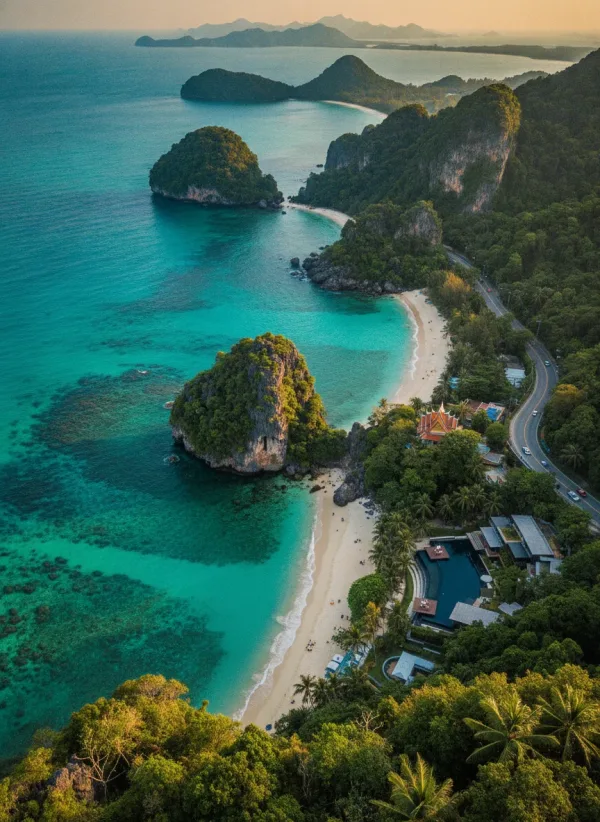
Thailand borders two distinct cruising grounds across more than 3,000 kilometres of coastline and hundreds of tropical islands. To the west, the Andaman Sea provides access to the limestone karsts of Phang Nga Bay, the diving grounds around the Similan Islands, and deep-water passages down towards Malaysia. To the east, the Gulf of Thailand encompasses sheltered archipelagos, long continental coastlines, and sailing waters stretching towards Cambodia.
Backing these cruising grounds is an established network of purpose-built recreational marinas. Berthing infrastructure spans both seaboards, accommodating everything from small trailer-sailers and production catamarans to superyachts exceeding 100 metres in length. Facilities vary considerably in purpose and accessibility, ranging from heavy-lift maintenance boatyards and commercial shipyards to residential developments with walk-ashore pontoons, waterfront restaurants, and sailing schools.
Whether you are planning a bareboat sailing charter, looking to berth a foreign-flagged yacht long term, or simply visiting a harbour for waterside dining, practical planning requires understanding local conditions. This national guide covers marina capabilities, tidal approaches, seasonal cruising windows, operational costs, and harbour access across Thailand's primary boating regions.

Thailand's Main Cruising Regions and Sailing Seasons
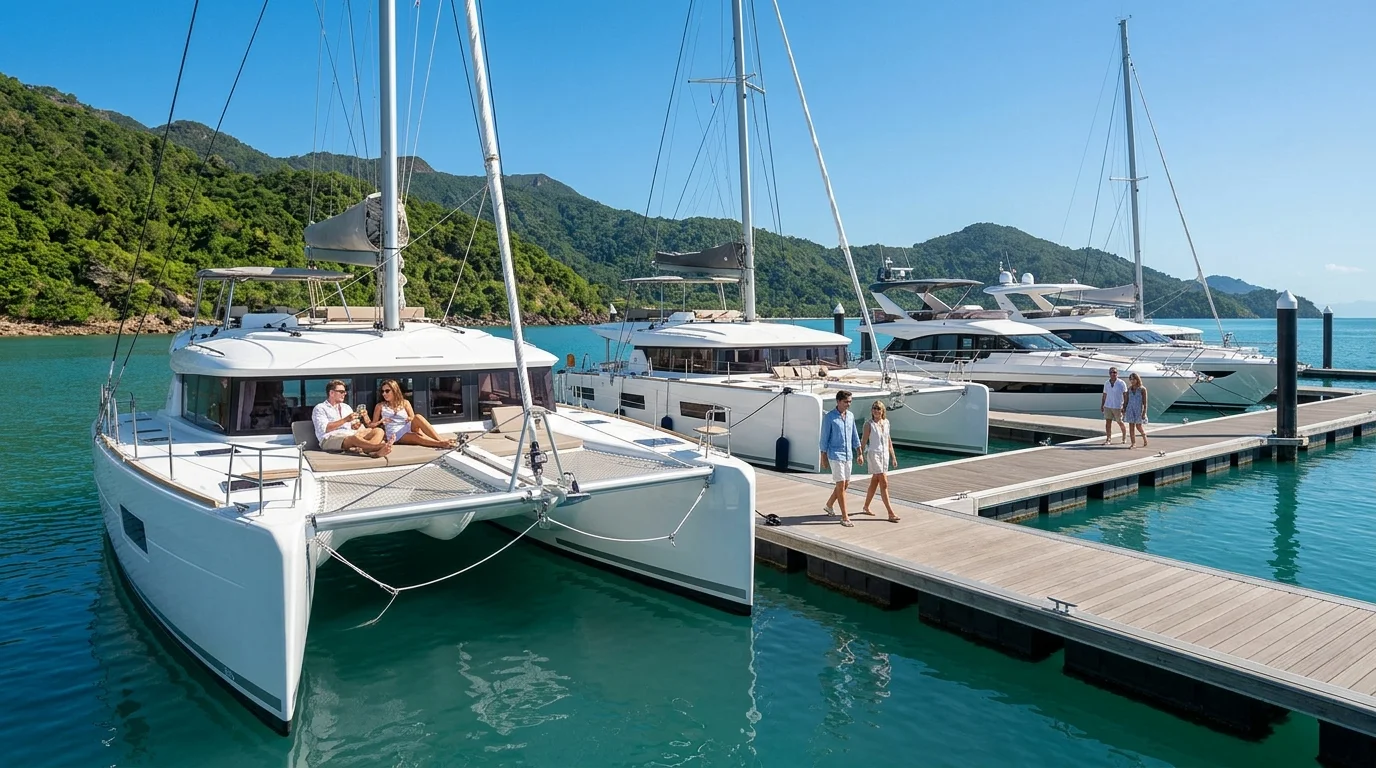
Two distinct marine zones shape recreational boating across Thailand, divided by the Malay Peninsula and governed by opposing monsoon systems. To the west, the Andaman Sea encompasses Phuket, Krabi, and Phang Nga Bay, delivering deep-water cruising set against towering karst islands. The prime sailing window along the Andaman seaboard spans November to April during the northeast monsoon, when dry winds generate calm seas, stable anchorages, and sea temperatures between 28°C and 30°C. From May to October, the southwest monsoon brings open-ocean swells and heavy rainfall from the Indian Ocean, closing exposed west-facing anchorages while keeping sheltered interior channels accessible.
The Gulf of Thailand follows an inverted weather pattern, creating a reliable cruising alternative when the Andaman Sea turns rough. In the Eastern Gulf, the cruising grounds off Pattaya and Jomtien remain accessible throughout the year, with the Koh Chang archipelago providing sheltered island passages. Along the western Gulf coast, Hua Hin and Pran Buri feature exposed coastal passages, while further south, Koh Samui and its neighbouring islands see settled cruising conditions between February and August. The Gulf experiences its heaviest rainfall and roughest coastal chop later in the year, particularly from October to December when the northeast monsoon strikes the eastern peninsular coast.
Cruising between these zones requires navigating fundamentally different tidal and coastal environments. The Andaman coast is subject to semi-diurnal tides with swings reaching up to three metres, which directly affects passage planning for shallow river bars and estuarine marinas. In contrast, the Gulf of Thailand is dominated by diurnal or mixed tides with a single daily cycle and lower ranges, though shifting sandbars near river mouths demand vigilant echo sounding. Matching your yacht charter or voyage itinerary to these seasonal rhythms ensures calm passages across both coastlines.
| Region | Primary Marinas | Best Cruising Months | Maritime Characteristics |
|---|---|---|---|
| Andaman Coast (Phuket) | Royal Phuket Marina, Ao Po Grand Marina, Phuket Boat Lagoon, Phuket Yacht Haven | November to April | Deep water, 3m tidal range, open-ocean swells during southwest monsoon |
| Phang Nga Bay & Krabi | Port Takola Yacht Marina, Krabi Boat Lagoon | November to May | Sheltered waters, limestone karsts, mangrove river channels, shallow bars |
| Eastern Gulf (Pattaya & Koh Chang) | Ocean Marina Jomtien, Siam Royal View Marina | October to April | Protected sea basins, archipelago cruising, moderate swells, steady breezes |
| Western Gulf (Pran Buri & Hua Hin) | Racer Marina | December to August | River access, exposed offshore chop, long coastal stretches, shallow approaches |
The Andaman Hub: Phuket's Key Harbours
Phuket is Thailand's principal yachting hub, home to four full-service marinas catering for monohull cruisers, catamarans, and superyachts. On the island's central east coast in Koh Kaew, Royal Phuket Marina operates as an upscale residential basin. It provides 100 wet berths for vessels up to 35 metres in length, alongside a 50-tonne travel lift, hardstand space, and a covered dry-stack facility equipped with specialised forklifts for motorboats up to 12 metres. Ashore, an Italian-inspired boardwalk features restaurants, health facilities, and charter offices. Access requires navigating an entrance channel through the mangrove flats of Klong Tha Rua, where deeper-draft keels must observe tidal levels.
Immediately upstream along the same creek sits Phuket Boat Lagoon, the island's pioneer marina development opened in 1994. While Royal Phuket Marina centres on residential leisure, Boat Lagoon functions as the island's primary working marine refit yard. The circular inner basin contains 180 wet berths, supported ashore by hardstand space for up to 160 vessels, on-site chandleries, engineering workshops, and three marine travel lifts handling up to 120 tonnes. Keelboats and deep-draft vessels must time their transit through the two-mile winding approach channel around high water, keeping to the concrete piling markers from Ao Tha Rua.
On the north-east coast, deeper harbours provide open-water access independent of the tide. Facing Phang Nga Bay, Ao Po Grand Marina features 230 berths with round-the-clock access and zero tidal delays. Basin depths range from 3 metres inside to 7 metres along the outer pontoons, accommodating superyachts up to 100 metres and 499 gross tonnes. Haul-out services use 47-tonne and 80-tonne hydraulic trailer lifts. Near Phuket's northern tip, Phuket Yacht Haven accommodates more than 330 berths in a deep, naturally sheltered channel. Equipped with high-capacity electrical supplies capable of supporting vessels exceeding 100 metres, Yacht Haven is also the permanent venue for the annual Thailand International Boat Show.
Plan a Gulf of Thailand trip with clear guidance on island groups, ferries, weather, marine parks, accommodation costs and mainland gateways.
Krabi and Phang Nga Bay: Estuary Basins and Island Gateways
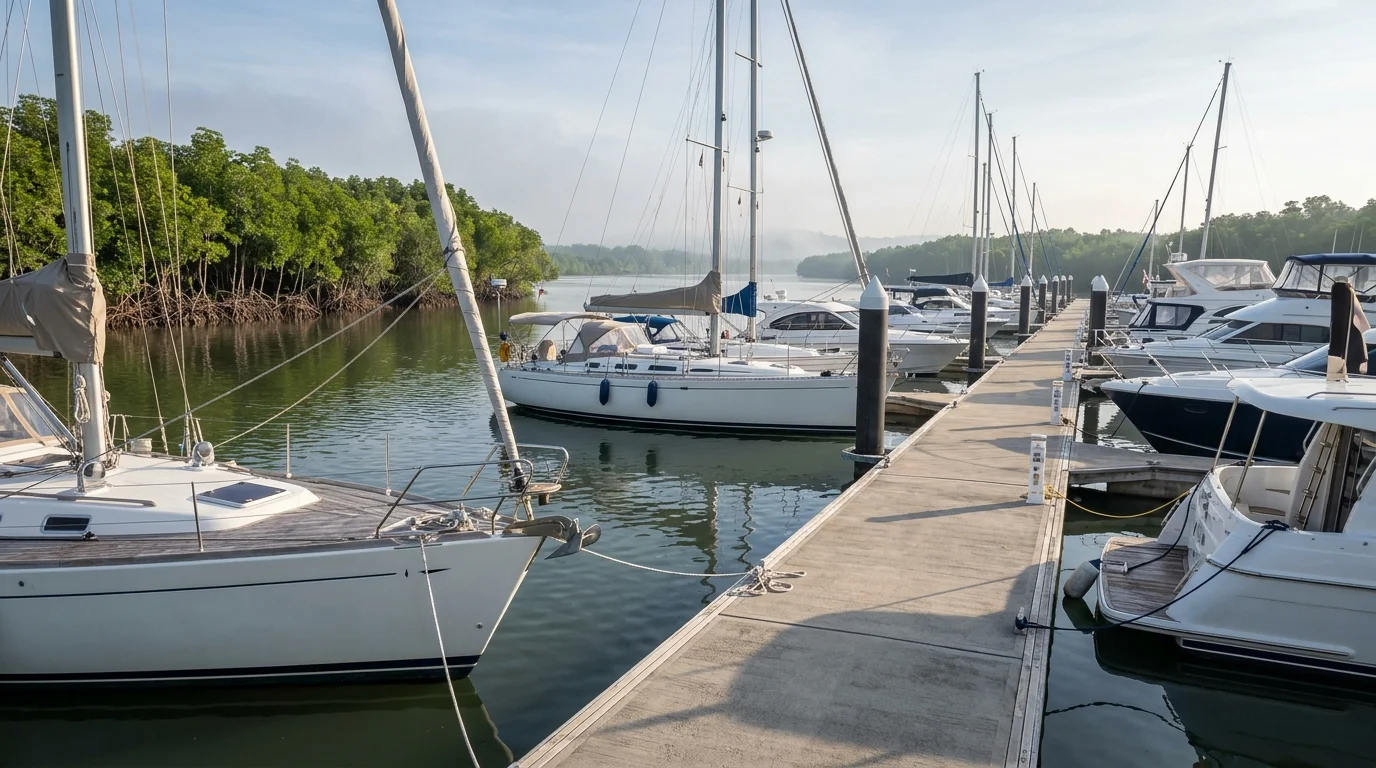
Cruising east across Phang Nga Bay brings skippers into Krabi province, where marine infrastructure integrates directly into sheltered river channels and mangrove estuaries. Tucked behind natural tidal barriers, Krabi's marinas provide year-round protection from open southwest monsoon swells while keeping prime cruising grounds—including Koh Hong, the Railay peninsula, and Koh Phi Phi—within comfortable day-sailing distance.
Port Takola Yacht Marina lies along a protected river reach between Krabi Town and Ao Nang, approximately 30 nautical miles east of Phuket and a 40-minute drive from Krabi International Airport. Sited on a private estate surrounded by mangroves, the harbour basin maintains a minimum water depth of three metres at all astronomical tides, allowing monohulls and catamarans up to 45 metres to berth on wide concrete pontoons without tidal restrictions. Berth utilities include metered fresh water and single- and three-phase shore power up to 125 amps. Technical support centres on a 38-tonne boat lift and a 9,000-square-metre hardstand for haul-outs and refit work, with an on-site capitainerie and the waterfront Cafe du Port.
Further south along the coast, Krabi Boat Lagoon occupies an inland tidal basin excavated among the mangroves of Klong Taling Chan in Nuea Khlong, roughly 15 minutes from the airport. Built as the sister facility to Phuket Boat Lagoon, the complex provides 80 serviced wet berths for craft between 30 and 80 feet, alongside a concrete hardstand accommodating up to 100 hulls. A dedicated mobile travel lift, repair workshops, and a fuel dock support routine maintenance. Navigators must pay close attention to passage timing: the marked mangrove approach channel carries approximately 1.5 metres of depth at lowest astronomical tide, making mid-to-high water transit necessary for fixed-keel yachts.
Together, these two mainland facilities provide tranquil alternatives to Phuket's busier harbours, appealing particularly to long-term cruisers who value peaceful surroundings, reliable technical services, and immediate access to pristine anchorages.
The Gulf of Thailand: Eastern Seaboard to the Western Shore
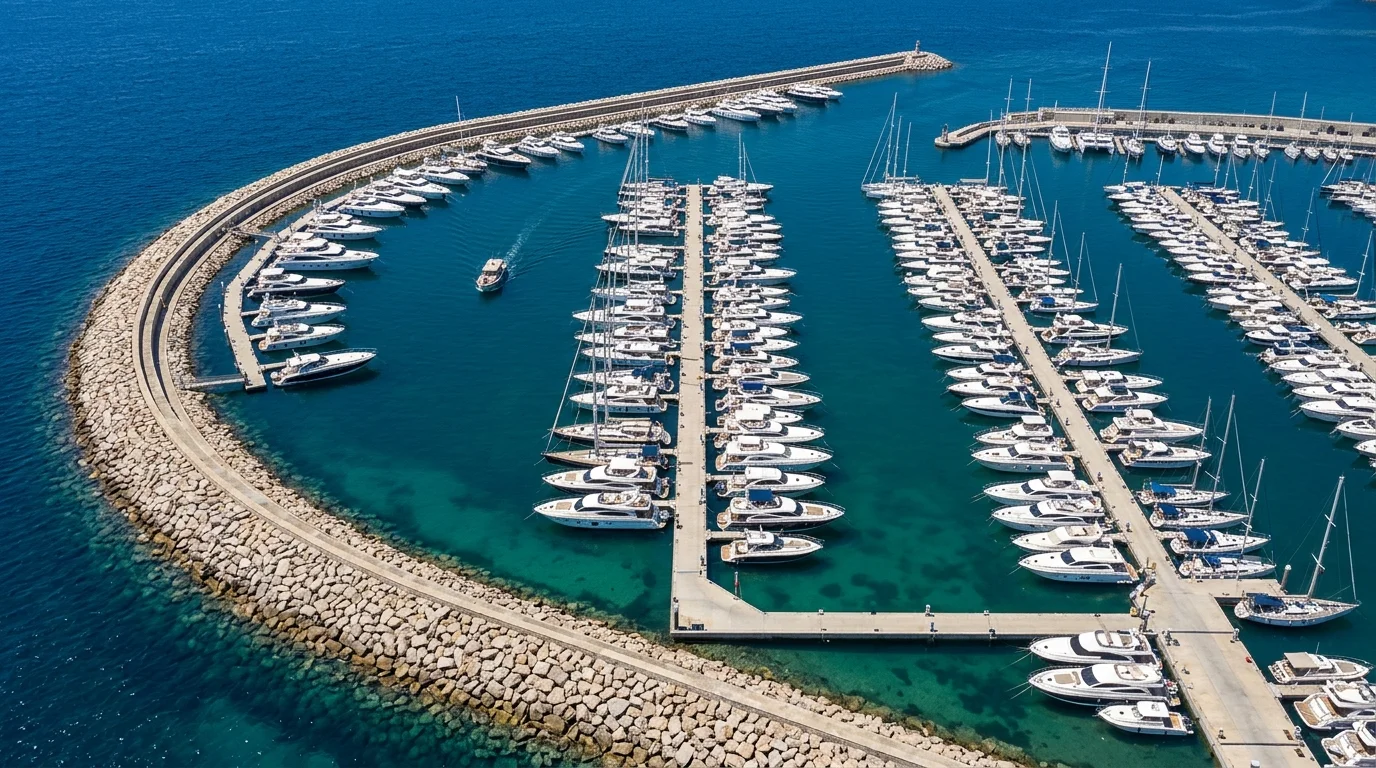
Cruising across the Gulf of Thailand provides a sheltered marine environment with minimal oceanic swell and convenient road links from Bangkok. Rather than encountering heavy Indian Ocean swells, sailors navigate between protected island clusters, deep bays, and purpose-built harbours spread along both the eastern seaboard and the western coastline.
On the Eastern Seaboard, Ocean Marina Jomtien in Na Chom Thian, south of Pattaya, stands as Southeast Asia's largest private marina development. Shielded by a 1.5-kilometre offshore breakwater, the harbour provides more than 380 floating wet berths that take yachts up to 75 metres, supported by dry storage for 200 craft and a 75-tonne travel lift. The complex integrates marine engineering workshops, chandleries, and the 76-room Ocean Marina Resort, and acts as the home base for the annual Top of the Gulf Regatta. Yachts departing Jomtien enjoy easy day-sailing to offshore islands such as Koh Lan and Koh Khram.
Further east in Trat province, Siam Royal View Marina—also known as Blue Haven Bay—occupies a sheltered river inlet at Klong Son on the north-western coast of Koh Chang. Tucked behind natural mangroves, its floating piers supply 75 berths for vessels measuring between 8 and 30 metres, alongside dry storage for smaller powerboats. Navigators must observe tide tables and marked buoys across the river bar, but once cleared, the harbour opens directly onto the 52 islands of the Mu Koh Chang National Marine Park.
Across the water on the western shore, Racer Marina operates as the primary yacht haven near Hua Hin. Positioned one nautical mile inland along the Pran Buri River in Pak Nam Pran, roughly 30 kilometres south of central Hua Hin, the facility includes 80 floating pontoon berths, a boat ramp, and hardstand storage. No overhead bridges cross the river channel, giving sailing craft unconstrained mast clearance out into open water and south towards the limestone peaks of Khao Sam Roi Yot National Park.
Further south, Koh Samui currently lacks a full-scale marina complex. Visiting yachts and charter vessels rely instead on private mooring buoys and designated anchorages off the northern bays of Bophut and Bangrak when exploring the marine park waters of Mu Koh Ang Thong.
Yacht Charters, Private Cruising, and Vessel Ownership
Thailand accommodates both visiting charter parties and long-distance cruisers. While Thai maritime law does not issue a domestic recreational skipper licence, commercial charter fleets and their insurers require bareboat skippers to hold internationally recognised credentials—commonly an RYA Day Skipper practical certificate, an International Certificate of Competence (ICC), or an equivalent national qualification supported by an experienced sailing logbook. Multi-hull sailing catamarans make up the bulk of charter fleets across Phuket and the Gulf of Thailand, favoured for their shallow drafts when navigating tidal sandbars and their spacious layouts for tropical living. For travellers seeking fully crewed motor yachts or day charters, departure points including Royal Phuket Marina, Ao Po Grand Marina, and Ocean Marina Jomtien provide fully provisioned excursions into surrounding marine national parks.
Expatriates and circumnavigators basing a private vessel in Thailand must comply with Thai Customs Department procedures. Visiting foreign-flagged craft enter under a temporary import regime, granting duty exemption for up to two and a half years, administered through six-month rolling permit extensions. Registering a vessel under the Thai flag entails formal customs clearance and strict ownership compliance overseen by the Marine Department. Long-term marina berthing across the country is normally arranged on monthly, six-month, or annual agreements, with berth rates calculated strictly by length overall (LOA) in metres or feet. Full-service boatyards and marinas provide technical support—from diesel engine overhauls and rigging inspections to composite and gelcoat work—making it practical to maintain a blue-water cruising yacht locally. Across all cruising grounds, skippers must carry operational marine VHF equipment, pay designated national park entry tariffs, and moor using designated park buoys rather than dropping anchor over living coral.
Marina Life and Facilities for Non-Boat Owners
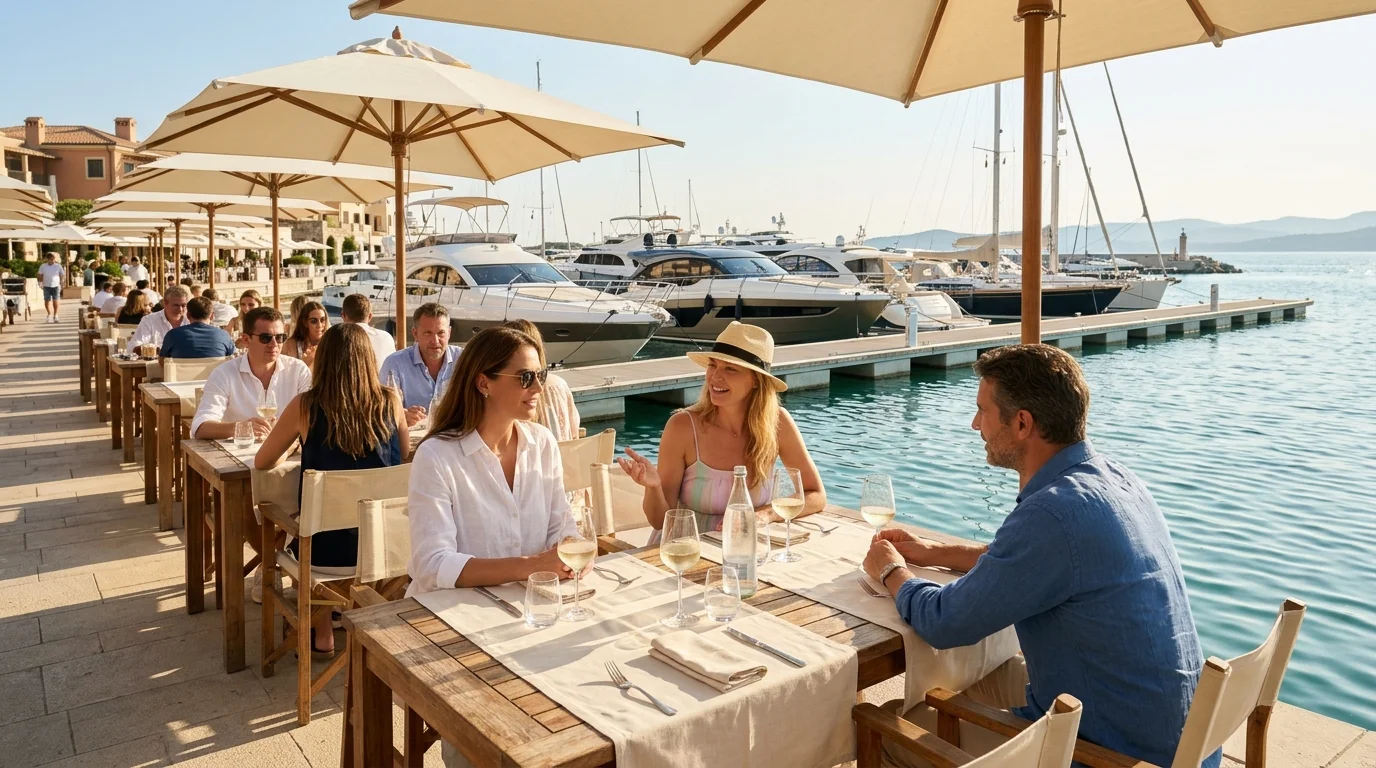
You do not need to own a yacht or hold a skipper's ticket to spend time around Thailand's premier waterfront harbours. Several major marinas are integrated lifestyle developments with open boardwalks, waterside restaurants, and commercial plazas that actively welcome daytime visitors. These public esplanades provide front-row views of arriving cruisers, high-performance catamarans, and working boatyard operations without requiring club membership or harbour access fees.
On the sheltered eastern seaboard of Phuket, Royal Phuket Marina and neighbouring Phuket Boat Lagoon in Koh Kaew demonstrate two distinct sides of harbour life. Royal Phuket Marina centres on a Mediterranean-style boardwalk and piazza lined with independent cafés and bistros, where visitors can watch tenders navigate the harbour's tidal lock gate. Beside it, Phuket Boat Lagoon operates as a self-contained community anchored by a Villa Market grocery store, tennis courts, and waterfront residences. Here, visitors can stroll past engineering workshops and watch mobile travel lifts hauling ocean-going multihulls onto the hardstand for maintenance. Both harbours also operate as primary departure points for scheduled excursion boats heading out into Phang Nga Bay.
Along the Gulf coast, Ocean Marina Jomtien sits roughly 90 minutes south of Suvarnabhumi Airport, giving day trippers access to waterfront terraces, dinghy sailing academies, and scheduled day cruises out to offshore islands such as Koh Khram and Koh Phai. Further south in Prachuap Khiri Khan, Racer Marina in Pak Nam Pran provides an unhurried setting where visitors can take a table at Café Racer, overlooking the Pran Buri River as traditional wooden squid boats motor past modern sport cruisers against a backdrop of coastal mangroves.
Access rules across Thailand's harbours follow a sensible division. Waterfront esplanades, commercial courtyards, chandleries, and restaurants welcome the public throughout normal trading hours. By contrast, active technical workshops, lifting slips, and floating pontoon gates are strictly restricted, requiring electronic keycards or security clearance to protect owner privacy and vessel security. Sticking to the pedestrian quays allows non-boaters to take in the country's coastal maritime culture in comfort.
Costs and Budgeting
Operating a yacht or booking a sailing holiday in Thailand remains noticeably more affordable than in the Mediterranean or the Caribbean, though running costs vary considerably by vessel type and cruising region. Marina berthing fees depend primarily on length overall (LOA), duration of stay, and whether you moor on wet pontoons or use hardstand storage. Standard monthly berthing for a 40-foot cruising monohull averages between 18,000 THB and 35,000 THB (approx £400 to £778). Facilities in the Gulf of Thailand—such as Racer Marina in Pran Buri and Ocean Marina Jomtien—generally undercut premier Phuket harbours by 20 to 40 per cent. Catamarans and trimarans typically incur beam surcharges of 20 to 50 per cent, while peak seasonal tariffs apply along the Andaman coast between November and April.
Pontoon utilities are metered and billed separately from base berthing charges. Metered shore-power electricity generally costs between 7 THB and 12 THB (approx £0.16 to £0.27) per kilowatt-hour, so running air conditioning continuously on liveaboard vessels adds noticeably to monthly outlays. Fresh water is billed by the cubic metre, typically running from 80 THB to 120 THB (approx £1.78 to £2.67). Routine maintenance is another recurring expense in tropical waters, where marine fouling builds up quickly. Budgeting for an annual haul-out and antifouling treatment is standard practice; basic yard lift-and-wash services for a 35-to-45-foot hull typically start between 12,000 THB and 25,000 THB (approx £267 to £556), excluding antifoul paint and specialist labour.
Charter pricing scales with vessel dimensions and crew requirements. Day sailings on bareboat cruising yachts start from roughly 18,000 THB to 32,000 THB (approx £400 to £711), requiring an internationally recognised skipper certificate. Fully crewed sailing catamarans for private day trips typically cost 29,000 THB to 55,000 THB (approx £644 to £1,222), covering captain, deckhand, fuel along fixed routes, and snorkelling gear. Fully staffed luxury superyachts command from 180,000 THB to over 500,000 THB (approx £4,000 to £11,111) daily. Skippers and charterers must also budget for marine national park entry fees, payable in cash directly to Department of National Parks rangers when entering protected waters such as Ao Phang Nga or the Phi Phi archipelago, currently set at 200 THB to 400 THB (approx £4.45 to £8.90) per foreign adult.
| Option | Cost (THB) | Cost (GBP approx) | Notes |
|---|---|---|---|
| Wet Berth (40ft yacht, monthly) | 18,000–35,000 THB | £400–£778 | Rates vary between Gulf marinas and Phuket hubs; utilities metered separately |
| Wet Berth (60ft yacht, monthly) | 45,000–75,000 THB | £1,000–£1,667 | Higher rates apply during peak Andaman dry season (November–April) |
| Day Sail Charter (Bareboat, 40ft) | 18,000–32,000 THB | £400–£711 | Requires recognised skipper certification; excludes fuel and park fees |
| Private Day Charter (Crewed Catamaran) | 29,000–55,000 THB | £644–£1,222 | Includes skipper, deckhand, soft drinks, fuel for set routes, and snorkelling gear |
| Superyacht Day Charter (Crewed, 80ft+) | 180,000–500,000+ THB | £4,000–£11,111+ | Fully crewed with chef, tender excursions, water toys, and private steward service |
| Haul-out and Pressure Wash | 12,000–25,000 THB | £267–£556 | Based on a standard 35–45ft hull using yard travel lift or hydraulic trailer |
| Marine National Park Fee (Per person) | 200–400 THB | £4.45–£8.90 | Cash payment collected by rangers on arrival at marine park anchorages |
What to Know Before You Go
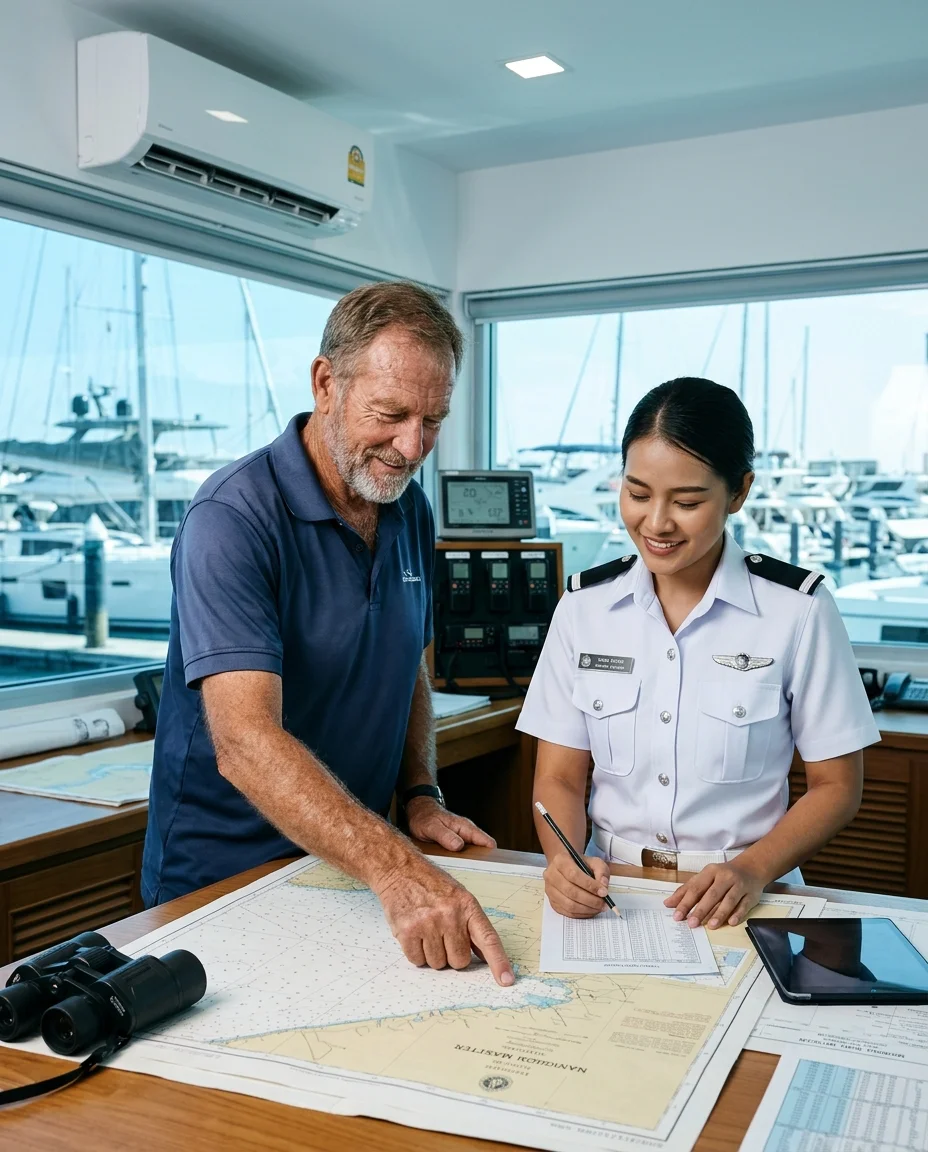
Navigating into Thai marinas requires careful preparation, particularly when entering river estuaries along the Andaman seaboard and the eastern Gulf. Channels leading into Phuket Boat Lagoon, Krabi Boat Lagoon, and Siam Royal View Marina cut across shallow coastal sandbars and mangrove silt banks. These shallow passes can ground fin-keeled boats at low water. Skippers should consult updated local tide tables and radio the relevant harbourmaster on VHF before approaching, confirming current soundings and the optimal window on a rising tide.
Every commercial marina in Thailand requires comprehensive paperwork before allocating a pontoon berth. Marina offices ask for vessel registration documents, proof of ownership, crew passports, and valid third-party liability insurance. Several major facilities specify a minimum liability cover of 100,000 USD (approx £78,000). Arriving without insurance will lead to berth refusal or require signing a marina indemnity waiver until coverage is confirmed.
Dockside electrical configurations require proper hardware. Marina pedestals throughout the country provide 220V single-phase and 380V three-phase alternating current at 50 Hz. Sockets typically utilise round industrial plugs rated from 16 to 63 amps, with larger superyacht berths supplying up to 125 or 400 amps. Carrying heavy-duty marine adaptors and compliant shore cables ensures you can connect without risking dock breaker trips. Fresh dock water is piped to pontoons for washing down, but tap water in Thailand is non-potable and requires filtration before drinking.
Seasonal weather patterns dictate passage timing. The southwest monsoon from May through October brings strong winds and heavy ocean swells across the open Andaman Sea, while the northeast monsoon from November through April delivers calmer waters and steady breezes. Peak-season berths at popular hubs like Phuket Yacht Haven, Ao Po Grand Marina, and Ocean Marina Jomtien fill up quickly between December and February. Securing reservations three to four months ahead avoids disappointment.
Offshore anchoring brings additional practical considerations. When dropping anchor within marine reserves such as Mu Koh Similan, Koh Phi Phi, or Mu Koh Ang Thong, patrolling park rangers collect admission fees directly from vessels. Foreign adult admission costs between 300 THB and 500 THB (approx £7 to £11), accompanied by nominal vessel anchoring charges, making a reserve of local cash necessary. Fitting fine mesh mosquito screens across deck hatches protects against biting insects in mangrove basins, while securing tenders with a sturdy chain and padlock at public jetties prevents opportunist theft.
Choosing Your Thai Homeport
Selecting the right Thai homeport or charter base depends on vessel draft, required shore support, and intended cruising routes. Thailand's marina network divides distinctly between the international hubs of Phuket, the tranquil estuary harbours of Krabi, and the expansive waters of the Gulf of Thailand.
Phuket remains the principal hub for leisure marine operations in Southeast Asia. Skippers running deep-draft hulls or superyachts generally favour Ao Po Grand Marina or Phuket Yacht Haven, both of which provide unrestricted 24-hour deep-water access into Phang Nga Bay alongside heavy shore-power connections. For owners seeking central island living, marine engineering workshops, and a lively social scene, Royal Phuket Marina and Phuket Boat Lagoon provide comprehensive lifestyle amenities and boatyards, though navigating their shared mangrove approach requires timing transits with mid-to-high tides.
Across Phang Nga Bay, Krabi presents a peaceful alternative for cruising sailors. Basins such as Port Takola Yacht Marina and Krabi Boat Lagoon provide sheltered river-estuary moorings well protected from open-sea swell. These boutique facilities appeal to long-term liveaboards and skippers who value lower monthly berthing overheads, dense mangrove surroundings, and convenient access to the limestone archipelagos without Phuket's commercial traffic.
In the Gulf of Thailand, Ocean Marina Jomtien near Pattaya serves as the Eastern Seaboard's anchor point. With 455 wet berths, hardstand storage, and full travel-lift facilities, it is the natural choice for boaters wanting direct road connections to Bangkok and swift access to offshore island anchorages. Further south, Racer Marina on the Pran Buri River offers a river-sheltered stepping stone south of Hua Hin, whilst Siam Royal View Marina on Koh Chang caters to sailors exploring the remote eastern archipelago.
Quick Reference Table
| Item | Detail | Notes |
|---|---|---|
| Andaman Cruising Season | November to April (Northeast Monsoon) | Calm seas, dry conditions, and 28–30°C water; southwest monsoon (May–October) brings heavy swells |
| Gulf Cruising Seasons | Eastern Gulf: October to April; Koh Samui: February to August | Weather pattern inverts Andaman season; heaviest Gulf rain and coastal chop occurs October to December |
| Tidal Conditions | Andaman: semi-diurnal swings up to 3m; Gulf: diurnal/mixed with lower ranges | Mid-to-high water transit essential across mangrove river bars (Phuket Boat Lagoon, Krabi, Koh Chang) |
| Key Andaman Marinas | Royal Phuket Marina, Phuket Boat Lagoon, Ao Po Grand Marina, Phuket Yacht Haven, Port Takola, Krabi Boat Lagoon | Deepest zero-tide superyacht access at Ao Po Grand Marina and Phuket Yacht Haven |
| Key Gulf Marinas | Ocean Marina Jomtien (Pattaya), Siam Royal View (Koh Chang), Racer Marina (Pran Buri / Hua Hin) | Ocean Marina Jomtien is Southeast Asia's largest private marina with 380+ floating berths |
| Monthly Wet Berth (40ft) | 18,000–35,000 THB (approx £400–£778) | Gulf facilities typically undercut Phuket by 20–40%; multihulls incur 20–50% beam surcharges |
| Monthly Wet Berth (60ft) | 45,000–75,000 THB (approx £1,000–£1,667) | Peak seasonal tariffs apply along the Andaman coast from November to April |
| Day Charter Rates | Bareboat: 18,000–32,000 THB (£400–£711); Crewed catamaran: 29,000–55,000 THB (£644–£1,222) | Bareboat charter skippers must hold an RYA Day Skipper, ICC, or recognised national equivalent |
| Shore Utilities | Electricity: 7–12 THB/kWh; Fresh water: 80–120 THB/m³ | 220V single-phase / 380V three-phase at 50 Hz; dock tap water is non-potable and requires filtration |
| Required Berth Paperwork | Vessel registration, proof of ownership, crew passports, and liability insurance | Minimum third-party liability insurance of 100,000 USD (approx £78,000) required by major marinas |
| Peak Berth Booking Window | Reserve 3 to 4 months in advance | High demand for pontoon berths between December and February across Phuket and Jomtien |
| Royal Phuket Marina Website | royalphuketmarina.com | Upscale residential harbour, 100 wet berths, hardstand, dry stack, and dining boardwalk |
| Phuket Boat Lagoon Website | phuketboatlagoon.com | Working refit yard with 180 wet berths, 120-tonne travel lift, chandleries, and Villa Market |
| Ao Po Grand Marina Website | aopograndmarina.com | 230 berths with zero tidal delays and 24-hour deep-water access for yachts up to 100m |
| Phuket Yacht Haven Website | pyhmarina.com | 330+ berths catering for deep-draft yachts and superyachts; host of Thailand International Boat Show |
| Port Takola Yacht Marina Website | porttakola.com | Sheltered river reach in Krabi; minimum 3m basin depth at all tides for yachts up to 45m |
| Krabi Boat Lagoon Website | krabiboatlagoon.com | 80 wet berths and 100-vessel hardstand in mangrove basin; mid-to-high water channel approach |
| Ocean Marina Jomtien Website | oceanmarinajomtien.com | 380+ floating wet berths, 75-tonne travel lift, resort hotel, and home of Top of the Gulf Regatta |
| Racer Marina Website | racermarina.com | 80 pontoon berths and hardstand along Pran Buri River with unconstrained mast clearance |
| Siam Royal View Marina Website | bluehavenbay.com | 75 berths at Klong Son, Koh Chang, opening onto Mu Koh Chang National Marine Park |
FAQ: Marinas in Thailand
When is the best time to sail in Thailand's Andaman Sea?
What are the tidal conditions like in Thailand's cruising regions?
Which marinas in Phuket offer deep-water access without tidal restrictions?
What qualifications are needed to charter a bareboat yacht in Thailand?
What are the rules for foreign-flagged yachts staying long-term in Thailand?
Can non-boat owners visit marinas in Thailand?
How much does it cost to berth a 40-foot monohull monthly in Thailand?
What are the typical costs for shore power and fresh water at marinas in Thailand?
What documents are required to berth a yacht at a marina in Thailand?
When should I book a berth at popular marinas in Thailand?
Reviewed by the Thailand Guide Editorial Team • Last reviewed: 1 November 2026
This page is provided for general information only. While we aim for accuracy, details can change — please verify anything important independently before relying on it.