Buying a Yacht in Thailand
Thailand's sheltered anchorages, extensive island chains, and established marina infrastructure make it a major cruising hub in Southeast Asia. Whether you are considering a newly commissioned catamaran from an eastern seaboard boatbuilder or an imported second-hand monohull moored in Phuket, buying a yacht in Thai waters requires careful navigation of technical, legal, and financial realities.
This guide sets out the practical steps for buying new or pre-owned vessels across the country. It examines the financial and operational trade-offs between shipyard orders and second-hand brokerage purchases, highlighting the practical role of independent marine surveys in identifying tropical hull wear, moisture ingress, and mechanical degradation. You will also find clear guidance on foreign ownership structures, registration through the Marine Department versus overseas flags, realistic berthing and haul-out expenses, and the tax rules governing domestic cruising or UK repatriation. Supported by thorough due diligence, international buyers can negotiate purchase contracts securely and take to the water with confidence.

New vs Used Yachts: Comparing Upfront Costs, Warranties, and Reality
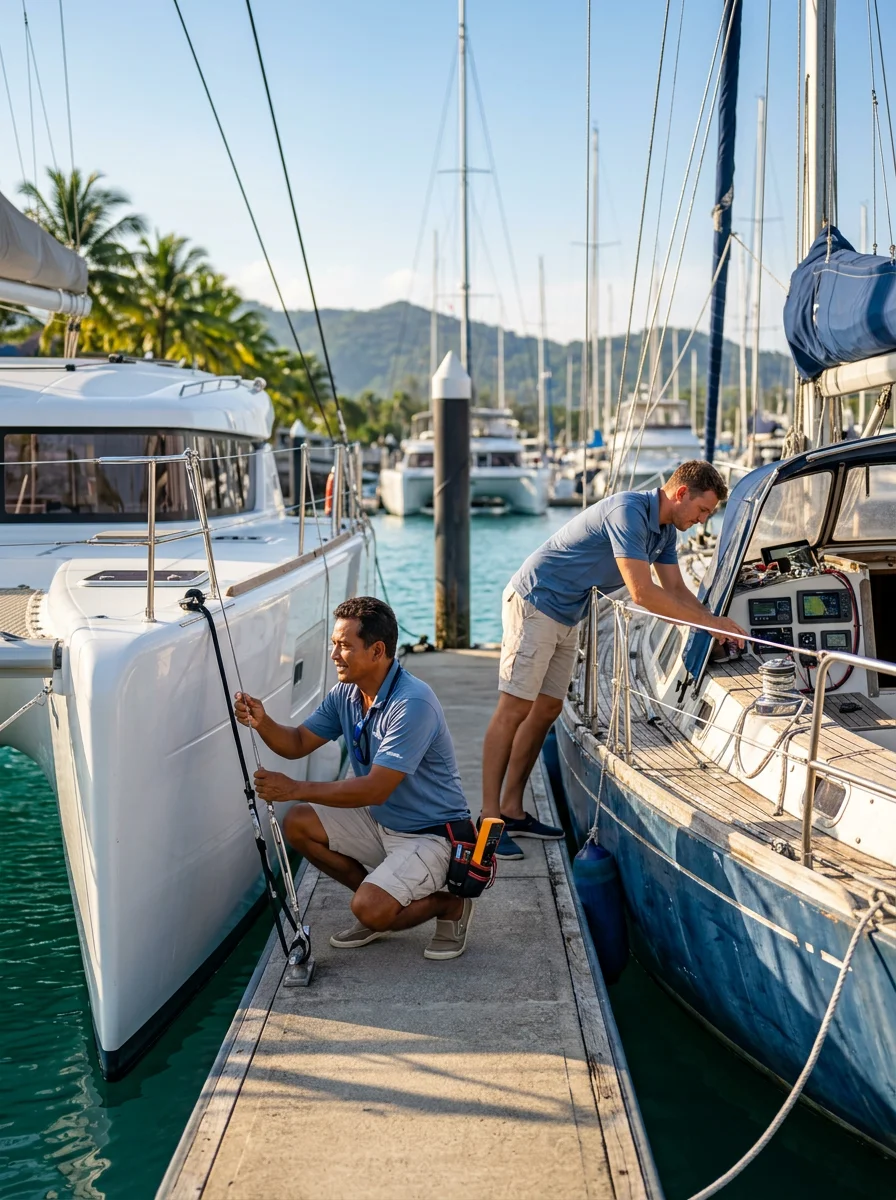
Deciding between a new build and a brokerage boat in Thailand hinges on whether you prioritise immediate cruising availability or bespoke factory control backed by hull and machinery warranties. Neither route is inherently superior; the sensible choice reflects your cruising timeline, technical confidence, and appetite for boatyard project management.
Commissioning a new build—whether from an established Thai shipyard or an international manufacturer's regional dealer—eliminates the wear and tear common to tropical environments. Relentless equatorial ultraviolet exposure degrades gelcoat and crazes deck hatches, while high ambient humidity constantly tests marine electrical systems. Factory orders provide multi-year structural hull warranties, zero-hour diesel engines, and modern navigation electronics, alongside the freedom to specify layouts, sail plans, lithium battery banks, and refrigeration capacity directly from the build sheet. In exchange, buyers face production lead times stretching from nine to eighteen months or longer, potential shipping or delivery fees, and initial depreciation that typically claims fifteen to twenty percent of capital value over the first three seasons.
Brokerage vessels berthed across Phuket, Pattaya, and the Gulf of Thailand offer immediate departure potential at a substantially lower capital outlay. A ten-year-old production monohull frequently sells at forty to sixty percent below the replacement cost of an equivalent new build. Pre-owned yachts also routinely come equipped with expensive blue-water cruising gear—such as watermakers, high-output solar arrays, tenders, outboard motors, and offshore liferafts—that would otherwise add thousands of pounds to a new-build invoice.
Cruising equipment on older vessels requires thorough scrutiny. In tropical climates, failing bedding compound around deck fittings allows rainwater into balsa-cored sandwich decks, resulting in saturated cores and structural delamination. Stainless steel standing rigging in warm saltwater environments experiences crevice corrosion and work-hardening fatigue, often reaching its ten-year working life without showing obvious external rust. Replacing twin sail-drives, re-bedding chainplates, or rewiring an outdated 12-volt system in a regional boatyard can rapidly erode initial purchase savings. Factoring an immediate refit contingency into any second-hand purchase budget is therefore prudent.
| Feature | New Yacht | Second-Hand Yacht |
|---|---|---|
| Initial Capital Outlay | Higher; fixed catalogue pricing and custom option lists | Lower; substantial scope for negotiation below asking price |
| Delivery Timeline | 9 to 18 months depending on shipyard production slots | Immediate upon contract completion and fund transfer |
| Equipment Condition | Factory-fresh components with zero engine hours | Variable; requires independent survey audit of sails and systems |
| Warranty Coverage | Multi-year hull, engine, and machinery warranties | Sold "as is, where is" with no manufacturer backing |
| Customisation Scope | Tailored interior layouts, joinery, and navigation suites | Limited to post-purchase yard refits and retrofitting |
| Depreciation Exposure | Steepest decline over the initial 36 months | Flattened depreciation curve; capital tracks market demand |
Yacht Types and Thai Boatbuilders: Monohulls, Multihulls, and Local Yards
Selecting an appropriate hull architecture depends heavily on your planned cruising grounds, while Thailand's domestic boatbuilding sector provides distinct specialist capabilities.
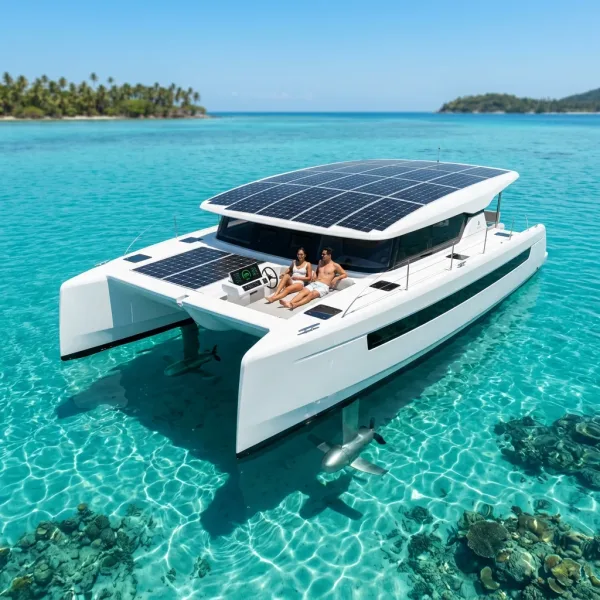
Sailing catamarans and power multihulls dominate modern recreational buying across Thailand for compelling hydrographic reasons. Shallow drafts between 1.0 and 1.3 metres permit multihulls to cross coastal sandbars and anchor securely inside sheltered, shallow anchorages around Phang Nga Bay, Krabi, and Koh Samui where tidal drops can trap deeper vessels. Wide beam dimensions create expansive, level living spaces that improve natural ventilation and comfort during extended tropical cruising. However, multihulls occupy substantial marina space. Thai marinas routinely apply berthing surcharges of 50 to 100 percent over standard monohull rates, and finding wide-beam berths can prove competitive during the peak Andaman cruising season.
Monohull sailing yachts provide sharper upwind performance, lower berthing costs, and broad compatibility with standard travel lifts and slipways across regional boatyards. Luxury motor yachts deliver rapid transit between island chains regardless of prevailing winds, though elevated fuel burn incurs high operating costs at commercial marine bunkering stations. Smaller recreational boats, including centre-console speedboats and open dayboats, suit coastal fishing and day-trips between local islands. Stored on dry stacks or trailers, these smaller craft bypass wet-berth fees entirely. Commercial day-charter catamarans and dive liveaboards require heavier passenger capacities and commercial maritime survey certifications.
For buyers considering newly built vessels, Thailand supports an active boatbuilding industry, though shipyard specialisms diverge sharply between recreational yachts and commercial craft:
Island Spirit Catamarans operates a dedicated composite manufacturing yard in Rayong, constructing CE-certified sailing catamarans between 40 and 52 feet for private buyers and bareboat charter fleets. Completed vessels undergo commissioning and deep-water sea trials from Ocean Marina Jomtien.
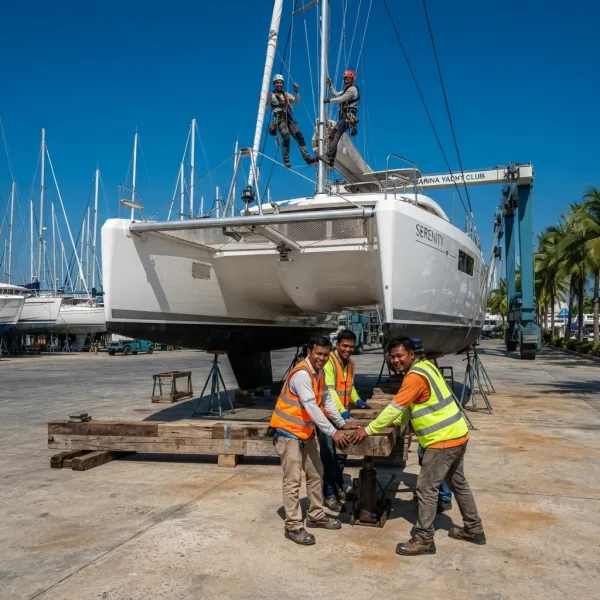
PMG Shipyard in Rayong constructs custom luxury catamarans, solar-assisted vessels, and power multihulls up to 120 feet using vacuum resin infusion, utilising a custom 50-tonne, wide-beam mobile boat hoist capable of handling hulls up to 14.4 metres wide.
Pantawee Marine in Huai Yai, Chonburi, draws on decades of building classic Hans Christian ocean-going cruising monohulls to construct semi-custom composite multihulls, pairing modern laminates with bespoke interior joinery.
Serenity Shipyard in Sattahip builds composite cruising and day-charter catamarans from 40 to over 100 feet.
Other domestic shipyards focus primarily on commercial transit, utility operations, or specialist engineering rather than recreational cruising yachts:
Austhai Marine in Rayong, operating as part of Island Spirit, produces series-built composite catamarans for dive operators, resort passenger transfers, and island ferries.
SeaCat Ships at Ocean Marina Jomtien designs and fabricates commercial aluminium catamarans, passenger ferries, and expedition vessels to international classification rules.
Pi Marine & Engineering at Navalian Dock Yard in Huai Yai provides custom naval architecture, aluminium fabrication, and electric vessel conversions.
Seat Boat, established in 1967, acts as Thailand's official Mercury Marine distributor and manufactures production fibreglass open dayboats and coastal utility craft.
Buyers seeking bespoke new builds should consult Thailand Guide's dedicated guide to commissioning a boat in Thailand for build contracts and milestone management.
Plan a Gulf of Thailand trip with clear guidance on island groups, ferries, weather, marine parks, accommodation costs and mainland gateways.
Buying Second-Hand: Brokerages, Inspection Protocols, and Handover
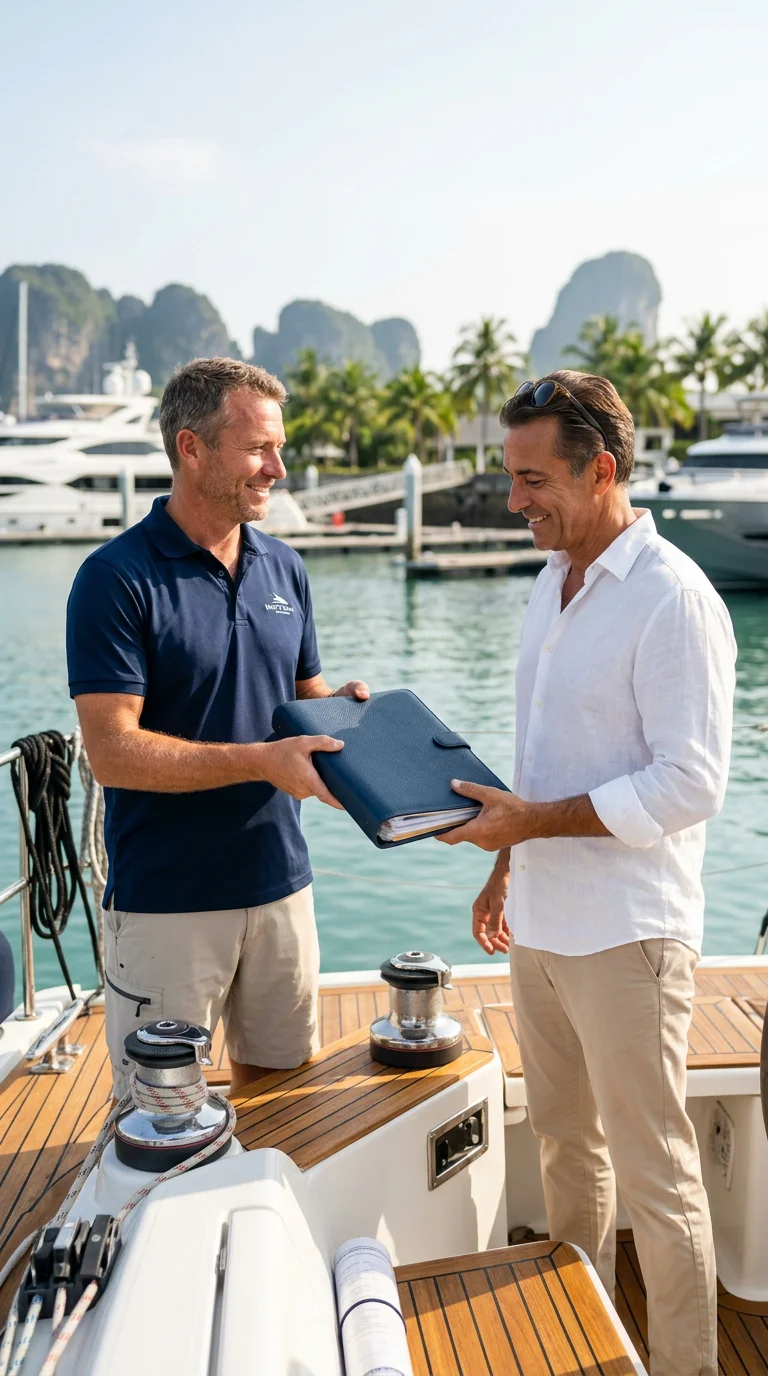
Purchasing a pre-owned yacht in Thailand involves following established international brokerage conventions rather than relying on informal verbal agreements. Unlike commercial consumer retail, private boat purchases do not carry statutory consumer warranties under Thai civil law, making structured contractual safeguards necessary. Buyers typically identify candidate vessels through regional yacht brokers, marine classifieds, or marina noticeboards across boating hubs such as Phuket and Pattaya. While private sales occur, transactions conducted through established brokerages offer greater structural protection through recognised contract frameworks.
Professional brokers across Southeast Asia usually base conditional purchase agreements on standard international frameworks, such as the Mediterranean Yacht Brokers Association (MYBA) or International Yacht Brokers Association (IYBA) forms. Once you select a vessel, you submit a written offer accompanied by explicit contingencies. A conditional contract should stipulate that purchase completion depends upon an acceptable independent marine condition survey, an out-of-water hull inspection, oil sample analysis, and a comprehensive sea trial under full engine and sail load.
Under standard brokerage practice, the buyer places an earnest deposit—conventionally 10 per cent of the agreed price, though this figure is a matter of contractual agreement rather than a statutory Thai legal requirement—into a dedicated, segregated client escrow account. Avoid transferring deposit funds directly into a private seller's personal bank account. Once the surveyor completes the inspection and delivers their written report, standard contracts grant you three options: accept the vessel as inspected, formally reject it and receive a full deposit refund, or negotiate a price reduction or vendor-funded repairs for identified defects.
Handover and final closing take place once the remaining balance transfers through escrow. The vendor must supply an original, notarised Bill of Sale, official vessel registration cancellation or deletion documentation from the existing flag state, clear written evidence that all marine mortgages, yard fees, and maritime liens have been fully discharged, and physical handover of ship logs, equipment manuals, and keys. Do not release final completion funds until your surveyor confirms that any agreed repairs have been completed and tested.
Independent Marine Surveys: Structural Audits, Osmosis, and Sea Trials
Commissioning an independent pre-purchase marine survey is the most critical safeguard when buying a boat in Thailand. Your surveyor must be engaged and paid directly by you, maintaining strict independence from the selling broker, the vendor, and local classification authorities. For international buyers, choosing a professional accredited by recognised bodies such as the International Institute of Marine Surveying (IIMS), the Yacht Brokers, Designers and Surveyors Association (YDSA), or the Society of Accredited Marine Surveyors (SAMS) ensures adherence to rigorous non-destructive testing codes.
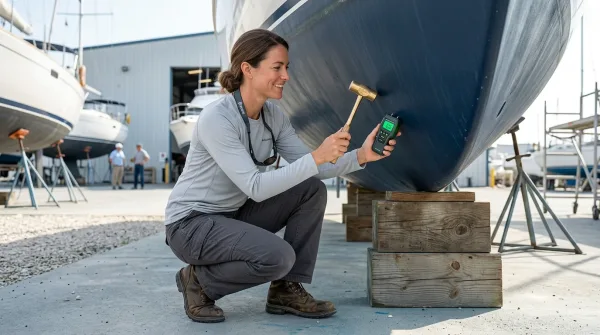
Thailand’s year-round warmth, high humidity, and saline waters accelerate distinct structural vulnerabilities. A comprehensive survey starts with a haul-out to inspect the underwater profile. On composite fibreglass (GRP) hulls, surveyors assess gelcoat blistering, moisture content, and laminate delamination using calibrated moisture meters and acoustic percussion hammers. Cored sandwich decks—typically balsa or foam—are examined for freshwater ingress around high-stress hardware, including chainplates, stanchions, and deck hatches. On aluminium hulls, technicians evaluate galvanic corrosion, stray-current pitting, and sacrificial anode depletion around through-hull skin fittings.
In-water assessments must scrutinise electrical wiring, battery banks, seacocks, gas installations, and statutory safety equipment. On sailing yachts, standing rigging demands meticulous evaluation: stainless-steel swage terminals suffer invisible crevice corrosion and stress cracking in warm, tropical marine air, while intense ultraviolet exposure degrades running rigging and composite sails.
Sea trials test mechanical propulsion under working loads. Surveyors monitor diesel engine operating temperatures, gearbox pressures, exhaust discharge, and shaft alignment, ideally complemented by laboratory lubricating-oil analysis to detect suspended wear metals or heat-exchanger coolant leaks.
The resulting survey report provides an itemised defect inventory, ranking issues by structural urgency, safety compliance, and cosmetic upkeep. While no survey can guarantee future mechanical reliability or uncover every concealed flaw, it exposes costly liabilities before completion—giving you the evidential leverage to negotiate repairs, adjust the purchase price, or walk away.
Foreign Ownership, Vessel Flagging, and Maritime Regulations
Foreign nationals can purchase and register a private recreational yacht in their own name under Thai law. Registration is administered by the Marine Department of Thailand under the sports and recreation category. Applicants must submit an original passport, a Thai tax identification number, an official bill of sale, and verified proof of residence in Thailand, such as an immigration certificate of residence or a registered long-term lease. Vessels registered in this category are restricted strictly to private recreational use and cannot engage in commercial chartering or carry paying passengers.
Operating commercial charters legally requires a different corporate and licensing structure. Under Section 7 of the Thai Vessel Act B.E. 2481 (1938), a company owning a Thai-registered vessel operating in domestic waters must have at least 70 per cent of its capital held by Thai nationals, and at least half of the company's directors must be Thai citizens. The operating entity must also obtain the relevant commercial passenger transport licences before offering skippered or bareboat charters.
Many international buyers choose foreign flags, such as the Langkawi International Yacht Registry in Malaysia, the Cook Islands, or the UK Ship Register. British buyers must navigate specific statutory rules: the UK Part 3 Small Ships Register (SSR) is legally restricted to individuals ordinarily resident in the UK for at least 185 days per year. British expatriates living in Thailand must therefore register under Part 1 of the UK Ship Register or select an overseas flag. Foreign-flagged vessels cruise in Thailand under Customs Department temporary import regulations, clearing through designated ports of entry including Ao Chalong in Phuket and Ocean Marina Jomtien in Pattaya. Cruising permits are typically renewed in six-month blocks; failing to renew on time risks daily customs overstay penalties of 1,000 THB (approx £23).
Selecting between domestic registration and an offshore flag influences tax exposure, cruising flexibility, and charter rights. Engaging an independent maritime lawyer helps confirm title documentation and maintain regulatory compliance throughout Thai waters.
Taxes, Import Duties, and Transporting a Yacht to the United Kingdom
Thailand maintains an attractive fiscal structure for recreational boating, but relocating a vessel back to the United Kingdom involves distinct customs and regulatory requirements.
On the domestic side, the Thai government has set customs import duty at 0% for recreational sailing craft and motor yachts since February 2004, alongside an exemption from luxury excise duties. Permanent importation or purchase of a domestic vessel nonetheless incurs Value Added Tax (VAT) of 7%, calculated against the total CIF value (Cost, Insurance, and Freight) or the purchase price. When acquiring a pre-owned boat already in Thailand, examine the seller's original Customs Department tax receipts or proof of domestic VAT settlement from the builder. An undocumented boat carries severe tax liabilities, because Thai Customs can pursue unpaid duty and VAT against the current registered owner during subsequent inspections.
British buyers intending to ship or sail their vessel to the UK fall under statutory rules overseen by HM Revenue & Customs (HMRC) and the Maritime and Coastguard Agency (MCA). Arriving in British territorial waters requires payment of 20% UK Import VAT, assessed on the craft's current market value plus shipping and insurance costs. A buyer avoids this charge through Returned Goods Relief (RGR) where the yacht previously held UK VAT-paid status and was exported by the same owner. While HMRC waives the standard three-year export time limit for personal pleasure craft belonging to returning UK residents, any vessel newly acquired abroad without prior UK tax clearance incurs the full 20% levy.
Technical compliance requires equal care under the UK Recreational Craft Regulations 2017. Any yacht entering the UK market or put into service requires valid UKCA or recognised CE conformity documentation. For vessels built after June 1998 that lack manufacturer certification, the importer must fund an independent Post-Construction Assessment (PCA) through an approved inspection body before lawful commissioning.
Arranging professional yacht transport from Phuket to Southampton on a heavy-lift deck carrier typically ranges between 1,350,000 THB (approx £30,000) and 2,250,000 THB (approx £50,000) for a 40- to 45-foot catamaran. Marine cargo transit insurance typically adds another 1.5% to 2% of hull value.
Where to Buy and Berth Yachts in Thailand
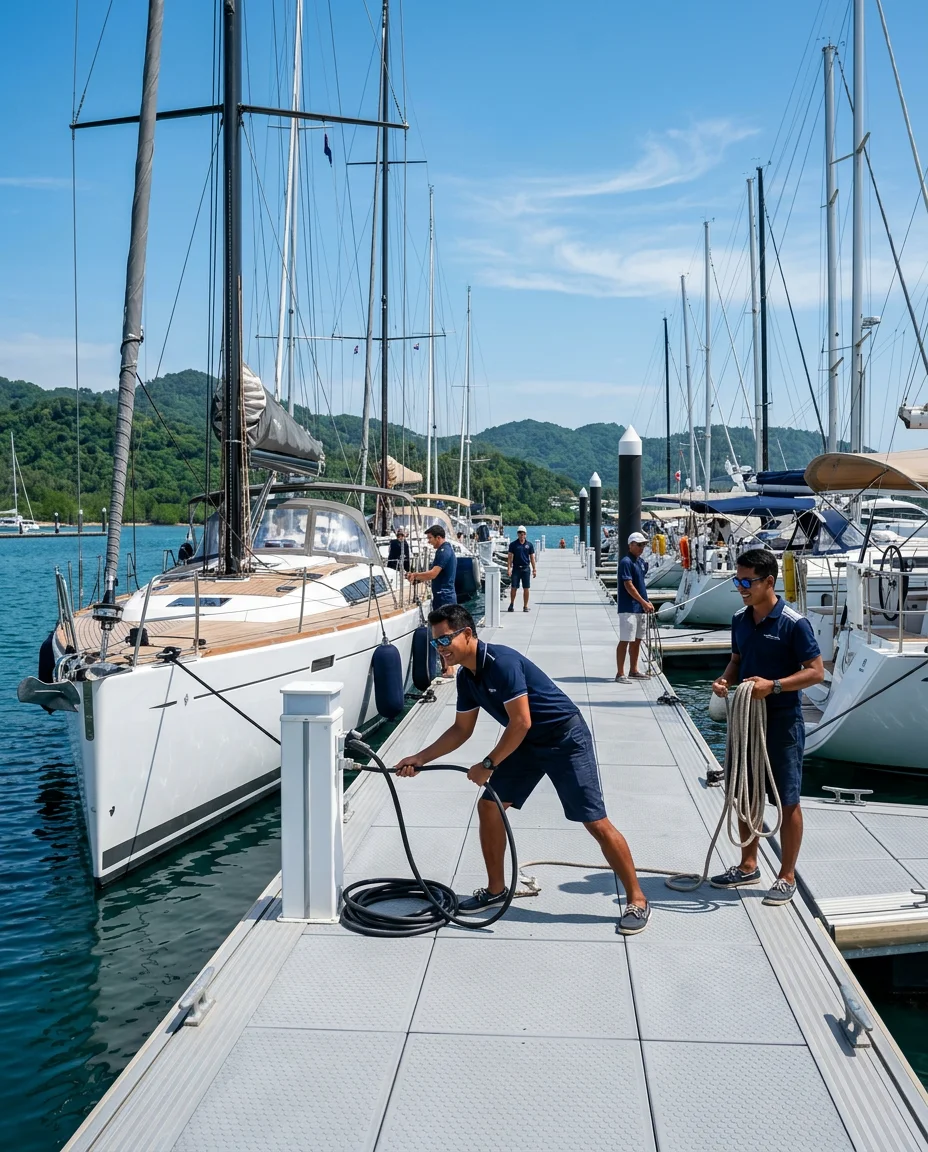
Phuket and the Eastern Seaboard form the primary hubs for yacht sales, maintenance, and berthing in Thailand. Buyers exploring the market will find the highest concentration of brokers, survey slipways, and vessels for sale split between the Andaman Sea and the Gulf of Thailand.
On Phuket's east coast, Ao Po Grand Marina provides 24-hour, zero-tide-restriction deep-water access into Phang Nga Bay, accommodating monohulls and superyachts up to 499 tonnes across 230 berths. At the northern end of the island, Phuket Yacht Haven maintains 332 fully serviced berths with deep-water access across all tidal ranges, though multihull berths routinely fill up months ahead during the November to April high season. Further south along the same coast, Phuket Boat Lagoon and neighbouring Royal Phuket Marina provide sheltered inland basins, hardstands, and dedicated engineering workshops. Both marinas share a winding mangrove channel that restricts navigation to a tidal window of roughly three hours either side of high water. Key Phuket brokerage houses operating from these facilities include Simpson Marine, Lee Marine, Derani Yachts, and Asia Marine.
Along the Gulf of Thailand, Ocean Marina Jomtien in Chonburi represents the focal point of the eastern yachting circuit. The complex features 455 floating berths, heavy straddle lifts, and on-site composite repair yards, functioning as the primary staging port for passages towards the Koh Chang archipelago. Across the gulf in Prachuap Khiri Khan, Racer Marina in Pranburi provides 80 riverfront berths and hardstand storage for 200 vessels, protected from open sea swells with unhindered mast clearance to the sea.
For prospective purchasers arranging pre-purchase inspections and sea trials, Phuket's east coast marinas and Ocean Marina Jomtien hold the densest selection of brokerage listings alongside readily available independent marine surveyors.
Costs and Budgeting
Purchasing and maintaining a yacht in Thailand requires realistic financial planning across initial acquisition, routine servicing, and ongoing operational upkeep. While buyers often encounter an industry rule of thumb suggesting annual ownership costs equal eight to twelve percent of a vessel's market value, actual outlays rarely scale strictly to purchase price. Recurring costs depend primarily on length overall (LOA), beam, machinery complexity, and whether you berth on a marina pontoon, take an offshore mooring, or store ashore on a hardstand.
Marina berthing forms the single largest recurring cost for most yacht owners. Facilities along Phuket's Andaman coast command higher premiums than those in the Gulf of Thailand, driven by international cruising demand. In Phuket, annual pontoon berthing for a 45-foot monohull typically ranges from 360,000 THB to 540,000 THB (approx £8,000 to £12,000), whereas equivalent berthing at Gulf facilities such as Ocean Marina Jomtien costs between 220,000 THB and 350,000 THB (approx £4,900 to £7,800). Catamarans incur multihull beam surcharges, typically ranging from 50 percent at Phuket Boat Lagoon to 100 percent at Phuket Yacht Haven. Metered shore electricity, charged at roughly 7 THB to 12 THB (approx £0.16 to £0.27) per kilowatt-hour, and fresh water at 80 THB to 120 THB (approx £1.80 to £2.70) per cubic metre, are billed separately on monthly statements.
| Option | Cost (THB) | Cost (GBP approx) | Notes |
|---|---|---|---|
| Pre-Purchase Marine Survey (40–45ft) | THB 45,000 – THB 90,000 | £1,000 – £2,000 | Includes out-of-water hull survey, systems audit, and sea trial |
| Hardstand Haul-Out & Travel Lift | THB 65,000 – THB 120,000 | £1,450 – £2,650 | Lift out, pressure wash, cradle hire, and return launch |
| Annual Antifouling Application | THB 90,000 – THB 180,000 | £2,000 – £4,000 | Marine yard labour plus two coats of premium anti-fouling paint |
| Phuket Marina Berth (45ft Monohull) | THB 360,000 – THB 540,000 / yr | £8,000 – £12,000 / yr | Annual contract rate; excludes metered shore power and water |
| Phuket Marina Berth (45ft Catamaran) | THB 540,000 – THB 900,000 / yr | £12,000 – £20,000 / yr | Reflects 50% to 100% multihull beam surcharge |
| Ocean Marina Jomtien Berth (45ft Mono) | THB 220,000 – THB 350,000 / yr | £4,900 – £7,800 / yr | Competitive Gulf of Thailand long-term berth rates |
| Annual Comprehensive Marine Insurance | THB 70,000 – THB 225,000 / yr | £1,550 – £5,000 / yr | Dependent on cruising limits, hull value, and skipper experience |
| Routine Twin-Diesel Annual Servicing | THB 40,000 – THB 90,000 | £900 – £2,000 | Filters, impellers, belts, fluids, and technician labour |
Warm tropical waters accelerate marine fouling, making regular hull care necessary. Haul-outs in Thailand should occur every twelve to eighteen months to pressure wash running gear, replace sacrificial zinc anodes, and apply multi-coat antifouling paint. Between haul-outs, local divers scrub hulls and clean running gear for roughly 90 THB to 120 THB (approx £2 to £2.70) per foot. Beyond yard fees, owners must budget for annual engine maintenance, heat-exchanger descaling, rigging checks, and comprehensive hull and machinery insurance.
What to Know Before You Buy
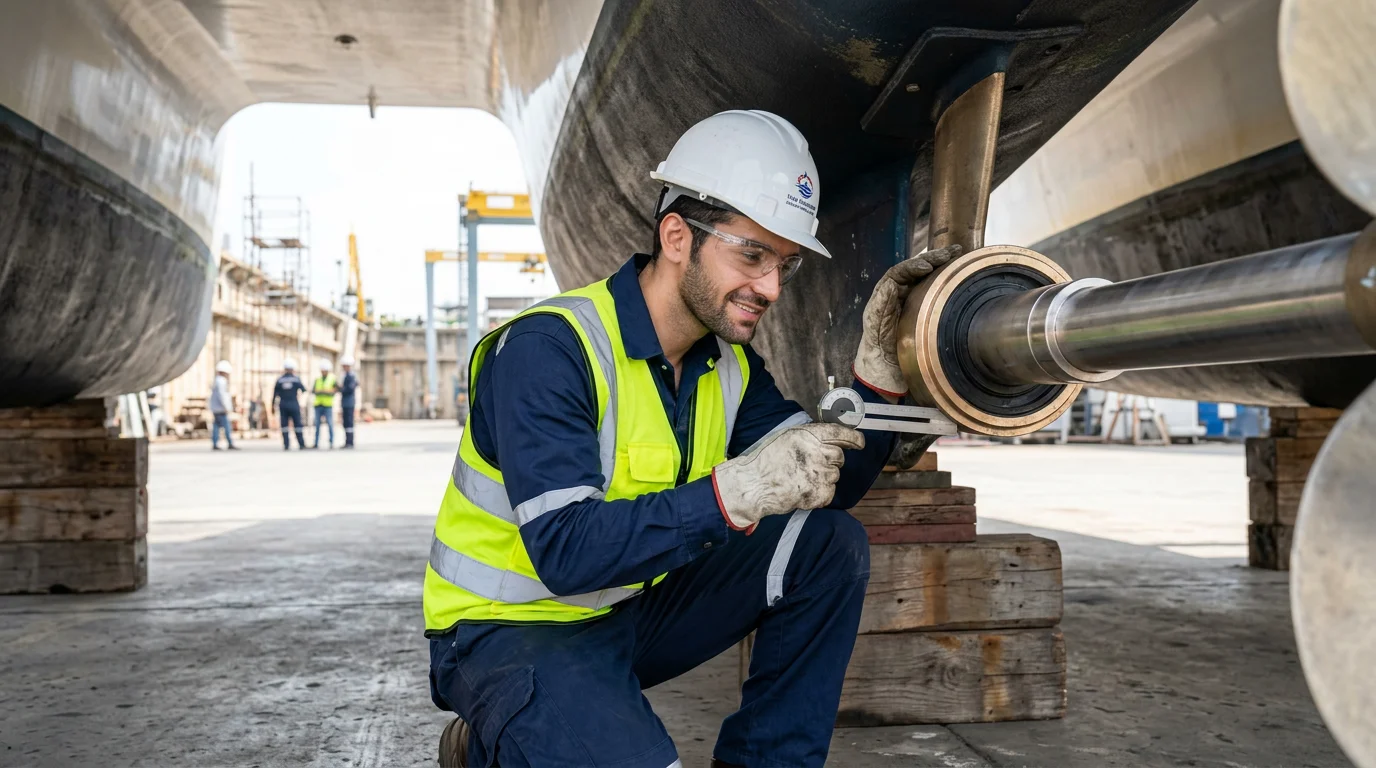
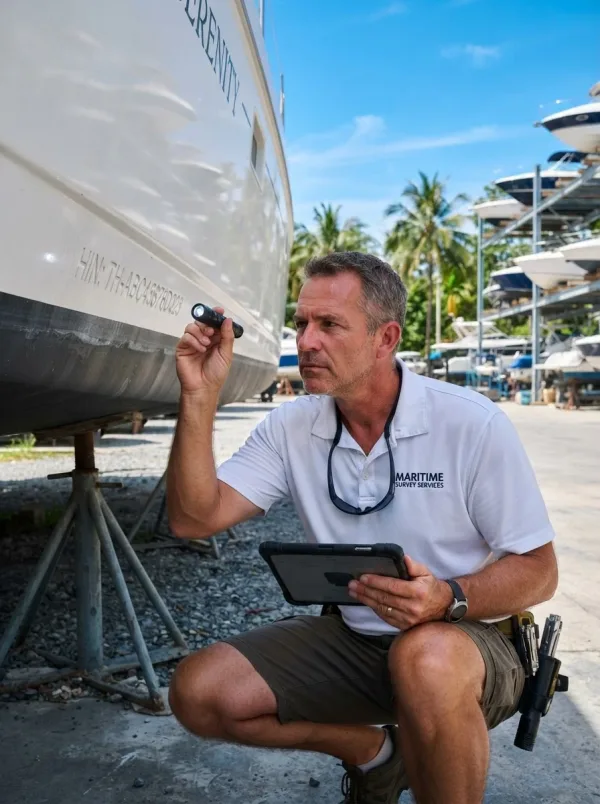
Match the physical hull identification number (HIN) or craft identification number directly against all original registration certificates and builder documents before releasing funds. Any discrepancy between the transom stamping and paper records points to historic administrative clerical errors, re-decking, or salvage repairs, which can stall re-flagging under a new registry.
Confirm the boat's customs standing directly with the Thai Customs Department. Under Thai customs law, foreign-flagged yachts operate under temporary import permits backed by security bonds. If a previous owner failed to extend these papers or settled domestic value added tax improperly, customs authorities hold the legal power to detain the vessel, regardless of whether ownership has transferred to a bona fide buyer.
Check marina slip availability for your vessel's specific beam before committing to a purchase agreement. Demand for multihull berths across Phuket and the Gulf peaks during the dry northeast monsoon from November to April. Top marinas frequently operate at full wet-berth capacity, leaving unreserved wide-beam catamarans reliant on exposed swing moorings.
Examine marine insurance terms closely regarding seasonal weather restrictions. Across the Andaman Sea, the southwest monsoon from May to October brings heavy swells and tropical squalls. Underwriters routinely insert haul-out warranties, named storm deductibles, or strict mooring clauses that void coverage if a yacht remains anchored in exposed coastal roadsteads during heavy weather.
Practical Tips for Yacht Buyers
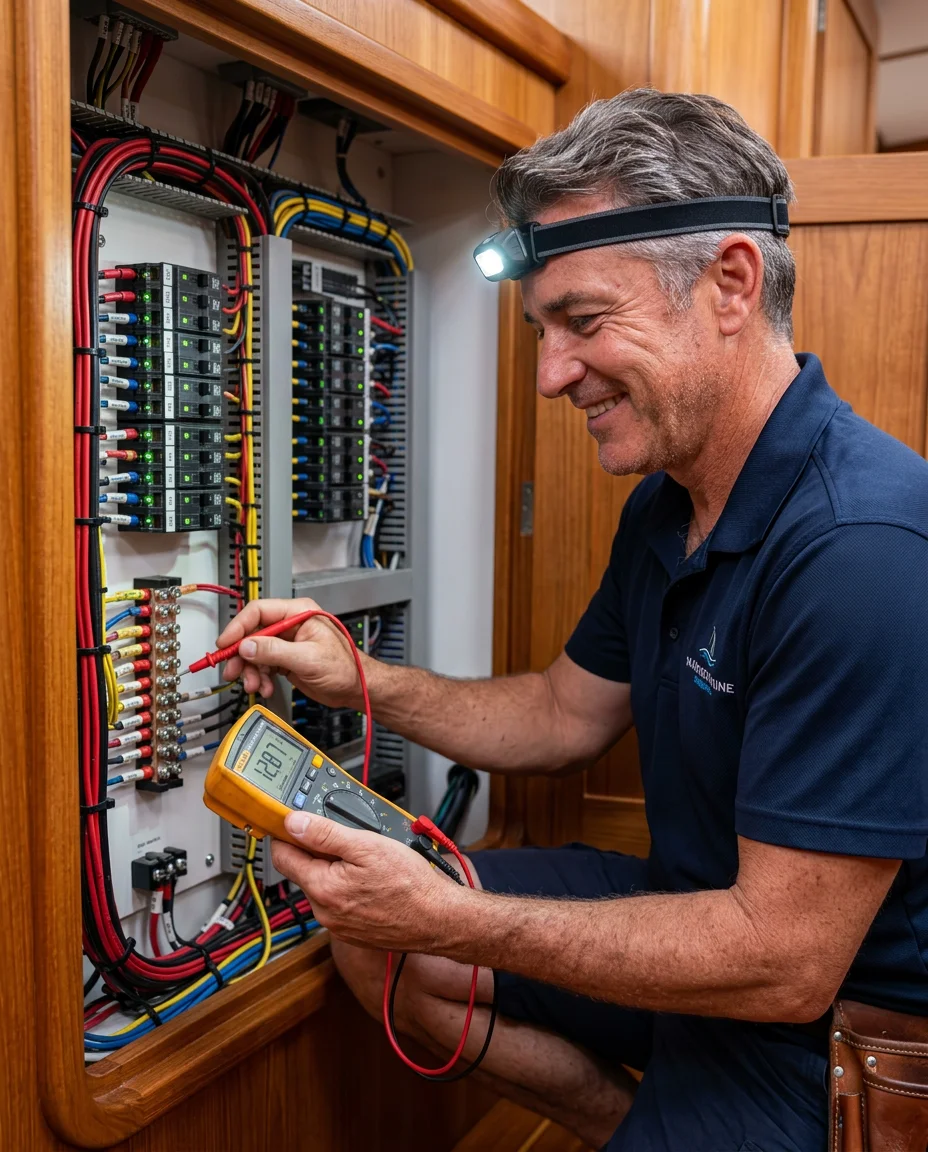
Commission an independent certified marine surveyor rather than a professional suggested by the seller or their broker. Appointing your own surveyor ensures their legal duty of care lies exclusively with you, providing an impartial assessment of composite hull condition, structural bulkheads, and osmosis.
Draw engine and generator oil samples immediately after a sustained sea trial while the machinery is hot. Laboratory spectrographic analysis of warm, circulating oil detects suspended wear metals from bearings and cylinder liners, as well as unburnt fuel dilution and internal coolant leaks that a static visual inspection cannot reveal.
Examine the complete chain of title before transferring funds, checking original bills of sale across every change of ownership. An unbroken historical record confirms legal transfer, helping you confirm that no undisclosed maritime liens, outstanding ship mortgages, or overseas finance encumbrances attach to the hull.
Factor in the replacement cost of standing rigging on any sailing yacht where the stainless steel wire is around eight to ten years old. Tropical heat and high-salinity seawater accelerate crevice corrosion and stress fatigue within closed terminal swages, where microscopic structural failures can occur without visible exterior rust.
Run domestic systems—including marine air conditioning, refrigeration units, and watermakers—under sustained electrical load at dockside. Tropical seawater temperatures in Thai waters frequently hover between 29°C and 31°C, which places heavy thermal strain on raw-water heat exchangers and quickly causes marginal cooling compressors to trip.
Obtain written clearance from the relevant marina office and boatyard confirming that all berthing dues, electricity accounts, and hardstanding invoices have been settled in full. Marine facilities retain possessory lien rights over craft in their custody, and you could find yourself unable to move your vessel until a previous owner's arrears are cleared.
Store original vessel registration papers, customs temporary-import documentation, harbour clearances, and cruising permits in a dedicated waterproof folder on board. Marine Department officials and customs patrols conduct routine spot checks in coastal anchorages, requiring immediate presentation of valid permits.
If you are planning your purchase and need guidance on evaluating candidate vessels across Thailand, professional brokerage support can help you navigate local viewings and title checks.
Quick Reference Table
| Item | Detail | Notes |
|---|---|---|
| Import & Purchase Taxes (Thailand) | 0% customs duty, 0% excise duty, 7% VAT | VAT assessed on CIF value or purchase price; proof of prior tax payment essential |
| Foreign Ownership (Private Use) | 100% foreign ownership permitted | Registered via Marine Department under sports and recreation; commercial charter strictly prohibited |
| Commercial Charter Ownership | Requires Thai-registered company | Minimum 70% Thai shareholding and at least 50% Thai directors under Thai Vessel Act B.E. 2481 |
| Temporary Import (Foreign Flag) | Six-month renewable permits | Cleared through designated ports (e.g. Ao Chalong, Ocean Marina); 1,000 THB/day overstay fine |
| Pre-Purchase Survey (40–45ft) | THB 45,000 – THB 90,000 (£1,000 – £2,000) | Independent survey covering haul-out inspection, systems check, and sea trial |
| Hardstand Haul-Out & Travel Lift | THB 65,000 – THB 120,000 (£1,450 – £2,650) | Includes lift, pressure wash, cradle storage, and re-launch; recommended every 12–18 months |
| Annual Antifouling Application | THB 90,000 – THB 180,000 (£2,000 – £4,000) | Yard labour and two coats of premium antifouling paint |
| Phuket Berth (45ft Monohull) | THB 360,000 – THB 540,000 / yr (£8,000 – £12,000) | Pontoon rate; excludes metered electricity and fresh water |
| Phuket Berth (45ft Catamaran) | THB 540,000 – THB 900,000 / yr (£12,000 – £20,000) | Reflects standard 50% to 100% multihull beam surcharge |
| Gulf of Thailand Berth (45ft Monohull) | THB 220,000 – THB 350,000 / yr (£4,900 – £7,800) | Annual contract rate at Ocean Marina Jomtien |
| Comprehensive Marine Insurance | THB 70,000 – THB 225,000 / yr (£1,550 – £5,000) | Varies by cruising limits, hull valuation, and monsoon mooring restrictions |
| Twin-Diesel Routine Servicing | THB 40,000 – THB 90,000 / yr (£900 – £2,000) | Annual filters, impellers, belts, fluids, and technician labour |
| Yacht Shipping to UK (40–45ft Cat) | THB 1,350,000 – THB 2,250,000 (£30,000 – £50,000) | Heavy-lift carrier from Phuket to Southampton; transit insurance adds 1.5% to 2% |
| UK Repatriation Tax & Compliance | 20% UK Import VAT plus UKCA/CE compliance | VAT applies unless Returned Goods Relief verified; non-compliant hulls require PCA audit |
| Primary Boating Hubs | Phuket & Gulf of Thailand (Eastern Seaboard) | Main centres for brokerages, boatyards, marine surveys, and fully serviced berths |
| Key Cruising Seasons | Northeast monsoon (Nov–Apr); Southwest monsoon (May–Oct) | High season dry cruising Nov–Apr; insurers often require storm moorings during southwest monsoon |
| Official source | Thai Customs Department | customs.go.th |
| Website | Ao Po Grand Marina | aopograndmarina.com |
| Website | Phuket Yacht Haven | pyhmarina.com |
| Website | Ocean Marina Jomtien | oceanmarinajomtien.com |
| Website | Racer Marina | racermarina.com |
| Website | Phuket Boat Lagoon | phuketboatlagoon.com |
| Website | Royal Phuket Marina | royalphuketmarina.com |
| Website | Island Spirit Catamarans | groupislandspirit.com |
| Website | PMG Shipyard | pmgshipyard.com |
| Website | Pantawee Marine | pantaweemultihulls.com |
| Website | SeaCat Ships | seacatships.com |
| Website | Seat Boat | seatboat.com |
FAQ: Buying a Yacht in Thailand
Why is it important to commission an independent marine surveyor when buying a yacht in Thailand?
How should a buyer handle the earnest deposit when purchasing a second-hand yacht in Thailand?
Why is it important to examine the complete chain of title before buying a yacht in Thailand?
Why is it important to check a yacht's customs standing with the Thai Customs Department before buying?
What clearance should a buyer obtain from marinas and boatyards before purchasing a yacht?
What taxes apply when purchasing a yacht in Thailand?
Can foreign nationals own and register a private recreational yacht in Thailand?
What are the regulations for foreign-flagged yachts cruising in Thailand?
What should buyers consider when purchasing a second-hand yacht in Thailand?
What are the advantages and disadvantages of owning a multihull yacht in Thailand?
Reviewed by the Thailand Guide Editorial Team • Last reviewed: 7 November 2026
This page is provided for general information only. While we aim for accuracy, details can change — please verify anything important independently before relying on it.