Electric & Hybrid Boats Built in Thailand
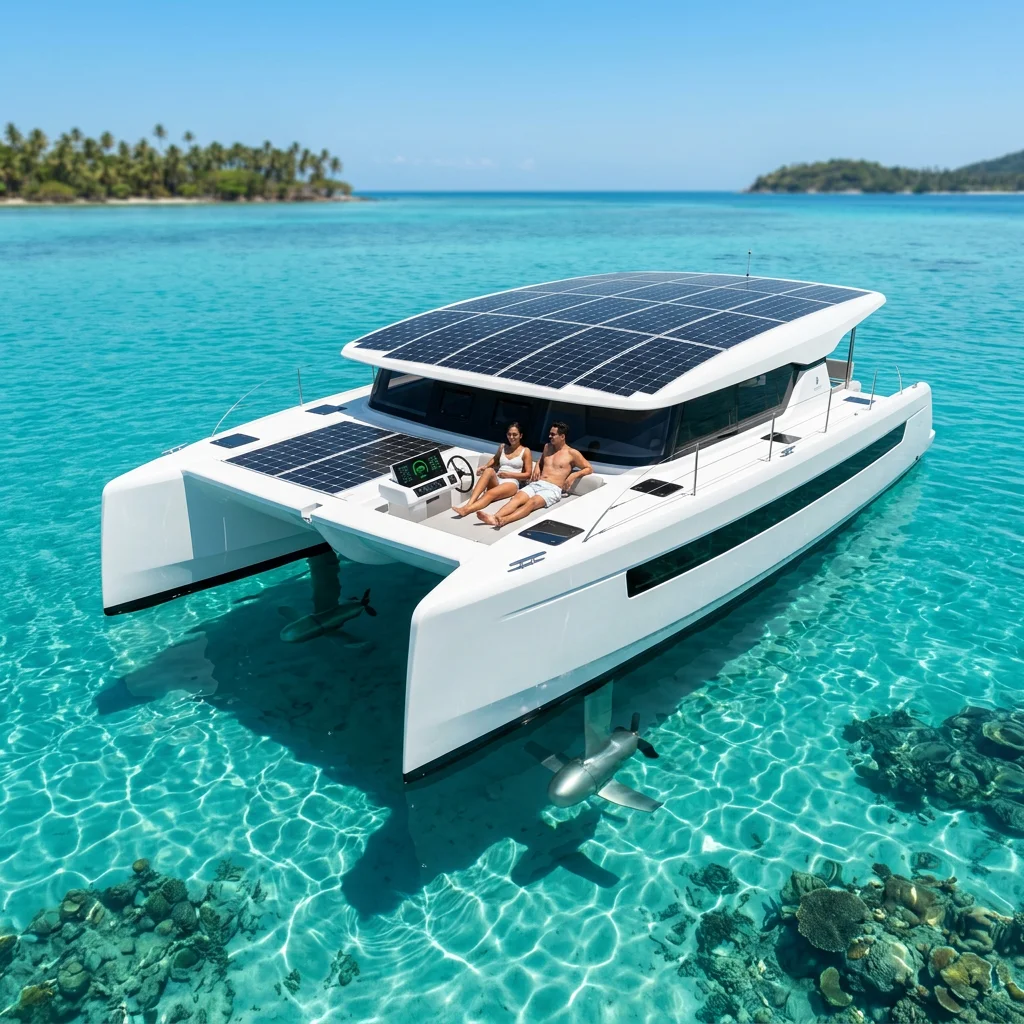
Cruising past the limestone karsts of Phang Nga Bay aboard an electric catamaran reveals the clearest appeal of alternative marine propulsion: the absence of diesel clatter and exhaust fumes, replaced only by the wash of water along twin composite hulls. In tropical waters, electric motors drawing from high-capacity lithium battery banks and coachroof solar arrays provide near-silent, vibration-free travel between anchorages.
Thailand has developed into an active regional centre for this technology. Along the eastern seaboard in Rayong, established yards including Island Spirit Catamarans and PMG Shipyard construct export-grade solar-assisted and hybrid multihulls, while commercial builders produce zero-emission commuter catamarans for Bangkok's rivers. Successful ownership, however, depends on distinguishing proven offshore hardware from speculative concept designs. Operating in high ambient temperatures, relentless humidity, and monsoon sea states creates specific hurdles for battery cooling, marina charging access, and cruising range.
This guide provides an independent technical assessment of electric and hybrid boating in Thailand. It explains propulsion architectures, reviews domestic boatbuilders, and details real-world operating performance, marina infrastructure realities, and capital acquisition costs.

Understanding Marine Electric and Hybrid Architectures
Selecting an alternative marine powertrain begins with understanding how power generation, battery storage, and mechanical drive interact on open water. Marine applications differ fundamentally from automotive electric vehicles: boats face continuous hydrodynamic resistance without regenerative braking on downhill runs, requiring sustained energy delivery simply to maintain headway against tidal currents.
Fully electric propulsion relies entirely on stored electrochemical energy to spin the propeller shafts, eliminating combustion machinery from the engine spaces. This setup provides near-silent operation, instant torque, and zero direct emissions. However, operational range remains strictly governed by battery capacity and access to shore-side charging grids or onboard renewable generation.
In a series hybrid system, an electric motor alone connects to the propeller shaft. An internal combustion diesel generator operates as an onboard power station, running at steady, fuel-efficient revolutions per minute strictly to recharge the traction battery bank or deliver current directly to the drive motor when reserves drop. Because the generator has no mechanical link to the propeller, it can sit anywhere in the hull, decoupling engine speed from vessel speed.
Parallel hybrids take a different engineering route by mechanically connecting both a diesel engine and an electric motor to the same propeller shaft through a clutch. This allows skippers to motor out of marinas silently under electric power, engage diesel drive for open-sea passages, or combine both power sources when peak thrust is required. Under diesel propulsion or while sailing, the electric motor can also reverse function to act as a high-output shaft generator to replenish the batteries.
Diesel-electric systems, long established in commercial passenger ferries and cruise ships, use centralised generator sets to feed alternating or direct current to electric propulsion pods or shaft motors without direct mechanical transmission.
Crucially, solar-assisted vessels must not be confused with fully electric or hybrid drives. In most leisure craft, photovoltaic panels on coachroofs or biminis offset auxiliary "hotel" loads—powering galley appliances, refrigeration, navigation electronics, and air conditioning—without supplying propulsion current. Fitting twenty solar panels on a flybridge does not make a yacht electrically propelled. Solar arrays rarely generate more than one to four kilowatts of peak power, whereas continuous cruising demands tens of kilowatts per hull.
Evaluating any alternative vessel specification also requires distinguishing power from storage capacity. Electrical power, measured in kilowatts (kW), indicates the rate at which energy is delivered to spin the propeller. Battery capacity, measured in kilowatt-hours (kWh), represents the total quantity of stored energy available. A 40 kWh traction battery discharging into a 20 kW motor reaches empty in approximately two hours at flat cruising throttle, before accounting for tidal flow or headwinds. Keeping high-voltage propulsion reserves strictly separate from low-voltage domestic battery banks is vital for prudent passage planning.
Chartering a modern cruising catamaran for a day on Thai coastal waters provides an ideal opportunity to inspect these drive architectures, battery management displays, and quiet propulsion modes firsthand before commissioning a build.
Electric Boatbuilders and Shipyards in Thailand
Thailand's eastern seaboard has developed into an established manufacturing hub for composite multihulls, housing export-focused shipyards capable of building series electric catamarans and solar-assisted luxury yachts. Rayong province represents the focal point of this sector, alongside specialist commercial aluminium fabricators based in central Thailand.
Plan a Gulf of Thailand trip with clear guidance on island groups, ferries, weather, marine parks, accommodation costs and mainland gateways.
Island Spirit Catamarans
Island Spirit Catamarans operates a 5.5-acre construction yard in Rayong, building vacuum-infused composite multihulls certified to European CE Category A ocean-going standards. The yard's flagship electric model is the Island Spirit 525e, designed in partnership with naval architect Dr Albert Nazarov. Measuring 15.77 metres (51.7 feet) in length with an 8.19-metre beam, the 525e operates as a series hybrid. Propulsion comes from twin 65 kW (88 hp) permanent-magnet electric motors drawing power from a 210 kWh lithium battery bank. A coachroof solar array delivers up to 4.8 kW of supplemental charging, while a 55 kW commercial diesel generator acts as an onboard range extender to recharge the battery bank during offshore passages across the Andaman Sea. Production hulls have transitioned into active commercial service, with the 2025-built catamaran Electric E-Motion chartered out of Yacht Haven Marina in Phuket.
PMG Shipyard
Also based in Rayong, PMG Shipyard occupies a 20,800-square-metre beachfront complex with dedicated launching facilities and a 25-metre testing pool. Founded by Swiss entrepreneur Philippe Guénat, the yard established international recognition through the Heliotrope 65, launched in 2013. Designed by Nazarov, the Heliotrope 65 was an early solar-assisted motor yacht carrying approximately 7 kW of solar panels. These panels supplied domestic systems, running refrigeration and air conditioning at anchor without running a generator, though primary propulsion remained conventional diesel engines. The yard later developed the Heliotrope 48 (marketed as the Cora Cat 48) before expanding into contract manufacturing. Between 2019 and 2023, PMG built series production hulls of the fully solar-electric Silent 60 and Silent 62 catamarans under contract for European brand Silent-Yachts.
Sakun C Innovation
In the commercial passenger sector, Sakun C Innovation builds lightweight marine-grade aluminium catamarans at its assembly plant in Suphan Buri. Working in partnership with energy group Banpu NEXT and the Thai Marine Department, the company delivered Thailand's first commercial electric passenger ferry in late 2020. Measuring 20 metres in length and operating from Ao Por Pier in Phuket, the craft carries up to 90 passengers. Power is supplied by a 625 kWh lithium-ion battery pack driving electric motors up to a cruising speed of 15 knots on island-transfer routes.
Inspect shipyard facilities in Rayong directly to verify composite infusion quality, CE certification documentation, and high-voltage component warranties before entering into a build contract.
Technical Systems, Batteries, and Thermal Safety
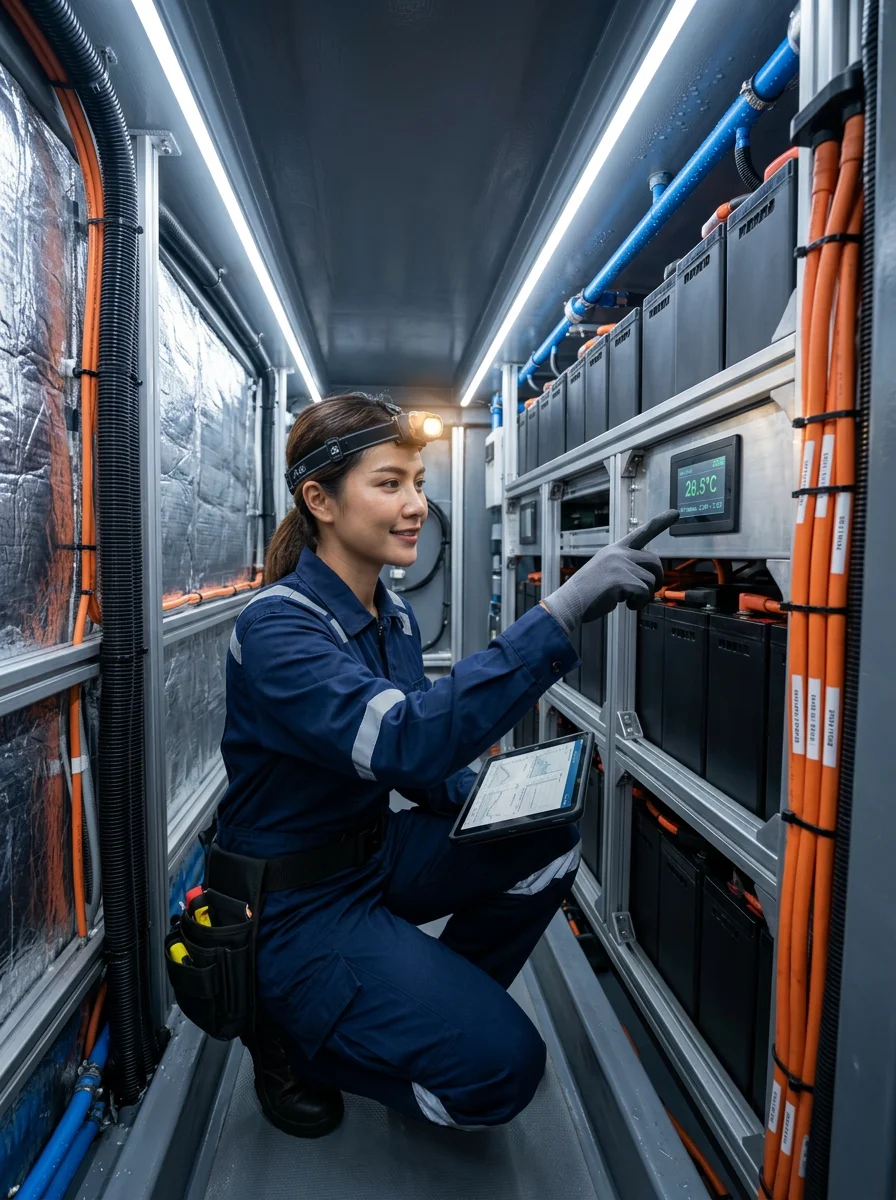
Operating high-voltage direct-current (DC) propulsion systems in tropical saltwater environments presents severe engineering challenges, principally thermal runaway and galvanic corrosion. A standard marine electric powertrain integrates permanent magnet synchronous motors (PMSM), high-voltage traction batteries, bidirectional inverters, digital motor controllers, and an automated battery management system (BMS).
For marine builds in Thailand, boatbuilders overwhelmingly select Lithium Iron Phosphate (LiFePO4, or LFP) over Nickel Manganese Cobalt (NMC). LiFePO4 cells provide superior thermal and chemical stability: their thermal runaway threshold begins around 270°C, compared with roughly 150°C to 210°C for NMC configurations. That safety cushion is critical when machinery compartments and battery lockers regularly experience ambient air temperatures above 38°C in the Gulf of Thailand and the Andaman Sea. Higher temperatures accelerate cell degradation in more volatile chemistries and leave far less room for error if cooling fails.
Thermal management relies on indirect, closed-loop cooling. Circulating a water-glycol mixture through motor stators and inverters and transferring that heat through a marine heat exchanger prevents raw seawater from depositing mineral crusts and salt crystals inside narrow internal cooling channels. Sensitive electronics require at least an IP67 ingress protection rating across controllers, junction boxes, and battery modules to withstand salt mist and high humidity. In addition, shore-power installations need galvanic isolators or isolation transformers to prevent stray currents from eroding aluminium saildrives and underwater running gear.
At the centre of the system, the BMS acts as the primary safety arbiter: it continuously samples individual cell voltages, current flow, and pack temperatures, operating automated contactors that isolate the battery bank if parameters breach safe margins. Professional shipyards design their installations around recognised international benchmarks, principally ISO 16315 for small-craft electric propulsion systems and American Boat and Yacht Council (ABYC) E-13 standards for lithium batteries. Buyers commissioning or inspecting an electric vessel in Thailand should verify that the battery bank holds independent thermal monitoring and watertight, marine-grade enclosures.
Solar Harvesting, Cruising Speeds, and Real-World Range
Multihull architecture provides the expansive deck and coachroof area needed for marine photovoltaic arrays, but hydrodynamic physics dictates that vessel speed strictly governs battery range. Slender displacement catamaran hulls generate low wave-making resistance at modest speeds between 4 and 6 knots. A 16-metre cruising catamaran displacing roughly 18 tonnes demands around 10 to 14 kW of continuous motor output to sustain 5 knots in flat water. Pushing that same hull to 8 knots increases demand to roughly 37 kW, while attempting 8.5 knots drives consumption past 50 kW as wave drag escalates exponentially.
Solar harvesting in tropical Thailand yields substantial power, yet realistic output requires conservative calculations. Photovoltaic cells suffer thermal efficiency losses of 10 to 15 per cent under intense tropical heat. A high-specification coachroof array measuring roughly 25 square metres rates at 4.5 to 4.9 kilowatt-peak (kWp). In the Andaman Sea or the Gulf of Thailand, that setup generates approximately 18 to 22 kWh of usable energy across a clear day. While 20 kWh comfortably covers domestic hotel loads at anchor—powering refrigeration, induction cooking, watermakers, and overnight air conditioning—it delivers only 90 to 100 minutes of propulsion at 5 knots.
Solar arrays on cruising catamarans therefore function as domestic power supplies and auxiliary replenishment tools rather than perpetual-motion engines. The Rayong-built Island Spirit 525e illustrates these practical boundaries. Equipped with a 210 kWh traction battery bank and up to 4.9 kWp of solar panels, the yacht achieves an electric-only range of roughly 75 to 85 nautical miles at 5 knots. Increasing cruising speed to 8 knots drains the battery in under five hours, reducing electric range to roughly 35 nautical miles. To overcome seasonal monsoon chop, strong tidal streams, and long passages, the builder installs a 55 kW diesel range extender, expanding total hybrid range past 1,800 nautical miles at 6 knots. Passage planning in Thai waters requires throttling to economical displacement speeds to keep energy consumption within battery reserves.
Charging Infrastructure and Commercial Marine Operations
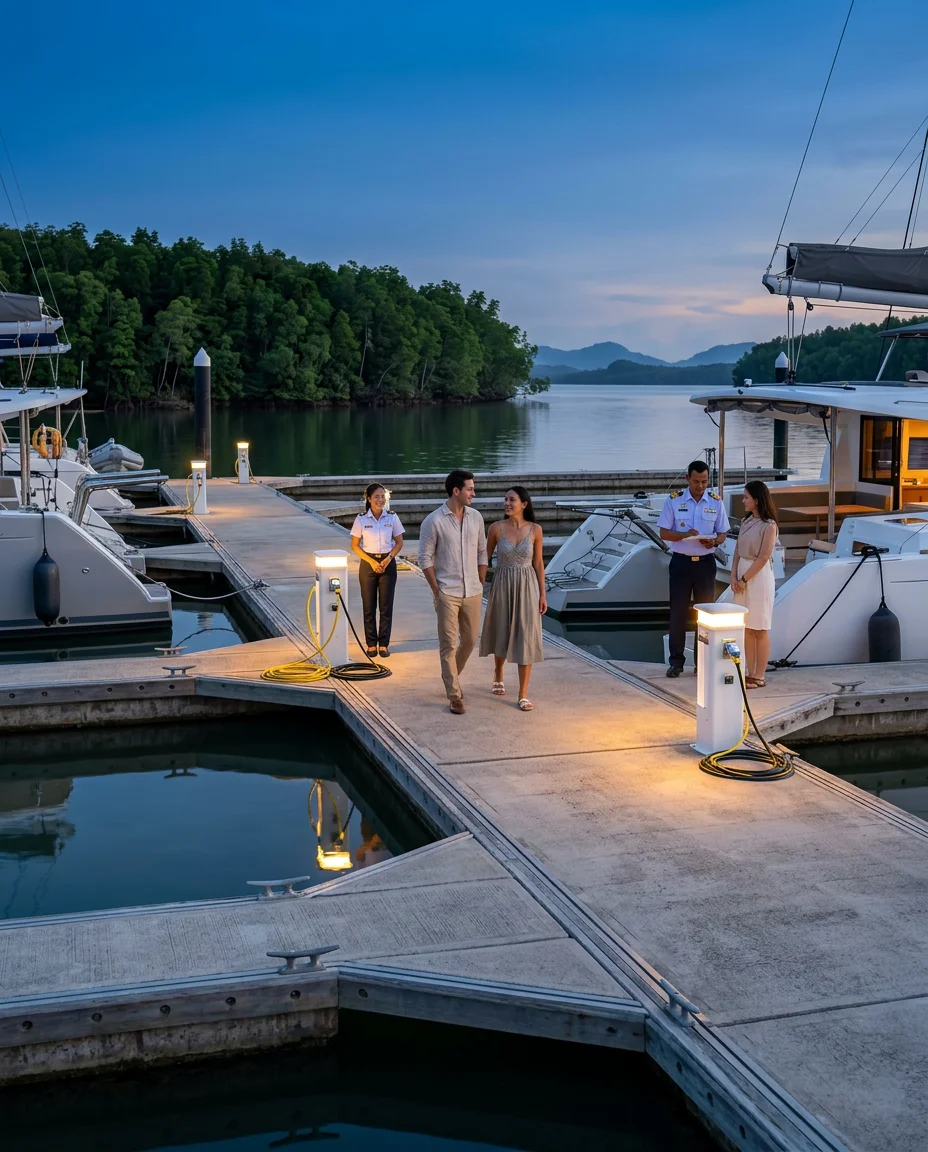
Recreational marine charging in Thailand remains limited to conventional marina shore-power pedestals, whereas commercial passenger operators have bypassed these constraints by building private rapid-charging networks.
Thailand's primary yachting facilities—including Royal Phuket Marina, Phuket Yacht Haven, Ao Po Grand Marina, and Ocean Marina Jomtien—provide standard single-phase and three-phase alternating current (AC) connections at 220V/380V and 50Hz. Individual berths typically supply 16-amp, 32-amp, or 63-amp AC service, while select superyacht berths offer higher amperage. Crucially, direct current (DC) fast chargers comparable to automotive roadside charging do not exist on recreational marina pontoons. All battery replenishment depends entirely on the vessel's onboard AC-to-DC marine chargers.
This AC bottleneck dictates long dockside layovers for electric craft. Recharging a 210 kWh battery bank from a dedicated 32-amp, three-phase outlet delivering roughly 21 kW requires 10 to 12 hours. Plugging into a standard 16-amp single-phase pedestal yields barely 3.5 kW, extending total replenishment time to roughly 60 hours. Coastal cruising between Thai marinas therefore requires verified access to high-amperage three-phase power at every scheduled stop.
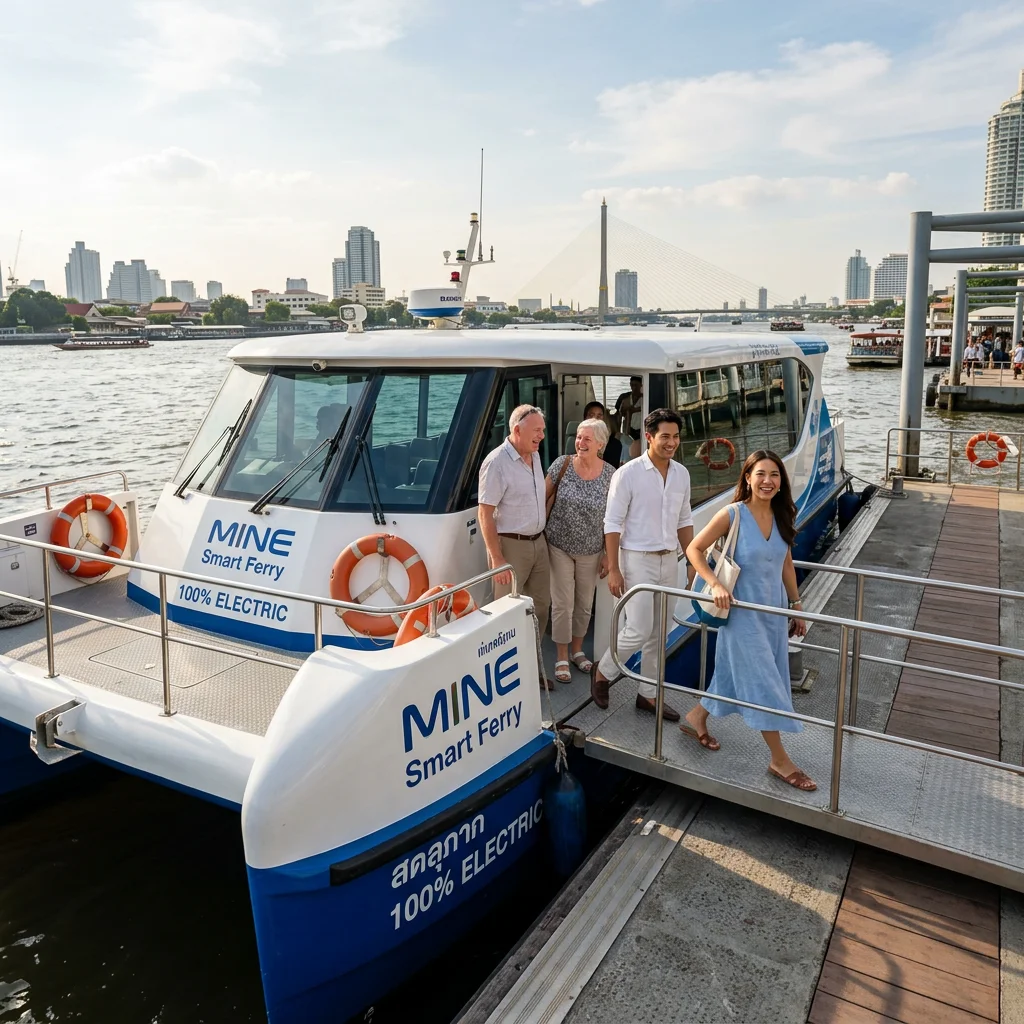
Commercial operators handle these demands by installing private, high-voltage infrastructure. In Bangkok, Energy Absolute subsidiary E Smart Transport runs MINE Smart Ferry catamarans along the Chao Phraya River. These 24-metre aluminium vessels carry 800 kWh lithium-ion battery banks. To maintain commuter timetables, the operator installed dedicated dockside fast-charging stations at key terminals, delivering high-voltage DC power that replenishes battery reserves to 85% in approximately 15 to 20 minutes between runs.
In southern Thailand, clean energy firm Banpu NEXT introduced commercial electrification to Phang Nga Bay, deploying a 20-metre aluminium catamaran from Ao Po Pier in Phuket. Equipped with a 625 kWh lithium-ion battery system, the vessel runs island tour itineraries using dedicated commercial charging points designed around its operating schedule.
Confirm the exact three-phase amperage and socket configuration with marina management before attempting an all-electric passage in Thai waters.
Where to Charter, Inspect, and Experience Electric Boats in Thailand
Hands-on experience with alternative marine propulsion in Thailand extends from low-cost urban river commutes in Bangkok to private luxury charters across the Andaman Sea.
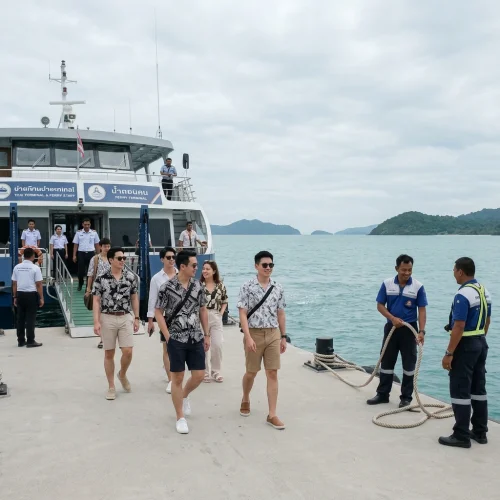
Bangkok's electric river transport network, operating as Thai Smile Boat and the MINE Smart Ferry fleet, runs aluminium catamarans along the Chao Phraya River. The primary Urban Line connects Phra Nang Klao Pier in Nonthaburi with Sathorn Pier at Taksin Bridge, interchanging with both the MRT and BTS rapid transit networks. These twin-hulled vessels seat passengers in fully enclosed, air-conditioned saloons, cruising without diesel exhaust or engine vibrations. Standard single fares stand at 30 THB (approx £0.67) per journey, with an all-day cap of 40 THB (approx £0.90) available when paying with the rechargeable Hop smart card. Contactless credit and debit cards are also accepted at pier turnstiles. For an accessible introductory trial, board at Sathorn Pier for a short 30 THB (approx £0.67) run north to Sanam Chai Pier near the historic centre.
In Phuket, Yacht Haven Marina acts as the regional hub for high-end electric yachting. Charter operators based at the marina manage the Rayong-built Island Spirit 525e catamaran, named Electric E-Motion. This 52-foot solar-assisted multihull accommodates up to 12 guests for skippered cruising through Phang Nga Bay, Krabi, and Koh Phi Phi. Crewed charter rates typically start from around 370,000 THB (approx £8,200) per week in the low season, climbing to between 460,000 THB and 720,000 THB (approx £10,200 to £16,000) during peak winter holiday weeks.
Prospective yacht buyers can arrange factory inspections directly with Thai builders. PMG Shipyard and Island Spirit Catamarans both accept private yard visits at their Rayong facilities on the Gulf of Thailand, enabling clients to evaluate vacuum-infused composite hulls and inspect high-voltage electrical installations during active assembly.
Costs and Budgeting
Acquiring, retrofitting, or chartering electric and hybrid craft in Thailand involves financial variables shaped by imported marine electronics, high-grade lithium cells, composite construction, and local shipyard labour rates. Public transport fares on electric river catamarans remain heavily subsidised. Bangkok commuter ferries along the Chao Phraya River, operated under the Thai Smile Boat network (formerly MINE Smart Ferry), charge a flat fare of 30 THB (approx £0.67) per single journey, with a daily cap of 40 THB (approx £0.90) on contactless transit cards.
For private leisure cruising, commercial day-charter catamarans operating in Phuket or the Gulf of Thailand command rates between 65,000 THB and 130,000 THB (approx £1,460 to £2,920) per day. Week-long skippered charters on ocean-going hybrid yachts, such as the Rayong-built Island Spirit 525e based at Yacht Haven Marina in Phuket, range seasonally from 460,000 THB to 720,000 THB (approx £10,350 to £16,200), covering crew and vessel hire while excluding marina berths, park fees, and generator fuel.
Commissioning a new ocean-going electric catamaran represents a substantial capital investment. Factory-direct pricing for the Island Spirit 525e starts from approximately 43,800,000 THB (approx £985,000), driven by its 210 kWh Lithium Iron Phosphate (LiFePO4) battery bank, dual electric drives, power distribution electronics, and 55 kW auxiliary generator. Larger custom solar-assisted power catamarans from specialised Thai yards, including PMG Shipyard in Rayong, typically command between 55,000,000 THB and 90,000,000 THB (approx £1,235,000 to £2,020,000). Retrofitting an existing small craft with an electric outboard or pod drive costs roughly 220,000 THB to 480,000 THB (approx £4,950 to £10,800) for a 6 kW to 10 kW motor kit and 10 kWh lithium storage.
Routine operational savings accumulate by eliminating diesel servicing, including oil and filter changes, raw-water impellers, and transmission rebuilds. Even so, owners must budget for battery pack replacement cycles every eight to ten years.
| Option | Cost (THB) | Cost (GBP approx) | Notes |
|---|---|---|---|
| Thai Smile Boat (MINE Smart Ferry) Fare | 30 – 40 THB | £0.67 – £0.90 | Chao Phraya River commuter routes, single journey or daily cap |
| Small Craft Outboard Electric Retrofit | 220,000 – 480,000 THB | £4,950 – £10,800 | Includes 6–10 kW electric pod/outboard motor and 10 kWh battery |
| Private Electric Catamaran Day Charter | 65,000 – 130,000 THB | £1,460 – £2,920 | Full-day private booking in Phuket or Pattaya including crew |
| Luxury Electric Catamaran Weekly Charter | 460,000 – 720,000 THB | £10,350 – £16,200 | 5-cabin Island Spirit 525e out of Yacht Haven Marina, seasonal |
| Island Spirit 525e New Build Purchase | 43,800,000 THB base | £985,000 base | Factory-direct pricing in Rayong; 210 kWh bank and 55 kW generator |
| Custom Solar-Assisted Powercat Build | 55,000,000 – 90,000,000 THB | £1,235,000 – £2,020,000 | 50–65ft luxury custom builds at specialised Thai composite yards |
What to Know Before You Go
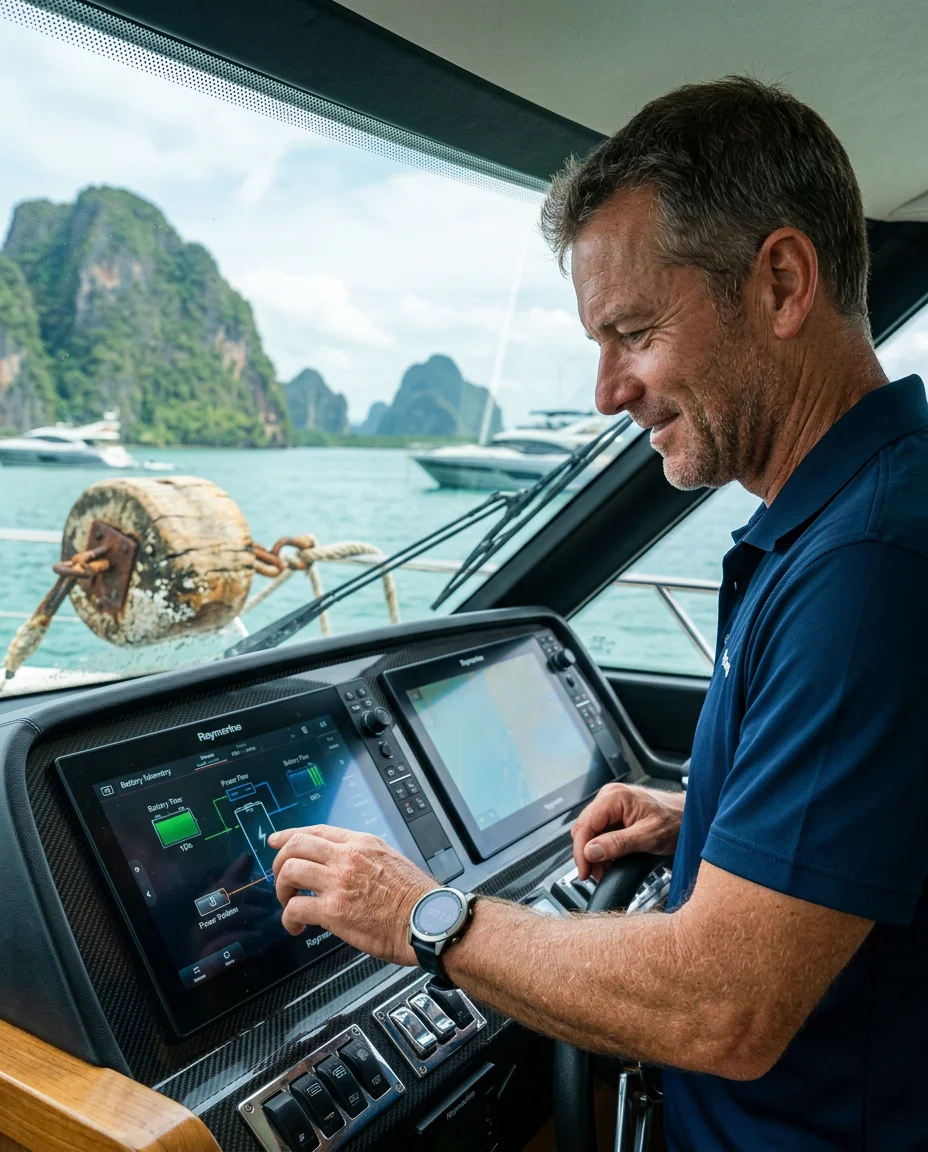
Tropical ambient heat places severe demands on marine batteries. Enclosed hull compartments in Thailand frequently exceed 35°C, and heavy charging cycles can push internal cell temperatures past operating limits. Before taking on an electric craft, ensure the battery bank incorporates active liquid cooling or ducted air extraction so the battery management system does not throttle output or interrupt charging.
Recreational marina berths across Thailand provide alternating current (AC) shore power, typically via 16A single-phase or 32A three-phase pedestals. Dedicated direct-current (DC) rapid-charging plugs are currently confined to commercial ferry terminals. Recharging a typical 100 kWh to 210 kWh propulsion bank from a 32A berth takes between 8 and 12 hours, making overnight replenishment standard practice.
Tidal streams significantly alter real-world range. Coastal passages across Phang Nga Bay and the Andaman Sea see tidal flows reach 2 to 3 knots. Motoring into opposing currents and seasonal monsoon chop can double energy consumption per nautical mile, making tide-gating and an auxiliary generator practical necessities for extended coastal passages.
Thai maritime law enforces strict technical standards for propulsion systems. Under Marine Department regulations, any custom electric build or modified powertrain must pass official survey and hold a certified certificate of inspection. Local harbour masters inspect documentation before granting departure clearance, and unapproved electrical conversions can lead to clearance being refused.
Practical Tips
Chartering an electric or hybrid catamaran for a week before committing to a purchase provides firsthand experience of the balance between domestic power consumption, cruising speed, and daily solar replenishment under tropical conditions. Seven continuous days at sea demonstrates real-world energy consumption in a way that promotional brochures and computer models cannot duplicate.
Throttle back to between 5.0 and 5.5 knots on longer open-water passages. Hull resistance on displacement multihulls climbs sharply above 6 knots, which rapidly increases motor draw and depletes battery reserves. Maintaining a disciplined cruising pace keeps energy consumption within the efficient low-displacement threshold and preserves an operating buffer for headwinds or adverse tidal streams.
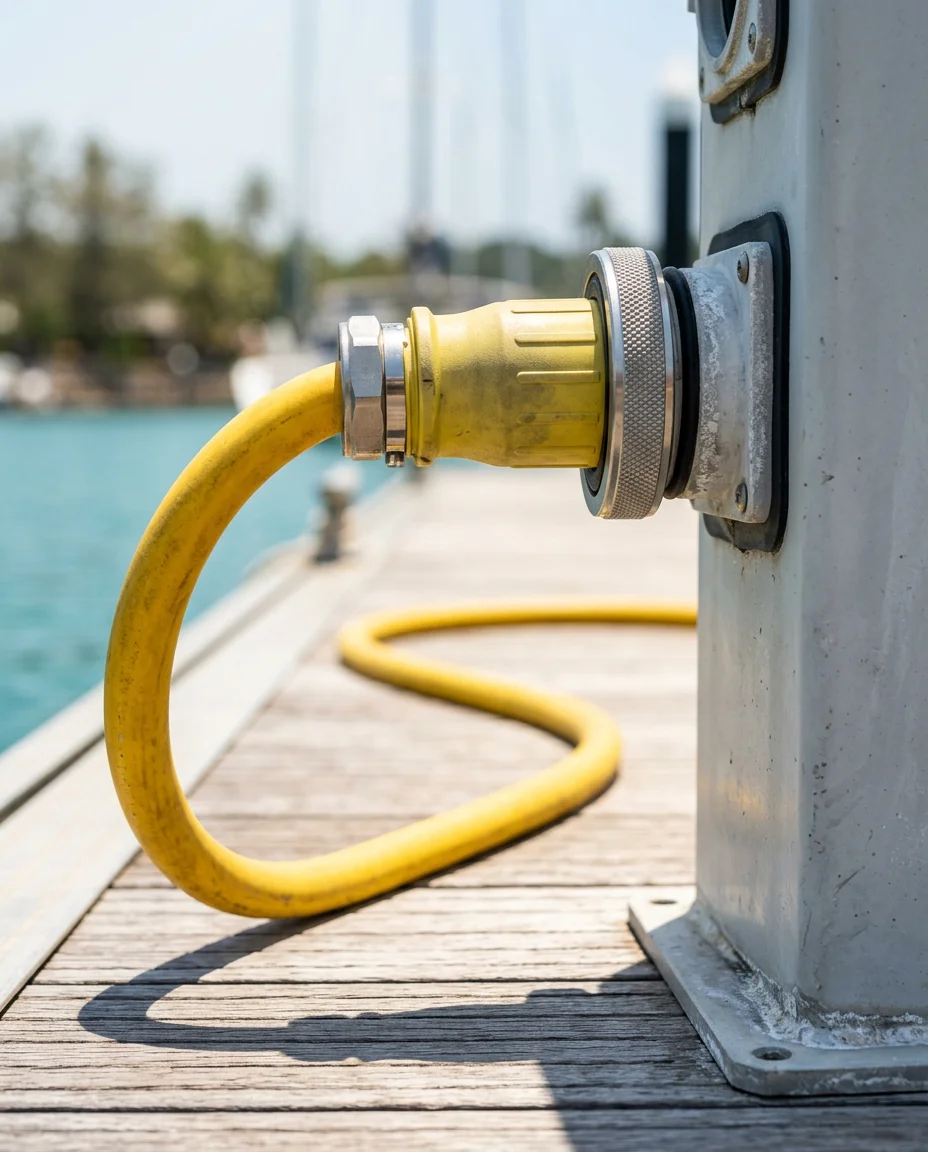
Carry appropriate heavy-duty adapter leads for standard shore-power pedestals. Thai marinas, including facilities in Phuket and the Gulf of Thailand, generally supply dockside power through industrial sockets conforming to the IEC 60309 standard, alternating between 32A single-phase (230V) and 32A or 63A three-phase (380V) configurations. Mooring without the matching plug assembly or a portable phase converter can leave high-output onboard chargers unable to connect.
Verify that any Lithium Iron Phosphate (LiFePO4) battery installation and its battery management system carry recognised marine compliance marks, such as ABYC or CE/ISO standards. While the battery management system actively prevents individual cell imbalance, marine insurance underwriters typically require documented compliance with international electrical standards before issuing offshore hull policies.
Run heavy domestic appliances during the peak midday solar window. Scheduling watermakers, air-conditioning pull-downs, or laundry between 11:00 and 14:00 allows you to consume excess solar harvest directly without cycling battery capacity. Additionally, fit a galvanic isolator or isolation transformer on the shore-power earth lead; stray direct-current leakage at secondary regional piers can cause rapid galvanic corrosion to underwater running gear.
Plan island itineraries around protected anchorages rather than exposed moorings. Calm anchorages eliminate the energy penalty of wave slap against multihull bridge decks and allow solar arrays to harvest energy on a steady platform. For those evaluating alternative propulsion for cruising in Thai waters, booking a trial voyage remains the most practical starting point.
Quick Reference Table
| Item | Detail | Notes |
|---|---|---|
| Primary Boatbuilding Hubs | Rayong & Suphan Buri | Rayong hosts Island Spirit Catamarans & PMG Shipyard; Sakun C builds aluminium craft in Suphan Buri |
| Bangkok Commuter Ferry | 30 THB single, 40 THB daily cap (approx £0.67 – £0.90) | Thai Smile Boat / MINE Smart Ferry on Chao Phraya River; payable by Hop smart card or contactless card |
| Day Charter Rates | 65,000 – 130,000 THB (approx £1,460 – £2,920) per day | Private skippered electric catamaran charters in Phuket or Pattaya |
| Weekly Hybrid Charter | 370,000 – 720,000 THB (approx £8,200 – £16,200) per week | Island Spirit 525e (*Electric E-Motion*) out of Yacht Haven Marina, Phuket; seasonal pricing |
| Small Craft Outboard Retrofit | 220,000 – 480,000 THB (approx £4,950 – £10,800) | Covers 6–10 kW electric pod/outboard motor kit with 10 kWh lithium storage |
| Preferred Battery Chemistry | Lithium Iron Phosphate (LiFePO4 / LFP) | 270°C thermal runaway threshold provides vital safety margin over NMC in 35°C+ machinery compartments |
| Marina Charging Realities | AC pedestals only (16A 1-phase / 32A–63A 3-phase) | Standard IEC 60309 sockets; no pontoon DC fast chargers; 210 kWh bank takes 10–12 hrs on 32A 3-phase |
| Cruising Speed & Range | 5.0 – 5.5 knots displacement speed | 75–85 nm electric range at 5 knots on 210 kWh bank; power draw triples from ~12 kW at 5 knots to ~37 kW at 8 knots |
| Solar Harvesting Window | 11:00 – 14:00 peak midday window | Schedule watermakers and air conditioning pull-down during peak sun to offset hotel loads without draining storage |
| Regulatory & Insurance Standards | Thai Marine Department survey certificate | Requires documented compliance with ISO 16315 and ABYC E-13 standards for clearance and hull insurance |
| Website | Island Spirit Catamarans | groupislandspirit.com |
| Website | PMG Shipyard | pmgshipyard.com |
| Website | Sakun C Innovation | sakunc.com |
| Website | Thai Smile Boat | thaismileboat.com |
| Website | Phuket Yacht Haven Marina | pyhmarina.com |
FAQ: Electric & Hybrid Boats Built in Thailand
What is the difference between solar-assisted vessels and fully electric or hybrid boats?
What type of battery is commonly used in electric boats built in Thailand?
What is the recommended cruising speed for electric catamarans in Thai waters to maximise range?
What kind of charging infrastructure is available for recreational electric boats in Thai marinas?
How much does it cost to ride the electric river ferries in Bangkok?
What is the typical cost for a weekly luxury electric catamaran charter in Phuket?
How does tropical heat affect marine batteries on electric boats in Thailand?
Are there specific regulations for electric boat propulsion systems under Thai maritime law?
Why should I charter an electric catamaran before buying one in Thailand?
What type of shore power adapters are needed for marinas in Thailand?
Reviewed by the Thailand Guide Editorial Team • Last reviewed: 7 November 2026
This page is provided for general information only. While we aim for accuracy, details can change — please verify anything important independently before relying on it.