Whale Watching
A twelve-metre Bryde’s whale surfaces through the calm, nutrient-rich waters of the Upper Gulf of Thailand, holding its lower jaw agape while thousands of anchovies spill into its cavernous baleen pouch. Less than thirty miles south of Bangkok, a resident population of individually catalogued baleen whales gathers each autumn to feed on dense coastal baitfish pushed seaward by seasonal river runoff.
This guide details how to plan, book, and experience wild whale watching in Thailand, focusing on the Bryde’s whales of the northern Gulf alongside cetacean excursions along the southern coast. You will find practical information on primary departure harbours in Samut Sakhon and Phetchaburi, prime seasonal sighting windows, realistic day-trip costs in Thai Baht and British Pounds, and responsible viewing codes monitored by the Department of Marine and Coastal Resources. It equips you to arrange boat outings directly with knowledgeable local crews and research-led operators without paying inflated agency commissions.

Bryde's Whales and the Upper Gulf Ecosystem
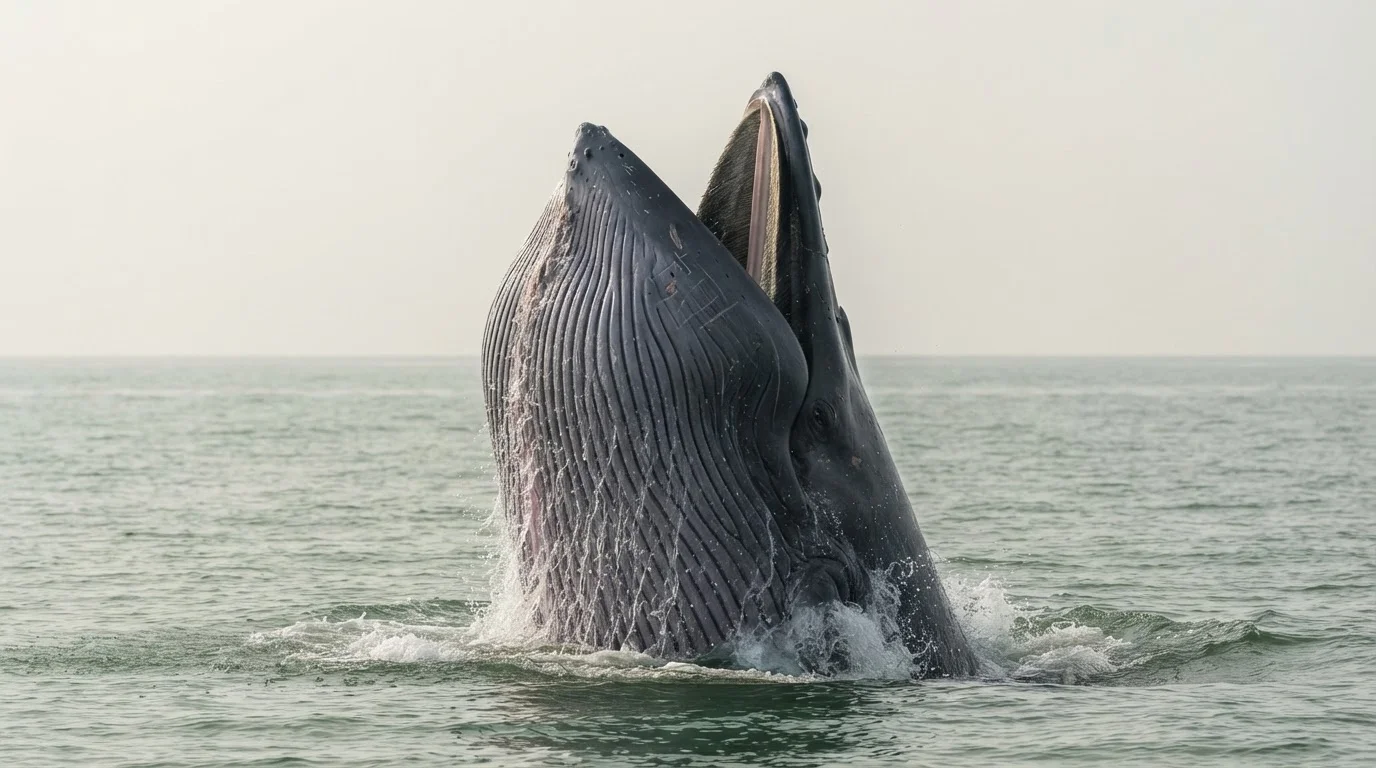
The Upper Gulf of Thailand provides one of Southeast Asia's most dependable coastal habitats for observing Bryde's whales (Balaenoptera edeni). At the northern apex of the gulf—known as the Bight of Bangkok—four major river systems, the Chao Phraya, Tha Chin, Mae Klong, and Bang Pakong, discharge freshwater and nutrient-dense silt into a shallow, semi-enclosed marine basin. This runoff triggers substantial phytoplankton blooms that support enormous shoals of small baitfish, predominantly anchovies and small sardines. Reaching between 11 and 15 metres in length and weighing up to 20 tonnes, the resident whales belong primarily to the smaller coastal form, Eden's whale, recognised by three distinct longitudinal ridges running along the top of the rostrum.
The whales have adapted remarkably to this shallow marine shelf, frequently foraging in waters between 8 and 15 metres deep. Because sediment carried by the rivers keeps visibility exceedingly low, visual tracking underwater is near impossible. The whales compensate through acoustic sensitivity and targeted surface feeding, meaning that almost all predatory action occurs right at the surface rather than concealed beneath the waves. Thailand's Department of Marine and Coastal Resources has monitored this population since 2008 using photographic identification. By cataloguing subtle differences in dorsal fin notches, chin pigmentations, and lateral body scratches, government biologists have documented and assigned names to over 80 individual whales, while research models estimate the total population across the wider gulf at approximately 150 animals. Nursing females regularly shepherd young calves through these tranquil inner waters, allowing calves to suckle and build vital foraging skills.
Although Bryde's whales inhabit the Gulf of Thailand throughout the calendar year, sightings peak between August and December. Heavy monsoon rains in late summer wash peak volumes of nutrients into the sea, which concentrates immense schools of fish within 10 to 20 nautical miles of the coast. Booking a trip during these autumn months gives visitors the greatest opportunity to watch whales actively feeding on the surface in manageable sea conditions.
Lunge Feeding and Marine Behaviours
Bryde's whales in the Upper Gulf of Thailand exhibit an unusual foraging strategy documented by marine biologists as passive tread-water feeding. Unlike typical rorqual hunting, which relies on high-speed active lunges through schooling prey, this technique is an energy-saving adaptation to the Gulf's shallow, oxygen-stratified waters. Heavy river runoff creates a nutrient-rich surface layer above deeper, oxygen-depleted zones, confining dense shoals of anchovies close to the waterline. Rather than pursuing fish horizontally, the whale positions its body vertically in the water column and lifts its rostrum clear of the sea. By holding its lower jaw stationary at the surface, the whale allows seawater and disoriented baitfish to pour straight into its expanded throat pleats. Flocks of whiskered terns, little terns, and black-naped terns quickly gather overhead, diving directly into the open mouth to snatch fleeing anchovies before the whale snaps its jaws shut, strains water through its baleen plates, and swallows.
Beyond passive trap feeding, watchers regularly encounter active lunging, where whales surge sideways through bait balls with open jaws. Whales also perform spy-hopping, raising their snouts and eyes vertically above the waterline to inspect drifting tour vessels, and deliver resonant chin breaches by thrusting the upper body out before crashing flat against the sea. Because the inner Gulf rarely exceeds depths of 10 to 15 metres, Bryde's whales seldom lift their tail flukes high into the air before diving; they prefer shallow horizontal rolls that leave predominantly the dorsal fin visible. Encounters frequently feature mother-calf pairs swimming in synchronous surfacing patterns. Calves spend their early months shadowing their mothers, gradually mastering tread-water feeding through social learning.
| Whale Behaviour | Surface Appearance | Biological Purpose | Observer Significance |
|---|---|---|---|
| Tread-Water Feeding | Upper jaw stays fixed vertically for 15–30 seconds | Traps surface-dwelling anchovies in oxygen-depleted shallow water | Allows extended, static viewing from behind the mandatory standoff line |
| Head Slapping and Chin Breaching | Whale thrusts the forward third of its body clear before slamming down | Stuns baitfish shoals or signals nearby whales across the bight | Produces loud acoustic slaps audible aboard vessels hundreds of metres away |
| Blowhole Exhalation | Sudden two-to-four-metre twin vapour plume with a sharp, resonant whoosh | Clears and refills lungs between surface feeding bouts | Serves as the primary visual signal for spotters scanning flat, open water |
| Mother-Calf Escort | Adult and juvenile surface together, the calf roughly half adult size | Maternal protection, nursing, and juvenile imitation of feeding styles | Prompts vessels to widen separation to at least 300 metres under DMCR rules |
Plan a Central Thailand trip through Ayutthaya, Kanchanaburi, Lopburi and Amphawa, with current costs, transport advice and seasonal guidance.
Boat Trips, Vessels, and Daily Itineraries
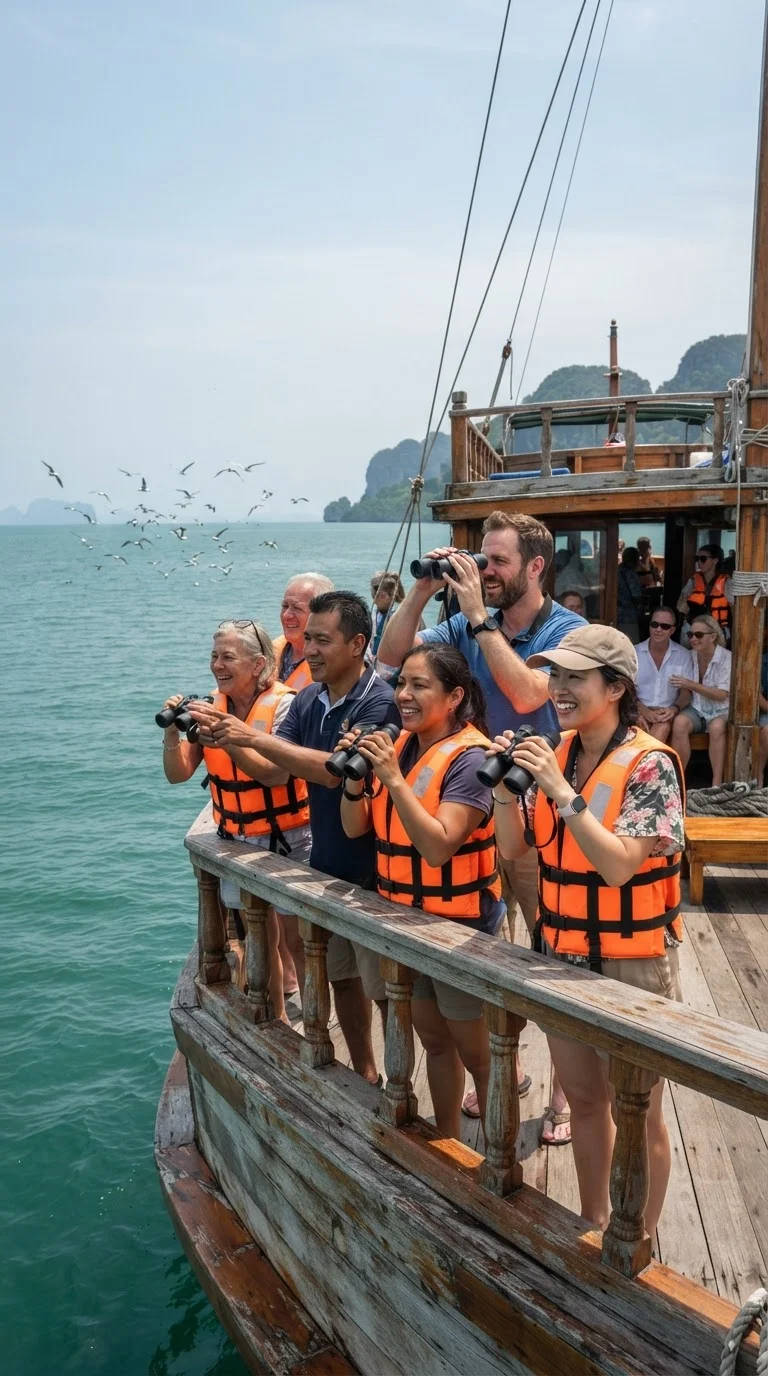
The vast majority of whale-watching excursions in the Upper Gulf of Thailand operate aboard sturdy, converted double-decker wooden fishing vessels departing coastal piers between 07:30 and 08:30. Modified from traditional Gulf trawlers, these heavy timber displacement hulls slice steadily through coastal chop to provide a stable viewing platform. A sheltered lower deck houses dining tables, washrooms, and shaded seating, whilst the open-sided upper observation deck offers uninterrupted 360-degree sightlines. Standard day trips last between seven and nine hours, covering up to forty nautical miles across estuarine waters into the open Gulf.
The outward cruise takes one to two hours, navigating past coastal mangrove channels and stilt-mounted mussel farms. During this transit, an onboard naturalist delivers an introductory briefing on resident Bryde's whales, teaching passengers how to scan the horizon for indicators: wheeling flocks of terns diving over baitfish schools, oily surface slicks, and sudden vertical spouts. Captains also coordinate with local fishing crews over marine radio. When a whale is located, the skipper slows to an idle roughly one hundred metres away, shifting into neutral or cutting the inboard engine if an animal surfaces nearby to prevent propeller strikes and minimise acoustic disturbance.
Passengers spend between two and four hours observing animals across multiple feeding cycles. Around midday, a hot Thai buffet lunch of fried rice, massaman curry, and fresh seasonal fruit is served on the lower deck. Vessels generally begin their return leg by mid-afternoon, docking between 15:30 and 17:00, which allows travellers to reach central Bangkok hotels before peak evening commuter traffic.
| Vessel & Operator Category | Typical Passenger Capacity | Engine & Viewing Setup | Best Suited For |
|---|---|---|---|
| Converted Wooden Day Cruiser | 15 to 35 passengers | Single diesel inboard, covered lower deck, open railed upper observation deck | Photographers, families, and solo travellers seeking stability and elevated sightlines |
| Private Fishing Charter | 6 to 12 passengers | Traditional coastal wooden boat with basic canvas awning | Small private groups seeking bespoke schedules and low-profile viewing |
| Speedboat Group Tour | 10 to 18 passengers | Twin or triple outboards, low gunwales, forward bench seating | Quick transit from eastern seaboard piers, though firmer ride and higher engine noise |
Before paying a deposit, confirm your operator provides an English-speaking naturalist guide, fitted lifejackets, and passenger marine excursion insurance.
Other Marine Life: Dolphins, Porpoises, and Seabirds
While Bryde’s whales are the primary focus of boat excursions, the nutrient-rich waters of the Upper Gulf and the wider coastline shelter several other tropical marine species. Shallow mangrove estuaries, particularly near river mouths such as the Bang Pakong and the Tha Chin in Samut Sakhon, provide habitat for resident pods of Irrawaddy dolphins (Orcaella brevirostris). Readily distinguished by their rounded foreheads and lack of a pronounced beak, these shy dolphins surface quietly with a brief, rolling breath. In open coastal shallows, Indo-Pacific finless porpoises (Neophocaena phocaenoides) travel in small groups of two to four, arching smoothly through the swell without a dorsal fin.
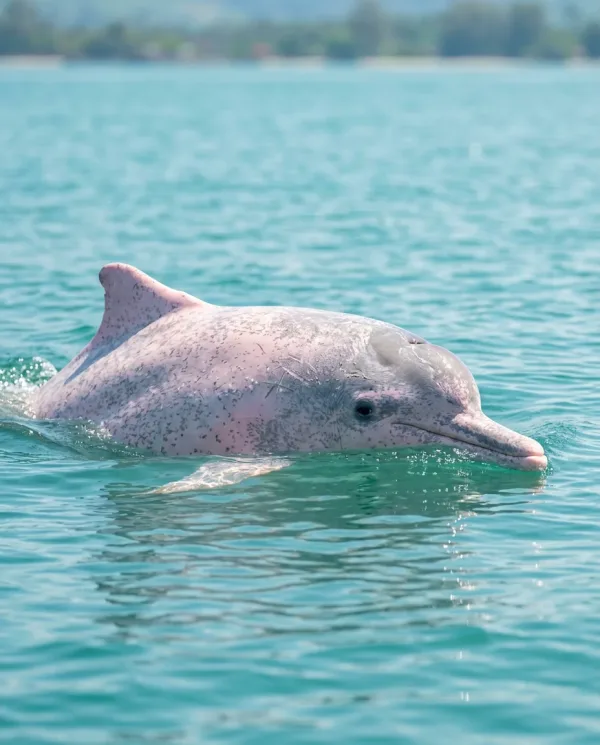
Further south along the western coast toward Khanom and Donsak, Indo-Pacific humpback dolphins (Sousa chinensis) frequent coastal shallows. Often called pink dolphins, they are born dark grey and lighten with maturity, with older adults displaying a distinct pink flush produced by blood vessels near the skin surface regulating body heat. In deeper offshore corridors around Prachuap Khiri Khan and Chumphon, waters occasionally reveal spinner dolphins, false killer whales, and transient Omura’s whales (Balaenoptera omurai), a slender rorqual officially recognised as a distinct species in 2003.
Whale-watching trips also provide rewarding pelagic birdwatching, especially during the autumn migration between August and November. The surface activity of feeding whales drives baitfish upward, attracting sweeping flocks of white-winged terns and whiskered terns alongside brown boobies and swimming rafts of red-necked phalaropes. Migrating pomarine skuas frequently track these gatherings, actively pursuing terns to pirate discarded anchovies.
Responsible Boat Operation and Marine Conservation
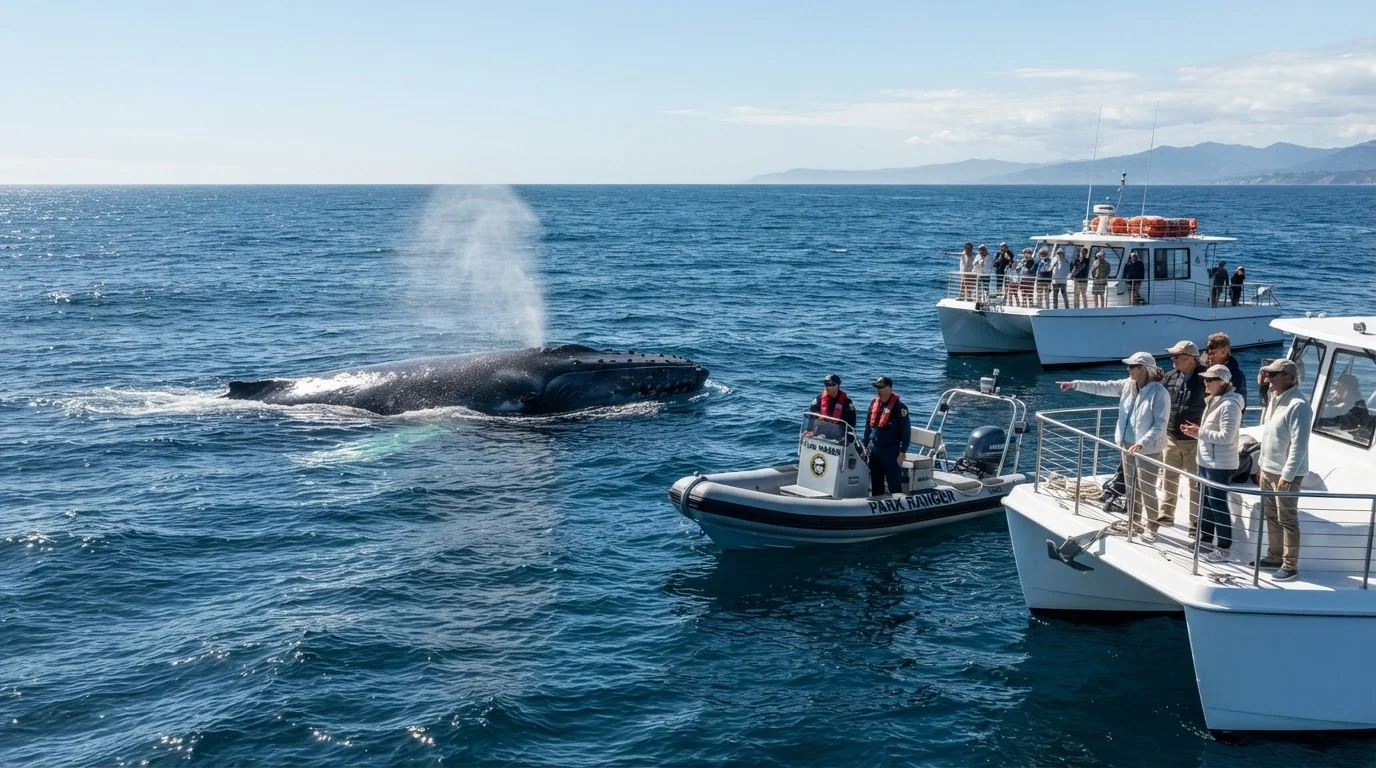
Thailand provides robust legal protection for its resident cetaceans, designating the Bryde’s whale as a reserved wild animal—the country's highest statutory wildlife protection category—under the Wild Animal Conservation and Protection Act 2019. To avoid disturbing resident pods in their primary feeding grounds across the Upper Gulf, the Department of Marine and Coastal Resources (DMCR) sets strict operational guidelines for watching vessels. Commercial skippers must maintain a minimum standoff distance of 100 metres from any whale and hold vessel speeds below four knots within a 300-metre perimeter. Approaching craft must also throttle back to no more than seven knots once within 400 metres.
Vessel density around feeding animals is tightly restricted. No more than three boats may observe an individual or pod at any one time, preventing sonic disorientation and ensuring the whales are rarely boxed in. When a mother and calf are sighted, skippers must expand their viewing boundary to at least 300 metres. Jet skis and high-speed motorboats are prohibited across core feeding coordinates because excessive engine noise and sharp hull profiles present severe acoustic stress and strike hazards. For aerial observation, camera drones must observe a minimum altitude floor of 50 metres above the water.
Many established tour operators participate actively in citizen science. Skippers log sighting times and GPS coordinates, photographing dorsal fins and distinctive flank markings for DMCR biologists at the Marine and Coastal Resources Research Centre in Samut Sakhon, who maintain an ongoing photo-identification catalogue tracking individual animals. Despite official guidelines, whales face persistent risks from synthetic gillnets, discarded plastic, and commercial ship strikes along the heavy shipping lanes serving Bangkok and Laem Chabang.
Choose operators that cut propulsion entirely or drop engines into neutral idle when whales surface nearby, rather than motoring alongside or circling feeding animals.
Where to Find Whale Watching Tours
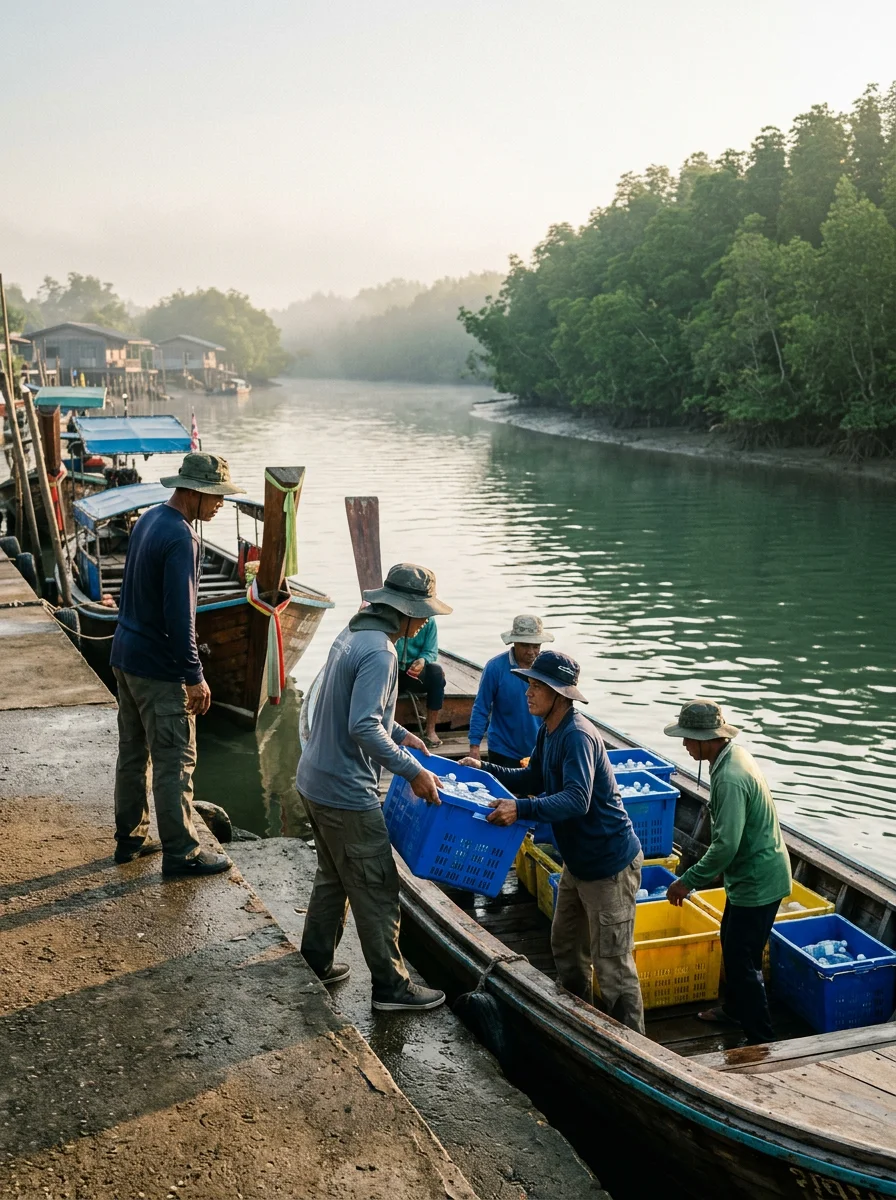
The primary departure points for Bryde's whale trips sit along the coastline southwest of Bangkok, focused in Samut Sakhon and Phetchaburi provinces. In Samut Sakhon, about an hour to ninety minutes by car from the capital, boats launch from fishing wharves in the Phanthai Norasing area, including Moo Baan Pramong, and along the Tha Chin River estuary near Mahachai. Operators such as Wild Encounter Thailand and conservation-linked groups like Chomwhales run scheduled weekend join-in trips and private charters from these northern piers, giving direct access to the nutrient-rich shallows of the Bight of Bangkok.
Further west along the coastal highway, Bang Tabun in Phetchaburi province is another key launch site. Boats depart from wharves along the Bang Tabun River estuary, passing mangrove forests and fish traps before reaching the western feeding grounds of the Upper Gulf. For travellers staying in Cha-am or Hua Hin, charter boats operate out of Laem Phak Bia, roughly an hour's drive north of the resort towns, avoiding the longer road journey towards Bangkok.
Travellers heading further south will find different cetacean opportunities rather than regular Upper Gulf whale charters. In Nakhon Si Thammarat province, local longtail boats launch from Laem Prathap and neighbouring bays in Khanom to spot resident Indo-Pacific humpback dolphins, commonly called pink dolphins, with the calmest sea conditions typically falling between February and October. Farther north along the southern coast, the waters off Chumphon and Prachuap Khiri Khan occasionally record Bryde's whales later in the year, between September and December. For visitors based in Bangkok seeking reliable Bryde's whale encounters, weekend join-in trips departing from Samut Sakhon or Bang Tabun remain the standard option.
Costs and Budgeting
Full-day whale-watching trips in the Upper Gulf of Thailand are priced modestly compared to open-ocean cetacean excursions in Europe. Standard join-in departures on converted cruisers generally cost between 2,000 THB and 2,500 THB (approx £45 to £57) per adult. Most operators offer discounted rates of roughly 2,000 THB (approx £45) for children under twelve, while infants under two travel free. Standard fares typically cover morning snacks, a cooked lunch buffet or boxed meal, drinking water, basic marine travel insurance, and naturalist commentary.
Premium small-group excursions capped at fifteen passengers range from 2,800 THB to 3,500 THB (approx £64 to £80) per person, featuring dedicated marine biologists and professional photographic packs. Private full-day vessel charters for six to ten passengers cost between 18,000 THB and 25,000 THB (approx £410 to £570), with larger cruisers taking up to twenty-five guests for around 35,000 THB (approx £795). Catering on private charters is arranged on request for roughly 350 THB (approx £8) per person.
Because departure harbours in Samut Sakhon and Phetchaburi lack direct mass transit from Bangkok, budget for round-trip transport. Pre-booked private return taxi transfers from central Bangkok hotels to Samut Sakhon piers run between 1,800 THB and 2,500 THB (approx £41 to £57). Operators usually accept domestic bank transfers, while card payments or online platforms incur a 3% to 4% surcharge.
| Option | Cost (THB) | Cost (GBP approx) | Notes |
|---|---|---|---|
| Standard Join-In Day Cruise | 2,000–2,500 THB | £45–£57 | Includes breakfast, lunch buffet, insurance, and marine guide |
| Premium Small-Group Tour | 2,800–3,500 THB | £64–£80 | Lower passenger cap (max 15), dedicated biologist, professional photo pack |
| Private Day Vessel Charter | 18,000–25,000 THB | £410–£570 | Whole boat for 6–10 guests; catering arranged on request |
| Return Private Pier Transfer | 1,800–2,500 THB | £41–£57 | Central Bangkok hotel to Samut Sakhon pier and return |
What To Know Before You Go
Sightings of wild cetaceans depend on variable natural factors rather than a fixed timetable. Shifting winds, water clarity, and tidal currents determine where schools of anchovies and sardines gather near the surface. While resident Bryde's whales frequent the Upper Gulf throughout their peak autumn feeding window, nature ultimately retains control.
Motion sickness is the most common disruptor of a full-day voyage. Even when the Gulf appears calm from the harbour, long oceanic swells and choppy surface water develop further offshore. Boats routinely cut their engines to drift quietly near feeding grounds, and this rocking motion can quickly induce nausea. Take seasickness medication roughly thirty to forty-five minutes before boarding to allow the tablets to take effect before leaving sheltered river mouths.
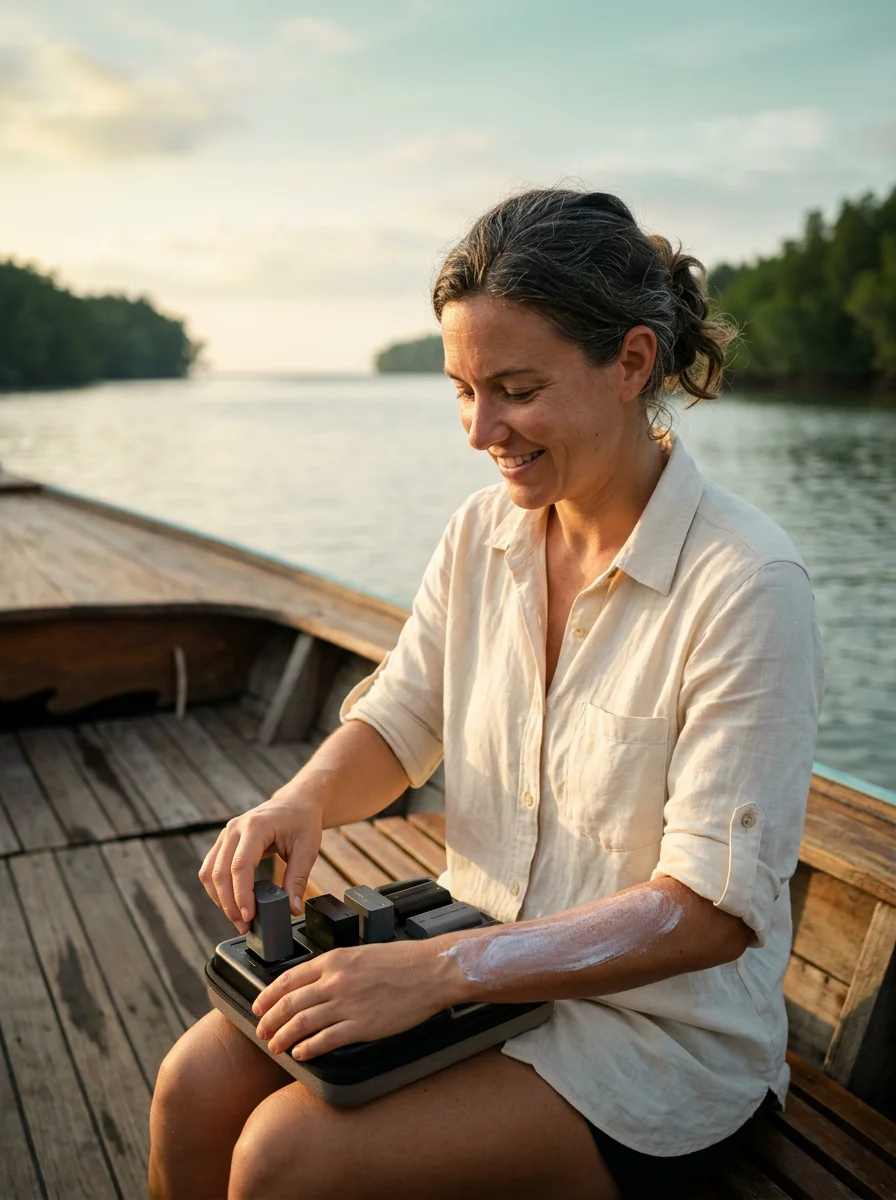
Expect to spend between six and eight hours on the water under relentless tropical heat and intense reflected glare. Open upper decks provide prime vantage points for spotting distant blows, but they offer little to no shade. Pack lightweight, long-sleeved sun-protective clothing, a broad-brimmed hat with a chin strap, and polarising sunglasses to help spot whales beneath the water's surface.
Weekend departures book up rapidly during the primary feeding months from September to November. Responsible operators deliberately cap passenger numbers to avoid crowding on deck, and local wildlife photographers frequently reserve spots several weeks ahead. Secure weekend berths at least a month in advance, or target weekday sailings for greater flexibility.
Practical Tips
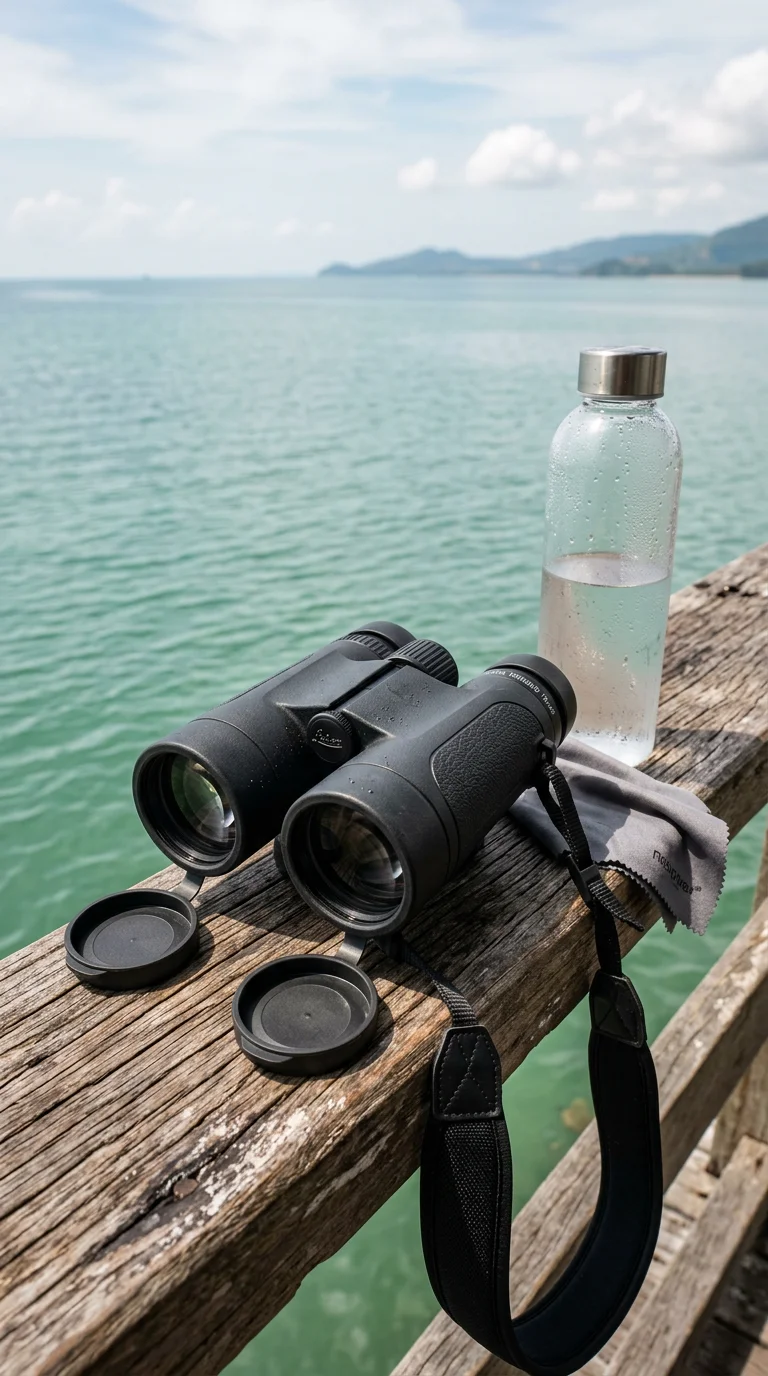
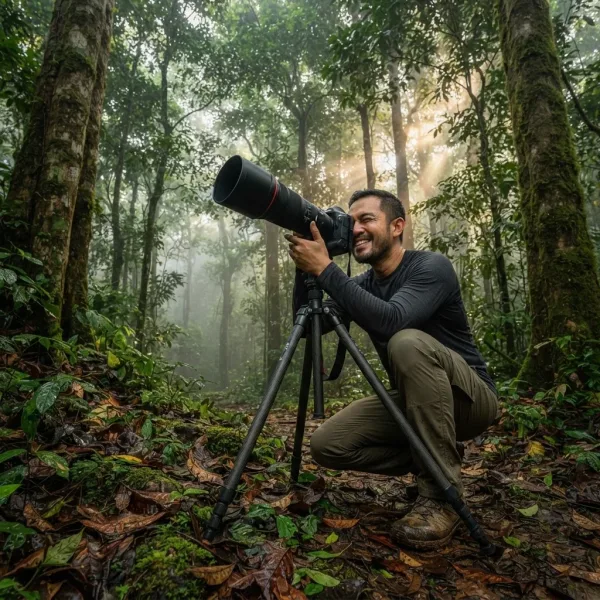
For wildlife photography, a DSLR or mirrorless camera paired with a telephoto zoom lens covering roughly 70–300mm or 100–400mm provides the reach needed to frame surfacing whales without encroaching on the animals. Fit a circular polarising filter to manage harsh reflections; the Upper Gulf carries heavy sediment runoff from central rivers, and polarising glass cuts water-surface glare to reveal a whale's submerged pale flanks seconds before it breaks the surface. Stash camera bodies and spare batteries inside a waterproof dry bag to shield delicate electronics from salt spray during the journey.
Sturdy footwear with non-marking, slip-resistant rubber soles is advisable on converted wooden fishing vessels and catamarans alike. Decks stay damp from morning dew, sea spray, and wash, and passengers frequently move across the deck when lookouts announce a whale. Pack a lightweight windbreaker or breathable rain jacket in your day bag. Early morning departures through coastal river mouths feel surprisingly brisk in the breeze before sunrise, while tropical rain squalls can sweep across the Gulf rapidly during the autumn months.
Downloading an offline marine tracking app lets you follow your vessel's distance from the shoreline and monitor water depths during the journey. This provides valuable geographic perspective on how close Bryde's whales feed to the primary commercial shipping lanes converging on Bangkok and the Chao Phraya estuary.
Carry cash in Thai Baht for tipping the boat captain and spotters before disembarking. Spotting crews spend long hours perched atop open lookout platforms scanning the horizon for feeding terns, and a tip of 200 THB to 300 THB (approx £4.60 to £6.90) per guest is customary recognition for good service. When selecting a tour operator, review their sighting policy; established seasonal providers typically offer a free return trip or complimentary re-booking voucher if no whales are encountered during the excursion.
Quick Reference Table
| Item | Detail | Notes |
|---|---|---|
| Primary Locations | Samut Sakhon and Phetchaburi (Upper Gulf of Thailand) | Key departure piers include Phanthai Norasing, Mahachai, Bang Tabun, and Laem Phak Bia |
| Peak Season | August to December | Late summer river runoff triggers baitfish blooms; September to November is prime for surface feeding |
| Standard Join-In Tour | 2,000–2,500 THB (£45–£57) per adult | Typically covers lunch buffet, snacks, water, marine excursion insurance, and naturalist guide |
| Premium Small-Group Tour | 2,800–3,500 THB (£64–£80) per person | Capped at 15 passengers; includes a dedicated marine biologist and photo pack |
| Private Vessel Charter | 18,000–25,000 THB (£410–£570) | Rates for 6–10 guests on converted day cruisers; larger vessels up to 35,000 THB (£795) |
| Return Pier Transfers | 1,800–2,500 THB (£41–£57) | Pre-booked private taxi return between central Bangkok hotels and Samut Sakhon piers |
| Booking Lead Time | At least 1 month ahead for autumn weekends | Passenger berths are capped to avoid crowding; weekday trips offer greater short-notice availability |
| Essential Gear | Telephoto lens (70–300mm or 100–400mm) & polarising filter | Take seasickness tablets 30–45 mins prior; pack non-slip footwear, windbreaker, and dry bag |
| Conservation Regulations | 100 m minimum vessel standoff distance | Managed by the DMCR; strictly limits speed to <4 knots within 300 m and caps clusters at 3 boats |
| Expected Gratuity | 200–300 THB (£4.60–£6.90) per guest | Cash tip for boat captains and masthead spotters scanning for surface activity |
| Official source | Department of Marine and Coastal Resources (DMCR) | dmcr.go.th (Tel: +66 2 141 1300) |
| Book direct | Wild Encounter Thailand | wildencounterthailand.com |
FAQ: Whale Watching in Thailand
When is the best time to see Bryde's whales in Thailand?
What should I confirm with a whale watching tour operator before booking?
What are the rules for whale watching boats in Thailand?
Where do whale watching tours depart from in Thailand?
How much does a whale watching tour cost in Thailand?
How can I prevent motion sickness on a whale watching trip in Thailand?
What should I wear for a whale watching tour in Thailand?
How far in advance should I book a whale watching tour in Thailand?
What camera gear is recommended for whale watching photography in Thailand?
Is tipping customary on whale watching tours in Thailand?
Reviewed by the Thailand Guide Editorial Team • Last reviewed: 15 November 2026
This page is provided for general information only. While we aim for accuracy, details can change — please verify anything important independently before relying on it.