Dolphin Watching
Early morning sunlight catches the surface of Lak Sor Bay just as a pale pink dorsal fin breaks the calm water of the southern Gulf of Thailand. Unlike the deep-ocean cetaceans often found in northern Europe, Thailand’s resident coastal dolphins feed in shallow mangrove estuaries, sheltered bays, and limestone channels just metres from the mainland shore.
Thailand provides genuine opportunities to observe wild cetaceans across both the Gulf of Thailand and the Andaman Sea. Sightings range from resident Indo-Pacific humpback dolphins along the Khanom and Donsak coastline to shy Irrawaddy pods foraging in muddy river deltas. This guide explains the native species, primary departure piers, monsoon seasons, typical charter costs, and responsible observation protocols. It sets out how to arrange independent boat charters or small-group excursions while firmly distinguishing wild, ethical encounters at sea from commercial marine parks and captive dolphin attractions.

Native Dolphin Species in Thai Waters
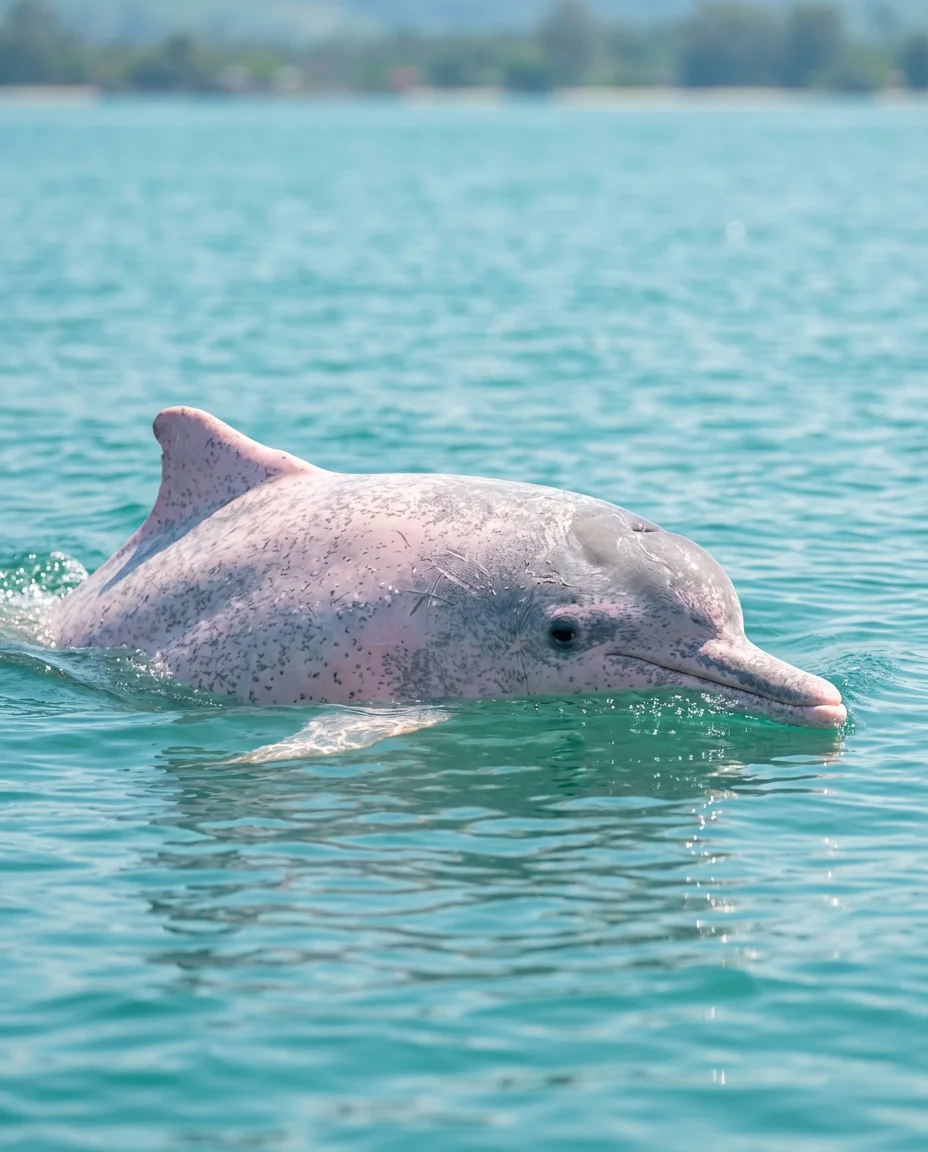
Thailand’s tropical marine territory provides shelter for more than twenty documented cetacean species, though four coastal varieties account for the vast majority of nearshore sightings. The most celebrated is the Indo-Pacific humpback dolphin (Sousa chinensis), frequently called the pink dolphin. Born dark slate grey, calves gradually shed their melanin pigment as they mature. In adult dolphins, extensive capillary networks beneath the pale outer skin flush with warmth and physical exertion, producing their distinctive bubblegum-pink colouration. These animals stay primarily within shallow coastal waters and sheltered bays.
Sharing nearshore waters is the blunt-snouted Irrawaddy dolphin (Orcaella brevirostris). With its bulbous, rounded melon head, flexible neck creases, and absence of a beak, this euryhaline mammal thrives where freshwater rivers meet coastal deltas, tolerating sharp drops in salinity around mangrove estuaries. Further offshore in deeper oceanic waters, observers encounter Indo-Pacific bottlenose dolphins (Tursiops aduncus) and acrobatic spinner dolphins (Stenella longirostris), known for high-velocity leaps and schooling behaviour. In eastern coastal pockets such as Trat near the Cambodian border, the vulnerable Indo-Pacific finless porpoise (Neophocaena phocaenoides) also frequents shallow seagrass meadows.
Because resident coastal cetaceans feed primarily in waters less than thirty metres deep, their survival relies heavily on healthy mangrove systems and sustainable artisanal fishing grounds. Understanding which species inhabits each marine zone prevents mismatched expectations regarding animal activity, whether you seek solitary coastal foragers or energetic oceanic pods. Well-managed wildlife excursions provide opportunities to observe these animals behaving naturally without intruding on critical feeding grounds.
Khanom and Donsak: The Southern Pink Dolphin Coast
The coastal waters between Khanom district in Nakhon Si Thammarat and Donsak in Surat Thani provide Thailand’s most dependable habitat for wild dolphins. Sheltered by steep limestone headlands, this mainland bay system supports a resident population of roughly sixty Indo-Pacific humpback dolphins. Born slate-grey, these animals lighten as they mature, developing their characteristic pale pink hue through extensive networks of blood capillaries near the skin surface that regulate body temperature in warm tropical shallows.
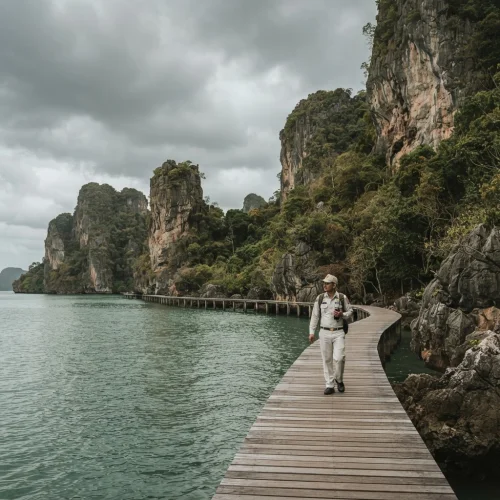
Departing from mainland piers such as Laem Prathap or Ao Talet, visitors board wooden longtail boats operated by local fishing crews. These boatmen locate pods by tracking seabird activity and surface ripples near mangrove channels. Under community marine conservation guidelines, skippers cut their long-shaft engines roughly eighty metres out, allowing mother-and-calf pairs to approach the drifting hull unforced. Excursions typically pair cetacean observation with distinctive coastal landmarks, navigating past the stratified marine limestone shelves of Khao Hin Phap Pha—known locally as the Pancake Rocks—and the rocky islet of Koh Nui Nok, which hosts a clifftop shrine to Luang Pu Thuat alongside a natural freshwater spring exposed at low tide.
Departures between 07:30 and 10:00 provide the calmest sea conditions, making surfacing dorsal fins easier to spot. Private longtail charters accommodate up to seven passengers and cost between 1,200 THB and 1,500 THB (approx £28 to £35) per boat for a two-hour excursion, keeping revenue inside mainland fishing communities. By contrast, day tours departing across the strait from Thong Krut Pier on Koh Samui rely on high-powered speedboats, charging 1,900 THB to 2,400 THB (approx £44 to £56) per seat. Hiring a private mainland craft avoids open-water speedboat chop and reduces acoustic disruption across shallow feeding grounds.
| Departure Pier | Target Species | Vessel Type | Typical Cost | Sighting Likelihood |
|---|---|---|---|---|
| Laem Prathap Pier, Khanom | Indo-Pacific Humpback | Longtail Boat | 1,200–1,500 THB (approx £28–£35) charter | Very High (year-round) |
| Thong Krut Pier, Koh Samui | Indo-Pacific Humpback | Speedboat / Catamaran | 1,900–2,400 THB (approx £44–£56) per seat | High (weather dependent) |
| Bang Tabun, Phetchaburi | Bryde's Whale & Irrawaddy | Converted Trawler | 2,000–2,500 THB (approx £46–£58) per seat | Moderate to High (Aug–Dec) |
| Tha Kham Pier, Chachoengsao | Irrawaddy Dolphin | Wooden Longtail | 1,000–1,500 THB (approx £23–£35) charter | Moderate (Nov–Feb) |
| Hat Yao Pier, Trang | Irrawaddy Dolphin & Dugong | Local Longtail | 1,500–2,000 THB (approx £35–£46) charter | Moderate (Nov–Apr) |
Plan a journey along Thailand’s Andaman coast, with practical guidance on island gateways, marine parks, diving, ferries and monsoon travel.
The Upper Gulf and Bang Pakong: Estuary Habitats Near Bangkok
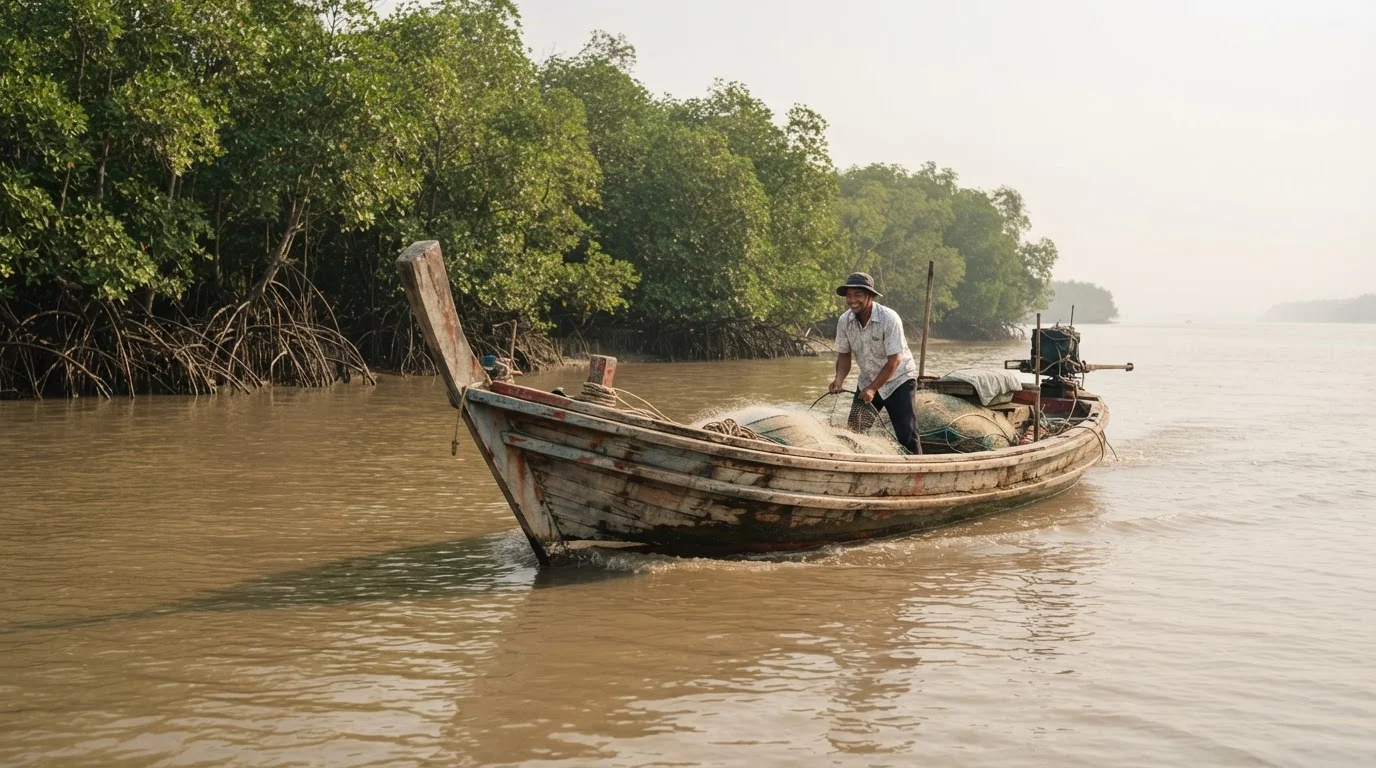
Just over an hour by road east of Bangkok, the turbid, nutrient-laden estuary where the Bang Pakong River meets the Gulf of Thailand creates a seasonal haven for wild cetaceans. Between November and February, calmer conditions following the monsoon draw shoals of eel catfish into the river mouth in Chachoengsao province. Pods of Irrawaddy dolphins follow this migration into the brackish channels to feed. From community piers in Tha Kham subdistrict, travellers can charter local wooden fishing boats to navigate the mangrove-fringed waterways. Irrawaddy dolphins in these muddy shallows behave discreetly: they rarely perform aerial leaps, choosing instead to roll gently above the grey river surface to breathe before diving out of sight for several minutes.
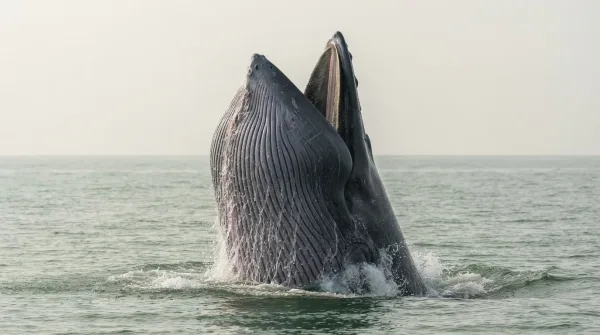
Further west along the Upper Gulf coastline, departures from Samut Sakhon and Bang Tabun in Phetchaburi reach open coastal waters. Running mainly between August and December, these expeditions focus on resident Bryde’s whales feeding on dense anchovy shoals. However, pods of Indo-Pacific humpback dolphins and finless porpoises frequently track these same baitfish schools across the shallow basin. Naturalist-led operators like Wild Encounter Thailand depart from local piers in Samut Sakhon and Phetchaburi, providing trained guides who record photo-identification data and log sightings for the Department of Marine and Coastal Resources (DMCR).
Because river deltas and inner Gulf waters carry heavy silt loads, spotting cetaceans requires patience and decent binoculars. Submerged animals remain invisible beneath the opaque brackish surface until their dorsal fins break the waterline, making keen observation far more demanding than along clear southern shorelines.
The Andaman Sea: Island Channels and Marine Sanctuaries

Unlike the shallow, sheltered waters of the Gulf of Thailand, the Andaman Sea drops away into deep oceanic trenches and open-water corridors. These depths support pelagic cetaceans alongside coastal species. Around the Similan and Surin Marine National Parks in Phang Nga province, pods of spinner dolphins (Stenella longirostris) and Indo-Pacific bottlenose dolphins (Tursiops aduncus) navigate the drop-offs flanking the offshore archipelagos. Scuba liveaboard vessels departing from Thap Lamu Pier near Khao Lak regularly observe energetic pods bow-riding across open ocean passages between mid-October and early May, when the marine parks remain open to navigation.
Further south in Trang province, the marine environment alters significantly, giving way to shallow estuarine channels, mangrove belts, and extensive seagrass meadows around Koh Libong and Koh Muk. Koh Libong shelters the country's most substantial refuge for wild dugongs (Dugong dugon). The sheltered channels between the island and the mainland—frequently traversed by local longtail boats operating from Hat Yao Pier—also support hunting groups of Indo-Pacific humpback dolphins and coastal Irrawaddy dolphins.
Near the maritime border with Malaysia in Satun province, the protected waters of Mu Koh Phetra and Tarutao Marine National Parks form undisturbed transit corridors for oceanic and coastal pods. Wild dolphin encounters across the Andaman coast are rarely organised as dedicated, scheduled day excursions. Instead, sightings occur opportunistically during multi-day liveaboard cruises, inter-island ferry transits, and chartered boat runs between island archipelagos. Travellers hoping to encounter cetaceans along the west coast should prioritise multi-day marine park itineraries across the open sea rather than short harbour boat hire.
Seasonal Sighting Patterns and Marine Weather
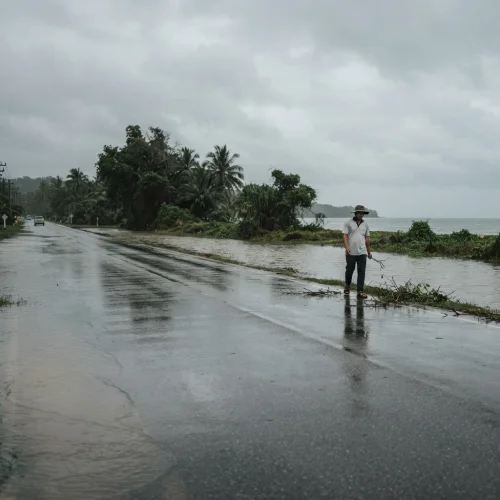
Marine mammal movements across Thailand follow two alternating monsoon cycles that shape wind, swell height, and coastal fish concentrations. Along the southwestern Gulf of Thailand around Khanom and Donsak, seas are generally calmest from February through October. By November, the northeast monsoon sets in, bringing heavy coastal swells and rain that frequently keep small longtail boats docked at piers such as Laem Prathap through December.
In the Upper Gulf, the seasonal peak aligns with the late wet season. Between August and November, heavy rainfall and river discharge from the Chao Phraya, Mae Klong, and Bang Pakong deltas flush rich nutrients into the shallow bay. This influx concentrates massive shoals of anchovies and other small baitfish, attracting feeding pods of coastal dolphins and Bryde's whales close to shore.
On the Andaman coast, the calendar flips entirely. The southwest monsoon churns open waters from May to mid-October. Thailand's Department of National Parks, Wildlife and Plant Conservation closes premier offshore reserves, including Mu Koh Similan and Mu Koh Surin, during this five-month window for visitor safety and marine recovery. The main Andaman watching season runs from November through April, when tranquil seas and light winds make it far easier to spot surfacing pods against flat water. Timing your excursion with the prevailing dry period on your chosen coast helps avoid rough crossings and weather-related cancellations.
Ethical Marine Encounters versus Captive Dolphin Facilities
Commercial dolphinariums continue to operate across Thailand, with indoor tanks and show arenas in Pattaya, Phuket, and Chanthaburi promoting choreographed performances, theatrical tricks, and swimming sessions. Leading marine welfare organisations warn that captive concrete pools cause severe sensory deprivation and acoustic stress from wall echoes, while disrupting complex pod structures and suppressing natural hunting instincts.
By contrast, ethical marine tourism observes cetaceans strictly on their own terms in the wild. Under guidelines issued by Thailand's Department of Marine and Coastal Resources (DMCR), boat skippers must approach pods from behind at an angle, match the animals' swimming pace, and avoid abrupt speed shifts or erratic turns. Vessels must throttle down within four hundred metres, rarely box dolphins against coastlines or shallow shoals, and cut engines to neutral or switch them off entirely when dolphins draw near.
Legitimate operators rarely chase pods or guarantee intimate physical contact. If marketing materials promise direct petting, hand-feeding, or swimming alongside wild pods, treat the trip as exploitative and unregulated. In coastal strongholds like Khanom, responsible community longtail boatmen cut their motors once dolphins are spotted, allowing curious pods to surface alongside on their own initiative or continue feeding unhindered. Choosing low-impact wild boat charters over captive entertainment keeps tourist spending within coastal fishing communities while actively safeguarding Thailand's native marine life.
Where to Book Dolphin Watching in Thailand
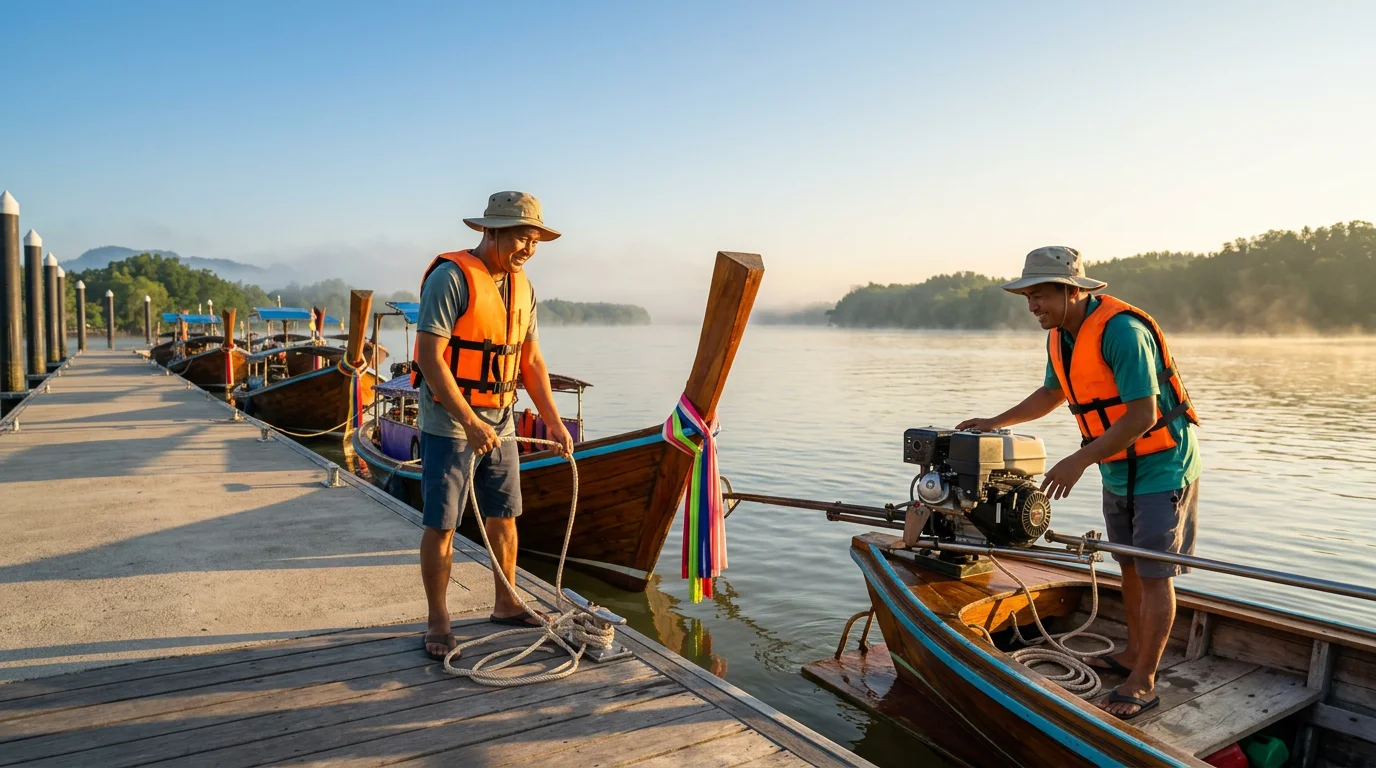
Arranging a wild encounter depends on choosing departure points that work with community fishing cooperatives and licensed naturalists.
In Nakhon Si Thammarat, travellers can book local longtail charters directly at mainland piers such as Laem Prathap or through the Khao Ok Eco-Tourism Group at Ao Telet. These community associations distribute earnings across local fishing families and rotate departures to limit the number of craft observing pods at any one time. Early arrivals around 07:30 to 08:00 catch calmer morning waters, with fixed-rate charter boards displayed at pier desks to ensure transparent pricing without informal haggling.
Holidaymakers based on Koh Samui can arrange day excursions through tour operators in Bophut or Lamai. These trips provide shared or private road transfers south to Thong Krut Pier, where speedboats make the roughly 30- to 45-minute crossing to the Khanom coastline, frequently combining dolphin watching with stops at Koh Tan or Koh Madsum.
For the Upper Gulf, Wild Encounter Thailand runs dedicated cetacean expeditions departing from Samut Sakhon or Phetchaburi. These structured full-day trips leave from Bangkok with marine biologists and naturalist guides aboard, tracking resident Bryde's whales and coastal dolphin pods while adhering to government wildlife-observation protocols.
Along the southern Andaman coast in Trang, charters depart Hat Yao Pier or can be arranged through village cooperatives on Koh Libong. Local boatmen guide visitors through the coastal channels and shallow seagrass meadows, keeping engine speeds low to avoid disturbing both dolphin pods and resident dugongs.
Costs and Budgeting
Observing wild dolphins in Thailand covers distinct price tiers depending on whether you charter local longtails independently or join organised speedboat tours. Budget travellers arriving at mainland fishing piers in Khanom pay 1,000 THB to 1,500 THB (approx £23 to £35) to charter an entire longtail boat. Because these craft carry up to six passengers, private groups can reduce transport costs to roughly 200 THB to 375 THB (approx £5 to £9) per person for a two-hour coastal trip.
Commercial day trips from Koh Samui cost more but include round-trip logistics. Shared speedboat tours crossing to the Khanom coast charge roughly 1,900 THB to 2,400 THB (approx £44 to £56) per person, covering hotel transfers, snorkelling equipment, drinking water, and lunch. Tours visiting Koh Madsum require an additional island entry fee of 50 THB (approx £1.15) per person, payable in cash. Private speedboat charters from Samui range between 23,500 THB and 28,500 THB (approx £545 to £660).
Specialised coastal expeditions elsewhere in Thailand operate on comparable models. Full-day research tours from Bangkok into the Upper Gulf cost 2,500 THB to 3,800 THB (approx £58 to £88) per passenger, which covers marine biologist guidance and meals. In Chachoengsao, private boat charters along the Bang Pakong River estuary cost 1,000 THB to 1,800 THB (approx £23 to £42) from Tha Kham pier. In Trang, chartering a private longtail from Hat Yao pier to observe dugongs and dolphins around Koh Libong costs 1,500 THB to 2,000 THB (approx £35 to £46).
| Option | Cost (THB) | Cost (GBP approx) | Notes |
|---|---|---|---|
| Independent Longtail Charter (Khanom) | 1,000–1,500 THB | £23–£35 | Up to 6 passengers; hire directly at pier |
| Shared Speedboat Tour from Koh Samui | 1,900–2,400 THB | £44–£56 | Per person; includes hotel pickup and lunch |
| Bang Pakong Estuary Boat Charter | 1,000–1,800 THB | £23–£42 | Per boat; departs from Tha Kham pier |
| Upper Gulf Whale & Dolphin Day Trip | 2,500–3,800 THB | £58–£88 | Per person from Bangkok; expert marine guide |
| Koh Libong Dugong & Dolphin Longtail | 1,500–2,000 THB | £35–£46 | Per boat; 2-3 hour charter from Hat Yao |
| Private Speedboat Charter (Koh Samui) | 23,500–28,500 THB | £545–£660 | Custom full-day trip for private groups |
What To Know Before You Go
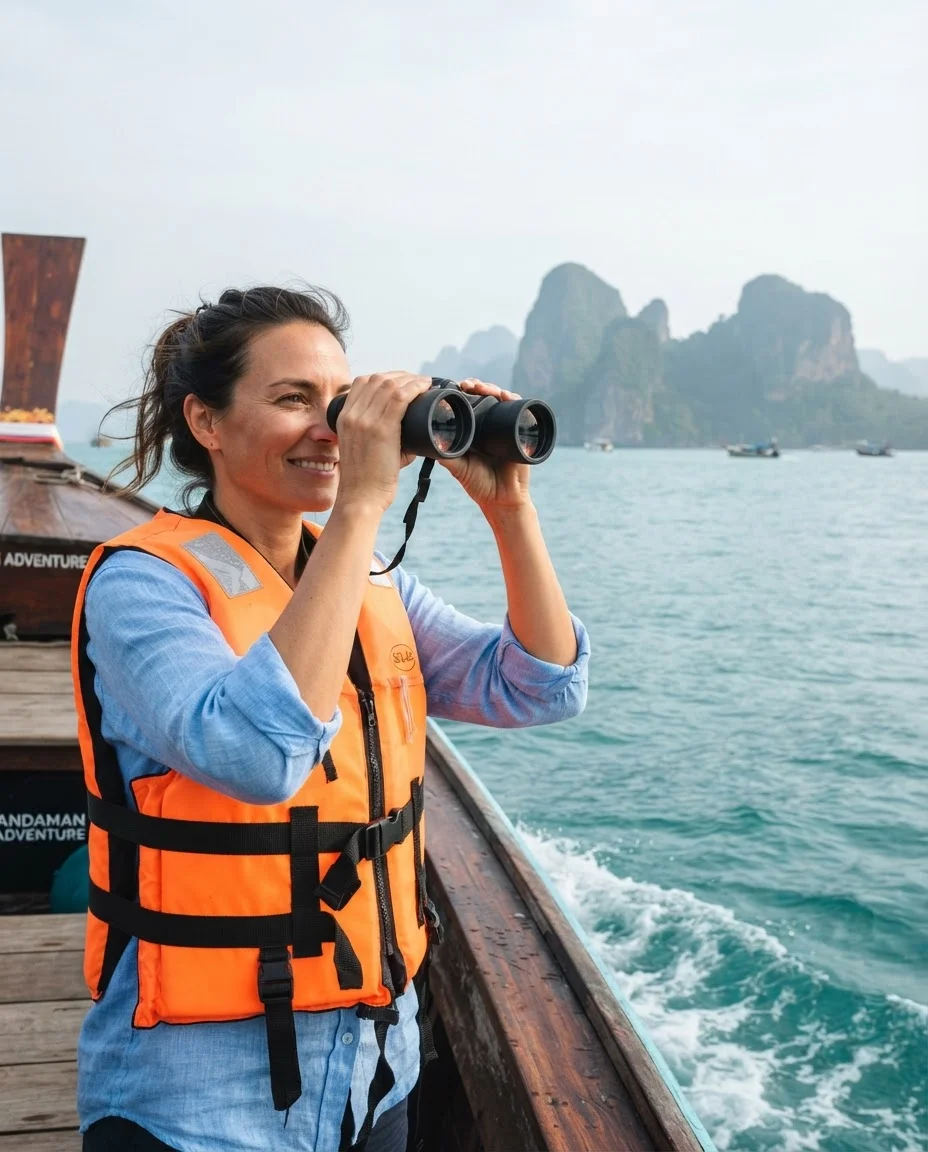
Observing wild dolphins in Thailand means stepping into natural marine habitats where animal behaviour is dictated by tides, fish movements, and daylight rather than excursion timetables. Sightings in primary coastal corridors are frequent, though wild encounters cannot be promised. Cetaceans move constantly across expansive foraging grounds, and surface activity can shift from day to day depending on tidal currents.
Setting out early in the morning—typically between 07:00 and 09:00—yields the most reliable conditions. During these cooler morning hours, sea conditions tend to be flatter, surface glare remains low, and pods actively hunt baitfish in coastal waters. By midday, rising temperatures, thermal surface haze, and onshore chop frequently prompt dolphins to dive deeper or move offshore, which significantly lowers sighting probabilities.
Expect basic vessel comfort. Local longtail craft provide modest canvas canopies with open sides, leaving you exposed to direct tropical sun, wind, and ocean spray.
Crucially, wild dolphin excursions in Thailand are strictly observational. Under Thai wildlife conservation legislation and Department of Marine and Coastal Resources guidelines, native cetaceans are protected species. Touching, feeding, or entering the water to swim alongside wild pods is unlawful. Any attempt to swim with feeding or travelling dolphins disrupts natural pod dynamics and risks legal penalties from maritime or park enforcement officers.
Practical Tips
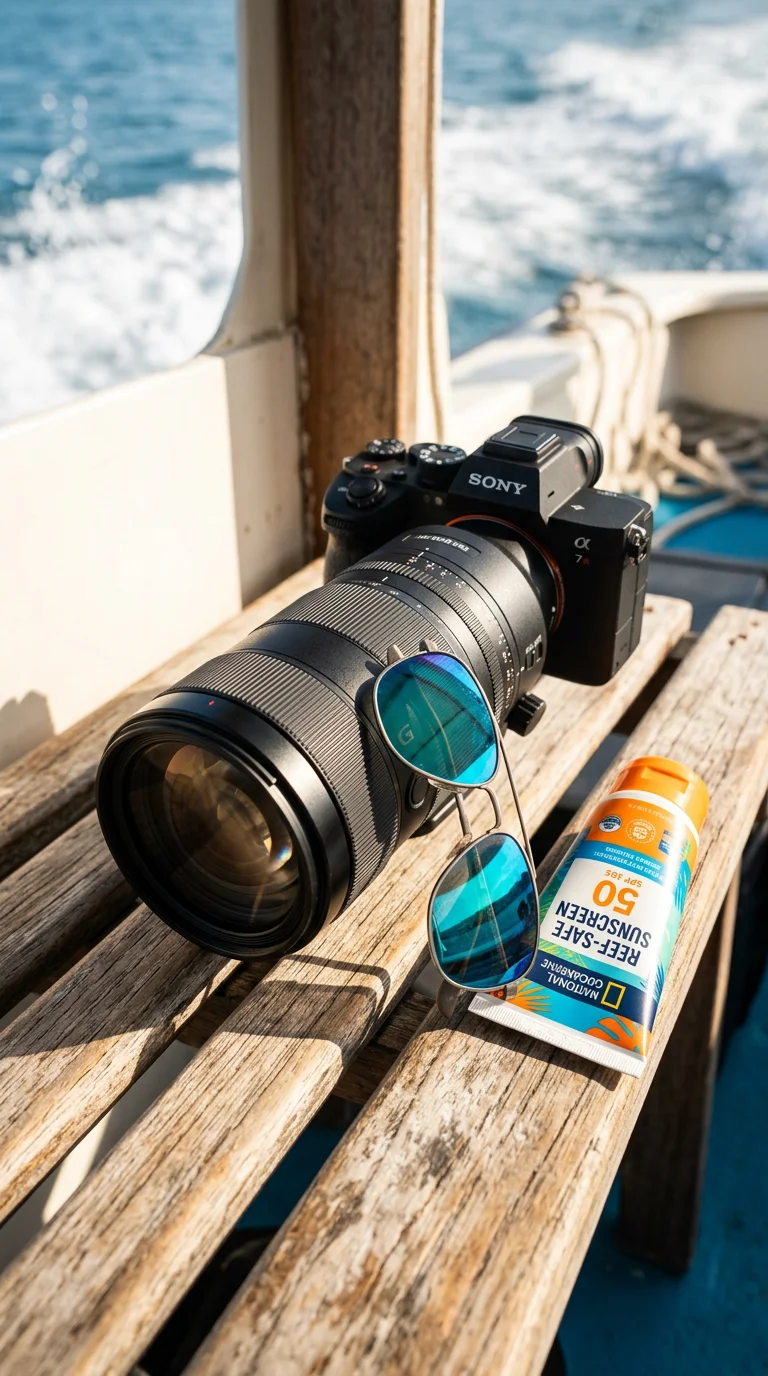
Pack a telephoto lens with a focal length of at least 200mm if bringing a camera. Responsible skippers adhere to marine guidelines by idling their engines roughly 50 metres away from wild pods, meaning smartphone cameras rarely produce clear wildlife shots at that range. Bring a dry bag to protect sensitive optical gear from salt spray and sudden wave crests.
Polarised sunglasses prove invaluable on the water. Cutting through surface glare allows you to spot moving underwater shapes seconds before a dolphin breaks the surface to breathe. Pair these with wide-brimmed hats and lightweight, long-sleeved clothing. Water reflects ultraviolet rays intensely, making sunburn common even on overcast coastal mornings.
Take preventative motion sickness medication roughly 30 minutes before departure if prone to nausea. Traditional wooden longtail boats rock noticeably in open bay swells when their long-shaft engines cut out to let passengers watch the animals in silence.
Carry cash in small Thai Baht denominations, such as 100 THB (approx £2.30) and 500 THB (approx £11.50) notes. Remote fishing piers in Khanom and Chachoengsao operate on cash-only payments and cannot process UK bank cards or overseas digital payment apps.
Check local tide tables before arranging river estuary excursions. Along coastal river mouths like the Bang Pakong in Chachoengsao, receding tides draw schooling fish into the deeper central channels, noticeably lifting cetacean feeding activity.
Confirm life jacket provision with your boatman before stepping aboard. Thai Marine Department regulations require all passenger vessels to provide life jackets, but small rural fishing skiffs frequently carry only standard adult buoyancy aids. If you are travelling with young children, check beforehand that properly fitted child vests are on board or supply your own.
Quick Reference Table
| Item | Detail | Notes |
|---|---|---|
| Primary Wild Habitats | Khanom & Donsak (Gulf of Thailand), Bang Pakong & Upper Gulf, Andaman Sea (Trang & marine national parks) | Khanom is home to roughly sixty resident Indo-Pacific humpback (pink) dolphins |
| Key Native Species | Indo-Pacific humpback dolphin, Irrawaddy dolphin, Indo-Pacific bottlenose dolphin, spinner dolphin | Protected under Thai law; nearshore species feed mainly in waters under thirty metres deep |
| Best Time of Day | 07:00–10:00 | Early morning departures offer the flattest sea conditions, lower glare, and peak foraging activity |
| Khanom & Donsak Season | February to October | Northeast monsoon brings heavy coastal swells and boat cancellations from November through December |
| Upper Gulf Season | August to December (Bang Pakong delta: November to February) | Heavy river runoff attracts dense anchovy and catfish shoals into shallow estuarine waters |
| Andaman Sea Season | November to April | Open waters are rough during the southwest monsoon; Similan and Surin parks close mid-October to mid-May |
| Khanom Longtail Boat Charter | 1,000–1,500 THB (approx £23–£35) per boat | Departs mainland piers such as Laem Prathap or Ao Talet; carries up to six or seven passengers |
| Koh Samui Day Tour to Khanom | 1,900–2,400 THB (approx £44–£56) per person | Shared speedboat from Thong Krut Pier; includes transfers, lunch, and gear (Koh Madsum entry 50 THB extra) |
| Upper Gulf Research Tour | 2,500–3,800 THB (approx £58–£88) per person | Full-day naturalist-led departure from Bangkok to Phetchaburi or Samut Sakhon |
| Trang & Koh Libong Charter | 1,500–2,000 THB (approx £35–£46) per boat | Private longtail from Hat Yao Pier targeting coastal channels for dolphins and wild dugongs |
| Bang Pakong Estuary Charter | 1,000–1,800 THB (approx £23–£42) per boat | Wooden longtail hire from Tha Kham pier in Chachoengsao province |
| Legal & Ethical Regulations | Observation only; swimming with, touching, or feeding wild dolphins is unlawful | Skippers must throttle down within 400 metres and idle engines roughly 50 to 80 metres out |
| Essential Gear | 200mm+ telephoto lens, dry bag, polarised sunglasses, sun protection, motion sickness pills | Smartphone cameras lack sufficient range; piers operate on cash only (carry 100 THB and 500 THB notes) |
| Safety Check | Confirm properly fitted life jackets before boarding | Rural longtails often carry only standard adult buoyancy aids; bring own vests for young children |
| Operator Contact | Wild Encounter Thailand: wildencounterthailand.net / +66 93 558 7171 | Dedicated Upper Gulf cetacean research tours departing from Bangkok |
FAQ: Dolphin Watching in Thailand
Why are some dolphins in Thailand pink?
Where is the best place to see wild dolphins in Thailand?
What is the best time of day for dolphin watching in Thailand?
When is the best time to see Irrawaddy dolphins near Bangkok?
How can travellers see dolphins in Thailand's Andaman Sea?
What is the best season for dolphin watching in Khanom, Thailand?
What are the rules for ethical dolphin watching in Thailand?
What should travellers avoid when booking a dolphin watching tour in Thailand?
How much does dolphin watching cost in Thailand?
What camera gear is recommended for dolphin watching in Thailand?
Reviewed by the Thailand Guide Editorial Team • Last reviewed: 15 November 2026
This page is provided for general information only. While we aim for accuracy, details can change — please verify anything important independently before relying on it.