Fishing in Thailand
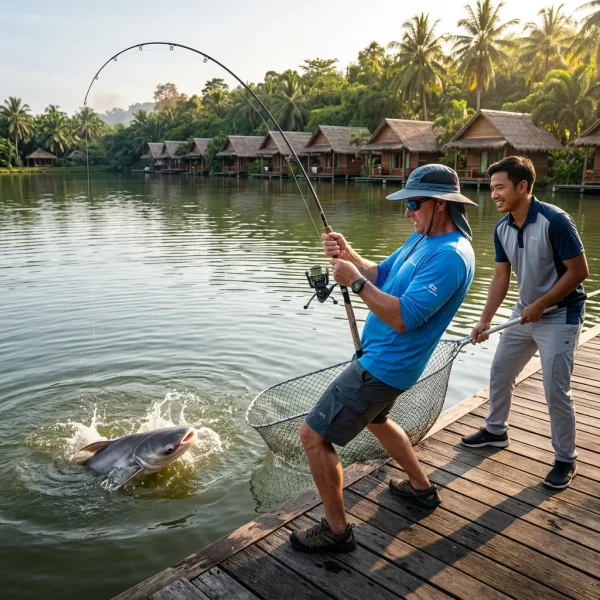
A 100-pound Mekong giant catfish strips line from a multiplier reel in a long, punishing run, bending a stand-up rod across a stocked lake. Tropical heat and humidity take an immediate physical toll, and once the fish is beaten to the bank, a local guide steps into the margins with a heavy-duty mesh cradle to unhook and support the catch without lifting it out of the water.
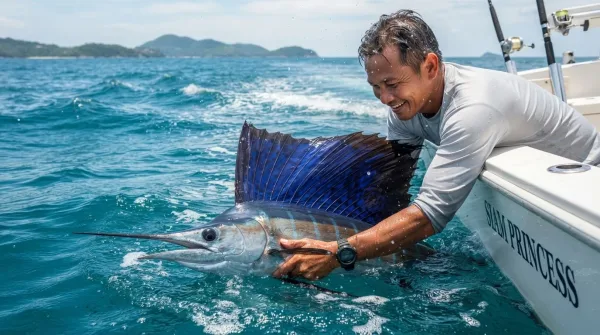
Thailand provides unusually accessible freshwater and saltwater sport. Managed pay-lakes and specialist fishing resorts across the central and southern provinces stock giant specimens including native Siamese carp and Mekong catfish, alongside introduced predators such as South American arapaima. Wild jungle river and dam systems support hard-striking predatory species, notably giant snakehead and jungle perch. Offshore, day charters and liveaboard vessels work the drop-offs of the Andaman Sea and the reefs of the Gulf of Thailand for pelagic game fish including sailfish, giant trevally, and tuna.
This guide explains how British anglers can arrange an independent or fully guided fishing trip in Thailand. It outlines primary angling regions, key target species, tackle requirements, fish-handling standards, legal rules on licensing, and realistic budgets in Thai Baht and British Pounds.

Freshwater Monster Fishing: Pay-Lakes, Specialist Parks and Giant Species
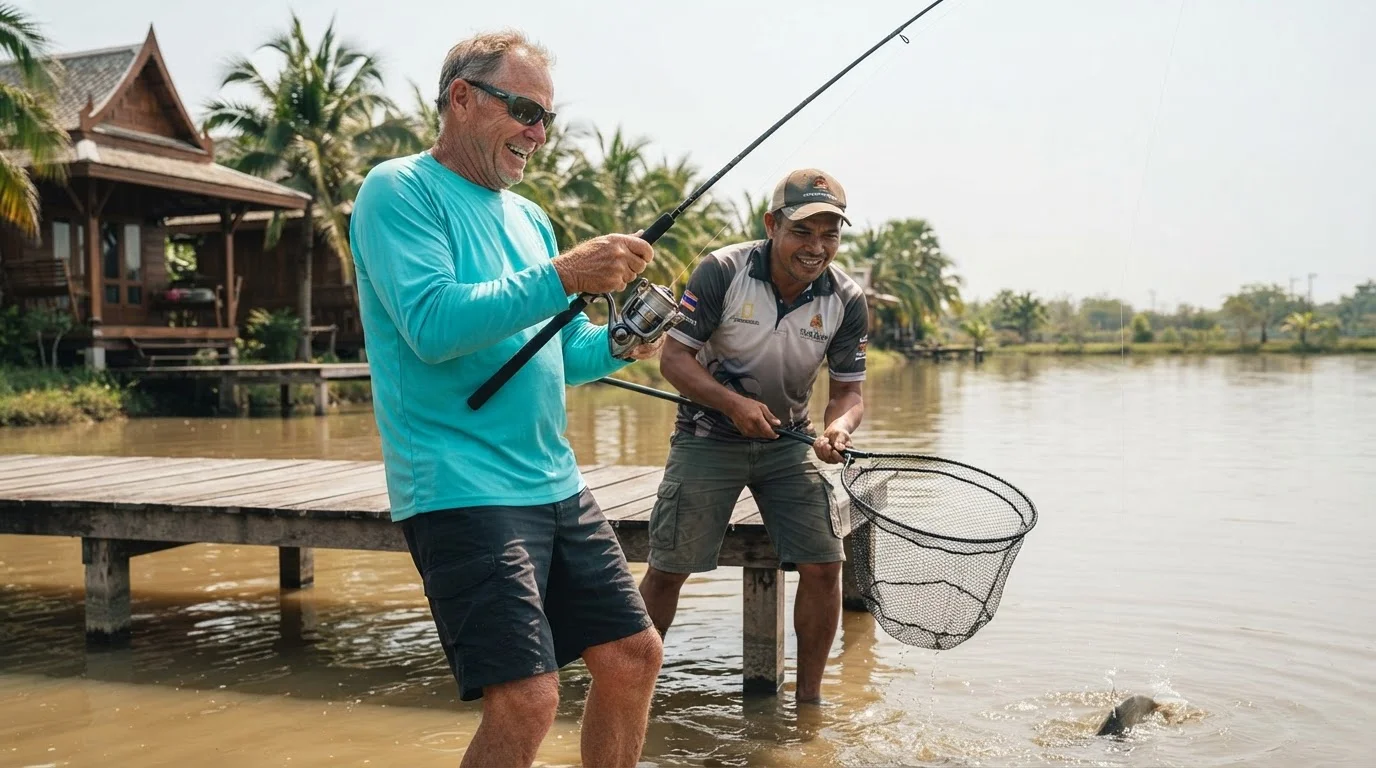
Stocked freshwater fishing parks represent Thailand's most prominent angling sector, engineered specifically to let visiting anglers hook freshwater species that exceed normal wild proportions. Commercial fisheries range from suburban day lakes holding fast-growing catfish to manicured specimen resorts stocked with imported Amazonian predators and native Southeast Asian river giants. At established venues such as New Bungsamran in Chachoengsao, roughly an hour east of central Bangkok, anglers target Mekong giant catfish (Pangasianodon gigas) and giant Siamese carp (Catlocarpio siamensis) weighing anywhere from 30 kg to over 100 kg. Fishing takes place from communal boardwalks or private stilted timber bungalows fitted with electricity, shaded verandahs, and on-site dining delivery. Day tickets for international anglers at New Bungsamran cost 6,000 THB for a 12-hour fishing session (08:00 to 20:00 or 20:00 to 08:00). Tackle hire (500 THB with a 2,000 THB deposit), landing net hire (60 THB), gillie assistance (1,000 THB to 1,500 THB), private bungalows (1,000 THB to 5,000 THB), and bait are charged separately.
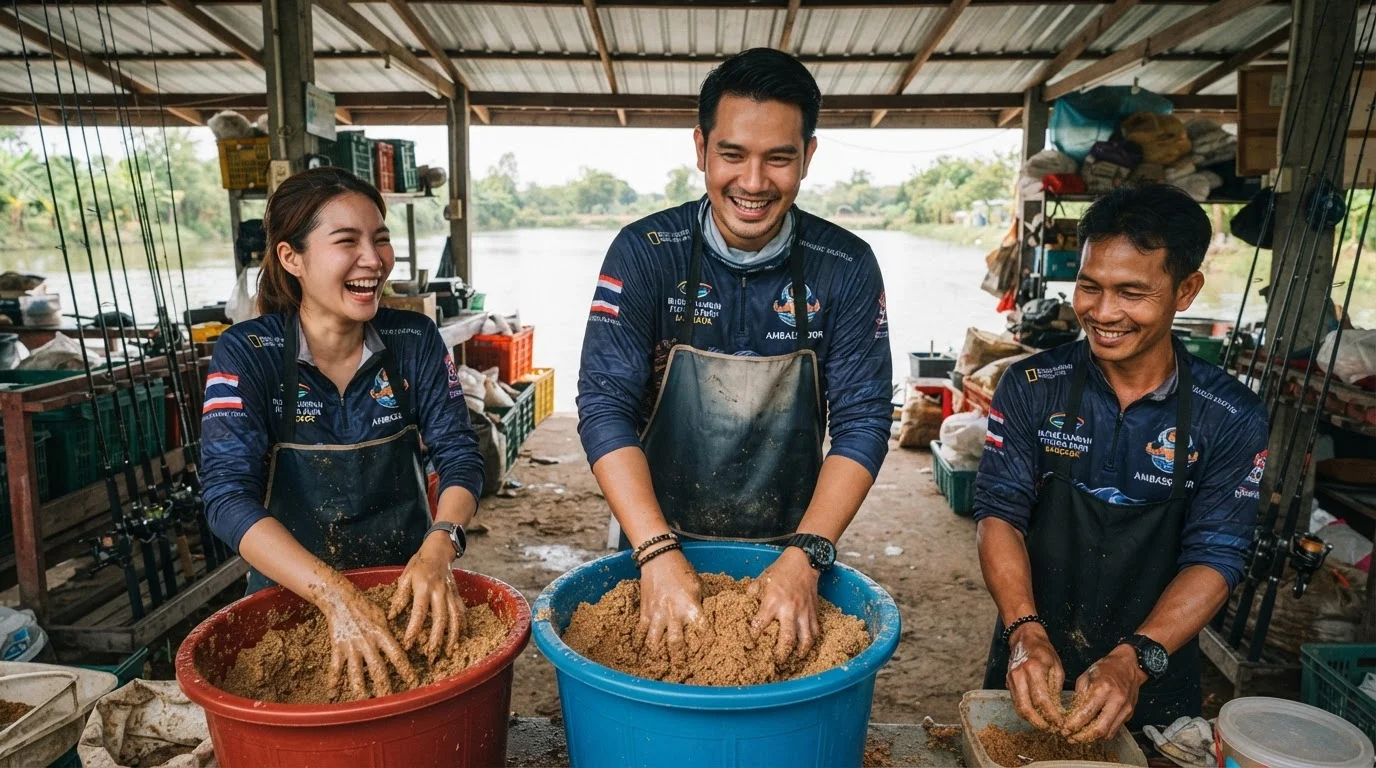
Tactics across carp and catfish lakes centre on heavy method-feeder packs. Anglers mould large spheres of fermented rice bran (lam) or dampened breadcrumbs around wire coil feeders, concealing a short hooklink tipped with crust or buoyant foam pellets just below the surface. When targeting predatory species such as arapaima, Amazon redtail catfish (Phractocephalus hemioliopterus), alligator gar, and Chao Phraya catfish, fisheries switch from grain baits to sea-fish deadbaits, such as mackerel, or poultry cuts.
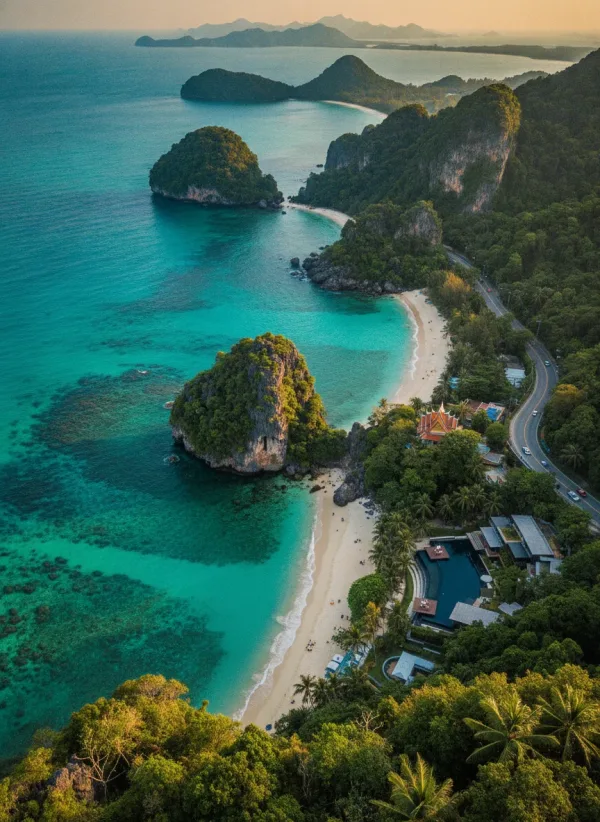
In Krabi, Gillhams Fishing Resort holds over fifty freshwater species within landscaped grounds set against limestone karst formations. The lake contains predatory arapaima exceeding 200 kg, Chao Phraya catfish, Amazon redtail catfish, and giant Siamese carp. Gillhams operates primarily as a residential sporting lodge rather than a walk-in day fishery, requiring advance reservation for lodge packages that combine lakeside bungalows, tackle provision, and full-time guiding. Bait fishing is strictly enforced on the main lake, while lure and fly tactics are reserved for a smaller secondary pond stocked with species up to 25 kg. Package prices vary depending on room category and season, with rates provided upon direct enquiry.
Further north along the Gulf coast in Cha-am, Jurassic Mountain Resort provides manicured swims set against limestone peaks. The fishery holds Siamese carp to 90 kg, arapaima to over 160 kg, Amazon redtail catfish, and Indian carp. Anglers can fish on pre-booked day packages or multi-day residential stays in private villas. Jurassic's standard day fishing package costs 7,700 THB, running from 07:00 until dusk, and includes tackle, bait allowance, swim-side meal service from the on-site restaurant, and dedicated netting support from the fishery team.
In the north, Bo Sang Fishing Park in San Kamphaeng, Chiang Mai, provides an accessible regional venue spanning a 20-rai lake. Anglers fish from shaded timber platforms for hard-fighting Mekong giant catfish and striped catfish running from 5 kg to 25 kg, with larger specimens reaching up to 60 kg. Refreshments are served lakeside by the on-site Coffee Fish restaurant. Independent walk-in permits start at local rates from 350 THB, while pre-arranged tour packages including hotel transfers, tackle hire, bait, and a fishing assistant generally run between 1,600 THB and 2,000 THB.
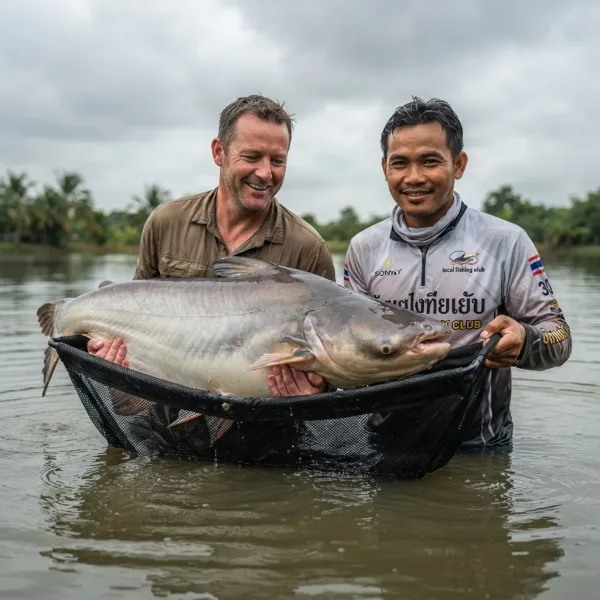
Tackle across dedicated specimen venues is built to withstand immense pressure. Standard setups feature heavy carp and catfish rods rated at 3.5 lb to 5.0 lb test curves, paired with 8000- to 10000-size baitrunner reels or sturdy multipliers spooled with 40 lb to 80 lb braided mainline. Fish welfare rules are strictly enforced at dedicated specimen parks. Gillies handle landing nets, unhooking mats, and weigh slings, and barbless or circle hooks are standard. For massive quarry such as adult arapaima, fish are handled and photographed in the water to avoid putting fatal strain on their internal organs and skeletal structures. Booking an organised package at a specialist pay-lake remains one of the most reliable routes for travelling anglers to encounter genuine specimen fish on a tight holiday schedule.
| Venue | Target Species | Typical Size | Facilities | Cost (THB) |
|---|---|---|---|---|
| New Bungsamran (Bangkok / Chachoengsao) | Mekong giant catfish, giant Siamese carp | 20 kg – 100 kg+ | Stilted wooden bungalows, tackle shop, restaurant, gillies | 6,000 THB foreign angler session ticket; bungalows 1,000 THB – 5,000 THB |
| Gillhams Fishing Resort (Krabi) | Arapaima, Siamese carp, Amazon redtail catfish, Mekong catfish | 25 kg – 200 kg+ | Lakeside bungalows, restaurant, swimming pool, guided swims | Residential packages; prices on enquiry |
| Jurassic Mountain Resort (Cha-am / Hua Hin) | Siamese carp, arapaima, Amazon redtail catfish, Indian carp | 15 kg – 90 kg+ (arapaima to 160 kg+) | Mountain backdrop, private villas, restaurant, lakeside salas | 7,700 THB day package; residential rates on enquiry |
| Bo Sang Fishing Park (Chiang Mai) | Mekong giant catfish, striped catfish | 5 kg – 25 kg (specimens to 60 kg) | Shaded lakeside platforms, restaurant, tackle hire, assistants | 1,600 THB – 2,000 THB tour packages; local tickets from 350 THB |
Wild Waters and Lure Fishing: Reservoirs, Dams and Coastal Ponds
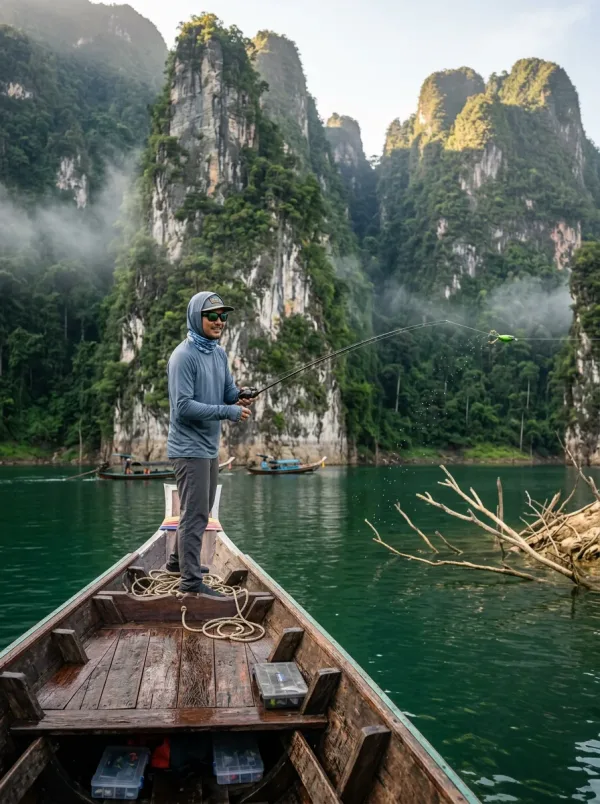
Casting artificial lures across wild reservoirs and purpose-built predator ponds delivers an explosive, visual style of angling that contrasts sharply with stationary bait ledgering. For lure purists, the premier quarry is the giant snakehead (Channa micropeltes), an aggressive apex predator that attacks surface poppers, hollow-body weedless frogs, and buzzing prop baits around submerged timber and weed margins. Because snakeheads are obligate air-breathers, they periodically rise to gulp air at the surface, revealing their location in quiet bays and creating targeted sight-casting opportunities. Extensive wilderness waters provide prime territory for this pursuit. Cheow Lan Lake within Surat Thani's Khao Sok National Park, Srinakarin Dam in Kanchanaburi, and Kaeng Krachan Reservoir in Phetchaburi are traditionally fished from wooden longtail boats piloted by local boatmen who know the seasonal water levels, weed bays, and standing tree lines. In these deep reservoirs, anglers also encounter wild hampala barb, or jungle perch (Hampala macrolepidota), which hunt schooling baitfish along rocky points and stream inflows, taking small spoons, sinking minnows, and deep-diving crankbaits.
Anglers with limited time who cannot commit to multi-day jungle expeditions can access dedicated lure venues roughly an hour east of central Bangkok along the Bangna-Trad corridor in Chachoengsao province. Pilot 111 Ponds operates as a managed commercial complex of several predator-stocked waters where anglers walk the banks casting diving minnows, soft plastics, and walking surface baits for barramundi, snakehead, Asian redtail catfish, and pacu. Nearby Boon Mar Ponds operates across converted brackish aquaculture ponds tailored for catch-and-release sport. Here, hard-striking barramundi (Lates calcarifer) regularly exceed 7 kg and can reach 10 kg, testing terminal tackle with sharp directional changes and hook-throwing aerial leaps. Because barramundi possess abrasive gill plates that easily shear light line, heavy fluorocarbon or monofilament shock leaders are widely used rather than wire traces. On wild reservoirs, hiring an experienced boatman through a verified operator is strongly recommended, as pinpointing territorial fish across thousands of hectares of flooded timber requires daily familiarity with surface-feeding patterns.
| Venue | Target Species | Typical Tackle & Lures | Environment & Setting | Indicative Cost (per day) |
|---|---|---|---|---|
| Cheow Lan Lake (Khao Sok) | Giant snakehead, hampala barb | Topwater lures, 20–30 lb braid, fast-action casting rods | Flooded limestone valleys, jungle margins, timber | Around 4,500 THB – 9,000 THB per boat per day |
| Srinakarin Dam (Kanchanaburi) | Giant snakehead, striped snakehead | Walking baits, crankbaits, spinnerbaits | Expansive reservoir, floating raft houses | Around 4,000 THB – 8,000 THB per boat per day |
| Pilot 111 Ponds (Bangkok perimeter) | Barramundi, snakehead, pacu, featherback | Plugs, soft swimbaits, medium spinning or baitcasting gear | Managed commercial pond complex | Contact venue for current rates |
| Boon Mar Ponds (Chachoengsao) | Barramundi (specimen and sport sizes) | Hard jerkbaits, topwater poppers, heavy leaders | Converted commercial brackish ponds | Contact venue for current rates |
Plan a Gulf of Thailand trip with clear guidance on island groups, ferries, weather, marine parks, accommodation costs and mainland gateways.
Coastal, Offshore and Big-Game Sea Fishing
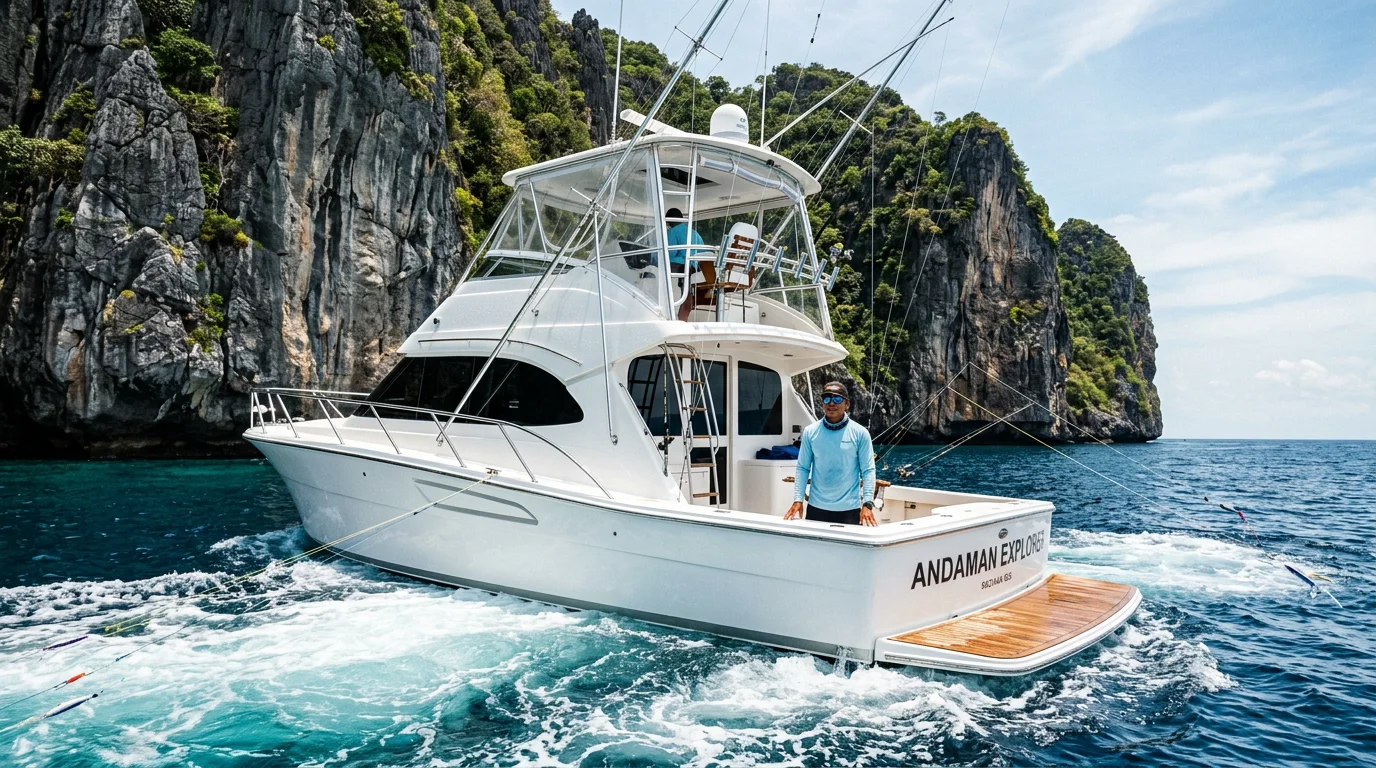
Thailand’s saltwater angling divides across two distinct marine environments: the deep oceanic drop-offs of the Andaman Sea along the western seaboard and the shallower basin of the Gulf of Thailand to the east. The Andaman basin borders the continental shelf where Indian Ocean currents generate substantial upwellings, funnelling pelagic game along continental ledges and submerged seamounts. In contrast, the semi-enclosed Gulf of Thailand averages roughly forty-five metres in depth. Its waters remain sheltered from heavy oceanic swells for much of the year, presenting productive grounds around sunken granite pinnacles, shallow coral reefs, and artificial drop structures where schooling predators hunt baitfish.
Phuket operates as the primary operational hub for Andaman game charters, with vessels departing primarily from Chalong Pier and Rawai Beach. Anglers working these waters target Indo-Pacific sailfish, black marlin, wahoo, dorado, yellowfin tuna, and great barracuda. The waters surrounding Koh Racha Yai and Koh Racha Noi, situated roughly twenty kilometres south of Phuket, provide reliable year-round trolling grounds for sailfish. The northeast monsoon from November to April brings settled seas and predictable trolling conditions, whereas the southwest monsoon between June and August frequently concentrates surface schools of sailfish. Around the submerged pinnacles and current seams off Koh Racha Noi’s southern tip, vertical jigging with heavy metal jigs (150 to 300 grams) produces consistent hook-ups with giant trevally, cobia, dogtooth tuna, and grouper.
Further north along the Andaman coast, game boats departing from Khao Lak and Thap Lamu venture toward the continental drop-off, roughly twenty-five to thirty nautical miles offshore. These oceanic trenches drop steeply into hundreds of metres, creating feeding corridors for black marlin and pelagic tuna. All recreational fishing is strictly prohibited inside Mu Koh Similan and Mu Koh Surin marine national parks under Department of National Parks regulations. Legitimate charter skippers work their trolling spreads and deep-drop rigs strictly outside these park boundaries, fishing the deep shelf edges several miles offshore.
Across the peninsula in the Gulf of Thailand, charter boats operate out of Koh Samui, Koh Tao, and Pattaya. Key quarry includes narrow-barred Spanish mackerel, queenfish, barracuda, cobia, and assorted trevally. Around Koh Samui and Koh Tao, angling concentrates on deep wrecks and granite sea mounts such as Sail Rock and South-West Pinnacle, where live-bait drifting and down-rigged trolling prove productive between March and September. Night excursions frequently incorporate squid jigging under green lights; the squid then serves as bait for nocturnal predators. Near Pattaya, charters focus on bottom drifts over artificial reefs around Koh Larn, Koh Phai, and Koh Khram, alongside light-tackle casting for surface-feeding queenfish.
Vessel selection directly dictates your offshore range and angling success. Traditional wooden longtail boats provide inexpensive coastal access for inshore bottom fishing, but their slow cruising speeds and lack of outriggers make them unsuitable for pelagic trolling in open water. Chasing billfish and tuna requires a dedicated twin-engine game boat fitted with outriggers, radar, fish-finders, and heavy lever-drag reels. Prior to booking, inspect the charter’s equipment to confirm they supply maintained gear from recognised manufacturers such as Shimano or Penn; budget operators frequently run corroded tackle that fails when a sailfish or wahoo makes a long opening run.
| Destination | Target Species | Peak Season | Primary Techniques | Cost (THB) |
|---|---|---|---|---|
| Phuket & Koh Racha | Sailfish, wahoo, dorado, yellowfin tuna, barracuda | November to May (trolling); June to August (sailfish) | High-speed trolling, live-bait drifting, deep jigging | 12,000–22,000 THB per day (private boat) |
| Khao Lak & Similan Outliers | Black marlin, yellowfin tuna, giant trevally, wahoo | December to April | Multi-day liveaboard trolling, heavy jigging | 25,000–60,000 THB per charter (day boat or liveaboard) |
| Koh Samui & Koh Tao | Narrow-barred Spanish mackerel, barracuda, cobia, grouper | March to September | Trolling spoons, live-squid drifting, bottom rigs | 8,000–16,000 THB per day (private boat) |
| Pattaya & Koh Larn | Queenfish, barracuda, cobia, snapper | October to March | Bottom drift fishing, light casting, squid jigging | 6,000–14,000 THB per day (private charter) |
Catch-and-Release Culture, Fish Welfare and Regulations
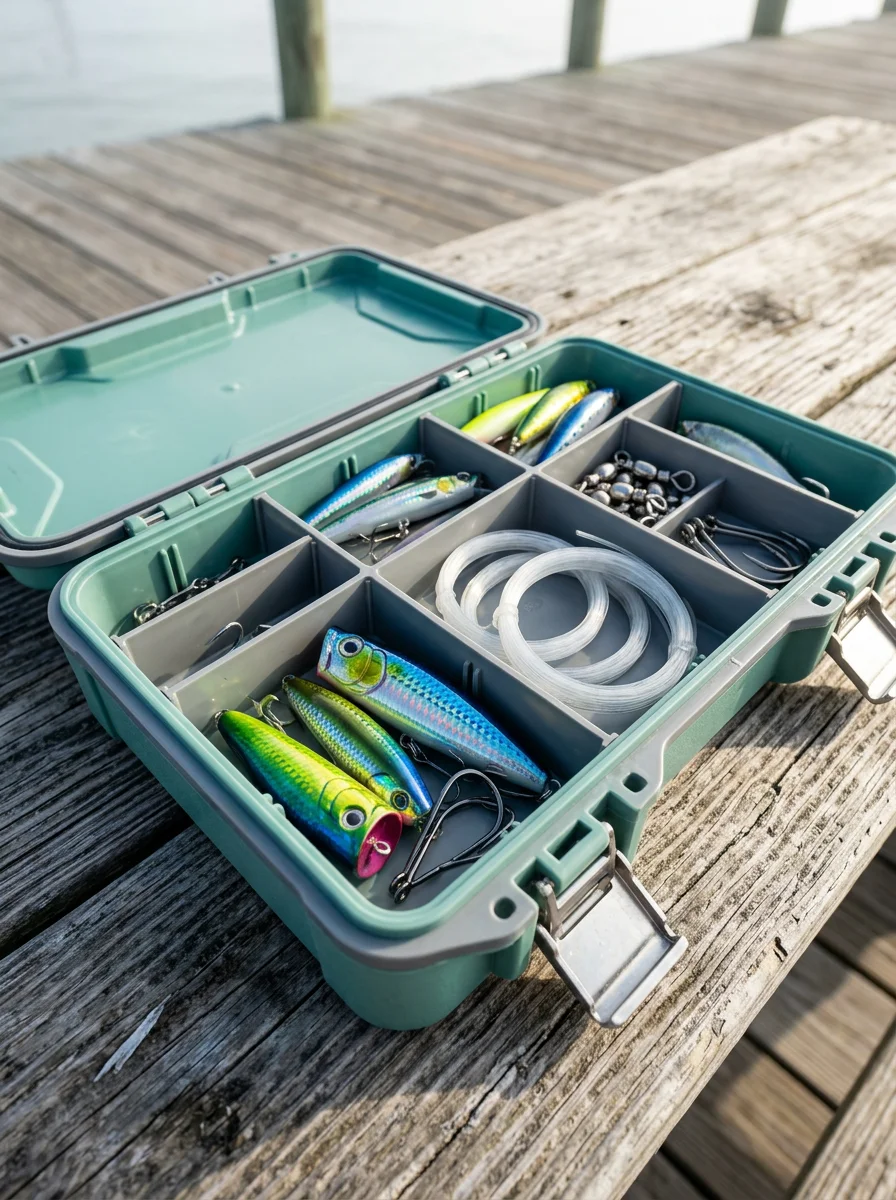
Thailand does not issue a general national rod-and-line recreational fishing licence for individual visiting anglers. When you fish at commercial pay-lakes, the venue's day ticket or admission package covers your legal access, with the fishery's internal rulebook setting tackle limits, hook patterns, and bait choices. Legitimate saltwater charters operating in coastal waters hold commercial maritime and fisheries permits that cover anglers aboard. Outside private fisheries and licensed boats, regulations tighten considerably. Strict legal prohibitions apply inside Thailand's terrestrial and marine national parks under the National Park Act B.E. 2562 (2019). Marine protected areas, including Mu Koh Similan, Mu Koh Surin, and Tarutao Marine National Park, prohibit recreational fishing within their boundaries. Anglers casting inside a marine park risk vessel impoundment, criminal prosecution, prison terms of up to five years, and statutory fines.
In natural freshwater rivers and reservoirs, public rod-and-line angling is generally permitted outside national parks, though the Department of Fisheries enforces seasonal spawning restrictions—known locally as the Red Water Season—between May and November, during which provincial decrees can restrict open waters and methods. Several native species carry strict legal conservation status under Thai wildlife legislation and international conventions. Wild Mekong giant catfish (Pangasianodon gigas) and wild giant freshwater stingray (Urogymnus polylepis) are critically endangered, making targeting, landing, or retaining wild specimens from natural waterways illegal. The specimen catfish and carp encountered in managed pay-lakes originate from licensed captive-breeding hatcheries and are managed under mandatory catch-and-release rules.
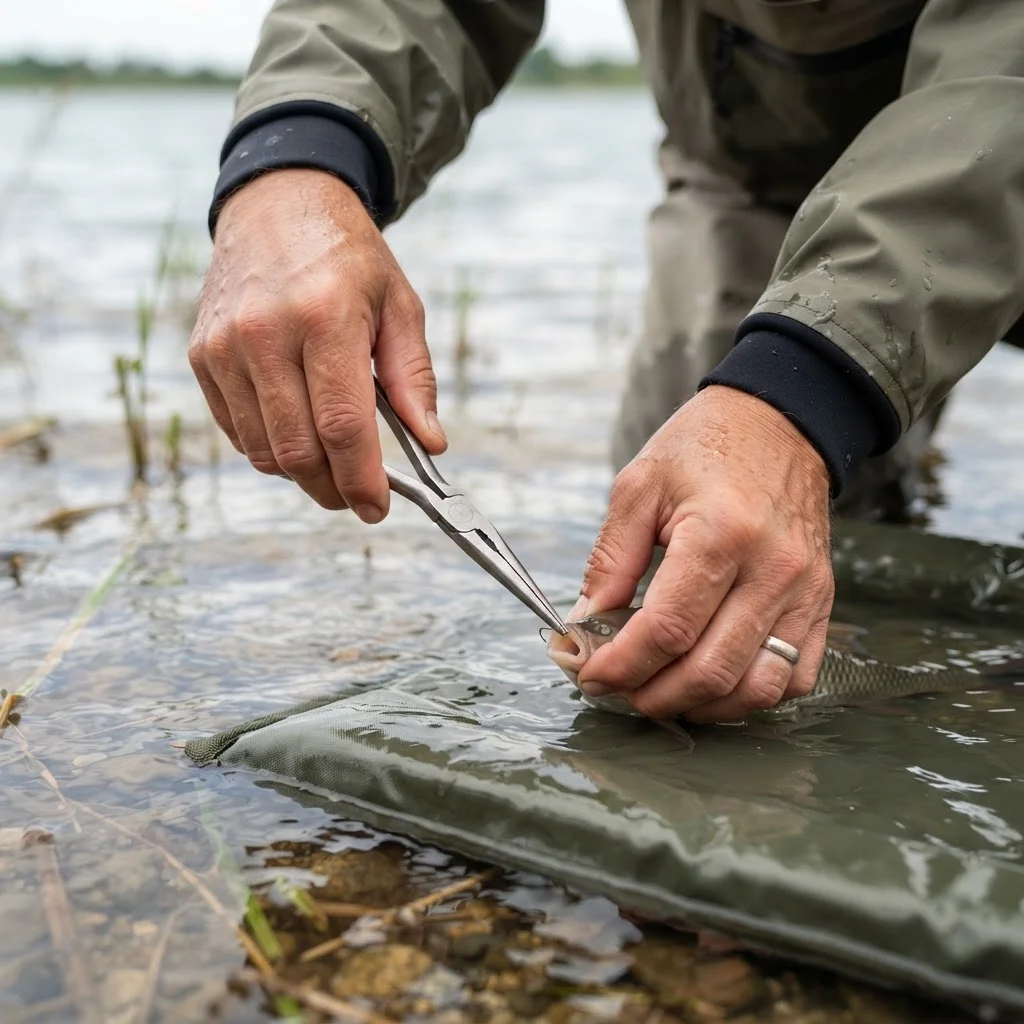
Fish welfare on the bank is stringently enforced across specimen fisheries. Most reputable venues insist on single barbless or crushed-barb hooks, knotless micro-mesh nets, and padded unhooking mats or floating water cradles. Large Mekong giant catfish and Siamese giant carp must remain supported in the water while hooks are removed with long-nosed forceps; hauling heavy fish onto dry timber platforms or concrete banks strips their protective slime coat and risks fatal internal trauma. Handling rules are even stricter for South American arapaima. Because an arapaima's skeletal structure cannot support its weight on dry land, dragging a mature specimen from the water can dislocate vertebrae or crush vital organs. Guides keep arapaima submerged in floating net cages in the lake margins, requiring anglers to step into the water for trophy photographs and waiting until the air-breathing fish takes several gulps of oxygen before release.
Planning Your Trip: Gear, Seasons and Booking Models
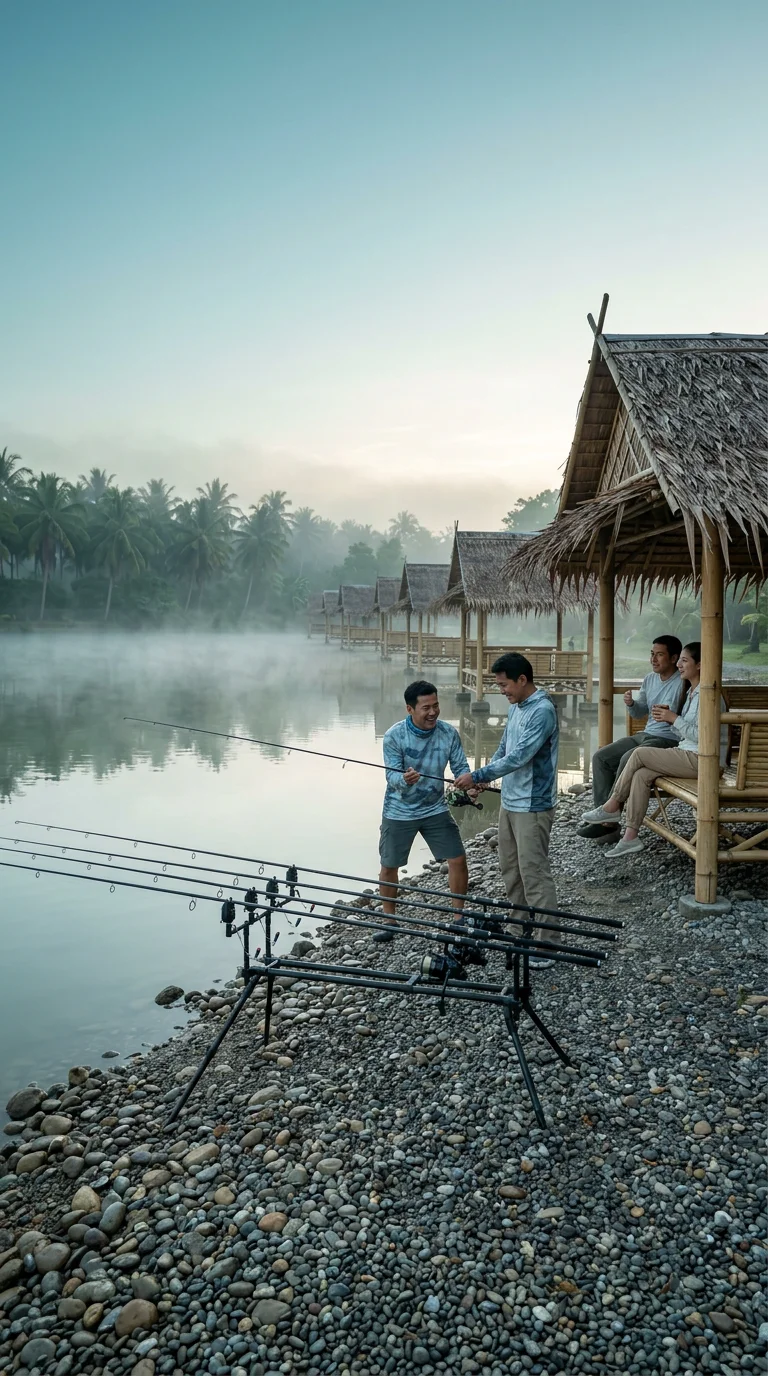
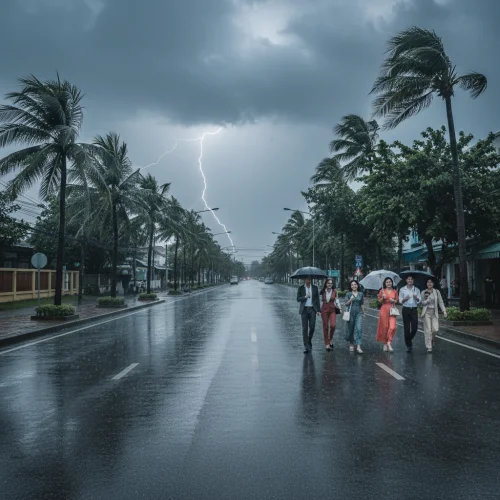
Thailand’s climate follows three distinct phases across the central plains and interior: a cooler, dry period from November to February, intense heat from March to May, and the southwest monsoon from June to October. Freshwater pay-lakes remain productive throughout the year, as managed feeding schedules and aerators keep stocked fish active across changing seasons. Brief afternoon thunderstorms during the monsoon often trigger vigorous feeding spells as falling rain cools surface water and boosts dissolved oxygen levels. Marine angling, however, depends strictly on regional maritime monsoons. The Andaman Sea off Phuket and Khao Lak is calmest between November and April, granting charter boats clear access to offshore drop-offs before heavy southwest monsoon swells halt small-craft operations from May to October. In contrast, the Gulf of Thailand sits in the rain shadow of the southern mountain spine during the summer, leaving fishable coastal windows off Koh Samui, Hua Hin, and Pattaya between February and September, before northeast monsoon rains stir the lower Gulf between October and December.
Transporting your own tackle requires careful packing to comply with international and domestic aviation rules. Multi-piece travel rods that break down into four or five short sections fit neatly inside standard checked suitcases, avoiding oversized sporting-equipment surcharges. Anglers travelling with rigid rod tubes must check specific carrier restrictions in advance, as aircraft cargo hold dimensions vary considerably; for instance, Bangkok Airways limits sporting tubes to 277 centimetres on Airbus jets and 170 centimetres on regional turboprop aircraft. Civil aviation security regulations mandate that all hooks, lures, braided line, line clippers, and sharp tools travel strictly in checked hold luggage. Conversely, electric reels containing lithium-ion batteries and standalone battery packs must travel in your cabin baggage under Civil Aviation Authority of Thailand (CAAT) safety rules, as loose lithium cells are prohibited in aircraft holds. Spare batteries must not exceed 160 watt-hours, with those between 100 and 160 watt-hours capped at two units and requiring prior airline approval.
Venues operate across three main booking models. Day-ticket pay-lakes provide flexible entry with tackle hire, bait counters, and optional guides, suiting casual day sessions or travelling anglers on tight schedules. Specialist specimen lodges, such as Gillhams in Krabi and Jurassic Mountain in Cha-am, operate structured multi-day packages that combine lakeside bungalows or suites, reserved fishing swims, heavy tackle, bait allowances, and guide support. These residential lodges routinely book out months in advance for the November to February dry season, and many enforce strict conditions; Gillhams, for example, sets a two-night minimum stay and requires at least 75 per cent of a booking to comprise fishing days. Saltwater charters divide between private bookings—which grant complete control over departure times, trolling spreads, and targeting—and shared join-in trips, where anglers take turns on rod rotations to reduce individual costs.
Where to Fish Across Thailand: Key Regions and Venues
Thailand’s primary angling venues cluster along established travel corridors, allowing visitors to fit single-day excursions or dedicated lodge stays directly into standard holiday itineraries.
In Bangkok and the Central Plain, anglers have quick access to heavy freshwater pay-lakes and specialist predator waters. Situated roughly an hour east of the capital in Chachoengsao, New Bungsamran spans a 138,000-square-metre (34-acre) lake dropping to depths of 40 metres. Stocked with more than 40 species, its waters hold Mekong giant catfish exceeding 100 kg (220 lb) alongside massive Siamese carp, fished from private overwater bungalows or a community pier using method feeders packed with scented groundbait. South-east of the capital off the Bang Na–Trat Highway in Bang Pakong, Pilot 111 Ponds provides dedicated lure casting across separate pools holding barramundi, giant snakehead, pacu, and Asian redtail catfish. Nearby in Bang Pakong, Boon Mar Ponds operates as a specialist catch-and-release lure-and-fly fishery across multiple ponds focused on hard-striking barramundi.
South along the Gulf coast, Cha-am and Hua Hin provide a base for specimen freshwater fishing. Jurassic Mountain Resort & Fishing Park lies roughly 25 minutes north of Hua Hin in Cha-am, framed by steep limestone hills. Anglers fish from shaded lakeside salas targeting arapaima, Amazon redtail catfish, and Siamese carp that frequently exceed 45 kg (100 lb), using supplied heavy carp tackle and deadbaits or boilies.
Southern Thailand’s Andaman region combines freshwater specimen angling with coastal big-game boating. In Krabi, Gillhams Fishing Resort sits 19 km inland from Ao Nang beneath sheer limestone crags. Its 12-acre main lake holds over 50 species, including arapaima reaching upwards of 180 kg (400 lb), giant Mekong catfish, and Chao Phraya catfish, with fishing restricted to a set number of daily swims to manage angling pressure. In Phuket, Chalong Pier on the south-east coast is the main departure hub for offshore day charters trolling the drop-offs around Koh Racha Yai and Koh Racha Noi for pelagic game such as sailfish, wahoo, and tuna.
Northern Thailand provides a slower pace around Chiang Mai. Bo Sang Fishing Park, situated 30 minutes east of the city centre in San Kamphaeng, features a managed 20-rai lake stocked with Mekong giant catfish weighing between 10 kg and 60 kg alongside striped catfish. Fished with local breadcrumb dough and method feeders, it gives holidaymakers reliable, heavy sport at modest local day rates, complete with rod hire and on-site fishing assistants.
Costs and Budgeting
Angling in Thailand accommodates a broad spectrum of budgets, from independent walk-in sessions at neighbourhood pay-lakes to fully serviced big-game charters and specimen resort holidays. Unguided suburban pay-lakes and urban predator ponds charge walk-in rod fees between 200 THB and 600 THB (approx £4 to £13), with basic tackle rental adding around 300 THB to 500 THB (approx £7 to £11). At premier specimen venues like Bungsamran near Bangkok, the official walk-in fishing fee for foreign anglers is 6,000 THB (approx £133) per 12-hour session; rod hire costs 500 THB and private lakeside bungalows range from 1,000 THB to 5,000 THB. Commercial guided day packages to Bungsamran arranged through tour agencies typically cost between 6,300 THB and 11,000 THB (approx £140 to £244), bundling hotel transfers, heavy tackle, bait allowances, bungalow hire, and a personal guide. Guided barramundi day trips to specialist venues like Boon Mar Ponds in Chachoengsao run from around 6,250 THB to 7,800 THB (approx £139 to £173) through established booking platforms. Offshore, shared day-boat sea charters departing Phuket for the Racha Islands charge roughly 2,500 THB to 3,500 THB (approx £56 to £78) per angler, while private day charters for big-game trolling run between 13,000 THB and 22,000 THB (approx £289 to £489) for the vessel. Dedicated specimen destinations, including Gillhams Fishing Resort in Krabi and Jurassic Mountain Resort in Cha-am, do not offer standard walk-in day tickets; bookings operate as multi-day residential packages with rates quoted individually on request. Neither resort provides all-inclusive packages: Gillhams includes breakfast, with other meals purchased à la carte from its restaurant, while Jurassic incorporates set daily meal credits alongside a 1,500 THB daily bait allowance. Guiding at specimen resorts is shared rather than private, with Gillhams assigning one guide between four anglers.
Beyond headline tickets, anglers should account for recurring incidental costs. Bait consumption is the primary variable expense during freshwater sessions. Packages supply an initial bait ration, but sustained feeder fishing for giant Mekong catfish or Siamese carp usually demands extra mix. At venues like Bungsamran, supplemental bags of rice bran or bread crusts cost 90 THB (approx £2) each, while full sacks of rice bran cost 800 THB (approx £18), meaning an active session can add 500 THB to 1,500 THB (approx £11 to £33) in bait. Borrowed venue tackle frequently requires a refundable cash security deposit, such as 2,000 THB (approx £44) per rod and 200 THB per landing net at Bungsamran. Non-angling partners joining on a bankside sala or platform usually incur a spectator fee of 300 THB to 600 THB (approx £7 to £13). Anglers travelling independently to suburban fisheries should budget taxi fares of 400 THB to 800 THB (approx £9 to £18) each way, arranging return pickup in advance with the driver, as ride-hailing services are rarely available near rural ponds.
| Fishing Option | Cost (THB) | Approx Cost (GBP) | Details and Inclusions |
|---|---|---|---|
| Local Pay-Lake / Lure Pond (DIY Walk-in) | 200 THB – 600 THB | £4 – £13 | Entry only; bait and basic rod hire charged separately |
| Bangkok Specimen Pay-Lake (Bungsamran) | 6,000 THB (walk-in) / 6,300 THB – 11,000 THB (guided package) | £133 (walk-in) / £140 – £244 (package) | Official foreign-angler walk-in ticket 6,000 THB; full agency packages add hotel transfers, heavy tackle, bait, bungalow, guide |
| Chiang Mai Catfish Park (Bo Sang Package) | 1,600 THB – 2,000 THB | £36 – £44 | Half-day or full-day package; includes transfers, rod, bait, assistant guide, lunch |
| Shared Sea Charter (Phuket / Racha Islands) | 2,500 THB – 3,500 THB | £56 – £78 | Per angler rate on shared boat; includes lunch, tackle, trolling |
| Private Offshore Big-Game Charter (Phuket Day Boat) | 13,000 THB – 22,000 THB | £289 – £489 | Full boat up to 4–6 anglers; crew, fuel, outriggers, tackle, lunch included |
| Residential Specimen Resort (Gillhams / Jurassic Mountain) | Quoted on request | Varies by package | Multi-day residential packages; includes villa/suite, tackle, bait allowance, shared guiding; breakfast/meal credit included, not all-inclusive |
| Guided Barramundi Day Trip (Boon Mar Ponds) | 6,250 THB – 7,800 THB | £139 – £173 | Guided package via booking platform; includes Bangkok transfers, tackle, guide, lunch |
Bankside and boat tipping forms an established element of daily budgeting. Thai gillies at commercial pay-lakes assist with netting heavy specimens, unhooking, and fish handling throughout long sessions; tipping 200 THB to 500 THB (approx £4 to £11) per angler reflects attentive support. On private or shared sea charters, a crew gratuity of 500 THB to 1,000 THB (approx £11 to £22), split between deckhands and the skipper, is standard practice for a full-day trip. Payment logistics require foresight: while large specimen resorts accept major payment cards, local tackle shops, rural pay-lakes, independent boat skippers, and bankside food stalls operate almost exclusively in cash. Drawing sufficient Thai Baht from an ATM in town before departing avoids payment difficulties on the bank.
What To Know Before You Go
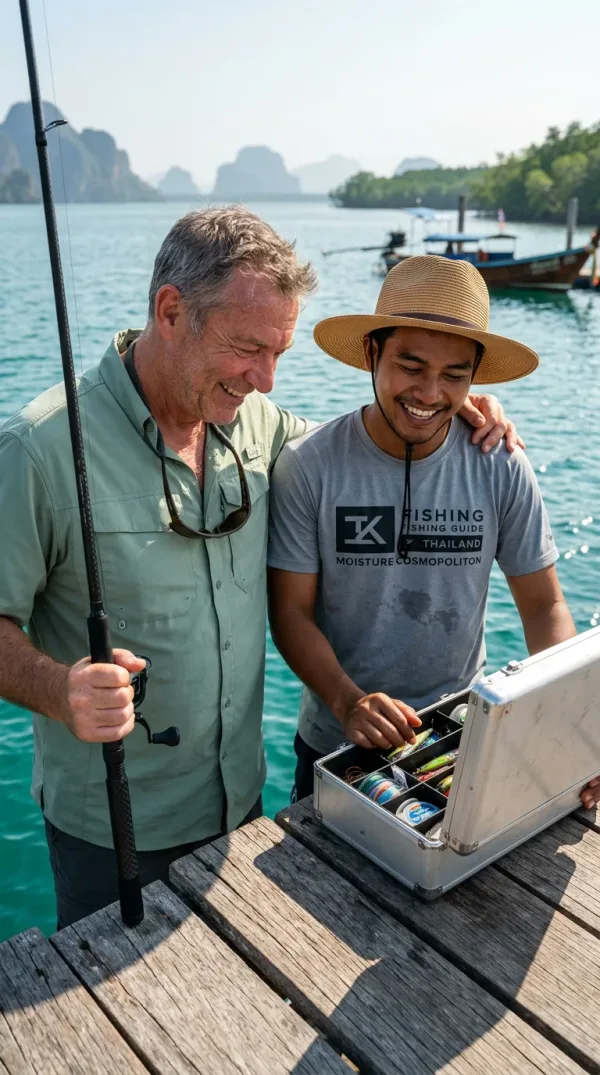
Hiring a local gillie or guide makes practical sense when visiting commercial pay-lakes for the first time. Thailand's specimen fisheries hold massive Mekong giant catfish and Siamese carp that comfortably exceed 30 kilograms, with mature specimens frequently passing 60 to 100 kilograms. Inexperienced handling can easily damage standard terminal tackle, snap carbon rods, or result in gear being dragged into the lake if bait runners and rod pods are set incorrectly. A local guide understands the required bait consistency, casting distances, strike timing, and in-water handling techniques needed to land and release these fish without harming the catch.
For coastal and saltwater charters, inspecting vessel seaworthiness before handing over a deposit is sensible. Thailand's Marine Department sets regulations for commercial passenger craft, but smaller independent boat operators and converted wooden longtails vary widely in their equipment. Before departing, check that the skipper provides properly fitted life jackets in good condition for everyone on board. It is also wise to verify that the vessel carries basic offshore emergency gear, including a working marine VHF radio, distress flares, and a first-aid kit, and to confirm that the operator's commercial passenger insurance is current.
Boundary awareness is critical if you plan on independent lure casting around coastal headlands, beaches, or wild estuaries. Thailand does not require a personal rod licence for recreational sea angling from public shores or licensed charter boats, yet fishing inside designated marine national parks and aquatic reserves is strictly prohibited under Thai conservation law. Rangers actively patrol protected waters, and infractions risk gear confiscation alongside substantial fines. Consult local port authorities, charter skippers, or local guides before casting in unfamiliar coastal waters to avoid protected boundaries.
Long days on open water or unshaded lake banks bring severe heat risks. Strong ultraviolet radiation reflects heavily off tropical water, compounding the danger of heat exhaustion and severe sunburn. Pack lightweight UPF 50+ long-sleeved clothing, sun-protection gloves, a wide-brimmed hat, and quality polarised sunglasses. Polarised lenses cut harsh surface glare to help spot cruising fish, whilst providing physical protection for your eyes against stray hooks and snapping line. UK travel insurance policies should also be checked in advance to ensure they explicitly cover offshore boat excursions and emergency medical evacuation from rural waterways.
Practical Tips
Rigging appropriate terminal tackle is critical when lure fishing for tropical predatory species. Barramundi possess razor-sharp opercular gill plates that slice unprotected lines during energetic headshakes, whilst giant snakehead have bone-crushing jaws and sharp teeth that sever ordinary monofilament. Tying a 40 lb to 60 lb fluorocarbon shock leader between your braided mainline and lure provides vital abrasion resistance without alarming fish in heavily pressured pay-lakes.
Fishery rental tackle takes continuous punishment in humid tropical conditions. Before casting, inspect the rod guides by running a fingernail around the inside of each ceramic ring to spot hairline fractures that can shred braided line under tension. Strip line from the reel by hand to verify that the drag washers release smoothly rather than jerking or sticking under load, which can snap lines during sudden, high-speed runs.
Full-day sessions at intensive specimen venues such as Bungsamran can be physically demanding in high heat. Renting an on-site private bungalow—with options ranging from basic open-air shelters to air-conditioned waterfront units starting from 1,000 THB per session—provides a shaded deck, seating, running water, and electricity. Having a private space to rest during slow midday hours keeps you refreshed when bite alarms sound again in the late afternoon.
Battling powerful fish in temperatures exceeding 34°C burns through fluids rapidly. Drink bottled water regularly throughout the session, and mix in electrolyte replacement sachets, which are sold in convenience stores nationwide. Relying solely on plain water often leads to muscle cramps and fatigue during protracted fights.
Tipping venue gillies and boat deckhands is customary for personal assistance. A gratuity of 300 THB to 500 THB per day reflects the heavy labour guides carry out, from preparing bait and casting heavy rigs to netting, unhooking, and reviving specimen fish. Carry small-denomination Thai Baht banknotes, as fishery staff and boat crew rarely carry change.
When planning coastal longtail excursions or offshore bottom-fishing trips, consult local tide tables. Strong spring tides generate powerful underwater currents that drag tackle off station unless you employ lead sinkers so heavy they deaden bite detection. Scheduling your trip around neap tides produces far steadier drift speeds and cleaner presentation.
An activated mobile data connection makes organising transport far smoother. Installing an eSIM before you head out ensures you maintain coverage to coordinate pier collections, message fishery drivers, navigate rural routes, and use translation tools when discussing tactics with local staff.
Quick Reference Table
| Item | Detail | Notes |
|---|---|---|
| Recreational Fishing Licence | Not required | Individual national rod licences do not exist; fishery tickets or charter permits cover legal access |
| Marine National Park Restrictions | Strictly prohibited | Recreational fishing banned in marine parks under National Park Act B.E. 2562 (2019); up to 5 years' prison |
| New Bungsamran Day Ticket | 6,000 THB (~£133) | 12-hour session fee for foreign anglers; tackle hire 500 THB, bungalows 1,000 THB – 5,000 THB |
| Jurassic Mountain Day Package | 7,700 THB | 07:00 to dusk; includes tackle, bait allowance, meal service, and netting support |
| Bo Sang Fishing Park Permit | 350 THB (walk-in) / 1,600 THB – 2,000 THB (package) | Chiang Mai venue; tour package includes hotel transfers, tackle, bait, guide, and lunch |
| Local Pay-Lakes & Predator Ponds | 200 THB – 600 THB (~£4 – £13) | Walk-in entry fee; basic rod hire adds roughly 300 THB – 500 THB (~£7 – £11) |
| Guided Barramundi Day Trips | 6,250 THB – 7,800 THB (~£139 – £173) | Commercial guided package to specialist venues like Boon Mar Ponds; includes Bangkok transfers |
| Wild Reservoir Boat Hire | 4,000 THB – 9,000 THB per boat/day | Longtail boat and driver hire for lure fishing at Cheow Lan Lake or Srinakarin Dam |
| Shared Sea Fishing Charters | 2,500 THB – 3,500 THB (~£56 – £78) per angler | Day-boat charters departing Phuket for Koh Racha; includes tackle, trolling, and lunch |
| Private Offshore Big-Game Charters | 13,000 THB – 22,000 THB (~£289 – £489) per day | Phuket private day boat for 4–6 anglers; multi-day Khao Lak liveaboards reach 25,000 THB – 60,000 THB |
| Peak Saltwater Seasons | Nov – Apr (Andaman) / Mar – Sep (Gulf) | Andaman offers calmest sea conditions; Gulf offers sheltered fishing during southwest monsoon |
| Typical Tipping Rates | 200 THB – 500 THB (gillies) / 500 THB – 1,000 THB (boat crew) | Standard cash gratuities per angler or boat for landing, unhooking, and deck assistance |
| Website | bungsamran.com | New Bungsamran official site |
| Website | gillhamsfishingresorts.com | Gillhams Fishing Resort official site |
| Website | jurassicfishingthailand.com | Jurassic Mountain Resort official site |
| Website | bosangfishingpark.com | Bo Sang Fishing Park official site |
| Phone | +66 86 164 4554 | Gillhams Fishing Resort |
| Phone | +66 61 631 2614 | Jurassic Mountain Resort |
FAQ: Fishing in Thailand
Do I need a fishing licence to fish in Thailand?
Is recreational fishing allowed in Thailand's national parks?
How should large arapaima be handled after being caught in Thailand?
What should I check when using rental fishing tackle in Thailand?
How can I prevent dehydration and heat fatigue during long fishing sessions in Thailand?
What is the best way to handle payments at fishing venues in Thailand?
What should I check in my travel insurance policy for a fishing trip to Thailand?
What are the different booking options for fishing trips in Thailand?
When is the best time for marine fishing in Thailand's Andaman Sea?
When is the best time for marine fishing in Thailand's Gulf of Thailand?
Reviewed by the Thailand Guide Editorial Team • Last reviewed: 9 November 2026
This page is provided for general information only. While we aim for accuracy, details can change — please verify anything important independently before relying on it.