Fishing Licences & Regulations in Thailand
A single cast off coastal rocks in Phuket can land you a trevally without paperwork, yet deploying identical tackle inside a marine national park like Koh Similan can trigger gear confiscation, prosecution, and fines. Thailand is an accessible destination for sport fishing, but the legal divide between unrestricted coastal waters and strictly policed conservation zones requires careful attention.
This guide clarifies the legal framework governing recreational angling across Thailand, helping British anglers, expatriates, and holidaymakers fish responsibly within the law. You will learn how national legislation treats recreational rod-and-line sport, which public waters and reservoirs require local permissions, where no-take marine reserves operate, and how managed private fisheries function compared to wild venues. Whether arranging an offshore game charter or fishing from a freshwater bank, this overview explains the permits, seasonal restrictions, and wildlife protections you need to understand before casting.

The Licensing Myth: Do Anglers Need a National Fishing Permit?
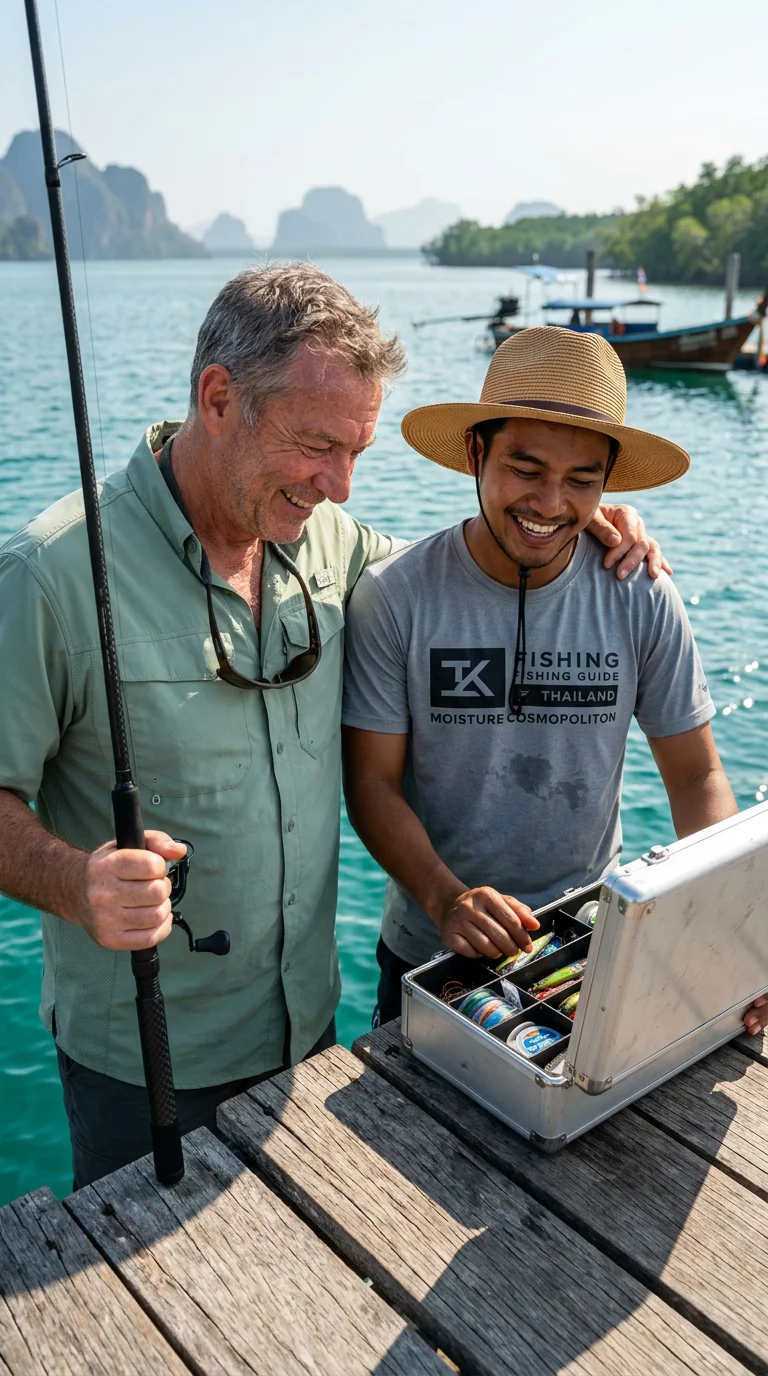
Thailand does not issue an individual state-administered rod licence for recreational anglers fishing with conventional rod-and-line tackle in open, non-protected waters. Unlike in the UK, where anyone fishing freshwater rivers and lakes must purchase an Environment Agency rod licence, Thai authorities do not require solo anglers casting from a public pier, beach, or navigable riverbank to register with a municipal office or carry personal paperwork.
Statutory fisheries oversight rests on the Royal Ordinance on Fisheries B.E. 2558 (2015) and its subsequent amendments. This legal framework focuses on commercial fleet management, vessel licensing, total allowable catch quotas, and the elimination of illegal, unreported, and unregulated harvesting. Hook-and-line sport fishing for personal recreation falls outside these commercial permit requirements, provided you do not sell your catch or deploy commercial-scale gear such as longlines, gill nets, or mechanical traps. When you book an offshore charter or visit a managed angling park, you still need no personal permit; statutory licensing obligations fall entirely on the charter skipper or lake business.
Flying into Thailand with personal tackle involves minimal bureaucracy. Customs officers at major gateways such as Bangkok Suvarnabhumi and Phuket routinely clear cased travel rods, reels, and artificial lures as standard sporting luggage, requiring no special wildlife or sporting import permits for personal gear. Airline regulations require long rod tubes to travel in the aircraft hold rather than as cabin baggage.
The lack of a personal rod licence does not create an unregulated free-for-all. Authority over Thai waterways is divided between the Department of Fisheries, the Department of National Parks, Wildlife and Plant Conservation, and the Marine Department. While recreational angling is permitted in open public waters, national parks and designated aquatic reserves enforce strict no-take protections. Foreign visitors must also remember that commercial fishing is strictly reserved for Thai nationals under the Foreign Business Act, making paid guiding, commercial crewing, or fish sales a criminal immigration and labour offence.
Freshwater Boundaries: Public Waters, Reservoirs, and Temple Sanctuaries
Recreational freshwater angling in Thailand operates without a universal national rod licence, but it is shaped by regional jurisdiction, environmental protection zones, and cultural boundaries.
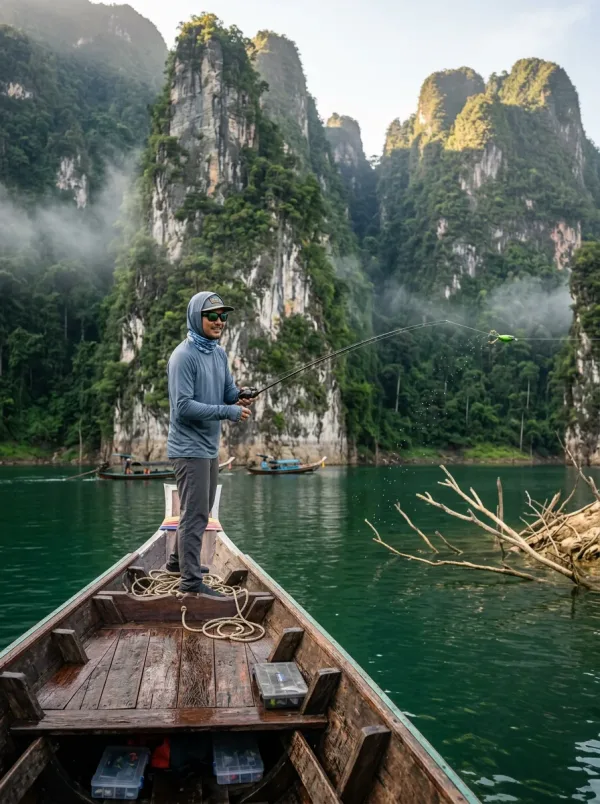
In unmanaged public river systems, including the Chao Phraya, Bang Pakong, and lower Mae Klong rivers, recreational rod-and-line fishing from banks or small craft is widely permitted. Major state-operated hydroelectric reservoirs, such as Srinakarin and Khao Laem in Kanchanaburi or Cheow Lan Lake in Surat Thani, provide substantial sport for giant snakehead and jungle perch. Because several of these reservoirs intersect protected national parks or forestry reserves, visiting anglers must obtain permission at local park ranger stations or dam administration offices, an arrangement typically managed through licensed local boatmen.
A strict legal and spiritual exclusion applies near Buddhist temples. Under the Royal Ordinance on Fisheries, waters bordering monasteries and sacred piers are designated as protected aquatic sanctuaries. Monks, worshippers, and visitors regularly release and feed carp and catfish here to make spiritual merit. Casting a lure or bait into these sanctuary zones is an offence under statutory fisheries law and causes severe offence to local communities.
Anglers must also observe the Department of Fisheries' annual freshwater spawning restrictions, widely referred to as the red water season. Enforced in regional phases between May and November, these conservation rules prohibit commercial nets, traps, and intensive gear across rivers, reservoirs, and natural wetlands during peak breeding periods. While simple handlines and single-hook recreational rods remain permitted in most public waters during this window, fishing near demarcated spawning zones is prohibited, with fines for regulatory breaches ranging between 5,000 THB and 50,000 THB (approx £115 to £1,150). Check local reservoir status before casting and maintain a clear berth from temple moorings.
Plan a journey along Thailand’s Andaman coast, with practical guidance on island gateways, marine parks, diving, ferries and monsoon travel.
Coastal Waters and the Sea: Open Fishing Grounds vs Marine National Parks
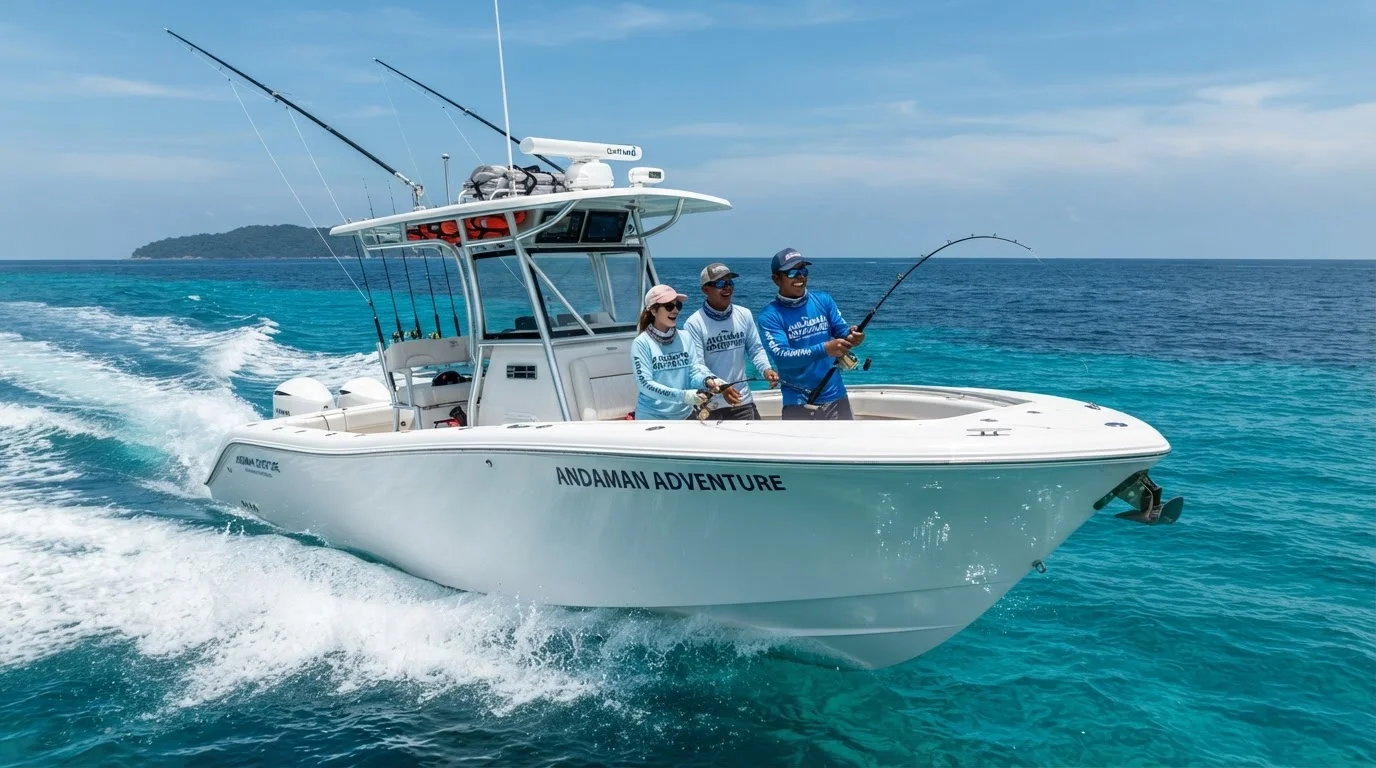
The boundary between open coastal waters and marine protected areas is the most strictly policed division in Thai sea angling. In unrestricted marine waters—including the open sea off Pattaya, the coastal headlands of Phuket, and much of the Gulf of Thailand—recreational rod-and-line fishing from beaches, rocky breakwaters, or private boats requires no individual government licence. Anglers can target pelagic and reef species across these open grounds provided they respect basic environmental protections and avoid endangered species.
The legal position changes completely the moment a vessel enters a Marine National Park. Under the National Parks Act B.E. 2562 (2019), most designated marine parks are strict no-take reserves managed by the Department of National Parks, Wildlife and Plant Conservation. Highly visited archipelagos including the Similan Islands, the Surin Islands, Koh Phi Phi, Koh Tarutao, and Mu Koh Ang Thong ban fishing of any kind. Under Section 19 of the Act, taking aquatic animals, damaging marine habitats, or bringing hunting and fishing gear into park waters without permission constitutes a serious criminal offence. Section 43 sets severe penalties for harming or taking wildlife, exposing offenders to prison sentences of up to five years, fines, or both, alongside the immediate confiscation of vessels and tackle.
Park rangers patrol these marine boundaries using fast patrol craft, conducting spot boardings to inspect boats and check fishing holds. Reputable charter skippers departing from hubs such as Chalong Marina in Phuket or Thap Lamu in Phang Nga set their GPS plotters to stay well outside designated park coordinates. When spearfishing, the rules are equally rigid: breath-hold apnea freediving with a speargun is permitted in open coastal waters, but using scuba or compressed air apparatus to spearfish is a nationwide criminal offence. Bringing a speargun into any marine national park is also outlawed. Before dropping lines on any sea trip, check the skipper's electronic chart to confirm your vessel is floating entirely clear of protected boundaries.
Private Pay-Lakes and Resorts: Day Tickets, Welfare, and Venue Regulations
Privately owned pay-lakes, commercial angling parks, and specimen fishing resorts operate entirely on private land, sitting outside Thailand's statutory wild-fisheries regulations. Anglers do not need a national rod licence from the Department of Fisheries to cast a line at these venues. Instead, your entry fee or day ticket serves as complete authorisation to fish on site.
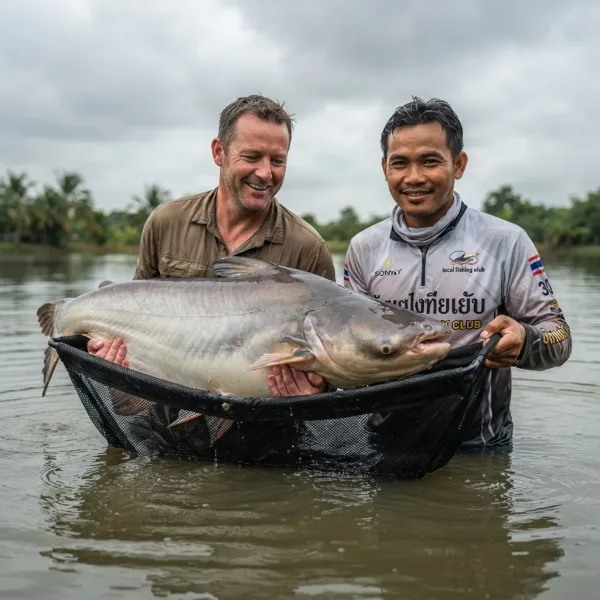
Commercial venues broadly divide into two categories. Municipal day-ticket ponds cater primarily to local anglers targeting striped catfish and tilapia for modest entry fees, where visitors can often purchase their catch by weight for the table. By contrast, dedicated sport fisheries and luxury angling resorts house prized specimen stocks, including giant Mekong catfish, giant Siamese carp, and introduced South American species such as arapaima and redtail catfish.
At specimen venues, statutory fishery rules are replaced by strict private welfare mandates designed to protect valuable stock. Most resorts enforce rigorous tackle requirements: single barbless hooks, minimum monofilament line strengths typically between 35lb and 50lb, and free-running inline rigs. Treble hooks, wire traces, and multiple hook links are prohibited. Venues routinely inspect or supply their own bait to safeguard water quality and control fish nutrition, forbidding artificial lures or outside live baits.
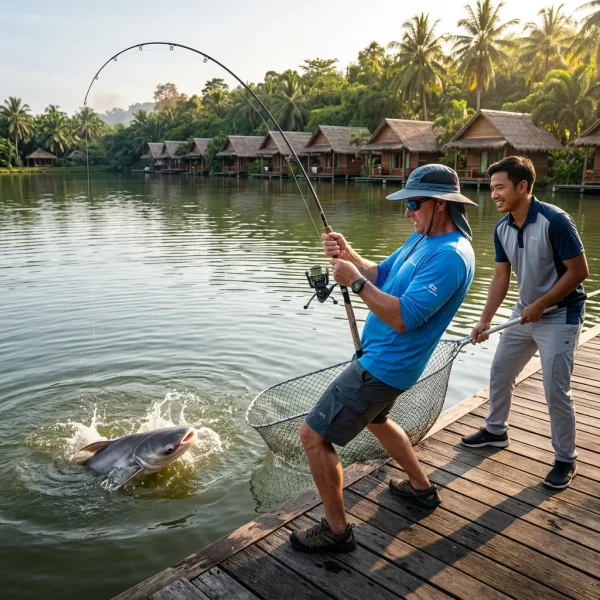
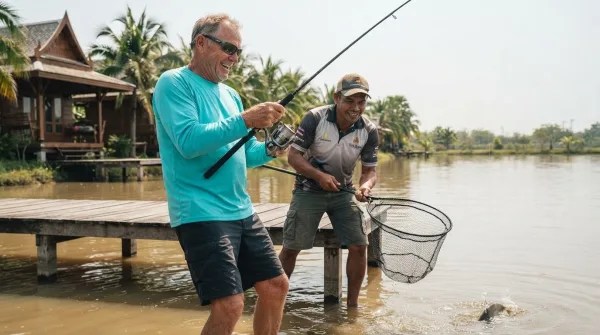
Fish welfare dictates handling from bite to release. Specimen resorts operate mandatory catch-and-release policies, forbidding fish retention. Anglers are assisted by venue guides who oversee netting, unhooking, and photographic handling. Large specimens must remain supported in the water or rested across padded unhooking cradles rather than dragged onto concrete banks. Lifting heavy fish vertically by the gills or mouth is forbidden, as the suspension can fatally injure internal organs. Hooks are removed using forceps, puncture marks are treated with antiseptic spray, and fish are supported upright until fully revived.
| Venue Category | Regulatory Authority | Individual Permit Needed? | Primary Restrictions | Catch Policy |
|---|---|---|---|---|
| Private Pay-Lakes / Resorts | Commercial Owner / Operator | Venue Day Ticket only | Barbless hooks, line strength minimums, venue bait | Catch-and-release at specimen venues |
| Public Rivers & Canals | Department of Fisheries (DOF) | No personal licence | No temple grounds, seasonal net bans, no poisons | Retention permitted (non-protected species) |
| Hydroelectric Reservoirs | Provincial Forestry / DOF / EGAT | Local site entry permission | Ranger checkpoint clearance, local boat rules | Retention permitted or local catch-and-release |
| Open Coastal Waters | Department of Fisheries / Marine Dept | No personal licence | No scuba spearfishing, gear limits, vessel compliance | Mixed bag retention (non-protected species) |
| Marine National Parks | Department of National Parks (DNP) | Prohibited to anglers | Zero fishing, no tackle possession inside borders | Absolute zero-take conservation zone |
Prohibited Gear, Conservation Bans, and Protected Species
Thailand enforces strict statutory bans on destructive fishing apparatus under the Royal Ordinance on Fisheries. Methods such as using explosives, chemical poisons, stupefying substances, or electrofishing gear are serious criminal offences. Under national fisheries legislation, deploying these methods carries prison sentences of one to five years, statutory fines ranging, or both. Coastal and riverine regulations also restrict indiscriminate commercial gear, including fine-mesh trawls and monofilament gill nets spanning entire waterways.
Recreational anglers must use conventional sporting tackle: handheld rods, reels, and lines fitted with single or treble hooks, lures, or casting jigs. Spearfishing is permitted only in open coastal waters outside designated marine parks and must be conducted strictly on breath-hold. Taking fish or carrying loaded spearfishing gear while breathing compressed gas from scuba tanks is a statutory offence throughout the country.
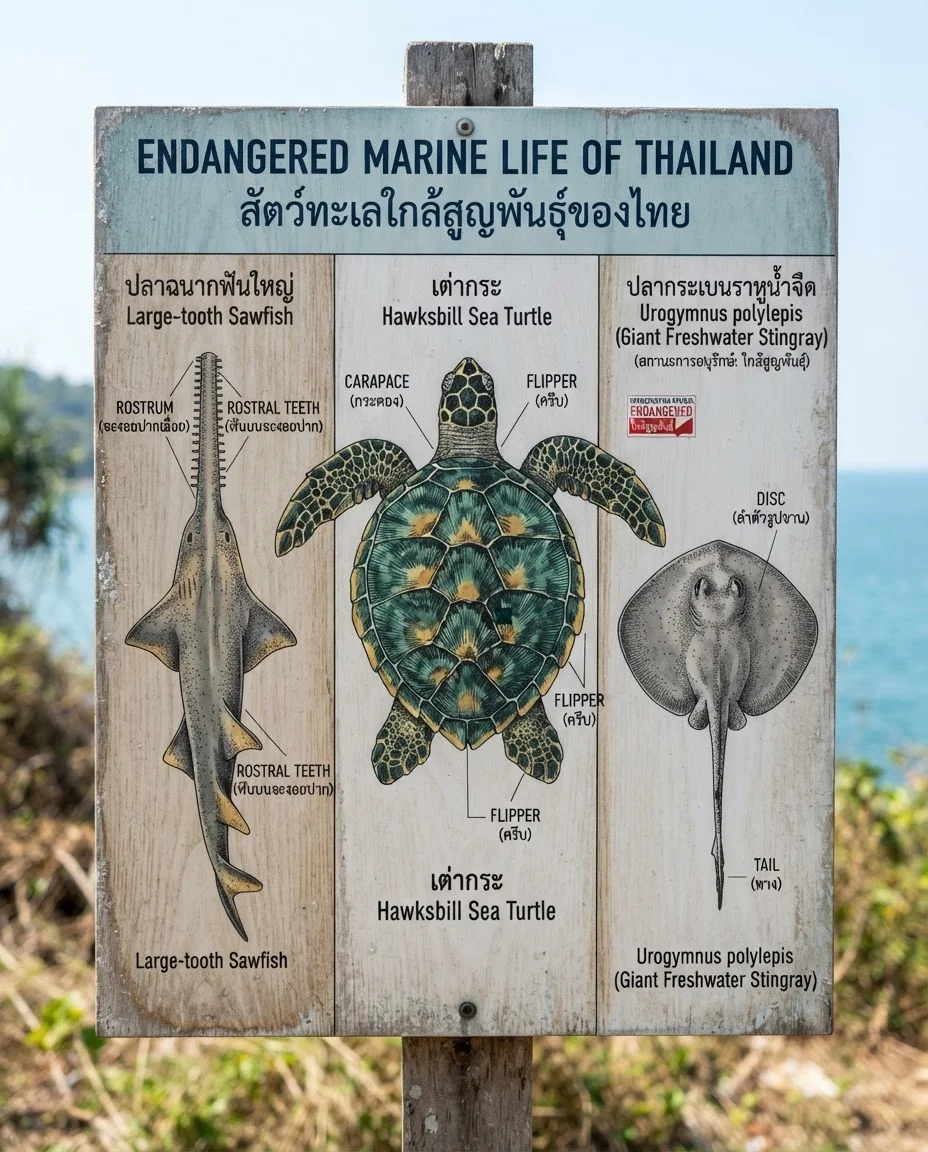
National wildlife statutes, notably the Wildlife Conservation and Protection Act, place strict legal protections on threatened aquatic species. In freshwater habitats, wild populations of the Mekong giant catfish, giant freshwater stingray, and Jullien's golden carp cannot be targeted, retained, or traded. In saltwater, whale sharks, sawfish, dugongs, all sea turtle species, and hard corals are fully protected. Any protected wild fish hooked inadvertently on public waters must be unhooked with care and returned to the water immediately without injury.
While private angling resorts and stocking lakes hold official Department of Fisheries permits to breed, purchase, and stock captive-reared specimens in enclosed artificial waters, removing these species from wild rivers, reservoirs, or coastal reefs remains illegal. Anglers fishing Thailand's wild waters must stick strictly to rod-and-line sport and release any accidental capture of protected wildlife without delay.
Where to Fish Legally and Safely in Thailand
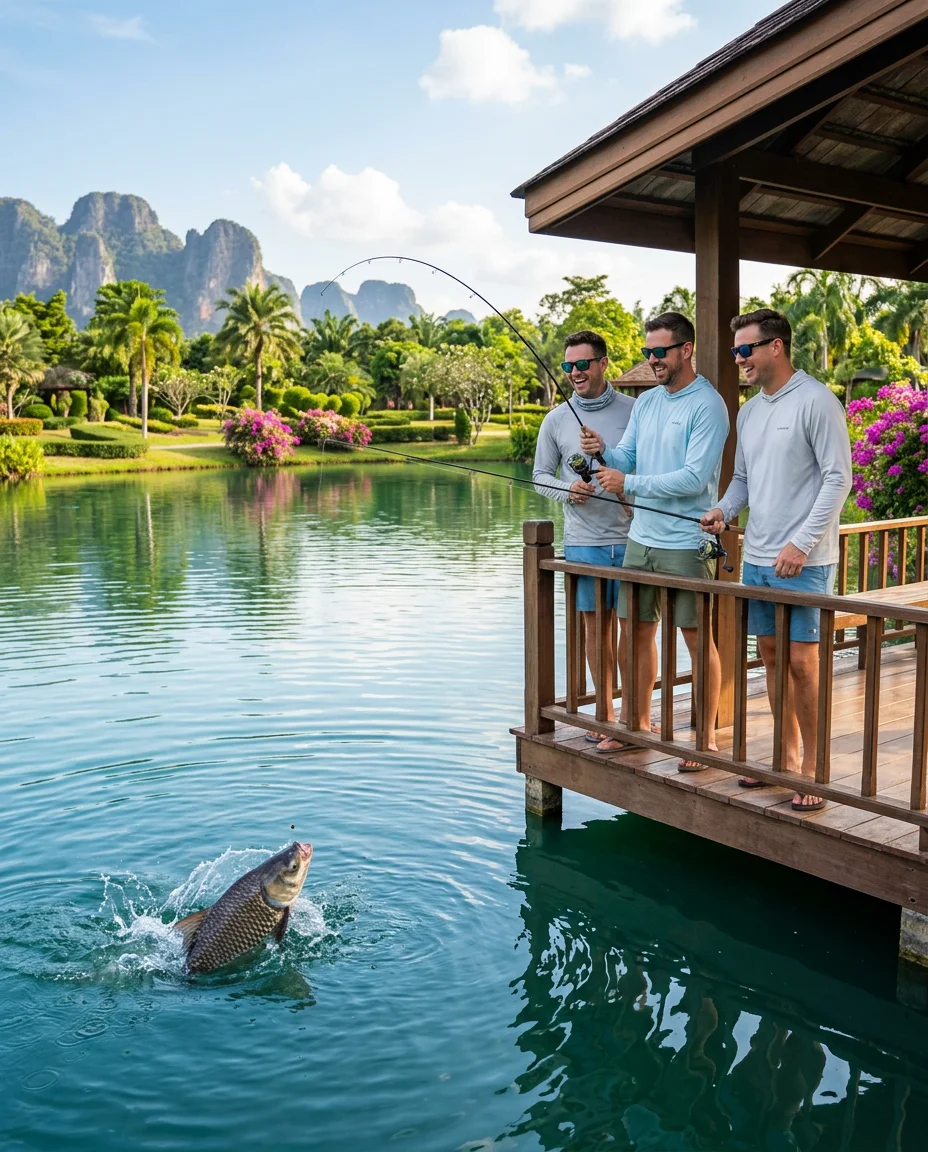
Booking through established venues and registered skippers keeps visiting anglers clear of regulatory pitfalls while fishing in Thailand.
Privately managed fisheries present clear legal advantages because they operate on enclosed land outside public waterway rules and seasonal spawning closures. In Cha-Am, Jurassic Mountain Resort & Fishing Park provides day sessions and multi-day packages. Daily tickets include two rods, reels, terminal tackle, a 1,500 THB (approx £35) bait allowance, two meals, and netting assistance at your private shaded sala; contact the resort directly for day-ticket rates. East of Bangkok, Bungsamran Fishing Park holds Mekong giant catfish and giant Siamese carp. Foreign angler tickets cost 6,000 THB (approx £140) per 12-hour session, with rod hire at 500 THB (approx £12) plus a 2,000 THB (approx £47) deposit, and private lakeside bungalows from 1,000 THB to 5,000 THB (approx £23 to £116). Near Chiang Mai, Dreamlake Fishing Resort stocks predator species such as arapaima and peacock bass; contact the fishery directly to check bungalow packages and seasonal availability.
Wild freshwater angling on public reservoirs requires strict attention to conservation boundaries. Cheow Lan Lake sits inside Khao Sok National Park, where foreign visitors pay the 300 THB (approx £7) park entry fee. Hiring a local longtail boat guide for 2,000 THB to 3,500 THB (approx £47 to £81) per day helps you navigate designated fishing areas and avoid protected wildlife sanctuary zones. At Srinagarind Dam in Kanchanaburi, local boatmen steer visiting anglers clear of restricted dam infrastructure.
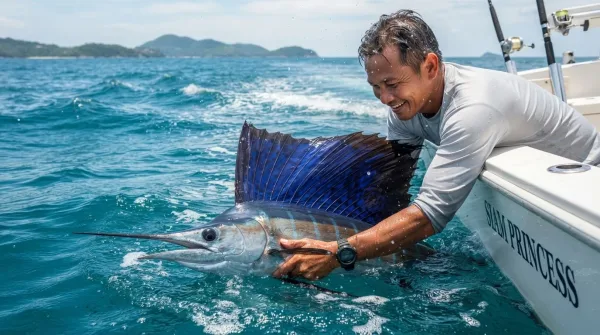
For offshore saltwater angling, boats departing from Chalong Pier in Phuket target sailfish, wahoo, and black marlin around Koh Racha. Private day charters typically range from 14,000 THB to 30,000 THB (approx £325 to £698). Choosing a licensed charter ensures the vessel holds valid Marine Department safety certification and prevents accidental trolling into protected marine park waters.
Costs and Budgeting
Because Thailand levies no national rod licence fees or statutory freshwater taxes for recreational angling, your trip budget depends almost entirely on venue selection, boat charters, and tackle hire. Budget anglers fishing from coastal breakwaters or public riverbanks can purchase basic spinning gear in local markets for under 1,500 THB (approx £35), facing zero access charges in open public waters.
Mid-range anglers targeting commercial day-ticket pay-lakes generally spend between 2,500 THB and 5,000 THB (approx £58 to £116) per day. This outlay typically covers admission, sturdy rod rental, basic bait, and landing assistance. Dedicated specimen fisheries stocking monster carp or arapaima cost between 6,000 THB and 9,500 THB (approx £140 to £221) per day, which normally includes private shaded shelters, specialist tackle, guide support, and an initial bait allowance.
Hiring a traditional longtail boat on an open reservoir runs from 2,000 THB to 3,500 THB (approx £47 to £81) per day, excluding fishing gear. Shared offshore charters charge 3,500 THB to 5,500 THB (approx £81 to £128) per angler, while private big-game sea charters range from 18,000 THB to 35,000 THB (approx £419 to £815) per day. Factor in incidental costs: extra bait costs 200 THB to 800 THB (approx £5 to £19), rental tackle often requires a 1,000 THB to 2,000 THB (approx £23 to £47) cash deposit, and tipping attentive guides 200 THB to 500 THB (approx £5 to £12) is customary.
| Fishing Option | Cost (THB) | Cost (GBP) | Details |
|---|---|---|---|
| Shore / River Bank Angling | Free | Free | Completely free in non-protected public waters |
| Local Pay-Lake Day Ticket | 500 – 1,500 | £12 – £35 | Basic commercial ponds; tackle hire extra |
| Premium Monster-Fish Resort | 6,000 – 9,500 | £140 – £221 | Includes guide, premium rods, bait, and sala |
| Wild Reservoir Longtail Boat | 2,000 – 3,500 | £47 – £81 | Full-day boat and driver; excludes tackle |
| Offshore Shared Boat Charter | 3,500 – 5,500 | £81 – £128 | Per angler cost on group coastal charters |
| Private Saltwater Game Charter | 18,000 – 35,000 | £419 – £815 | Full-day private boat, crew, fuel, and tackle |
What To Know Before You Go
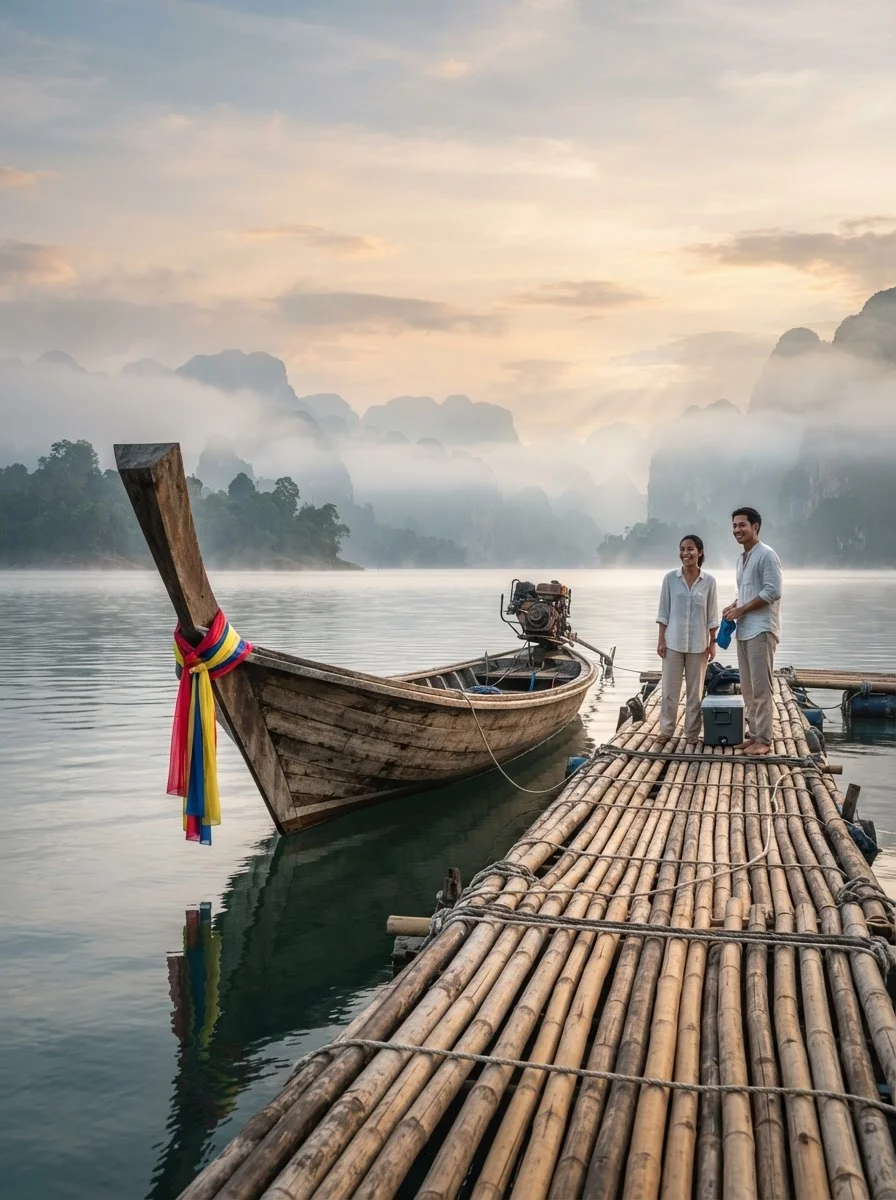
You do not need to buy a general national rod licence before arriving in Thailand. Recreational rod-and-line angling in public, non-protected waters remains free from individual state permits, and private fishing venues manage their own access.
Distinct legal boundaries apply the moment you take to the water. Marine national parks enforce strict no-take protection. Casting a line or carrying deployed tackle within protected archipelagos such as the Similan or Surin islands violates the National Park Act, risking equipment confiscation, statutory fines, and criminal prosecution.
Inland waterways carry cultural and legal prohibitions of their own. River and canal stretches adjacent to Buddhist temples are designated as protected fish sanctuaries under provincial fisheries orders. Casting in these waters is strictly forbidden by law and causes deep offence, as temple grounds function as spiritual sanctuaries where feeding fish earns religious merit.
Undersea hunting faces narrow statutory limits. Spearfishing while breathing from scuba equipment is illegal nationwide. Anyone targeting marine species with a speargun must rely entirely on breath-hold freediving, operating well outside national park boundaries and avoiding coral reefs, active dive sites, and protected wildlife.
Practical Tips
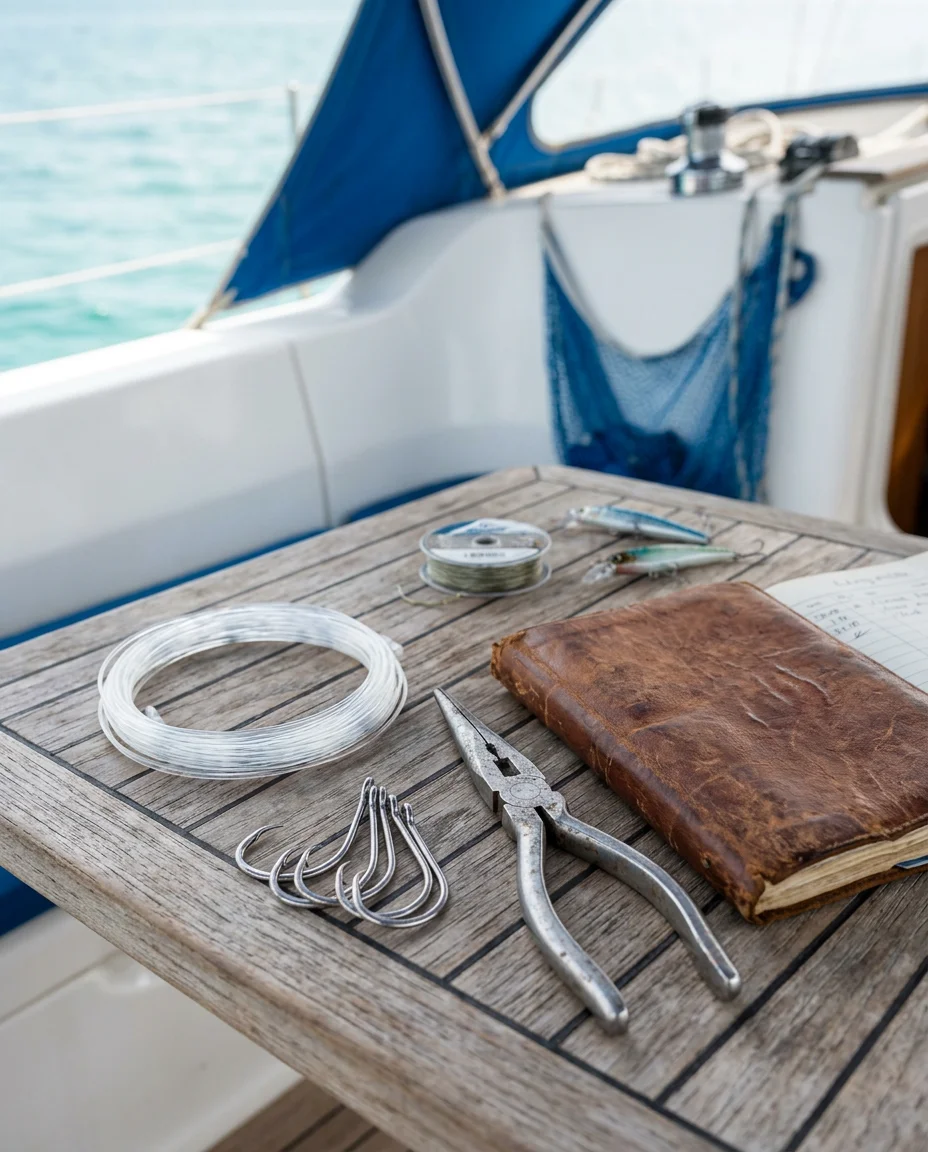
Confirm your sea charter operator holds valid Marine Department passenger vessel registration and a current seaworthiness certificate before paying a deposit. Legitimate skippers carry accessible lifejackets, marine VHF radios, and compulsory third-party passenger liability insurance covering every client aboard.
Inspect fishery rules regarding hook patterns and terminal tackle before unpacking. Many commercial lakes mandate barbless or micro-barbed single hooks, restrict hook sizes, and prohibit braided mainline tied directly to terminal tackle without protective monofilament leaders or tubing to prevent body damage to specimen fish. Check bait rules at the same time, as private waters routinely ban outside live fish to guard against waterborne parasites.
Keep physical identification accessible when targeting wild inland reservoirs. Forestry officials and national park rangers routinely inspect boats at lake checkpoints and floating patrol posts, so carry your passport or a clear photocopy and digital backup on your phone alongside any required park entry permits.
Steer well clear of water marked with yellow flags, floating prayer shrines, or temple steps. These markers identify sacred temple fish sanctuaries where catching or disturbing fish violates religious taboos and constitutes a statutory offence under Thai fisheries law. Similarly, if you accidentally hook a protected wild species such as a wild Mekong giant catfish or giant freshwater stingray in public water, unhook it gently in the water and release it immediately without lifting it onto land or into the boat.
Pack travel rods in sturdy, lockable hard tubes when taking domestic flights. Thai Airways and Bangkok Airways accept fishing equipment as checked sports baggage, though tubes under 1.7 metres ensure compatibility with smaller regional turboprop aircraft. Thai Airways applies a standard domestic sporting equipment fee of 760 THB (approx £17) per unit, while standard hold baggage weight limits apply across domestic routes.
Booking through an accredited, fully insured charter or guided operation ensures both regulatory compliance and proper safety standards on the water.
Quick Reference Table
| Item | Detail | Notes |
|---|---|---|
| National Rod Licence | Not required | No state permit needed for recreational rod-and-line angling in open public waters |
| Marine National Parks | Strictly prohibited | Absolute no-take zones; violations risk up to 5 years in prison, fines, and gear confiscation |
| Buddhist Temple Sanctuaries | Strictly prohibited | Waters bordering monasteries are sacred no-fishing zones under statutory fisheries law |
| Spearfishing Regulations | Breath-hold only | Permitted in open coastal waters; using scuba or entering marine parks is a criminal offence |
| Freshwater Spawning Closures | May to November | Regional "red water" net and trap bans; single-hook rod angling permitted away from spawning sites |
| Protected Wild Species | Mandatory immediate release | Wild Mekong giant catfish, giant freshwater stingrays, sea turtles, and whale sharks cannot be retained |
| Shore and River Angling Cost | Free access | Zero permit fees on public waters; basic market spinning tackle costs under 1,500 THB (approx £35) |
| Local Pay-Lake Day Ticket | 500 – 1,500 THB (approx £12 – £35) | Modest commercial ponds targeting tilapia and catfish; tackle hire extra |
| Specimen Fishing Resorts | 6,000 – 9,500 THB (approx £140 – £221) | Daily rates typically include guide assistance, specialist tackle, bait, and shaded sala |
| Reservoir Longtail Boat Hire | 2,000 – 3,500 THB (approx £47 – £81) | Daily rate for boat and driver on public waters such as Cheow Lan Lake; excludes gear |
| Saltwater Fishing Charters | 3,500 – 35,000 THB (approx £81 – £815) | Shared coastal trips from 3,500 THB; full-day private offshore game boats from 14,000 THB |
| Tackle on Domestic Flights | Checked sports baggage | Hard rod tubes recommended under 1.7 m; Thai Airways charges 760 THB (approx £17) per unit |
| Official source | Department of Fisheries | www.fisheries.go.th |
| Official source | Department of National Parks | protectedarea.dnp.go.th |
| Official source | Thai Customs Department | www.customs.go.th |
| Website | Bungsamran Fishing Park | bungsamran.com (+66 97 151 6688) |
| Website | Jurassic Mountain Resort & Fishing Park | jurassicfishingthailand.com (+66 61 631 2614) |
FAQ: Fishing Licences & Regulations in Thailand
Do recreational anglers need a national fishing licence in Thailand?
Can foreign visitors engage in commercial fishing activities in Thailand?
Is it permitted to fish near Buddhist temples in Thailand?
Are there seasonal fishing restrictions in Thailand's freshwater systems?
Is fishing allowed in Thailand's Marine National Parks?
What are the rules for spearfishing in Thailand?
What specific tackle and bait rules apply at private specimen fishing resorts in Thailand?
How should anglers handle fish at private specimen fishing resorts in Thailand?
Are there any protected aquatic species that anglers cannot target or retain in Thailand?
What should I check before booking a sea charter operator in Thailand?
Reviewed by the Thailand Guide Editorial Team • Last reviewed: 10 November 2026
This page is provided for general information only. While we aim for accuracy, details can change — please verify anything important independently before relying on it.