Sea Fishing in Thailand
A screaming reel breaks the morning calm as line tears through the guides over the deep drop-offs south of Phuket. Moments later, an Indo-Pacific sailfish breaches the surface of the Andaman Sea, shaking its bill against the open horizon.
With two distinct marine environments—the deep pelagic waters of the Andaman Sea and the shallower, reef-strewn basin of the Gulf of Thailand—the country offers saltwater anglers exceptional variety across contrasting seasonal windows. Visiting anglers can target trophy billfish and hard-fighting giant trevally offshore, work jigs over deep wrecks, or spend a relaxed morning bottom fishing over coastal reefs with local crews.
This guide details Thailand's saltwater angling landscape for UK visitors. You will find practical breakdowns of target pelagic and reef species, charter boat configurations, regional monsoon seasons, and realistic costs in Thai Baht and British Pounds. It also clarifies marine national park boundaries and catch-and-release practices, giving you the practical knowledge needed to plan and book with confidence.

Key Saltwater Species: Pelagic Predators and Reef Dwellers
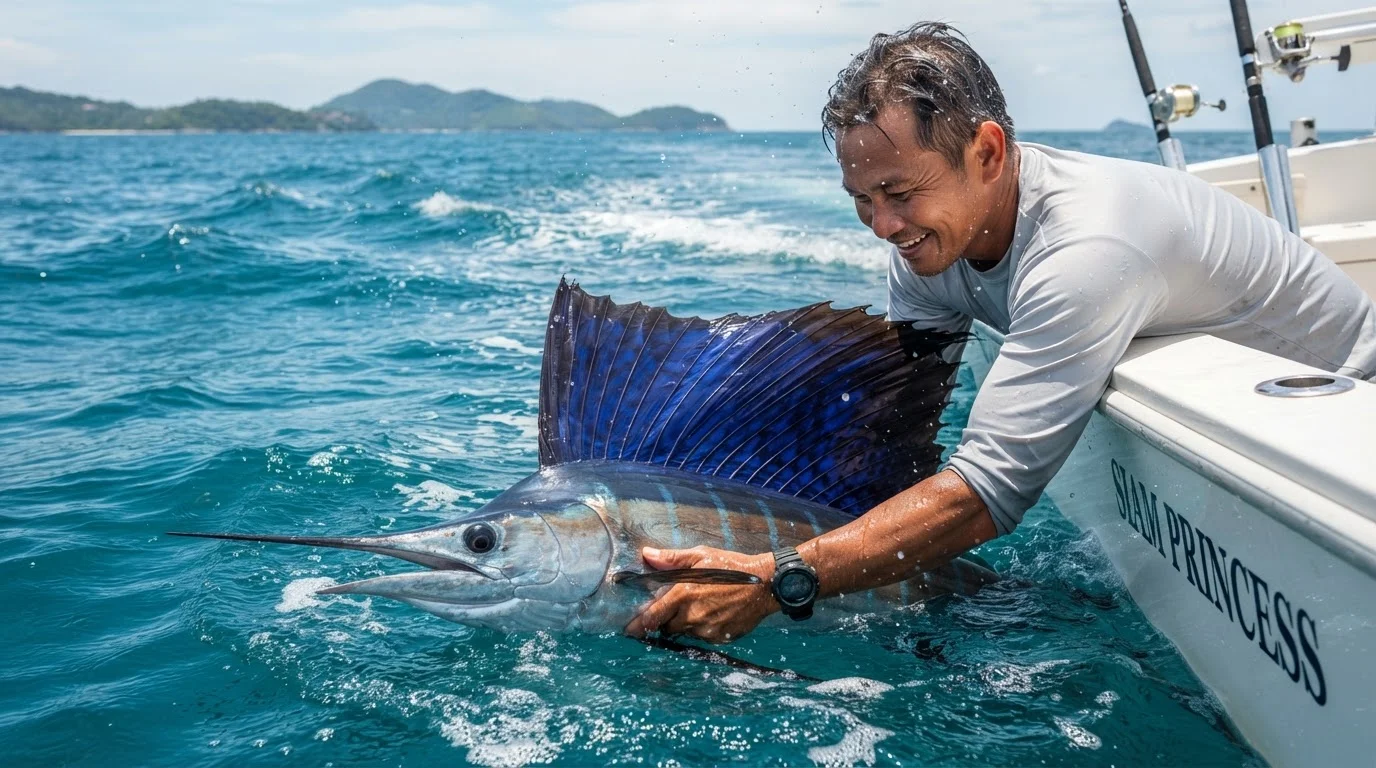
Thailand’s dual-coast marine environment supports a varied mix of tropical game fish, split between migratory open-ocean pelagics and resident reef predators. Understanding how these species distribute across the deep trenches of the Andaman Sea and the shallower Gulf of Thailand helps anglers target the right fish at the right time.
Indo-Pacific sailfish are the undisputed headline game fish of the Andaman Sea. Pods gather in force between November and April along current seams and bait schools off Phuket, Koh Lanta, and the drop-offs near Koh Rok. Black marlin and blue marlin cruise the deeper blue water beyond the continental shelf edge, where depths plunge past 200 metres. These offshore grounds also yield bull mahi-mahi, wahoo, dogtooth tuna, and schools of skipjack and yellowfin tuna.
Closer to coastal structures, rocky headlands and submerged pinnacles provide territory for giant trevally (GT). Prized for aggressive strikes on surface lures, GT hunt alongside predatory shoals of narrow-barred Spanish mackerel, great barracuda, cobia, and talang queenfish. These fast-striking inshore species patrol reef edges and island drop-offs right across both coastlines throughout the year.
Demersal anglers working wrecks, coral fringes, and limestone pinnacles target resident bottom fish year-round. Prime catches include orange-spotted grouper, leopard coral trout, saddleback and mangrove red snapper, alongside several species of emperor.
In the Gulf of Thailand, shallower depths mean that blue and black marlin are exceptionally rare. However, grounds surrounding Koh Samui, Koh Tao, Bang Saray, and Pattaya produce dependable action for Spanish mackerel, barracuda, and queenfish, with seasonal sailfish migrations passing through offshore waters. Determining whether your priority is an offshore pelagic battle or dependable reef jigging is the primary step in selecting your charter base.
Saltwater Techniques: Trolling, Jigging, Popping and Shore Angling
Offshore trolling is the standard method on full-day Thai charters, covering open water between island drop-offs and offshore banks. Crews run spreads of four to six lines from outriggers and stern gunwales, deploying skirted lures, diving minnows, or rigged ballyhoo at six to eight knots. Lever-drag reels loaded with 30 lb to 50 lb monofilament mounted on stand-up boat rods provide the smooth drag curve and capacity required to absorb sudden runs from sailfish, wahoo, and tuna.
Vertical jigging and surface popping cater to active sport anglers. Speed jigging targets deep drop-offs, pinnacles, and wrecks at depths of 40 to 100 metres. Anglers drop 100g to 250g narrow metal knife jigs, using fast mechanical retrieves to provoke reaction strikes from amberjack, dogtooth tuna, and grouper. Rigs typically feature PE3 to PE6 jigging rods with heavy single assist hooks. In contrast, topwater popping delivers explosive surface takes around shallow reefs and current lines. Casting 100g to 160g cup-faced poppers or stickbaits for giant trevally demands heavy spinning gear—routinely PE6 to PE8 braid paired with 130 lb to 170 lb fluorocarbon leaders to withstand sharp coral heads.
Bottom fishing offers a dependable approach for family outings and mixed groups over coral rubble and sunken reefs. Boats deploy simple two-hook dropper rigs weighted with lead sinkers to hold bottom against tidal currents. Baited with strips of fresh squid or cut fish, these rigs reliably produce red snapper, coral trout, and grouper. From land, shore angling is freely accessible along public beaches, rocky points, and piers outside protected marine zones. An 8-foot to 10-foot spinning rod with 15 lb to 20 lb braid casts 20g to 40g metal spoons or soft plastics into surf lines for queenfish, needlefish, and small barracuda.
Match the tactical setup to target depth, current strength, and physical endurance.
| Technique | Target Species | Typical Gear & Rigging | Best Marine Environment |
|---|---|---|---|
| Offshore Trolling | Sailfish, marlin, wahoo, tuna, mahi-mahi | 30–50 lb bent-butt stand-up rods, lever-drag reels, skirted lures | Continental shelf drops, blue-water current lines |
| Vertical Speed Jigging | Dogtooth tuna, amberjack, grouper, trevally | PE3–PE6 short jigging rods, 100–250g metal jigs, heavy assist hooks | Deep seamounts (40–90m depth), naval wrecks |
| Topwater Popping | Giant trevally, queenfish, coral trout | Heavy spinning outfits (PE5–PE8), 100–160g cup-faced wooden poppers | Shallow reef fringes, current-swept island points |
| Bottom Dropper Rigs | Red snapper, grouper, emperor, sweetlips | Medium boat rods, 30–50 lb mono mainline, wire traces, squid bait | Coral rubble beds, artificial reefs, deep holes |
| Coastal Shore Angling | Queenfish, small barracuda, needlefish | 8–10 ft spinning rod, 15–20 lb braid, casting spoons, soft plastic minnows | Rocky headlands, deep commercial piers, jetties |
Plan a Gulf of Thailand trip with clear guidance on island groups, ferries, weather, marine parks, accommodation costs and mainland gateways.
Andaman Sea vs Gulf of Thailand: Regional Waters and Seasons
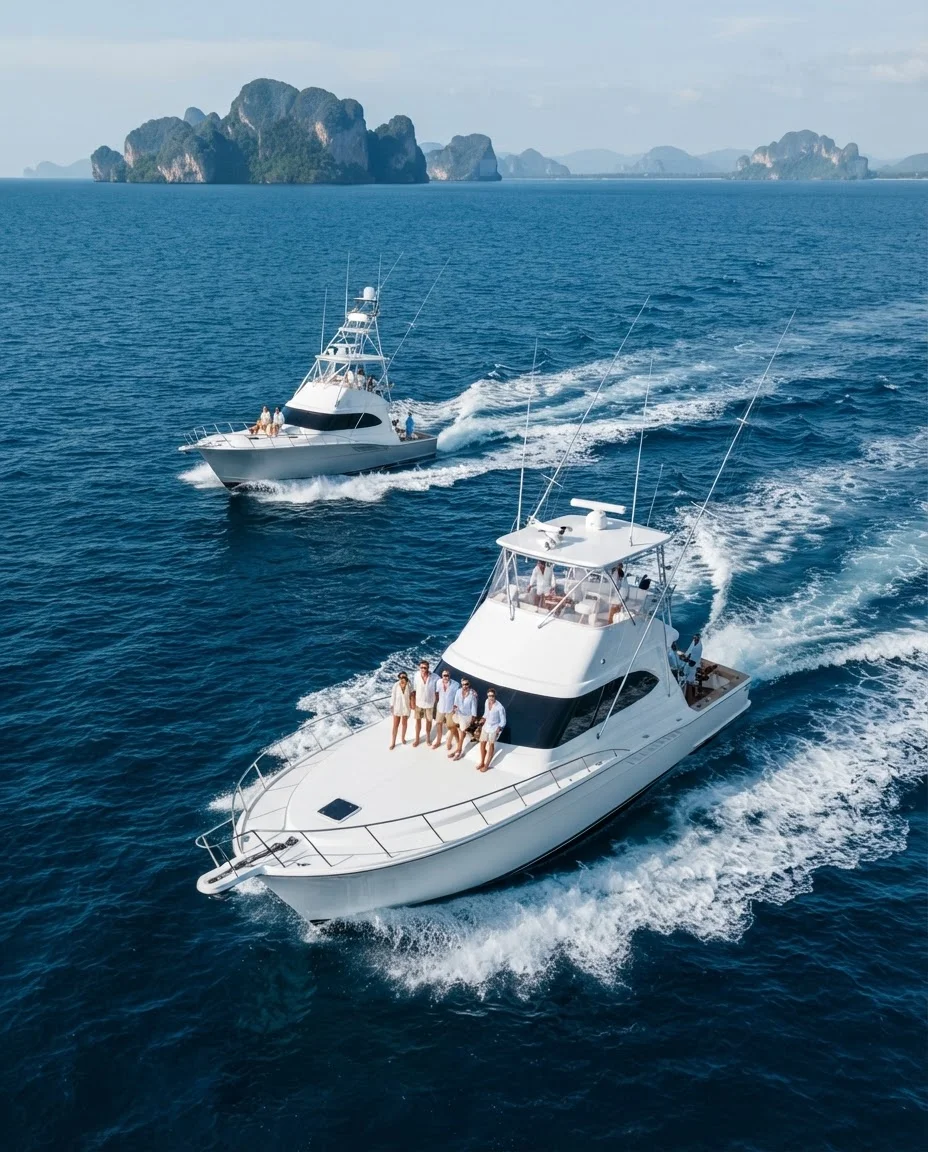
Thailand’s saltwater calendar is shaped by two opposing monsoon systems that divide the country’s coastline into contrasting marine environments. On the west coast, the Andaman Sea borders the Indian Ocean basin, where the continental shelf drops rapidly from coastal reefs into deep trenches reaching depths well over 1,000 metres. These nutrient-rich oceanic upwellings draw major blue-water pelagics, including black marlin, sailfish, wahoo, and yellowfin tuna. In contrast, the Gulf of Thailand is a semi-enclosed, shallow basin connected to the South China Sea, with an average depth of roughly 50 metres and a maximum depth of only 85 metres. Its warmer, river-fed waters support resident reef predators, cobia, Spanish mackerel, barracuda, and smaller coastal tunas.
From May to October, the southwest monsoon brings open-ocean swells and heavy rainfall onto the Andaman coast. During these months, offshore charters out of Phuket, Krabi, and Koh Lanta face frequent weather disruptions, and offshore grounds such as the Similan Islands close to boats from mid-May to mid-October. The Gulf of Thailand, however, sits sheltered in the rain shadow of the central peninsula. Around Koh Samui, Koh Tao, Koh Phangan, and Pattaya, calm sea conditions make May through September a reliable window for inshore trolling and bottom fishing.
The pattern reverses when the northeast monsoon establishes itself between November and April. Cool, dry air from continental Asia produces flat seas, clear water, and settled weather across the Andaman, creating peak conditions for offshore game boats and liveaboard expeditions. Conversely, as the northeast winds sweep across open water, they bring rougher sea states and persistent squalls to the lower Gulf islands from late October through December, before conditions settle in January.
Because the two coastlines operate on opposite seasonal schedules, anglers can find fishable saltwater throughout the year: choose the Andaman coast between November and April, and switch to the Gulf between May and September.
Charter Types and Vessel Options: Shared Trips to Private Cruisers
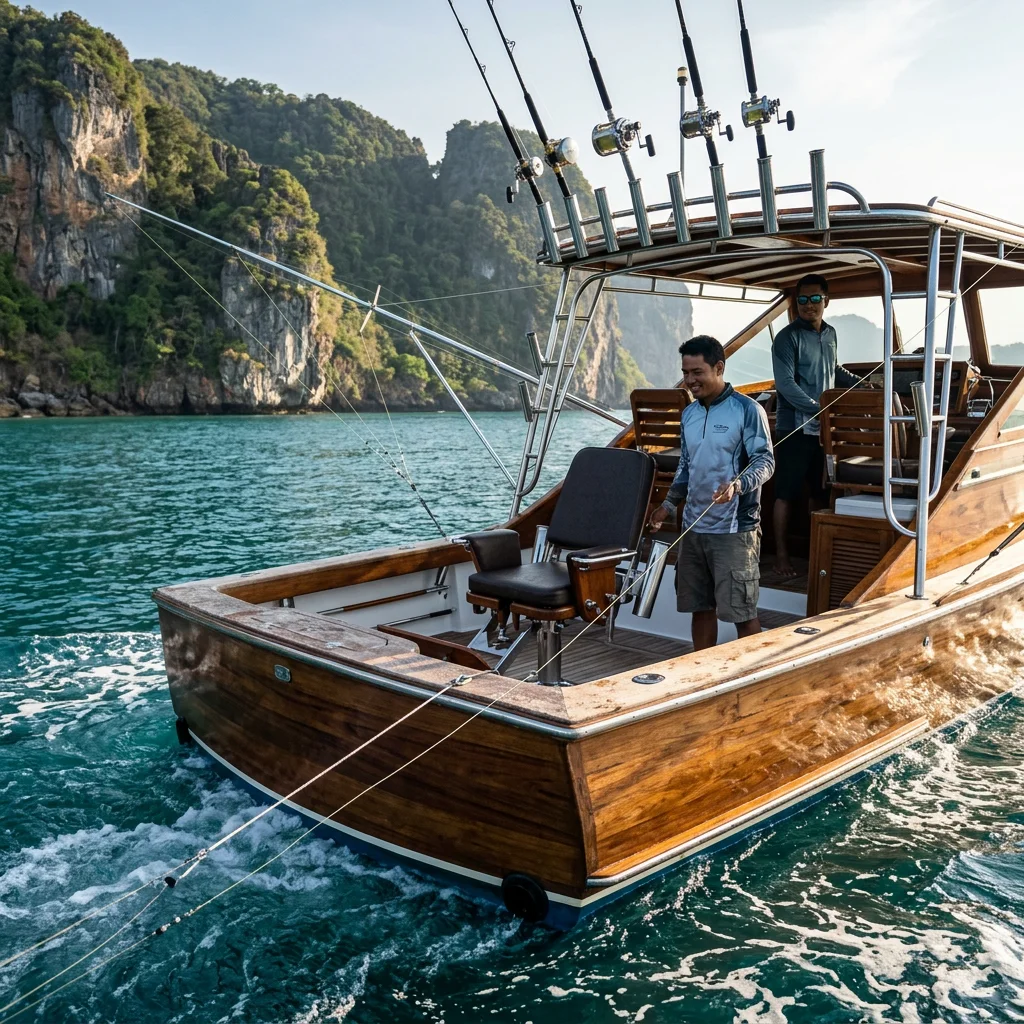
Saltwater fishing vessels across Thailand range from grassroots artisanal craft to tournament-grade offshore cruisers. Choosing the right hull and booking format largely dictates the waters you can reach and the angling methods you can practise.
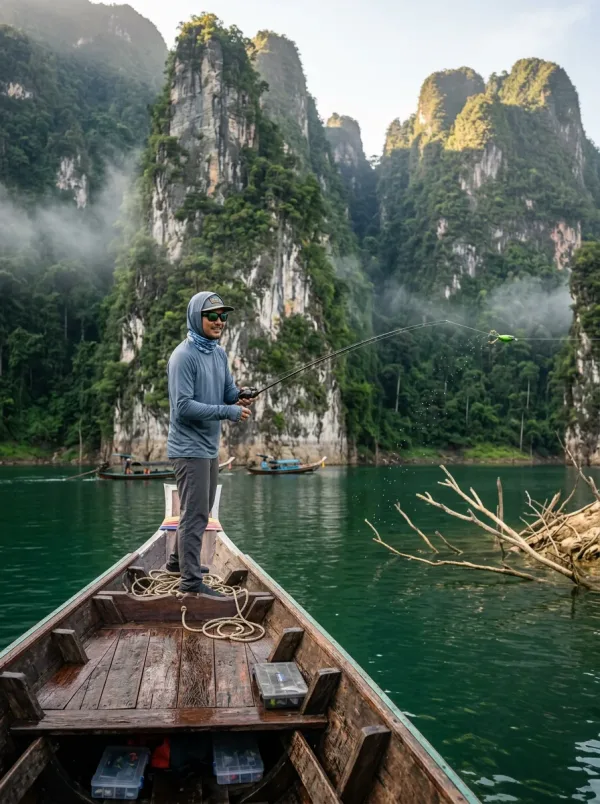
Traditional wooden longtail boats represent the entry point. Hand-built and measuring 8 to 12 metres, these narrow craft run an exposed automotive engine on a swivelling shaft. Their shallow draft allows captains to slip over coastal sandbars and into quiet mangrove estuaries in Krabi or Koh Lanta. Longtails excel at half-day bottom-fishing trips and light inshore drifting around sheltered limestone islands, but their basic open decks, lack of marine electronics, and low freeboard make them unsuitable for rough open water.
Converted wooden day-boats, typically 12 to 18 metres long, are the workhorses of Thai charter fleets in Phuket, Pattaya, and Koh Chang. These heavy displacement hulls cruise at a relaxed 8 to 10 knots while running outriggers. They feature broad shaded decks, an onboard galley, a flush toilet, and a rooftop sun deck, providing a stable platform for mixed groups bottom fishing at anchor or trolling coastal contours.
Modern twin-engine speedboats cut transit times dramatically, cruising at 25 to 30 knots to reach distant drop-offs and outer islands. They maximise active fishing time, though their open cockpits offer limited shelter, and the hard ride can prove taxing in open-water chop.
At the top tier, purpose-built offshore sport-fishers and flybridge cruisers deliver air-conditioned saloons, high-resolution sonar, fighting chairs, and tournament-grade tackle sets for multi-day expeditions to offshore seamounts.
Choosing between a shared trip and a private charter comes down to angling intent. Shared group excursions on large wooden boats keep individual costs down, but they follow fixed tourist schedules and focus on basic handline or light-tackle bottom-bouncing. Booking a private charter secures exclusive use of the vessel and crew, allowing you to dictate departure times, chase pelagics offshore, and tailor tactics to sport techniques like vertical jigging or popping.
Marine Regulations, Conservation and Catch-and-Release Ethics
Recreational saltwater angling in Thailand does not require an individual rod licence for tourists fishing coastal waters or onboard charter vessels. Regulatory compliance rests primarily on the charter craft, which must hold commercial maritime licences, passenger safety certifications, and vessel registrations issued by the Marine Department.
Marine national parks form the strictest legal boundary for anglers. Under Section 19(3) of the National Park Act B.E. 2562 (2019), catching, taking, or harming aquatic life within park boundaries is illegal. This prohibition applies across all protected marine zones, including Koh Similan, Koh Surin, Koh Phi Phi, and Koh Ang Thong. Penalties under Section 43 of the Act are severe, with illegal fishing carrying potential vessel impoundment, court fines, and prison sentences of up to five years. Reputable charter skippers set their fishing routes several nautical miles outside park perimeters and along offshore drop-offs.
Targeting or retaining protected marine species is strictly prohibited under the Wild Animal Conservation and Protection Act B.E. 2562 (2019). This legislation protects whale sharks, manta rays, sawfishes, sea turtles, and all marine mammals. In game angling, responsible skippers follow catch-and-release protocols for billfish such as sailfish and marlin, employing barbless circle hooks and keeping fish supported in the water alongside the gunwale to maximise post-release survival. Before booking, check that your charter operator adheres to park boundaries and prioritises in-water release for billfish.
Top Sea Fishing Destinations and Charters across Thailand
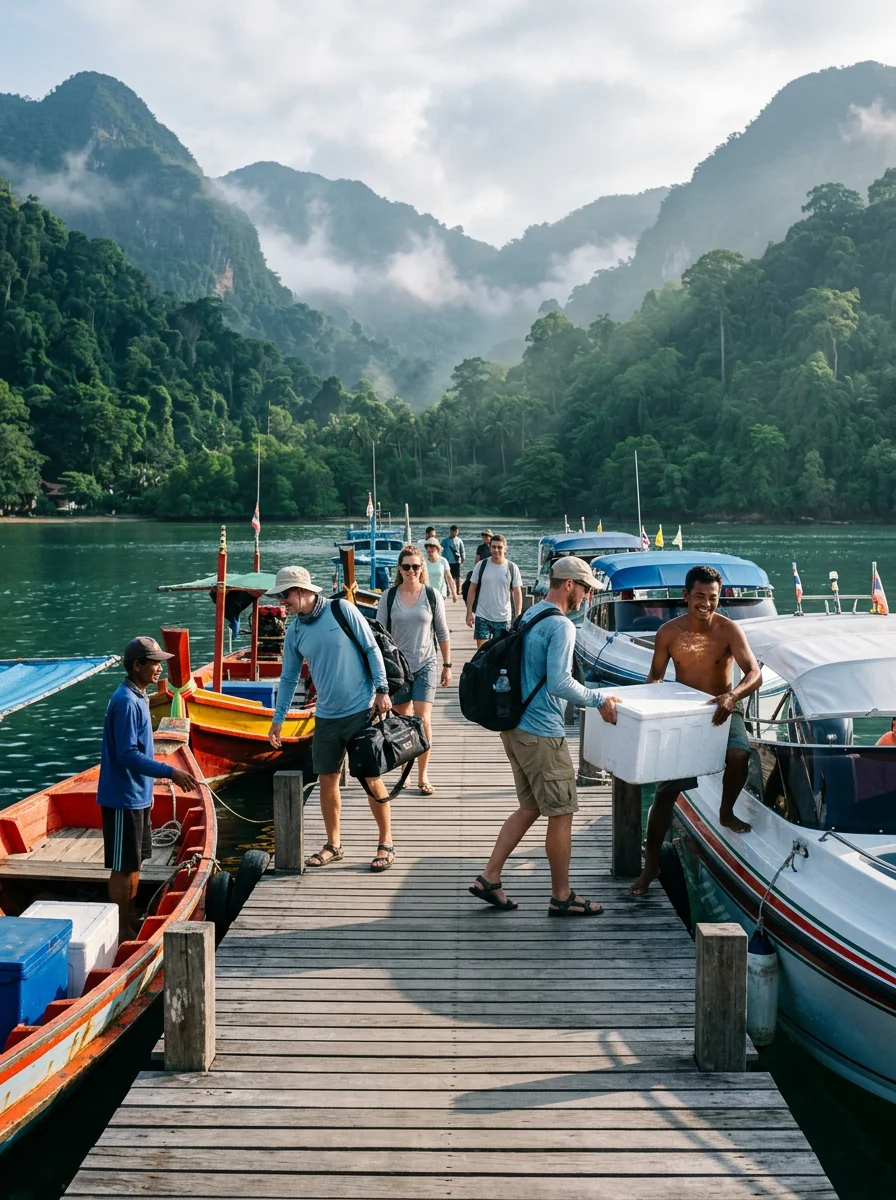
Phuket is Thailand's principal hub for offshore sport fishing. Most deep-sea charters depart from Chalong Pier, which provides direct access to the drop-offs around Racha Yai and Racha Noi islands. Established operators such as Beluga Fishing Tours and Funthaisea Game Fishing run dedicated day and multi-day trips targeting sailfish, tuna, king mackerel, and giant trevally. Private day charters to Racha Yai typically start from around 15,000 THB (approx £340) per boat, with tackle, bait, and lunch included.
In the eastern Gulf, Pattaya and the traditional fishing harbour at Bang Saray provide reliable reef and wreck fishing. Charters departing from Ocean Marina target cobia, barracuda, and king mackerel around Koh Khram and the sunken wartime wrecks scattered off Samae San.
Further south in the Gulf, Koh Samui and Koh Tao suit anglers looking for mixed coastal sport. From Koh Samui, traditional wooden longtails and speedboats depart from Thong Krut Pier on the south coast, heading towards Koh Tan and Koh Rap for snapper, barracuda, and trevally. On Koh Tao, operations such as Sangthong Tours focus on bay fishing, jigging, and night squid excursions, though the island lacks the dedicated heavy-tackle fleet found on the Andaman coast.
Koh Chang, near the Cambodian border, provides sheltered angling across a wide island marine park. Operators such as Sea Hunter Tour run day and evening trips from Bang Bao Pier, working rocky points and reef edges for grouper, barracuda, and seasonal mackerel. Along the Andaman coast in Krabi and Koh Lanta, local outfits including Monkey Tours Lanta guide anglers on longtail trips around limestone points like Koh Ma and Koh Bubu, with fishing packages starting from around 2,500 THB (approx £57) per person.
Phuket's Chalong Pier remains the most practical starting point for British anglers seeking established offshore crews and deep oceanic drop-offs.
Costs and Budgeting
Chartering a sea-fishing vessel in Thailand spans a broad pricing spectrum, from low-cost shared day trips to fully crewed private sport-fishing cruisers. Rates are quoted in Thai Baht and typically include the boat, fuel for standard routes, captain and deckhands, tackle, bait, and drinking water.
Shared day trips on converted wooden boats are the most economical option. Departing daily from major harbours such as Chalong Pier in Phuket or Bali Hai Pier in Pattaya, these excursions cost between 1,500 THB and 2,600 THB (approx £34 to £58) per angler. Packages usually cover hotel transfers, basic bottom or handline gear, bait, and a simple Thai lunch. Non-angling companions can often join for 1,200 THB to 2,200 THB (approx £27 to £49).
Private charters offer greater flexibility and targeted fishing. Traditional wooden longtail boats cost 5,000 THB to 7,000 THB (approx £112 to £157) per day for up to four anglers on inshore reefs. Dedicated 10- to 15-metre wooden day boats run from 15,000 THB to 22,000 THB (approx £337 to £494), while twin-outboard speedboats range from 18,000 THB to 28,000 THB (approx £404 to £629) for rapid access to offshore drop-offs. Tournament-grade sport-fishers with air-conditioned cabins, fighting chairs, and Penn or Shimano gear cost between 35,000 THB and 55,000 THB (approx £787 to £1,236) per day.
| Charter Format | Cost (THB) | Cost (GBP) | Details & Inclusions |
|---|---|---|---|
| Shared Day Boat (Join-in) | 1,500 – 2,600 THB | £34 – £58 | Per angler; includes basic tackle, bait, lunch, and transfers |
| Private Inshore Longtail Boat | 5,000 – 7,000 THB | £112 – £157 | Half or full day; 1–4 anglers; inshore reef and bottom fishing |
| Private Wooden Day Boat | 15,000 – 22,000 THB | £337 – £494 | Full day; 4–8 anglers; trolling rigs, shaded deck, cooked catch |
| Private Offshore Speedboat | 18,000 – 28,000 THB | £404 – £629 | Full day; fast transit to offshore drop-offs; jigging and popping |
| Luxury Game-Fishing Yacht | 35,000 – 55,000 THB | £787 – £1,236 | Full day; tournament-grade tackle, fighting chair, air-con saloon |
| Night Squid & Bottom Fishing | 1,300 – 3,000 THB | £29 – £67 | Per person (shared); fluorescent lights, squid jigs, onboard grill |
| Marine National Park Entry Fee | 200 – 500 THB | £4.50 – £11 | Cash fee per foreign adult if entering protected marine park waters |
Cash reserves are required for marine national park entry fees if your boat enters or anchors in protected waters. Foreign adult admission set by the Department of National Parks ranges from 400 THB (approx £4.50) in areas like Mu Koh Chang or Mu Koh Lanta to 400 THB (approx £9) for Hat Noppharat Thara–Mu Koh Phi Phi and 500 THB (approx £11) for Mu Koh Similan. Specialist live bait, if purchased at sea from local squid boats, typically adds 1,000 THB to 2,000 THB (approx £22 to £45).
What to Know Before You Go
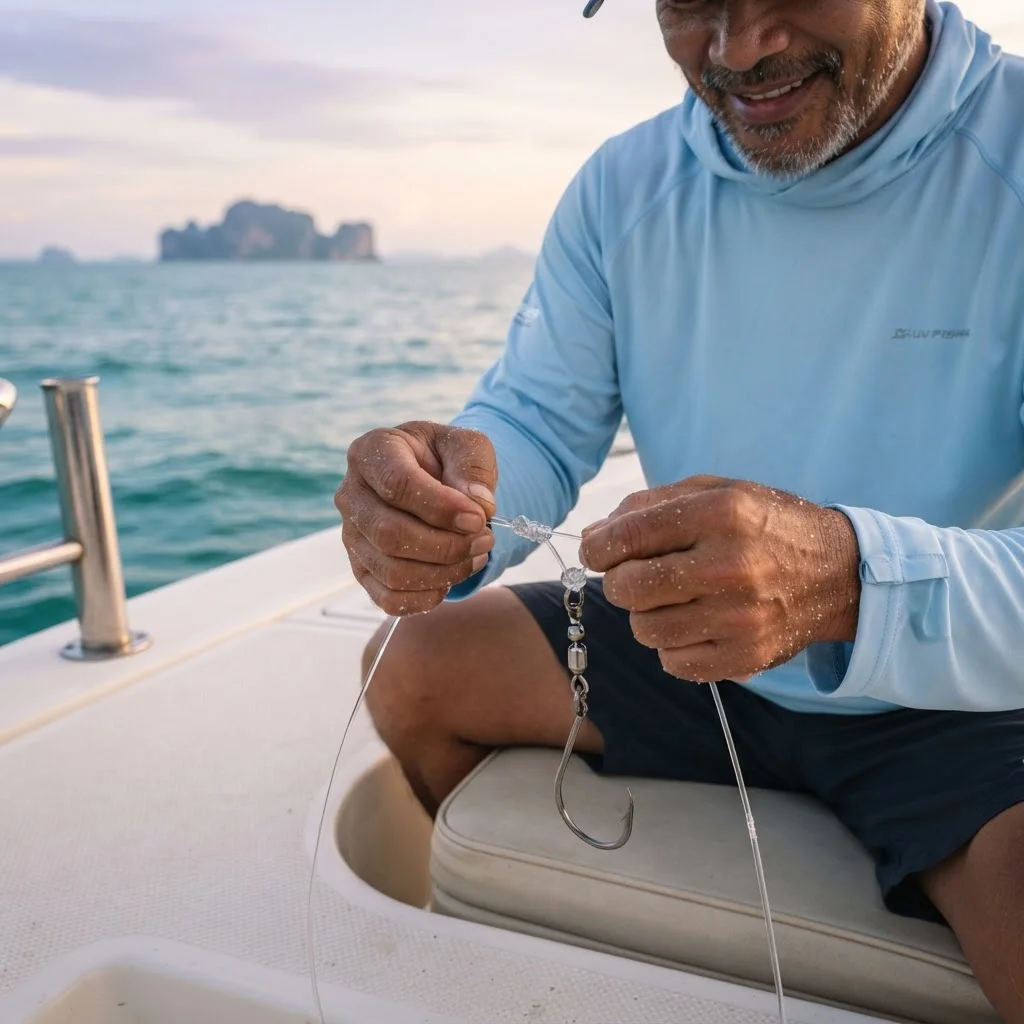
Confirm the vessel's tackle specifications before paying a deposit. General tourist day-boats often supply handlines or worn, entry-level reels spooled with heavy monofilament, which limit your fighting control. Serious offshore anglers should verify that reputable sport-fishing gear—such as Shimano or Penn conventional reels and matched rods—is provided, or arrange to bring personal tackle.
Verify the planned coordinates with your skipper. Thailand's Department of National Parks, Wildlife and Plant Conservation strictly prohibits recreational fishing within marine national park boundaries under the National Parks Act. Reputable operators fish legal open waters outside protected reserves, preventing ranger interception, heavy fines, and immediate trip cancellation.
Clarify all inclusions in writing before sailing. Lower base charter quotes often cover only a set distance at cruising speed, leaving fuel burned during extended trolling runs as an unexpected surcharge. Live bait, particularly fresh or live squid kept in onboard aerated wells, frequently incurs an additional cash fee unless negotiated beforehand.
Prepare for oceanic movement well ahead of departure. Swells across the Andaman drop-offs and outer Gulf currents frequently induce sudden nausea, even under clear skies. Motion-sickness tablets should be taken either the night prior or at least an hour before leaving the pier to ensure they take effect in time.
Practical Tips
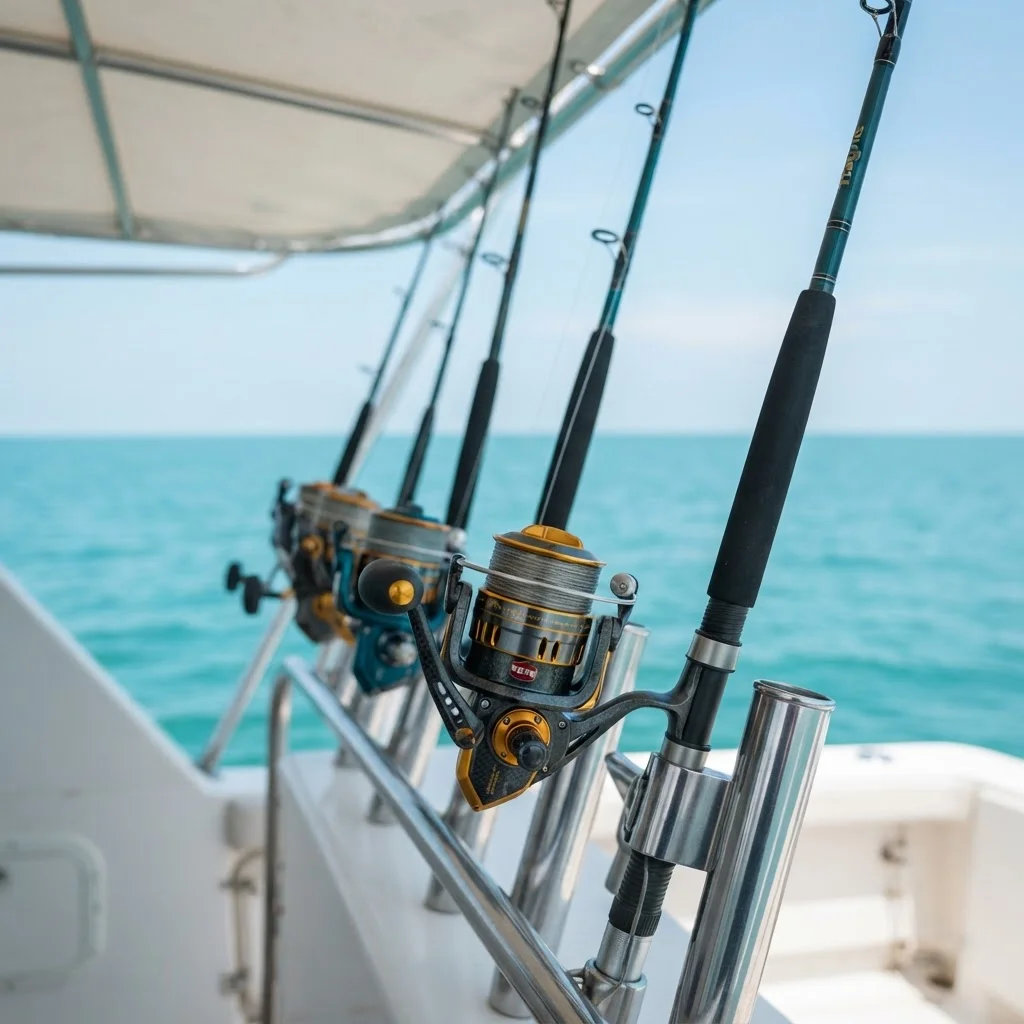
Anglers planning specialist surface popping or vertical speed jigging should bring their own rods and terminal tackle. Standard charter outfits across Thailand typically supply stout trolling rods, multiplier reels, and wire bottom rigs. These work well for trolling skirted lures or bottom-fishing over reefs, but fall short for casting heavy poppers or working flutter jigs on fast-action PE-rated braids.
Sun exposure on tropical waters is severe. Pack lightweight, long-sleeved technical tops with UPF50+ sun protection, polarised sunglasses to cut surface glare when spotting fish, and a wide-brim hat. The equatorial sun reflected across open water will cause serious sunburn within a couple of hours without coverage.
Carry sufficient cash in Thai Baht for tipping and small expenses. While tipping is discretionary rather than obligatory across Thailand, rewarding attentive boat crew is standard practice on private charters. A gratuity of 500 THB to 1,000 THB (approx £11 to £22) per deckhand is a fair benchmark for a day of baiting hooks, untangling lines, and landing fish.
Confirm safety equipment before leaving the pier. The Thai Marine Department requires registered passenger boats to carry personal flotation devices for all passengers. Check that correctly sized life jackets are accessible on deck rather than stowed away, and verify that the skipper operates a functioning VHF radio and GPS navigation system.
Many crews will clean table fish—such as snapper, grouper, and mackerel—for you to take ashore, or prepare fresh sashimi in the galley. Local seaside restaurants in most resort harbours will cook your catch for a modest fee per dish.
Keep a clear photo of your passport photo page and entry stamp on your smartphone. Port authorities and marine police occasionally carry out routine passenger checks in busy channels.
Booking an offshore excursion through verified operators with transparent cancellation terms and confirmed vessel inclusions ensures your day on the water runs as expected.
Quick Reference Table
| Item | Detail | Notes |
|---|---|---|
| Andaman Sea Peak Season | November to April | Flat seas and prime offshore pelagic action off Phuket, Krabi, and Koh Lanta |
| Gulf of Thailand Peak Season | May to September | Calmer seas and reliable reef fishing around Koh Samui, Koh Tao, and Pattaya |
| Main Offshore Game Fish | Indo-Pacific sailfish, black marlin, blue marlin, wahoo, tuna, mahi-mahi | Andaman drop-offs offer premier deep-water trolling beyond 200-metre depths |
| Inshore & Reef Species | Giant trevally, narrow-barred Spanish mackerel, barracuda, grouper, snapper | Available year-round across both coasts around reefs, pinnacles, and wrecks |
| Shared Day Charter Cost | 1,500 – 2,600 THB (£34 – £58) per angler | Converted wooden boats; includes basic tackle, bait, lunch, and transfers |
| Private Inshore Longtail Cost | 5,000 – 7,000 THB (£112 – £157) per boat | Half or full day for 1–4 anglers; ideal for sheltered reef and bottom fishing |
| Private Day Boat & Speedboat | 15,000 – 28,000 THB (£337 – £629) per boat | Wooden day boats (15k–22k THB) or fast twin-engine speedboats (18k–28k THB) |
| Luxury Offshore Sport-Fisher | 35,000 – 55,000 THB (£787 – £1,236) per day | Tournament-grade cruisers with air-con cabins, outriggers, and fighting chairs |
| Marine Park Entry Fees | 200 – 500 THB (£4.50 – £11) per foreign adult | Payable in cash if vessel enters park waters (e.g. 500 THB at Koh Similan) |
| Licensing & Legal Rules | No personal rod licence required | Angling inside marine national parks is strictly illegal under Section 19(3) |
| Billfish Conservation | Catch-and-release ethics | Reputable crews use circle hooks and keep sailfish and marlin in the water |
| Recommended Crew Gratuity | 500 – 1,000 THB (£11 – £22) per deckhand | Discretionary cash tip for attentive service on full-day private charters |
| Local operator | Monkey Tours Lanta | Phone: +66 95 540 3179 |
| Departure marina | Ocean Marina Resort Pattaya | 274/1-9 Sukhumvit Road, Sattahip, Chonburi |
| Official source | Department of National Parks | dnp.go.th |
| Official source | Department of Fisheries | fisheries.go.th |
| Book direct | Beluga Fishing Tours | https://belugaphuket.com |
FAQ: Sea Fishing in Thailand
When is the best time to target sailfish in the Andaman Sea?
What types of fish can anglers catch in the deeper waters of the Andaman Sea?
What inshore species can anglers target in Thailand?
When is the best time for fishing in the Gulf of Thailand?
What are the differences between shared and private fishing charters in Thailand?
Do tourists need a fishing licence for saltwater angling in Thailand?
Is fishing allowed inside marine national parks in Thailand?
What are the rules for catching protected marine species in Thailand?
What should anglers know about fishing tackle provided on charters in Thailand?
How can anglers prevent motion sickness on a fishing trip in Thailand?
Reviewed by the Thailand Guide Editorial Team • Last reviewed: 9 November 2026
This page is provided for general information only. While we aim for accuracy, details can change — please verify anything important independently before relying on it.