Snakehead Fishing in Thailand
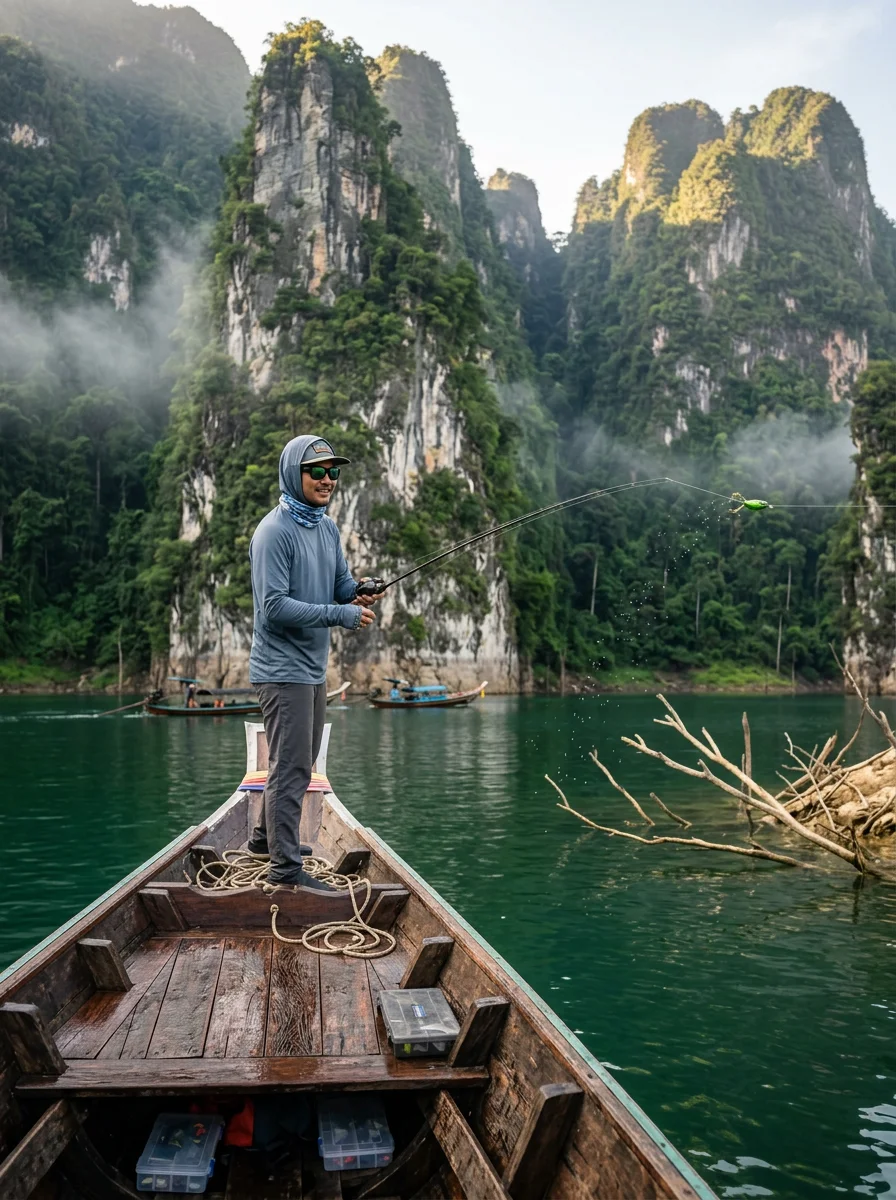
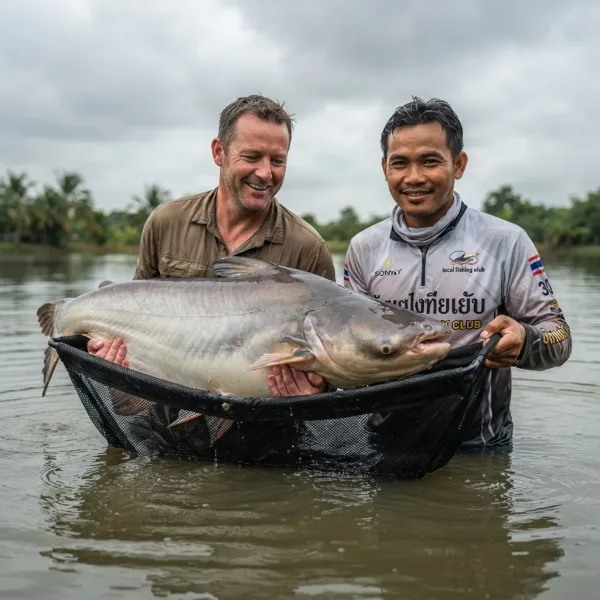
Native to freshwater lakes, flooded river valleys, and lowland waterways across Thailand, the giant snakehead is an aggressive ambush predator capable of bending weak hooks and tearing through light tackle. Targeted with surface frogs and topwater plugs cast tight to weed lines and submerged timber, these territorial fish deliver some of the most violent strikes in freshwater lure angling.
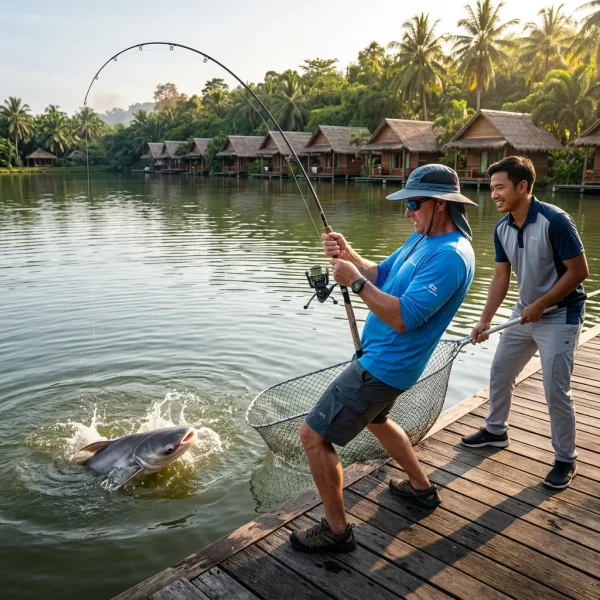
Snakehead fishing in Thailand is an active hunting pursuit rather than a sedentary session beside static bite alarms. Anglers cast from the wooden decks of local longtail boats drifting across vast dam reservoirs, or stalk muddy banks along rural irrigation canals and suburban drainage channels. Trip formats vary widely, from day trips on canals bordering Bangkok to multi-day wilderness expeditions on reservoirs such as Cheow Lan Lake or Srinakarin Dam, where anglers sleep on floating raft houses moored in remote jungle bays.
What makes snakehead a distinct quarry is their respiratory biology. Equipped with an auxiliary suprabranchial organ, they breathe atmospheric air and must periodically surface to gulp oxygen. This surfacing behaviour—known locally as pla jib nam, or sipping water—leaves telltale double ripples that allow observant anglers to sight-cast directly to moving targets. The style demands pinpoint casting accuracy, quick reflexes, and sustained stamina under a hot tropical sun, rewarding those who value visual, fast-paced predator angling.

Key Species, Waters, and Techniques
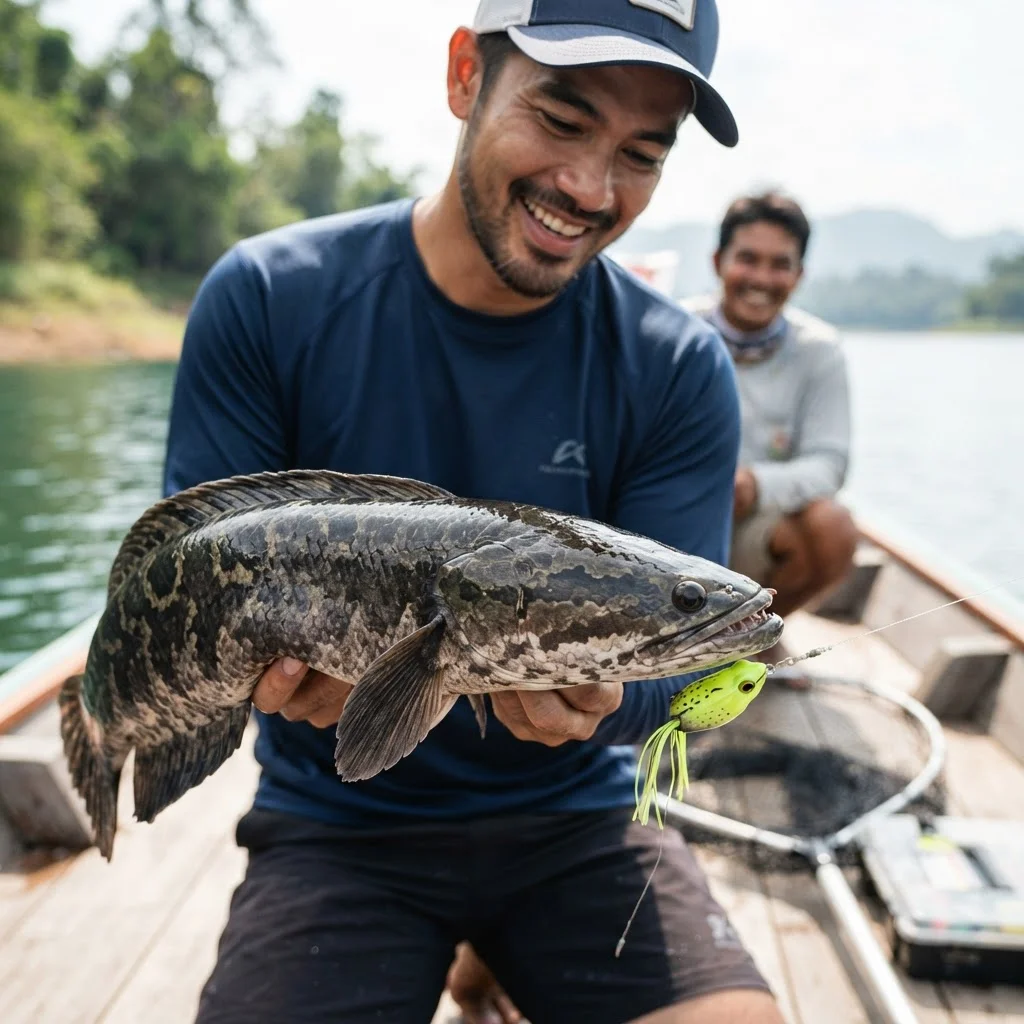
Two native species form the mainstay of Thai snakehead fishing. The giant snakehead (Channa micropeltes), known locally as pla chado, is the prime quarry in deep jungle reservoirs, regularly exceeding 5 kg and occasionally reaching double figures. A ferocious apex predator, it hunts open water and ambushes baitfish from weed margins and submerged timber. The smaller striped snakehead (Channa striata), or pla chon, rarely surpasses 2 kg but thrives across the country in shallow irrigation canals, roadside ditches, and flooded rice paddies.
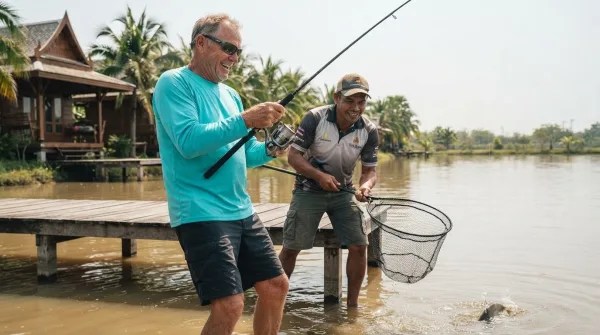
Anglers encounter three distinct aquatic environments. Vast man-made reservoirs such as Cheow Lan in Surat Thani, Khao Laem in Kanchanaburi, and Mae Ngat near Chiang Mai hold large wild populations among flooded forests and drowned tree stumps. In contrast, central Thailand and Bangkok's suburban klong (canal) network provide bankside and boat-based urban fishing, where pla chon hold tight under floating water hyacinth mats. For anglers seeking controlled conditions, managed pay-lake venues like Pilot 111 in Chachoengsao provide cleared pond banks to practise casting accuracy and refine topwater retrieves.
Stopping a hooked giant snakehead before it dives into submerged snags demands heavy gear. A fast-action, medium-heavy to heavy casting rod around seven feet, matched with a high-speed baitcasting reel, provides the necessary pulling power. Spool with 40- to 60-pound braided mainline joined to a 40- to 50-pound fluorocarbon leader to endure abrasive teeth and wood. Because snakeheads are air-breathers that regularly rise to gulp oxygen, sight-casting to surface ripples often yields explosive takes. Weedless hollow-body frogs, Thai-style wooden jump frogs, and noisy buzzbaits work well across dense vegetation mats. When fish drop deeper during the heat of the day, weighted soft plastics, jerkbaits, and deep-diving crankbaits retrieve strikes from the drop-offs.
Getting There and Logistics
Departure points depend on the style of angling chosen. Urban canal trips typically start directly from Bangkok hotels, with guides driving thirty to fifty minutes to irrigation waterways and drainage canals in neighbouring Samut Prakan. Heading to wild jungle reservoirs requires more travel. Cheow Lan Lake in Khao Sok National Park is reached by flying from Bangkok to Surat Thani or Phuket, followed by a road transfer of one to two and a half hours to Ratchaprapha Pier depending on the airport. Kanchanaburi’s prime reservoirs, including Srinakarin and Khao Laem, sit roughly three to five hours west of the capital by road.
At the time of writing, a guided day trip targeting Bangkok canals costs around 4,300 to 5,000 THB (£100 to £116) per angler, covering private guiding, tackle, and hotel transport. Full-day longtail boat charters on western and northern reservoirs generally run between 6,500 and 8,000 THB (£151 to £186). Multi-day expeditions on Cheow Lan Lake range from approximately 10,500 THB (£244) for a single day to 25,500 THB (£593) for three days, covering guide services, boat hire, floating raft accommodation, and meals. Anglers entering Khao Sok National Park pay a cash entry fee of 300 THB (around £7) per foreign adult, alongside a 40 THB pier fee. Thailand does not require a national freshwater rod licence on public waters.
The peak wild snakehead season runs from July through December. Between July and September, giant snakeheads guard dense clusters of newly hatched fry, known locally as luk krok. Parents defend these broods aggressively, striking lures that enter their territory. Responsible anglers practise prompt catch-and-release, returning adult fish immediately so the unguarded fry are not eaten by other predators. Jaws possess sharp teeth capable of inflicting severe lacerations, so long-nosed unhooking pliers and a sturdy lip grip should be kept at hand.
Plan a Gulf of Thailand trip with clear guidance on island groups, ferries, weather, marine parks, accommodation costs and mainland gateways.
Quick Reference Table
| Item | Detail | Notes |
|---|---|---|
| Peak season | July to December | July to September sees intense lure strikes on fry-guarding adults (*luk krok*) |
| Primary species | Giant snakehead (*pla chado*) and striped snakehead (*pla chon*) | Giant snakeheads regularly exceed 5 kg; striped snakeheads rarely surpass 2 kg |
| Key destinations | Cheow Lan Lake, Khao Laem, Srinakarin, and Bangkok canals | Encompasses wild jungle reservoirs, suburban waterways, and pay lakes like Pilot 111 |
| Bangkok day trip cost | 4,300–5,000 THB (£100–£116) per angler | Includes guiding, tackle, and hotel transport to suburban irrigation canals |
| Reservoir day charter | 6,500–8,000 THB (£151–£186) | Full-day longtail boat charter on northern and western reservoirs |
| Multi-day expedition cost | 10,500–25,500 THB (£244–£593) | Cheow Lan Lake 1- to 3-day trips; covers guiding, boat, raft house stay, and meals |
| National park entry fee | 300 THB (~£7) plus 40 THB pier fee | Payable in cash per foreign adult at Khao Sok National Park (Cheow Lan Lake) |
| Freshwater rod licence | None required | Public freshwater bodies in Thailand do not require a national angling licence |
FAQ: Snakehead Fishing in Thailand
What is pla jib nam in snakehead fishing?
Why should I book a guided snakehead fishing trip in Thailand?
What are the main types of snakehead fish found in Thailand?
Where can I go snakehead fishing in Thailand?
What kind of fishing gear is recommended for giant snakeheads in Thailand?
What lures are effective for snakehead fishing in Thailand?
When is the best time to go snakehead fishing in Thailand?
What is important to remember when catching snakeheads, especially during the fry-guarding season?
What safety equipment should I use when handling snakeheads?
Do I need a fishing licence for snakehead fishing in Thailand?
Reviewed by the Thailand Guide Editorial Team • Last reviewed: 10 November 2026
This page is provided for general information only. While we aim for accuracy, details can change — please verify anything important independently before relying on it.