Wildlife Safaris in Thailand
A sharp crack of dry bamboo echoes across the Huai Luek scrubland before a four-tonne bull Asian elephant strides into the afternoon sun. Behind him, a herd of wild gaur with pale-stockinged legs grazes quietly against the jagged ridgelines of Prachuap Khiri Khan.
This guide provides the practical intelligence required to plan and navigate genuine wildlife safaris in Thailand's premier protected habitats, focusing on Kui Buri, Khao Yai, and Kaeng Krachan national parks. You will learn how to encounter wild elephants, gibbons, hornbills, and gaur through open-sided vehicle drives, guided rainforest treks, and ranger-led evening spotlight patrols. We cover national park fees, local guide requirements, seasonal viewing patterns, and responsible field protocols, helping you bypass captive-animal tourist attractions in favour of ethical wilderness encounters.

Kui Buri: The Epicentre of Wild Elephant Safaris
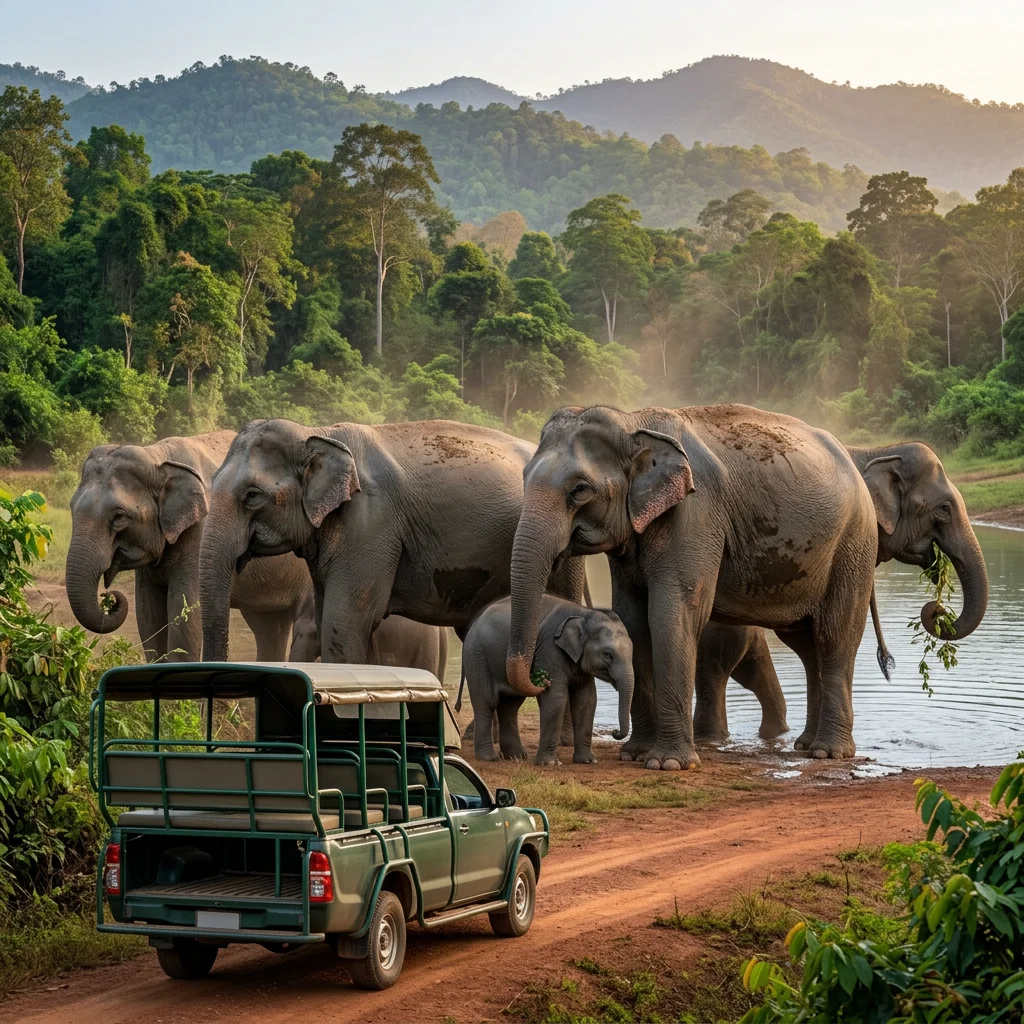
Kui Buri National Park provides one of Thailand's most reliable wild elephant habitats, with afternoon wildlife viewing drives frequently reporting sighting success rates of ninety percent or higher. Located in Prachuap Khiri Khan province roughly 85 kilometres southwest of Hua Hin, the 969-square-kilometre park protects an expansive mosaic of open grasslands and semi-evergreen forest set against the rugged backdrop of the Tenasserim mountain range.
All wildlife drives depart from the Huai Luek Ranger Station, situated roughly 16 kilometres north of the park headquarters. Private vehicles are prohibited past the station car park to minimise habitat disruption. Visitors enter the wildlife observation zone aboard converted open-air pickup trucks operated by the local Kui Buri Wildlife Ecotourism Club. Each vehicle carries up to six to eight passengers and includes a local driver and a ranger spotter. These drivers coordinate via two-way radios to track elephant movements across the valleys while maintaining a respectful buffer distance, ensuring herds remain uncrowded and free to access natural watering routes.
Afternoon game drives run strictly between 14:00 and 18:00, with no new entries permitted after late afternoon. This timetable takes advantage of the cooler hours when the park's estimated population of more than 300 wild Asian elephants and herds of gaur—massive wild forest cattle—emerge from dense tree cover to feed at open clearings, artificial salt licks, and watering pools. Because sightings often occur across broad savanna glades several hundred metres away, hiring a pair of binoculars at the ranger counter is strongly advised.
Arriving at Huai Luek between 14:00 and 14:30 allows ample time to register, arrange an allocated truck, and reach the prime viewing platforms as wildlife activity gathers pace towards mid-afternoon. Vehicle hire is charged at a flat rate per truck rather than per seat, and standard national park admission fees apply at the gate. Check with park staff upon arrival for current vehicle rates.
Khao Yai: Rainforest Trekking and Nocturnal Wildlife
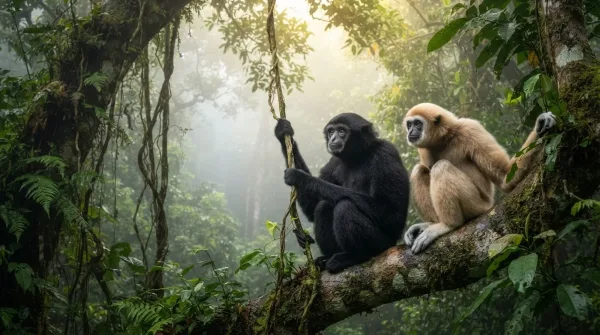
As Thailand's oldest national park and a UNESCO World Heritage site, Khao Yai combines dense tropical rainforest trekking with ranger-led nocturnal spotlight safaris. Covering nearly 2,200 square kilometres across four provinces, the highland plateau sits roughly two and a half hours northeast of Bangkok. Foreign admission costs 400 THB (approx £9.10) for adults and 200 THB (approx £4.55) for children, alongside a vehicle fee of 30 THB to 50 THB (approx £0.70 to £1.15) for cars. The reserve protects an estimated population of over 400 wild Asian elephants, alongside white-handed gibbons, pileated gibbons, barking deer, and four native hornbill species.
Seven numbered nature trails wind through the interior, ranging from short boardwalk loops to deep-jungle routes. Deeper walks, such as Trail 5 to the Nong Phak Chi observation tower or Trail 6 towards Haew Suwat Waterfall, require an official park ranger guide. These guides can be hired at the visitor centre for 500 THB to 1,000 THB (approx £11.40 to £22.70) per group, depending on trail length. Walking on foot immerses you in semi-evergreen jungle where gibbon troops call loudly through the morning canopy and great hornbills pass overhead with audible wingbeats.
After dark, the park operates one-hour spotlight drives at 19:00 and 20:00 using modified open-top pickup trucks. The tour costs a flat rate of 600 THB (approx £13.60) per vehicle for up to eight passengers. Rangers drive a ten-kilometre circuit, sweeping high-powered beams over grasslands and salt licks around Lam Ta Khong to illuminate foraging sambar deer, Malayan porcupines, and Asian palm civets, with occasional elephant sightings. Book your night safari ticket in person at the visitor centre desk before 18:00 on the day, and arrange a morning walking guide early to catch active primates.
Plan a journey along Thailand’s Andaman coast, with practical guidance on island gateways, marine parks, diving, ferries and monsoon travel.
Kaeng Krachan: Primate Tracking and Forest Canopy Wildlife
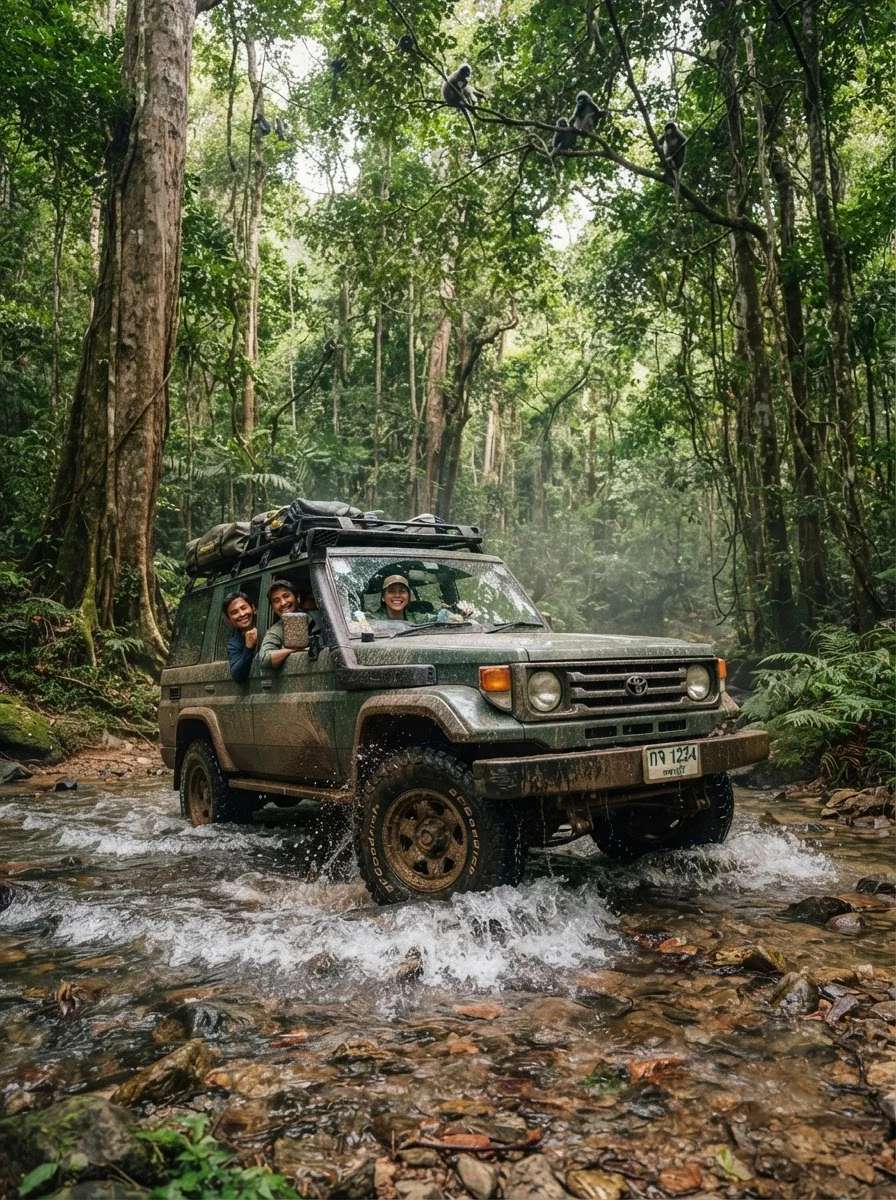
Kaeng Krachan National Park spans more than 2,900 square kilometres of dense forest along the Myanmar border, anchoring the UNESCO World Heritage-listed Kaeng Krachan Forest Complex. Because the park sits directly across the transition zone between Indochinese continental forests and southern Sundaic ecosystems, its canopies support an exceptional concentration of resident primate species.
The lower rainforest surrounding Ban Krang Camp, situated roughly 15 kilometres past the Sam Yot entrance checkpoint, provides reliable territory for canopy observation. Troops of dusky leaf monkeys, easily identified by the stark white circles around their eyes, forage across the fruiting fig trees fringing the forest edge. Ground-dwelling stump-tailed macaques frequently cross the dirt tracks in substantial troops, while lar gibbons call across the misty valleys in resonant dawn choruses. Birdwatchers also congregate here for sightings of hornbills and broadbills, alongside hundreds of butterflies massing at mineral-rich stream crossings.
Beyond Ban Krang, the unpaved mountain road climbs steeply to Phanoen Thung Camp at roughly 950 metres elevation, near the 1,207-metre ridge known for sea-of-mist panoramas. Park regulations restrict this rough mountain stretch strictly to four-wheel-drive vehicles with adequate ground clearance. To manage the single-track road, rangers enforce rigid one-way driving windows, alternating uphill traffic in early morning and early afternoon with downhill departures in mid-morning and late afternoon. Visitors without suitable 4WD vehicles can arrange local trucks with drivers at the park checkpoints.
The upper mountain sector, including Phanoen Thung, closes annually throughout August, September, and October to protect vulnerable habitats during heavy monsoon rains and mitigate track hazards. Base yourself at Ban Krang Camp for at least one night to track morning primate activity directly from the campsite without waiting for the outer entrance gates to open.
Safari Formats: Open 4x4 Drives, Forest Treks, and Night Spotting
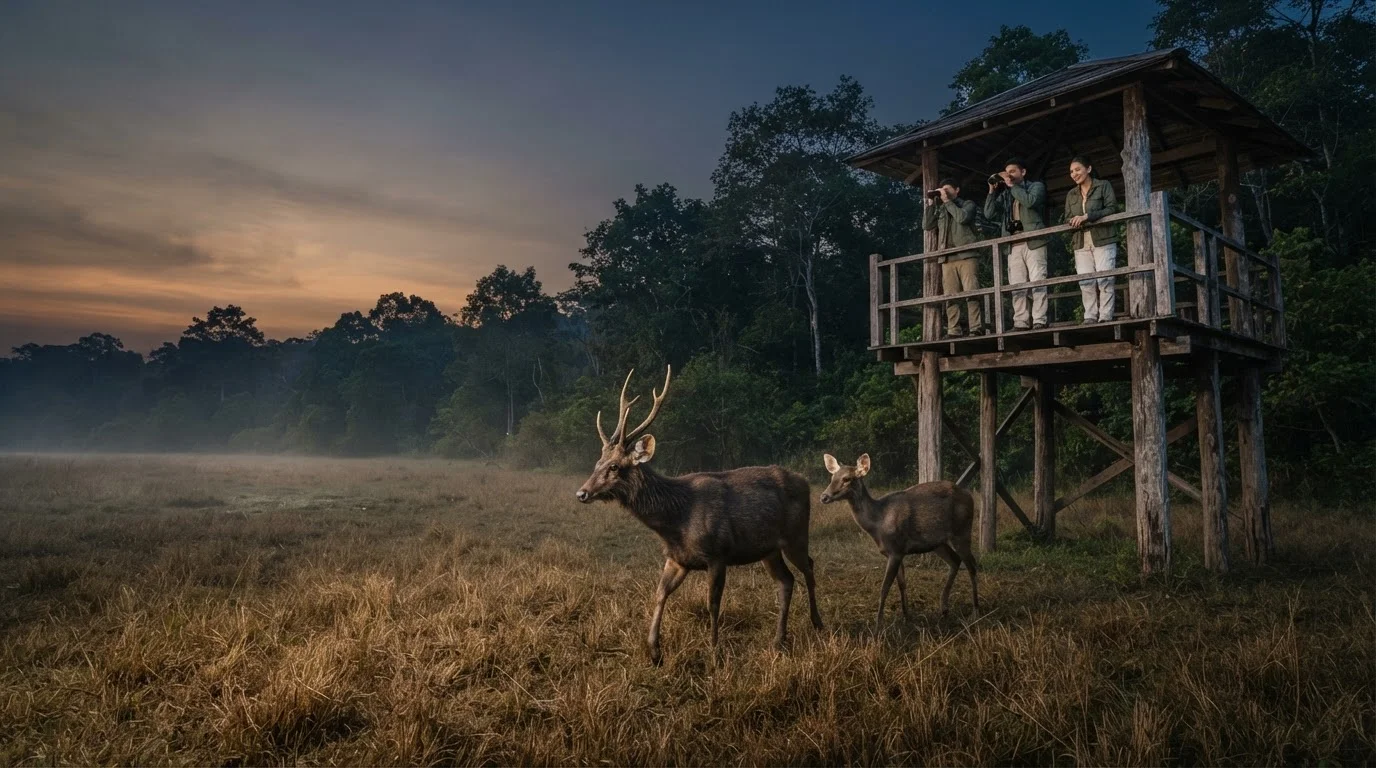
Selecting the appropriate safari format shapes the wildlife you encounter, your physical comfort, and field awareness across Thailand's national parks. Different terrain and animal behaviours require distinct viewing methods, ranging from vehicular tracking across open clearings to foot patrols through evergreen rainforest.
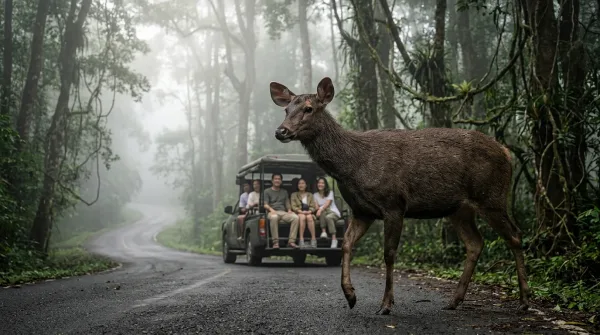
Open-sided pickup drives are the established standard for tracking large terrestrial mammals in Kui Buri National Park. Elevated bench seats fitted to modified four-wheel-drive trucks give passengers uninterrupted sightlines over tall grass and secondary scrub. Because private vehicles are prohibited beyond the Huai Luek checkpoint, these local trucks also supply a secure retreat buffer if an inquisitive bull elephant steps onto the dirt track.
Guided forest foot safaris provide intimate sensory tracking in Khao Yai National Park. Accompanied by an accredited national park ranger or a licensed naturalist guide, walkers navigate damp interior trails, learning to identify fresh elephant footprints, bark rubbings, and territorial gibbon calls echoing through the canopy. Foot travel demands reasonable mobility and steady footing over slick clay, exposed tree roots, and shallow stream crossings.
Ranger-operated night spotlight safaris reveal nocturnal species that remain hidden during daylight hours. In Khao Yai, park staff drive modified open pickups along a fixed ten-kilometre circuit after dark, using high-powered handheld searchlights to illuminate saltlicks, reservoir perimeters, and forest edges. The beam picks out the reflective eye-shine of sambar deer, Asian palm civets, Malayan porcupines, and hunting owls. Regulations strictly forbid private night driving, personal torches, and flash photography to prevent disorienting the wildlife.
Fixed observation towers deliver a low-impact stationary vantage point. Structures like Khao Yai's Nong Phak Chi tower overlook artificial mineral licks and natural waterholes, allowing visitors to watch grazing ungulates, raptors, and occasional elephant herds without disrupting natural feeding routines. Meanwhile, Kaeng Krachan National Park relies on mountain four-wheel-drive transit along steep dirt corridors between Ban Krang and Phanoen Thung, giving travellers exceptional opportunities to spot arboreal dusky leaf monkeys and great hornbills in the roadside canopy. Combining a morning forest trek with an afternoon or evening vehicle drive gives you the widest species exposure across varied habitats.
| Format | Best Park | Target Species | Typical Cost | Guide Requirement |
|---|---|---|---|---|
| Open 4x4 Vehicle Drive | Kui Buri National Park | Wild Asian elephants, gaur herds, golden jackals | 1,200 THB (approx £27) per truck | Local driver and spotter included |
| Guided Forest Foot Safari | Khao Yai National Park | Lar gibbons, great hornbills, pit vipers, deer | 500–1,000 THB (approx £11–£23) per group | Mandatory park ranger or licensed guide |
| Ranger Night Spotlight Drive | Khao Yai National Park | Sambar deer, civets, porcupines, nightjars | 600 THB (approx £14) per vehicle | Official park ranger driver and spotlight |
| Mountain 4WD Expedition | Kaeng Krachan National Park | Dusky leaf monkeys, stump-tailed macaques, hornbills | 1,400–2,000 THB (approx £32–£45) per truck | Experienced local 4WD mountain driver |
| Fixed Observation Tower | Khao Yai (Nong Phak Chi) | Grazing herbivores, raptors, wild boar | Free with national park entry | Guide recommended along approach trail |
Wildlife Expectations and Seasonal Movement Patterns
Realistic wildlife expectations prevent disappointment and help you appreciate the unpredictability of unmanaged tropical ecosystems. Thailand’s national parks are wild, unfenced habitats where animal movements depend on food availability, water sources, and weather patterns rather than a published timetable.
Viewing probability varies sharply between reserves and species. Kui Buri National Park delivers the highest consistency for large mammals, yielding wild Asian elephant sightings on around nine out of ten afternoon vehicle drives, with gaur frequently observed grazing along the forest edge. By contrast, Khao Yai provides reliable daily encounters with white-handed gibbons, pig-tailed macaques, and sambar deer, but spotting its resident wild elephants requires patience during road transit. Elusive apex predators, including clouded leopards and dholes in Khao Yai and Kaeng Krachan, as well as leopards in Kaeng Krachan, inhabit these forests, yet visitor sightings remain exceptionally rare events largely confined to scientific camera-trap surveys.
Weather heavily dictates animal distribution across the year. During the cool, dry months from November to February, overnight temperatures in elevated parks drop to 10–15°C, encouraging wildlife to forage into the morning. The hot stretch from March to April dries interior streams, drawing herds toward remaining river valleys and artificial saltlicks. From May to October, southwest monsoon rains turn the canopy dense and lush, scattering animals into deep forest and activating terrestrial leeches. Planning your safari between November and March ensures comfortable walking conditions and regular activity across open clearings.
| Season | Months | Wildlife Activity | Forest Conditions | Key Advantage |
|---|---|---|---|---|
| Cool dry season | November to February | High gibbon and hornbill visibility; elephants active throughout the day | Dry walking trails, low humidity, comfortable daytime temperatures | Prime conditions for long forest treks and wilderness camping |
| Hot dry season | March to April | Elephants and gaur gather around remaining waterholes and saltlicks | Thinning deciduous foliage, intense midday heat, dusty tracks | Clear lines of sight through sparse scrub near water sources |
| Early monsoon | May to July | Wildlife disperses into deep forest; amphibians and reptiles emerge | Rapidly greening foliage, regular afternoon downpours, flowing streams | Low visitor numbers and lively resident bird activity |
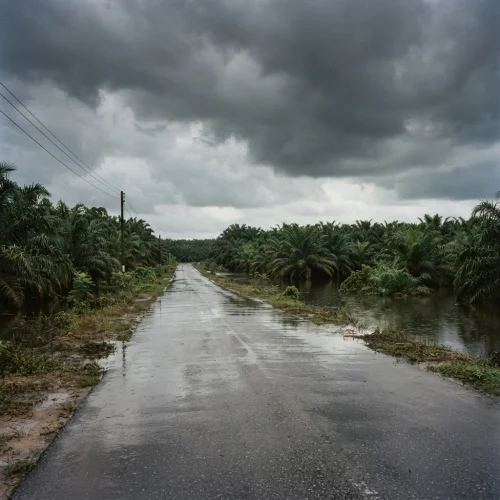
| Peak monsoon | August to October | Limited mammal viewing; tracks like Phanoen Thung close seasonally | Saturated ground, high leech activity, washed-out dirt roads | High-volume waterfalls and thriving forest herpetofauna |
Safety Protocols and Responsible Field Ethics
Observing large mammals in unfenced wilderness demands strict field discipline and adherence to Department of National Parks regulations. Wild Asian elephants are formidable animals with acute hearing and scent. In parks such as Khao Yai, official guidelines require vehicles to stop at least 30 metres from wild elephants on forest roads. Drivers should keep engines running at an even idle to allow a prompt reverse if an animal approaches, avoiding sudden acceleration, horn sounding, or flashing indicator lights that can provoke a defensive charge.
On guided foot treks, visitors must walk in single file directly behind their ranger to minimise disturbance and stay on secure ground. Distinguishing elephant temperament is critical: while flapping ears and a swaying trunk usually indicate a relaxed animal, rigid ears spread wide, a raised trunk, head shaking, or trumpeting signal agitation and stress. In such instances, guides will instruct the group to stop and quietly back away. During open-vehicle drives in Kui Buri, passengers must stay inside the truck bed throughout the route, stepping down only onto designated viewing platforms when authorised by park rangers.
Flash photography is prohibited on night safaris because bright bursts temporarily blind nocturnal wildlife and risk triggering panicked retreats into roadways. Feeding macaques, deer, or any other wild animal is strictly illegal across all protected areas; under the National Parks Act B.E. 2562 (2019), feeding wildlife carries fines of up to 100,000 THB (approx £2,270). Maintain quiet throughout all encounters, avoid sudden movements, and follow ranger commands without delay.
Where to Book Wildlife Safaris in Thailand
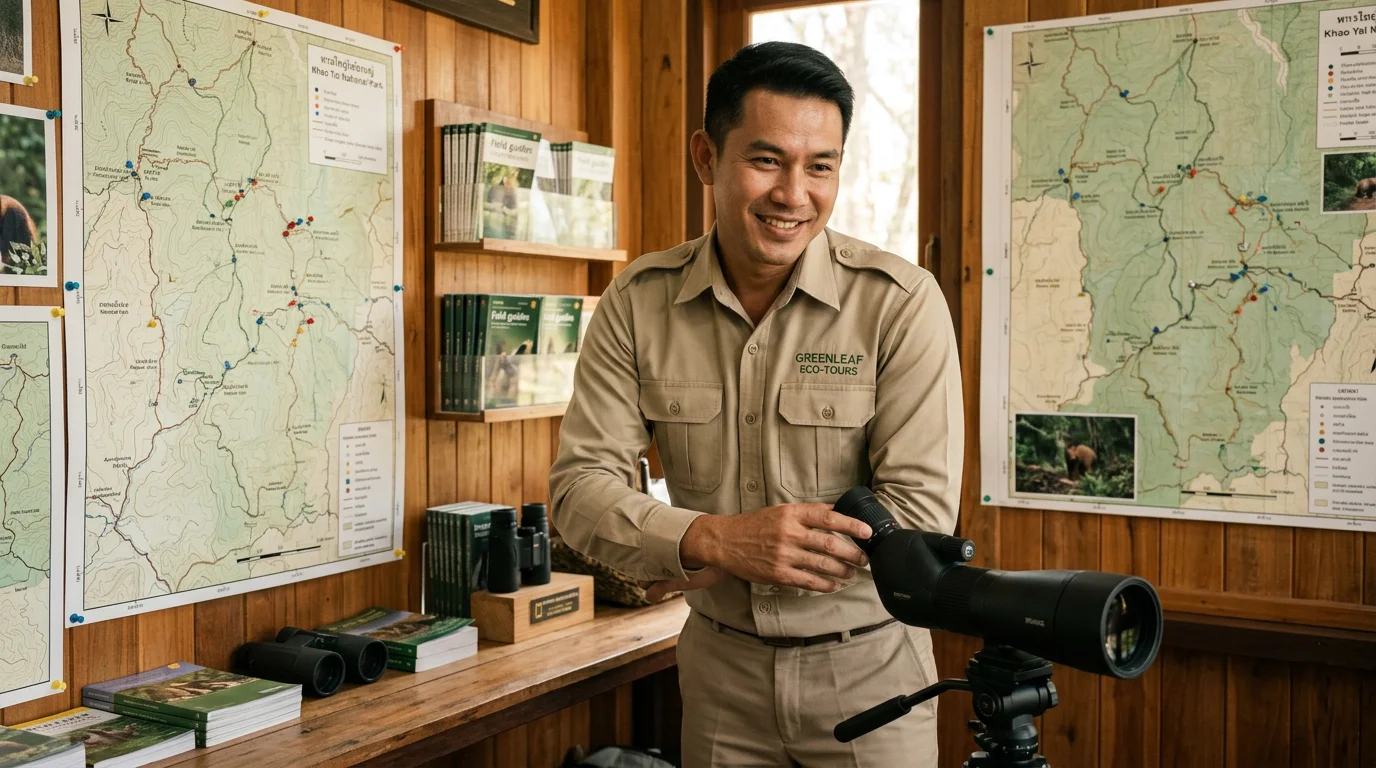
Arranging wildlife excursions through established local operators and official park stations ensures accredited guides, lawful park transit, and field practices that avoid disturbing animals.
In Pak Chong, the main transport hub for Khao Yai National Park, Greenleaf Guesthouse & Tour is an established family-run operator specialising in guided excursions. Their full-day national park wildlife tour costs 1,500 THB (approx £34) per adult (750 THB, approx £17, for children under 10), covering the park admission fee, transport, an English-speaking guide, lunch, drinking water, and protective leech socks. The operator also provides complimentary pickup and drop-off at Pak Chong railway and bus stations for tour guests, with payments accepted in cash on site.
For Kui Buri National Park, visitors travelling independently do not book vehicles in advance. Instead, arrange open-bed safari trucks directly upon arrival at the Huai Luek Ranger Station through the Kui Buri Wildlife Ecotourism Club, which assigns local drivers and spotters. Travellers based in Hua Hin who prefer not to drive can book afternoon packages through local agencies or accommodation desks, which typically charge between 2,500 THB and 4,000 THB (approx £57 to £91) per person to cover private round-trip road transfers, park admission, and the safari truck.
For Kaeng Krachan National Park, private saloons and standard hire cars cannot travel beyond the paved lower section. Visitors aiming for the forest interior around Ban Krang Camp and the mountain ridge at Phanoen Thung can charter high-clearance four-wheel-drive vehicles and local ecotourism drivers directly at the park visitor centre or the Sam Yot Checkpoint.
First-time visitors typically find Pak Chong the most practical staging base for guided excursions into Khao Yai, while an afternoon excursion from Hua Hin provides a direct route into Kui Buri.
Costs and Budgeting
Observing wild elephants, gaur, and canopy wildlife across Thailand's premier national parks is remarkably affordable compared to conventional African or Indian game reserves. Expenses fall into three practical travel tiers, depending on whether you coordinate transport independently, arrange day excursions from regional hubs, or commission private naturalists.
Independent travellers using local trains or public buses to reach gateway towns like Pak Chong or Hua Hin can keep expenses low. Pitching your own tent at official park campgrounds costs 30 THB (approx £0.70) per person per night, whilst joining other visitors at ranger desks to share open-topped trucks minimises field transport expenses. Mid-range visitors staying in guesthouses or mid-scale hotels outside the gates should budget 2,500 THB to 4,500 THB (approx £57 to £102) per person daily. This comfortably covers organised small-group tours, local driver hire, admission tickets, and dining. Higher-end travellers engaging private naturalists, exclusive four-wheel-drive transport, and boutique perimeter lodges typically spend between 7,000 THB and 13,000 THB (approx £159 to £295) per day.
Entry fees follow fixed schedules set by the Department of National Parks, Wildlife and Plant Conservation. Admission tickets are charged per person per calendar day, whilst internal safari pickups operate on flat vehicle tariffs that become particularly economical when split across small groups.
| Option | Cost (THB) | Cost (GBP approx) | Notes |
|---|---|---|---|
| Kui Buri Park Entry (Adult) | 200 THB | £4.55 | Paid at Huai Luek Ranger Station |
| Kui Buri 4x4 Truck Hire | 1,200 THB | £27.30 | Flat rate per truck; carries up to 6 people |
| Khao Yai Park Entry (Adult) | 400 THB | £9.10 | Standard adult foreigner fee at main gates |
| Khao Yai Night Safari Drive | 600 THB | £13.60 | Per truck; up to 8 people; 1-hour drive |
| Khao Yai Full-Day Guided Tour | 1,500 THB | £34.10 | Includes transport, guide, lunch, leech socks |
| Kaeng Krachan Park Entry | 300 THB | £6.80 | Adult foreign visitor admission |
| Kaeng Krachan 4WD Mountain Truck | 1,400–2,000 THB | £31.80–£45.50 | Return hire from gate to Ban Krang/Phanoen Thung |
| Binocular Hire at Gates | 100 THB | £2.30 | Per day; available at Kui Buri and Khao Yai |
What To Know Before You Go
Public transport does not run inside Thailand’s national parks. Scheduled minivans and songthaews terminate at perimeter gates or nearby gateway towns—often miles short of visitor centres and prime safari trails—leaving visitors reliant on pre-arranged tours, rental vehicles, or private transfers to explore the interior.
Carrying cash in Thai Baht remains necessary across protected areas. Although selected flagship entrances support digital e-tickets via official mobile apps, card processing remains unavailable at remote ranger substations, where on-site safari vehicle hire, mandatory local drivers, and guide gratuities require payment in physical notes.
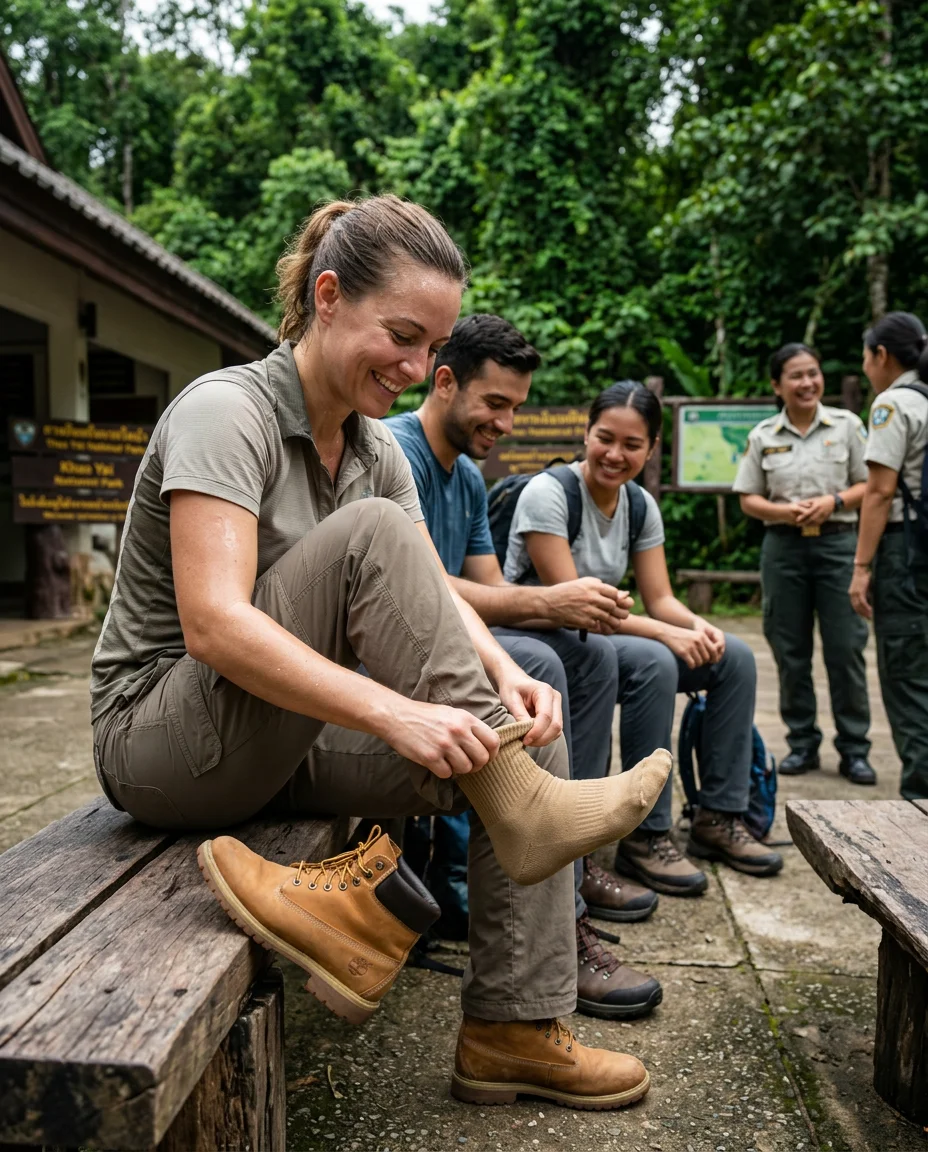
Wet-season rainforest visits require practical foot protection. Between May and November, damp leaf litter across Khao Yai and Kaeng Krachan hosts active populations of terrestrial leeches. Tucking walking trousers into tightly woven, knee-high leech socks prevents bites during forest walks.
Wildlife encounters demand strict passenger composure. When viewing wild elephants from open-top safari trucks, sudden standing, loud shouting, or banging vehicle doors can startle herds and prompt defensive mock charges from protective matriarchs. Remaining quiet and seated keeps encounters calm and controlled.
Practical Tips
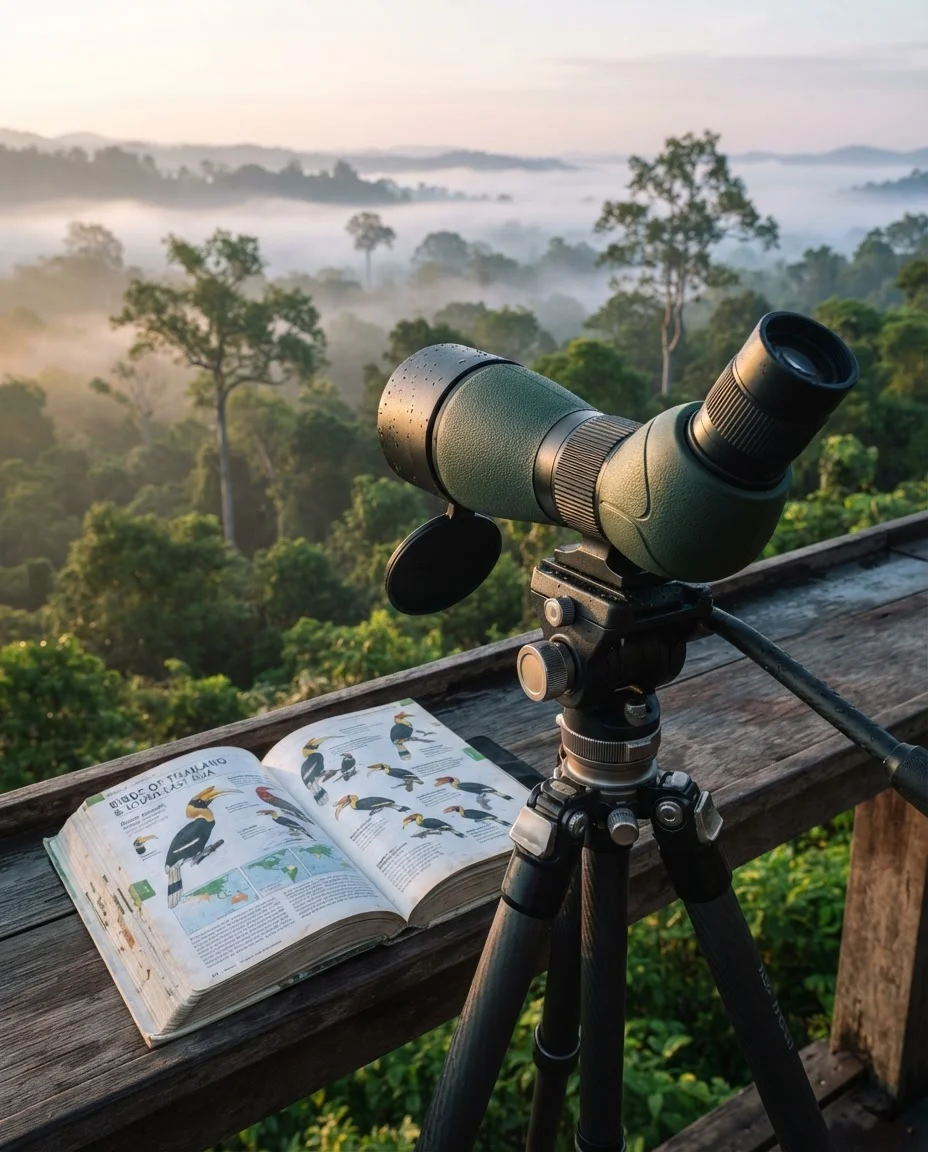
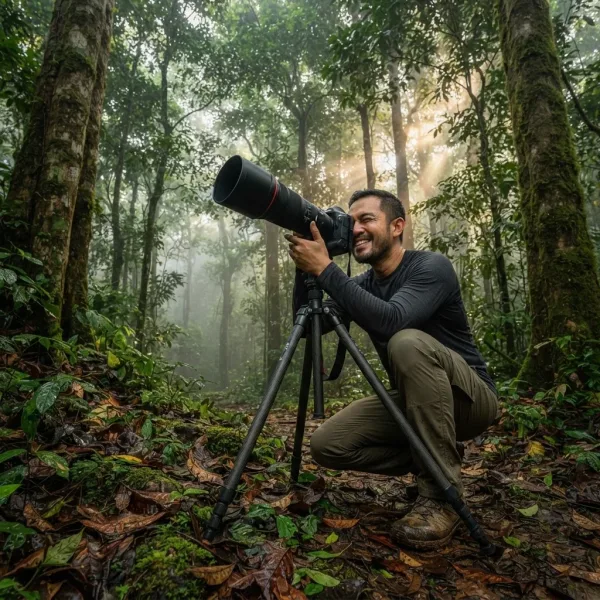
Pack compact 8x42 or 10x42 binoculars for each person. Distant salt licks, open grassland clearings, and high rainforest canopies make spotting wildlife with the naked eye frustrating, particularly when tracking canopy gibbons or perched hornbills.
Wear lightweight, breathable clothing in dull, earth-toned shades of olive, khaki, or brown. Bright colours startle wary jungle herbivores such as deer and gaur, while dark blues and blacks attract biting insects. Long trousers and long sleeves also shield against thorny brush and intense afternoon sun during open-bed vehicle drives.
If visiting Kui Buri National Park independently, arrive at the Huai Luek ranger checkpoint around 14:30. The wildlife viewing zone opens from 14:00 to 18:00, with elephant and gaur activity peaking between 15:30 and 17:30 as the heat subsides. Turning up promptly ensures you secure an open-bed ecotourism truck before queues build up.
Hire an accredited Department of National Parks ranger for deep-forest trails in Khao Yai. While short nature loops near the visitor centre are open for self-guided walking, longer routes into the interior feature unmarked cross-paths and active elephant corridors where unguided hiking is unsafe.
When visiting Kaeng Krachan's Phanoen Thung viewpoint, verify the mountain road timetable in advance. The steep, unsealed single-lane track between Ban Krang and the ridge requires a high-clearance four-wheel-drive vehicle and enforces strict alternating one-way windows, locking out drivers who miss their scheduled ascent or descent slot.
Carry a headlamp featuring a red-light mode for night spotlight safaris and campsite walking. Direct white beams dazzle nocturnal wildlife and ruin night-vision adjustment for fellow travellers.
Pack all trail snacks in hard, airtight plastic containers. Macaques around popular viewpoints and picnic clearings readily snatch thin plastic carrier bags.
Finally, secure comprehensive travel insurance covering remote wilderness travel before heading into Thailand's national parks.
Quick Reference Table
| Item | Detail | Notes |
|---|---|---|
| Key Safari Parks | Kui Buri, Khao Yai, and Kaeng Krachan national parks | Kui Buri for wild elephants and gaur; Khao Yai for rainforest treks and night drives; Kaeng Krachan for primates |
| Kui Buri Elephant Drives | Daily 14:00–18:00 from Huai Luek Ranger Station | 90%+ sighting rate; 1,200 THB flat rate per 4x4 truck (up to 6–8 people) with driver and ranger spotter; arrive by 14:00–14:30 |
| Khao Yai Night Safaris | Ranger spotlight drives at 19:00 and 20:00 | 600 THB per vehicle (up to 8 passengers); 10 km circuit for civets, porcupines, and deer; book at visitor centre before 18:00 |
| Khao Yai Forest Treks | Guided trails including Trail 5 (Nong Phak Chi) and Trail 6 | Ranger guide costs 500–1,000 THB per group; prime morning hours for lar gibbons and hornbills |
| Kaeng Krachan 4WD Expeditions | Ban Krang Camp to Phanoen Thung mountain ridge | 1,400–2,000 THB per truck; strict alternating one-way driving timetable; upper mountain sector closed August to October |
| Park Admission Fees | Kui Buri: 200 THB; Khao Yai: 400 THB (adult) / 200 THB (child); Kaeng Krachan: 300 THB | Standard adult foreign visitor fees; car entry 30–50 THB at Khao Yai; payable in cash at entry gates |
| Best Time to Visit | November to February (cool, dry season) | March–April draws herds to waterholes; May–October brings leeches; August–October triggers seasonal road closures |
| Field Packing Essentials | 8x42 or 10x42 binoculars, leech socks (May–November), red-mode headlamp | Binoculars hireable at Kui Buri and Khao Yai gates for 100 THB/day; pack food in hard plastic boxes to deter macaques |
| Clothing & Field Ethics | Earth tones (khaki, olive, brown); lightweight long trousers and sleeves | Avoid bright colours or dark blue/black; feeding wildlife strictly illegal (fines up to 100,000 THB); flash photography banned |
| Transport & Payments | No scheduled public transport inside park boundaries; cash required | Remote ranger stations and ecotourism truck desks do not accept payment cards; arrange cash in advance |
| Official source | Department of National Parks E-Ticket Portal | https://e-ticket.dnp.go.th |
| Official source | Khao Yai National Park Visitor Centre | khaoyainationalpark.com / Tel: +66 86 092 6529 |
| Official source | Kaeng Krachan National Park Headquarters | Tel: +66 3246 7326 |
| Book direct | Kui Buri Wildlife Ecotourism Club | Huai Luek Ranger Station / Tel: +66 85 266 1601 / +66 81 776 2410 |
| Book direct | Greenleaf Guesthouse & Tour (Pak Chong / Khao Yai) | https://www.greenleaftour.com / Tel: +66 63 303 1580 |
FAQ: Wildlife Safaris in Thailand
What is the best time of year to go on a wildlife safari in Thailand?
Does public transport operate inside Thailand's national parks?
Is cash needed when visiting Thailand's national parks?
What kind of clothing should visitors wear for wildlife safaris in Thailand?
Is it allowed to feed wild animals in Thailand's national parks?
What safety precautions should drivers take when encountering wild elephants on forest roads?
Can visitors use their own vehicles for safaris in Kui Buri National Park?
Are guides required for all treks in Khao Yai National Park?
Are special vehicles required for certain areas of Kaeng Krachan National Park?
Is flash photography allowed on night safaris in Thailand's national parks?
Reviewed by the Thailand Guide Editorial Team • Last reviewed: 15 November 2026
This page is provided for general information only. While we aim for accuracy, details can change — please verify anything important independently before relying on it.