Gibbon Watching
At dawn in the damp mist of Khao Yai National Park, a rising whoop cuts through the primary rainforest, answered seconds later by an accelerating female wail that carries across the upper canopy. You are listening to a mated pair of wild white-handed gibbons defending their high-canopy territory during their morning duet—a resonant acoustic display that can carry for up to two kilometres through dense evergreen forest.
Thailand’s intact tropical rainforests support some of the most accessible populations of wild gibbons in Southeast Asia. This guide explains how to track and observe these canopy-dwelling apes across the country's premier reserves, focusing on Khao Yai, Kaeng Krachan, and Khao Sok national parks. You will learn how to identify native species by sight and territorial call, how to arrange licensed Department of National Parks rangers for guided early-morning tracking, which optics give clear views into 40-metre dipterocarp trees, and how to distinguish genuine wild encounters from exploitative captive attractions.

Thailand's Native Gibbons and Their Forest Calls

Wild gibbons are smaller arboreal apes belonging to the family Hylobatidae. Dwelling almost entirely in the high rainforest canopy, they are far more easily heard than seen, making acoustic tracking the primary method for finding family groups. Four native species inhabit Thailand: the white-handed or lar gibbon (Hylobates lar), the pileated gibbon (Hylobates pileatus), the agile or dark-handed gibbon (Hylobates agilis), and the siamang (Symphalangus syndactylus). While some travel guides mistakenly list the eastern hoolock gibbon along the north-western border, that genus occurs strictly west of the Salween River outside Thailand.
The white-handed gibbon is the most widespread species, found in major national parks from the northern mountains down to the southern peninsula. Lar gibbons display two distinct colour phases—buff-cream and dark brown-black—that occur across both sexes. Both phases share bare dark faces ringed in white fur, along with pale white hands and feet. In eastern Thailand, including parts of Khao Yai National Park, lar gibbons meet the sexually dichromatic pileated gibbon. Adult male pileated gibbons are jet-black with white crowns and white hand fringes, whereas females are silver-grey with a dark cap and a black chest plate. Khao Yai preserves a rare contact zone where both species overlap and occasionally interbreed. In the deep south, the Bala Forest of Hala-Bala Wildlife Sanctuary supports Thailand's remaining populations of the agile gibbon—marked by dark hands and a white brow band—and the siamang, a larger ape with shaggy black fur and an inflatable throat sac.
Between 06:30 and 09:00, mated pairs perform complex territorial duets that reverberate across mountain ridges for over a kilometre. In white-handed gibbons, the female initiates the exchange with rising notes that culminate in a soaring "great call", answered by her mate's rhythmic coda barks. Female pileated gibbons finish their great calls with an accelerating bubbling trill, whereas siamang pairs produce resonant booms through their throat sacs. Experienced guides take compass bearings on these loud acoustic signatures to intercept groups while they feed on wild figs.
| Species | Scientific Name | Key Thai Habitats | Physical Markers | IUCN Red List Status |
|---|---|---|---|---|
| White-handed (Lar) Gibbon | *Hylobates lar* | Khao Yai, Kaeng Krachan, Khao Sok | Cream or black coat; white hands and feet | Endangered |
| Pileated Gibbon | *Hylobates pileatus* | Khao Yai, Pang Sida, Thap Lan, Khao Soi Dao | Black males; grey-white females with black caps | Endangered |
| Agile (Black-handed) Gibbon | *Hylobates agilis* | Bala Forest, Hala-Bala Wildlife Sanctuary | Dark brown or buff; dark hands; white brow band | Endangered |
| Siamang | *Symphalangus syndactylus* | Bala Forest, Hala-Bala Wildlife Sanctuary | Shaggy black coat; inflatable throat sac; webbed toes | Endangered |
Listen for duets starting shortly after daybreak, as family groups usually fall silent by mid-morning once territorial boundaries are established.
Canopy Behaviour and Early Morning Encounters
Gibbons are strictly arboreal apes whose anatomy is finely tuned for life in the high rainforest canopy. Their elongated arms and specialised ball-and-socket wrist joints enable brachiation—a dynamic hand-over-hand swinging locomotion that allows them to move through the treetops at speeds of up to 34 miles per hour. A resident family troop typically numbers two to six individuals, comprising a monogamous adult pair and dependent offspring that remain with their natal group until reaching maturity at around eight years of age.
A troop's daily routine is tightly governed by temperature and the distribution of ripe food. Waking in emergent sleeping trees at daybreak, the family vocalises across a defended home range—typically spanning 15 to 50 hectares depending on forest density—before travelling swiftly to foraging sites. Wild figs (Ficus) serve as their primary dietary anchor, supplemented by young leaves, liana shoots, and insects. Because gibbons are light and agile, they feed predominantly among flexible terminal boughs that would buckle beneath heavier primates such as macaques, plucking hanging fruit with long, hook-like fingers while suspended by one arm.
Activity peaks early. By late morning, as tropical heat penetrates the upper canopy, movement slows markedly. Troops drop into shaded mid-canopy forks to groom and rest through the middle of the day, emerging for only a brief feeding bout in the mid-afternoon before settling into their sleeping boughs well before dusk. For observers on the ground, positioning quietly along forest trails near fruiting fig trees between 07:00 and 09:30 offers the most consistent, uninterrupted viewing windows.
Plan a Gulf of Thailand trip with clear guidance on island groups, ferries, weather, marine parks, accommodation costs and mainland gateways.
Prime Habitats: Khao Yai, Kaeng Krachan, and Khao Sok
Thailand’s national park system protects expansive tracts of evergreen rainforest where wild gibbon populations remain viable. Khao Yai National Park, located 180 kilometres northeast of Bangkok across four provinces, covers 2,168 square kilometres and is one of the most accessible reserves for reliable sightings. The park holds particular ecological significance as a contact zone between two distinct species: western valleys support dense populations of white-handed (lar) gibbons, while eastern ridges support pileated gibbons. Decades of field primatology along the Lam Ta Khong river basin have documented viable hybrid pairs and intermediate vocal patterns across this natural boundary, giving visitors a chance to hear both species in adjacent territories.
To the southwest in Phetchaburi and Prachuap Khiri Khan provinces, Kaeng Krachan National Park spans 2,914 square kilometres of rugged terrain along the Tenasserim Mountain Range. The semi-evergreen and moist evergreen forests around Ban Krang Camp feature a lower canopy profile than the towering dipterocarps of the south. This open structure provides clearer sightlines through the mid-canopy, particularly along the unpaved track leading towards the Pran Buri river stream crossings, where white-handed gibbon family groups regularly feed on ripening wild figs in the early morning.
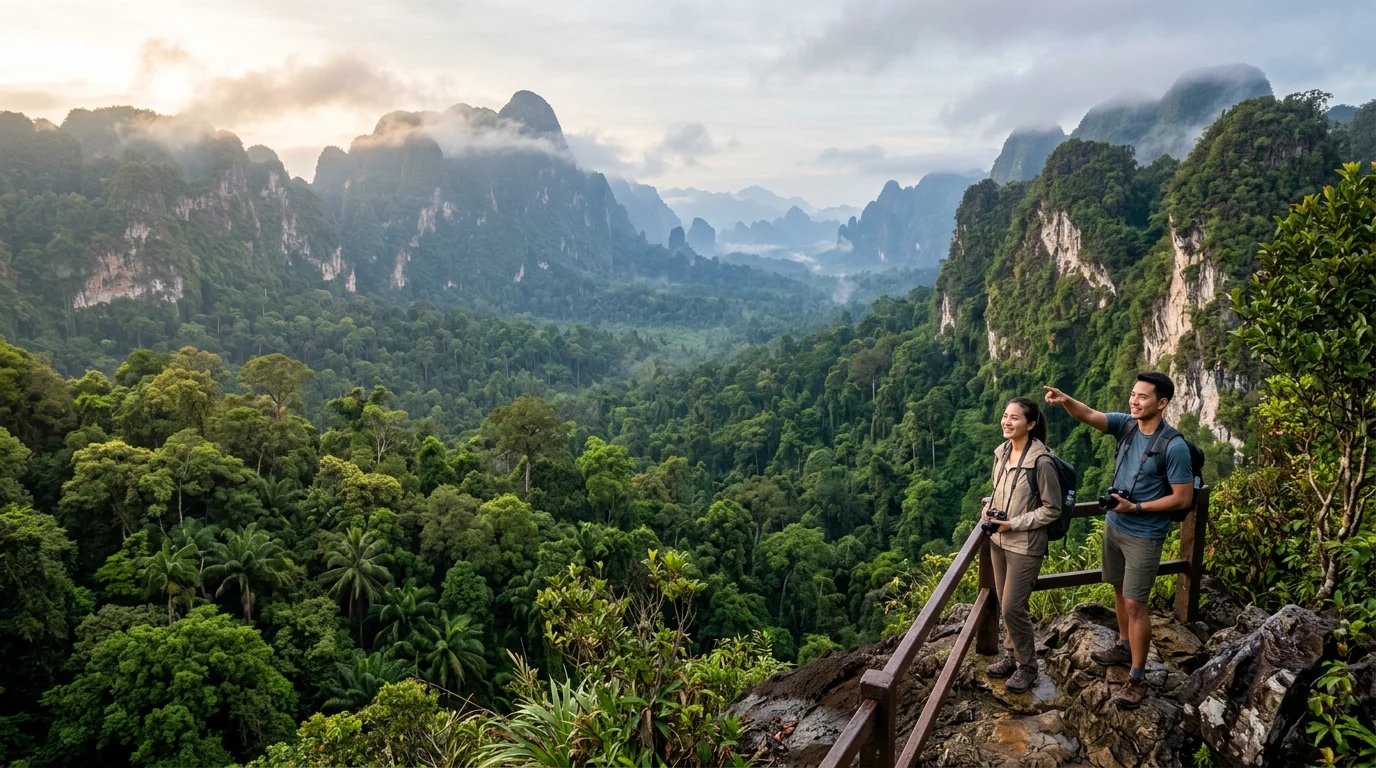
In southern Thailand's Surat Thani province, Khao Sok National Park protects ancient lowland rainforest adjoining the 165-square-kilometre Cheow Lan Lake and the remote Khlong Saeng Wildlife Sanctuary. Here, the landscape creates a dramatic natural acoustic chamber: sheer limestone karsts rising hundreds of metres above the water reflect morning territorial duets across several kilometres. Exploring the quiet northern river arms of the reservoir by longtail boat provides an alternative viewing style, allowing observers to glide beneath cliffside branches and watch white-handed gibbons without the crunch of dry leaves underfoot.
| National Park | Primary Species | Key Observation Sector | Habitat Type | Distance from Main Gateway |
|---|---|---|---|---|
| Khao Yai | White-handed (lar) and pileated (hybrid zone) | Km 33 to Nong Pak Chi Trail, Dong Phayayen | Tropical moist evergreen forest | 2.5 to 3 hours by road from Bangkok |
| Kaeng Krachan | White-handed (lar) gibbon | Ban Krang Camp to Km 18 stream crossings | Semi-evergreen Tenasserim forest | 3 to 3.5 hours by road from Bangkok |
| Khao Sok | White-handed (lar) gibbon | Khlong Saeng Wildlife Sanctuary, Cheow Lan Lake | Lowland dipterocarp and limestone karst | 2 hours by road from Surat Thani |
| Pang Sida | Pileated gibbon | Main park road past Huai Nam Yen Station | Dry evergreen and montane rainforest | 3.5 to 4 hours by road from Bangkok |
Selecting between these reserves depends on your travel itinerary and preferred viewing style. Khao Yai provides established trail networks within easy reach of the capital, Kaeng Krachan offers open mid-canopy visibility along wilderness tracks, and Khao Sok pairs dense forest walks with boat-based dawn surveys across Cheow Lan Lake.
Wildlife Photography and Responsible Viewing in the Canopy
Photographing wild gibbons in Thailand's primary rainforests tests both camera equipment and fieldcraft. Troops spend their lives in the upper canopy, typically 25 to 40 metres above the ground, where their movements are framed against glaring tropical skies. A telephoto lens of at least 400mm on a full-frame body provides workable reach. Dense overhead foliage severely restricts ambient light, making lenses with maximum apertures of f/4 or f/5.6 particularly useful. Standard evaluative metering exposes for the bright sky, leaving dark-furred gibbons as black silhouettes. Setting exposure manually or dialling in +1.0 to +2.0 stops of positive exposure compensation recovers critical detail in their coats and facial rings. Keep shutter speeds at 1/1000s or faster to freeze rapid brachiation leaps across canopy gaps.
A lightweight monopod is far more practical than a three-legged tripod on jungle trails. Pointing heavy glass nearly vertically into emergent crowns strains arms and shoulders, yet tripod legs quickly tangle in buttress roots and steep undergrowth. A monopod bears the lens weight while letting you pivot upward and reposition swiftly as troops move.
Ethical viewing demands strict self-restraint. Do not broadcast recorded duets or mimic vocalisations to lure gibbons lower; artificial calls trigger aggressive territorial disputes and deplete finite energy reserves. Avoid flash photography, as sudden bursts disorient primates negotiating narrow limbs dozens of metres aloft. In line with international primate-watching guidelines, keep a clear distance of at least 10 metres from the base of occupied trees and avoid standing directly beneath feeding perches.
Wild Habitats versus Rescue Centres and Captive Attractions
Responsible wildlife watching requires drawing a firm line between wild canopy encounters and commercial captive attractions. Throughout Southeast Asia, the trade in captive primates is driven primarily by tourist demand for novelty photo opportunities on nightlife walking streets and resort beaches. Because gibbons are intensely arboreal and protect their young fiercely, poachers routinely shoot nursing mothers out of the high canopy to capture surviving infants. To capture each young gibbon brought into the illegal trade, adult family members are typically killed. Once these infants mature into strong, territorial adults with sharp canine teeth, handlers find them unmanageable, and most spend the remainder of their lives confined to domestic cages or roadside menageries. Avoid any venue or street handler soliciting money to touch, hold, or take photos with a gibbon; patronising these displays directly sustains local poaching networks.
Genuine conservation facilities operate on the opposite model, prioritising animal welfare and reintroduction over entertainment. Thailand's Wild Animal Reservation and Protection Act strictly prohibits keeping or trading wild gibbons without official permits, and legitimate rescue centres work in partnership with conservation authorities. A well-known example is the Gibbon Rehabilitation Project at Bang Pae Waterfall, inside Phuket's Khao Phra Thaeo Non-Hunting Area. The project takes in confiscated and surrendered white-handed gibbons, nursing them through health checks, social grouping, and pre-release training.
Distinguishing an authentic rescue facility from a commercial attraction relies on several practical indicators. Ethical facilities maintain a strict no-contact rule: visitors are not permitted to touch, feed, or pose alongside primates, because human habituation and disease transmission severely jeopardise release into the wild. Viewing takes place from designated paths or observation blinds at an appropriate distance, with visits structured around educational briefings and limited daily capacities. Legitimate centres do not breed animals for commercial display, nor do they stage circus-style shows. Observing wild troops in protected national parks, where standard entrance fees help fund official anti-poaching patrols, remains the most constructive way to support Thailand's wild gibbon populations.
Where to Track Wild Gibbons Across Thailand
For reliable tracking, Thailand offers several protected rainforest strongholds, each presenting distinct terrain and viewing conditions.
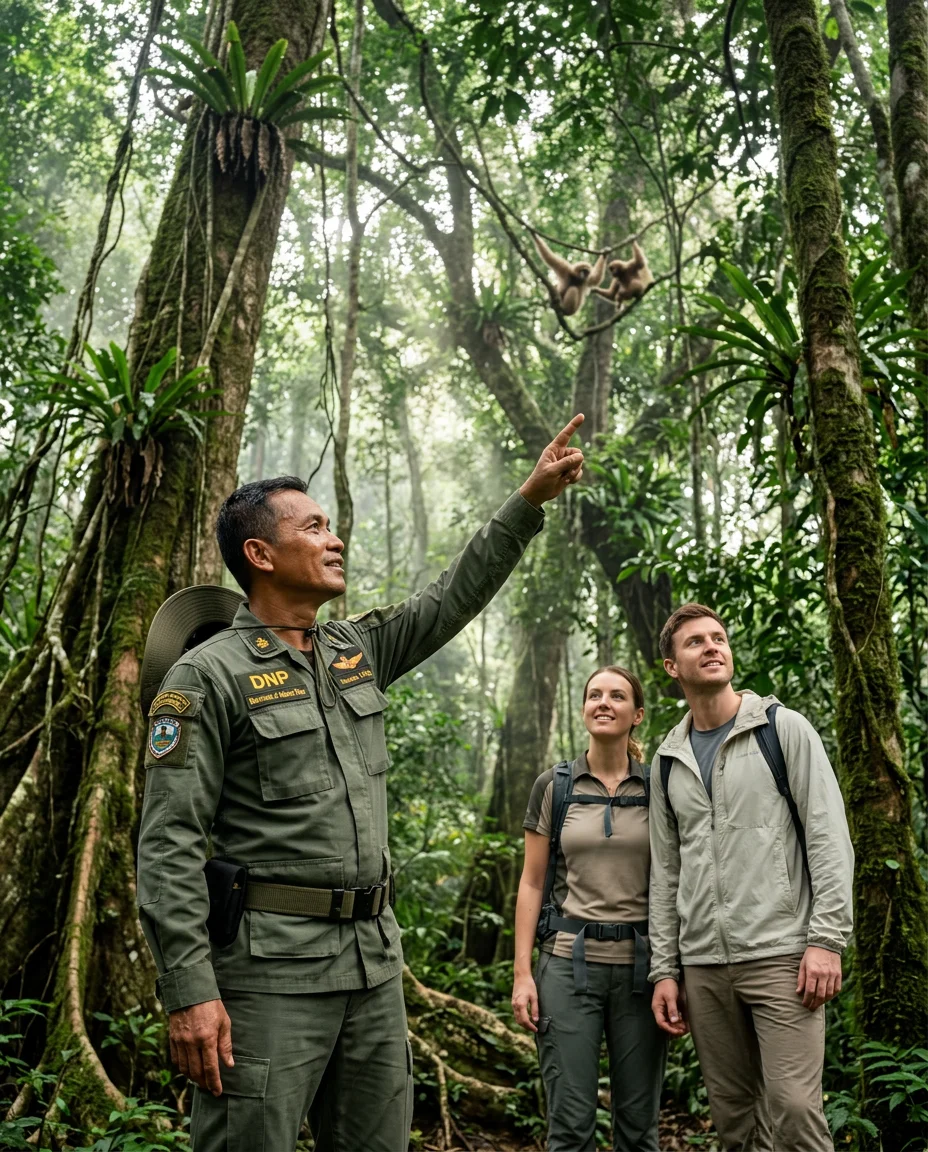
In Khao Yai National Park, base yourself in Pak Chong and arrive at the northern checkpoint when gates open at 06:00. The sealed road winding uphill to the main visitor centre cuts through mature canopy; the area surrounding kilometre 33 is a well-known morning feeding corridor where gibbon troops frequently forage above the tarmac. From here, Trail 3 runs roughly 3.5 to 4 kilometres through mixed forest to the Nong Phak Chi wildlife watchtower, while Trail 5 covers around 5 kilometres from Dong Tiew. To access these interior routes, hire an official park ranger at the visitor centre desk.
Further west in Kaeng Krachan National Park, arrange four-wheel-drive transport from the park headquarters up to Ban Krang Campsite. The forested dirt track running past the campsite’s first three stream crossings forms an exceptional morning corridor. Walking quietly along this stretch shortly after dawn frequently produces sightings of white-handed gibbons moving through the upper branches, often alongside dusky langurs and great hornbills.
In the south, Khao Sok’s dense interior is most effectively explored by water rather than busy village nature trails. Book an overnight floating raft house on Cheow Lan Lake near the boundary of the remote Khlong Saeng Wildlife Sanctuary. Boarding a small boat or paddling a kayak into the narrow northern inlets at first light allows you to scan the high shoreline trees from the water, where troops awaken and feed without being disturbed by footsteps.
To spot the endangered pileated gibbon, head to Pang Sida National Park near Sa Kaeo in eastern Thailand. Its quieter forest trails offer genuine opportunities to observe this distinct, sexually dimorphic species without the heavy footfall of central Thailand. For any first-time wildlife traveller, Khao Yai remains the most accessible starting point.
Costs and Budgeting
Wild gibbon tracking in Thailand suits varied travel budgets, with main costs comprising park entrance fees, transport, and guide hire. Foreign adult admission is set by the Department of National Parks, Wildlife and Plant Conservation (DNP): Khao Yai charges 400 THB (approx £9.20), Kaeng Krachan 300 THB (approx £6.90), and Khao Sok 200 THB (approx £4.60) for its main headquarters trails. Vehicle entry fees add 30 THB (approx 70p) for cars and 20 THB (approx 45p) for motorbikes. Day tickets are purchased at the gate and remain valid until evening across that park's checkpoints.
Arranging transport for early starts is necessary to catch morning territorial calls. Independent travellers staying in Pak Chong can rent scooters for 300 THB to 400 THB (approx £6.90 to £9.20) daily or hire private taxis for 1,500 THB to 2,500 THB (approx £35 to £58). Organised small-group naturalist day tours cost 1,600 THB to 2,500 THB (approx £37 to £58) per person, covering transfers, guiding, spotting scopes, and lunch. Private multi-day tracking tours with a dedicated tracker and 4WD transport range from 6,000 THB to 14,000 THB (approx £138 to £322) per person.
| Expense | Cost (THB) | Cost (GBP) | Notes |
|---|---|---|---|
| Foreign adult park entrance | 200 – 400 THB | £4.60 – £9.20 | Per day; varies by park (Khao Yai 400 THB, Kaeng Krachan 300 THB, Khao Sok 200 THB) |
| Compulsory DNP park ranger guide | 500 – 1,000 THB | £11.50 – £23 | Forest trail escort fee per group; booked at visitor centre |
| Organised group wildlife day tour | 1,600 – 2,500 THB | £37 – £58 | Per person; includes transfers, guide, scope, and lunch |
| Private multi-day wildlife package | 6,000 – 14,000 THB | £138 – £322 | 2–3 days per person with 4WD, field tracker, and lodging |
| Binocular rental (park or lodge) | 100 – 200 THB | £2.30 – £4.60 | Standard 8x42 or 10x42 field binoculars per day |
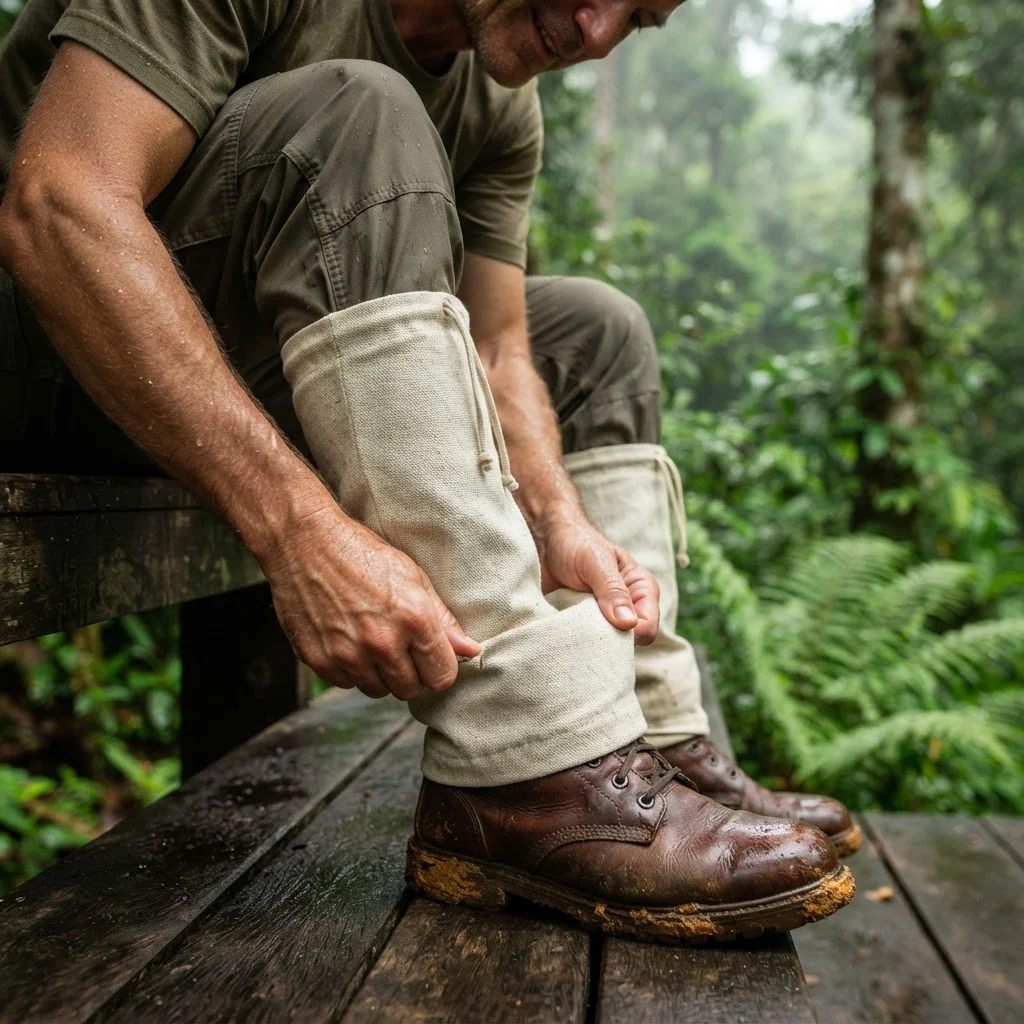
| Leech socks purchase | 100 – 150 THB | £2.30 – £3.45 | Protective cotton pull-ons sold at visitor centres |
DNP regulations require mandatory ranger escorts on interior trails, arranged at visitor centres for 500 THB to 1,000 THB (approx £11.50 to £23) per group. Sundry gear rentals are inexpensive: binoculars rent for 100 THB to 200 THB (approx £2.30 to £4.60) daily, and protective cotton leech socks cost 100 THB to 150 THB (approx £2.30 to £3.45). Because ticket gates and ranger desks operate almost exclusively on cash and ATMs are scarce inside park boundaries, carry sufficient Thai baht from gateway towns.
What To Know Before You Go
National park gates across Thailand typically open at 06:00, and arriving at first light is crucial. Wild gibbons vocalise most actively within the first ninety minutes of daybreak, using carrying morning calls to claim territory and communicate across valleys. By 08:30 or 09:00, climbing tropical temperatures and intensifying sunlight prompt troops to retreat into dense canopy shade, where they rest quietly and become difficult to spot.
Under Department of National Parks, Wildlife and Plant Conservation regulations, independent hiking on deep interior trails is prohibited. Visitors must hire an official park ranger or a licensed naturalist guide before venturing beyond short, marked nature loops near visitor facilities. This regulation protects fragile rainforest habitats, prevents hikers from becoming lost in disorienting trail networks, and provides vital safety management in areas frequented by wild Asian elephants.
Rainforest conditions also demand targeted physical preparation. During the wet season, which generally runs from May to November, damp leaf litter harbours dense populations of terrestrial land leeches. While harmless in terms of disease transmission, their bites bleed freely and can cause skin irritation. Wearing tightly woven canvas leech socks, pulled over trousers up to the knee, prevents them from penetrating mesh footwear and socks.
Expectations regarding visibility must also remain realistic. Gibbons spend their lives in the high canopy, often thirty metres or higher above the ground. Looking up against a bright sky, the naked eye frequently catches little more than dark silhouettes moving through branches. Carrying binoculars is a practical necessity rather than an optional luxury, allowing you to resolve facial markings, fur colouring, and feeding behaviour in the upper foliage.
Practical Tips
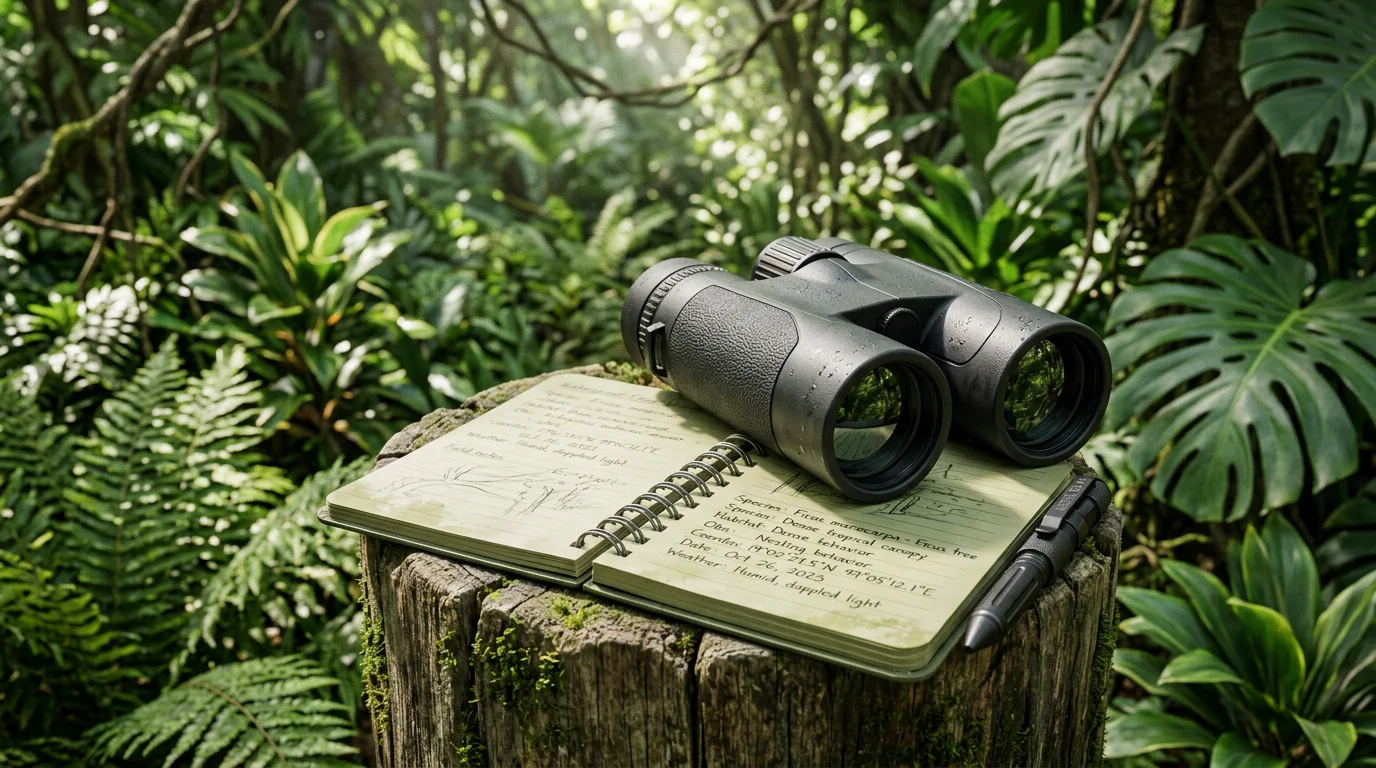
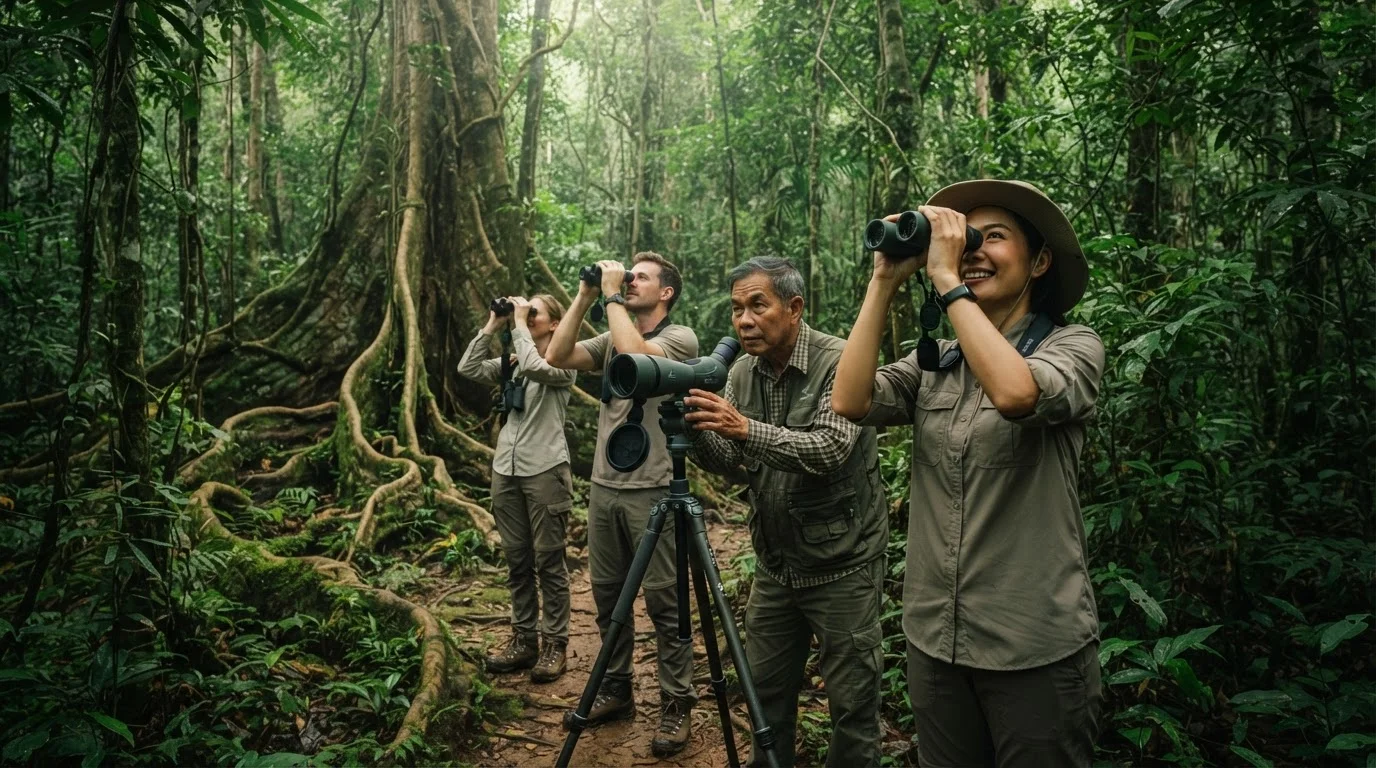
High-canopy observation demands proper field optics. Beneath the dense foliage of Thailand's primary rainforests, ambient light drops sharply, reducing gibbons to dark silhouettes against the bright sky when viewed with the naked eye. A quality pair of 8x42 or 10x42 binoculars provides the necessary light-gathering capability, as the 42mm objective lenses draw sufficient brightness from the shaded sub-canopy to reveal facial rings and coat variations. Magnifications above 10x prove counterproductive in the forest, amplifying natural hand tremor when tilting upwards and making it difficult to follow rapid brachiation through the branches.
Clothing choices directly influence viewing success. Wear muted earth tones, such as olive, tan, or brown, rather than high-visibility travel wear. Bright colours readily alarm wild primates, causing troops to slip away from trail edges before you can pinpoint them. Once on the track, walk in single file and step lightly. Human voices carry easily up forested hillsides, and even quiet conversation can prompt wary gibbon families to abandon their feeding trees and retreat deeper into the interior forest.
Looking into emergent trees 30 to 50 metres above ground level also introduces physical fatigue. Prolonged hyperextension of the cervical spine causes severe neck strain—often termed "warbler neck" by wildlife watchers—which can trigger persistent headaches by midday. Take regular pauses, lower your chin between scans, or rest your shoulders against a sturdy tree trunk to relieve spinal pressure. Humidity and tropical showers present another hazard; keep optics inside a dedicated dry-bag, as sudden downpours arrive swiftly and will water-damage unprotected lenses.
Wet-season visits require extra care regarding trail conditions. During the peak monsoon months of September and October, heavy rainfall causes streams to swell rapidly and turns clay tracks into slick mud. In parks such as Kaeng Krachan and Khao Sok, sudden downpours frequently affect stream crossings and prompt localised route closures, making it sensible to verify trail accessibility with station rangers before setting out.
Equip yourself with dependable field optics and support responsible wildlife tracking by booking your forest walk with accredited local providers.
Quick Reference Table
| Item | Detail | Notes |
|---|---|---|
| Top national parks | Khao Yai, Kaeng Krachan, Khao Sok, Pang Sida | Khao Yai hosts both white-handed and pileated gibbons; Kaeng Krachan and Khao Sok support white-handed gibbons |
| Peak viewing hours | 06:00 to 09:30 (gates open at 06:00) | Morning duets peak between 06:30 and 09:00; troops quieten and rest in canopy shade by late morning |
| Park entry fees | 200 – 400 THB (£4.60 – £9.20) foreign adult | Khao Yai 400 THB, Kaeng Krachan 300 THB, Khao Sok 200 THB; vehicle fees 20 – 30 THB (cash only at gates) |
| Mandatory ranger escort | 500 – 1,000 THB (£11.50 – £23) per group | Required by DNP for deep interior trails; arranged at park visitor centres |
| Organised wildlife tours | 1,600 – 2,500 THB (£37 – £58) per person | Day tours include transfers, guide, scope, and lunch; private multi-day packages cost 6,000 – 14,000 THB |
| Recommended optics | 8x42 or 10x42 binoculars; 400mm+ camera lens | Binocular rental available at parks for 100 – 200 THB daily; monopod advised over tripods |
| Clothing & gear | Muted earth tones; leech socks; dry-bag | Olive, tan, or brown colours avoid alarming primates; leech socks (100 – 150 THB) essential during May–Nov rains |
| Viewing etiquette | Minimum 10m distance from tree bases | Flash photography, broadcast recordings, and vocal mimicry are strictly prohibited |
| Ethical rescue centre | Gibbon Rehabilitation Project (Phuket) | gibbonproject.org / +66 88 590 9714 |
| Official source | Department of National Parks (DNP) | protectedarea.dnp.go.th |
| Official source | Khao Yai National Park | khaoyainationalpark.com / +66 86 092 6527 |
FAQ: Gibbon Watching
How are wild gibbons typically located in Thailand?
What is the best time of day to see wild gibbons in Thailand?
Which national parks in Thailand are best for gibbon watching?
Should I use recorded calls or mimic gibbon sounds to attract them?
Should I pay to touch or take photos with gibbons in Thailand?
How can I identify an ethical gibbon rescue centre in Thailand?
Do I need a ranger escort for gibbon tracking in Thailand's national parks?
What time should I arrive at national parks for gibbon watching?
Are binoculars necessary for gibbon watching?
What type of clothing should I wear for gibbon watching?
Reviewed by the Thailand Guide Editorial Team • Last reviewed: 15 November 2026
This page is provided for general information only. While we aim for accuracy, details can change — please verify anything important independently before relying on it.