Sea Turtle Conservation
Under the cover of a pitch-black Andaman night, a female leatherback turtle weighing nearly four hundred kilograms hauls herself above the high-tide line of Thai Mueang Beach to deposit over eighty soft-shelled eggs into the warm sand. Across Thailand's coasts, these prehistoric reptiles battle loss of nesting habitat and fishing bycatch, sustained today by dedicated state hatcheries, naval sanctuaries, and grassroots monitoring programmes.
This guide examines marine turtle conservation throughout Thailand, detailing indigenous species, primary nesting habitats, state rescue facilities, and community volunteer projects across the Andaman Sea and the Gulf of Thailand. You will learn how the national head-starting system operates, how to evaluate wildlife rehabilitation centres ethically, what seasonal fieldwork entails, and how to plan responsible, non-intrusive wildlife encounters from Phuket and Phang Nga to Koh Tao and Rayong.

Native Turtle Species and Seasonal Breeding Cycles
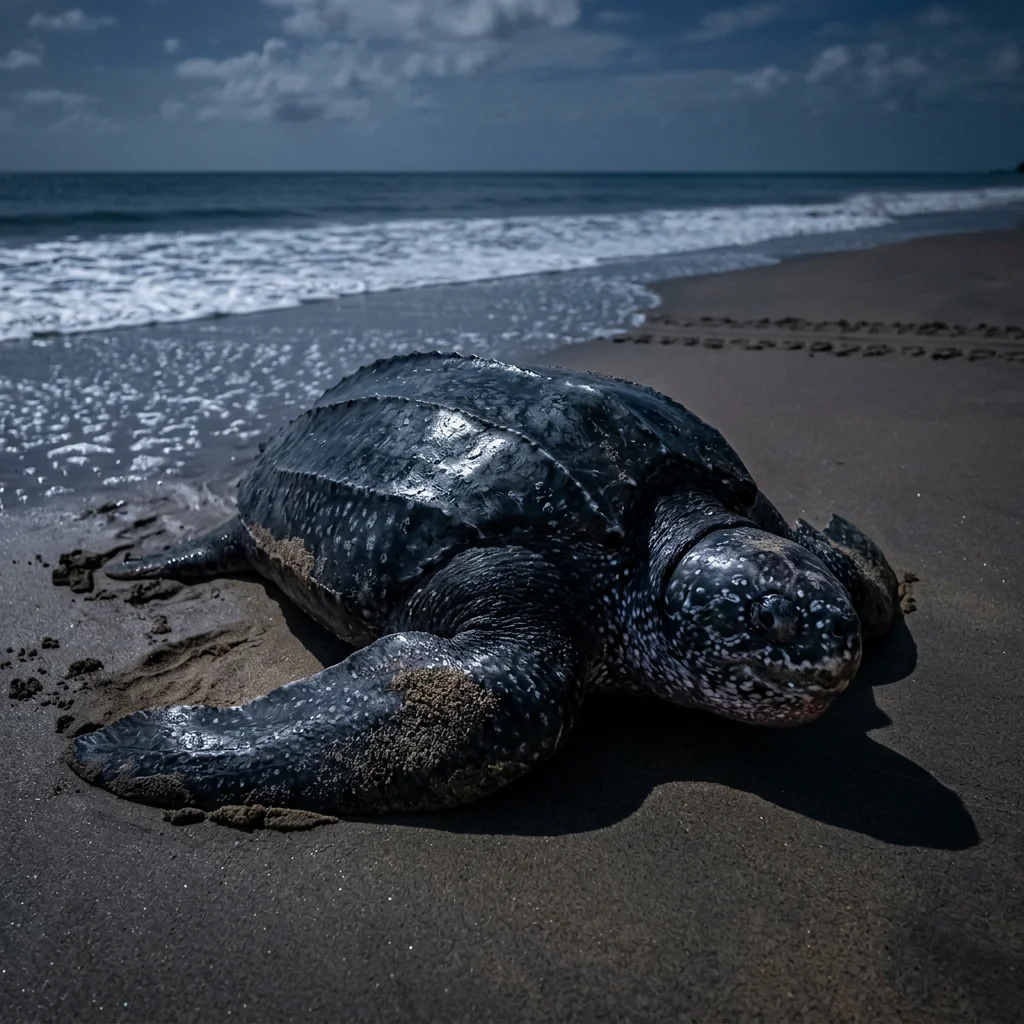
Thailand provides feeding grounds and breeding habitats for four native sea turtle species, each following distinct seasonal cycles between the western Andaman coast and the Gulf of Thailand. The Andaman coastline—particularly Phang Nga's Thai Mueang Beach, Koh Phra Thong, and Mai Khao Beach inside Phuket's Sirinat National Park—supports Thailand's rarest nesting populations. Giant leatherbacks (Dermochelys coriacea) and olive ridleys (Lepidochelys olivacea) come ashore to nest exclusively along the Andaman Sea, arriving between October and March with peak nesting activity from November to February when winter swells subside. Female leatherbacks can reach over two metres in length and lay multiple clutches of round eggs across a single season before heading back out to open water. Unlike their mass arribada gatherings in Central America, olive ridleys in Thailand emerge individually in quiet, solitary crawls.
In contrast, green turtles (Chelonia mydas) and hawksbills (Eretmochelys imbricata) maintain a broader national footprint across both coastlines. In the Gulf of Thailand, including the protected waters around Koh Khram in Chonburi, Koh Man Nai in Rayong, and the coral reefs of Koh Tao, green and hawksbill turtles nest in pulses between May and September. Historical surveys recorded loggerhead turtles (Caretta caretta) in Thai waters, yet no confirmed nesting events have been documented in recent decades. Because incubation temperature determines hatchling sex—cooler sand producing males and warmer temperatures producing females—changing climate patterns directly influence regional breeding outcomes. Understanding these distinct regional breeding windows ensures you visit coastal research centres and offshore viewing areas at the appropriate time of year.
To identify and track these animals responsibly, familiarise yourself with the distinct biological traits and primary habitats of each indigenous species.
| Species | Thai Name & Status | Primary Thai Locations | Distinctive Field Traits |
|---|---|---|---|
| Green Turtle (*Chelonia mydas*) | Endangered | Koh Khram (Chonburi), Koh Tao, Similan Islands, Surin Islands | Serrated lower jaw, smooth olive-brown oval shell, strictly herbivorous as adults |
| Hawksbill Turtle (*Eretmochelys imbricata*) | Critically Endangered | Koh Tao, Koh Man Nai (Rayong), Similan Islands | Overlapping shell scutes, narrow bird-like beak adapted for reef crevices |
| Olive Ridley Turtle (*Lepidochelys olivacea*) | Vulnerable | Koh Phra Thong, Thai Mueang Beach, Sirinat (Phuket) | Smallest native species, heart-shaped olive-grey carapace, multi-scute shell |
| Leatherback Turtle (*Dermochelys coriacea*) | Critically Endangered | Thai Mueang Beach, Koh Phra Thong, Mai Khao Beach | Leathery black skin with seven dorsal ridges, no hard outer shell |
Before booking any guided tour, boat excursion, or coastal visit to observe these species, verify that the organiser follows recognised ethical wildlife standards.
State and Naval Hatcheries: The Head-Starting System
To safeguard wild clutches from tidal inundation, coastal predators, and historical poaching pressures, Thailand has long relied on an institutional head-starting model coordinated by the Department of Marine and Coastal Resources (DMCR) and the Royal Thai Navy. First introduced in the 1970s, the strategy focuses on rearing young turtles through their most vulnerable life stage. In natural conditions, heavy predation from seabirds and reef carnivores means fewer than one in a thousand hatchlings typically survives to reproductive maturity.
Under current protocols, field teams locate vulnerable nests on remote islands and mainland beaches, transferring the eggs to protected sand hatcheries. Once emerged, hatchlings are moved to nursery tanks supplied with filtered, aerated seawater. Keepers rear the juveniles for six to twelve months, monitoring feed and water quality until their carapaces harden and their flippers develop enough swimming power to outpace nearshore surface predators. Before release into the wild, staff measure the turtles, register biological data, and fit them with microchips or flipper tags to facilitate long-term tracking.
The Royal Thai Navy operates major educational nursery facilities on active military bases, including the conservation centre in Sattahip on the Gulf coast—which protects key clutches from nearby Koh Khram—and the Phang Nga Naval Base facility near Thai Mueang along the Andaman Sea. Visitors can view age-segregated rearing tanks, from month-old hatchlings to convalescing rescue adults. While head-starting provides early protection against predators, marine scientists note that long-term post-release survival and nesting returns remain an active subject of research, making these naval centres valuable sites for both public education and captive monitoring.
Plan a Northern Thailand trip covering Chiang Mai, Chiang Rai, Sukhothai, mountain routes, Lanna food, transport, seasons and air quality.
Medical Rehabilitation and Rescuing Injured Marine Wildlife
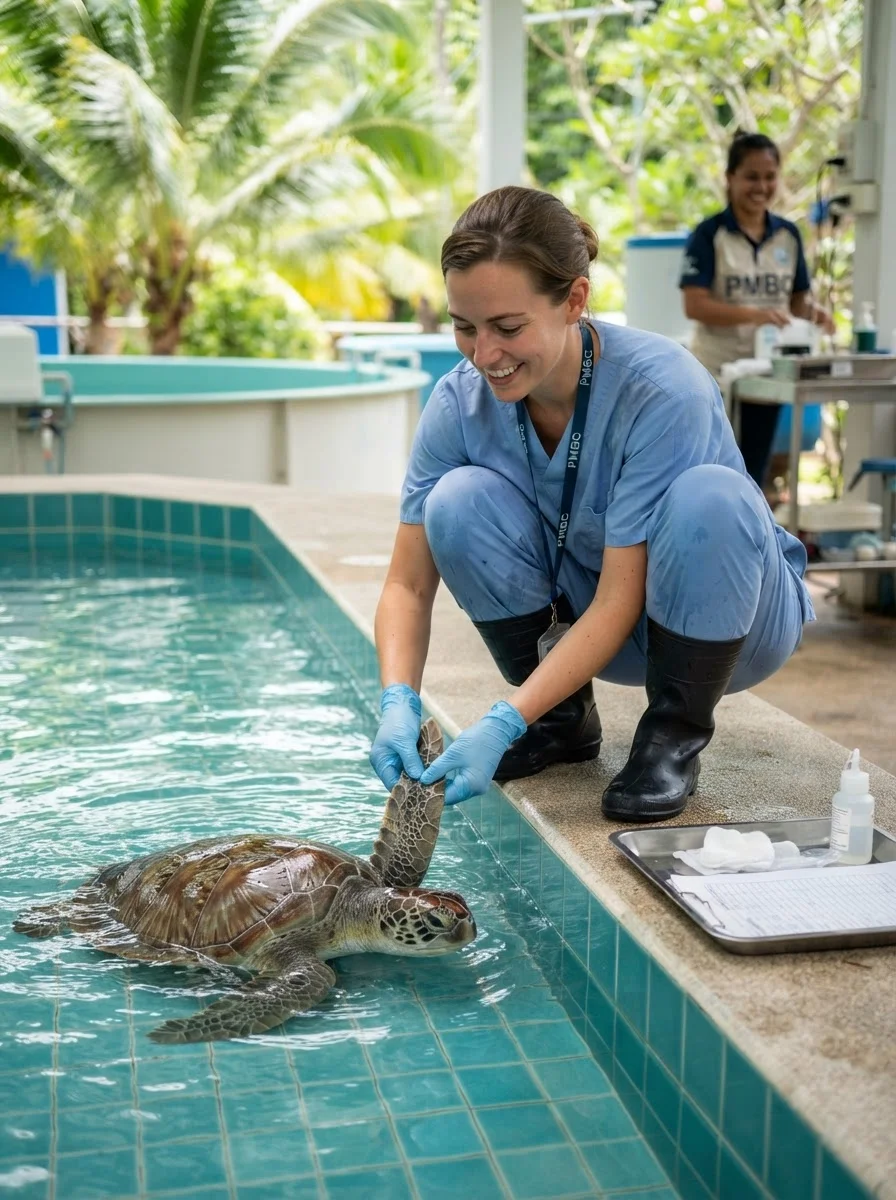
Beyond head-starting hatcheries, marine turtle conservation in Thailand relies heavily on dedicated veterinary clinics treating stranded juveniles and adults suffering severe physical trauma. The country's primary government treatment facility is the Marine Endangered Species Unit at the Phuket Marine Biological Centre (PMBC), situated at Cape Panwa in southern Phuket. Operating under the Department of Marine and Coastal Resources, the centre responds to live strandings across the Andaman coast.
Visitors can observe part of this clinical work through the on-site Phuket Aquarium, where foreign admission costs 300 THB (approx. £7) for adults and 150 THB (approx. £3.50) for children. Behind the exhibition galleries, open-air nursery and treatment tanks house turtles undergoing active veterinary care. The medical reality here reflects the intense pressures facing wild populations. Veterinary surgeons routinely carry out life-saving operations, including wound debridement and flipper amputations on animals entangled in monofilament nylon lines and ghost netting, alongside treatment for internal blockages caused by ingested plastics.
Patient care follows strict clinical protocols. Debilitated turtles recuperate in shallow medicinal seawater baths treated with antifungal agents, receiving daily wound dressings, antibiotic courses, subcutaneous fluids, and vitamin injections. When animals are too emaciated to feed unassisted, veterinary staff administer squid and fish slurries through gentle tube-feeding. Once wounds heal, turtles transition to larger seawater tanks to rebuild swimming strength and diving stamina.
Specimens with permanent physical deficits, such as missing flippers or incurable buoyancy disorders that prevent diving, cannot safely return to open water. These animals often transition to permanent sanctuary care. The PMBC collaborates with private initiatives like the Mai Khao Marine Turtle Foundation, located on the JW Marriott Phuket Resort grounds in northern Phuket, where non-releasable turtles live in spacious educational pools. Across in Rayong, the Eastern Gulf of Thailand Marine and Coastal Resources Research Centre on Koh Man Nai provides a vast tidal seawater enclosure, giving chronically disabled turtles a natural marine environment.
Environmental Pressures: Ghost Gear, Plastics, and Coastal Loss
Thailand's wild sea turtle populations face persistent threats across both marine and coastal environments. Decades ago, egg poaching was the primary driver of population declines; today, modern industrial fishing, marine refuse, and rapid coastal development present the steepest hurdles to recovery.
Discarded and lost fishing nets, widely termed ghost gear, create lethal hazards in both the Andaman Sea and the Gulf of Thailand. Commercial trawlers and gillnet operations lose or jettison synthetic monofilament nets that drift indefinitely on open currents. Because sea turtles are air-breathing reptiles that must regularly surface for oxygen, entanglement underwater leads to exhaustion and drowning within hours. Those that manage to tear free frequently suffer severe flipper amputations or constriction injuries that eventually prove fatal.
Plastic pollution causes equally devastating internal damage. Downward-facing spines lining a sea turtle's oesophagus prevent regurgitation, meaning swallowed marine debris inevitably becomes trapped in the digestive tract. Pelagic leatherbacks frequently mistake translucent carrier bags for jellyfish, while greens and hawksbills consume floating plastic fragments and synthetic line snagged among seagrass or reef crevices. Trapped plastics lead to gut compaction, internal lacerations, and gas accumulation. This trapped gas induces chronic positive buoyancy, leaving the animal unable to dive for food and stranded helplessly at the surface.
On land, nesting grounds face severe spatial competition from tourism infrastructure. Concrete seawalls, hotel promenades, and beachfront bars across coastal stretches in Phuket, Khao Lak, and Rayong have altered natural sand profiles and stripped away primary dunes. At night, artificial illumination from resorts disorients emerging hatchlings. Instead of crawling toward the natural horizon over the sea, hatchlings head inland toward floodlights, roads, and predators. Visitors can minimise their footprint by joining organised beach clean-ups and selecting coastal lodgings that shield or dim oceanfront lights during nesting seasons.
Scientific Fieldwork and Community Volunteering
Travellers seeking genuine contribution can enrol in long-term conservation programmes that exchange hands-on labour for practical scientific impact.
Legitimate volunteering in Thailand prioritises systematic data collection, habitat maintenance, and beach surveillance over direct contact with wild turtles. On Koh Phra Thong in Phang Nga Province, the conservation organisation Naucrates has run monitoring projects since 1996 alongside the Department of Marine and Coastal Resources (DMCR). Volunteers join field teams during the primary monitoring season from January to March, conducting dawn beach patrols from around 5.30 am across 15 kilometres of coastline on Koh Phra Thong and neighbouring Koh Ra. Fieldwork involves verifying fresh crawl tracks, locating clutches, logging microclimate readings, and tracking foraging turtles from rocky coastal vantage points.
In the Gulf of Thailand, the New Heaven Reef Conservation Program at Chalok Ban Kao on Koh Tao links marine ecology certifications through Conservation Diver with local head-starting support and reef surveys. Participants assist with captive rearing maintenance, scrubbing algae from nursery tanks, preparing food, and monitoring juvenile progress. Underwater, divers log resident green and hawksbill populations through photographic identification, mapping the individual facial scute patterns on the side of each turtle's head to track movements across local reefs without invasive physical tagging.
Community-based volunteer placements in Phang Nga, operating from Baan Nam Khem, support coastal head-starting centres through nursery tank cleaning, food preparation, and mangrove habitat planting. In the eastern Gulf, the government research station on Koh Man Nai in Rayong coordinates with university interns and organised groups on captive-breeding observation, public outreach, and coastal cleanups.
Living conditions across these initiatives remain rustic. Participants stay in basic island bungalows or village guesthouses, managing early shifts, tropical humidity, and demanding walking conditions. Programme fees cover communal accommodation, meals, field gear, and local staff costs rather than leisure comforts. Before committing to any project, verify that the organisation holds research clearance from the DMCR or the National Research Council of Thailand.
| Volunteer & Community Initiative | Location | Focus Area | Minimum Commitment & Practical Focus |
|---|---|---|---|
| Naucrates Sea Turtle Project | Koh Phra Thong, Phang Nga | Beach nesting patrols, track measurement, community education | 2 to 4 weeks (January–March); rigorous walking, remote island living |
| New Heaven Reef Conservation Program | Chalok Ban Kao, Koh Tao | Marine nursery husbandry, reef health surveys, turtle photo-ID | 1 week to 3 months; requires dive certification or ecological training |
| Phang Nga Marine Conservation (GoEco/Partner) | Baan Nam Khem, Phang Nga | Nursery tank scrubbing, turtle feeding, coastal mangrove planting | 2 to 4 weeks; hands-on community service and nursery upkeep |
| DMCR Marine Station Koh Man Nai | Klaeng District, Rayong | Hatchery maintenance, public education, island habitat cleanup | Coordinated group days or formal university internships; basic facilities |
Ethical Encounters: Separating Science from Commercial Exploitation
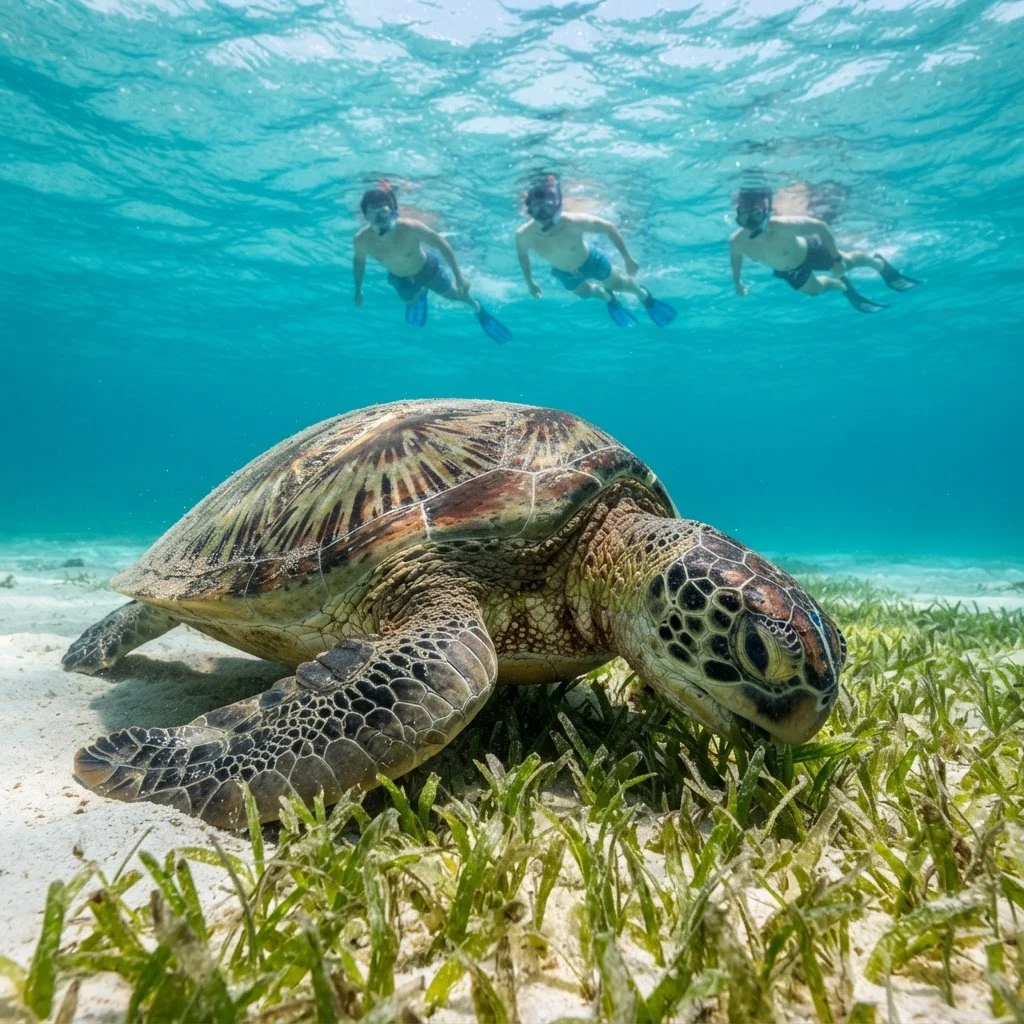
Travellers in Thailand often encounter businesses advertising turtle experiences, but distinguishing between scientific rehabilitation facilities and commercial tourist traps requires careful scrutiny. Commercial attractions frequently market themselves as turtle farms, sanctuaries, or paid hatchling release schemes, capitalising on public goodwill while keeping marine reptiles in substandard conditions.
Commercial hatchling events often encourage paying visitors to handle juveniles with bare hands, carry them down the beach, and drop them into the surf in broad daylight. This practice poses severe risks. Handling by humans transfers skin oils and bacteria that can harm delicate young turtles, while releases conducted under the midday sun leave disoriented hatchlings exposed to heat exhaustion and predatory fish or birds. By contrast, legitimate scientific operations release newly emerged clutches at dusk or under cover of darkness. Hatchlings must crawl down the beach unaided, an unassisted journey that allows them to calibrate their internal geomagnetic compass and imprint on their natal sands.
Genuine rehabilitation centres and marine stations enforce a strict no-touch policy during regular public visits. Patients in recovery are kept in shaded, filtered medical tanks designed to minimise stress and human habituation, with no public handling, swimming sessions, or circus-style tricks permitted.
When encountering sea turtles in the wild, such as while snorkelling in Koh Tao's Shark Bay or diving around the Similan Islands, ethical observation relies on quiet restraint. Swimmers should keep a distance of at least three to five metres, approaching slowly from the side rather than head-on so the animal does not feel cornered. Avoid hovering directly above a turtle or blocking its route to the water's surface, as it must rise freely to breathe every few minutes. Choosing accredited conservation initiatives over exploitative attractions ensures your visit supports genuine marine welfare rather than captive display.
Where to Encounter and Support Sea Turtles in Thailand
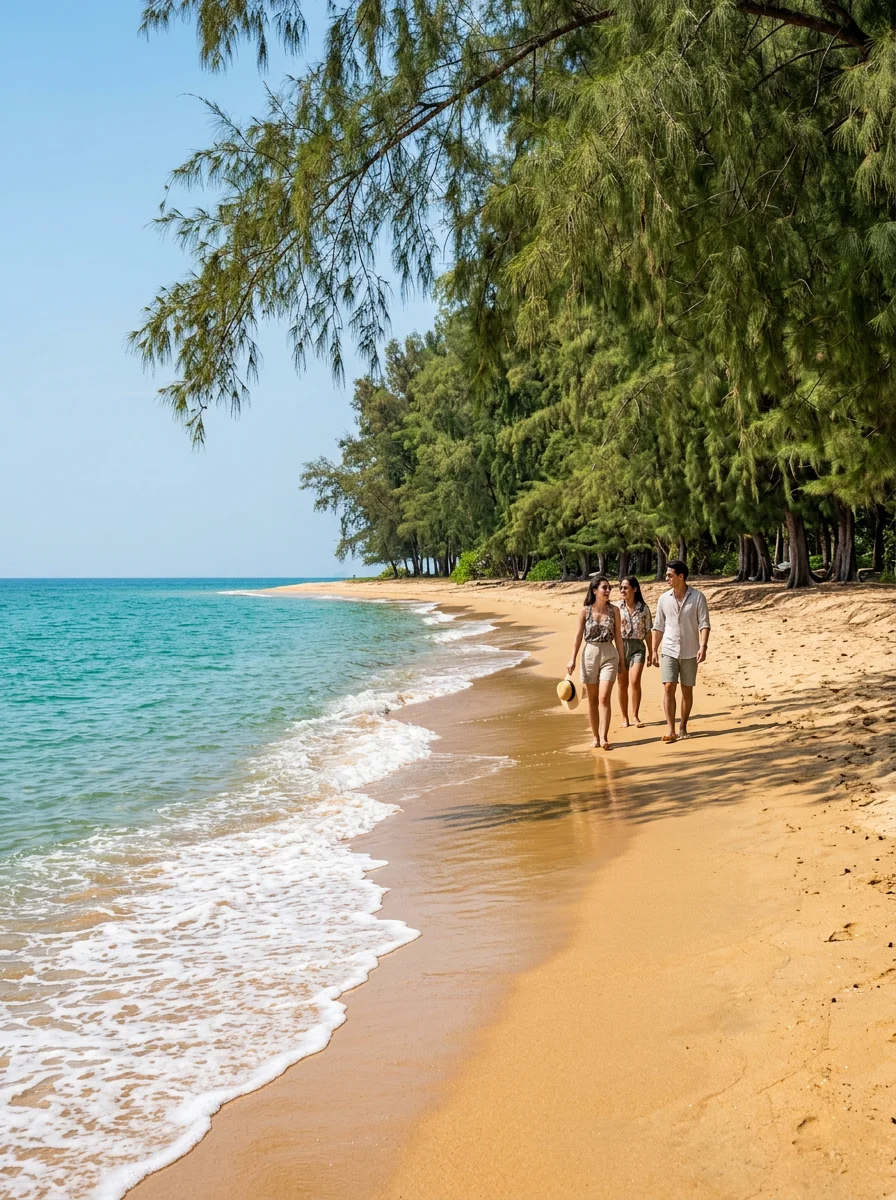
To encounter sea turtles without compromising their welfare, plan visits around established government research stations, reputable conservation centres, and protected marine parks.
In Phuket, travellers can head to Cape Panwa to visit the Phuket Aquarium and grounds of the Phuket Marine Biological Centre (PMBC). An adult foreign entry ticket costs 300 THB (approx £7.00), granting access to marine exhibits and outdoor rehabilitation pools where injured or recovering turtles receive veterinary treatment. At Mai Khao Beach in northern Phuket, the Mai Khao Marine Turtle Foundation operates within the grounds of the JW Marriott resort. The foundation welcomes the public with free admission and conducts educational presentations on weekdays at 11:00 am, introducing visitors to rescued resident turtles unable to return to the wild.
In Phang Nga province, the Royal Thai Navy operates the Sea Turtle Conservation Centre at the naval base in Thai Mueang, near Thap Lamu. This coastal facility raises juvenile cohorts and cares for injured specimens before release into the Andaman Sea; entry is free, though donations support ongoing care.
To see wild turtles swimming freely on living reefs, Koh Tao in the Gulf of Thailand provides reliable viewing from the shore. Snorkellers exploring the shallow coral shelves of Shark Bay or Hin Wong Bay regularly encounter juvenile green turtles and hawksbills grazing on algae and sponges throughout the day.
Further offshore in the Andaman Sea, dive liveaboards and day boats out of Khao Lak travel to Mu Koh Similan National Park, where dive sites around Koh Hin Pousar and Elephant Head Rock yield frequent sightings of adult green and hawksbill turtles. Access within the archipelago is closely regulated: Island No. 1 (Koh Huyong), along with Islands 2 and 3, remains strictly closed to tourists as a dedicated sanctuary reserved for nesting turtles.
Costs and Budgeting
Visiting sea turtle conservation projects in Thailand fits almost any budget, with costs covering entry fees, transport, guided boat trips, and volunteer dues.
Independent visits to state stations incur minimal expenses. Phuket Aquarium and the adjacent Phuket Marine Biological Centre rescue station charge 300 THB (approx £7.00) for foreign adults and 150 THB (approx £3.50) for children. Naval turtle centres at Sattahip and Phang Nga charge no mandatory gate fee, though visitors must show photo identification or a passport at the base checkpoints. Both facilities rely on donation boxes to fund turtle feed, veterinary care, and water filtration. Hotel-backed initiatives operate without admission fees on voluntary contributions.
Mid-range budgets cover private transport to rural conservation sites and day boat excursions. A return private taxi from Khao Lak to Thai Mueang costs 1,200 to 1,600 THB (approx £28 to £37), including driver waiting time. Self-guided reef snorkelling from shores such as Shark Bay on Koh Tao requires only mask and fin hire at 100 to 150 THB (approx £2.30 to £3.50) per day.
Higher budgets apply to liveaboard dive trips and structured scientific volunteering. Entering Mu Koh Similan National Park costs 500 THB (approx £11.50) per day for foreign adults and 250 THB (approx £5.80) for children, plus a 200 THB (approx £4.60) daily fee for scuba divers; tickets require passport registration through the park e-ticket system. Field volunteer placements with organisations like Naucrates on Koh Phra Thong start at €335 (approx £290 or 12,500 THB) weekly for direct placements covering lodging and guidance, while commercial agency packages run from 18,000 to 35,000 THB (approx £415 to £810).
| Option | Cost (THB) | Cost (GBP approx) | Notes |
|---|---|---|---|
| PMBC & Phuket Aquarium Entry | 300 THB | £7.00 | Gate rate for foreign adults; children 150 THB (£3.50) |
| Phang Nga Naval Base Turtle Centre | Free (donations welcome) | Free (£0) | Free entry; passport or photo ID required at military gate |
| Sattahip Naval Base Turtle Centre | Free (donations welcome) | Free (£0) | Free entry; passport or photo ID required at military gate |
| Similan Islands National Park Fee | 500 THB | £11.50 | Foreign adult entry (children 250 THB); open 15 Oct to 15 May |
| Khao Lak to Thai Mueang Taxi (Return) | 1,200–1,600 THB | £28.00–£37.00 | Private round-trip fare with driver waiting during sanctuary visit |
| Koh Tao Snorkel Gear Day Rental | 100–150 THB | £2.30–£3.50 | Daily mask, snorkel, and fins hire for self-guided reef swimming |
| Field Volunteer Placement (Per Week) | 12,500–35,000 THB | £290.00–£810.00 | Direct NGO rates from €335; agency packages higher; food extra |
What to Know Before You Go
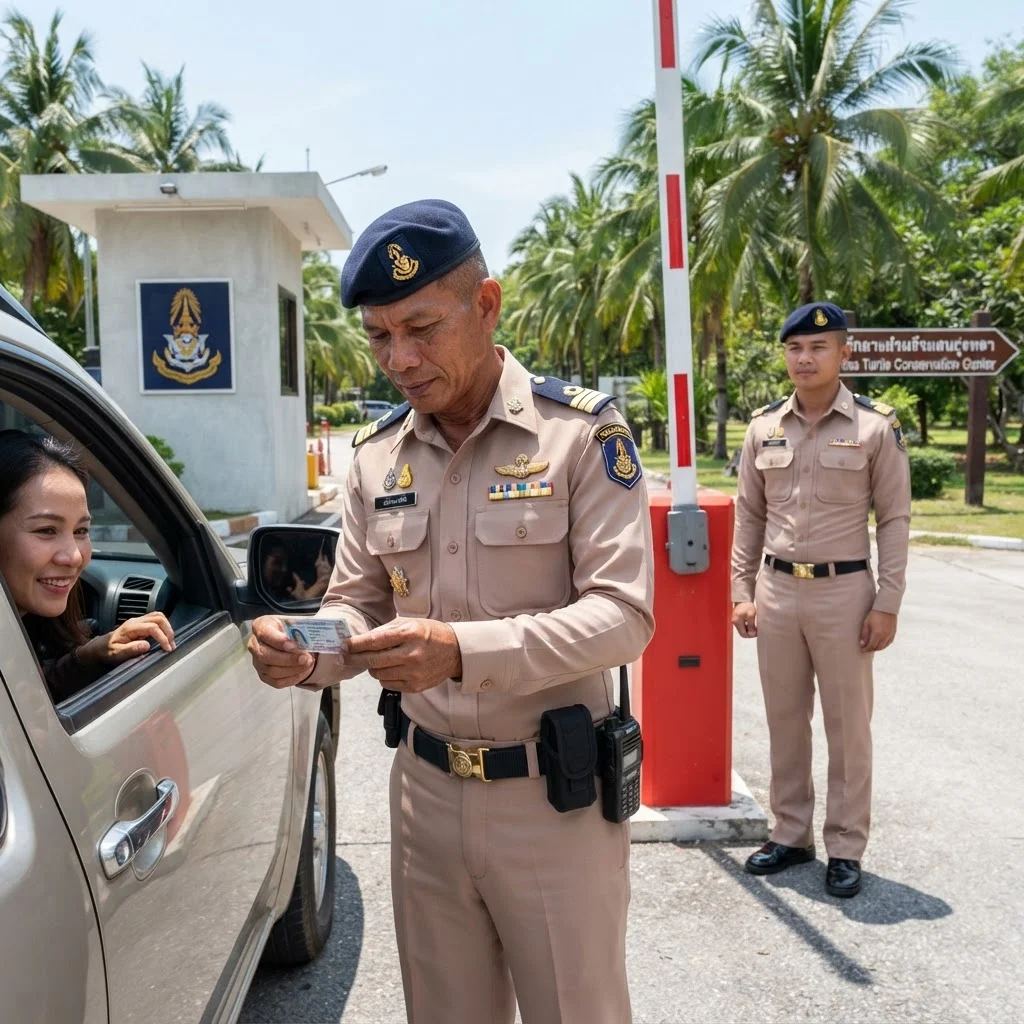
Carry your physical passport if you plan to visit naval-run nurseries such as the Phang Nga Naval Base centre near Thai Mueang or the naval facility in Sattahip. Because these centres operate within active military installations, sentries check identification at the base perimeter before issuing visitor passes, and guards routinely turn away foreign nationals who present driving licences or digital copies.
Do not touch, handle, or lift turtles from tanks, rehabilitation lagoons, or wild reefs. Under Thailand's Wild Animal Reservation and Protection Act, all sea turtle species receive strict legal protection, and disturbing, capturing, or harming them incurs heavy fines and potential criminal penalties.
Switch off camera flashes and avoid unshielded white torches around nesting beaches and nursery tanks. Bright white light disorients newly emerged hatchlings, steering them away from the sea, and can frighten nesting females into abandoning their crawl. Use a red-filtered light if you must walk near coastal dunes after dark.
Check your sun cream before entering marine national parks. Under the National Park Act, authorities ban products containing oxybenzone, octinoxate, 4-methylbenzylidene camphor, or butylparaben to protect fragile coral ecosystems. Bringing or applying non-compliant formulations inside park boundaries carries fines of up to 100,000 THB (approx £2,300), so switch to mineral alternatives containing non-nano zinc oxide or titanium dioxide.
Practical Tips
Reaching mainland conservation facilities in Phang Nga or Sattahip usually requires private transport. Public songthaews and provincial buses drop passengers along main arterial roads, often leaving a walk of several kilometres down secure naval base roads without shade. Arranging a hired car, scooter, or local taxi for a return trip prevents you from getting stranded in the heat.
Time visits to outdoor hatcheries and recovery pools for the cooler morning hours, ideally between 08:30 and 10:30. Most rescue facilities keep their holding tanks under covered pavilions or corrugated roofs that trap ambient humidity as the day progresses, making afternoon walks between enclosures uncomfortably warm.
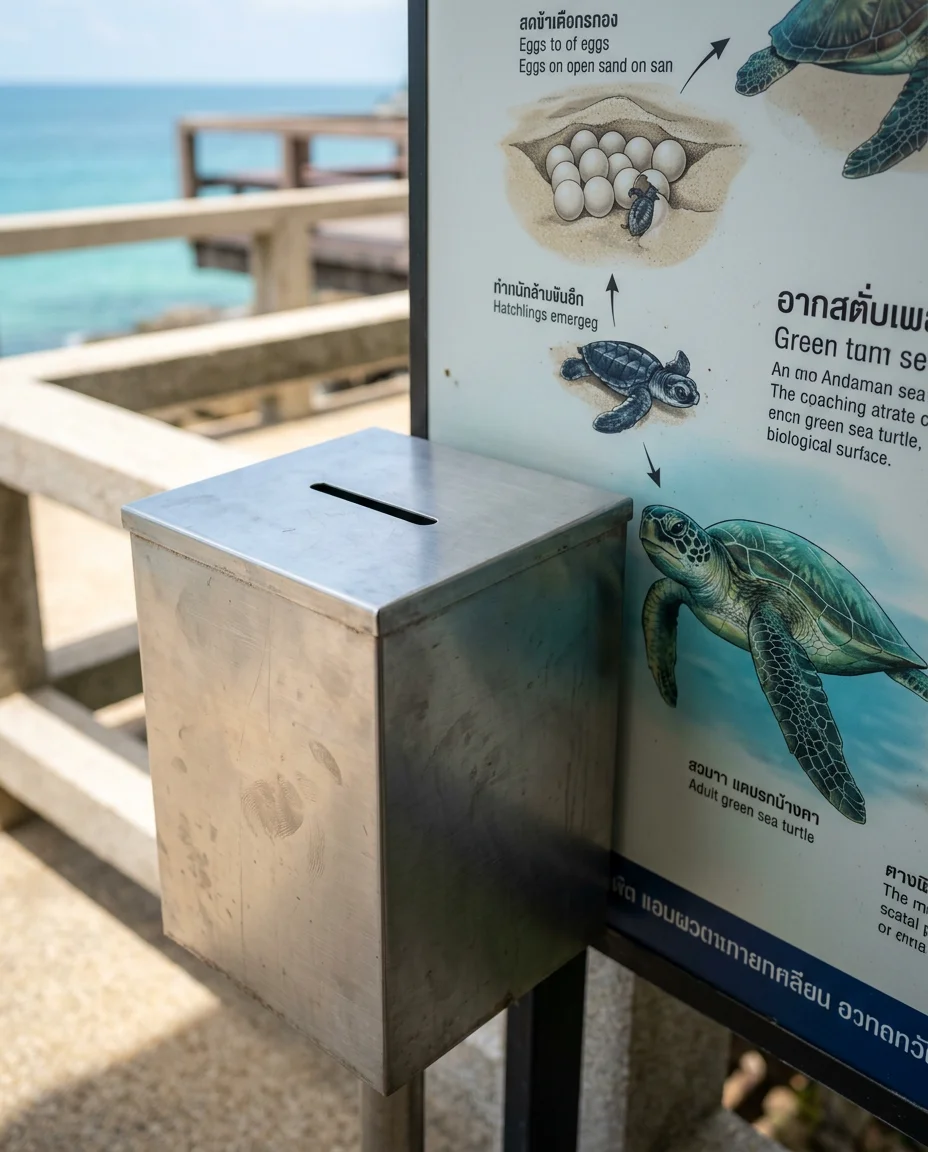
Carry small cash notes, such as 20 THB to 100 THB banknotes (approx. 45p to £2.30), to place in on-site donation boxes. Many state-run conservation nurseries and naval rescue stations do not charge an upfront admission fee or take foreign bank cards, depending instead on visitor donations to fund fresh fish, wound treatments, and water filtration upkeep.
If you encounter a stranded sea turtle or find an unprotected beach nest, report the coordinates immediately to the government emergency hotline on 1362. Operators liaise with regional marine biologists and national park staff who can secure the clutch against predators or dispatch rescue transport with specialised veterinary tanks.
When observing coastal wildlife, avoid commercial excursions that promise scheduled baby turtle releases for tourists. Legitimate research centres typically release young turtles after dark when predators are fewer and ocean currents favour survival, rather than adjusting to daytime tour itineraries. Taking care with personal waste, particularly single-use plastics and packaging in coastal towns, also prevents debris from washing into coastal feeding grounds.
Finding reputable boat charters and snorkelling guides ensures your time in the water supports genuine wildlife protection rather than irresponsible tour operators.
Quick Reference Table
| Item | Detail | Notes |
|---|---|---|
| Native Breeding Species | Green, hawksbill, olive ridley, leatherback | Leatherbacks and olive ridleys nest along the Andaman; greens and hawksbills nest across both coasts |
| Andaman Nesting Window | October to March (peak November to February) | Key sites include Thai Mueang Beach, Koh Phra Thong, and Mai Khao Beach |
| Gulf of Thailand Nesting Window | May to September | Main breeding areas include Koh Khram, Koh Man Nai, and Koh Tao |
| Phuket Marine Biological Centre (PMBC) | 300 THB foreign adults, 150 THB children | Located at Cape Panwa; includes Phuket Aquarium and the Marine Endangered Species Unit |
| Royal Thai Navy Conservation Centres | Free entry (donations encouraged) | Located in Sattahip and Thai Mueang; original physical passport required at military gate checkpoints |
| Mai Khao Marine Turtle Foundation | Free entry | Based at JW Marriott Phuket; educational presentations held weekdays at 11:00 am |
| Mu Koh Similan National Park Entry | 500 THB foreign adults, 250 THB children, 200 THB diver fee | Open 15 October to 15 May; Islands 1 (Koh Huyong), 2, and 3 are closed strictly for nesting sanctuaries |
| Best Time for Hatchery Visits | 08:30 to 10:30 | Morning visits avoid high ambient heat and humidity under covered outdoor tank pavilions |
| Reef Sunscreen Restrictions | Banned chemical filters carry fines up to 100,000 THB | Marine parks prohibit oxybenzone, octinoxate, 4-MBC, and butylparaben; use zinc oxide or titanium dioxide |
| Wild Turtle Observation Distance | Maintain 3 to 5 metres | Approach from the side; never touch turtles, hover overhead, or block access to the surface for air |
| Scientific Volunteer Programmes | 12,500 to 35,000 THB (£290 to £810) per week | Field monitoring with Naucrates on Koh Phra Thong or marine training with New Heaven on Koh Tao |
| Stranded Turtle Emergency Hotline | Call 1362 | Free government emergency service alerting DMCR and national park rescue teams |
| Website (Phuket Aquarium) | phuketaquarium.com | Government marine biological centre and rehabilitation facilities at Cape Panwa |
| Website (Naucrates) | https://www.naucrates.org | Andaman beach patrol and sea turtle research projects on Koh Phra Thong |
| Website (New Heaven Reef Conservation) | https://newheavenreefconservation.org | Koh Tao marine conservation courses, head-starting support, and turtle photo-ID |
FAQ: Sea Turtle Conservation in Thailand
What are the nesting seasons for sea turtles in Thailand?
What is the "head-starting" system for sea turtles in Thailand?
What are the main threats to sea turtles in Thailand?
How can travellers ethically volunteer with sea turtle conservation in Thailand?
Should visitors participate in daytime sea turtle hatchling releases?
How should people ethically observe sea turtles in the wild?
Where can visitors see sea turtles in Thailand?
What type of identification is needed to visit naval sea turtle centres in Thailand?
Are there restrictions on sunscreen in Thai marine national parks?
What should someone do if they find a stranded sea turtle or unprotected nest in Thailand?
Reviewed by the Thailand Guide Editorial Team • Last reviewed: 15 November 2026
This page is provided for general information only. While we aim for accuracy, details can change — please verify anything important independently before relying on it.