Wildlife Watching in Thailand
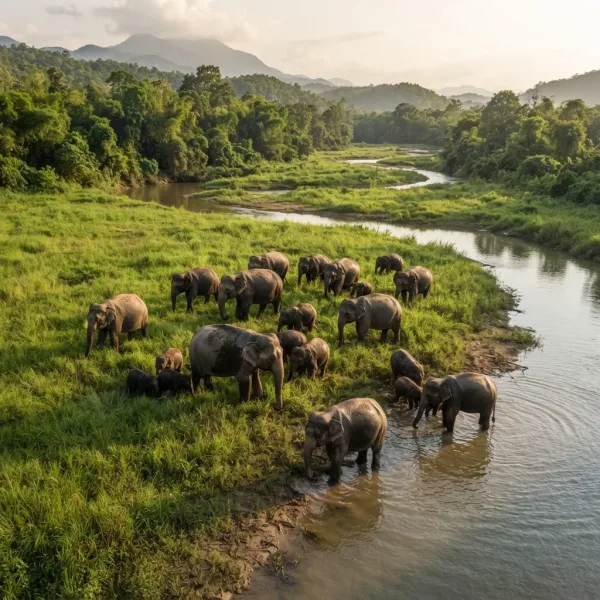
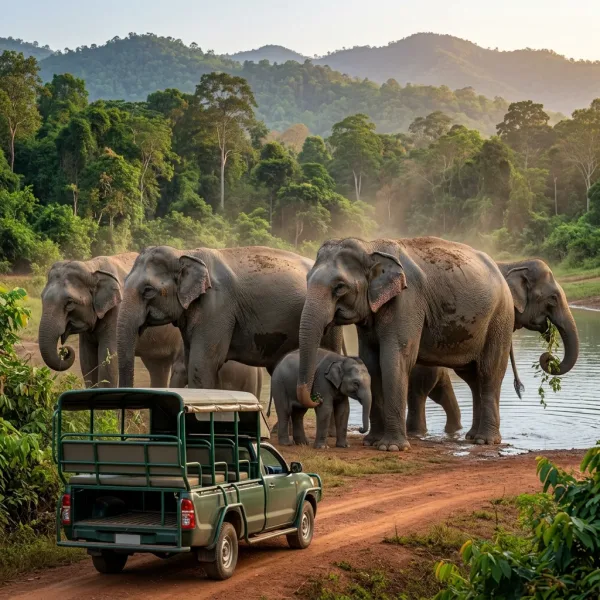
Late in the afternoon in Kui Buri National Park, open grasslands and forest clearings reveal wild Asian elephants grazing at the edge of the scrub, accompanied by the low rumbles of family herds observed from open-sided safari trucks. Far removed from commercial captive-animal attractions, this protected pocket of Prachuap Khiri Khan lets visitors witness free-roaming herds along the wooded slopes of the Tenasserim Range.
This guide covers wild animal observation across Thailand's primary national parks, marine zones, and forest complexes. It explains where to track populations of Asian elephants, gaurs, hornbills, gibbons, and Bryde's whales, outlines typical costs for guided safaris and boat excursions, and details how to plan visits around seasonal movements without supporting exploitative tourism. Use these recommendations to navigate park entry rules, choose responsible local guides, and set realistic expectations for sightings in the wild.

Key Habitats and Protected Reserves
Thailand maintains over 130 national parks and wildlife sanctuaries, yet viable populations of large mammals survive almost exclusively within substantial, contiguous forest complexes. Fragmented forest patches surrounded by human development lack the territory needed to sustain healthy breeding herds. Serious wildlife watching therefore centres on a few extensive protected networks: the Dong Phayayen-Khao Yai Forest Complex, the Kaeng Krachan Forest Complex, and the wet southern rainforest belt.
Khao Yai National Park covers approximately 2,168 square kilometres across four provinces, roughly three hours northeast of Bangkok. Designated as a UNESCO World Heritage Site within the wider Dong Phayayen-Khao Yai complex, the park combines seasonal evergreen rainforest, bamboo groves, and open grassland plateaus. These varied biotopes sustain resident herds of wild Asian elephants, packs of dholes (Asiatic wild dogs), southern pig-tailed macaques, and several hornbill species.
Further south along the Tenasserim Range bordering Myanmar, Kaeng Krachan National Park spans 2,914 square kilometres, making it the country's largest national park. The reserve occupies the biological transition zone between the Indochinese and Sundaic ecological regions, creating deep biodiversity where species such as leopards, dusky langurs, and over 400 recorded bird species share the dense multi-tiered canopy. Further down the peninsula in Prachuap Khiri Khan, the 969-square-kilometre Kui Buri National Park protects restored grazing lands and semi-evergreen forest where wild elephants congregate alongside gaur, the world's heaviest wild cattle.
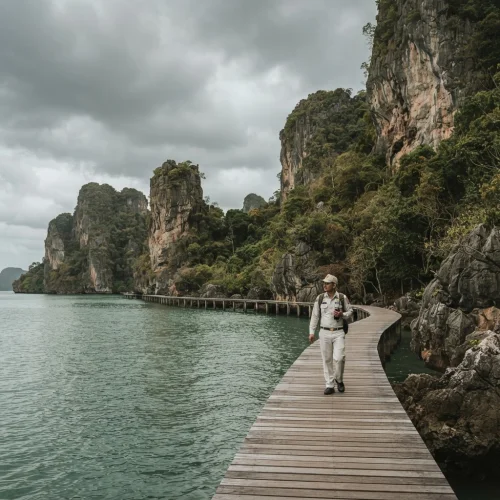
In Surat Thani, Khao Sok National Park protects 739 square kilometres of ancient lowland rainforest and dramatic limestone karst formations. Bisected by the 165-square-kilometre Cheow Lan reservoir, the park creates secluded riverine habitats that support secretive ungulates including Malayan tapirs and serows. Focusing on these interconnected forest reserves ensures encounters with animals exhibiting natural foraging and territorial behaviours in healthy ecosystems.
Native Species and Realistic Sighting Odds
Patience and field craft dictate what you actually encounter in tropical rainforests, where dense foliage conceals wildlife far more effectively than African savannah plains. Successful wildlife watching relies on tuning into calls and focusing on specific forest strata rather than scanning open horizons. You will routinely hear white-handed gibbons performing melodic territorial duets across the valley at dawn long before you spot their black or cream coats swinging through the high canopy. Great hornbills, with wingspans reaching 1.5 metres that produce a heavy, rhythmic whooshing sound in flight, feed visibly on fruiting fig trees between November and March.
Large mammals require targeted destinations and appropriate timing. Wild Asian elephants appear reliably in Kui Buri National Park, where open grazing clearings and waterholes yield sighting success rates exceeding 90% on late-afternoon truck drives. In Khao Yai National Park, where dense evergreen forest dominates, spotting elephants along roads or salt licks requires persistence, yielding roughly a 30% to 40% success rate across a multi-day stay. Gaur, Asia's largest wild bovine, congregate in herds around open pastures such as Pa Yang in Kui Buri and occasionally visit Khao Yai's Nong Phak Chi watchtower before dusk. Sambar deer and red muntjacs graze openly near ranger stations and campsites, while troops of dusky langurs show little hesitation as they forage through mid-canopy branches along mountain tracks.
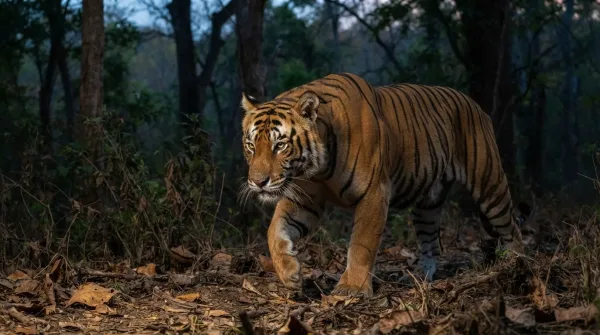
Apex predators and rare solitary mammals require strict calibration of expectations. Indochinese leopards inhabit Kaeng Krachan and Huai Kha Khaeng, but direct sightings remain rare anomalies, mostly limited to fleeting road crossings at dawn or dusk between Ban Krang and Phanoen Thung. Tigers and Malayan tapirs persist in remote forest cores, yet they avoid human presence and are rarely if ever encountered on casual day walks. Treat any glimpse of a large feline or tapir as an exceptional bonus, centring your itinerary instead on primates, hornbills, and forest ungulates.
| Species | Primary Habitat | Viewing Sighting Likelihood | Best Observation Window |
|---|---|---|---|
| Wild Asian Elephant | Kui Buri & Khao Yai | High in Kui Buri (90%+); Moderate in Khao Yai | 15:30 to 18:00 at open salt licks and grasslands |
| Gaur (Wild Cattle) | Kui Buri & Khao Yai | High at Pa Yang; Moderate at Nong Phak Chi | 16:00 to 18:00 along forest clearings |
| White-handed Gibbon | Khao Yai & Khao Sok | High (Acoustic); Moderate (Visual) | 06:30 to 09:00 in mature fruiting canopy |
| Great Hornbill | Kaeng Krachan & Khao Sok | High during fruiting season | Early morning across primary forest ridges |
| Dusky Langur | Kaeng Krachan & Khao Sok | Very High along tracks | Mid-morning and late afternoon in mid-canopy |
| Indochinese Leopard | Kaeng Krachan | Very Low (Occasional road encounters) | Dawn or dusk drives between Ban Krang and Phanoen Thung |
Plan a Northern Thailand trip covering Chiang Mai, Chiang Rai, Sukhothai, mountain routes, Lanna food, transport, seasons and air quality.
Guided Safaris, Boat Safaris, and Night Walks
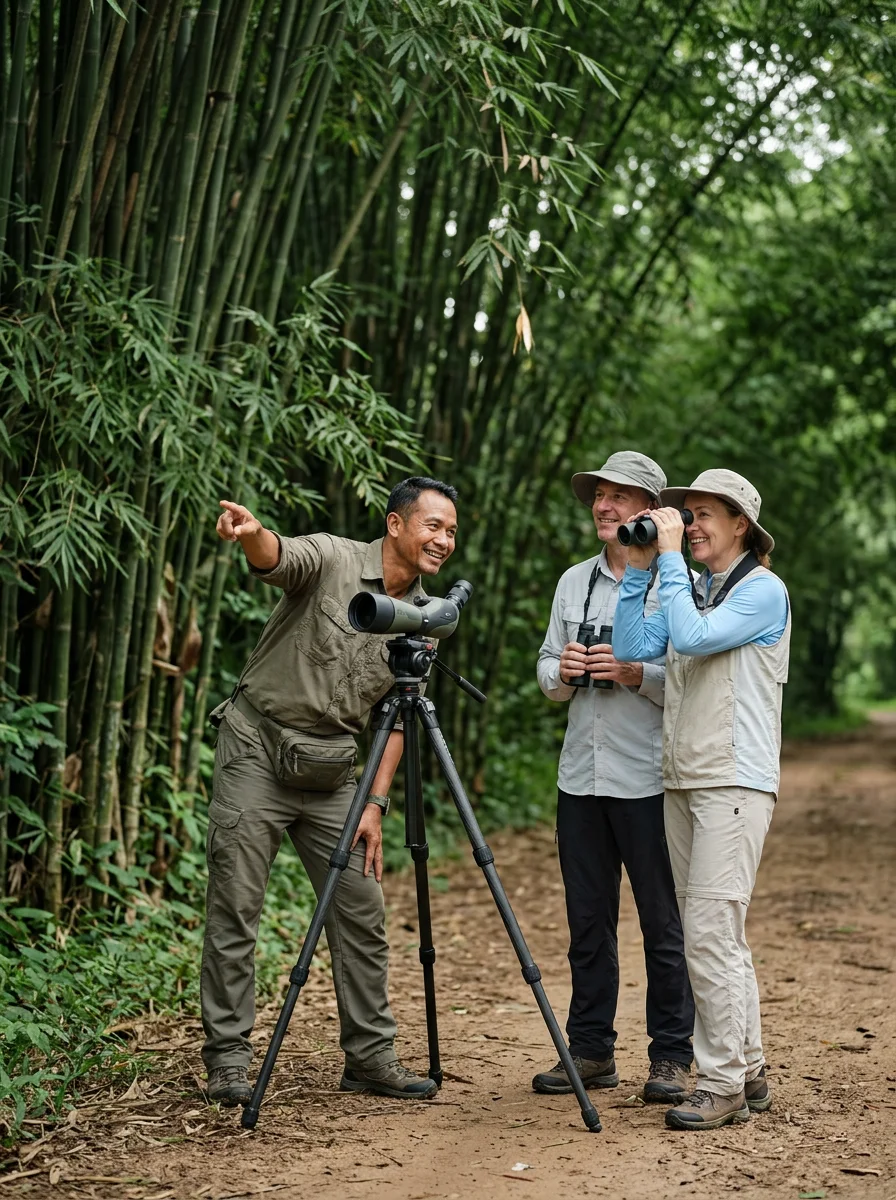
Dense tropical canopy makes wildlife spotting on your own unrewarding. Experienced local guides track freshly snapped branches, bark scrapes, and bird alarm calls that reveal creatures hidden in thick cover. Different habitats dictate very different safari formats across Thailand.
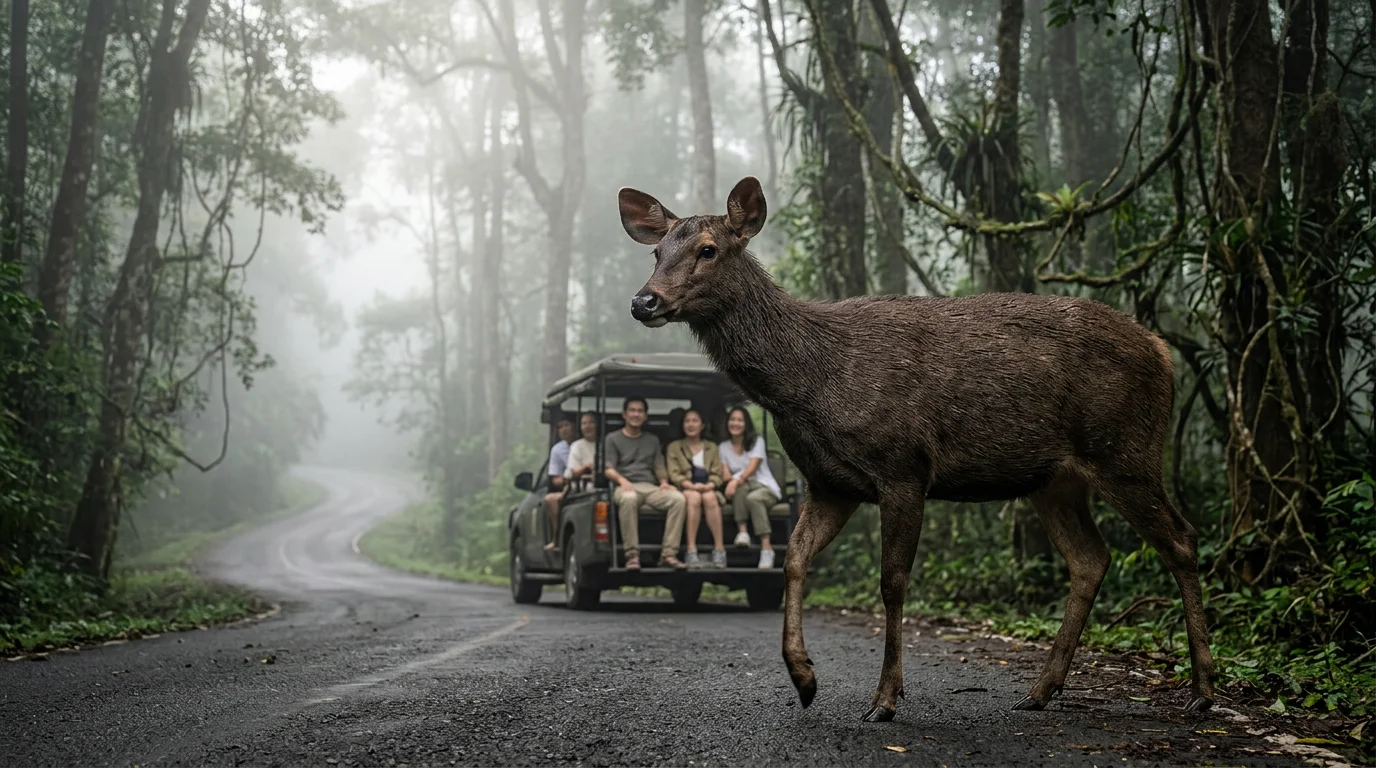
In Kui Buri National Park, private vehicles and walking are prohibited in the dedicated wildlife observation area. Visitors travel in open-topped pickup trucks operated by local drivers and spotters from the Ruam Thai conservation tourism group. Safaris run between 14:00 and 18:00, when wild Asian elephants and herds of gaur emerge to forage. Spotters coordinate by two-way radio across vantage points such as Pong Saladai and Pa Yang to locate active herds while maintaining a respectful viewing distance.
On Cheow Lan Lake in Khao Sok, the most productive tracking happens from traditional wooden longtail boats. Early morning mist excursions allow boatmen to cut the outboard motor and drift silently into sheltered limestone inlets. Here, dusky langurs, banded langurs, and wild boars feed along the forest margin, while hornbills fly overhead and macaques forage in overhanging boughs.
After dark, Khao Yai National Park runs ranger-led spotlighting drives along a set 10-kilometre route. Independent night driving is banned. Rangers operate two departures each evening, at 19:00 and 20:00, charging 600 THB (approx £14) per vehicle for up to eight passengers. These high-clearance pickups scan open clearings and salt licks with handheld searchlights, regularly illuminating sambar deer, barking deer, Asian palm civets, and Malayan porcupines.
For dense forest interior routes and dedicated night walks, book an accredited wildlife naturalist rather than a generalist holiday guide, as locating cryptic nocturnal species demands disciplined field craft and specialist knowledge of local calls.
Seasonal Calendars and Viewing Windows
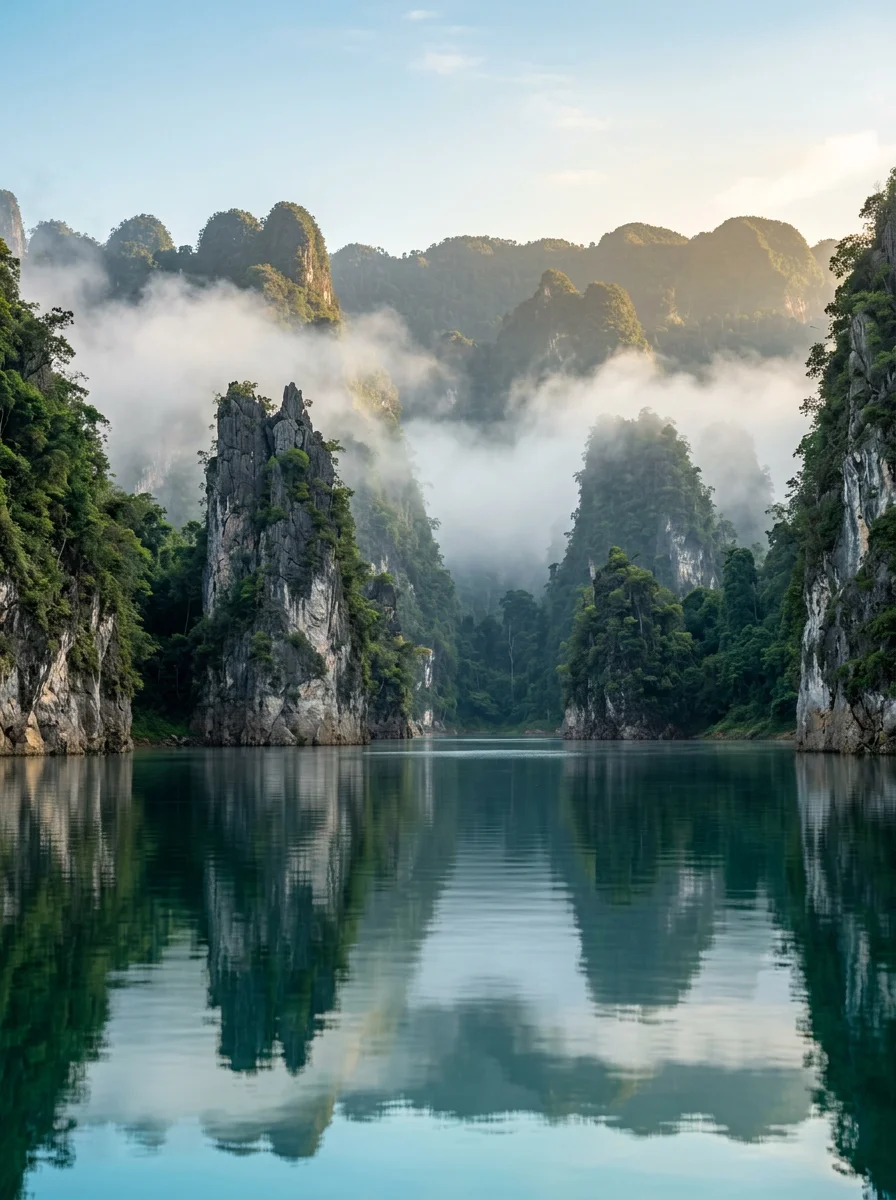
Thailand does not have a single wildlife season; sighting opportunities shift with the monsoon rains and the drying of forest waterways. Understanding these environmental cycles allows you to match your trip to specific animal behaviours rather than general holiday weather.
From November to February, the cool, dry period brings the most comfortable walking temperatures, dry trail conditions, and active morning birdwatching as northern Asian migrants arrive in forest canopies. However, locating large mammals during these months requires patience. Water remains abundant throughout the forest interior, meaning herds of wild elephants and gaur scatter across remote ridgelines. As the hot season sets in between March and May, ephemeral streams evaporate, compelling elephants, sambar deer, and banteng towards permanent rivers, reservoirs, and mineral salt licks. Deciduous trees shed their leaves across central and northern parks, markedly improving visibility through the brush.
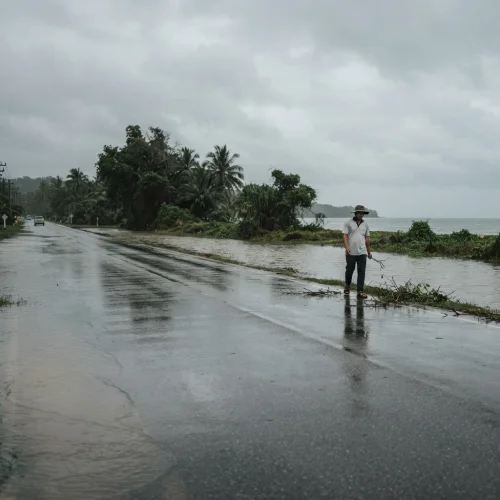
The monsoon period from June to October brings heavy downpours, muddy trails, and persistent leeches, but it also prompts intense ecological activity. Forest canopies flourish, and wild fig trees fruit in abundance across national parks such as Khao Yai and Kaeng Krachan. This seasonal bounty concentrates great hornbills, white-handed gibbons, and giant squirrels in predictable feeding trees, making arboreal tracking unusually reliable.
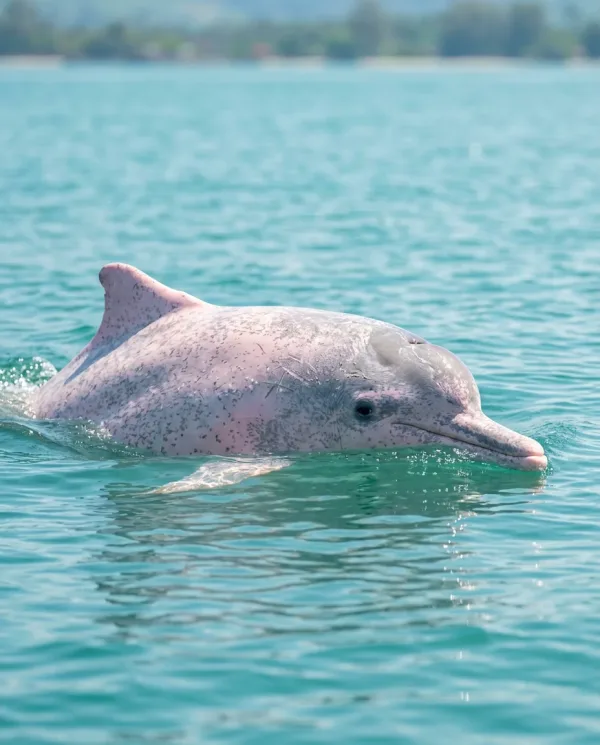
At sea, the late monsoon creates exceptional coastal encounters. Between August and November, freshwater runoff from major mainland rivers washes rich nutrients into the Upper Gulf of Thailand off Samut Sakhon and Phetchaburi. Massive anchovy shoals gather in the shallows, attracting a resident population of Bryde’s whales. These marine mammals regularly execute dramatic surface lunge-feeding displays within twenty kilometres of the coast. Aligning your journey with these regional events delivers vastly better sightings than travelling strictly by tourist high seasons.
Ethical Field Encounters Versus Captive Tourism
The distinction between genuine wildlife watching and captive animal attractions in Thailand is stark, requiring conscious scrutiny from visitors. Many commercial captive elephant venues market themselves as ethical sanctuaries, retirement homes, or rescue centres, yet continue to permit bathing, feeding lines, or hands-on handling. Facilities that allow direct contact with large mammals invariably rely on intensive conditioning and captive restraint to manage visitor safety.
In authentic wildlife watching, animals dictate the distance, timing, and behaviour of every encounter. In Kui Buri National Park, safari vehicles operate under park guidelines that require drivers to maintain a respectful buffer—typically thirty to fifty metres—cutting engines and reversing if an animal displays agitation. Offshore in the Upper Gulf of Thailand, responsible boat operators observing Bryde's whales adhere to Department of Marine and Coastal Resources guidance, throttling back to slow speeds and cutting engines at least one hundred metres out, allowing whales to surface-feed without disturbance.
Observing animals in their natural habitats also creates durable economic alternatives to captive exploitation. In Kui Buri, safari vehicle fees are managed by a local ecotourism cooperative that employs farmers who historically clashed with crop-raiding herds. By converting wild elephants into a source of community income rather than an agricultural threat, responsible field tracking delivers practical incentives for peaceful coexistence while leaving wild populations undisturbed.
Where to Track Wildlife Across Thailand
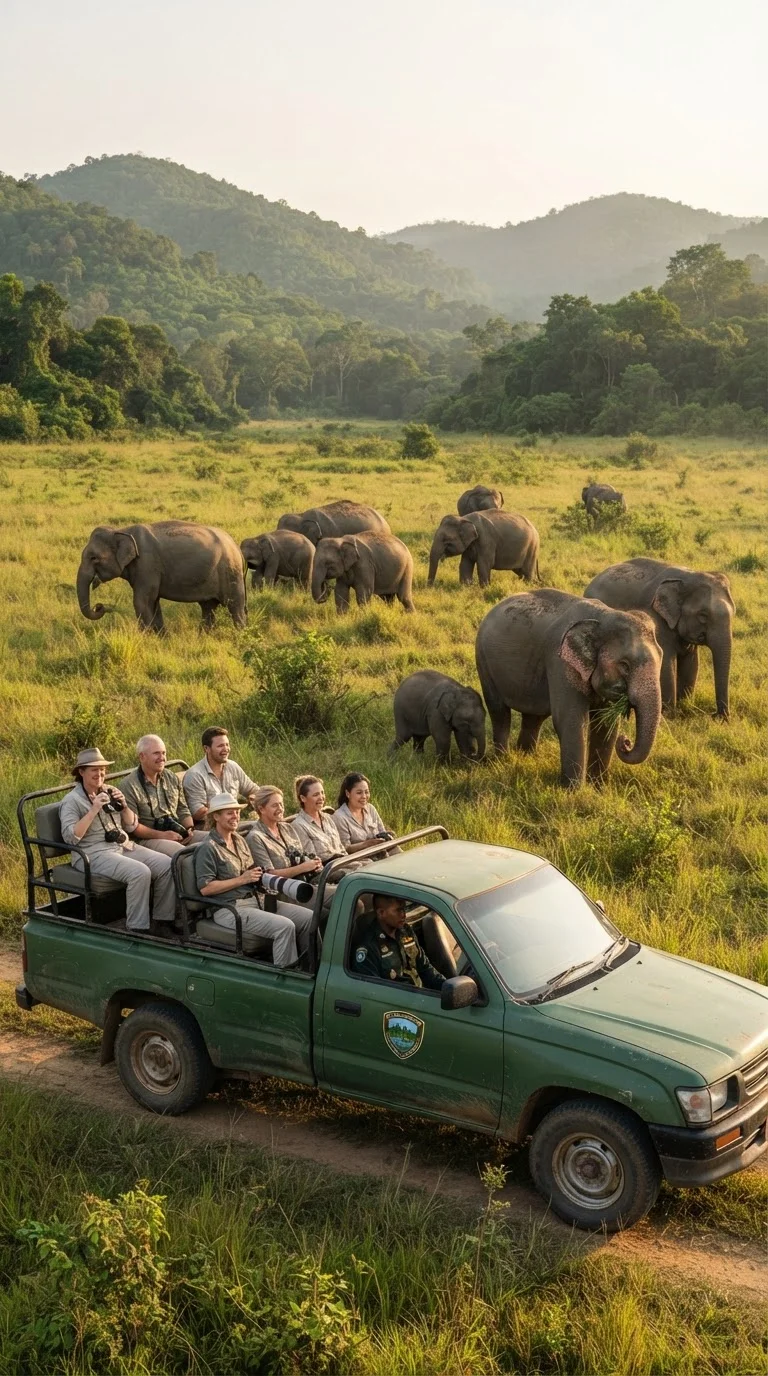
Key regional hubs provide practical access to Thailand's primary wild habitats. For wild Asian elephants and gaur herds, base yourself in Hua Hin or Pranburi and arrange an afternoon excursion to Kui Buri National Park's Huai Luek ranger station. The drive takes around ninety minutes through agricultural lands and pineapple fields. Converted open-bed trucks run safaris across the park's wildlife viewing zone daily between 14:00 and 18:00, with animal activity peaking late in the afternoon as herds move toward open waterholes and salt licks.
To the northeast, the town of Pak Chong acts as the northern gateway for Khao Yai National Park. Specialist agencies and established outfitters like Greenleaf arrange guided day excursions into the rainforest. Park rangers and licensed guides lead walkers along managed jungle paths, such as the 5.5-kilometre trail running from Dong Tiw to the Nong Phak Chi observation tower, where gibbons, hornbills, and deer frequent the salt flats.
Birdwatchers and primate enthusiasts should head west to Kaeng Krachan National Park in Phetchaburi. Visitors can pitch tents at the Ban Krang forest campsite along the main park road or stay at dedicated birding lodges outside the park boundary, including Baan Maka and Samarn Bird Camp. For marine encounters, Bryde's whale watching boats depart from fishing piers around Mahachai and coastal Samut Sakhon, roughly an hour's drive southwest of central Bangkok.
For travellers planning an initial wildlife trip, an afternoon truck tour through Kui Buri offers an accessible start, providing regular views of foraging elephants against the foothills of the Tenasserim Range.
Costs and Budgeting
Experiencing wild animal habitats in Thailand fits varied travel budgets, provided you account for national park admission tiers. Foreign visitors pay standardised entrance fees set by the Department of National Parks: 400 THB (approx £9.10) for adults at premier reserves like Khao Yai, 200 THB (approx £4.55) at Kui Buri, and 300 THB (approx £6.80) at Kaeng Krachan (children pay half price). Vehicle entry fees add 30 THB (approx £0.70) for a car or 20 THB (approx £0.45) for a motorbike.
Budget travellers who camp inside national parks pay minimal overheads. Pitch fees are 30 THB (approx £0.70) per person per night with your own tent, while rented tents and sleeping sets at park headquarters cost roughly 150 to 300 THB (approx £3.40 to £6.80). However, while motorbikes can use Khao Yai's paved through-road, reserves like Kaeng Krachan and Kui Buri bar private two-wheelers from entering wildlife-watching areas.
Mid-range travellers combining private transfers with local park guides spend moderate sums that offer strong value compared to safari circuits in India or East Africa. Premium packages featuring multi-day private tracking, high-end optical gear, dedicated biological guides, and boutique forest lodges represent a specialist investment, generally starting from 6,000 THB (approx £136) per day.
| Activity | Cost (THB) | Cost (GBP) | Details |
|---|---|---|---|
| Kui Buri Safari Truck Hire | 850–1,200 THB | £19.30–£27.30 | Flat rate per truck (up to 6 passengers); excludes park entry |
| Khao Yai Full-Day Guided Trek | 1,500–2,500 THB | £34.10–£56.80 | Per person in small groups; includes guide, transport, and leech socks |
| Cheow Lan Lake Overnight Tour | 4,500–8,500 THB | £102.30–£193.20 | Per person; covers raft house stay, all meals, and dawn boat safaris |
| Bryde's Whale Day Cruise | 2,000–2,500 THB | £45.50–£56.80 | Per person from Samut Sakhon; includes boat guide and lunch |
| Park Ranger Night Safari | 600 THB | £13.60 | Per vehicle (seats up to 8); book at Khao Yai visitor desk |
What To Know Before You Go
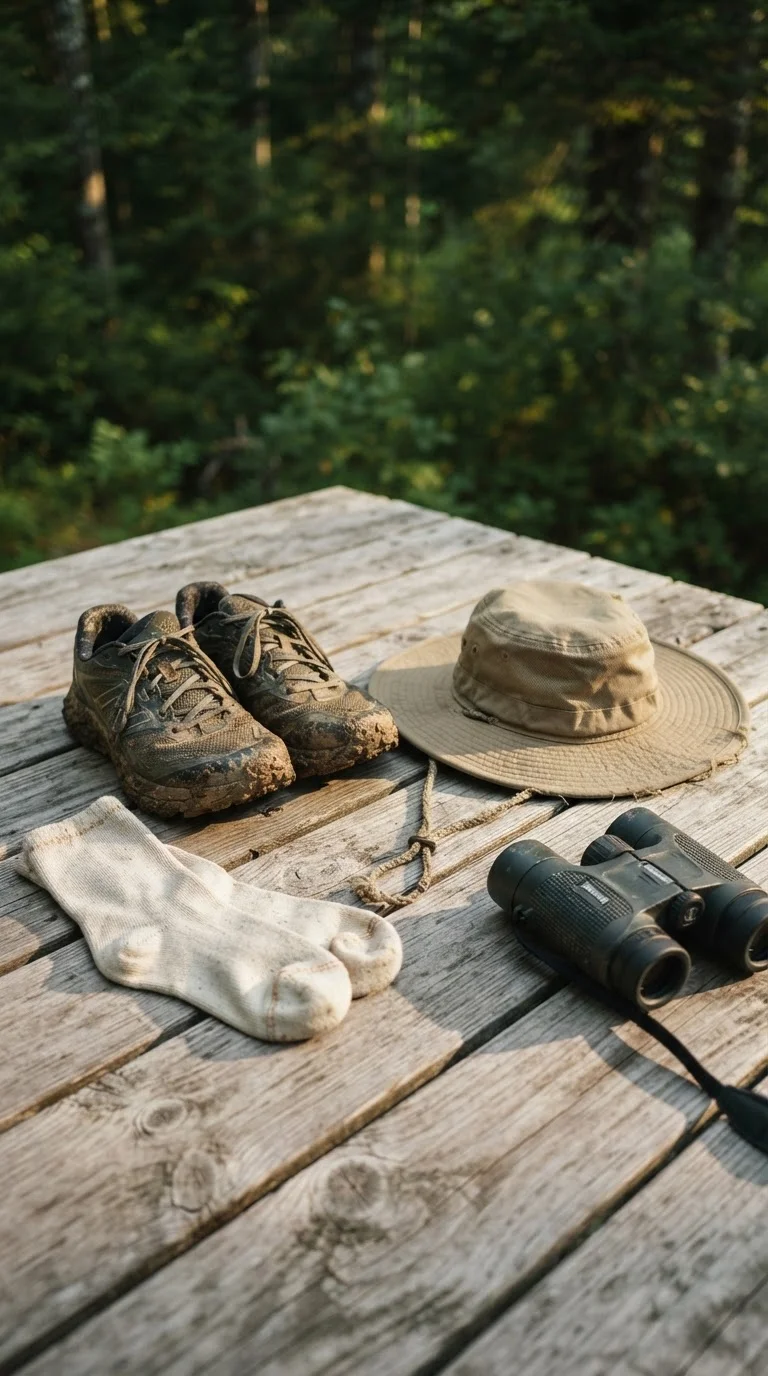
Entering Thailand's protected forests requires careful preparation, sensible field gear, and strict adherence to Department of National Parks regulations.
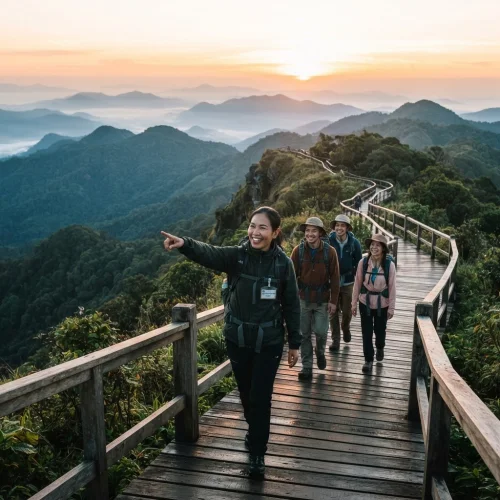
Independent hiking is tightly controlled. Under park rules, visitors must stick to designated routes and cannot enter deep forest trails without an accredited park ranger or registered local guide. In Khao Yai, for instance, self-guided walking is permitted on designated short nature loops near the visitor centre; longer tracks require a ranger escort to prevent lost hikers and dangerous encounters with wild elephants or venomous pit vipers.
Tightly woven canvas leech socks are strongly recommended for walking during the wet season. In humid evergreen reserves such as Khao Sok or Kaeng Krachan, terrestrial leeches easily penetrate standard hiking socks and ventilated footwear, causing persistent bleeding and itchy bites. Pull leech socks over your trouser cuffs and tie them firmly below the knee.
Pack subdued clothing in muted earthy tones—forest greens, khakis, browns, and dull greys. Bright neons, optic whites, and rustling synthetic fabrics alert animals to your presence across long distances, sending wary primates and ungulates retreating into dense cover before you arrive.
Keep sufficient cash in Thai Baht for entry fees and vehicle transfers. Remote checkpoints, including the wildlife-watching station at Kui Buri and forest camps inside Kaeng Krachan, do not support card terminals, and cellular mobile data regularly drops out in dense valleys. Finally, note park-wide prohibitions: recreational drones require advance written permits from the Department of National Parks, Wildlife and Plant Conservation, while alcohol, single-use plastic bags, and feeding wild animals are strictly forbidden.
Practical Tips
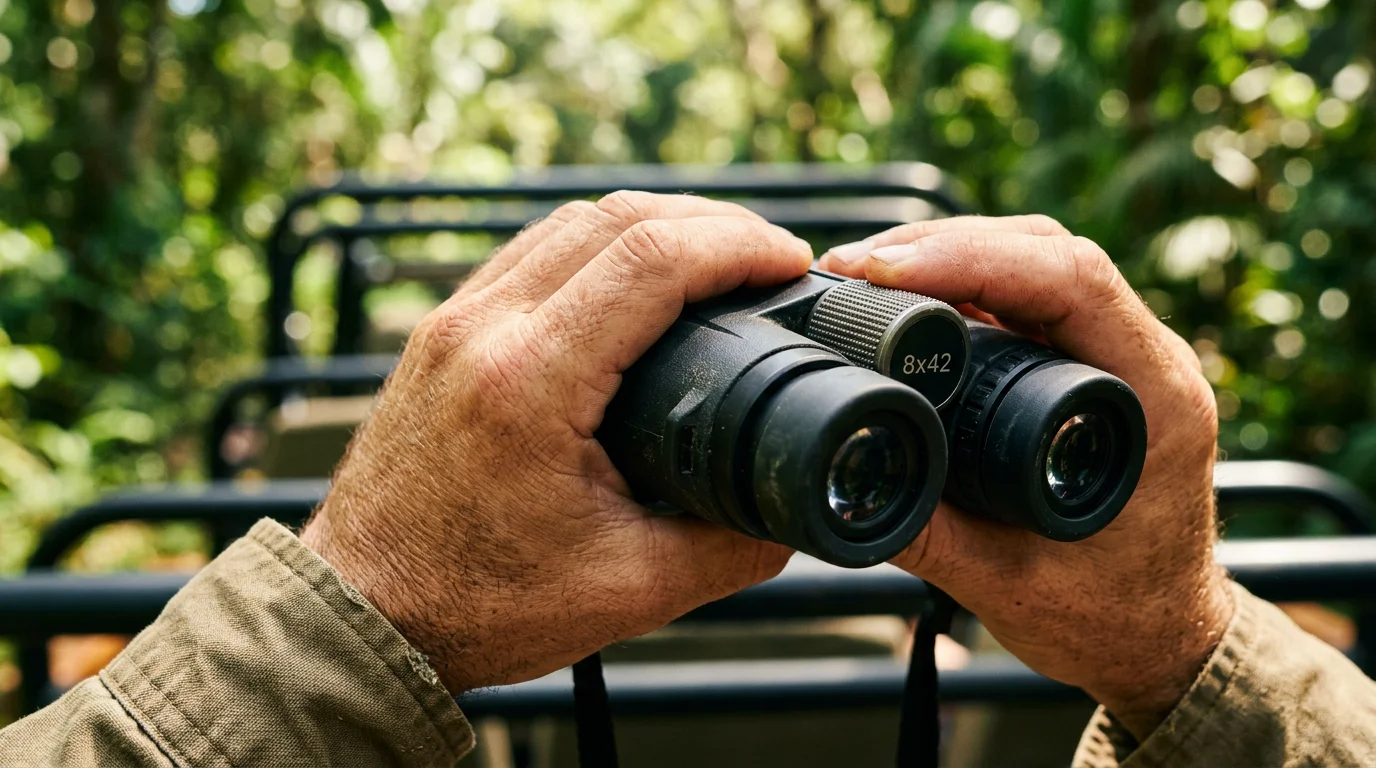
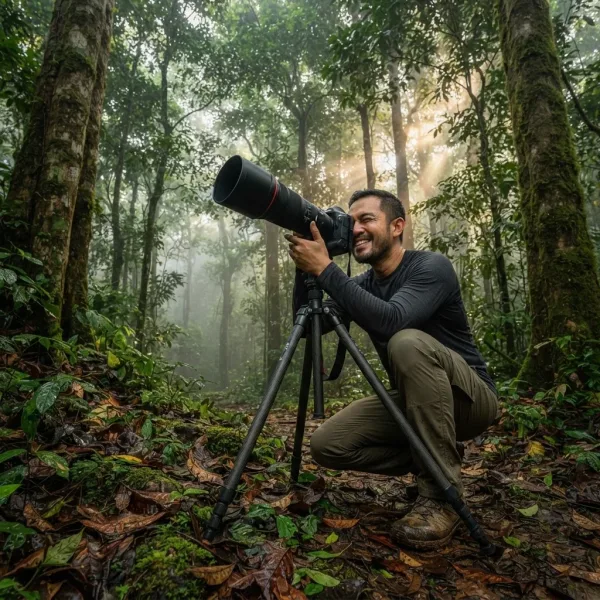
Pack a pair of 8x42 or 10x42 waterproof roof-prism binoculars before travelling. Dense evergreen canopy severely restricts ambient light, and high-perching species such as broadbills, trogons, and gibbons appear as dark silhouettes without sufficient optical magnification. For photographers, transitioning cameras between air-conditioned vehicles and humid forest air triggers rapid lens condensation. Leaving gear sealed inside a padded bag for twenty minutes lets the glass acclimatise gradually, while silica gel sachets and a roll-top dry bag shield delicate electronics against sudden tropical downpours.
Timing determines sighting success in Thailand's flagship reserves. At Kui Buri National Park, community safari trucks depart Huai Luek ranger station between 14:00 and 18:00 daily on a first-come basis. Asian elephants remain sheltered in thick scrub during the midday heat and emerge onto open grazing clearings as temperatures fall, with activity peaking between 15:30 and 17:30. Aim to arrive at the station by 14:30 to clear registration and secure a truck before the prime viewing window.
On Khao Sok's Cheow Lan Lake, arrange longtail boat excursions for 06:00 to 06:30. Early morning mist covers the limestone shoreline at dawn, creating favourable conditions for spotting mainland serows grazing along steep crags, macaques foraging at the water’s edge, and swimming water monitors before boat traffic and rising temperatures push wildlife deeper into the limestone interior.
Field discipline matters as much as timing. Tropical ungulates and primates possess acute senses; choose unscented DEET or picaridin repellents for forest trails, as fragranced sprays act as an olfactory alert that drives wildlife away. When safari trucks stop near wild elephant herds, maintain strict silence and avoid sudden arm gestures, which agitate matriarchs and drive family groups back into thick cover. Offline maps and reserve layouts should also be downloaded beforehand, because mobile signal drops out entirely across valley floors in Kaeng Krachan and remote arms of Khao Sok.
Carrying suitable field equipment and timing park excursions around these wildlife windows turns demanding tropical terrain into productive observation time.
Quick Reference Table
| Item | Detail | Notes |
|---|---|---|
| Prime elephant tracking | Kui Buri National Park (Huai Luek ranger station) | 90%+ sighting rate; open truck safaris run 14:00–18:00 (peak viewing 15:30–17:30) |
| Rainforest walking & canopy wildlife | Khao Yai National Park (gateway via Pak Chong) | High-canopy gibbons, hornbills, and deer; guided forest treks and ranger night drives |
| Boat-based wildlife watching | Cheow Lan Lake, Khao Sok National Park | Dawn longtail boat safaris (06:00–06:30) for langurs, hornbills, serows, and wild boars |
| Marine wildlife window | Upper Gulf of Thailand (Samut Sakhon / Phetchaburi) | August to November for Bryde's whale lunge-feeding cruises |
| Seasonal viewing calendar | Nov–Feb: dry trails & birds; Mar–May: salt licks; Jun–Oct: fruiting figs | Wildlife concentrates near water in hot season and fruiting trees in monsoon |
| National park entry fees | 200–400 THB (approx £4.55–£9.10) per adult; children pay half | Khao Yai 400 THB; Kaeng Krachan 300 THB; Kui Buri 200 THB; vehicles 20–30 THB |
| Safari & excursion pricing | Kui Buri truck: 850–1,200 THB; Ranger night drive: 600 THB | Day trek: 1,500–2,500 THB; Cheow Lan overnight tour: 4,500–8,500 THB |
| Essential field gear | 8x42 or 10x42 binoculars, canvas leech socks, dry bags | Earth-toned clothing (greens, khakis, greys); unscented insect repellent |
| Regulations & park rules | No unescorted deep hiking; private motorbikes barred from core areas | Drones require written DNP permits; alcohol, feeding wildlife, and single-use plastics banned |
| Official source | Department of National Parks (DNP) | protectedarea.dnp.go.th (Emergency Hotline: 1362) |
| Official source | Khao Yai National Park | khaoyainationalpark.com (Tel: +66 86 092 6529) |
| Book direct | Greenleaf Tour (Khao Yai excursions) | greenleaftour.com |
FAQ: Wildlife Watching in Thailand
What is the best way to see wild Asian elephants in Thailand?
What are the rules for independent hiking in Thailand's national parks?
What type of clothing should I wear for wildlife watching in Thailand?
What are the national park entry fees for foreign visitors in Thailand?
What is the best time of year to see Bryde's whales in Thailand?
What equipment is recommended for wildlife photography in Thailand's humid forests?
How can I avoid leeches when trekking in Thailand's national parks during the wet season?
What are the rules regarding drones, alcohol, and single-use plastics in Thailand's national parks?
How do ethical wildlife encounters differ from captive animal attractions in Thailand?
What is the best time of day for boat safaris on Cheow Lan Lake in Khao Sok National Park?
Reviewed by the Thailand Guide Editorial Team • Last reviewed: 15 November 2026
This page is provided for general information only. While we aim for accuracy, details can change — please verify anything important independently before relying on it.