Ethical Wildlife Tourism in Thailand
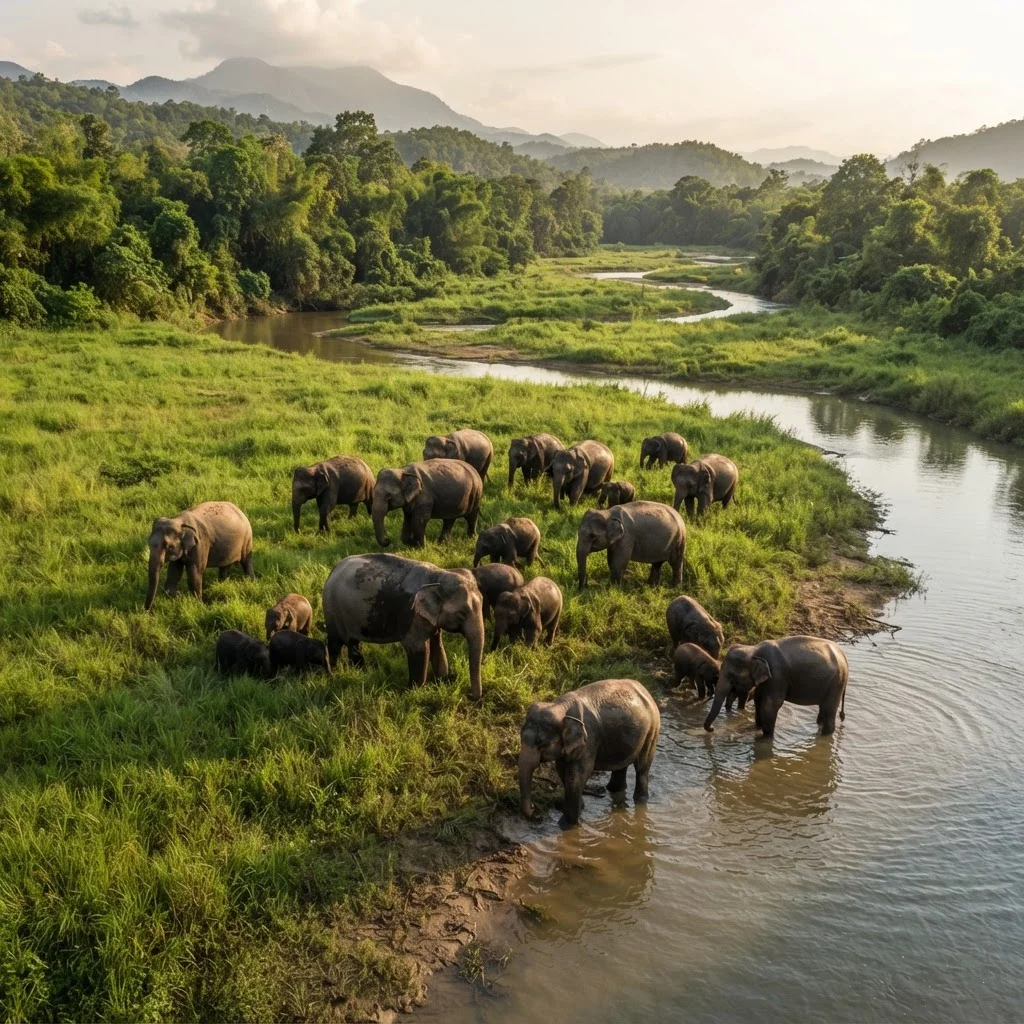
Across the forested hills of the Mae Taeng valley in northern Thailand, rescued Asian elephants forage through thick bamboo and sweet Napier grass, socialising in natural herd dynamics free from human handling. Thailand is home to an estimated captive population of around 3,800 Asian elephants, alongside thousands of other wild animals—including moon bears, gibbons, and macaque monkeys—housed across an expansive commercial tourism sector. Selecting genuine observation refuges ensures your travel spending funds long-term sanctuary care and habitat protection rather than perpetual exploitation.
Navigating Thailand's wildlife tourism requires looking past promotional labels to separate authentic rescue projects from entertainment businesses using misleading welfare slogans. This guide outlines how to assess sanctuary credentials, understand hands-off welfare standards recognised by international animal welfare organisations, and recognise practices such as scheduled bathing, direct contact, or captive breeding that compromise physical and psychological wellbeing. By choosing verified non-profit facilities and ethical forest reserves, you can directly assist species conservation, support fair livelihoods for local elephant handlers, and help safeguard Thailand's vulnerable wildlife.

Deciphering Ethical Standards: Real Sanctuaries Versus Commercial Greenwashing
The rise of responsible tourism has led many wildlife businesses in Thailand to rebrand, but genuine sanctuaries remain fundamentally distinct from commercial entertainment venues. Rather than arranging animal behaviour around visitor gratification or photography schedules, legitimate sanctuaries operate primarily for the lifelong care and rehabilitation of rescued animals. Independent welfare evaluations across Thailand indicate that roughly two-thirds of captive elephants still live in substandard conditions, often at venues that market themselves as rescue centres, retirement homes, or eco-havens. In reality, promotional terminology in the wildlife sector is largely unregulated. Commercial operators frequently replace riding saddles with communal bathing or mud washing, giving visitors an impression of ethical progress while continuing to enforce close human contact through restraint and punishment-based control.
Evaluating an attraction requires looking past marketing claims to examine operational transparency and animal autonomy. Authentic organisations typically operate as registered non-profit foundations or charitable trusts, publishing veterinary records and welcoming external assessments. They evaluate animal welfare against established physical and psychological domains, providing spacious natural grounds where residents forage, roam, and socialise without human coercion. A decisive indicator of commercial exploitation is captive breeding. Producing infant animals serves a commercial pipeline rather than species conservation, as young wildlife represents a major tourist draw requiring early maternal separation. Venues that promote direct contact with baby animals, stage scheduled performances, or promise that animals will approach visitors operate as commercial businesses.
Booking an ethical wildlife encounter ensures that visitor fees directly fund extensive land stewardship, specialised veterinary care, and nutritious daily diets. Before reserving an excursion, compare venue practices against independent welfare benchmarks to support authentic rescue work.
The following comparison outlines operational models found across Thailand, contrasting hands-off observation sanctuaries with commercial tourism camps.
| Sanctuary Category | Hands-On Contact Allowed | Breeding & Shows | Funding & Ownership | Typical Welfare Level |
|---|---|---|---|---|
| Genuine Observation Sanctuary | None; observation from viewing platforms and trails | Prohibited; herds managed to prevent reproduction | Registered non-profit foundation or charity | High welfare; animals dictate daily routines and movement |
| Transitional Hands-Off Camp | Limited supervised feeding behind protective barriers | Prohibited; retired captive stock only | Private operator transitioning with non-governmental oversight | Moderate to good; progressing towards hands-off observation |
| Commercial Bathing Camp | Bathing, mud washing, close physical contact | Commercial breeding often maintained | For-profit commercial tour business | Poor to moderate; animals compelled into repetitive contact |
| Traditional Elephant Camp | Riding with saddles or bareback, circus shows | Intentional breeding for tourism inventory | Commercial entertainment business | Unacceptable; animals subjected to spirit-breaking methods |
The Hands-Off Elephant Model: Observation Versus Direct Contact
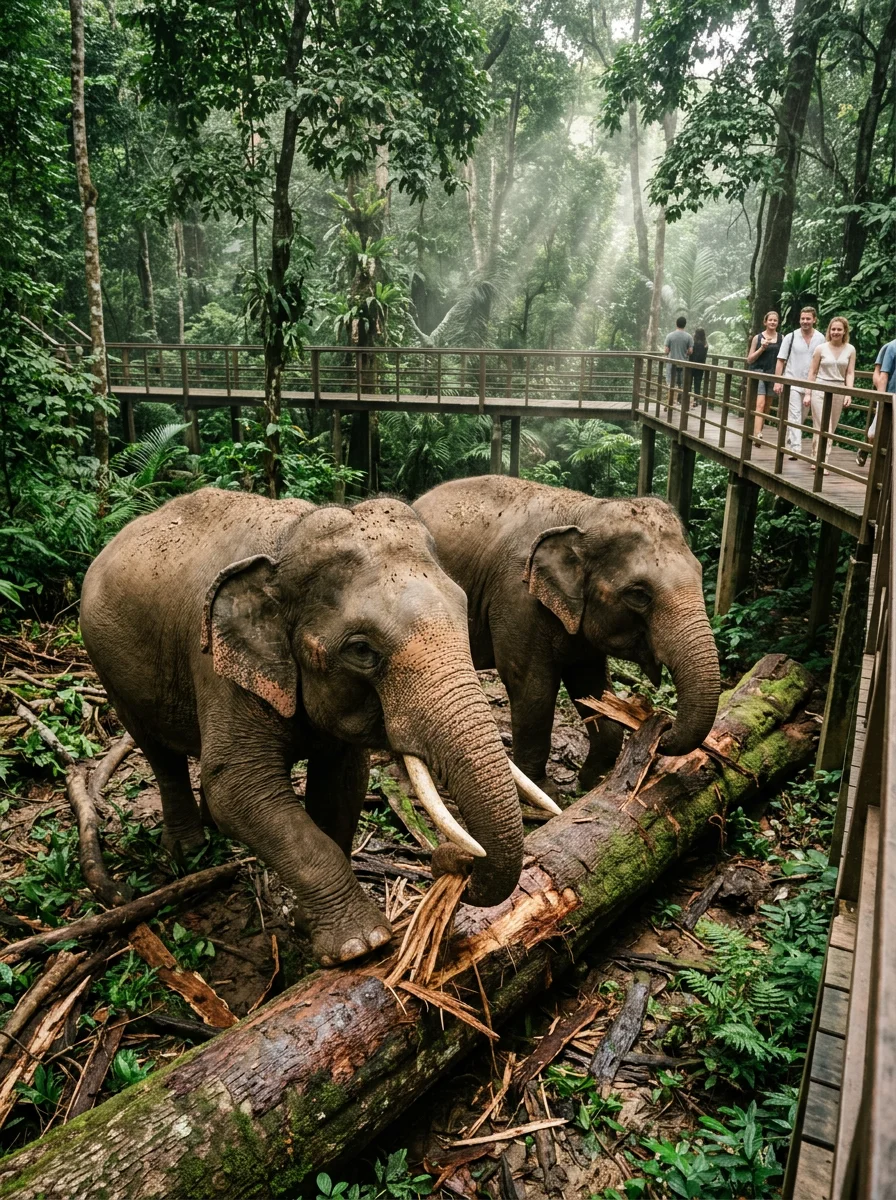
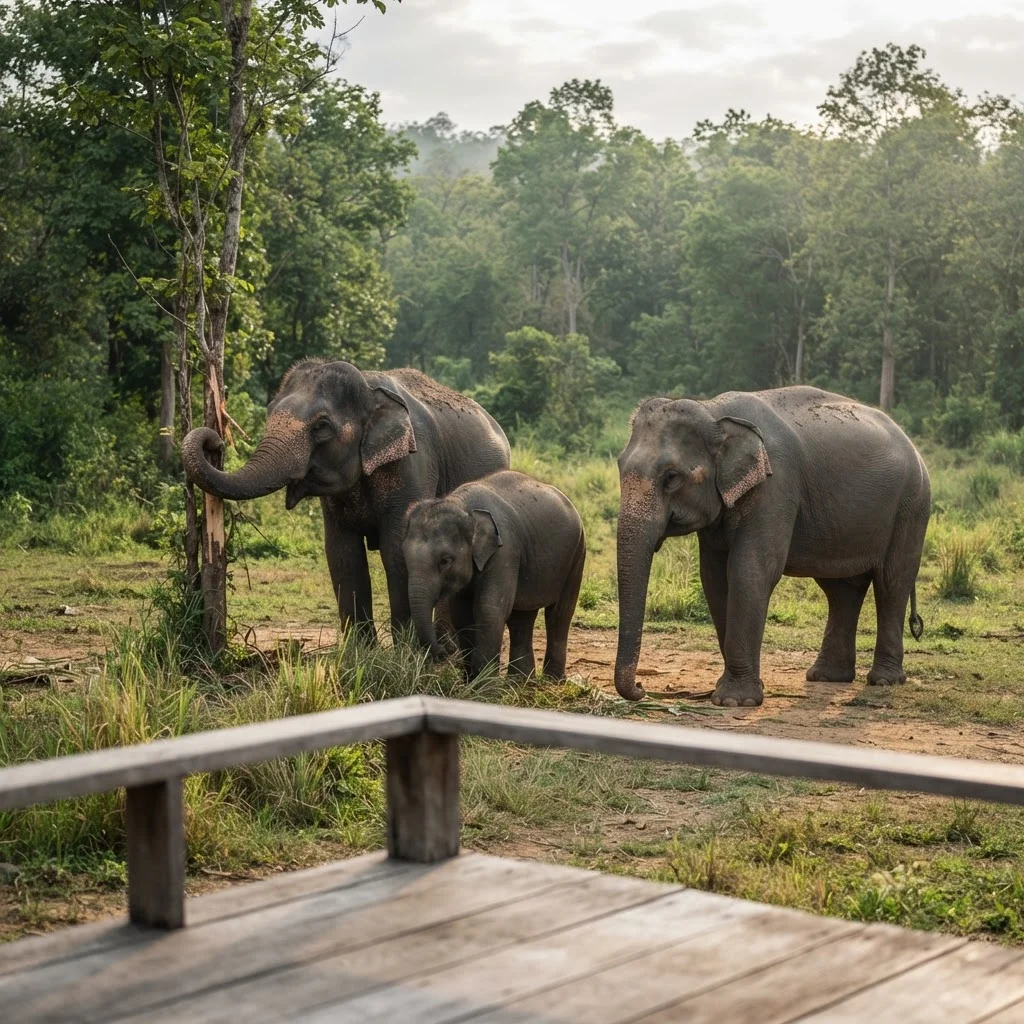
Leading animal welfare organisations consider the hands-off observation model the gold standard for captive elephant tourism. Under this approach, visitors observe herds from elevated canopy walkways or guided forest trails without physical contact. Asian elephants form intricate social bonds and rely on complex communication that breaks down when animals are subjected to rotating crowds of strangers stroking, feeding, or bathing them.
Pioneering sanctuaries across Thailand have retired direct contact entirely. At Phuket Elephant Sanctuary in Pa Klok, visitors walk along a 500-metre elevated canopy walkway to watch older logging and trekking survivors forage, dust-bathe, and socialise at their own pace. Adult canopy walkway tickets cost 1,900 THB (approx £43). In northern Thailand, venues such as ChangChill in Chiang Mai and Burm and Emily’s Elephant Sanctuary in Mae Chaem take a similar approach, guiding small groups along forested trails where elephants roam without being directed or halted for photographs.
Stepping back allows travellers to witness authentic herd dynamics that scripted tourist interactions suppress. From viewing platforms and woodland tracks, you can watch deep rumbles of greeting, mutual ear-flapping, dust-throwing to protect sensitive skin, and older elephants navigating uneven forest terrain on their own terms. Giving rescued elephants the autonomy to ignore human onlookers restores dignity to animals that have spent decades enduring heavy logging harnesses, tourist riding saddles, and restrictive training routines.
Plan a journey along Thailand’s Andaman coast, with practical guidance on island gateways, marine parks, diving, ferries and monsoon travel.
The Problem with Bathing: Why Ethical Venues Have Phased Out Water Contact
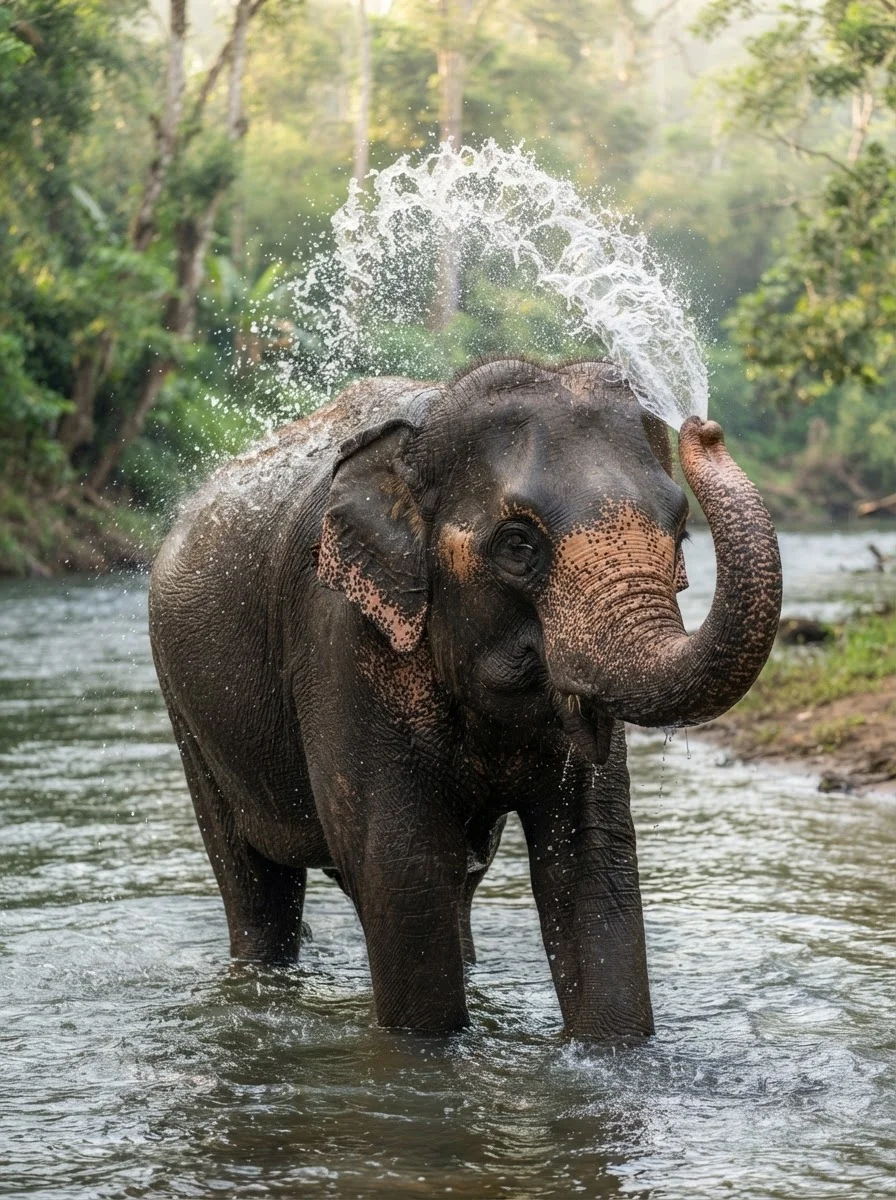
Scrubbing elephants in rivers or artificial mud pits has become a common fixture of commercial elephant tourism, but genuine welfare organisations actively discourage it. In the wild, bathing is an unforced, social behaviour. Elephants enter water to cool down, play, and coat their skin in mud and dust, creating a protective barrier against biting insects and sunburn.
When groups of tourists wade into a riverbed with brushes and buckets, that natural process breaks down. Commercial venues force elephants into the water several times a day to meet scheduled tour slots, regardless of the weather, water temperature, or the animal's inclination. Continuous scrubbing removes the protective mud layer elephants deliberately apply, leaving their skin exposed to irritation and cracking. Requiring an elephant to tolerate constant human proximity in deep mud or moving water also demands strict physical control by handlers behind the scenes, compromising animal welfare.
Shared water carries health and safety risks for people as well. Stagnant wallows and crowded river sections expose swimmers to animal waste, parasites, and waterborne bacteria such as leptospira. Being inches from a three-tonne animal in slippery conditions also carries significant physical danger.
Leading rescue facilities, including Elephant Nature Park in Chiang Mai and Boon Lott's Elephant Sanctuary in Sukhothai, phased out tourist water contact years ago. Reputable sanctuaries now keep visitors on riverbanks or raised observation platforms, giving herds complete autonomy to wallow, submerge, or wander off whenever they choose.
Multi-Species Rescue Centres: Protecting Bears, Primates, and Big Cats
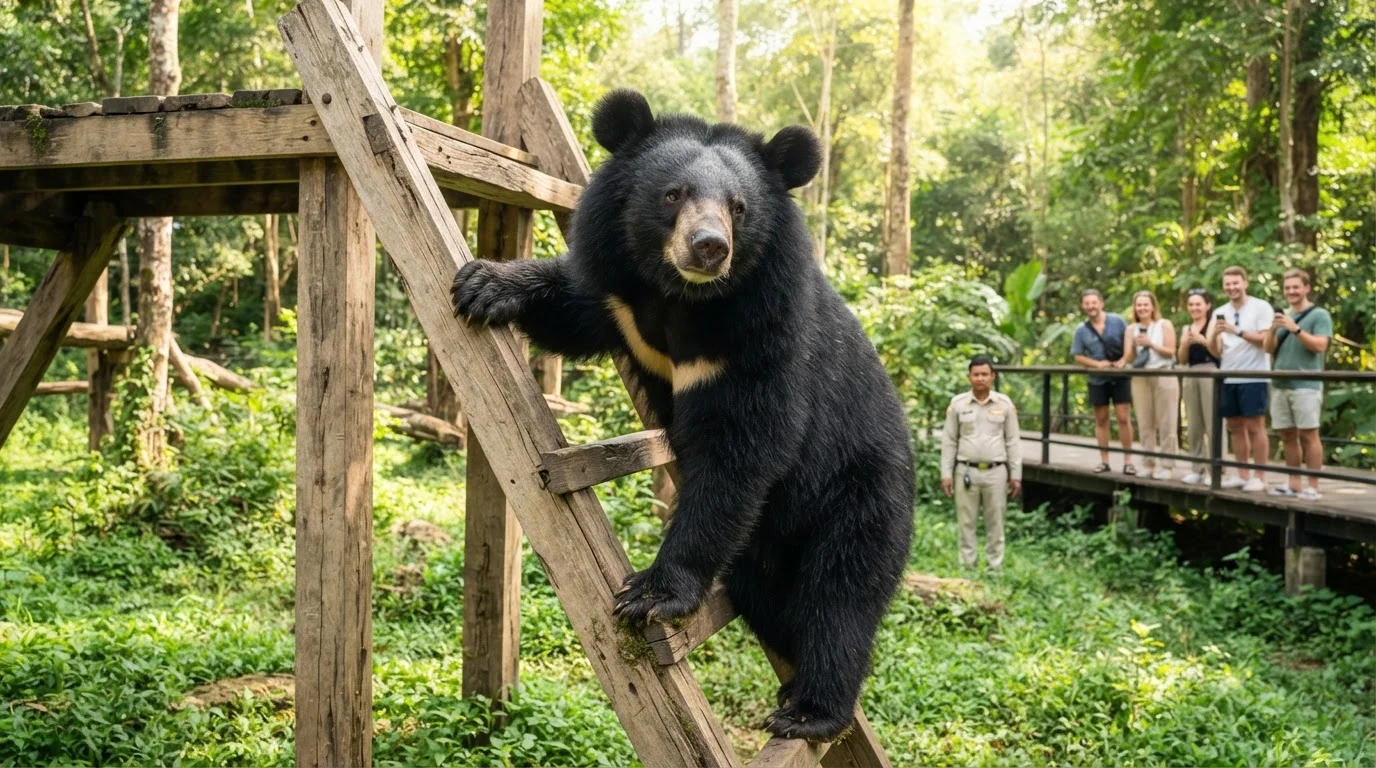
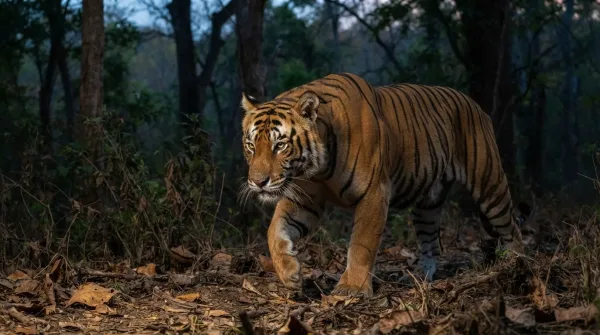
Ethical wildlife tourism in Thailand extends well beyond elephants to non-profit rescue centres rehabilitating sun bears, Asiatic black bears, gibbons, macaques, and big cats seized from the illegal wildlife trade. Commercial tiger venues and roadside animal displays frequently rely on physical declawing, surgical defanging, drugging, and intensive captive breeding to produce submissive animals for visitor photos. Legitimate refuges counter this exploitation by providing expansive, enriched enclosures alongside professional veterinary care and dietary rehabilitation.
Wildlife Friends Foundation Thailand (WFFT) in Phetchaburi cares for hundreds of rescued animals across vast sanctuary grounds, including bears rescued from bile farms and big cats saved from defunct tourist zoos. Guided full-day educational visits cost 1,600 THB (approx £36) for adults, which includes a buffet lunch and guided transport by safari bus through the open-field habitats. Hands-on contact is strictly prohibited. Round-trip external transfers from nearby Hua Hin or Cha-am can be arranged directly with the sanctuary for 200 THB (approx £4.50) per person.
In Phuket, the Gibbon Rehabilitation Project at Bang Pae Waterfall focuses on white-handed gibbons confiscated from illegal street photo-prop handlers. Poachers routinely shoot nursing mothers in the canopy to capture infants; the project rehabilitates surviving gibbons to form bonded pairs for reintroduction into protected rainforest. An educational viewing centre allows visitors to observe non-releasable gibbons from a designated distance without disrupting their recovery. By visiting genuine rescue centres rather than commercial animal spectacles, travellers directly fund critical veterinary treatment while denying criminal trafficking networks tourist revenue.
Wild Encounters: Spotting Free-Roaming Herds in National Parks
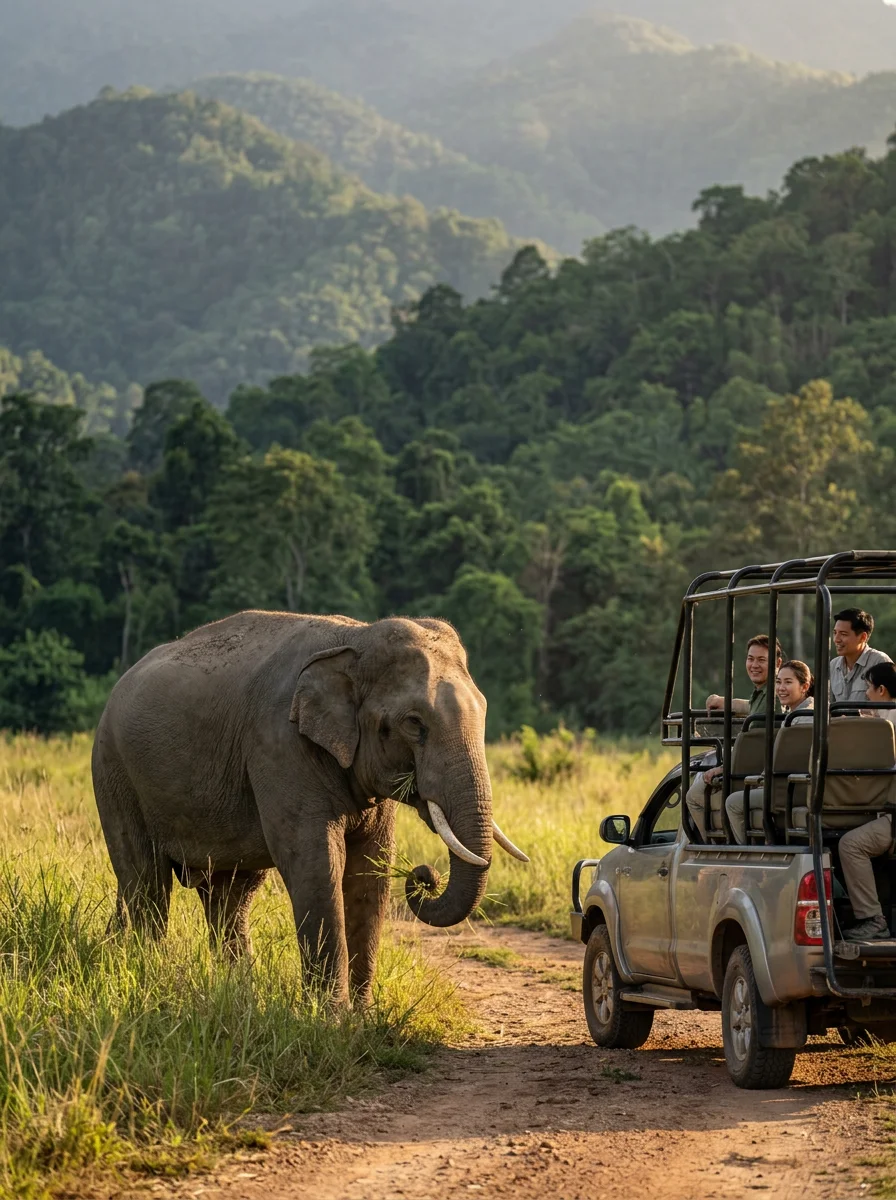
Observing wildlife in protected natural habitats provides the most responsible alternative to captive attractions, directing vital funding to the Department of National Parks, Wildlife and Plant Conservation and bordering rural villages. In these expansive reserves, wild herds follow seasonal migrations and instinctive behaviours free from artificial feeding, tethering, or domestic handling.
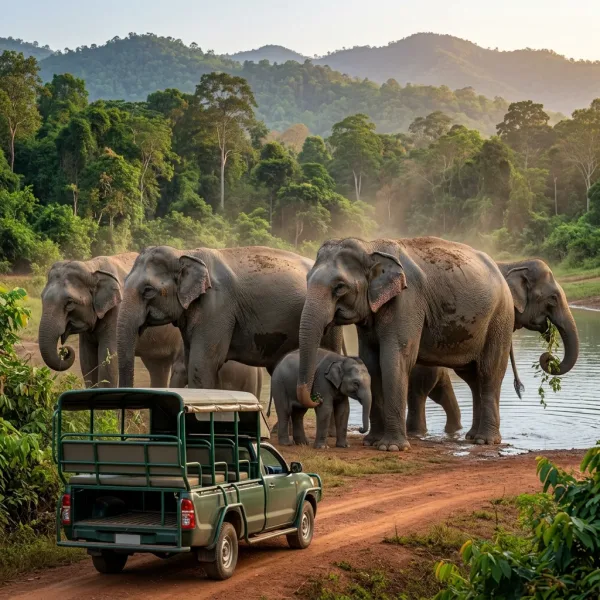
In Prachuap Khiri Khan Province, Kui Buri National Park protects healthy populations of wild Asian elephants and gaur. Wildlife viewing here centres on an ecotourism initiative developed alongside local communities around the Huai Luek Ranger Station. Visitors explore designated open savannah corridors in open-air pickup trucks driven by village guides and park rangers during late afternoon hours, when herds routinely gather near waterholes. Private vehicles cannot enter the wildlife corridor, and walking into the forest is strictly forbidden. This supervised model grew out of historical efforts to mitigate crop conflicts with local pineapple farmers, transforming former agricultural pressures into community-led conservation where residents directly benefit from habitat protection.
Further north, Khao Yai National Park covers rugged evergreen forest corridors where foreign adult admission costs 400 THB (approx £9). Guided jungle treks led by accredited park rangers provide opportunities to encounter great hornbills, wild gibbons, and dholes, alongside resident elephant families crossing forest tracks. These excursions require patience and realistic expectations, as sightings remain unpredictable in dense rainforest terrain. Tracking wild animals on their own terms reinforces the distinction between genuine ecological observation and commercial entertainment, demonstrating how well-managed tourism can safeguard natural ecosystems while providing dependable revenue to conservation staff on the ground.
Community Conservation and Ethical Wildlife Volunteering
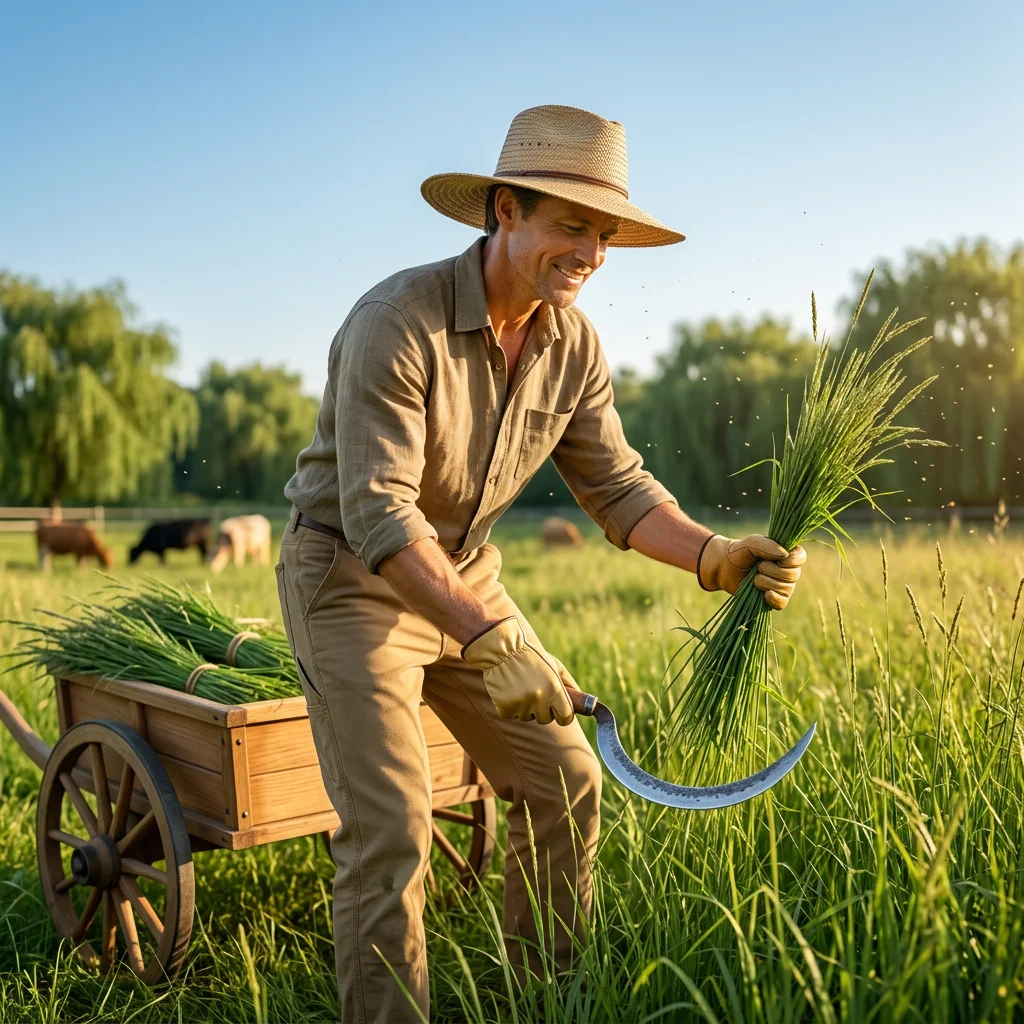
Multi-day stays and long-term volunteer placements provide critical operational labour and dependable revenue to non-profit sanctuaries while anchoring conservation within local rural economies. Rather than processing high volumes of fleeting day-trippers, community-centred projects rely on small numbers of engaged visitors who fund ongoing animal care, purchase village-grown produce, and assist with daily maintenance. Tasks typically involve cutting grass, preparing specialised feed, clearing forest trails, and assisting with tree-planting and habitat regeneration.
In the Mae Chaem district west of Chiang Mai, Burm and Emily's Elephant Sanctuary (BEES) operates hands-off two-day, four-day, and week-long programmes starting from 6,000 THB (approx £136). Guests observe rescued elephants roaming across roughly 300 acres of forested valley, stay in rustic lodgings alongside local Karen staff, and help with sanctuary chores and community development projects. Further south in Sukhothai province, Boon Lott's Elephant Sanctuary (BLES) enforces an intimate capacity of no more than 10 overnight guests at 8,000 THB (approx £182) per adult per night. Visitors accompany local mahouts on quiet forest walks without fixed schedules or choreographed interactions.
By sourcing daily elephant browse from local farmers and employing villagers as permanent caretakers, these initiatives ensure wildlife protection delivers tangible economic value to neighbouring communities. Prospective volunteers should prepare for humid conditions, early mornings, and genuine physical exertion, approaching their stay as humble service rather than a hands-on petting holiday.
Where to Experience Ethical Wildlife Tourism in Thailand
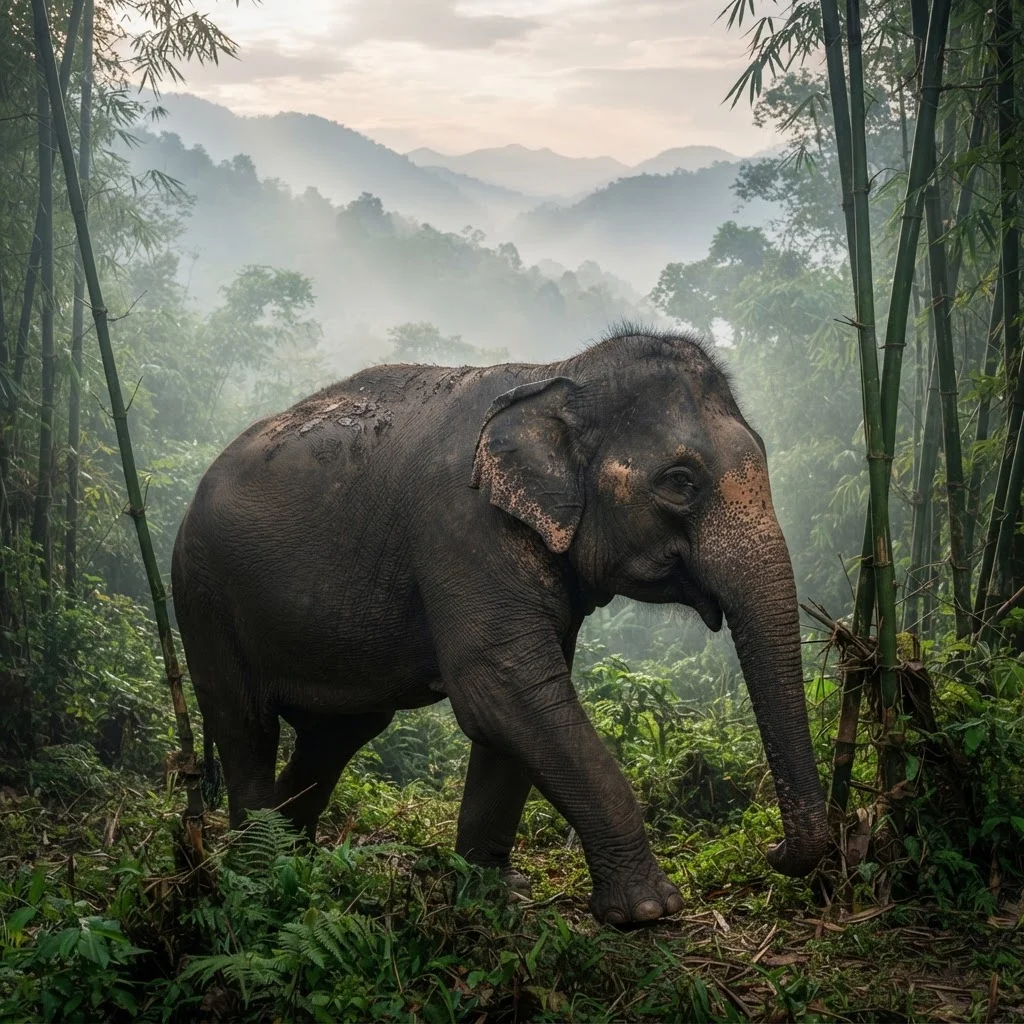
Northern Thailand is the country's primary hub for elephant conservation. In Chiang Mai's Mae Taeng district, Elephant Nature Park runs observation-focused morning and afternoon visits starting from 2,500 THB (approx £57), allowing visitors to watch rescued herds wander and bathe freely. In the rural valleys of Mae Chaem, Burm and Emily's Elephant Sanctuary (BEES) operates a hands-off refuge for retired working elephants, hosting small groups on multi-day stays and guided observation walks booked in advance. Further south in Sukhothai, close to the historic UNESCO World Heritage parklands, Boon Lott's Elephant Sanctuary provides intimate residential stays where strictly capped visitor groups observe rescued elephants foraging through natural forest.
Central and southern regions also maintain notable conservation centres. In Phetchaburi Province, accessible from Hua Hin, Wildlife Friends Foundation Thailand manages a multi-species rescue facility caring for rescued bears, primates, and elephants across spacious enclosures. On Phuket, travellers can view retired elephants foraging from a 500-metre elevated canopy walkway at Phuket Elephant Sanctuary in Pa Klok, or learn about primate rescue at the Gibbon Rehabilitation Project near Bang Pae Waterfall in Khao Phra Thaeo reserve. For travellers seeking wild encounters rather than rescue sanctuaries, Kui Buri National Park in Prachuap Khiri Khan and Khao Yai National Park provide open-vehicle wildlife tracking led by local guides and park rangers, with strong chances of observing wild elephant herds in protected natural habitats.
Costs and Budgeting
Authentic animal welfare standards command higher fees than commercial tourist entertainment, driven by the substantial operational expense of maintaining rescued wildlife. An adult Asian elephant consumes roughly 150 to 200 kilograms of vegetation daily, creating continuous feeding costs alongside specialist veterinary care, ethical mahout wages, and land leases. Low-cost commercial venues keep admission cheap by crowding visitors and forcing animals into unnatural performances or close contact. Genuine sanctuaries and community-led conservation projects reinvest ticket fees directly into lifelong animal upkeep, staff salaries, and habitat protection.
Budget travellers can view wild elephants at public reserves for modest sums. At Kui Buri National Park, foreign adult admission is 200 THB (approx £4.50), plus 1,200 THB (approx £27) for a mandatory open-air safari truck shared between up to six people. Because direct public buses do not reach the ranger station, visitors typically arrange private transport from Hua Hin or Prachuap Khiri Khan and split the vehicle cost at the gate.
Mid-range day visits to accredited multi-species rescue centres and observation-led elephant sanctuaries generally cost between 1,600 THB and 3,500 THB (approx £36 to £80) per adult. Northern elephant sanctuaries routinely bundle return minivan transfers from Chiang Mai and vegan buffet lunches into their admission fee. In contrast, regional wildlife rescue centres often sell sanctuary entry and buffet lunches as a base ticket, charging return transfers separately at around 200 THB (approx £4.50) per person. Small-group conservation homestays and multi-day residencies range from 6,000 THB (approx £136) for a two-day stay up to 16,000 THB (approx £364) for extended immersion, covering rustic accommodation, all meals, and guided forest walks.
| Option | Cost (THB) | Cost (GBP approx) | Notes |
|---|---|---|---|
| Kui Buri National Park Safari | 200 THB entry + 1,200 THB vehicle | £4.50 entry + £27 vehicle | Mandatory truck covers up to 6 people; open 14:00 to 18:00 daily |
| WFFT Rescue Centre Day Tour | 1,600 THB per adult | £36 approx | Full guided centre tour, safari bus, and Thai buffet; transfers extra |
| Phuket Elephant Sanctuary Walkway | 1,900 THB per adult | £43 approx | 90-minute canopy walkway tour; hotel transfers optional |
| Elephant Nature Park Day Package | 2,500–3,500 THB per adult | £57–£80 approx | Includes Chiang Mai hotel minivan transfers and vegan buffet lunch |
| BEES Sanctuary Overnight Stay | 6,000 THB (2 days/1 night) | £136 approx | Covers all meals, on-site accommodation, and Chiang Mai transfers |
| BLES Sukhothai Conservation Stay | 8,000 THB per night | £182 approx | Multiday homestay, local station transfers, all meals, and forest walks |
What to Know Before You Go

Advance booking is standard practice across genuine sanctuaries. Authentic facilities cap visitor numbers strictly each day to keep animal stress low and prevent human crowding, meaning unannounced arrivals at the gate are routinely turned away.
Visiting a genuine rescue centre requires recalibrating expectations away from interactive entertainment. Hands-off sanctuaries do not provide photo-posing, bathing, or tactile petting. Instead, the focus rests on watching rescued elephants, primates, or bears explore spacious habitats and express natural social behaviours on their own terms, from a respectful distance.
Sanctuary grounds consist of natural forest paths, open pasture, and riverbeds. Wear sturdy, closed-toe footwear such as trainers or walking shoes with reliable traction. Flip-flops and open sandals slip easily on wet slopes and leave feet exposed to mud, insects, and sharp grasses. Breathable, lightweight clothing covering arms and legs helps shield against intense tropical sun and biting insects. Avoid arriving in swimwear or clothes you mind getting dirty.
Sanctuary visits proceed regardless of weather. Rain rarely bothers elephants—in fact, herds often become livelier in wet conditions. Pack a lightweight waterproof jacket or poncho, alongside a dry bag for phones or personal valuables, because tours continue through tropical showers across outdoor terrain rather than retreating indoors.
Practical Tips
Book excursions directly through a sanctuary's official channels rather than street-side kiosks or hotel tour desks. Tourism desks across Chiang Mai, Phuket, and Bangkok routinely operate on substantial commission arrangements with commercial elephant entertainment venues, frequently misrepresenting riding and bathing facilities as ethical rescue centres. Securing places directly ensures funds support genuine animal welfare programmes and allows operators to manage daily visitor quotas.
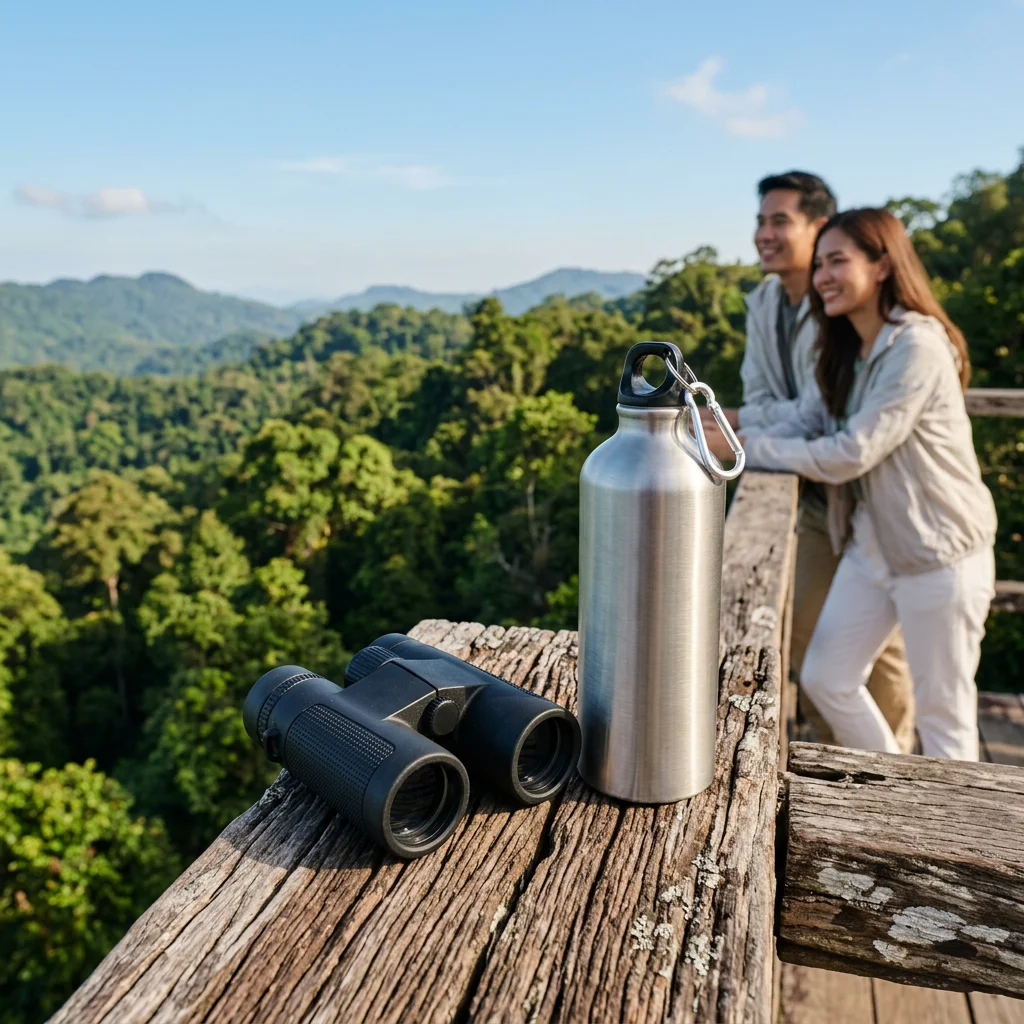
Pack lightweight, breathable clothing in neutral tones such as olive, khaki, tan, or muted grey. Bright fluorescent shades and stark white garments can alert or unsettle skittish forest wildlife, whereas earth tones blend into canopy and grassland environments. Long trousers protect against thorny scrub and biting insects, whilst sturdy closed-toe shoes or trail trainers handle uneven paths. For open-air national park safaris, such as those in Kui Buri or Khao Yai, pack a light fleece or windbreaker for the cooler evening drive back.
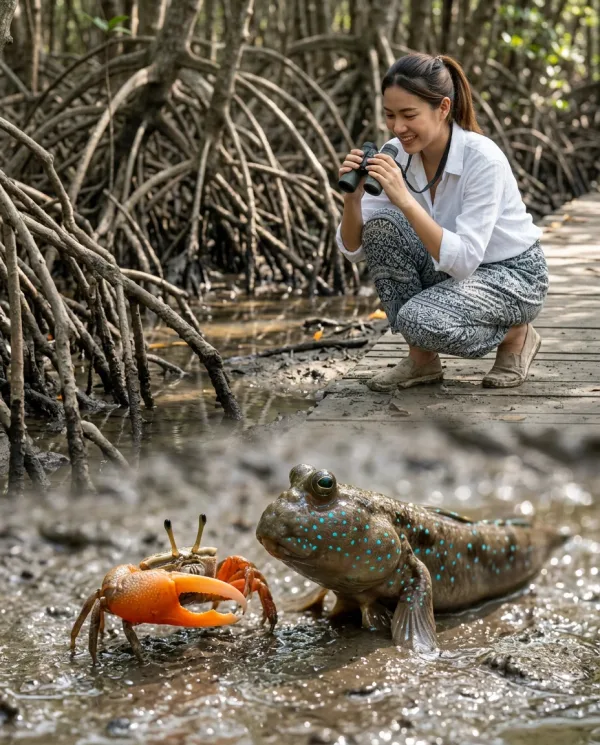
Compact binoculars with 8x or 10x magnification are invaluable. Observation-only sanctuaries and protected wildlife reserves keep visitors at distances ranging from 100 to 500 metres, making optical gear necessary to study herd behaviour and birdlife without causing disturbance. Carry insect repellent formulated with DEET or picaridin, alongside broad-spectrum sunscreen and a wide-brimmed hat. Late afternoon game drives coincide with peak mosquito activity along forest boundaries. The Department of National Parks prohibits single-use plastics, so carry a refillable water bottle.
Carry ample cash in Thai Baht. Rural conservation outposts, national park ranger stations, and independent 4x4 safari drivers often lack stable cellular connectivity for card payment terminals. If you intend to visit sanctuaries around Chiang Mai or northern Thailand, avoid the agricultural burning season between mid-February and mid-April. Regional crop clearing and forest fires trap dense particulate smoke across the northern valleys during these months, pushing air pollution to hazardous levels. Once on site, adhere strictly to ranger and mahout directions, keeping to designated tracks and vehicles to give large mammals uncompromised space.
Advance reservations help reputable sanctuaries manage daily group caps and procure fresh daily forage for rescued animals.
Quick Reference Table
| Item | Detail | Notes |
|---|---|---|
| Gold Standard Model | Hands-off observation | Viewing from raised walkways or trails; no bathing, riding, or direct contact |
| Kui Buri Safari Costs | 200 THB entry + 1,200 THB truck (approx £4.50 + £27) | Truck mandatory (shared by up to 6); afternoon game drives 14:00–18:00 |
| Sanctuary Day Visits | 1,600 THB to 3,500 THB (approx £36 to £80) | WFFT (1,600 THB), Phuket Walkway (1,900 THB), ENP packages (2,500–3,500 THB) |
| Multi-Day Residencies | 6,000 THB to 16,000 THB (approx £136 to £364) | BEES overnight starts at 6,000 THB; BLES homestay is 8,000 THB per night |
| Northern Seasonal Timing | Avoid mid-February to mid-April | Regional agricultural burning causes hazardous smoke and air pollution |
| Booking Protocol | Book directly with sanctuaries in advance | Facilities enforce strict daily visitor caps; hotel tour desks often push commercial camps |
| Packing Essentials | Neutral clothing, sturdy footwear, binoculars | Avoid bright colours; closed-toe shoes required; optical gear helps view herds at distance |
| Practical Payment Tip | Carry ample cash in Thai Baht | Remote ranger stations and rural conservation projects rarely have stable card facilities |
| Official Website | elephantnaturepark.org | Elephant Nature Park (Chiang Mai) |
| Official Website | phuketelephantsanctuary.org | Phuket Elephant Sanctuary (Phuket) |
| Official Website | wfft.org | Wildlife Friends Foundation Thailand (Phetchaburi) |
| Official Website | bees-elesanctuary.org | Burm and Emily's Elephant Sanctuary (Mae Chaem) |
| Official Website | blesele.org | Boon Lott's Elephant Sanctuary (Sukhothai) |
| Official Website | gibbonproject.org | Gibbon Rehabilitation Project (Phuket) |
| Official Website | dnp.go.th | Department of National Parks, Wildlife and Plant Conservation |
FAQ: Ethical Wildlife Tourism in Thailand
How can I tell if a wildlife sanctuary in Thailand is genuinely ethical?
What are signs that a wildlife venue in Thailand might be commercial rather than an ethical sanctuary?
What is the difference between a genuine observation sanctuary and a commercial bathing camp in Thailand?
What is the "hands-off" model for elephant tourism in Thailand?
Why do ethical elephant sanctuaries in Thailand discourage tourist bathing with elephants?
What kind of ethical wildlife experiences are available in Thailand beyond elephant sanctuaries?
Where can I see wild elephants in Thailand?
How much does ethical wildlife tourism in Thailand typically cost?
Is advance booking required for ethical wildlife sanctuaries in Thailand?
When is the best time to avoid visiting northern Thailand for wildlife tourism?
Reviewed by the Thailand Guide Editorial Team • Last reviewed: 15 November 2026
This page is provided for general information only. While we aim for accuracy, details can change — please verify anything important independently before relying on it.