Camping in Thailand
Camping in Thailand spans two distinct styles of travel: basic wilderness pitches on protected public land and privately run boutique glamping resorts. Across the state-run network, managed by the Department of National Parks, Wildlife and Plant Conservation (DNP), travellers can pitch their own tent for a standard fee of 30 THB (around £0.70) per person per night, or rent pre-pitched tents and basic bedding directly from ranger stations. These public grounds cover more than 130 national park locations, from northern mountain ridges to forested central valleys and Andaman island shores.
At the other end of the scale, private safari-style camps and dome resorts cater to travellers seeking upscale comfort in rural settings. Concentrated around areas such as Khao Yai, Chiang Mai, and southern coastal bays, these retreats feature air-conditioned canvas suites, hotel-standard mattresses, en-suite bathrooms, and furnished private decks, with rates typically reaching 7,500 THB (£175) or more a night. Together, these two sectors give UK travellers an outdoor alternative to conventional concrete resort hotels.

Northern Ridge Campsites and Chiang Mai Highlands
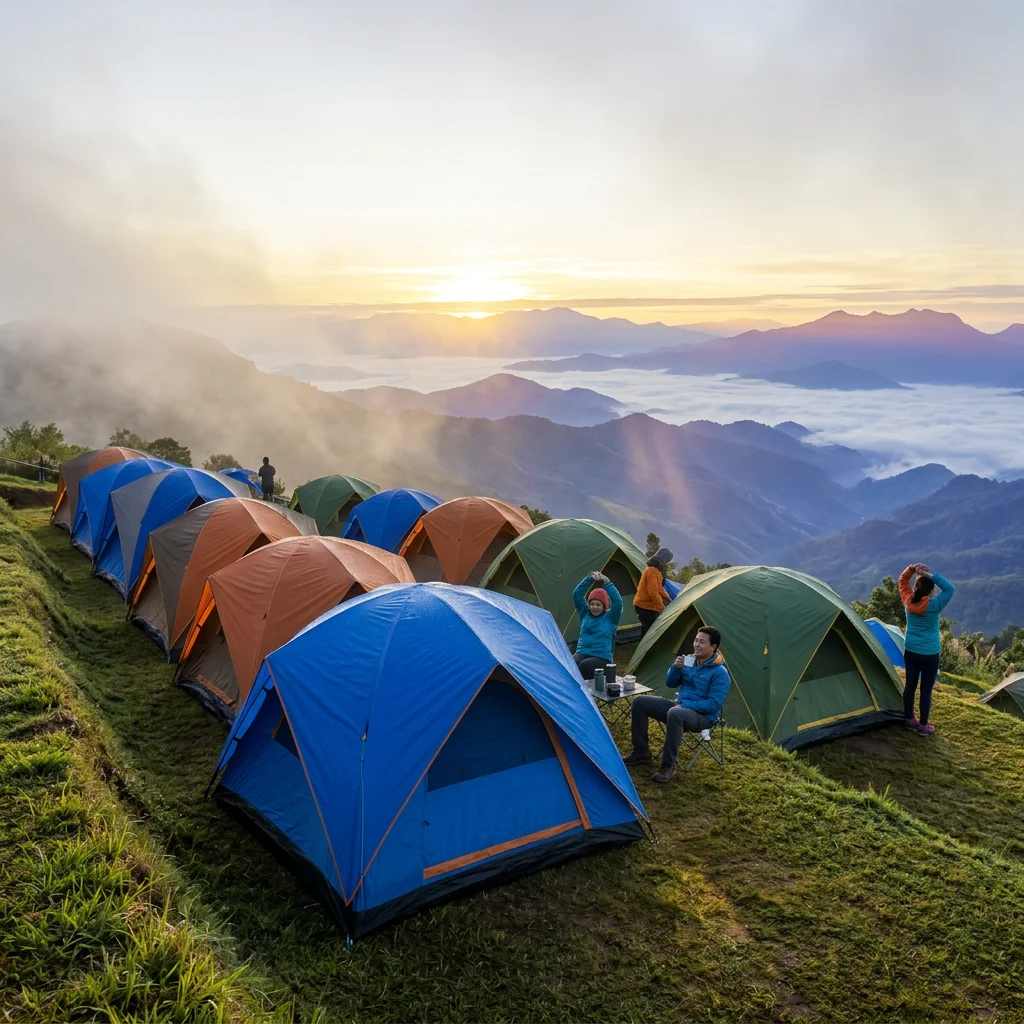
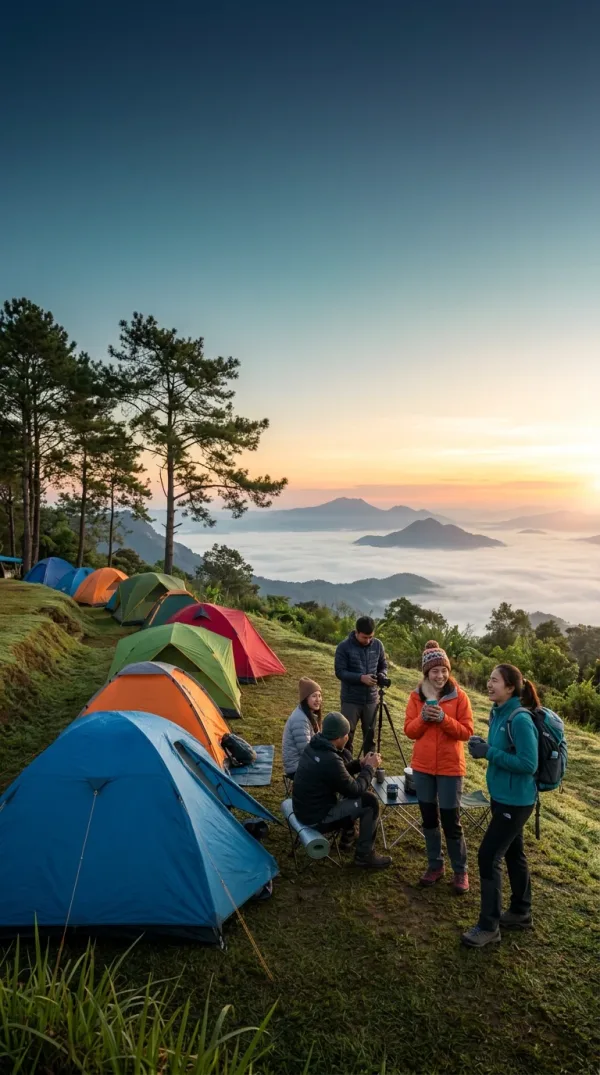
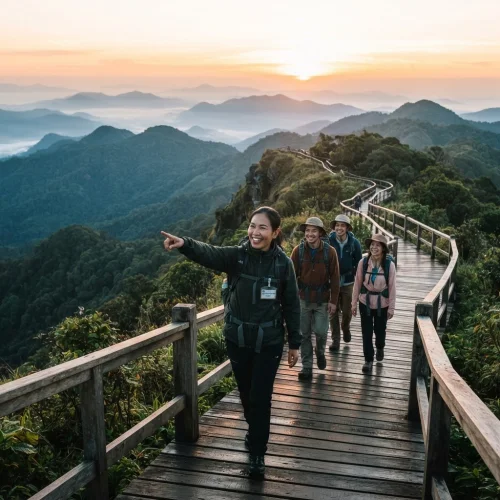
The northern highlands provide cool-climate camping distinct from the tropical lowlands, with overnight temperatures regularly dropping into single digits Celsius between November and February. High-elevation grounds across Chiang Mai province—most notably Doi Inthanon, Doi Pha Hom Pok, and Doi Ang Khang—feature ridge-top pitches set above valleys that routinely fill with morning mist. At Doi Pha Hom Pok National Park, the Kiew Lom campsite sits at roughly 1,920 metres above sea level, Thailand's highest official campground. Across these state-run sites, facilities remain rustic: campers pitch on grassy or earthen terraces and share unheated washblocks. Small kiosks and local stalls sell hot instant noodles, local Arabica coffee, and charcoal, while thermal base layers and fleece sleeping bags are needed to manage the cold.
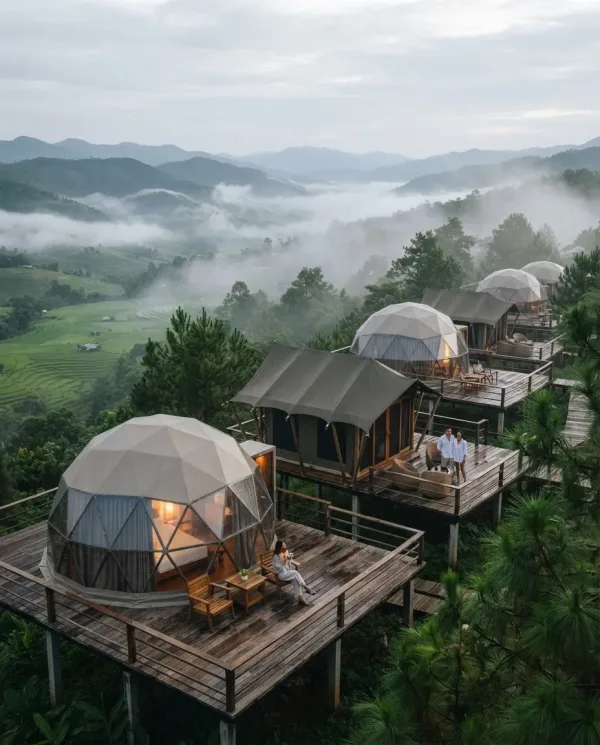
Further south in Mae Rim district, the ridge community of Mon Jam presents a private glamping alternative. Steep hillsides once used for cabbage and strawberry farming now hold clusters of geodesic domes and canvas bell tents mounted on wooden platforms. These commercial sites overlook flower fields and agricultural terraces, providing visitors with raised mattresses, electric fans, Wi-Fi, and private decks arranged for evening mookata (Thai tabletop barbecue).
Reaching these northern pitches involves demanding mountain driving. Roads up to Doi Ang Khang and Doi Pha Hom Pok are exceptionally steep with sharp switchbacks, requiring vehicles with sound brakes and low gear capability. Public buses and minivans from Chiang Mai drop passengers at lowland hubs along Highway 107 or Highway 108, leaving travellers to hire four-wheel-drive songthaews or local pickup trucks for the final ascent up the mountain ridges.
Khao Yai and Central Forest Glamping Hubs
Khao Yai and the adjacent Pak Chong valley form a major forest glamping corridor in Thailand. Located roughly two and a half to three hours northeast of Bangkok, this upland fringe combines evergreen rainforest with open farmland and orchards. Private luxury retreats line the park boundaries, combining outdoor living with hotel amenities. Properties such as Lala Mukha Tented Resort and Marasca Khao Yai provide air-conditioned canvas pavilions and suites on raised timber decks, featuring comfortable beds, private bathrooms, outdoor soaking tubs, and private fire pits. Communal swimming pools and on-site restaurants with Thai and Western menus provide a structured base against the forest landscape.
Inside Khao Yai National Park, public wilderness camping centres on Lam Ta Khong Campground, situated on open grassland beside a freshwater stream. Sambar deer, barking deer, and northern pig-tailed macaques move freely across the pitch areas. Campers must secure all food within rigid containers or vehicles, as foraging wildlife frequently targets unsecured tents. Park rangers enforce quiet hours from 22:00 to 06:00 to minimise disturbance to native fauna.
Overnighting inside the park provides early-morning access to walking trails and ranger-guided evening spotlight drives, which monitor civets, Malayan porcupines, and wild Asian elephants along the forest roads. Booking well in advance is necessary for park pitches on dry-season weekends between November and February, when domestic visitors travel up from Bangkok in large numbers.
Plan a journey along Thailand’s Andaman coast, with practical guidance on island gateways, marine parks, diving, ferries and monsoon travel.
Southern Coastal Pitches and Island Beach Camping
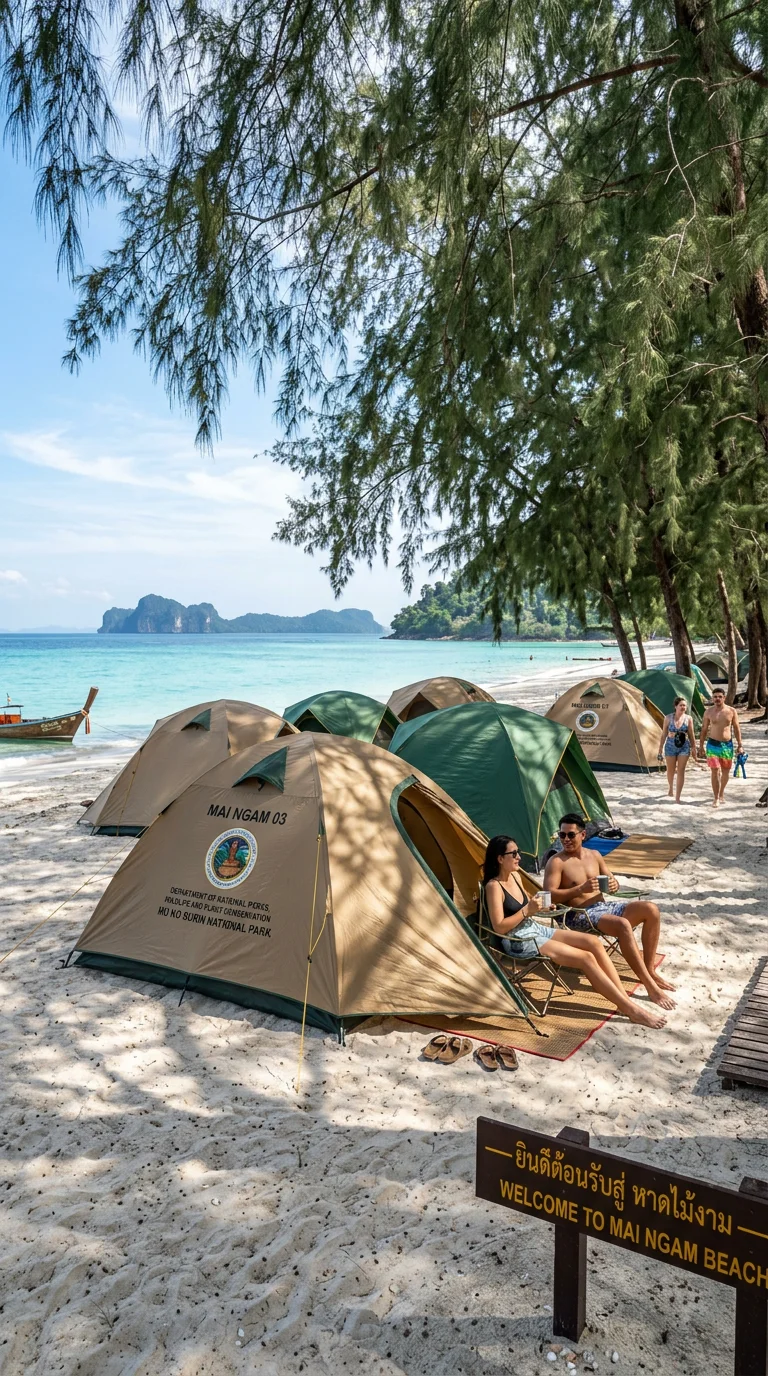
Southern beach camping strips overnight stays back to basics, setting tents directly on coastal sand beneath the shade of casuarina and sea pine trees. Marine national park areas across the Andaman Sea and the Gulf of Thailand—such as the Tarutao archipelago, Mu Koh Surin, and Koh Adang—provide designated beach pitches where reef flats sit just metres from your tent door. At these remote ranger stations, travellers can either pitch their own gear or hire park-provided dome tents, foam bedding mats, and pillows.
Coastal camping conditions call for sensible day-to-day management. Sea breezes bring salt spray and fine coral sand, while high overnight humidity means synthetic tents must stay well-ventilated through mesh panels to minimise interior condensation. Campers should also anticipate modest utility infrastructure. Most island marine campsites rely on diesel generators that run on restricted schedules, typically supplying power to communal charging stations for several hours in the evening, often from 18:00 to 22:00. Washing facilities feature cold, unheated showers fed by local freshwater wells or island reservoirs.
In return for basic living conditions, island camping delivers immediate access to clear waters without the need to hire long-tail boat transfers or join day excursions. Snorkellers can wade directly from the shore onto living coral reefs at dawn before tour boats arrive. Carrying a reliable power bank and dry bags for electronics ensures your devices stay operational and protected from sand and spray throughout your stay.
Comparing Thai Camping with Standard Hotel Stays
Camping across Thailand trades predictable resort conveniences for immediate proximity to nature, substantial financial savings, and early access to wilderness trails. A conventional three-star hotel in regional Thailand typically costs between 1,200 THB and 2,500 THB (£28 to £58) per night, providing reliable air conditioning, en-suite bathrooms, solid acoustic insulation, and daily housekeeping. In contrast, national park campgrounds reduce overnight fees to 30 THB (£0.70) per person if you bring a tent, or roughly 200 THB to 400 THB (£4.65 to £9.30) per night to hire a tent and basic bedding on site. Staying inside the park places you at ridge viewpoints and forest trailheads at dawn, well before day-trip tour groups arrive.
The trade-off for traditional camping is comfort and privacy. Campers use shared ablution blocks that usually provide unheated water, sleep on thin mats, and must manage ambient forest noise and shifting temperatures. Private glamping sits at the other end of the market, typically ranging from 3,000 THB to 12,000 THB (£70 to £280) or more per night. Rather than sealing guests behind concrete and glass, these tented retreats provide canvas verandas, fire pits, plush bedding, and private en-suite bathrooms, often with air conditioning or freestanding bathtubs. Public campsites maximise overland travel budgets and wilderness immersion, whereas glamping delivers outdoor scenery without sacrificing boutique hotel comforts.
Equipment Hire, Gear Advice, and Pitch Logistics
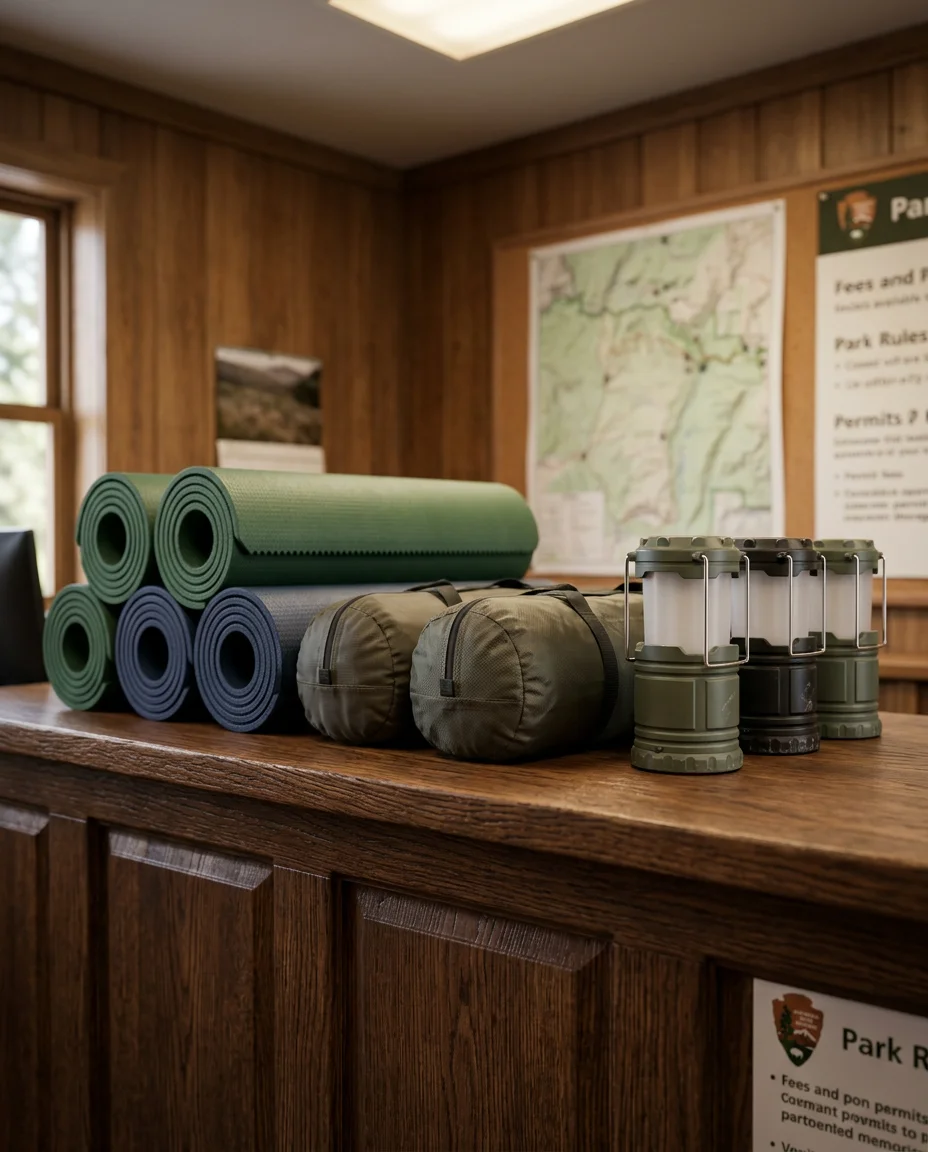
You do not need to haul heavy outdoor equipment across international flights from the UK to camp in Thailand. Most established national park campgrounds operate an equipment concession where travellers hire overnight kits on arrival. Standard two-person dome tents cost 150 THB (around £3.50) per night, while three-person domes cost 225 THB (£5.25). Bedding items rent separately: sleeping mats cost 20 THB (£0.45), sleeping bags rent for 30 THB (£0.70), blankets cost 20 THB (£0.45), and foam pillows cost 10 THB (£0.23). In peak periods, park staff often pitch rental tents across designated plots beforehand, though rangers also distribute bagged kits for self-pitching. Inspect rental gear at the window before paying to confirm zip sliders, poles, and guy lines are intact.
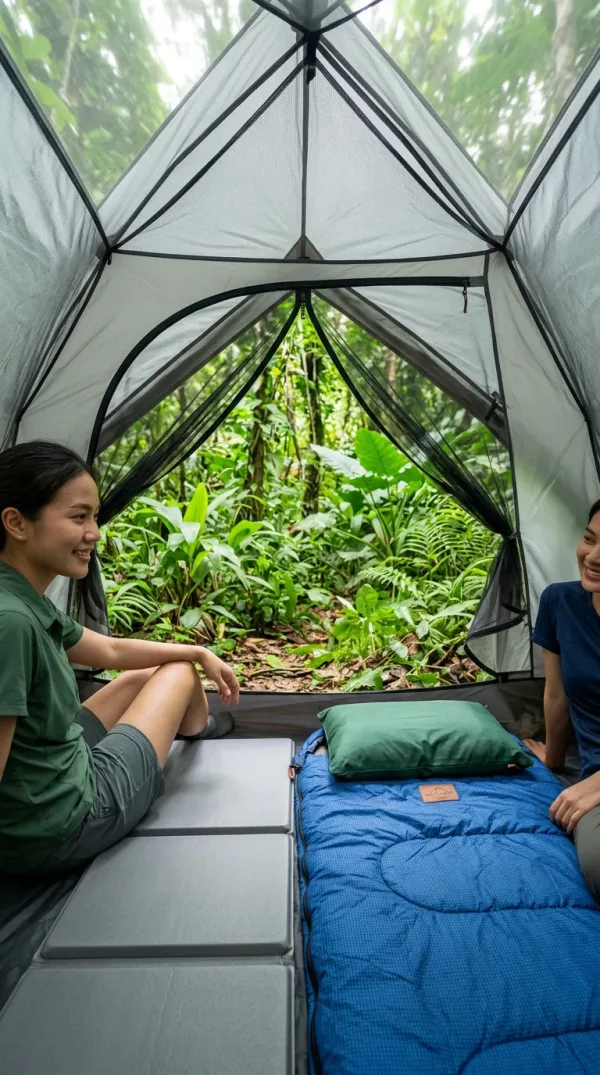
If bringing your own shelter, choose gear suited to tropical humidity and mountain chills rather than temperate UK conditions. Tents with full micro-mesh inner canopies provide vital ventilation while excluding mosquitoes and midges. Pair this with a rainfly rated to at least 3,000mm hydrostatic head to withstand monsoon downpours. A groundsheet beneath your tent prevents moisture seepage and protects against sharp stones. For pitch logistics, northern ridge campsites often feature raised timber platforms rather than grass. Pack fishbone deck anchors or extra cord to secure your tent to the planks, as standard metal stakes cannot penetrate timber decking.
Sleeping requirements differ by region. A lightweight silk liner and compact sleeping pad suffice for southern beach campgrounds, where night temperatures rarely drop below 24°C. In contrast, northern mountain stays between November and February can drop to 5°C to 10°C overnight, requiring an insulated ground mat and a three-season sleeping bag rated down to 5°C to block cold ground contact.
| Option | Setup | Cost (THB) | Cost (GBP) | Inclusions |
|---|---|---|---|---|
| National Park Pitch Only | Bare ground or timber deck | 30 THB per person | £0.70 per person | Ground access, shared cold washrooms |
| National Park Hired Tent | Pre-pitched or bagged dome | 150–225 THB per night | £3.50–£5.25 per night | Tent shell and rainfly (pitch fee separate) |
| National Park Full Kit | 2-person dome + full bedding | 250–350 THB per night | £5.85–£8.20 per night | Tent, two mats, two bags, two pillows |
| Mid-Range Private Glamping | Bell tent or geodesic dome | 1,500–3,200 THB per night | £35–£75 per night | Double mattress, fan or AC, breakfast |
| Luxury Safari Camp | Canvas suite on timber deck | 4,500–12,000 THB per night | £105–£280 per night | En-suite bath, AC, resort dining |
Location and Getting There
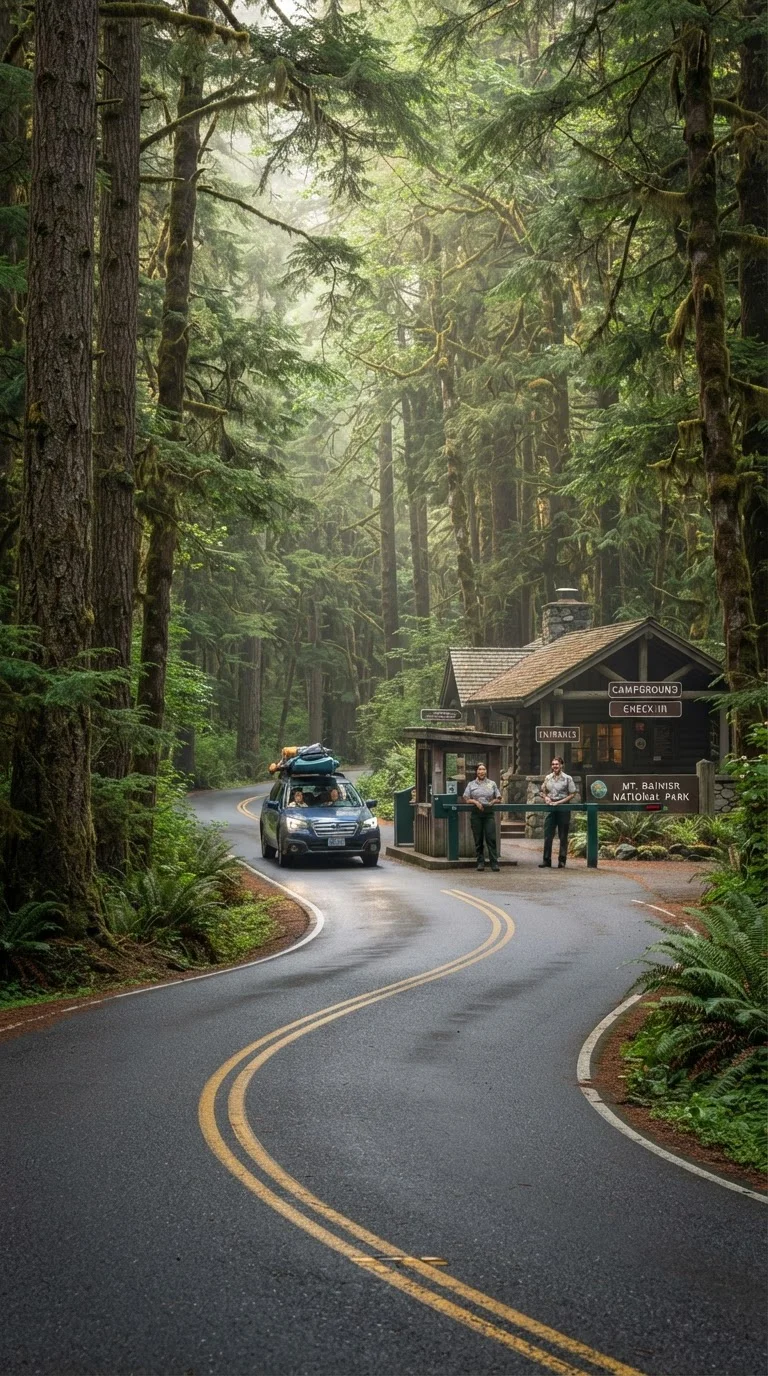
Thailand’s primary camping hubs sit across distinct geographic belts, each requiring different transport arrangements. Central forest sites in Khao Yai lie roughly 180 to 205 kilometres northeast of central Bangkok. Drivers head north along Highway 1 and merge onto Highway 2 (Mittraphap Road) towards Pak Chong, taking about 2.5 hours from Don Mueang International Airport.
Northern highland campsites around Chiang Mai sit between 45 and 160 kilometres from Chiang Mai International Airport. Pitching at Doi Inthanon involves following Highway 108 south to Chom Thong and climbing the winding Route 1009 (roughly 1.5 to 2 hours), while remote northern ridges near Fang or Chiang Dao require up to 3.5 hours of driving.
Coastal and island camping in the Andaman Sea requires flying into Phuket, Krabi, or Hat Yai, transferring by road to a departure pier, and boarding a ferry or speedboat. Pak Bara Pier in Satun connects to Koh Tarutao in 30 to 45 minutes, while Khura Buri Pier in Phang Nga serves the Surin Islands in roughly 60 to 90 minutes; one-way boat fares typically range from 600 to 1,200 THB (£14 to £28).
For mainland trips, hiring a car from Bangkok or Chiang Mai airport provides maximum flexibility, with daily rates starting around 800 to 1,500 THB (£18 to £35). Provincial buses and minivans connect Bangkok to transport hubs like Pak Chong for roughly 180 to 220 THB (£4.10 to £5.00), where local songthaews run to the park checkpoints.
Costs and Booking
Public national park pitches remain standard across Thailand, pegged at 30 THB (£0.70) per adult per night for pitch-only access (10 THB for children), alongside one-off national park entrance fees of 200 THB to 400 THB (£4.70 to £9.35) for foreign adults. Vehicles incur small separate charges at park gates, usually 20 THB for a motorbike and 30 THB for a car. For travellers without their own kit, ranger stations hire out gear individually per night: two-person dome tents cost 150 THB (£3.50), three-person models cost 225 THB (£5.25), and basic bedding—sleeping bags at 30 THB, foam mats at 20 THB, and pillows at 10 THB—adds around 60 THB to 80 THB (£1.40 to £1.90) per person. A complete equipment bundle for a couple rarely exceeds 350 THB (£8.20) per night.
State pitches and park tents can be reserved up to 60 days in advance through the official Department of National Parks (DNP) online portal, with individual stays capped at three consecutive nights. Online reservations require payment within two working days via Thai bank transfer or counter payment, which can prove awkward for overseas cards. In practice, many international campers register as walk-ins directly at the campground ranger checkpoint, settling fees in cash on arrival. Walk-ins are routinely accommodated on weekdays, though booking ahead is advisable for peak holiday weekends in December and January.
Private glamping rates fluctuate dramatically by region and season. In northern clusters like Mon Jam, basic furnished bell tents and dome units run from 1,200 THB to 2,200 THB (£28 to £51) per night. High-end safari suites in Khao Yai and Chiang Mai with air conditioning and en-suite facilities run from 4,500 THB to 10,000 THB (£105 to £235). During the cool peak season (November to February), prices sit at their upper band and often include breakfast or barbecue sets, before dropping by 30 to 50 percent during the monsoon season (June to October). Private retreats list on major commercial booking platforms accepting foreign cards.
| Option | Cost (THB) | Cost (GBP approx) | Notes |
|---|---|---|---|
| National Park Pitch Fee | 30 THB per person/night | £0.70 | Mandatory bring-your-own-tent pitch fee |
| Park Dome Tent Hire | 150–225 THB per night | £3.50–£5.25 | 2-to-3 person basic dome tent |
| Complete Park Bedding Set | 70–100 THB per person/night | £1.65–£2.35 | Includes ground mat, sleeping bag, pillow |
| Private Budget Bell Tent | 1,200–2,200 THB per night | £28–£51 | Found in Mon Jam; includes foam mattress, fan |
| Luxury Glamping Suite | 4,500–10,000 THB per night | £105–£235 | Khao Yai / Chiang Mai; luxury bedding, AC, en-suite |
| Park Entry Fee (Foreign Adult) | 200–400 THB per entry | £4.70–£9.35 | Single-entry government park conservation tax |
Suitability by Traveller Type
Public national park camping is well matched to budget travellers, self-drive tourers, and wildlife watchers who value immediate dawn access to trails and viewpoints before daytime crowds arrive. It requires an easy tolerance for basic shared wash blocks, unheated showers, and simple self-catering or park canteens.
Private glamping retreats cater to couples and families seeking direct proximity to rural scenery without forfeiting hotel-style comforts. These sites bridge the gap by providing proper beds, en-suite bathrooms, mains electricity, and often air conditioning.
Traditional tent camping is ill-suited to light sleepers who require quiet, as park grounds can be lively on weekends, with domestic groups rising before dawn for sunrise treks. Rough, unpaved terrain and a lack of accessible facilities present severe obstacles for travellers with limited mobility, while patchy rural mobile signals make pitches impractical for digital working.
What to Know Before You Book
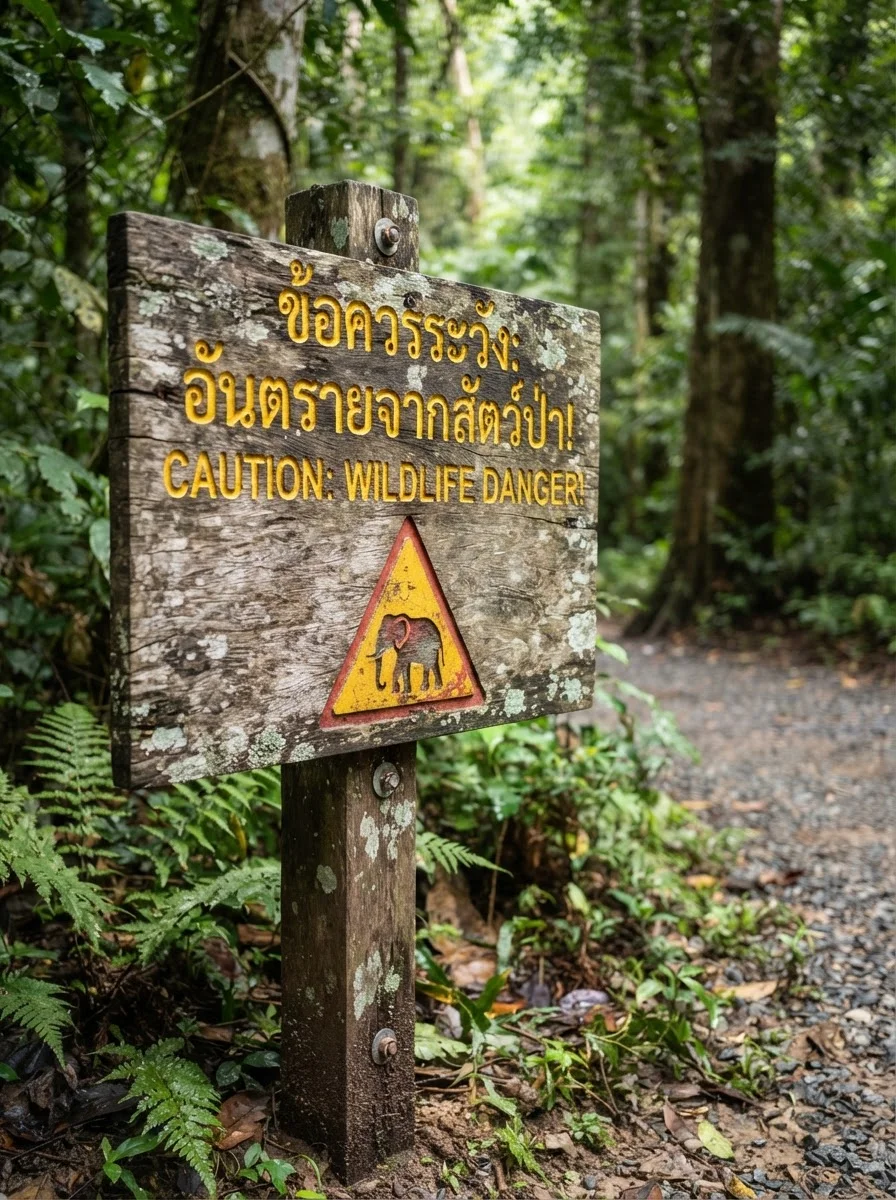
The Department of National Parks, Wildlife and Plant Conservation (DNP) enforces scheduled closures across protected areas to aid ecological recovery and protect visitors during monsoon weather. Dates vary between locations: major Andaman Sea archipelagos, such as Mu Koh Similan and Mu Koh Surin, shut completely from mid-May to mid-October because of rough waters, whereas Gulf of Thailand marine parks typically schedule temporary closures between November and December.
Alcohol is prohibited across public pitches and shared areas in state-run national parks. Park rangers patrol camping grounds, and breaking the rule can lead to on-the-spot fines or immediate eviction from park premises. Private glamping operations set their own rules, but government-managed sites adhere to this prohibition.
Campers must also anticipate local wildlife and rustic infrastructure. At forested reserves like Khao Yai, sambar deer, macaques, and civets regularly investigate tents for food, so campers should store provisions in vehicles or rigid sealed containers rather than lightweight fabric packs. Washroom facilities at public grounds almost universally lack water heaters, relying on unheated mountain or well water. Showers can feel particularly cold after dark, especially at high-elevation northern campsites where temperatures drop sharply overnight.
Practical Tips
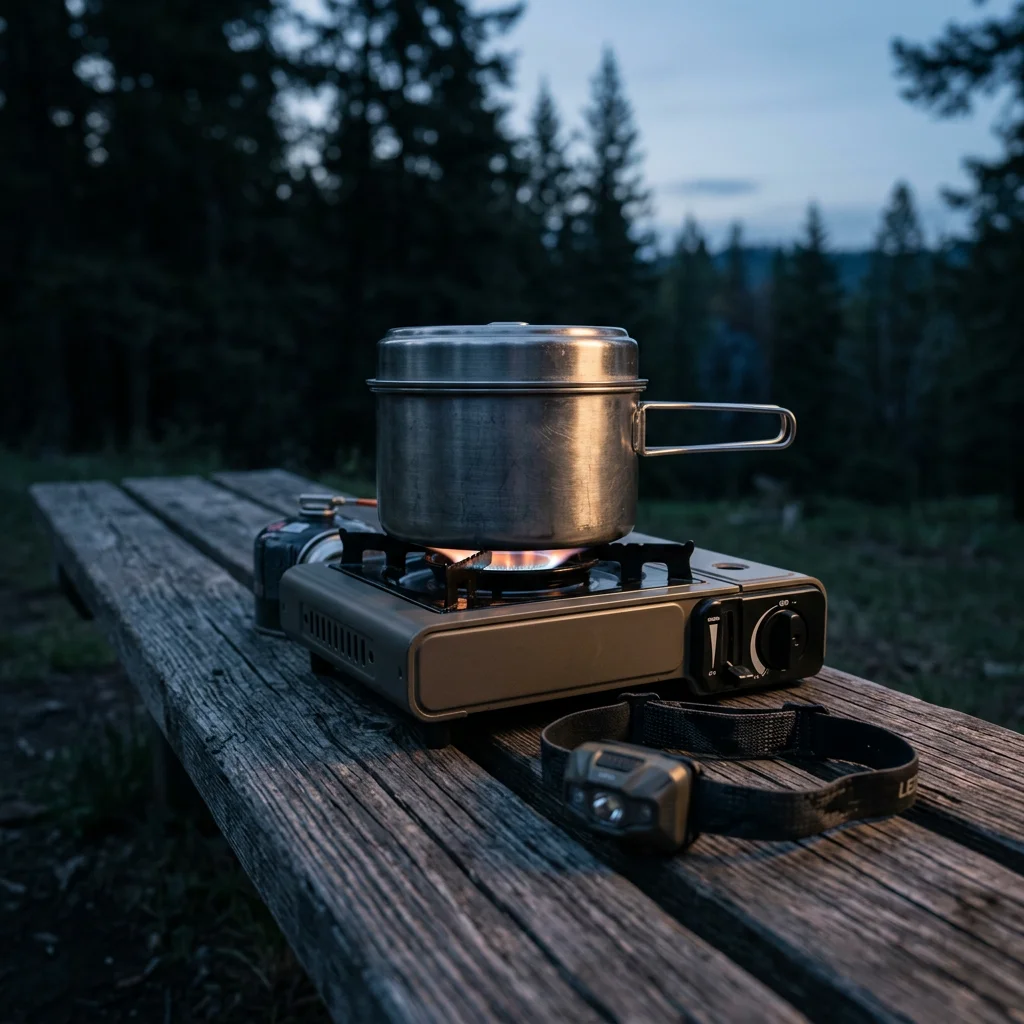
Communal camping zones across Thailand's national parks are typically unlit after nightfall. A dependable headlamp with a red-light setting is practical for navigating between pitches and washrooms, as red illumination preserves your night vision while attracting far fewer flying insects than bright white beams.
Tropical humidity produces dense morning dew, and tents gather heavy condensation overnight. Store clothing, electronics, and passports inside waterproof dry bags or sealable freezer pouches rather than loose in cotton holdalls, preventing damp from seeping into your sleeping gear.
Mobile network coverage varies across rural terrain. While AIS provides the most reliable signal near park boundaries and visitor centres, deep jungle valleys and offshore beaches often drop off completely. Download navigation routes and offline maps before entering remote conservation areas.
Carry sufficient Thai Baht in physical cash. Equipment hire counters, firewood sellers, rural songthaew drivers, and independent food stalls operate almost exclusively on cash, as card processing terminals are absent in remote campgrounds and foreign payment apps are not accepted.
Standard public pitches lack electrical hook-ups, leaving charging options limited to communal sockets in ranger offices or visitor centres. Carrying a robust, high-capacity power bank ensures your phone and camera stay powered without leaving expensive electronics unattended at communal charging points.
Communal washrooms function as open wet rooms with perpetually wet concrete or tiled floors. Packing rubber flip-flops or quick-drying slip-on sandals keeps your feet clean and avoids soaking your primary hiking footwear.
Quick Reference Table
| Item | Detail | Notes |
|---|---|---|
| Standard Park Pitch Fee | 30 THB (£0.70) per adult / 10 THB per child | Per night fee on state-run DNP land if bringing your own tent |
| Park Entry Fee (Foreign Adult) | 200–400 THB (£4.70–£9.35) | One-off government conservation fee payable at park gates |
| Vehicle Entry Charges | 20 THB (motorbike) / 30 THB (car) | Standard gate fee for private vehicles entering national parks |
| Park Tent Hire | 150 THB (£3.50) to 225 THB (£5.25) per night | 150 THB for 2-person dome; 225 THB for 3-person dome |
| Park Bedding Hire | 10–30 THB (£0.23–£0.70) per item | Foam mats 20 THB, sleeping bags 30 THB, blankets 20 THB, pillows 10 THB |
| Private Glamping Rates | 1,200–10,000+ THB (£28–£235+) per night | From basic domes in Mon Jam to air-conditioned luxury safari suites |
| Park Booking Window | Up to 60 days in advance | Capped at 3 consecutive nights; walk-ins accepted on arrival |
| Park Quiet Hours | 22:00–06:00 | Strictly enforced to avoid disturbing local wildlife |
| Alcohol Policy | Prohibited in state national parks | Subject to on-the-spot fines or eviction; private glamping sets own rules |
| Peak Northern Climate | 5°C–10°C overnight | High-elevation northern ridges drop into single digits from Nov to Feb |
| Seasonal Marine Closures | Mid-May to mid-October | Standard closure window for Andaman parks (e.g. Surin, Similan) |
| Website | portal.dnp.go.th | Official Department of National Parks, Wildlife and Plant Conservation portal |
| Book direct | nps.dnp.go.th | Official online booking system for DNP campgrounds and park lodging |
| Phone | +66 2 562 0760 | DNP national park visitor services and reservations line |
FAQ: Camping in Thailand
What are the main types of camping available in Thailand?
What are the typical costs for camping in Thailand's national parks?
What is the cost to rent camping equipment at Thailand's national parks?
What kind of sleeping gear is recommended for different regions in Thailand?
How should campers store food at Khao Yai National Park?
Is alcohol allowed in Thailand's national park campgrounds?
Why is it important to carry cash when camping in Thailand?
How can campers charge their electronic devices at public campsites?
What type of tent is recommended for camping in Thailand?
Are there seasonal closures for national parks in Thailand?
Reviewed by the Thailand Guide Editorial Team • Last reviewed: 18 November 2026
This page is provided for general information only. While we aim for accuracy, details can change — please verify anything important independently before relying on it.