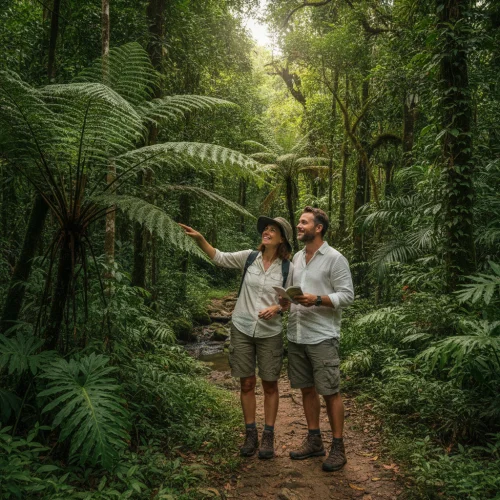
Camping in Khao Yai National Park



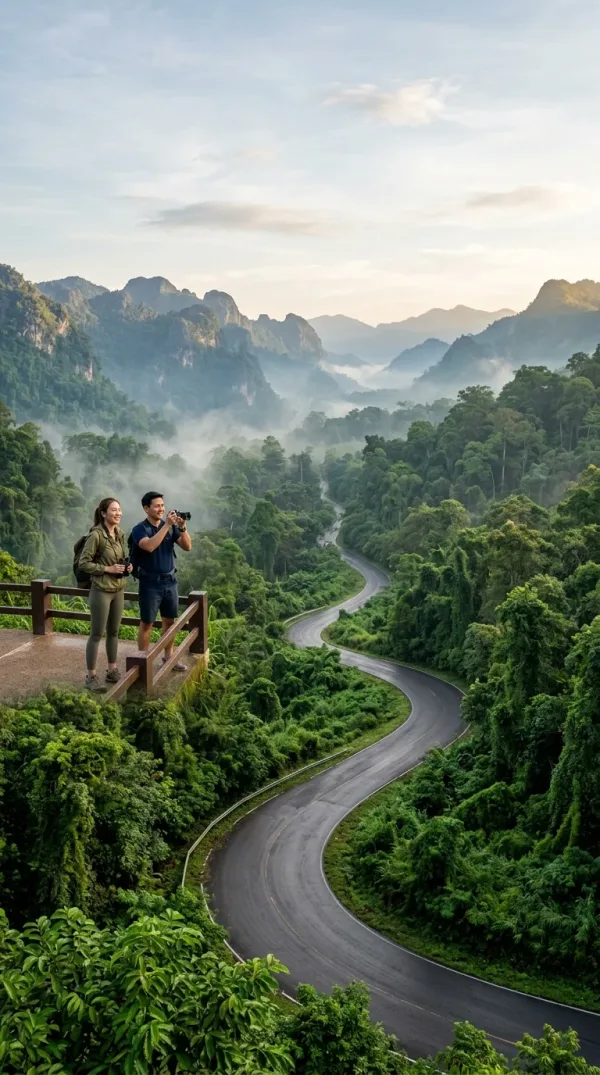
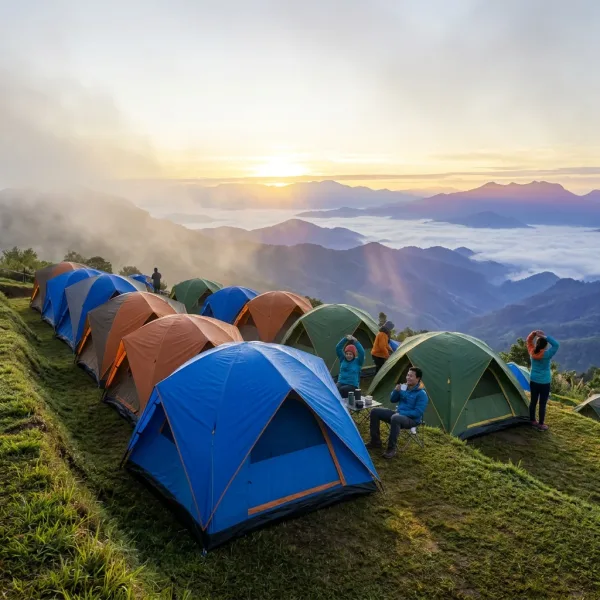
At Lam Ta Khong campground inside Thailand's oldest national park, wild sambar deer frequently graze across the open lawns while morning mist settles over the river. Pitching your own tent on the riverside turf costs 30 THB (around £0.70) per adult per night, placing campers directly beside primary monsoon forest and marked walking routes.
Camping inside Khao Yai National Park provides a straightforward wilderness base managed by Thailand's Department of National Parks, Wildlife and Plant Conservation (DNP). Situated across the Nakhon Ratchasima plateau roughly three hours northeast of Bangkok, the park's primary campsite accommodates up to 580 overnight visitors. Facilities include open grassland pitches, communal toilet and shower blocks, a simple canteen, and on-site equipment hire stations renting tents and bedding. The grounds suit self-sufficient walkers, wildlife photographers, and budget travellers wanting early morning access to forest trails and active animal corridors before day visitors arrive.

Campground Profiles, Facilities, and Wilderness Grounds
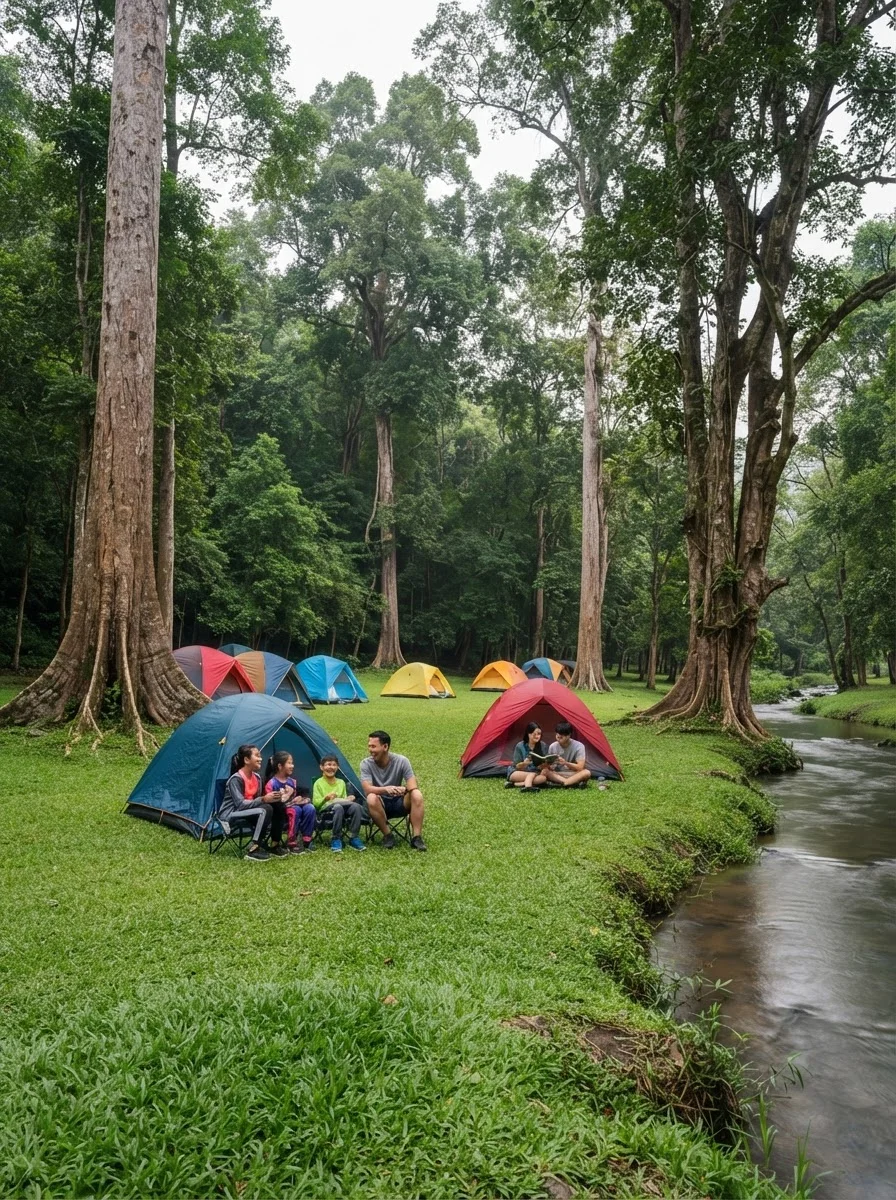
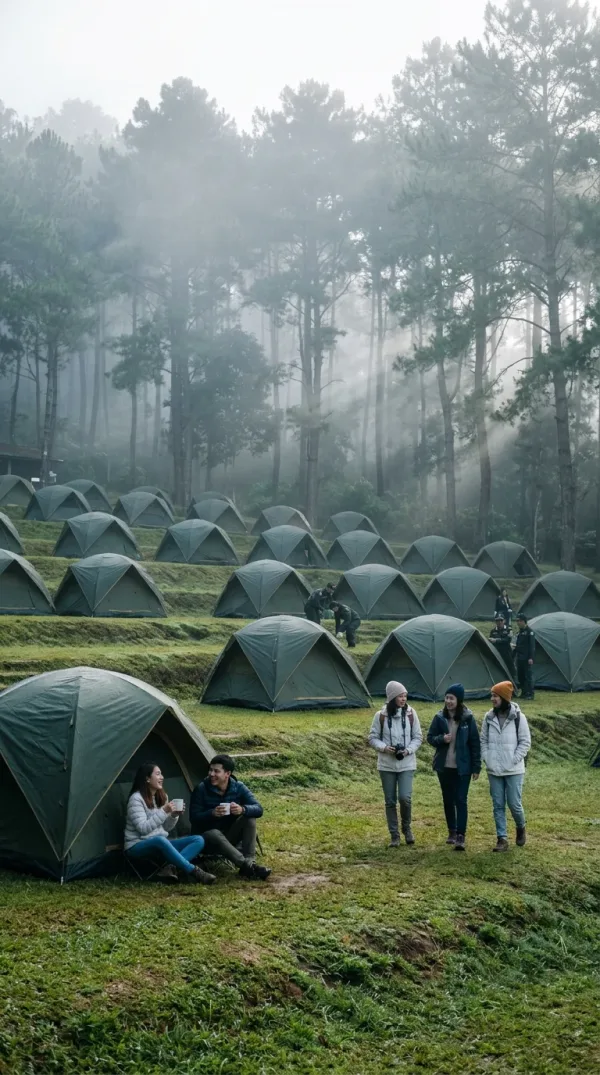
Lam Ta Khong Campground operates as the central year-round camping location in Khao Yai National Park, set across an open riverbank meadow flanked by dense evergreen rainforest. Situated roughly six kilometres east of the main visitor centre along Thanarat Road, the site occupies a flat grassy clearing bordered by the winding Lam Ta Khong stream. Park authorities cap capacity at 580 people to control ecological wear and protect surrounding forest corridors. Pitching is open and unstructured across the central lawn, allowing campers to choose their own ground provided they respect established zoning boundaries. During long Thai public holidays, the park occasionally opens a secondary overflow site at Khao Rom Viewpoint for up to 1,000 visitors, but Lam Ta Khong remains the primary year-round ground.
The campsite combines rustic outdoor sleeping with practical facilities. Separate washblocks for men and women provide flush seated toilets and cold-water showers. Campers should prepare for unheated water, which feels bracing in the cool mornings between November and February when highland temperatures dip towards 10°C. Sinks for washing cookware sit outside the main toilet blocks, and a sheltered communal pavilion provides electrical sockets for charging phones. Between 08:00 and 17:00, a park-run canteen and convenience shop sell cooked Thai dishes alongside drinking water, snacks, charcoal, and instant noodles. Because food stalls close at 17:00, evening meals require advance planning. Night illumination across the grounds is intentionally restrained, keeping light pollution low and preserving clear night skies.
Wildlife encounters remain the defining aspect of an overnight stay at Lam Ta Khong. Wild sambar deer and northern red muntjac forage across the open lawns around dusk and dawn, showing little fear of pitched tents. Oriental small-clawed otters hunt along the riverbanks, while white-handed gibbons and hornbills call from the high canopy across the water. After dark, Malayan porcupines and common palm civets regularly forage near the perimeter tree line. Campers should check their chosen spot for animal tracks before pitching and should store all food items inside secure containers, as macaques and deer readily raid unsecured bags left outside.
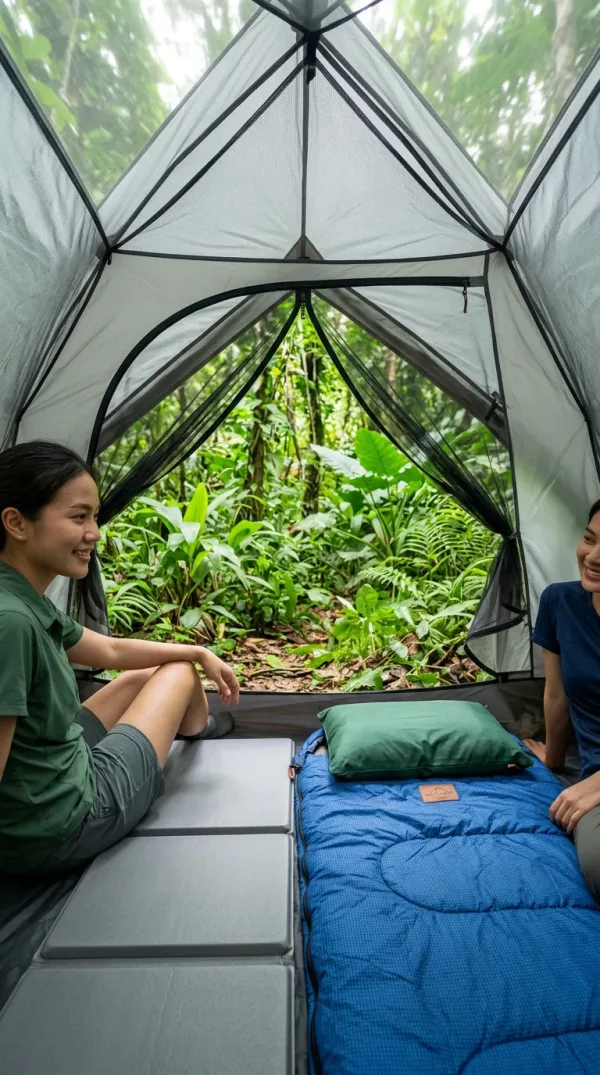
Campers do not need to carry heavy gear from Bangkok, as the campground office maintains a rental store stocked with camping equipment. Gear hire includes two-person and three-person dome tents, synthetic sleeping bags, foam sleeping pads, blankets, and pillows. Staff issue equipment on arrival and inspect items upon return at departure. The rental tents use simple two-pole fibreglass frame designs that assemble easily within minutes. An insulating sleeping pad is advisable year-round to barrier against damp ground. Official park guidelines require campers bringing personal gear to pitch at least 30 metres from the stream to safeguard the riverbank and avoid potential water surges during heavy rain. The park also prohibits pitching directly underneath mature trees to minimise the danger of falling limbs or lightning strikes during storms. Travellers touring with campervans or rooftop tents can access designated parking hardstands beside the grounds for a nightly vehicle fee.
| Item | Fee (THB per night) | Fee (GBP per night) | Details |
|---|---|---|---|
| Personal Tent Pitch Fee (Adult) | 30 THB | £0.70 | Mandatory per-person fee when using personal tent (age 14 and above) |
| Personal Tent Pitch Fee (Child) | 10 THB | £0.23 | Reduced pitch fee for children aged 3 to 13 years |
| Two-Person Rental Dome Tent | 150 THB | £3.50 | National park dome tent, excludes bedding |
| Three-Person Rental Dome Tent | 225 THB | £5.20 | Larger dome tent suitable for two adults with gear |
| Sleeping Bag Rental | 30 THB | £0.70 | Synthetic sleeping bag issued per person |
| Foam Sleeping Mat Rental | 20 THB | £0.45 | Thin insulating ground pad |
| Camping Blanket Rental | 20 THB | £0.45 | Additional fabric blanket |
| Camping Pillow Rental | 10 THB | £0.23 | Basic fabric pillow |
| Motorhome / RV Vehicle Pitch | 300 THB | £7.00 | Dedicated vehicle pitch for recreational campervans |
| Vehicle Roof Tent Pitch | 200 THB | £4.65 | Park fee for vehicles equipped with rooftop tents |
Campers can reserve camping space up to 60 days ahead through the official DNP website for stays up to three consecutive nights, though unreserved pitches can often be secured directly at the campsite office before noon on normal weekdays.
Pha Kluai Mai Campground and Waterfall Trail Access
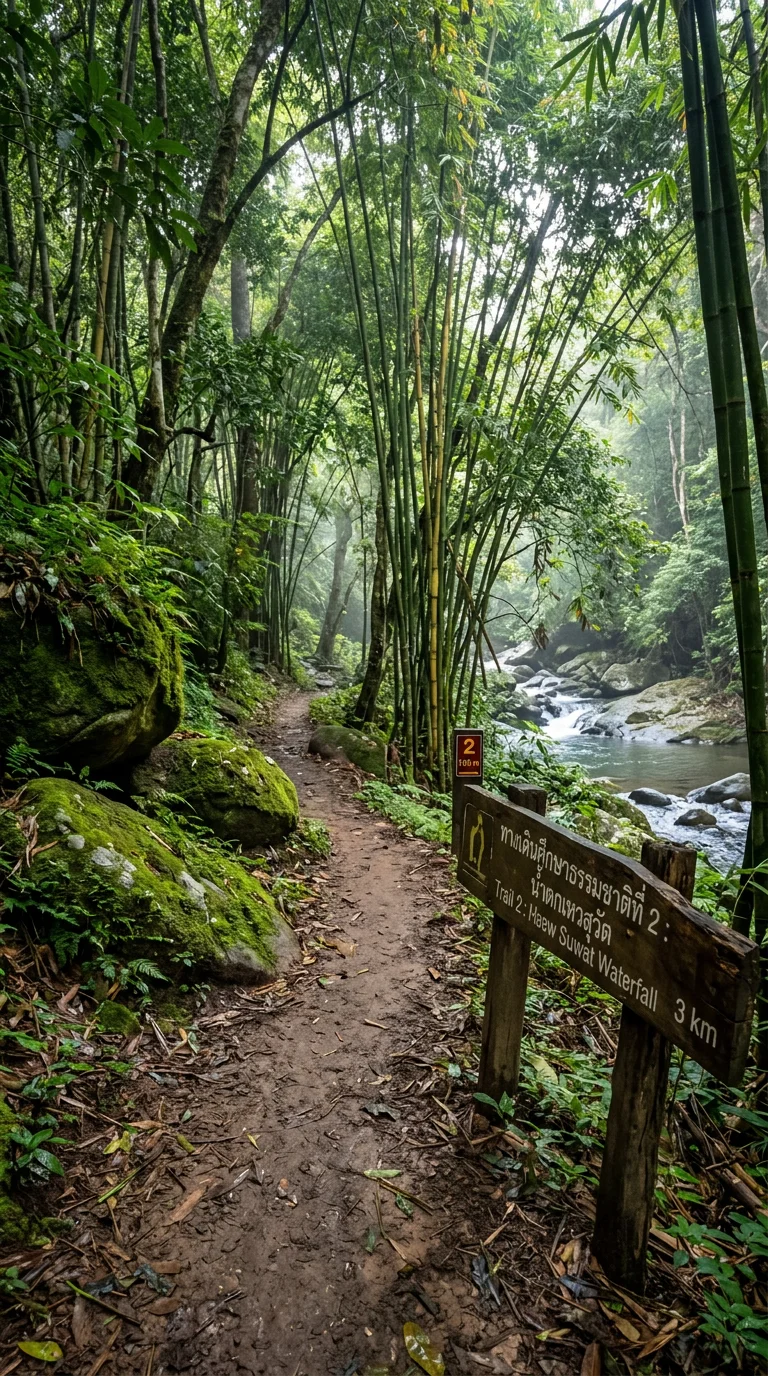
Pha Kluai Mai functions as Khao Yai’s secondary camping area and the direct trailhead for the park's primary river valley route. Positioned three kilometres past Lam Ta Khong along the central park road, roughly seven kilometres from the main visitor centre, the site sits under a dense forest canopy that provides extensive shade. The ground operates on a conditional and overflow basis, closing periodically for habitat recovery and wildlife management, and opening for overnight campers chiefly during peak cool-season weekends when Lam Ta Khong reaches capacity. Its principal attraction is immediate access to Nature Trail 2, known formally as the 160th Anniversary Thai-German Friendship Trail. This three-kilometre route follows the Lam Ta Khong stream through bamboo groves and dry evergreen forest, passing Pha Kluai Mai Waterfall before finishing at the twenty-metre cascade of Haew Suwat Waterfall. The walk takes roughly two hours to complete. Hikers along the river corridor regularly spot Chinese water dragons basking on sunlit rocks, great hornbills feeding in fig canopies, and troops of northern pig-tailed macaques. Near the cascades, wild red dendrobium orchids grow directly on the cliff faces, blooming between March and April. While Siamese crocodiles once occupied this stretch of the river, no sightings have occurred in recent years; however, the surrounding forest corridor remains an active passage for wild Asian elephants and Asian black bears. Setting off early in the morning allows campers to finish the walk before daytime tour groups arrive from Bangkok.
Sleeping inside Khao Yai places campers within an unfenced UNESCO World Heritage reserve where close wildlife interactions are ordinary rather than exceptional. Large sambar deer roam freely across the tent clearings, heavily accustomed to people and inclined to nose into tent awnings if they smell provisions. Northern pig-tailed macaques present an even sharper operational hazard: these primates readily open external zips and will tear lightweight tent fabric to extract snacks or fruit. To prevent raids and protect animal health, park rangers require all foodstuffs, cooking stoves, and scented toiletries to be locked inside vehicle boots or stored in hard, latching coolers rather than kept inside sleeping quarters. Under Section 20 of the National Park Act B.E. 2562 (2019), feeding any wild animal inside a national park is illegal and carries a fine of up to 100,000 THB. After nightfall, Malayan porcupines and common palm civets patrol the outer fringes of the clearing, their eyes catching the reflection of headlamp beams. Wild Asian elephants also use the paved roads and forest margins near the site. If an elephant enters or nears the camp boundary, remain calm, maintain a distance of at least thirty metres, obey ranger instructions, and refrain from using flash photography or pointing bright torches at the animal.
Complete guide to visiting Khao Yai National Park from Bangkok, covering wildlife watching, entry fees, hiking trails, night safaris, and accommodation.
National Park Campgrounds Versus Pak Chong Commercial Resorts
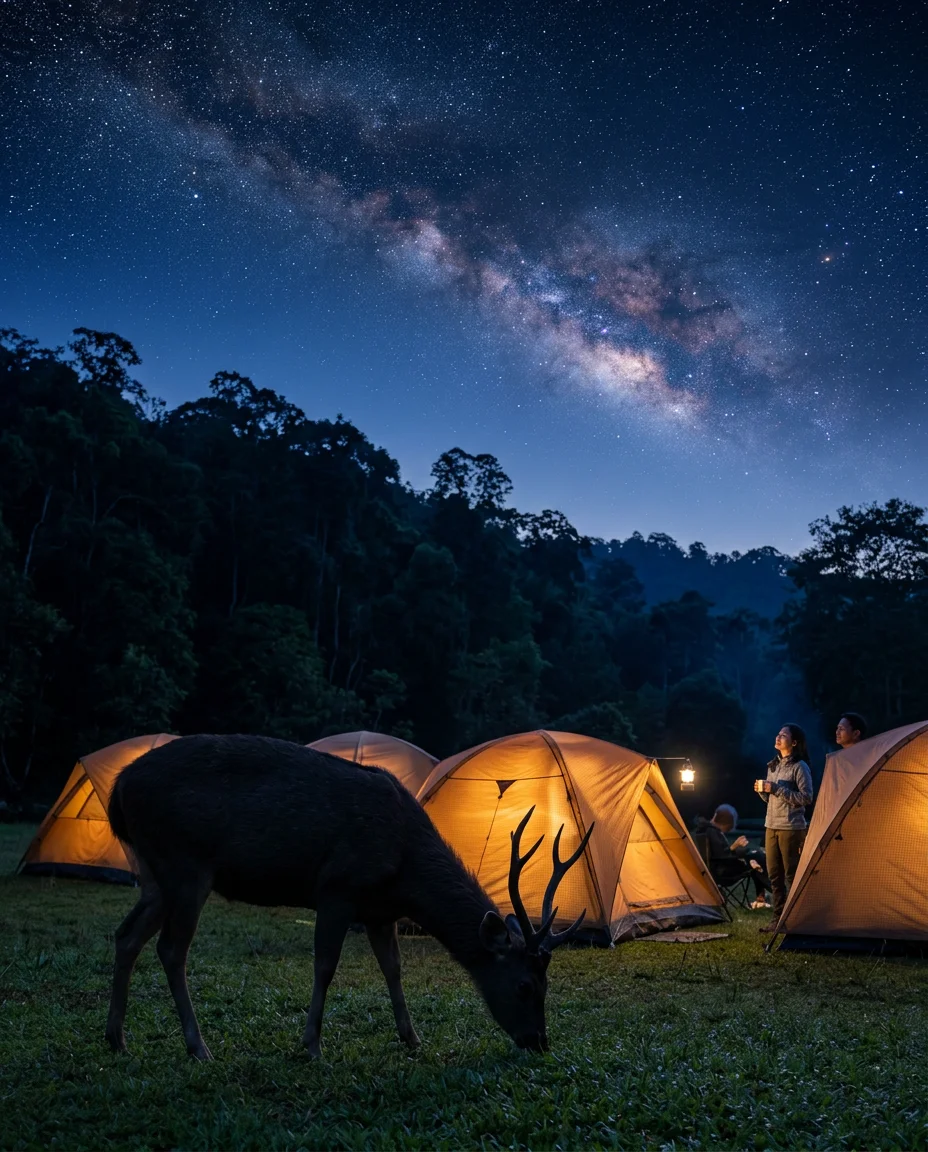
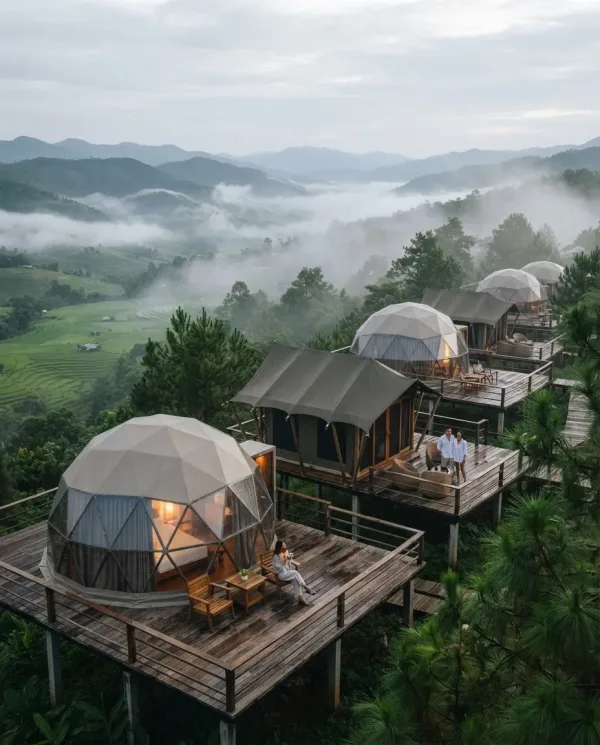
Choosing between national park pitches and commercial accommodation outside the boundaries involves balancing wilderness immersion against personal comfort. The northern approach along Highway 2090 (Thanarat Road) in Pak Chong features hotels, private glamping domes, and boutique resorts. These properties provide air conditioning, private hot-water bathrooms, swimming pools, and full-service dining. By contrast, camping inside the national park strips away commercial luxuries. Campers use shared ablution blocks with unheated cold showers, find no Wi-Fi across the camping lawns, and dine at basic canteens that close by early evening. Night-time temperatures on the plateau regularly drop to between 10°C and 15°C from November to February, making warm sleeping gear a necessity in a tent.
The practical trade-off becomes clearest in daily logistics. The northern checkpoint at Chao Por Khao Yai operates strictly between 06:00 and 18:00. Staying outside requires driving 30 to 45 minutes each way along Thanarat Road and through the gate before reaching the central trailheads and visitor centre. Day visitors must clear the checkpoints by 18:00 and purchase single-day entry tickets for each visit. In contrast, overnight campers receive ticket validity covering up to three consecutive days with their camping reservation receipts, saving repeated admission fees.
Staying inside the park also eliminates morning entrance queues and places travellers directly in prime wildlife habitat. Campers wake at dawn to gibbon territorial calls, watch sambar deer graze across the open grounds, and can begin walking the trails at first light when animal activity peaks. Those wanting private evening drinks and resort comforts will prefer staying along Thanarat Road, as the national park enforces an alcohol ban. For travellers focused on wildlife observation and early trail access, the rustic conditions at the park campgrounds represent a sensible compromise.
Location and Getting There
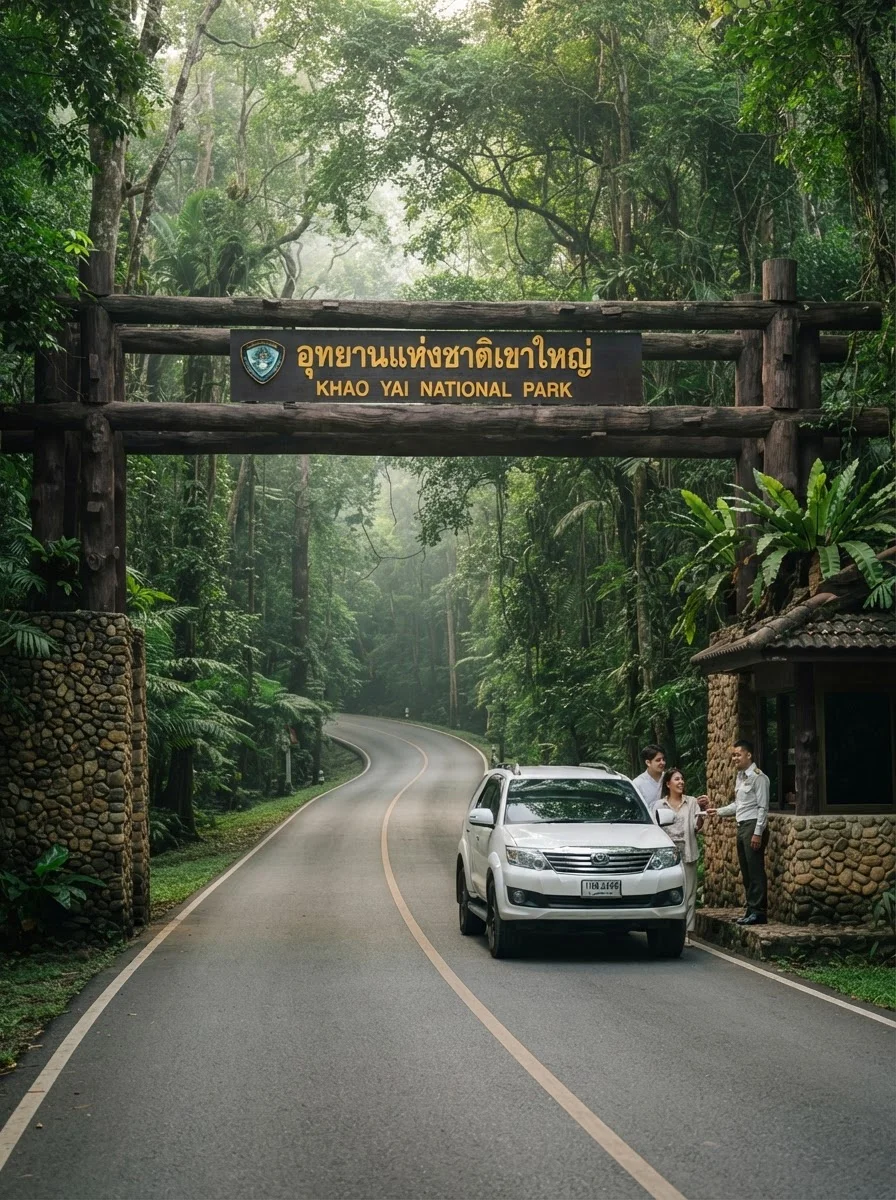
Khao Yai National Park covers over 2,000 square kilometres across Nakhon Ratchasima, Saraburi, Nakhon Nayok, and Prachinburi provinces. The central plateau, where Lam Ta Khong campground and the park headquarters sit, lies approximately 180 kilometres northeast of Bangkok. Driving from central Bangkok or either airport (Don Mueang or Suvarnabhumi) takes between two and a half and three hours. The standard route heads north along Highway 1 (Phahonyothin Road), joins Highway 2 (Mittraphap Road) at Saraburi, and turns south onto Route 2090 (Thanarat Road) at Pak Chong towards the park's northern Chao Por checkpoint. A southern entrance, Noen Hom Gate in Prachinburi via Route 3077, also accesses the plateau, though northern access is far more direct for campers.
Private car transfers from Bangkok typically cost between 2,050 and 2,500 THB (£48.00 to £58.00) one way. For public transport, State Railway of Thailand trains depart Krung Thep Aphiwat Central Terminal for Pak Chong Station, taking around three hours with fares ranging from 50 to 300 THB (£1.20 to £7.00) across third- and second-class carriages.
From Pak Chong town, local blue songthaews run to the Chao Por checkpoint for around 40 THB (£0.95), but public transit stops at the gate. No internal shuttle buses or ride-hailing services operate inside the park. Campers without a private car must rent a scooter in Pak Chong from roughly 300 THB (£7.00) per day, arrange private onward transport, or hitch a lift with Thai campers for the remaining 14 kilometres to the visitor centre.
Costs and Booking
Camping inside Khao Yai National Park requires paying two distinct charges: standard national park entry at the boundary checkpoint and nightly accommodation fees inside the grounds. At the Chao Por Khao Yai (Pak Chong) and Noen Hom entrance gates, admission for foreign adults is 400 THB (approx. £9.30), while foreign children aged three to fourteen pay 200 THB (approx. £4.65). Children under three enter free of charge. Private vehicles incur a separate fee of 30 THB (approx. £0.70) for cars or 20 THB (approx. £0.45) for motorbikes. Park admission tickets are formally valid for entry on a single day. However, campers remaining continuously within the park boundary do not pay entry fees again for subsequent nights; leaving and re-entering through the gates may require purchasing fresh admission.
Campsite pitches can be booked up to sixty days in advance through the Department of National Parks online system or its official mobile application, with stays capped at three consecutive nights. Lam Ta Khong Campground enforces a capacity limit of 580 campers per day. Unreserved walk-ins are accepted when space permits, though arriving at the campsite office before midday is sensible on weekends and public holidays. Camping gear cannot be reserved beforehand. Tents, sleeping mats, and pillows are hired directly at the campground service counter on arrival and paid in cash. Night spotlight safaris run by park rangers cost 600 THB (approx. £14.00) per truck for up to eight passengers, covering a ten-kilometre circuit; book these in person at the visitor centre before 18:00.
| Option | Cost (THB) | Cost (GBP approx) | Notes |
|---|---|---|---|
| Foreign Adult Park Entry | 400 THB per person | £9.30 | Paid at gate; covers stay while remaining inside park |
| Foreign Child Park Entry | 200 THB per person | £4.65 | Ages 3 to 14 (under-3s free); paid at gate |
| Car Entry Fee | 30 THB per vehicle | £0.70 | Standard motor vehicle admission charge |
| Pitch Fee (Own Tent) | 30 THB per adult per night | £0.70 | Official nightly pitch fee across DNP campgrounds |
| Three-Person Tent Rental | 225 THB per tent per night | £5.20 | Hired on arrival at campground equipment counter |
| Full Bedding Set Rental | 60 THB per person per night | £1.40 | Sleeping bag (30 THB), mat (20 THB), pillow (10 THB) |
| Ranger-Led Night Safari | 600 THB per truck | £14.00 | 1-hour ranger drive for up to 8 passengers |
Who It Suits
Camping in Khao Yai National Park suits active couples, solo backpackers, wildlife enthusiasts, and budget-conscious travellers who value direct immersion in nature over creature comforts. Waking inside the park provides a valuable head start on popular walking trails and wildlife viewing before daytime tour groups arrive. However, the experience is ill-suited to anyone seeking hotel-style amenities like air conditioning, room service, or heated en-suite bathrooms. Travellers hoping for evening drinks or lively social gatherings should also look elsewhere, as Thai national park regulations prohibit alcohol and mandate quiet hours from 22:00.
What to know before you book
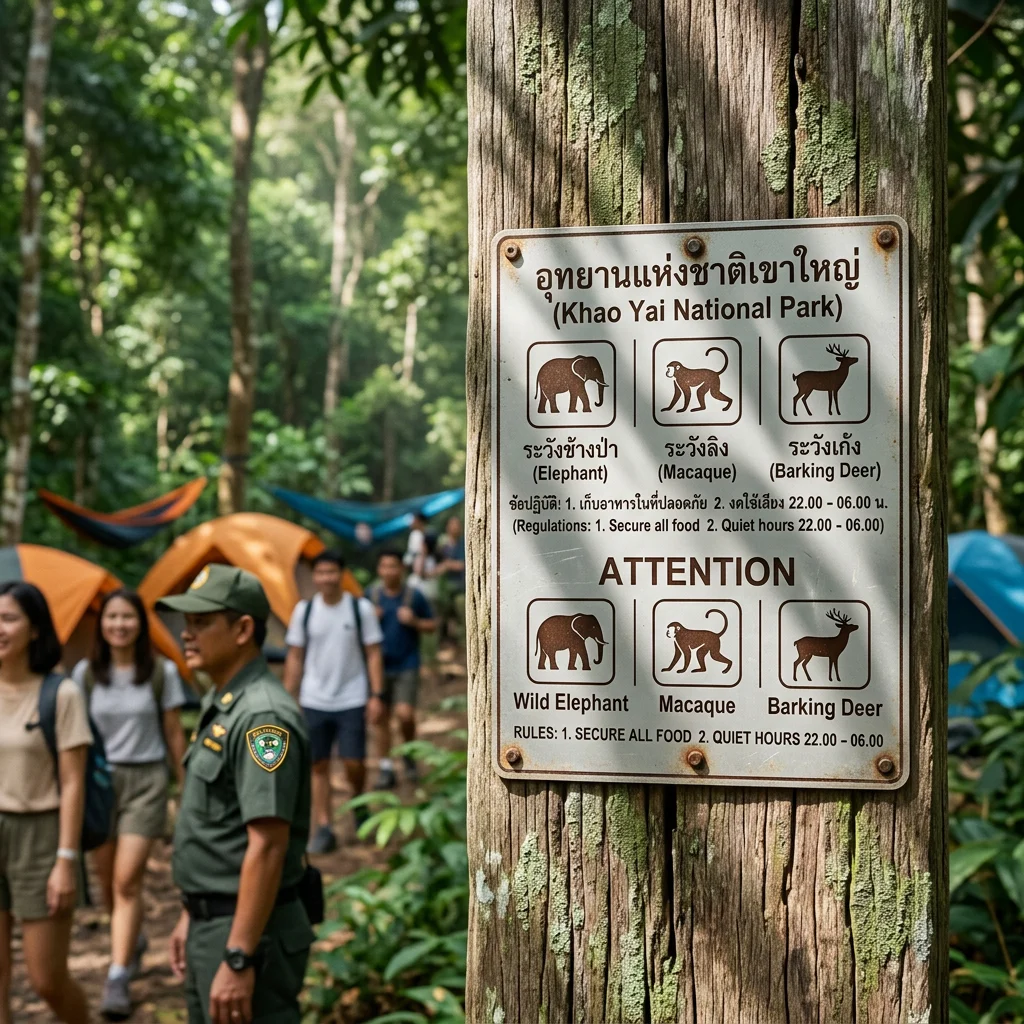
The ban on alcohol possession and consumption is strictly observed across the park. Visitors found breaking the rule face immediate removal from the park and legal penalties under Department of National Parks regulations.
Wildlife safety requires strict discipline around food. Sambar deer, wild boars, and macaques regularly forage across the campsites and will tear through fabric tents to reach snacks. All provisions and scented toiletries must be kept locked inside a hard-sided vehicle rather than in your sleeping quarters.
Facilities are utilitarian. Washblocks provide communal, unheated showers fed by local water supplies. In the cool season from November to February, night temperatures on the plateau can fall towards 10°C, making an unheated wash exceptionally bracing.
Arrival timing is rigid. Checkpoint gates at Pak Chong in the north and Noen Hom in the south close promptly at 18:00 every day. Anyone driving from Bangkok should plan their departure with ample margin for highway delays, as vehicles arriving after 18:00 are turned away until 06:00 the following morning.
Practical Tips
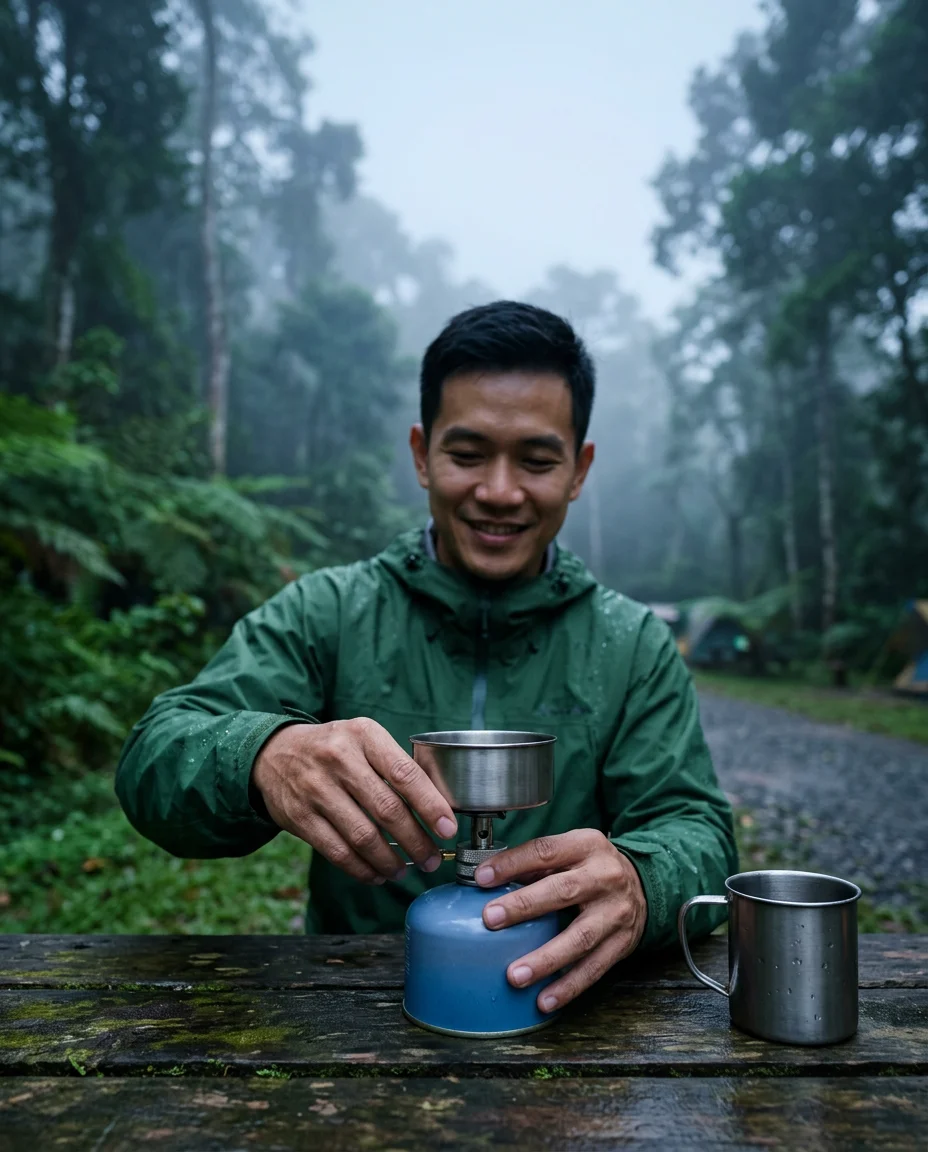
Campers relying on park rental gear should aim to arrive at the campsite by midday. Equipment cannot be reserved in advance, and tents, sleeping mats, and sleeping bags frequently run out on cool-season weekends. Even in tropical Thailand, nights on the Nakhon Ratchasima plateau turn surprisingly brisk between November and February, when evening temperatures routinely drop towards 10°C to 14°C. Packing a fleece jacket, thermal base layers, and thick wool socks ensures you stay warm inside the park's standard synthetic bedding.
Electrical sockets in the campground are confined to communal pavilions, where competition for charging ports is fierce. Bringing a high-capacity portable power bank allows you to keep mobile phones, cameras, and navigation devices running without queuing. Lighting across the grounds is deliberately kept faint to minimise disruption to resident wildlife and maintain night skies. Pack a reliable headtorch with an independent red-light beam; red light provides enough illumination to navigate unpaved paths and visit washblocks after dark without dazzling grazing deer or startling foraging animals.
Although simple canteens operate at the main camping areas, they frequently stop serving around 17:00 on weekdays, leaving little to eat inside the park after dusk. Stocking up on drinking water, dry provisions, and snacks at convenience stores along Thanarat Road before passing through the northern entrance checkpoint prevents arriving without an evening meal. If you intend to walk forest trails during the rainy months between May and October, purchase a pair of canvas leech socks at the visitor centre shops. Pulling these tightly woven covers over your trousers and boots stops ground leeches from penetrating your footwear along damp riverside paths.
Ranger-led night safaris run nightly at 19:00 and 20:00, taking visitors on a ten-kilometre spotlighting drive to look for porcupines, civets, and wild elephants. You can reserve an eight-seat park pickup truck for 600 THB (approximately £14) at the visitor centre service desk before 18:00 on the day. Once back at camp, keep tent porches and awnings completely clear of waste. Sambar deer and pig-tailed macaques readily scavenge bags and ingest discarded plastics. Dispose of all rubbish in the animal-proof metal bins located beside the washblocks before turning in for the night.
Quick Reference Table
| Item | Detail | Notes |
|---|---|---|
| Foreign Adult Park Entry | 400 THB (approx. £9.30) | Paid at entrance checkpoint; valid continuously while remaining inside the park |
| Foreign Child Park Entry | 200 THB (approx. £4.65) | Applies to children aged 3 to 14; children under 3 enter free |
| Vehicle Entry Fee | 30 THB (car) / 20 THB (motorbike) | Approx. £0.70 per car or £0.45 per motorbike |
| Pitch Fee (Own Tent) | 30 THB (approx. £0.70) per adult per night | Children aged 3 to 13 pay 10 THB (approx. £0.23) per night |
| Two-Person Rental Dome Tent | 150 THB (approx. £3.50) per night | Standard park dome tent; excludes bedding |
| Three-Person Rental Dome Tent | 225 THB (approx. £5.20) per night | Hired on arrival at campground service desk; excludes bedding |
| Full Bedding Set Hire | 60 THB (approx. £1.40) per person per night | Includes sleeping bag (30 THB), foam mat (20 THB), and pillow (10 THB) |
| Campervan / Motorhome Pitch | 300 THB (approx. £7.00) per night | Dedicated hardstand pitch for recreational vehicles |
| Vehicle Roof Tent Pitch | 200 THB (approx. £4.65) per night | Park fee for vehicles equipped with rooftop tents |
| Ranger-Led Night Safari | 600 THB (approx. £14.00) per truck | 1-hour spotlight drive covering 10 km for up to 8 passengers; book before 18:00 |
| Lam Ta Khong Capacity | 580 campers per night | Primary year-round campground; unreserved walk-ins accepted before midday |
| Booking Window & Stay Limit | Up to 60 days in advance | Booked via DNP system; capped at a maximum of 3 consecutive nights |
| Checkpoint Gate Hours | 06:00 to 18:00 daily | Chao Por Khao Yai (north) and Noen Hom (south); gates close strictly at 18:00 |
| Park Regulations | No alcohol; quiet hours from 22:00 | Alcohol ban strictly enforced; feeding wildlife carries fines up to 100,000 THB |
| Website | https://www.khaoyainationalpark.com | Official Khao Yai National Park website |
| Book direct | https://nps.dnp.go.th | Official DNP online campsite and national park accommodation booking portal |
| Phone | +66 86 092 6527 / +66 86 092 6529 | National park visitor centre and campground enquiries |
FAQ: Camping in Khao Yai National Park
How much does it cost to pitch a tent at Khao Yai National Park?
What facilities are available at Lam Ta Khong campground in Khao Yai National Park?
What are the rules for storing food and toiletries at Khao Yai National Park campgrounds?
Can campers rent equipment at Khao Yai National Park?
How can visitors book a campsite at Khao Yai National Park?
Is alcohol allowed in Khao Yai National Park campgrounds?
What are the operating hours for the entrance gates at Khao Yai National Park?
What clothing should campers pack for cold nights in Khao Yai National Park?
How can campers charge their electronic devices at Khao Yai National Park?
How should campers dispose of waste at Khao Yai National Park?
Reviewed by the Thailand Guide Editorial Team • Last reviewed: 18 November 2026
This page is provided for general information only. While we aim for accuracy, details can change — please verify anything important independently before relying on it.