Camping in Doi Inthanon National Park



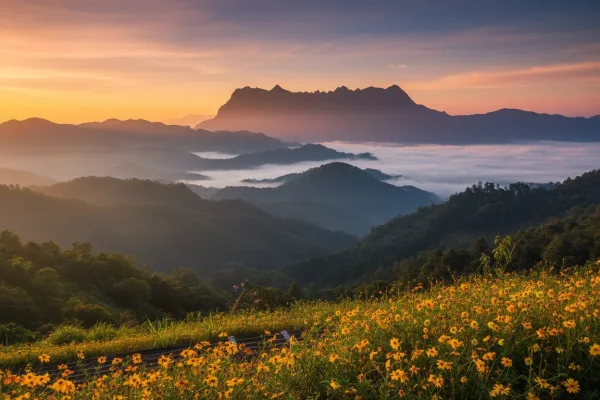
Perched at elevations exceeding 1,300 metres in Chiang Mai Province, camping in Doi Inthanon National Park provides travellers with overnight access to northern Thailand's highest mountain range. Pitches sit in Chom Thong District, roughly 85 to 90 kilometres southwest of Chiang Mai city centre. Staying inside the park allows visitors to reach high-altitude viewpoints and trailheads at dawn without making the winding two-hour drive up from the lowlands in the dark.
Managed by the Department of National Parks, Wildlife and Plant Conservation (DNP), the designated campgrounds operate as simple, state-run sites. Facilities focus on open ground for tents, communal washrooms, and basic hire equipment rather than resort comforts. Because the main camping areas sit in pine clearings near the park headquarters, temperatures drop sharply between November and February, frequently falling into single digits and occasionally nearing freezing overnight. This straightforward mountain setup appeals primarily to self-sufficient hikers, birdwatchers, and landscape photographers who want immediate access to Kew Mae Pan and the summit cloud forests in the crisp morning air.

Dong Son Campsite and High-Elevation Pitch Layout
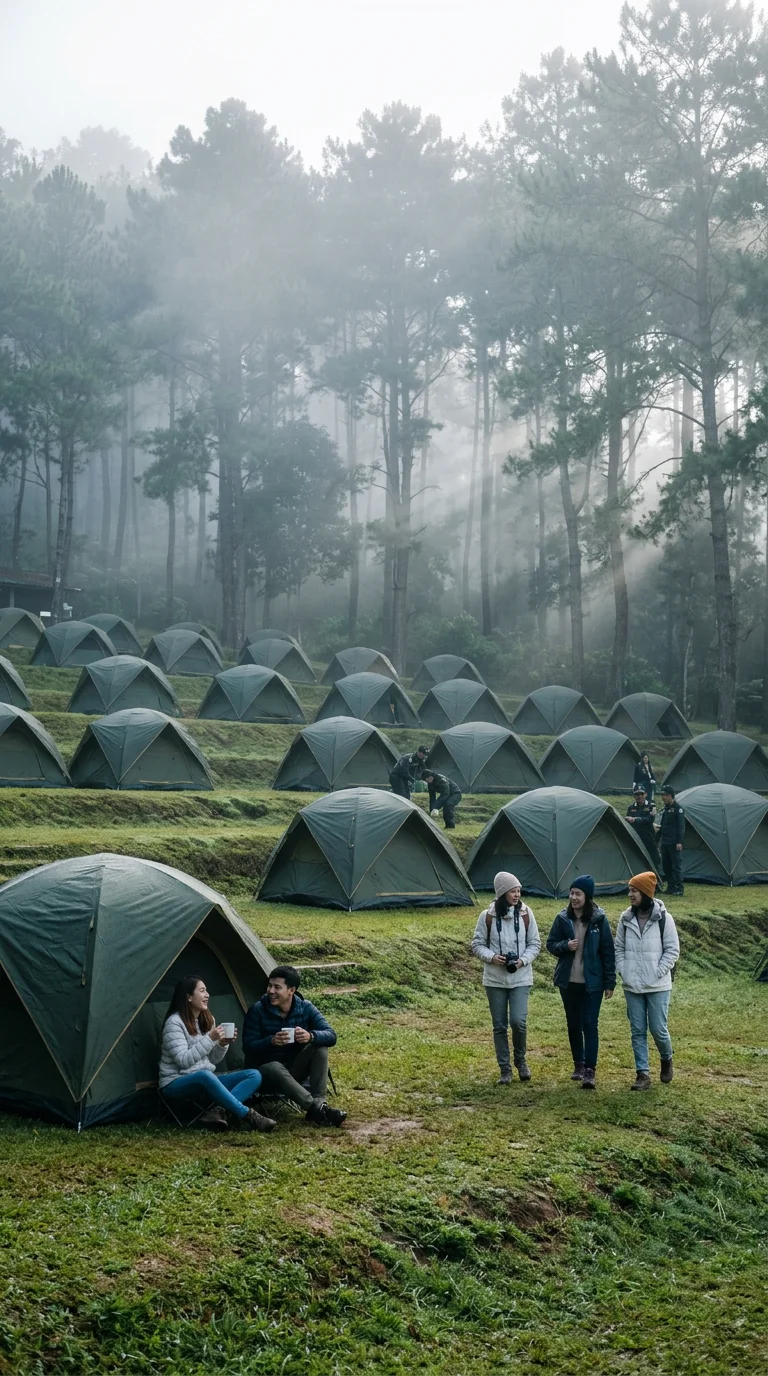
Dong Son campsite, situated near kilometre marker 31 just off Highway 1009 and roughly 400 metres north of the national park headquarters, is the primary overnight camping ground on Doi Inthanon. Positioned at approximately 1,350 metres above sea level, the grounds occupy terraced forest clearings shaded by mature native pines and hill-evergreen trees. Campers can pitch personal tents on designated grassy plots or occupy pre-pitched dome tents provided by park staff. Higher terraces drain more effectively during occasional damp spells, while lower pitches sit closer to the car park and vehicle unloading bays. The tall pine canopy shields tents from strong winds blowing across the mountain ridges, though dense tree cover keeps the ground in shade until mid-morning. Open ground campfires are prohibited across individual pitches, with fires restricted to designated communal areas. During peak cool-season weekends in December and January, the site fills up quickly as domestic travellers arrive for the cold mountain weather.
Pitching a tent at Dong Son gives visitors an eleven-kilometre head start over day travellers travelling from Chiang Mai. A steady twenty-minute morning drive up Highway 1009 reaches the higher viewpoints and trailheads well ahead of daytime tour minivans.
The Kew Mae Pan Nature Trail begins at kilometre marker 42, giving campers direct access to one of northern Thailand’s most distinctive high-elevation walks. Covering a 2.8-kilometre circular route, the footpath leads through moss-draped montane cloud forest, across sub-alpine grassy slopes, and along an exposed mountain ridge rising past 2,100 metres above sea level. Completing the loop generally takes between two and three hours at a steady pace, following wooden boardwalks, stone steps, and compacted dirt paths. Because the trail requires an accompanying local Hmong guide and operates only during the dry season between 1 November and 31 May, queues form at the registration desk after 07:30. Campers leaving Dong Son by 05:45 reach the roadside car park in time to watch the sunrise above the morning cloud inversion before setting off on the trail.
Winter mornings at this elevation are genuinely cold, with temperatures regularly dropping between 3°C and 6°C and ground frost occasionally coating the wooden walkways. Walking the ridge section in early light improves chances of spotting the rare Chinese goral grazing on steep granite crags. Further up Highway 1009, approximately six kilometres beyond Kew Mae Pan, the Ang Ka Nature Trail circles through peat bogs and dwarf cloud forest right beside the 2,565-metre summit, making it straightforward to combine both walks before midday.
Equipment Rental, Pitch Logistics, and Park Facilities
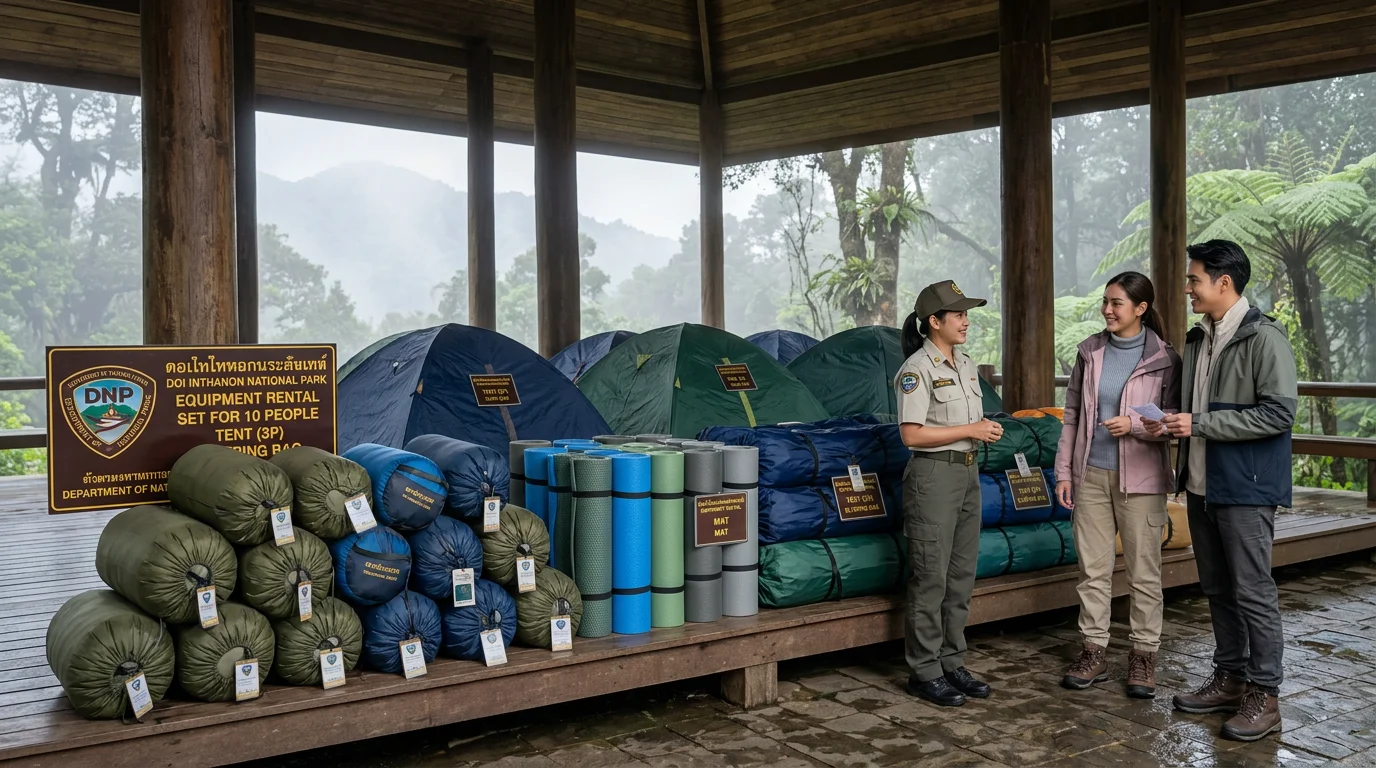
The Department of National Parks operates an equipment hire desk at the kilometre 31 headquarters to equip campers travelling without gear. Visitors can rent three-person dome tents alongside individual sleeping bags, thin foam floor mats, and pillows for nominal nightly fees. Pitch setups are either allocated in pre-pitched rows during the busy cool season or collected at the desk for self-assembly on designated terraced grounds. Campers who hire gear must return equipment directly to the headquarters desk by 12:00 on the day of departure.
Communal sanitary blocks include standard flush toilets and cold-water washbasins. Select shower cubicles near the administrative buildings feature basic electric wall heaters that take the chill off the water, though supply temperatures fluctuate during busy periods. Power sockets are strictly confined to communal pavilions and central office blocks rather than individual tent pitches, so carrying a charged power bank helps keep phones, cameras, and headtorches powered in cold evening conditions.
While no grocery stores operate within the campsite boundary, daytime food stalls sit just outside the park headquarters gates. These stalls typically run from 07:00 until 17:00, selling hot noodle soups, steamed rice dishes, and local Arabica coffee. For evening supplies, travellers must stock up beforehand in Chom Thong or visit the roadside Hmong produce market at kilometre 32 before dusk. To understand nationwide checkout rules and conservation land policies, consult our guide to National Park Camping.
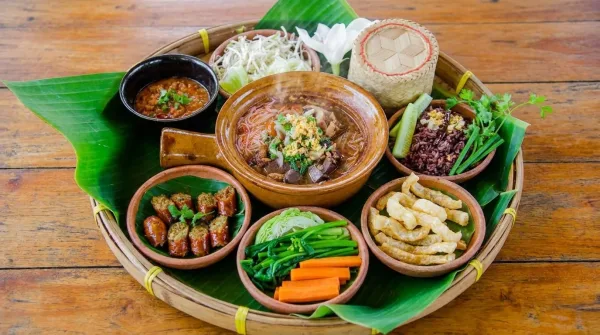
Discover the real cultural rules of Chiang Mai, from ancient Lanna spirit worship to sharing a communal khantoke meal and navigating local temple etiquette.
Comparing Park Campground Stays with Mae Klang Luang Glamping
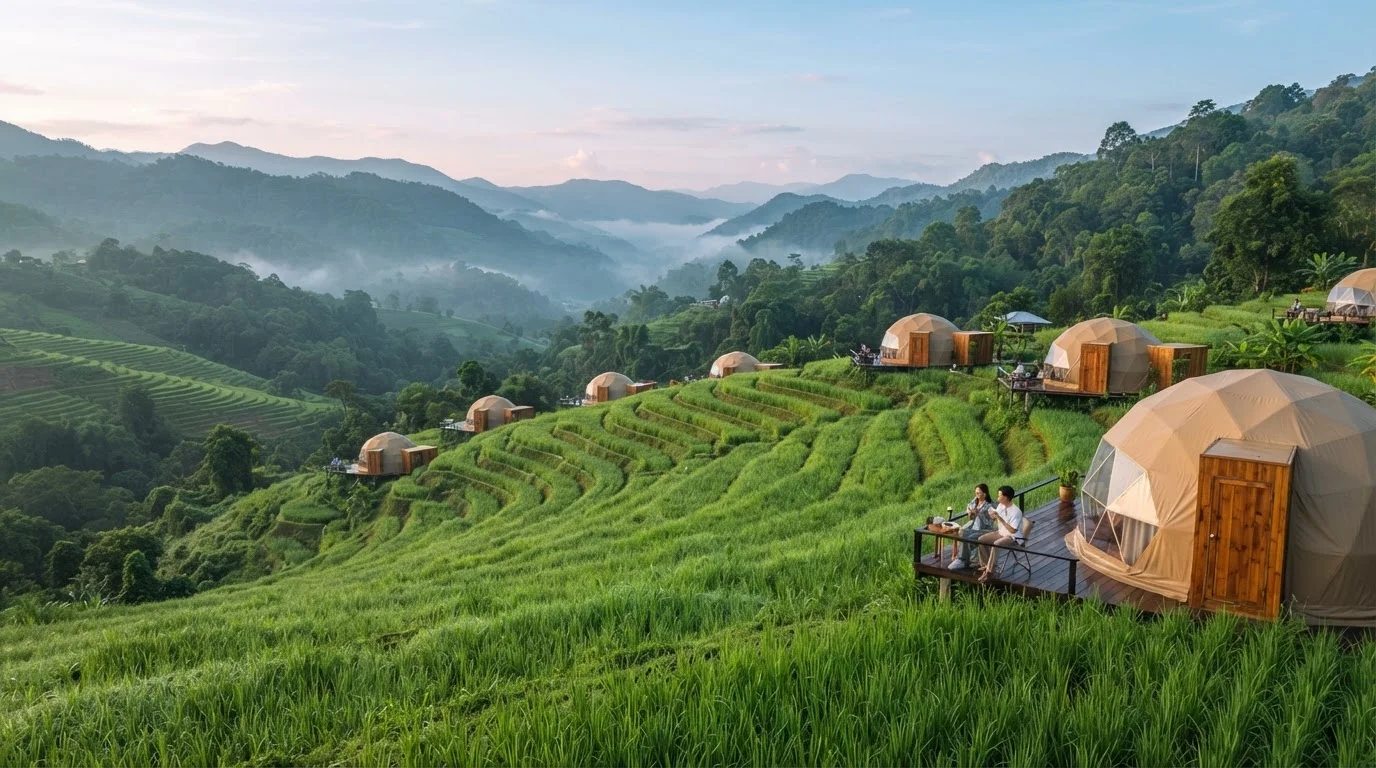
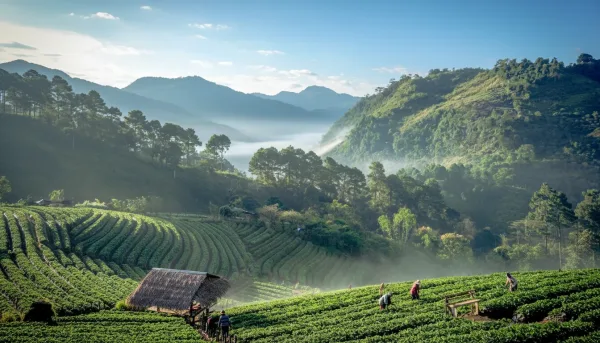
Choosing between the Department of National Parks (DNP) Dong Son campsite and private glamping in Ban Mae Klang Luang involves balancing wilderness immersion against creature comforts and morning convenience. Dong Son sits at 1,350 metres within montane pine forest, positioning campers directly beneath the summit ridge. By contrast, Ban Mae Klang Luang lies five kilometres further down Highway 1009 at kilometre marker 26. This valley settlement, at roughly 1,000 to 1,200 metres, is home to a Karen community known for terraced wet-rice fields and shade-grown Arabica coffee.
Accommodation standards diverge considerably between the two locations. At Dong Son, stays centre on basic outdoor camping. Campers pitch their own tents or hire standard DNP three-person dome tents, using shared ablution blocks with cold taps and basic showers. Mae Klang Luang setups provide timber cabins, safari tents, and geodesic domes with framed beds, mains electricity, private verandas, and en-suite bathrooms with gas-heated showers. Dining also reflects village enterprise: local hosts deliver mookata barbecue hotpot to guest terraces, while village cafes roast and brew locally grown Arabica beans.
The 350-metre elevation difference creates distinct microclimates. At Dong Son, winter temperatures between November and February routinely drop to 3°C to 8°C, with occasional near-freezing nights. Down at Mae Klang Luang, evening temperatures remain milder, typically staying between 12°C and 16°C.
This comfort entails a longer pre-dawn journey to reach the morning cloud sea. Driving from Dong Son to the Kew Mae Pan trailhead at kilometre 42 covers 11 kilometres and takes 15 to 20 minutes. Starting from Mae Klang Luang requires a 16-kilometre uphill drive taking 30 to 40 minutes. Campers prioritising budget pitches and quick morning trail access will prefer the park campground, while visitors valuing en-suite hot water and warmer evenings will find Mae Klang Luang better suited to their needs. Travellers seeking a broader overview of luxury tented lodges and budget pitches across the kingdom should review our overview of Camping in Thailand.
| Feature | Doi Inthanon DNP Campsite (Dong Son) | Mae Klang Luang Glamping & Homestays |
|---|---|---|
| Elevation & Setting | 1,350 metres; dense montane pine and evergreen forest | 1,000 metres; terraced rice paddies and mountain village valley |
| Accommodation Style | Standard DNP dome tents or self-pitched canvas pitches | Geodesic glamping domes, wooden cabins, and structured safari tents |
| Overnight Temperature | Cold (3°C to 8°C in winter; frequent near-freezing drops) | Mild to cool (12°C to 16°C in winter; rarely frosty) |
| Bathroom Facilities | Shared communal blocks; cold taps and basic electric showers | Private en-suite bathrooms with continuous gas-heated hot showers |
| On-Site Catering | Basic day-stalls at KM 31; self-catering or local market food | Village restaurants, private mookata (barbecue) sets, artisan coffee |
| Drive to Kew Mae Pan Trail | 15 to 20 minutes uphill | 30 to 40 minutes uphill |
| Typical Nightly Rate | 30 THB pitch (£0.70) or 225 THB tent hire (£5.20) | 1,200 THB to 2,800 THB (£28.00 to £65.00) per unit |
Location and Getting There
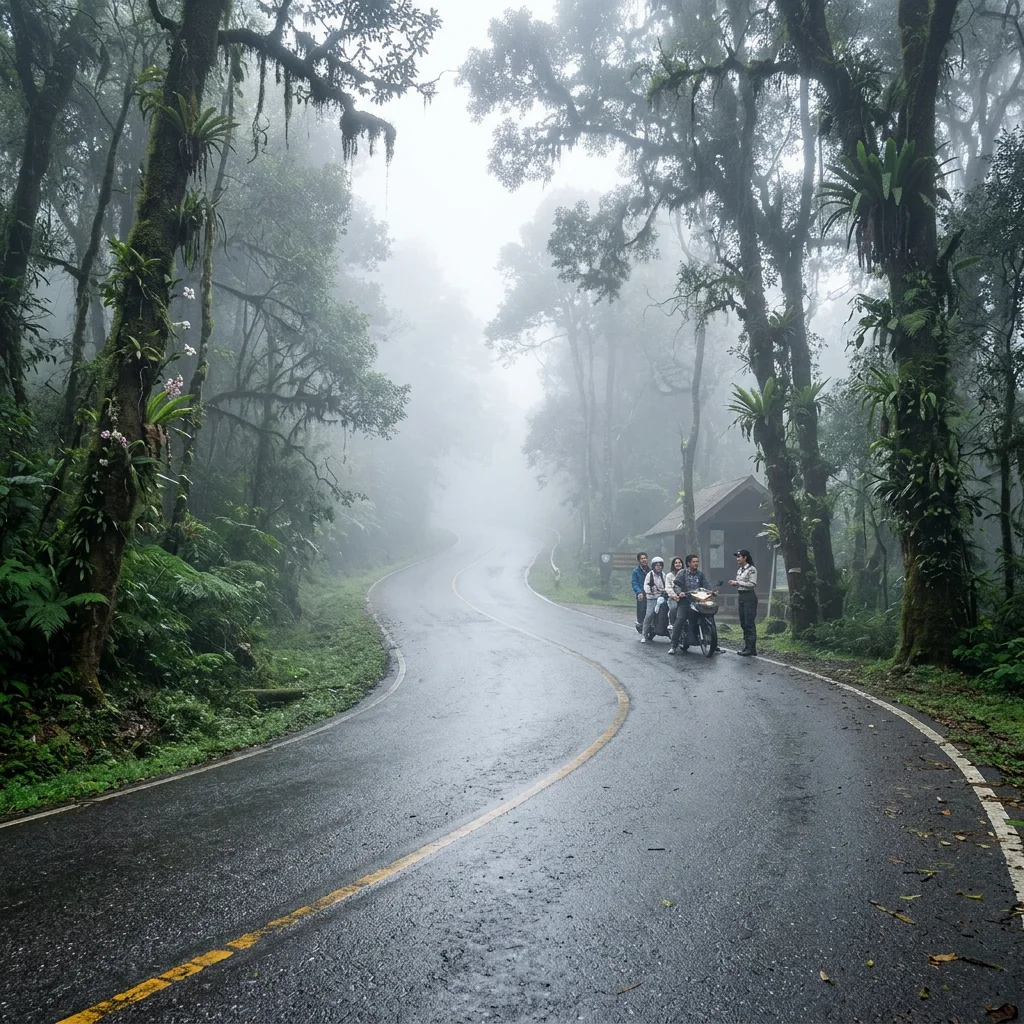
Camping in Doi Inthanon National Park centres around the park headquarters and Dong Son campsite near kilometre 31 of Route 1009 in Chom Thong District. This location sits roughly 85 to 90 kilometres southwest of Chiang Mai Old City and Chiang Mai International Airport. Driving is the most practical way to reach the mountain pitches. From central Chiang Mai, motorists take Highway 108 south through Hang Dong and San Pa Tong to Chom Thong, then turn right onto Route 1009, which passes the national park entrance checkpoint at kilometre 8 before climbing into the highlands. The drive typically takes between two and two-and-a-half hours.
Car hire from Chiang Mai Airport or city agencies usually ranges from 800 THB to 1,200 THB (£18.50 to £28.00) per day, providing useful flexibility on steep mountain switchbacks. Motorists should fill fuel tanks in Chom Thong, as no commercial petrol stations operate inside the park. Public transport requires catching a shared yellow songthaew from Chiang Mai Gate to Chom Thong for roughly 30 THB to 40 THB (£0.70 to £0.95), followed by chartering a local mountain songthaew for around 1,200 THB to 1,800 THB (£28.00 to £42.00) return. Scooters cost roughly 200 THB to 250 THB (£4.60 to £5.80) daily, though navigating the sustained, chilly ascent demands confident mountain riding skills.
Costs and Booking
Park tariffs begin at the main kilometre 8 checkpoint on Route 1009. Foreign adult entry is 300 THB (£7.00), while children aged 3 to 14 pay 150 THB (£3.50), and children under 3 enter free of charge. Vehicle fees are 30 THB (£0.70) for a car and 20 THB (£0.45) for a motorcycle. All checkpoint tickets, pitch fees, and equipment rentals require payment in cash Thai Baht. Card processing is unavailable on the mountain, and no automated teller machines operate past Chom Thong at the foot of Highway 1009, so withdraw adequate physical currency beforehand.
Campsite rates follow Department of National Parks regulations. Pitching a personal tent costs 30 THB (£0.70) per person per night. For campers without equipment, three-person dome tents rent for 225 THB (£5.20) per night from the headquarters visitor desk. Individual bedding items cost 30 THB (£0.70) for a sleeping bag, 20 THB (£0.45) for a foam sleeping mat, and 10 THB (£0.25) for a pillow, totalling 60 THB (£1.40) for a full bundle. The Dong Son camping area operates seasonally during the cool dry window, running from 1 October to mid-February before closing for the remainder of the year.
International campers typically arrange pitch access directly at the kilometre 31 visitor desk rather than navigating the central government portal, which often rejects non-Thai payment cards. Pitches and rental tents operate on a walk-in basis; arriving by mid-afternoon on December and January weekends secures level ground before pitches fill. At higher elevations, Kew Mae Pan requires a mandatory Hmong community trail guide for 200 THB (£4.70) per group, while the Twin Royal Pagodas charge a separate 100 THB (£2.35) adult entry administered by the Royal Thai Air Force.
| Option | Cost (THB) | Cost (GBP approx) | Notes |
|---|---|---|---|
| Foreign Adult Park Entry | 300 THB | £7.00 | Valid across park checkpoints; payable at KM 8 |
| Foreign Child Park Entry | 150 THB | £3.50 | Ages 3 to 14; children under 3 enter free |
| Vehicle Entry Fee (Car) | 30 THB | £0.70 | Covers private car access on park roads |
| Vehicle Entry Fee (Motorbike) | 20 THB | £0.45 | Covers motorcycle access on park roads |
| Campsite Pitch Fee | 30 THB per person per night | £0.70 per person per night | Nightly charge when pitching personal tent equipment |
| Park Dome Tent Hire | 225 THB per night | £5.20 per night | Capacity up to three people; pitched on designated ground |
| Complete Bedding Bundle | 60 THB per set | £1.40 per set | Includes sleeping bag (30 THB), mat (20 THB), pillow (10 THB) |
| Kew Mae Pan Guide Fee | 200 THB per group | £4.70 per group | Mandatory Hmong community trail guide; up to 10 hikers |
| Twin Royal Pagodas Entry | 100 THB per adult | £2.35 per adult | Managed separately by Royal Thai Air Force |
Who It Suits Best
Camping in Doi Inthanon National Park suits self-reliant travellers, hikers, and landscape photographers who want early morning access to high-elevation trails and mountain viewpoints. Staying inside the park allows visitors to reach the Kew Mae Pan ridge or the summit before day-tripper traffic arrives from Chiang Mai. Budget backpackers will also appreciate the modest pitch and tent rental fees.
Conversely, mountain camping here is unsuited to holidaymakers expecting en-suite bathrooms, electric heating, or hotel-style service. It is equally ill-suited to lively social gatherings. Regulations set by the Department of National Parks, Wildlife and Plant Conservation (DNP) strictly prohibit alcohol across park campgrounds, and quiet hours take effect after 22:00. Rangers patrol the grounds, and breaking the alcohol ban can incur fines of up to 1,000 THB alongside eviction. Families with toddlers should also consider whether their children can manage sustained single-digit night temperatures.
What to know before booking
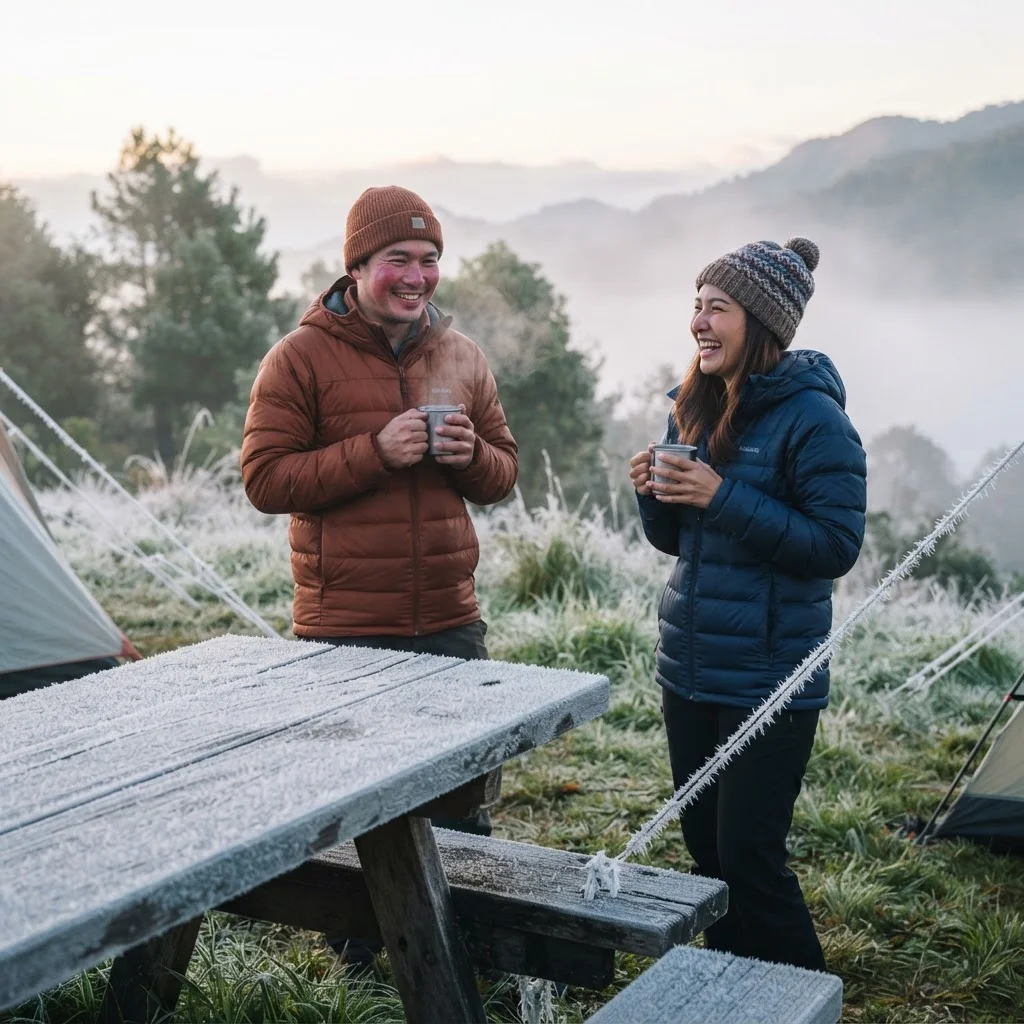
Between November and February, night temperatures routinely fall into single digits, dropping towards 3°C to 6°C on colder nights. The park's rental sleeping bags are lightweight, making extra thermal base layers necessary for a comfortable night.
Mobile network coverage is variable across the mountain. While AIS and True provide reliable mobile reception around the kilometre 31 headquarters, data connections frequently drop along lower camping clearings and heavily forested walking tracks.
Arranging a stay often relies on in-person registration. The official DNP web portal frequently experiences payment processing failures or prolonged downtime for international bank cards. In practice, most foreign campers register as walk-ins at the park headquarters or campsite desk before 16:00, paying for pitches and hire equipment in Thai baht cash.
Practical Tips
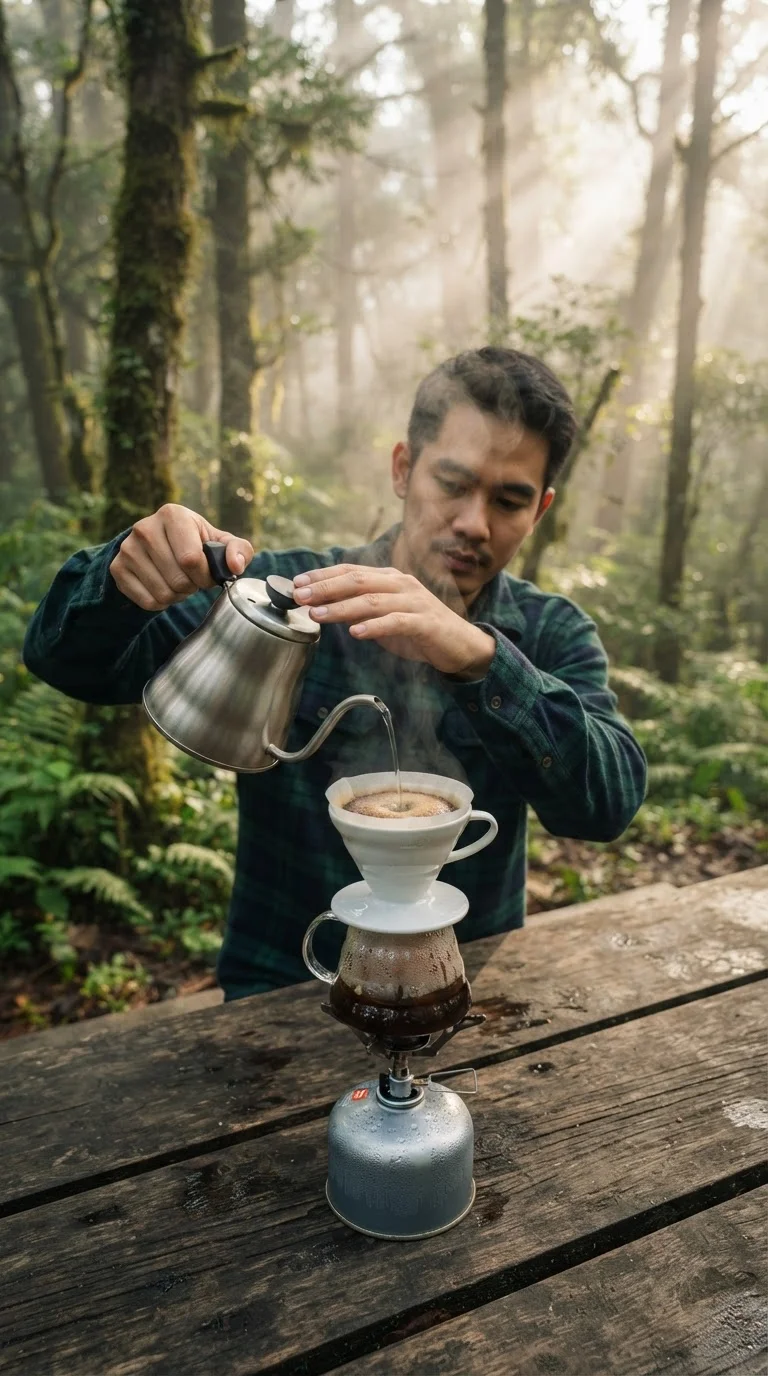
Pack synthetic thermal base layers or merino wool rather than cotton. Nighttime temperatures at the Dong Son campground routinely dip into single figures between November and February, and damp mountain air causes wet cotton to drain body heat rapidly. A windproof outer jacket, a fleece, and a woollen hat are sensible additions for early starts.
Consider renting an extra sleeping bag from the headquarters gear desk. The standard rental mats provide minimal separation from the chilled soil, so laying one unzipped sleeping bag beneath your sleeping mat and sleeping inside a second creates an effective thermal barrier against the cold ground.
Bring a dependable headtorch and a portable power bank. Paths connecting the camping terraces to the communal toilet blocks lack lighting, and montane cold rapidly saps lithium phone and camera batteries overnight. Stashing electronics inside your sleeping bag helps preserve battery life until morning.
Withdraw ample Thai Baht cash in Chom Thong or Chiang Mai before starting the mountain drive. Park admission gates, gear hire stations, local trail guides at Kew Mae Pan, and roadside food vendors do not accept card payments or foreign digital wallets, and there are no cash machines on the upper mountain.
Aim to reach the kilometre 31 headquarters before 15:00. Arriving by mid-afternoon ensures you can collect rental gear before park offices close around 16:00 and pitch your tent in daylight rather than wrestling with guylines in the dark.
Store boots and clothing inside your tent or dry bags rather than in open air. Dense montane mist and heavy condensation saturate anything left outside after nightfall, leaving exposed footwear waterlogged and freezing by dawn.
Quick Reference Table
| Item | Detail | Notes |
|---|---|---|
| Location | KM 31, Highway 1009, Chom Thong District | 85 to 90 km southwest of Chiang Mai city centre |
| Campsite Elevation | 1,350 metres above sea level | Located at Dong Son campsite near park headquarters |
| Operating Season | 1 October to mid-February | Camping closed for the remainder of the year |
| Foreign Adult Entry | 300 THB (£7.00) | Payable in cash at KM 8 checkpoint; valid park-wide |
| Foreign Child Entry | 150 THB (£3.50) | Ages 3 to 14; children under 3 enter free |
| Vehicle Entry Fee | 30 THB (£0.70) car / 20 THB (£0.45) motorbike | One-time fee paid at park entrance checkpoint |
| Campsite Pitch Fee | 30 THB (£0.70) per person per night | Applicable when pitching personal tent equipment |
| Tent Rental Fee | 225 THB (£5.20) per night | Three-person DNP dome tent; return by 12:00 on departure |
| Bedding Hire Bundle | 60 THB (£1.40) per set | Includes sleeping bag (30 THB), mat (20 THB), pillow (10 THB) |
| Drive to Kew Mae Pan | 11 km (15 to 20 minutes) | Trailhead at KM 42; 200 THB guide fee per group |
| Winter Night Temperatures | 3°C to 8°C | November to February; near-freezing drops common |
| Payment & Facilities | Cash only (Thai Baht) | No ATMs past Chom Thong; communal washrooms with cold taps |
| Campground Rules | Strictly alcohol-free; quiet hours from 22:00 | Ground campfires prohibited on individual pitches |
| Website | nps.dnp.go.th | Official DNP national park portal |
| Phone | +66 53 286 729 | Doi Inthanon National Park headquarters |
| Address | Km 31, Highway 1009, Ban Luang, Chom Thong District, Chiang Mai 50160 | National park headquarters and Dong Son campsite |
FAQ: Camping in Doi Inthanon National Park
Why should I consider camping in Doi Inthanon National Park?
What are the typical temperatures like when camping in Doi Inthanon National Park?
Are campfires allowed at Dong Son campsite in Doi Inthanon National Park?
What is the best time to start the Kew Mae Pan Nature Trail to avoid queues?
Can visitors rent camping equipment at Doi Inthanon National Park?
What food options are available at Doi Inthanon National Park campsites?
What payment methods are accepted for fees and rentals at Doi Inthanon National Park?
What is the operating season for camping at Dong Son in Doi Inthanon National Park?
Are there any specific rules or restrictions for campers at Doi Inthanon National Park?
How can I stay warm at night when using rental sleeping gear at Doi Inthanon National Park?
Reviewed by the Thailand Guide Editorial Team • Last reviewed: 18 November 2026
This page is provided for general information only. While we aim for accuracy, details can change — please verify anything important independently before relying on it.