Chiang Mai provincial authorities have imposed strict airspace restrictions, road closures, and designated exclusion zones ahead of the annual Yi Peng and Loy Krathong festivals, scheduled from 23 November to 25 November 2026. The joint staging of the northern lantern festival alongside the nationwide river festival is expected to draw more than 350,000 domestic and international visitors to the northern province. Hotel occupancy across the urban centre has already exceeded 91 per cent. For British expatriates residing in northern Thailand or travelling up from other provinces, the three-day period will alter local transit, domestic flight schedules, and legal liability regarding private property.
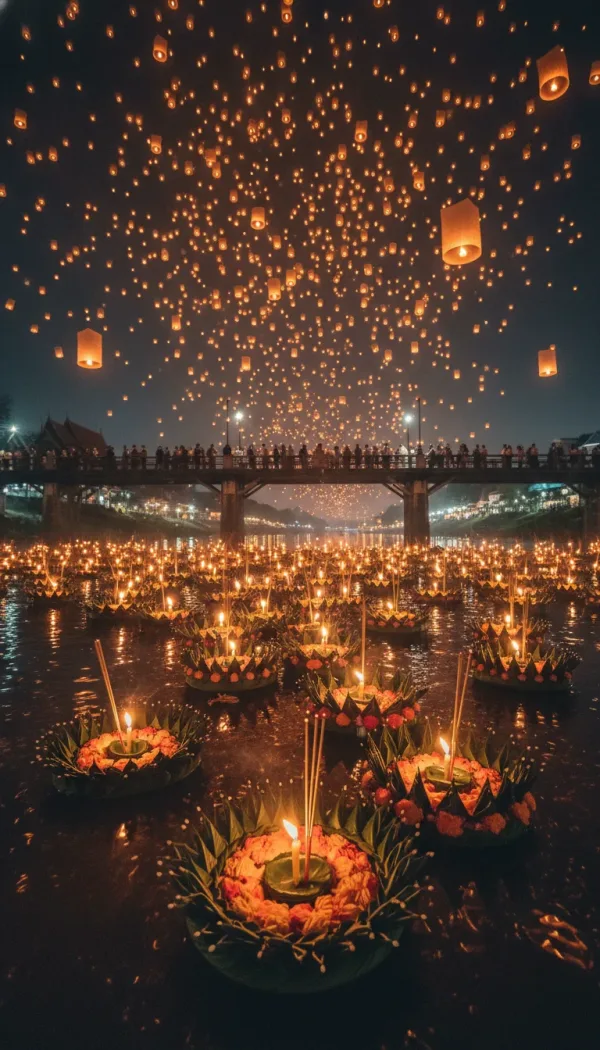
The festival period involves two separate traditions that coincide on the lunar calendar. Loy Krathong, observed across Thailand on Tuesday, 24 November, involves releasing small floating baskets onto rivers and lakes. Yi Peng is specific to northern Lanna culture. It features the release of airborne paper lanterns into the night sky, alongside street processions and decorative oil lamps.
Flight Cancellations and Airport Disruptions
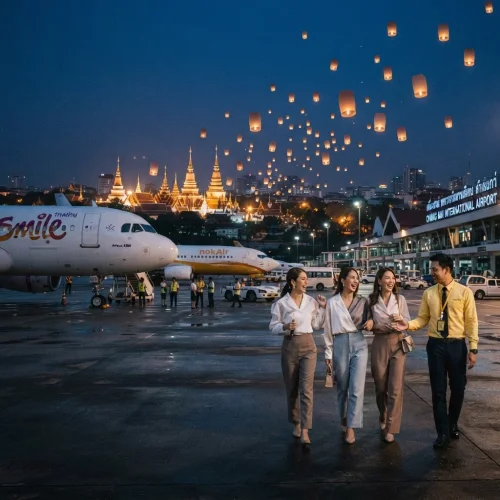
Airlines operating through Chiang Mai International Airport have cancelled 108 flights and retimed 80 others between 21 November and 28 November. To offset the disruption, operators have scheduled 105 additional services outside the evening hours.
The airport sits less than three miles from the historic walled city. Airborne lanterns pose a direct hazard to jet engines and flight paths. Because of this risk, aviation authorities have prohibited commercial operations during primary release periods. Airlines must ground or divert flights between 10:00 and 12:00 on Tuesday, 24 November, and between 19:00 and 01:00 on both 24 and 25 November.
Expatriates with scheduled domestic or international flights during this final week of November must verify departure times directly with their airlines. Do not rely on initial booking itineraries. Ground transit to the terminal will also take substantially longer than usual due to perimeter congestion. Passengers travelling on domestic routes should arrive at the departure terminal at least two hours before departure. International travellers should allow a minimum of three hours.
Aviation Safety Zones and Legal Penalties
Releasing lanterns within central Chiang Mai is illegal. Strict no-fly safety zones cover six districts and 39 subdistricts directly aligned with aviation corridors.
The exclusion zone covers the entire districts of Mueang Chiang Mai and Hang Dong. Both areas contain large concentrations of foreign residents. Restrictions also cover designated subdistricts within Saraphi, San Sai, Mae Rim, and San Pa Tong. In these sectors, launching any object into the sky is strictly prohibited at all times.
Thai law treats aviation safety breaches severely. Individuals convicted of launching illicit lanterns face prison sentences of up to five years, a fine of up to 200,000 baht, or both. If an unauthorized lantern causes a structure fire or damages aircraft infrastructure, the maximum prison term rises to seven years.
These restrictions apply to all private residential premises. British nationals living in flats, rented houses, or housing estates must not launch lanterns from balconies, garden plots, or roof terraces. Building managers in private apartment blocks routinely monitor rooftops during the festival to prevent unauthorised releases that could breach provincial safety laws or void communal building insurance.
Every legal release site requires formal authorisation. Aeronautical Radio of Thailand has verified coordinates for 214 approved event permits, encompassing roughly 197,500 authorised lanterns, smoke canisters, and regulated fireworks displays. These permitted sites sit exclusively in peripheral districts such as Mae On, Doi Saket, San Sai, Mae Wang, and Mae Taeng.
Property Protection and Pet Safety for Residents
Falling lanterns present an immediate fire hazard to private dwellings across the Chiang Mai valley. Spent lanterns drift across considerable distances before their wire frames and paper bodies fall to earth. Many descend while fuel cells remain partially alight.
Homeowners and tenants should clear all dry leaves, dead vegetation, and accumulated rubbish from roofs, gutters, and balconies prior to 24 November. Flammable outdoor furniture should be moved inside. Residents living in standalone houses or near agricultural land should leave garden hosepipes connected and keep water buckets accessible. Any uncontrolled fires must be reported immediately to the municipal fire services by dialling 199.
Domestic animals require advance preparation. The combination of private fireworks, sound systems, and smoke releases causes significant distress to domestic pets. Veterinary practices across Chiang Mai report elevated numbers of lost pets during Loy Krathong every year. Dogs and cats should be kept securely indoors from dusk until early morning on 24 and 25 November. Ensure that exterior garden gates remain padlocked. Check that collars carry clear microchip details or legible local contact numbers.
Impact on Local Transport and Infrastructure
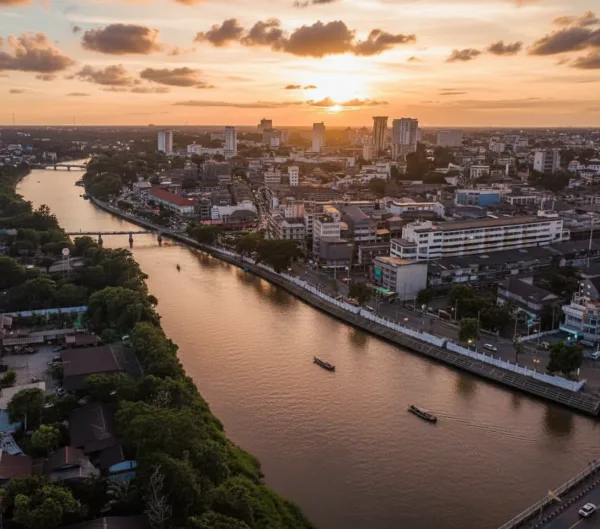
Surface traffic will slow significantly across the urban centre. Major thoroughfares will close to private motor traffic, including sections of Tha Phae Road, areas around Tha Phae Gate, and the streets running alongside the Ping River.
The river crossings will see the highest levels of pedestrian congestion. Nawarat Bridge and the Iron Bridge are principal gathering points for floating krathongs and viewing lanterns ascending from peripheral districts. British drivers should avoid driving cars through the central urban grid entirely on the evenings of 24 and 25 November.
Public transport will operate under strain. Red songthaew collective taxis and app-based private drivers will remain available, but fares often rise and waiting times increase significantly. Mobile telecommunication networks routinely suffer from temporary data congestion around Tha Phae Gate and riverside markets due to crowd density. Expatriates meeting family or colleagues should establish predetermined physical meeting points rather than depending entirely on mobile messaging applications.
Event Access and Cultural Protocols
Expatriates intending to launch lanterns legally must secure access to permitted commercial events held in outer districts. The largest organised event, the CAD Khomloy Sky Lantern Festival, operates in Mae On district, approximately one hour east of the city centre.
Standard ticket packages for commercial venues range from 4,900 baht to nearly 16,000 baht. Due to high demand, resale fraud remains common on social media. Tickets should be bought only through verified operational websites rather than unvetted intermediary brokers.
Foreign residents participating in public gatherings must observe traditional cultural standards:
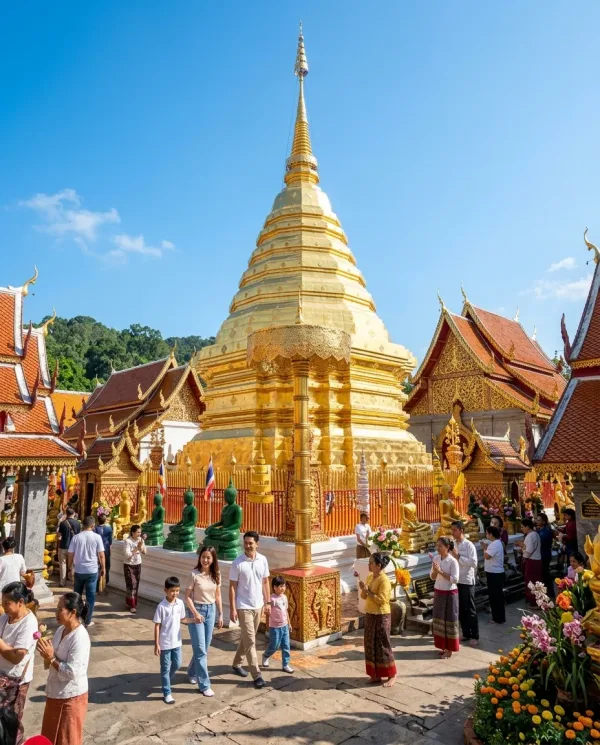
Modest attire is mandatory when entering temple grounds, requiring covered shoulders and knees. Floating krathongs placed into waterways must be constructed solely from natural materials, such as banana tree trunks, folded leaves, and vegetable matter. Synthetic floats, particularly those containing polystyrene, are banned by municipal regulations and attract spot fines. Religious ceremonies, such as the Thammahaluang sermon at the Three Kings Monument, constitute acts of Buddhist worship and require quiet observation from attendees.
Source: thethaiger.com
Reviewed by the Thailand Guide Editorial Team • Last reviewed: 17 November 2026
This page is provided for general information only. While we aim for accuracy, details can change — please verify anything important independently before relying on it.