National Park Camping
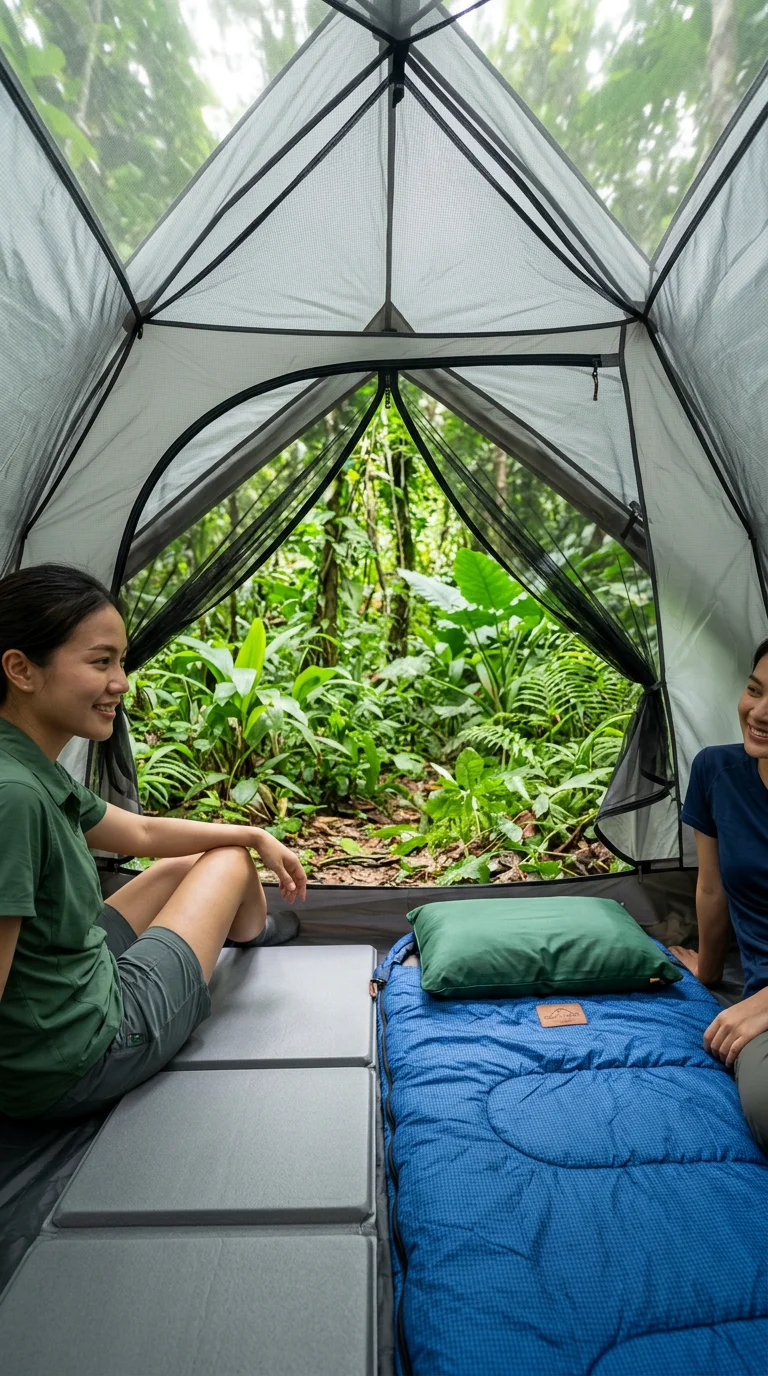
Camping in Thailand’s national park system costs as little as 30 THB (around £0.70) per person per night for a pitch, granting overnight access to protected wilderness areas that day visitors must vacate by late afternoon. Across more than 130 gazetted national parks, government-run campgrounds place visitors in direct contact with natural habitats, from the roaming sambar deer of Khao Yai and the near-freezing winter ridges of Doi Inthanon to the shallow coral reefs of Mu Koh Surin.
These public campsites are managed directly by the Department of National Parks, Wildlife and Plant Conservation (DNP). Operating at the opposite end of the market from commercial glamping operators and eco-resorts, the DNP provides basic, state-managed outdoor accommodation within protected ecological reserves. Facilities typically centre on designated tent lawns, communal cold-water shower and toilet blocks, and on-site equipment rental desks rather than hotel-style hospitality. Stays suit self-reliant hikers, wildlife spotters, and budget road-trippers who prioritise wilderness access over comfort. While maintenance and facilities vary between individual parks, the national campground network provides an affordable route into Thailand's primary rainforests, highland summits, and marine archipelagos.

Major DNP Campgrounds: Khao Yai, Doi Inthanon, Phu Kradueng, and Surin
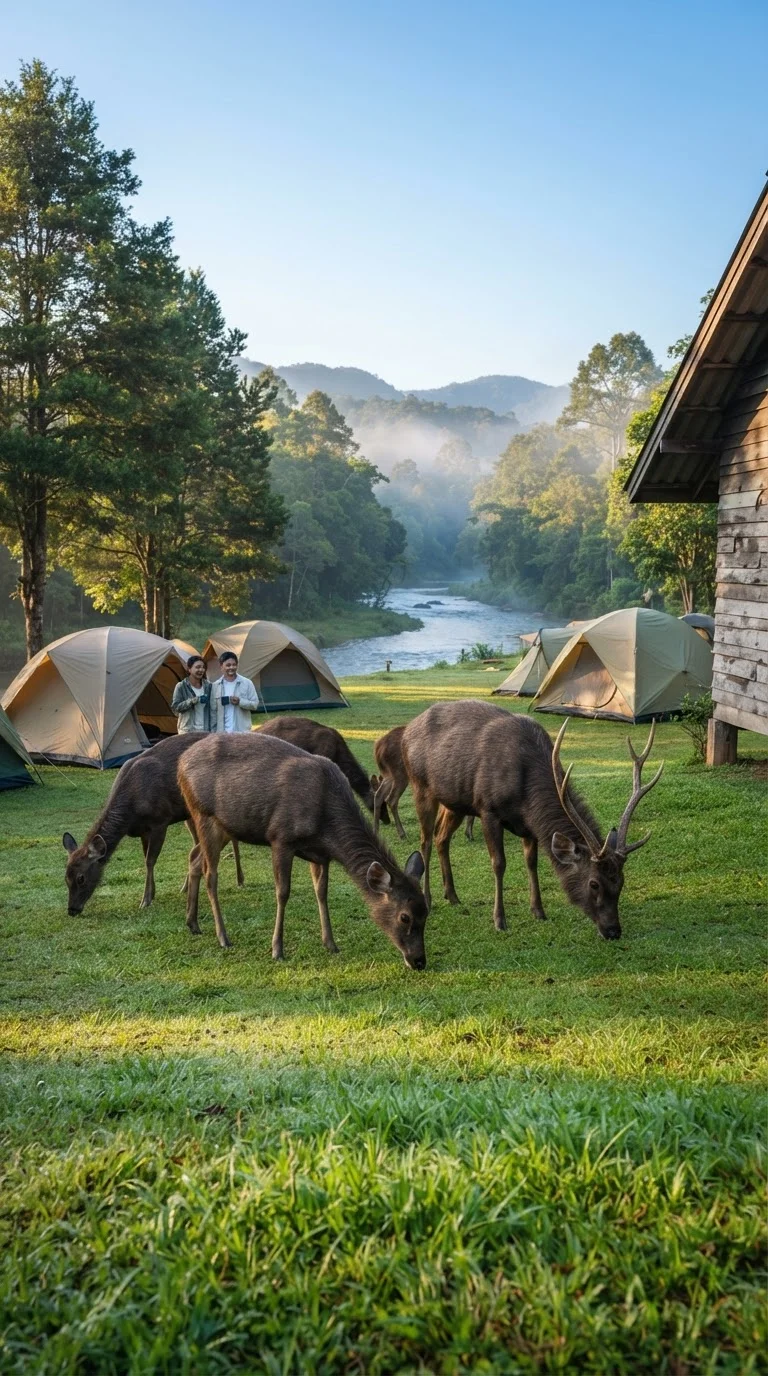
Thailand’s national park camping network encompasses a diverse range of terrain, from lowland monsoon forests and sandstone plateaux to sub-alpine ridges and coral archipelagos. Each reserve operates under specific conservation zoning that dictates pitch layout, ground conditions, and visitor capacities.
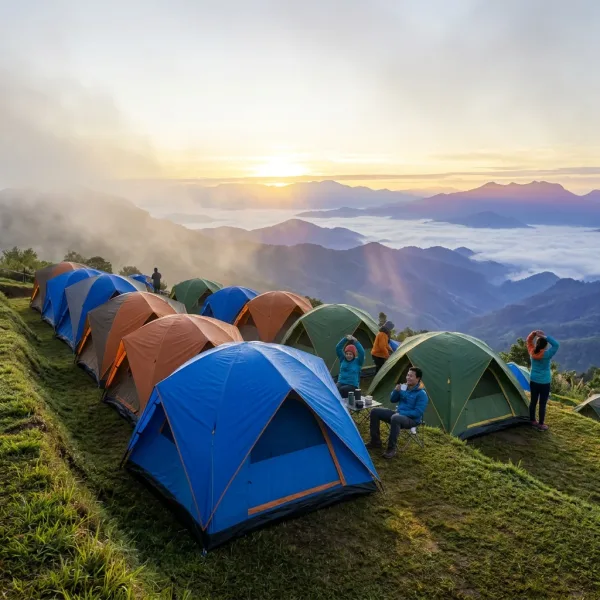
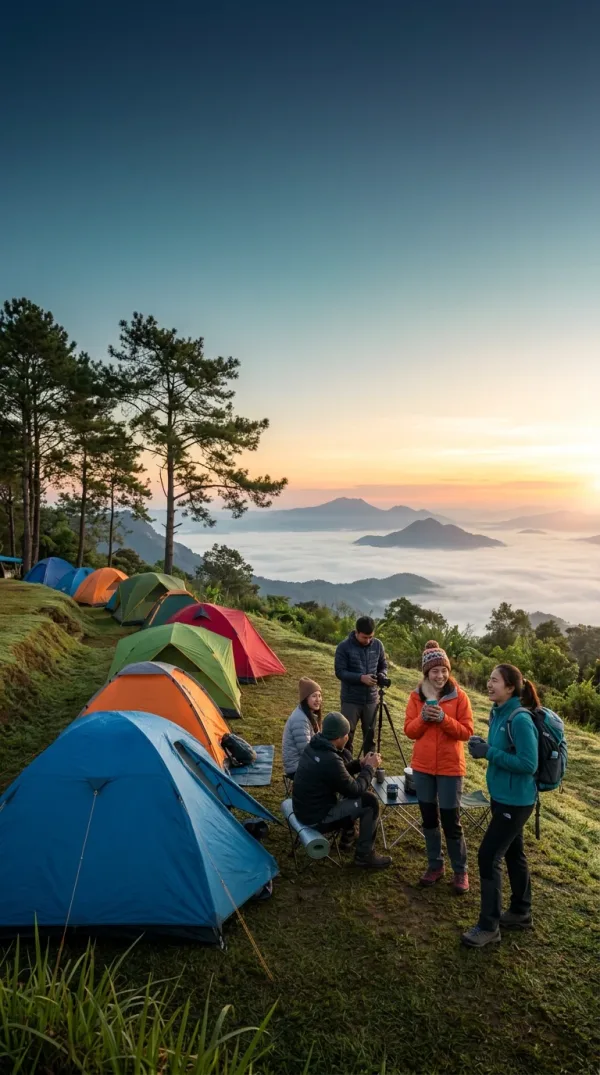
At Khao Yai National Park in central Thailand, campers pitch tents at Lam Ta Khong, an open grassland bordered by a slow-moving stream where wild sambar deer, barking deer, and northern pig-tailed macaques graze across the grounds. Farther north in Chiang Mai Province, Doi Inthanon National Park provides high-altitude camping at the Dong Son site near park headquarters, where pine groves shelter pitches at an elevation exceeding 1,200 metres. Between November and February, night-time temperatures here drop sharply towards freezing.
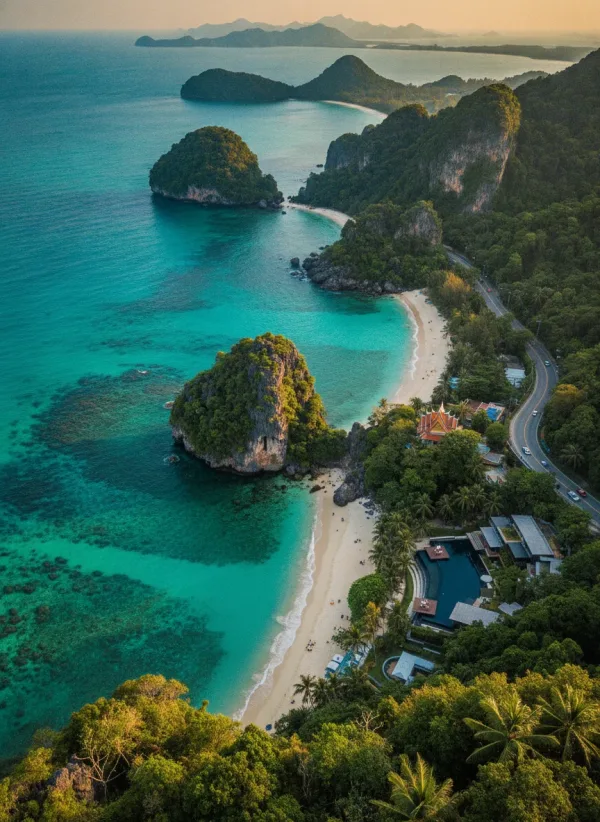
In north-eastern Loei Province, Phu Kradueng National Park requires an active trek up a sandstone mountain. Campers hike roughly 5.5 kilometres up a steep forest trail before crossing 3.5 kilometres of flat summit plateau to reach the Wang Kwang campground, an expansive highland meadow surrounded by pine woodlands and rim trails leading to sunrise and sunset viewpoints. Offshore in the Andaman Sea, Mu Koh Surin National Park in Phang Nga provides coastal camping at Ao Chong Khat and Ao Mai Ngam on Koh Surin Nuea, where pitches sit on soft sand under coastal trees steps away from shallow coral reefs home to sea turtles and reef fish. In Phetchaburi Province, Kaeng Krachan National Park provides riverside pitches at Ban Krang, a rainforest camp well regarded for butterflies and birdlife along the Pranburi River basin. Choosing among these sites depends on whether you seek high-elevation trekking, dense jungle wildlife watching, or island snorkelling.
Equipment Hire and Campsite Facility Standards
Official welfare stations at major park campgrounds allow travellers to camp without transporting heavy outdoor gear across Thailand on domestic routes. Every established Department of National Parks (DNP) camping ground operates an equipment rental desk stocking standardised three-person dome tents, foam roll mats, synthetic sleeping bags, and compact pillows.
Departmental regulations standardise equipment hire charges across mainland and island parks. A standard three-person dome tent costs 225 THB (around £5.25) per night, while smaller two-person dome tents rent for 150 THB (around £3.50). Bedding components rent individually: a synthetic sleeping bag costs 30 THB (around £0.70) per night, a foam sleeping mat or ground pad costs 20 THB (around £0.45), a blanket costs 20 THB (around £0.45), and a small pillow costs 10 THB (around £0.25). Visitors bringing their own tent pay only the standard campsite pitch fee, set at 30 THB (around £0.70) per adult per night, with children charged 10 THB (around £0.25) at parks such as Khao Yai.
Sanitary facilities at national park campgrounds are straightforward and functional. Communal washblocks provide unheated cold showers, a mix of Western-style seated ceramic toilets and traditional squat pans, and external concrete sinks for washing utensils. Mains electricity is rarely routed to individual pitch locations; campers recharge mobile phones, headtorches, and camera batteries at communal multi-plug charging points located at the ranger station, visitor centre, or welfare shop. Bringing a high-capacity portable power bank ensures your electronic devices remain charged without waiting at public sockets.
Ground conditions vary by landscape. Mainland plateaux and valleys feature natural turf and compacted dirt, whereas marine parks like Mu Koh Surin supply sand pitches shaded by beach almond and Barringtonia trees. Government welfare restaurants and local vendor kiosks operate at larger campsites, serving freshly cooked fried rice, noodle soups, omelettes, and hot tea between roughly 07:00 and 17:30 or 18:00. While the rented gear is maintained and functional, bringing an inflatable camping pillow or lightweight sleeping bag liner can significantly upgrade your comfort.
| Campground and Park | Setting and Surface | Washroom Amenities | Power Supply | Food Options |
|---|---|---|---|---|
| Lam Ta Khong (Khao Yai) | Grassy lawn by river | Communal blocks, cold showers | Charging hub at office | Welfare canteen, 07:00–17:30 |
| Dong Son (Doi Inthanon) | Pine needles and turf | Cold showers, sit and squat toilets | Limited to visitor centre | Food stalls 500m away at HQ |
| Wang Kwang (Phu Kradueng) | High plateau grassland | Extensive cold-water blocks | Solar kiosks at camp base | Dozens of local food stalls |
| Ao Mai Ngam (Mu Koh Surin) | Shaded coastal sand | Beachside cold showers, toilets | Generator hours (18:00–22:00) | Park restaurant, fixed hours |
| Ban Krang (Kaeng Krachan) | Rainforest clearing | Basic communal cubicles | Minimal ranger post hookup | Small ranger welfare canteen |
Plan a Northern Thailand trip covering Chiang Mai, Chiang Rai, Sukhothai, mountain routes, Lanna food, transport, seasons and air quality.
Public Park Camping Compared with Commercial Glamping
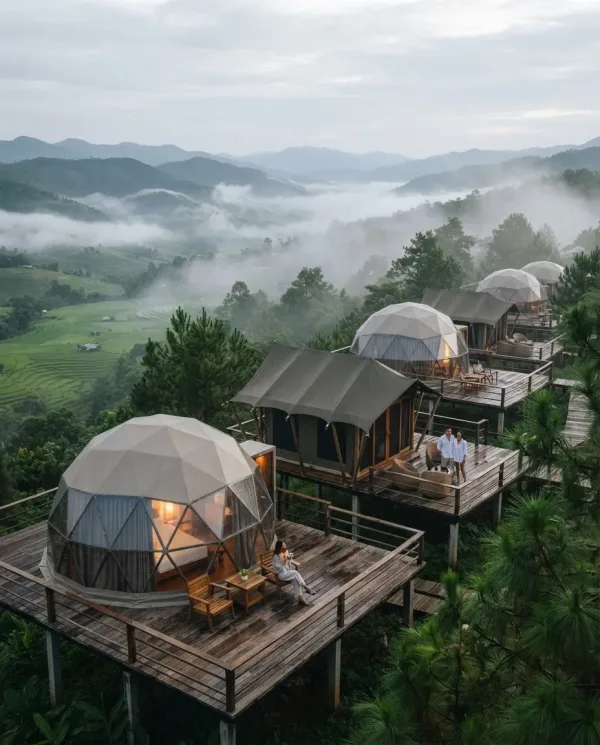
Public national park campgrounds and commercial private glamping developments serve entirely different travel styles and budgets across Thailand. Privately owned glamping resorts in mountain destinations like Khao Kho, Mon Cham, and Kanchanaburi supply canvas safari tents and geodesic domes fitted with queen-sized sprung mattresses, electrical heaters, air conditioning, and en-suite private hot showers. These private retreats focus on comfort and aesthetic leisure.
State-run park campgrounds prioritise nature conservation and low-impact public access. A full night under canvas in a national park costs roughly 315 THB to 350 THB (£7.35 to £8.15) per person, covering the pitch fee, rented dome tent, ground mat, and sleeping bag. Commercial glamping properties typically charge from 2,500 THB (£58) to upwards of 6,000 THB (£140) per night.
Staying inside a national park places you right within protected habitat boundaries. You can step directly onto hiking trails at first light before day visitors reach the admission gates, hear gibbons calling at dawn, and watch wildlife graze near your tent. Commercial glamping sites lie outside park perimeters, requiring transport to reach trailheads and entry checkpoints each morning.
The trade-off for staying within a public park is embracing rustic living conditions. National park campers must navigate shared, unheated washrooms, manage without air conditioning or pitch-side power outlets, and respect strict night-time curfews. Forestry rangers patrol public grounds and enforce a complete ban on alcoholic beverages, a restriction that private commercial glamping resorts do not apply. Choosing state campgrounds means exchanging luxury hotel conveniences for immediate proximity to Thailand's wild landscapes.
DNP Booking Procedures and Payment Systems
Securing an official camping pitch involves either advance booking through the Department of National Parks online portal or in-person walk-in registration at the park entrance. The official DNP web reservation system handles bookings for designated campsites, park chalets, and equipment hire up to 60 days in advance of the planned arrival date.
Online reservations restrict each booking to a maximum of three consecutive nights per campsite, preventing long-term occupancy and allowing equitable public access during peak travel periods. Once an online reservation form is submitted, the portal issues an official payment invoice containing a transaction barcode and PromptPay QR code. Payment must be completed within the specified confirmation window using Thai mobile banking applications, participating Krungthai Bank branch counters, or supported international credit cards.
Travellers unable to use the online payment gateway can register on arrival at the park campsite office, provided maximum daily visitor caps have not been reached. For heavily visited mountain sites such as Doi Inthanon and Phu Kradueng during the cool season from November to January, travellers must also check whether entry queue slots require pre-booking on the QueQ mobile application, which the Department of National Parks uses to control daily entry volume. Keeping paper printouts or offline screenshots of all reservation vouchers, payment receipts, and vehicle permits ensures smooth processing at remote ranger checkpoints where mobile reception can be intermittent.
Park Regulations, Wildlife Management, and Seasonal Closures
Strict environmental laws protect the ecosystems and wildlife within most Thai national parks. Open campfires built directly on the ground are prohibited across every DNP property to eliminate forest fire risks. Campers wishing to cook their own meals must use contained portable gas stoves in designated areas, though most visitors rely on the inexpensive hot meals prepared by official welfare vendors.
Under Section 20 of the National Parks Act B.E. 2562 (2019) and departmental directives, the possession and consumption of all alcoholic beverages is strictly prohibited within national park territory. Patrolling forestry rangers inspect campsites and can issue substantial fines or expel non-compliant visitors from the reserve. Noise curfews take effect at 22:00 across all public campgrounds to preserve a quiet environment for wildlife and neighbouring campers.
Wildlife precautions are essential at mainland forest sites. At Khao Yai, wild sambar deer, barking deer, and northern pig-tailed macaques roam freely around the Lam Ta Khong camping lawns, while wild elephants frequently traverse adjacent roads and forest corridors. Campers must rarely store food, fruit, or scented toiletries inside tents, as monkeys and larger mammals can rip canvas and nylon fabrics to reach provisions. All food should be kept sealed inside hard-sided vehicle boots or hung securely from elevated structures away from sleeping areas. Campers must pack out all rubbish or deposit it inside designated animal-proof refuse skips before leaving the grounds.
Seasonal closures take place annually across Thailand's national parks to allow flora and fauna to recover without human disturbance and to prevent accidents during severe weather. High-altitude trails and summit campsites in northern and north-eastern parks, including Phu Kradueng's summit plateau, close entirely during the heavy monsoon months between June and September. Marine parks in the Andaman Sea, including Mu Koh Surin, shut down most visitor access and camping between mid-May and mid-October due to hazardous sea swells and monsoon conditions. Reviewing the official DNP annual closure schedule before planning your itinerary prevents unexpected disruptions on arrival.
Location and Getting There
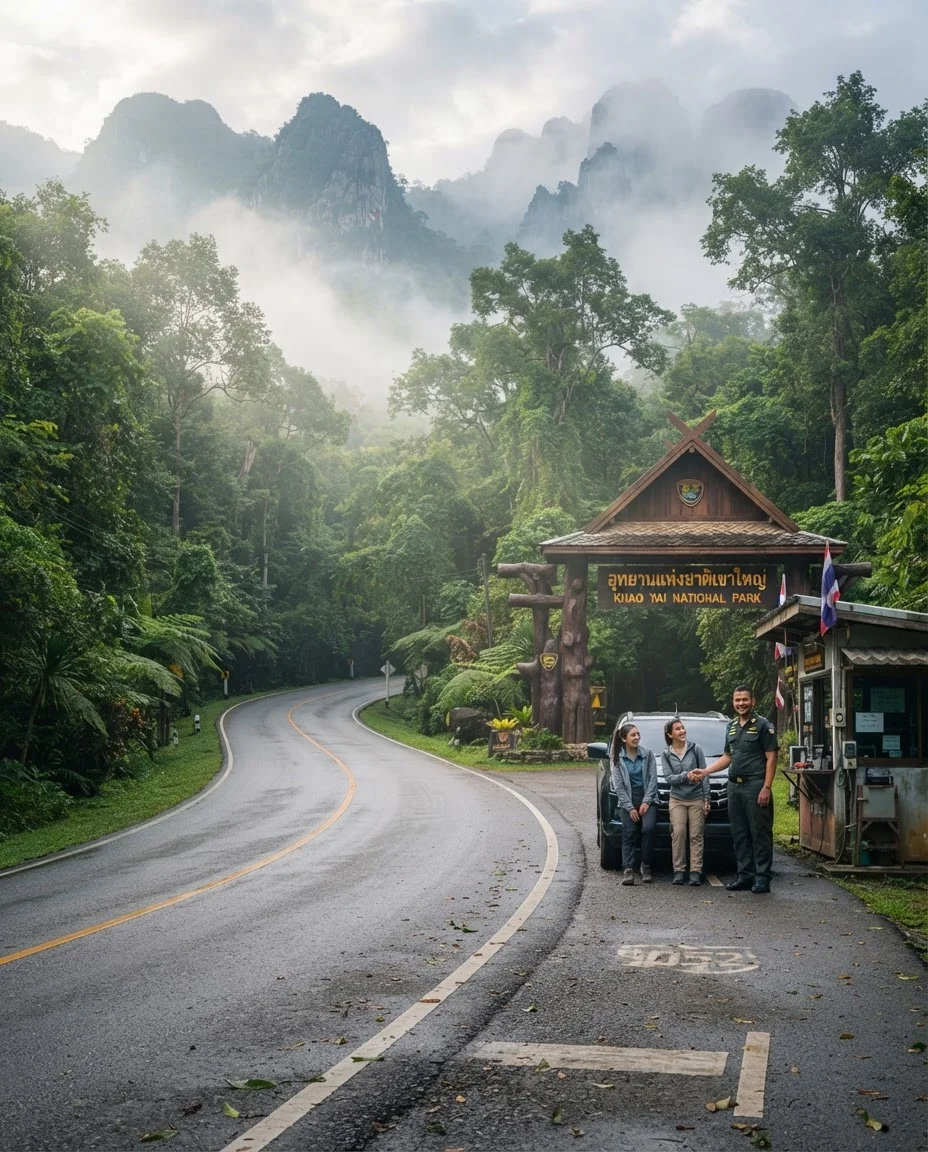
Thailand’s national parks span montane forests in the north to marine archipelagos along the Andaman coast, meaning access logistics vary considerably depending on the terrain.
Khao Yai National Park sits approximately 180 kilometres northeast of Bangkok. Driving via Highway 1 and Highway 2 takes under three hours, with private taxis costing around 2,000 THB to 3,000 THB (£47 to £70). Alternatively, State Railway of Thailand trains run from Krung Thep Aphiwat Central Terminal to Pak Chong, with fares ranging from 55 THB to 400 THB (£1.30 to £9.30) depending on carriage class. From Pak Chong market, local blue songthaews run to the northern park gate for 40 THB to 50 THB (£0.95 to £1.15). Because public songthaews terminate at the entrance checkpoint, campers travelling without a private vehicle must hitchhike or arrange an onward lift for the remaining 14 kilometres to the Lam Ta Khong campground.
Doi Inthanon lies roughly 100 kilometres southwest of Chiang Mai city centre along Highway 108 and Route 1009. Campers can catch a yellow songthaew from Chiang Mai to Chom Thong and connect to a park songthaew, though mountain departures are infrequent. Chartering a songthaew or private minivan for a return journey costs around 2,000 THB to 3,000 THB (£47 to £70), while self-drive car rentals from Chiang Mai cost from 800 THB to 1,200 THB (£19 to £28) per day.
For Phu Kradueng in Loei Province, overnight long-distance coaches depart Bangkok’s Mo Chit bus terminal for Pha Nok Khao, costing 400 THB to 650 THB (£9.30 to £15.10). Local shared songthaews waiting at Pha Nok Khao transfer hikers roughly 15 kilometres to the Sri Than visitor centre and trail base for 30 THB to 50 THB (£0.70 to £1.15).
Reaching the marine campgrounds on Koh Surin requires travelling to Khura Buri Pier in Phang Nga Province. Daily speedboats make the 60-kilometre sea crossing during the dry open season, with round-trip boat transfers costing around 1,700 THB (£39.50) per passenger.
Costs and Booking
Camping across Thailand's Department of National Parks, Wildlife and Plant Conservation (DNP) network is structured around four separate expenses: general park admission tariffs, vehicle entrance tolls, nightly pitch fees, and optional equipment hire. Foreign visitor entry adheres to a national four-tier band structure established by the DNP. Band 1 parks charge foreign adults 100 THB (£2.30), Band 2 charges 200 THB (£4.65), Band 3 charges 300 THB (£7.00), and Band 4—applied to premier marine archipelagos such as Mu Koh Surin and Mu Koh Similan—charges 500 THB (£11.60). Children aged 3 to 14 typically pay half the adult tariff. Certain heavily visited parks operate under gazetted local rates; foreign adults entering Khao Yai via its Pak Chong or Noen Hom gates pay 400 THB (£9.30).
Pitch fees remain modest across the country. Bringing your own tent incurs a standard charge of 30 THB (£0.70) per person per night at mainland campgrounds, rising to between 40 THB and 80 THB (£0.95 to £1.85) at offshore marine sites. Travellers seeking to avoid carrying heavy gear can hire equipment directly from park ranger stations upon arrival. Standard rental rates across most mainland depots run to 150 THB (£3.50) per night for a two-person dome tent and 225 THB (£5.25) for a three-person tent. Bedding items are rented individually or as a complete bundle: sleeping bags cost 30 THB (£0.70), foam mats or sleeping boards cost 20 THB (£0.45), and pillows cost 10 THB (£0.25), totalling 60 THB (£1.40) per person per night.
Incidental expenses include private vehicle fees of 20 THB to 30 THB (£0.45 to £0.70) for motorcycles and 30 THB to 50 THB (£0.70 to £1.15) for cars. At rugged hiking parks with steep plateau ascents, such as Phu Kradueng, local porters haul rucksacks for a regulated one-way rate of 30 THB (£0.70) per kilogram. Online booking windows open up to 60 days in advance through the official national parks reservation system, where provisional reservations must be paid within two working days to avoid cancellation. Outside peak public holidays and cool-season weekends, walk-up registration at park visitor centres remains widely accessible.
| Item | Cost (THB) | Cost (GBP) | Notes |
|---|---|---|---|
| Foreign Adult Park Entry (Khao Yai) | 400 | £9.30 | Valid for continuous stay while camping; re-entry requires new ticket |
| Foreign Adult Park Entry (Doi Inthanon) | 300 | £7.00 | Band 3 admission paid at lower checkpoint |
| Foreign Adult Park Entry (Mu Koh Surin) | 500 | £11.60 | Marine park Band 4 entry tariff |
| Pitch Fee (Own Tent, Mainland) | 30 | £0.70 | Per person per night at sites such as Khao Yai, Inthanon, and Phu Kradueng |
| Pitch Fee (Own Tent, Marine Park) | 40–80 | £0.95–£1.85 | Per person per night at island sites such as Mu Koh Surin |
| Three-Person Tent Hire | 225 | £5.25 | Per tent per night; standard dome tent collected at ranger desk |
| Two-Person Tent Hire | 150 | £3.50 | Per tent per night; available at select mainland park depots |
| Complete Bedding Set | 60 | £1.40 | Per person per night; includes sleeping bag, foam mat, and pillow |
| Private Vehicle Entry Toll | 30–50 | £0.70–£1.15 | Per vehicle; cars pay 30–50 THB, motorcycles pay 20–30 THB |
| Luggage Porter (Phu Kradueng) | 30 | £0.70 | Per kg one-way carriage from trail base to high plateau |
Who Park Camping Suits
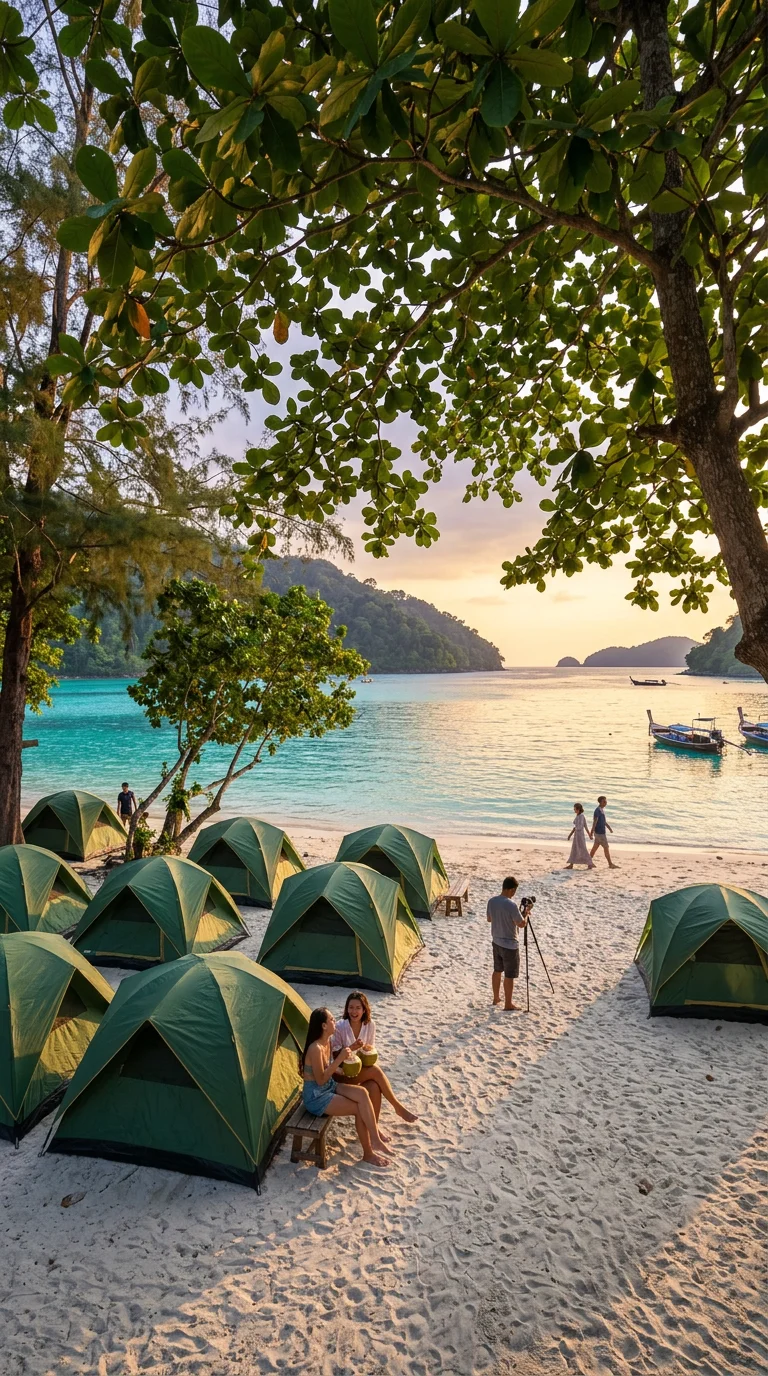
National park campgrounds suit self-reliant travellers, wildlife watchers, hillwalkers, and photographers who prioritise direct wilderness access over modern domestic luxuries. Pitching inside park boundaries gives early morning access to forest trails, cooler mountain microclimates, and dark night skies for a fraction of private resort costs.
Department of National Parks (DNP) campsites are poorly suited to anyone expecting full-service hospitality, air-conditioned bedrooms, or evening entertainment. Washroom blocks are strictly functional, typically featuring cold-water bucket baths or unheated showers alongside communal squat and seated toilets. Families travelling with toddlers often find the lack of hot water and the presence of foraging wildlife—particularly bold macaques—difficult to manage.
Remote workers should also look elsewhere. While mobile reception reaches some park headquarters, campground valleys and trails frequently sit in cellular dead zones. Wi-Fi is rarely provided, and charging points are usually confined to communal ranger stations or visitor centres rather than individual pitches.
What to Know Before You Book
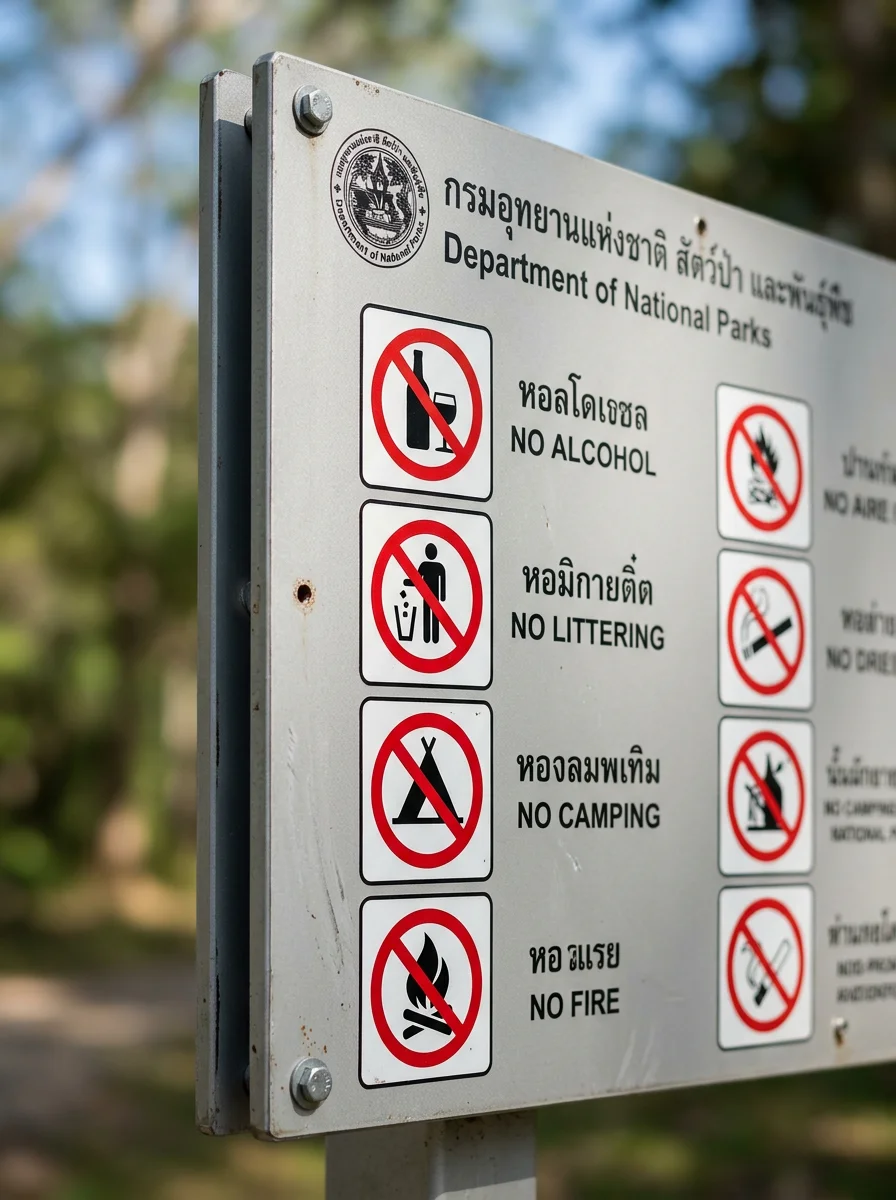
Alcohol is strictly prohibited for visitors across Thailand's national park network. Department of National Parks (DNP) regulations forbid bringing, buying, or consuming beer, wine, and spirits within park boundaries, and rangers patrol campgrounds to enforce the rule, issuing fines and confiscating alcohol when discovered.
Highland temperatures regularly catch campers unprepared. Between November and February, overnight readings at elevated sites—such as Dong Son campground in Doi Inthanon and the summit plateau of Phu Kradueng—routinely sink into single digits and occasionally drop below 5°C. Sturdy thermal base layers, warm socks, and fleece blankets or rated sleeping bags are necessary during these months.
Dual-tier admission pricing operates at all official DNP entrance gates. Foreign travellers pay substantially higher rates than Thai citizens—often up to ten times the local tariff—and this gate fee is charged separately from campsite pitch fees and equipment rentals, requiring advance cash or digital payment planning.
Monsoon conditions dictate compulsory seasonal shutdowns across many parks. Andaman marine parks, including Mu Koh Surin, close entirely from mid-May to mid-October, suspending boat transfers and camping access while coral reefs recover and seas turn rough. Mountain parks also impose scheduled trail closures during the wettest months, with Phu Kradueng shut from June through September to prevent erosion and hazard on the escarpment trails. Checking current DNP closure schedules before planning an itinerary prevents stranded travel days.
Practical Tips
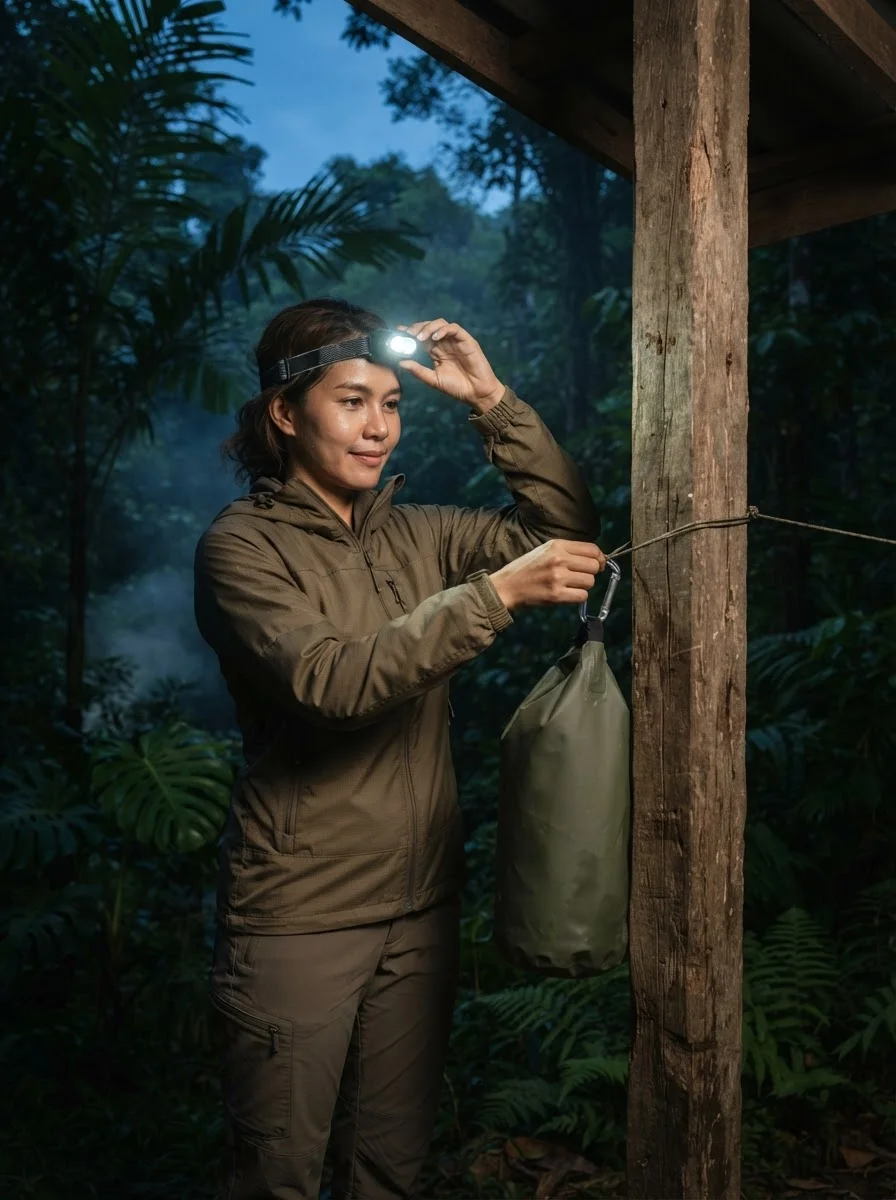
Campground pitches in Thailand's national parks do not have mains electricity outlets. Charging points are typically restricted to ranger stations, visitor centres, or park canteens, where access may be limited to specific hours. Packing a high-capacity rechargeable power bank ensures phones, navigation devices, and camera batteries remain operational throughout your stay.
Do not store fresh food, snacks, or fruit inside your sleeping tent. Macaques around coastal and island sites and sambar deer or elephants in inland reserves such as Khao Yai readily tear through fabric to reach food. Store dry provisions in sealed hard-sided containers, leave them secured in vehicle boots where possible, and inspect footwear before slipping it on, as scorpions and insects frequently seek shelter in dark crevices.
Campground washrooms are utilitarian, commonly featuring unheated cold-water bucket baths or cold pipe showers set over wet concrete floors. Bring quick-drying microfibre towels, waterproof slip-on sandals, and your own toilet roll and soap, as communal blocks rarely stock toiletries. A reliable head torch with spare batteries is vital for navigating unlit paths after dark, as campsite lights and generators are switched off late in the evening to avoid disturbing wildlife.
Carry adequate Thai Baht banknotes in small denominations. Many island welfare shops, mountain checkpoints, and park restaurants cannot process payment cards or mobile banking apps due to intermittent mobile data coverage. Hikers ascending steep mountain trails, such as the initial five-kilometre climb to the plateau at Phu Kradueng, can engage local porters at the park base for 30 THB (£0.70) per kilogram.
Open campfires and bonfires are strictly prohibited across Department of National Parks sites to prevent wildfires. Because on-site canteens often close around 17:00 or 18:00, plan evening meals ahead or bring an approved portable gas stove. For popular campgrounds like Lam Ta Khong during the peak cool season and Thai public holidays, secure your pitch weeks in advance, as sites operate strict capacity limits.
Quick Reference Table
| Item | Detail | Notes |
|---|---|---|
| Pitch Fee (Mainland) | 30 THB (approx. £0.70) per adult per night | When bringing your own tent; children charged 10 THB (£0.25) at parks such as Khao Yai |
| Pitch Fee (Marine Parks) | 40–80 THB (£0.95–£1.85) per person per night | Applies to island campgrounds such as Mu Koh Surin |
| Tent Hire Charges | 150 THB (£3.50) for 2-person; 225 THB (£5.25) for 3-person | Per tent per night; rented at official on-site welfare desks |
| Bedding Hire Bundle | 60 THB (£1.40) per person per night | Includes sleeping bag (30 THB), foam mat (20 THB), and pillow (10 THB) |
| Foreign Adult Park Entry | 100–500 THB (£2.30–£11.60) | Four DNP price bands: Band 1 (100 THB), Band 2 (200 THB), Band 3 (300 THB), Band 4 (500 THB); Khao Yai charges 400 THB |
| Vehicle Entry Tolls | 20–30 THB (motorcycle); 30–50 THB (car) | One-time charge levied at park entrance checkpoints |
| Phu Kradueng Porter Fee | 30 THB (£0.70) per kg | Regulated one-way carriage fee from trail base to summit plateau |
| Advance Booking Window | Up to 60 days in advance | Via official DNP portal; maximum stay capped at 3 consecutive nights |
| Alcohol Policy | Strictly prohibited | Enforced across all DNP parks under Section 20 of the National Parks Act B.E. 2562 |
| Campground Curfew | 22:00 | Quiet hours enforced nightly by forestry rangers to protect wildlife |
| Campfires & Cooking | Ground campfires prohibited | Portable gas stoves permitted in designated areas; on-site canteens typically operate until 17:30 or 18:00 |
| Key Seasonal Closures | June–September (Phu Kradueng); mid-May to mid-October (Koh Surin) | High-elevation summits close during peak monsoon; Andaman marine parks close for rough seas and reef recovery |
| Website | dnp.go.th | Official portal for the Department of National Parks, Wildlife and Plant Conservation |
| Book direct | nps.dnp.go.th | Online reservation portal for national park pitches, chalets, and equipment hire |
| Phone | +66 2 562 0760 / +66 2 561 0777 | DNP central office and visitor reservations helpline |
FAQ: National Park Camping
How much does it cost to camp in Thailand's national parks?
What type of traveller is best suited for national park camping in Thailand?
Can I rent camping equipment at Thailand's national parks?
Is electricity available at individual campsites in Thailand's national parks?
Is alcohol allowed in Thailand's national park campgrounds?
What are the rules regarding campfires and cooking in Thailand's national parks?
How should I store food to prevent wildlife encounters while camping in Thailand's national parks?
Are there seasonal closures for national parks in Thailand?
Do foreign visitors pay different admission fees at Thailand's national parks?
How can I book a campsite in Thailand's national parks?
Reviewed by the Thailand Guide Editorial Team • Last reviewed: 18 November 2026
This page is provided for general information only. While we aim for accuracy, details can change — please verify anything important independently before relying on it.