Camping in Northern Thailand
Camping in Northern Thailand provides the country’s highest-altitude wilderness stays, where mountain ridges and pine-fringed reservoirs regularly drop to single-digit temperatures between November and February. For British travellers seeking an alternative to southern coastal tourism, the northern highlands deliver an established dual network of statutory Department of National Parks (DNP) campsites alongside fully catered private agricultural glamping estates.
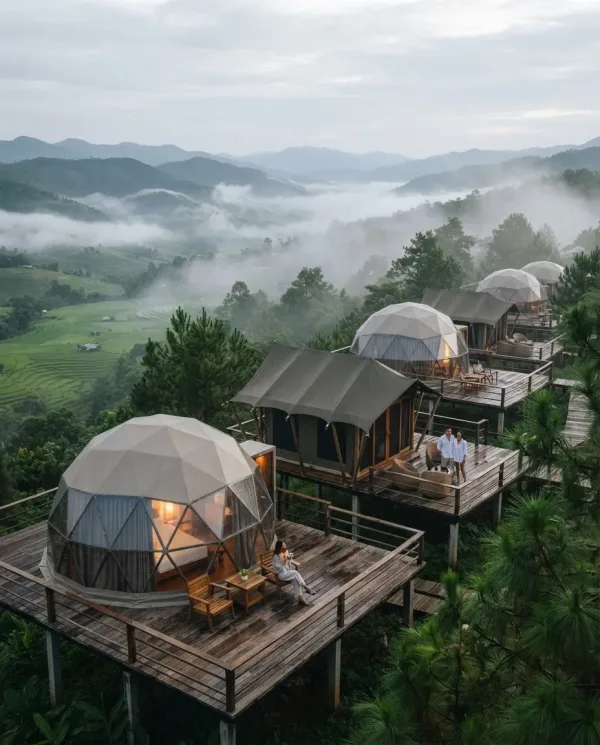
The public sector features protected wilderness grounds managed by the Department of National Parks, Wildlife and Plant Conservation, where pitching your own tent costs 30 THB (around £0.70) per night alongside separate park admission fees. In contrast, privately operated valleys across Chiang Mai, Chiang Rai, and Mae Hong Son feature geodesic domes and canvas lodges equipped with en-suite bathrooms, electric blankets, and private viewing decks.
This highland camping network caters to self-drive motorists, active walkers, and landscape photographers drawn to cool-season mountain summits, morning sea-of-mist viewpoints, and upland forest trails across upper Northern Thailand.

High-Altitude National Park Campgrounds Across the Northern Provinces
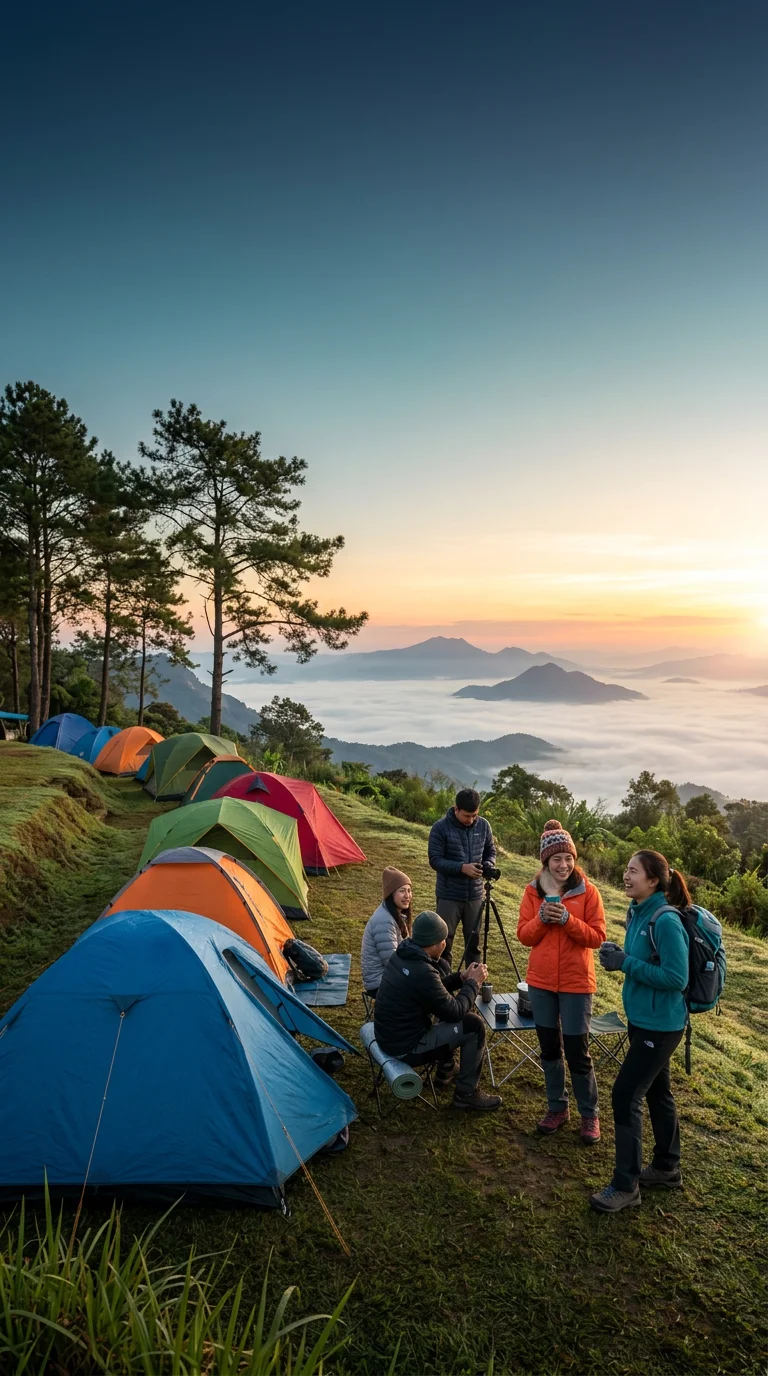
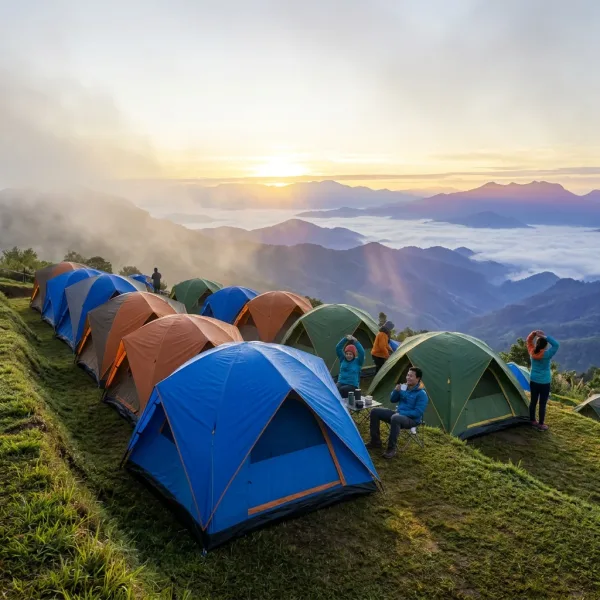
High-elevation public campgrounds situated between 1,000 and 1,920 metres across Northern Thailand deliver rugged wilderness stays above the low-lying valley mist. In Chiang Mai province, forest pitches sit within Doi Inthanon National Park near Thailand's highest summit, while further north in Fang district, Doi Pha Hom Pok National Park operates the Kew Lom campground. At 1,920 metres above sea level, Kew Lom is the highest road-accessible tent ground in Thailand, providing direct access to the 2,285-metre summit trail along the Myanmar frontier.
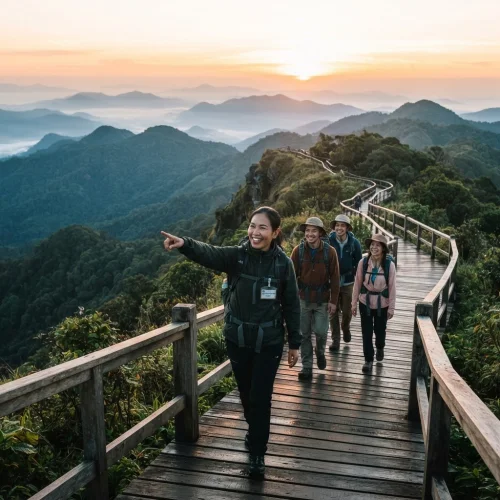
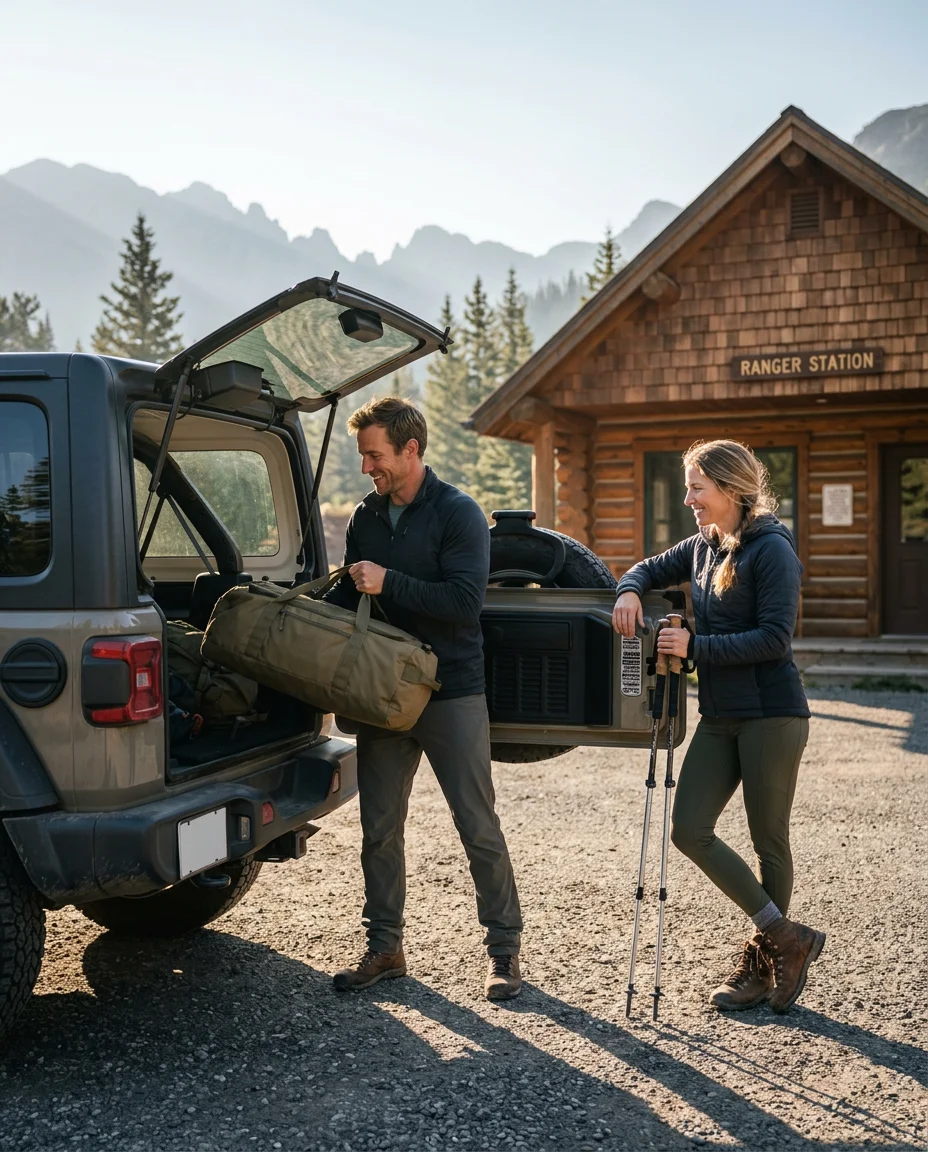
Closer to Chiang Mai city, Doi Suthep-Pui National Park maintains pitches at the Doi Pui summit campground, known locally as Yod Doi Pui, set amongst pine and evergreen oak forest roughly 1,400 metres up. In Chiang Rai, Phu Chi Fa Forest Park perches campers along a sheer escarpment overlooking the Mekong River basin into north-western Laos, where early risers gather on the cliff edge for dawn cloud inversions. In Mae Hong Son province, Pang Ung features an alpine-style irrigation reservoir bordered by three-needled Khasi pines, allowing campers to pitch on designated lakefront turf. At public forestry and national park sites, campers must register at the ranger station or entry checkpoint before setting up their shelter.
Private Valley Glamping Hubs and High-Ridge Domes
Private agricultural hillsides and river valleys provide catered glamping compounds equipped with insulated geodesic domes, canvas safari bell tents, and timber chalets built on stilts. Mon Chaem, situated along an agricultural ridge in Mae Rim district roughly 45 minutes drive north of Chiang Mai, forms the central hub of this sector. Local farmers have converted steep terraced hillsides into dome settlements featuring clear panoramic viewing walls, private timber balconies, mains electricity, and en-suite shower cubicles with gas water heaters to handle cold highland nights.
In the neighbouring Mae Taeng valley, safari camps sit beside rivers and forest reserves, combining canvas living with plunge pools and guided walks. In Chiang Rai, the high-altitude Arabica coffee belt of Doi Chang features boutique dome lodges where guests sleep amongst terraced coffee bushes and sample local roasts. Further west in Mae Hong Son, the Pai valley provides riverside canvas tents positioned below limestone karsts, featuring outdoor soaking tubs and fire pits. Unlike public campgrounds where gear must be carried or hired piece by piece from rangers, these private operations provide bedding, linen, and on-site dining, usually centred around an evening mookata barbecue hotpot.
| Option | DNP Public Campground | Ridge Glamping Dome | Boutique Safari Lodge | Tea Estate Eco-Chalet |
|---|---|---|---|---|
| Shelter Type | Ground canvas dome tent | Geodesic vinyl dome | Canvas safari tent | Timber and canvas A-frame |
| Inclusions | Bare pitch or foam pad, sleeping bag, communal washroom | Queen bed, en-suite bathroom, hot shower, private balcony | King bed, timber deck, mains air con, cooked breakfast | En-suite bath, fire pit, local tea tasting, valley view |
| Typical Elevation | 1,000m to 1,920m | 900m to 1,350m | 400m to 800m | 1,000m to 1,200m |
| Cost (THB) | 30 THB per person to 255 THB per tent | 1,500 to 2,500 THB per night | 2,800 to 4,500 THB per night | 2,000 to 3,500 THB per night |
| Cost (GBP) | £0.70 per person to £5.90 per tent | £35 to £58 per night | £65 to £105 per night | £47 to £81 per night |
These private compounds offer an accessible alternative to backcountry pitching, providing hotel amenities in remote mountain scenery without the requirement to carry personal camping gear.
Plan a Northern Thailand trip covering Chiang Mai, Chiang Rai, Sukhothai, mountain routes, Lanna food, transport, seasons and air quality.
Equipment Rental, Campsite Amenities, and Cooking Logistics
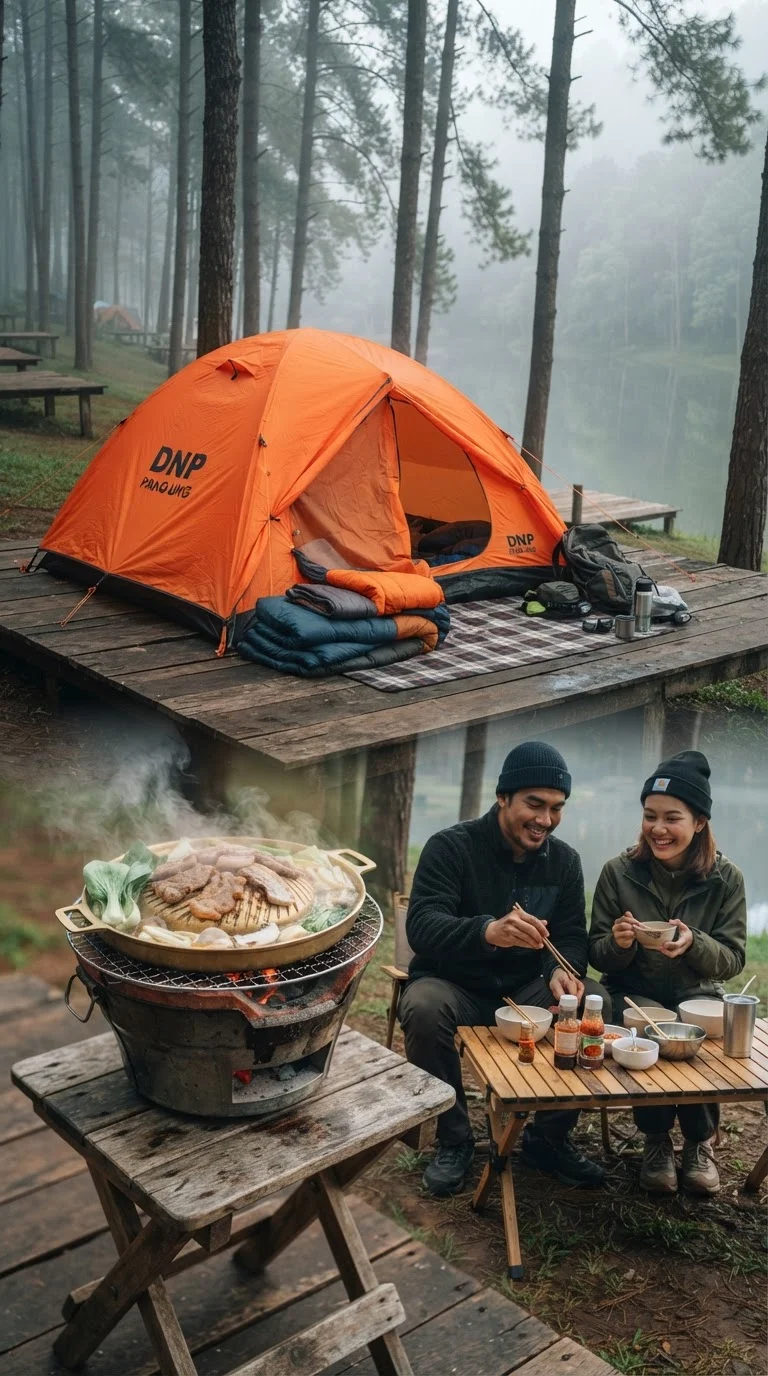
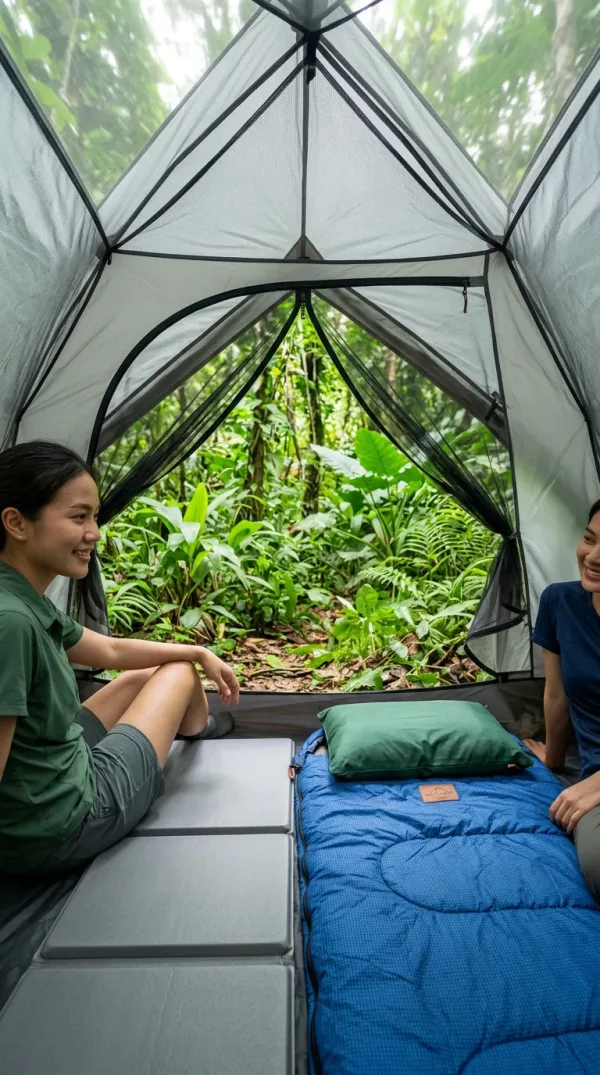
Public national park headquarters and private agricultural glamping resorts make it straightforward to camp without hauling heavy gear from the UK. At Department of National Parks (DNP) locations across the northern mountains, visitor centres rent standard camping equipment, including two-to-four-person waterproof dome tents, synthetic sleeping bags, closed-cell foam ground mats, and small pillows. Campers collecting gear on arrival can pitch it themselves, though tents reserved in advance through the national park portal are often erected by park rangers before you arrive. It pays to check sleeping bags and zips at the collection counter before walking to your pitch, ensuring the insulation is dry.
Campground facilities reflect the clear division between public conservation land and commercial operations. National park washrooms provide flush toilets and communal showers, but hot water is effectively absent from public tent areas. Washing in unheated mountain water requires genuine mental resolve when morning temperatures dip into single digits. For meals, public parks rely on open-air canteens serving simple dishes such as fried rice, noodle soups, and stir-fries until around 18:00 or 19:00. Open ground fires are strictly prohibited, though small camping stoves and hired charcoal braziers are commonly permitted in designated cooking zones.
Private glamping hubs provide a starkly different standard of comfort. Most furnish tents and geodesic domes with standard mains power, electric kettles, and private bathrooms fitted with water heaters. Their defining evening ritual is mookata—a communal Thai charcoal hotpot and barbecue set delivered directly to your outdoor terrace, complete with broth, thinly sliced pork, fresh greens, and dipping sauces.
Northern Mountain Ridges Compared with Southern Island Pitches
Highland camping across northern Thailand operates in an entirely different climate from the beach pitches of the southern Andaman and Gulf islands. Southern marine parks, such as Mu Koh Surin and Koh Tarutao, place campsites at sea level along tropical sand spits and forested coves. Campers there contend with salt spray, steady sea breezes, persistent maritime humidity, and night temperatures that rarely fall below 24°C. Those coastal conditions require breathable mesh shelters, light linen or cotton coverings, and careful protection against sand flies and mosquitoes.
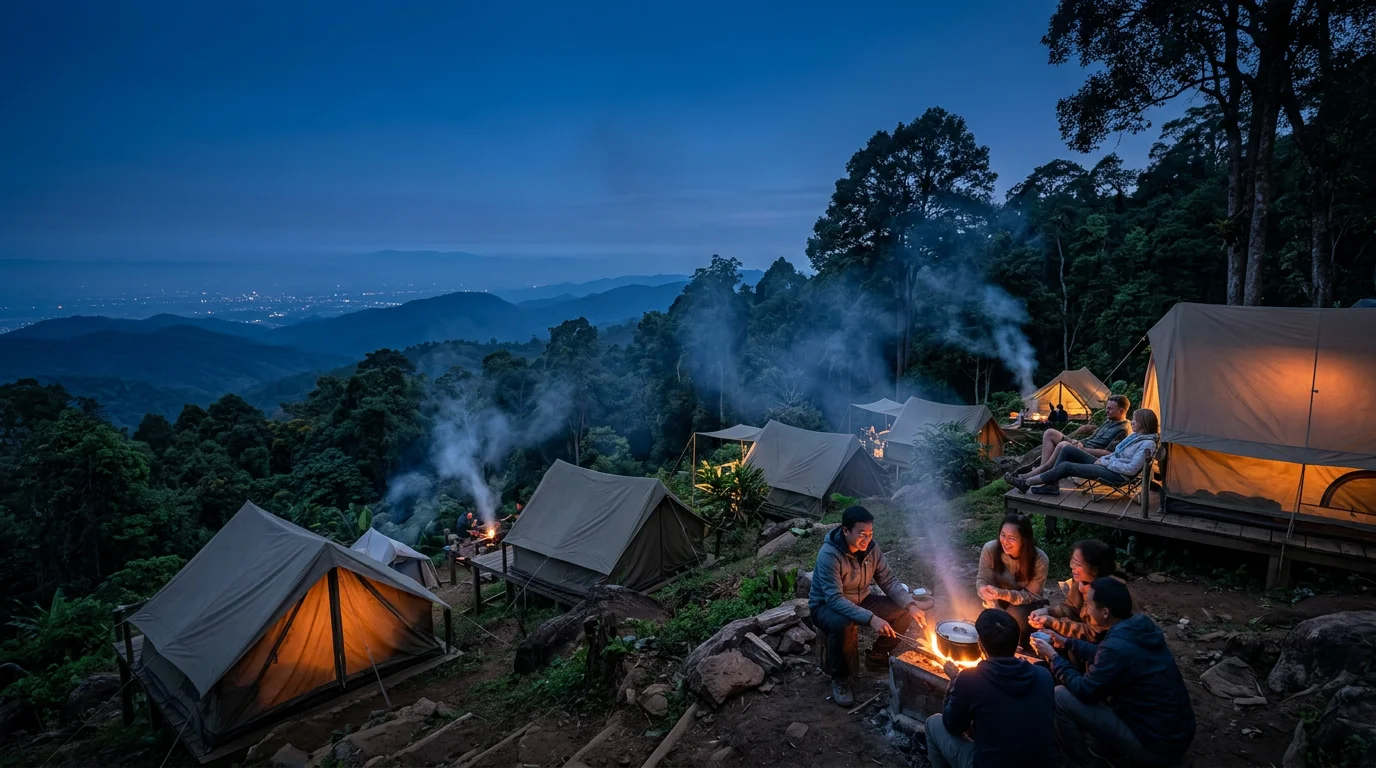
By contrast, northern mountain campgrounds typically sit at elevations between 1,000 and 2,200 metres, surrounded by evergreen montane forest, dipterocarp woods, and stands of pine. During the cool season between November and February, daytime warmth gives way to sharp nocturnal cooling. Ridge campgrounds regularly register night temperatures between 3°C and 12°C, occasionally dipping towards freezing at high-altitude grounds such as Doi Inthanon and Doi Pha Hom Pok. This rapid cooling creates heavy interior tent condensation as warm air inside meets cold flysheets, alongside the dense valley temperature inversions known locally as talay mok, or seas of mist, which gather below peaks at sunrise.
Planning for northern summits therefore requires thermal base layers, fleece outerwear, woollen socks, and a sleeping bag rated down to single-digit temperatures, whereas southern coastal camping demands fast-drying fabrics and insect repellent. Recognising these altitude and temperature contrasts ensures you pack genuine cold-weather insulation rather than relying on standard tropical clothing.
Location and Getting There
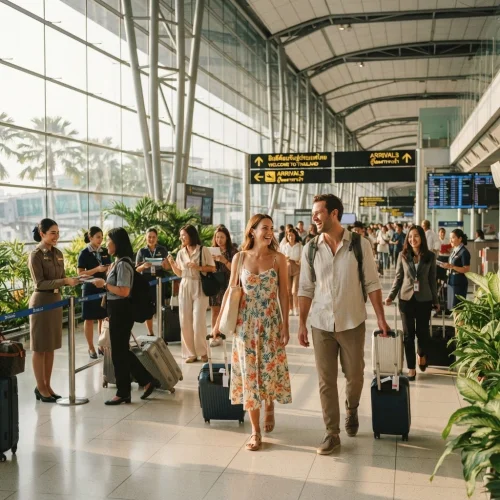
Northern Thailand's camping hubs spread across the rugged border provinces of Chiang Mai, Chiang Rai, and Mae Hong Son. Chiang Mai International Airport (CNX) is the primary regional flight hub, located 45 kilometres (1 hour) from Mon Chaem, 90 kilometres (2 hours) from Doi Inthanon, and 160 kilometres (3.5 hours) from Doi Pha Hom Pok. Chiang Rai International Airport (CEI) provides closer access to Phu Chi Fa, positioned 110 kilometres (2.5 hours) to the south-east.
Hiring a car directly at Chiang Mai Airport provides practical flexibility for mountain pitches, with compact vehicles typically costing between 800 and 1,200 THB (£19 to £28) per day. Reaching remote national park campgrounds requires private transport or scheduled local services, as public transit rarely climbs all the way to high-altitude ridge pitches.
Local buses and songthaews depart Chiang Mai’s Chang Phuak Bus Station for Fang—the transit point for Doi Pha Hom Pok—for around 80 to 120 THB (£1.90 to £2.80). From the park headquarters, four-wheel-drive transfers up the unpaved track to Kiew Lom summit campsite cost between 1,500 and 1,800 THB (£35 to £42) return. For Mae Hong Son campsites like Pang Ung, scheduled minibuses run from Chiang Mai to Pai and Mae Hong Son town for 150 to 250 THB (£3.50 to £5.90), where morning songthaews climb to the reservoir for around 90 THB (£2.10).
Costs and Booking
Camping across Northern Thailand spans state national park campgrounds and private agricultural glamping domes. National park camping remains inexpensive. Travellers bringing their own tent pay a statutory pitch fee of 30 THB (£0.70) per person per night at ranger stations. Visitor centres also rent equipment on arrival: basic tents cost 150 to 225 THB (£3.50 to £5.20) per night, while bedding sets—sleeping bag, foam pad, and pillow—cost 60 THB (£1.40) per person. Statutory park entrance fees apply separately: foreign adults pay 100 to 300 THB (£2.30 to £7.00) depending on park tier, foreign children pay 50 to 150 THB (£1.20 to £3.50), and passenger cars incur a 30 THB (£0.70) vehicle charge.
Private glamping domes in Mon Chaem and Mae Taeng offer en-suite facilities and valley views. Standard domes cost 1,200 to 2,000 THB (£28 to £47) per night in shoulder months, rising to 2,200 to 3,500 THB (£51 to £81) on high-season weekends from November to February. Luxury safari lodges reach 3,000 to 4,500 THB (£70 to £105), while evening mookata barbecue sets run 350 to 500 THB (£8.10 to £11.60) for two diners. Rainy-season discounts frequently lower rates by 30% to 50%. Public pitches can be booked up to 60 days ahead, whereas private glamping requires direct advance booking.
| Option | Cost (THB) | Cost (GBP) | Notes |
|---|---|---|---|
| DNP Own-Tent Pitch | 30 THB per person per night | £0.70 | Payable on arrival at the park ranger station |
| DNP Tent Rental (2–3 Person) | 150 to 225 THB per night | £3.50 to £5.20 | Basic tent; bedding accessories rented separately on site |
| DNP Bedding Pack | 60 THB per person per night | £1.40 | Includes sleeping bag, foam sleeping mat, and pillow |
| National Park Foreign Adult Entry | 100 to 300 THB per entry | £2.30 to £7.00 | Statutory fee by park tier; 300 THB at Doi Inthanon |
| Mon Chaem Standard Glamping Dome | 1,500 to 2,500 THB per night | £35 to £58 | Double occupancy, en-suite bathroom, breakfast included |
| Luxury Safari Valley Lodge | 3,000 to 4,500 THB per night | £70 to £105 | Upgraded unit, air conditioning, private outdoor tub |
| Evening Mookata Barbecue Set | 350 to 500 THB per set | £8.10 to £11.60 | Serves two people; includes burner, broth, and ingredients |
Who It Suits Best
Camping in northern Thailand suits active travellers, self-drive holidaymakers, and independent hikers who prioritise high-altitude landscapes and cool mountain air over resort luxury. It serves budget backpackers looking for low-cost wilderness stays, alongside road-trippers touring the northern loops by car or motorbike.
Conversely, national park sites do not cater to travellers seeking lively evening socialising. Parks operate under a statutory alcohol ban and enforce quiet hours from 22:00. Mountain sites are also ill-suited to visitors with limited mobility: pitches and communal washblocks regularly sit along steep gradients, with rough, unpaved terrain and an absence of step-free access.
What to Know Before You Book
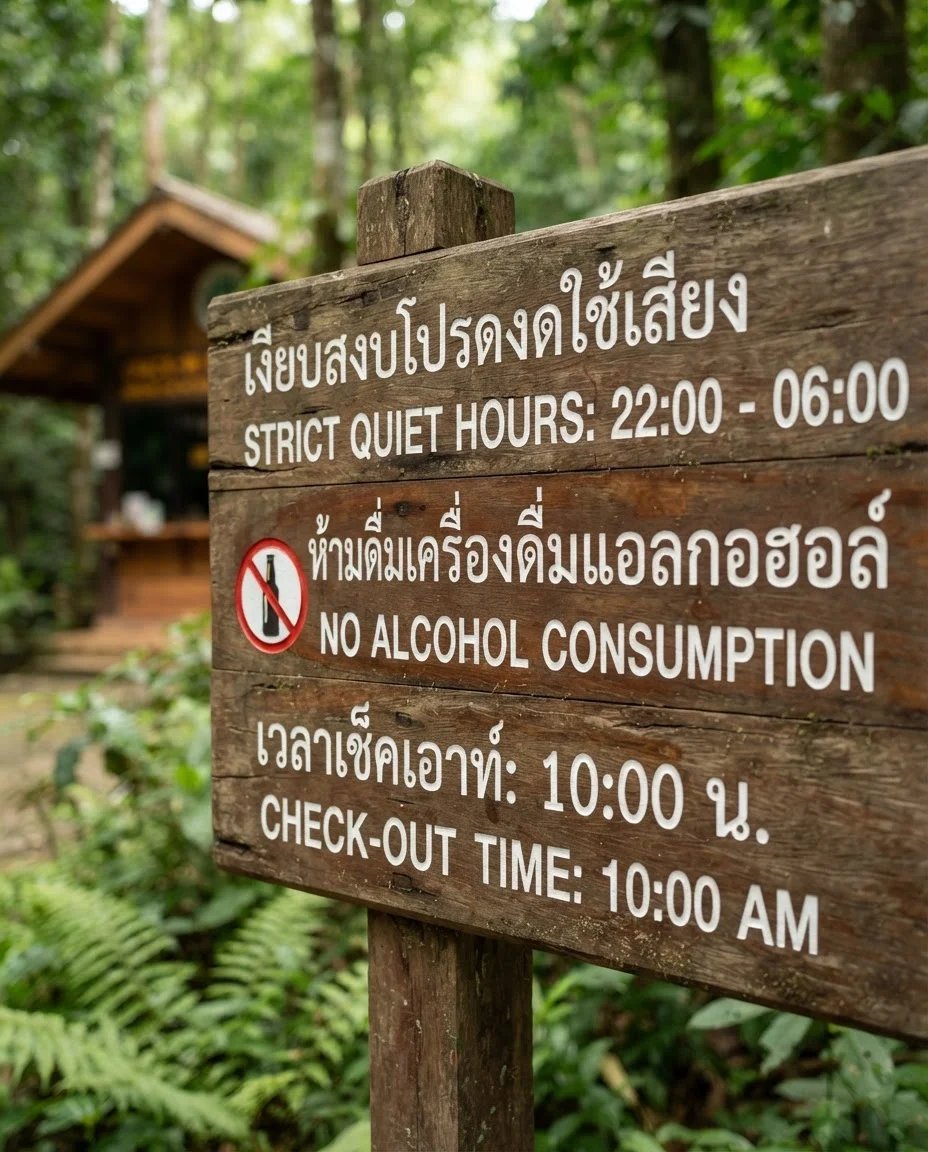
Thailand's Department of National Parks, Wildlife and Plant Conservation enforces a strict ban on the possession, sale, and consumption of alcoholic drinks across state-run national park campgrounds. Bringing beer, wine, or spirits onto public pitches risks fines and immediate removal by patrolling park rangers.
Night-time temperatures at high elevations drop far lower than many travellers expect from a tropical country. Between November and January, summit ridges across Chiang Mai and Mae Hong Son frequently experience single-digit readings, with ground frosts recorded on peaks such as Doi Inthanon. Pack thermal base layers, a fleece, and an insulated sleeping mat to protect against ground chill.
Trip timing requires careful attention due to the regional dry-season smoke haze. Agricultural burning and trapped valley smoke severely degrade air quality from mid-February through April, obscuring mountain views and creating respiratory hazards. Plan wilderness stays between late October and early February for clearer skies and crisp weather.
Sanitation facilities also differ sharply between venue categories. Government park pitches provide communal washblocks with unheated cold water. If private en-suite facilities and a hot shower are personal priorities, reserve a private agricultural glamping dome instead.
Practical Tips
Carrying physical Thai Baht cash is necessary for public campgrounds. Ranger stations, entry checkpoints, firewood vendors, and mountain noodle shacks rarely accept credit cards. Mobile banking transfers are standard throughout Thailand, but patchy cellular reception across highland passes and valleys often prevents payment apps from loading.
Electrical infrastructure at public sites is minimal. Individual pitches lack power sockets, with charging typically limited to communal multi-plug strips at ranger offices or canteens. Campers should pack high-capacity power banks to keep navigation devices and cameras running, alongside a dependable headtorch for walking unlit tracks to washblocks at night.
Sound travels easily across open grounds, making earplugs sensible. Mountain pitches often stir by 04:30 as hikers pack equipment and unzip canvas for sunrise viewpoint walks. In rural valleys and community campgrounds, crowing roosters and village dogs frequently start up before dawn.
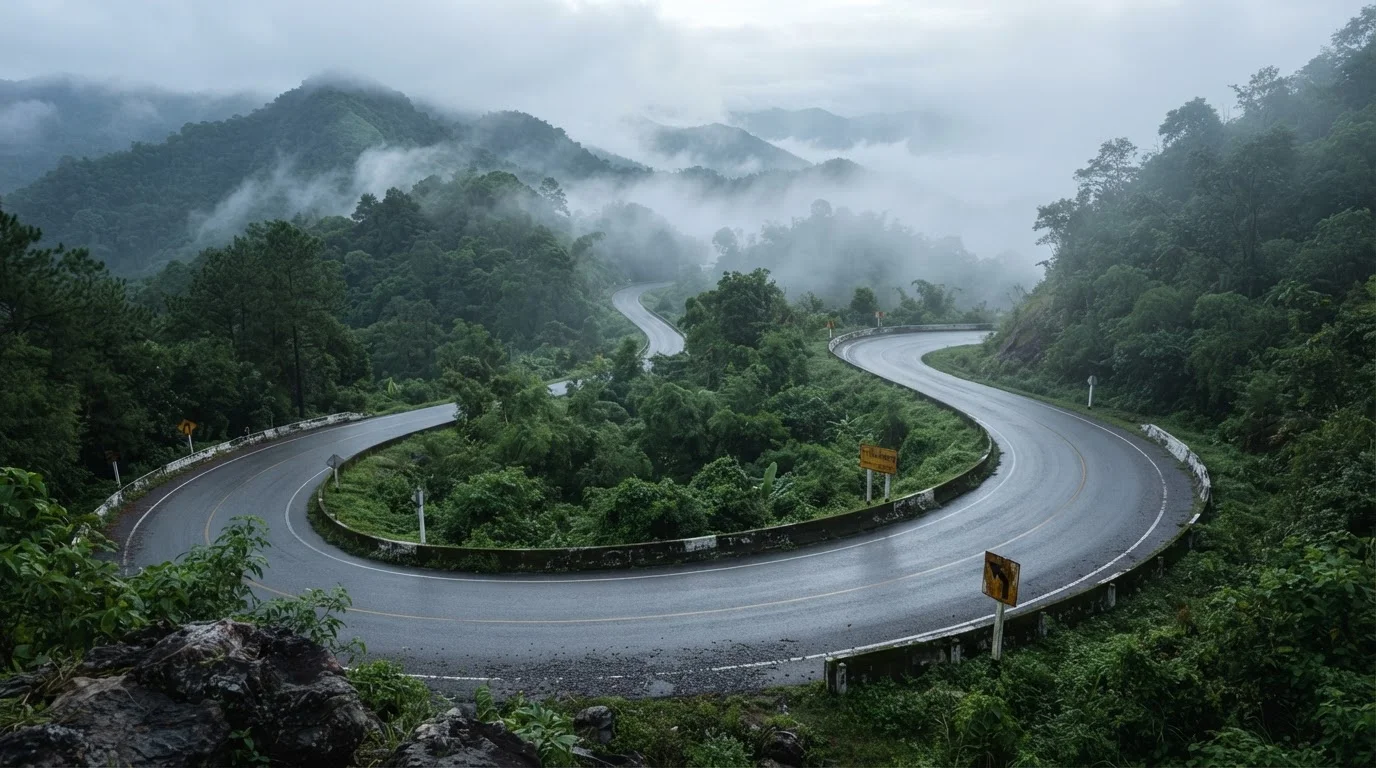
Self-drive campers need transport suited to mountain gradients. Twisting routes such as Highway 1095 to Mae Hong Son and steep access tracks like Doi Pha Hom Pok require sound brakes and low gears, with summit tracks often restricted to 4WD vehicles. During peak December and January weekends, booking pitches and hire equipment in advance avoids turned-away arrivals. Checking particulate apps before setting off helps verify clean conditions before pitching high on exposed ridges.
Planning your route, equipment hire, and campsite bookings early makes exploring the northern mountains straightforward.
Quick Reference Table
| Item | Detail | Notes |
|---|---|---|
| Best season | November to February | Clear skies and single-digit night temperatures (3°C to 12°C); smoke haze occurs mid-February to April |
| Highest campsite | Kew Lom (Doi Pha Hom Pok), 1,920m | Highest road-accessible campground in Thailand; summit trail reaches 2,285m |
| DNP pitch fee | 30 THB (£0.70) per person per night | Statutory fee for pitching your own tent, paid at ranger stations |
| DNP tent rental | 150 to 225 THB (£3.50 to £5.20) per night | Two-to-four-person waterproof dome tents |
| DNP bedding hire | 60 THB (£1.40) per person per night | Includes synthetic sleeping bag, foam sleeping mat, and pillow |
| Park admission fees | 100 to 300 THB (£2.30 to £7.00) foreign adults | Foreign children 50 to 150 THB (£1.20 to £3.50); vehicle entry fee 30 THB (£0.70) |
| Mon Chaem glamping domes | 1,200 to 3,500 THB (£28 to £81) per night | Standard rates 1,500 to 2,500 THB (£35 to £58); peak weekend rates reach 3,500 THB |
| Luxury safari lodges | 3,000 to 4,500 THB (£70 to £105) per night | Catered valley glamping with en-suite bathrooms and air conditioning |
| Mookata barbecue dinner | 350 to 500 THB (£8.10 to £11.60) | Serves two people at private glamping sites |
| Car rental | 800 to 1,200 THB (£19 to £28) per day | Compact car hire from Chiang Mai International Airport (CNX) |
| Summit 4WD transfer | 1,500 to 1,800 THB (£35 to £42) return | Doi Pha Hom Pok headquarters to Kew Lom campsite |
| Alcohol regulation | Strictly prohibited in national parks | Enforced under statutory penalty; park quiet hours commence at 22:00 |
| Booking advance window | Up to 60 days ahead | Advance reservations for statutory DNP public pitches |
| Website | nps.dnp.go.th | Department of National Parks official booking portal |
| Book direct | nps.dnp.go.th | Online reservations for national park pitches; QueQ mobile app for park ticketing |
| Phone | +66 5 392 2000 (CNX) / +66 5 379 8000 (CEI) | Airport information desks for Chiang Mai and Chiang Rai |
FAQ: Camping in Northern Thailand
What are the main types of camping available in Northern Thailand?
When is the best time to go camping in Northern Thailand to avoid smoke haze?
What kind of clothing should I pack for cold weather when camping in Northern Thailand's mountains?
Is alcohol allowed at national park campsites in Northern Thailand?
Should I carry cash when camping in Northern Thailand's national parks?
Do national park campsites in Northern Thailand have hot showers?
Can I rent camping equipment at national parks in Northern Thailand?
How much does it cost to pitch my own tent at a national park in Northern Thailand?
Is it necessary to rent a car for camping in Northern Thailand?
Is camping in Northern Thailand suitable for travellers with limited mobility?
Reviewed by the Thailand Guide Editorial Team • Last reviewed: 18 November 2026
This page is provided for general information only. While we aim for accuracy, details can change — please verify anything important independently before relying on it.