River Kayaking
A sudden drop over granite ledges pulls your bow into the churning foam of the Mae Taeng River, where northern mountain runoff cuts through dense jungle gorges. Unlike the sheltered coastal bays and mangrove channels of the south, inland river kayaking in Thailand introduces the dynamic demands of moving water: navigating swift eddy lines, reading river beds, and adjusting to rapid shifts in volume.
This guide details freshwater river kayaking across Thailand, mapping the divide between gentle scenic touring and technical whitewater. We explore calm drifting routes along the River Kwai, the upper Mae Ping, and the Sok River beneath limestone cliffs, alongside demanding Class II to IV river runs on northern waterways including the Mae Taeng, the Pai, and the remote Nam Wa. You will find practical guidance on seasonal river flow windows, critical hazards such as submerged strainers and flash floods, boat selection, and typical costs for guided expeditions or independent descents.

Freshwater Hydrology: Seasonal Water Levels and Flow Rates
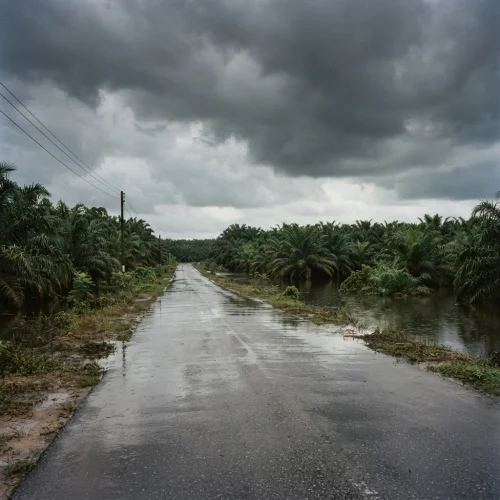
Inland river kayaking in Thailand follows a hydrological rhythm dictated primarily by the southwest monsoon and highland catchment runoff, rather than the predictable tidal cycles that govern coastal paddling. From northern mountain ranges to western jungle valleys, freshwater channels undergo pronounced seasonal transformations in volume, velocity, and clarity. Regulated waterways such as Kanchanaburi’s river networks also reflect upstream reservoir management, but for natural free-flowing rivers, seasonal rainfall governs navigation from start to finish. Understanding how discharge fluctuates across the year determines both craft selection and route planning, as a stretch that offers an easy float in January can become an unrunnable torrent during peak rains.
The annual cycle peaks with the arrival of the southwest monsoon between July and October. During these months, heavy tropical rainfall drenches elevated watersheds across northern provinces such as Chiang Mai, Mae Hong Son, and Nan. Mountain streams gather rapidly, turning sediment-laden rivers like the Mae Taeng and the middle reaches of the Nam Wa into high-volume whitewater corridors. Strong hydraulic features, large standing waves, and swift currents demand advanced boat-handling skills and precise river reading. Heavy downpours upstream can alter water levels significantly within a few hours, pushing moderate rapids into technical Class IV descents.
As the monsoon recedes in late October, the cool dry season runs from November through February. This period provides balanced paddling conditions across Thailand. Highland runoff tapers off, suspended silt settles into clear currents, and river discharge stabilises into classic pool-and-drop formats. Moderate flow rates allow intermediate kayakers to navigate bouncy grade II and III rapids on northern rivers, while touring kayaks and sit-on-top craft can cruise calmer waterways like the River Kwai and the Sok River without fighting overwhelming velocity.
Between March and May, the hot dry season reduces river volumes to their lowest annual levels. Broad gravel bars and boulder gardens emerge, forcing paddlers to negotiate shallow braided channels. On sections of the Ping and Pai rivers, reduced discharge often grounds rigid hulls, turning prospective paddle tours into prolonged portages. By June, early monsoon rains begin replenishing mountain tributaries, gradually clearing accumulated dry-season debris and raising flow rates once again. Checking local river conditions and recent watershed rainfall before booking an excursion ensures that your intended route matches both your technical capabilities and preferred paddling craft.
| Season | Hydrological Conditions | Whitewater Grade | Example Rivers |
|---|---|---|---|
| Monsoon (July–October) | High volume, fast velocity, heavy sediment load | Class III to Class IV+ whitewater | Mae Taeng (upper), Nam Wa (middle), Pai River |
| Cool Dry (November–February) | Moderate volume, clear water, steady pool-and-drop flow | Class I to Class III; ideal recreational flow | River Kwai, Sok River, Upper Mae Ping, Lang River |
| Hot Dry (March–May) | Low volume, exposed boulders, shallow braided channels | Class I; technical rock avoidance and portaging | Lower Mae Ping, Khwae Yai, Khao Sok downstream pools |
| Early Monsoon (June) | Rising volume, variable flow, clearing debris | Class II to Class III; building current | Nakhon Nayok River, Mae Taeng (lower sections) |
Northern Whitewater Runs: Mae Taeng, Pai, and Nam Wa Rivers
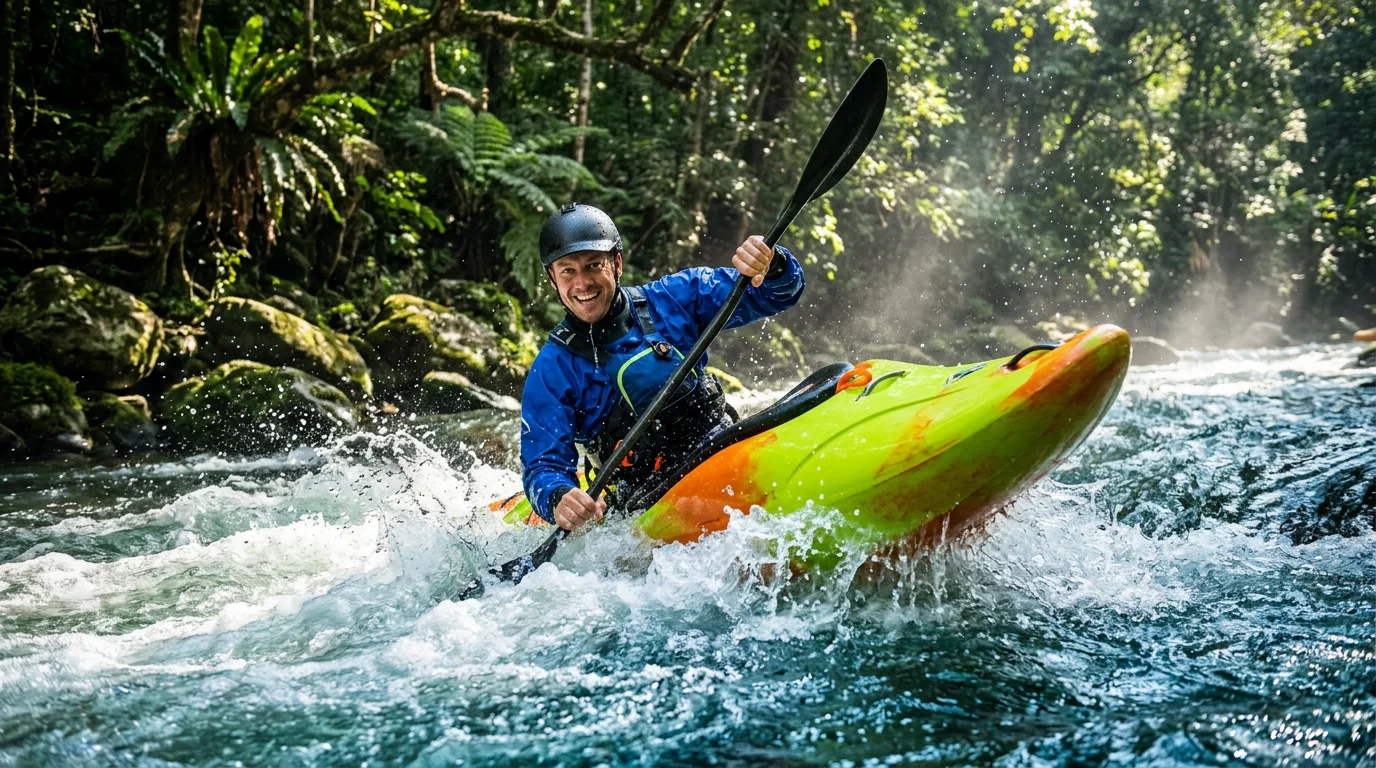
Northern Thailand contains some of the country's most demanding whitewater, where steep granite valleys and seasonal monsoon rains create technical river descents. The Mae Taeng River, situated roughly 75 kilometres north of Chiang Mai old city, forms the regional centre for whitewater paddling. Starting near Sop Kai village, the river's primary 10-kilometre run delivers continuous Class III to Class IV rapids between July and October. Paddlers navigate these boulder gardens either in dedicated plastic creek boats or two-person inflatable kayaks. Hard-shell creek boats require an established whitewater roll, whereas inflatable descents place a trained local guide in the boat or immediately alongside. A standard guided day run on the Mae Taeng costs between 2,500 THB and 3,000 THB (approx £56 to £67), covering safety briefings, buoyancy aids, certified helmets, and safety kayaker support.
Further northwest in Mae Hong Son province, the Pai River provides a 180-kilometre jungle waterway accessible from Pai town. Commercial expeditions tackle a 45-kilometre wilderness stretch between Susa Waterfall and Mae Hong Son town, navigating Class II and III rapids that swell to Class IV after heavy rains. The forested canyon isolates paddlers from road networks, punctuated by riverside thermal springs and towering limestone cliffs. Dry-season runs between November and February offer manageable technical channels, while high wet-season flows demand quick defensive manoeuvring.
In the eastern highlands of Nan province, the Nam Wa River flows through Mae Charim National Park and Doi Phu Kha National Park, delivering roughly 100 kilometres of whitewater divided into upper, middle, and lower runs. The remote Middle Nam Wa represents one of Thailand's most isolated multi-day expeditions. Rushing through deep granite gorges with zero road access, this 45-to-50-kilometre stretch packs roughly one hundred rapids graded Class III to Class V depending on seasonal volume. Multi-day trips rely on self-sufficient expedition logistics, with paddlers and raft crews pitching camp overnight on riverside sandbars. High-grade whitewater descents require qualified local outfitters whose river guides carry swiftwater rescue certification and deploy experienced safety kayakers across technical sections.
| River | Location | Rapid Class | Typical Cost |
|---|---|---|---|
| Mae Taeng River | Chiang Mai (90 mins north of city centre) | Class II to Class IV | 2,500–3,000 THB (approx £56–£67) per day run |
| Pai River | Mae Hong Son (access via Pai town) | Class II to Class IV | 2,700–4,500 THB (approx £60–£101) for 2-day trip |
| Nam Wa River | Nan Province (Mae Charim National Park) | Class III to Class V (seasonal) | 3,800–8,000 THB (approx £85–£179) multi-day expedition |
| Nakhon Nayok River | Nakhon Nayok (2 hours northeast of Bangkok) | Class I to Class II+ (dam releases) | 1,200–1,800 THB (approx £27–£40) half-day run |
Plan a journey along Thailand’s Andaman coast, with practical guidance on island gateways, marine parks, diving, ferries and monsoon travel.
Scenic Jungle River Drifting: River Kwai, Mae Ping, and Sok River
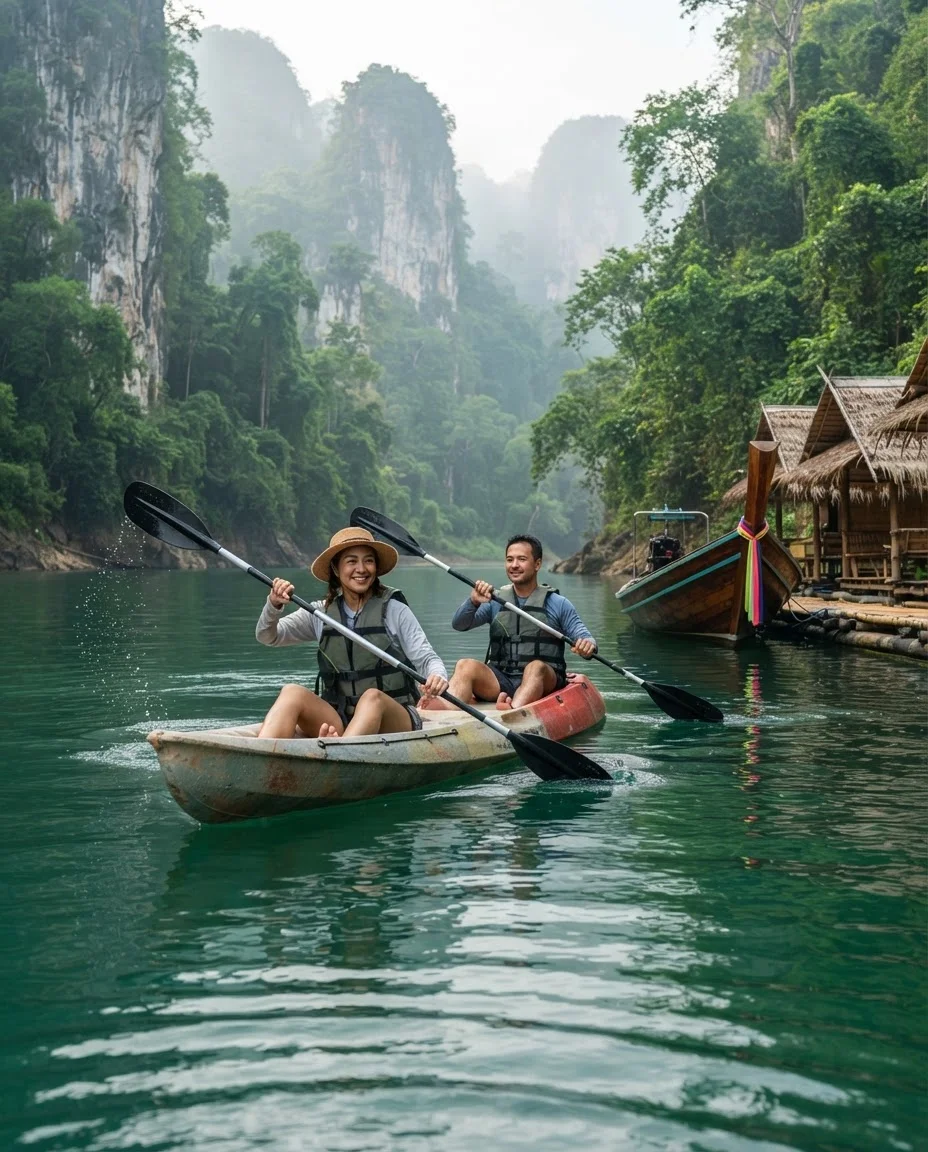
Calm freshwater rivers provide gentle downstream paddling without the turbulence of technical whitewater rapids. Across Thailand, low-gradient waterways sweep past limestone karst pillars, rural farmland, and dense jungle canopy, allowing paddlers to drift with the current rather than fight coastal tides or swells.
In western Thailand, the River Kwai system around Kanchanaburi splits into two primary tributaries: the Khwae Yai and Khwae Noi. The wider Khwae Yai carries steady, mild currents past sheer limestone crags, riverside temples, and the historic railway bridge built during the Second World War. Operators like River Kwai Kayaking run certified 5.5-kilometre routes adhering to Thailand Tourism Standard TTS 409:2009 for moving water. Guided sessions cost 700 THB (£16) per person with safety equipment and instruction, while unguided sit-on-top kayak hire costs 500 THB (£11).
In northern Thailand, the upper Mae Ping River winds through the Chiang Dao valley and Mae Taeng Forest Reserve, north of Chiang Mai. Here, the river follows wide gravel bends bordered by bamboo groves and farmland. These tranquil Class I stretches carry paddlers downstream at an unhurried pace, with water levels remaining manageable through much of the year. Guided day and half-day excursions on the upper Mae Ping generally range from 1,800 THB to 2,500 THB (£41 to £57) per person, typically including hotel transfers and equipment.
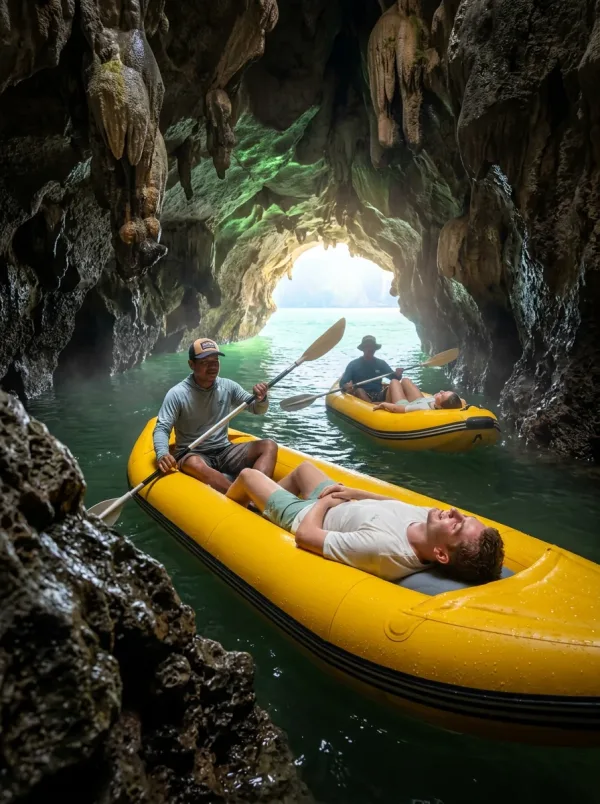
In southern Thailand, the Sok River skirts Khao Sok National Park in Surat Thani province. Drifting down this shallow, clear waterway brings paddlers beneath limestone bluffs and dense evergreen rainforest, with frequent sightings of kingfishers and macaques. Guided river floats down the Sok typically cost between 800 THB and 1,000 THB (£18 to £23) per person, usually in two-person inflatable canoes steered by local guides who pause along pebble banks to brew bamboo tea. In Mae Hong Son, the Lang River near Pang Mapha provides a rare subterranean drift, carrying paddlers through the vast caverns of Lod Cave before continuing down gentle Class I–II rapids for 800 THB to 1,500 THB (£18 to £34).
| River Route | Province & Landscape | Current Characteristics | Typical Cost (THB / GBP) |
|---|---|---|---|
| Kwai Yai River | Kanchanaburi (limestone karst & historic bridges) | Gentle moving flow; minimal navigation hazards | 500–700 THB (£11–£16) |
| Upper Mae Ping | Chiang Mai / Chiang Dao (bamboo forest & farmland) | Steady Class I drift with wide gravel bends | 1,800–2,500 THB (£41–£57) |
| Sok River | Surat Thani / Khao Sok (rainforest & karst bluffs) | Shallow, clear current over smooth pebble shoals | 800–1,000 THB (£18–£23) |
| Lang River | Mae Hong Son / Pang Mapha (karst cave arches) | Mild Class I–II current entering cave passages | 800–1,500 THB (£18–£34) |
Freshwater Hazards: Reading Currents, Strainers, and Flash Floods
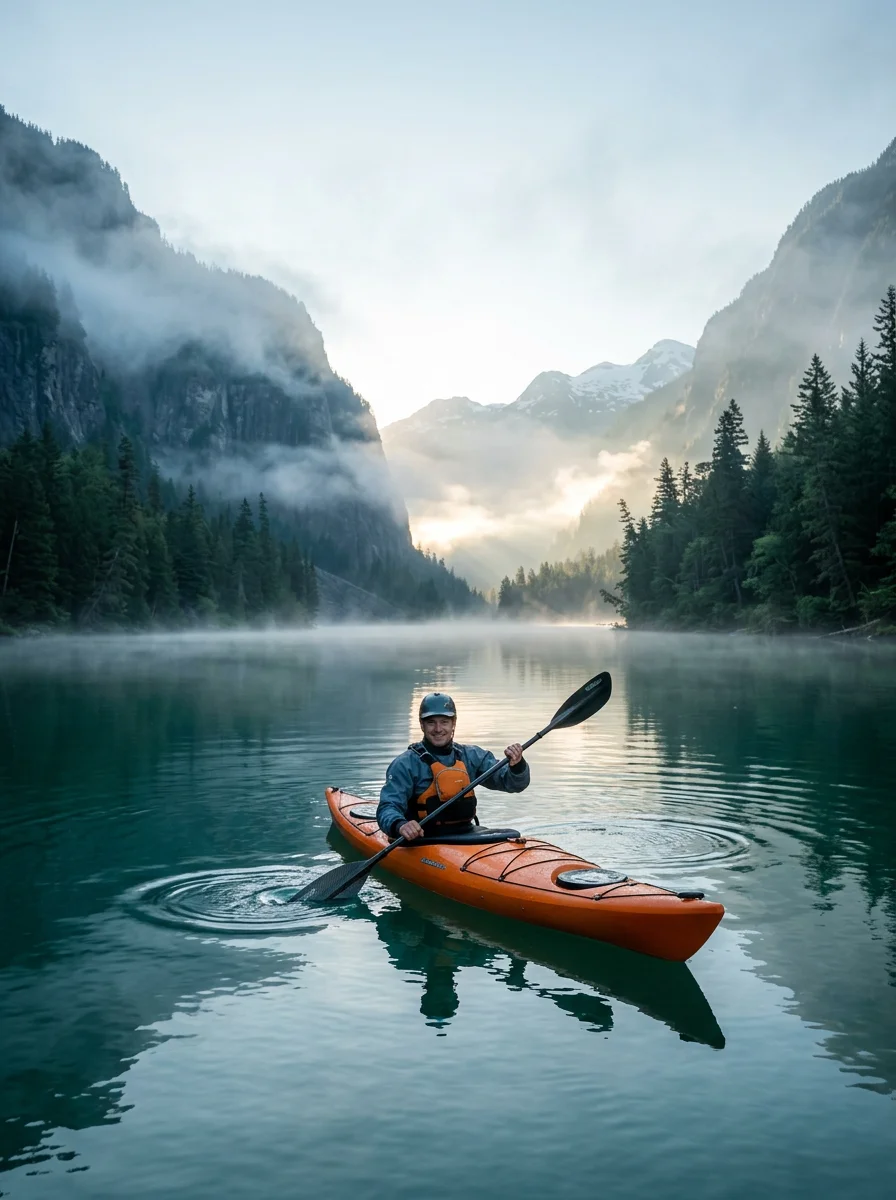
Moving freshwater presents dynamic mechanical hazards that differ fundamentally from open ocean swells or sheltered coastal estuaries. Among the most dangerous obstacles on Thai waterways are strainers—accumulations of fallen bamboo thickets, submerged timber, or wire fencing trapped across the river channel. River water filters directly through these permeable barriers, but the unrelenting force of the current can trap rigid craft and pin paddlers beneath the surface. Steering clear requires actively reading the river: an upstream-pointing "V" ripple indicates a submerged boulder or obstacle to avoid, whereas a downstream-pointing "V" tongue indicates the deepest, unobstructed channel of moving water.
Sudden flash floods present a serious hazard throughout the monsoon season. Heavy downpours in surrounding highland catchment zones can channel a muddy surge of debris-laden water into narrow valleys in under an hour, even when conditions at your launch point appear calm. Controlled dam releases also cause sudden volume shifts. On central Thailand's Nakhon Nayok River below Khun Dan Prakan Chon Dam and along Kanchanaburi's Khwae Yai, water levels fluctuate sharply depending on hydro-generation schedules, turning quiet shallows into swift torrents with little visual warning.
If you capsize in moving water, immediately adopt the defensive swimming position. Float on your back with your feet pointed downstream and keep your toes visible above the waterline, using your arms to steer towards calmer eddies. Do not attempt to stand up in fast-moving water over knee depth. Trapping a foot in a submerged rock crevice or between riverbed boulders can cause the incoming current to push your torso forward, pinning you underwater against the riverbed.
River Boat Selection: Creek Boats, Inflatables, and Sit-on-Tops
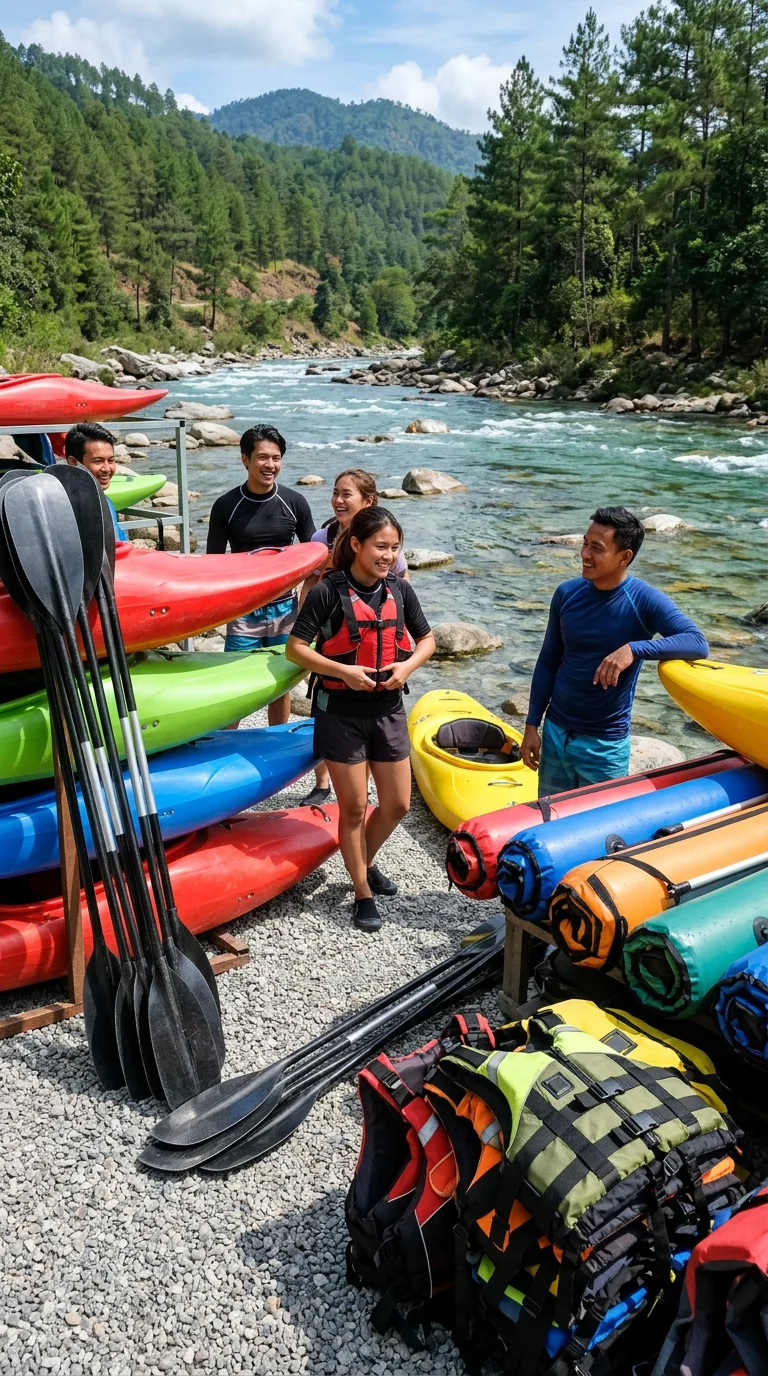
Matching craft choice to Thai freshwater river dynamics dictates paddling safety, manoeuvrability, and comfort in moving currents. Thai rivers vary from shallow, boulder-choked northern gorges to broad, silty jungle corridors. Using an unsuitable craft—such as a long sea kayak designed for open coastal water—creates severe hazards on fast inland streams. Long composite hulls lack the agility needed to negotiate tight river bends, their fragile gelcoats crack against submerged bedrock, and external rudders or drop skegs snap instantly in shallow gravel channels.
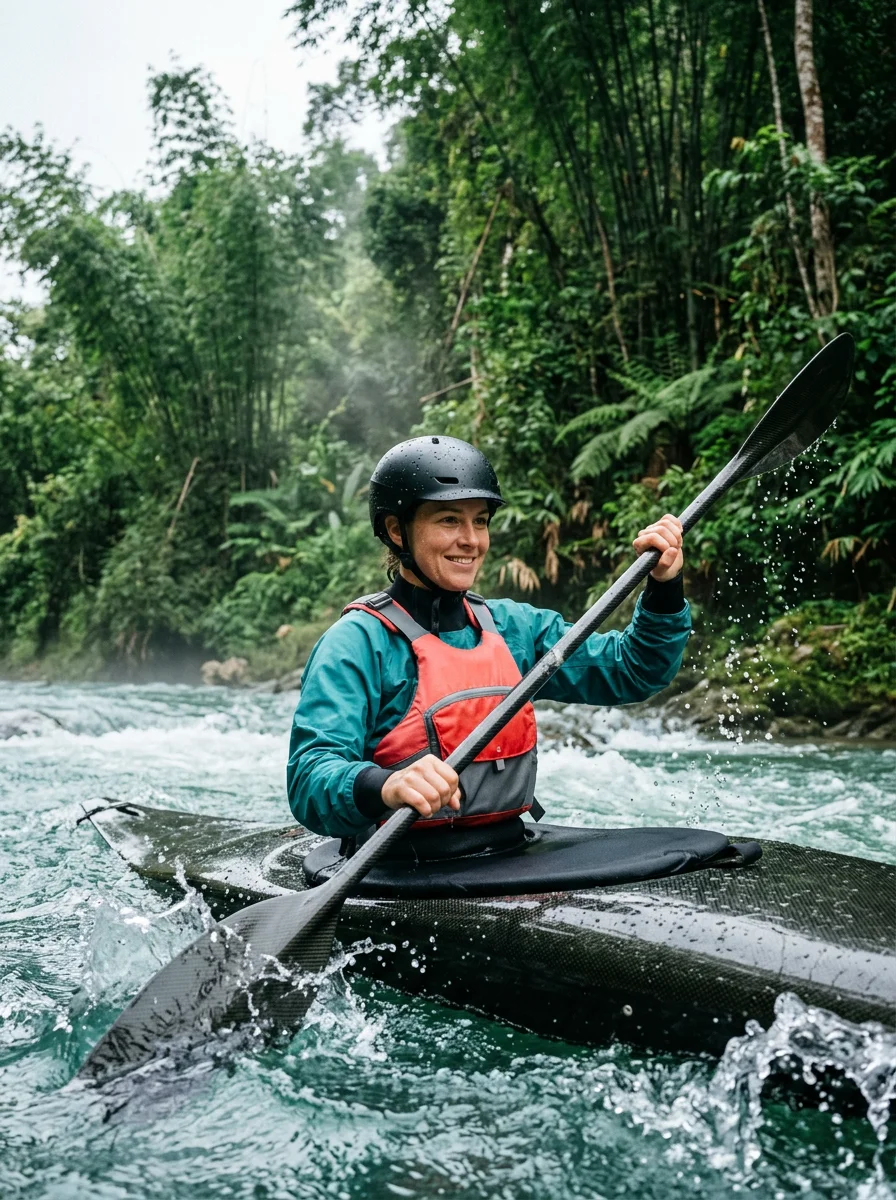
For technical Class III and IV whitewater runs on rivers such as the Mae Taeng and the Nam Wa, dedicated plastic creek boats and river-running kayaks are standard. Built from rotomoulded high-density polyethylene, these hulls absorb blunt strikes against granite boulders without puncturing. Their high-volume ends, rocker profiles, and closed cockpits—sealed with tight spray decks—shed steep standing waves and keep water from swamping the interior. Ergonomic outfitting with thigh grips and foot bulkheads gives paddlers direct edge control, though using closed-cockpit craft in moving rapids requires a dependable roll to recover from capsizes. Specialist outfitters, including Siam River Adventures on the Mae Taeng, provide imported whitewater kayaks for guided technical descents and coaching clinics.
Recreational river journeys rely on two open platforms: inflatable river kayaks and rotomoulded sit-on-tops. Inflatables, commonly called duckies, bridge the divide on rocky intermediate runs like the Pai River and the Nakhon Nayok. Fabricated from puncture-resistant PVC, their buoyant inflatable chambers bounce off shallow obstacles, soak up turbulent rapid drops with high primary stability, and deflate for compact transport in pickup truck beds across rugged mountain trails. On gentle drifting stretches such as the River Kwai or the Sok River, durable polyethylene sit-on-top kayaks excel. Moulded cockpits and self-draining scupper holes clear splashed water continuously, giving novices a forgiving platform for easy re-entry without swamping the craft.
| Boat Style | Optimal River Environment | Stability & Control | Durability Against Rocks |
|---|---|---|---|
| Whitewater Creek Boat | Class III–IV technical rapids (Mae Taeng, Nam Wa) | High secondary stability; roll technique needed | Durable rotomoulded plastic; deflects blunt rock strikes |
| Inflatable River Kayak ("Ducky") | Class I–III rocky channels (Pai, Nakhon Nayok) | Outstanding primary stability; forgiving through waves | Heavy puncture-resistant PVC; bounces off boulders |
| Rotomoulded Sit-on-Top | Calm jungle rivers (River Kwai, Sok River) | High primary stability; slow turning response | Solid polyethylene; withstands shallow riverbed scrapes |
| Closed Sea Touring Kayak | Reservoirs only (unsuitable for moving rivers) | Straight-line tracking; poor manoeuvrability | Fragile composite or gelcoat; rudders snap on shallow rocks |
Expedition Logistics: Guided Outfitters Versus Independent Paddling

River kayaking involves logistical challenges that coastal paddling rarely presents, driven entirely by continuous downstream current. Sea kayakers can launch from an open beach, complete a circuit, and land at their starting point. By contrast, freshwater river journeys follow a one-way course. Any independent run demands pre-arranged vehicle shuttles between upstream put-in points and downstream take-out locations. In rural Thailand, coordinating two vehicles or negotiating staging with local drivers along narrow mountain roads can prove difficult without conversational Thai.
Booking through an established local operator removes this friction. Professional outfits such as Siam River Adventures on northern rivers provide transit support, using dedicated vehicles to drop paddlers at the put-in, stage downstream, and collect equipment at the final exit. Organised trips also supply critical river intelligence. Local guides read moving water daily, spotting freshly fallen trees, shifting gravel bars, and riverbed changes that satellite imagery cannot capture.
Paddlers attempting independent descents with packrafts or folding craft must scout access roads and confirm viable exits before setting out. Dense subtropical jungle, steep embankments, and private fruit orchards often wall off river corridors, cutting off road access for dozens of kilometres. Carrying emergency satellite communication is sensible if you venture into remote canyons without a support vehicle. Where rivers flow through national parks—such as Mae Charim in Nan or Khao Sok in Surat Thani—you must register and pay standard foreign adult admission fees, usually 200 THB to 300 THB (approx £4.50 to £7), at the park checkpoint before putting in. Unless you have reliable return transport waiting at your take-out, booking an established outfitter is the most dependable choice.
Where to Paddle Rivers in Thailand
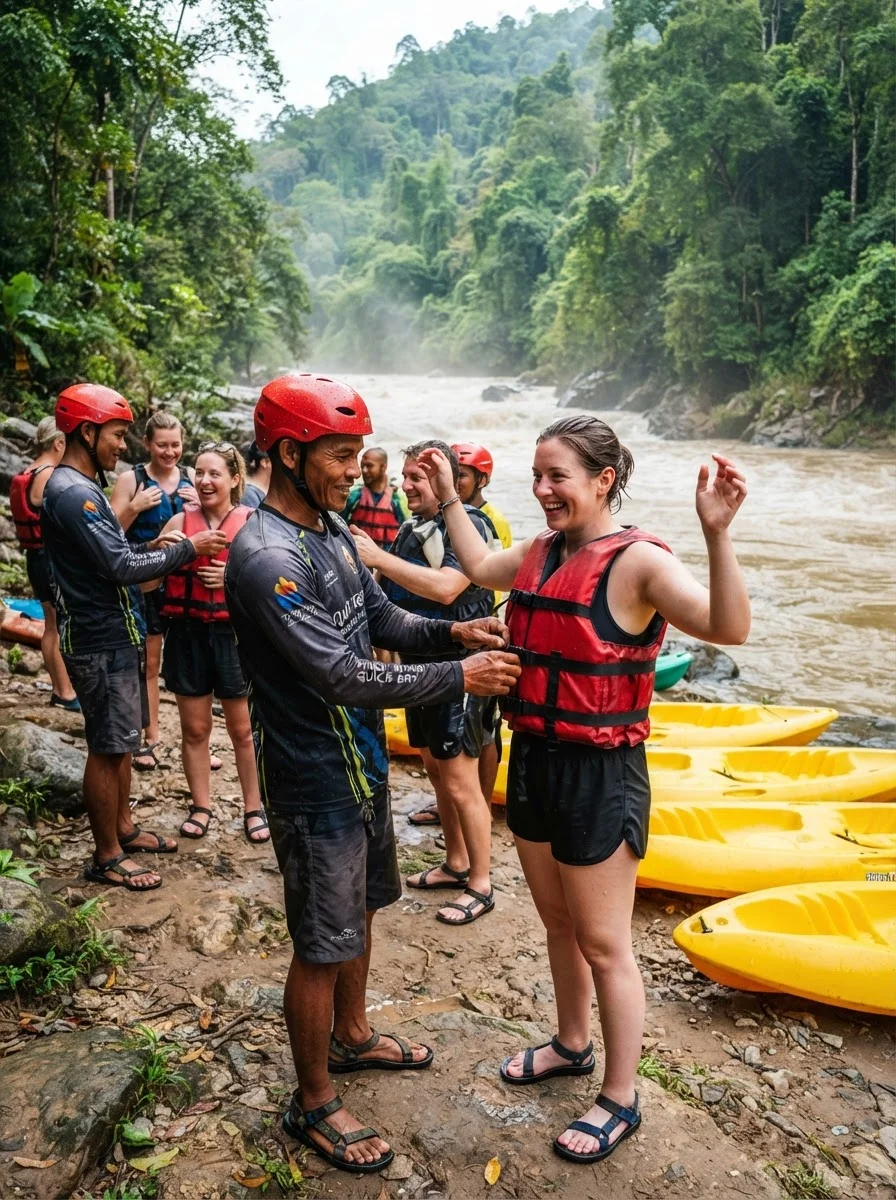
Thailand’s river paddling ranges from technical northern whitewater to gentle drifts through limestone valleys and subterranean caverns.
For Class III and IV whitewater running, the prime base lies north of Chiang Mai along the Mae Taeng River valley. Established outfitters such as Siam River Adventures and 8Adventures operate in this corridor—launching runs near Sop Kai village—with structured instructional clinics and guided single-day descents through jungle gorges. Further east in Nan province, multi-day wilderness expeditions follow the remote Nam Wa River as it carves through Mae Charim National Park, providing continuous rapids suited to competent paddlers.
Paddlers seeking calm moving water find reliable routes closer to central and southern hubs. Kanchanaburi provides immediate access from Bangkok to the River Kwai system; local outfitter River Kwai Kayaking by PMT arranges self-guided kayak hire for 500 THB (approx £11) alongside instructor-led trips for 700 THB (approx £16). In Surat Thani province, the gentle Sok River skirts Khao Sok National Park, where local lodges and river guides organise scenic drifts beneath rainforest canopy and limestone cliffs for around 800 THB to 1,000 THB (approx £18 to £23).
Subterranean paddling centres on Pang Mapha district in Mae Hong Son province. Here, long-standing outfitter Cave Lodge guides kayak runs along the Lang River directly through the vast subterranean chambers of Tham Lod cave, water levels permitting. Novice paddlers building river confidence should start on gentle scenic floats such as the River Kwai or the rural Upper Mae Ping valley north of Chiang Mai before stepping up to technical northern rapids.
Costs and Budgeting
River kayaking in Thailand accommodates diverse budgets, with costs determined by river grade, guide ratios, and vehicle shuttle logistics between put-ins and take-outs. As of current rates, pricing ranges from low-cost hourly rentals on placid stretches to fully outfitted multi-day whitewater expeditions.
Independent paddlers hiring sit-on-top kayaks on calm waters—such as Chiang Mai's Mae Ping or Kanchanaburi's lower River Kwai—usually pay 100 THB to 500 THB (approx £2.30 to £11) for boat hire with safety gear. Guided half-day scenic river drifts or gentle moving-water trips in Kanchanaburi, Khao Sok, or Nakhon Nayok run from 700 THB to 1,800 THB (approx £16 to £41) per person, typically including safety equipment, a guide, and local road shuttles. Where routes cross national park boundaries, paddlers should allow an extra 200 THB to 300 THB (approx £4.50 to £7) for standard admission fees.
Technical whitewater requires specialised safety cover. Guided single-day Class III–IV runs on Chiang Mai’s Mae Taeng River cost 2,500 THB to 3,000 THB (approx £57 to £68) per paddler, covering safety kayakers, CE-certified helmets, lunch, and transfers. One- to two-day whitewater instruction courses cost 5,000 THB to 5,600 THB (approx £114 to £127). Remote multi-day wilderness expeditions along the Pai or Nam Wa rivers range from 4,000 THB to 8,000 THB (approx £91 to £182), including backcountry riverside camping, all meals, and vehicle logistics.
| Option | Cost (THB) | Cost (GBP approx) | Notes |
|---|---|---|---|
| Urban River Kayak Rental | 100–300 THB | £2.30–£7 | Independent hourly rental on calm Mae Ping; basic vest included |
| Scenic Jungle Guided Drift | 700–1,000 THB | £16–£23 | Half-day River Kwai or Sok River trip with local guide |
| Full-Day Whitewater Run | 2,500–3,000 THB | £57–£68 | Mae Taeng Class III–IV with safety kayakers, lunch, and transfers |
| Multi-Day Wilderness Expedition | 4,000–8,000 THB | £91–£182 | 2 to 3 days on Pai or Nam Wa river, including camping and meals |
| Whitewater Kayak Instruction | 5,000–5,600 THB | £114–£127 | 1 to 2-day technical clinic covering river rolling and eddy turns |
What To Know Before You Go
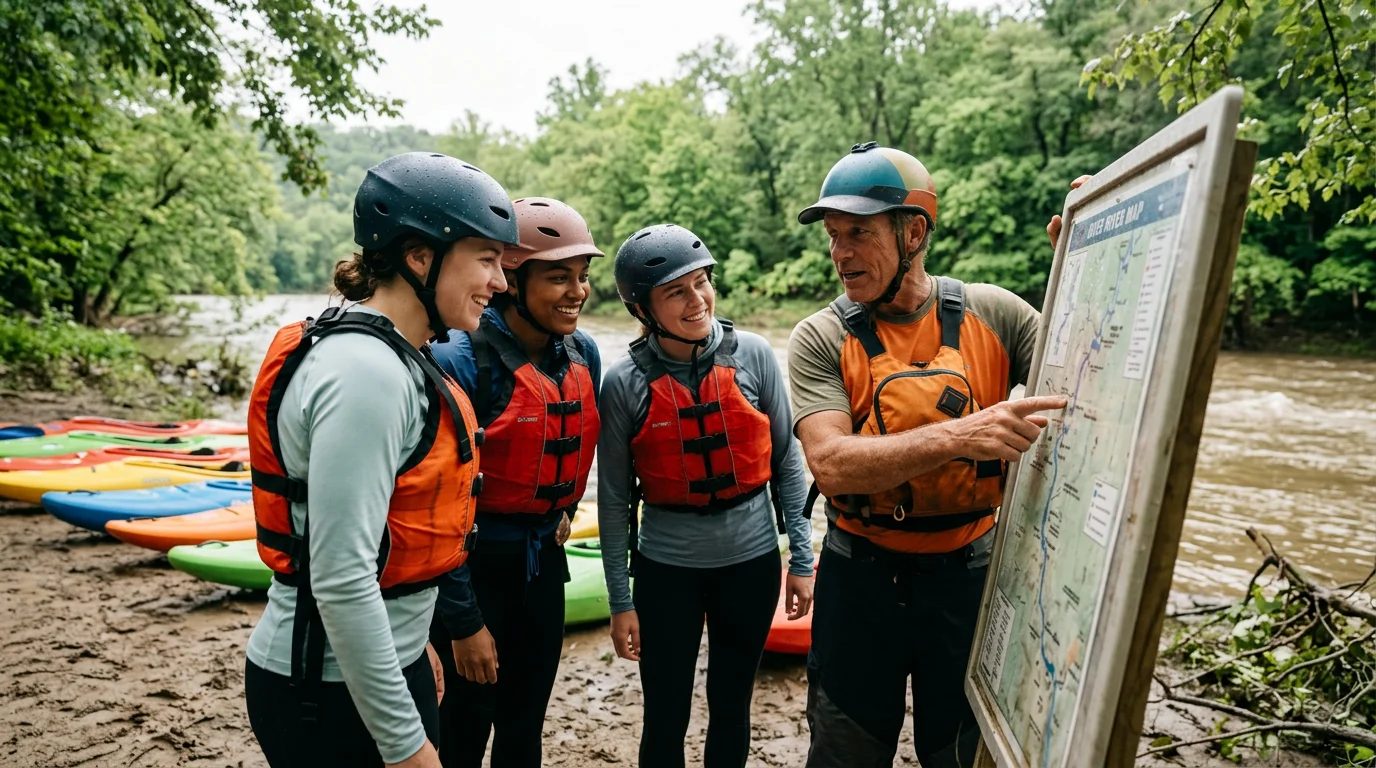
Confirm river grading and water control conditions before committing to an inland paddle. On dam-regulated systems like the Nakhon Nayok River or parts of the Khwae Yai, discharge schedules dictate flow volumes; water releases can cause rapid rises in depth and current strength downstream. If you are booking an independent descent or guided run, verify local discharge timings with operators or local authorities beforehand. Equally, match your skill level to international river classifications. Gentle Class I and II waterways like the River Kwai or Sok River suit novices, but Class III and IV whitewater requires proven boat control and swiftwater experience.
Pack and dress deliberately for moving freshwater. Synthetic, quick-drying clothing and UV-protective rash guards are preferable to denim or heavy cotton, which soak up moisture, become heavy, and restrict mobility in the water. Secure personal valuables inside roll-top dry bags clipped firmly to deck lines or boat fittings, as loose bags are quickly swept downstream during a capsize. Before departing the UK, verify that your travel insurance policy covers river kayaking and inland whitewater, as standard packages typically exclude river grades above Class II without an adventure sports upgrade.
Practical Tips
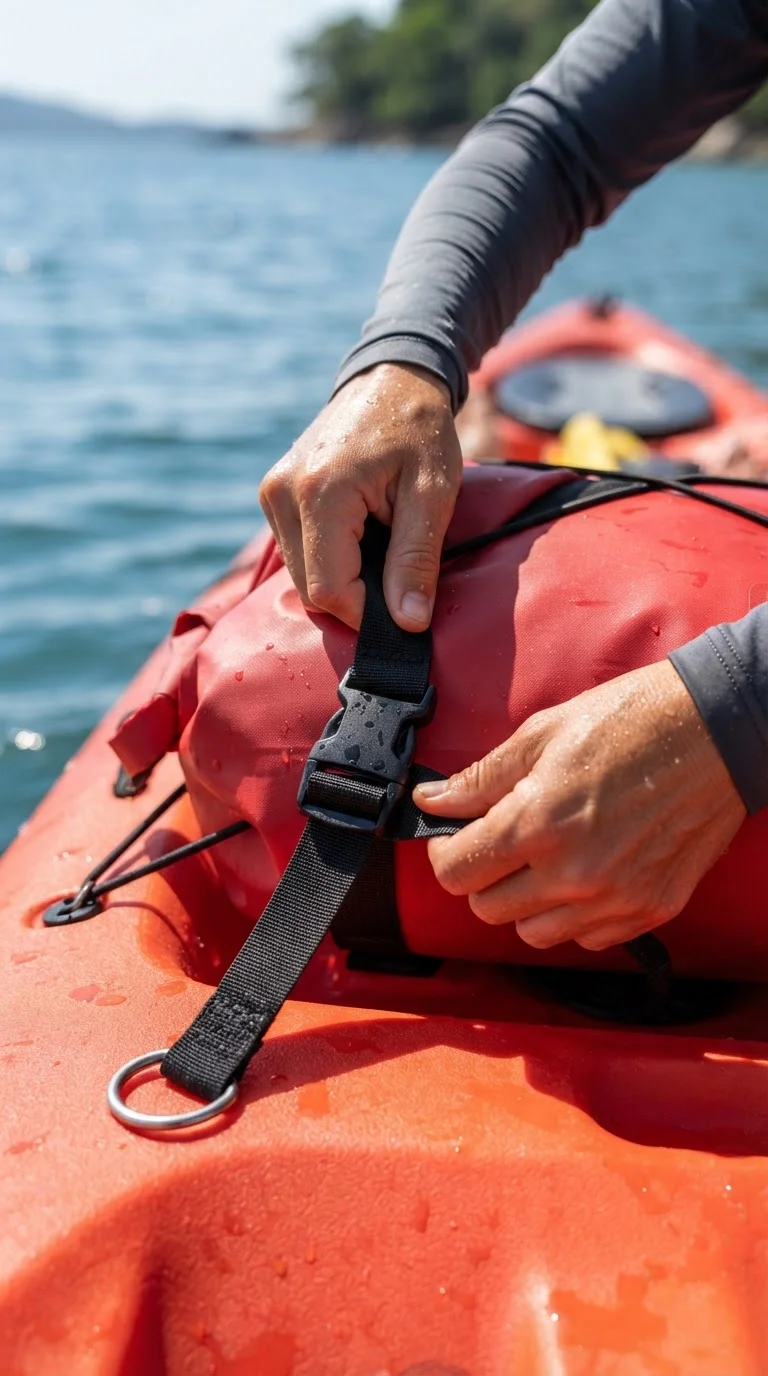
Paddling inland waterways in Thailand calls for specific on-water habits that differ markedly from open-sea touring. Robust footwear is a fundamental requirement. Sturdy, hard-soled water shoes or neoprene booties with secure heel straps protect against sharp riverbed stones, submerged limestone outcrops, and splintered bamboo stalks, which easily cut bare feet during bank portages or while lining boats through shallow channels.
On moving rivers, gear selection should prioritise swift rescue and self-extrication. Carrying a compact throw-line and mounting a river knife on your buoyancy aid harness provides critical redundancy. Rural Thai rivers frequently feature submerged gill nets, discarded monofilament fishing lines, and snagged branch debris, making an accessible, blunt-tipped safety blade invaluable if an entanglement occurs.
Sun exposure on tropical fresh water is intense. Water-resistant sun cream applied generously to forearms, the back of the neck, and the tops of your thighs counteracts the glare reflecting off the river surface. When using open sit-on-top or inflatable kayaks, exposed thighs receive sustained UV exposure throughout mid-morning and afternoon runs.
Hydration requires strict discipline. Drink exclusively from sealed bottled water or trusted micro-filtered purification systems. Swallowing river water or exposing open scrapes to agricultural runoff risks serious bacterial infections, including leptospirosis, which is present in rural tropical waterways and standing water. Clean any minor cuts immediately with treated water and apply antiseptic.
Avoid paddling moving water alone. Travelling with a partner or an experienced guide provides downstream safety cover, assistance with capsized boats, and an extra pair of hands if gear breaks. If the sound of turbulent water suggests an unseen drop around a river bend, pull into an eddy and scout the channel from the riverbank before committing to a run.
Protecting electronic devices and navigational gear against complete submersion requires dependable, purpose-built dry protection.
Quick Reference Table
| Item | Detail | Notes |
|---|---|---|
| Top whitewater runs | Mae Taeng River (Chiang Mai), Pai River (Mae Hong Son), Nam Wa River (Nan) | Technical Class II to Class V rapids through northern jungle gorges |
| Scenic drift rivers | River Kwai (Kanchanaburi), Upper Mae Ping (Chiang Dao), Sok River (Khao Sok), Lang River (Tham Lod) | Gentle Class I to II moving water beneath limestone cliffs and forest canopy |
| Optimal seasonal flow | Monsoon (July–October) for peak whitewater; Cool Dry (November–February) for touring | March–May hot dry season sees low volumes, exposed boulders, and shallow channels |
| Whitewater day descent | 2,500–3,000 THB (approx £56–£68) per paddler | Single-day Mae Taeng Class III–IV run with safety kayakers, helmets, and transfers |
| Scenic guided float | 700–1,800 THB (approx £16–£41) per person | Half-day excursions on River Kwai, Sok River, or Nakhon Nayok River |
| Multi-day expedition | 3,800–8,000 THB (approx £85–£182) per person | Backcountry descents on Pai or Nam Wa rivers with riverside camping and meals |
| Independent craft rental | 100–500 THB (approx £2.30–£11) | Hourly to daily sit-on-top hire on calm stretches of River Kwai or Mae Ping |
| Whitewater kayak clinic | 5,000–5,600 THB (approx £114–£127) | 1- to 2-day technical instruction covering rolling, edging, and eddy turns |
| National park entry fee | 200–300 THB (approx £4.50–£7) per adult | Foreign visitor admission for routes inside Mae Charim or Khao Sok national parks |
| River craft selection | Plastic creek boats (Class III–IV), inflatables/duckies (Class I–III), sit-on-tops (drifts) | Rigid sea kayaks are unsuitable due to shallow rocks, tight bends, and snapping rudders |
| Critical river hazards | Strainers (fallen timber/bamboo), sudden flash floods, dam releases, and foot entrapment | Adopt defensive swimming position on your back; never stand in fast water over knee depth |
| Recommended personal kit | Hard-soled water shoes, quick-drying clothing, roll-top dry bag, and buoyancy-aid river knife | Ensure sun protection for exposed thighs on open sit-on-tops; carry a throw-line |
| Health and insurance | Drink sealed bottled water only; verify policy covers inland moving water and whitewater | Untreated river water carries leptospirosis risks; standard UK policies often cap cover at Class II |
| Book direct: Mae Taeng outfitter | Siam River Adventures: https://siamrivers.com | Whitewater clinics, guided descents, and equipment rental |
| Book direct: Mae Taeng expeditions | 8Adventures: https://8adventures.com | Guided whitewater runs, rafting, and transfers north of Chiang Mai |
| Book direct: River Kwai kayaking | River Kwai Kayaking: https://riverkwaikayaking.com | Kanchanaburi guided drifts and independent sit-on-top rental |
| Book direct: Tham Lod cave paddling | Cave Lodge: https://cavelodge.com | Pang Mapha cave touring and Lang River kayak excursions |
| Book direct: Nam Wa expeditions | Nan Adventure Tour: nanadventuretour.com | Multi-day wilderness whitewater expeditions in Mae Charim |
| Book direct: Khao Sok river trips | Anurak Lodge: anuraklodge.com | Sok River jungle floats and Khao Sok National Park excursions |
FAQ: River Kayaking
What influences river conditions for kayaking in Thailand?
When is the best time for whitewater kayaking in Thailand?
When is the best time for recreational or intermediate river kayaking in Thailand?
How much does a guided whitewater kayaking trip cost on the Mae Taeng River?
What are strainers and how can kayakers avoid them on Thai rivers?
What should I do if I capsize while kayaking in moving water in Thailand?
Why are sea kayaks unsuitable for river kayaking in Thailand?
What logistical challenges do independent river kayakers face in Thailand?
Does standard travel insurance cover river kayaking in Thailand?
What kind of footwear is recommended for river kayaking in Thailand?
Reviewed by the Thailand Guide Editorial Team • Last reviewed: 17 November 2026
This page is provided for general information only. While we aim for accuracy, details can change — please verify anything important independently before relying on it.