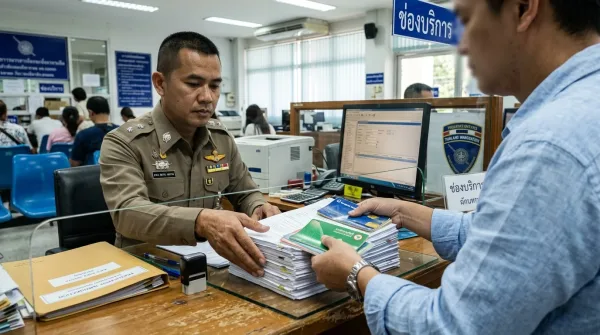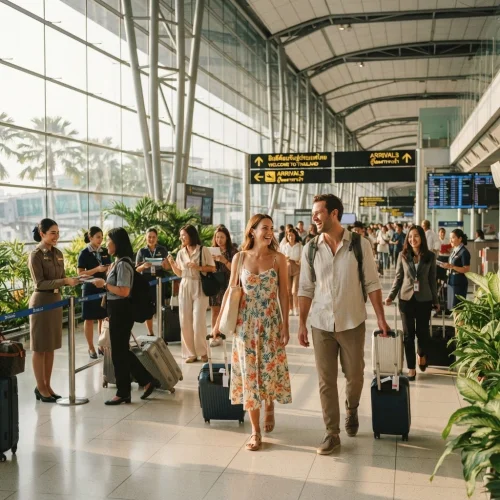
A proposed 450-baht entry levy on foreign air arrivals into Thailand has been delayed until at least June 2027.
The National Tourism Policy Committee is conducting its final review of the draft regulations before sending the document to the Cabinet. Once ministers grant formal approval and the text appears in the Royal Gazette, Thai legislation requires a mandatory 180-day transition period before collection can legally begin. This pushes the earliest viable start date into the middle of 2027, well beyond the ministry's initial target of early next year.
Exemption Rules for Residents
British expatriates living in Thailand face mixed outcomes under the current text.
Foreign nationals who hold valid Thai work permits are specifically exempt from the 450-baht charge, alongside diplomats, transit passengers, airline flight crew, and children under the age of two. However, the Ministry of Tourism and Sports has acknowledged that the list of exclusions is not yet finalised.
Retirees remain exposed.
Under the present draft, no provisions exist to exempt British pensioners on retirement extensions, individuals on marriage visas, or long-term residents living in the country without domestic employment authorisation. Those who travel frequently between the United Kingdom and Thailand could incur the surcharge on every return flight.
Collection and Airline Ticketing
Officials plan to incorporate the fee into international airfares.
Discussions with aviation bodies, including state operator Airports of Thailand, suggest technical systems are largely prepared following several years of research. Even so, automated collection presents operational obstacles for resident expatriates. Commercial booking platforms rarely possess the capability to identify a passenger's residency status or verify a foreign work permit at the point of sale. Unless authorities introduce a pre-clearance verification portal, exempt residents risk being charged automatically by airlines and forced to seek retrospective refunds.
Healthcare Surcharges and Insurance
Part of the revenue will fund basic emergency medical insurance for foreign arrivals.
Public hospitals in Thailand often absorb substantial unpaid debts left by uninsured holidaymakers who require emergency care following traffic collisions or acute illness. Tourism and Sports Minister Surasak Phancharoenworakul stated that government budget allocations cannot cover these hospital shortfalls indefinitely, noting that dozens of countries now levy similar entry taxes.
For British expatriates, this insurance element offers little practical return. Most long-stay residents already maintain comprehensive private medical insurance, pay directly for private treatment, or contribute to the Thai social security fund. An automatic levy on entry risks creating an unavoidable duplicate cost for residents who already hold adequate medical cover.
Financial Impact on UK Expats
The arrival fee is separate from a previously proposed 1,000-baht departure tax.
The Ministry of Finance placed that departure measure on hold following opposition from the hotel sector in October. In contrast, an online consultation for the 450-baht arrival levy, conducted between 24 August and 28 September, recorded an 80.5 per cent approval rate across nearly 6,000 respondents.
The delay provides certainty for Britons planning relocations or managing cross-border finances. Until mid-2027, flight overheads will remain unaffected by the tax, leaving expatriate groups time to see whether non-working visa categories secure formal exemption before collection begins.
Source: thethaiger.com
Reviewed by the Thailand Guide Editorial Team • Last reviewed: 17 November 2026
This page is provided for general information only. While we aim for accuracy, details can change — please verify anything important independently before relying on it.