Learning to Rock Climb
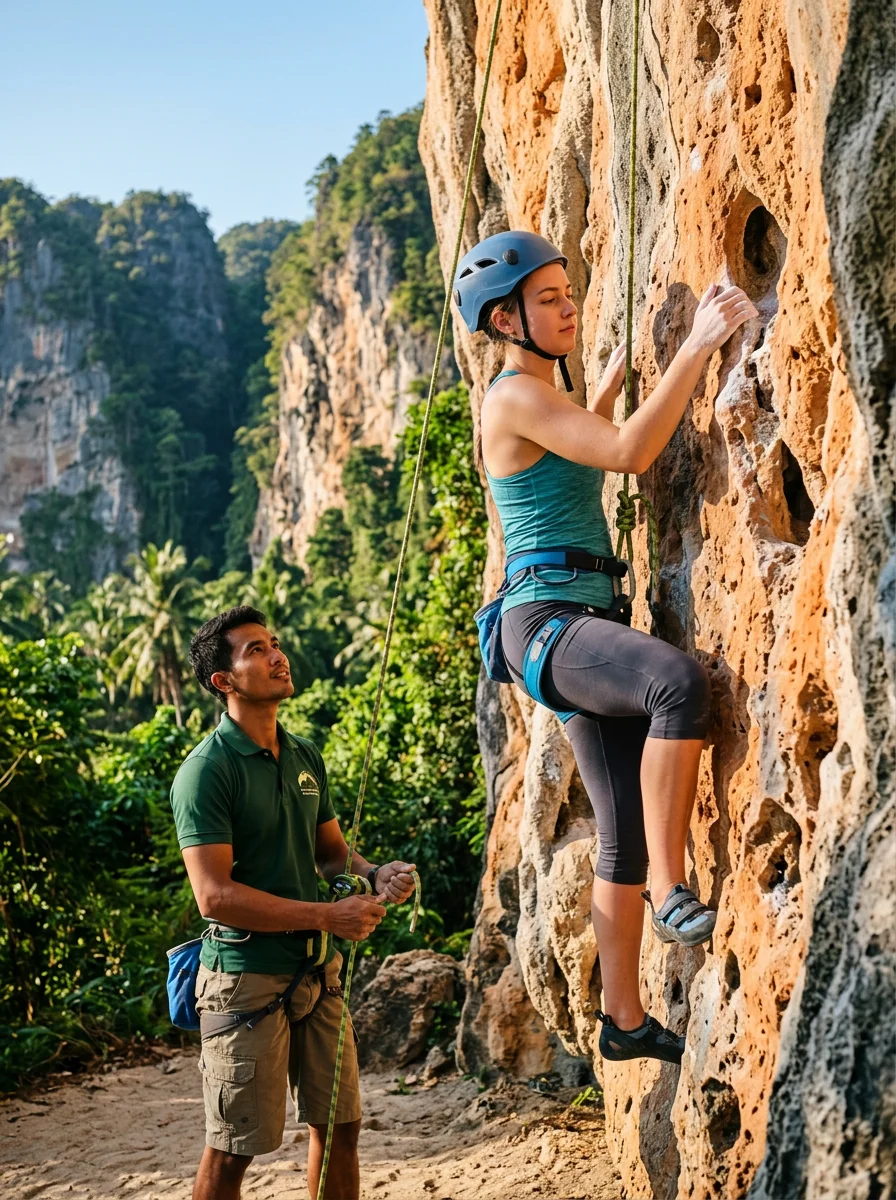
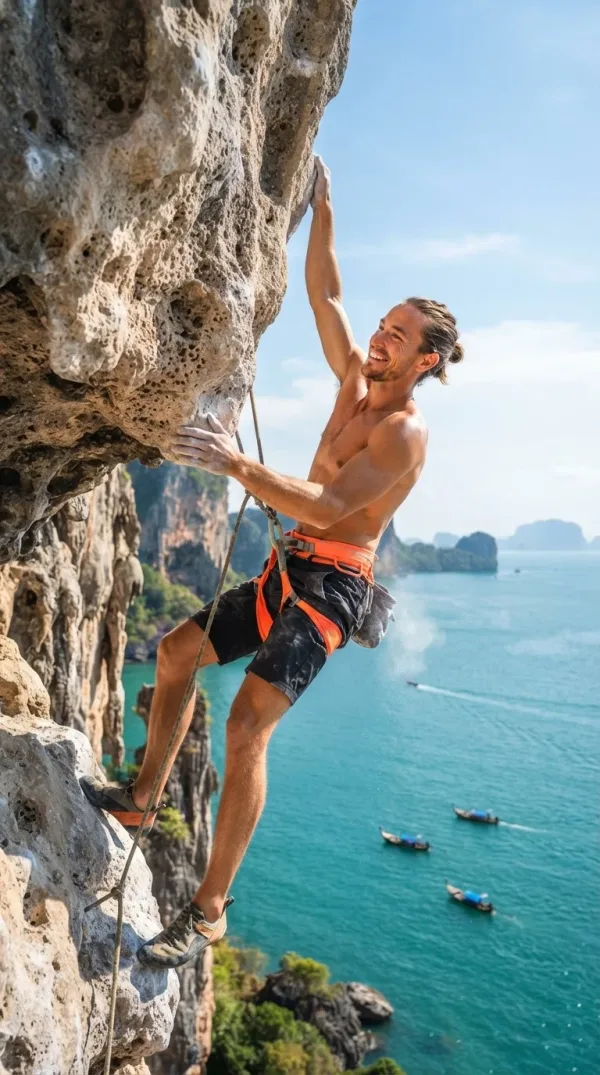
Limestone cliffs in Krabi radiate residual midday heat as your chalk-coated fingers find a thumb-sized pocket fifteen metres above the sand. The initial surge of adrenaline settles into focus once you feel the rope above you held firmly by an attentive instructor. Thailand provides one of the world's most accessible settings for complete novices to try outdoor rock climbing, pairing pocketed karst cliffs with established instruction schools and warm tropical conditions.
Learning to climb here takes you from foundational movement to vertical sea cliffs and limestone buttresses under professional supervision. This guide outlines beginner courses, rope safety principles, belaying techniques, equipment hire, and international grading standards. You will compare primary climbing hubs including Railay Beach, Chiang Mai, and Koh Phi Phi, review typical course costs in Thai Baht and British Pounds, and learn how to build practical skills safely without confusing a holiday taster session with self-sufficient climbing.
An introductory climbing course provides a controlled, highly structured setting designed to get novices onto real rock without taking unnecessary risks. Your morning begins at the climbing shop with equipment fitting. Staff size your climbing shoes snugly against your toes, check the waist and leg loops of your harness, and fit an impact-rated climbing helmet. After a short transfer to a beginner crag—such as the One-Two-Three wall at Railay East or Crazy Horse Buttress outside Chiang Mai—the instructor delivers a safety briefing covering crag hazards, falling rock, and standard rope commands.
To set up your climbs, the instructor leads the route or ascends via an access trail to build an anchor, threading a dynamic rope through certified dual steel carabiners at the cliff summit. When climbing on top-rope, the rope runs continuously from your harness up through the anchor and down to the belayer, keeping the line taut and minimising fall distance if your foot slips. Half-day introductory sessions run for approximately four hours, costing between 1,400 THB and 1,600 THB (approx £31 to £36). Full-day group courses last around seven to eight hours, cost between 2,000 THB and 2,600 THB (approx £45 to £58), and incorporate abseiling alongside multiple ascents. You typically complete three to five pitches tailored to novice fitness, feeling the distinct friction of sharp karst limestone against rubber soles.
| Course Type | Typical Duration | Focus Areas | Best Suited For |
|---|---|---|---|
| Half-Day Introduction | 4 hours (morning or afternoon) | Top-roping, climbing commands, basic footwork | First-timers seeking a structured outdoor trial |
| Full-Day Beginner Course | 7 to 8 hours | Top-rope mileage, abseiling/rappelling, basic belay theory | Active beginners wanting extensive wall time |
| 3-Day Sport Climbing Certification | 3 consecutive days (21 hours) | Belaying, lead climbing, cleaning anchors, bailouts | Aspiring independent climbers seeking foundational competence |
| Private Daily Guiding | 4 to 8 hours (custom) | Personalised coaching, targeted route grades, rapid progression | Climbers with specific fears or distinct fitness goals |
Choosing the right course format depends on your physical stamina and longer-term climbing ambitions. A half-day session provides an approachable introduction to outdoor rock without overtaxing unconditioned forearm muscles, whereas multi-day instruction begins instilling the rope handling and belaying habits required for future progression. Booking a supervised session with a reputable local school ensures you learn correct techniques from certified professionals while experiencing Thailand's dramatic karst scenery.

Top-Rope to Sport Lead: Climbing Disciplines and the Learning Pathway
Understanding the technical distinctions between climbing disciplines helps beginners choose courses suited to their ability and avoid taking on operational risks before mastering the basics. Outdoor climbing spans four primary disciplines, each requiring a different level of technical autonomy. Bouldering focuses on short sequences on rock faces up to four metres high without ropes, using portable crash pads and spotters to cushion controlled landings. Top-roping provides the primary entry point for novices on tropical limestone. Because the rope runs through a fixed anchor at the top of the route directly to the belayer, any slip is caught almost immediately, limited only by slight rope stretch.
Sport lead climbing marks the shift towards true independence. Rather than relying on an overhead rope, the leader trails the rope from the ground, clipping into fixed bolts drilled into the rock every two to three metres using quickdraws. Fall dynamics change fundamentally: falling above a protection point means dropping double the distance climbed past that bolt, plus rope stretch and dynamic slack. Leading also requires mastering clip positioning, rope management to prevent back-clipping or leg entrapment, and anchor cleaning to retrieve gear at the top. On walls taller than a single rope length—frequently exceeding thirty metres in areas like Railay—multi-pitch climbing links several pitches together, introducing hanging belay stances, station management, and multi-stage abseils.
A half-day or full-day introductory taster allows you to experience limestone climbing while a guide manages the technical rope work. However, autonomous outdoor climbing requires formal, multi-day instruction. Transitioning to lead climbing typically involves a dedicated two- to three-day course, such as Southeast Asia Climbing Federation (SEACF) Level 2 certification or equivalent training. These programmes teach lead belaying, dynamic fall catching, and controlled descent protocols before you take full responsibility on the rock.
| Discipline | Fall Profile | Technical Demands | Recommended Training |
|---|---|---|---|
| Bouldering | Short falls onto padded crash pads | No rope systems; high focus on movement, body tension, and spotting | Basic spotting technique and gym safety orientation |
| Top-Roping | Minimal fall distance on a taut overhead rope | Low complexity for climber; belayer manages rope tension and descent | Half-day or full-day introductory session with certified guide |
| Single-Pitch Sport Lead | Dynamic fall twice the distance above the last clipped bolt | High; requires clipping mechanics, rope routing, and anchor cleaning | Dedicated multi-day lead course (such as SEACF Level 2) |
| Multi-Pitch Sport | Substantial falls with extreme cliff exposure | Very high; station management, hanging stances, multi-stage abseiling | Advanced multi-pitch course after solid single-pitch lead experience |
Knots, Belays, and Hardware: The Technical Fundamentals
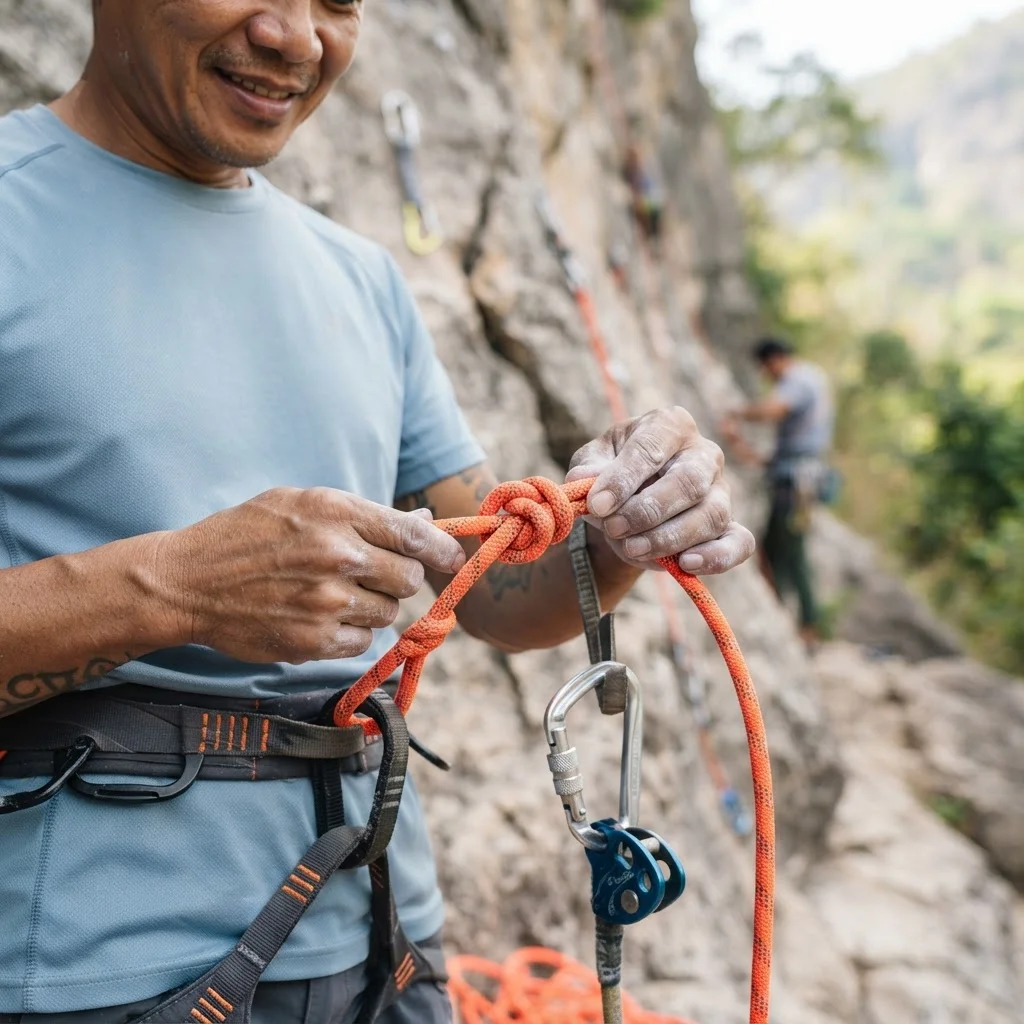
Technical competency with climbing hardware turns abstract apprehension into methodical, repeatable risk management. The figure-of-eight follow-through knot serves as the international standard for attaching your harness to a dynamic climbing rope because it is simple to inspect visually and stays reliable under load. You thread the working end through both the waist belt and leg loop tie-in points rather than the belay loop, retrace the shape neatly, and finish with a stopper knot to secure any excess tail.
Belay instruction focuses on the widely taught PBUS method (Pull, Brake, Under, Slide). This sequence ensures your brake hand retains control of the rope strand beneath the belay device throughout every movement cycle. In Thailand, reputable guiding schools increasingly use assisted-braking devices alongside traditional tube-style devices, providing an internal camming mechanism that helps arrest unexpected falls while you take in slack.
Before either partner leaves the ground, both climbers conduct a rigorous mutual check. This partner inspection covers several points in sequence:
- Harnesses: buckles fitted snugly and double-backed where required by the manufacturer.
- Knots: the climber's figure-of-eight cleanly dressed, flat, and finished with a sufficient tail.
- Belay device: rope routed correctly, locked securely in a dedicated screwgate carabiner clipped through the belay loop.
- Rope end: a stopper knot tied into the brake strand to close the system, preventing the tail from feeding through.
Reputable Thai climbing schools require helmet use during instruction, and wearing one at the crag remains sound practice. Tropical karst limestone features friable pockets, delicate stalactites, and loose debris dislodged by parties above, alongside the hazard of dropped gear or wall impacts during awkward swings. Inspecting gear methodically at the base establishes sound habits from your very first pitch.
Plan a journey along Thailand’s Andaman coast, with practical guidance on island gateways, marine parks, diving, ferries and monsoon travel.
Indoor Gyms to Outdoor Crags: Building Skills and Physical Preparation
Starting your climbing journey on an indoor wall builds foundational movement patterns, footwork accuracy, and grip strength in a climate-controlled setting before you encounter the tropical outdoors. Dedicated facilities, such as Progression Vertical in the Pa Daet district of Chiang Mai, provide structured indoor beginner sessions ranging from 499 THB to 999 THB (approx £11 to £23). Single day passes generally cost between 250 THB and 350 THB (approx £6 to £8), with complete gear hire packages available for around 250 THB (approx £6).
Indoor climbing centres utilise colour-coded plastic holds arranged across flat wooden walls. This controlled environment enables novices to isolate technical fundamentals—such as body positioning, flagging, and straight-arm hanging—without managing loose stone, insect bites, or midday heat.
Moving from an indoor gym to a natural Thai crag presents an immediate sensory shift. Natural limestone features subtle depressions, sharp rock edges, and hidden pockets rather than brightly coloured plastic grips. High ambient humidity also causes sweat to saturate climbing chalk quickly, reducing friction and forcing climbers to read routes more deliberately.
Physical preparation for climbing in Thailand demands core control, leg strength, and forearm stamina rather than sheer pull-up power. Beginners routinely over-grip every hold, flooding their forearm muscles with lactic acid within the opening twenty minutes. Learning to distribute body weight over your feet, resting on straight arms, and driving movement through your legs conserves energy across full-day crag sessions. Combining indoor drills with regular aerobic exercise and wrist mobility work prepares your body to handle humid sessions on real rock.
Limestone Karst Technique: Footwork, Tufa Formations, and French Grades
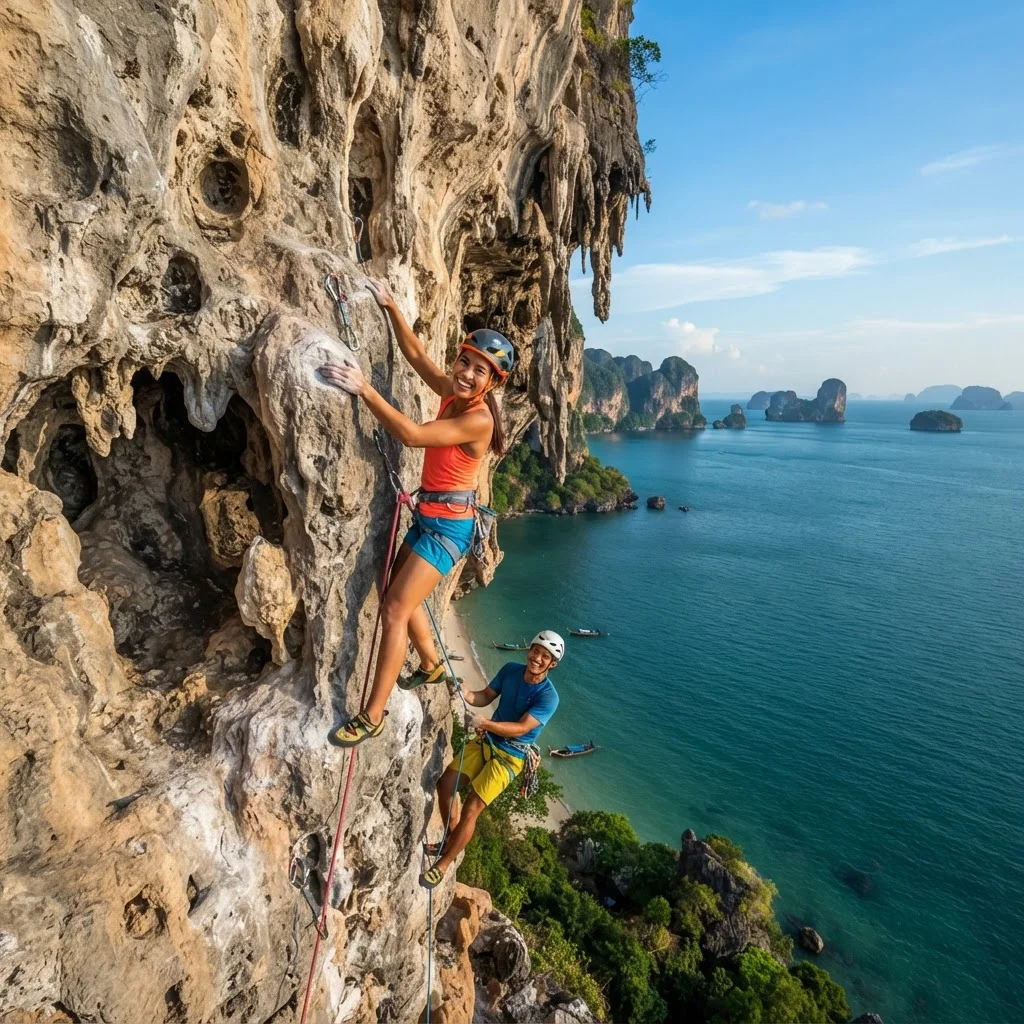
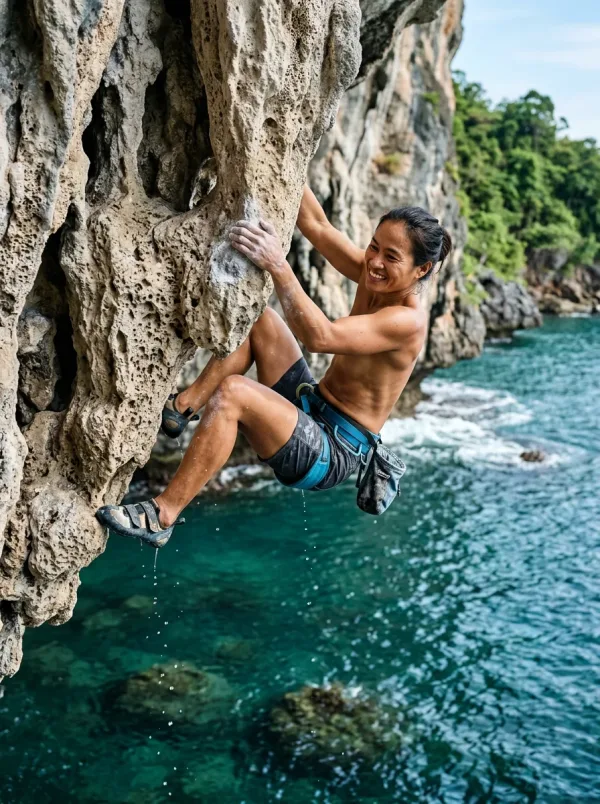
Tropical karst limestone requires a distinct movement vocabulary that differs sharply from the gritstone edges, granite cracks, or indoor plywood walls familiar to British climbers. Rain and sea-spray dissolution sculpt Thailand's cliffs into three-dimensional architecture: deep solution pockets forming natural jugs, hanging stalactites, and massive vertical ribs known as tufas. Instead of simply pulling upward, climbers must move inside and around the rock. Popular beginner sectors, such as Railay's 1-2-3 Wall, feature deeply pocketed faces with generous handholds, alongside polished footholds smoothed by decades of climbing shoes.
Tufas require body positioning based on compression rather than raw arm strength. Rather than facing the crag flat, you wrap your limbs around the limestone ribs, pinching the stone between your thighs or dropping one knee inward to lock your hips close to the wall. Stemming between parallel columns allows your skeleton to carry your weight, resting pumped forearms mid-pitch. Deliberate footwork is vital: place the precise tip of your climbing shoe on small dimples and trust the rubber. On polished limestone holds, lowering your heels expands rubber surface contact, maintaining friction where a high heel would skate off.
Thai crags use the French numerical grading system, which rates sustained physical difficulty from ground to anchor. Unlike the British traditional dual-grade system (such as VS 4c or HVS 5a), French sport grades do not assess protection or psychological danger, as routes are protected by fixed bolts. Beginner lessons concentrate on French 4a to 5c, where walls remain near-vertical and holds are plentiful. Grades enter intermediate territory at 6a to 6b, where angles steepen into overhangs requiring sequential route-reading.
| French Grade | UK Trad Equivalent | Typical Rock Features | Core Learning Focus |
|---|---|---|---|
| 4a – 4c | Mod to Severe / 4a | Low-angle slabs, massive ledge footholds, large jugs | Building confidence, learning basic tie-in, trusting shoe rubber |
| 5a – 5b | Hard Severe to VS / 4b | Vertical faces with generous pockets and distinct chalk marks | Developing straight-arm technique, balance, and controlled breathing |
| 5c | VS to HVS / 4c | Sustained vertical rock, smaller crimps, short bulging steps | Introducing side-pulls, drop-knees, and systematic route reading |
| 6a – 6a+ | E1 / 5a to 5b | Mild overhangs, pumpy tufa pinches, technical sequences | Managing forearm endurance, dynamic foot placement, and lead headspace |
Mastering these movement fundamentals on introductory grades preserves forearm stamina and turns intimidating limestone into an enjoyable physical puzzle. Joining a supervised outdoor course gives you access to well-chosen lines and expert feedback on body positioning before unhelpful habits set in.
Hardware Integrity, Bolt Safety, and Crag Etiquette in the Tropics
Climbing in tropical maritime climates exposes fixed protection to intense corrosion that requires careful inspection. In coastal areas such as Krabi and Koh Phi Phi, sea spray, constant humidity, and acidic run-off through karst limestone accelerate stress corrosion cracking in conventional stainless steel expansion bolts. This reaction degrades metal internally, meaning a bolt can fail under body weight without displaying extensive external rust.
To combat this hazard, volunteer initiatives, including the long-running Thaitanium Project, have re-bolted hundreds of routes using titanium glue-in anchors. Titanium resists chloride-induced stress corrosion cracking in coastal rock. Climbers can identify titanium glue-ins by their matte-grey finish and solid, unthreaded one-piece construction, which lacks the hexagonal nuts, threaded rods, and washers found on mechanical expansion bolts. Established climbing schools focus their instructional top-ropes on inspected titanium lines, steering learners clear of older, corroded steel anchors.
Managing shared space is equally critical on busy Thai crags. Popular beginner sectors on Railay and Koh Phi Phi become crowded between mid-morning and mid-afternoon. Good crag etiquette means avoiding monopolising lower-grade routes: rig your top-rope, cycle climbers through without lingering, and clear the anchor promptly so waiting pairs can climb. Because tropical humidity softens rock and cakes chalk into karst pockets, brush off excessive chalk marks before leaving. Pack out your rubbish, including loose finger tape, snack wrappers, and empty water bottles, to prevent waste reaching coastal ecosystems and help maintain open crag access for the climbing community.
Where to Learn Rock Climbing in Thailand
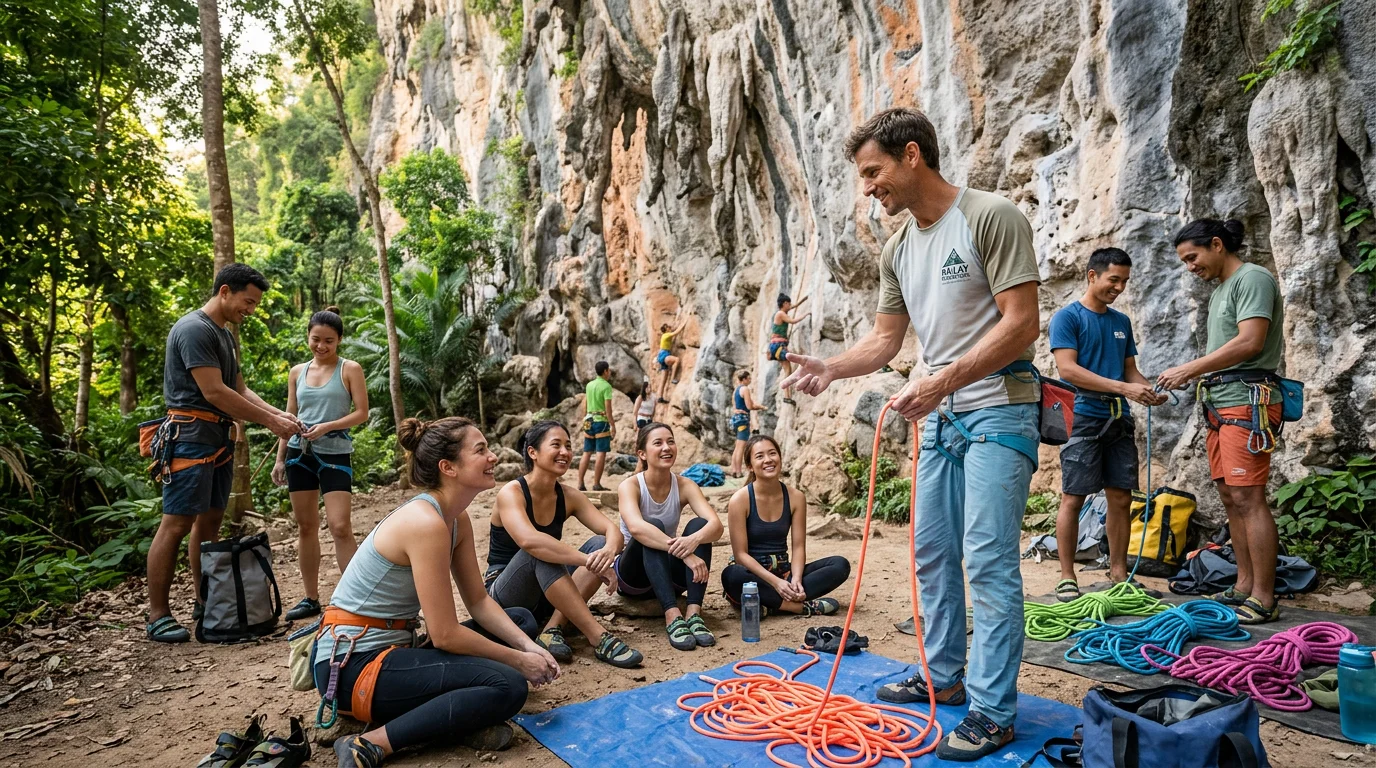
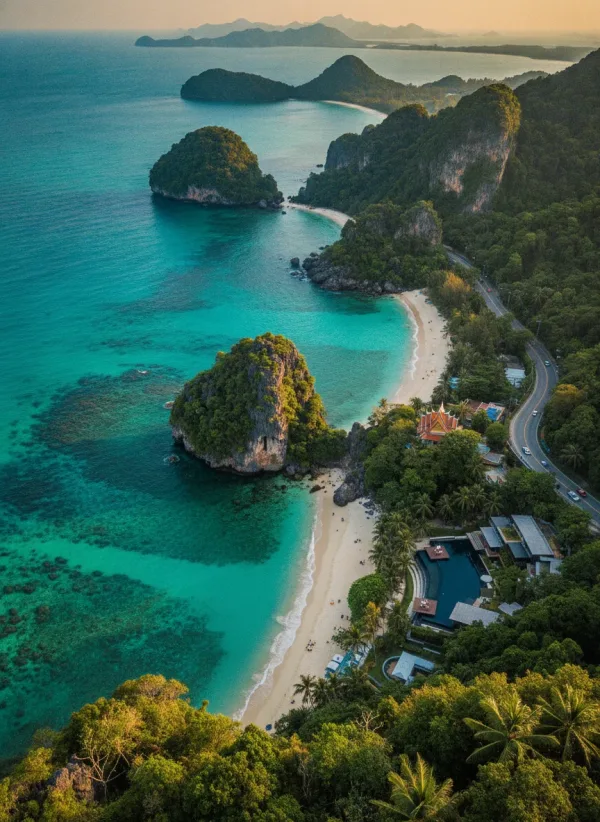
Thailand features distinct regional climbing hubs, each presenting different crag environments, instructional styles, and travel logistics. Railay Beach in Krabi remains the primary destination for novices seeking immediate access to seaside limestone. The peninsula concentrates beginner-friendly top-rope lines at Railay East, particularly along the One-Two-Three wall, as well as shaded beach crags at Phra Nang Beach. Long-running operators here include Real Rocks Climbing School and King Climbers. Real Rocks conducts small-group introductions starting at 1,500 THB (approx £34) for half-day sessions and 2,600 THB (approx £58) for full-day courses, alongside private multi-day training certified by the Southeast Asia Climbing Federation (SEACF). Its one-day SEACF Level 1 top-rope course costs 6,500 THB (approx £146), while the three-day Level 2 lead climbing course is priced at 12,000 THB (approx £269).
Tonsai Bay sits immediately adjacent to Railay, accessible via a short jungle path or low-tide walk. While Basecamp Tonsai and independent guides maintain a vibrant community hub here, the local topography consists predominantly of steep, overhanging limestone and complex tufa systems graded 6a and above. Novice slabs are sparse, meaning first-time climbers based in Tonsai typically walk over to Railay East for their initial top-rope sessions.
In northern Thailand, Chiang Mai provides an inland alternative centreed on Crazy Horse Buttress in Mae On district, roughly 40 kilometres east of the city. Instruction is organised through Progression Vertical and Chiang Mai Rock Climbing Adventures (CMRCA), employing American Mountain Guides Association (AMGA)-trained instructors. Crags feature pocketed vertical faces, buttresses, and cave formations such as Anxiety State Crisis Cave. Beginner outdoor day programmes range from 2,995 THB (approx £67) for introductory climbing tours up to 4,995 THB (approx £112) for comprehensive outdoor top-rope essentials courses.
Koh Phi Phi presents a compact island setting centreed on Tonsai Tower at the western end of Tonsai Beach on Koh Phi Phi Don. The spire contains approximately 20 to 25 single-pitch and accessible multi-pitch routes graded between French 5 and 6b, sitting just a short walk from the main village. Local schools such as Spider Monkey Climbing and Ibex Climbing School run half-day and full-day taster sessions suitable for travellers combining instruction with an island itinerary.
| Destination | Rock Character & Crag Terrain | Established Schools & Operators | Key Beginner Sectors |
|---|---|---|---|
| Railay Beach (Krabi) | Oceanfront karst limestone, tufas, beach slabs | Real Rocks Climbing School, King Climbers | Railay East (One-Two-Three wall), Phra Nang Beach |
| Tonsai Bay (Krabi) | Steep, overhanging limestone, high-grade lines | Basecamp Tonsai, local independent guides | Better suited for strong intermediates; limited novice slabs |
| Chiang Mai (Mae On) | Inland limestone bluffs, cave systems, pocketed walls | Progression Vertical / CMRCA | Crazy Horse Buttress (Anxiety State Crisis Cave sectors) |
| Koh Phi Phi | Island limestone spires, vertical sea cliffs | Spider Monkey Climbing, Ibex Climbing School | Tonsai Tower beginner sectors right above the village |
Costs and Budgeting
Learning to climb in Thailand suits various budgets, from casual tasters to structured certifications. Group half-day introductory courses at Railay Beach cost 1,400 THB to 1,600 THB (£33 to £37), covering shoes, harness, chalk, helmet, and guide supervision. Full-day group courses run 2,000 THB to 2,600 THB (£47 to £61) for top-roping and abseiling. Railay operators provide drinking water but exclude meals, so budget 150 THB to 300 THB (£4 to £7) for lunch.
Private coaching in Krabi starts at 4,000 THB (£94) for solo half-day sessions and 6,000 THB (£141) for full days. In Chiang Mai, Progression Vertical gym day passes cost 250 THB (£6), with coaching priced from 500 THB to 1,000 THB (£12 to £23). Guided outdoor excursions to Crazy Horse Buttress cost 3,800 THB to 4,500 THB (£89 to £106), including instruction, transport, and lunch.
Multi-day Southeast Asia Climbing Federation courses in Krabi cost 6,500 THB (£153) for Level 1 top-rope and 12,000 THB to 16,000 THB (£282 to £376) for three-day lead tuition. Ao Nang transfers are typically included, but pickups from Krabi Town or Tubkaek Beach add taxi fees of 800 THB to 1,200 THB (£19 to £28). Full gear hire runs 1,500 THB to 1,800 THB (£35 to £42) daily, requiring a passport or 10,000 THB (£235) cash deposit.
| Option | Cost (THB) | Cost (GBP approx) | Notes |
|---|---|---|---|
| Half-Day Group Introduction (Railay) | 1,400 – 1,600 THB | £33 – £37 | 4 hours, top-roping, gear and local transfers included |
| Full-Day Beginner Course (Railay) | 2,000 – 2,600 THB | £47 – £61 | 7–8 hours, top-roping, abseiling, gear included, lunch excluded |
| Indoor Safety Course (Chiang Mai) | 500 – 1,000 THB | £12 – £23 | 1–2 hours coaching, gym pass, gear included |
| Outdoor Day Adventure (Chiang Mai) | 3,800 – 4,500 THB | £89 – £106 | Crazy Horse trip, AMGA guide, lunch, transport included |
| 3-Day Lead Climbing Certification | 12,000 – 16,000 THB | £282 – £376 | Comprehensive lead progression, private SEACF tuition |
| Full Outdoor Gear Hire (Daily) | 1,500 – 1,800 THB | £35 – £42 | 60m rope, 12 quickdraws, helmets, harness for two |
What To Know Before You Go
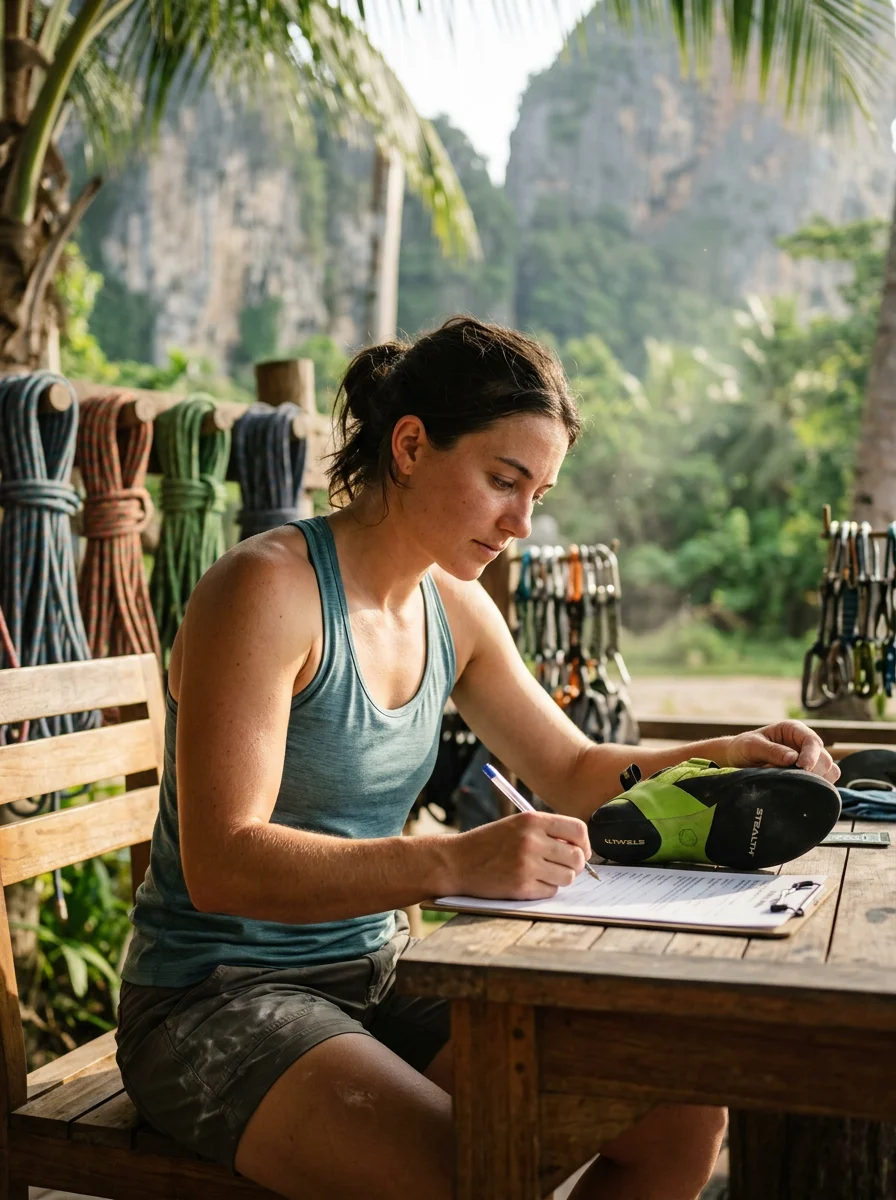
Standard UK travel insurance policies routinely exclude outdoor rock climbing, categorising roped crag ascents as hazardous activities. Before travelling, secure a specialist policy—such as a British Mountaineering Council (BMC) Rock policy or an equivalent adventure sports policy—that explicitly covers outdoor sport climbing, search and rescue, and medical repatriation. Relying on basic holiday cover risks immense personal expense if an accident requires an emergency evacuation.
Timing your trip depends heavily on regional weather patterns. In southern crags like Railay and Tonsai, the dry season runs from November to April. The southwest monsoon brings frequent downpours between May and October, wetting the limestone and occasionally disrupting longtail boat crossings. In contrast, northern climbing areas near Chiang Mai enjoy cool, dry conditions from November to February, but suffer from heavy agricultural burning smoke and poor air quality between mid-February and April.
When fitting rental climbing shoes at a local school, resist the temptation to pick a loose, comfortable pair. While climbing shoes should not cause severe pain, your toes must sit firmly against the front edge with no dead space. A loose shoe will twist around your foot and roll off small limestone edges and footholds.
Introductory lessons provide an accessible, supervised taste of top-rope climbing, but they do not make you an independent outdoor climber. Belaying a lead climber, building outdoor anchors, and retrieving gear safely demand structured multi-day instruction and verified technical competence. Treat your first sessions as skill-building days under direct professional guidance.
Practical Tips
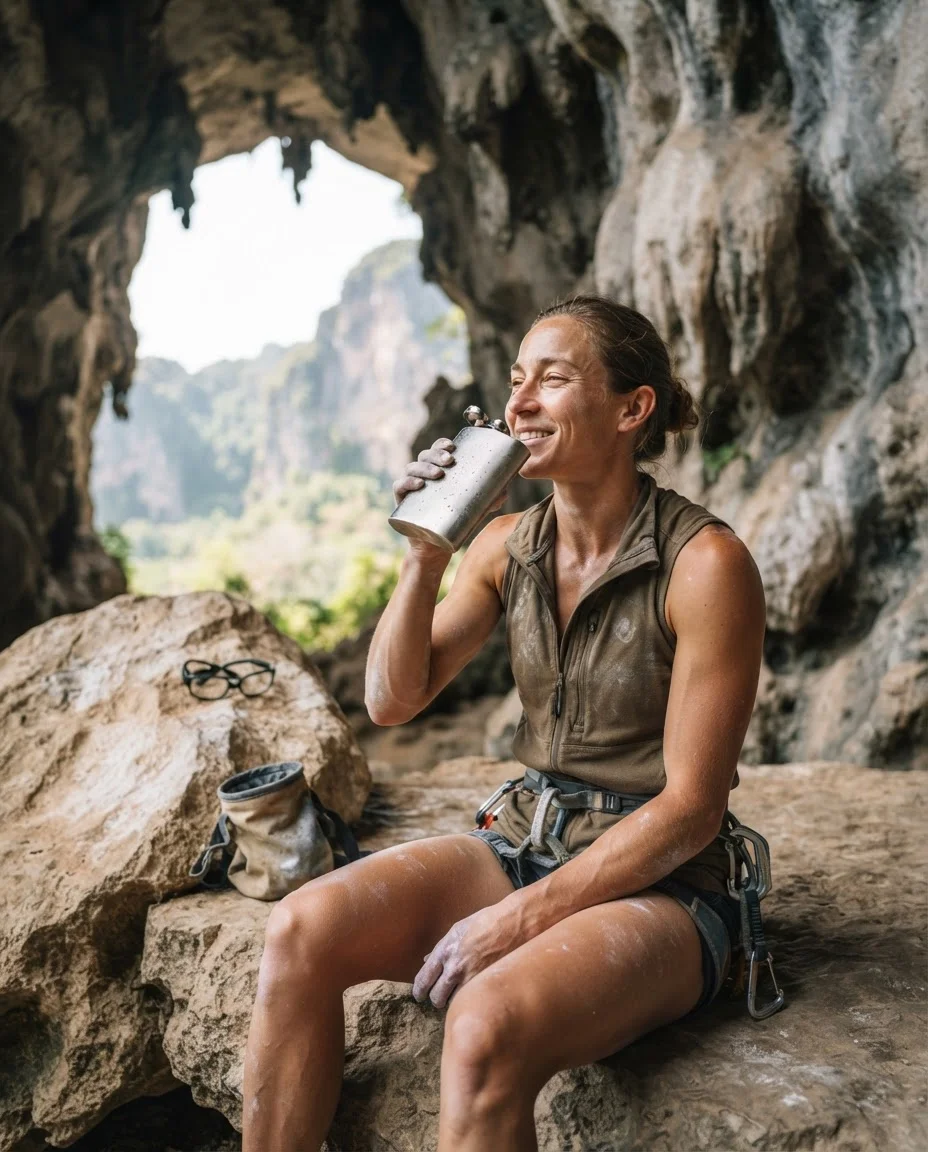
Starting early is the most effective way to manage tropical heat. East-facing cliffs such as those along Railay East benefit from morning shade until roughly 11:00, after which direct sunlight turns the limestone hot and saps friction. Setting off by 08:00 or 08:30 allows you to complete three or four routes before midday temperatures peak. If you climb in the afternoon, seek out walls sheltered by jungle canopy or crags that come into afternoon shade, such as parts of Tonsai, rather than pushing through the hottest hours in direct sun.
Hydration requires deliberate preparation rather than catching up mid-session. Intense tropical humidity causes heavy sweating during sustained climbing effort, rapidly depleting bodily sodium and magnesium. Drinking plain water alone can dilute your system, leaving you vulnerable to painful muscle spasms and sudden forearm cramps. Mix an electrolyte sachet into your water at least an hour before you reach the crag, and carry a minimum of two litres of water for a half-day session. Small electrolyte packets are sold in convenience shops across Thailand and dissolve easily in bottled water.
Sharp karst limestone demands sensible clothing choices. Wear lightweight, breathable trousers or three-quarter leggings that cover your knees. While shorts feel cooler on the approach walk, loose limestone edges, abrasive tufa columns, and pocketed holds readily graze bare skin when you flag your legs against the wall or rest on a ledge. The evening before your climb, trim your fingernails neatly down to the fingertip. Long nails catch on rough limestone crystals, break painfully under load, and prevent your fingers from seating cleanly into shallow pockets or edges.
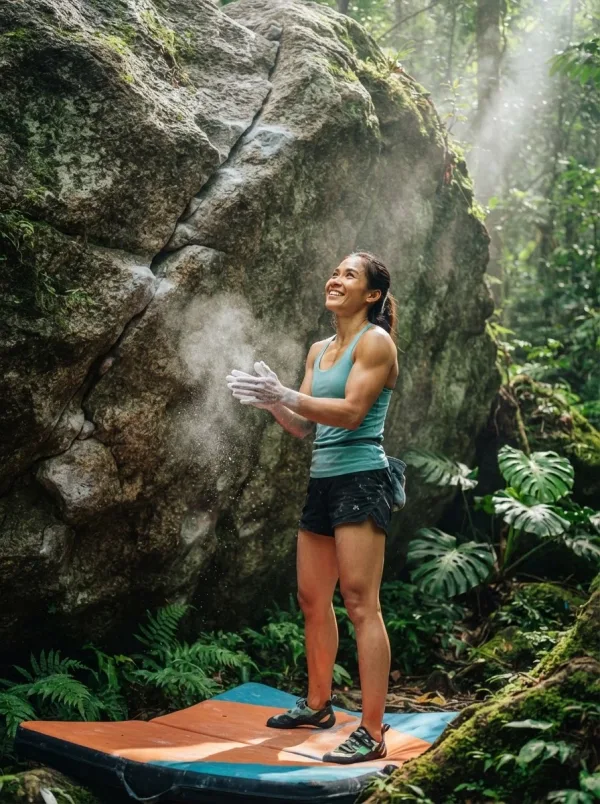
Humidity also compromises your grip by altering how chalk behaves. Standard loose powder absorbs atmospheric moisture rapidly in coastal Thailand, turning into a slick paste in your chalk bag. Packing a bottle of liquid chalk helps create a dry base layer on your palms before you tie in. Keep your main chalk bag or spare powder inside a sealed dry bag within your rucksack until you are ready to climb, shielding it from damp sea breezes and wet sand.
Pack a compact daypack containing broad-spectrum, reef-safe sun cream and DEET-free insect repellent, as mosquitoes gather densely around crag bases and cave mouths. Carry slow-burning snacks such as dried fruit, nuts, or energy bars, because few climbing walls have nearby vendors.
Before leaving the ground, actively engage with your instructor. Respected climbing schools in Thailand employ guides certified through recognised bodies such as the Southeast Asia Climbing Federation (SEACF) or trained under American Mountain Guides Association (AMGA) standards, and reputable schools replace active ropes and hardware every three to six months. Never hesitate to ask an instructor to explain their top-rope anchor setup or double-check that every locking carabiner is secured before you climb.
Booking your introductory session or multi-day course through a recognised climbing school gives you structured instruction, well-maintained equipment, and guides who understand local limestone and tropical conditions.
Quick Reference Table
| Item | Detail | Notes |
|---|---|---|
| Primary Climbing Hubs | Railay Beach & Tonsai (Krabi), Chiang Mai (Mae On), Koh Phi Phi | Railay East (One-Two-Three wall) and Crazy Horse Buttress offer the best beginner routes |
| Half-Day Group Course | 1,400 – 1,600 THB (approx £31 – £37) | ~4 hours; covers top-roping, basic footwork, gear hire, and local transfers |
| Full-Day Beginner Course | 2,000 – 2,600 THB (approx £45 – £61) | 7–8 hours; includes top-rope mileage, abseiling tuition, and hardware; lunch excluded |
| 3-Day Lead Certification | 12,000 – 16,000 THB (approx £282 – £376) | Comprehensive SEACF Level 2 lead tuition, belaying, and anchor cleaning |
| Indoor Taster (Chiang Mai) | 500 – 1,000 THB (approx £12 – £23) | 1–2 hours coaching at Progression Vertical; gym day passes cost 250 – 350 THB (£6 – £8) |
| Daily Outdoor Gear Hire | 1,500 – 1,800 THB (approx £35 – £42) | Complete package for two; requires passport or 10,000 THB (£235) cash deposit |
| Best Time of Year (South) | November to April | Dry season for Krabi and Koh Phi Phi; monsoon rains wet rock between May and October |
| Best Time of Year (North) | November to February | Cool, dry conditions at Crazy Horse; avoid mid-February to April due to crop burning smoke |
| Best Time of Day | 08:00 – 11:00 | Climbs east-facing crags in morning shade before intense midday heat reduces friction |
| Recommended Clothing | Trousers or three-quarter leggings covering knees | Protects bare skin against sharp karst limestone crystals and abrasive tufa formations |
| Essential Gear & Packing | Liquid chalk, 2L+ water with electrolytes, daypack | Trim fingernails beforehand; pack reef-safe sunscreen and DEET-free mosquito repellent |
| Anchor & Bolt Safety | Inspect for titanium glue-in bolts (matte-grey finish) | Coastal tropical humidity causes internal stress corrosion cracking in stainless steel |
| Insurance Requirement | Specialist adventure policy (e.g. BMC Rock) | Standard UK travel policies exclude roped climbing, search and rescue, and repatriation |
| Website | Real Rocks Climbing School: https://realrocksclimbing.com | Krabi operator offering Railay beginner courses and SEACF certifications |
| Website | Progression Vertical: https://www.thailandclimbing.com | Chiang Mai indoor gym and Crazy Horse Buttress outdoor instruction (+66 86 911 1470) |
| Website | Basecamp Tonsai: https://basecamptonsai.com | Tonsai climbing shop, route information, and local guiding hub |
FAQ: Learning to Rock Climb
How much does a beginner rock climbing course cost in Thailand?
What kind of training is needed to become an independent outdoor rock climber in Thailand?
What should climbers check before starting a climb?
Is it necessary to wear a helmet when rock climbing in Thailand?
How should rental climbing shoes fit?
When is the best time of year to go rock climbing in Thailand?
How can climbers manage tropical heat when climbing in Thailand?
What are the hydration recommendations for rock climbing in Thailand's tropical climate?
What kind of clothing should be worn for rock climbing in Thailand?
What kind of travel insurance is needed for rock climbing in Thailand?
Reviewed by the Thailand Guide Editorial Team • Last reviewed: 17 November 2026
This page is provided for general information only. While we aim for accuracy, details can change — please verify anything important independently before relying on it.