Rock Climbing in Railay Beach



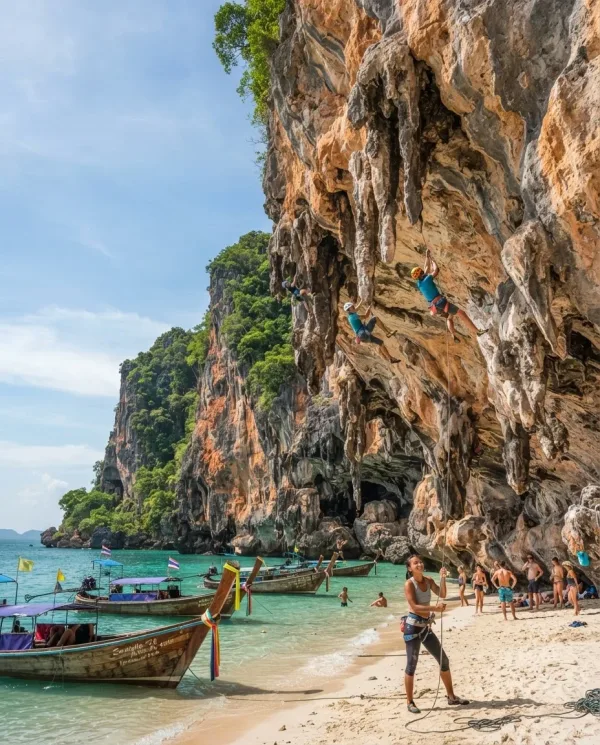
Cut off from the Krabi mainland by vertical limestone cliffs and reachable only by boat, the Railay peninsula and neighbouring Tonsai Bay form one of Southeast Asia's major sport climbing hubs. The headland's karst crags hold more than 700 bolted routes, ranging from introductory top-rope slabs right on the sand to multi-pitch sea-cliff lines and steep, stalactite-heavy overhangs graded up to French 8c+.
Because there are no roads across the peninsula, travel is entirely on foot along sand paths and jungle trails, with access dependent on traditional longtail boats running from Ao Nang and Ao Nam Mao. A collection of long-running local outfits, including Hot Rock Climbing School, King Climbers, and Real Rocks Climbing School, provide equipment hire, guided sessions, and multi-day instructional courses across the crags. The area accommodates absolute novices tackling their first outdoor climbs alongside experienced climbers working technical projects. However, wet boat landings and uneven limestone approaches mean visiting Railay requires reasonable physical mobility and confidence stepping into shallow surf.

Railay East and One-Two-Three: Beginner Crags and Top-Rope Training
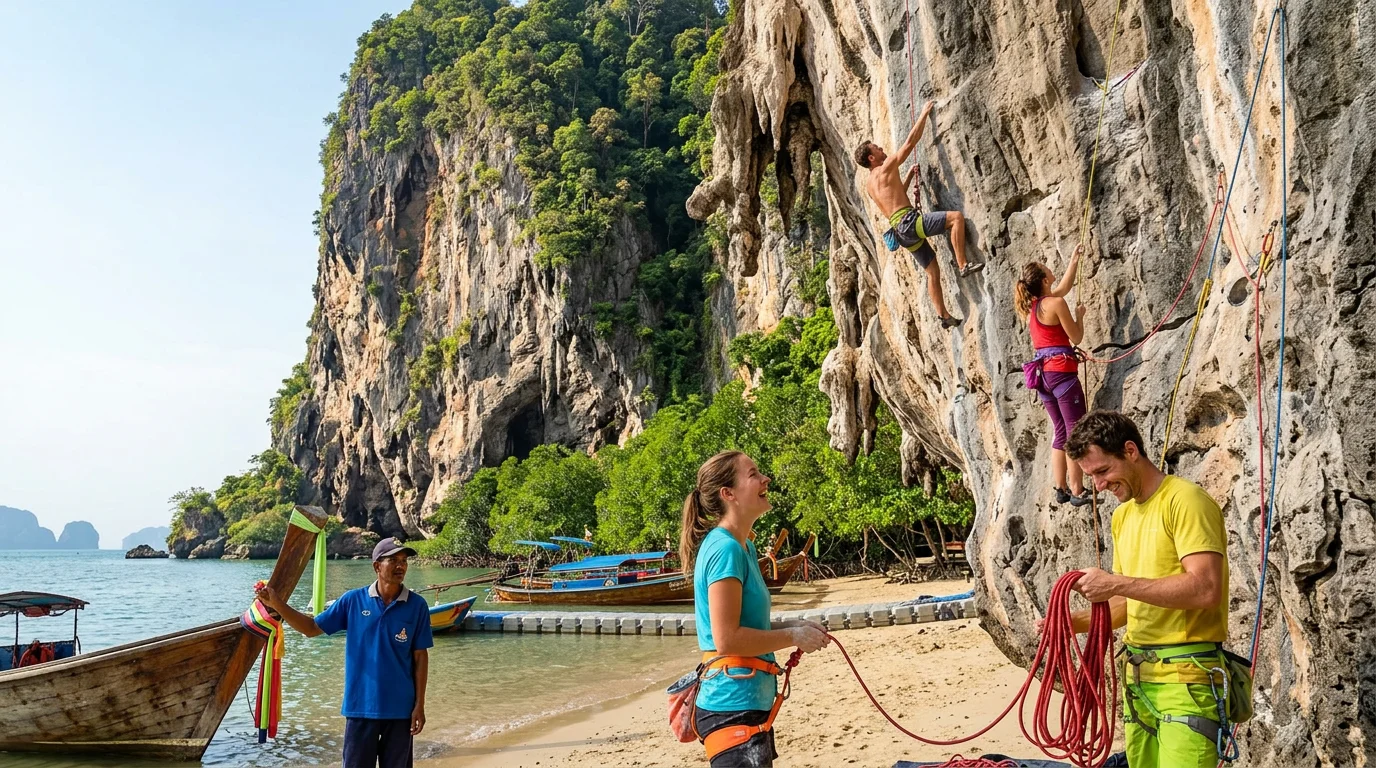
Railay East and the One-Two-Three sector form the primary training ground for introductory rock climbing across the peninsula. Novice climbers and local schools congregate here because the base of the rock sits on flat ground just metres from the paved coastal path connecting Railay East with Phra Nang Beach. Routes across One-Two-Three Wall, the adjoining Muay Thai Wall, and nearby Diamond Cave range between 12 and 25 metres in height, with beginner and moderate sport grades spanning French 4a to 6b. The limestone provides generous jugs, incut pockets, and lower-angle slabs that allow new climbers to focus on foot placement, balance, and rope handling rather than raw physical power. Instructors anchor top-ropes from fixed upper belays early in the morning before midday heat radiates off the cliff. Shading varies across the morning, with Diamond Cave providing reliable shelter and the east-facing walls catching direct sun from late morning onwards. With level footings that avoid awkward scrambles over jagged rocks, this area provides an accessible starting point for first-time climbers and families.
Starting an introductory climbing session on Railay East in the early morning ensures cooler conditions and shaded limestone before the midday sun warms the rock.
| Climbing Sector | Primary Grade Range (French) | Route Lengths | Best Ability Level | Sun Exposure & Timing |
|---|---|---|---|---|
| Railay East (One-Two-Three / Muay Thai) | 4a to 6b | 12m – 25m | Beginner to Intermediate | Morning shade; hot afternoon sun |
| Phra Nang Beach & Cave | 5c to 7b | 15m – 30m | Intermediate | Shaded inside cave; late morning sun on beach |
| Thaiwand Wall | 6a to 7c+ | 25m – 200m (multi-pitch) | Intermediate to Advanced | Morning shade on north face; afternoon sun on west |
| Tonsai Bay & Tonsai Roof | 6b to 8c+ | 15m – 35m | Advanced to Expert | Afternoon shade; steep roofs remain dry in rain |
Phra Nang Beach and Thaiwand Wall
A ten-minute walk south along the cliff base leads to Phra Nang Beach, where limestone towers rise directly from the sand above the Andaman Sea. Crags bordering the beach feature single-pitch sport lines graded predominantly from 5c to 7b, accompanied by dramatic cave formations and hanging stalactites. Sectors such as Escher World and the adjacent cave walls allow climbers to navigate calcified tufa columns and steep limestone features directly beside the shoreline. Overhanging roofs within the caves provide shelter from midday sun and remain dry during passing tropical rain showers, though the open sand-level bases become crowded with day-trippers by late morning.
Rising on the headland between Railay West and Phra Nang stands Thaiwand Wall, a sheer limestone monolith rising up to 200 metres above the sea. This formation is the primary venue for multi-pitch climbing on the peninsula, holding over a dozen routes graded from 6a to 7c+. Classic multi-pitch lines such as the five-pitch Lord of the Thais (7b) and the four-pitch King and I (6a) ascend vertical faces and airy pillars, leading to belay stances suspended high above the water. Reaching the base of Thaiwand Wall requires hiking up an exposed jungle trail equipped with fixed ropes from Railay West, or traversing an interior cave passage fitted with fixed ladders from the Phra Nang side. The northern aspect of the wall remains shaded throughout the dry season, while routes on the western face catch direct sun as the afternoon progresses.
Pack a headtorch and wear sturdy approach shoes when visiting Thaiwand Wall to negotiate the pitch-black cave tunnel, slippery ladders, and steep jungle paths securely.
Tonsai Bay and Overhanging Limestone: High-Grade Sport Test Pieces
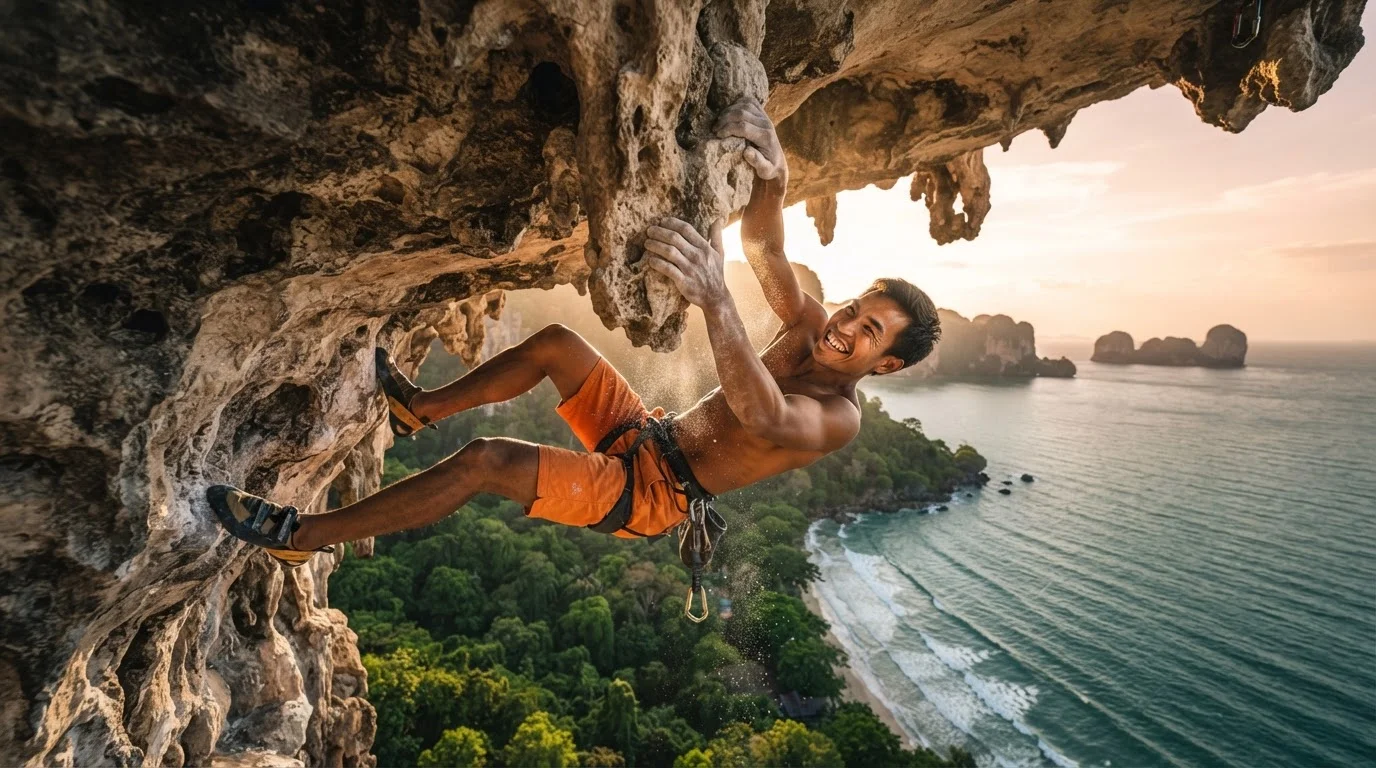
Tonsai Bay sits directly northwest of Railay West, reached via a steep jungle trail or around the rocky coastal headland at low tide. While Railay accommodates general holidaymakers and beginner climbing schools, Tonsai functions as the dedicated training ground for experienced sport climbers. The bay is celebrated for steep, three-dimensional karst limestone, drawing climbers on extended trips targeting physical routes graded from 6c up to 8c+. Decades of foot traffic and fine beach sand mean classic footholds are heavily polished, demanding precise footwork alongside sheer stamina.
The shoreline is anchored by Tonsai Roof, where horizontal ceilings and gargantuan tufa stalactites force gymnastic heel hooks, knee-bars, and bicycle manoeuvres straight off the sand. Adjoining sectors Dum’s Kitchen and Fire Wall deliver sustained endurance pitches and sharp finger-pocket sequences on severely overhanging stone. Because these formations tilt out so aggressively, prominent sectors such as The Nest, Wild Kingdom, and central parts of the Roof stay dry during tropical rainstorms.
Crag logistics require tracking the sun. Tonsai Roof and Dum’s Kitchen receive morning shade and turn scorching by midday, while Fire Wall comes into shade in the afternoon. Moderates are scarce, so climbers warm up on classic lower-grade lines such as The Groove Tube (6a) on Fire Wall or visit gentler corners of The Nest before projecting. At ground level, the beachfront retains a relaxed, communal culture, with climbers comparing beta, slacklining, and resting at rustic open-air bars.
Discover exactly where to stay, eat, and explore in Krabi. This honest guide covers practical transport, local food, and how to avoid the tourist crowds.
Climbing Schools, Guiding Packages, and Equipment Hire
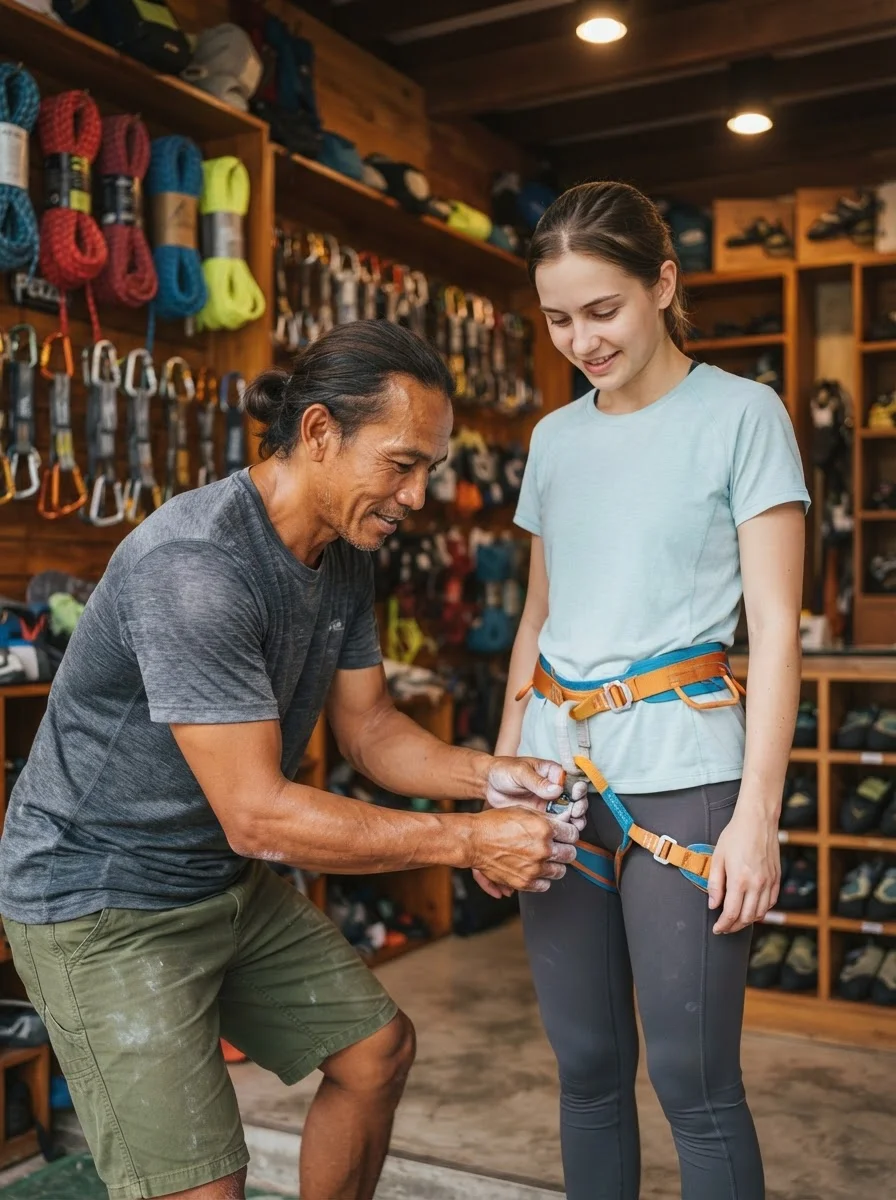
Established climbing schools operate across Railay East, along the path connecting Railay West, and through Tonsai Bay. Long-running outfits on the peninsula include Real Rocks Climbing School (founded in 2007 with instructors certified through the Southeast Asia Climbing Federation), Hot Rock Climbing School (guiding climbers since 1994), and King Climbers. Several schools maintain small group ratios, with operators such as Real Rocks capping groups at three to four climbers per instructor and refreshing rental gear every three to six months.
Introductory half-day group sessions typically run for roughly four hours, usually priced between 1,500 THB and 1,600 THB (around £34 to £37) per climber. These sessions include standard gear hire—harness, climbing shoes, chalk bag, and helmet—alongside knot-tying, movement coaching, and top-rope belaying under direct instructor supervision. Full-day group programmes cost between 2,000 THB and 2,600 THB (£45 to £59) and frequently combine morning crag climbs with an afternoon excursion, such as traversing through Bat Cave followed by an abseil descent overlooking the headland.
For competent climbers targeting multi-pitch routes on Thaiwand Wall, private guiding provides a dedicated instructor and tailored route choice. A half-day private guiding session typically starts around 3,500 THB (£80) for a solo climber, while a full multi-pitch day generally ranges from 5,000 THB to 6,500 THB (£114 to £148). Independent climbers can hire technical kit directly from shops on Railay East and Tonsai. Daily equipment rates at schools such as Hot Rock include 60-metre dynamic ropes for 300 THB to 500 THB, racks of quickdraws for 300 THB to 500 THB, and individual harnesses or shoes for 150 THB to 300 THB. Rental desks routinely require a passport or cash deposit for gear hire.
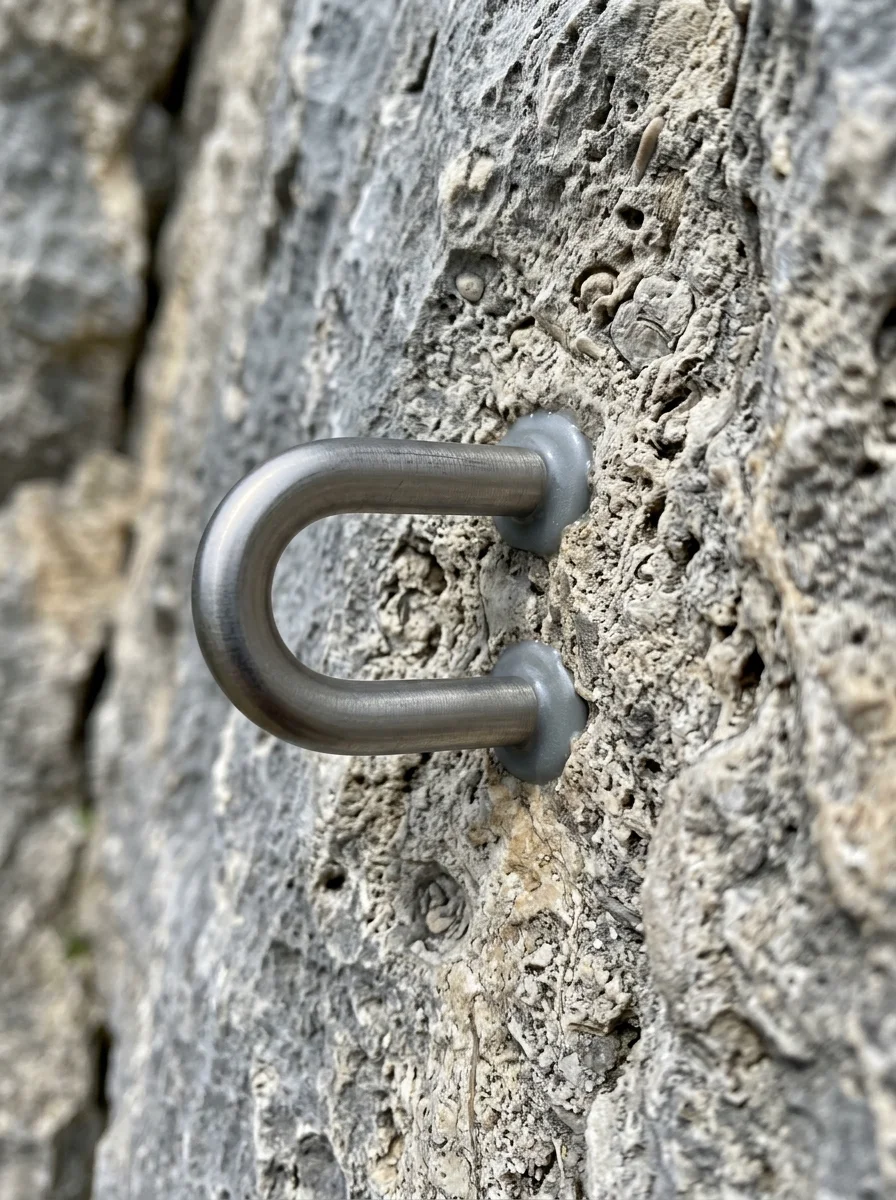
Limestone crags set against tropical sea water present severe metallurgical challenges. Warm, humid marine air combined with limestone minerals causes stress corrosion cracking in traditional 304 and 316 stainless steel bolts. This chemical reaction can weaken metal anchors internally within two to four years without showing obvious surface rust. To combat this hazard, community groups including the Krabi Bolting Fund and the Thaitanium Project have retrofitted high-traffic routes with titanium glue-in U-bolts and staples. Titanium resists tropical saltwater corrosion and creates durable fixed protection. Climbers should inspect fixed anchors carefully, clip titanium hardware where available, and avoid relying on aged stainless hangers or weathered nylon webbing threads. Crag etiquette requires brushing off excess magnesium chalk and packing out all rubbish, while buying local guidebooks or donating to the bolting fund directly supports ongoing anchor maintenance.
Location and Getting There
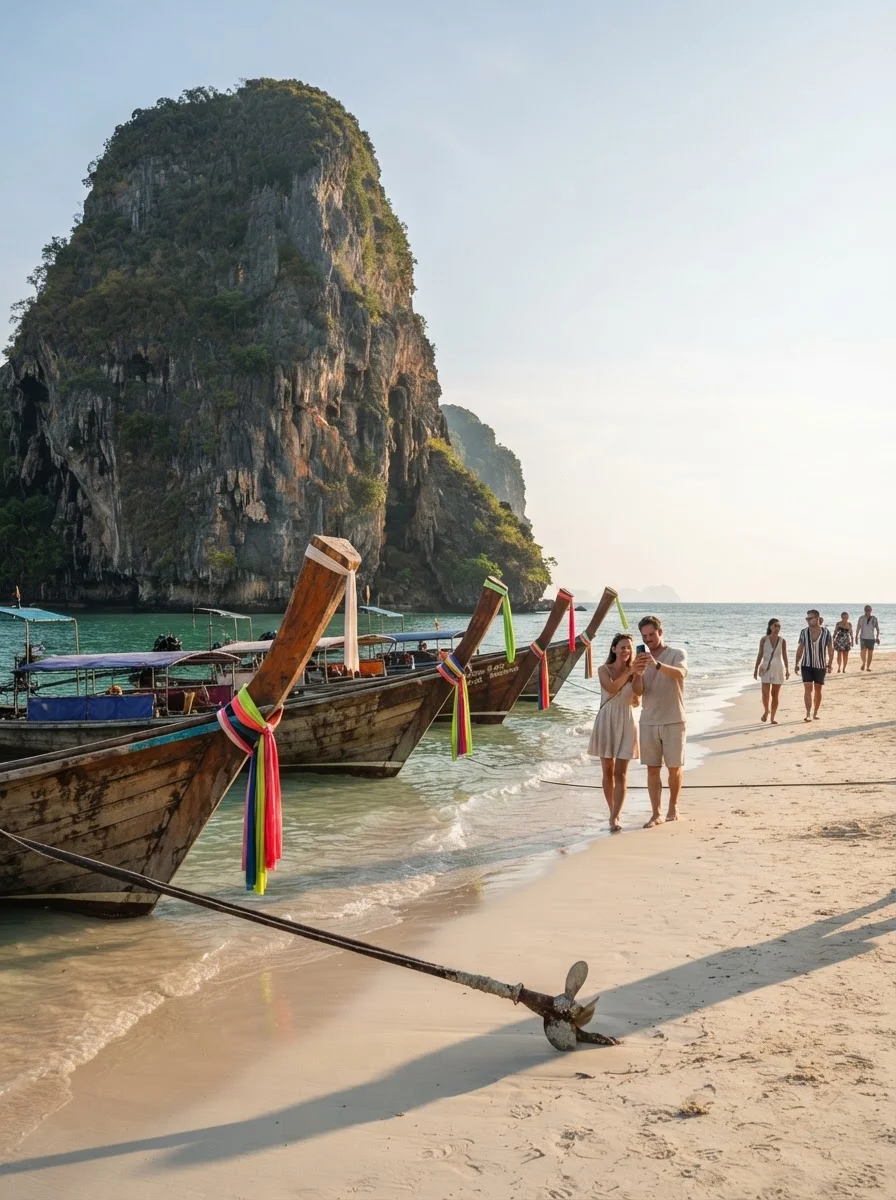
The climbing sectors of Railay and Tonsai occupy a rugged headland south of Ao Nang in Krabi Province. Sheer limestone cliffs cut the peninsula off from the mainland road network, so visitors arrive by boat.
Krabi International Airport (KBV) lies roughly 25 to 30 kilometres to the north-east. Inside the arrivals hall, official transport desks arrange direct transfers to the coast. A private fixed-fare taxi to Ao Nang costs around 600 THB (£14) and takes approximately 40 minutes, while shared shuttle minivans run for around 150 THB (£3.50) per passenger.
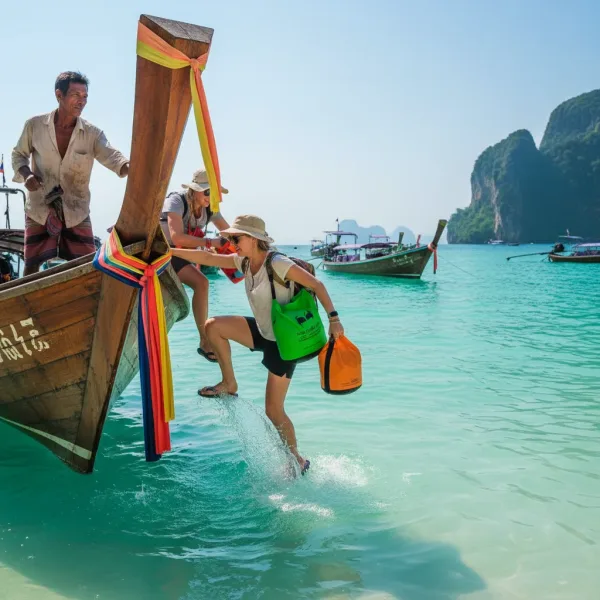
From Ao Nang Beach, longtail boat cooperative ticket kiosks operate daily crossings to Railay West and Tonsai Bay. Shared tickets cost 100 THB (£2.30) per person during daylight hours, rising to 150 THB (£3.50) after 18:00. The boat crossing takes 10 to 15 minutes, landing directly in the surf on Railay West where passengers wade ashore.
During the rougher south-west monsoon between May and October, longtail boats depart instead from Ao Nam Mao pier on the eastern side of the isthmus. Tickets also cost 100 THB (£2.30) each way. Ao Nam Mao provides sheltered water and connects directly to Railay East’s floating pier, avoiding open swells and allowing dry landings.
Costs and Booking
Climbing prices across Railay and Tonsai remain consistent between schools and offer accessible entry points for all abilities. Half-day introductory group lessons cost between 1,400 THB and 1,600 THB (£32 to £37) per person for four hours of tuition. Full-day beginner programs, which combine crag climbing with caving and a guided abseil, range from 2,000 THB to 2,600 THB (£46 to £60). Standard course fees include all technical climbing hardware—harness, climbing shoes, chalk bag, belay device, and helmet—alongside instruction and basic insurance. Established schools on Railay East also include longtail boat or road transfers from mainland Ao Nang or Ao Nam Mao within the quoted rate.
Multi-day instructional courses and private guiding cater to climbers developing independent rope skills. A comprehensive two- to three-day sport climbing or lead-climbing syllabus ranges from 6,500 THB to 12,000 THB (£150 to £280) per climber, covering anchor construction, rope management, and multi-pitch progression. Private guiding for routes on Thaiwand Wall or Ao Nang Tower costs between 5,000 THB and 6,500 THB (£115 to £150) per day on a 1:1 or 1:2 guide ratio.
Independent climbers travelling without personal kit can rent equipment from shops along Railay East and Tonsai. Complete sport racks cost around 800 THB to 1,200 THB (£18 to £28) per day, while climbing shoe rental runs 200 THB to 300 THB (£4.60 to £7) per session. Rental shops generally require a passport or cash deposit. Beach crags carry no admission charges, though entering interior caverns like Diamond Cave incurs a 200 THB (£4.60) national park fee.
Advance bookings are recommended during peak dry months from December to February. During shoulder and monsoon months, climbers can easily arrange sessions in person the afternoon prior. Cash is necessary across the peninsula; credit cards often incur a 3% fee, and local ATMs can run out of cash during busy periods.
| Option | Cost (THB) | Cost (GBP) | Details |
|---|---|---|---|
| Half-Day Group Lesson (per person) | 1,400 – 1,600 | £32 – £37 | 4 hours; includes harness, shoes, helmet, guide |
| Full-Day Group Course (per person) | 2,000 – 2,600 | £46 – £60 | 7–8 hours; top rope, caving, abseiling, lunch |
| 3-Day Comprehensive Course (per person) | 6,500 – 12,000 | £150 – £280 | Covers lead climbing, anchors, multi-pitch skills |
| Private Multi-Pitch Guide (per day) | 5,000 – 6,500 | £115 – £150 | 1:1 or 1:2 ratio; tailored routes on Thaiwand |
| Daily Sport Gear Package (per day) | 800 – 1,200 | £18 – £28 | 60m rope, quickdraws, belay device, harness |
| Climbing Shoe Rental (per day) | 200 – 300 | £4.60 – £7 | Standard sport climbing rental shoes |
| Longtail Boat Transfer (per person, one way) | 100 – 150 | £2.30 – £3.50 | Ao Nang to Railay West or Tonsai |
Who It Suits Best
Railay suits outdoor enthusiasts, active couples, and dedicated sport climbers looking to test themselves on limestone sea cliffs. It works well for complete beginners because local climbing schools run structured introductory sessions on beachside crags with top-ropes and equipment provided. Intermediate and experienced climbers have access to hundreds of bolted single-pitch and multi-pitch routes across varying grades.
Solo travellers will find an established, sociable climbing scene, particularly around Tonsai Beach and the climbing shops on Railay, where pairing up with a belay partner is generally straightforward.
Conversely, the peninsula is poorly suited to travellers seeking step-free, car-accessible luxury or a holiday with minimal physical exertion. With no road access, arrival involves stepping out of longtail boats into knee-deep water. Moving between sectors and beaches requires walking across loose sand, scrambling over rocky headlands, or hiking jungle tracks, all in tropical heat and humidity. Those with restricted mobility or heavy rolling luggage often find the terrain challenging.
What to Know Before You Book
Tidal movements govern daily transit between Railay West and Tonsai. At low tide, climbers can scramble along the exposed rocky shoreline in roughly 15 minutes. At high tide, this coastal ledge is submerged, requiring either a short longtail boat transfer or a steep, 20-minute walk along the unpaved jungle trail over the headland.
Commercial deep-water soloing has been prohibited across the national park since 2016. Hat Noppharat Thara–Mu Koh Phi Phi National Park authorities do not license commercial boat operators for unroped sea-cliff excursions, and commercial trips offering this are operating outside park regulations.
The southwest monsoon brings heavy rainfall and rough sea swells from May to October. While large overhangs and roofs at Tonsai and Phra Nang stay dry enough for climbing during showers, onshore swells frequently prevent longtail boats from landing on Railay West beach. During these months, boat transfers divert to the sheltered floating pier on Railay East, usually operating out of Ao Nam Mao.
Fixed protection warrants careful scrutiny. Marine humidity and limestone minerals cause stress corrosion cracking in older stainless steel bolts, often weakening them from the inside without outward signs of rust. Extensive rebolting initiatives have replaced hundreds of lines with titanium glue-in anchors, which resist marine corrosion. Before tackling sport routes independently, consult local climbing shops or recent guidebooks to verify that chosen routes use modern titanium hardware.
Practical Tips

Pack approach shoes or sturdy trainers instead of flip-flops. Approaching sectors like Thaiwand Wall or trekking the jungle trail across to Tonsai requires scrambling over sharp karst limestone and navigating slick mud tracks, where open footwear risks puncture wounds and twisted ankles.
Tropical humidity and heat alter gear performance. Standard loose chalk often turns to paste within minutes on sweaty palms; applying an alcohol-based liquid chalk foundation beforehand keeps hands drier on polished limestone holds. Midday sun heats south-facing walls considerably, softening shoe rubber and reducing friction. Chasing shade—climbing east-facing crags early in the morning and shifting to west-facing or deeply undercut overhangs later in the afternoon—preserves physical stamina and grip.
Dehydration develops rapidly when working strenuous pitches in high temperatures. Bring at least two litres of water mixed with electrolyte salts for half-day sessions, and carry gear in a rugged dry bag. Longtail transfers from Ao Nang frequently require wading through knee-deep surf on arrival at Railay West, and boat spray can soak unprotected equipment.
Watch unattended gear closely at crag bases. Long-tailed macaques frequent Railay East and Phra Nang Beach, routinely unzipping unsecured backpacks to steal food and sunscreen. Keep bags fully zipped and clipped to belay anchors or hung off ground level. If renting independent ropes or quickdraws, inspect sheaths for abrasion and carabiners for corrosion before leaving the shop, and note that rental desks commonly require a passport or cash deposit.
Whether hiring gear for independent sports routes or arranging a guided session with local instructors, reserving packages in advance ensures access to well-maintained equipment and tailored coaching during busy dry-season weeks.
Quick Reference Table
| Item | Detail | Notes |
|---|---|---|
| Total Bolted Routes | 700+ sport routes | Graded from French 4a up to 8c+ across limestone crags |
| Key Climbing Sectors | Railay East, Phra Nang Beach, Thaiwand Wall, Tonsai Bay | Spans beginner top-rope slabs to 200m multi-pitch walls and roofs |
| Half-Day Group Lesson | 1,400 – 1,600 THB (£32 – £37) per person | 4 hours; includes harness, shoes, helmet, guide tuition, and insurance |
| Full-Day Group Course | 2,000 – 2,600 THB (£46 – £60) per person | 7–8 hours; includes top-roping, caving, abseiling, gear, and lunch |
| Multi-Day Lead Course | 6,500 – 12,000 THB (£150 – £280) per person | 2–3 days; covers lead climbing, anchor building, and multi-pitch skills |
| Private Multi-Pitch Guiding | 5,000 – 6,500 THB (£115 – £150) per day | 1:1 or 1:2 instructor ratio; tailored routes on Thaiwand Wall |
| Daily Sport Gear Package | 800 – 1,200 THB (£18 – £28) per day | Includes 60m dynamic rope, quickdraw rack, harness, and belay device |
| Climbing Shoe Rental | 200 – 300 THB (£4.60 – £7) per day | Available at local shops; passport or cash deposit required |
| Longtail Boat Transfer | 100 THB (£2.30) day / 150 THB (£3.50) after 18:00 | Ao Nang to Railay West or Tonsai (10–15 mins; wet surf landing) |
| Monsoon Boat Route | 100 THB (£2.30) per person each way | Departs Ao Nam Mao pier to Railay East floating pier (May–October) |
| Airport Transfer (KBV) | 600 THB (£14) private taxi / 150 THB (£3.50) minivan | Krabi International Airport to Ao Nang (25–30 km, ~40 mins) |
| National Park Cavern Fee | 200 THB (£4.60) | Applies to interior caves such as Diamond Cave |
| Deep-Water Soloing Status | Prohibited | Commercial boat excursions banned by national park since 2016 |
| Anchor Hardware | Titanium glue-in U-bolts and staples | Retrofitted on high-traffic lines to resist marine corrosion |
| Best Season | December to February (dry season) | Advance bookings recommended; morning shade essential on east crags |
| Website | https://realrocksclimbing.com | Real Rocks Climbing School |
| Website | https://www.railayadventure.com | Hot Rock Climbing School |
FAQ: Rock Climbing in Railay Beach
How do visitors travel around Railay Beach?
Where is the best place for beginner rock climbers in Railay Beach?
When is the best time to start an introductory climbing session on Railay East?
What should I bring when visiting Thaiwand Wall for climbing?
Who is Tonsai Bay best suited for when rock climbing?
What do I need to rent climbing equipment in Railay Beach?
How much does an introductory half-day group climbing session cost in Railay Beach?
What should climbers know about fixed anchors in Railay Beach?
How do I get to Railay Beach from Ao Nang?
What payment methods are accepted in Railay Beach for climbing services and rentals?
Reviewed by the Thailand Guide Editorial Team • Last reviewed: 17 November 2026
This page is provided for general information only. While we aim for accuracy, details can change — please verify anything important independently before relying on it.