Deep-Water Soloing
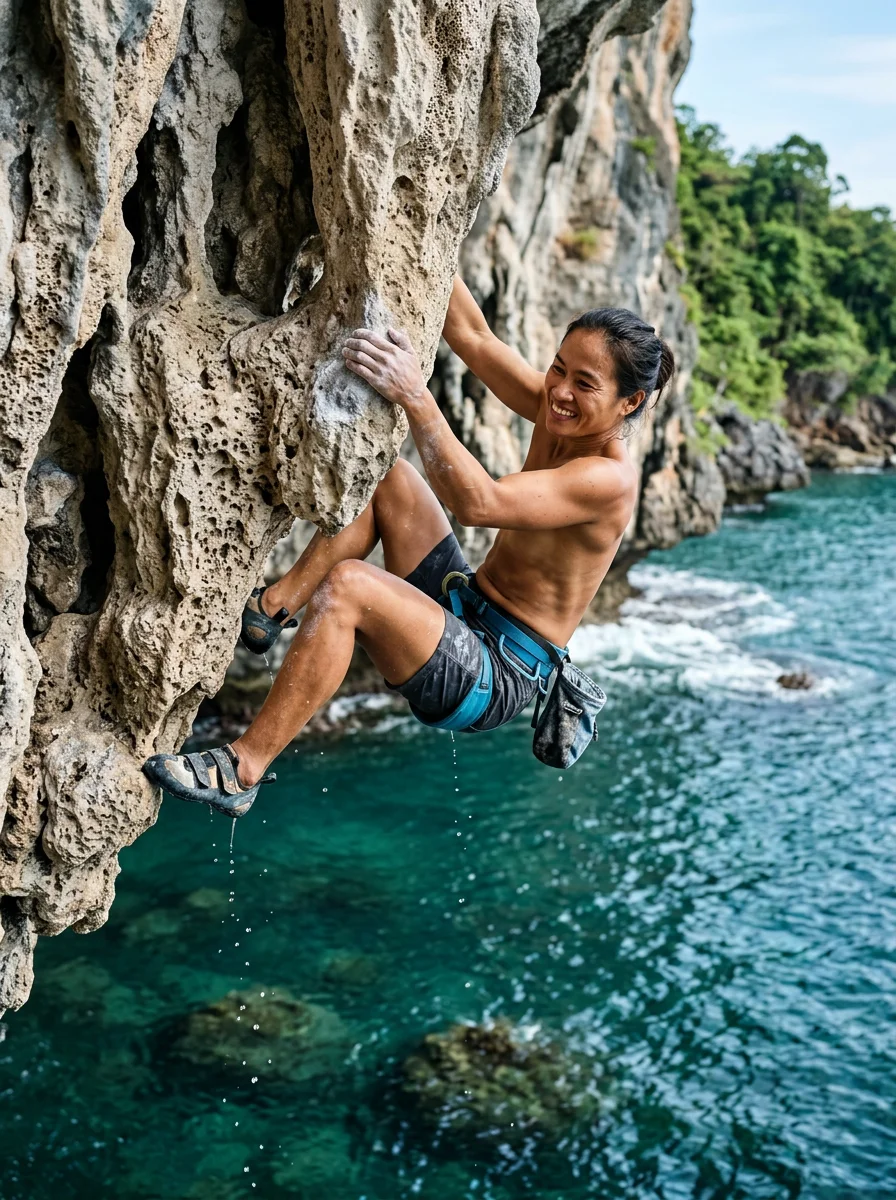
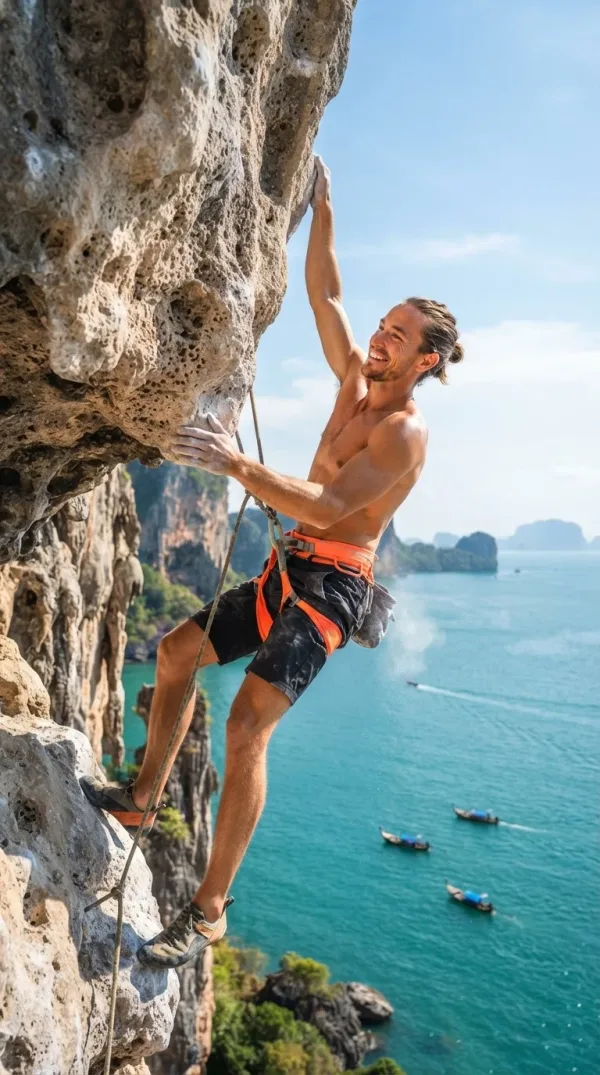
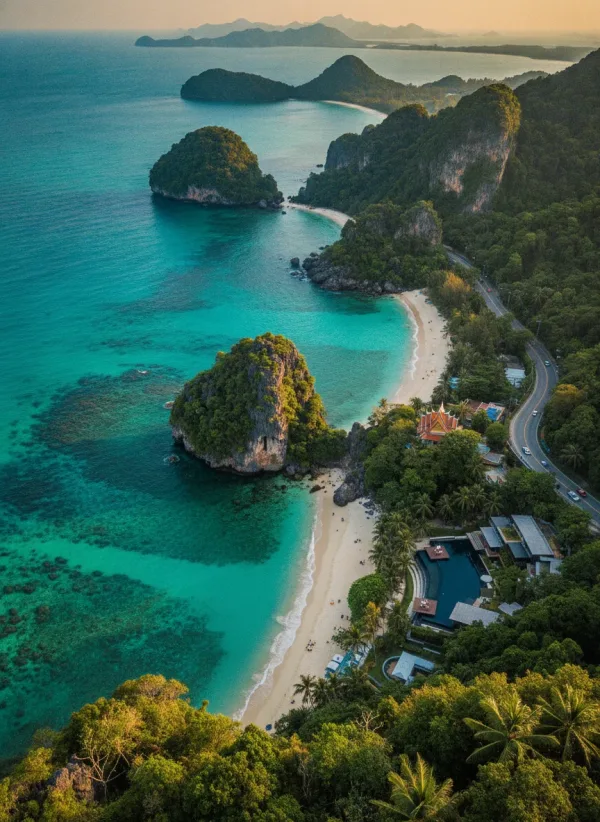
Deep-water soloing, known internationally as psicobloc, strips rock climbing down to its bare essentials: rock, sea, and chalk. Climbers scale sea cliffs unroped, without harnesses or hardware, relying on deep coastal water as an impact cushion against falls. Along Southern Thailand's Andaman coast, towering limestone karsts rising sheer from warm tropical waters established the region as a major international hub for the discipline through the 2000s and early 2010s.
Yet the activity is far from a casual holiday pursuit. Thailand's Department of National Parks, Wildlife and Plant Conservation enforces strict prohibitions against commercial deep-water soloing excursions across marine protected areas, such as Hat Noppharat Thara-Mu Koh Phi Phi National Park. Understanding current access restrictions, marine hydrodynamics, and approved technical sport-climbing alternatives is vital before heading out to coastal crags.
The sport demands peak physical conditioning, dynamic balance, and steady mental composure. In Thailand, deep-water soloing developed around overhanging karst architecture, where wave erosion and mineral dissolution sculpted massive tufas, stalactites, and pocketed flowstone roofs. These steep, protruding profiles naturally project a falling climber outward, away from dangerous rock shelves below. Historical routes across the Andaman islands ranged from accessible French grade 5 traverses just above the waterline to sustained 7c roof cracks requiring athletic lunges between limestone jugs.
Unlike conventional bolted sport climbing, there are no ropes to rest on when forearm pump sets in. Once you leave your support craft or sea kayak, your choices are finishing the line at an established descent point or taking a direct leap into the ocean. Taking a fall requires deliberate composure. A soloist must push firmly away from the rock face, scan the landing zone to ensure water entry is clear of debris or swimmers, align the legs together, and tuck the arms tightly against the torso upon entry.
Entering water awkwardly from heights above eight metres can cause severe blunt-force trauma, including ruptured eardrums, spinal vertebrae compression, and sudden windedness. Mastering body tension during unexpected slips is the foundational skill that separates competent soloists from severe hospital casualties.
For climbers seeking technical vertical routes without ropeless maritime exposure, arranging guided sport-climbing excursions on permitted mainland crags provides professional rope safety, route instruction, and complete compliance with local conservation laws.

Tides, Depths, and Submerged Hazards
Hydrographic conditions govern the safety of any coastal solo, rendering guidebooks useless without real-time tidal analysis. The Andaman coast experiences semi-diurnal tides with swings exceeding two and a half metres during spring cycles, drastically altering clearance over shallow underwater reefs. A sheer limestone face that offers five metres of safe water depth at high tide can expose jagged coral shelves, submerged limestone boulders, or carpetings of long-spined sea urchins just four hours later. Manual depth sounding with a weighted drop-line or an in-water check using a mask and snorkel is an absolute prerequisite before committing to any ascent over open water.
Surface volatility presents equal danger. Long-period oceanic swell striking vertical sea walls generates violent surge and heavy hydraulic backwash that can smash a falling climber against the rock base or suck an exiting swimmer into submerged hollows. Along exposed headlands and island channels, strong tidal rip currents can rapidly drag a swimmer away from safety into deeper channels.
Although tropical water temperatures of 28°C to 30°C remove the risk of cold-water shock seen at temperate crags, high-impact water entries from height frequently cause sudden disorientation, windedness, and involuntary water inhalation, quickly leading to fatigue in heavy wave chop. Marine life introduces another serious hazard. Box jellyfish (sea wasps) and bluebottles drift into coastal waters, particularly around seasonal monsoon transitions and rainy spells. Because box jellyfish have transparent bells and trailing tentacles that can reach several metres, they remain virtually invisible from the cliff face, making visual inspection of the landing pool before climbing vital to avoiding life-threatening envenomation.
Legal Framework and National Park Bans
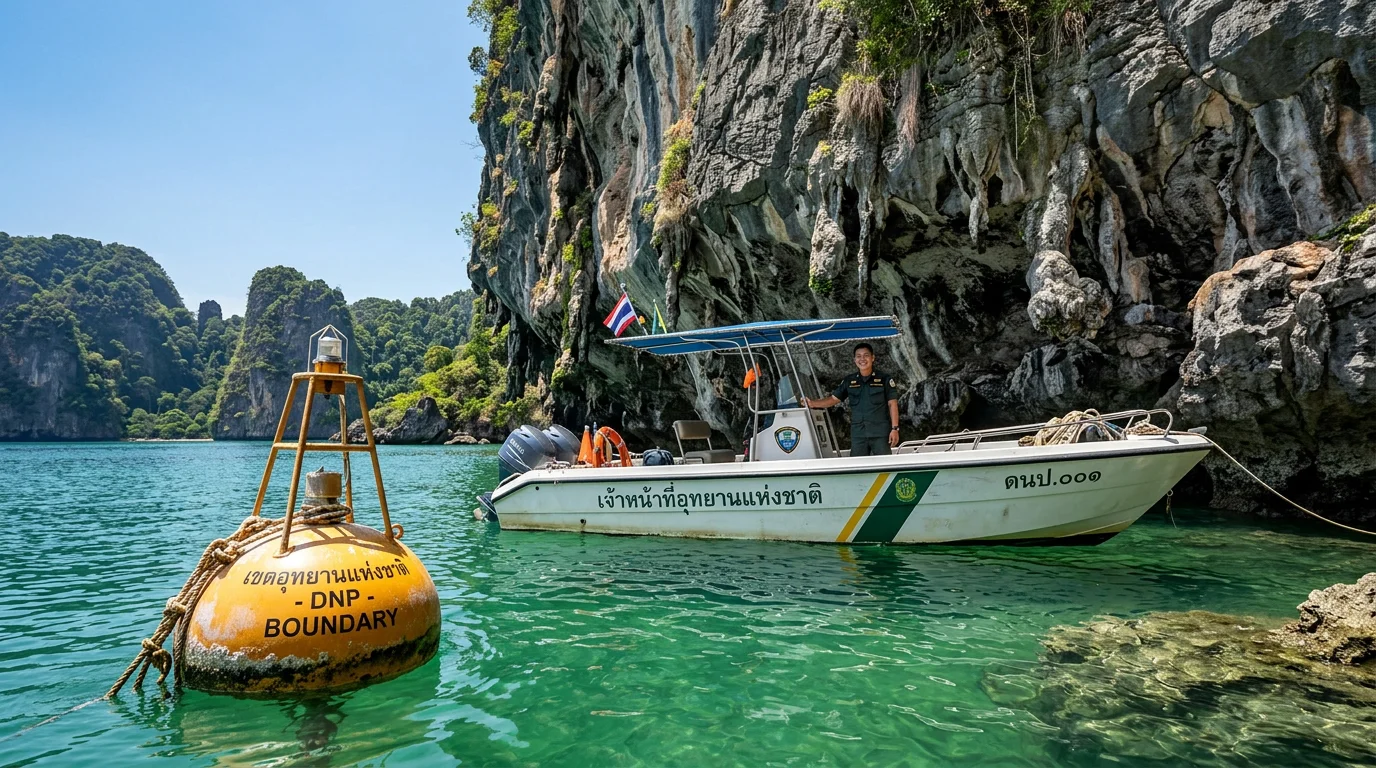
Commercial deep-water soloing tours and ropeless climbing over open water are strictly prohibited across Thailand's primary marine national parks. In early 2016, the Department of National Parks, Wildlife and Plant Conservation (DNP) enforced sweeping bans across Had Noppharat Thara–Mu Koh Phi Phi National Park, directly halting commercial climbing excursions around Koh Poda, the Phi Phi archipelago, and adjacent marine sectors. Park authorities enacted these measures following multiple serious tourist injuries, maritime safety hazards involving collisions between climbing support boats and commercial speedboats, and damage to fragile intertidal ecosystems.
Coastal climbing without official authorisation breaches the National Park Act B.E. 2562 (2019). Under Section 20 of the Act, failing to comply with park regulations or designated zoning orders carries administrative fines of up to 100,000 THB (approx £2,325). Operating commercial business activities within a protected marine park without an official permit violates Section 19, which carries penalties of up to two years' imprisonment, a fine of up to 200,000 THB (approx £4,650), or both. Foreign visitors convicted of serious statutory violations also risk visa revocation and deportation under Thai immigration laws.
While licensed climbing schools continue to operate legal, bolted sport climbing routes across established mainland crags on the Railay peninsula and Tonsai Bay, open-water sea cliffs remain closed to soloists. Local boatmen who provide informal, off-the-books transport to offshore sea walls operate outside the law. Engaging an unlicensed boatman places participants in breach of maritime and park regulations, and standard travel insurance policies universally exclude injuries sustained during illegal activities or ropeless ascents. Park rangers conduct active maritime patrols across Krabi's bay waters, intercepting unauthorised craft and issuing penalties to offenders. Climbers should consult official park offices or established climbing centres in Krabi in person to verify current boundaries before planning any coastal ascents.
Plan a Gulf of Thailand trip with clear guidance on island groups, ferries, weather, marine parks, accommodation costs and mainland gateways.
Soloing Versus Sport Climbing and Guided Ascents
Sport climbing relies on an engineered safety chain: dynamic kernmantle ropes, harnesses, quickdraws, and certified anchors—predominantly corrosion-resistant titanium glue-in bolts across Krabi’s coastal crags. An attentive belayer and elastic rope absorb fall energy predictably, eliminating the trauma of abrupt physical deceleration. In contrast, deep-water soloing dispenses with mechanical equipment, relying instead on sea water to absorb falls. While open water cushions clean drops from modest elevations, surface tension at higher speeds turns unplanned landings into punishing impacts capable of causing bruising, windedness, or disorientation.
The disciplines diverge sharply in how climbers work difficult routes. Roped sport climbing permits climbers to rehearse difficult moves repeatedly at their limit. When grip fatigue sets in or a dynamic reach fails, the climber hangs suspended on the rope, rests their forearms, inspects the holds, and attempts the sequence again. Deep-water soloing imposes an immediate, fatiguing penalty for every slip. Falling drops the climber into the sea, saturating climbing shoes and turning chalk to useless paste. The climber must then swim through coastal swell back to an exit point or support vessel, usually ending the attempt until equipment dries.
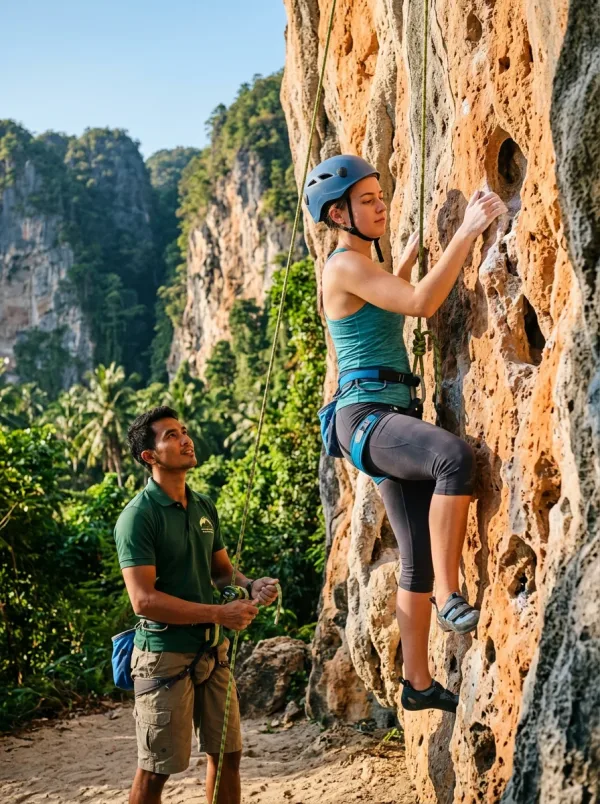
These physical realities make soloing unsuitable for unsupervised novices. Inexperienced climbers often lack the technical footwork to prevent sudden slips on polished limestone, as well as the mid-air composure to maintain an upright entry posture during an unexpected plunge. Technical progression begins on mainland crags. Krabi's established climbing schools on Railay and Tonsai provide structured top-rope tuition and lead-climbing courses. Under the direct supervision of certified instructors, climbers develop rope management, footwork precision, and belay skills on approved land-based walls before attempting ropeless coastal routes.
| Discipline | Protection System | Experience Level | Supervision Model | Access Status |
|---|---|---|---|---|
| Deep-Water Soloing (DWS) | Open sea water impact | Advanced (typically 6b+ and above) | Autonomous (no ropes or spotters) | Commercial tours prohibited in marine national parks |
| Sport Lead Climbing | Dynamic rope and titanium bolts | Intermediate to advanced | Independent climbing pairs | Permitted at designated mainland crags |
| Guided Top-Rope Climbing | Overhead anchor and top-rope | Beginner to novice | Certified climbing instructor | Permitted through licensed climbing schools |
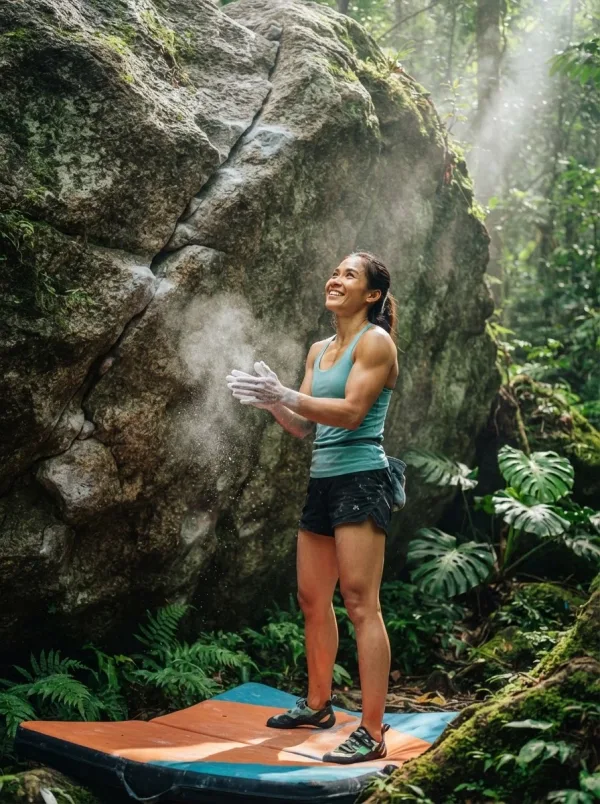
| Coastal Bouldering | Crash pads and ground spotters | All experience levels | Independent or guided | Permitted on coastal boulders above high tide |
Roped climbing on Krabi's designated mainland crags delivers an equivalent physical workout while maintaining dependable fall protection, systematic skill development, and full regulatory compliance.
Offshore Logistics, Boat Support, and Emergency Extraction
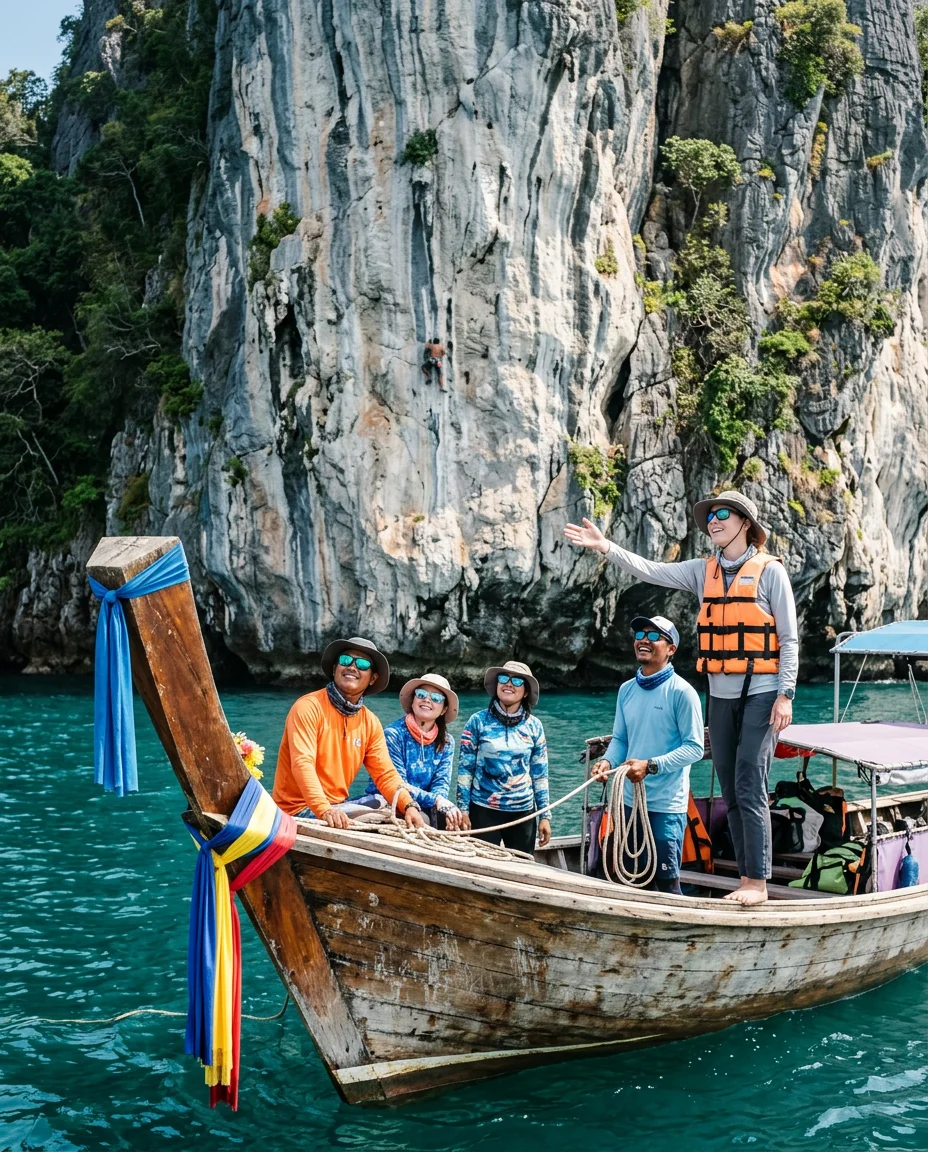
Managing an offshore climb requires dependable marine logistics and a dedicated surface support vessel stationed directly below the cliff. When commercial deep-water soloing operations were active, crews typically deployed motorized catamarans or wooden longtail boats accompanied by rigid sit-on-top sea kayaks. The kayak acts as an agile tender, ferrying climbers across choppy water to rock ledges, retrieving disoriented swimmers, and maintaining a clear drop zone. Meanwhile, the boat skipper must hold position against breaking swell and tidal surges using precise reverse throttle, keeping the primary vessel close enough for swift intervention without drifting beneath a climber's potential trajectory or striking submerged limestone shelves.
Retrieving an uninjured climber is manageable with rope ladders or swim steps, but handling an emergency in open water presents severe physical hurdles. A clumsy water entry from height can cause disorientation, joint dislocation, or spinal trauma. Hoisting an incapacitated casualty over the high, rigid gunwales of a rocking longtail boat without worsening neck or back injuries is exceptionally dangerous. Support teams require proper marine rescue gear, including rigid backboards, cervical collars, flotation slings, and crew members trained in open-water casualty packaging.
Emergency extraction chains in southern Thailand face significant delays dictated by geography. Vertical karst cliffs routinely block mobile cellular signals, leaving VHF marine radio or satellite communicators as primary lifelines to alert mainland emergency services. From offshore crags around the Railay peninsula or outlying islands, casualty transfer requires a 15- to 20-minute sea run to mainland jetties such as Ao Nang or Ao Nam Mao. Once ashore, land ambulances summoned through the national 1669 medical emergency dispatch take an additional 30 to 45 minutes to reach public trauma facilities at Krabi Hospital in Krabi Town, while transfers to advanced tertiary centres like Bangkok Hospital Phuket require several hours by road.
Historical Hotspots and Current Access Reality
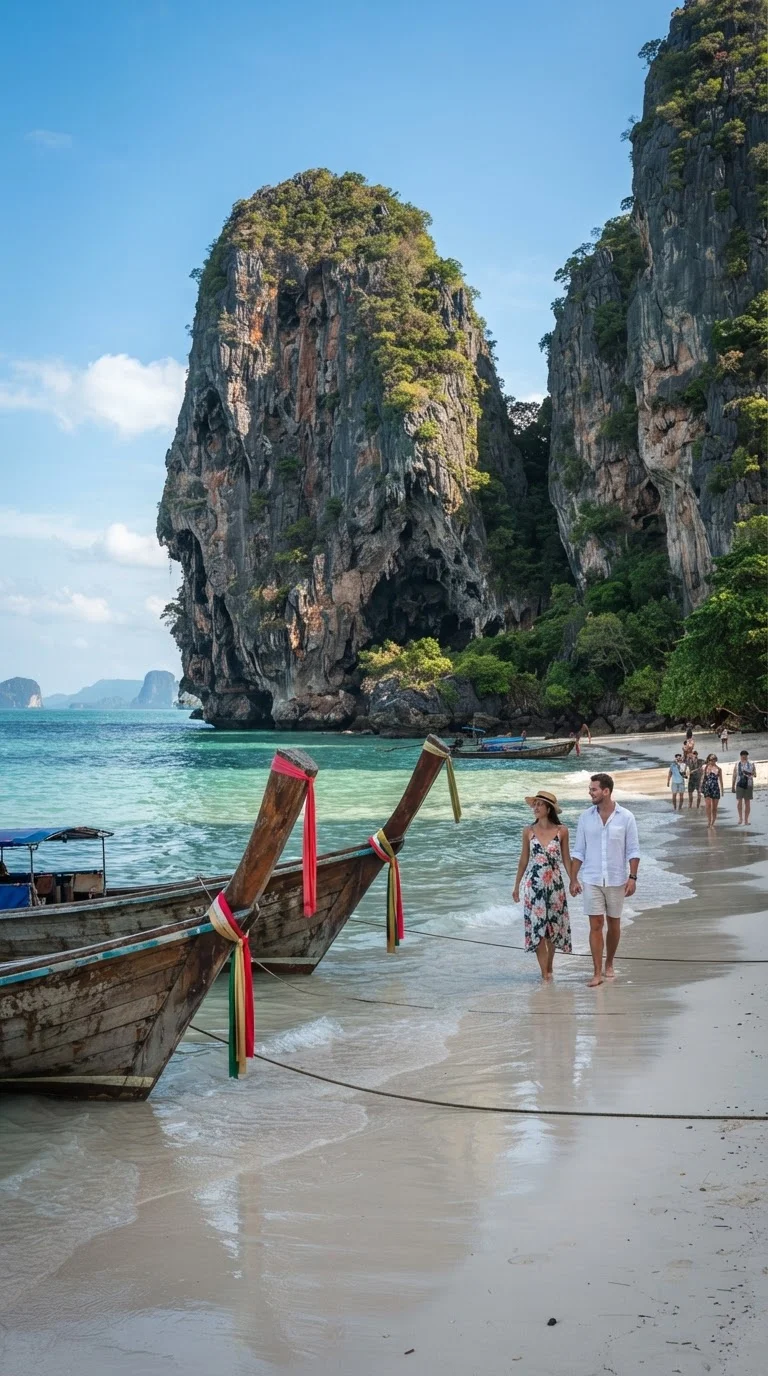
Between the mid-2000s and 2016, the limestone karsts of Krabi Province were a major draw for deep-water soloing in Southeast Asia. Guiding outfits and independent climbers regularly chartered longtail boats to offshore sectors. Koh Poda was the primary destination, where overhanging limestone faces allowed ascents of up to 20 metres directly above deep maritime channels. Other established historical sectors included Ao Nang Tower, the sea cliffs bordering Tonsai Bay, and sea caves around Koh Phi Phi Leh, which drew climbers seeking continuous tufa columns and wave-undercut roofs.
This era shifted in early 2016 when the Department of National Parks, Wildlife and Plant Conservation enforced bans on ropeless climbing over water within marine park boundaries, citing safety risks and marine conservation. Authorities across Hat Noppharat Thara–Mu Koh Phi Phi National Park halted commercial deep-water solo excursions, effectively closing these offshore sectors to soloists. Although informal boatmen occasionally propose unauthorised trips to outlying islands, reputable climbing centres in Railay and Tonsai refuse to run them. Visitors arriving with expectations of booking commercial excursions will find that legitimate schools adhere strictly to park closures.
Instead, local schools direct visitors toward the peninsula's extensive bolted sport crags, where climbing remains fully permitted. More than seven hundred bolted routes line the limestone walls of Railay and Tonsai. Sectors such as Phra Nang Beach, Thaiwand Wall, and Tonsai Beach provide steep overhangs, multi-pitch routes, and technical face climbing protected by ropes and corrosion-resistant titanium glue-in bolts. Novice climbers and visiting soloists can develop their skills by booking structured sport climbing sessions with licensed schools on Railay East or Tonsai, using managed top-ropes on designated beginner walls like Muay Thai Wall and One-Two-Three Wall.
Costs and Budgeting
Historic commercial deep-water soloing excursions in Krabi were typically organised as full-day boat charters priced between 1,200 THB and 1,800 THB (£28 to £42) per climber. That historical rate generally included longtail boat transport, a guide, communal climbing shoes, liquid chalk, and lunch. Because commercial deep-water soloing operations across the surrounding marine national parks have ceased under official park regulations, visitors planning a climbing trip to the Railay peninsula now budget primarily for permitted sport climbing, equipment hire, and boat transfers.
Permitted land-based climbing provides structured alternatives at transparent rates. Half-day guided sport climbing sessions run by local climbing schools typically cost between 1,200 THB and 1,800 THB (£28 to £42) per person, covering tuition, a harness, shoes, chalk, and ropework. Full-day instruction courses generally range from 2,500 THB to 3,500 THB (£58 to £81), while private full-day guiding starts around 6,000 THB (£140). Independent climbers travelling without gear can hire hardware directly from crag shops on Railay East and Tonsai Beach. A standard lead rack—comprising a 60-metre dynamic rope and 12 quickdraws—costs around 800 THB to 1,000 THB (£19 to £23) per day. Separate shoe and harness hire runs roughly 250 THB to 300 THB (£5.80 to £7) per item, with shops routinely requesting a passport deposit.
Local transport is an unavoidable logistical line item because the headland has no road links. Shared daytime longtail boat transfers between Ao Nang Beach and Railay West or Tonsai cost 100 THB (£2.30) each way per person, rising to 150 THB (£3.50) after 18:00 or when fewer than eight passengers board. Short inter-beach boat hops between Railay and Tonsai during high water cost around 100 THB (£2.30). Climbers purchasing local topo guidebooks should budget around 1,000 THB (£23) at crag shops.
| Option | Cost (THB) | Cost (GBP approx) | Notes |
|---|---|---|---|
| Historic DWS Day Tour (Discontinued) | 1,500 THB | £35 | Historical commercial rate; trips no longer operating |
| Half-Day Guided Sport Climbing | 1,500 THB | £35 | Includes licensed guide, harness, shoes, chalk, and ropes |
| Full-Day Guided Sport Climbing | 2,800 THB | £65 | Covers multi-pitch or single-pitch instruction and gear |
| Daily Sport Gear Rental Package | 1,000 THB | £23 | Dynamic rope and set of 12 quickdraws for lead climbing |
| Longtail Pier Transfer (One-Way) | 100 THB | £2.30 | Per person between Ao Nang Beach and Railay or Tonsai |
What To Know Before You Go
Securing comprehensive travel insurance is the critical first step before considering any deep-water soloing in Thailand. Standard UK travel insurance policies and routine adventure sports add-ons routinely exclude ropeless climbing, falls into open water, and maritime search-and-rescue operations. Climbers must arrange specialist cover—such as the British Mountaineering Council (BMC) Rock policy—that explicitly covers soloing over water and provides substantial emergency medical extraction alongside dedicated search-and-rescue provisions. Without explicit written confirmation of deep-water soloing cover, you face severe out-of-pocket medical bills if injured off the coast.
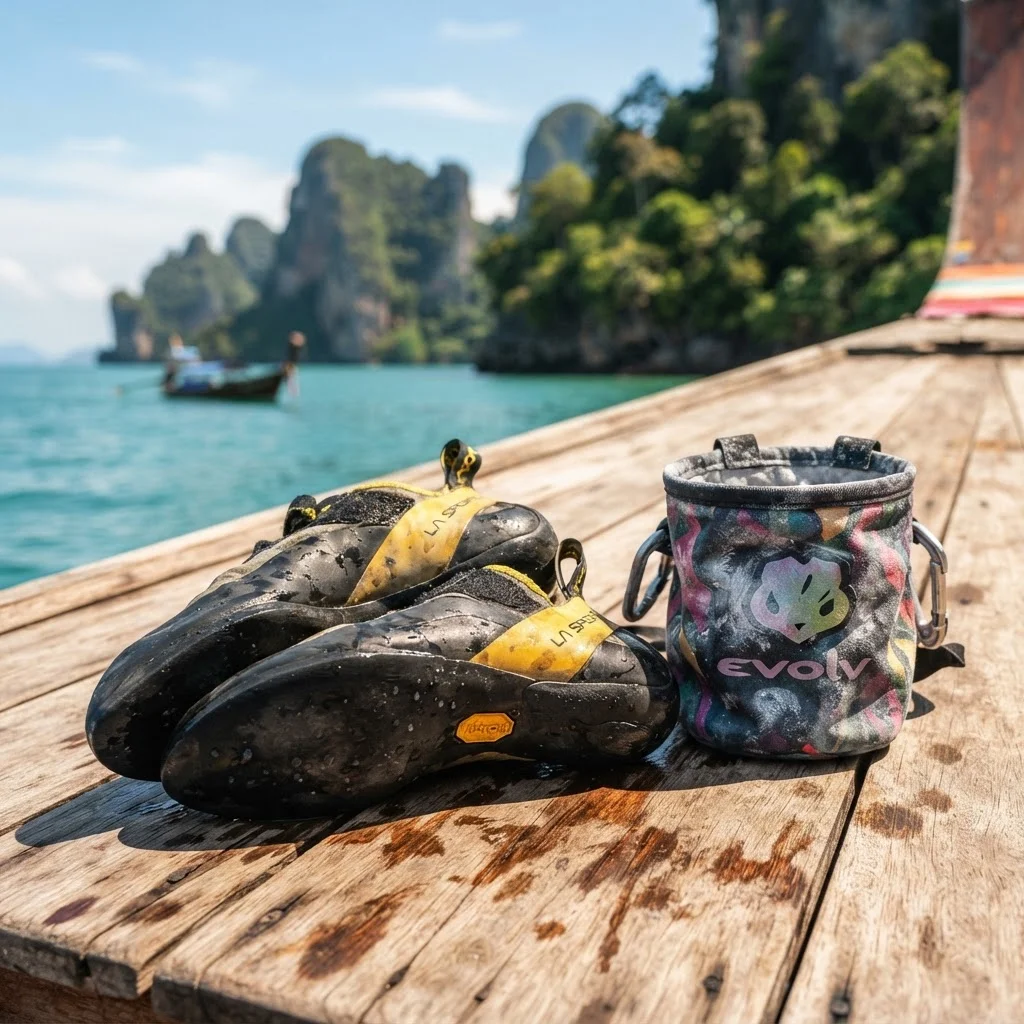
Equipment selection requires equal foresight due to the aggressive effects of tropical seawater. Standard leather climbing shoes stretch when saturated and dry out rigid, brittle, and distorted, ruining their technical fit. Experienced soloists pack synthetic-upper shoes, which maintain their shape when wet and dry far more quickly, often rotating two or three pairs between climbs. Fabric chalk bags act as wet sponges on impact, so climbers substitute them with quick-drying liquid chalk applied beforehand or stored in non-absorbent containers. A sturdy roll-top dry bag is indispensable for keeping dry footwear, hydration, and first-aid supplies protected from salt spray aboard support craft.
Physical preparation extends well beyond climbing grades. Dropping from high crags leaves you treading water in open ocean swell while wearing wet footwear and fatigued muscles. Climbers must possess confident open-water swimming stamina, the capacity to stay afloat without buoyancy aids, and the endurance to haul themselves onto boats or rocks repeatedly under intense tropical heat. Before planning any outing, speak directly with established climbing centres on Railay or Tonsai to check current local crag accessibility, as commercial soloing excursions remain prohibited in protected marine areas.
Practical Tips
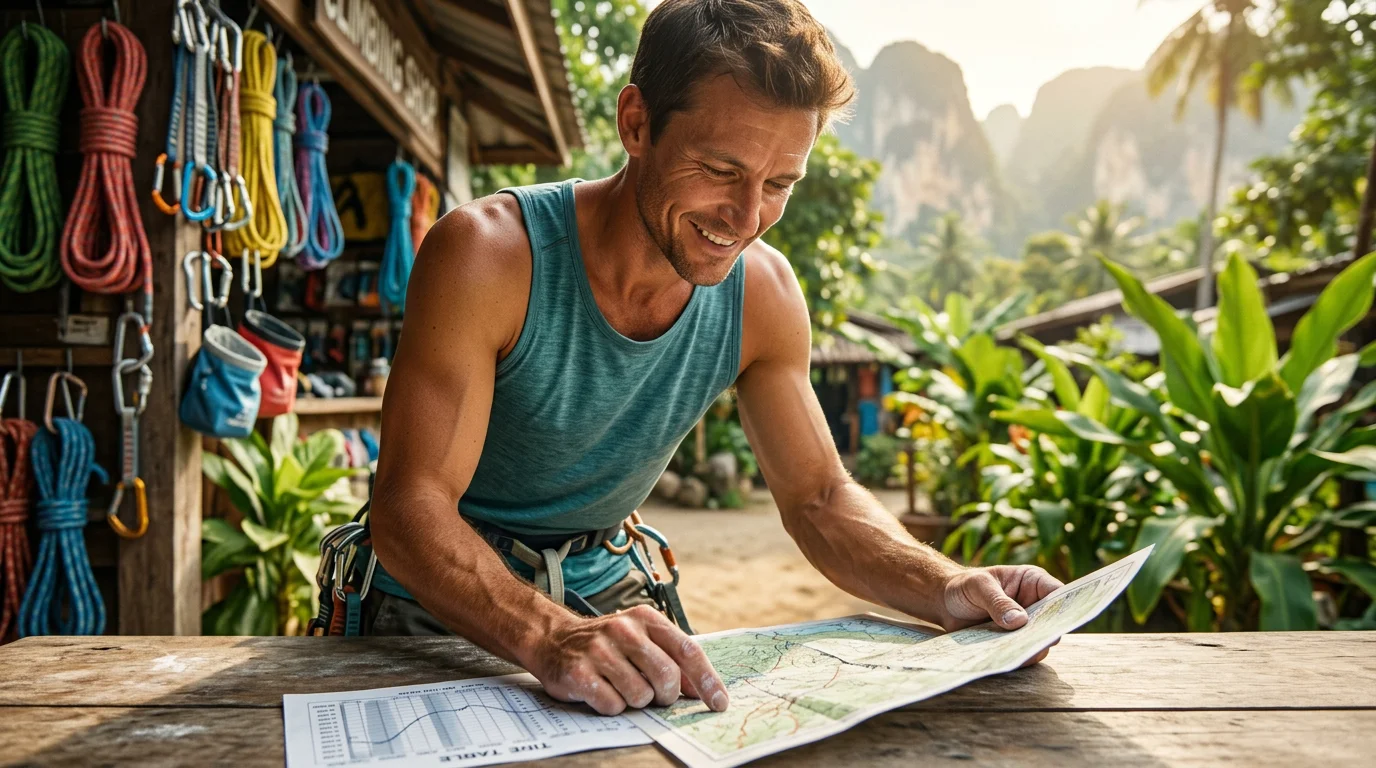
Climbing directly above the sea demands specialised gear management and careful preparation to cope with Thailand's tropical marine environment. High humidity, salt spray, and abrasive coastal rock create challenges that standard crag equipment cannot handle effectively.
Footwear requires particular thought before setting out. Repeated submersion in saltwater accelerates glue delamination and degrades climbing rubber. Climbers typically pack older, retired pairs rather than high-performance shoes. Synthetic uppers perform noticeably better than unlined leather, which stretches out of shape when waterlogged and stiffens into an uncomfortable fit once dry. Carrying two pairs lets one set dry completely while you climb in the other, avoiding the slick feel of wet outsoles.
Chalk management also requires a different approach. Loose powdered chalk in an open waist bag absorbs tropical moisture within minutes and turns into unusable paste after the first splash. An alcohol-based liquid chalk applied generously before boarding a boat or kayak provides a resilient base coat that withstands heavy perspiration and coastal humidity. Some climbers apply extra liquid chalk to the tops of their thighs or forearms to recharge their grip mid-pitch.
Managing your exit from the water is just as critical as the climb itself. The intertidal splash zone on Andaman limestone is heavily encrusted with razor-sharp barnacles, oysters, and sea urchins. Attempting to mantle onto raw rock from deep water frequently results in severe hand lacerations and puncture wounds. A knotted marine rope or weighted rope ladder suspended from an anchored support craft provides a reliable exit point without touching the lower rock band.
Pack personal belongings, spare clothes, and mobile phones into a heavy-duty roll-top dry bag. Once back on land, rinse climbing footwear, goggles, and hardware in fresh water to clear abrasive salt residue before air-drying them away from direct sunlight. Before making arrangements, verify crag access and local conditions directly with established climbing schools in Railay or Tonsai, steering clear of informal boatmen offering access to restricted marine park waters.
Quick Reference Table
| Item | Detail | Notes |
|---|---|---|
| Legal Access Status | Commercial DWS prohibited across marine national parks | Enforced since 2016 by the DNP; breaches carry fines up to 100,000 THB (£2,325) under the National Park Act |
| Commercial Operator Penalties | Fines up to 200,000 THB (£4,650) and up to 2 years' imprisonment | Applies to unauthorised business activities in marine parks; foreign visitors risk visa revocation |
| Historical DWS Crags | Koh Poda, Ao Nang Tower, Tonsai Bay sea cliffs, Koh Phi Phi Leh | Historic routes ranged from French grade 5 to 7c; offshore sea cliffs are now closed to soloists |
| Permitted Alternatives | Bolted sport climbing on mainland Railay and Tonsai | Over 700 bolted routes protected with corrosion-resistant titanium glue-in bolts |
| Water Entry & Impact Risks | Severe trauma risks above 8 metres | Requires aligned legs and tucked arms to avoid ruptured eardrums, vertebrae compression, and windedness |
| Guided Sport Climbing Costs | 1,200 THB to 1,800 THB (£28 to £42) half-day; 2,500 THB to 3,500 THB (£58 to £81) full-day | Includes licensed instructor, dynamic rope, harness, shoes, and chalk; private guiding starts at 6,000 THB (£140) |
| Climbing Gear Hire | Lead rack 800 THB to 1,000 THB (£19 to £23) per day | Covers a 60-metre rope and 12 quickdraws; shoes and harnesses cost 250 THB to 300 THB (£5.80 to £7) per item |
| Local Boat Transport | 100 THB (£2.30) one-way between Ao Nang and Railay/Tonsai | Increases to 150 THB (£3.50) after 18:00 or when fewer than eight passengers board |
| Recommended Equipment | Synthetic climbing shoes, liquid chalk, roll-top dry bag | Leather stretches and stiffens in saltwater; loose chalk forms unusable paste upon contact with water |
| Travel Insurance Requirement | Specialist policy with ropeless climbing cover | Standard UK policies exclude DWS; policies such as BMC Rock are required for medical and search-and-rescue cover |
| Emergency Extraction | Call 1669 for national medical emergency dispatch | Involves a 15–20 minute boat transfer to mainland pier, then 30–45 minutes by road to Krabi Hospital |
| Emergency Contacts | Krabi Hospital (+66 75 626 700); Bangkok Hospital Phuket (+66 76 254 444) | Advanced tertiary trauma care requires transfer to Phuket |
| Website | basecamptonsai.com | Local climbing shop and school resource based on Tonsai Beach |
FAQ: Deep-Water Soloing
Is deep-water soloing allowed in Thailand?
What are the risks of falling during deep-water soloing from high cliffs?
How do tides affect deep-water soloing safety in Thailand?
What marine life hazards should deep-water soloists be aware of in Thailand?
What are the penalties for illegal deep-water soloing in Thai national parks?
Should travellers use informal boatmen for deep-water soloing trips in Thailand?
Is deep-water soloing suitable for beginner climbers?
What are the legal climbing alternatives to deep-water soloing in Thailand?
What type of travel insurance is needed for deep-water soloing in Thailand?
What specialised gear is recommended for deep-water soloing in Thailand?
Reviewed by the Thailand Guide Editorial Team • Last reviewed: 17 November 2026
This page is provided for general information only. While we aim for accuracy, details can change — please verify anything important independently before relying on it.