Rock Climbing in Thailand
Thailand is one of Southeast Asia's most established rock climbing destinations, defined by towering karst limestone cliffs rising directly from Andaman Sea beaches, shaded crags in northern jungles, and inland sandstone and granite boulder fields. From the coastal sport routes of Railay and Tonsai in Krabi to the limestone bluffs of Chiang Mai and Saraburi, the country caters to complete beginners booking a guided introductory session as well as experienced lead climbers tackling steep multi-pitch walls.
This guide provides the practical details needed to organise an independent or guided climbing trip across Thailand. It outlines the primary regional crags, local climbing styles, French sport grading, and fixed hardware safety. You will also find verified guidance on equipment rental, typical costs in Thai baht and British pounds, monsoonal weather patterns, local access rules, and crag etiquette, helping you choose the right destination and prepare thoroughly.

Climbing Disciplines: Sport, Trad, Bouldering, and Soloing
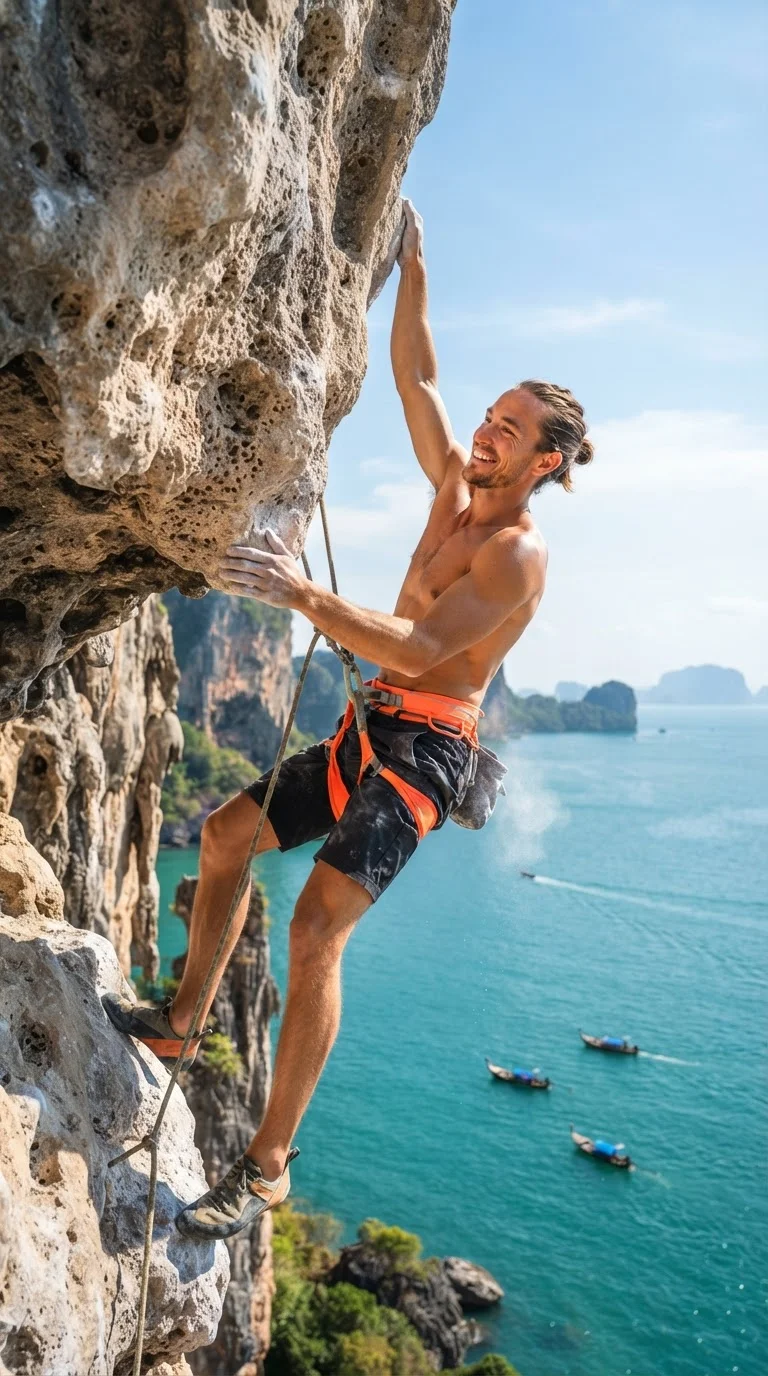
Sport climbing forms the bedrock of Thailand's climbing scene, accounting for well over 90 percent of all established routes across the country. The kingdom's soaring karst limestone walls are pre-equipped with fixed anchors, making single-pitch and multi-pitch sport routes accessible without the need for removable protection. Beginners can learn rope handling on gentle beachside top-ropes, while seasoned climbers tackle steep overhanging tufas and multi-pitch sea cliffs spanning French grades 4 to 8c+.
Traditional climbing is virtually absent from Thailand's main crags. Karst limestone is naturally hollow, riddled with soft calcite, fragile stalactites, and irregular flutings that make passive nuts and spring-loaded camming devices dangerously unreliable. Placing traditional protection into brittle tropical limestone creates a false sense of security, so local route developers rely entirely on certified glue-in bolts. A handful of niche granite cracks on islands like Koh Tao or isolated northern outcrops support natural gear placements, but the country is not a trad destination.
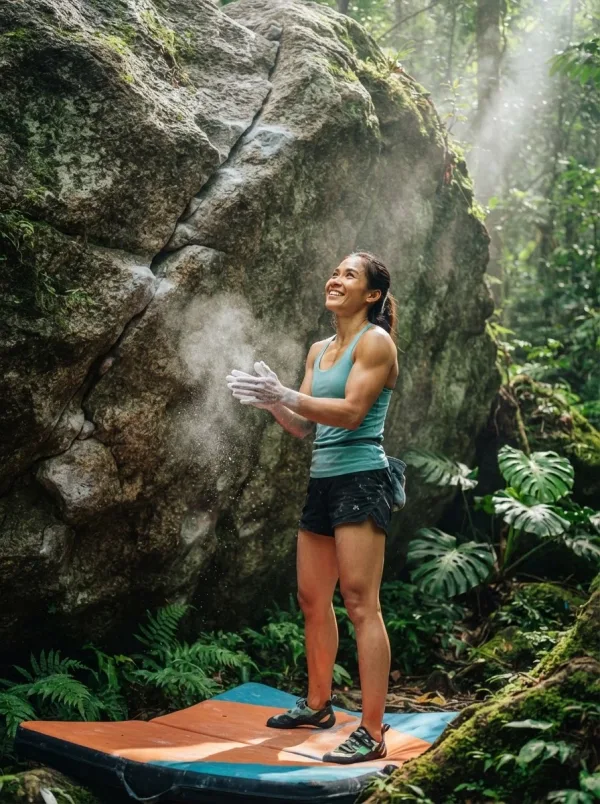
Bouldering has carved out a dedicated following away from the main coastal limestone cliffs. In northeastern Thailand, Hin Chang Si in Nam Phong National Park near Khon Kaen features ancient sandstone boulders from the Phra Wihan Formation, delivering exceptional friction on technical slopers and crimps as Thailand's first officially sanctioned climbing area inside a national park. The Gulf island of Koh Tao features extensive coarse granite boulder fields scattered across jungle hillsides and bays, while Tonsai Beach provides accessible limestone traverses at low tide.
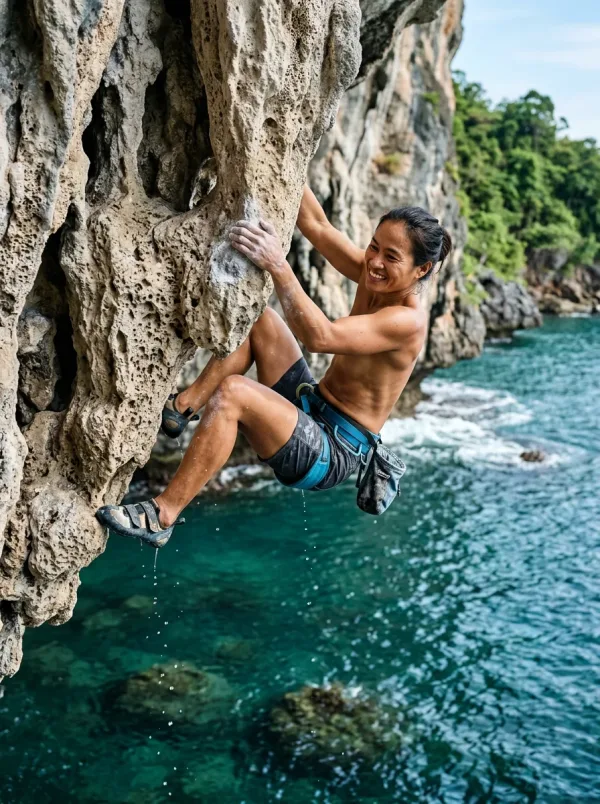
Deep-water soloing (DWS)—scaling sea cliffs without ropes over deep water—was once an Andaman Sea hallmark. Today, the Department of National Parks, Wildlife and Plant Conservation strictly prohibits commercial deep-water soloing excursions across marine protected areas, including Railay and the Koh Phi Phi archipelago. The ban protects vulnerable marine ecosystems and prevents catastrophic injuries, as awkward falls from height onto water risk spinal damage, severe impact trauma, and secondary drowning.
For most visiting climbers, holiday itineraries revolve around well-bolted sport crags or dedicated bouldering areas where conditions and access are clearly managed. Whether organising an introductory guided climbing session or hiring gear for a self-guided trip, securing experienced local instruction helps you transition smoothly onto Thai rock.
| Discipline | Key Locations | Recommended Gear | Skill Level and Grades |
|---|---|---|---|
| Sport Climbing | Railay, Tonsai, Chiang Mai, Saraburi | 60–70m rope, 14–18 quickdraws, harness, helmet, shoes | Novice to elite (French 4 to 8c+) |
| Bouldering | Khon Kaen (Hin Chang Si), Koh Tao, Tonsai | Crash pad, chalk bucket, climbing shoes | V0 beginner to V11+ advanced |
| Deep-Water Soloing (Restricted) | Regulated marine crags (commercial tours banned) | Climbing shoes, chalk bag, dry bag | Experienced only; severe water-impact risk |
| Traditional Climbing | Rare; isolated granite or northern cracks | Cams, nuts, hexes, helmet | Expert only; karst limestone unsuitable for gear |
Sport climbing remains the most accessible, thoroughly bolted, and diverse discipline for any climber visiting Thailand.
Grading Systems, Rock Types, and Tropical Friction
Thailand crags use the French numerical sport grading system, running from introductory top-ropes at grade 4 and 5a up to steep test pieces exceeding 8c+. For British climbers accustomed to traditional adjectival and technical grades—such as VS 4c or E2 5b—the French scale requires a mental shift. While British trad grades factor in protection quality, gear placement difficulty, and psychological commitment, French sport grades quantify sustained physical difficulty and movement complexity assuming pre-placed bolts. A French 6a demands consistent physical exertion on the rock without the gear-fiddling rests typical on British gritstone or mountain rhyolite.
Rock texture also dictates how those grades feel underfoot. The overwhelming majority of Thai climbing takes place on dramatic karst limestone. Centuries of tropical rainfall and groundwater dissolution have sculpted these cliffs into steep, three-dimensional formations: thick fluted tufas, hanging dripstone stalactites, sharp crimps, and flared solution pockets. Highly frequented coastal crags in Krabi also carry polished limestone, where thousands of climbing shoes have buffed popular footholds to a slippery sheen. Elsewhere in the country, the rock character changes markedly. Inland bouldering around Khon Kaen sits on coarse, high-friction sandstone, while coastal sectors on Koh Tao feature abrasive granite domes and rounded sea boulders.
| French Sport | British Trad | US (YDS) | Terrain & Rock Features |
|---|---|---|---|
| 4 to 5c | Moderate to VS 4c | 5.5 to 5.9 | Slabby limestone, positive jugs, beachside beginner walls |
| 6a to 6b+ | HVS 5a to E2 5b | 5.10a to 5.10d | Vertical walls, technical footwork, shallow pockets, small tufas |
| 6c to 7a+ | E3 5c to E5 6a | 5.11a to 5.12a | Sustained overhangs, endurance pump, delicate stalactite pinches |
| 7b to 8a+ | E6 6b to E8 6c | 5.12b to 5.13c | Severe cave roofs, 3D tufa wrestling, power-endurance jug hauls |
Tropical heat and humidity fundamentally alter how this rock climbs. In coastal regions, ambient temperatures regularly climb above 32°C between 11:00 and 15:00, paired with relative humidity often topping 75%. Sweat saturates fingertips within minutes, drastically reducing friction on already smooth limestone. Standard powdered chalk can turn into a slick paste under heavy perspiration, prompting many climbers to apply an initial liquid chalk base layer before roping up. Direct midday sun heats dark rock surfaces until holds are painful to touch, making routes feel at least one full letter grade harder than when tackled in morning shade. Visiting climbers should drop two full grades during their first forty-eight hours to acclimatise before pushing towards their normal limit.
Plan a Gulf of Thailand trip with clear guidance on island groups, ferries, weather, marine parks, accommodation costs and mainland gateways.
Hardware Integrity, Tropical Rust, and Bolting Safety
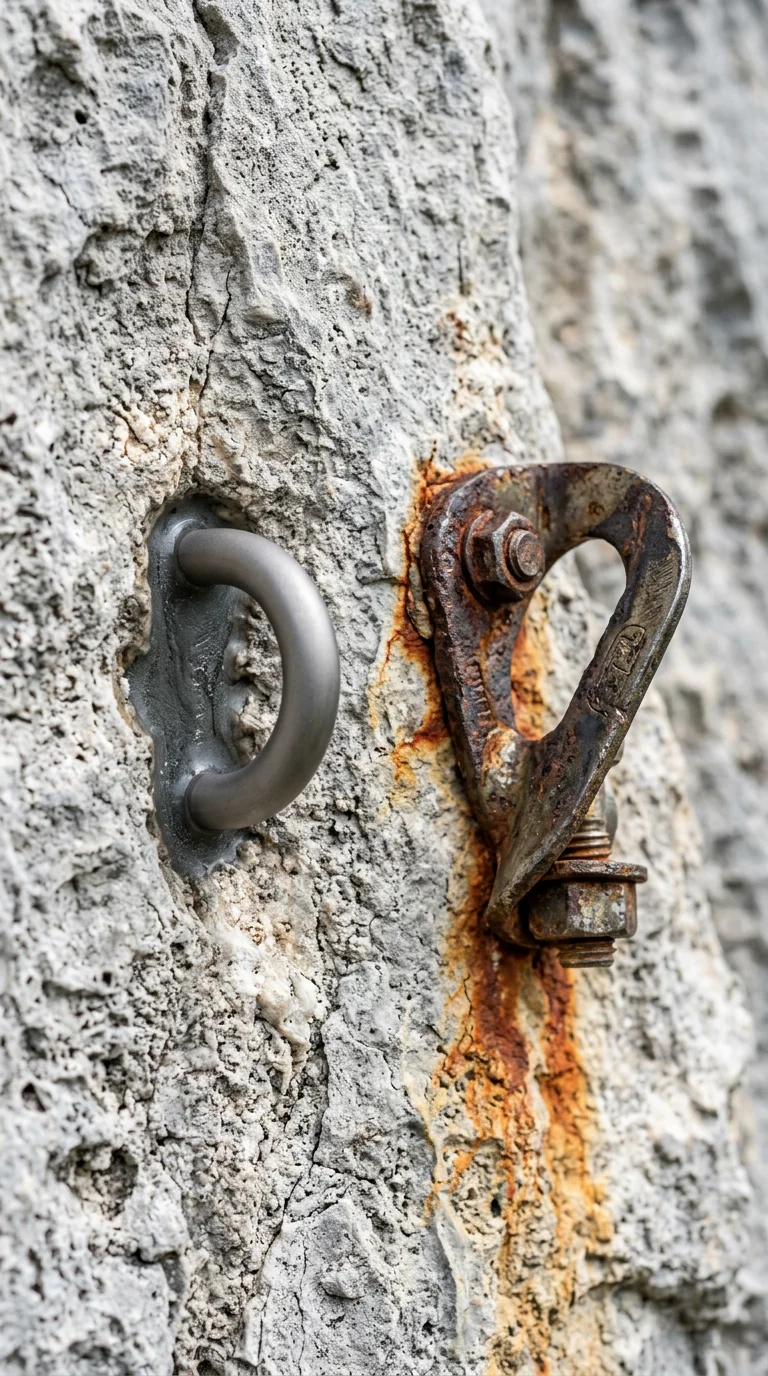
Along Thailand's coastal crags, the combination of sea salt, high humidity, and acidic groundwater leaching through tropical vegetation creates one of the world's most corrosive rock-climbing environments. Standard stainless steel bolts—including marine-grade 304 and 316 alloys—suffer from stress corrosion cracking when installed in coastal karst limestone. This chemical reaction is particularly hazardous because it operates invisibly: a stainless steel expansion bolt or ring can appear bright and unblemished on the surface while its internal shaft is critically fractured within the rock, risking failure under mere bodyweight.
To combat this hazard, volunteer initiatives such as the Thaitanium Project and local climbing schools across Railay, Tonsai, and Koh Phi Phi systematically replace aged steel hardware with certified titanium glue-in bolts. Grade 2 titanium is virtually immune to marine stress corrosion cracking, providing durable anchors designed to withstand decades in tropical sea air. When climbing on the Andaman coast, inspect fixed protection carefully before committing your weight. Titanium glue-ins are easily recognised by their dull, matte-grey finish and smooth, U-shaped or rounded profile set into epoxy resin. Treat shiny expansion bolts, rusted hanger plates, and discoloured chains with caution, and prioritise routes documented as fully re-bolted.
If you encounter suspect anchor hardware, avoid lowering directly off a single corroded ring or worn sling; back up the station with your own carabiners or leave an inexpensive maillon to retreat safely. Inland crags such as Crazy Horse Buttress in Chiang Mai and Nam Pha Pa Yai in Saraburi sit far from maritime salt spray, meaning stainless steel lasts considerably longer, though seasonal monsoon moisture still requires routine gear checks. Visiting climbers can contribute to coastal safety by donating directly to re-bolting funds or purchasing merchandise and guidebooks at climbing shops in Krabi.
Top Climbing Hubs: Karsts of the South to Northern Crags
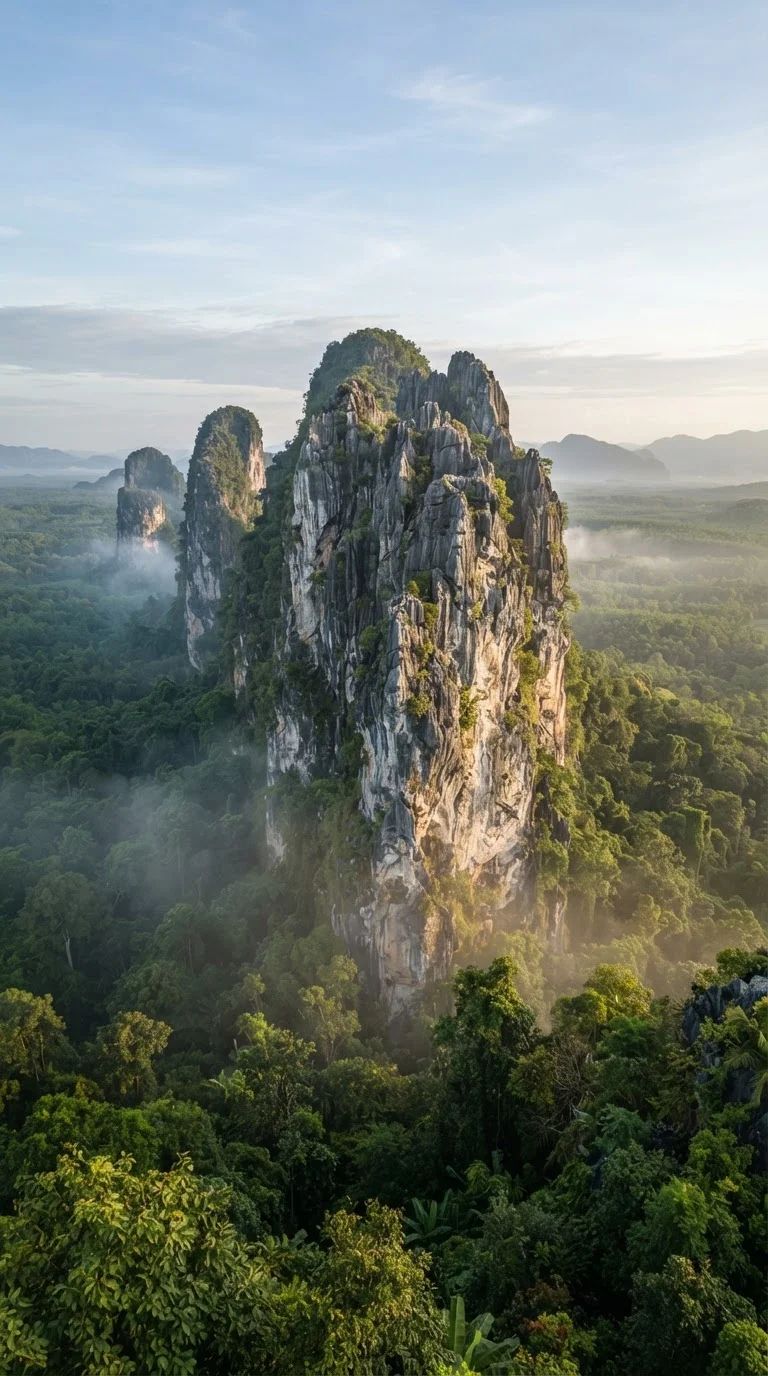
Thailand's climbing geography divides across distinct regions, spanning maritime karst towers along the Andaman coast, upland limestone in the northern hills, and sandstone boulder fields in the northeast.
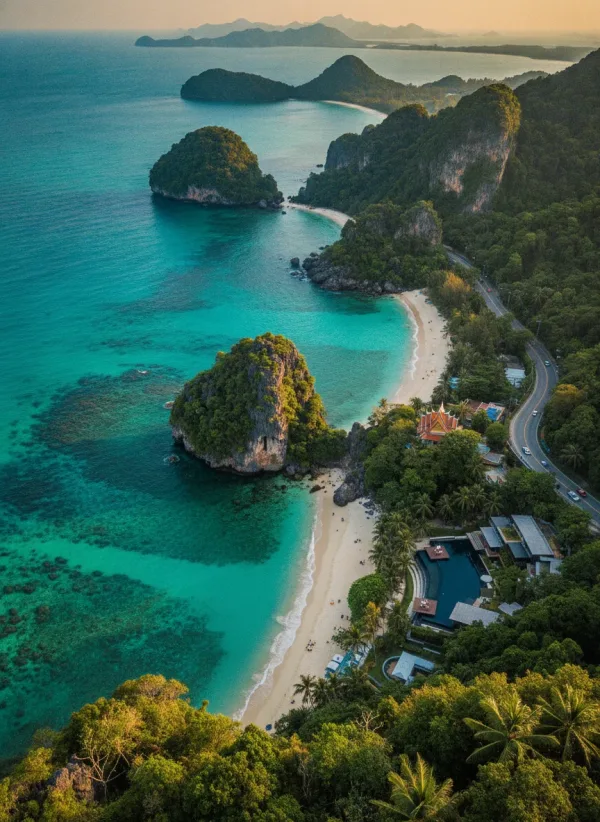
Railay Beach and adjacent Tonsai Beach in Krabi form Southeast Asia's primary sport climbing hub. Cut off from the mainland road network by sheer limestone bluffs, the peninsula is reached by longtail boat. It holds more than 700 bolted sport routes across soaring karst walls. Tonsai attracts experienced climbers targeting steep roofs and pocketed tufas at sectors such as Dum's Kitchen and Tonsai Roof. In contrast, Railay East and Phra Nang Beach provide beginner-friendly limestone slabs and moderate multi-pitch routes, including classic lines up Thaiwand Wall.
In northern Thailand, Crazy Horse Buttress sits in Mae On district, roughly 40 kilometres east of Chiang Mai. This crag features sharp, compact limestone with approximately 200 bolted routes spanning French grades 5a to 8a. Surrounded by forested hills, it provides cooler conditions and cleaner rock than coastal cliffs, free from marine salt air. Following earlier access closures over forestry regulations, climbing has resumed under local community stewardship, though visitors should verify current crag access with Chiang Mai climbing outfits before travelling out.
Central Thailand provides an inland base at Nam Pha Pa Yai Climbers Camp along the Pasak River in Saraburi, roughly two hours by road northeast of Bangkok. The compact limestone here contains fewer tufas than southern karst, requiring technical footwork on vertical faces across crags such as School Wall and Bat Cave Wall. A zip line across the river historically linked the camp directly to its river-facing routes.
In the northeastern Isaan region, Khon Kaen has developed as the country's dedicated bouldering centre. Hin Chang Si, set inside Nam Phong National Park, features over 370 documented sandstone boulder problems across sectors including the Lower Meadow and Upper Meadow. An official agreement between park authorities and the Khon Kaen Climbing Club permits climbing here, with standard national park entry fees set at 100 THB (approx £2.30) for foreign adults and 50 THB (approx £1.15) for children.
| Climbing Area | Province / Region | Dominant Rock Type | Key Crags or Sectors |
|---|---|---|---|
| Railay & Tonsai | Krabi (South) | Maritime karst limestone | Phra Nang Beach, Muay Thai Wall, Tonsai Roof, Thaiwand |
| Crazy Horse Buttress | Chiang Mai (North) | Mountain limestone | The Furnace, Tamarind Village, Heart Wall, Gatekeeper |
| Nam Pha Pa Yai | Saraburi (Central) | Inland valley limestone | Bat Cave Wall, Pasak River Wall, School Wall |
| Hin Chang Si | Khon Kaen (Isaan) | Fine-grain sandstone | Lower Meadow, Upper Meadow, Egg Shell Boulders |
Choose the southern karsts for sea-cliff climbing or the northern and inland crags for cooler forest settings and technical footwork.
Seasonal Windows, Monsoons, and Crag Etiquette
Climbing conditions across southern Thailand are governed by the seasonal monsoons. The most reliable window along the Andaman coast runs from late November through April, when prevailing northeasterly winds bring settled sunshine, lower humidity, and calm seas. From May to October, the southwest monsoon delivers frequent downpours and rough water. While massive limestone overhangs like the Tonsai Roof offer shelter from passing squalls, sustained monsoon rainfall causes groundwater to seep through porous karst, wetting out tufas and critical pocket holds. Rough swells can also halt longtail boats running into Tonsai or Railay West, forcing transfers to detour through the sheltered mangroves at Railay East.
In northern Thailand, crags around Chiang Mai and Lampang enjoy cool, dry conditions from November to February. However, outdoor climbing in the north should be avoided between late February and April. During these months, widespread agricultural burning and seasonal forest fires trap dangerous particulate matter across the valleys, pushing air quality to hazardous levels.
Crag etiquette requires cultural awareness and environmental respect. Do not climb shirtless or in swimwear near temples, monastic grounds, or sacred shrines like the Princess Cave at Phra Nang Beach, where climbing on revered formations is forbidden. Pack out all rubbish, including athletic tape and food waste, and brush away chalk tick marks before walking away from a project. Keep daypacks securely zipped to prevent crab-eating macaques from raiding food supplies. Managing the tropical climate also demands smart timing: track the shade across the day, seeking west-facing crags or deep amphitheatres in the morning before rotating to east-facing walls as the afternoon sun shifts.
Where to Climb Across Thailand
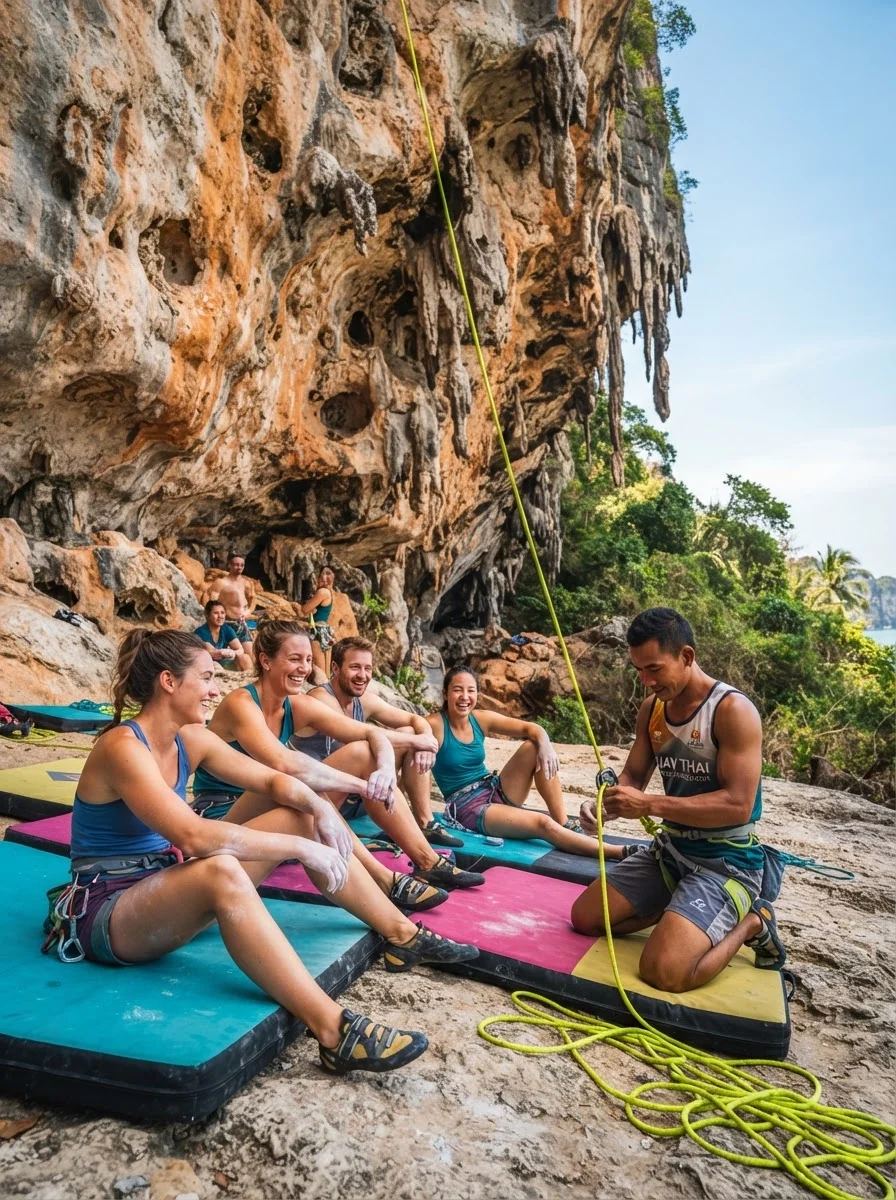
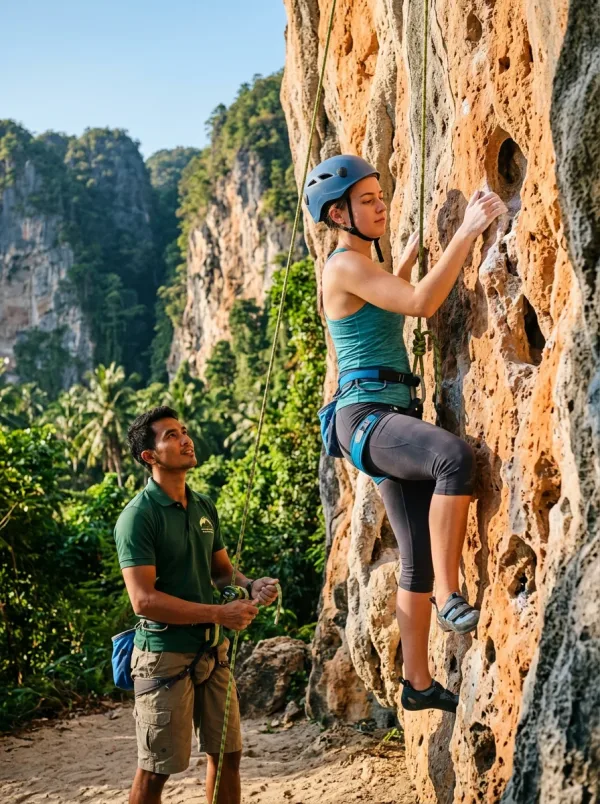
Climbers exploring Thailand have distinct, well-documented regional bases catering to different experience levels. In the south, the Krabi peninsula remains the main hub. Beginners typically base themselves around Railay East, where long-running operators such as King Climbers and Wee's Climbing School arrange guided sessions. Novices can tackle accessible, shaded limestone routes on 1-2-3 Wall and Diamond Cave Wall before progressing towards more demanding crags. A short walk or low-tide scramble leads to Tonsai Beach, the traditional gathering point for independent sport climbers. Tonsai centres on steep overhangs, sustained lines in the 7a to 8b range, and rustic beach bungalows. At Basecamp Tonsai, independent climbers can obtain local beta, hire gear, or join guided outings starting from 1,200 THB (approx £28).
In northern Thailand, Chiang Mai provides a cooler inland base. Climbers can stay in the city and travel roughly 40 kilometres east to Crazy Horse Buttress in Mae On. Reaching the crag is simple: hire a scooter for around 200 to 250 THB (approx £4.70 to £5.90) per day or take a local shared songthaew. The area features sharp, pocketed limestone, though visitors should check current local registration requirements before setting off.
Central and north-eastern Thailand provide quieter options away from coastal crowds. In Saraburi province, around two hours north-east of Bangkok, Nam Pha Pa Yai Camp in Kaeng Khoi provides a dedicated riverside base with bungalows, campsites, and technical limestone crags. Further north-east, Khon Kaen has developed into Thailand's main sandstone bouldering destination. The Khon Kaen Climbing Club coordinates crash pad hire and digital topos for extensive boulder fields, including the Zoolander sector at Khon Kaen Zoo and sanctioned blocks at Hin Chang Si in Nam Phong National Park.
Costs and Budgeting
Climbing in Thailand accommodates shoestring backpackers and luxury resort guests alike. A budget climber staying in a rustic fan bungalow on Tonsai, eating local meals, and climbing on their own gear will spend around 1,000 THB to 1,400 THB (approx £23 to £33) daily. Mid-range visitors staying in air-conditioned accommodation in Ao Nang, taking daily longtail boats to the crags, and renting climbing kits or joining group sessions spend roughly 2,500 THB to 4,000 THB (approx £58 to £93) per day. Premium travellers booking private multi-pitch guiding, beachfront resort accommodation, and private boat transfers should budget 6,000 THB to 10,000 THB (approx £140 to £233) daily.
Carrying a personal harness, shoes, and chalk saves substantial funds, as daily gear rental accumulates quickly over a longer stay. Rental shops on Railay and in Chiang Mai typically require either a physical passport or a refundable cash deposit of 1,000 THB to 10,000 THB (approx £23 to £233) when hiring ropes or full racks. You should withdraw sufficient Thai baht on the mainland before crossing to the peninsula. Tonsai has no cash machines, Railay ATMs frequently run empty during peak periods, and Thai cash machines charge a 220 THB (approx £5) withdrawal fee on international debit cards. Standard daytime longtail boat crossings between Ao Nang and Railay cost 100 THB (approx £2.30) per person each way, though travelling after 18:00 pushes fares to around 150 THB (approx £3.50) per person or requires chartering an entire boat.
| Expense Item | Budget Level | Mid-Range Level | Premium / Private | Notes |
|---|---|---|---|---|
| Half-Day Group Course | 1,200 THB (~£28) | 1,500 THB (~£35) | 1,800 THB (~£42) | Includes gear, guide, and hotel transfer |
| Full-Day Private Guide | N/A | 5,500 THB (~£128) | 6,000 THB (~£140) | Suited for multi-pitch routes on Thaiwand Wall |
| Daily Gear Rental | 250 THB (~£5.80) | 400 THB (~£9.30) | 600 THB (~£14) | Shoes, harness, helmet, chalk bag |
| Multi-Day Lead Course | 6,500 THB (~£151) | 8,500 THB (~£198) | 12,000 THB (~£279) | 2–3 days covering lead belay, knots, rappels |
| Local Transport (Day) | 100 THB (~£2.30) | 300 THB (~£7) | 1,200 THB (~£28) | Shared longtail boat or scooter hire |
What to Know Before You Go
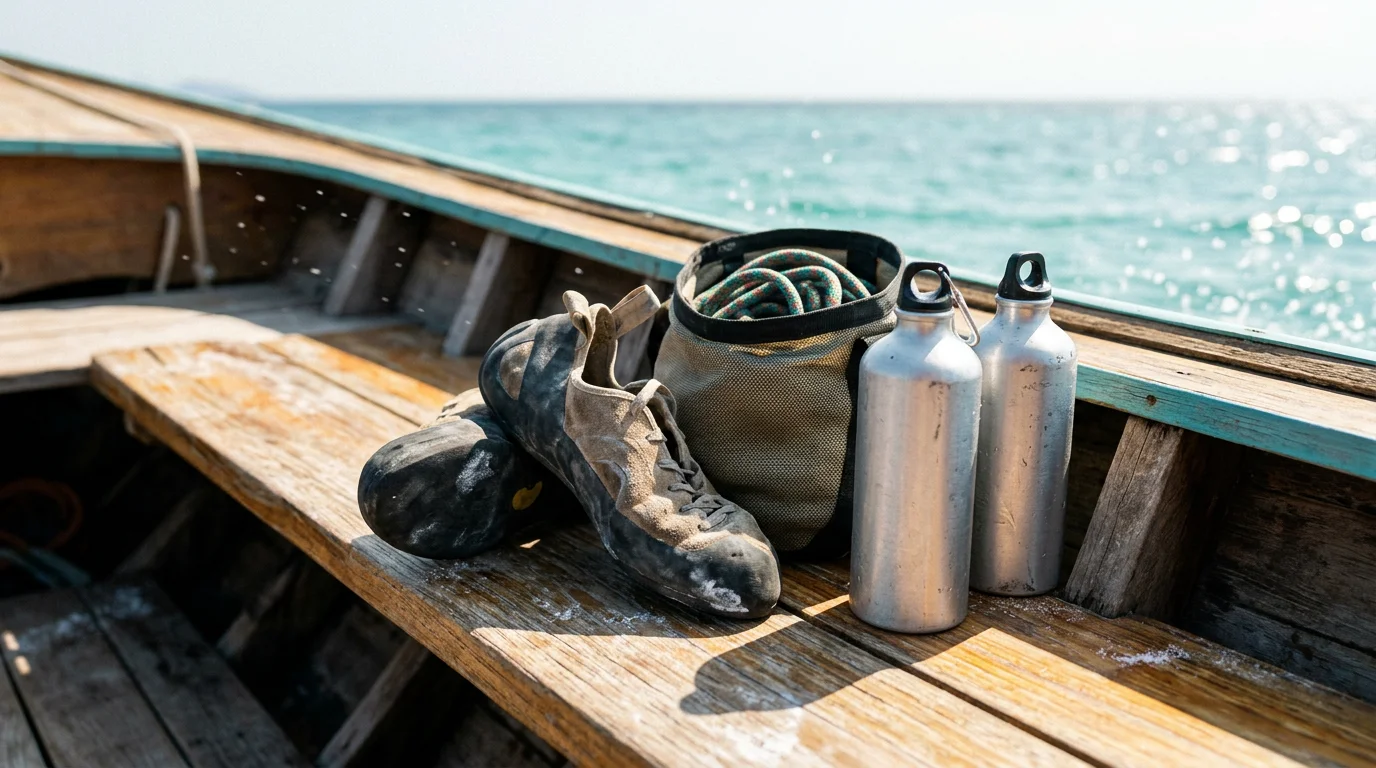
Standard UK travel insurance policies routinely exclude climbing on outdoor rock. Before leaving the UK, arrange a specialist policy through providers such as the British Mountaineering Council (BMC) or Snowcard. Ensure your cover includes search and rescue, emergency air evacuation, and treatment at private international hospitals, as Thai medical facilities generally require confirmation of payment before admitting patients.
Getting to the crags in Railay and Tonsai requires travel by longtail boat, as towering limestone headlands cut off road access from the mainland. Neither Railay West nor Tonsai has a jetty, so longtail boatmen drop passengers directly into the surf, often requiring you to step down into knee- or waist-deep water. Pack climbing guidebooks, chalk, mobile phones, and electronics in sealed dry-bags to keep them dry during beach landings and sudden ocean spray.
Crab-eating macaque monkeys frequent the bases of crags across Railay and Tonsai. Having learned that climbers carry snacks, they regularly rummage through unattended packs and can undo rucksack zips. Pack all food, sweet drinks, and medicine inside zipped internal compartments, keep your bags within sight, and avoid feeding wildlife. National park rules strictly prohibit feeding wild animals, with fines up to 2,000 THB (approx £47).
Commercial deep-water soloing (DWS) remains prohibited by the Department of National Parks, Wildlife and Plant Conservation across Hat Noppharat Thara–Mu Koh Phi Phi National Park, which encompasses the Krabi coastline and nearby islands. Climbing sea cliffs without ropes led to serious impact injuries, and unlicensed boatmen offering illicit soloing excursions operate without safety spotters, medical kits, or reliable rescue plans. Sticking to established inland and shoreline sport crags ensures both legal compliance and quick access to local medical assistance if needed.
Practical Tips
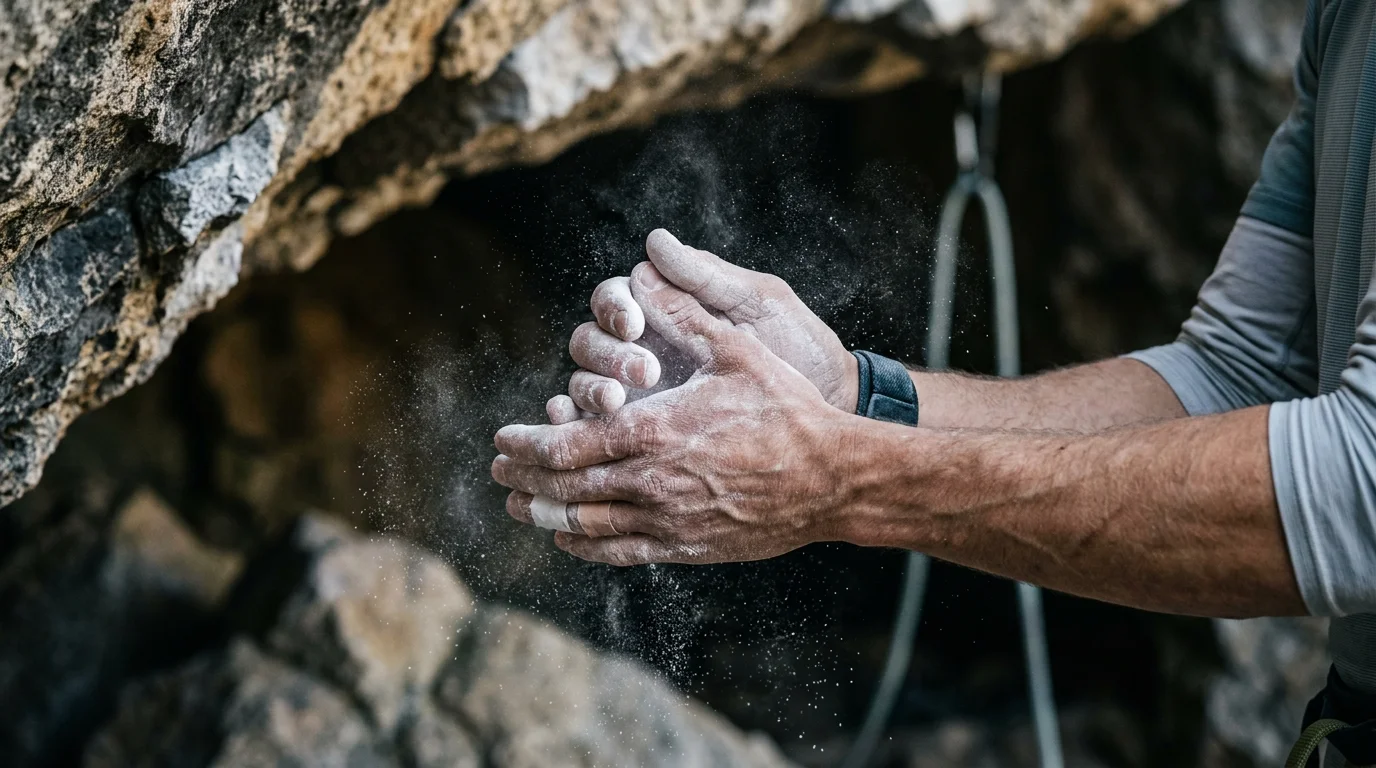
Keep a small brush and a compact towel attached to your chalk bag. High humidity causes chalk and sweat to turn into a slick paste on limestone slopers and tufas, requiring regular brushing so the rock provides friction. Pack at least three litres of water, along with oral rehydration salts from a local pharmacy. Heavy perspiration drains minerals rapidly in tropical heat, bringing on exhaustion before muscle cramps appear.
Wear durable, lightweight trousers rather than shorts. Karst limestone pockets and flutes feature razor-sharp edges, and bare skin easily picks up scrapes that heal slowly and risk infection in humid sea air. Keep gear and electronics sealed in waterproof dry bags during longtail boat transfers, as landing requires wading through knee-deep surf.
Check tide tables before visiting Phra Nang Beach or Tonsai's tidal walls. High spring tides submerge belay stances and cut off footpaths between bays, forcing climbers into waist-deep water. Download offline topos and route guides before setting out, as karst cliffs frequently block mobile signals at crag bases.
Confirm that your travel insurance policy covers outdoor sport climbing, as standard policies routinely exclude roped ascents and technical mountain rescue.
Quick Reference Table
| Item | Detail | Notes |
|---|---|---|
| Primary Discipline | Bolted sport climbing | Over 90% of routes; carry 14–18 quickdraws and a 60–70m dynamic rope |
| Main Climbing Hubs | Railay, Tonsai, Chiang Mai, Saraburi, Khon Kaen | Coastal karsts in Krabi, inland limestone in North/Central, sandstone in Isaan |
| Grading System | French numerical sport scale | Ranges from 4 to 8c+; drop two letter grades initially to acclimatise to heat |
| Prime Season | November to April nationwide | Avoid northern crags (Chiang Mai) late February to April due to agricultural smoke |
| Fixed Hardware Standard | Certified titanium glue-in bolts | Essential on coastal karsts to eliminate marine stress corrosion cracking risks |
| Deep-Water Soloing Status | Strictly prohibited commercially | Banned across national park marine zones including Railay and Koh Phi Phi |
| Krabi Boat Transfers | Longtail boat from Ao Nang to Railay or Tonsai | 100 THB (~£2.30) daytime, 150 THB (~£3.50) after 18:00; wet surf landings |
| Half-Day Guided Courses | 1,200 THB to 1,800 THB (approx £28 to £42) | Includes gear hire, qualified local instruction, and transfers |
| Full-Day Private Guiding | 5,500 THB to 6,000 THB (approx £128 to £140) | Recommended for multi-pitch ascents such as Thaiwand Wall |
| Daily Equipment Hire | 250 THB to 600 THB (approx £5.80 to £14) | Cash deposit of 1,000–10,000 THB (~£23–£233) or passport required |
| Recommended Attire & Kit | Lightweight trousers, chalk brush, dry bags | Trousers prevent scrapes on sharp limestone; dry bags protect gear during boat landings |
| Travel Insurance | Specialist climbing policy required | Standard UK policies exclude roped climbing; use providers like BMC or Snowcard |
| Website | Basecamp Tonsai | https://basecamptonsai.com |
| Website | Khon Kaen Climbing Club | https://khonkaenclimbing.com |
| Website | King Climbers Railay | https://railay.com |
| Website | Progression Vertical Chiang Mai | https://thailandclimbing.com |
FAQ: Rock Climbing in Thailand
Is traditional climbing common in Thailand?
Is deep-water soloing allowed in Thailand?
How does tropical heat affect climbing grades in Thailand?
How can climbers ensure safety with fixed hardware on Thailand's coastal crags?
What is the best time of year to go rock climbing in southern Thailand?
When should climbers avoid visiting northern Thailand's crags?
What are some important crag etiquette rules for climbing in Thailand?
What should climbers know about cash and ATMs when visiting climbing areas in Thailand?
Do standard travel insurance policies cover rock climbing in Thailand?
What precautions should be taken during longtail boat transfers to climbing areas like Railay and Tonsai?
Reviewed by the Thailand Guide Editorial Team • Last reviewed: 17 November 2026
This page is provided for general information only. While we aim for accuracy, details can change — please verify anything important independently before relying on it.