Bouldering in Khon Kaen



Spanning more than 1,200 acres across the sandstone ridges of the Khorat Plateau, Khon Kaen contains one of the most extensive inland bouldering networks in Southeast Asia, with over a thousand documented problems on fine-grained rock. Unlike the sea-cliff limestone that defines climbing in southern Thailand, this northeastern province provides technical friction slabs, steep compression roofs, and highball arêtes scattered across forested ridges.
The climbing scene is developed and stewarded by the Khon Kaen Climbing Club in formal partnership with local park and municipal authorities. Situated forty to fifty kilometres north and west of Khon Kaen City, the primary climbing centres on two distinct areas: the expansive Zoolander field within Khao Suan Kwang (Khon Kaen Zoo) and the weathered sandstone blocks of Hin Chang Si in Nam Phong National Park. The destination suits self-reliant outdoor boulderers and travelling climbers looking for high-friction continental rock in an uncrowded rural setting.

Primary Boulder Fields: Zoolander and Hin Chang Si
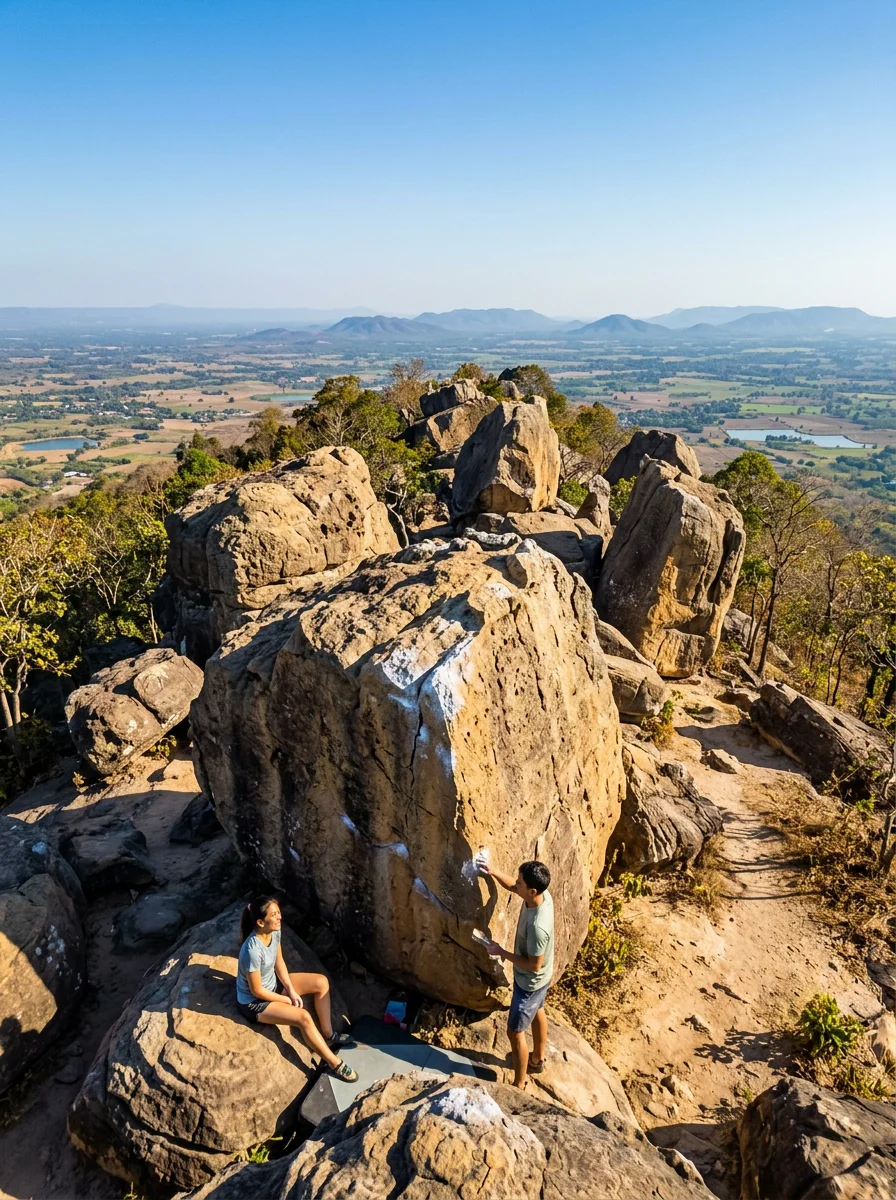
Khon Kaen's outdoor bouldering centres on two primary sandstone locations that together provide one of the highest concentrations of boulder problems in Southeast Asia. The premier active crag is Zoolander, situated across the summit ridge of Khao Suan Kwang mountain roughly fifty minutes north of the provincial capital. Initiated by the Khon Kaen Climbing Club in November 2017, Zoolander spans more than 1,000 acres of open deciduous forest encircled by a 12-kilometre perimeter loop of paved and unpaved service roads. Over 850 problems are catalogued here on digital topos across defined sectors such as Power Station, Ghost Tongue, Water Park, Central Park, Jurassic Park, Canyonland, and The Ridge. Difficulty spans accessible V0 warm-ups to testpiece V11 and V12 lines, with block heights varying from manageable two-to-three-metre boulders to airy six-metre highballs.
Roughly forty kilometres west of the city lies Hin Chang Si within Nam Phong National Park, the spiritual home of northeastern Thai bouldering. Developed from 2010 onwards, Hin Chang Si overlooks the Ubol Ratana reservoir across two main sectors, the Lower Meadow and Upper Meadow. Following collaboration between local developers and park authorities, Hin Chang Si became Thailand's first officially sanctioned bouldering area in a national park under a formal climbing access agreement. Both fields provide clean landings, open forest corridors, and shaded resting spots beneath the deciduous canopy. Visiting climbers should download digital topos via 27 Crags before departing Khon Kaen City, as mobile phone reception fluctuates between deep rock corridors.
Sandstone Characteristics and Problem Styles
The boulders across both crags belong to the Phra Wihan Formation, an ancient Jurassic sandstone dating back roughly 150 to 180 million years. This bedrock presents an entirely different discipline from the karst limestone of southern Thailand. Rather than three-dimensional tufa pinching and steep drop-knees, Khon Kaen demands precise foot placement, body tension, and open-handed contact strength on fine-to-coarse quartz grains bound by natural mineral cement. The stone is cohesive and far kinder to skin than coastal island granite. Climbers encounter crisp iron-rich patina crimps, horizontal break lines, rounded compression arêtes, and technical friction slopers.
Overhanging roofs and wave-like bulges test core stability, whilst flat vertical walls demand micro-adjustments on thin quartz edges. Top-outs are characteristically rounded, requiring deliberate mantles on gritstone-style brows that reward steady nerves. Morning humidity softens surface friction slightly, but ambient breezes and climbing temperatures dry the rock by mid-morning, sharpening contact grip considerably. Managing fingertip skin requires discipline, as prolonged sessions on warm, abrasive sandstone will wear down skin layers much quicker than climbing on smooth coastal limestone.
| Boulder Sector | Primary Problem Style | Dominant Grade Spread | Approach Walk from Vehicle | Landing Character |
|---|---|---|---|---|
| Zoolander: Power Station North | Steep compression overhangs, horizontal crimp rails | V2 to V9 | 5 to 10 minutes | Flat dirt and leaf litter, needs 2 pads |
| Zoolander: The Ridge | Technical vertical faces, micro-edges, airy highballs | V1 to V8 | 8 to 12 minutes | Terraced ground, requires active spotters |
| Zoolander: Ghost Tongue | Sloper wrestling, technical arêtes, friction mantles | V3 to V11 | 12 to 15 minutes | Level sandy base, clean fall zones |
| Hin Chang Si: Lower Meadow | Large sculpted blocks, juggy roofs, balance slabs | V0 to V7 | 5 to 8 minutes | Well-cleared park ground, very flat |
Crash Pad Hire, Training Hubs, and Guide Services
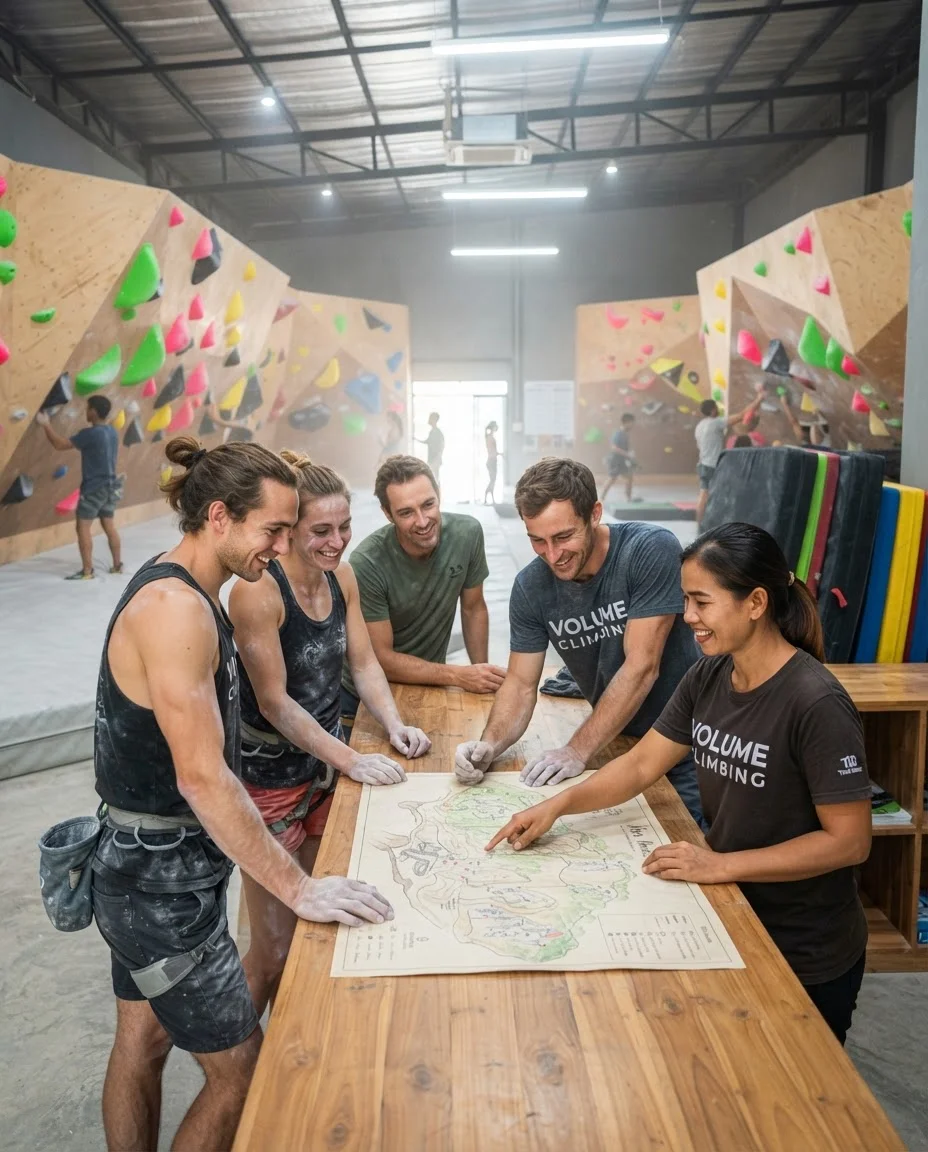
Khon Kaen's climbing infrastructure centres on Volume Climbing Gym, run by members of the Khon Kaen Climbing Club (KKCC). Situated on the second floor of the Fairy Plaza department store on Klang Muang Road in Khon Kaen City, the air-conditioned indoor bouldering facility provides a training space, a MoonBoard, and a social base for visiting climbers. It is also the designated collection and drop-off point for all outdoor gear hired through the club.
Bouldering crash pads cost 250 THB (around £5.80) per pad per day, and rental climbing shoes cost 100 THB (around £2.30) per pair per day. Both require a refundable cash deposit of 1,000 THB (around £23) per item, returned in full when gear comes back undamaged. Chalk, local guidebooks, and club merchandise are sold over the counter. Because KKCC is a volunteer-run organisation maintaining a limited gear inventory, climbers must arrange pad rentals in advance, especially during the dry winter climbing season. Rental proceeds go directly into the club's development fund to clear access paths and develop regional climbing areas.
For crag navigation and spotting, KKCC provides private guiding services led by local developers. Rates range between 1,500 THB and 2,500 THB (roughly £35 to £58) per person per day depending on group size. Guiding covers orientation across the boulder fields, problem selection across different grades, and pad placement on classic lines; transport, gear hire, and entry fees are not included. Visiting climbers without transport can often arrange weekend carpooling to the Zoolander boulder field with club members, typically contributing 300 THB (around £7) per seat towards fuel.
Plan your trip to Khon Kaen with practical advice on Wat Nong Wang, Ton Tann Market, Mudmee silk in Chonnabot, getting around, and local travel costs.
Seasonal Weather Windows and Tropical Friction Management
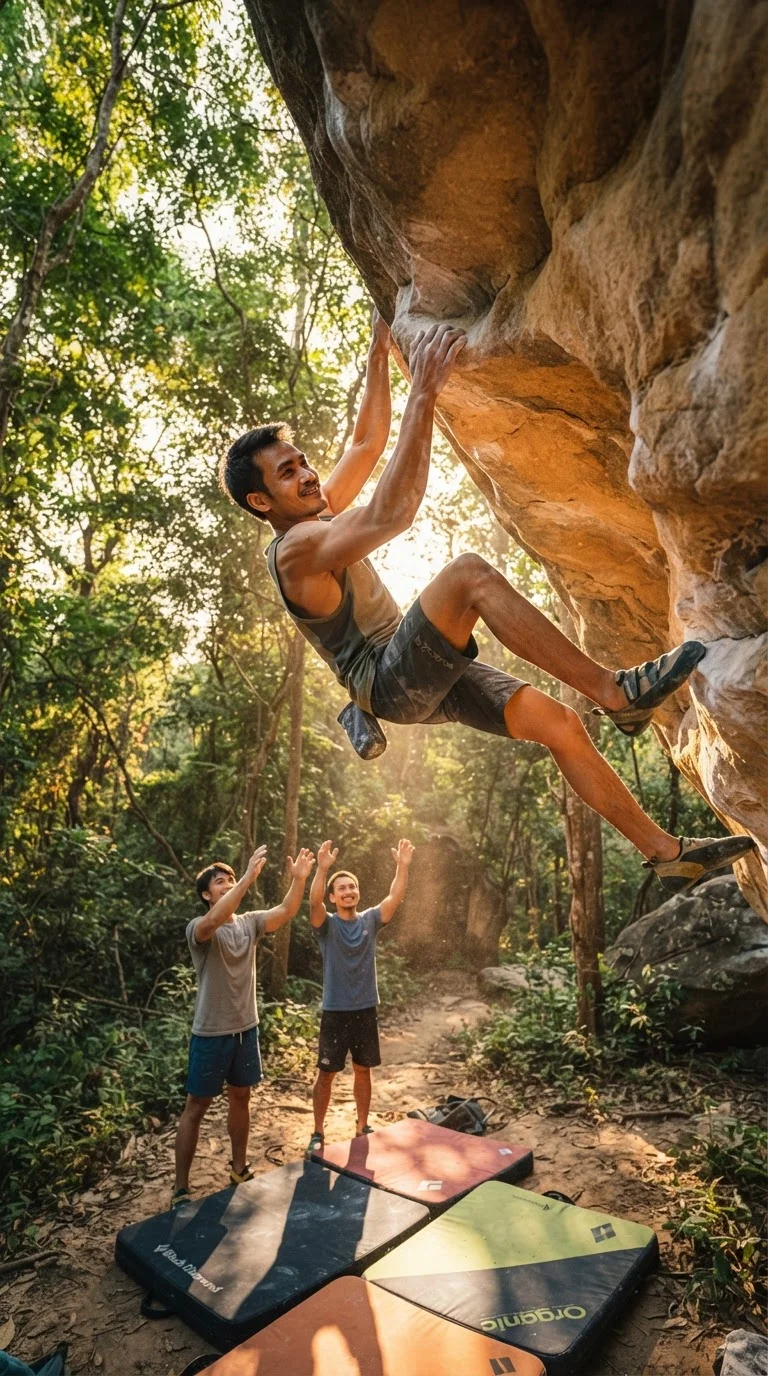
Friction on Khon Kaen's continental sandstone follows the three-season tropical cycle of Isan. The prime climbing window runs from late November through February, when the cool northeast monsoon brings morning temperatures typically between 16°C and 24°C alongside low relative humidity. These cooler winter months offer the firmest friction across slopers, crimps, and technical top-outs, making it the most comfortable period for extended bouldering sessions.
March through May marks the hot season, with afternoon temperatures routinely exceeding 35°C to 38°C. Bouldering during these months requires dawn starts between roughly 06:30 and 10:30, before intense radiant heat softens rubber friction and causes hands to sweat through chalk. The southwest monsoon spans June through October, delivering heavy downpours that saturate the rock.
Sandstone is porous and absorbs moisture rapidly. Saturated rock suffers a notable drop in structural strength, leaving delicate flakes and small footholds vulnerable to breaking under climbing forces. Climbers should avoid climbing on wet or damp rock, allowing 24 to 48 hours of sunshine and airflow for the stone to dry out thoroughly after rain. Planning a visit between December and January delivers the most reliable conditions, pleasant camping weather, and the liveliest gatherings around the annual Khon Kaen Bouldering Festival.
Location and Getting There
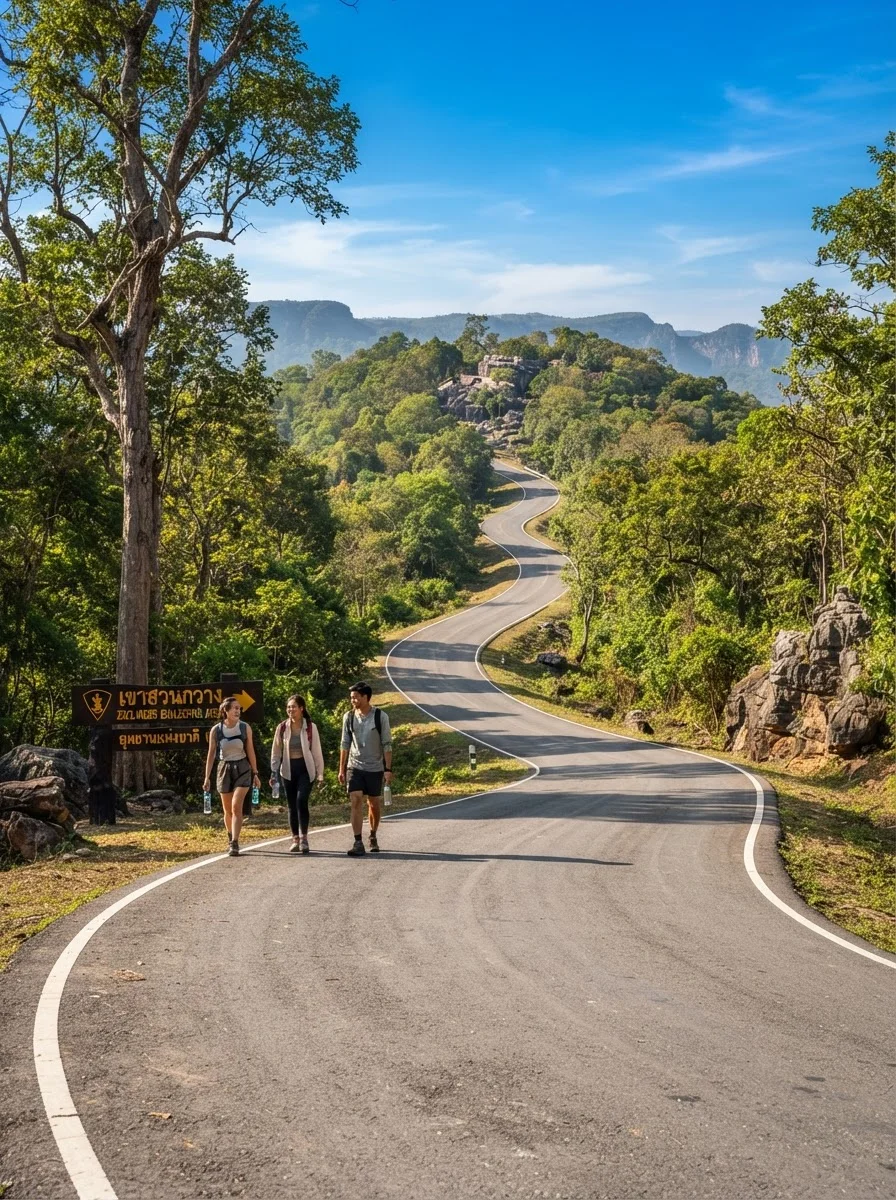
Khon Kaen's primary bouldering sectors sit in the northern and western reaches of Khon Kaen Province. Zoolander occupies the sandstone ridges of Khao Suan Kwang Mountain inside the grounds of Khon Kaen Zoo, roughly 50 kilometres north of Khon Kaen City along Route 2 (Mittraphap Road). To the west, the Hin Chang Si sector lies roughly 45 kilometres from the provincial capital, situated within Nam Phong National Park near the Ubol Ratana Dam reservoir.
From the United Kingdom, journeys begin with a flight into Bangkok’s Suvarnabhumi or Don Mueang airports. Direct domestic flights connect either Bangkok airport to Khon Kaen Airport (KKC) in roughly 55 minutes. Overland alternatives from Bangkok include State Railway of Thailand daytime express and overnight sleeper trains from Krung Thep Aphiwat Central Terminal, which reach Khon Kaen in seven to eight hours. Long-distance express coaches also run from Bangkok's Mo Chit bus station in around six to seven hours.
Neither boulder field is served by scheduled public transport, making vehicle hire the most convenient choice for climbing trips. Hiring a car directly at Khon Kaen Airport terminal typically costs between 800 THB and 1,200 THB (roughly £18 to £27) per day at the time of writing, providing a straightforward way to haul bulky crash pads. Motorbike hire is available in the city centre for around 250 THB to 350 THB (£5.50 to £8) daily, though securing crash pads to a scooter requires care on regional roads.
Costs and Booking
Bouldering around Khon Kaen is economical compared to Thailand's coastal crags, with costs centred on gear rental, park entry, and local transit. Neither Zoolander nor Hin Chang Si levies dedicated climbing fees, though site admission is mandatory. Visiting Zoolander requires entry to Khon Kaen Zoo at Khao Suan Kwang, where standard foreign adult admission is 350 THB (£8.15), alongside parking fees of 50 THB (£1.15) for cars and 10 THB (£0.25) for motorbikes. Foreign residents paying Thai taxes qualify for the domestic 130 THB rate upon presenting a Thai work permit or driving licence. Notifying the ticket gate that you are climbing directs 18% of your admission fee towards the KKCC crag development fund.
At Hin Chang Si, admission follows standard Nam Phong National Park rates: 100 THB (£2.30) for foreign adults, plus 30 THB (£0.70) for cars or 20 THB (£0.45) for motorbikes. Climbers have several budget lodging options near the boulders. Khon Kaen Zoo provides air-conditioned bungalows for 700 THB (£16.30) per night and a campsite where pitching your own tent costs 150 THB (£3.50). In Nam Phong National Park, tent pitching is 30 THB (£0.70) per night, while two-bedroom park cabins cost 1,200 THB (£27.90). City hotels in Khon Kaen range from 800 THB to 1,800 THB (£18.60 to £41.85) per night.
| Option | Cost (THB) | Cost (GBP approx) | Notes |
|---|---|---|---|
| Crash Pad Rental (Standard Mad Pad) | 250 per pad per day | £5.80 | Requires 1,000 THB (£23.25) refundable deposit at Volume Gym |
| Climbing Shoe Rental | 100 per pair per day | £2.30 | Requires 1,000 THB (£23.25) refundable deposit; collected at Volume Gym |
| Khon Kaen Zoo Entrance (Zoolander) | 350 per adult per day | £8.15 | Standard foreign entry; 130 THB for Thai nationals or work-permit holders |
| Vehicle Parking Fee (Zoo) | 50 per car per day | £1.15 | Motorbike parking charged at 10 THB (£0.25) |
| Nam Phong National Park Entrance | 100 per adult per day | £2.30 | Applies when visiting Hin Chang Si; vehicle fees 20 to 30 THB |
| Private Climbing Guide (KKCC) | 1,500 to 2,500 per person per day | £35.00 to £58.00 | Rate depends on group size; excludes transport and entry |
| Crag Carpool Seat (with KKCC regulars) | 300 per person return | £7.00 | City-to-Zoolander transfer subject to club climbing schedules |
| On-Site Zoo Bungalow Accommodation | 700 per bungalow per night | £16.30 | Basic air-conditioned units overlooking the mountain ridge |
Who It Suits Best
Khon Kaen appeals primarily to dedicated outdoor boulderers, independent climbers, and small groups seeking uncrowded sandstone in northeastern Thailand. The crags reward technical climbers who enjoy slopers, tension problems, and deliberate footwork reminiscent of European sandstone areas such as Fontainebleau. Because the problems are spread across rugged forest terrain at Zoolander and Hin Chang Si, self-reliant climbers comfortable with outdoor navigation and pad management get the most out of a visit.
The area does not cater to holidaymakers looking for beach-style climbing breaks, resort amenities, or family attractions at the crag. Approach paths traverse wild hillside terrain, and facilities at the boulders themselves are minimal. Novice outdoor climbers can still enjoy the lower-grade circuits, but they benefit significantly from hiring a local guide or joining experienced boulderers to manage trail navigation, spotting, and multi-pad setups.
What to Know Before You Book
Organising a bouldering trip to Khon Kaen requires planning transport and equipment well before arrival. Neither Zoolander nor Hin Chang Si is served by public transit. While ride-hailing services such as Grab operate within Khon Kaen City and can drop passengers off at Khon Kaen Zoo or Nam Phong National Park, drivers are unavailable for return pick-ups on rural roads at the end of the day. Visitors should arrange a hire car or scooter in the city, or coordinate weekend carpool seats in advance with the Khon Kaen Climbing Club.
Rental crash pads in northeastern Thailand are concentrated with the Khon Kaen Climbing Club and kept at Volume Climbing Gym, located inside the Fairy Plaza shopping centre in Khon Kaen City. Because gear inventory is small, reserving mats before travelling is necessary, particularly around weekends and local climbing gatherings.
Medical facilities are situated in surrounding district towns rather than at the crags. Khao Suan Kwang Hospital sits roughly twelve minutes by road from the Zoolander sectors, while comprehensive trauma care and private hospitals in Khon Kaen City require a drive of around 50 minutes. Standard travel insurance policies frequently exclude unroped outdoor climbing, making policy checks for bouldering, medical treatment, and rescue cover before purchasing a practical necessity.
Practical Tips

A successful day on Khon Kaen's sandstone depends on thorough preparation before leaving the city. Topo guides for sectors around Zoolander are hosted digitally on the 27 Crags platform, while Hin Chang Si routes are logged on The TOPO app. Download these guides and all relevant offline sector maps before driving out into the hills. Cellular data coverage across rural Isan is generally strong on the AIS network, but signals frequently drop when descending into deep sandstone corridors and shaded boulder clusters. Having offline GPS coordinates saved on your device prevents wasted hiking time between problem blocks.
Pack all necessary food and drinking water for the day. While entrance kiosks at Khon Kaen Zoo and Nam Phong National Park have small snack stalls, there are no retail amenities once you walk past the sector trailheads. Carrying at least three litres of water per person is sensible, particularly during hot afternoons when humidity and dry heat rapidly deplete hydration. For transporting gear, ensure your vehicle has sufficient boot space or fold-flat rear seats to hold multiple bulky crash pads, shoes, and daypacks without obstructing the driver's rear vision.
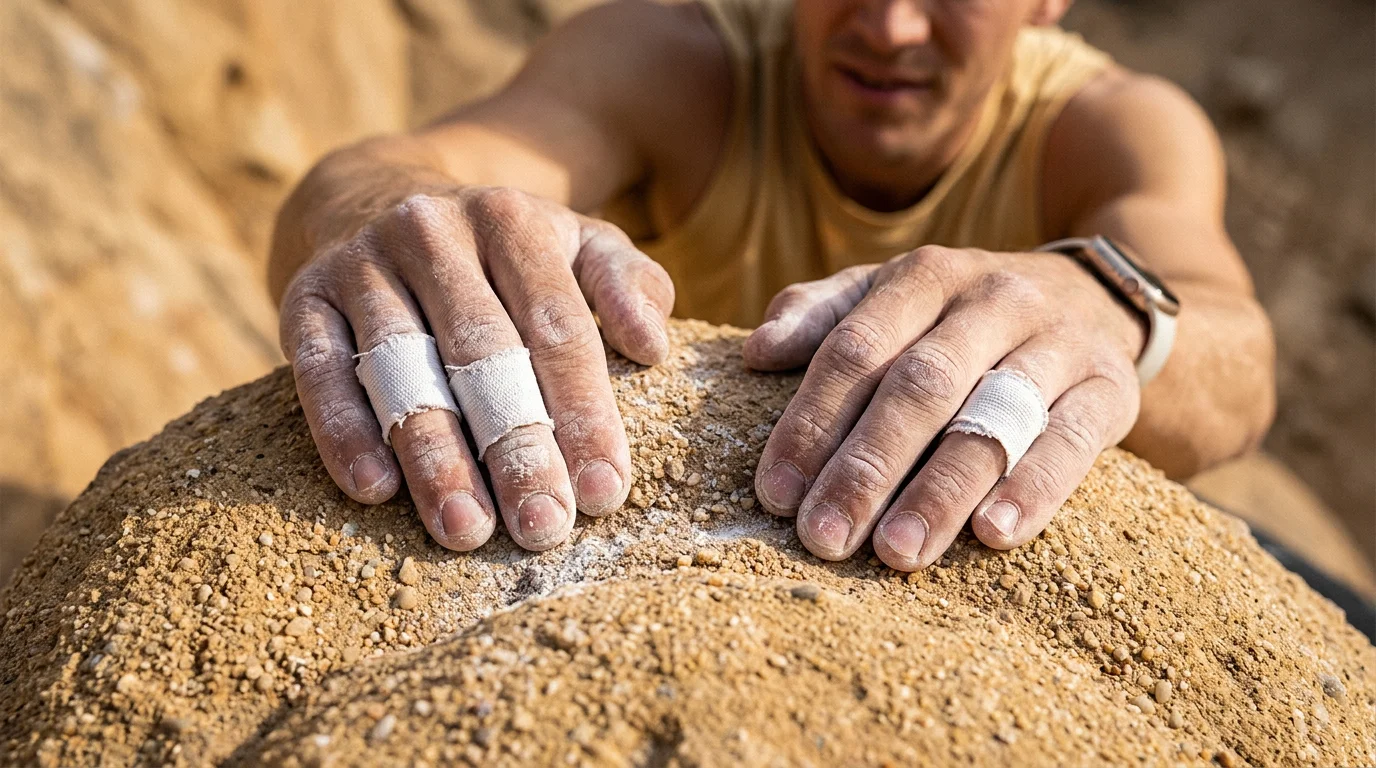
Sandstone requires thoughtful care to protect its natural friction. Coarse grit and red dirt trapped on climbing shoes quickly polish the rock surface; wipe shoe soles clean on a small carpet scrap, doormat, or towel before stepping onto starting footholds. The fine-grained rock also abrades skin quickly. Carrying high-tack finger tape and soothing skin balms helps manage friction burns, flappers, and splits before they interrupt a climbing trip.
Before setting down crash pads, inspect the landing floor and clear away loose branches, dry leaf litter, and concealed rocks. Dry woodland vegetation can harbour ground wildlife such as centipedes or scorpions, making a quick sweep with a stick a useful precaution. After finishing at the crag, Khon Kaen City makes a convenient base for evening refuelling, with plentiful evening dining choices and night markets located around Bueng Kaen Nakhon lake.
Quick Reference Table
| Item | Detail | Notes |
|---|---|---|
| Primary Boulder Fields | Zoolander (Khao Suan Kwang) and Hin Chang Si (Nam Phong NP) | Over 1,000 documented problems across both areas |
| Rock Type | Jurassic sandstone (Phra Wihan Formation) | Continental fine-to-coarse quartz sandstone with iron patina crimps |
| Difficulty Range | V0 to V12 | Accessible warm-ups through to technical roofs and airy highballs |
| Prime Climbing Window | Late November to February | Cool, dry northeast monsoon; morning temperatures 16°C to 24°C |
| Crash Pad Rental | 250 THB (£5.80) per pad per day | Requires 1,000 THB (£23) refundable deposit; collected at Volume Climbing Gym |
| Climbing Shoe Rental | 100 THB (£2.30) per pair per day | Requires 1,000 THB (£23) refundable deposit at Volume Climbing Gym |
| Zoolander Crag Admission | 350 THB (£8.15) foreign adult entry | 130 THB with Thai work permit; car parking 50 THB, motorbike 10 THB |
| Hin Chang Si Crag Admission | 100 THB (£2.30) foreign adult entry | Nam Phong National Park rate; car parking 30 THB, motorbike 20 THB |
| Private Guiding Service | 1,500 THB to 2,500 THB (£35 to £58) per person per day | Provided by KKCC developers; excludes transport and park fees |
| Crag Carpooling | 300 THB (£7.00) per seat return | Arranged with KKCC members to Zoolander, subject to schedule |
| Digital Topos | 27 Crags (Zoolander) and The TOPO app (Hin Chang Si) | Download offline maps before departing Khon Kaen City |
| Website | https://khonkaenclimbing.com | Official site of the Khon Kaen Climbing Club |
| Phone | +66 92 687 5566 | Volume Climbing Gym and Khon Kaen Climbing Club enquiry line |
| Address | Volume Climbing Gym, 2nd Floor, Fairy Plaza, 69/9 Klang Mueang Road, Nai Mueang, Khon Kaen | Base for gear hire, MoonBoard training, and crag information |
FAQ: Bouldering in Khon Kaen
What kind of rock climbing is found in Khon Kaen?
Where are the main bouldering areas in Khon Kaen?
Should climbers download topos before visiting Khon Kaen's bouldering areas?
Where can climbers rent gear for bouldering in Khon Kaen?
Is it necessary to book crash pad rentals in advance in Khon Kaen?
What is the best time of year to go bouldering in Khon Kaen?
Is it safe to climb on wet sandstone in Khon Kaen?
What is the recommended way to get to the bouldering areas in Khon Kaen?
What should climbers check about their travel insurance before bouldering in Khon Kaen?
What safety precautions should climbers take before placing crash pads in Khon Kaen?
Reviewed by the Thailand Guide Editorial Team • Last reviewed: 17 November 2026
This page is provided for general information only. While we aim for accuracy, details can change — please verify anything important independently before relying on it.