Bouldering in Thailand
Placing your climbing shoe against coarse Thai granite under thirty-degree jungle humidity reveals instantly that friction is hard-earned currency. Away from the crowded sport crags, Thailand harbours an intense, technical bouldering landscape ranging from modern air-conditioned Bangkok training centres to wild sandstone fields in the northeast and granite blocs along Gulf island shores.
This guide introduces Thailand's dedicated bouldering scene, detailing the contrast between urban indoor facilities and raw outdoor rock across Koh Tao, Khon Kaen, and southern coastlines. You will discover how tropical humidity alters surface grip, where to hire crash pads locally, how route difficulty grades translate on local stone, and how to navigate regional transport between crags. It provides practical groundwork for organising a self-sufficient bouldering trip across the country without hauling cumbersome rope systems or relying on fixed anchors.

Bouldering versus sport climbing
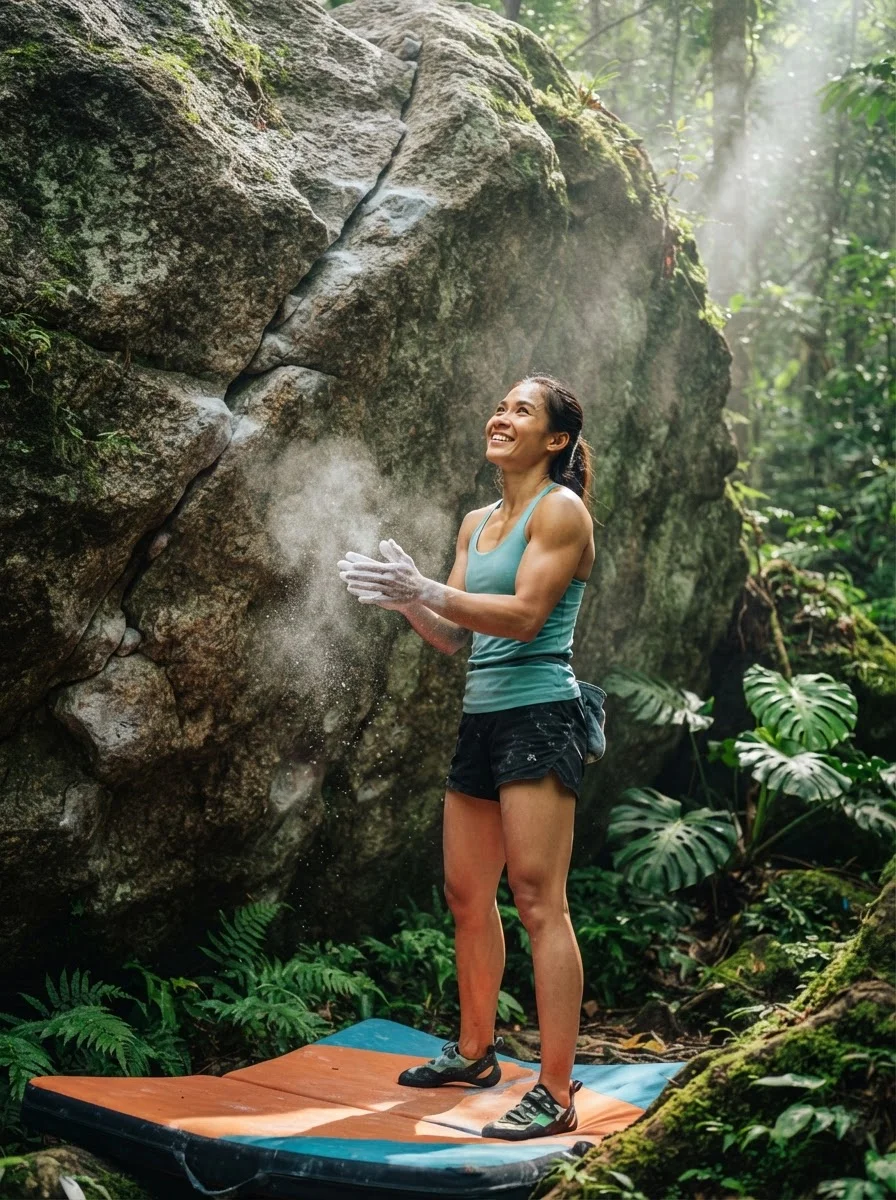
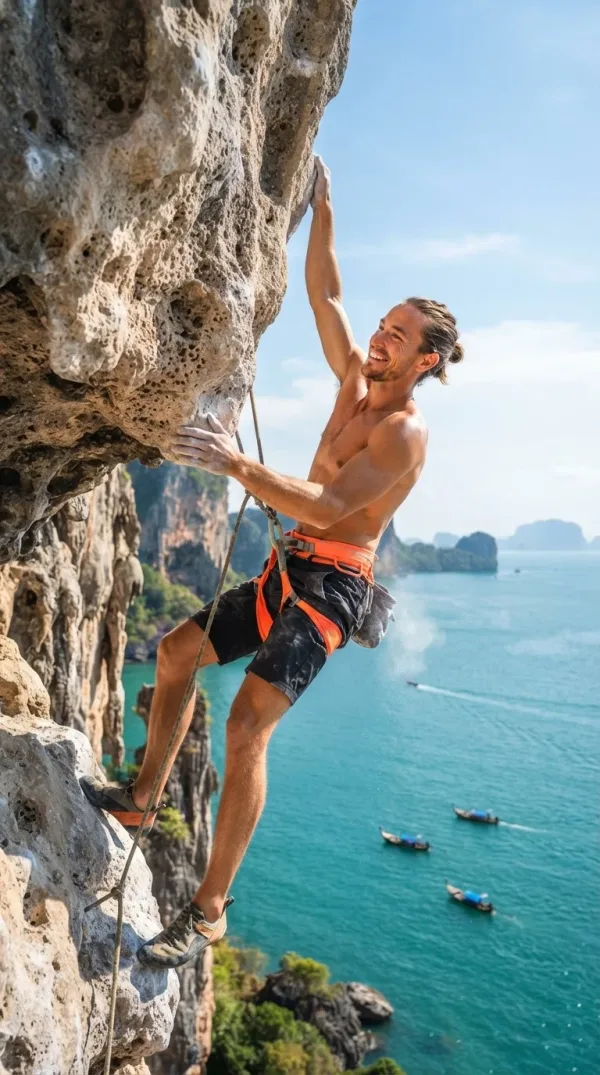
Bouldering strips climbing down to its rawest athletic elements, dispensing with ropes, belay devices, and harnesses in favour of compact, powerful sequences above padded landing zones. While sport climbing centres on rope management, clipping quickdraws into bolts, and sustaining forearm endurance on long limestone pitches, bouldering demands explosive power, rapid problem-solving, and precise foot tension. In our wider rock climbing guides, we explore the towering scale of coastal karst cliffs, but bouldering operates on an entirely distinct tactical rhythm.
Without the requirement of a belay partner to trade catches with, your equipment list contracts to climbing shoes, chalk, and portable crash pads. This self-reliance suits solo travellers and visiting climbers seeking immediate, physically demanding sessions without checking heavy bags of hardware on domestic flights. Practising on boulder problems—which rarely exceed five metres in vertical height—also accelerates physical progression far quicker than traditional top-roping. Because individual problems typically comprise three to ten decisive movements, you can rehearse demanding sequences repeatedly until muscular coordination and footwork lock into place. Controlled falling onto protective foam is an intentional part of the discipline, encouraging calculated commitment rather than passive reliance on a rope. Whether conditioning on indoor walls or exploring outdoor boulders, arranging your climbing day passes and rental kit provides direct access to Thailand's emerging bouldering circuits.
Tropical Rock Mechanics: Sandstone, Granite, and Coastal Limestone
Navigating outdoor rock in Thailand requires adapting your footwork and finger strength to three distinct geologies, each shaped by tropical weathering and ambient moisture. Rather than a uniform surface, the country presents sharply contrasting stone profiles that behave differently under tropical heat.
On the island of Koh Tao, massive granite boulders line the coastline and scatter through the jungle interior. Coarse feldspar and quartz crystals give this igneous stone aggressive mechanical friction, allowing precise smearing on blank slabs. However, tropical humidity softens the epidermis, meaning coarse granite crystals can shred finger pulp within hours if you over-grip.
In northeastern Thailand, the Khorat Plateau around Khon Kaen introduces fine-grained continental sandstone. These blocks deliver rounded compression problems, technical slopers, shallow dish crimps, and sweeping arêtes. Sandstone relies heavily on surface friction, making cool-season winter conditions far more reliable for hard sends than humid summer months.
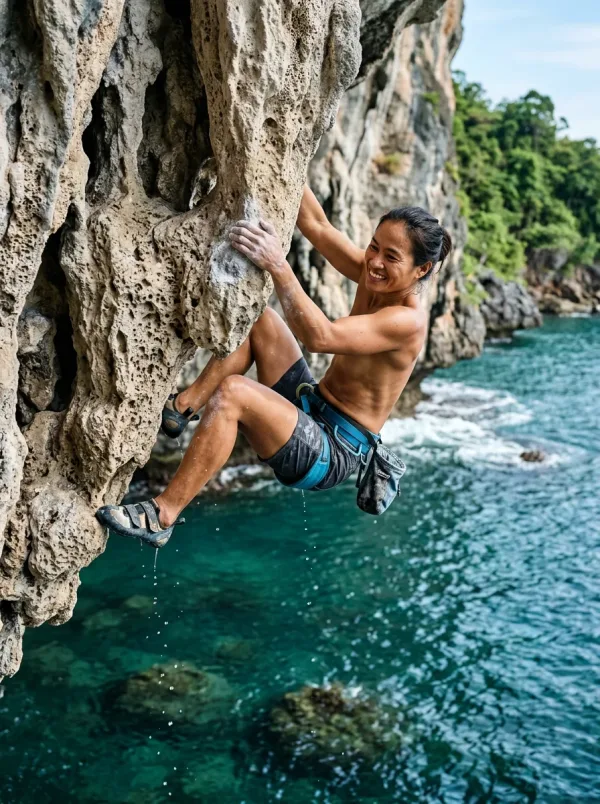
Southern provinces such as Krabi present coastal karst limestone. Bouldering here focuses on wave-polished beach blocks, steep undercut roofs, and pocketed tufas. Sea spray and high relative humidity frequently coat the limestone in a fine film of moisture, turning glassy footholds and open-handed slopers greasy without heavy chalking.
Across all three rock types, ambient heat reduces rubber stickiness and softens calluses. Tropical friction improves significantly during early morning sessions, particularly when cool-season dawn temperatures dip towards 20°C to 24°C before direct sunlight heats the rock face.
Plan a journey along Thailand’s Andaman coast, with practical guidance on island gateways, marine parks, diving, ferries and monsoon travel.
Bangkok’s Modern Indoor Bouldering Scene: Urban Training Hubs
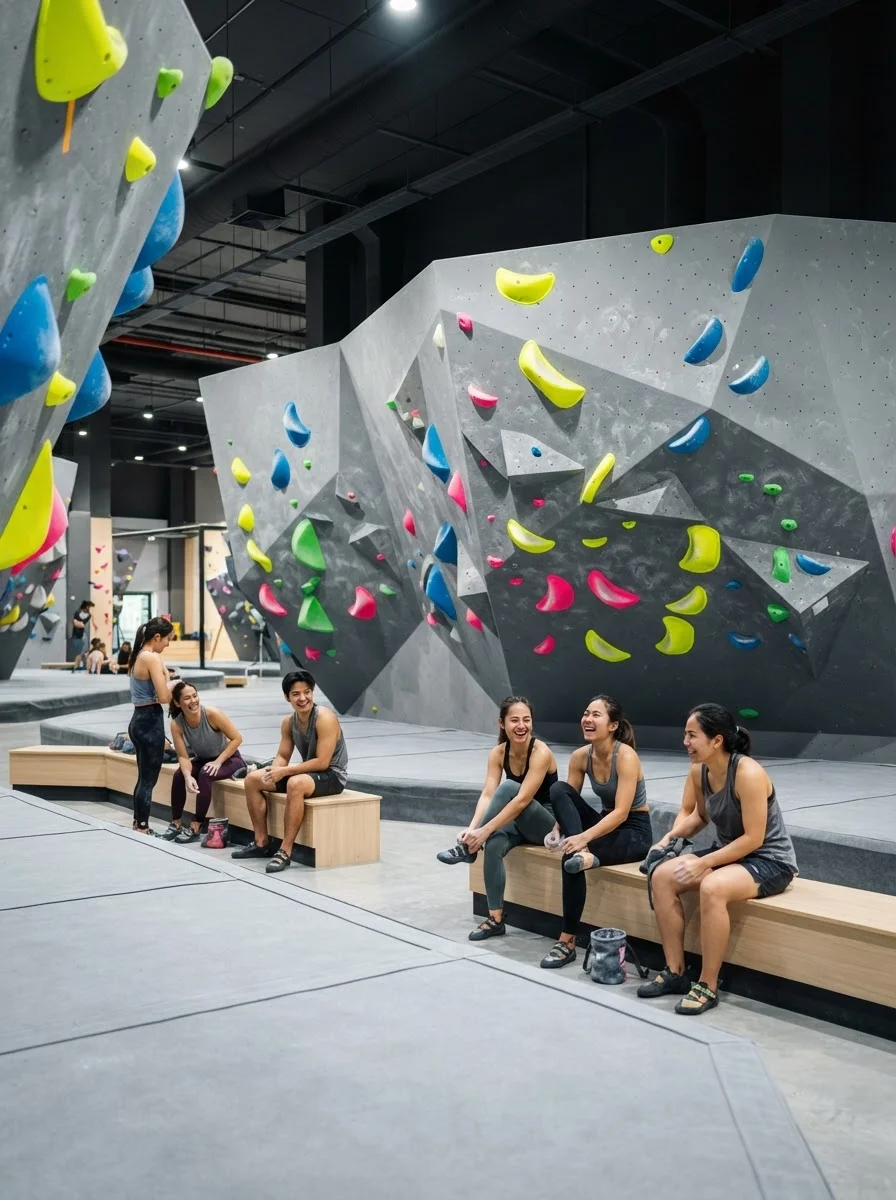
Bangkok has established a progressive indoor climbing community, anchored by a network of modern, air-conditioned bouldering gyms. These facilities feature contemporary, volume-heavy route setting that reflects international competition standards, providing steep overhangs, technical slabs, and dynamic coordination movements on high-density foam matting.
Stonegoat Climbing Gym, located roughly 400 metres from Phra Khanong BTS station along Sukhumvit Soi 69, serves as a primary hub for dedicated boulderers. The facility provides over 1,000 square metres of climbing surface, weekly route turnovers, and specialised training apparatus including an LED-lit Kilter board and campus rungs. A standard adult day pass costs 450 THB (approx. £10.50), with climbing shoe hire at 100 THB (approx. £2.30), while off-peak entry before 14:00 on weekdays drops to 300 THB (approx. £7).
Across town, Balance Climbing operates a technical, competition-oriented bouldering facility on the first floor of The Shoppes at Belle near MRT Phra Ram 9. Day passes cost 450 THB (approx. £10.50), with shoe rental at 100 THB (approx. £2.30) and chalk bags at 50 THB (approx. £1.20). Its problem setting relies on complex body positioning and delicate balance, drawing local competitive athletes and resident expats.
On the western side of the Chao Phraya River, Gravity Lab in Pinklao integrates dedicated athletic conditioning into its climbing space. Founded by route setters and sports scientists, the gym pairs technical boulder problems with a free-weight fitness area and campus boards. Day passes cost 400 THB (approx. £9.30), granting access to both the climbing wall and fitness conditioning areas.
Beyond training finger strength away from tropical heat and humidity, these air-conditioned venues function as central meeting points where visiting climbers can connect with local crews organising weekend outdoor excursions.
Island Granite: The Coastal and Jungle Blocks of Koh Tao
Koh Tao provides Thailand's primary outdoor granite bouldering, where hundreds of coarse granite blocks lie scattered through jungle hillsides, coconut plantations, and coastal headlands. While celebrated globally for scuba diving, the island holds a dense concentration of developed problems spanning Font 4 to 8A (V0 to V11). The rock is durable, highly textured, and studded with quartz crystals, delivering high friction alongside significant wear on fingertips.
Different sectors provide distinct styles and settings across the island. The Secret Garden sector, tucked into the hills behind Sairee Beach, features compact clusters of vertical faces, technical slabs, and steep compression arêtes, including established testpieces like James and the Giant Peach (V11). In the south near Chalok Baan Kao, the Front Yard and Back Yard crags provide shaded jungle bouldering with short approaches from the road. Along the higher ridges and coastline, Mek's Mountain and Lang Khai Bay present exposed lines above the Gulf waters, requiring balance on small crystals and consideration of afternoon heat.
Because the abrasive granite rapidly exhausts skin endurance, early morning or late afternoon climbing windows prove most effective for managing ambient heat and preserving your hands. Crash pad hire is available on the island at The Bunker along Ao Leuk Road, where pads cost 350 THB (approx. £8.10) per day, requiring either a 2,000 THB (approx. £46) cash deposit or a passport. Many boulder fields lie on privately owned plots or plantations, so climbers should follow existing trails, seek permission from landowners where posted, and pack out all rubbish.
| Bouldering Destination | Primary Rock Type | Difficulty Spread | Crash Pad Availability | Best Season |
|---|---|---|---|---|
| Koh Tao (Sairee & Chalok) | Coarse crystalline granite | V0 to V11 (Font 4 to 8A) | Available locally via gear shops | December to April |
| Khon Kaen (Zoo & Hin Chang Si) | Compact upland sandstone | V0 to V13 (Font 4 to 8B) | Available via local climbing club | November to February |
| Tonsai Beach (Krabi) | Pocketed marine limestone | V1 to V10 (Font 5 to 7C+) | Limited (bring or share pads) | November to March |
| Bangkok Urban Gyms | Wood & textured fibreglass | VB to V12+ (All grades) | Integrated gym landing systems | Year-round (indoor climate) |
The Continental Frontier: Khon Kaen Sandstone and Zoolander
Set in the rolling plateau of northeastern Thailand, Khon Kaen stands as the country's primary destination for natural sandstone bouldering. The premier development is the Zoolander field, perched along the wooded upper ridges of Khao Suan Kwang within the outer grounds of Khon Kaen Zoo, roughly fifty minutes north of the provincial capital. Far removed from the tourist exhibits and animal enclosures, hundreds of weathered sandstone blocks lie dispersed across forested slopes. The area contains more than a thousand recorded problems, spanning beginner V0 lines up to testpieces graded V13. The rock delivers dense, fine-grained texture with clean horizontal breaks, sloping roof exits, and rounded mantles.
Roughly forty minutes west of the city lies Hin Chang Si, situated inside Nam Phong National Park above the Ubolratana Reservoir. Developed through formal cooperation between local climbers and park authorities, Hin Chang Si established Thailand's first officially sanctioned bouldering sector within a national park boundary. Both Zoolander and Hin Chang Si require standard admission fees at their entrance gates, and climbers visiting the zoo must register and sign a liability waiver before proceeding to the boulders.
Local crag maintenance and access coordination are managed by the Khon Kaen Climbing Club, which publishes digital topos on the 27 Crags platform. Visiting boulderers can hire crash pads locally from Volume Climbing Gym in Khon Kaen city, though arranging rentals ahead of time is sensible during the cooler winter months. Independent transport is required to reach the sectors and move gear, as the zoo's internal loop road covers more than eleven kilometres across hilly terrain. Hiring a car from Khon Kaen Airport allows you to transport bulky pads directly to roadside trailheads and switch between sectors with minimal delay.
Technique and Safety: Spotting, Pad Placement, and Falling in the Heat
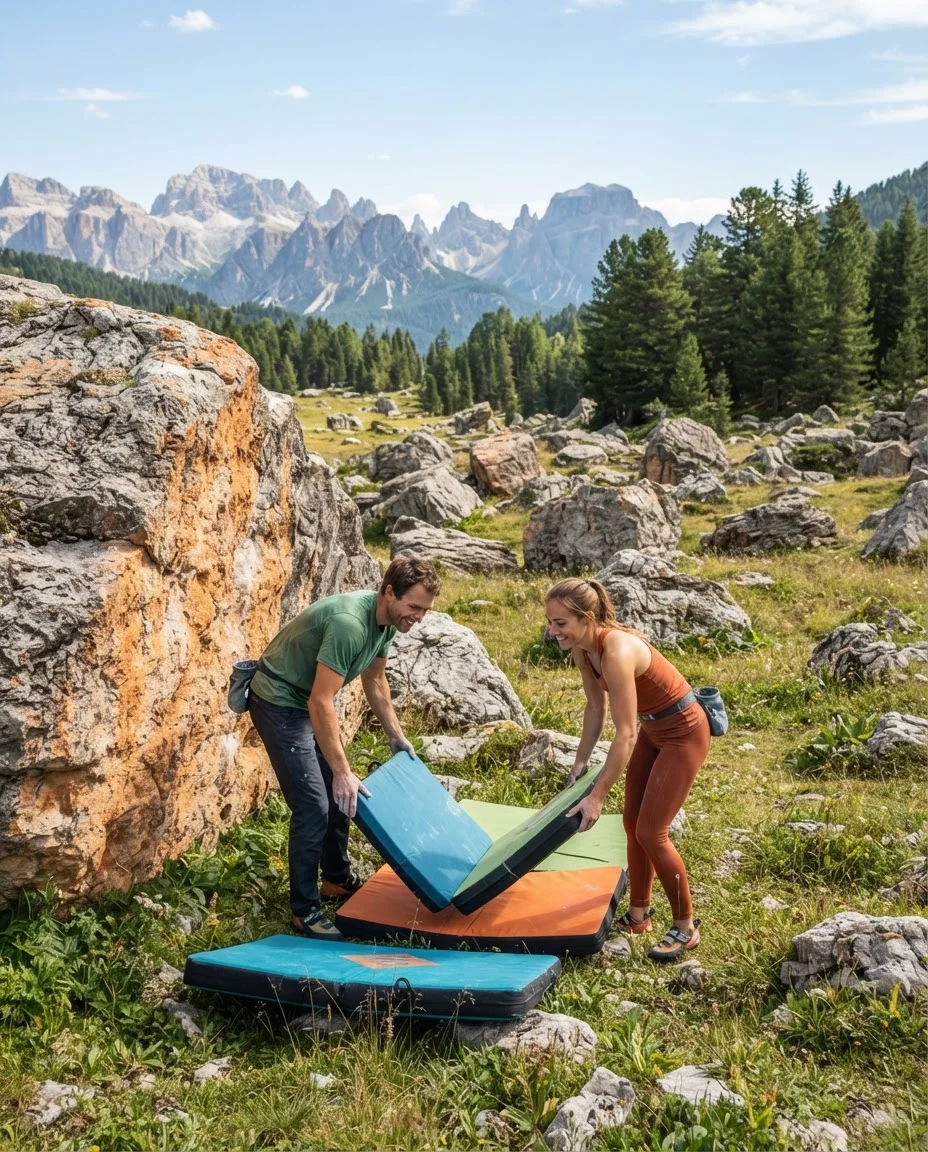
Landing cleanly without a rope requires deliberate mat placement and body control, particularly across uneven tropical terrain. Outdoor boulder fields on Koh Tao and in Khon Kaen rarely provide flat dirt bases; landings frequently feature sloping bedrock, granite talus, and exposed tree roots. Managing these surfaces means carrying multiple crash pads and arranging them to eliminate gaps. Layering a thinner slider mat or overlapping pad edges across central seams helps prevent ankles from twisting into the folds between foam blocks.
Spotters are not there to catch a falling climber. Their primary job is to protect the climber's head and neck, redirecting momentum and guiding the hips so the climber lands feet-first on the foam. Spotters should stand in an active, balanced stance with hands up and thumbs tucked in, tracking the climber’s centre of gravity as movement shifts.
Tropical heat and high humidity accelerate forearm fatigue and sudden friction loss. Chalk cakes quickly and holds become slick without warning, causing abrupt, unplanned falls. If grip fails during a dynamic move, pushing cleanly off the rock face helps avoid grazing against coarse granite crystals or rough sandstone. Warming up with deliberate, low-height drop-offs at the start of a session helps recalibrate depth perception over foam. For higher problems, use multiple overlapping pads and coordinate at least two spotters to cover the fall zone.
Where to Boulder in Thailand: Top Gyms and Rock Sectors
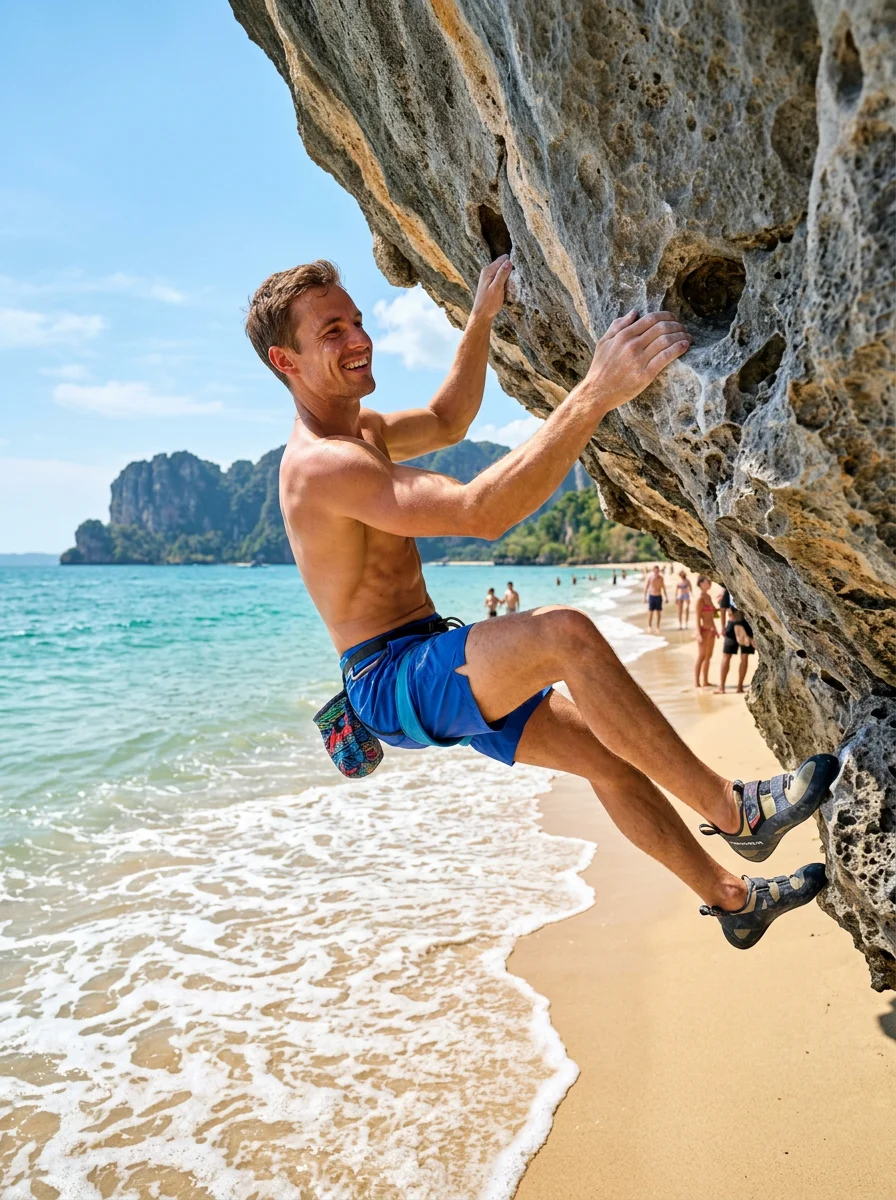
Thailand's bouldering landscape divides between modern urban gyms in the central and northern regions and rugged outdoor stone across the south and east. Bangkok functions as the country's primary indoor hub. Facilities such as Stonegoat Climbing Gym in Phra Khanong and Balance at Rama 9 provide extensive wall angles, regular route setting, and comprehensive training areas. Further north in Chiang Mai, Progression Vertical pairs semi-outdoor bouldering with high top-rope and lead walls, giving climbers an open-air transition space between gym sessions and regional crags.
For outdoor climbing, Koh Tao stands out for concentrated coastal granite. Key sectors such as Secret Garden and Chalok Baan Kao offer established problems nestled among hillside jungle and beachfronts, supported locally by The Bunker for crash pad rentals and indoor boards. In the northeast, the Isaan region holds Thailand’s premier sandstone bouldering. The Zoolander boulder field near Khon Kaen delivers hundreds of problems across weathered continental blocks, alongside scenic sandstone towers at Hin Chang Si in Nam Phong National Park.
Limestone bouldering appears on the southern Andaman coast, particularly around Tonsai Beach in Krabi. At low tide, steep roof problems and traverse lines open up directly over the sand, providing sheltered bouldering beneath towering sea cliffs. A balanced itinerary often starts with a few days in Bangkok to acclimatise and warm up on modern plastic, followed by a domestic transfer either south to the granite blocks of Koh Tao or northeast towards the sandstone circuits of Khon Kaen.
Costs and Budgeting
Bouldering is one of the most economical branches of climbing travel in Thailand, largely because it eliminates the need for expensive rack investments, ropes, and oversize baggage surcharges on international flights. Checking a bulky crash pad on flights from the UK frequently incurs sports equipment fees of £60 to £100 each way, making on-ground hire far more cost-effective. A solo budget climber can comfortably operate on 800 THB to 1,200 THB (approx £18.50 to £28.00) per day by choosing fan-cooled guesthouses, eating at street markets, and splitting pad rentals or transport costs. Mid-range travellers opting for air-conditioned rooms, daily indoor passes, and dedicated pad hire should budget roughly 1,800 THB to 2,800 THB (approx £42.00 to £65.00) per day. Upscale trips that incorporate private guiding, car rental, and beach resorts reach 4,500 THB (approx £105.00) upwards daily.
| Option | Cost (THB) | Cost (GBP approx) | Notes |
|---|---|---|---|
| Bangkok Gym Day Pass | 400 – 500 THB | £9.30 – £11.60 | Full day entry with in-and-out access at Stonegoat or Balance |
| Climbing Shoe Rental | 80 – 150 THB | £1.85 – £3.50 | Per session at indoor gyms across Bangkok and Chiang Mai |
| Island Crash Pad Hire | 350 – 500 THB | £8.10 – £11.60 | Daily rate on Koh Tao; deposit required (cash or passport) |
| Khon Kaen Zoo Sector Entry | 350 THB | £8.10 | Standard foreign adult admission fee for Zoolander field |
| Local Outdoor Guiding (Full Day) | 1,500 – 2,500 THB | £35.00 – £58.00 | Per person with regional clubs; includes sector navigation |
| Scooter Hire with Straps | 250 – 350 THB | £5.80 – £8.10 | Daily rental cost on Koh Tao or in Khon Kaen |
For longer visits, indoor training costs drop substantially through multi-pass bundles and monthly packages. Balance Climbing and Stonegoat in Bangkok provide monthly memberships starting around 1,800 THB (approx £42.00), reducing the per-session cost for dedicated training blocks. When heading outdoors, carry sufficient cash for sector fees, bike rentals, and equipment deposits. On Koh Tao, venues hiring out crash pads typically request an upfront cash deposit of 2,000 THB (approx £46.50) or photographic identification, while national park gates and the Zoolander sector at Khon Kaen Zoo require cash payment at the entry booth.
What to Know Before You Go
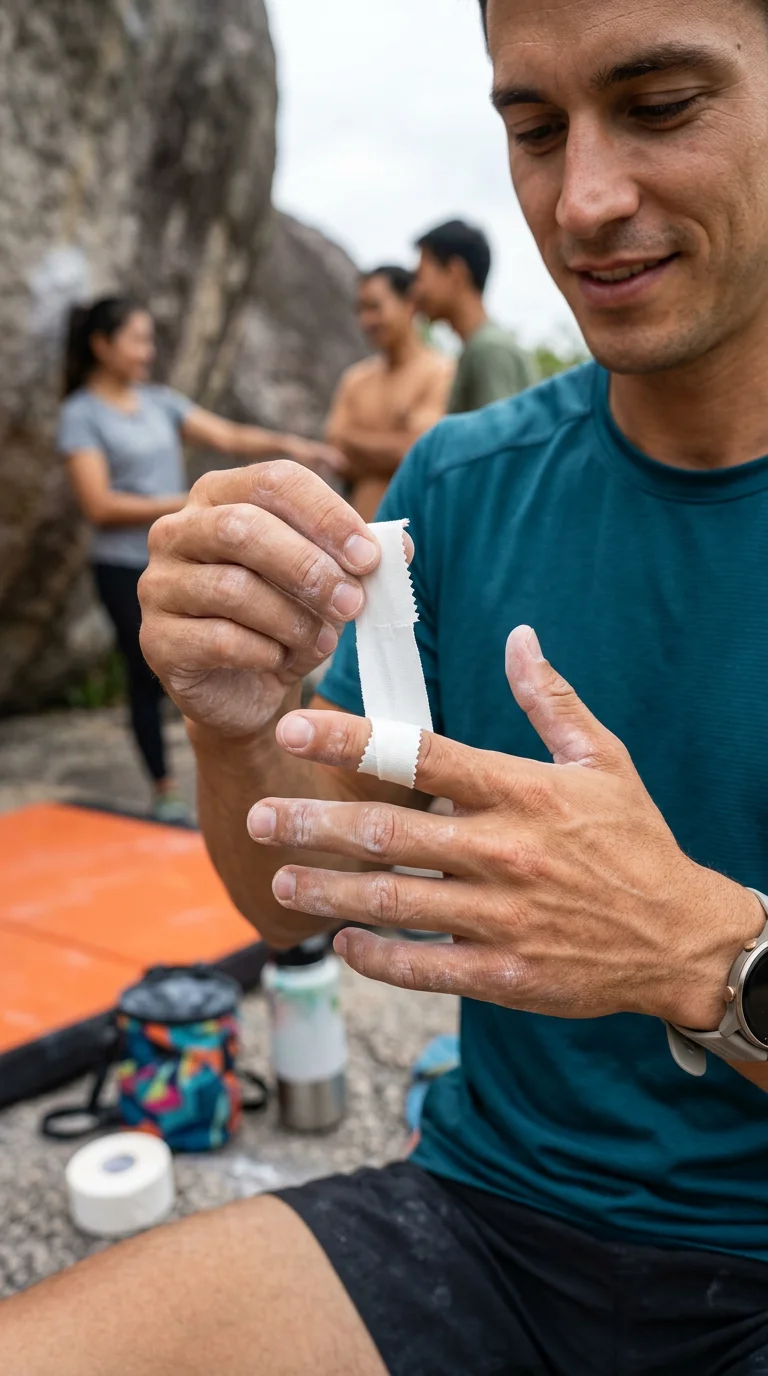
Tropical heat and relentless humidity alter outdoor friction within minutes. When climbing outdoors, regular powder chalk struggles to absorb sweat on its own. Applying a base coat of alcohol-based liquid chalk dries out the pores and leaves an even foundation, allowing loose chalk to bond far more effectively on humid stone. Keeping a small microfibre towel in your chalk bucket helps clear sweat from forearms before pulling onto holds.
Jungle boulder fields present distinctive wildlife hazards at ground level. Damp leaf litter and shaded crevices attract Asian giant centipedes and scorpion species, while aggressive red weaver ants frequently colonise low-hanging jungle foliage. Inspect landing zones and sweep away debris before placing crash pads, and check blind holds and top-out ledges before committing your fingers to unseen cracks.
Sudden tropical downpours can arrive quickly, particularly during the humid shoulder months. Open-cell crash pad foam acts like a sponge, becoming excessively heavy to haul out and prone to mildew if soaked. Packing heavy-duty plastic rubble sacks or bin liners allows you to seal pads the moment skies darken.
Rock conservation is equally critical, especially on continental sandstone. Inland sandstone in Khon Kaen absorbs moisture deep into its porous structure, which temporarily weakens the mineral bonds holding the rock together. Give wet sandstone 24 to 48 hours to dry out thoroughly after heavy downpours before climbing, preventing permanent damage to delicate holds and flakes.
Practical Tips
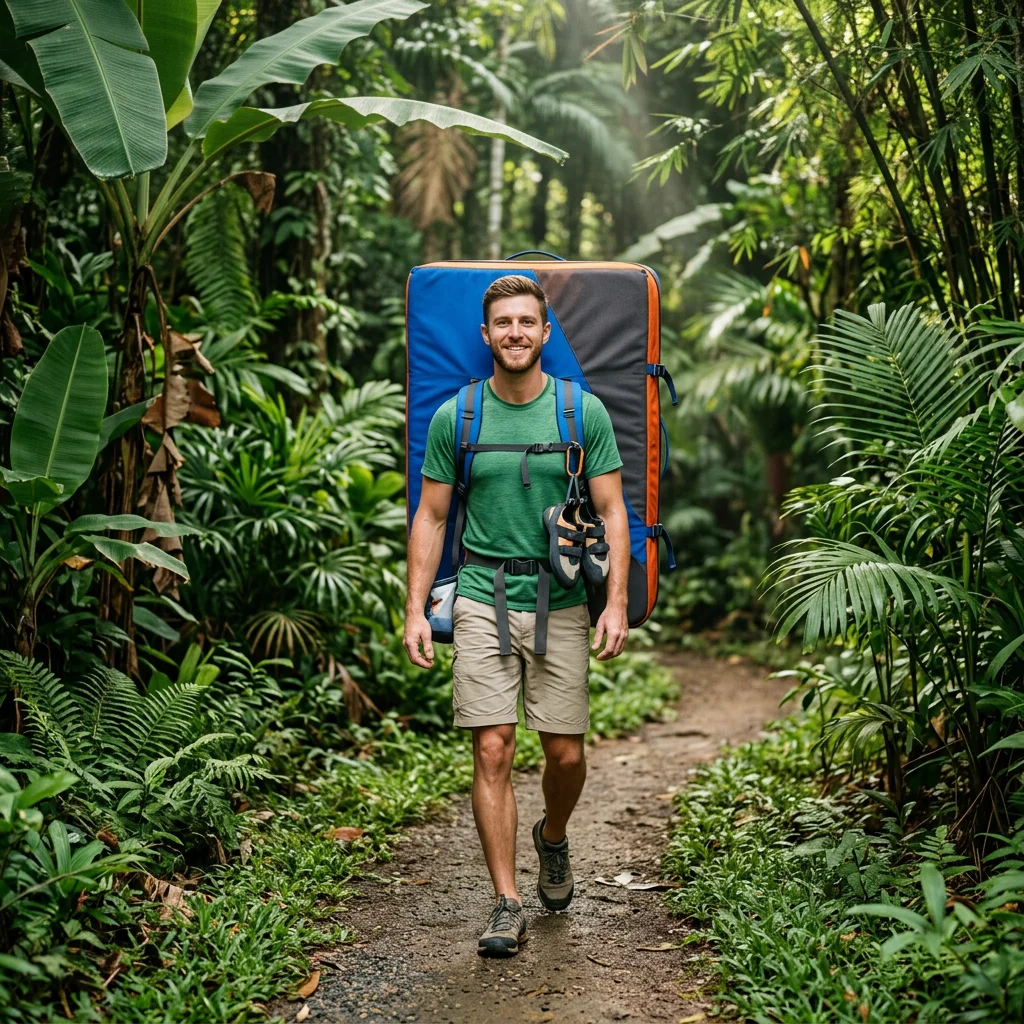
Aim to schedule outdoor sessions during early morning and late afternoon windows. Tropical midday heat softens climbing shoe rubber and produces slick humidity on the rock face, whereas the hours around sunrise deliver cooler rock temperatures and usable friction.
Carry rigid zinc oxide climbing tape in your pack. The coarse granite crystals found on coastal boulders abrade finger skin rapidly, making preventative taping across knuckles and worn pads advisable before splits or flappers develop.
Download digital topos and offline maps before travelling to rural sectors. Cellular coverage can drop out in sheltered valleys on the islands and across backcountry areas such as Nam Phong National Park, making remote problems difficult to locate without offline GPS data.
Transporting bulky landing mats requires care on local roads. Balancing a crash pad across your knees on a hired scooter is hazardous and destabilises steering in island crosswinds. Secure mats firmly to a rear luggage rack using ratchet straps, or hire a local utility vehicle or taxi truck. If you ride a scooter in Thailand, UK regulations and Thai law require a valid motorcycle licence and an International Driving Permit; riding without them invalidates standard motor and medical policies.
Reaching out to local gym communities in Bangkok or Khon Kaen before travelling makes finding outdoor partners easier. Local climbers frequently head out on weekend excursions and are often open to sharing crash pads, transport, and spotting duties.
Carry oral rehydration salts in your day pack alongside plenty of bottled drinking water. Profuse sweating in tropical humidity leaches sodium and potassium rapidly, which brings on early forearm cramping and muscular fatigue. Rehydration sachets are sold across Thailand at pharmacies and convenience stores for roughly 5 to 10 THB (approx 15p to 25p).
Check your travel insurance policy wording carefully before departure to confirm it explicitly covers unroped outdoor climbing. Many standard UK policies exclude bouldering under hazardous activities or limit cover to indoor walls, leaving climbers exposed to private hospital fees in Thailand if an uncontrolled fall results in a sprain or fracture.
Quick Reference Table
| Item | Detail | Notes |
|---|---|---|
| Primary Outdoor Sectors | Koh Tao (granite) & Khon Kaen (sandstone) | Koh Tao offers coastal blocs (V0–V11); Khon Kaen features Zoolander and Hin Chang Si (V0–V13) |
| Indoor Training Hubs | Bangkok (Stonegoat, Balance, Gravity Lab) & Chiang Mai (Progression Vertical) | Air-conditioned facilities with competition walls; day passes typically cost 400–500 THB (£9.30–£11.60) |
| Best Season for Outdoor Bouldering | November to April (regional variations apply) | Koh Tao is best December–April; Khon Kaen sandstone requires cool, dry winter conditions (November–February) |
| Daily Climbing Windows | Dawn / early morning and late afternoon | Midday heat softens shoe rubber and degrades friction; early morning temps dip to 20°C–24°C |
| Crash Pad Hire | Koh Tao (The Bunker) & Khon Kaen (Volume Climbing Gym) | Island pads cost 350–500 THB (£8.10–£11.60) per day; requires 2,000 THB cash deposit or passport |
| Entry & Crag Fees | Khon Kaen Zoo: 350 THB (£8.10) adult foreign entry | Registration waiver required for Zoolander; Hin Chang Si sits in Nam Phong National Park |
| Estimated Daily Budgets | Budget: £18.50–£28.00; Mid-range: £42.00–£65.00 | Covers lodging, food, pad hire, and transport; upscale trips start from £105.00 per day |
| Wet Sandstone Protocol | Rest 24 to 48 hours after rain | Continental sandstone absorbs moisture and weakens mineral bonds; climbing damp rock breaks holds |
| Essential Gear & Health | Liquid chalk, zinc oxide tape, rehydration salts | High humidity causes sweating; electrolytes prevent cramping; check travel insurance covers unroped climbing |
| Transport & Pad Logistics | Car rental in Khon Kaen; utility trucks or strapped scooters | Securing mats to scooter luggage racks requires ratchet straps; UK travellers need an IDP and motorbike licence |
| Official Website: Bangkok Gym | Stonegoat Climbing Gym | stonegoatclimb.com |
| Official Website: Bangkok Gym | Balance Climbing | balanceclimbing.com |
| Official Website: Bangkok Gym | Gravity Lab | leaderswellness.com |
| Official Website: Koh Tao Gear & Crags | The Bunker Koh Tao | kohtao-rockclimbing.com |
| Official Website: Chiang Mai Gym | Progression Vertical | thailandclimbing.com |
| Official Website: Regional Topos | Khon Kaen Climbing Club | khonkaenclimbing.com |
FAQ: Bouldering in Thailand
What equipment is needed for bouldering in Thailand?
What is the best time of day to boulder outdoors in Thailand?
What are the benefits of bouldering at indoor gyms in Bangkok?
Where can I rent crash pads for bouldering on Koh Tao?
What should climbers do when bouldering on privately owned land in Koh Tao?
What is the primary role of a spotter in bouldering?
Is it better to bring my own crash pad or rent one in Thailand?
How can climbers improve grip and manage sweat in humid outdoor conditions?
What wildlife hazards should boulderers be aware of in Thai jungle fields?
How long should climbers wait to climb sandstone after rain in Khon Kaen?
Reviewed by the Thailand Guide Editorial Team • Last reviewed: 17 November 2026
This page is provided for general information only. While we aim for accuracy, details can change — please verify anything important independently before relying on it.