Rock Climbing in Tonsai



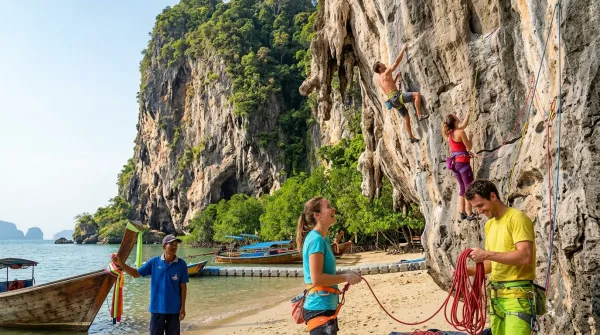
Tonsai Bay is recognised across the international climbing community for its concentration of radical limestone overhangs, cavernous roofs, and intricate tufa systems. Situated immediately north of Railay on Krabi's Phra Nang peninsula, the bay provides access to an exceptional array of bolted sport routes rising straight out of the Andaman shoreline. Belayers often manage ropes directly from the sand while climbers negotiate steep stalactites and three-dimensional barrel roofs, with grades extending from accessible mid-grade warm-ups through to sustained testpieces reaching French 8c+.
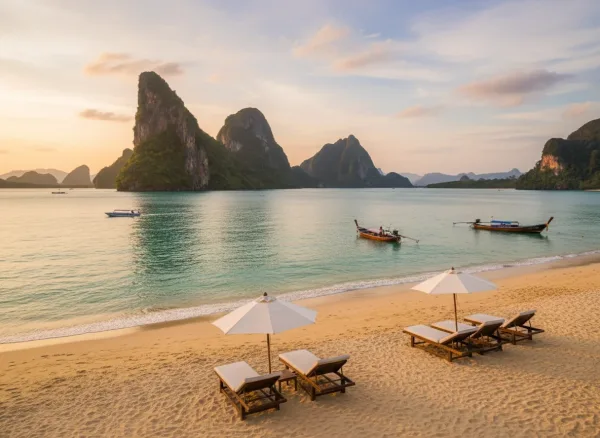
Unlike the resort-oriented beaches of neighbouring Railay, Tonsai preserves a distinctively communal, countercultural atmosphere shaped by independent climbers, seasoned athletes, and long-stay travellers. The settlement behind the beach functions as a self-sufficient hub, where rustic bamboo bungalows, open-air cafes, and independent climbing shops line unpaved paths beneath towering karst headlands. Daily climbing routines revolve around the movement of the sun and tides, with climbers chasing morning shade on beachside walls before retreating to inland crags as the afternoon heat builds. While local schools provide equipment hire and guided instruction, Tonsai primarily appeals to competent outdoor lead climbers drawn to challenging sport routes and an immersive international fraternity.

Tonsai Beach Crags: Tonsai Wall and Dum's Kitchen
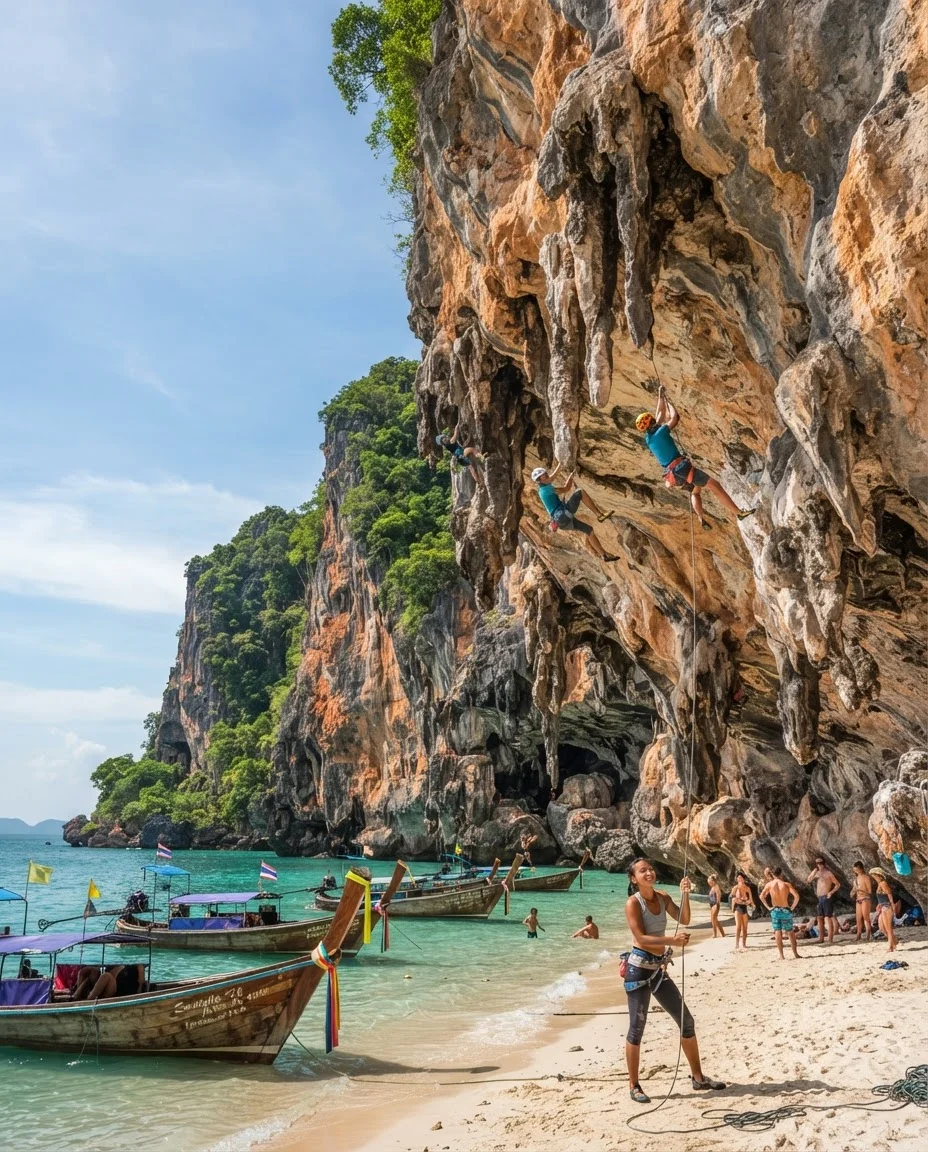
Tonsai Wall and Dum's Kitchen form the focal point of coastal sport climbing on the Phra Nang peninsula, providing dozens of classic test pieces directly above the high-water line. Belayers stand straight on the sand beneath a towering limestone amphitheatre marked by deep flutes, dripping flowstone features, and intimidating horizontal roofs. Climbing here demands exceptional core tension and forearm stamina, with routes clustering firmly between French 6b+ and 8a+. During high tide, the Andaman Sea pushes against the base of Tonsai Wall, forcing belayers to balance on rock boulders or retreat to the wider, slightly elevated sand at Dum's Kitchen, where stances remain dry. Decades of heavy traffic have left lower footholds polished, making precise footwork on glass-smooth karst crucial. Because these beach crags face southwest, they stay in cool shade throughout the morning until roughly 12:30 pm, when the tropical sun hits the face and drives climbers back to the village.
| Sector | Primary Grade Range | Rock Style | Tidal & Shade Window |
|---|---|---|---|
| Tonsai Wall | 6a+ to 8a+ | Vertical to 45-degree overhangs, massive tufas | Shaded until midday; affected by high tide |
| Dum's Kitchen | 6b to 8b | Steep roof problems, powerful bouldery starts | Shaded mornings; belay stances remain dry |
| Fire Wall | 6a to 7c+ | Technical vertical faces, pockets, long endurance pitches | Afternoon shade; unaffected by tides |
| Melting Wall | 6c to 8a | Sustained 30-metre endurance lines on steep grey rock | Deep afternoon shade; inland jungle setting |
| Cat Wall | 6b+ to 8b+ | High-friction limestone, technical crimps, pocketed roofs | Afternoon shade; dry jungle base |
Arriving at first light gives you cooler conditions, allowing you to work steep projects before midday humidity softens chalk grip.
Overhanging Limestone and High-Grade Test Pieces
Tonsai’s international reputation rests upon steep, three-dimensional routes across ancient karst formations. On the beach crags, movement is athletic and gymnastic. Classic single-pitch lines such as Babes in Thailand (7a) and Tonsai Playboy (7a+) on Tonsai Wall, alongside Wake and Bake (7a+) and the technical flake of The Lion King (6c+) at Dum's Kitchen, require heel hooks, drop-knees, and aggressive tufa pinching before clipping chain anchors. For those projecting upper grades, Tidal Wave (7b+) through the iconic Tonsai Roof is a benchmark test piece of pure body tension. Tonsai Wall also hosts Humanality (6b+), a famous five-pitch multi-pitch that ascends straight up the main face, rewarding leaders with panoramic bay views before an abseil descent.
As the midday sun hits the sand, climbers migrate into the jungle along the cliff base to sectors that offer afternoon shade. Following the trail left of the beach leads to Fire Wall, an imposing orange limestone face with endurance routes on pockets and edges, including the moderate The Groove Tube (6a) and the roof traverse of Burnt Offerings (7a+). Continuing through a natural rock arch brings you to Melting Wall, where sustained single pitches stretch up to 35 metres on steep grey stone. Lines like Cross-Eyed (7b) and Affenhitze (7a+) demand an 80-metre dynamic rope and 16 to 18 quickdraws to lower directly to the ground. Just beyond sits Cat Wall, known for compact, high-friction rock and crimpy test pieces such as April Fool's (7b) and Gilles No Limits (7c).
Unlike the gentle vertical slabs and top-ropes on neighbouring Railay Beach, Tonsai centres on steep sport climbing where competence at French 6c is the benchmark to access the bay's premier routes. Rest positions often involve wrapping legs around hanging stalactites or settling into hands-free knee-bars. Pacing your projecting sessions is important, as tropical heat and sharp limestone wear down skin rapidly.
Discover the best Krabi food, from fiery southern yellow curry at Chao Fah Night Market to hidden seafood kitchens on Koh Klang. Skip the tourist traps.
Local Climbing Schools, Guiding, and Equipment Hire
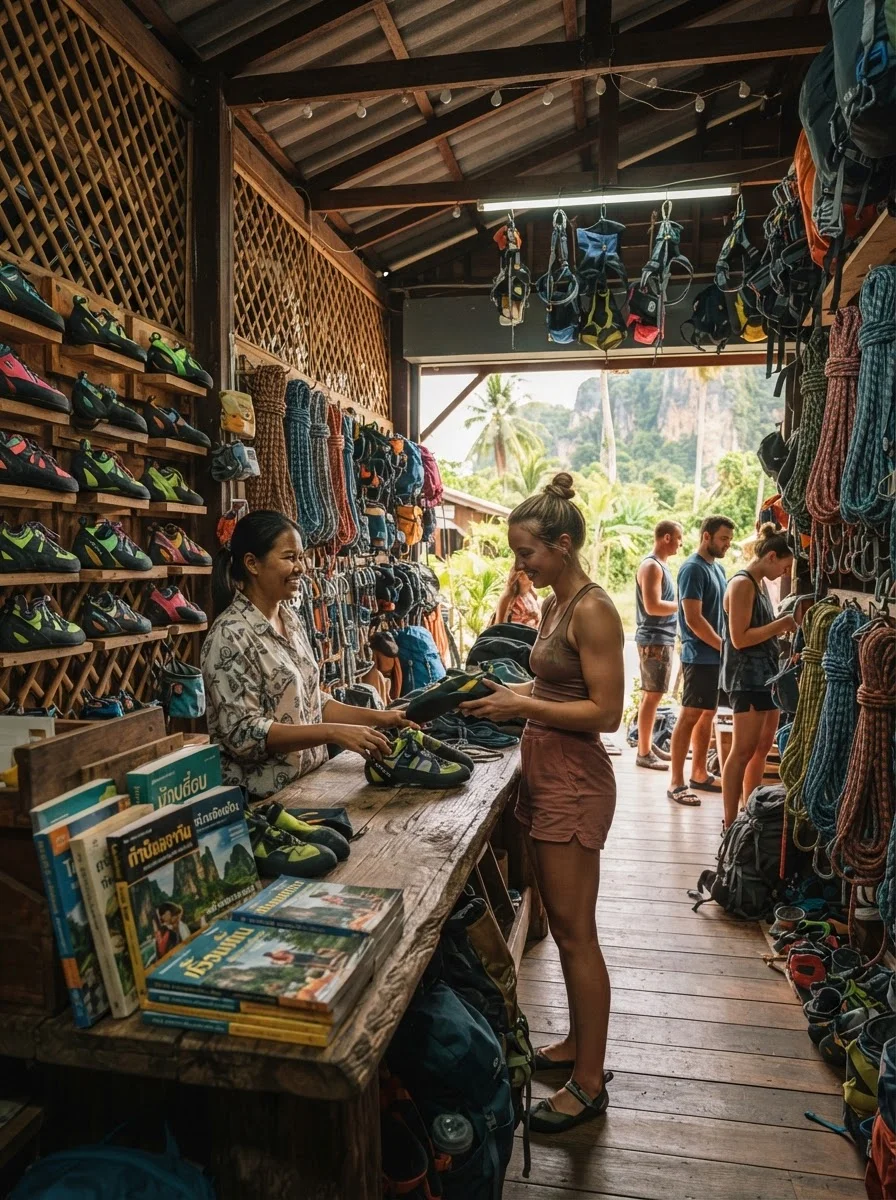
Independent climbers find an established support system in Tonsai, supported by local climbing shops and instructors. Basecamp Tonsai, operating since 1996 to German safety standards, acts as the main hub on the beach for gear hire, guiding, courses, and the local topo guidebook. The Rock Shop also provides hardware, rentals, and crag information, though climbers should contact the shop directly for current rental rates.
Hiring equipment locally avoids airline sporting baggage fees, though daily hire costs accumulate quickly. At Basecamp Tonsai, individual daily rentals cost 300 THB (around £6.70) for rock shoes, 300 THB for a harness, 200 THB (£4.50) for a chalk bag, and 400 THB (£8.90) each for a 60- or 70-metre dynamic rope or a set of 12 quickdraws. Climbers bringing their own shoes and harness can hire a lead package of rope and draws for 1,000 THB (£22.30) per day, whilst a full kit for two climbers costs 1,800 THB (£40.20). Equipment rentals require your passport as a deposit, which is held in the shop's safe.
For instruction or route-finding on complex rock, local guides lead technical sport and multi-pitch lines. At Basecamp Tonsai, half-day guided climbing costs 1,200 THB to 1,500 THB (£26.80 to £33.50), whereas private guiding costs 3,500 THB (£78) for a four-hour half day and 6,000 THB (£134) for a full day. Multi-pitch guiding on classic lines such as Humanality or Ao Nang Tower starts at 6,000 THB, and full-day lead climbing courses run at 3,500 THB with all gear included. Before taking hired kit to the crags, inspect rope sheaths for core exposure, carabiner gates for smooth action, and shoe rands for delamination.
Hardware Integrity, Tropical Bolting, and Crag Etiquette
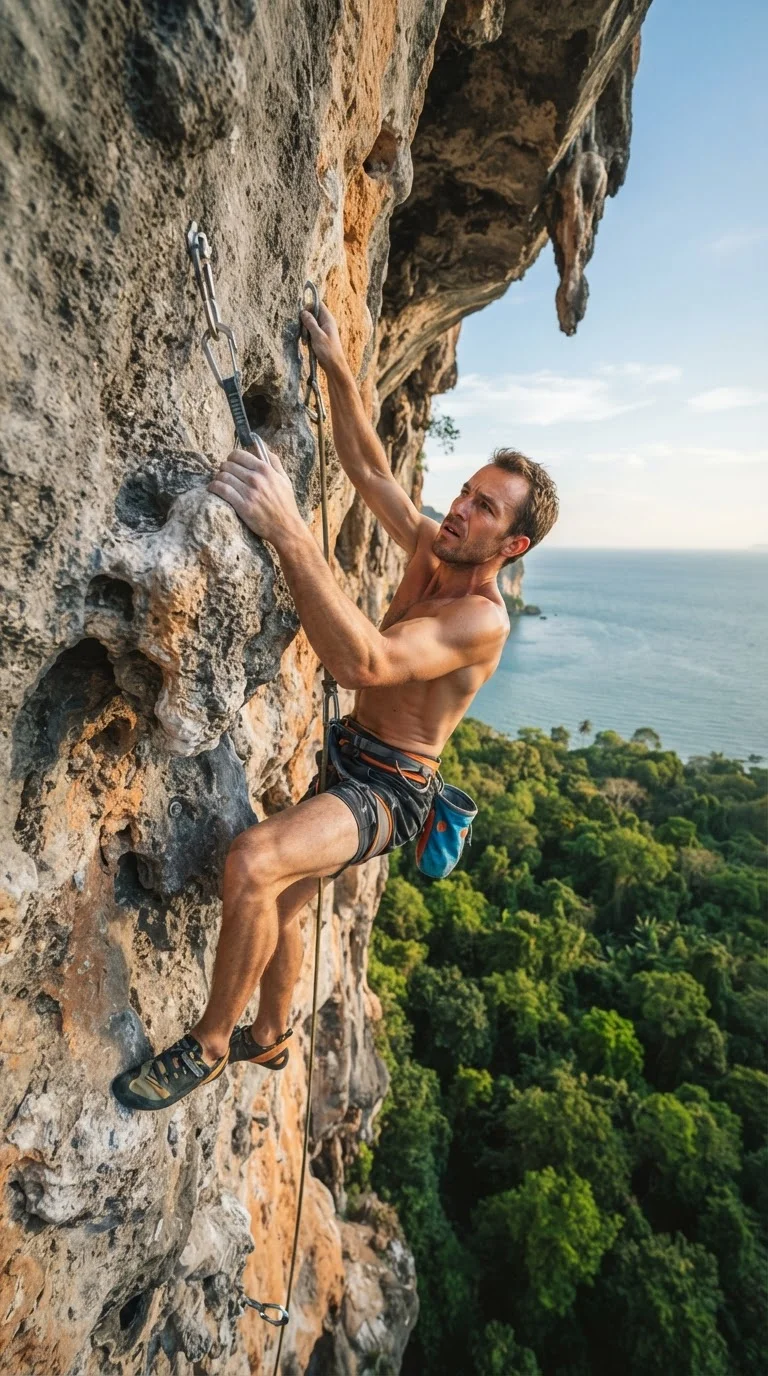
The marine karst environment of Tonsai creates severe metallurgical hazards that require vigilance from visiting climbers. The combination of airborne sea salts, relentless tropical humidity, and acidic rainwater filtering through jungle-capped limestone triggers rapid stress corrosion cracking in conventional stainless steel. In this hyper-corrosive microclimate, even marine-grade 304 and 316 steel bolts can suffer catastrophic structural failure from the inside out within two to three years, often showing no external rust.
To eliminate this risk, volunteer initiatives spearheaded by the Thaitanium Project and local climbing shops have spent years rebolting Tonsai's established routes with certified titanium glue-in anchors. Grade 2 titanium is virtually immune to stress corrosion cracking, offering a permanent solution for tropical seaside cliffs. While popular sport lines and modern anchors now feature titanium resin bolts and welded titanium lower-off rings, less frequented routes and multi-pitch extensions may still harbour aged stainless steel hardware. Climbers should cross-reference local topo guidebooks for current bolt status and treat any non-titanium expansion bolt with extreme caution.
Preserving this communal, highly expensive hardware requires strict anchor etiquette. You should avoid running top-rope sessions directly through fixed lower-off rings or fixed shuts, as gritty ropes act like saws on soft metal. Instead, construct a top-rope anchor using your own screwgates or opposed quickdraws, threading the fixed rings for the final descent.
Crag etiquette extends to rock conservation and wildlife management. Tonsai's deep roofs and overhung walls shield rock faces from rain, preventing chalk accumulations and tick marks from washing away naturally. Climbers should use a soft brush to clean holds and erase navigational marks before vacating a sector. Keep packs zipped shut and pack out used finger tape and litter; crag-base troops of crab-eating macaques and resident monitor lizards routinely raid unsealed bags for food.
Location and Getting There
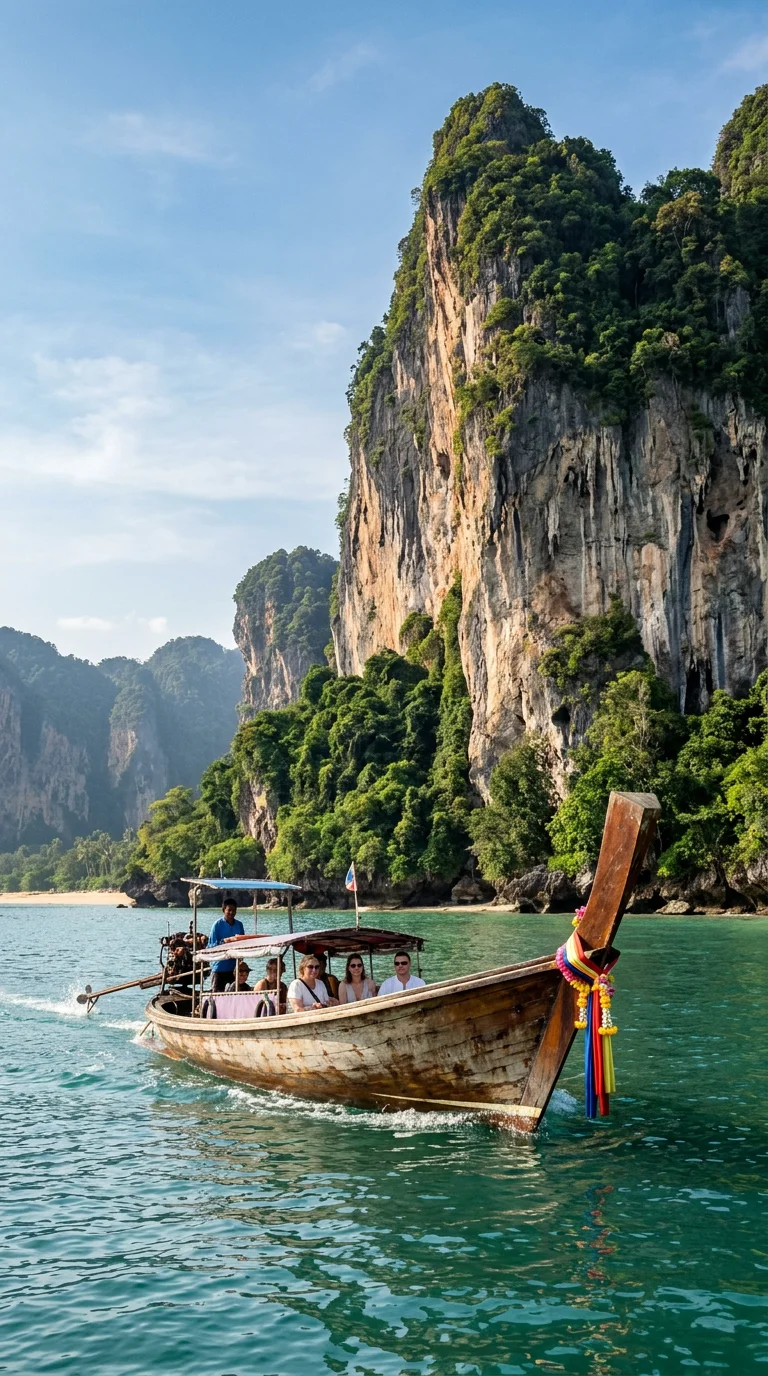
Tonsai Bay sits on the Phra Nang peninsula in Krabi Province, sealed off from mainland roads by vertical limestone karsts. Direct access is by sea, with traditional longtail boats running from Ao Nang Beach or nearby Nopparat Thara. Shared boats depart once six to eight passengers gather, costing 100 THB (around £2.35) per person for the 10-to-15-minute crossing during daylight, rising to 150 THB (£3.50) or requiring private charters after dark. From Krabi International Airport, fixed-fare airport shuttle buses to Ao Nang cost around 150 THB (£3.50), while private taxis run from 600 THB (£14).
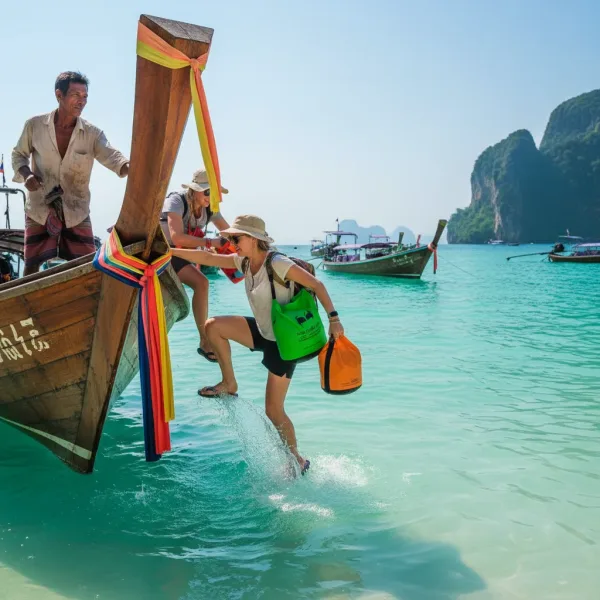
Because Tonsai has no jetty or pier, boat arrivals require a wet landing, stepping directly off the bow into shallow water. Carrying rucksacks rather than wheeled suitcases prevents gear from soaking. During rough southwest monsoon swells from May to October, boats from Ao Nang frequently suspend operations; travellers instead take longtails from mainland Ao Nam Mao Pier to the sheltered floating pontoon at Railay East, walking across to Tonsai.
On foot, Tonsai links directly to neighbouring Railay West. During low tide, climbers can traverse the boulder-strewn coastline in approximately 15 minutes. At high tide, rising water submerges the rocks, leaving a steep, muddy jungle trail over the karst ridge that takes around 15 to 20 minutes to cross.
Costs and Booking
Tonsai remains an economical climbing destination, though seasonal rate increases occur from December to February. Independent climbers pay no crag access fees, as cliffs across the bay are free to climb. Primary trip expenses involve accommodation, food, longtail transfers, and equipment rental or guiding. Basic bamboo bungalows in the village cost between 400 THB and 800 THB (£9.50 to £19) per night, providing cold showers and generator electricity limited to evening hours. Concrete rooms with air conditioning and 24-hour electricity at beachfront resorts range from 1,500 THB to 3,200 THB (£35 to £75) per night during high season.
Village bungalows operate mainly on a walk-in basis, whereas resort rooms require booking weeks ahead for peak winter dates. Tonsai has no cash machines, and card facilities are scarce and carry surcharges, so climbers must withdraw sufficient cash in Ao Nang or Krabi Town beforehand. Those hiring ropes or hardware from shops such as Basecamp Tonsai must leave a physical passport as a deposit. The local climbing guidebook costs 1,000 THB (£23.50) at Basecamp, with proceeds supporting local titanium rebolting.
| Expense | Cost (THB) | Cost (GBP) | Notes |
|---|---|---|---|
| Basic Fan Bungalow | 400 - 800 per night | £9.50 - £19 | Cold water; electricity often limited to night hours |
| Mid-Range AC Resort Room | 1,500 - 3,200 per night | £35 - £75 | 24-hour power, hot shower, swimming pool access |
| Personal Gear Hire (Shoes & Harness) | 600 per day | £14 | Daily rate; passport deposit held by rental shop |
| Lead Rope & Quickdraw Rack | 800 - 1,000 per day | £19 - £23.50 | 60m–70m dynamic rope and 12–14 quickdraws |
| Private Climbing Guide | 3,500 - 6,000 per session | £82 - £141 | 3,500 THB half-day (4 hours); 6,000 THB full-day |
| Local Route Topo Guidebook | 1,000 flat fee | £23.50 | Sold at Basecamp Tonsai; funds crag rebolting |
| Longtail Transfer (Ao Nang) | 100 - 150 per person each way | £2.35 - £3.50 | Per-seat daytime/dusk rate; night charters around 1,000 THB |
Who It Suits Best
Tonsai caters primarily to experienced sport climbers, independent lead pairs, athletic backpackers, and outdoor travellers who value demanding limestone over resort amenities. Climbers comfortable leading French 6b and higher thrive here, enjoying a communal atmosphere centred around slacklines, bouldering discussions, and evening route planning. Conversely, Tonsai does not suit holidaymakers seeking full-service luxury, families with young children requiring flat pushchair paths, or beginners wanting straightforward top-rope introductions. Novice climbers often find the steep coastal grades punishing and are better served basing themselves across the headland on Railay.
Practical logistics before booking
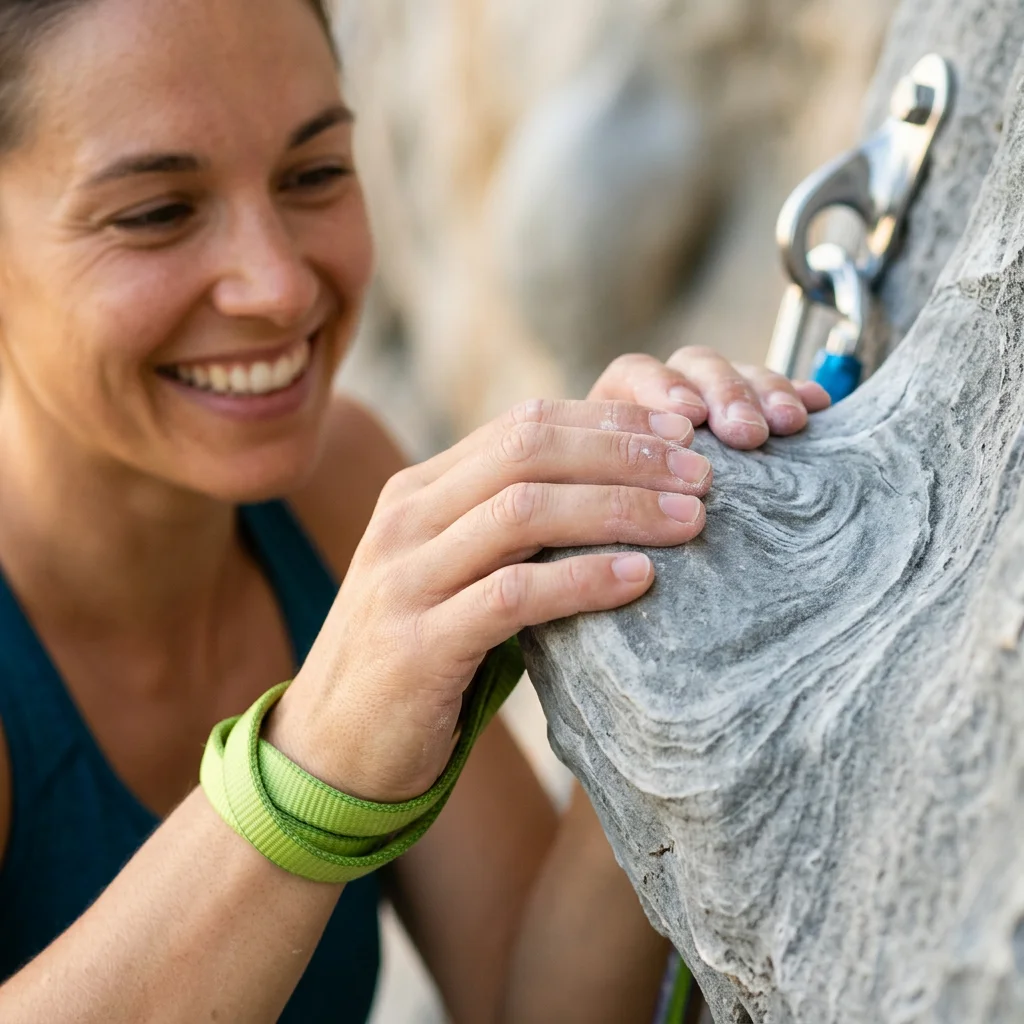
Electricity across traditional jungle bungalows and budget accommodation depends on local diesel generators, which generally run between 18:00 and 06:00. Bringing high-capacity power banks helps keep mobile devices, headlamps, and electronics charged during hot daytime hours when wall sockets are dead.
No cash machines operate in Tonsai Bay. Card payment terminals remain rare and incur steep merchant surcharges when functional, making cash the primary tender across local dining spots and equipment shops. Visitors must withdraw sufficient Thai Baht in Ao Nang before boarding a boat, or face an overland walk over the forested ridge to Railay East to find a working ATM.
Medical care directly on Tonsai is limited to basic first-aid provision for superficial scrapes and cuts. Climbers facing severe impact trauma, suspected fractures, or acute medical emergencies require boat transport across the bay to Ao Nang, followed by emergency road transfer to Krabi Hospital on the mainland.
Arrival by longtail boat typically involves a wet landing. Shallow coral shelves and low-tide mudflats prevent vessels from reaching dry sand, requiring passengers to disembark into knee-to-thigh-deep seawater while hauling luggage overhead. Stowing climbing hardware, ropes, and electronics inside durable dry bags prevents saltwater immersion during the final transfer ashore.
Practical Tips
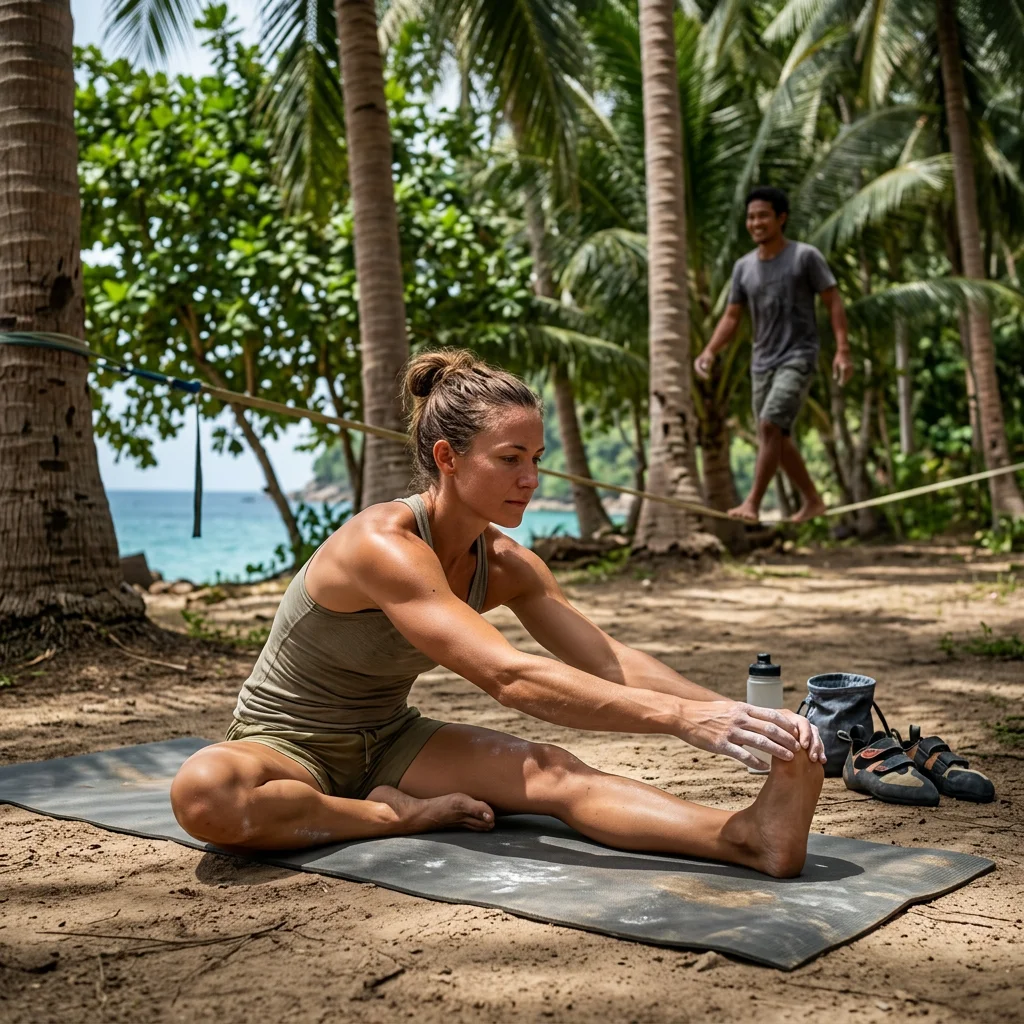
A successful climbing trip to Tonsai demands careful preparation for tropical heat, abrasive sea sand, and coastal tides. Adopting established local crag habits keeps your sessions efficient and manageable.
A 70-metre rope is the practical minimum for Tonsai, though an 80-metre cord is advisable if you plan to tackle extended single pitches. Classic endurance testpieces on Melting Wall and extension lines sweeping through the Tonsai Roof frequently exceed 35 metres in length. Lowering off these sustained routes on an inadequate rope risks dropping the climber off the tail end. Tying a stopper knot in the rope's dead end prevents lower-off accidents, while checking intermediate descent points with your belayer is prudent on extended routes.
Daily tide cycles directly dictate crag logistics across the bay. At high tide, seawater reaches the base of Tonsai Wall and Dum's Kitchen, submerging belay spots and soaking gear left on the ground. High water also cuts off the rocky coastal scramble between Tonsai and Railay West, forcing a detour along the steep inland jungle trail. Checking Andaman tide tables allows you to schedule beach sessions during low tide and shift inland when the sea advances.
Fine beach sand is an aggressive abrasive on ropes and metal hardware. Sand picked up by climbing shoes works into rope fibres, accelerating sheath wear and carving sharp grooves into fixed lower-off karabiners and rings. Using a rope tarp keeps equipment out of the grit, and wiping shoe soles clean preserves friction. Inspect fixed terminal anchors visually before lowering off; if in-situ rings show acute rope gouging, clip your own bail karabiner rather than risking line damage.
Intense tropical humidity degrades friction rapidly and turns powdered chalk into a slick paste within minutes. Applying a base coat of liquid chalk before leaving the ground provides an effective sweat barrier, while keeping a small towel clipped to your harness helps dry fingertips midway up humid tufas. At inland sectors like Fire Wall, still jungle air harbours dense swarms of mosquitoes; applying high-DEET insect repellent and burning coils at the belay stance spares your partner from painful distractions.
Rock temperatures climb steeply under equatorial sunshine. Tonsai Wall catches direct afternoon sun, turning the limestone into a radiator by 13:00 and destroying friction. Start early to capitalise on cool morning temperatures on beach routes, retreating inland to shaded crags during peak afternoon heat. Support the cliffs by buying local print guidebooks or contributing cash to donation boxes in village shops, directly funding volunteers who replace corroded bolts with marine-grade titanium. Arranging your climbing days and securing local instruction or equipment hire in advance helps you make the most of every session on the rock.
Quick Reference Table
| Item | Detail | Notes |
|---|---|---|
| Geographic Location | Tonsai Bay, Phra Nang peninsula, Krabi | Cut off from mainland road network by karst cliffs |
| Crag Access Fees | Free | No fees to access any cliffs or crags across the bay |
| Route Grades | French 6a to 8c+ | French 6c is the benchmark grade for premier routes |
| Primary Crags | Tonsai Wall, Dum's Kitchen, Fire Wall, Melting Wall, Cat Wall | Beach walls face southwest; jungle walls sit inland |
| Crag Shade Schedule | Morning shade on beach; afternoon shade inland | Beach crags shaded until ~12:30 pm; move inland for afternoon |
| Recommended Rope & Rack | 70m minimum (80m recommended); 12–18 quickdraws | 80m dynamic rope required for 35m pitches on Melting Wall |
| Fixed Hardware Type | Grade 2 titanium glue-in bolts and ring anchors | Installed via Thaitanium Project to prevent stress corrosion |
| Longtail Boat Transfer | 100 THB – 150 THB (£2.35 – £3.50) per person | 10–15 min crossing from Ao Nang; requires wet landing |
| Walking Route to Railay West | 15–20 minutes | 15 mins via rocky coast at low tide; 15–20 mins via jungle trail at high tide |
| Gear Rental Costs | 600 THB (£14) shoes & harness; 800–1,000 THB (£19–£23.50) lead kit | Daily rates; physical passport held as deposit |
| Guiding & Courses | 1,200–1,500 THB (£26.80–£33.50) half-day; 3,500–6,000 THB (£78–£134) private | Half-day or full-day private instruction and multi-pitch guiding |
| Local Route Topo Guidebook | 1,000 THB (£23.50) | Sold at Basecamp Tonsai; proceeds fund local crag rebolting |
| Budget Accommodation | 400 THB – 800 THB (£9.50 – £19) per night | Basic fan bamboo bungalows; generator power limited to 18:00–06:00 |
| Cash & ATM Availability | No ATMs on Tonsai | Cash required; withdraw Thai Baht in Ao Nang before arrival |
| Website | https://basecamptonsai.com | Official site for Basecamp Tonsai climbing shop and guiding |
FAQ: Rock Climbing in Tonsai
Who is rock climbing in Tonsai best suited for?
What is the recommended minimum climbing grade for Tonsai?
What is the best time of day to climb at Tonsai Wall and Dum's Kitchen?
How do tides affect climbing at Tonsai Wall and Dum's Kitchen?
What should climbers know about the safety of climbing bolts in Tonsai?
How should climbers set up top-ropes to protect fixed anchors in Tonsai?
What should travellers expect when arriving by boat in Tonsai?
Are there ATMs or card payment facilities in Tonsai?
What rope length is recommended for climbing in Tonsai?
How can climbers manage humidity and chalk grip in Tonsai?
Reviewed by the Thailand Guide Editorial Team • Last reviewed: 17 November 2026
This page is provided for general information only. While we aim for accuracy, details can change — please verify anything important independently before relying on it.