Rock Climbing in Koh Phi Phi



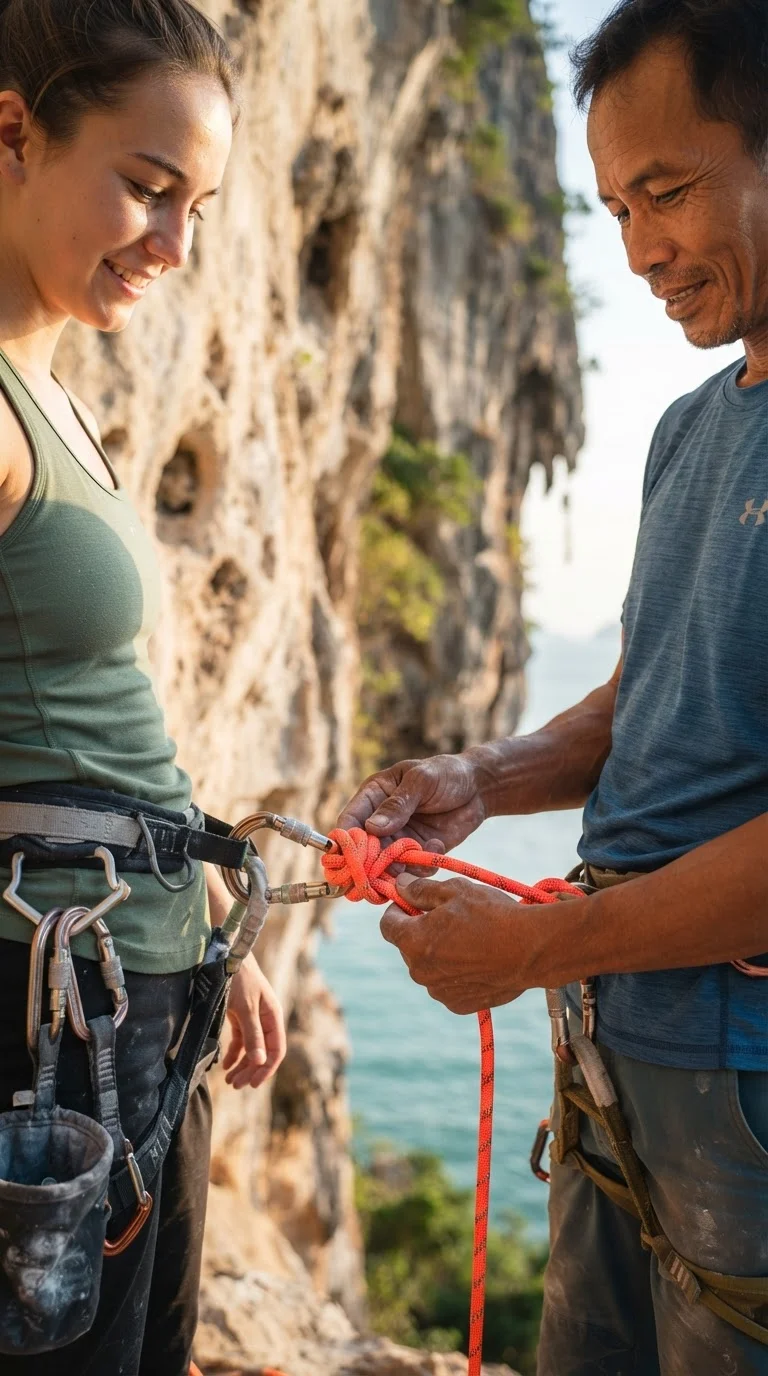
At the western edge of Tonsai Bay on Koh Phi Phi Don, Tonsai Tower rises approximately 150 metres above the tidal sand. This sheer limestone monolith holds nearly thirty bolted sport routes, located a five-minute walk from the island's main village. Unlike the polished crags of the Krabi mainland, Koh Phi Phi provides sharp, pocketed limestone, multi-pitch ascents, and clear views over the Andaman Sea without persistent queues at the base of routes.
Climbing on Koh Phi Phi centres on the karst cliffs of Koh Phi Phi Don. Local independent guiding desks and rental shops based in Tonsai Village support visiting climbers, providing a quieter alternative to the packed sectors of the Railay peninsula. The island accommodates independent climbers travelling with their own sport racks alongside novices seeking introductory top-rope sessions above the water. Because the primary sea-cliff routes sit within short walking distance of the ferry pier and village amenities, Koh Phi Phi provides an unusually compact base for coastal climbing in southern Thailand.

Tonsai Tower: Oceanfront Crags and Classic Multi-Pitch Routes
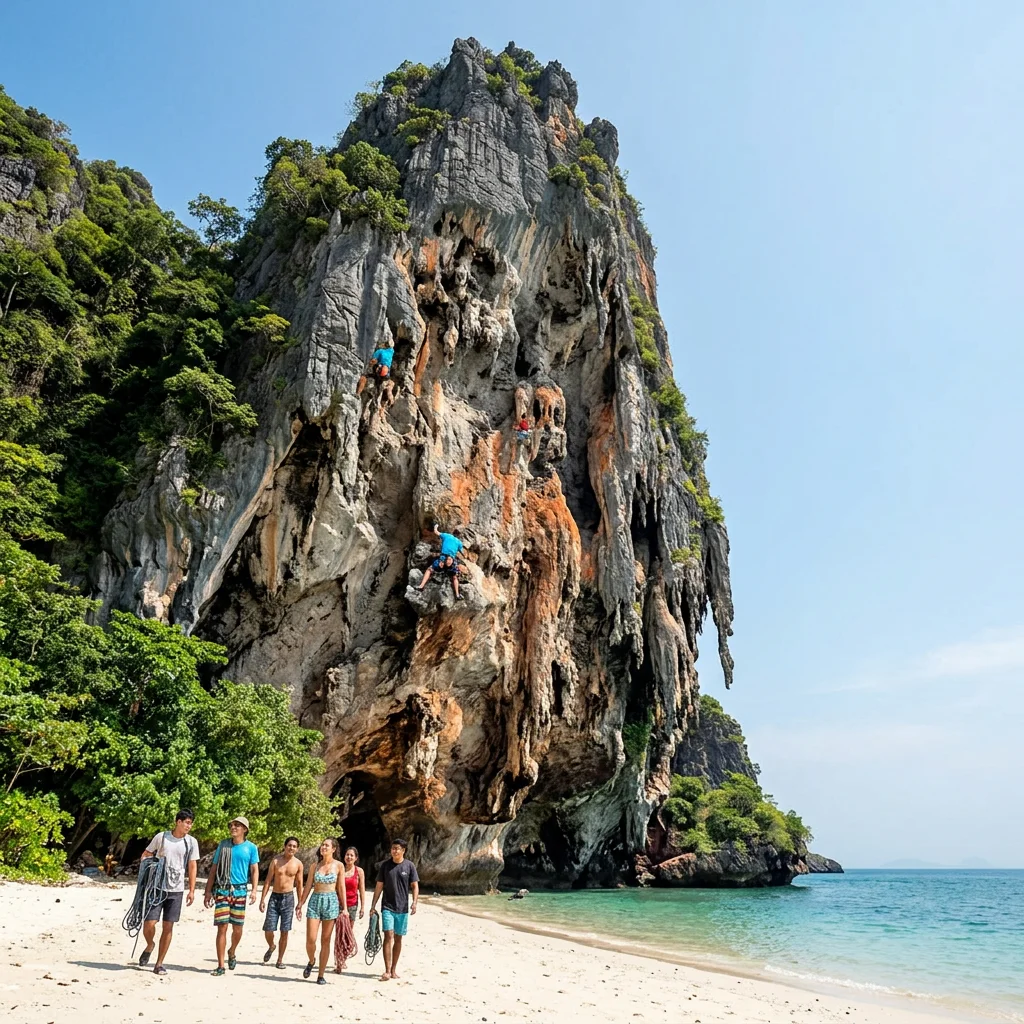
Tonsai Tower anchors rock climbing on Koh Phi Phi Don, rising as a 150-metre limestone monolith directly from the western fringe of Tonsai Bay. Roughly thirty bolted sport routes scale this sea cliff, making it the island's primary climbing venue. The rock consists of hard karstic limestone defined by vertical walls, recessed tufas, sharp water-worn pockets, and generous jug holds. Route grades span French 5a through 7b+, with the heaviest concentration resting between 5c and 6b+. The approach is a seven-minute walk west along Tonsai Beach from the village piers. At the western edge of the sand, a short rocky path with fixed hand lines scrambles behind the final bungalows, leading onto the belay terrace at the cliff base.
Belayers work directly from the sand or flat limestone blocks along the southern base during low to mid tides. Beginners use the shaded lower tier, where single-pitch routes between 15 and 30 metres offer positive holds and clean lower-offs. Higher up, experienced teams tackle multi-pitch lines on the upper headwalls. Gladiator (graded French 6b) follows sustained cracks up the left flank, while the three-pitch route Monkey Eye (known locally as Naitaa-Ling, graded 6b/6c) negotiates exposed roofs and delicate tufa rails high above the bay. Stainless steel glue-in bolts originally equipped the cliff, but marine air created corrosion risks. Sustained replacement drives by community bolters and the Thaitanium Project have retrofitted critical anchors and high-load placements across Tonsai Tower with marine-grade titanium glue-ins, providing reliable protection on the main lines.
Outlying Island Crags
Beyond Tonsai Tower, Koh Phi Phi features satellite sectors reached by short jungle walks or longtail boat transfers. Hin Tak Wall sits along the southern headland overlooking Tonsai Bay towards Monkey Beach. This ocean cliff contains roughly twenty sport routes graded from 5b to 7b+, set above white sand and clear water. Hin Tak's premier line is Happy Banana, a three-pitch classic graded French 6b (with variants up to 6c) that follows a defined corner before traversing massive stalactite jugs suspended sixty metres above the sea. Climbers reach Hin Tak via a ten-minute longtail boat charter or by renting a sea kayak on Tonsai Beach, arranging a pick-up time with the boatman for the return.
Inland, Drinking Wall occupies an elevated limestone bluff on the western slope above Tonsai Village, tucked into jungle behind the local football pitch. A marked jungle trail leads uphill for fifteen minutes behind Tonsai West to the cliff base. Drinking Wall features a dozen sustained routes graded from 5c to 7c, presenting technical vertical plates, fine crimps, and small solution pockets rather than ocean jugs. Prominent lines include Softdrink (6c+), which pairs a pumpy start with a delicate balance sequence on small edges, and Ozapft (6b), a friction climb requiring precise footwork. Drinking Wall catches morning sun but slips into deep shade from late morning onward, making it a cooler afternoon venue. Further south, Ao Ling (Monkey Bay Wall) delivers a dozen vertical pitches graded 5a to 8b, including multi-pitch lines like Ligne de Vie, accessed at low tide via a shoreline scramble or in five minutes by boat.
Across the strait on the western coast of Koh Phi Phi Leh, Ao Pilay Wall offers seven routes graded from 6a to 7b+, headlined by the 35-metre pitch Four Beers of Singha (6a+). Access requires a twenty-minute longtail boat charter from Tonsai Bay. Because Koh Phi Phi Leh lies within the national park and its crags receive less frequent maintenance than Koh Phi Phi Don, visiting teams must inspect older expansion bolts cautiously, check tides that submerge the narrow belay shelf, and confirm park access permissions with local climbing desks before chartering a boat.
| Crag / Sector | French Grades | Route Length & Style | Approach & Access Logistics |
|---|---|---|---|
| Tonsai Tower | 5a to 7b+ | 15–120m; vertical faces, deep pockets, multi-pitch spires | 7-minute walk west along Tonsai Beach; belay from sand |
| Hin Tak Wall | 5b to 7b | 20–70m; overhanging jugs, steep corners, sea views | 10-minute longtail boat or kayak from Tonsai Beach |
| Drinking Wall | 5c to 7c | 12–28m; technical vertical plates, fine crimps, pockets | 15-minute uphill jungle path behind Tonsai West |
| Ao Ling (Monkey Bay) | 5a to 8b | 15–35m; shaded vertical walls, exposed marine pitches | 15-minute low-tide shoreline walk or 5-minute boat charter |
| Ao Pilay (Phi Phi Leh) | 6a to 7b+ | 18–35m; sheer tidal limestone, overhanging roofs | 20-minute longtail boat charter across the strait |
Instruction and Equipment Hire
Climbing instruction and guided outings on Koh Phi Phi operate through independent adventure desks and resident certified guides in Tonsai Village. Rather than running large commercial groups, local operators maintain small ratios, usually capped at two to four climbers per guide. Half-day introductory sessions run for roughly four hours, catering to novices learning basic harness fitting, figure-of-eight knots, belay checks, and movement technique while top-roping on the lower buttresses of Tonsai Tower. Full-day sessions build on these skills, introducing outdoor lead climbing mechanics, rope management, abseil safety, and guided ascents of classic multi-pitch lines overlooking Tonsai Bay.
Self-sufficient climbers travelling without personal gear can hire equipment packages from shops in Tonsai Village. Typical rentals include 60-metre dynamic single ropes, sets of twelve to fourteen quickdraws, harnesses, belay devices, locking carabiners, chalk bags, and climbing shoes. Because sea spray accelerates hardware corrosion, local shops wash ropes in fresh water and inspect carabiners for pitting. Climbers should still perform tactile checks on hired ropes to ensure the sheath remains supple without flat spots, and confirm that carabiner gates close smoothly without sticking.
Limestone Character and Mainland Comparisons
The climbing on Koh Phi Phi is shaped by its distinctive karst geology and its separation from mainland climbing hubs. Millions of years of tropical rainfall and marine dissolution have carved the island's cliffs into towers laced with vertical tufas, fluted water channels, deep solution pockets, and expansive overhangs. On mainland Krabi, sectors across Railay Beach and Tonsai Beach support more than seven hundred bolted lines, but decades of heavy traffic have left popular lower pitches polished, slippery, and coated in chalk. In contrast, Koh Phi Phi's fifty-odd bolted routes see a fraction of that footfall. The rock on Tonsai Tower and Hin Tak retains its raw, sharp, high-friction texture, providing secure foot placements and crisp positive edges that feel noticeably rougher than mainland limestone.
Koh Phi Phi contrasts even more sharply with northern Thailand's inland crags around Chiang Mai, where climbing takes place on dry mountain bluffs surrounded by teak forests rather than tidal sea cliffs. On Phi Phi, ocean proximity requires tidal planning and attention to salt air, but it also creates a compact island base where climbers can walk directly from the crag into village cafes, bakeries, and dive shops within minutes. When seasonal monsoon winds or rough afternoon swells make boat approaches to outlying sectors like Hin Tak or Ao Pilay impractical, climbers can easily pivot to non-climbing pursuits, renting sea kayaks to explore sheltered coves or joining boat trips to snorkel and scuba dive along offshore coral reefs.
Location and Getting There
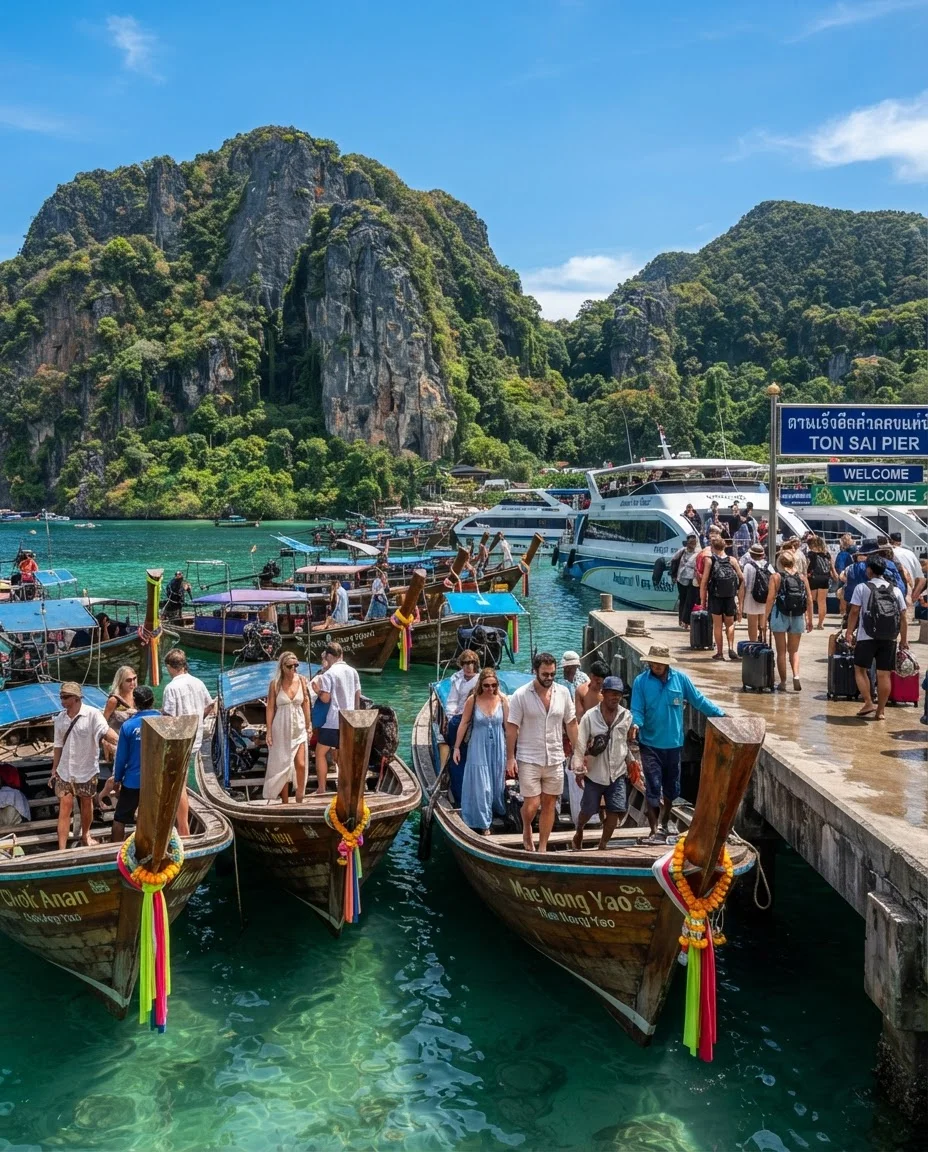
Koh Phi Phi Don sits in the Andaman Sea roughly 42 kilometres south of Krabi Town and 48 kilometres east of Phuket. With no airport and a ban on general motorised road transport, visitors arrive by sea. Most passenger boats dock at Ton Sai Pier, the main marine gateway located along Tonsai Bay on the south coast. Arriving travellers pay a mandatory 20 THB (around 50p) cash entry and municipal cleaning fee at the pier checkpoint before entering Tonsai Village.
From Phuket International Airport, an airport taxi costs between 700 THB and 1,000 THB (£16 to £23; 45 to 60 minutes) to Rassada Pier on Phuket's east coast. From Rassada Pier, passenger ferries operate across the bay, taking roughly two hours and costing between 450 THB and 750 THB (£10.50 to £17), while speedboats make the trip in 45 to 60 minutes for 800 THB to 1,200 THB (£19 to £28). From Krabi Airport, shared minivans run to Klong Jilad Pier outside Krabi Town for 150 THB (£3.50; 30 minutes), where standard passenger ferries depart for Ton Sai Pier, taking 90 to 120 minutes and costing 450 THB to 550 THB (£10.50 to £13).
From Ton Sai Pier, access to the island's main climbing sector is straightforward on foot. A flat, paved walkway winds west through Tonsai Village along the shoreline, reaching the base of Tonsai Tower within a ten- to fifteen-minute walk.
Plan your trip with our Phi Phi Islands travel guide. Get exact ferry times, longtail boat costs, and learn why taking 1,000 THB cash notes is essential.
Costs and Booking
Climbing costs on Koh Phi Phi reflect the island's remote logistics and smaller operational scale compared to mainland hubs like Railay. Guided climbing operates primarily during the dry season from November to April, when sea conditions remain calm. Introductory half-day sessions on crags like Tonsai Tower typically run from 1,500 THB to 2,000 THB (£35 to £47) per climber. These sessions last around four hours and include technical hardware, climbing shoes, chalk, and instructor belaying. Full-day guided programmes and private multi-pitch guiding on taller faces generally cost 2,800 THB to 3,800 THB (£65 to £88) per climber, excluding separate longtail boat charters needed for outlying cliffs.
Unlike Railay, Koh Phi Phi's dedicated climbing shopfronts have dwindled. Independent sport climbers cannot rely on walk-in rental shops in Tonsai Village; complete gear sets are difficult to source locally unless pre-arranged through guides or brought from the mainland. Where equipment hire is arranged, complete racks average 1,000 THB to 1,500 THB (£23 to £35) daily, while personal harness and shoe sets cost 400 THB to 600 THB (£9.50 to £14). Reaching outlying crags like Hin Tak or Ao Ling requires chartering a longtail boat from Tonsai Beach, costing 600 THB to 1,000 THB (£14 to £23) return. During the May-to-October monsoon, rain frequently curtails climbing, and rates become negotiable subject to conditions.
| Option | Cost (THB) | Cost (GBP) | Details |
|---|---|---|---|
| Half-Day Guided Top-Rope Session | 1,500–2,000 | £35–£47 per person | 4 hours; includes harness, shoes, chalk, helmet, instructor |
| Full-Day Guided Multi-Pitch Ascent | 2,800–3,800 | £65–£88 per person | 7 hours; private guiding, longtail transfers if required |
| Complete Gear Rental (Rope, Draws, Belay) | 1,000–1,500 | £23–£35 per day | Independent pairs; 60m dynamic rope, 14 quickdraws, device |
| Harness and Shoe Rental Only | 400–600 | £9.50–£14 per day | Daily personal gear hire for travelling sport leaders |
| Longtail Boat Crag Transfer (Hin Tak / Ao Ling) | 600–1,000 | £14–£23 return | Return charter negotiated from Tonsai Beach for climbing gear |
Who It Suits
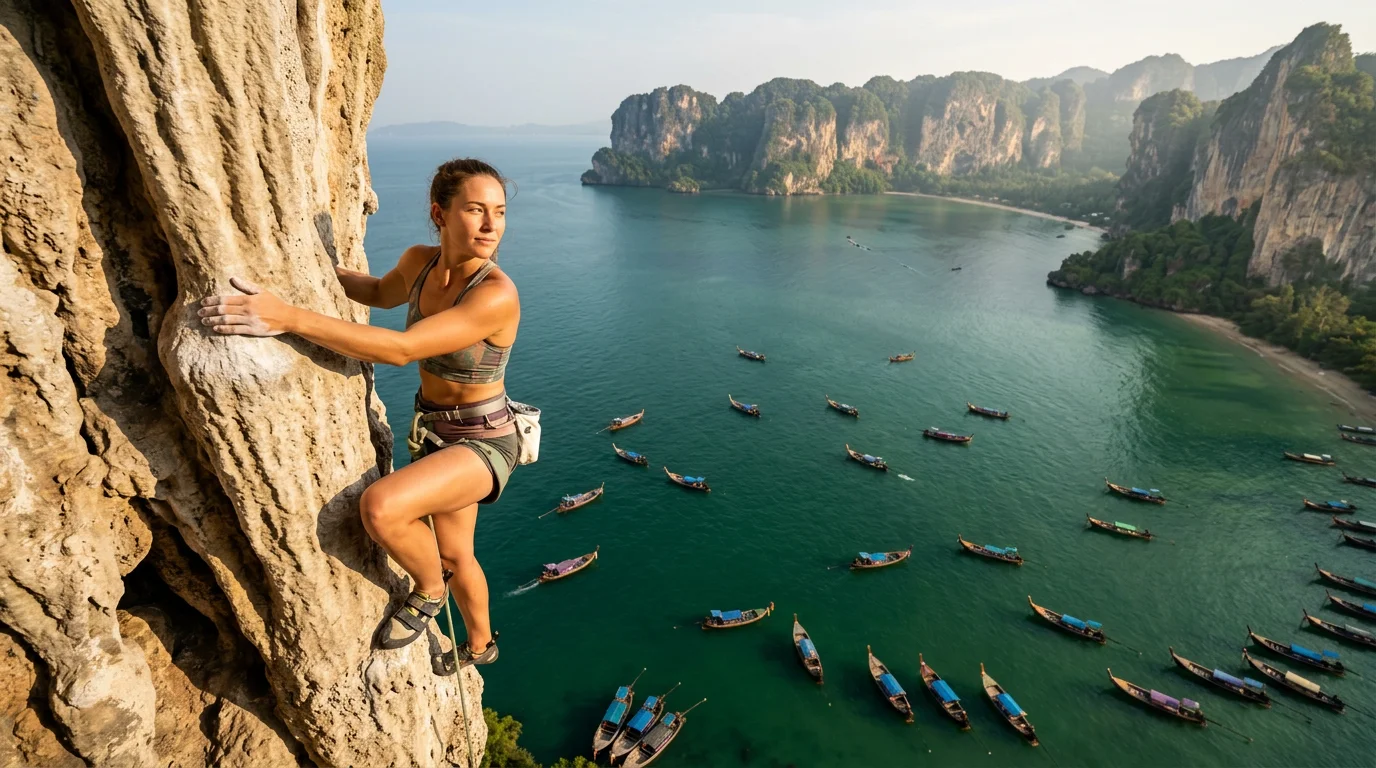
Koh Phi Phi is well suited to intermediate sport climbers and active beginners looking for unhurried tuition on limestone crags without the dense belay queues found across Railay and Tonsai Beach. Solo climbers can readily book a local instructor or link up with partners through climbing outfits in Tonsai Village. Competent sport leaders who enjoy multi-pitch routes with coastal exposure will appreciate the lines on Tonsai Tower and Hin Tak, where moderate grades from 5 to 6c dominate the rock.
The island is less rewarding for elite climbers seeking a deep bank of hard 8a to 9a projects, as the crags top out with a modest selection of difficult routes. Crag bases also present uneven sand, tidal boulders, and short jungle scrambles, making them unsuitable for families requiring pushchair access or travellers with reduced mobility. Visitors who prefer quiet evenings should arrange accommodation away from the central isthmus between Tonsai Bay and Loh Dalum, where loud beach bars and fire shows run late into the night.
What to Know Before You Book
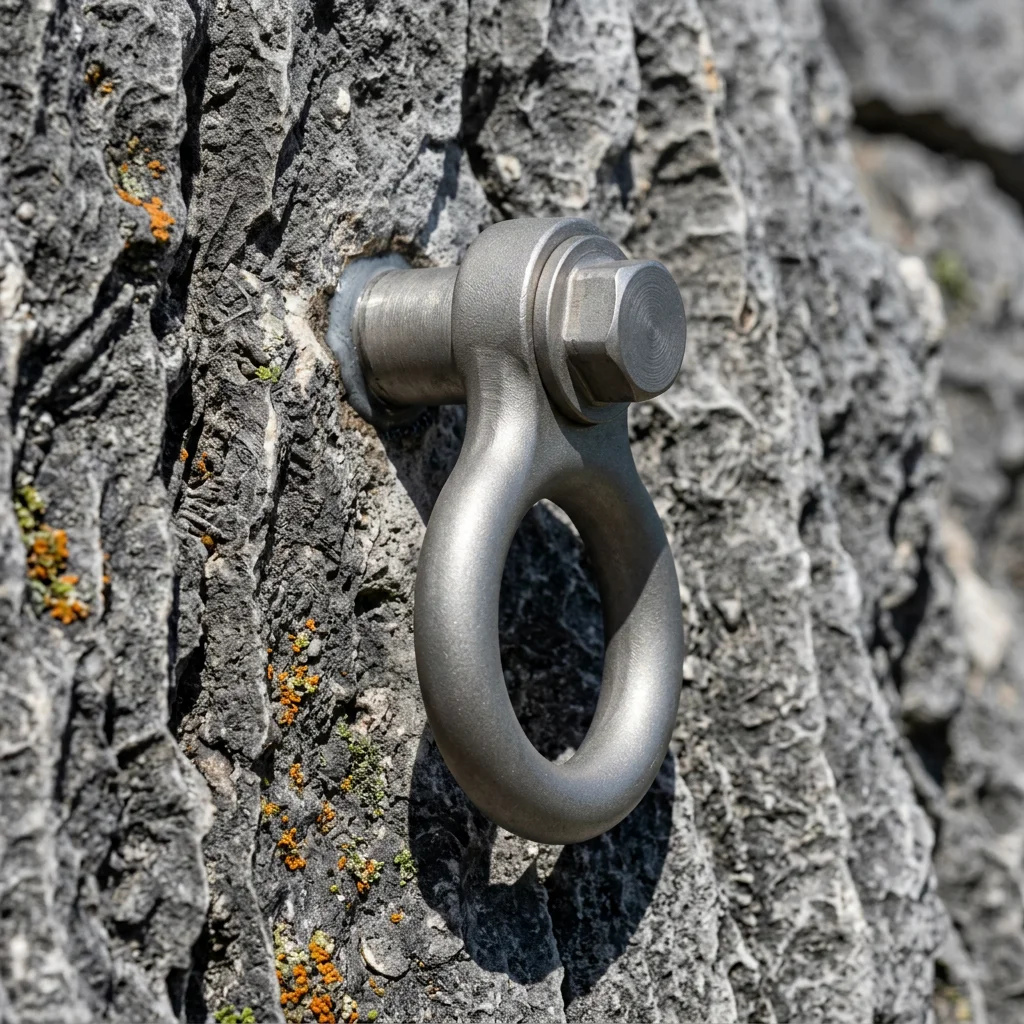
Verify fixed anchor hardware before committing to any lead climbing on Koh Phi Phi. Tropical marine humidity and salt spray induce stress corrosion cracking in conventional stainless steel, causing older expansion bolts to fail invisibly under low loads. While rebolting initiatives have replaced key anchors on Tonsai Tower with titanium glue-in bolts, outlying walls still harbour compromised vintage metalwork.
Tidal fluctuations govern access and belaying at peripheral crags such as Ao Ling and Ao Pilay. High spring tides submerge the narrow base beaches completely, eliminating standing room and requiring belayers to work from the deck of a chartered longtail boat or wait for receding water. Consult local Krabi tide tables before arranging boat departures from Tonsai Village.
Troops of habituated long-tailed macaques roam the bases of Tonsai Tower and Hin Tak. These primates routinely rifle through unattended belongings, unzipping backpacks to snatch food, sunscreen, and chalk bags while climbers are high on the rock. Seal supplies inside secure packs clipped off the ground.
The climbing season aligns with the dry northeast monsoon from November to April, when crag friction peaks and seas remain calm. From May to October, the southwest monsoon brings sudden squalls that soak open limestone faces and generate rough sea swells, frequently cancelling boat access to maritime sectors.
Practical Tips
Pack liquid chalk alongside standard chalk balls. High tropical humidity and sweaty hands quickly turn loose powder into paste, making a liquid alcohol-based base coat useful for maintaining grip on limestone holds.
Bring a 60-metre dynamic rope at a minimum. Several single-pitch routes and extensions across Tonsai Tower and Hin Tak reach 30 metres, so shorter cords risk running out during lower-offs. Tie stopper knots at both ends of the rope before each pitch: deceptive pitch heights and overhanging profiles make lowering accidents a genuine danger on island crags.
Time sessions around the sun and tropical heat. Start morning climbs at Tonsai Tower early, before nine o'clock, before midday heat warms the rock. For later climbing, Drinking Wall enters shade from around eleven o'clock onwards, providing cooler rock when open cliff faces become sweltering.
Wear sturdy approach shoes with sticky rubber soles rather than flip-flops or sandals. Scrambling to the belay platforms at Tonsai Tower and ascending the steep path up to Drinking Wall involves navigating sharp karst rock, loose scree, and exposed tree roots.
Pack gear inside a heavy-duty dry bag when visiting boat-accessed sectors like Hin Tak or Ao Ling. Disembarking from longtail boats onto rocky shorelines frequently exposes equipment, climbing shoes, and ropes to sea spray and wet surf.
Inspect fixed lower-off rings, chains, and slings thoroughly before lowering. Tropical salt air and monsoon moisture degrade non-titanium hardware and nylon materials, meaning climbers should carry spare carabiners and cord to back up suspect anchors. If you are organising an outing on Koh Phi Phi, booking local guiding services or hiring gear in Tonsai Village ensures reliable equipment and experienced support.
Quick Reference Table
| Item | Detail | Notes |
|---|---|---|
| Primary Crag | Tonsai Tower | 150m limestone monolith with ~30 bolted routes; 7-minute walk from Tonsai Beach |
| Outlying Crags | Hin Tak Wall, Drinking Wall, Ao Ling, Ao Pilay | Reached by 15-minute jungle path or 5- to 20-minute longtail boat transfers |
| Climbing Season | November to April | Dry northeast monsoon with calm seas; May–October squalls curtail access |
| Half-Day Guided Outing | 1,500–2,000 THB (£35–£47) | 4-hour session on Tonsai Tower; includes hardware, shoes, chalk, and instructor |
| Full-Day Guided Multi-Pitch | 2,800–3,800 THB (£65–£88) | 7-hour guided ascent of taller faces and classic multi-pitch routes |
| Full Gear Rental Rack | 1,000–1,500 THB (£23–£35) per day | Includes 60m dynamic single rope, 14 quickdraws, and belay device |
| Harness & Shoe Rental | 400–600 THB (£9.50–£14) per day | Personal equipment hire for visiting sport climbers |
| Longtail Boat Transfer | 600–1,000 THB (£14–£23) return | Charter from Tonsai Beach to Hin Tak or Ao Ling |
| Island Entry Fee | 20 THB (~50p) cash | Mandatory municipal cleaning fee payable on arrival at Ton Sai Pier |
| Recommended Rope | 60-metre dynamic single (minimum) | Required for 30m pitches; stopper knots essential on both ends |
| Website | https://rassadapier.info/ | Ferry schedules and transfer details from Phuket's Rassada Pier |
FAQ: Rock Climbing in Koh Phi Phi
What kind of rock climbing is available in Koh Phi Phi?
How does climbing in Koh Phi Phi compare to mainland Krabi?
Is there an entry fee for Koh Phi Phi?
Can independent climbers easily rent full gear sets in Koh Phi Phi?
Who is rock climbing in Koh Phi Phi best suited for?
What should climbers know about fixed anchor hardware in Koh Phi Phi?
How do tides affect climbing in Koh Phi Phi?
What should climbers know about monkeys at Koh Phi Phi crags?
When is the best climbing season in Koh Phi Phi?
What length of rope is recommended for climbing in Koh Phi Phi?
Reviewed by the Thailand Guide Editorial Team • Last reviewed: 17 November 2026
This page is provided for general information only. While we aim for accuracy, details can change — please verify anything important independently before relying on it.