Nan Town
Nan is the provincial capital of Nan Province in upper northern Thailand, situated in a fertile river valley close to the border with Laos. The settlement developed along the western bank of the Nan River, framed by the Luang Prabang mountain range to the east and forested highlands to the west.
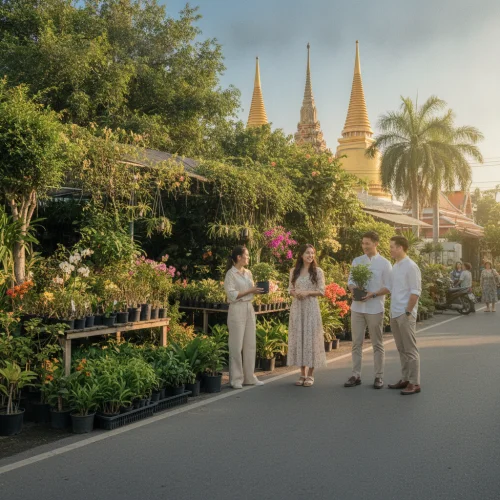
For centuries, Nan functioned as a semi-independent principality, developing a distinct cultural identity shaped by Lanna, Tai Lue, and Lan Xang traditions. Today, this heritage remains visible across the compact town centre, where ornate Buddhist temples, civic landmarks, and traditional timber buildings sit within easy walking or cycling distance of one another. As the administrative and cultural centre of the province, the town provides an unhurried introduction to northern Thai life and a convenient base for exploring the surrounding valley and upland national parks.

Historic Old Town and Temples
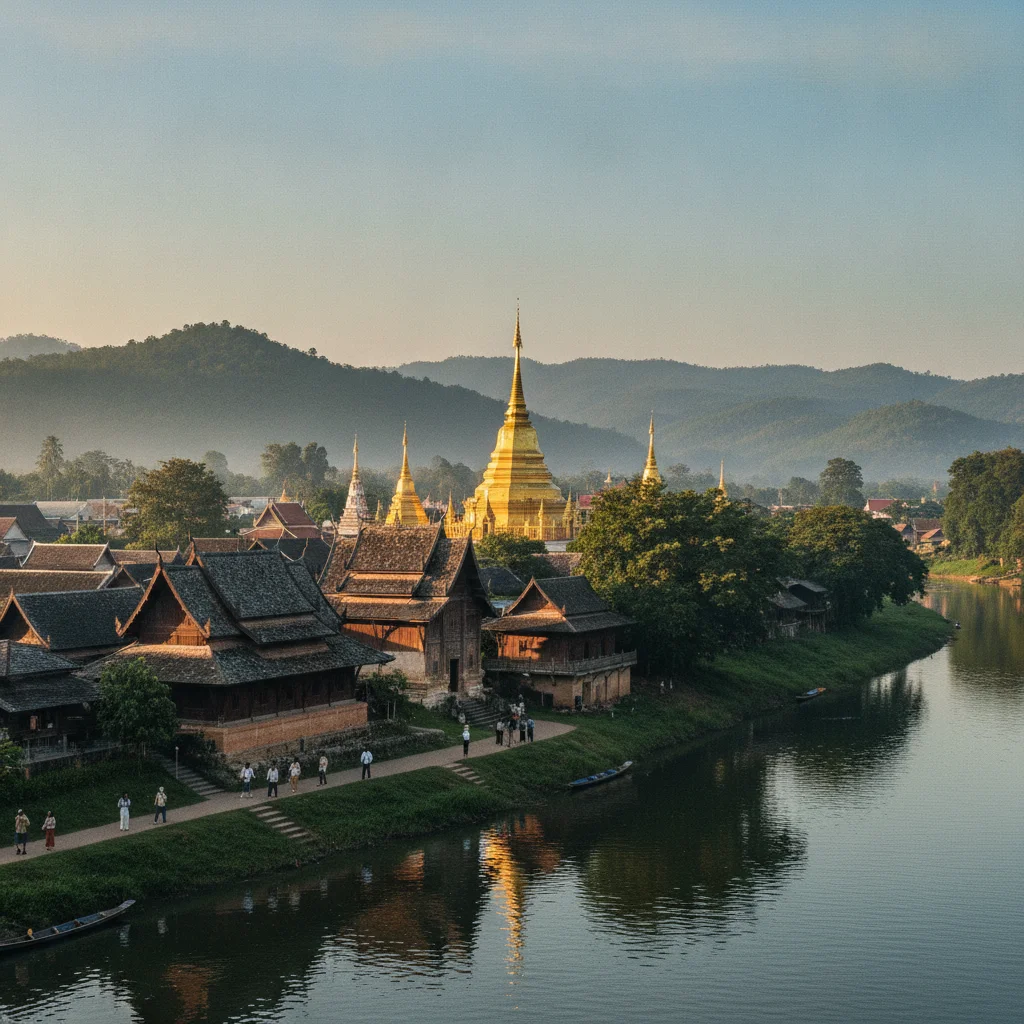
Nan historic core in Nai Wiang is flat and compact, making it straightforward to explore on foot or by rented bicycle. The district centres on a cluster of Lanna and Tai Lue religious landmarks along Pha Kong and Suriyapong roads, where key sites sit within a short walk of each other.
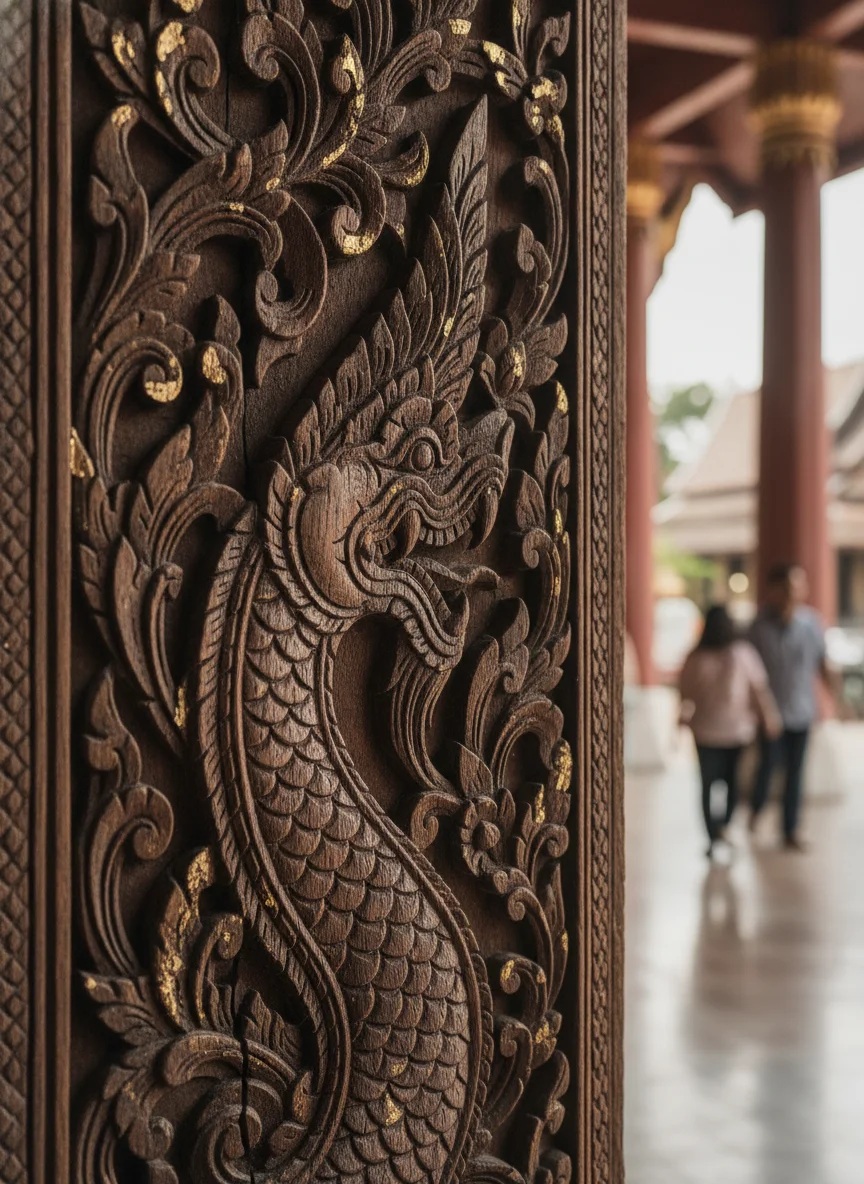
Wat Phumin forms the architectural centrepiece of the old town. Founded in 1596 and restored in the late nineteenth century, it features a four-gabled cruciform building combining an ordination hall and assembly hall supported on the back of two carved naga serpents. Inside, four seated Buddha figures face the cardinal directions, surrounded by murals painted by Tai Lue artist Tit Buaphan. A prominent fresco, known locally as Pu Man Ya Man or the Whispering Lovers, depicts a tattooed man speaking softly to a woman dressed in traditional attire.
Directly north across the street, opposite the Nan National Museum, stands Wat Phra That Chang Kham Worawihan. Dating to the early fifteenth century, its Sukhothai-influenced gilded chedi features twenty-four elephant forequarters protruding from the square base. Further west along Suriyapong Road, Wat Ming Muang displays intricate white stucco relief carvings across its exterior walls. Rebuilt in 1984, the temple complex also protects Nan's carved wooden city pillar, known as Sao Lak Mueang.
Joining a guided walking or bicycle tour allows travellers to link these temples efficiently while gaining detailed cultural context on their history and artwork.
The Nan Riverfront and Local Life
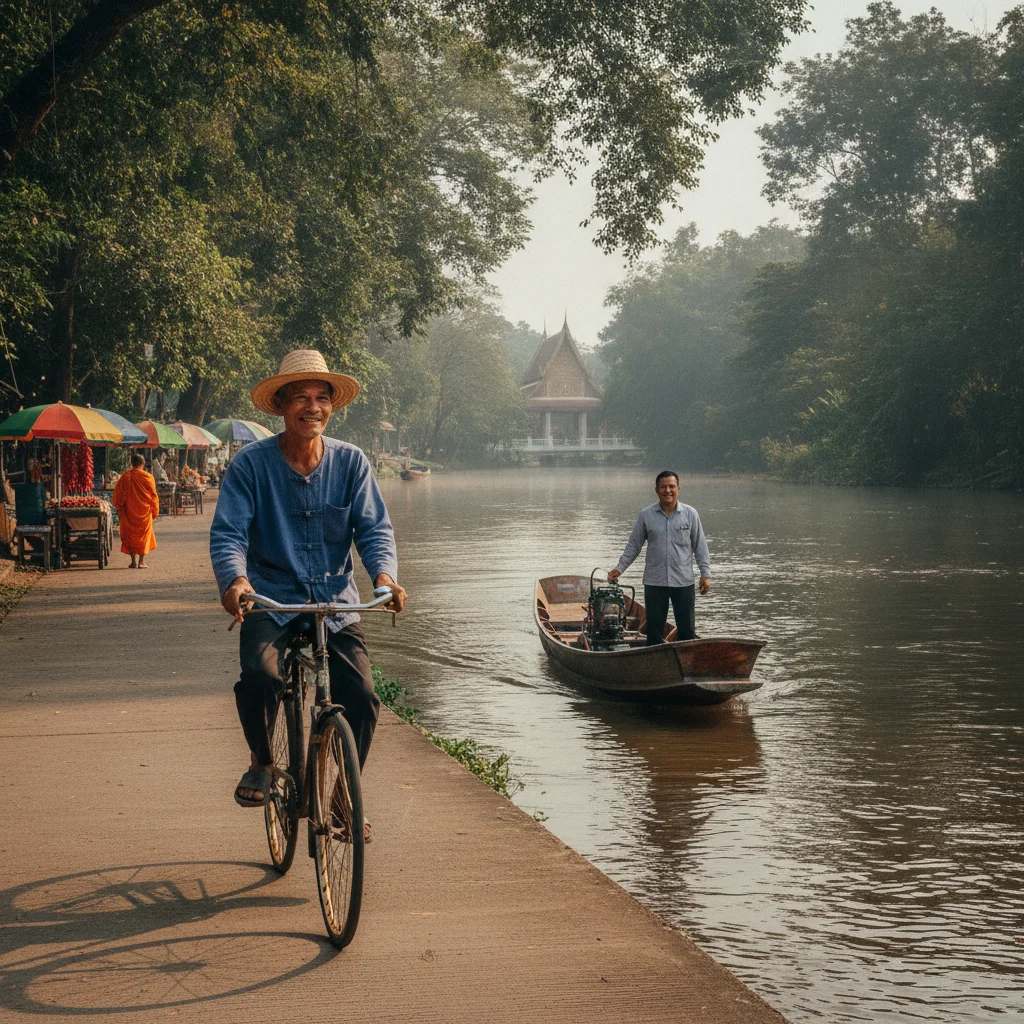
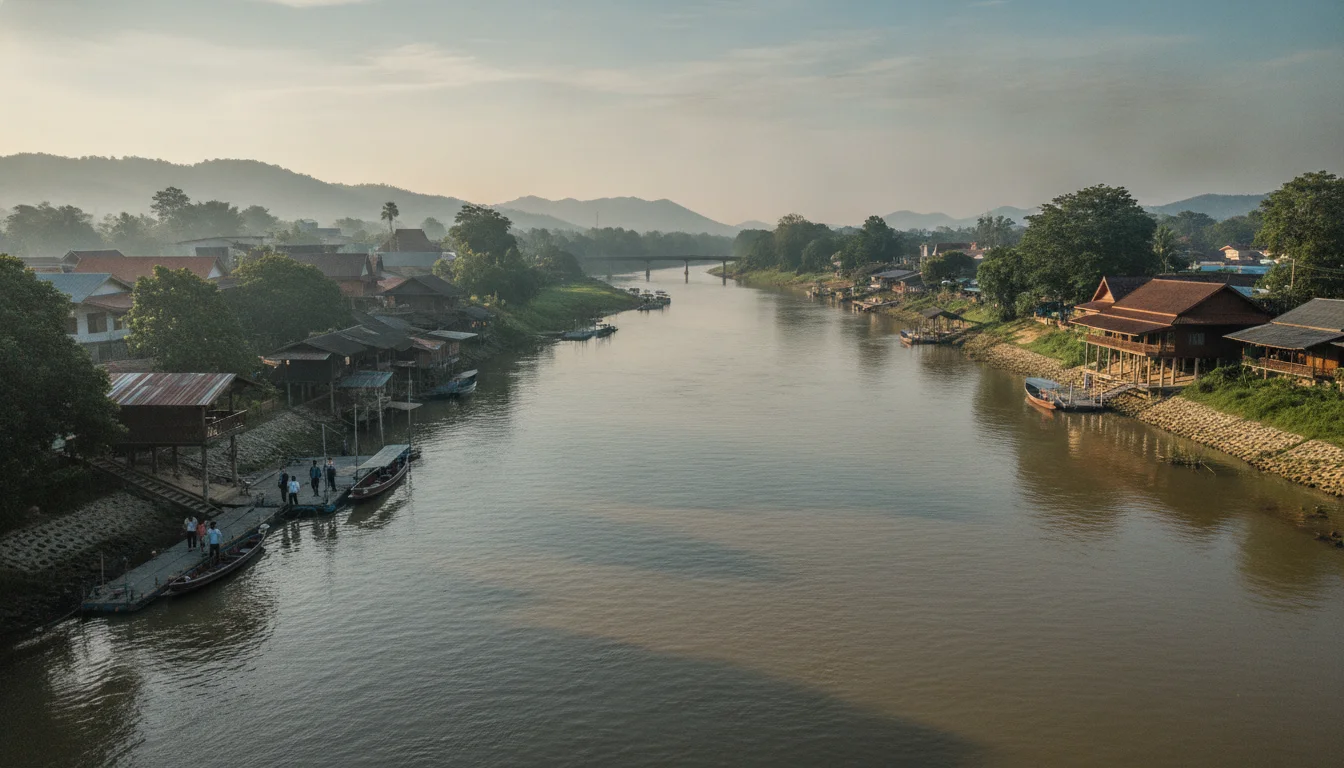
The Nan River skirts the eastern edge of town, giving the provincial centre a calm, natural boundary. While not a commercial shipping route, the riverbank forms the town's principal public outdoor space. Paved stretches along the embankment draw residents at dawn and dusk for walking, jogging, and cycling when temperatures drop. A handful of low-key cafes and noodle shops sit on the western bank, with simple wooden decks facing across the water toward the forested hills of Phu Phiang.
During most of the year, the water moves slowly, and river traffic is limited to occasional long-tail boats and local fishers. That quiet rhythm shifts markedly towards the end of the rainy season, between September and November. When water levels peak, the stretch around Pattana Paknue Bridge becomes the staging ground for Nan's annual boat-racing festival. Teams from nearby villages race hand-carved wooden longboats with sculpted serpent prows, packing the riverbanks with cheering crowds.
A short walk inland from the embankment leads into quiet residential side streets lined with teak houses and small neighbourhood grocery shops, providing a straightforward look at everyday northern provincial life away from the main temple circuit.
Plan water sports in Thailand with expert UK advice on kitesurfing, sea kayaking, cable wakeboarding, rafting seasons, rental costs, and safety.
Culinary Delights of Nan
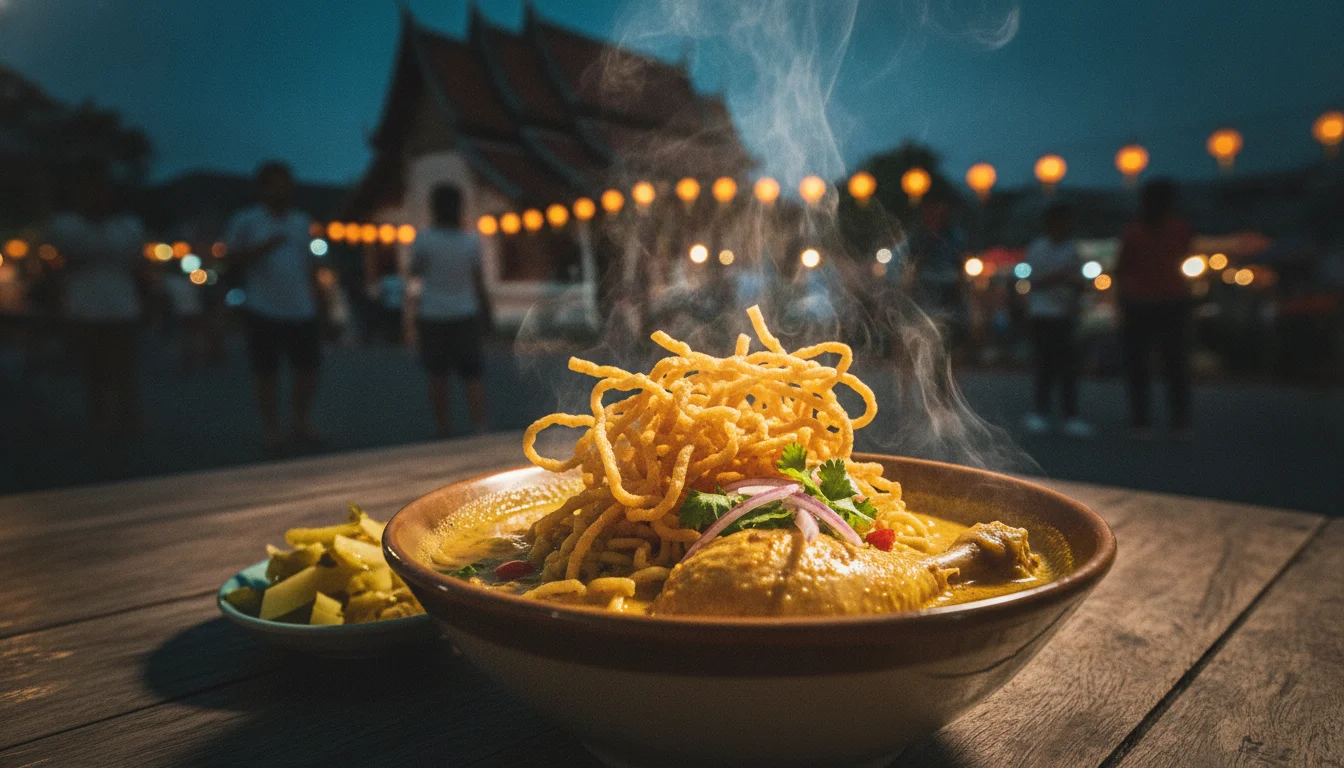
Nan's food culture stems from Northern Thai Lanna traditions, shaped by proximity to neighbouring Laos and the fertile river valley. Meals centre on sticky rice paired with fiery relishes, slow-simmered curries, and aromatic grilled meats.
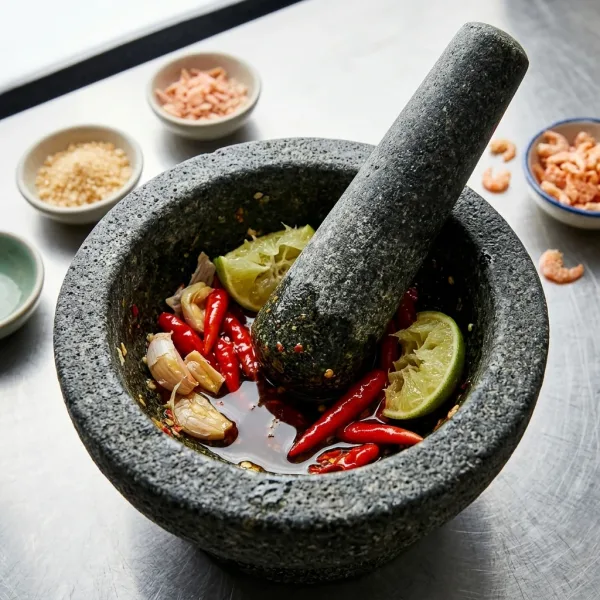
Sai oua, the fragrant Northern Thai pork sausage seasoned with lemongrass, galangal, kaffir lime, and dried chillies, is prepared fresh over charcoal across town. Another northern classic, khao soi, combines soft egg noodles in a rich coconut-milk curry broth with chicken or beef, garnished with pickled mustard greens, shallots, and crisp fried noodles. Diners also regularly share relishes such as nam prik ong, a mild minced-pork and tomato dip, and nam prik num, a smoky paste made from pounded charred green chillies, served with crunchy raw vegetables.
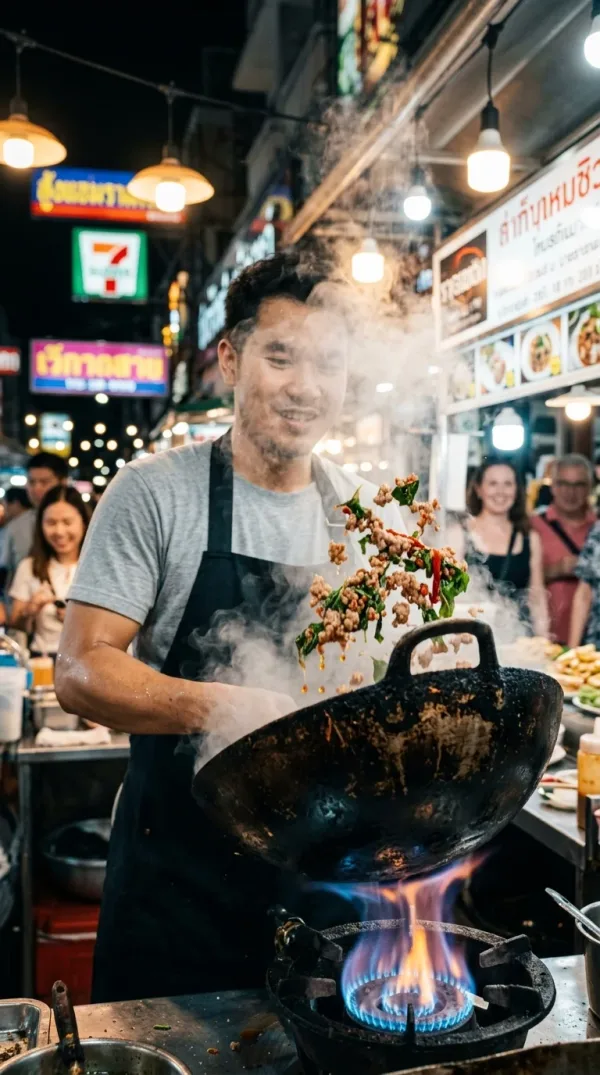
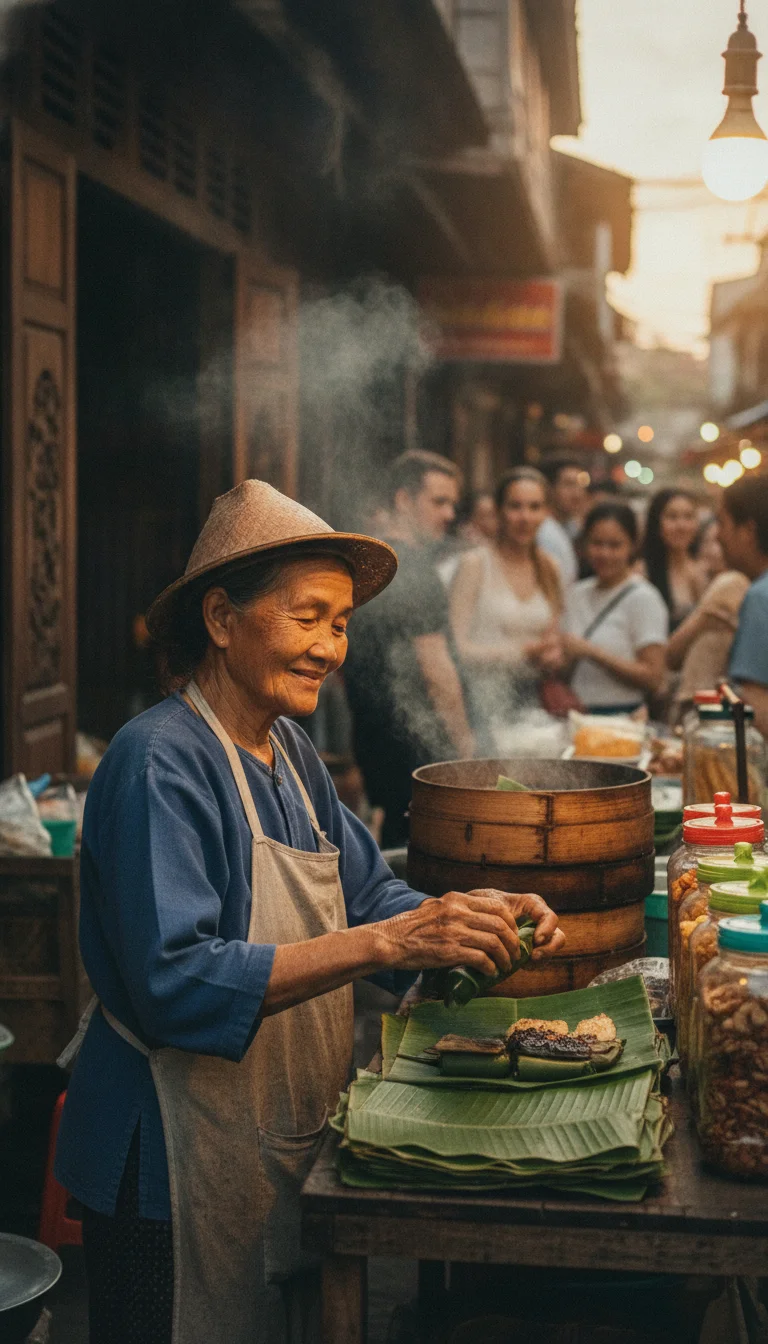
A distinct regional touch across Nan cooking is makhwaen, a variety of prickly ash pepper that lends a citrusy aroma and a slight numbing tingle to marinades, particularly local fried chicken (gai tod makhwaen). Visitors can also sample gaeng ho, a dry stir-fried curry made with glass noodles, pickled bamboo shoots, herbs, and pork curry. On Friday through Sunday evenings, the Kad Khuang Mueang street market beside Wat Phumin allows diners to select dishes from street vendors and eat on floor mats around traditional low khan tok tables.
Beyond the Town: Surrounding Natural Attractions
Nan provides an accessible base for exploring the forested mountains and valleys of the wider province. To the northeast, Doi Phu Kha National Park encompasses rugged limestone peaks rising to nearly 2,000 metres. The park protects the rare Chomphu Phu Kha tree (Bretschneidera sinensis), which produces clusters of pale pink blossoms during its brief flowering window in February. Mountain ridges across the reserve feature marked walking trails, forest waterfalls, and high-altitude lookouts, including the 1715 Viewpoint along Route 1256.
Past the national park, roughly 100 kilometres northeast of Nan , Bo Kluea District sits in an upland river valley. The settlement preserves active inland brine wells where villagers extract rock salt by boiling mineral water in open pans, a technique practised in the valley for hundreds of years.
South of Nan town, Sri Nan National Park lies roughly 80 kilometres away in Na Noi District. The reserve encompasses Doi Samer Dao, a high ridge known for panoramic views over early-morning valley mist, alongside the unusual sculpted cliffs and earth pillars of Sao Din Na Noi. Across both directions, the roads out of the provincial capital lead through terraced rice fields and wooded hillsides.
Arts, Crafts, and Local Culture
Nan maintains a living artisan heritage rooted in northern Thai traditions, recognised by its designation as a UNESCO Creative City of Crafts and Folk Art. The province is celebrated above all for its handwoven textiles, particularly those produced by the Tai Lue community. Weavers use an intricate tapestry technique to create pha lai nam lai, a distinctive ‘flowing water’ motif designed to reflect the currents of the Nan River. These designs decorate traditional pha sin wrap skirts and scarves, which are displayed in specialist textile shops across the old town alongside detailed hill-tribe embroidery.
Handicrafts in Nan extend well beyond textiles. Local silversmiths—including Mien and Hmong artisans whose workshops supply town showrooms—craft detailed repoussé silverware, embossed bowls, and filigree jewellery. The surrounding valley also preserves an earthenware and ceramic lineage linked to the historic 700-year-old kilns of Bo Suak. Independent craft shops and community cooperatives along Pha Kong and Mahawong roads stock these items, giving travellers direct access to regional makers without the inflated retail markups common in larger northern hubs.
Getting There and Getting Around
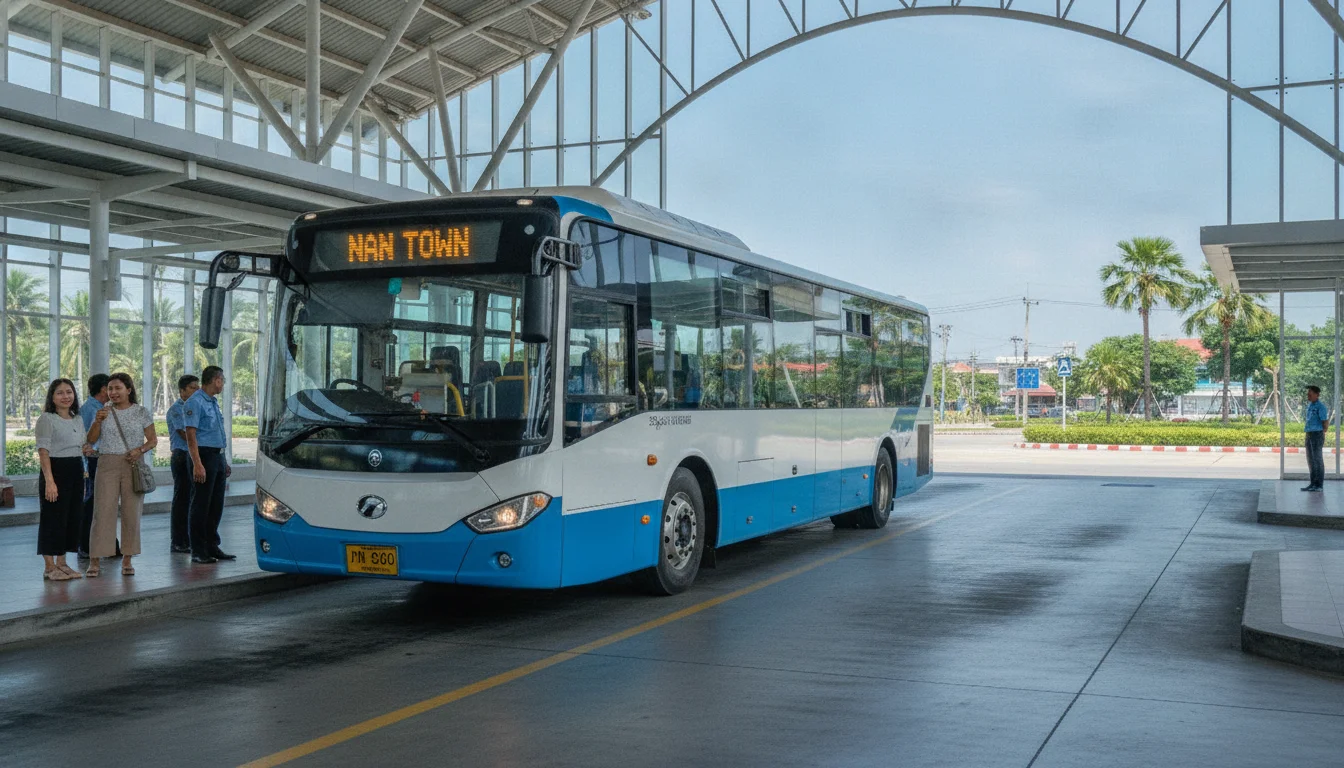
Nan lies roughly 670 kilometres north of Bangkok in the upper Nan River basin. Because the province lacks a railway connection, travellers arriving from central Thailand rely primarily on scheduled domestic flights or long-distance buses.
The fastest route from Bangkok is a domestic flight to Nan Nakhon Airport (NNT). Direct services depart daily from Bangkok's Don Mueang International Airport (DMK), operated by low-cost carriers including Thai AirAsia and Nok Air. Flight duration is approximately 1 hour and 15 minutes. The airport is located roughly 4 kilometres north of the town centre, with airport taxis and pre-arranged hotel transfers completing the journey into town in around 10 minutes.
Travellers seeking a lower-cost option or wishing to avoid flying can take an express coach from Bangkok's Northern Bus Terminal (Mo Chit 2). Day and overnight coaches travel to Nan Bus Terminal, with typical journey times running between 10 and 11 hours. If you are travelling from elsewhere in the north, the regional Green Bus network operates daily coaches between Chiang Mai and Nan, taking around 6 hours.
Local transport within Nan is straightforward. The historical centre is flat, compact, and easy to navigate on foot or by bicycle, with numerous local guesthouses and rental shops providing bicycles on daily rates. For trips outside the central grid or uphill to Wat Phra That Khao Noi, songthaews (shared pickup trucks) and motorcycle taxis can be hailed along main thoroughfares or chartered at the bus terminal. Metered cars are rare, though app-based ride options operate on a limited scale. For excursions into the surrounding mountains of Nan Province, renting a car at the airport or hiring a vehicle with a private driver provides practical flexibility.
Costs and Budgeting
Nan provides an accessible travel experience with day-to-day expenses remaining relatively modest across accommodation, food, and transport.
Lodging caters to varying budgets. Basic guesthouses and family-run homestays typically charge between THB 400 and THB 600 (£9–£13) per night for a private room with a fan or basic air conditioning. Comfortable mid-range hotels, many situated near the historic centre or along the river, generally range from THB 800 to THB 1,500 (£18–£33) a night, often including breakfast.
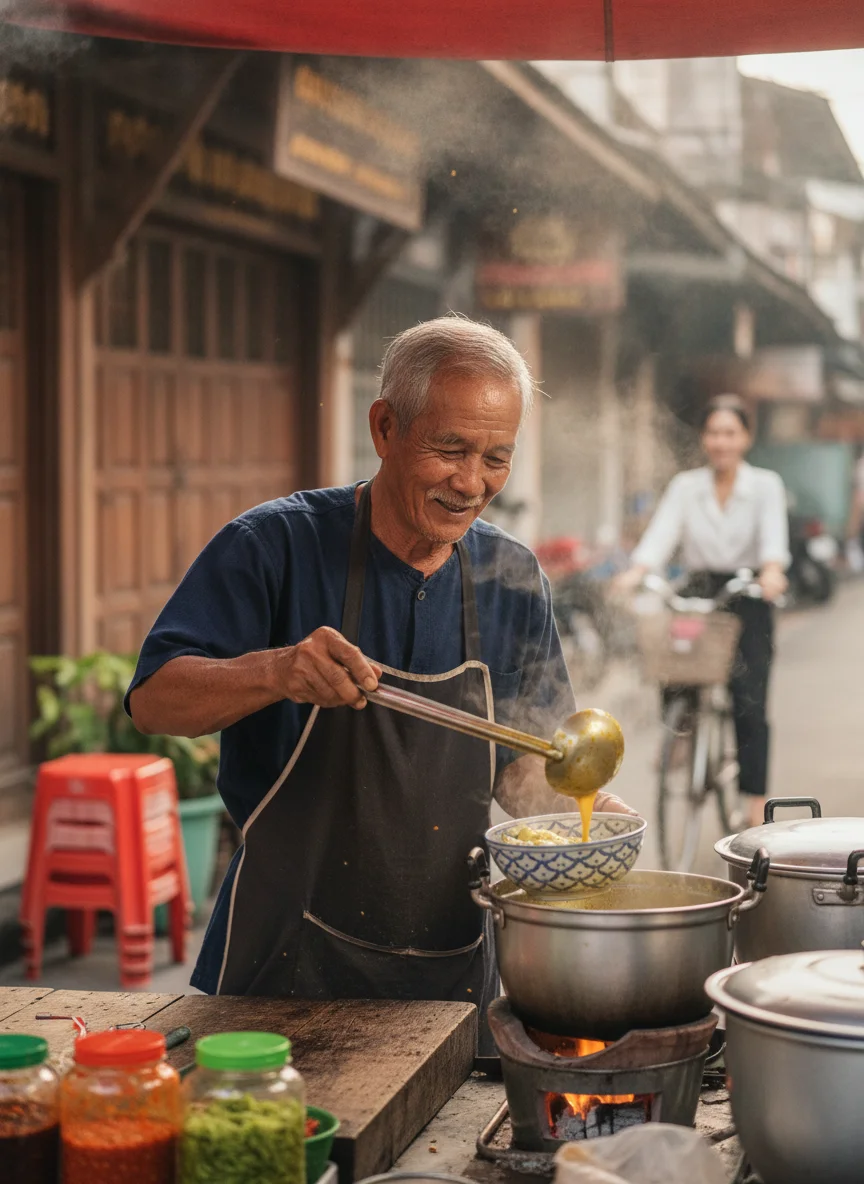
Daily meals require very little outlay. Morning markets, street stalls, and neighbourhood eateries serve single-plate dishes, noodle soups, and local specialities for THB 50 to THB 100 (£1.10–£2.20). Casual sit-down restaurants and riverside venues typically charge between THB 150 and THB 300 (£3.30–£6.60) per dish.
Getting around town is equally economical. Many guesthouses lend bicycles to guests without charge, while local shops rent them for THB 50 to THB 100 (£1.10–£2.20) per day. Local songthaew hops within the municipal area cost around THB 20 to THB 40 (£0.45–£0.90). For travel into the surrounding mountains, such as day trips to Doi Phu Kha or Bo Kluea, hiring a private car with a driver typically runs between THB 1,800 and THB 2,500 (£40–£55) per day, excluding fuel. Entry to town temples is usually free or involves a nominal ticket of THB 50 (£1.10). A daily budget of THB 1,000 to THB 1,500 (£22–£33) per person comfortably covers mid-range lodging, meals, and local activities.
Practical Fit and Trade-offs
Nan suits travellers seeking a slow-paced, culturally focused trip away from heavy resort tourism. Its compact old town is flat and manageable on foot or by bicycle, making it a comfortable base for visitors who appreciate historic temple architecture, morning markets, and unhurried regional rhythms. It works well as a two- to three-day pause on an overland journey through northern Thailand or as a staging point for exploring the wider province.
The trade-offs reflect the town's low-key, domestic character. Nan does not cater to travellers looking for late-night bars, clubbing, or international entertainment. Evening street stalls and restaurants wind down early, with most closing around 21:00 or 22:00. Large shopping malls and Western retail chains are absent, and English is less widely spoken in local shops and transport hubs than in Chiang Mai or Bangkok, requiring basic Thai phrases or a translation app.
Infrastructure also demands some flexibility. While the central streets are generally level, pavements are narrow, uneven, or interrupted by utility poles, and historic temple buildings typically lack ramps, creating barriers for wheelchair users and travellers with reduced mobility. Reaching Nan requires balancing time against cost: long-distance buses from Bangkok take approximately ten to eleven hours, whereas flying into Nan Nakhon Airport is significantly faster but adds domestic airfare expenses.
What to Know Before You Go
Nan’s centre contains numerous active Buddhist temples, where respectful attire is strictly expected. Both men and women must ensure their shoulders and knees are fully covered before entering any viharn or monastic hall. Carrying a lightweight sarong or light shirt in a daypack provides an easy layer when out cycling. Slip-on shoes are equally practical, as footwear must be removed at the entrance, and visitors should take care to step over rather than onto the raised wooden thresholds.
Cash remains necessary for most transactions throughout the province. While larger hotels and contemporary cafes accept card payments, street vendors, night markets, and independent noodle shops operate entirely on a cash basis. ATMs from major Thai banks line the central roads in town, but obtaining sufficient cash before venturing into outlying villages or rural routes prevents unexpected difficulties.
Weather patterns determine the character of your visit. The cool, dry window from November to February is the most comfortable period for exploring on foot, with pleasant temperatures and clear skies. From late February into April, northern Thailand's agricultural burning season generates significant smoke and particulate haze, which obscures mountain panoramas and lowers air quality. The monsoon months between May and October bring regular rainfall and lush greenery, though heavy downpours can occasionally disrupt rural travel.
English is rarely spoken with fluency outside main hotel desks and tourist services. Picking up a few courtesy phrases in Thai makes daily interactions much smoother, and an offline translation app on your smartphone is invaluable when deciphering Thai menus or asking for directions.
Practical Tips
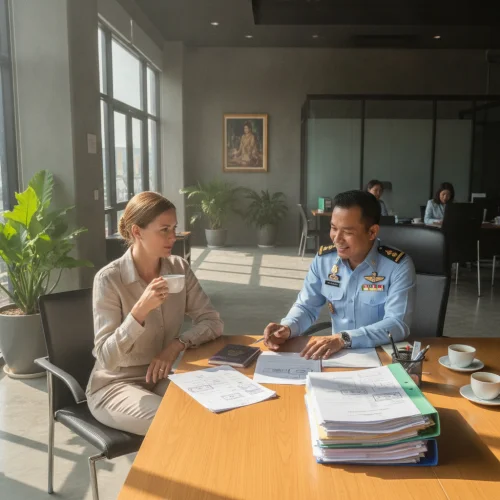
The Nan Tourist Information Centre on Pha Kong Road, situated directly opposite Wat Phumin, is an effective first port of call. Open daily, the office provides printed town maps and provincial travel pamphlets that prove helpful when exploring areas where cellular reception wavers. Daily life in town operates on an early rhythm; unlike larger northern centres, local pharmacies, independent shops, and family-run restaurants frequently begin winding down between 19:00 and 20:00, with food stalls wrapping up shortly thereafter. Arranging dinners and evening errands before dusk avoids limited options later at night.
Carrying a charged portable power bank is sensible if you rely on mobile phones for photography and active GPS navigation throughout the day. Downloading offline maps in advance ensures smooth navigation through rural mountain valleys where mobile coverage can drop unexpectedly. For medical needs, Nan Hospital on Worawichai Road is the primary public provincial facility, providing 24-hour emergency care. In an emergency, dial 1669 for medical response or 1155 for the English-speaking Tourist Police. Arranging guided excursions or private transport ahead of arrival ensures dependable scheduling for exploring the surrounding highlands.
Quick Reference Table
| Item | Detail | Notes |
|---|---|---|
| Location | Upper northern Thailand | Provincial capital situated on the Nan River near the Laos border, roughly 670 km north of Bangkok |
| Flight time from Bangkok | Approx. 1 hour 15 minutes | Direct flights from Don Mueang (DMK) to Nan Nakhon Airport (NNT) operated by Thai AirAsia and Nok Air |
| Airport transfer | Roughly 4 km (approx. 10 minutes) | Accessible by airport taxis and hotel transfers into the town centre |
| Bus journey times | 10–11 hours from Bangkok; approx. 6 hours from Chiang Mai | Bangkok departures from Mo Chit 2; Chiang Mai services run daily via the Green Bus network |
| Best time to visit | November to February | Cool, dry season with pleasant temperatures and clear skies |
| Burning season | Late February to April | Agricultural burning generates notable smoke haze and reduced air quality |
| Boat-racing festival | September to November | Annual longboat races held near Pattana Paknue Bridge at the end of the rainy season |
| Budget accommodation | THB 400–THB 600 (£9–£13) per night | Private room in basic guesthouses or family homestays with fan or basic air conditioning |
| Mid-range accommodation | THB 800–THB 1,500 (£18–£33) per night | Riverside or old-town hotels, frequently including breakfast |
| Daily meal costs | THB 50–THB 100 (£1.10–£2.20) street food; THB 150–THB 300 (£3.30–£6.60) sit-down | Street stalls and markets offer single-plate dishes; higher range covers casual riverside dining |
| Local town transport | THB 50–THB 100 (£1.10–£2.20) per day bicycle; THB 20–THB 40 (£0.45–£0.90) songthaew | Many guesthouses provide free bicycles; songthaews serve central municipal routes |
| Car with driver hire | THB 1,800–THB 2,500 (£40–£55) per day | Typical daily rate for mountain day trips to Bo Kluea or Doi Phu Kha, excluding fuel |
| Temple admission | Free or nominal THB 50 (£1.10) | Modest fee occasionally charged; modest dress covering shoulders and knees is strictly required |
| Recommended daily budget | THB 1,000–THB 1,500 (£22–£33) per person | Comfortably covers mid-range lodging, meals, and local activities |
| Local market | Kad Khuang Mueang | Operates Friday to Sunday evenings beside Wat Phumin with floor mat and *khan tok* seating |
| Surrounding attractions | Bo Kluea (~100 km); Sri Nan (~80 km) | Upland rock salt wells at Bo Kluea; Doi Samer Dao and Sao Din earth pillars in Sri Nan |
| Emergency medical & assistance | Nan Hospital; dial 1669 (medical) or 1155 (Tourist Police) | 24-hour public emergency care available at Nan Hospital on Worawichai Road |
| Official source | Nan Nakhon Airport | minisite.airports.go.th/nannakhon |
| Official source | Nan Hospital | nanhospital.go.th |
FAQ: Nan Town
What is Nan Town known for?
How can I explore the historic old town of Nan?
What kind of food can I expect in Nan?
What kind of crafts is Nan known for?
What is the fastest way to get to Nan from Bangkok?
What is a recommended daily budget for visiting Nan?
Who is Nan Town best suited for?
What is the dress code for visiting temples in Nan?
Is cash or card preferred for payments in Nan?
What is the best time to visit Nan?
Reviewed by the Thailand Guide Editorial Team • Last reviewed: 12 September 2026
This page is provided for general information only. While we aim for accuracy, details can change — please verify anything important independently before relying on it.