Kayaking in Koh Samui


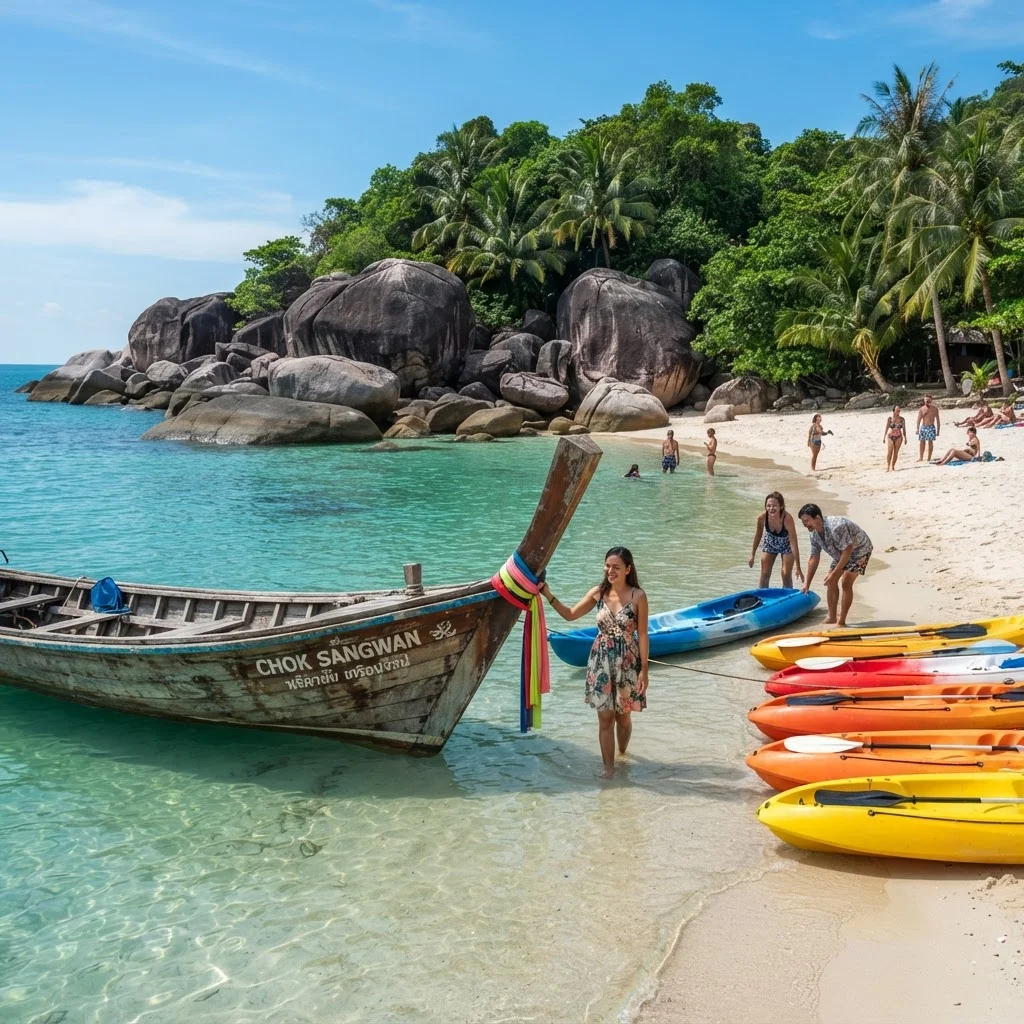
Koh Samui provides direct access to more than 50 kilometres of varied coastline, where shallow coral fringes, granite boulder formations, and offshore islets create distinct sea kayaking conditions across every side of the island. With Gulf of Thailand water temperatures averaging around 28°C throughout the year and western shallows sheltered from open-ocean swells, paddlers can explore mangrove estuaries, sandbars, and fringing reefs straight from the sand.
The sport caters to casual holidaymakers renting sit-on-top craft by the hour, independent sea paddlers navigating coastal headlands, and day-trippers joining guided excursions. Equipment is widely available across the island, with kayaks stationed at beachfront resorts, independent hire concessions on popular sands, and tour operators running boat-supported trips. Paddling options range from gentle circuits in sheltered northern bays to longer passages around southern outcrops or full-day ventures across to neighbouring archipelagos.
When choosing an accommodation base, consider how local coastal geography shapes on-the-water conditions. The shallow southern and western shores suit relaxed exploration along quiet tidal flats and river mouths, whereas the eastern seaboard features steeper drop-offs and granite boulders exposed to seasonal swells. Selecting a base near your preferred paddling terrain ensures convenient beach launches and minimises island road transfers.

Northern Coastline and Sheltered Bays
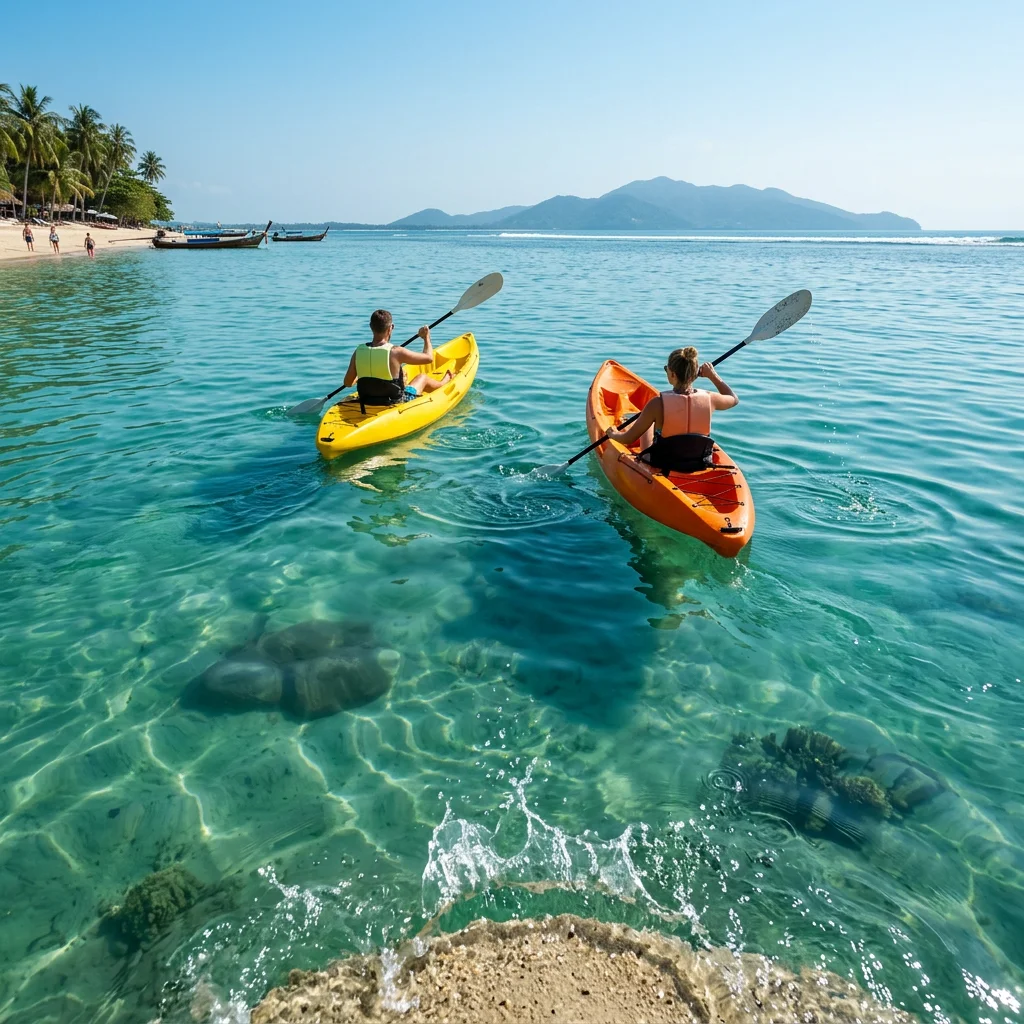
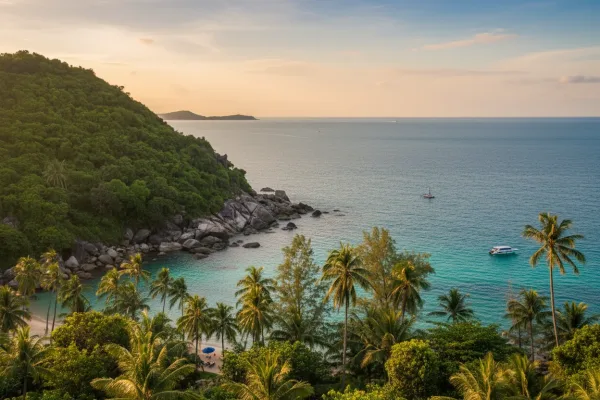
The northern coast between Bang Por and Choeng Mon provides extended stretches of sheltered water shielded by fringing reef flats and shallow sandbanks. During the southwest monsoon, which runs from May to September, Samui’s central hills block the prevailing southerly winds. This natural barrier leaves the northern shoreline flat and manageable, creating reliable conditions for relaxed coastal touring when the southern and western coasts experience choppy seas.
Launching from the sand at Bang Por or along Maenam Beach, you can paddle parallel to the shore for four to six kilometres while taking in clear views across the channel towards Koh Phangan. The seabed shelves gently along much of this arc, allowing less experienced paddlers to remain within 100 metres of the palm-fringed shoreline without facing heavy shorebreaks.
Further east at Choeng Mon, rocky headlands enclose a horseshoe-shaped bay that cuts down tidal pull. Just 200 metres off the beach lies Koh Fan Noi, a small uninhabited islet that serves as an accessible turning point for a short paddle. The adjacent islet, Koh Fan Yai, houses a private resort, but the surrounding shallows and rocky perimeter remain open to kayakers keeping below the high-water mark.
Independent paddlers bringing their own craft can use several public access lanes (sois) that branch off the main ring road between private villa developments and hotels. Plan your launch around an incoming mid-tide: at low spring tide, wide coral shelves and stony flats dry out extensively along Bang Por and Choeng Mon, leaving water too shallow to float a kayak and risking damage to fins and rudders.
The Southern Headlands and Five Islands Route
Koh Samui’s south-western coastline features limestone sea pillars, mangrove estuaries, and working fishing villages, providing varied coastal and open-water paddling. Launching from Taling Ngam or the shallow bay at Pang Ka sets paddlers directly opposite the Five Islands (Koh Si Koh Ha), a dramatic cluster of limestone karsts rising sheer from the sea. These islets support protected colonies of swiftlets whose nests are harvested under commercial concessions. Going ashore is strictly forbidden, and private security guards stationed on the cliffs turn away approaching craft. Sea kayakers can nevertheless circumnavigate the islands in open water, inspecting undercut sea cliffs and wave-carved arches from a respectful distance offshore.
The crossing from Taling Ngam across the channel spans roughly three kilometres each way. This requires sustained paddling stamina, reliable conditions, and steady vigilance for passing long-tail boats. Because fringing reef flats along Taling Ngam and Pang Ka expose sharp coral debris and mud flats during spring low tides, launches and landings should be scheduled around mid to high water.
Paddlers seeking more sheltered routes can head north towards Lipa Noi, where quiet mangrove channels provide calm, wind-screened water when open-sea chop increases. To the south, the headland around Laem Sor presents shallow tidal lagoons framed by an ornate golden pagoda sitting directly beside the water. The shrine provides an unmistakable landmark for coastal navigators working their way along the southern reef line.
Discover the best areas, realistic costs, and practical tips for visiting Koh Samui. Plan a perfect trip with this comprehensive, honest island guide.
Eastern Coves and Rocky Coastal Passages
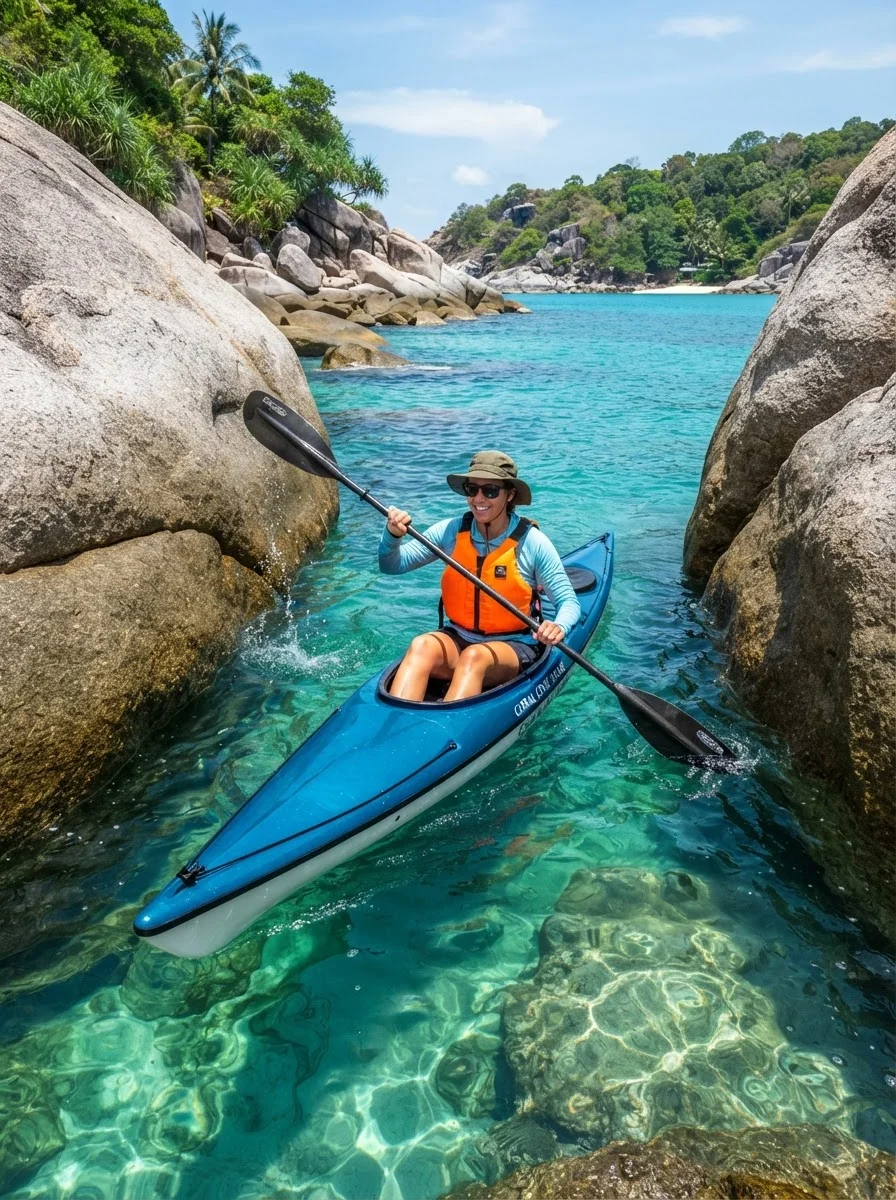
Koh Samui’s eastern shoreline between Chaweng Noi and Lamai replaces the shallow coral flats of the north with steep granite headlands, deep water, and open coastal passages. Tracing the seaward base of the cliffs along Route 4169, this stretch suits intermediate paddlers looking for contoured rock gardens and coastal swells rather than flat-water bay cruising.
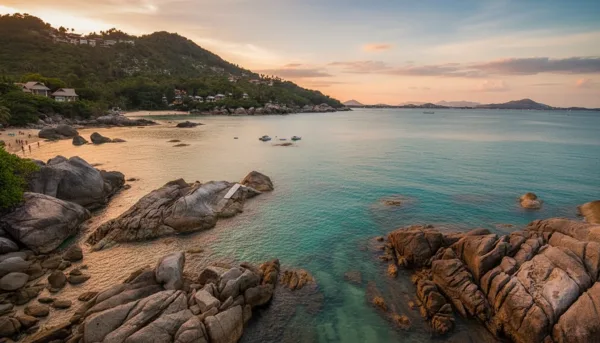
The primary launch sites are Silver Beach—historically called Haad Thong Takhian or Crystal Bay—and neighbouring Coral Cove, roughly one kilometre to the north. Both coves sit sheltered between massive granite boulders, providing manageable put-ins over soft sand. Outside the flanking headlands, the seabed drops away quickly to depths between two and eight metres. This depth allows paddlers to track close against sheer cliff faces without grounding hulls on coral, though you must stay alert for submerged granite spurs near the waterline.
Paddling south from Coral Cove toward Silver Beach and northern Lamai reveals sea-carved rock gullies and tiny sand coves walled off by private headlands that cannot be reached by road. Water clarity along these outer granite slabs frequently exceeds five metres between March and September, when southwesterly winds leave the eastern coast in the island's lee. Open-water paddling here requires managing rebounding waves off vertical rock slabs and afternoon sea breezes that create lateral chop. Setting out in the early morning ensures the calmest surface conditions before thermal winds develop.
Coastal paddling here is unfeasible during the peak northeast monsoon between late October and December. Strong onshore winds drive heavy Gulf swells straight onto the coast, generating dumping shorebreaks that make launches and landings hazardous.
| Coastal Paddling Route | Typical Water Depth | Skill Level Required | Best Season for Calm Seas |
|---|---|---|---|
| Bang Por to Maenam | 1 to 3 metres | Beginner | May to September |
| Choeng Mon to Koh Fan Noi | 1 to 4 metres | Beginner | February to August |
| Taling Ngam to Five Islands | 3 to 12 metres | Intermediate | February to September |
| Coral Cove to Silver Beach | 2 to 8 metres | Intermediate to Experienced | March to September |
Paddlers should check marine forecasts before setting out, as sea conditions along these exposed capes can shift quickly once morning calm gives way to afternoon chop.
Guided Sea Kayak Excursions and Outer Island Crossings
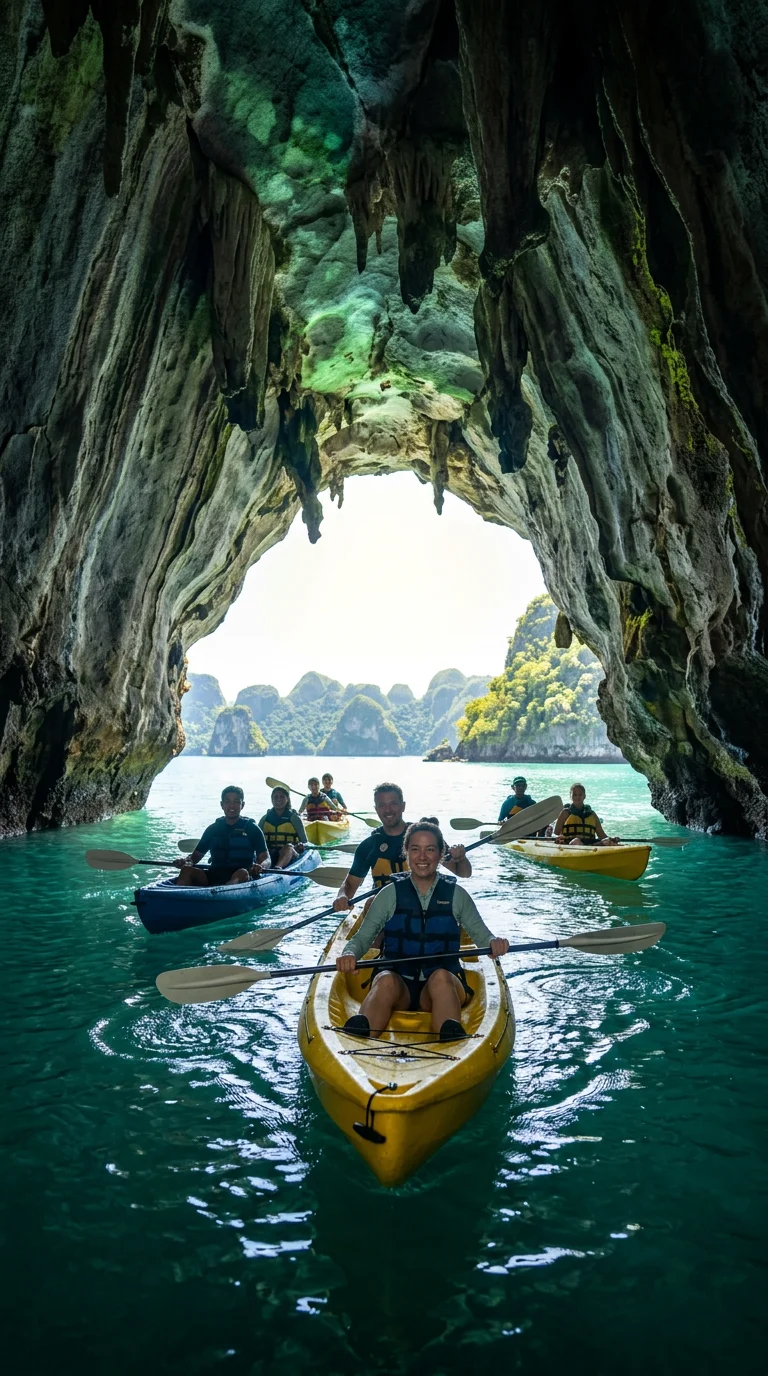
Organised sea kayak excursions expand paddling beyond Koh Samui's resort beaches by pairing motorised boat transfers with guided paddling in offshore archipelagos. Instead of attempting lengthy open-water crossings under paddle power alone, paddlers travel aboard cruisers, speedboats, or catamarans to sheltered moorings before launching into calm channels.
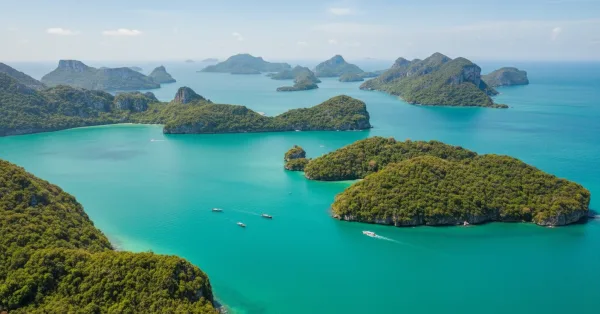
The most frequent full-day excursion travels roughly 30 kilometres northwest to Ang Thong National Marine Park, an archipelago of 42 limestone islands. Tour vessels anchor near Koh Mae Koh, Koh Sam Sao, or Koh Wua Ta Lap. From these anchorages, guides lead flotillas in tandem sit-on-top kayaks along sheer karst cliffs rising hundreds of metres from the water. Paddling routes trace sea caves, erosion arches such as the natural stone archway at Koh Sam Sao, and undercut cliff overhangs. Landings at Koh Mae Koh allow paddlers to secure their craft on the sand and walk up the wooden stairways to view the enclosed saltwater lagoon of Talay Nai, also called the Emerald Lake.
Shorter guided excursions head south across the narrow strait to Koh Tan and Koh Madsum. Longtail boats and speedboats depart from southern piers such as Thong Krut or Bang Kao, reaching the outer islets in roughly fifteen to twenty minutes. Guided paddling here focuses along the sheltered western shoreline of Koh Tan, threading through mangrove channels and over shallow reef flats, as well as along the sandy coast of Koh Madsum. Local guides monitor coastal wind shifts and tidal flow to navigate clear of exposed coral heads. Tour packages supply tandem sit-on-top kayaks, personal flotation devices, and dry bags to safeguard electronics, allowing paddlers to explore outer marine reserves without navigating open-sea crossings independently.
Location and Getting There
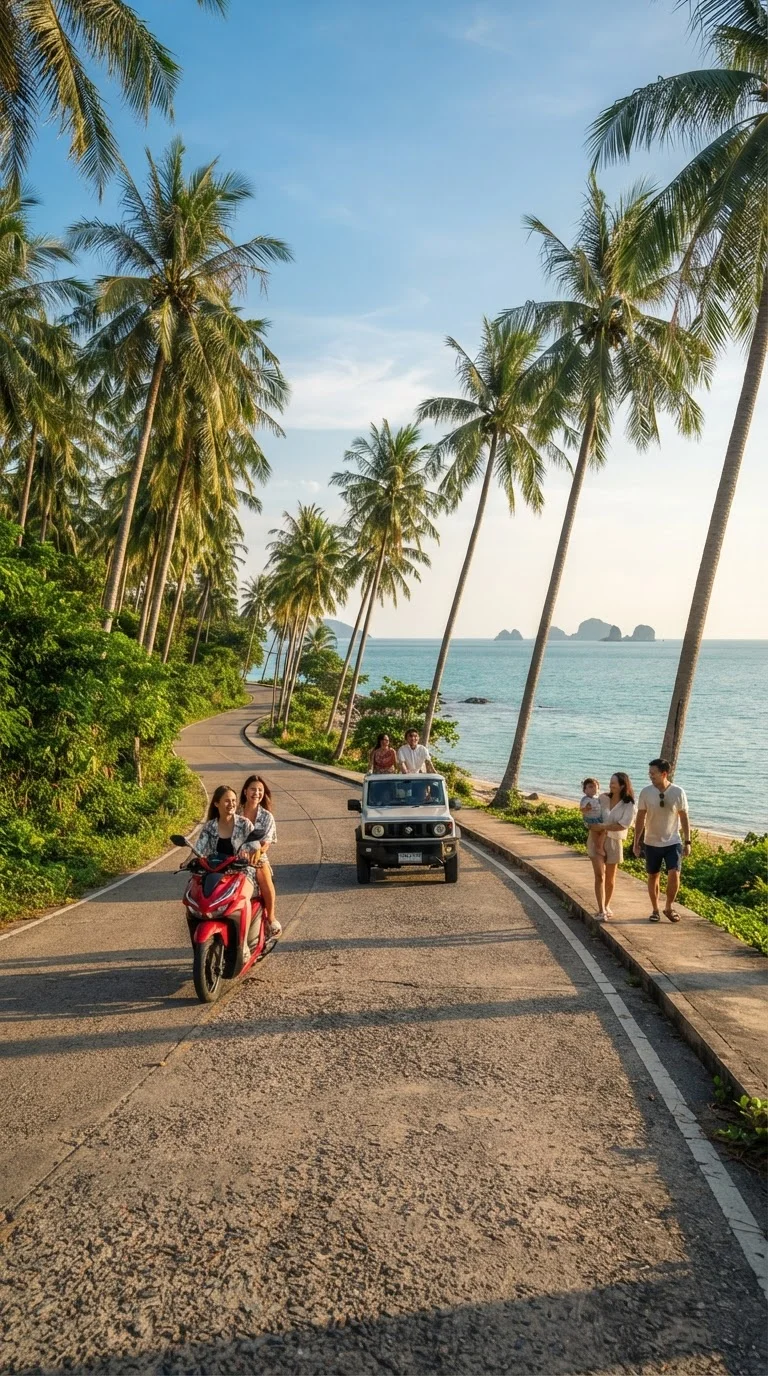
Paddling locations are spread around Koh Samui's coastline, connected primarily by Route 4169, the 51-kilometre perimeter ring road looping through Nathon, Maenam, Bophut, Chaweng, and Lamai. Secondary roads branch off this main circuit to reach specific bays: Route 4171 serves the north-eastern peninsula around Choeng Mon, while Route 4170 skirts the southern shores through Thong Krut and Taling Ngam.
Air travellers arrive at Koh Samui Airport (USM) in the north-east. Northern launch spots at Bophut and Choeng Mon lie 10 to 15 minutes away by taxi, with fares usually between 400 THB and 600 THB (£9.20 to £13.80). Reaching the south-western waters around Lipa Noi and Taling Ngam requires a 45-minute drive, with private transfers typically costing between 800 THB and 1,200 THB (£18.40 to £27.60).
Ferry passengers from mainland Surat Thani arrive on the west coast at Nathon Pier or Lipa Noi. For daytime travel between coastal hubs along the ring road, songthaews (shared pick-up trucks with bench seats) operate frequent hops. Fares between Nathon and nearby bases such as Maenam or Lipa Noi generally run from 60 THB to 100 THB (£1.40 to £2.30) per person. Renting a car or scooter offers extra independence for paddlers carrying their own dry bags and equipment between different shores.
Costs and Booking
Kayaking rates on Koh Samui span informal hourly shoreline hires up to fully catered outer-island excursions. Walk-up rentals of standard sit-on-top kayaks along beaches such as Bophut, Bang Por, and Chaweng typically cost between 200 THB and 300 THB (£4.60 to £6.90) per hour for a single craft, and 300 THB to 500 THB (£6.90 to £11.50) per hour for a tandem boat. Transparent clear-bottom kayaks, where available, charge roughly 400 THB to 500 THB (£9.20 to £11.50) hourly. Independent full-day hires arranged through water-sports suppliers or delivered to beachfront villas average 800 THB to 1,200 THB (£18.40 to £27.60) per craft. Many beachfront resorts also provide sit-on-top kayaks for guests without charge.
| Option | Cost (THB) | Cost (GBP) | Notes |
|---|---|---|---|
| Single Sit-on-Top Hire (per hour) | 200 to 300 | £4.60 to £6.90 | Beachfront kiosks; includes paddle and buoyancy aid |
| Double Sit-on-Top Hire (per hour) | 300 to 500 | £6.90 to £11.50 | Tandem craft; suitable for couples or family pairs |
| Full-Day Kayak Hire (per craft) | 800 to 1,200 | £18.40 to £27.60 | Arranged via water-sports shops or delivered; self-guided |
| Koh Tan Coastal Tour (per person) | 1,400 to 2,200 | £32.20 to £50.60 | Half-day guided boat trip; includes transfers and lunch |
| Ang Thong Marine Park Day Tour (per person) | 1,500 to 2,800 | £34.50 to £64.40 | Full day by big boat or speedboat; includes guided paddle |
Organised day trips to Ang Thong National Marine Park or Koh Tan include return hotel transfers, boat passage, guided paddling sessions, buoyancy aids, and lunch. Tour rates start from around 1,500 THB (£34.50) per person on large passenger vessels, rising to 2,800 THB (£64.40) for small-group speedboats. Statutory marine park admission fees (300 THB for foreign adults) are routinely excluded from baseline tour prices and collected in cash at boarding. Beachfront hires require no advance booking and accept cash or Thai QR payments. For boat excursions during peak periods—December to April and July to August—booking 24 to 48 hours ahead secures vessel space.
Who It Suits Best
Kayaking in Koh Samui suits active couples, families, and casual paddlers seeking gentle coastal trips directly from resort sands. Novices and nervous beginners do well along the sheltered northern coastline around Bang Por and Choeng Mon, where shallow water and modest shorebreak keep paddling undemanding. Intermediate paddlers will appreciate independent routes tracing the southern headlands and eastern granite boulder bays. The island is unsuited to anyone seeking whitewater rapids, demanding multi-day wilderness expeditions, or technical touring.
Tides dictate water access across large parts of the island. Along the northern and western coastlines, wide reef flats drain extensively during low spring tides. Launching at low water forces paddlers to drag craft across hundreds of metres of shallow sand and dead coral, which risks damaging delicate living marine growth and grounding the hull. Scheduling excursions around mid to high tide ensures sufficient clearance above the reefs.
Seasonal weather patterns dramatically alter sea conditions. The northeast monsoon brings heavy rain, low visibility, and strong wind-driven swells between late October and mid-December, making open-water paddling hazardous on northern and eastern shores. During this period, calmer water shifts towards sheltered western bays. Travellers planning offshore excursions must also account for annual conservation closures: Ang Thong National Marine Park shuts from 1 November to mid-December during the height of the monsoon.
Moulded sit-on-top plastic kayaks are the standard craft for beachfront rentals across Koh Samui. They are buoyant and simple to re-enter from open water, though open cockpits leave paddlers fully exposed to tropical sun. For guided day trips to Ang Thong National Marine Park, tour operators generally exclude the national park entrance fee from the basic package rate; foreign adults must pay 300 THB (approximately £7) in cash before boarding or on arrival.
Practical Tips
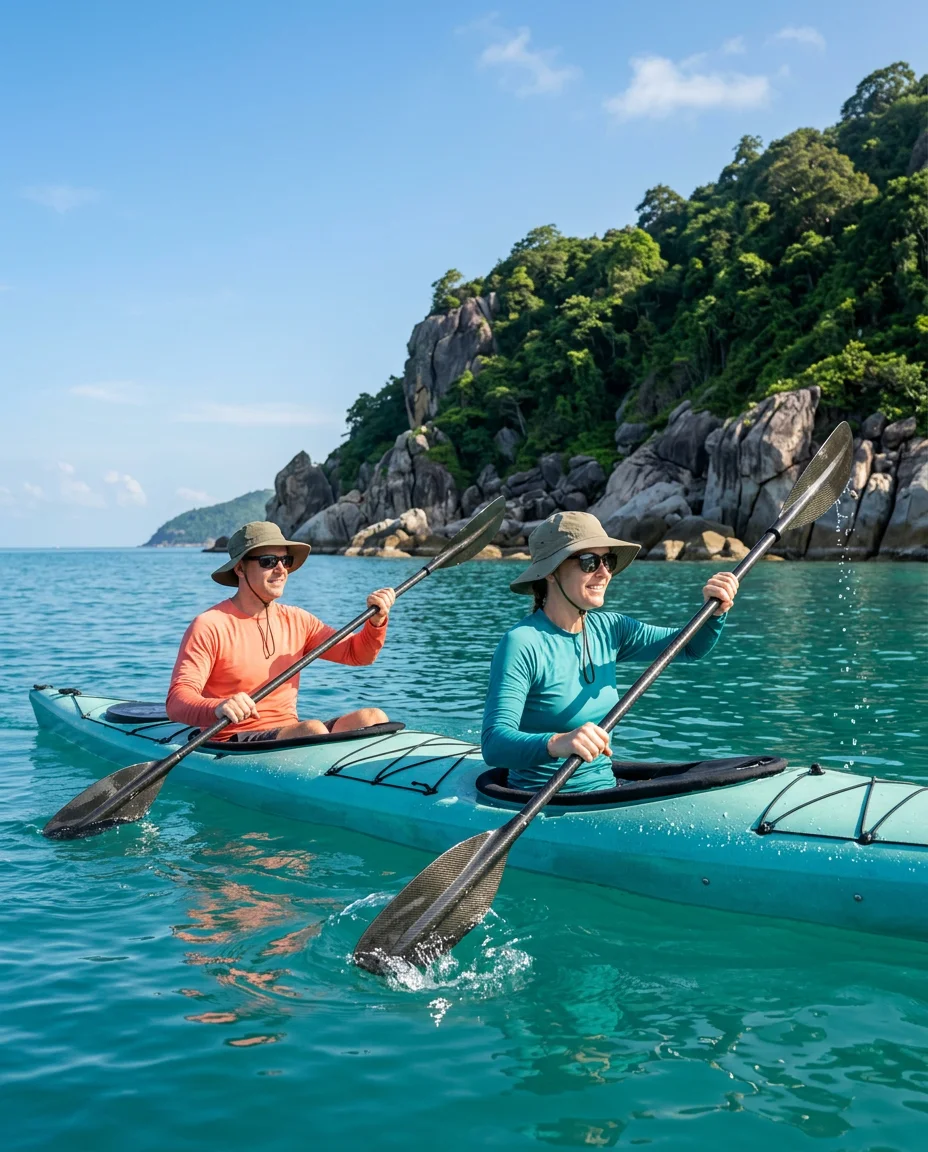
Long-sleeved UPF 50+ rash vests and wide-brimmed hats with chin straps provide far more reliable protection than sun cream alone. Tropical sun reflects heavily off the Gulf of Thailand, accelerating skin damage and dehydration during coastal journeys. Polarised sunglasses secured with a floating neck strap also reduce intense water glare.
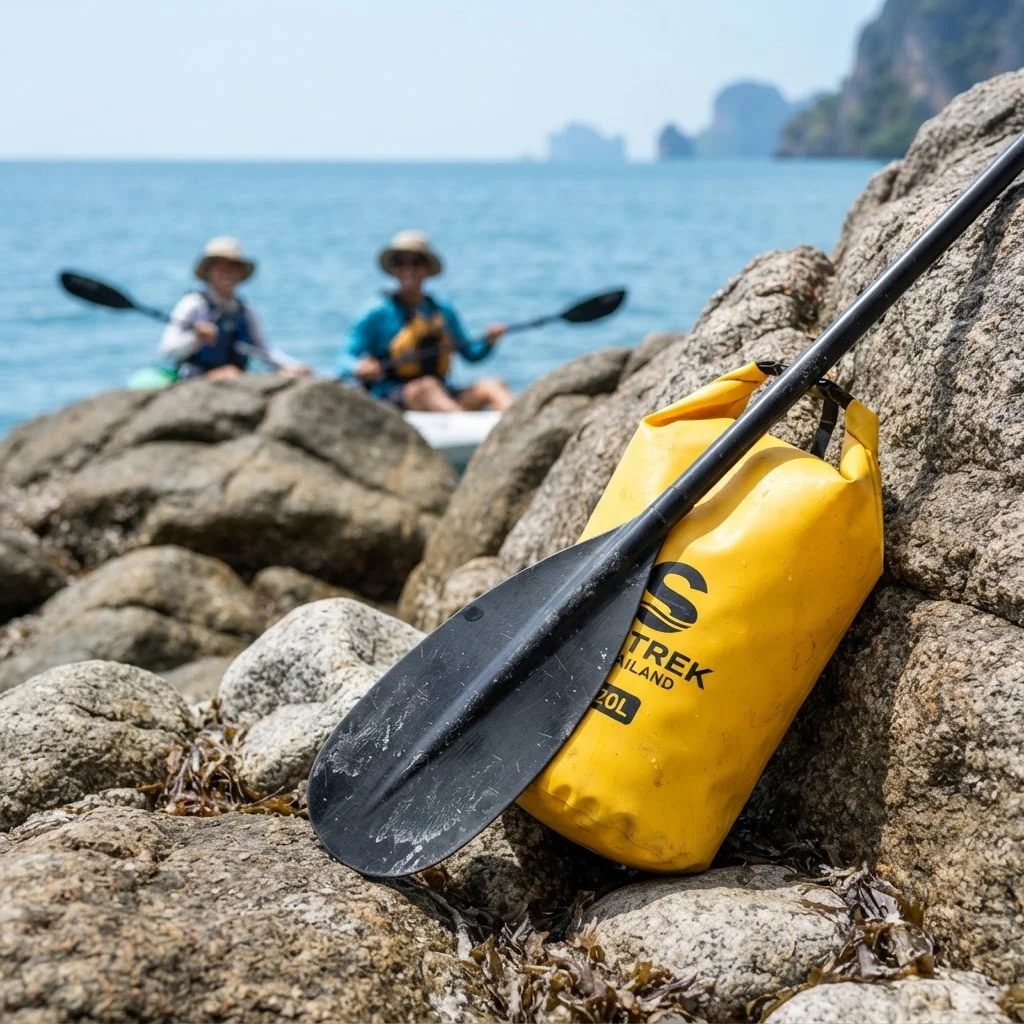
Pack phones, cameras, and keys inside a double-sealed dry bag tethered securely to the kayak deck rigging. Sit-on-top craft feature open cockpits with scupper holes that continually drain sea spray, leaving footwells wet throughout your outing. Avoid leaving loose items on deck or in open cup holders where wake or sudden swell can dislodge them.
Check tide tables before launching from beach resorts or rental shacks. Shallow fringing reefs and dead coral platforms line long stretches of Koh Samui's northern and southern shorelines. Launching or landing during spring low tides leaves little water clearance, forcing paddlers to drag heavy craft across abrasive coral flats and risking hull damage or foot lacerations.
Inspect buoyancy aids thoroughly before paying for equipment. Verify that buckles clasp firmly and webbing straps adjust smoothly without slipping under tension. Coastal hire stalls often store gear in direct sunlight, and sun-degraded fabrics or cracked clips compromise buoyancy if you capsize in choppy open water.
Carry at least 1.5 litres of fresh drinking water per person for a two-hour paddle. Tropical heat causes rapid fluid loss, especially when paddling into head winds. While underway, give anchored longtails and fishing craft a wide berth. Artisanal fishers frequently lay shallow gillnets marked by plastic bottles, which easily snag rudder cables and paddle blades.
Check coastal wind forecasts on the morning of your paddle. Afternoon offshore breezes can build quickly, creating chop and making returns to launch beaches strenuous once past protective headlands. Arranging hire or guided trips through established operators ensures well-maintained craft, fitted buoyancy aids, and current advice on sea conditions.
Quick Reference Table
| Item | Detail | Notes |
|---|---|---|
| Single Sit-on-Top Hire | 200 to 300 THB (£4.60 to £6.90) per hour | Beachfront concessions; includes paddle and buoyancy aid |
| Double Sit-on-Top Hire | 300 to 500 THB (£6.90 to £11.50) per hour | Tandem craft suitable for couples or adult-child pairs |
| Clear-Bottom Kayak Hire | 400 to 500 THB (£9.20 to £11.50) per hour | Available at select beachfront hire stalls |
| Full-Day Kayak Hire | 800 to 1,200 THB (£18.40 to £27.60) per craft | Self-guided; arranged via water-sports centres or villa delivery |
| Koh Tan Half-Day Tour | 1,400 to 2,200 THB (£32.20 to £50.60) per person | Guided boat trip from southern piers; includes transfers and lunch |
| Ang Thong Marine Park Day Tour | 1,500 to 2,800 THB (£34.50 to £64.40) per person | Full day via cruiser or speedboat; includes guided kayaking and lunch |
| Best Conditions (Northern Coast) | May to September | Central hills shelter Bang Por and Maenam from southwest winds |
| Best Conditions (Eastern Coves) | March to September | Sheltered lee side; water visibility regularly exceeds 5 metres |
| Northeast Monsoon Disruption | Late October to mid-December | Heavy swells, rough shorebreaks, and low visibility; Ang Thong closed 1 Nov to mid-Dec |
| Water Temperature | Around 28°C | Year-round average across the Gulf of Thailand |
| Key Beginner Routes | Bang Por to Maenam; Choeng Mon to Koh Fan Noi | Sheltered shallow waters 1 to 4 metres deep; minimal shorebreak |
| Intermediate Coastal Routes | Coral Cove to Silver Beach; Taling Ngam to Five Islands | Open-water passages, granite rock gullies, and a 3-kilometre karst crossing |
| Recommended Water Supply | Minimum 1.5 litres per person | Essential for a two-hour paddle in tropical heat |
| Launch Tide Window | Mid to high tide | Low spring tides expose extensive reef flats and coral debris |
FAQ: Kayaking in Koh Samui
How should I choose accommodation for kayaking in Koh Samui?
When is the best time to kayak on Koh Samui's northern coast?
Why is it important to check tide tables before kayaking in Koh Samui?
Can kayakers land on the Five Islands (Koh Si Koh Ha) near Koh Samui?
When should kayakers avoid Koh Samui's eastern coast?
What can kayakers see or do on a guided tour to Ang Thong National Marine Park?
How much does it cost to rent a kayak per hour in Koh Samui?
Are national park fees included in Ang Thong Marine Park kayak tour prices?
How far in advance should I book kayak excursions in Koh Samui during peak season?
Who is kayaking in Koh Samui best suited for?
Reviewed by the Thailand Guide Editorial Team • Last reviewed: 17 November 2026
This page is provided for general information only. While we aim for accuracy, details can change — please verify anything important independently before relying on it.