Cycling in Thailand
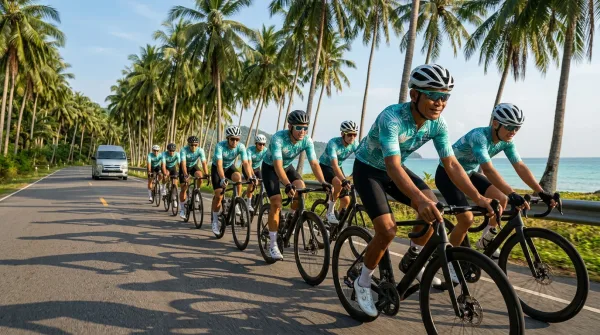
Morning mist clings to the hills outside Chiang Mai as your tyres hit the asphalt, where quiet rural roads turn into gradients steep enough to test professional climbing legs. Across Thailand, cycling spans a wide spectrum: leisurely circuits through the ruined brick temples of ancient capitals, coastal routes skirting the Gulf of Thailand, and fast pacelines on a dedicated, floodlit 23.5-kilometre airport track in Bangkok.
This guide delivers the practical realities of cycling in Thailand for casual holidaymakers, touring riders, and endurance road cyclists. We evaluate regional riding hubs, seasonal weather windows, typical bike rental standards, and local road safety conditions. You will also find guidance on negotiating Thai traffic conventions, booking reputable guided tours, and transporting your own bicycle on domestic flights and State Railway of Thailand trains, providing the facts required to plan a sensible, rewarding itinerary.

Urban and Flatland Recreational Riding: Bangkok, Ayutthaya, and Sukhothai
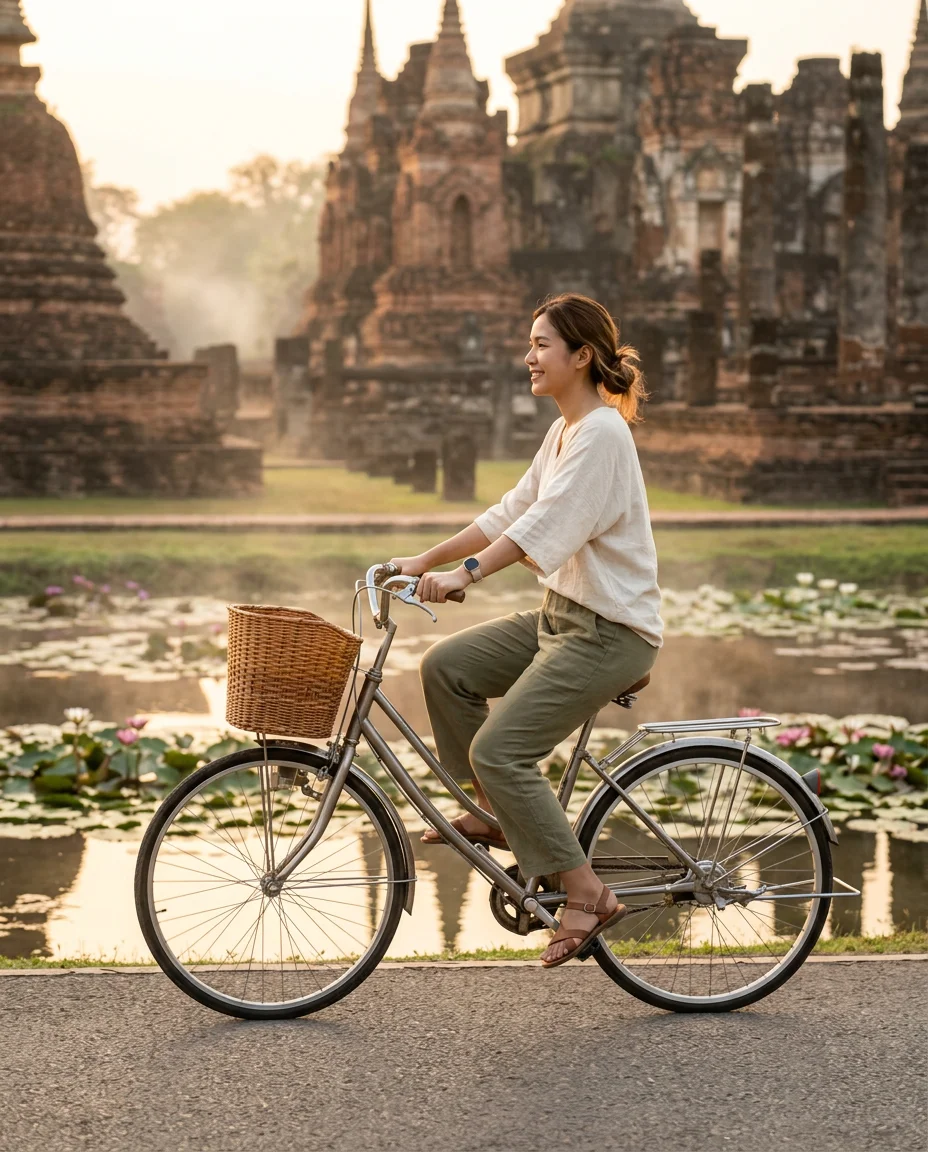
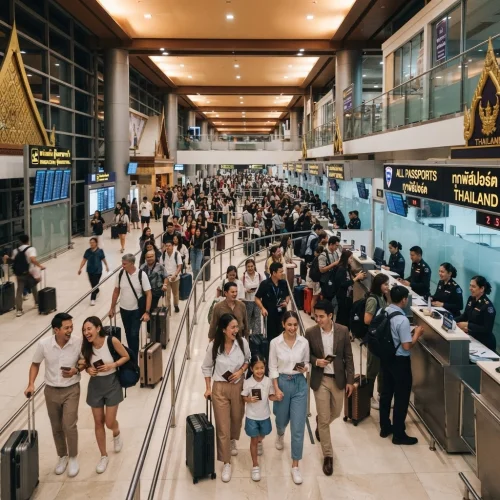
Flatland cycling across central Thailand provides accessible routes through dedicated circuits, riverside conservation corridors, and ancient temple grounds. In Bangkok, the premier purpose-built facility is the Happy and Healthy Bike Lane, circling the perimeter of Suvarnabhumi Airport. Formerly known as the Sky Lane, this free facility features a 23.5-kilometre dual-track circuit paved in smooth rubberised asphalt, with separate blue lanes for general riders and purple lanes for faster cyclists. Illuminated by floodlights for evening sessions, the track is staffed by marshals and requires riders to present a passport on arrival to register for entry credentials. Helmets and closed-toe shoes are compulsory, and rear bicycle lights are mandatory for early morning or evening sessions. On-site rental shops provide hybrid bicycles from 400 THB (approx. £8.90) for four hours, alongside performance road models.
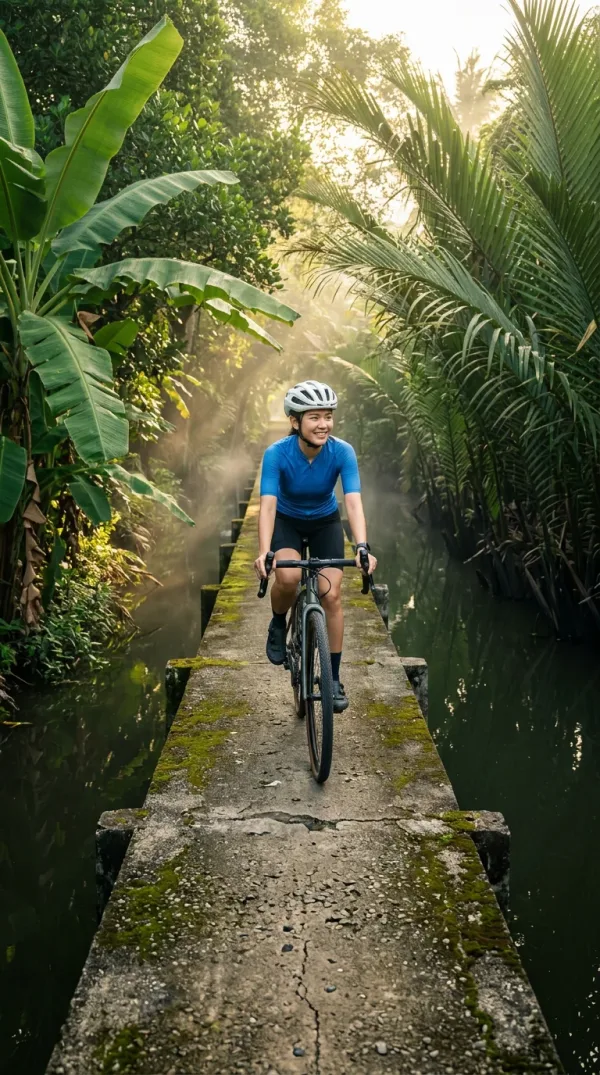
South across the Chao Phraya River, Bang Krachao occupies a lush river bend often described as Bangkok’s green lung. Small passenger boats ferry visitors across from Wat Khlong Toei Nok Pier for around 10 THB to 20 THB (approx. £0.22 to £0.45). On the peninsula, narrow elevated concrete walkways snake above mangrove creeks, coconut groves, and fruit orchards, linking local villages with the forested trails of Sri Nakhon Khuean Khan Park. Car traffic is absent from these narrow boardwalks, though cyclists must watch for pedestrians and occasional local scooters on tight, unrailed corners. Basic single-speed city bicycles can be hired from stands near the ferry piers for roughly 80 THB to 100 THB (approx. £1.80 to £2.20) per day.
Further north across the central plains, two ancient capitals suit independent bicycle touring. Ayutthaya Historical Park occupies a flat river island where ruined monasteries and brick prangs sit within easy pedalling distance of one another. Utility bicycles can be rented near the railway station and local guesthouses for 50 THB to 100 THB (approx. £1.10 to £2.20) per day. Riding here requires extra care, as routes follow public tarmac roads shared with cars, tuk-tuks, and songthaews.
By contrast, Sukhothai Historical Park provides a much calmer environment because motor vehicles are prohibited inside the central walled zone. Paved lanes wind between lotus ponds and monuments such as Wat Mahathat. Foreign admission to the central zone is currently 200 THB (approx. £4.50), plus a 10 THB (approx. £0.22) bicycle entry fee. Rental shops opposite the main gate supply single-speed bikes for 30 THB to 50 THB (approx. £0.65 to £1.10) per day. Starting in the early morning allows you to finish riding before midday heat and humidity peak. Arranging equipment or booking guided rides in advance ensures well-maintained bicycles during the busier cool season.
| Destination | Surface Type | Traffic Level | Best Rider Profile | Hire Cost Range (THB / Day) |
|---|---|---|---|---|
| Happy and Healthy Bike Lane (Bangkok) | Smooth rubberised asphalt | Zero (cycles only) | Road cyclists and fitness riders | 400 - 800 (hybrid/road) |
| Bang Krachao (Bangkok) | Elevated concrete footpaths | Minimal to pedestrian | Casual and leisure riders | 80 - 100 (city bike) |
| Sukhothai Historical Park | Paved park roads and lanes | Minimal (no cars in central zone) | Sightseers and families | 30 - 50 (single speed) |
| Ayutthaya Historical Park | Public tarmac roads | Moderate to heavy | Confident recreational riders | 50 - 100 (utility bike) |
Road Cycling and Mountain Climbs: Chiang Mai and the Northern Ranges
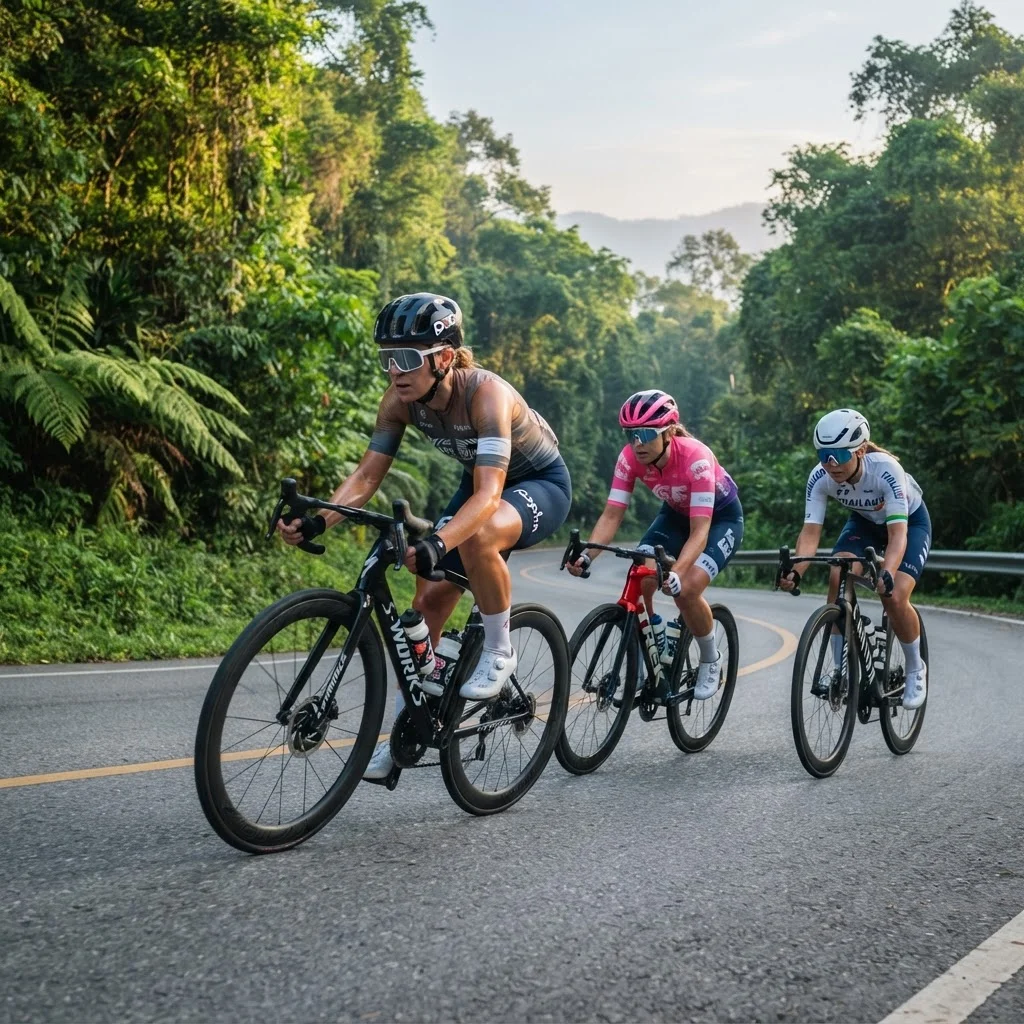
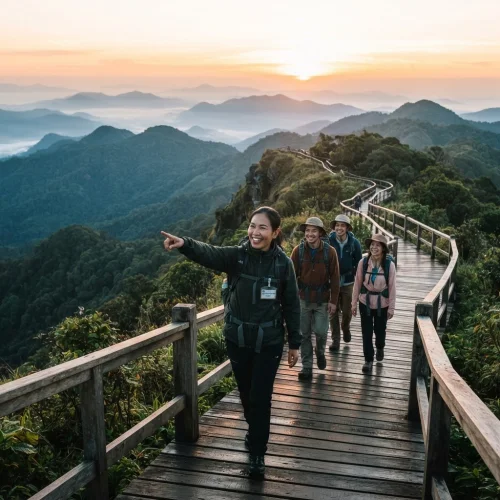
Northern Thailand is the country's primary hub for technical road cycling and sustained mountain climbing. Based out of Chiang Mai, cyclists encounter well-paved provincial highways that rise directly into dense mountain forests. The regional benchmark ride is the climb up Doi Suthep along Highway 1004. Starting near Chiang Mai Zoo, this steady 11-kilometre ascent averages a 6.2% gradient up to the temple esplanade. The carriageway is well surfaced with two dedicated climbing lanes, but it has no paved hard shoulder, requiring consistent lane discipline when morning tourist traffic builds.
For endurance riders, the classic 100-kilometre Samoeng Loop circles the mountain massif behind Doi Suthep, routed along Highway 1096 through the Mae Sa Valley and returning via Highway 1269 through Hang Dong. Ridden either clockwise or counter-clockwise, the circuit accumulates between 1,500 and 2,150 metres of climbing depending on the start point in the city. While much of the profile consists of rolling terrain and steady single-digit grades, the southern approach features the notorious seven switchbacks, where short ramps kick up to 14% and steeper. Cyclists looking for a shorter training ride can choose an out-and-back up the Mae Sa Valley along Highway 1096, which provides 45 kilometres of riding with roughly 620 metres of ascent at a gentle 3.5% average gradient.
Doi Inthanon presents Thailand’s most demanding mountain test, finishing near the country's highest point at 2,565 metres above sea level. Tackled from Chom Thong along Highway 1009, the climb covers 47 kilometres and gains roughly 2,380 metres of vertical elevation. While the lower sections roll at moderate gradients, the final kilometres past the royal pagodas deliver punishing ramps exceeding 20%. For these northern climbs, a compact 50/34 chainset paired with an 11-34 rear cassette provides the necessary low gearing. Temperatures near the summit can drop significantly lower than on the valley floor, making a packable windproof jacket practical for the descent. Quality carbon-frame endurance bikes fitted with Shimano groupsets are available from local specialists in Chiang Mai, with daily rentals starting from approximately 1,200 THB (approx. £27).
| Route | Distance (km) | Elevation Gain (m) | Gradient | Difficulty |
|---|---|---|---|---|
| Doi Suthep Ascent | 11 | 680 | 6.2% | Moderate / Sportive |
| Samoeng Loop | 100 | 2,150 | Rolling (peaks at 14%) | Challenging |
| Mae Sa Valley Out-and-Back | 45 | 620 | 3.5% | Intermediate |
| Doi Inthanon Summit | 47 | 2,380 | 8.1% (ramps to 24%) | Severe / Extreme |
Plan a Central Thailand trip through Ayutthaya, Kanchanaburi, Lopburi and Amphawa, with current costs, transport advice and seasonal guidance.
Coastal Touring and Island Routes: Phuket and the Royal Coast
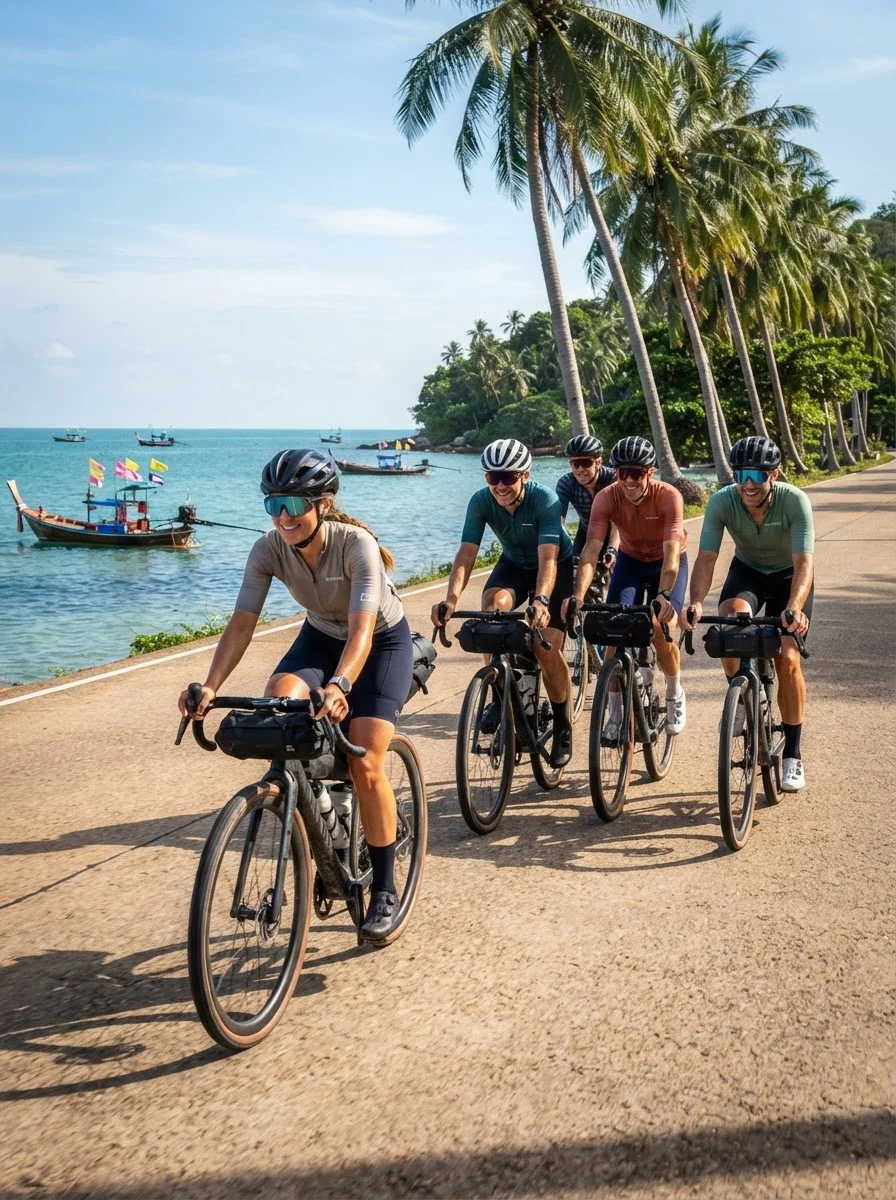
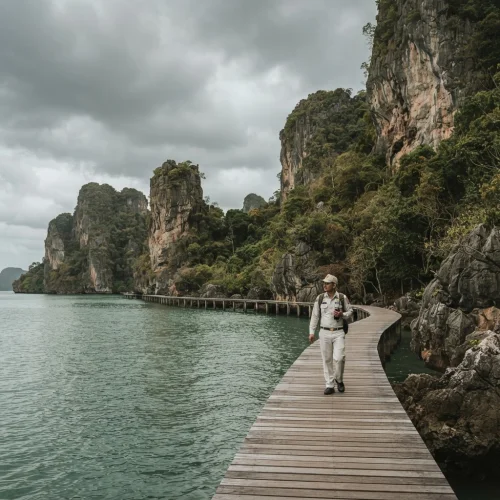
Coastal cycling in Thailand delivers flat sea-level terrain and sea breezes, but road conditions vary significantly by region. On Phuket, riding splits into two distinct environments. The island's southern and western resort hubs around Patong, Karon, and Kata feature steep coastal passes, dense tourist traffic, and narrow roads poorly suited to recreational cycling or endurance training. By contrast, northern Phuket presents wide, relatively quiet rural roads through rubber plantations and coastal coconut groves. Experienced road cyclists typically base themselves around Thalang or Bang Tao to access northern training routes that cross the Sarasin Bridge into Phang Nga province. The 660-metre bridge is closed to motor traffic and open to cyclists, leading onto flat, low-traffic mainland roads where limestone karsts rise above the asphalt. Supported excursions and road bike rentals are readily available in this area; established operators such as Siam Bike Tours supply support vehicles alongside rental fleets centreed on Giant and Nich carbon road bikes and electric bikes.
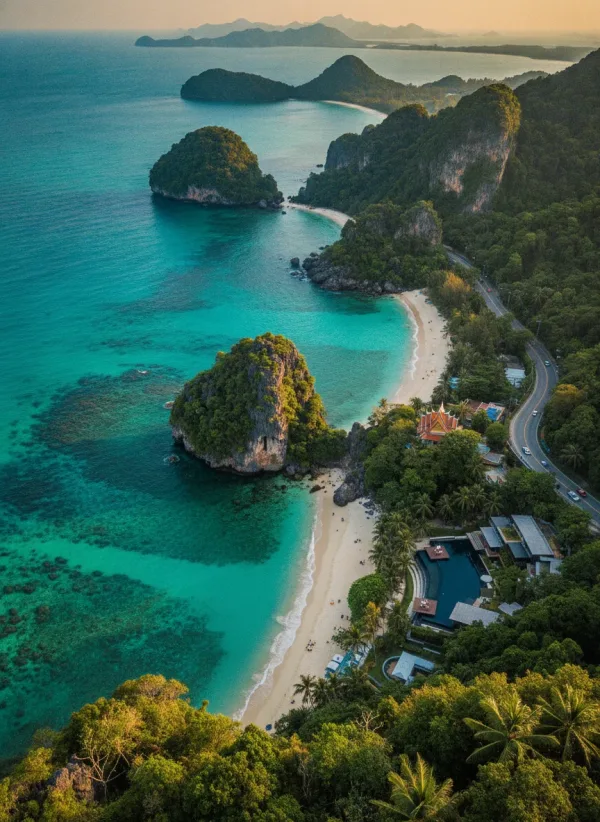
Across the Gulf of Thailand, the Royal Coast route provides the country's most developed continuous mainland coastal touring corridor. Overseen by the Department of Rural Roads under its scenic route initiatives, this network stretches from Phetchaburi through Cha-am, Hua Hin, and Pak Nam Pran down towards Prachuap Khiri Khan. These rural secondary roads run parallel to Highway 4 (Phetkasem Road), steering cyclists away from heavy freight and industrial transport. The section around Pak Nam Pran and Pran Buri features designated cycle paths running along the seafront, transitioning into flat, tranquil agricultural lanes around Khao Sam Roi Yot National Park, where riders pass coastal wetlands, shrimp ponds, and towering limestone outcrops. Throughout the Gulf coastline, morning rides are far more manageable than afternoon outings: set off at dawn to make progress in cooler air with light offshore breezes before strong coastal headwinds develop by midday.
| Coastal Area | Pavement Quality | Wind Factor | Scenery Highlight | Traffic Safety |
|---|---|---|---|---|
| Northern Phuket to Phang Nga | Excellent tarmac | Moderate | Mangroves and limestone karsts | Moderate (light north of bridge) |
| Pak Nam Pran / Pran Buri | Smooth with marked cycle paths | High afternoon headwind | Sandy coastline and squid boats | High (dedicated touring lanes) |
| Khao Sam Roi Yot | Secondary paved tracks | Moderate | Wetland marshes and sea cliffs | High (agricultural roads) |
| Phuket West Coast (Patong/Karon) | Variable, urbanised | Low | Busy beaches and viewpoints | Poor (steep hills, dense traffic) |
Road Conditions, Traffic Dynamics, and Safety Protocols
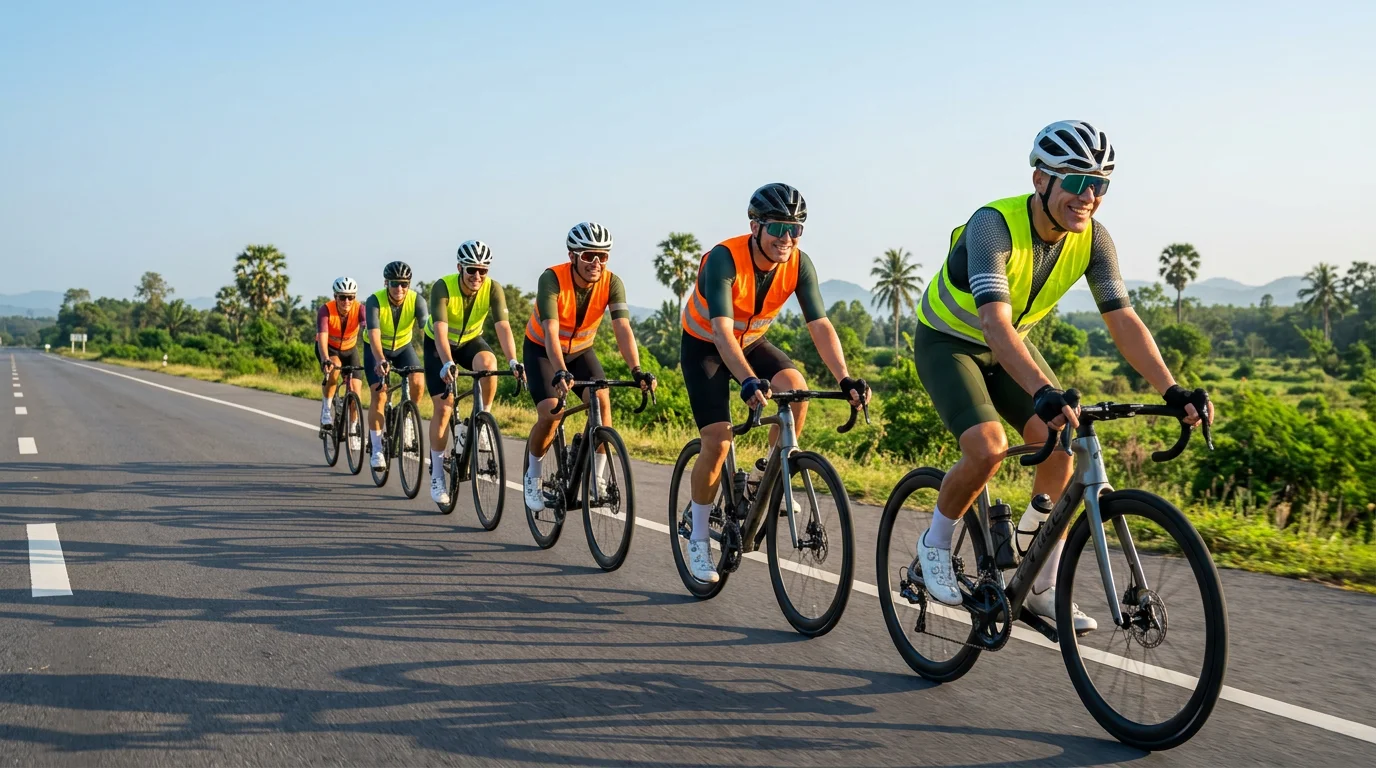
Thailand drives on the left, which makes road positioning and junction navigation immediately familiar to British cyclists. Main national highways, including Route 1 and Route 2, generally provide wide, asphalt-paved hard shoulders that establish a predictable buffer between bicycles and faster vehicles. Road quality across the primary network is high by regional standards, though rural and provincial secondary roads often lose their shoulders, narrow significantly, and feature occasional surface hazards like loose gravel or uneven patches.
Traffic dynamics require sustained defensive riding. Thai driving culture often follows an informal hierarchy based on vehicle mass rather than formal priority rules. Pick-up trucks, intercity coaches, and heavy lorries routinely pass cyclists closely without moving fully into the adjacent lane. At U-turn flyovers, median openings, and uncontrolled junctions, assume approaching drivers may not yield. A frequent hazard on multi-lane highways is local motorbikes riding against the flow of traffic along the paved shoulder, requiring constant scanning ahead rather than assuming an open path.
Thai traffic law—codified under the Land Traffic Act B.E. 2522—classifies bicycles as vehicles. By law, cyclists must keep to the far left of the carriageway or use dedicated cycle paths where provided, and riding more than two abreast is prohibited. When riding between sunset and sunrise or in low light, the law mandates a white front lamp illuminating the road at least 15 metres ahead and a red rear reflector or lamp. While Thai law does not mandate cycle helmets for non-motorised bicycles, wearing a certified helmet is strongly advisable given local accident rates. For roadside emergencies, the English-speaking Tourist Police can be reached nationwide on 1155.
Equipment, Bicycle Hire, and Transporting Bikes Across Thailand
Hiring a bicycle locally is simple for relaxed day trips, but bringing your own machine requires planning around transport networks. Outside historical parks and leisure hubs, hire shops provide basic utility cruisers with front baskets and simple rim or coaster brakes. Before riding away, inspect the brake cables, check tyre inflation, and verify that the seat-post clamp holds your weight securely. Dedicated road, gravel, and touring bicycles are widely available from specialist shops in cycling hubs such as Bangkok, Chiang Mai, and Phuket. Expect to provide a passport copy alongside a refundable deposit, often between 5,000 THB and 10,000 THB (approx £112 to £223) held in cash or by credit card pre-authorisation.
For domestic flights, airline luggage policies vary sharply. Bangkok Airways permits one bicycle free of charge on Airbus-operated services when notified at least 24 hours prior to departure, kept separate from your standard checked baggage allowance. On smaller propeller-driven aircraft, standard excess baggage rates apply if the bicycle exceeds your ticket allowance. Budget carriers such as Thai AirAsia classify bicycles strictly under sports equipment, charging separate pre-booked sports baggage fees that start from roughly 730 THB (approx £16) per domestic flight. Ensure your bicycle is packed securely inside a rigid bike case or padded travel bag with deflated tyres, detached pedals, and handlebars turned parallel to the frame.
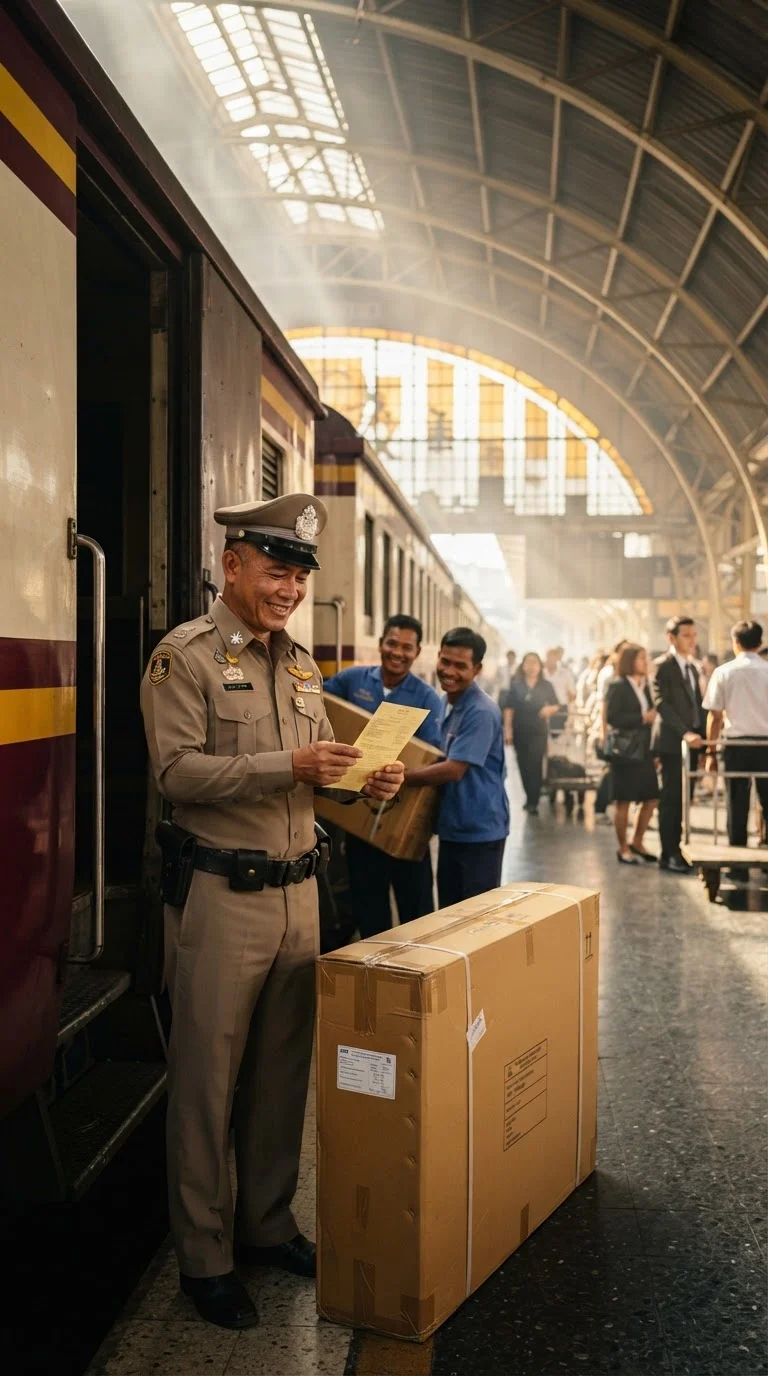
On the rails, the State Railway of Thailand permits fully assembled bicycles only on train services operating with a dedicated luggage or cargo carriage. Modern special express trainsets and diesel railcars do not carry cargo wagons and cannot accommodate full-sized bicycles. Where cargo carriages operate, a bicycle freight ticket costs roughly 90 THB to 150 THB (approx £2 to £3.30), purchased at the station parcel office before departure, where you generally load and unload the bike yourself. Compact folding bicycles packed in zipped carry bags travel free of charge as hand luggage across national trains and Bangkok mass transit networks, including the BTS Skytrain and MRT.
Where to Book Guided Rides and Hire Quality Bikes
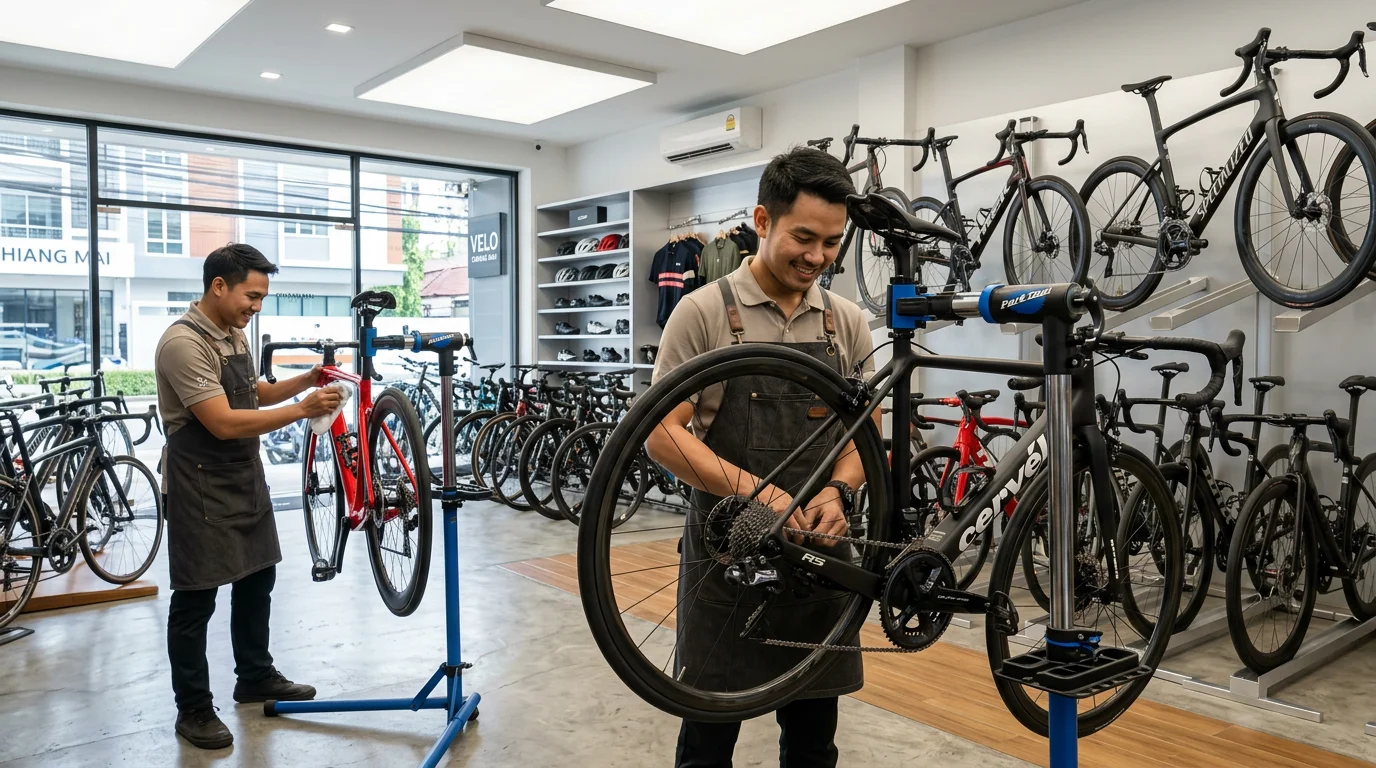
Thailand maintains an established network of cycling outfitters, ranging from urban day tours to fully supported multi-day road expeditions. In Bangkok, long-running specialists such as Co van Kessel run guided day and twilight rides through Chinatown backstreets, riverside communities, and canal paths. Standard three-hour day rides start at 1,290 THB (approx £29), while three-hour evening routes cost 1,650 THB (approx £37), with bicycle hire, helmet, and guide included in the fee.
Chiang Mai is northern Thailand's primary road cycling hub. Chiang Mai Cycling Buddy supplies performance road bikes, including Cervélo and Giant models, alongside guided mountain ascents. Guided single-day rides start at 1,900 THB (approx £42) for climbs up Doi Suthep, extending to multi-day routes such as the six-day Mae Hong Son Loop for 48,000 THB (approx £1,070). In Phuket, Siam Bike Tours operates from Choeng Thale, providing carbon road bikes and e-bikes from Giant and Nich. The outfitter runs guided day rides—such as the Phuket Coast to Coast loop from 1,900 THB to 2,400 THB (approx £42 to £54)—alongside multi-day tours along the southern coastline.
For self-guided riding in historical settings, local rental shops cluster opposite Sukhothai Historical Park's central entrance and directly across the road from Ayutthaya railway station. These shops rent simple utility bicycles suited to flat park roads and temple perimeters. For those new to cycling in Thailand, a guided morning ride through Bangkok backstreets or Bang Krachao provides a sensible introduction to local traffic movements and elevated canal walkways before riding solo.
Costs and Budgeting
Cycling in Thailand accommodates a broad spectrum of budgets, from low-cost independent day exploration to fully supported endurance tours. Leisure riders exploring historical parks and river peninsulas can keep daily transport overheads remarkably low. Hiring a simple single-speed utility bicycle typically costs 30 THB to 100 THB (approx £0.65 to £2.20) for the day, with local bicycle entry surcharges at designated heritage zones adding a modest 10 THB (approx 20p).
Mid-range riders face moderate equipment and route expenses. Quality alloy or carbon-framed road and gravel bikes rent for roughly 1,200 THB to 2,000 THB (approx £27 to £45) per day from specialist shops. Routine cycling expenses remain modest: standard 700c inner tubes cost around 150 THB to 250 THB (approx £3.30 to £5.50), while cold bottled water and electrolyte drinks from convenience stores total under 30 THB (approx 65p) per stop.
Cyclists booking multi-day tours pay higher, service-driven rates that match European standards, covering dedicated support vans, mechanics, boutique accommodation, and meals. Carrying an unboxed bicycle on intercity rail also provides an economical travel option, provided the chosen train includes a luggage carriage.
| Expense | Cost (THB) | Cost (GBP) | Details |
|---|---|---|---|
| Utility / City Bike Rental (Full Day) | 30 - 100 | £0.65 - £2.20 | Basic single-speed; historical parks and piers |
| Premium Road / Gravel Bike (Per Day) | 1,200 - 2,000 | £26.70 - £44.50 | Carbon frame, Shimano 105/Ultegra, helmet included |
| Half-Day Guided Tour (Bangkok/Ayutthaya) | 1,200 - 1,800 | £26.70 - £40.00 | Includes guide, bike, drinking water, snack, ferry fees |
| Fully Supported Multi-Day Tour (Per Day) | 6,500 - 12,000 | £145 - £267 | Support van, meals, hotels, mechanical backup |
| Train Bicycle Transport (Per Sector) | 100 - 150 | £2.20 - £3.30 | Flat rate for non-folding bike in luggage car |
| Airport Bike Track Entry (Suvarnabhumi) | Free | Free | Registration with passport required; bike rental extra |
What to Know Before You Go
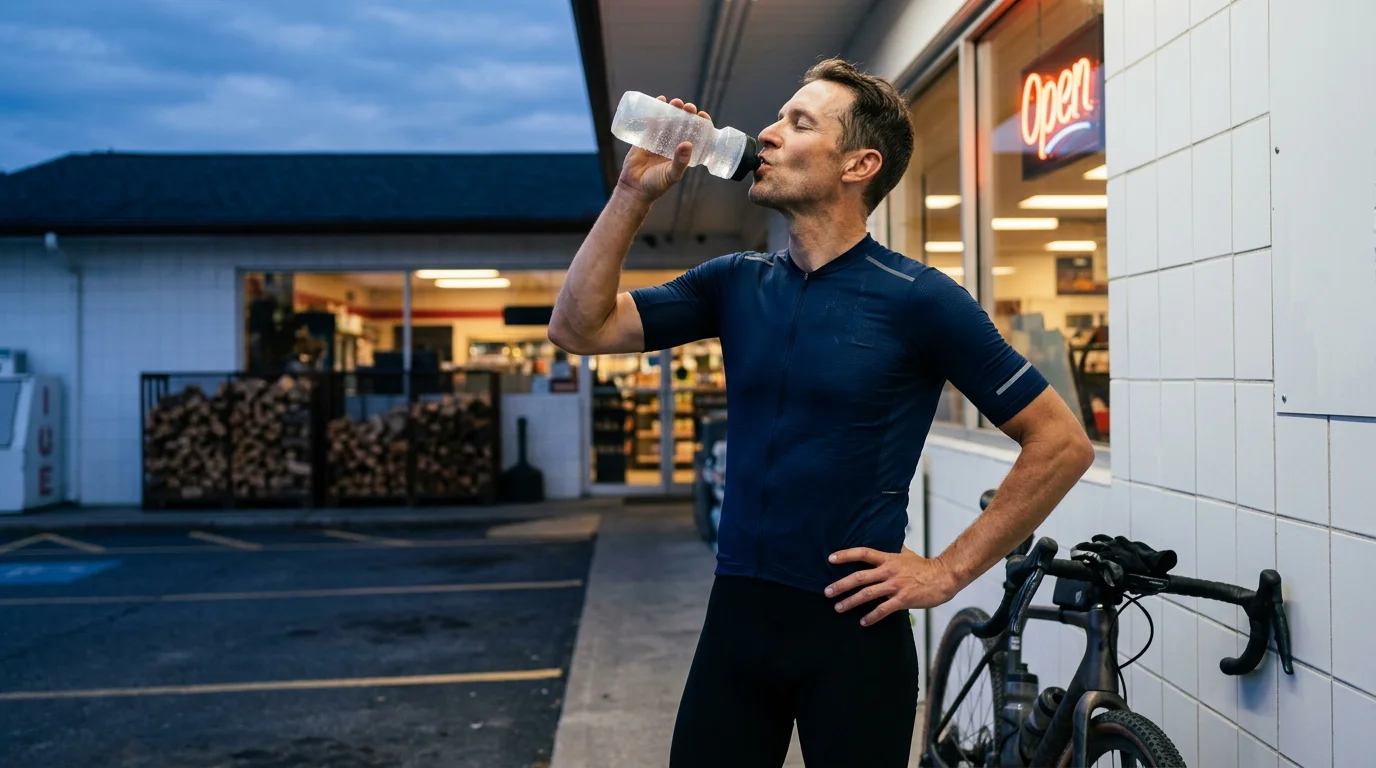
Tropical heat and humidity deplete fluids quickly. Start at daybreak to finish rides before midday temperatures peak. Rural roads are dotted with small grocery shops and petrol kiosks where you can buy cold bottled water and oral rehydration salts, but carry two large water bottles on longer stretches between settlements.
Northern provinces, including Chiang Mai and Chiang Rai, suffer from intense agricultural burning and forest fires between February and April. Temperature inversions trap fine particulate matter in the valleys, regularly pushing air quality into tiers considered hazardous for strenuous cardiovascular exercise. Schedule northern riding holidays between November and January, when skies are clear and temperatures are cooler.
Free-roaming village dogs inhabit rural lanes across Thailand and often give chase when startled by spinning pedals. Avoid kicking out or swerving erratically, as sudden movements can provoke an aggressive reaction. Slow down, hold a steady line, shout a firm command, and squirt water towards the animal's snout to break its focus. Rabies is present in Thailand, so consult a travel clinic before departure regarding rabies immunisation, and seek immediate medical attention if scratched or bitten.
Standard travel insurance policies frequently exclude road cycling or cap medical cover if an incident occurs on a public highway. Take out a specialist policy that explicitly covers non-competitive road cycling or cycle touring, emergency treatment, and repatriation. Private Thai hospitals provide high-quality care but require proof of insurance or an upfront financial guarantee before admittance.
Practical Tips
Carry a clear paper photocopy of your passport photo page and latest entry stamp, or keep the original document securely sealed. Thai police can ask foreign nationals for identification, and specialised facilities such as Bangkok's Happy and Healthy Bike Lane require passport registration at reception before issuing your entry wristband. Keeping a laminated copy in your saddlebag satisfies routine roadside checks while protecting your original passport from sweat and heavy downpours.
Start your rides around sunrise, typically between 06:00 and 06:30, to complete the bulk of your distance before the intense midday heat builds. Thailand's ubiquitous convenience stores provide reliable air-conditioned refuelling stops along both major highways and rural backroads, where you can buy chilled bottled water, ice, and food at regular intervals.
Pick up commercial electrolyte powder sachets from local pharmacies or convenience stores instead of relying on sugary bottled sports drinks. Readily available brands such as Royal-D cost under 10 THB (approx. £0.22) per sachet, dissolve easily into standard water bidons, and replenish critical sodium and potassium reserves without causing stomach irritation over long distances in tropical humidity.
Mount high-output, flashing front and rear LED lights to your bicycle and run them throughout the day. Dark tinted windscreens and window film are widespread across Thai cars, vans, and pickups, which reduces driver visibility from inside the cabin; bright daytime running lamps cut through heavy window tint far more effectively than high-visibility jerseys alone.
Download regional route maps for offline use on apps such as Komoot or Strava before heading out. Local mobile networks provide reliable coverage across populated lowlands, but thick tree canopies and deep mountain valleys in areas like Doi Suthep or Khao Sam Roi Yot frequently drop mobile data signals.
Inspect hired bicycles thoroughly before leaving the shop, checking tyre sidewalls, chain wear, and brake pad thickness. If you ride a road bicycle with high-pressure tyres, carry spare tubes and a brass Presta-to-Schrader valve adapter; roadside motorcycle repair stalls operate in almost every rural village, but their air hoses and patch kits cater exclusively to Schrader-valve mopeds.
Protect your trip by arranging specialised cycling travel insurance that explicitly covers road riding, medical repatriation, and sports equipment transit.
Quick Reference Table
| Item | Detail | Notes |
|---|---|---|
| Best Time for Northern Climbs | November to January | Clear skies and cooler air; avoid February to April burning season |
| Daily Riding Window | Daybreak (06:00 to 06:30) | Finish morning riding before peak midday tropical heat and humidity |
| Top Road Cycling Hub | Chiang Mai | Benchmark routes include Doi Suthep, Samoeng Loop, and Doi Inthanon |
| Top Flatland Leisure Routes | Bangkok & Ancient Capitals | Suvarnabhumi airport track, Bang Krachao, Sukhothai, and Ayutthaya |
| Scenic Coastal Corridors | Pak Nam Pran & Northern Phuket | Royal Coast touring routes and flat mainland roads into Phang Nga |
| Utility Bike Hire | 30 THB to 100 THB (approx. £0.65 to £2.20) per day | Basic single-speed cruisers at historical parks and ferry piers |
| Performance Bike Hire | 1,200 THB to 2,000 THB (approx. £26.70 to £44.50) per day | Quality carbon or alloy road bikes from specialist urban outfitters |
| Guided Day Tours | 1,200 THB to 1,900 THB (approx. £26.70 to £42) | Available in Bangkok, Ayutthaya, Chiang Mai, and Phuket |
| Train Transport | 90 THB to 150 THB (approx. £2 to £3.30) freight ticket | Assembled bikes carried only on trains with dedicated luggage cars |
| Domestic Flight Rules | Varies by carrier | Bangkok Airways allows 1 free bike (Airbus); AirAsia charges sports fee |
| Road Law & Side | Drive on the left | Bicycles are vehicles; lights required at night; max two abreast |
| Emergency Assistance | Tourist Police: call 1155 | Free nationwide English-language emergency assistance |
| Official source | Happy and Healthy Bike Lane | hhblbikelane.com |
| Official source | State Railway of Thailand | railway.co.th |
| Official source | Bangkok Airways Baggage | bangkokair.com |
| Book direct | Co van Kessel Bangkok | covankessel.com |
| Book direct | Chiang Mai Cycling Buddy | chiangmaicyclingbuddy.com |
| Book direct | Siam Bike Tours Phuket | siambiketours.com |
FAQ: Cycling in Thailand
What are the rules for cycling at Bangkok's Happy and Healthy Bike Lane?
What is the best time to cycle in Sukhothai Historical Park?
What gear is recommended for cycling mountain climbs like Doi Inthanon in Thailand?
What is the best time of day to cycle along Thailand's Gulf coastline?
Are cycle helmets legally required for non-motorised bicycles in Thailand?
Can cyclists transport fully assembled bicycles on trains in Thailand?
When is the best time to cycle in northern Thailand to avoid poor air quality?
How should cyclists react to free-roaming dogs in rural Thailand?
What type of travel insurance is recommended for cycling in Thailand?
Should cyclists use lights during the day when riding in Thailand?
Reviewed by the Thailand Guide Editorial Team • Last reviewed: 15 November 2026
This page is provided for general information only. While we aim for accuracy, details can change — please verify anything important independently before relying on it.