Running in Thailand
At dawn across Bangkok, runners take to rubberised circuits beneath elevated transit lines while water monitor lizards glide into park canals. In the northern highlands above Chiang Mai, early-morning trail runners tackle steep earthen tracks alongside forest monks climbing the 600-metre ascent towards Doi Suthep before the tropical heat builds.
This guide provides an overview of running across Thailand, from Bangkok's car-free urban park networks to mountain singletrack around Chiang Mai and Doi Inthanon. You will find practical advice on navigating local race portals, entry fees budgeted in Thai Baht and British Pounds, and how routes compare with regional neighbours across Southeast Asia. Crucially, it explains how to plan training blocks around Thailand's seasonal weather patterns, avoiding northern agricultural haze and extreme pre-monsoon heat.

Urban Circuits: Navigating Bangkok's Dedicated Running Parks

Bangkok maintains an extensive network of car-free urban running circuits across its public parks, provided you know where the access gates connect. Lumphini Park serves as the central anchor of city running, centred on a flat 2.5-kilometre paved asphalt loop marked every 100 metres. Gates open daily at 04:30, drawing runners who share wide, shaded paths with tai chi groups and power walkers, alongside Asian water monitor lizards cruising the lakes. Free storage lockers sit near the restroom blocks by the main gates, though you must bring your own padlock, while basic cold-water rinse showers operate for a small coin fee. Park regulations restrict cycling to between 10:00 and 15:00, keeping the paths clear of bicycles during peak morning running hours.
From Lumphini's northeast corner at Sarasin Road, runners can access Benjakitti Forest Park via Saphan Khiao, the Green Mile. This renovated 1.3 to 1.6-kilometre elevated viaduct crosses above congested expressways, carrying runners into Benjakitti without encountering road traffic or stoplights. Benjakitti provides two distinct running surfaces: a flat 1.8-kilometre tarmac loop encircling the central lake with clear skyline views, and a dedicated 2.8-kilometre rubberised running track winding through the wetland forest. Note that the elevated boardwalk across the wetlands is reserved for walkers, keeping the ground track clear for running. Linking Lumphini and Benjakitti via the elevated viaduct creates an unbroken 8 to 10-kilometre training route.
Further north, runners seeking longer distances can link three adjoining green spaces: Wachirabenchathat Park (Suan Rot Fai), Queen Sirikit Park, and Chatuchak Park. Reached via BTS Mo Chit or MRT Chatuchak Park, this triad provides a flat combined perimeter circuit of roughly 6 to 7.5 kilometres across tarmac, brick, and concrete paths. Suan Rot Fai, a former golf course, features a 3.6-kilometre outer tarmac loop with deep tree shade, ideal for tempo sessions. To the east, Suan Luang Rama IX delivers a wide 5.0-kilometre perimeter loop around botanical gardens, accessible from the Yellow Line monorail. Runners arriving before 09:00 enter free of charge, with a nominal 10 THB (approx £0.23) fee collected during daytime hours.
| Urban Park / Circuit | Lap Distance | Surface Type | Nearest Transit & Key Feature |
|---|---|---|---|
| Lumphini Park | 2.5 km main loop | Flat paved asphalt | MRT Silom / BTS Sala Daeng; shaded canopy, lockers, cycling restricted during dawn hours |
| Benjakitti Forest Park | 1.8 km lake / 2.8 km forest | Rubberised track and asphalt | MRT Queen Sirikit Centre; dedicated rubberised running lane, skywalk reserved for walking |
| The Green Mile (Saphan Khiao) | 1.3–1.6 km elevated connector | Paved elevated boardwalk | Connects Lumphini to Benjakitti above city traffic without road crossings |
| Wachirabenchathat (Suan Rot Fai) | 3.6 km outer circuit | Smooth tarmac | BTS Ha Yaek Lat Phrao / MRT Phahon Yothin; flat former golf course with mature shade |
| Suan Luang Rama IX | 5.0 km perimeter loop | Paved stone and asphalt | MRT Suan Luang Rama IX; free entry before 09:00, 10 THB (approx £0.23) daytime fee |
Run between 05:00 and 06:30 to complete workouts before the sun climbs and tarmac radiates intense tropical heat.
Northern Mountain Trails: Chiang Mai and the Foothills of Doi Inthanon
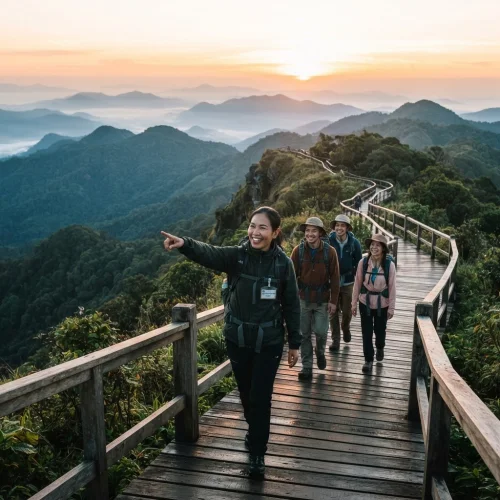
Chiang Mai is Thailand's focal hub for mountain trail running, where steep tropical terrain begins mere minutes beyond the western edge of the city. The most accessible entry point is the Monk's Trail (Wat Pha Lat Nature Trail), beginning at the western terminus of Suthep Road behind Chiang Mai University. This shaded forest path climbs roughly 1.4 kilometres one-way (around 2.8 kilometres out and back) to Wat Pha Lat, gaining approximately 160 to 200 metres over hard-packed soil, granite steps, and exposed roots. Doi Suthep-Pui National Park collects a trail entry fee at the lower checkpoint booth, set at 100 THB (approx £2.30) for foreign adults and 50 THB (approx £1.15) for foreign children.
Experienced runners can continue past the temple grounds to tackle the demanding upper segment towards Wat Phra That Doi Suthep. This technical singletrack climb ascends an additional 2.5 kilometres one-way through clay gullies and loose rock, gaining roughly 420 metres of vertical elevation. Taken together from the lower trailhead to the mountain summit and back, the full route totals roughly 7.5 kilometres with 620 metres of cumulative climbing.
For flatter off-road training, Huay Tung Tao Lake, located roughly 12 kilometres north of the old city moat, provides an open perimeter circuit measuring 3.7 kilometres around the water. Foreign visitors pay a gate entry fee of 50 THB (approx £1.15). The flat perimeter gravel and dirt road rings the shoreline with views of Doi Suthep, while surrounding foothill tracks and adjacent canal paths permit linked training runs between 5 and 9.4 kilometres with minimal gradient.
In the wider province, the Doi Inthanon massif forms the centrepiece of Thailand's premier ultra-running showcase, Chiangmai Thailand by UTMB (formerly Doi Inthanon Thailand by UTMB), held between late November and early December. Race distances range from 20-kilometre mountain routes to 100-mile endurance fixtures such as the Chiang Dao 160 and Elephant 100. Courses cross high-altitude montane forest, steep technical ridges, and terraced rice paddies, ascending from 400 metres to over 2,100 metres above sea level, where nocturnal summit temperatures routinely drop to single digits Celsius.
| Trail Route / Hub | Distance & Elevation | Terrain Style | Technical Demand |
|---|---|---|---|
| Monk's Trail to Wat Pha Lat | 2.8 km return / +160 m | Packed soil, granite steps, jungle roots | Moderate climb; runnable lower sections |
| Wat Pha Lat to Doi Suthep Summit | 2.5 km one-way / +420 m | Steep singletrack, loose dirt, clay gullies | Challenging; steep technical mountain ascent |
| Huay Tung Tao Foothill Circuit | 5.0 km to 9.4 km / +64 m | Double-track dirt, hardpack, lake perimeter road | Low; ideal for tempo trail running and interval training |
| Doi Inthanon UTMB Course Sectors | 17 km to 168 km / up to +8,660 m | Technical montane ridge, mud paths, rock scrambles | Severe; true alpine ultra terrain requiring poles |
Download offline navigation routes on Strava or AllTrails before setting out, as mobile phone reception drops out rapidly within northern mountain valleys and forested ravines.
Plan a Northern Thailand trip covering Chiang Mai, Chiang Rai, Sukhothai, mountain routes, Lanna food, transport, seasons and air quality.
Coastal and Island Circuits: Phuket, Samui, and Beachside Routes

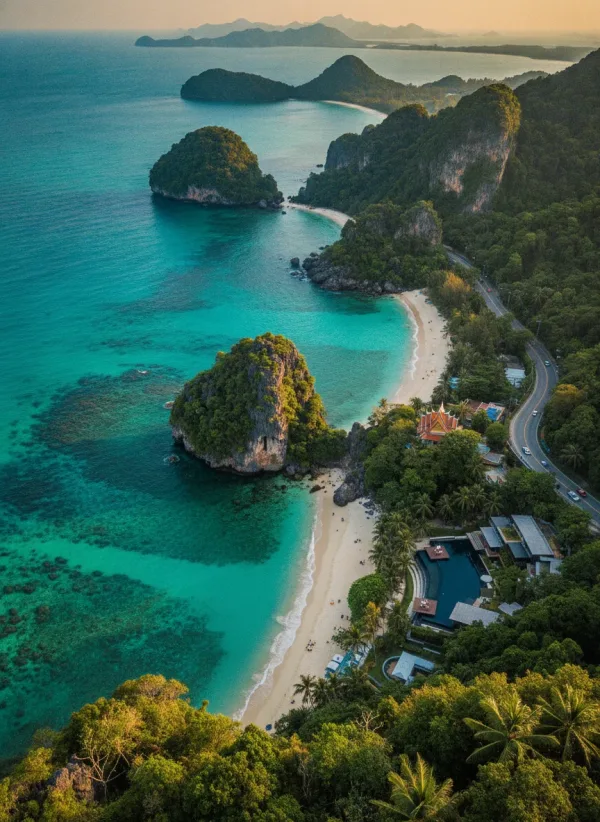
Running along Thailand's coastlines requires careful route selection, as soft sand saps energy and secondary island roads frequently lack pavements. Phuket features well-established road-running options in the south, centred on the Bang Tao and Laguna resort complexes. Here, flat, paved roads linking Laguna Grove, Layan Beach, and Nai Yang allow continuous half-marathon distances with minimal gradient changes. The area hosts the Laguna Phuket Marathon each June, sending runners through village and plantation roads with start times between 03:00 and 04:30 to beat the daytime heat. For low-tide beach running, the hard-packed sand between Bang Tao and Layan provides a firm coastal stretch, while the interior of the island features Bang Wad Dam in Kathu, with a 6.4-kilometre paved reservoir loop free from heavy traffic.
In southern Phuket, Nai Harn Lake provides a flat 2.2-kilometre tarmac perimeter circuit situated directly behind the beach, shaded by casuarina trees and shared by joggers, walkers, and local Muay Thai fighters doing morning roadwork.
On Koh Samui, the main Route 4169 ring road carries heavy scooter traffic and narrow shoulders, making it hazardous for running. Runners head instead to the inland recreation circuit around Chaweng Lake, which features a paved promenade of roughly 3.5 to 5 kilometres away from vehicular congestion.
For island trail running, Koh Phangan presents demanding technical terrain. The steep jungle track connecting Haad Rin to Haad Yuan climbs across granite ridgelines and involves sharp boulder scrambles, high humidity, and dense forest canopy. The route takes between 90 minutes and two hours, leading many runners to arrange a long-tail boat for the journey back. When planning runs across southern islands, map routes within private resort grounds, dedicated lakeside promenades, or early-morning low-tide shorelines.
The Southeast Asian Running Scene: How Thailand Compares Across the Region
Thailand occupies a distinct middle ground in Southeast Asia's running landscape, combining structured urban facilities with serious mountain topography. In Singapore, runners benefit from the Park Connector Network, spanning over 300 kilometres of paved, well-lit corridors that link green spaces across the island. Singapore's infrastructure is exceptionally clean and orderly, but the island is virtually flat—Bukit Timah Hill peaks at just 164 metres—and equatorial humidity persists year-round without a cooler dry season.
Vietnam offers dramatic, high-altitude trail running around northern hubs such as Sa Pa and central highlands near Da Lat. However, urban running in Hanoi or Ho Chi Minh City remains difficult because pavements are frequently obstructed by parked motorbikes and street vendors, forcing runners into heavy traffic. Malaysia features established road events, including major highway marathons across Kuala Lumpur, alongside rugged jungle ultras in Sabah near Mount Kinabalu. Yet everyday pedestrian connectivity in Malaysian cities can be disjointed, with wide arterial roads cutting through urban neighbourhoods.
Thailand bridges these regional extremes. While open street running in central Bangkok is compromised by uneven footpaths and dense traffic, the country has invested heavily in enclosed, car-free municipal running parks equipped with dedicated running tracks, lighting, and drinking fountains. In the north, provinces surrounding Chiang Mai deliver steep mountain terrain rising to 2,565 metres at Doi Inthanon, providing trail challenges comparable to northern Vietnam. Thailand's race atmosphere is also notably hospitable. Community road events and standard 10-kilometre races provide well-stocked aid stations, where cheering volunteers hand out chilled watermelon, electrolyte drinks, bananas, and local sweets.
| Country | Urban Infrastructure | Mountain & Trail Quality | Race Atmosphere & Aid Support | Typical Event Cost |
|---|---|---|---|---|
| Thailand | Dedicated municipal parks; poor open street running | High-calibre trails across northern national parks | Enthusiastic community; generous aid stations with fresh fruit | 550–1,500 THB (approx £13–£35) standard road |
| Singapore | Flawless, illuminated park connectors and waterfront loops | Limited to low coastal ridges and nature reserves | Efficient, orderly, and strictly regulated | 2,500–5,000 THB (approx £58–£116) |
| Vietnam | Difficult city streets; few dedicated running parks | Exceptional high-altitude mountain trails in Sa Pa and Da Lat | Growing grassroots scene; hearty local trail hospitality | 1,200–3,500 THB (approx £28–£81) |
| Malaysia | Good park loops; variable pavement connectivity | Dense rainforest trails and major peaks like Kinabalu | Well-established marathon culture with lively support | 1,000–2,800 THB (approx £23–£65) |
For UK runners, Thailand delivers an accessible compromise between Singapore's safety and Vietnam's elevation, supported by budget-friendly race entry fees and a cooler winter running window between November and February.
Race Entry Systems, Calendars, and Registration Fees
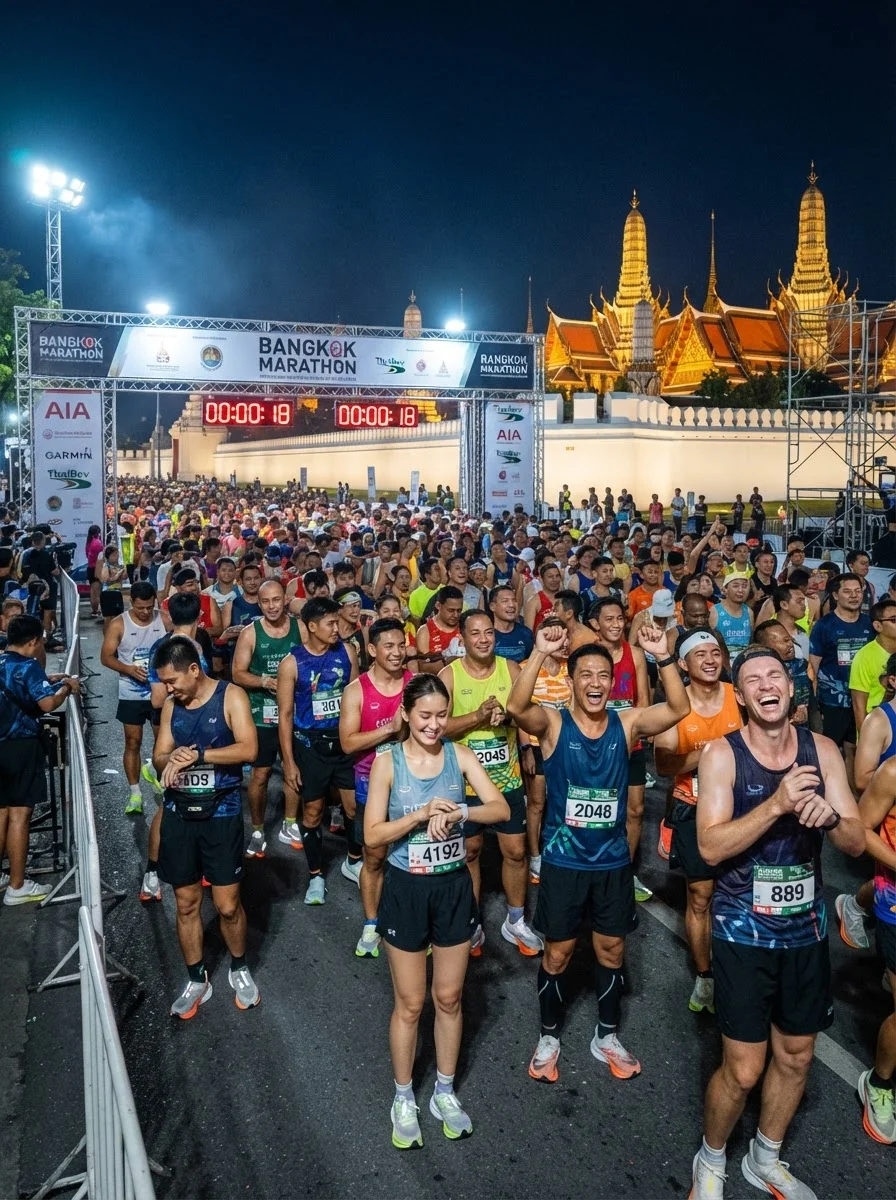
Registration for road and trail races in Thailand operates primarily through specialised domestic booking portals. The vast majority of mass-participation events manage entries through three platforms: ThaiRun, RunLah, and RunningConnect. These portals provide English-language interfaces, accept standard UK credit and debit cards, and issue digital booking receipts or QR codes used for race-pack and bib collection during event week. Entry fees remain modest compared to UK and European fixtures. A standard domestic 10-kilometre road race typically costs between 500 THB and 750 THB (approx £12 to £18), while standalone half marathons generally range from 750 THB to 1,400 THB (approx £17 to £32).
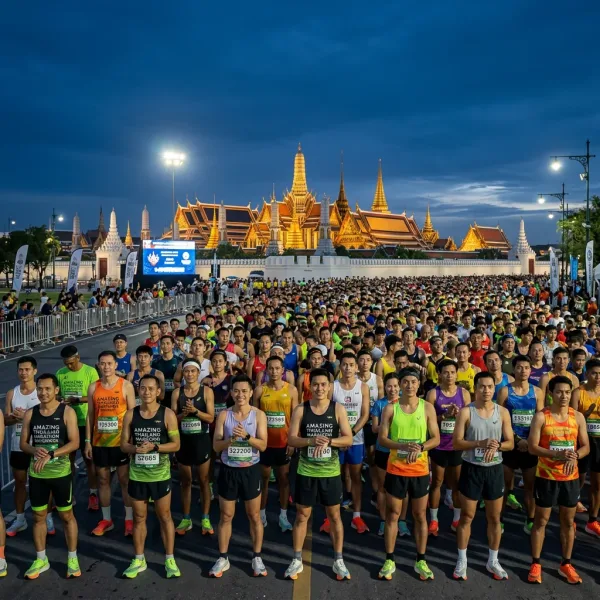
Larger flagship road marathons adopt varied pricing structures. The long-established Bangkok Marathon maintains a dual-tier system, charging Thai residents roughly 1,250 THB (approx £29) for the 42.2-kilometre event, while international entrants pay 75 USD (approx 2,550 THB / £59). Conversely, the Amazing Thailand Marathon Bangkok applies uniform pricing for all nationalities, charging 1,400 THB to 1,800 THB (approx £32 to £42) for the full marathon, depending on the registration tier. Mountain ultra-trail competitions sit at the upper end of the price spectrum. At premier events like Chiang Mai Thailand by UTMB (formerly Doi Inthanon Thailand by UTMB), entry for shorter 20-kilometre trail categories begins around 2,100 THB to 2,600 THB (approx £49 to £60), while the premier 100-mile mountain divisions reach 8,500 THB to 11,500 THB (approx £198 to £267).
Tropical heat and humidity dictate unconventional schedules across Thai distance running. To avoid daytime heat, start times are set exceptionally early compared to European races. Full road marathons across Bangkok regularly set off between 00:30 and 02:00, with half marathons launching around 03:00 or 04:00, ensuring participants finish before mid-morning sun becomes hazardous.
| Event | Date and Location | Distances | Typical Entry Fee | Start Time |
|---|---|---|---|---|
| Bangkok Marathon | November or January; Sanam Chai Road, Bangkok Old City | 5 km, 10 km, 21.1 km, 42.2 km | 550–1,250 THB (approx £13–£29) domestic; 25–75 USD (approx 860–2,600 THB / £20–£60) overseas | 00:30 (42.2 km) to 05:00 (5 km) |
| Amazing Thailand Marathon Bangkok | Late November; Sanam Luang and MBK Centre, Bangkok | 4.5 km, 10 km, 21.1 km, 42.2 km | 700–1,800 THB (approx £16–£42) | 02:00 (42.2 km) to 06:45 (4.5 km) |
| Chiang Mai Marathon | Late December; Tha Phae Gate, Chiang Mai Old City | 3 km, 10 km, 21.1 km, 42.2 km | 400–1,800 THB (approx £9–£42) domestic; up to 55 EUR (approx 2,100 THB / £49) overseas | 03:00 (42.2 km) to 05:15 (3 km) |
| Chiang Mai Thailand by UTMB | Late November to early December; Doi Inthanon and Chiang Mai | 17 km to 173 km | 2,100–11,500 THB (approx £49–£267) | Staggered waves; Friday morning to Sunday |
| Laguna Phuket Marathon | Early to mid-June; Bang Tao, Phuket | 2 km, 5 km, 10 km, 21.1 km, 42.2 km | 450–1,600 THB (approx £10–£37) domestic; up to 95 EUR (approx 3,600 THB / £84) overseas | 17:00 Saturday (5 km/10 km); 04:30 Sunday (half/full) |
Register three to five months ahead on ThaiRun or RunLah, as urban road fields frequently sell out well in advance of race weekend.
Runner Profiles: Who Thailand Suits and Who Should Train Elsewhere
Thailand provides rewarding conditions for specific styles of running, but presents real physiological hurdles for others. Dedicated trail runners gain the most here. Northern bases such as Chiang Mai and Chiang Dao provide technical ridgelines, steep jungle singletrack, and an established mountain-running community alongside manageable day-to-day living costs. Road runners preparing for warm-weather spring marathons also build substantial cardiovascular endurance by banking dawn miles in tropical humidity.
Conversely, runners targeting personal records calibrated to crisp European autumn weather will find Thailand counterproductive. Running in 28°C heat with relative humidity above 80 per cent prompts cardiovascular drift, driving your heart rate up by 10 to 20 beats per minute at any sustained pace and slowing training splits by 20 to 40 seconds per mile. Casual joggers who dislike waking before 06:00 will also struggle; running past 08:30 under direct tropical sun carries a genuine risk of heat exhaustion.
Urban runners hoping to step straight out of a hotel lobby to clock random miles through city streets will find open pavements frustrating. Broken paving slabs, low-hanging cables, abrupt kerbs, and motorbikes using footpaths make continuous road running hazardous outside dedicated parks. Match your training expectations to the climate by shifting from rigid pace targets to perceived effort or heart-rate zones throughout your stay.
Where to Run in Thailand: Top Circuits and Trailheads

Planning runs around dedicated pedestrian paths, municipal parks, and established trailheads helps you avoid Thailand’s heavy traffic and uneven street pavements. In Bangkok, the classic central route links Lumphini Park and Benjakitti Forest Park via the Green Mile, a 1.3-kilometre elevated pedestrian boardwalk. Running Lumphini’s 2.5-kilometre outer asphalt loop, crossing the elevated walkway, and completing a circuit around Benjakitti’s central lake creates a continuous, car-free route of roughly 6 to 8 kilometres.
Chiang Mai serves as the primary base for northern running, balancing mountain singletrack with measured flat courses. The Monk’s Trail, beginning at the western terminus of Suthep Road, provides a shaded forest ascent of roughly 2 kilometres up to the secluded temple grounds of Wat Pha Lat. For flat tempo runs or interval sessions, Huay Tung Tao Lake, located 12 kilometres north of the Old City, provides a paved 3.5-kilometre perimeter road against a mountain backdrop. Track runners can head to the 700th Anniversary Stadium Sports Complex north of the city, which features a full synthetic athletics track and paved grounds open for daily workouts.
In southern Thailand, Phuket provides reliable routes removed from highway congestion. In the south of the island, the flat asphalt path circling Nai Harn Lake measures approximately 2.2 kilometres per lap and sits directly behind the beach, making it popular for sunrise sessions. Further north on the west coast, the master-planned Laguna Phuket resort community features quiet, tree-lined service roads and connected paved loops that avoid the heavy traffic typical of Phuket's coastal roads.
Costs and Budgeting
Running in Thailand is gentle on day-to-day budgets, making the country an economical base for extended warm-weather training blocks. Public park admission across Bangkok and regional municipal centres is almost universally free, with rare exceptions such as Suan Luang Rama IX, which charges an entry fee of 10 THB (approx £0.23) between 09:00 and 17:00. Natural dirt trails outside conservation boundaries are free to explore. Routes passing through designated national parks collect formal admission fees at ranger checkpoints; foreign adults entering trail sectors in Doi Suthep-Pui National Park pay 100 THB (approx £2.30), while Doi Inthanon National Park charges 300 THB (approx £6.90).
Daily refuelling costs little. Convenience stores stock single-serving electrolyte powder sachets, such as Royal-D, for 6 to 8 THB (approx £0.14 to £0.18). A 1.5-litre bottle of drinking water costs 14 to 16 THB (approx £0.32 to £0.37), while fresh, chilled young coconuts from fruit stalls outside urban parks or rural trailheads run between 40 and 60 THB (approx £0.92 to £1.38).
Domestic race fees reflect distance and organisational scale. Provincial 10-kilometre road runs typically cost 550 to 750 THB (approx £13 to £17), including a timed bib, running shirt, and finisher medal. Flagship road events such as the Bangkok Marathon and Amazing Thailand Marathon Bangkok charge 1,250 to 2,600 THB (approx £29 to £60) for full marathon entry, depending on registration tiers and international entrant rates. Mountain ultra-trail events, including the Doi Inthanon Thailand by UTMB series, range from 4,300 THB (approx £99) for 50 kilometres up to 11,500 THB (approx £265) for 100-mile distances, plus a standard 6% administration fee.
| Option | Cost (THB) | Cost (GBP approx) | Notes |
|---|---|---|---|
| Urban Park Entry (Bangkok) | Free to 10 THB | Free to £0.23 | Lumphini and Benjakitti free; Suan Luang Rama IX 10 THB |
| Local 10K Race Entry | 550 – 750 THB | £13 – £17 | Includes race bib, timing chip, event shirt, and finisher medal |
| Half Marathon Entry | 750 – 950 THB | £17 – £22 | Standard domestic road events across provinces |
| Major International Marathon | 1,250 – 2,600 THB | £29 – £60 | Bangkok Marathon or Amazing Thailand Marathon |
| 50K–100M Mountain Ultra Entry | 4,300 – 11,500 THB | £99 – £265 | Doi Inthanon Thailand by UTMB tier pricing |
| Daily Hydration & Electrolytes | 40 – 80 THB | £0.92 – £1.85 | Bottled water, fresh young coconut, and salt sachets |
What To Know Before You Go
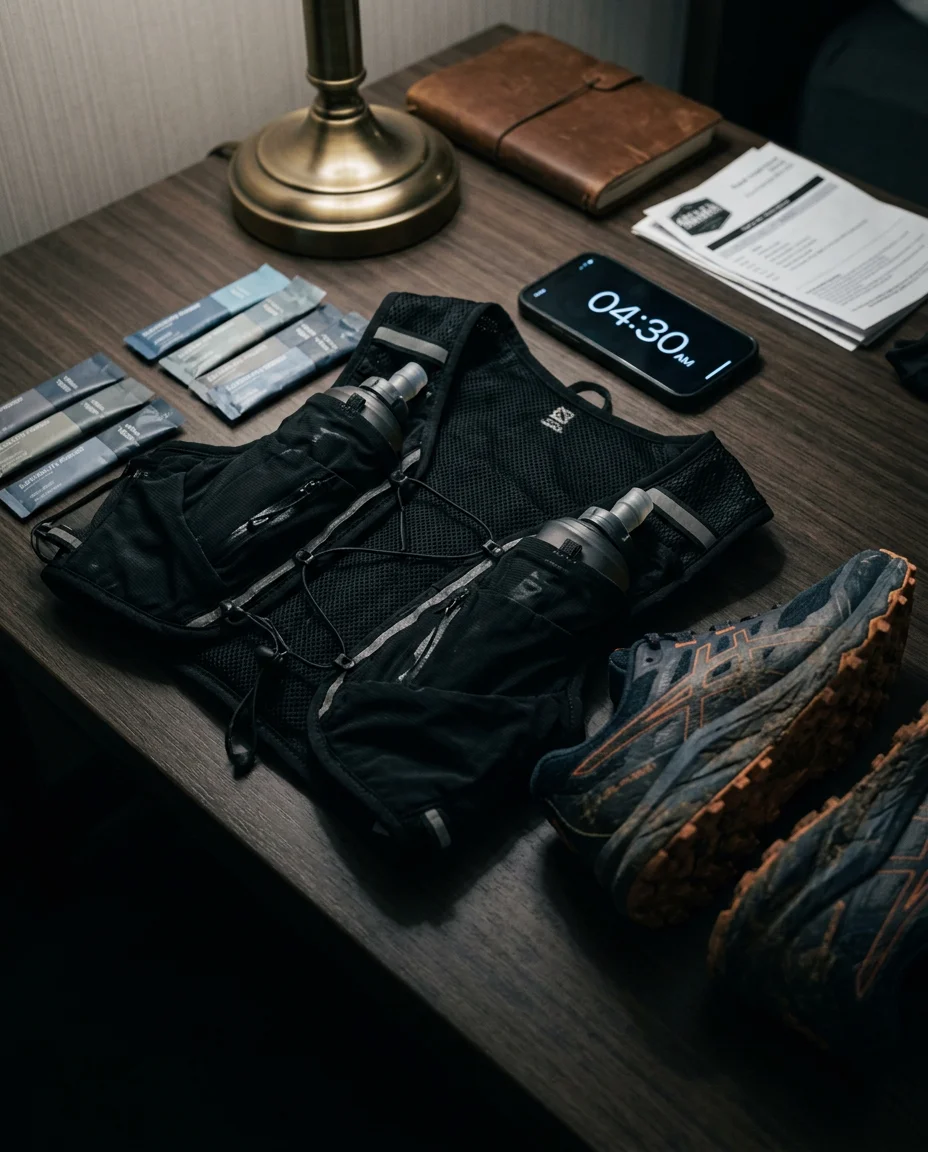
At 08:00 and 18:00 daily, public park loudspeakers across Thailand broadcast the national anthem. Running etiquette here is strictly observed: you must stop immediately, remove headphones, and stand quietly at attention until the music concludes. Watch the Thai runners around you and resume your pace once they start moving again.
Air quality is a seasonal hazard. Between February and April, agricultural burning and regional smoke trap dangerous PM2.5 particulate matter across Chiang Mai and northern valleys. Strenuous outdoor running during these months poses severe respiratory risks. Check live readings on the official Thai air quality app (Air4Thai) before heading out, and be prepared to move sessions indoors or head south to coastal regions where ocean breezes keep the air clearer.
Running along ordinary city streets is generally inadvisable. Footpaths in Bangkok and major provincial towns often present loose paving slabs, open utility drains, low-hanging cables, and delivery motorbikes mounting the pavement to bypass jams. Traffic rarely yields at zebra crossings. Keep training runs to dedicated public parks, university perimeters, or enclosed stadium sports complexes.
Tropical humidity frequently tops 80%, severely hindering sweat evaporation and driving fluid and sodium loss far faster than runners experience in the UK. Drinking large volumes of plain water without sodium replacement risks heat cramps or hyponatraemia. Supplement your fluids with electrolytes before, during, and after morning sessions to maintain adequate mineral balance.
Practical Tips
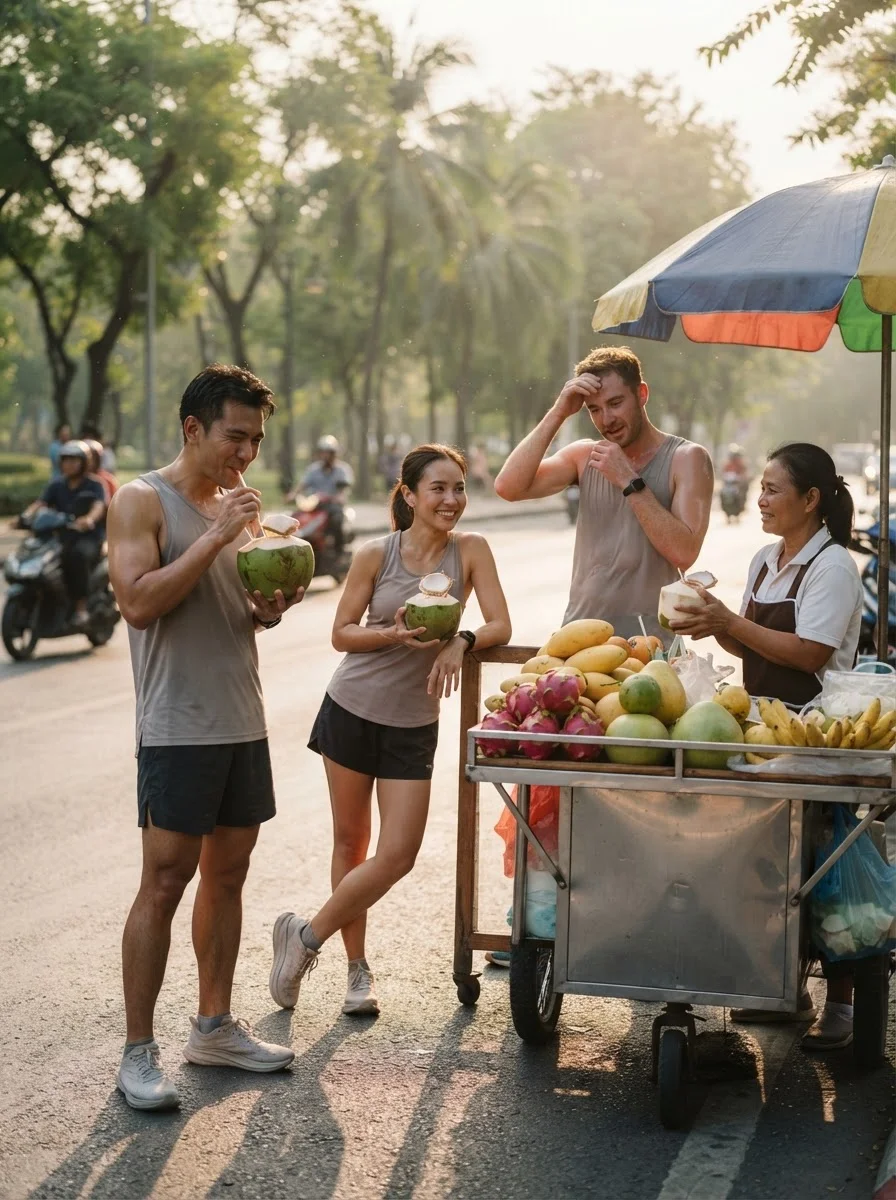
Set your alarm early and begin morning workouts by 05:30. In Thailand's tropical climate, temperatures and humidity climb rapidly once the sun crests the horizon, turning a routine training run into a gruelling grind by 07:00. Dawn outings also give you calmer city air and uncrowded park paths before commuting traffic builds.
Carry 50 to 100 THB (approx £1.15 to £2.30) in small notes and coins on every run. While major urban parks are free to access, you will need cash to buy chilled bottled water or cut fruit from vendors outside the gates, pay the small fee for park shower facilities, or cover an emergency motorcycle taxi ride back to your hotel.
Local electrolyte powders are widely available and far more cost-effective than imported sports nutrition. Sachets of Royal-D or similar mineral rehydration powders cost around 6 to 10 THB (approx 15p to 25p) each at convenience stores across the country. They dissolve rapidly into chilled bottled water, providing sodium and potassium replacement to prevent cramping in heavy humidity.
Choose your running wardrobe around moisture management. High ambient humidity severely impedes sweat evaporation, meaning thick compression gear and heavy fabrics quickly turn sodden and trap body heat. Stick to loose-fitting, ultralight synthetic mesh singlets, split shorts, and anti-chafing balm on high-friction areas.
When collecting race packs for organised events, keep a clear photograph of your passport photo page saved on your smartphone alongside your registration confirmation. Race organisers cross-reference identification against registered runner details before handing over bibs and timing chips.
For northern trail running around Chiang Mai or Doi Inthanon, avoid remote singletrack during peak monsoon downpours between August and October. Tropical rainfall turns steep jungle clay into treacherous mud chutes and causes small gully crossings to swell without warning.
If you plan to use the public locker banks inside Lumphini Park, pack a small padlock in your running belt. The steel cubicles near the restrooms do not include keys or locks, so bringing your own keeps your belongings secure while you loop the lake.
Quick Reference Table
| Item | Detail | Notes |
|---|---|---|
| Prime Urban Circuit | Lumphini to Benjakitti via Green Mile | 8–10 km car-free connection in central Bangkok |
| Prime Trail Hub | Monk's Trail (Wat Pha Lat), Chiang Mai | Shaded singletrack climb; 100 THB foreigner park fee |
| Best Running Months | November to February | Dry weather, cooler mornings, lower northern PM2.5 levels |
| Burning Season Window | February to April | Avoid northern mountain running; air quality is compromised |
| Major Registration Sites | ThaiRun, RunLah, RunningConnect | Central booking engines for road and trail races |
| Road Marathon Start Times | 00:30 to 03:00 AM | Early starts counter dangerous tropical daytime heat |
| Standard Race Cost | 550–950 THB [£13–£22] | Covers 10K to half-marathon distances at domestic events |
| Park Operating Hours | Generally 04:30/05:00 to 21:00/22:00 | Entrance gates close at nightfall or late evening |
| Daily Anthem Protocol | 08:00 and 18:00 daily | Stop running and stand still until music stops |
**
FAQ: Running in Thailand
What is the best time to run in Bangkok's urban parks?
Are there lockers available for runners at Lumphini Park in Bangkok?
Why should runners download offline maps for northern Thailand trails?
Why do marathons in Thailand start so early?
Is it advisable to run on ordinary city streets in Thailand?
What is the etiquette when the national anthem plays in Thai parks?
What should runners know about air quality in northern Thailand?
How does tropical humidity affect runners in Thailand?
Why should runners carry cash during their runs in Thailand?
What is a cost-effective way to manage hydration during runs in Thailand?
Reviewed by the Thailand Guide Editorial Team • Last reviewed: 18 November 2026
This page is provided for general information only. While we aim for accuracy, details can change — please verify anything important independently before relying on it.